My 2016 in Books

20160903_160515.jpg

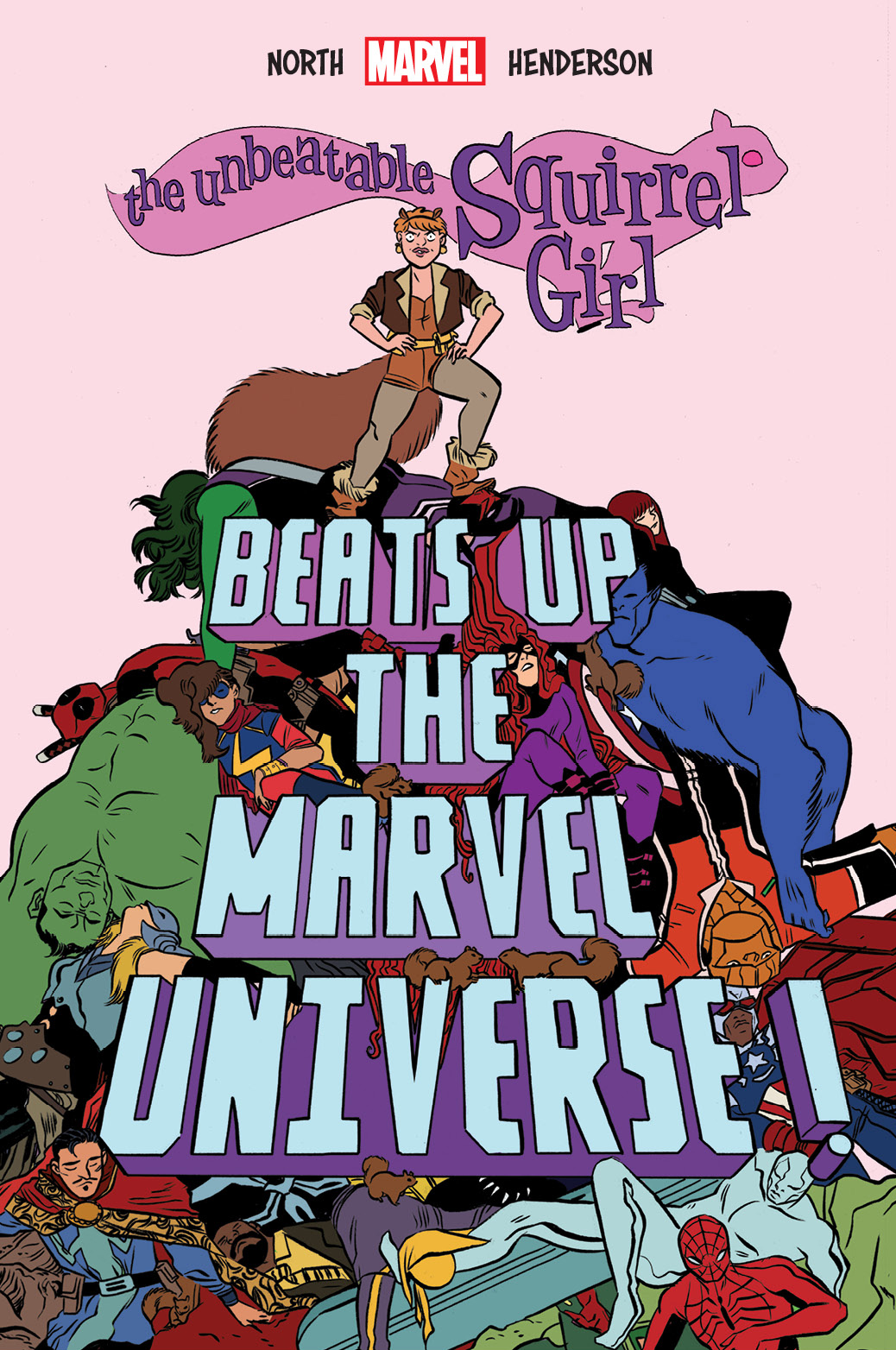
No, I haven’t read all the books in this pile; that’s my haul from one of several library sales I hit this year (I have read a couple of these, so far, though). I really can’t help it: this year I continued to collect books at a rate faster than I could read them (a common problem, I’m afraid), but I did make an effort to read books that were already on my shelf. Other books I got from the library when I could, including most of the graphic novels listed below. (I debated whether to include trade paperback collections of monthly comics, but in the case of Ryan North and Erica Henderson’s The Unbeatable Squirrel Girl, I decided what the heck: they’re some of the books I’ve enjoyed most in the last couple of months, and for the record The Unbeatable Squirrel Girl Beats Up the Marvel Universe! is a graphic novel in the traditional, standalone sense.)

squirrelgirl

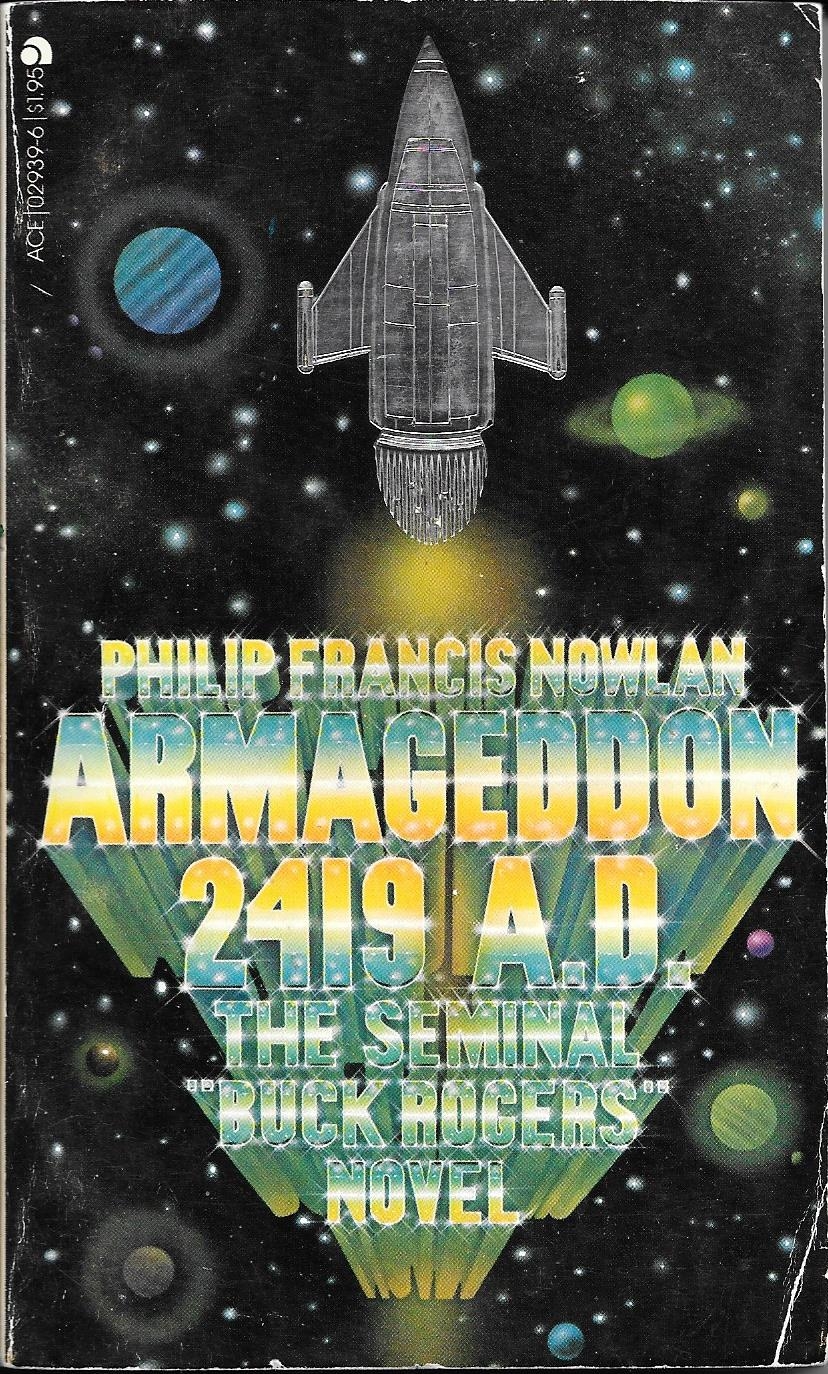
In addition to filling some gaps in my comics reading, I followed through on my promise from last year to read more of the pulp and genre novels that have been crowding my shelves for years. Most are quick reads, and some of them tied into other projects I was involved in. Reading Armageddon 2419 A.D. was part of my preparation to watch the Buck Rogers serial for a feature in The Solute last spring; novels by William MacLeod Raine and Zane Grey (my first Grey!) continued my exploration of the traditional Western.

buckrogers1

And what about those covers! I love the lush cover paintings Ballantine commissioned for its “Adult Fantasy” line back in the late ’60s, and Ron Walotsky’s cover for Fletcher Pratt’s The Blue Star in particular is a great example, intensely colorful and reminiscent of Weird Tales great Hannes Bok and Dungeons & Dragons icon Erol Otus. (The book itself was less psychedelic than the art might suggest, an early example of “parallel world” fantasy whose only speculative element was the presence of psychic witches. The Blue Star was originally published in 1952, early enough that Pratt included a prologue setting up the events of the novel as a dream, unable as he was to assume that contemporary audiences would automatically understand the concept of a secondary world.)

bluestar

Then there’s this one, an ironic bit of spy-fi, found in a used bookstore. I only recently found out that The Bamboo Saucer was made into a movie, but I haven’t seen it. The book was okay. (High Road to China, an aviation adventure set in the interwar years, is another one that was made into a movie; the copy I read is even a tie-in edition with a photo insert of star Tom Selleck, but I have absolutely no memory of the film.)

bamboo1

Other Highlights:

It was a good year for non-fiction for me, and the books on Gary Gygax, Nancy Drew, and Amazing Stories editor Ray Palmer were especially fascinating looks into the publishing industry and the creative process. (The Man From Mars also confirmed that the scientist alter ego of superhero The Atom was named after the Ray Palmer, something I had wondered about.) Another fascinating read was A Kim Jong-Il Production, about the kidnapping of South Korean director Shin Sang-Ok and his wife, actress Choi Eun-hee, who were pressed into service making movies for the North Korean dictator, a noted film buff.

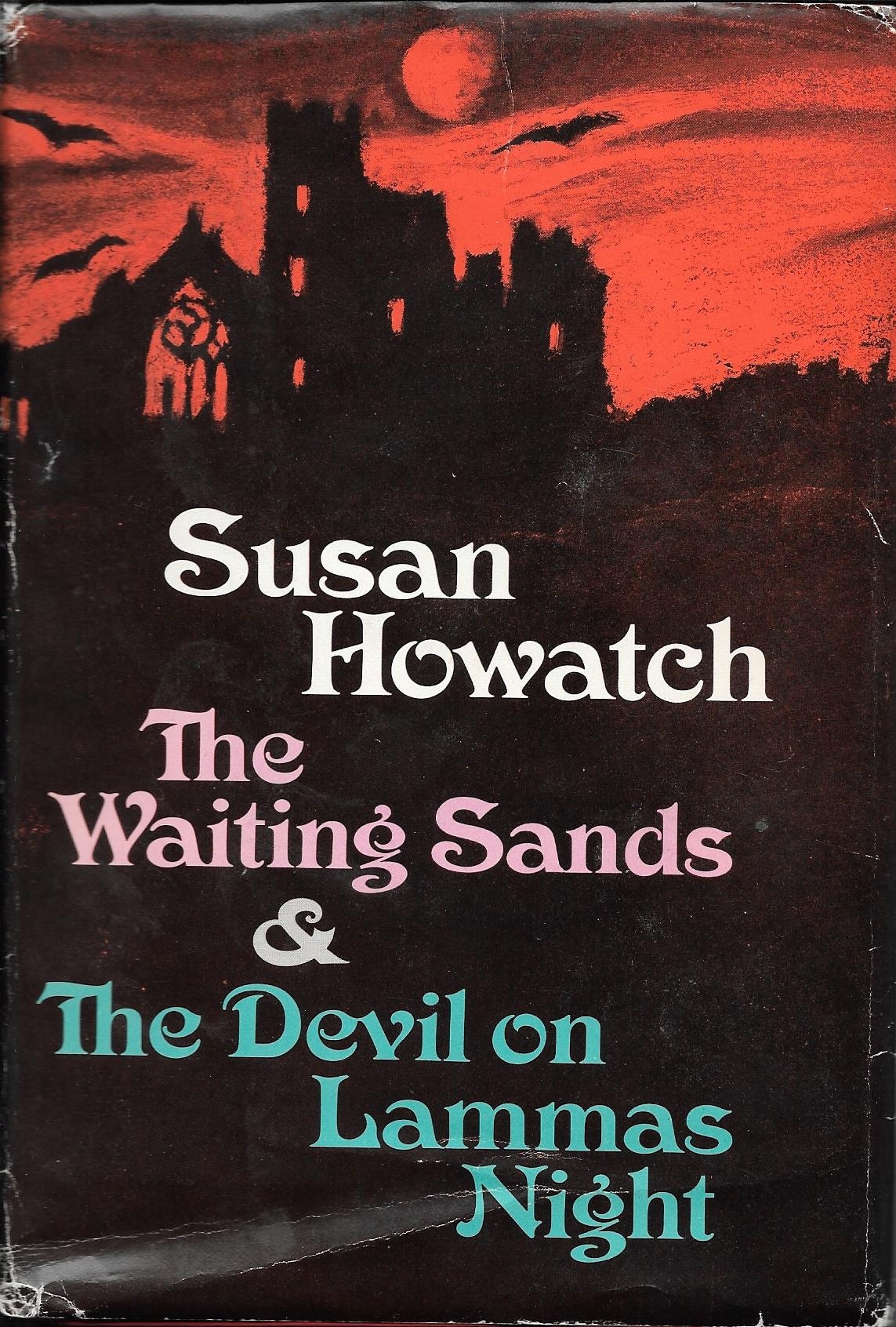
I also read quite a few (mostly short) novels, including books by Jack Vance, the last book of Lemony Snicket’s All the Wrong Questions (a series I enjoyed very much), and a pair of contemporary (ca. 1970) gothic romances by Susan Howatch (another library sale find: how could I resist a cover like this?).

howatch

Aside from The Unbeatable Squirrel Girl, comics and graphic novels that I found rewarding were Planetary (I had read the first few issues several years ago, but the Omnibus edition from the library caught me up on the entire series), All-Star Superman (as good as everyone says), and V for Vendetta (unfortunately timely).

Here’s the complete list:

January
Armageddon 2419 A.D., Philip Francis Nowlan
Ex Libris: Confessions of a Common Reader, Anne Fadiman
All the Wrong Questions: “Why Is This Night Different from All Other Nights?”, Lemony Snicket
A Kim Jong-Il Production: The Extraordinary True Story of a Kidnapped Filmmaker, His Star Actress, and a Young Dictator’s Rise to Power, Paul Fischer
League of Somebodies, Samuel Sattin

February
Techno-Orientalism: Imagining Asia in Speculative Fiction, History, and Media, ed. David S. Roh, Betsy Huang, and Greta A. Niu
Bulldog Drummond, Sapper
Halting State, Charles Stross

March
Mission to the Head-Hunters, Frank and Marie Drown
All-Star Superman, Grant Morrison and Frank Quitely
The Fighting Tenderfoot, William MacLeod Raine
Cowboys & Aliens, Fred Van Lente and Andrew Foley, et al
Al Williamson Adventures, Al Williamson et al
The Planetary Omnibus, Warren Ellis and John Cassaday

April
Heroes of Bear Creek, Robert E. Howard
Big Planet, Jack Vance
The Blue World, Jack Vance

May
The Dragon Masters & Other Stories, Jack Vance
The 6 Voyages of Lone Sloane, Philippe Druillet
Forust: A Tale of Magic Gone Wrong, Adam and Dustin Koski
Empire of Imagination: Gary Gygax and the Birth of Dungeons & Dragons, Michael Witwer

June
The Blue Star, Fletcher Pratt
Lone Sloane: Delirius, Jacques Lob and Philippe Druillet
Camelot 3000, Mike W. Barr and Brian Bolland
The Flight of the Bamboo Saucer, Fritz Gordon
Tales of the Enchanted Islands of the Atlantic, Thomas Wentworth Higginson

July
High Road to China, Jon Cleary
Three Weeks, Elinor Glyn
Last of the Duanes, Zane Grey
Marvelman Classic Vol. 2, Mick Anglo et al

August
Cowgirls: Women of the American West, Teresa Jordan
Harry Potter and the Cursed Child, J. K. Rowling, Jack Thorne

September
Girl Sleuth: Nancy Drew and the Women Who Created Her, Melanie Rehak
This Business of Bomfog, Madelaine Duke
Critical Mass, Frederik Pohl and C. M. Kornbluth
The Man From Mars: Ray Palmer’s Amazing Pulp Journey, Fred Nadis
A Field Guide to Kentucky Kaiju, Justin Stewart, Tressina Bowling and Shawn Pryor
The Man Called Brown Condor: The Forgotten History of an African American Fighter Pilot, Thomas E. Simmons

October
Monster, 1959, David Maine
Best “Thinking Machine” Detective Stories, Jacques Futrelle, ed. E. F. Bleiler
The Waiting Sands, Susan Howatch

November
The Devil on Lammas Night, Susan Howatch
The Unbeatable Squirrel Girl, Vol. One: Squirrel Power, Ryan North and Erica Henderson
The Unbeatable Squirrel Girl Beats Up the Marvel Universe!, North and Henderson
The Fine Art of Literary Mayhem (2nd ed.), Myrick Land
Howard the Duck Vol. 0: What the Duck, Chip Zdarsky, Joe Quinones et al
The Take Back of Lincoln Junior High, Roseanne Cheng
V for Vendetta, Alan Moore and David Lloyd

December
The Unbeatable Squirrel Girl, Vol. Two: Squirrel, You Know It’s True, North and Henderson
Delilah Dirk and the Turkish Lieutenant, Tony Cliff
The Unbeatable Squirrel Girl, Vol. Three: Squirrel, You Really Got Me Now, North and Henderson

The Political Fantasies of BrainDead and Vote Loki

from Vote Loki #2, art by Paul McCaffrey, colors by Chris Chuckry

from Vote Loki #2, art by Paul McCaffrey, colors by Chris Chuckry

In 2008, just days after the presidential election, South Park aired an episode exploring Barack Obama’s victory. In the episode, both Obama and his political opponents, including John McCain and Sarah Palin, were shown secretly working together, running an Ocean’s 11-style long con (including faking their identities: the “real” Palin had a posh British accent, for example) in order to steal the Hope Diamond from the Smithsonian via a tunnel hidden beneath the Oval Office. In the B-plot, the conservative residents of South Park holed up in a bunker, readying themselves for the collapse of society they felt sure would follow Obama’s election, while liberal Randy Marsh went on a celebratory spree, leading to telling off his boss and parading down the street naked, so convinced was he that Obama’s victory had changed everything and that things were going to be different now. For such a regularly cynical show, it was oddly reassuring, suggesting that erstwhile political foes could actually work together, even if it was to perpetrate a jewel heist, and the B-plot served to deflate both the apocalyptic and messianic rhetoric that had made the election so divisive. Things won’t change that much, it seemed to say.

Fast-forward to 2016, and such notions of cooperation seem downright quaint; the rise of Donald Trump, Presidential Contender, has raised questions as to whether satire is relevant or even possible anymore. No writer or cartoonist can top the bizarre reality that Trump has built up in his repeated lies, promises, and threats, and that we now find ourselves trapped in. No modern “A Modest Proposal” could be more shocking than some of Trump’s own statements, no discriminatory or unconstitutional policy proposal so disgusting that it won’t find support in at least some portion of the electorate, newly empowered by Trump to express their bigotry out in the open. I’m starting to understand how conservatives suffering from “Obama derangement syndrome” must have felt; recently I had a “step away from the computer” moment when I realized that for my own mental health I couldn’t spend all my time reading and relaying news stories and commentaries about Trump: with more than a month still to go before the election and a flood of ever-more-insane details trickling out every day, I needed to get some fresh air or else I’d go crazy.

So perhaps it’s fitting that two of my summer pleasures channeled this pervasive political anxiety into forms that are both more palatable and which provided the narrative closure that eludes us in real life: BrainDead, a thirteen-episode CBS series that ended two weeks ago, and Vote Loki, a four-issue Marvel comic book miniseries that wrapped up last Wednesday.

Vote Loki #4, cover art by Tradd Moore and Matthew Wilson

Vote Loki #4, cover art by Tradd Moore and Matthew Wilson

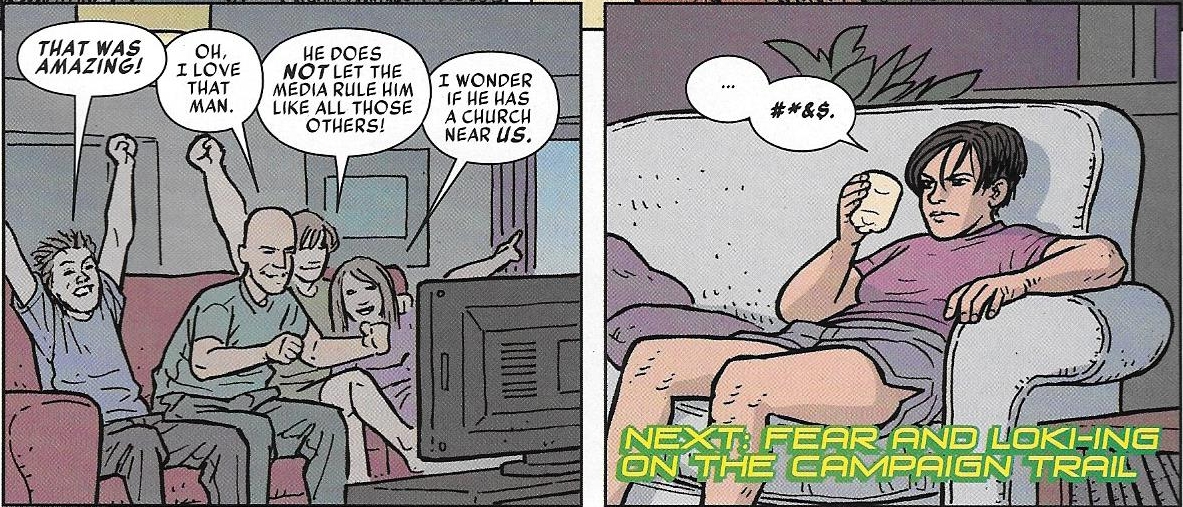
In Vote Loki, written by Christopher Hastings with art by Langdon Foss, the Norse god of mischief (and recovering supervillain) Loki manipulates his way into the presidential race, to the consternation of Nisa Contreras, a crusading journalist whose own drive to uncover the truth was fueled by the destruction of her childhood home during a battle between Loki and the Avengers. Contreras’s attempts to reveal Loki’s true purposes are continually co-opted by the candidate himself, spinning every new revelation into more proof that Loki is a “chess master,” an outsider working the system for his own ends. Loki’s ascent, which begins with him saving the two mainstream candidates from an attack by the terrorist group HYDRA, is driven by his celebrity status: at first a novelty, his “plainspoken” openness about his villainous character earns him the loyalty of supporters who feel left out of the process. “I’m going to lie to you right to your face and you’re gonna love it,” he says; his slipperiness is just part of his rakish appeal. (When Contreras provides proof that Loki’s political advisors are actually members of a Loki-worshipping cult, Loki laughs it off: he said he was a god, and doesn’t the First Amendment protect freedom of religion?)

Of course, this is a comic book world, so in addition to HYDRA, other threats to the republic include a destabilized Latveria (home of Doctor Doom, whose absence has created a dangerous power vacuum and a terrorist-supporting regime calling itself “Doom’s Children”) and issues surrounding superpowered mutants and Inhumans. Some of Loki’s Asgardian relatives make appearances, as well, including Thor, who as a member of the Avengers can’t get involved officially but who passes some critical information to Contreras.

Like most “outsider” candidacies, Loki’s first and most important platform is that the other guys, who represent the “system,” are worse, both equally compromised and too indebted to the establishment to change anything. (The two mainstream candidates are a man and a woman, but are unnamed, and there is little else to identify them as Trump or Hilary Clinton.) Again, that’s an argument frequently bandied about by Libertarian Gary Johnson and Green Jill Stein in this election (and by supporters of Bernie Sanders who aren’t ready to accept his concession to Clinton in the Democratic race); it’s complete baloney to say that there’s “no difference” between the Democratic and Republican candidates, especially this year, but it’s an easy sell when the two major candidates are seen so negatively and even members of their own parties are having trouble expressing much enthusiasm for them.

Absurd times call for absurd heroes: Loki joins fellow Marvel character Howard the Duck in mounting an insurgent campaign, and like Howard’s 1976 run, Loki’s campaign is in the tradition of courageous truth-tellers who say what they’re really thinking (and what is Trump if not “outspoken”?) and are loved by voters for daring to speak their mind. Of course, one man’s Man of the Year is another man’s A Face in the Crowd, and the flip side of all that honesty is a loose cannon shooting his mouth off, a demagogue who tells voters what they want to hear and gives them permission to exercise their basest passions.

Early in Loki’s campaign, J. Jonah Jameson challenges Loki during a television interview: “Everyone loves an electoral circus, and now you’re the sideshow! What fun! Until you get so big you get your own tent.” Sound familiar? Over months of mounting alarm over the possibility of a supervillain taking control of the United States through legal means, the American system of politics as reality programming is held up to a funhouse mirror, with Loki’s real intentions hidden (perhaps even from himself) until the eve of the election.

BrainDead, created by Robert and Michelle King (creators of The Good Wife), working with more narrative space and a larger cast of characters on television, takes a different approach, one in which the real action is in Congress. BrainDead explicitly takes place in our world, with frequent references to the Clinton/Trump race and clips of the candidates’ appearances on television screens, but in its own way it’s as far out as the gods and superheroes of Vote Loki, as if the Kings finally had somewhere to put all their ideas that were too crazy for The Good Wife.

Mary Elizabeth Winstead as Laurel Healy

Mary Elizabeth Winstead as Laurel Healy

As BrainDead begins, struggling documentarian Laurel Healy (Mary Elizabeth Winstead) has reluctantly returned home to Washington, D.C., and her political-dynasty family, to help her brother Luke (Danny Pino), a Senator. At the same time, a strange meteorite recovered from Russia turns out to be full of ant-like parasites that infect their victims by climbing into their ears and eating half of their brains. A few of the infected succumb to Scanners-like head explosions (or “catastrophic head injuries”), but the rest are taken over by the insects and undergo a personality change, becoming more rigid, aggressive, and ideologically-driven. Conservatives are pushed farther to the right, liberals to the left, with no ability to find common ground. Once the meteorite is taken to Washington and members of the political class are exposed to the bugs, the result is chaos and gridlock produced by the already-intense partisanship being thrown into overdrive. Laurel, working in her brother’s office as a constituent liaison, is one of the first to notice something strange is going on.

So BrainDead clearly follows in the footsteps of Invasion of the Body-Snatchers, with strong shades of The X-Files. Who can you trust? How can you fight something that most people won’t even believe in without evidence? When even her longtime friends change overnight, Laurel is aided in uncovering the truth by a physician (Nikki M. James) and that standby of conspiracy thrillers, the paranoid loner: Gustav (Johnny Ray Gill), an eccentric autodidact who knows a little about everything and keeps his cell phone wrapped in tin foil so the NSA can’t track his location. The insider’s-view political satire (which is frequently very funny) is tightened and made queasy by its sci-fi/horror flourishes and even moreso by its obvious, if heightened, relationship to the real world.

As good as Winstead is in the lead, the cast’s MVP is Tony Shalhoub as Republican Senator Red Wheatus. Before being infected by the bugs, Wheatus was an unambitious, day-drinking good-ol’-boy politician, but after infection he becomes a laser-focused, uncompromising (even murderous) right-wing warrior (and a teetotaler: among other signs of infection is an aversion to alcohol) and Luke Healy’s nemesis. As the bugs spread to ordinary citizens, Wheatus turns their heightened political passion into a movement (the “One Wayers”) and begins engineering a war against Syria based on false evidence. Wheatus’s Democratic counterpart, the similarly bug-infected Minority Leader Ella Pollack (Jan Maxwell) plays along from her own side of the aisle. The reasoning behind the Syria plan takes a while to unravel, but it ultimately ties into the bugs’ plans to keep the humans divided and our government paralyzed by disagreement.

Tony Shalhoub as Sen. Red Wheatus

Tony Shalhoub as Sen. Red Wheatus

I’ve read criticism that BrainDead indulges in too much “both-sidesism,” a chronic complaint against American political satire that attempts to take on the “system” or politicians at large rather than having a specific point of view. As the old saying goes, the middle of the road is a good place to get run over from both directions. There’s a little bit of truth to that, particularly in light of Laurel’s romantic entanglement with Senator Wheatus’s Chief of Staff, Gareth (Aaron Tveit), an idealistic (and uninfected) Good Republican who couldn’t have been any more of a paragon if he were specifically written to counter charges of liberal partisanship. While Wheatus conducts his secret war plans, murders political enemies who get in his way, and makes a mockery of the political process (in one memorable episode, he holds up an entire committee over naming a kiosk in the Capitol Building after a slain police officer named Sharie because it sounds too close to “Sharia,” an idiotic idea that would be a lot funnier if it didn’t sound like something that could really happen), Gareth’s biggest flaw is that he’s stubbornly straight-arrow, and he can’t get over the possibility that Laurel might have slept with Michael Moore. Conservativism is more savagely satirized on BrainDead than liberalism, if only because the GOP is in such disarray and provides so much material, but it’s extremism, not conservatism itself, that comes in for the most criticism.

But that’s the point: that our democratic system depends on dialogue and compromise, and the real danger to it is a take-no-prisoners, scorched-earth attitude that would rather tear down the whole system than give an inch to the “enemy.” Cronyism and politics as usual make reliable targets, and there is much to decry in the horse-trading and back-scratching of pork-barrel politics, but this is an unusual moment. We are reaping the political landscape that comes from gerrymandering “safe” districts that allow primary challengers to push candidates to extreme positions; the normalization of inflammatory rhetoric; and the echo chambers that arise when every political viewpoint has its own news outlet and we are able to insulate our social media experience from opinions we disagree with. On BrainDead, it’s the politicians who are willing to compromise, to be seen drinking and socializing with their opponents, and who are willing to work the system rather than let it grind to a halt, that are portrayed as heroic–flawed, perhaps, but heroic. The Kings all but spell it out for us by having Laurel herself says as much in episode 11, in which she plays the bohemian artist card to explain her recent obsession with bugs: “I’m a filmmaker, and as a filmmaker, I use the language of metaphor. . . . So all the bug stuff you heard was just my way of talking about all the extremism in Washington. As an artist, I use metaphors a lot, probably too much. I love metaphors.”

In the end, things get back to normal, which is to say the inefficient, corrupt system continues: it’s “politics as usual,” and that’s a relief. Red Wheatus is back to his not-too-bright self, and it turns out that half a brain is plenty to function in Congress (cue laugh track). Similarly, in Vote Loki the title character observes the unrest and even violence that has erupted in response to his candidacy and finally deigns to face his supporters directly. Naturally, they all want different things from him, and when pinned down he finds that you really can’t fool all of the people all of the time. (Of course, maybe he never really wanted to be president, and had other goals in mind the whole time–something that has frequently been said of Donald Trump–but who can say?) As in the 2008 South Park episode, it’s a reassuring (if modest) vision. Both BrainDead and Vote Loki ultimately come down in favor of the status quo, imperfect as it is, and in so doing partake of the oldest myth in America: that as frequently as our system breaks down, as tested as it may be by the original sin of racism, the corruption of big money, and the easy answers of ideology and demagoguery, it is capable of renewal: that out of the chaos of the electoral process, we will pick ourselves up and rebuild, as we do every four or eight years. Can we pull it off one more time? I sure hope so.

Fates Worse Than Death: The Phantom (1943)

P.title

At Sai Pana, a trading post in an unspecified part of Africa, an expedition led by Professor Davidson is preparing to enter the jungle in search of the lost city of Zoloz, with the help of a map made of six pieces of ivory that fit together like a puzzle. Only the central seventh piece, which shows the exact location of Zoloz, is missing. Among those traveling with the Professor are his niece Diana Palmer and Geoffrey Prescott, a colleague from Melville University.

P.keys

Sai Pana’s resident physician, Dr. Bremmer, shows interest in Davidson’s search, but for his own reasons: Bremmer is actually the head of a ring of saboteurs who are building a secret air base in Zoloz, and he will use any connivance to throw Davidson off the scent so he can keep his activities hidden. At the same time, Singapore Smith, owner of the Trade Winds hotel in Sai Pana, schemes to get his hands on the Professor’s ivory keys (and the treasure it leads to) himself.

P.Bremmer

Meanwhile, deep in the jungle at Tonga village, the mysterious figure known as the Phantom has summoned the chiefs of the area tribes for a gathering. The Phantom, through his appearance of immortality and supernatural powers, has kept the peace between the tribes for centuries, but a thug named Long, disguised as a native, strikes the Phantom with a poison dart (an attack instigated by Bremmer, because he needs to be able to control the natives to get his airfield built). The Phantom’s assistant, Suba, ends the ceremony with a puff of smoke, but the damage is already done: the Phantom will die. The only hope for peace between the tribes is to find his son to take his place, as the Phantom identity has been passed down from father to son for generations. In this way, the Phantom is “the man who never dies.”

P.Phantom.Suba

The Phantom’s son? Geoffrey Prescott, currently in Sai Pana with Professor Davidson’s expedition! After tracking him down with the aid of trapper Rusty Fenton, Suba brings Prescott to his father, who lives just long enough to pass on the mantle of the Phantom. Now it’s up to the new Phantom to protect Davidson, unravel the mystery of the saboteurs, and keep the peace in the jungle, in the 1943 Columbia serial The Phantom!

P.throne

Although never as high profile as Batman or Tarzan, the Phantom has elements in common with both characters and has a long history as the star of a comic strip created by Lee Falk in 1936 (and still running in newspapers with the creative team of Tony DePaul, Mike Manley, and Terry Beatty). According to the strip’s mythology, the first Phantom was shipwrecked by pirates on the African coast in the 16th century. He was adopted by a peaceful tribe who both set him on his mission of fighting evil and taught him the many combat disciplines and sleight-of-hand tricks he uses to further that goal. The 1943 serial doesn’t go into that in any detail beyond the handing down of the Phantom’s identity; serials in general were much less concerned with origin stories than superhero movies in recent decades (the 1996 feature film starring Billy Zane makes for an instructive contrast), but unlike many serials The Phantom is reasonably faithful to the comics (and it’s a damn sight better than the Batman serial that immediately preceded it!).

P.skull

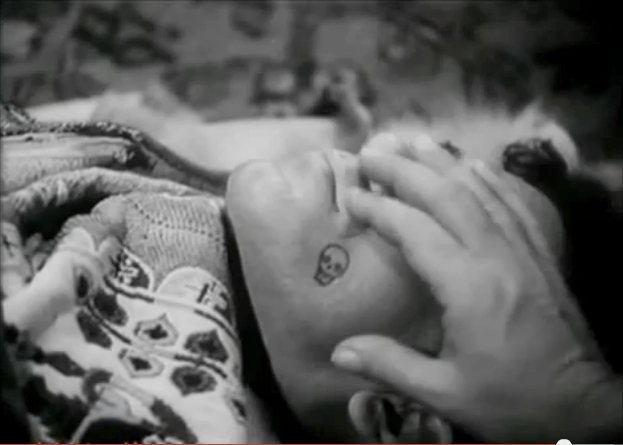
The first chapter is entitled “The Sign of the Skull,” and indeed the skull is an important part of the Phantom’s iconography, particularly the carved ring he wears which leaves the imprint of a skull on those on whom he metes justice. Instead of the remote and forbidding Skull Cave, however, the Phantom of the serial keeps his throne in public, in the center of Tonga village, where he ceremoniously makes appearances to speak to the natives and pass judgment on lawbreakers. There’s quite a bit of flair to these proceedings, as Suba uses flash powder to create bursts of flame and smoke, making it look as if the Phantom appears and disappears by magic. (Interestingly, Bremmer manages to use that same sense of theatricality against the Phantom, first setting up a fraudulent “Fire Princess” whose supposed control of flame makes her a challenger to the Phantom’s authority in the jungle, and later putting a Phantom costume on one of his henchmen after thinking he had eliminated the real one, in order to control the natives.)

P.fireprincess

The Phantom plays on the superstitions of the natives one-on-one, as well: confronting the rebellious chief Chota, the Phantom “summons the spirit of fire” to burn Chota’s village unless he tells the truth. In another episode, he smokes out a murderer by pretending to put poison into glasses of wine, saying it will only harm the guilty; of course, the killer is betrayed by his own fear rather than by the wine, which is harmless. Like many pulp heroes, the Phantom wins by his wits and his powers of psychology and detection as much as by his fists and weapons. (And like those heroes, there’s a certain unapologetic ruthlessness to his methods.)

P.Chota

There are certainly enough villains to choose from: right off the bat, Professor Davidson is victimized by both Dr. Bremmer and his saboteurs and the competing forces of Singapore Smith (the “outlaws”). There’s quite a bit of jockeying by both groups as they each try to steal the ivory keys from Davidson, and at times they work together against their common enemy. Given that both groups are white men with stubble wearing khakis and pith helmets, it’s easy to get them mixed up. However, Singapore Smith is so obviously shady that he doesn’t make it to the end of the serial; even in death he causes trouble for the Phantom, who pays him a visit (in disguise as “Mr. Walker”) and is then blamed for Smith’s murder. Meanwhile, Dr. Bremmer, like most classic serial villains, works his evil through proxies (including traitors within the expedition), avoiding suspicion until the final chapter.

P.Davidson.Singapore

In a late part of the story, the Phantom and Davidson’s expedition run afoul of the Tartar, the strict ruler of a kingdom that resembles Mongolia. The incongruity of a Mongol fortress in the middle of an African jungle, combined with the kingdom’s extreme isolationism (normally, all outsiders are put to death if they enter the Tartar’s kingdom, but naturally the Phantom wins him over), mark this episode as an example of the “lost world” genre embedded in the larger story. However, not even the Professor comments on its strangeness, and there is no explanation offered as to its presence and survival. (Also, it practically goes without saying that all the major characters speak English; there are a few scenes in which natives speak their own language and somebody has to translate, but not so many that it slows down the action.)

P.tartar

As the Phantom, Tom Tyler is nicely physical and has a commanding presence, and Jeanne Bates is adequate as the headstrong Diana Palmer, but the only antagonist to have much character is oily Singapore Smith (Joe Devlin). As Dr. Bremmer, Kenneth MacDonald has some good moments and is smooth enough to convincingly play both sides, but didn’t leave a strong impression on me. Frank Shannon (Flash Gordon‘s Dr. Zarkov) plays Professor Davidson, but the decline in energy obvious in the later Flash Gordon serials is in evidence here as well. The Phantom’s animal companion Devil, a wolf in the comics, is played in the serial by a German Shepherd, Ace the Wonder Dog.

P.Devil

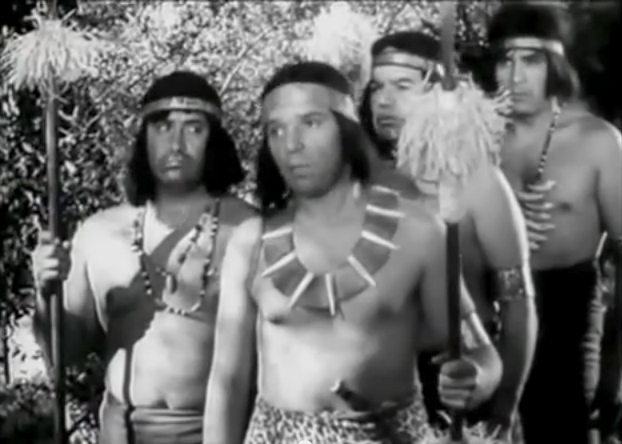
Beyond that, the casting of the many African tribesmen seems to have been mixed up with casting for a Western. Serials are not documentaries, of course, but the best of them make some effort to draw inspiration from the real world. In The Phantom, the natives resemble Hollywood Indians, (mostly) white actors with stilted accents and war paint. The Internet Movie Database lists among the uncredited actors playing natives Jay Silverheels (later TV’s Tonto) and Iron Eyes Cody, an Italian immigrant who adopted an Indian identity and made a specialty of playing Indian characters. This knot of tangled ethnic representation is not terribly unusual for the time, but compared to the actual black actors I just saw in Tim Tyler’s Luck, it’s especially phony.

P.natives

What I Watched: The Phantom (Columbia, 1943)

Where I Watched It: The whole thing can be watched on YouTube.

No. of Chapters: 15

P.Diana

Best Chapter Title: “The Road to Zoloz” (Chapter Thirteen) is nicely specific, and also suggests an entirely different film starring Bob Hope and Bing Crosby. It’s worth pointing out that both of the Phantom’s catch phrases, “The Man Who Never Dies” and “The Ghost Who Walks” are used as chapter titles (Chapters Two and Five, respectively).

Best Cliffhanger: Despite my criticisms of the acting in The Phantom, at least the action is pretty good, and there are not only several good cliffhangers but some exciting action sequences within the chapters. A very well-done cliffhanger ends Chapter Five (“The Ghost Who Walks”), in which the Phantom fights with the saboteurs on a rope bridge overhanging a deep gorge. Earlier, the Phantom, stalking the saboteurs as they drove an oxcart full of contraband ammunition to the secret airfield, had cut partially through the bridge’s ropes to weaken them. When he ends up fighting the saboteurs directly, of course the fight spills onto the damaged bridge, and the ropes give way, (seemingly) dropping them into the river far below.

P.bridge

Sample Dialogue: In the first chapter, Long (Wade Crosby) returns to witness a gathering at the Tonga village after killing the Phantom, along with fellow saboteur Andy (Sol Gorss) and upstart chief Chota (Stanley Price). To his chagrin, the new Phantom is accepted without question by the natives.

P.saboteurs

Long: Why, that can’t be the real Phantom. I know I killed him! This is just a trick to fool the natives.
Chota: No, him Phantom. Him Phantom! Man who never dies.
Andy: Looks like him to me.
Long: Why, it can’t be! He’s a much younger and taller guy than the real Phantom. I’m telling you that guy’s a fake.
Andy: Looks like you missed, Long.
Long: Let’s tell the natives that guy’s a phony.
Andy: Yeah? And when they ask us how we know, we tell ’em you killed the real Phantom. Why, you’d have your head drying over a fire in no time.

What Others Have Said: “Occasionally there was a shock when a player you had always associated as a good guy turned up in a serial as a crook. . . . You just couldn’t believe that lovable old rascal was really one of the baddies. . . . But, the real test of credibility came when Ernie Adams, who portrayed not only bad guys, but sneaky, yellow, cowardly bad guys, was cast in the role of Rusty Fenton in The Phantom in 1943, and you had to believe that the hero would have in him a good, trusted ally.” –William C. Cline, “When the Leopard Changed Its Spots” in Serials-ly Speaking

P.Rusty

(Serials I’ve reviewed in which Adams appeared include The Miracle Rider, in which he played the shady store operator’s clerk, and Tim Tyler’s Luck: Adams played Becker, the henchman whose death by gorilla meant so little to Spider Webb.)

What’s Next: For my final installment of Summer 2016’s Fates Worse Than Death, I will return to the air with Flying G-Men. See you in two weeks!

Fates Worse Than Death: Tim Tyler’s Luck

TTL.title

A young man attempts to stow away on a boat going upriver, into the dense African jungle. When asked why, Tim Tyler explains that he is looking for his father, Professor Tyler, an expert on gorillas who hasn’t been heard from in some time. Big game hunter Lora Lacey offers to pay Tim’s way, but the captain refuses; no matter, Tim finds his way onboard anyway. Also making the river trek is explorer Garry Drake. However, not all is as it seems: Lora Lacey is actually Lora Graham, looking for the master criminal Spider Webb, who committed a diamond theft for which Lora’s brother is serving the sentence. Her real plan is to search for Spider in the jungle and “bring him back alive” to prove her brother’s innocence, and she recognizes Drake as one of Spider’s men.

TTL.riverboat

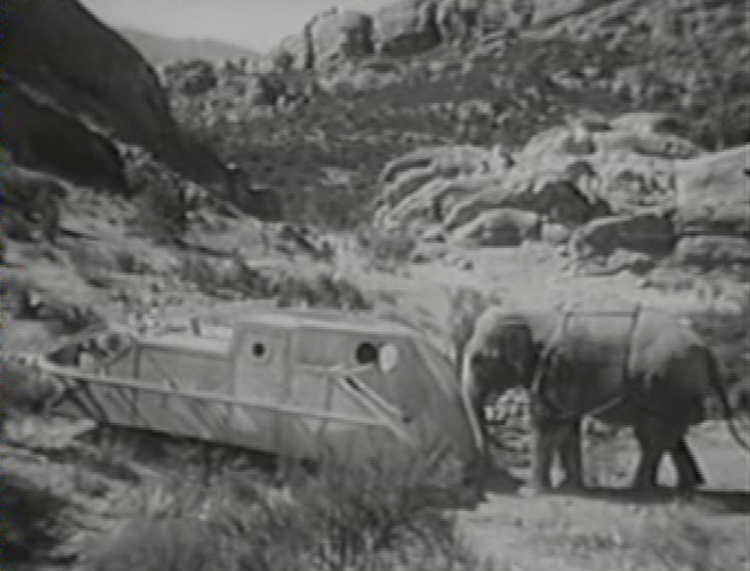
Sure enough, as soon as night falls Drake and his allies kill the captain, taking over the boat and steering it to the shore, where the rest of Spider’s gang will take possession of the weapons and ammunition intended for the Ivory Patrol, the colonial police force. With Tim’s help, Lora escapes the boat and the pair make their way to the Ivory Patrol’s base. With their help, Lora hopes to bring Spider to justice and Tim hopes to find his missing father. But it turns out their goals are related, as Tim learns when he sees that Spider’s men are driving the “jungle cruiser” (an armored tank) Professor Tyler had built for his work. The Professor has a secret, too: he’s located the legendary “elephant’s burial ground,” and men like Spider would kill to find it. It’s man vs. gorilla, horse vs. tank, and good vs. evil, with tons of ivory at stake, in the twelve-part serial Tim Tyler’s Luck!

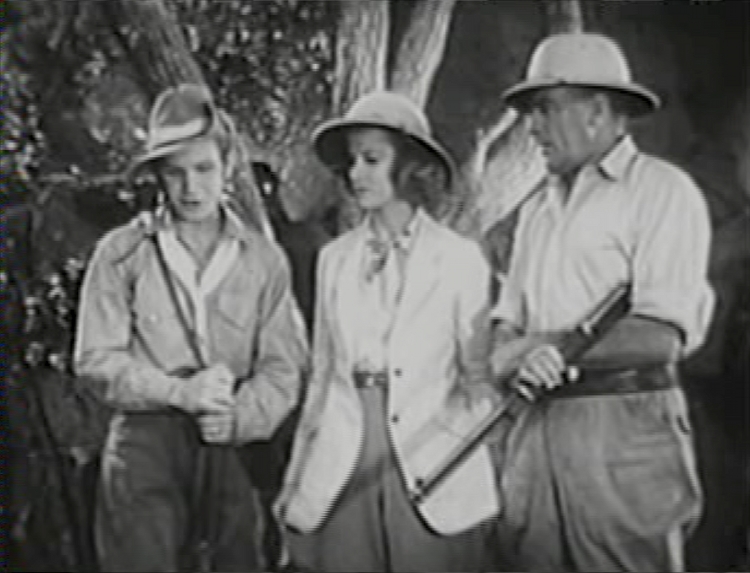
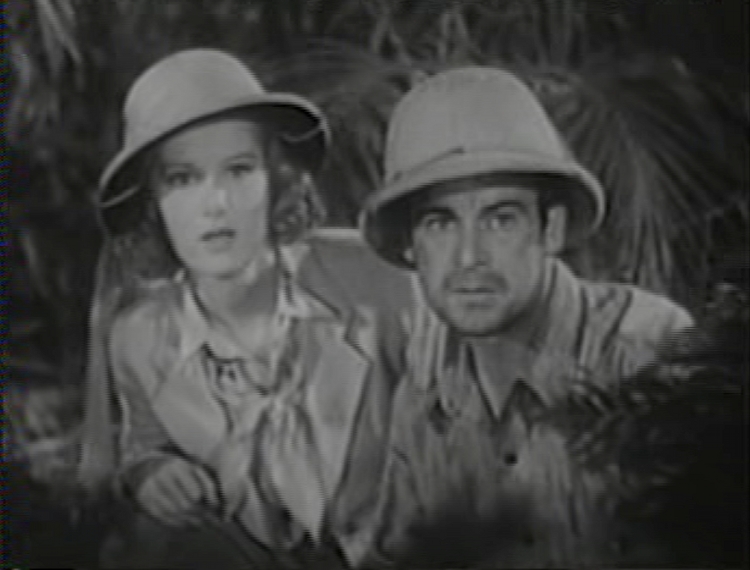
TTL.Tim.Lora.Conway

Like several of the serials I’ve covered this summer, Tim Tyler’s Luck, about “the All-American boy in Africa,” is based on a comic strip, albeit one I won’t even pretend to be familiar with (but holy cow, it ran until 1996!?). Played by Frankie Thomas (aka Frank Thomas, Jr.), Tim is a happy medium between the unrealistically-competent kid character who can handle any situation like an old pro and the helpless tagalong who’s in constant need of rescue. (Thomas’ career included stints in Broadway, radio, film, and television; after playing Tim Tyler, he appeared as Ted Nickerson in four Nancy Drew films; later, he played Tom Corbett, Space Cadet on TV.) Tim is self-sufficient and can handle himself in the wilderness, and he gets himself and his friends out of a number of jams, but he’s not a superhero; when things get hot, particularly when Spider Webb (Norman Willis) and his gang start shooting, Tim falls back on the support of the Ivory Patrol. (And, as I note below, Tim has a knack for making friends, an invaluable survival skill.)

TTL.Drake1

Typically, Tim Tyler’s Luck has several connections to other serials: right from the start, the theme music and much of the underscore was familiar to me from the later Buck Rogers serial (which I wrote about this spring for The Solute); Garry Drake, Webb’s right-hand man, is played by Anthony Warde, Buck Rogers‘ Killer Kane; Sergeant Gates of the Ivory Patrol is played by Jack Mulhall, Captain Rankin in Buck Rogers; and the “jungle cruiser,” so prominently featured, had served as the “juggernaut” in Undersea Kingdom the year before (instead of the electric whine the juggernaut produced, the jungle cruiser simply makes engine noises like a truck).

TTL.Tim2

Frances Robinson plays Lora Lacey/Graham (and yes, she’s the only woman in the cast, but she has much more to do than scream for rescue); she is another resourceful character, but one who can’t do everything herself. Robinson is lovely, with expressive features that serve her in a variety of moods and emotions. A high point is a sequence in Chapter Six (“The Jaws of the Jungle”) in which she pretends to be a criminal herself and demands a cut of Webb’s payday, with her access to Tim as leverage. She adopts a clipped, hard-edged voice for these scenes, playing off Willis’ low-rent Bogart impression with a little Katherine Hepburn of her own.

TTL.Lora.Conway

Earlier this summer, I described Pirate Treasure as the serial that was “maybe the most elemental in its appeal” for the way it deployed adventure tropes in bold, simplified form. Similarly, Tim Tyler’s Luck may be the most direct expression of the “jungle” genre in anything without Tarzan in its name. Among the touchstones of the genre encountered here are big game hunters, ivory traders, a colonial army, a missing scientist, wild animals, volcanos, quicksand, “talking” drums, and natives both helpful and hostile; there is the theme of man and his technology vs. nature; the man of civilization who has cast off his old identity in the wilderness; and the connection between man and animal. The central conceit of Tarzan and She, the white god or goddess lording it over the black natives, is the only major element of the genre that goes unused (although there are references to a hostile tribe ruled by a white man who has gone native and now directs the tribe to war on other whites; perhaps this character played a greater role in the comic strip, but in the serial he never appears on screen).

TTL.cruiser

Of course, the “elephant’s graveyard” is a myth, based on the observation that remains of dead elephants were never found in the jungle, but in Tim Tyler’s Luck it turns out to be real, a desolate volcanic region to which elephants instinctively return before dying. Conway (Frank Mayo), one of the heroes’ allies, is an ivory hunter (it wasn’t until the very end of the serial that I realized the title card isn’t meant to resemble Chinese writing: the words are made of piled-up elephant tusks); ivory is just one more natural resource to be plundered, not the moral and environmental outrage it is seen as today. In other words, this story is a product of its time.
TTL.tribesmen

As is almost always the case during this time period, the plot and characters are products of the colonialist imagination. The main characters are white Americans or Europeans adventuring in Africa, with the native tribesmen largely serving as extras in the background; the most notable exception, Mogu (Everette Brown), is one of Spider Webb’s henchmen, and a few others get lines here or there. I haven’t returned to the discussion of representation lately, mainly because there isn’t much new to say: racism and colonialism were so prevalent in the 1930s that it’s less repetitive to point out positive developments such as color-blind casting (such as Philson Ahn’s Prince Tallen in Buck Rogers) or well-developed non-white characters when they do occur. If you’ve followed me this long in this series, the portrayal of Africans in Tim Tyler’s Luck will not surprise you.

On the other hand, in comparison to some serials, there is clearly more of an effort to present a multi-faceted Africa: some tribes are friendly, some are hostile, and they are given their own beliefs and motivations. And there are more black faces on screen than in many films of the time: many are bearers and servants, and many are half-dressed tribesmen with spears and shields, but there are also black troops in the Ivory Patrol, and there’s Mogu. The African characters are no more uniformly good or evil than the white characters. That’s not to say that Tim Tyler’s Luck is “realistic,” exactly–this is a film in which the hero befriends a black panther, and his scientist father has learned to speak gorilla–but the world feels full, complex, and lived in. Africa is more than just an empty playground for whites: there are other stories going on all around them.

TTL.Mogu

For that matter, and for want of a better term, Tim Tyler’s Luck feels like a movie, not just a serial: throughout this series I’ve been fascinated by the mechanics of serial storytelling: how rhythms are built up, the use of foreshadowing and red herrings to keep the wheels turning, and above all the formal necessity of setting up and resolving cliffhangers. Tim Tyler’s Luck has those things, but it also slows down enough to establish mood and character; the cliffhangers aren’t the most important part of the chapters, and there is enough action that most chapters have at least one or two good set pieces that aren’t tied to the chapter-ending cliffhanger. The scene in which reformed criminal Lazarre (Earl Douglas) tries to silently point out the Professor’s diary to Lora, held prisoner by Garry Drake, succeeds in creating something that is theoretically central to the serial format, but which isn’t always delivered: suspense.

TTL.Lazarre

TTL.Lora

Obviously, the Indiana Jones films draw from the globetrotting adventure genre liberally: I previously compared The Perils of Pauline to Raiders of the Lost Ark, but Tim Tyler’s Luck, with its missing scientist (complete with a diary containing a map to the treasure), shifting loyalties, and running tank battles, feels like a strong influence on Indiana Jones and the Last Crusade. (And tell me that Tim Tyler doesn’t look like River Pheonix as young Indy in his scout uniform from that film’s prologue!)

TTL.Fang

And what of the title character’s “luck”? Again, since I’m not familiar with the comic strip this was based on, perhaps it’s a bigger deal in the ongoing story, but there doesn’t seem to be anything notable or supernatural favoring Tim Tyler. One may count his tendency to always be in the right place at the right time, but that’s a trait shared by many serial heroes. (Without the lubricating oil of coincidence, how many pulp-era plots would sputter and grind to a halt before they could even get off the ground?) No, if anything, Tim Tyler’s luck is his knack for winning others to his side by his goodness: he tames the black panther Fang by bandaging him up and treating him well; he wins over Spider Webb’s henchman Lazarre by saving his life, even when it would be to his benefit to let him die; and he offers water and comfort to the dying elephant handler who almost killed him, winning the elephant’s trust and loyalty. It simply doesn’t occur to Tim to act any other way, and his good acts return to him in the form of supportive allies.

TTL.handler

Compare that to Spider Webb, who seems to neither regret nor relish his evil: he simply looks out for number one, and everyone else be damned. Other people are so little to him he can’t even pretend to care what happens to them (watching one of his henchmen sink into the quicksand that surrounds his base, Webb says only, “well, let’s get going”); the Professor, Tim, and Lora are left alive at key moments only because Webb needs them alive for leverage or information. Unlike many serial villains who rant theatrically, Webb is coldly sociopathic, and because of this comes across as more modern than his contemporaries; and just as importantly, he remains cool even as things unravel and he meets his inevitable comeuppance. Webb berates and bullies his underlings, and because of it he dies alone, unloved, and unrepentant; in comparison to many serials about heroes who save the day single-handedly, Tim Tyler’s Luck makes a solid case for the value of friendship and teamwork.

TTL.Spider1

What I Watched: Tim Tyler’s Luck (Universal, 1937)

Where I Watched It: A non-commercial DVD from the batch I got on eBay earlier this summer. It doesn’t appear to be available to view online.

No. of Chapters: 12

Best Chapter Title: “Jungle Pirates” (Chapter One). As I said, this serial has something of a primal appeal, and the first chapter sets the tone by asking what could possibly make a jungle adventure more exciting: how about jungle pirates?

TTL.Prof.Lora

Best Cliffhanger: The gorillas of Gorilla Canyon are essentially a force of nature in Tim Tyler’s Luck, a natural obstacle to anyone who ventures into their territory. In other chapters, they throw boulders at intruders, resulting in the destruction of Conway’s ivory safari, and they’re an unpredictable danger to anyone who ventures into the caves that riddle the canyon. Only Professor Tyler, who was lived among them for months, has their trust, and even he has succeeded in taming only one of the beasts. In Chapter Seven (“The King of the Gorillas”), the Professor and Lora are forced by Spider Webb to return to Gorilla Canyon to retrieve the Professor’s map to the elephant’s burial ground. While there, the Professor releases the caged gorilla he had trained in hopes of freeing himself and Lora from Spider’s grasp, but the tame gorilla gets in a fight with an aggressive male, still wild. Meanwhile, Tim and Sergeant Gates of the Ivory Patrol have tracked the cruiser to the canyon and make their way into the caves. Professor Tyler is shot by Becker, one of Spider’s men, just before being killed himself by a gorilla (Spider, ever the practical one, only says “Becker’s done for. Never knew what hit him.”). The Ivory Patrol attacks, driving Spider’s men away, but just as Tim finds the cave with Lora and his father, the bull gorilla attacks and carries him away.

TTL.gorilla

Honorable mention: Several of the cliffhangers involve animals, wild or otherwise. There is actually a second cliffhanger that involves Tim being carried, unconscious, this time by an elephant (in Chapter Nine, “The Gates of Doom”). Spider’s inside man in the Ivory Patrol, Rocky, has bribed the elephant’s handler to help Spider escape the Patrol’s fort, but once cornered by, he has the elephant grab Tim. The elephant will crush Tim unless the Patrol lets him escape. The fort’s guards close the heavy doors, but the elephant smashes through them with Tim in its trunk!

TTL.Bolo1

Sample Dialogue: “Get this, Tyler: if you don’t tell me where the elephant’s burial ground is, there will be a death in the Tyler family.” –Spider Webb, Chapter Six (“The Jaws of the Jungle”)

What Others Have Said: “Working with the heavies. You ask any actor: the heavies are the nicest people in the world. That’s just the way it works.” –Frankie Thomas, asked in an interview, “What was the high point of working on Tim Tyler?”

What’s Next: Keeping with the jungle theme, let’s check out The Phantom, starring Tom Tyler. That’s not confusing at all!

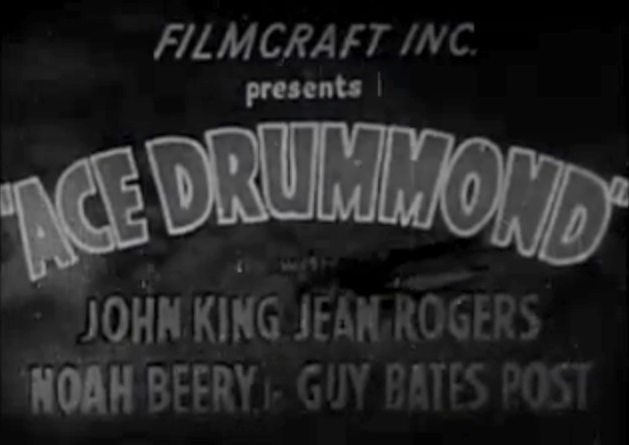
Fates Worse Than Death: Ace Drummond

AD.title

International Airways is under attack! The fledgling enterprise, assembled by a multinational group of businessmen with the intent of uniting the world through travel and trade, is suffering mysterious air wrecks in its Mongolian territory. Construction on the airfield is threatened, and if the wrecks persist it will mean the end of the entire operation. The disasters are the work of the elusive “Dragon,” a faceless criminal mastermind who speaks through special radio receivers hidden in prayer wheels, fans, and even airplane propellers. In response to the attacks, Ace Drummond, “G-Man of the Air,” arrives from his base in Washington to investigate.
AD.prayerwheel

Although he finds many allies–among them young Billy Meredith, son of one of the Airway board members; Jerry, an enthusiastic mechanic and pilot at the airfield; and Peggy Trainor, who has come to Mongolia in search of her missing archeologist father–this foreign territory is filled with potential enemies, any one of whom may be the Dragon or one of his subordinates. Is it Dr. Bauer, the explorer who holds Professor Trainor hostage in hopes of wresting the secret location of a mountain of jade from him? Or is it the monk Kai-Chek, who rails against the intrusion of foreigners and their “devil birds” in Mongolia? Or perhaps it is Henry Kee, the Mongolian member of the committee, or Johnny Wong, the furtive Chinese radio operator. Or it could also be Winston, a member of the committee eager to shut down operations in the face of the Dragon’s terrorism. Or it could be one of the other dozen characters who come under Drummond’s suspicion: the G-Man of the Air has his work cut out for him in the thirteen-chapter serial, Ace Drummond!

AD.radio

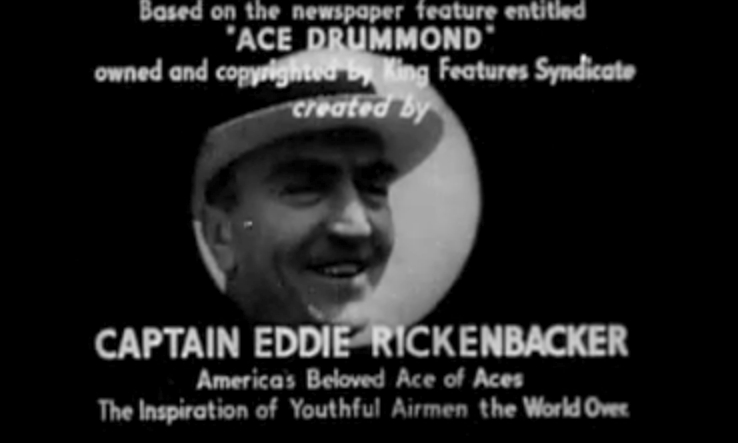
Like Tailspin Tommy, Ace Drummond was a comic strip that rode the wave of the public’s fascination with aviation in the 1930s before being adapted into a movie serial, but Ace Drummond relied on exotic locations and a global scale much more than the down-to-earth Tailspin Tommy. The comic strip was created by World War I hero Eddie Rickenbacker, who lent his name and expertise and contributed scripts to the strip. Every chapter of the serial opens with a portrait of Rickenbacker, “America’s Beloved Ace of Aces,” and recaps the previous chapter with a clip of a newspaper comics page being unfolded and a zoom-in on panels that relate previous events. Rickenbacker also took an active hand in promoting the Ace Drummond serial, forming a “Junior Pilots Club” to generate fan excitement.

AD.rickenbacker

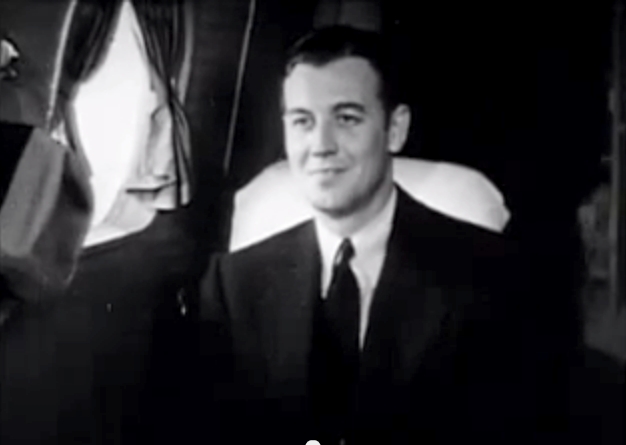
Ace Drummond is also a musical, sort of. Recall that in The Phantom Empire, Gene Autry had to perform a song every day in order to keep his radio contract. One might think that Ace Drummond had a similar contract, as he tends to burst into song whenever a chapter has some time it needs to fill. Leading man John King had been a popular singer before making the jump to acting, and after Ace Drummond he would go on to play a number of singing cowboy roles (most notably “Dusty” in Monogram’s Range Busters series), so it makes sense to feature his talents. Here’s the thing, though: it’s always the same song, “Give Me a Ship and a Song” by Kay Kellogg. Drummond first sings it on the clipper ship into Mongolia to calm down the passengers (understandably nervous, since apparently half a dozen planes have crashed, but this is the first passenger plane to make the trip): a passenger turning the dial on his radio tells a flight attendant, “I’d give a million dollars to hear a great jazz band.” The attendant suggests a station, and the music switches to something that isn’t jazz at all: the intro to “Give Me a Ship and a Song,” which Drummond sings in full to the appreciative passengers. Later, Drummond sings the same song to entertain Peggy Trainor; to entertain the mechanics at the airfield; to test a radio receiver; and he even plays a phonogram record of himself singing in order to fool one of the Dragon’s henchmen sneaking around the airfield. Obviously, the repetition would be less obnoxious if I were watching the serial week to week instead of all at once, but as a transparent attempt to generate a hit, it flopped.

AD.Drummond1

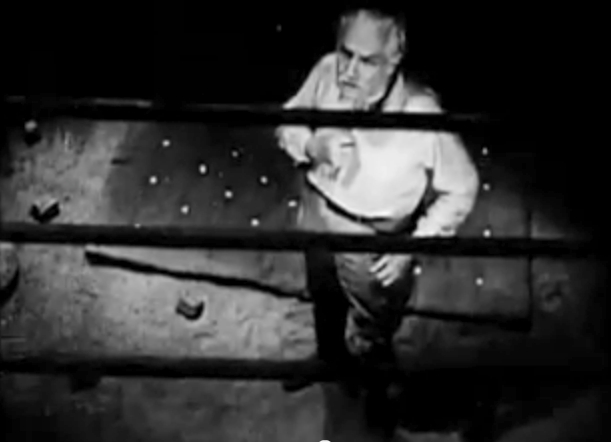
The action in Ace Drummond fares better: Ace saves the plane from an attack–the Dragon is able to zap the pilots with electric shocks through the radio, as well as having a ground-based “death ray” that can down smaller planes–and, spotting a biplane circling just before the attack, he bails out and tracks the plane to the camp of Dr. Bauer (Fredrik Vogeding) and his associate Wyckoff (Al Bridge). The two explorers claim to be searching for the lost tomb of Genghis Khan, but they have Professor Trainor (Montague Shaw) held prisoner in a dungeon. Trainor’s daughter Peggy (Jean Rogers) has just shown up on her father’s trail, and Bauer and Wyckoff hope to hold her as well in order to force her father to give up the jade mountain’s location, but Ace rescues her just in time and takes off in Bauer’s plane. Struck by the Dragon’s death ray, the plane crashes into the wall of the village monastery, bringing in another group of characters.

AD.Trainor1

The monk Kai-Chek (Chester Gan) calls for the foreigners to be punished for violating the sacred temple, but the Lama (Guy Bates Post) cautions against reacting with anger to what was obviously an accident. Throughout the remainder of the serial, the Lama and his fellow monks are an important resource for Drummond and his allies, translating and providing wisdom as well as communicating with the natives (who are never given much more characterization than a mob of undifferentiated foreigners). More importantly, the monastery is a colorful set full of secret passages and traps, including a room with a mechanized wall designed to close in and crush anyone unfortunate enough to be trapped within. The Lama pleads ignorance of the deadly trap; it’s left unclear until the very end whether the Dragon actually has a connection with the monastery or is simply taking advantage of its secrets.

AD.Kaichek

Ultimately, that points to the weakness of Ace Drummond: the excessive number of suspects and subplots grows wearisome in later chapters, and when some characters who were under suspicion are later revealed to be innocent, their earlier actions don’t make a lot of sense. It’s one thing for the audience to get confused–that’s part of the sleight-of-hand involved in mystery storytelling–but it’s less satisfying when one senses that the writers themselves don’t quite have a handle on the plot. There are simply too many red herrings, and it’s almost comical to hear the repeated exclamation, “So you’re the Dragon!” aimed at one character after another in the last few chapters, until at last the real Dragon is unmasked.

AD.Drummond2

Still, that complaint aside, the serial has many good qualities: although there is less time spent flying than in Tailspin Tommy, there is enough aerial action to demonstrate Drummond’s prowess and Rickenbacker’s expertise, and of course the entire plot is motivated by the defense of a commercial airline venture, a business Rickenbacker had also been intimately involved with as the manager (and later owner) of Eastern Air Lines. The Mongolian setting, while open to charges of exoticism (indeed, the lure of adventure in strange foreign places is the entire hook for this genre), is unusual and provides for some original locations and opportunities for action.

AD.squadron

In addition to the actors already mentioned, the cast includes a number of familiar faces: Lon Chaney, Jr. appears as Ivan, the lead henchman; Noah Beery, Jr. plays Jerry, who could be twins with Skeeter, the character he played in Tailspin Tommy; as Billy, Jackie Morrow provides the requisite spunk, without being too annoying; and veteran Montague Shaw is reliably paternal in the kindly old scientist role.

AD.jerry

Finally, the Dragon himself, unrevealed until the last chapter, makes for a dramatic presence, speaking in a booming voice through his spinning receivers, always closing his missives with an authoritative “THE DRAGON COMMANDS!” or “THE DRAGON HAS SPOKEN!” It makes a big enough impression that each chapter ends with the typical title card instructing audiences to see the continuation next week in the same theater, accompanied by a fire-breathing dragon and that same voice over: “THE DRAGON COMMANDS!” It’s not a request.

AD.dragon

What I Watched: Ace Drummond (Universal, 1936)

Where I Watched It: TCM ran several chapters of this serial earlier this summer, but for this article I watched it on (and collected screen shots from) YouTube.

No. of Chapters: 13

Best Chapter Title: “The Dragon Commands” (Chapter Eleven)

AD.peggy

Best Cliffhanger: In Chapter Five, “Bullets of Sand,” Peggy and Billy investigate Dr. Bauer’s operation, hoping to find proof that the German explorer is secretly the Dragon. Bauer and Wyckoff are holed up in “the Hall of Dead Kings,” a tomb complex carved into a mountainside and full of treasures. Their camp employs a dozen natives, digging and cleaning up artifacts, including sand blasting jade urns. While snooping in Bauer’s office, a separate building, Peggy and Billy are locked in. Billy climbs up the chimney and escapes, but before he can let Peggy out from the outside, he must hide from the approaching workmen to escape detection. He hides in one of the urns, just before the workmen begin cleaning out the inside of it with the sand blaster! A shot straight up the barrel of the sand blaster ends the chapter, leaving us in suspense.

AD.billy

Sample Dialogue (from Chapter Thirteen, “The World’s Akin”):
Dragon: “We have a saying in Mongolia: he who smiles at the grave’s edge takes happiness into the world beyond.”
Jerry: “We got a saying in America, too, though: don’t count your chickens before they’re hatched!”

AD.clipper

What Others Have Said: “For a time it was thought that the airplane film might supplant the Western in the affection of the young, but, air age and all, it didn’t happen. Situations involving airplanes were woven into many serials and adventure features; yet the number of serials centering upon aviation never matched that of films set in the West. Nonetheless, in the New Deal era at least one air adventure could be expected to appear each year among the ranks of serial dramas. . . . As a matter of fact, the aviation cycle would soon be lost in space–and in war clouds. Not many old-fashioned, seat-of-the-pants flying flims would be made after Flash Gordon took off for Mongo and World War II revolutionized aeronautics.” –Raymond W. Stedman, The Serials: Suspense and Drama by Installment

What’s Next: Join me next time as I examine Tim Tyler’s Luck.

Fates Worse Than Death: King of the Royal Mounted

KRM.title

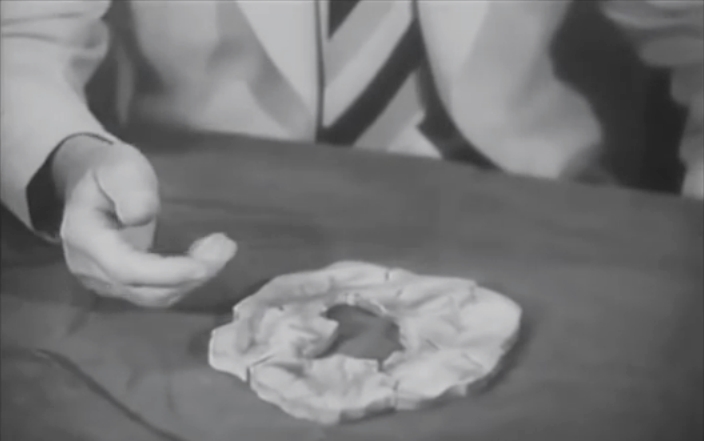
At a conference between agents of an unnamed enemy of the British Empire, a spymaster discusses the need for greater supplies of the mysterious “Compound X.” Discovered by a Canadian scientist who is actively mining it, Compound X has been greatly useful in treating infantile paralysis, but one of the spies shows (using a model ship) that adding a small amount of copper sulfide magnetizes it, making it perfect for explosive mines that are magnetically attracted to the steel hulls of blockade ships. The Allies don’t know this, so Kettler (Robert Strange), the spy assigned to mastermind the operation in Canada, has the job of getting more Compound X out of the country while hiding its military value from the Canadian and British authorities.

KRM.demonstration

Dropped off by a submarine at a remote inlet, Kettler takes command of the local spy ring, a band of ruffians headed by a scarred thug named Garson (Harry Cording). Meanwhile, tipped off to the spy’s arrival, the Royal Canadian Mounted Police organize a dragnet to find him and rid Canada of the spy ring. Sergeant Dave King (Allan “Rocky” Lane) is assigned to Tombstone Landing Station to coordinate the Mounties’ efforts, along with the local Inspector (King’s father, played by Herbert Rawlinson), and Corporal Tom Merritt, Jr. (Robert Kellard), the son of the scientist who has been mining Compound X. (It’s a small world.)

KRM.King1

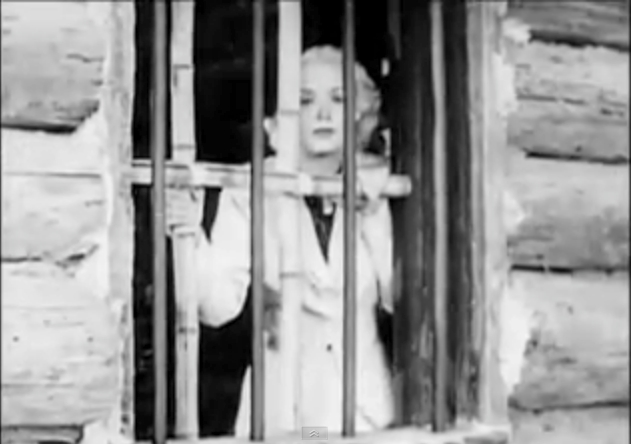
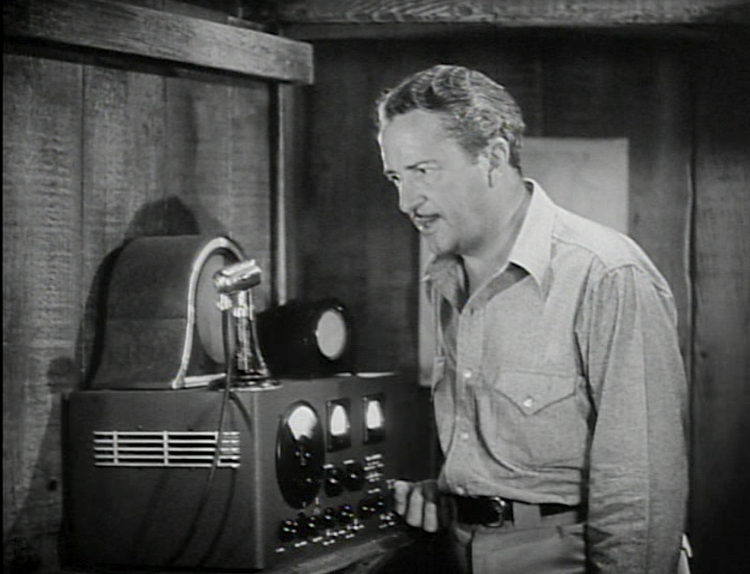
Things are not as they seem at the Caribou Pitchblende Mine, the source of Compound X. Garson and his men have been stealing as much Compound X as they can smuggle out of the country with the assistance of Matt Crandall (Bryant Washburn), Merritt, Sr.’s partner. Crandall has a shortwave radio hidden behind a wall in the mine’s workshop with which he can communicate with the spy ring. In the first chapter, Merritt, who has suspected Crandall, overhears him making an exchange with Garson and confronts him: Crandall shoots him and fakes an attack by Garson, allowing him to keep his innocent appearance, at least for a while. That’s just in the first chapter of King of the Royal Mounted, and the plot twists more from there, becoming occasionally convoluted but always in motion.

KRM.Garson

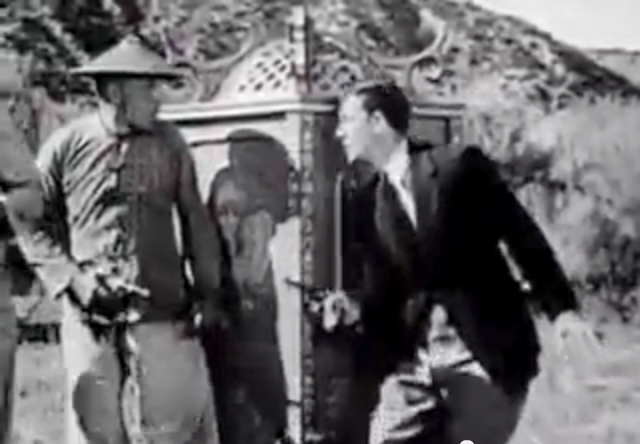
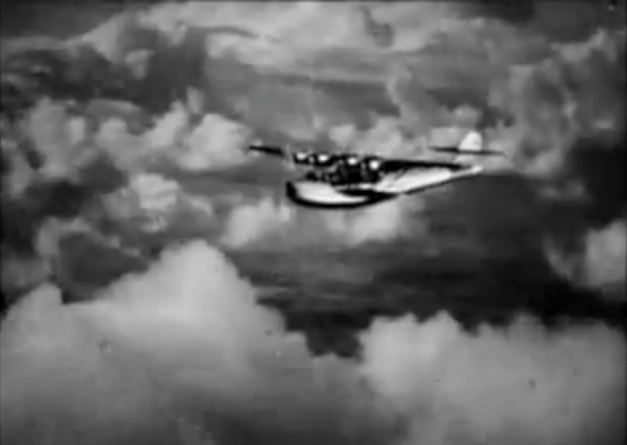
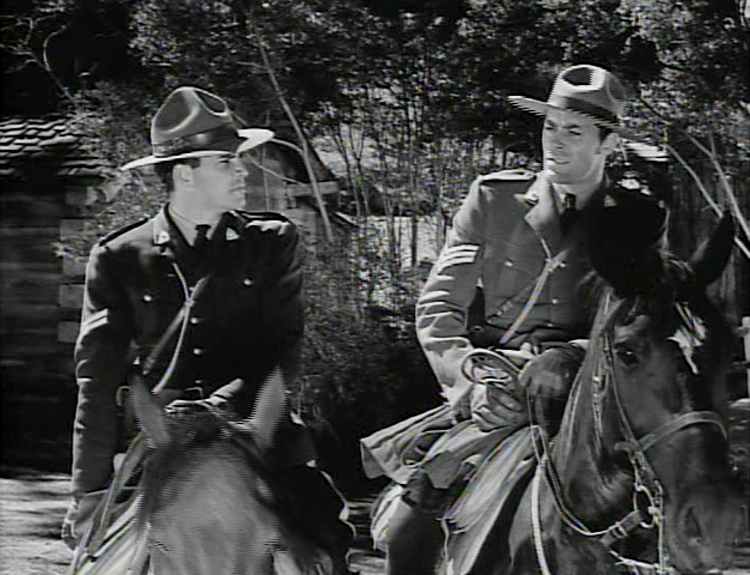
King of the Royal Mounted is an example of the “Northern” or “Northwestern,” the Canadian equivalent of the Western, popular since the 1910s. As in this one, the heroes are often Mounties, who combine the cinematic virtues of cowboys and police, and instead of prospectors and gunslingers, the local color tends to be made up of loggers and fur trappers, all of this set against the majestic mountains and forests of Canada’s wilderness. As an example, mountain man Vinegar Smith (Budd Buster) is full of lively metaphors (“tougher than skinnin’ a live coyote”) and second-hand Indian wisdom (although there are no actual Indian characters in this serial), and is often in convenient locations to witness strange goings-on or find clues, as when Linda Merritt (Lita Conway) is abducted by airplane and drops her bracelet from the plane attached to a flare in hopes of signaling her location.

KRM.Vinegar1

Viewers will also note the frequent references to the Empire; however, like many Northwestern adventures, King of the Royal Mounted is a product of Hollywood. As one might assume, the locations are actually Californian rather than Canadian (mostly filmed in the San Bernardino National Forest, according to always-informative Jerry Blake), but they make for a convincing Great White North on screen. Presumably, this is the reason why the enemy spy ring’s nationality remains unspoken: the U.S. hadn’t yet entered the war against Germany when this serial was produced.

KRM.Mounties1

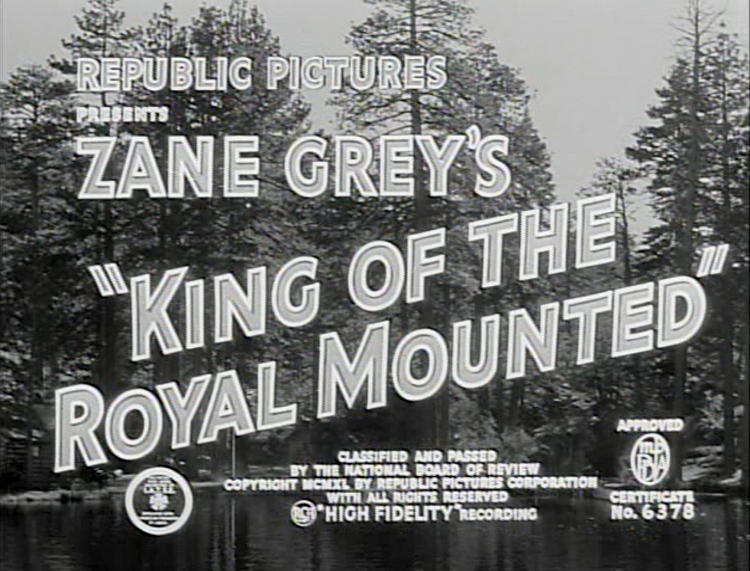
King of the Royal Mounted displays Zane Grey’s name prominently above the title, but Grey’s involvement was limited: Stephen Slesinger (who was also behind the development of Red Ryder) was the character’s primary creator and writer, with the prolific Western author’s name added for promotional purposes. Slesinger was a pioneer of licensing and merchandising, and Sergeant King, star of comics, Big Little Books, and other spin-offs, was conceived as a true multi-media figure like Tarzan. In 1942, Republic produced another serial, King of the Mounties, based on the same character, but there are several unrelated Mountie serials by Republic and other studios as well. (This also set the pattern for several Republic serials featuring heroes named King, allowing them to use the semi-punning title King of the __________.) The genre goes much deeper than Dudley Do-Right.

KRM.King2

Directed by veterans William Witney and John English, this serial compares favorably to many I’ve watched, with clear, exciting action sequences strung together with well-integrated dialogue scenes. While the emphasis is on the swiftly-moving plot, the dialogue that connects the action set pieces provides a strong sense of character: Kettler and his spy ring are motivated by either nationalism or mercenary concerns, and their continued frustration at King getting in their way turns more and more personal over the course of the serial. King and the Mounties are concerned not only with law and order and the security of the Empire but with the personal safety of their families and with the children who are going to be deprived of life-saving treatment if all the Compound X is stolen.

KRM.Mounties2

In fact, unlike most serials, King of the Royal Mounted isn’t afraid of pouring on the sentiment: the death of Inspector King a third of the way through the serial has weight and the action slows down for a few scenes of mourning. After the Inspector is put to rest, his son is made acting commander of the post, inspiring a few sober words from the otherwise colorful Vinegar Smith: “Best man I ever knew sat in that chair. Any man that takes his place is going to have to do more than just set.” King takes a moment to acknowledge that Garson killed Tom Merritt’s father and (indirectly) his own, and then puts it into perspective, reminding the audience that the fate of the entire British Empire is on the line.

KRM.vacantchair

The Canadian setting provides opportunities for some excellent locations: an abandoned saw mill (and here we get an example of the ultimate serial cliffhanger as Sgt. King, unconscious, is knocked onto a conveyor belt, moving inexorably toward a spinning blade); an abandoned cannery (filled with explosives disguised as crates of salmon); a dam, at which King is almost swept through the spillway, and from which he later dangles by his fingertips; and the best of all, a hidden refinery in a cave, where the spy ring processes its stolen Compound X before smuggling it down the river in hollowed-out logs. After King infiltrates the refinery by hiding in a truck, there’s a fight scene in and around the catwalks and ladders and over an open smelter that’s as good as any I’ve seen. It’s comparable to the fight in the gas works in Daredevils of the Red Circle, but unlike that scene, the refinery is clearly a set rather than an actual location, giving it an odd blend of gothic atmosphere and modern utility. (Of course somebody ends up falling into the smelter during the fight–but who?)

KRM.refinery1

(For that matter, while the consequences of all this violence aren’t graphically portrayed, there’s quite a bit that, if shown realistically, would be brutal, including fights with axes, sledge hammers, and the like, in addition to the usual fisticuffs and gunplay.)

KRM.refinery2

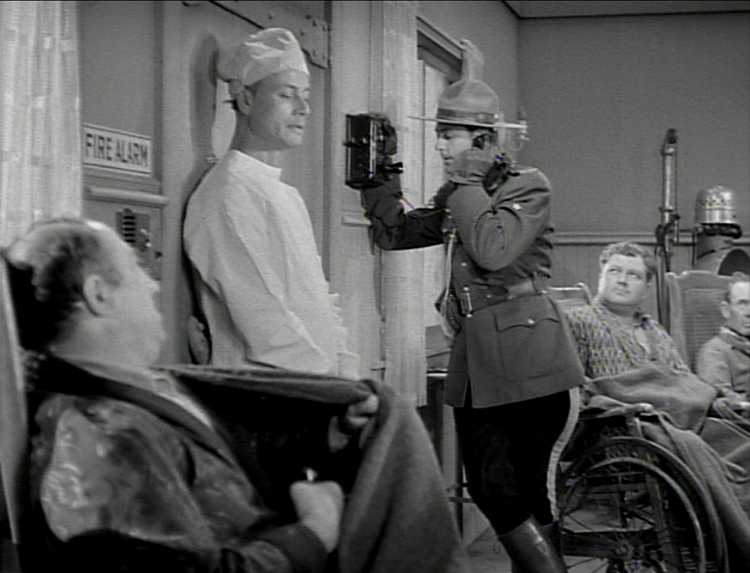
Another excellent sequence takes place at “Lakeshore Sanitarium,” a false front set up by the spy ring to assemble fuse caps for magnetic mines. King checks it out when he sees the unusually high shipments of Compound X sent there, and he runs up against “Doctor Shelton” (deep-voiced John Davidson, who we’ve been seeing a lot of this summer), who quickly has his underlings assume the roles of invalid patients. There’s an eerie, paranoid atmosphere in this chapter, as King knows something is wrong (he discovers burn marks and the fuse caps in the “operating room”) but can’t risk a frontal assault without backup. (It’s reminiscent of the excellent Cold War thriller The Whip Hand, which sets up a Communist spy ring in an isolated Wisconsin fishing village, similarly disguising its germ-warfare research as a sanitarium.) Eventually, King flushes out the fake paralytics by setting off the fire alarm, at which they all jump out of their wheelchairs, resulting in another big fist fight.

KRM.sanitarium

Ultimately, while King is the primary hero of this serial, the heart of the story belongs to the Merritt family: Merritt, Sr. (Stanley Andrews), discoverer of Compound X and senior parter in the Caribou mine is killed in the first chapter. His daughter, Linda, carries the torch for his mission: her intimate knowledge of the grounds around the mine and her growing suspicion of Crandall both support King’s efforts and put her in danger. His son Cpl. Merritt is Sgt. King’s right-hand man, and it is he who makes the ultimate sacrifice to stop the spy ring once and for all (allowing King to continue his adventures, of course). The Mounties may always get their man, but sometimes they pay a high price.

KRM.Linda1

What I Watched: King of the Royal Mounted (Republic, 1940)

Where I Watched It: A DVD from VCI Entertainment. It doesn’t appear to be available to view online beyond a few isolated scenes, but there is a wealth of similar Mountie material on YouTube.

KRM.submarine

No. of Chapters: 12

Best Chapter Title: “Satan’s Cauldron,” Chapter Eight. (This is the chapter set in the refinery mentioned above.)

KRM.smelter

Honorable Mention: “Death Tunes In” (Chapter Seven) is also a good title, and points to the importance of radio in this serial. Both the members of the spy ring and the Mounties communicate by radio, and both spend time listening in on each other, breaking each others’ codes, and tracking each others’ locations by radio.

KRM.Crandall1

Best Cliffhanger: In Chapter Six (“False Ransom”), Cpl. Merritt is riding out to meet the henchmen who claim to have Linda held hostage, exchanging the confiscated fuse caps for her safe return. Before he goes, Vinegar Smith tells him to watch out for a bear trap he has set on the trail: “It’s a man-killer!” Now, foreshadowing is typical of the serials, so anyone watching this knows it’s going to come up, but the filmmakers spent a lot of time on the bear trap prop, so we get several good looks at it. When the henchmen arrive (without Linda, as they are planning to ambush Merritt, of course), they accidentally set the trap off: a heavy wooden frame with spikes on it falls to the ground. They decide to reset the trap to use against Merritt, finding that preferable to shooting a Mountie. When Merritt arrives, he notices the rope and steps around the trap. When Sgt. King arrives (having previously rescued Linda from the cabin where she was being held) and fighting breaks out, there are several shots of the rope intercut with the fighting as King and his opponent, wrestling on the ground, inch ever closer to it. Finally, with King directly under the trap, the rope is released, and the chapter ends with a ground-level shot of the trap descending toward him!

KRM.trap1
KRM.trap2
KRM.trap3

Sample Dialogue: “I didn’t expect a tea party when I joined the Mounties.” –Cpl. Tom Merritt, Jr., Chapter Six

KRM.Tom

What Others Have Said: “Allan Lane, they say, was a pure-tee tyrant on his movie sets: wouldn’t let anybody else wear dungarees because he wanted to be the only one wearing them. Pretty rough on co-workers, they say, because he always wanted things done his way. Real ‘stuck-up’ sorehead, they say. Took himself too serious. You know. But when he visited [the Paramount Theater in Concord, North Carolina], the star . . . was a pleasant, jovial man. The people who saw his personal appearances on stage, and those who met him personally, thought he was a pretty nice guy. He readily shared stories of his personal experiences and movie roles with anyone who asked him. . . . Stuck-up? Guess he had us all fooled that day.” –William C. Cline, Serials-ly Speaking, “The Circuit Riders”

What’s Next: In our next installment, we take to the skies again, but this time in the mysterious Far East. Join me as I watch Ace Drummond!

Fates Worse Than Death: Captain America (1944)

CA44.title

A bizarre series of deaths, some accidental and some obvious suicides, strikes at wealthy and influential men. The only connection between them is their involvement in an expedition to Central America in search of Mayan ruins, and the jeweled scarabs found in the victims’ possession. The mastermind behind the deaths, revealed to the audience in the first chapter, is Dr. Maldor, a member of the expedition who feels cheated of the glory and wealth that others have claimed. As the Scarab, Maldor is determined to take down his rivals, one by one, all the while posing as the friendly and helpful director of the Drummond Museum of Arts and Sciences.

CA44.scarab

Maldor’s plan might very well succeed, but for the industrious District Attorney, Grant Gardner, and his assistant Gail Richards, who stand in Maldor’s way and get far too close to the truth in their investigations. Even worse, Maldor’s henchmen keep running afoul of the costumed crime fighter known only as Captain America. Could Gardner and Captain America be one and the same? The audience knows, but will the Scarab learn the truth, and what will he do with it?

CA44.Cap2

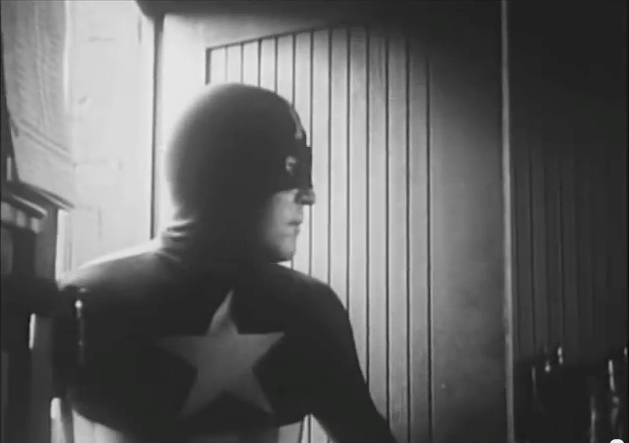
These days, when one reads about the 1944 Captain America serial, the focus is on its lack of fidelity to the comic books created by Joe Simon and Jack Kirby in 1941 and published by Timely (now Marvel) Comics. Instead of being Steve Rogers, a runty Army volunteer turned into a titan by the Super Soldier serum, the serial Captain America is Grant Gardner (played by Dick Purcell), a crusading district attorney who dons the costume to bring criminals to justice; no reference is made to his origin. Instead of wielding the iconic shield, Grant Gardner carries a gun, and he gets a lot of use out of it (in fact, considering how many bad guys Gardner kills in his civilian identity without anyone batting an eye, it’s not exactly clear why he needs to step outside of the law and put on a costume at all).

captainamerica1

This Captain America doesn’t even fight Nazis, all the more surprising considering the character’s explicitly patriotic concept and the serial’s wartime production. As in the 1949 Batman and Robin serial, Captain America’s foe follows the serial formula of a far-reaching (but apolitical) criminal mastermind: no Red Skull here, folks. Timely publisher Martin Goodman gave Republic the right to use the character for free (according to Marvel executive Tom Brevoort, speaking in the promotional documentary Captain America: 75 Heroic Years), likely expecting the film to boost sales of his comic books. Whether it had the desired effect, I don’t know, but one wonders what Simon and Kirby, not to mention their loyal readers, thought when they saw “Grant Gardner” going through the paces of a typical Republic adventure.

CA44.Gardner1

I was aware of all that before I watched the serial, but I tried to keep an open mind: although this is an extreme example, it wasn’t unusual for serial producers to change details of their source material to fit into their standard formula, and perhaps the serial would be a success on its own terms, even as it missed the mark as an adaptation. Unfortunately, I ultimately found it tedious and repetitive, even though it had some good performances and some individual chapters that worked well. Like many fifteen-chapter serials, Captain America can’t quite sustain its length, and might have been more effective cut down.

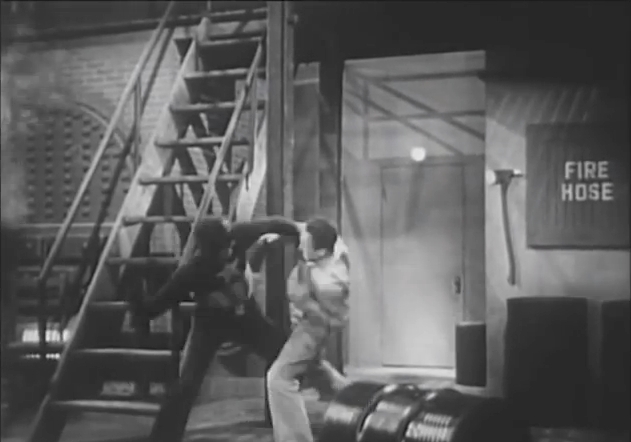
CA44.fight1

As both Gardner and Captain America, Dick Purcell has some personality and makes for an engaging central character, and there’s quite a bit of action (much of it supplied by longtime stunt man Dale van Sickel, who actually wore the costume for many of these sequences). He’s not really anything like what I think of as Captain America, being closer to a “cop who bends the rules” type rather than a boy scout, but free of other associations he held my attention. The sheer number of the Scarab’s henchmen that he blows away or throws out high windows, in either identity, would satisfy Charles Bronson.

CA44.Cap1

Even better is the supporting cast: played by Lorna Gray, Gail Richards is Grant Gardner’s capable assistant, and the only person who knows he’s Captain America. Although she sometimes ends up as the damsel in distress (the memorable cliffhanger in Chapter Five, “Blade of Wrath,” has her tied up and threatened with beheading by the guillotine-like blade of a paper-cutting machine), she also takes the initiative, and clearly takes after her boss. In one chapter, she catches someone tampering with Gardner’s car; when the man pulls a gun in an attempt to abduct her, she whips out her own heater and shoots him dead!

CA44.Gail1

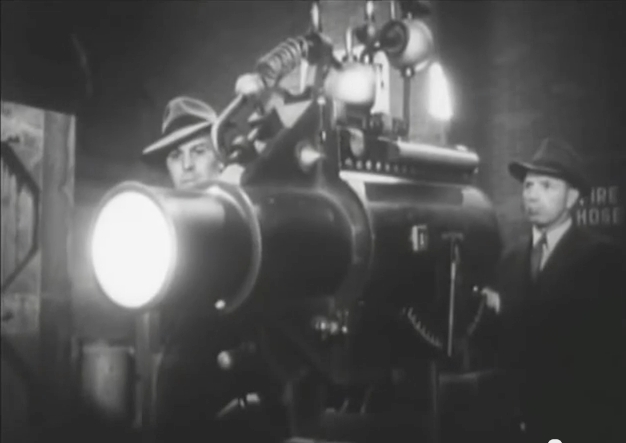
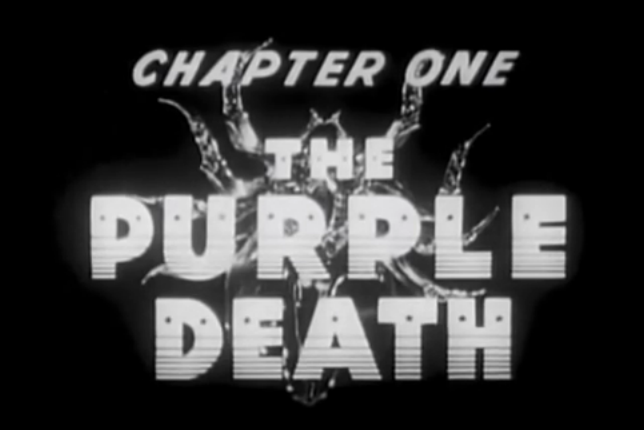
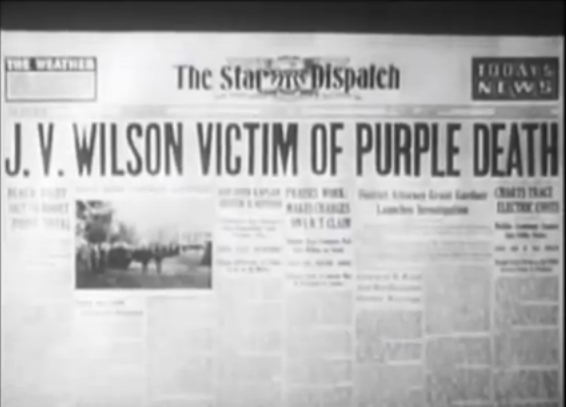
As Dr. Maldor/The Scarab, Lionel Atwill is the very model of a plummy, cultured villain, complete with monocle. Using the “Purple Death,” he can make men do his bidding or drive them to suicide. Like most serial masterminds, he works through his disposable henchmen, keeping himself at a distance from the violence until the very end. His right-hand man (and also the most active in the field) is Matson (George Lewis), but John Davidson (whom we just saw in Tailspin Tommy) also lends his deep voice to the cause of evil as the henchman Gruber.

CA44.Maldor1

Maldor possesses a cutting wit, often directed at his bungling helpers. In one scene he sarcastically congratulates his henchmen: “You should be proud of yourself. Captain America has made a fool of you in every job you’ve attempted.” In a late chapter, when Maldor starts getting his hands dirty himself, he honest-to-God says “There are ways of making you talk” to the only man who knows how to decipher a Mayan treasure map, before flogging him with a cat-o-nine-tails.

CA44.Maldor2

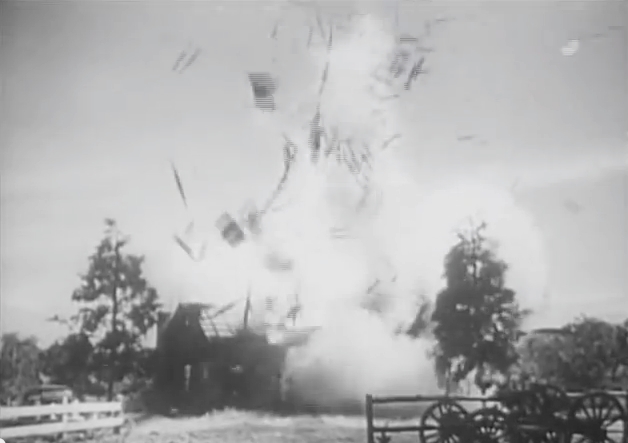
Later in the same episode, when Maldor learns that Gardner is on his way to the Scarab’s farmhouse hideout, he uses an airplane to personally drop bombs on the house in the hopes of destroying evidence of his presence and (even better) killing his nemesis at the same time (it is in fact the fifth building destroyed directly or indirectly by the Scarab in this serial, a showcase of special effects masters Theodore and Howard Lydecker’s genius). It would be nit-picky to question the efficiency or timeliness of this method. Rather, it points to the ways in which Maldor exemplifies the criminal mastermind: the true master criminal works through others, keeping the dirty work at a distance, as long as necessary; he always has multiple escape routes and alibis; and most importantly, he has the resources and the will to do whatever it takes to remove any obstacle that keeps him from his goal. If that means getting in a plane and blowing up his own hideout, so be it.

CA44.explosion

The thread of Maldor’s vengeance against the members of the Mayan expedition is really the only thing that ties together the various episodes, giving the serial a somewhat choppy rhythm: in several chapters, Gardner/Captain America is charged with protecting or rescuing a scientist or executive whom the Scarab threatens. In some cases, that involves recovering or destroying a new invention that the Scarab wants for himself (a “vibrating engine” shakes apart a building in the first chapter; an “electronic fire bolt” allows the Scarab’s gang to cut open bank vaults to finance his operations in the next, and so on). Unfortunately, too much time is spent explaining and talking, or with anonymous henchmen setting up traps without much happening. When Purcell, Atwill, or Gray aren’t on screen, the film lags.

CA44.Firebolt

What I Watched: Captain America (Republic, 1944)

Where I Watched It: The serial is on YouTube in its entirety.

No. of Chapters: 15

Best Chapter Title: All the bases are covered by Captain America‘s chapter titles: from the poetic (“Blade of Wrath”; “The Toll of Doom”) to the bluntly literal (“Skyscraper Plunge”), the alliterative (“Triple Tragedy”; “Horror on the Highway”) and the lurid (“The Dead Man Returns”). But before Captain America was “The First Avenger,” there was “The Avenging Corpse” (Chapter Ten), my pick for Best Chapter Title.

Best Cliffhanger: Sometimes simple misdirection makes for the most effective cliffhanger. At the end of Chapter Eleven (“The Dead Man Returns”), Captain America has tracked the Scarab to an electrical laboratory, where Dr. Lyman’s Life Restoring Machine is to be used to revive Matson. As he fights with one of the Scarab’s henchmen, the two of them end up inside of the generator room, which generates the million volts necessary to charge up the machine. Another of the Scarab’s men, Dirk, throws the switch to turn it on: we see a shower of sparks and then the camera cuts to Dirk’s horrified face and we hear a chilling scream. (Of course at the beginning of the next chapter we see our hero leap out of the generator room just in time: the scream belongs to the other guy.)

CA44.generator

Sample Dialogue: “Mister Gardner is a brave man; I’d feel much happier if Captain America were with him.” –Professor Dodge, Chapter Three, “Scarlet Shroud”

What Others Have Said: “Sadly, Purcell died of a heart attack shortly after completing this serial at the age of 35. It was a tragic end for the man who originated the role of a nearly immortal hero (in the comics, Captain America’s died and come back to life at least three different times). Purcell’s Cap isn’t the strongest or most physically fit, but there’s something to be said for the human dimension he brought to the role.” –Matt Singer, The Complete History of Comic-Book Movies

What’s Next: Join me in two weeks as we get medieval with The Adventures of Sir Galahad!

Purple Prose, Purple Death

Cap.purpledeath

In watching the 1944 Captain America serial (for which I’ll have a full write-up next week), I was struck by the title of the first chapter, “The Purple Death,” a title shared by the first chapter of the 1940 serial Flash Gordon Conquers the Universe. In Captain America, the Purple Death refers to the extract of a rare orchid that makes its victims susceptible to hypnotic control (the “death” part comes when the victims are ordered to kill themselves, helpless to resist); in Flash Gordon, it’s a mysterious, fatal disease spread from Mongo to Earth that leaves its victims marked by a purple spot.

FG3.purpledeath

The pulps (as well as comic strips and serials) were known for lurid, vividly-drawn stories with larger-than-life heroes and impossibly wicked villains to match. Purple is an attention-getting color, to the point that we speak of “purple prose.” I was also reminded of the Purple Empire, one of the enemy nations that Operator #5 fought against in the 1930s. (I thought there might be some significance to that, but the Operator series included a rainbow of enemy nations, possibly influenced by the color-coded War Plans developed by the U. S. military during the 1920s and ’30s.)

Cap.headline

In reading and watching stories from the 1930s and ’40s, I’ve encountered the phrase “purple death,” or uses of purple as a dangerous and dramatic color, enough times that I wondered if there was an underlying connection. So, in the spirit of Philip J. Reed’s Pop Questions, I’m asking: what’s the significance of the color purple in the pulps, and why particularly is death purple? Does it refer to the livid color of a bruise or the marks left by strangulation? Is it the association with royalty, by extension gaudy and powerful? I have a few leads that seem likely, but if anyone reading this has a specific answer, I’d love to hear it.

Cap.headline2

Purple is associated with death and mourning in many cultures, including the Victorians of the nineteenth century, for whom purple was the color of “demi-mourning,” to be worn after a period of wearing black. It was also the color of royalty, originally due to the rarity and high cost of purple dyes in the ancient world. It would certainly match both the dramatic style and frequent (if shallow) references to history and classic literature in the pulps if that were the reason. I don’t have statistics at hand, but my hunch is that as comic books became the dominant medium for pulp storytelling, more villains than heroes had purple uniforms or color schemes.

joker

However, the most likely answer goes back to the 1918 influenza epidemic: the disease killed quickly, and often left its victims purple in color as their lungs filled with blood and starved the body of oxygen. One book on the subject is even titled Purple Death. According to some estimates, as many as 50 million people worldwide died during from the disease. Just as pulp heroes were often veterans of the Great War, so the memory of the epidemic would have resonated with writers and readers in the decades that followed. In Flash Gordon, the Purple Death was also a disease, and the scenes of public panic and the scramble to find a cure hearken directly to the 1918 epidemic; by comparison, the use of the phrase in Captain America is almost poetic, but would likely have still induce a twinge of fear for those who remembered it. Even today, with no direct memory of the influenza epidemic, it sounds ominous.

iowa_flu2

So perhaps that’s the answer. If any readers have more details to offer, or facts to contradict my speculations, I’d love to hear them. Any other examples of purple as a color marking death or danger are, of course, welcome.

Fates Worse Than Death: Tailspin Tommy

TT.title

Stuck in rural Littleville, young mechanic Tommy Tompkins dreams of nothing more than becoming a flyer: he’s even rigged up an old jalopy with a throttle and flaps so he can practice the controls until he gets a chance at a real plane! Tommy’s opportunity arrives when Milt Howe, a pilot for the Three Points Air Line, makes an emergency stop in Littleville. As a reward for repairing his plane, Howe offers to take Tommy back with him to Three Points. When the injured Howe passes out before they can land, Tommy takes the controls and brings the plane in safely himself. Three Points owner Paul Smith is so impressed with the young man that he offers him a job with the ground crew and the chance to earn his pilot’s license.

TT.jalopy

Little do either of them know, however, that a rival air line, owned by Wade “Tiger” Taggart, is trying to muscle Three Points out of the way so that a lucrative gold shipment will be theirs. Worse yet, one of Three Points’ best pilots, Bruce Hoyt, is secretly in league with Taggart! Sabotage, misinformation, financial fraud, and even outright banditry are the weapons that Taggart will use to destroy Three Points and their bright young pilot, “Tailspin” Tommy. Will Tommy catch on to the plot against his employer? Will the traitorous Bruce Hoyt be found out? Will the suddenly successful Tommy remember his roots in Littleville? These and other questions are answered in the twelve-part 1934 serial, Tailspin Tommy!

TT.bandits2

Hal Forrest’s Tailspin Tommy was a very popular comic strip (the first to be adapted into a serial in fact), with spin-offs that included a radio show, books, and toys. The serial’s plot covers a diverse range of settings and episodes, I suspect reflecting the variety of adventures that comic strip heroes undertook regardless of their ostensible genre (according to Jim Harmon and Donald F. Glut, the serial follows episodes from the radio show closely). Obviously, Tailspin Tommy explores the rich, then-contemporary setting of small regional airports and the short-hop pilots who flew by the seat of their pants, romanticized as daring aerial warriors in World War I and now connecting the scattered communities of the United States through faster travel and mail delivery. As the film makes clear, even civilian flying took nerve in the open-cockpit biplanes of the time, and mechanical failure, bad weather, or just plain bad luck could prove as dangerous as enemy fighters. Tailspin Tommy captured the spirit of a young nation enamored of hero-aviators like Howard Hughes and Charles Lindbergh. The character was popular enough to be the subject of a second serial (with an almost entirely different cast) in 1935, Tailspin Tommy in the Great Air Mystery, and two features in 1939, Mystery Plane and Sky Patrol.

TT.panel

Although Tailspin Tommy isn’t as well remembered today as many of its comic strip contemporaries, the youthful equation of flight with freedom has continued to inspire creators. One of Dave Stevens’ brilliant strokes in conceiving The Rocketeer was that, while borrowing liberally from such 1950s serials as King of the Rocket Men and Radar Men From the Moon, he transposed the action to this 1930s milieu, a setting in which pulp conventions, references to Hollywood’s Golden Age, and the prewar intrigues of Nazi spies and saboteurs could mingle freely. Flight-obsessed George Lucas is another heir in spirit: the portrait of young Anakin Skywalker as an eager, inventive wanna-be pilot in The Phantom Menace could have been drawn directly from Tailspin Tommy‘s first chapter.

TT.cockpit

However, in addition to scenes of flight and its attendant perils, the episodic story includes car chases, gunfights, and fist fights–the usual sources of generic serial “action”–as well as more exotic elements like a mad scientist’s lab (in Chapter Four, “The Copper Room”), an earthquake (Chapter Nine, “The Earth Gods Roar”), and the production of a Hollywood movie (in the last three chapters) that gives the filmmakers the chance to indulge in some war movie action even in peacetime. (The mad scientist has a scheme for turning copper into gold, a subplot that is dropped once Tommy and Betty Lou escape from the scientist’s house; at least it isn’t that old standby of the serials, radium.)

TT.bandits

There is a connecting thread in all this: Taggart (John Davidson of The Perils of Pauline) and his attempts to undermine his competition. Most, but not all of the dangers Tommy (Maurice Murphy) and his allies face are set up by Taggart directly or by his mole, Bruce Hoyt (Walter Miller). As good as Davidson is–he’s got a great sinister deep voice–Taggart is a one-note villain. It’s one of the strengths of the film that, in contrast with many serials, Taggart isn’t as interesting or compelling as the conflicted Hoyt or the good guy Tommy and his friends.

TT.Taggart

Those friends include “Skeeter” Milligan (Noah Beery, Jr.), Tommy’s partner in Littleville who stows away in Milt Howe’s plane to follow his friend and also ends up working for Three Points. Skeeter, given to pratfalls and one-liners, including a running gag about “unwritten law,” provides most of the comic relief, although he also backs up Tommy when things get rough and in one sequence he’s the object of rescue: after being blinded by a blast of hot oil while working on an engine, Skeeter must be flown to a hospital in Denver to be operated on or else lose his sight permanently; it wouldn’t be a serial if that emergency flight over the Rockies didn’t coincide with the biggest storm of the year, but Tommy makes it.

TT.plane

Then there’s Tommy’s love interest, Betty Lou Barnes (Patricia Farr), who is a well-rounded and active character in her own right: when Tommy first meets Betty Lou, she’s suffered a flat tire in Littleville, and tells him about Three Points, where she is learning to fly. She works behind the counter at the airfield’s Aileron Café (the kind of diner in which a grease monkey can order coffee and donuts by saying, “Gimme a sleep killer and a coupla spare wheels”). Betty Lou is gutsy, whether literally walking out of a flying lesson with Bruce Hoyt by jumping out of the plane with a parachute, or pulling a gun on some of Taggart’s men when they try to kidnap her and Tommy. In other sequences, she does her own detective work: she is the first to have any concrete proof of Hoyt’s treachery, and she gets lured into a trap herself as a result.

TT.BettyLou

Betty Lou’s relationship with Tommy highlights another unusual quality of this serial: the amount of time it covers. Unlike the breakneck pace of many serials, Tailspin Tommy takes for granted the passage of time between exciting events (although not between chapters, as cliffhangers are still the rule), as well as giving a sense of Tommy’s development as both a flyer and a hero. At one point, six weeks are mentioned to have passed before Tommy has his pilot’s license; at another, the time it takes for Skeeter to recover from his surgery is similarly glossed over. Reference is made to the awards and publicity that Tommy has received for his achievements. The twelve chapters allow for the natural transformation of Tommy from an unknown who had never even been in a plane in Chapter One to a nationally-recognized hero whose involvement in a movie is assumed to be a draw in the last few chapters.

That sense of growth over time is unusual for a serial, and Tommy’s relationship with Betty Lou undergoes similar development. Unlike many serials, in which the pairing of the male and female leads is held off until the very last minute (or left to the audience’s imagination), Tailspin Tommy has Tommy and Betty Lou as an item midway through its run time, and far from threatening their relationship with complications or misunderstandings, the plot even reinforces it: in Chapter Ten, Tommy has begun filming the war movie Midnight Patrol, but he has no chemistry with the actress who plays his lover and can’t even remember his lines. Seeing how much of a connection he has with Betty Lou when she visits the set, however, the director fires the actress and replaces her with Betty Lou! Their performance of the same scene is like night and day, reminiscent of Naomi Watts’ intense reading of the corny soap opera dialogue in Mulholland Drive.

TT.Tommy.BettyLou

Interestingly, while Taggart’s villainy is the connecting thread through much of this serial, he gets his comeuppance early in the last chapter, so that the big question at the end is whether Tommy will appear at the Hollywood premiere of his new film or return to Littleville for a homecoming celebration among the people who love him. Considering we see Tommy make his travel plans and carry them out, it’s a little anticlimactic (the chapter is called “Littleville’s Big Day,” for crying out loud!). I’ve watched enough serials by now to observe that filmmakers of the time didn’t always put a lot of emphasis on suspense or use narrative twists as much as we might assume in retrospect. The template was often that of old-style mysteries in which the audience knows whodunit from the beginning and the real question was when and how the hero would find out. In the serials, sometimes that applied to little mysteries, too.

What I Watched: Tailspin Tommy (Universal, 1934)

Where I Watched It: A DVD from VCI Entertainment. This serial doesn’t seem to be online, although the follow-up is on YouTube.

No. of Chapters: 12

Best Chapter Title: “The Earth Gods Roar” (Chapter Nine)

Best Cliffhanger: In Chapter Eight (“The Thrill of Death”), Tommy is leading Three Point Air Line’s team in the Los Angeles Air Meet, an air show in which crews compete in airplane races and timed contests. For the refueling contest, Tommy rides with Bruce Hoyt and climbs out of the ship to attach a mid-air refueling hose from another airplane. Hoyt, sensing an opportunity to serve Taggart and rid himself of a rival, suddenly dives (blaming a snapped rudder cable which he has himself cut), leaving Tommy hanging onto the dangling hose without a parachute.

TT.refueling1

Sample Dialogue: “Someday, I’m gonna be a real flyer–a great flyer, too.”

TT.someday

What Others Have Said: “If you find such a conclusion corny and anti-climactic, you should steer clear of Tailspin Tommy; the ending is of a piece with the rest of the serial, which is chiefly about a small-town boy making good in the adventurous new world of aviation, and only incidentally about his battles with villains. However, those who are interested in old-time aerial excitement, genuine 1930s period flavor, and interesting and well-acted characters, are strongly advised to take a spin with Tailspin Tommy.” —The Files of Jerry Blake

What’s Next: Last summer’s weekly schedule was a bit too much for me to attempt again, so I’ll plan on making biweekly updates to Fates Worse Than Death this year; any extra material I get posted will be a bonus. Join me in two weeks as I examine 1944’s Captain America!

My 2015 in Books

20151206_144709.jpg

As the year draws to a close, it’s time for another post to summarize my activity in the past twelve months. As I did last year, I kept track of the books I read this year (I’ll look back on films I watched this year tomorrow). As before, I’ve only listed books I read from beginning to end (that’s why only one of the Robert E. Howard collections I wrote about in October is listed, the others having been read before). All were first-time reads (although I know I had read parts of American Humor before, but apparently not the whole thing), and I managed to keep my resolution to read more than I did last year, including some classics (hey, it turns out Moby Dick is a pretty good book!).

How does one summarize a year of reading activity? I don’t read by working through a list: I have books in mind that I want to get to, and I own a lot of books I haven’t read yet, but in general I let the last book I finished help me decide what to read next. Sometimes I continue along a certain track (several threads appeared in my reading this year, including books about the art and craft of writing; Wonder Woman and the fascinating behind-the-scenes story of her creator, psychologist and sex researcher William Moulton Marston; non-fiction on a variety of subjects; and several novels and collections of fiction).

After reading so much about Wonder Woman, the opportunity to pick up a set of reprints of her contemporary Phantom Lady made for a useful comparison. For one thing, it’s interesting to observe how much bondage and role-playing is in the wholesome Wonder Woman as opposed to the supposedly racier Phantom Lady; the difference is largely in that Moulton’s Wonder Woman presents its themes of domination and restraint from a playful perspective, and Harry G. Peter’s simple illustrations don’t draw quite as much as attention as Matt Baker’s famous “good girl” art (although in Classic Phantom Lady Volume Two, Jim Vadeboncoeur, Jr. makes a strong case that Baker drew much less Phantom Lady than he is usually credited with).

At other times, after spending time in a particular headspace, I’m ready for a change: I was eager to part company with “Walter,” the narrator of the Victorian sexual diary My Secret Life, after nearly 600 pages (and the original work was published in eleven volumes!). “Walter’s” escapades are by turns titillating, horrifying, and deeply sad, the book itself a mixture of Victorian letters to Penthouse, inadvertent social history, and pre-Freudian psychosexual analysis. Even abridged, it’s “everything you wanted to know about Victorian sex but were afraid to ask.”

That made Edmond Hamilton’s The Valley of Creation, a short and breezy pulp novel, a welcome palate-cleanser. I used to read such short novels frequently; although I enjoyed most of them, I also thought of them as research, fleshing out my picture of the pulp era and stocking up on plot and character formulas for future reference. I still have many on my shelves that I haven’t gotten to (many of them were boxed up until this year, when I got some new book shelves and was able to unpack them), so perhaps 2016 will be a year to renew my acquaintance with the diverse output of the pulps.

ValleyofCreation

January
Danse Macabre, Stephen King
Ghost Story, Peter Straub
On Writing, Stephen King
Don’t Fear the Reaper: Why Every Author Needs an Editor, Blake Atwood
The Juggler, Rachilde (trans. Melanie C. Hawthorne)
Wonder Woman: the Life and Times of the Amazon Princess, Les Daniels

February
American Humor: A Study of the National Character, Constance Rourke
The Secret History of Wonder Woman, Jill Lepore

March
Moby Dick, Herman Melville

April
The Wonder Woman Chronicles Volume One, William Moulton Marston and Harry G. Peter
A Year with a Whaler, Walter Noble Burns
Wonder Woman: Feminism and Bondage in the Marston/Peter Comics, 1941-1948, Noah Berlatsky
Revival, Stephen King
The Wonder Woman Chronicles Volume Two, Marston and Peter
Cities of Dreams, Stan Gooch

May
Guardian of the Gods, Mark Rodgers

June
The Mammoth Book of Steampunk, ed. Sean Wallace
Tarzan Forever: The Life of Edgar Rice Burroughs, Creator of Tarzan, John Taliaferro
The Wonder Woman Chronicles Volume Three, Marston and Peter

July
Classic Phantom Lady Volume One, various
Classic Phantom Lady Volume Two, various
Classic Phantom Lady Volume Three, various
Ladies in Distress, Kalton C. Lahue

August
The Pentagon: A History, Steve Vogel
The Interstellar Age: Inside the Forty-Year Voyager Mission, Jim Bell
Save the Cat!, Blake Snyder
Illegal Tender: Gold, Greed, and the Mystery of the Lost 1933 Double Eagle, David Tripp

September
The Orientalist, Tom Reiss
The Haunter of the Ring & Other Tales, Robert E. Howard

November
The Log of a Cowboy, Andy Adams
All the Wrong Questions: “Shouldn’t You Be in School?”, Lemony Snicket
The Disaster Artist: My Life Inside The Room, the Greatest Bad Movie Ever Made, Greg Sestero & Tom Bissell

December
My Secret Life, Anonymous, ed. James Kincaid
The Valley of Creation, Edmond Hamilton

So, readers, I ask you: what did you read this year? Did you meet any reading goals, and what do you look forward to reading in the new year?