My 2017 in Books

This year my reading fell into three broad categories: novels and short fiction, mostly in a popular vein; non-fiction; and graphic novels or collections of comics. As usual, this list doesn’t include single issues of comics, magazines, or other non-book reading (although I did read “Cat Person” like everyone else online; it was fine, but woefully short on lycanthropes). I didn’t read much in the way of new books, except for the books on Tupperware and the history of chicken as a dietary staple, both of which I borrowed from the library.

Austen

The best fiction I read this year was Pride and Prejudice: Jane Austen has been a blind spot for me for a long time, although I felt as though I knew her work by its film adaptations and by the impact her arch, slyly satiric tone has had in popular culture. The experience of reading her lived up to my expectations and confirmed a tendency to take a similar tack I have noticed in my own writing (not that I am executing anywhere near Austen’s level). I have more to read from her, but two novels in one month seemed like plenty.

Moondust

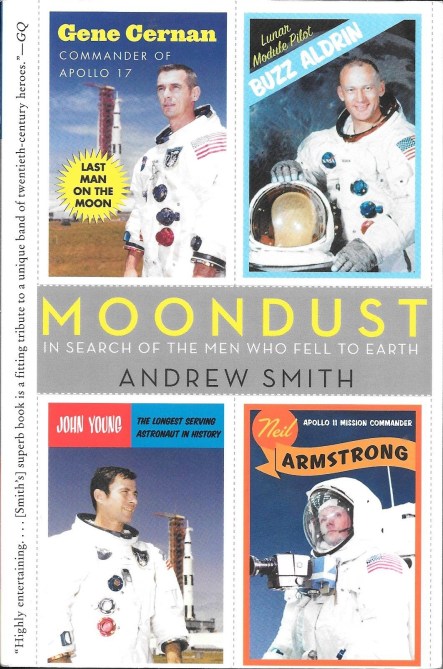
The best non-fiction I read this year was Moondust, an intriguing book by Andrew Smith detailing his attempts to track down and interview all of the remaining lunar astronauts. The questions these men had to ask themselves–“What do you do after you’ve walked on the moon?”–and the varied answers they came up with (including religion, art, teaching, business, and professional futurism) are vivid portraits of mid-life crisis and (for some of them) reinvention. Further, Smith’s quest has a personal dimension as he weaves his own memories of a space age childhood into his narration, essentially asking the same question for himself and America at large: what now? The notion that the moon race was (at least partly) a work of political theater, a brief flurry of activity that had few lasting effects (satellites and computers aside, there are no lunar colonies, no manned missions to Mars, etc.), is now commonplace, but as someone who grew up in the (relatively conservative) Space Shuttle era, it is still bracing to read these accounts of intense national purpose and the incredible drive it took to accomplish the moon launches. What sticks with me after this book, though, are the personalities (quite varied, even within the hyper-specific psychological and career profiling NASA used to choose its crews), the questions they asked themselves in the wake of their momentous voyages, and the different answers they came up with for themselves.

DCBombshells

In comics, Bombshells was a pleasant discovery: writer Marguerite Bennett and artist Marguerite Sauvage create a compelling alternate World War II, one in which the female heroes and villains of DC Comics (Wonder Woman, Batwoman, Harley Quinn, et al) are the only superhumans (so no Superman, Batman, etc.–male characters like Steve Trevor are involved, but as supporting cast). Visually drawing on pinup art, propaganda posters, and commercial art of the 1940s, Bombshells presents a colorful, almost-familiar world while getting to the essence of these characters and remixing DC lore in inventive ways. It also taps into a spirit of optimism and compassion that suits the characters and the setting. The fact that the series was created as a spinoff from a popular series of pinup-style statues of DC characters isn’t surprising–that’s the biz–but the fact that it is so well executed, as if it had been conceived as a story all along, is. (I’ve only read the first two trade collections; I decided to wait for the whole series to be collected so I can read it in one go, so no spoilers please!)

Here’s the complete list, with some additional commentary:

January
The Dark Half, Stephen King
Tekkon Kinkreet: Black & White All in One, Taiyo Matsumoto
Song of Spider-Man: The Inside Story of the Most Controversial Musical in Broadway History, Glen Berger (“Before something can be brilliant, it first has to be competent.”)

February
Roadshow!: The Fall of Film Musicals in the 1960s, Matthew Kennedy (This book led me to watch Star!, the biopic in which Julie Andrews played music hall performer Gertrude Lawrence, when it aired on TCM. Star! was one of the worst movies I watched this year.)
The Rocketeer: The Complete Adventures, Dave Stevens
Mind MGMT Volume One: The Manager, Matt Kindt
Batman: The Jiro Kuwata Batmanga Volume 1, Jiro Kuwata
The Rocketeer: Hollywood Horror, Roger Langridge and J Bone

March
Bombshells Volume 1: Enlisted, Marguerite Bennett and Marguerite Sauvage et al
Bombshells Volume 2: Allies, Marguerite Bennett and Marguerite Sauvage et al
Batman: The Jiro Kuwata Batmanga Volume 2, Jiro Kuwata
The Complete Golden Age Airboy & Valkyrie, Fred Kida et al
Gotham City Sirens, Book One, Paul Dini, Guillem March et al
Hit or Myth, Robert Asprin

April
Gotham City Sirens, Book Two, Tony Bedard, Peter Calloway et al
Myth-ing Persons, Robert Asprin
Do Not Sell at Any Price: The Wild, Obsessive Hunt for the World’s Rarest 78 rpm Records, Amanda Petrusich
Rejected: Tales of the Failed, Dumped, and Canceled, ed. Jon Friedman

May
Nemo Trilogy (Heart of Ice, The Roses of Berlin, River of Ghosts), Alan Moore, Kevin O’Neill et al
Wylder’s Hand, J. Sheridan LeFanu
My Life as an Explorer, Sven Anders Hedin

June
Radio Free Albemuth, Philip K. Dick
Murder in Mesopotamia, Agatha Christie
Atomic Bomb Cinema, Jerome F. Shapiro
The Celebrated Cases of Dick Tracy 1931-1951, Chester Gould

Maybury.cover

July
The Brides of Bellenmore, Anne Maybury
Falcon’s Shadow, Anne Maybury
Superman: The Unauthorized Biography, Glen Weldon
Life of the Party: The Remarkable Story of How Brownie Wise Built, and Lost, a Tupperware Party Empire, Bob Kealing
Tastes Like Chicken: A History of America’s Favorite Bird, Emelyn Rude

August
Rocket Men: The Epic Story of the First Men on the Moon, Craig Nelson
Moondust: In Search of the Men Who Fell to Earth, Andrew Smith

Vault

In September I didn’t read any complete books at all, but as I mentioned then, I read some Advanced Dungeons & Dragons adventure modules cover to cover (more thoroughly than I read all but a few even when I was actively playing the game, I must confess). After a lucky find at my local comic store, I had a complete copy of one of the most famous series of published modules, the “GDQ” series (so called because it links three adventures against Giants, against the “dark elf” Drow, and against Lolth, the “Queen of the Demon-Web Pits”); I had wanted to read through these to see how well they really flowed as a single epic campaign, but I had forgotten just how much work the Dungeon Master had to do to flesh out these printed modules in order for them to work as adventures. Like most old-school modules, the bulk of the text simply describes the characters and items found in various rooms; it’s up to the Dungeon Master and players to provide the narrative sweep. Furthermore, the motivations of many characters are either only hinted at or are contingent upon the players’ actions. As I once read, an adventure (whether published or written by the DM for his own game) is not a story, but the promise of a story: only when it is inhabited by players and their characters is it brought to life. Reading the GDQ series was an interesting exercise, and it brought back memories of playing some of these adventures as a kid, but it wasn’t quite what I remembered. (These and other classic adventure modules inspired novelizations, as I found, but I haven’t read them; maybe I will some day.)

October
Sense and Sensibility, Jane Austen
Pride and Prejudice, Jane Austen

Drabble

November
The Pattern in the Carpet: A Personal History with Jigsaws, Margaret Drabble (Like Moondust, this was another book combining historical research with memoir; Drabble’s meditations on the appeal of the mosaic, on the reuniting of fragmented pieces, of the creation of images within images, are relevant to my own writing and composition, and I was astonished to recognize myself in some passages. The book was not exactly a dynamo of forward momentum, however, and like the act of assembling a puzzle itself, reading this book was a ruminative exercise, replete with long pauses for reassessment of the larger whole.)
Trish Trash: Rollergirl of Mars 1, Jessica Abel

Pulps.Goodstone

December
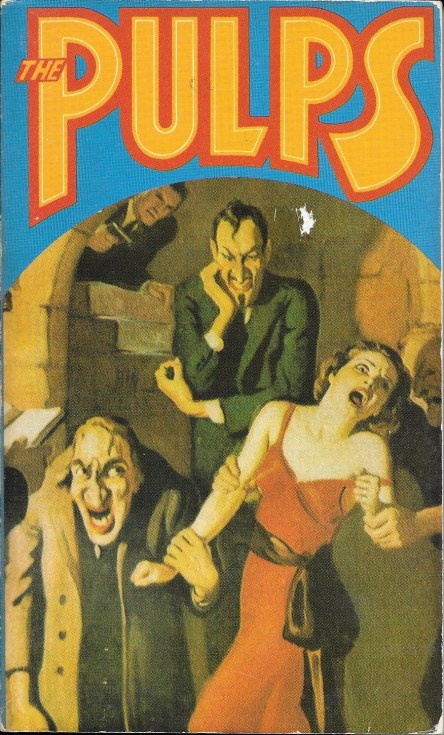
The Pulps, ed. Tony Goodstone (a collection of reprints from the Golden Age, the “real stuff”)
Chilling Tales of Horror: Dark Graphic Short Stories, Pedro Rodríguez
Constellation of Genius: 1922: Modernism and All That Jazz, Kevin Jackson

In 2008 I read Brian Eno’s A Year with Swollen Appendices, a sort of diary of the year 1995, on a day-by-day basis: since A Year starts with Eno’s decision to start a diary on January 1, I began reading it at the beginning of the year and read each entry on the corresponding date, over the course of that year. Eno didn’t write an entry for every single day, but it was close enough, and with the various appendices I had something to read from him almost every day: the book became a constant companion, almost a devotional, and absorbing it slowly, over the course of that year, made more of an impression than reading it quickly might have done (and frankly even the most interesting diaries are frequently mundane and repetitive enough that I wouldn’t read them straight through anyway).

Constellation.1922

After keeping an eye out for a similar book that covered a single year in the same way, I came across Constellation of Genius, a day-by-day record of events in 1922 (ranging from the publication of James Joyce’s Ulysses and T. S. Eliot’s The Waste Land to the opening of King Tut’s tomb and the founding of the Irish Free State) and saw an opportunity to read it in the same way. So that has been an ongoing project over the past year. During that year, I’ve been looking at the cover and seeing the blurb “Brilliantly erudite and very funny” attributed to reviewer Robert Macfarlane, and I confess myself mystified. The first part I cannot deny: author Kevin Jackson has brought together a wealth of material from diverse sources, and is an excellent guide in unfamiliar territory, briefly explaining what has been forgotten or needs to be translated, choosing illustrative anecdotes to stand in for the whole and providing multiple entryways for further exploration of his subjects. But “very funny”? Jackson is a dry wit, and many of the stories he shares are humorous, but I can’t recall busting a gut while reading this; perhaps it is the haunting similarity of the political perils he describes–acts of terrorism and war, the rise of fascism and Stalinism–to those of the present. The foreboding of the interwar period tends to overshadow the lives of the artists and writers, making their heroic feats seem small in the scale of the world’s events. On the other hand, the diary format shows how life goes on, and how the larger patterns of history are frequently invisible until viewed in the hindsight of years. There are about fifty pages of “aftermath” following the December 31 entry, describing the later lives and fates of the book’s major players; if I don’t get it finished tomorrow, I expect to soon enough, and it seemed silly not to include this in my 2017 reading on a technicality.

My 2016 in Books

20160903_160515.jpg

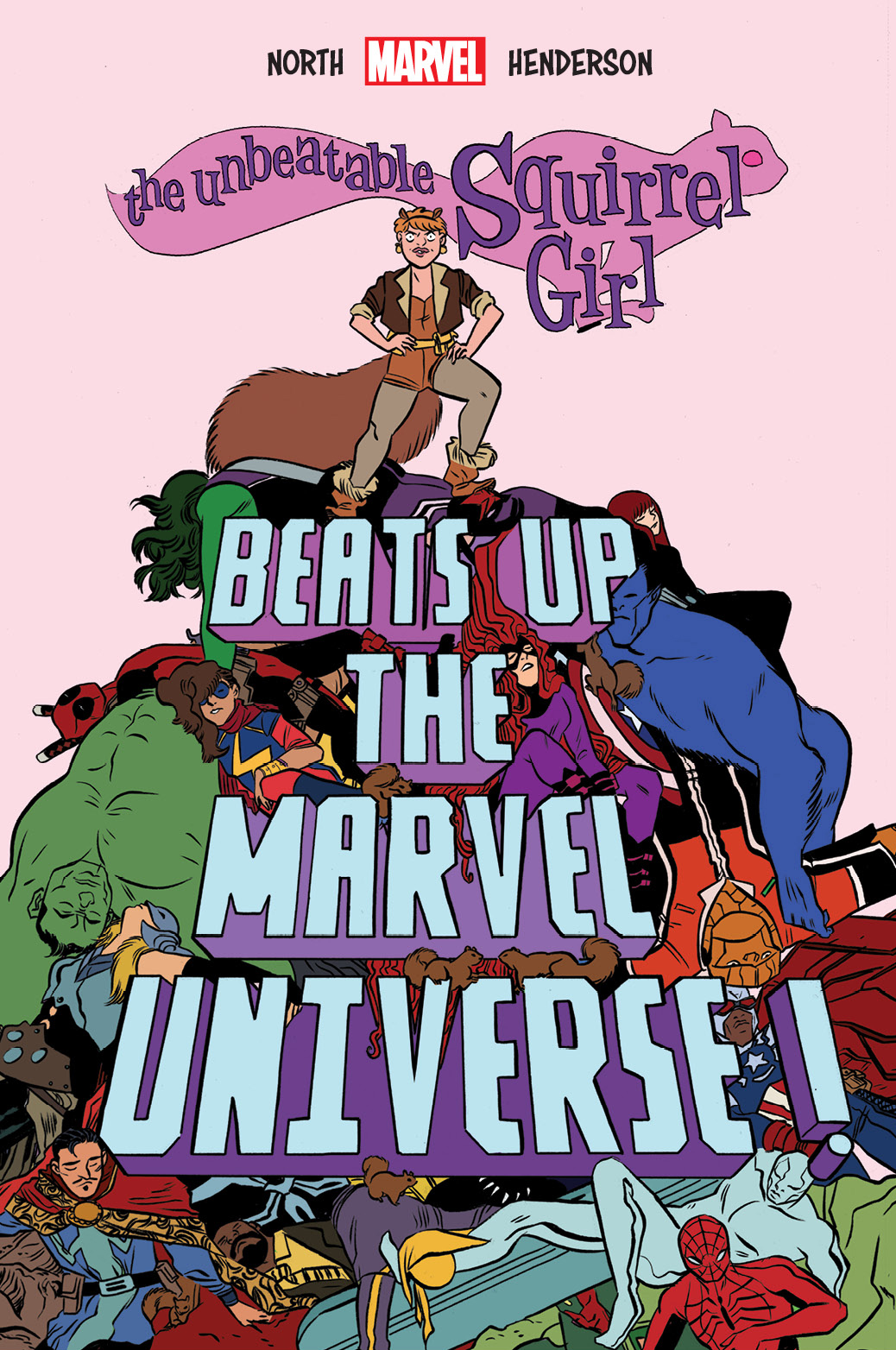
No, I haven’t read all the books in this pile; that’s my haul from one of several library sales I hit this year (I have read a couple of these, so far, though). I really can’t help it: this year I continued to collect books at a rate faster than I could read them (a common problem, I’m afraid), but I did make an effort to read books that were already on my shelf. Other books I got from the library when I could, including most of the graphic novels listed below. (I debated whether to include trade paperback collections of monthly comics, but in the case of Ryan North and Erica Henderson’s The Unbeatable Squirrel Girl, I decided what the heck: they’re some of the books I’ve enjoyed most in the last couple of months, and for the record The Unbeatable Squirrel Girl Beats Up the Marvel Universe! is a graphic novel in the traditional, standalone sense.)

squirrelgirl

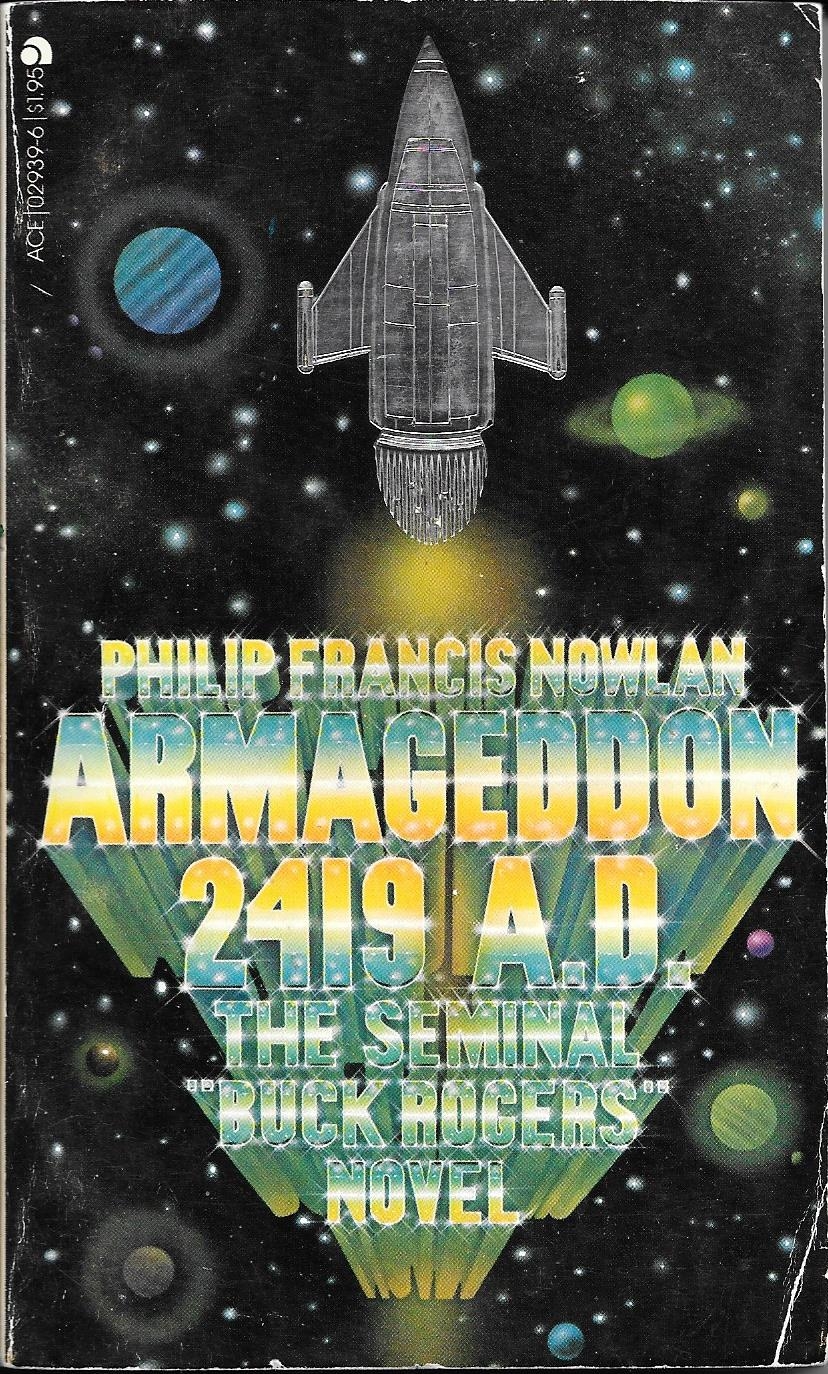
In addition to filling some gaps in my comics reading, I followed through on my promise from last year to read more of the pulp and genre novels that have been crowding my shelves for years. Most are quick reads, and some of them tied into other projects I was involved in. Reading Armageddon 2419 A.D. was part of my preparation to watch the Buck Rogers serial for a feature in The Solute last spring; novels by William MacLeod Raine and Zane Grey (my first Grey!) continued my exploration of the traditional Western.

buckrogers1

And what about those covers! I love the lush cover paintings Ballantine commissioned for its “Adult Fantasy” line back in the late ’60s, and Ron Walotsky’s cover for Fletcher Pratt’s The Blue Star in particular is a great example, intensely colorful and reminiscent of Weird Tales great Hannes Bok and Dungeons & Dragons icon Erol Otus. (The book itself was less psychedelic than the art might suggest, an early example of “parallel world” fantasy whose only speculative element was the presence of psychic witches. The Blue Star was originally published in 1952, early enough that Pratt included a prologue setting up the events of the novel as a dream, unable as he was to assume that contemporary audiences would automatically understand the concept of a secondary world.)

bluestar

Then there’s this one, an ironic bit of spy-fi, found in a used bookstore. I only recently found out that The Bamboo Saucer was made into a movie, but I haven’t seen it. The book was okay. (High Road to China, an aviation adventure set in the interwar years, is another one that was made into a movie; the copy I read is even a tie-in edition with a photo insert of star Tom Selleck, but I have absolutely no memory of the film.)

bamboo1

Other Highlights:

It was a good year for non-fiction for me, and the books on Gary Gygax, Nancy Drew, and Amazing Stories editor Ray Palmer were especially fascinating looks into the publishing industry and the creative process. (The Man From Mars also confirmed that the scientist alter ego of superhero The Atom was named after the Ray Palmer, something I had wondered about.) Another fascinating read was A Kim Jong-Il Production, about the kidnapping of South Korean director Shin Sang-Ok and his wife, actress Choi Eun-hee, who were pressed into service making movies for the North Korean dictator, a noted film buff.

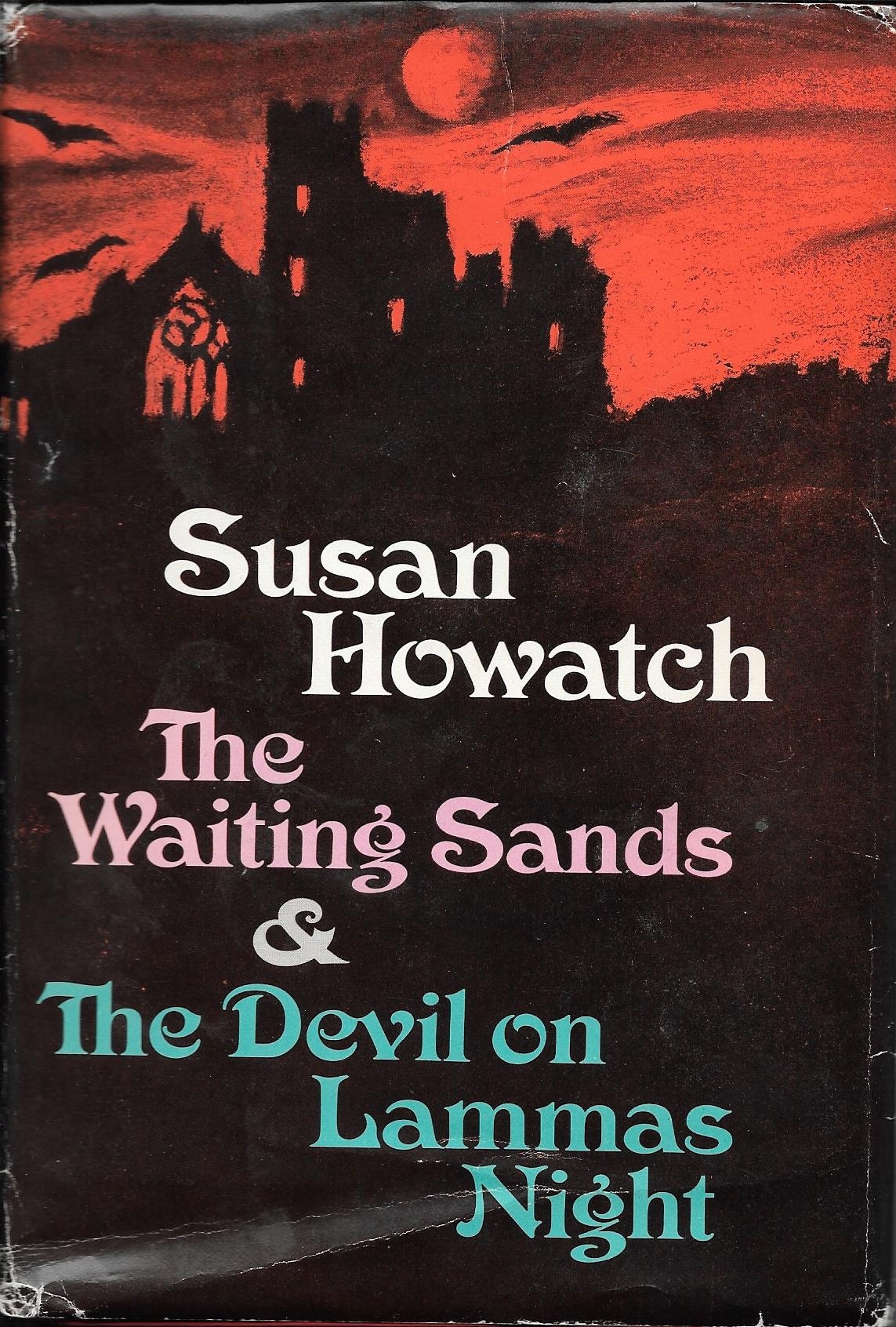
I also read quite a few (mostly short) novels, including books by Jack Vance, the last book of Lemony Snicket’s All the Wrong Questions (a series I enjoyed very much), and a pair of contemporary (ca. 1970) gothic romances by Susan Howatch (another library sale find: how could I resist a cover like this?).

howatch

Aside from The Unbeatable Squirrel Girl, comics and graphic novels that I found rewarding were Planetary (I had read the first few issues several years ago, but the Omnibus edition from the library caught me up on the entire series), All-Star Superman (as good as everyone says), and V for Vendetta (unfortunately timely).

Here’s the complete list:

January
Armageddon 2419 A.D., Philip Francis Nowlan
Ex Libris: Confessions of a Common Reader, Anne Fadiman
All the Wrong Questions: “Why Is This Night Different from All Other Nights?”, Lemony Snicket
A Kim Jong-Il Production: The Extraordinary True Story of a Kidnapped Filmmaker, His Star Actress, and a Young Dictator’s Rise to Power, Paul Fischer
League of Somebodies, Samuel Sattin

February
Techno-Orientalism: Imagining Asia in Speculative Fiction, History, and Media, ed. David S. Roh, Betsy Huang, and Greta A. Niu
Bulldog Drummond, Sapper
Halting State, Charles Stross

March
Mission to the Head-Hunters, Frank and Marie Drown
All-Star Superman, Grant Morrison and Frank Quitely
The Fighting Tenderfoot, William MacLeod Raine
Cowboys & Aliens, Fred Van Lente and Andrew Foley, et al
Al Williamson Adventures, Al Williamson et al
The Planetary Omnibus, Warren Ellis and John Cassaday

April
Heroes of Bear Creek, Robert E. Howard
Big Planet, Jack Vance
The Blue World, Jack Vance

May
The Dragon Masters & Other Stories, Jack Vance
The 6 Voyages of Lone Sloane, Philippe Druillet
Forust: A Tale of Magic Gone Wrong, Adam and Dustin Koski
Empire of Imagination: Gary Gygax and the Birth of Dungeons & Dragons, Michael Witwer

June
The Blue Star, Fletcher Pratt
Lone Sloane: Delirius, Jacques Lob and Philippe Druillet
Camelot 3000, Mike W. Barr and Brian Bolland
The Flight of the Bamboo Saucer, Fritz Gordon
Tales of the Enchanted Islands of the Atlantic, Thomas Wentworth Higginson

July
High Road to China, Jon Cleary
Three Weeks, Elinor Glyn
Last of the Duanes, Zane Grey
Marvelman Classic Vol. 2, Mick Anglo et al

August
Cowgirls: Women of the American West, Teresa Jordan
Harry Potter and the Cursed Child, J. K. Rowling, Jack Thorne

September
Girl Sleuth: Nancy Drew and the Women Who Created Her, Melanie Rehak
This Business of Bomfog, Madelaine Duke
Critical Mass, Frederik Pohl and C. M. Kornbluth
The Man From Mars: Ray Palmer’s Amazing Pulp Journey, Fred Nadis
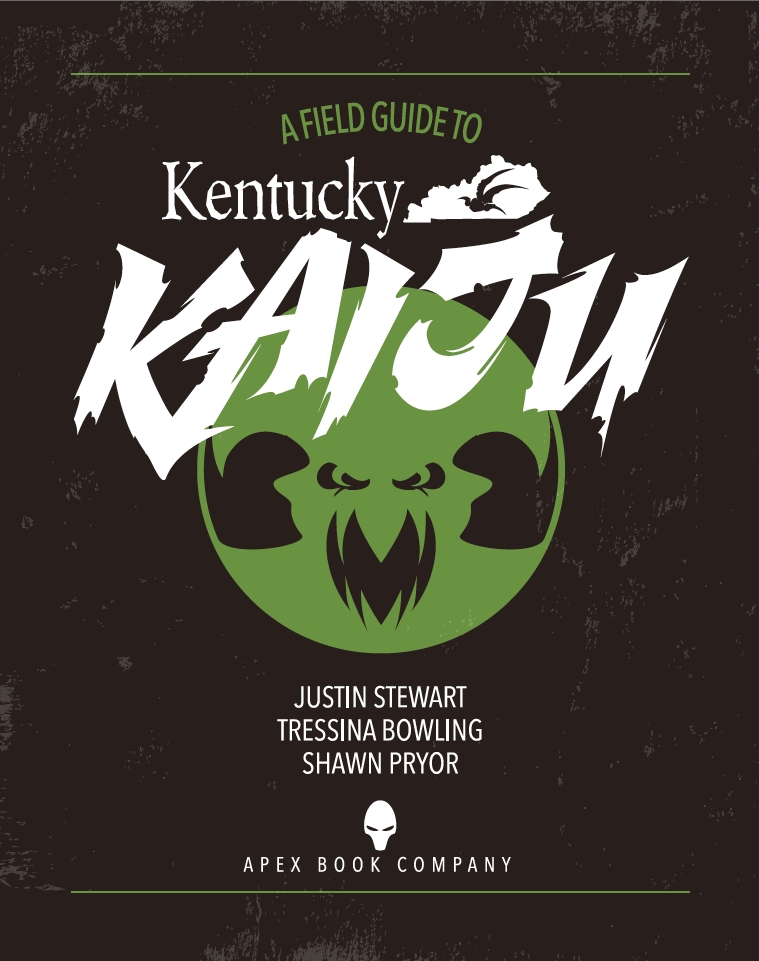
A Field Guide to Kentucky Kaiju, Justin Stewart, Tressina Bowling and Shawn Pryor
The Man Called Brown Condor: The Forgotten History of an African American Fighter Pilot, Thomas E. Simmons

October
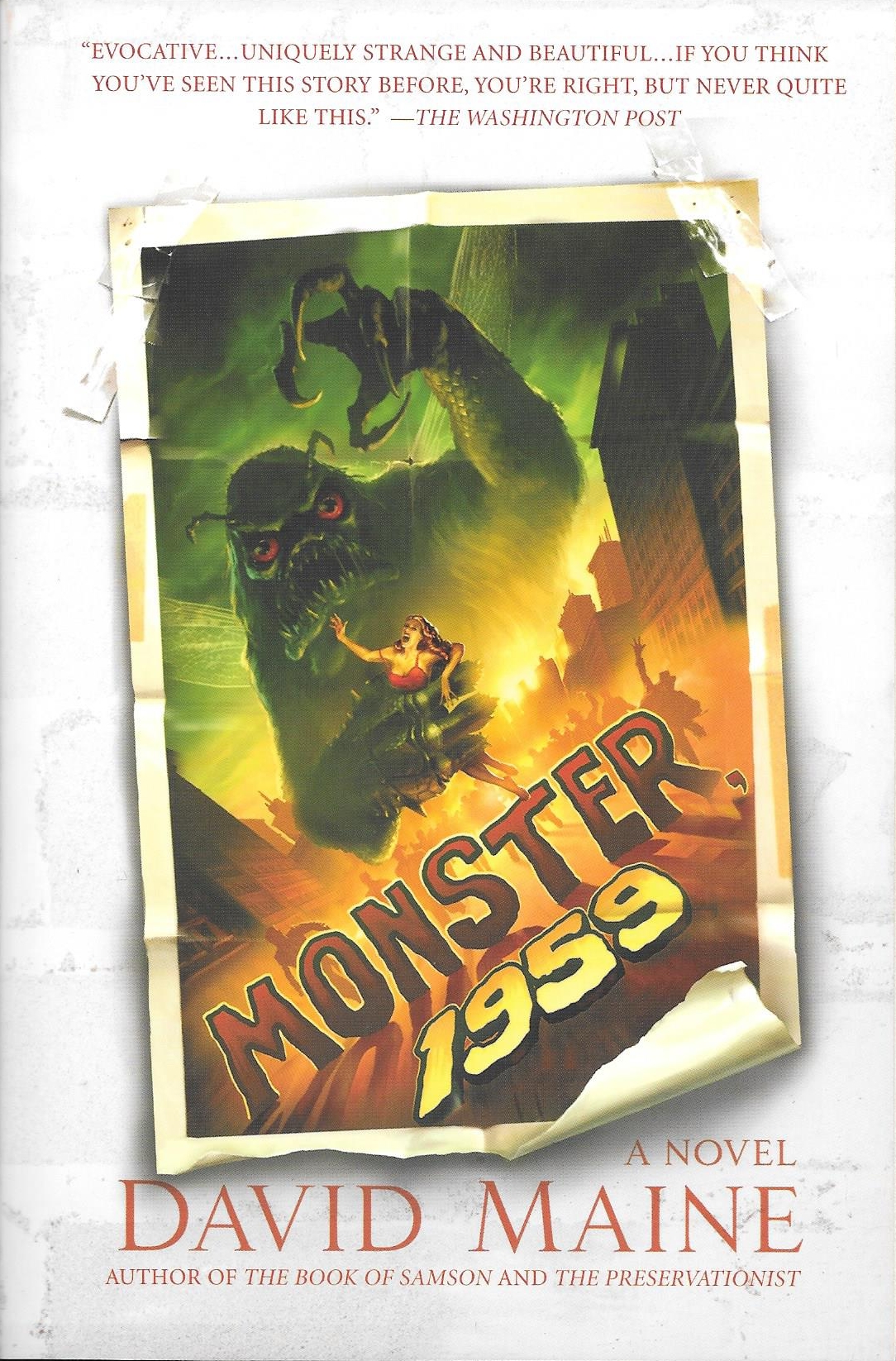
Monster, 1959, David Maine
Best “Thinking Machine” Detective Stories, Jacques Futrelle, ed. E. F. Bleiler
The Waiting Sands, Susan Howatch

November
The Devil on Lammas Night, Susan Howatch
The Unbeatable Squirrel Girl, Vol. One: Squirrel Power, Ryan North and Erica Henderson
The Unbeatable Squirrel Girl Beats Up the Marvel Universe!, North and Henderson
The Fine Art of Literary Mayhem (2nd ed.), Myrick Land
Howard the Duck Vol. 0: What the Duck, Chip Zdarsky, Joe Quinones et al
The Take Back of Lincoln Junior High, Roseanne Cheng
V for Vendetta, Alan Moore and David Lloyd

December
The Unbeatable Squirrel Girl, Vol. Two: Squirrel, You Know It’s True, North and Henderson
Delilah Dirk and the Turkish Lieutenant, Tony Cliff
The Unbeatable Squirrel Girl, Vol. Three: Squirrel, You Really Got Me Now, North and Henderson

Review: Monster, 1959

cover illustration by Owen Richardson

cover illustration by Owen Richardson

K. leaps into existence amid them all, shark-eyed, snake-tongued reality: misery given form, solid and undeniable and taller than Hell itself. Feathers like a bloodsmear across his thorax, claws lashing furrows in the ground. Gangs of teeth glaring at the crowd over his lipless slash. Everybody screams.

It sounds like science fiction, and in strict terms, it is. The plot is the most familiar element of David Maine’s 2008 novel Monster, 1959–explorers discover an extraordinary monster on a remote Pacific island, and after restraining the beast they transport it to America to put it on display, after which eventually everything goes to Hell–but the novelty of the story isn’t really Maine’s concern. Monster, 1959 is the kind of novel that applies probing psychological realism to genre material, finding unexpected complexity beneath the surface of broadly-sketched stock types. What Katherine Dunn’s Geek Love did for Freaks and its body-horror descendants, Monster, 1959 does for King Kong and the monster movies of the 1950s.

If so many of the alien-invasion and monster-rampage stories of the Cold War were metaphors for political anxieties, postwar social displacement, and the catch-all term “future shock,” Maine is concerned with re-literalizing those metaphors, making sure that his fanciful monster mash takes place in a world that includes not only Hiroshima and Nagasaki and the bomb tests on Bikini Atoll, but also the infamous Tuskegee Syphilis Study and the eviction of Palestinians from newly-formed Israel. Maine’s omniscient shifts in focus from close-ups on the main characters to the wide shots of world events is reminiscent of the intriguing book Welcome to Mars by Ken Hollings and Erik Davis, which also shares Monster, 1959‘s year-by-year structure in making connections between seemingly disparate strands of history and popular culture.

In Monster, 1959, the main characters are the giant chimerical monster K., for “Kama ka,” the name given to him by the islanders who worship him as a god (but perhaps also standing for Kong, or kaiju, or in reference to the monogrammatic protagonist of Franz Kafka’s The Trial); Betty, the white woman whom K. first abducts and then finds himself strangely bonded to; and Johnny, the square-jawed man of action and Betty’s husband/rescuer. In retelling this age-old but highly specific beauty-and-the-beast tale, the members of the central triangle (and numerous characters who enter their orbit) are given shading and moral ambiguity, and of course relevance beyond the single story.

The novel’s most winning creation is K. himself, and Maine effortlessly relates events from K.’s perspective: animalistic, responsive to direct stimuli, and without much imagination or sense of the past or future. Despite the limitations inherent in writing from this point of view, Maine sketches a believable (and believably mysterious) persona. It’s common for audiences to partially identify with King Kong or Godzilla, but Maine is interested in what it would really feel like to be such a creature. While there is a fair amount of action in the story (“some sci-fi monster violence,” as the MPAA would have it), for all his size and power, K. is not the bloodthirsty predator one might expect; in fact, he’s a vegetarian. K.’s reactions to the humans invading his domain, the strange effect that Betty and her singing have on him, and his confusion at the series of entrapments and enclosures that he endures convey both how alien K.’s mentality is, and how alienating the modern world is when seen anew. Like the greatest movie monsters, K. is fearsome but ultimately sympathetic.

K., chained and transported in a custom box car, drugged and put on display in one roadshow after another, isn’t the only character who is trapped. There’s Doug, the seven-foot-two circus performer whose freakish height has come to be just as much a prison, and to whom the duty of administering K.’s sedatives has devolved. “It would be falsely melodramatic to say,” Maine tells us, “When Doug injects K., he feels as if he is injecting himself.” All the same, he does become disenchanted and disgusted enough to begin passive-aggressively slacking off, a decision that makes K.’s dramatic escape from confinement while performing at Madison Square Garden as inevitable as the failure of Jurassic Park’s electric fences. Life finds a way.

Betty, whom K. abducts all over again in New York, is not just a damsel in distress, but a woman of her generation whose deepest urges tell her to “throw herself into” her marriage and to give Johnny the benefit of the doubt. This extends to playing along with their friend Billy’s scheme to take the monster on tour, reenacting her abduction as a modern Romeo and Juliet story for paying audiences, against her better judgment. Johnny, over the course of the novel, finds that his experience in rescuing Betty has awakened a taste for adrenaline and alpha-male displays of prowess, a search for ever-greater highs that is ultimately his undoing. Ultimately it comes down to sex in forms as polymorphous as K.’s own mismatched body. “By now,” Maine writes after a particularly perverse episode, “you might be forgiven for wondering: Are there any normal people in this movie? It’s a fair question. To which the only possible answer would have to be: Are there any normal people in the world?

Finally, Monster, 1959 is no mere pastiche or stylistic exercise. Like the best environmental horror, it’s a warning, with K., the troubled child of the atomic bomb and master of an island of mutated terrors, returning like a bad dream to the country that created him and had hoped to forget him. Just as in a movie, the monster may be dispatched, but audiences know the fears that created it are still out there, and the monster can always come back.

THE END . . . ?

Review: A Field Guide to Kentucky Kaiju

The United States has its share of giant monsters, most famously King Kong, but let’s face it: if you’re really a fan, you’ve probably looked to our friends in Japan and wondered at the range of kaiju (“strange beasts”) that make the Land of the Rising Sun their home: Godzilla, Gamera, Ghidorah, and even some whose names don’t begin with the letter G. It seemed like unless you lived somewhere on the Pacific Rim, your chances of finding a native-grown kaiju were pretty slim . . . until now.

kk-cover

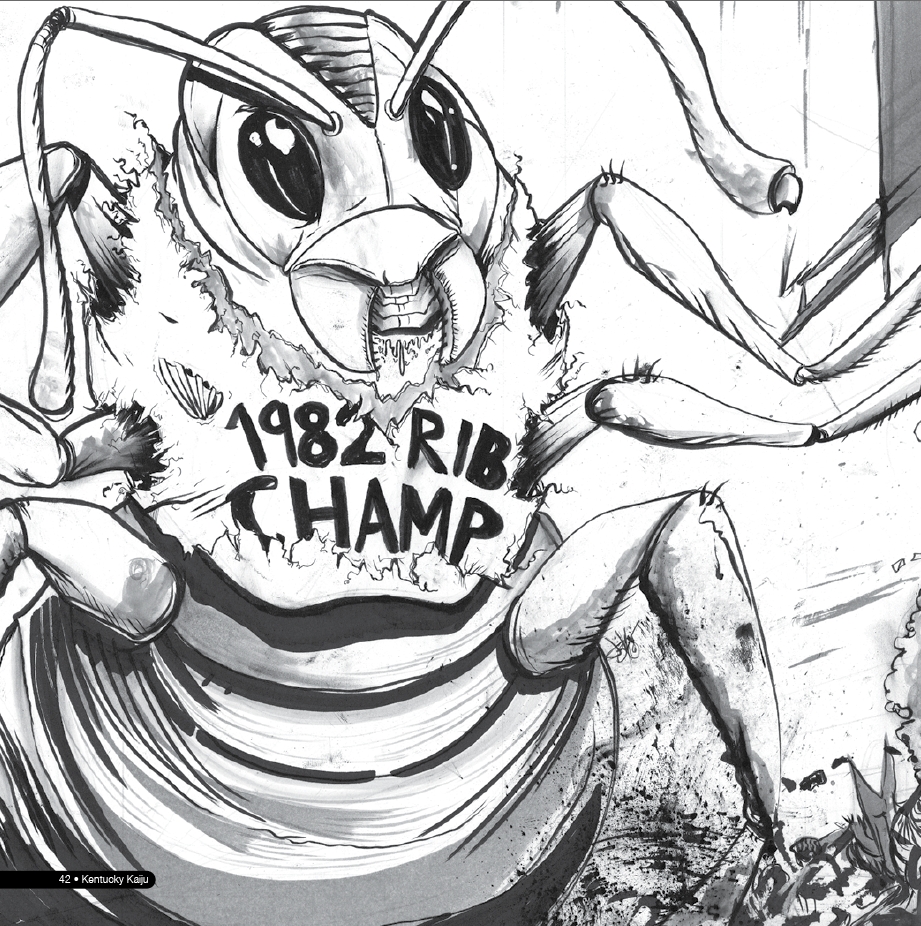
Justin Stewart, Tressina Bowling, and Shawn Pryor have provided A Field Guide to Kentucky Kaiju to introduce some of the critters that call the Bluegrass State home. Just as its title indicates, Kentucky Kaiju is a bestiary, a collection of two-page spreads with descriptive text, a guidebook that populates its imaginary Kentucky with both creatures that fit the character of their home and a history that ties them together. The book features dozens of imaginative creations, from the reptilian, hundred-foot-tall Komodo Supremis to the “micro-kaiju” Mini-Mainframe, a super-intelligent mouse. It’s the kind of book I would often spend hours at a time browsing as a kid, and the creators haven’t forgotten the simple pleasure of looking at pictures of cool, larger-than-life monsters. Every page has some witty or inventive surprise.

In fleshing out the beasts that might live in Kentucky, the creators naturally draw on the native fauna as well as such regional staples as horse racing, bourbon, and barbecue, giving a local flavor to the genre (the phrase “unregulated country science” is just one of the many delightful hooks that sent my own imagination racing). There’s also a sly humor in many of the details, from the “kaibetes” (kaiju diabetes) that the insectoid Black Gnat contracted from its obsession with New Coke to the super-patriotism of Navigator Ace, a three-headed eagle who lives on red, white and blue bomb pops and listens to Garth Brooks between bouts against other kaiju.

Texant illustration by Justin Stewart

Texant illustration by Justin Stewart

Historically, many kaiju have represented the awesome power of nature or man’s scientific hubris; many of the creatures in this book are primal in their appeal, with connections to the still-untamed wilderness of mountains and forests. Some of these wild and powerful creatures are described as being contained in special wildlife reserves and isolated state parks, away from population centers where they might cause trouble. But for the more domesticated kaiju, the Kentucky they inhabit is modern and down-to-earth, with many of them making their homes in truck stops, pizza joints, and even a drive-in movie theater. And there’s more to life for these beasts than rampaging: you’d be surprised how many of them enjoy the poetry of Langston Hughes. Yet more are described as already dead, having perished in battle with their monstrous cousins.

True to the kaiju genre, many of the kaiju have become guardians of their particular town or landmark. Some of these heroic creatures were the results of scientific experiments (indeed, one of the threads that runs through the book is the attempt to harness or exploit the kaiju’s miraculous qualities, which doesn’t always work out as planned), or are second-generation kaiju that retain the good qualities of their unmutated parent animal. An example is Catdronius, defender of Battle, Kentucky, a hybrid cat-butterfly kaiju so gentle in repose that it allows children to ride on its back (if they’ve signed a waiver).

Catdronius illustration by Tressina Bowling

Catdronius illustration by Tressina Bowling

A Field Guide to Kentucky Kaiju is a lot of fun to look at, thanks to the loose ink-and-brush illustrations (by Stewart and Bowling; the companion text is by Pryor). The creature designs are inventive, mostly true to the spirit of the “rubber suit” monster movies that are a clear inspiration, and which leave enough to the imagination to inspire readers to come up with their own explanations for details in the picture. (Personally, I have a lot of questions about Convoyacon, the result of a sentient liquor-barrel mating with a train car; hopefully one of the promised future installments of Kentucky Kaiju will shed some light on that episode.)

Although not explicitly being promoted as a gaming supplement, I can see game masters getting a lot of mileage out of this book as both a colorful campaign setting or as a source of wacked-out monster ideas. As with those bestiaries and monster manuals I enjoyed flipping through as a young reader, Kentucky Kaiju is perhaps most valuable as a launchpad for readers to imagine their own stories; as with any “shared world” or open-ended mythology, be it the Godzilla series or the tall tales of the South, it invites readers to play along and add their own pieces to the crazy quilt laid in front of them.

A Field Guide to Kentucky Kaiju by Justin Stewart, Tressina Bowling, and Shawn Pryor will be released by Apex Book Company (who graciously provided me with a PDF preview copy) on October 18. It’s currently available for pre-order.

Purple Prose, Purple Death

Cap.purpledeath

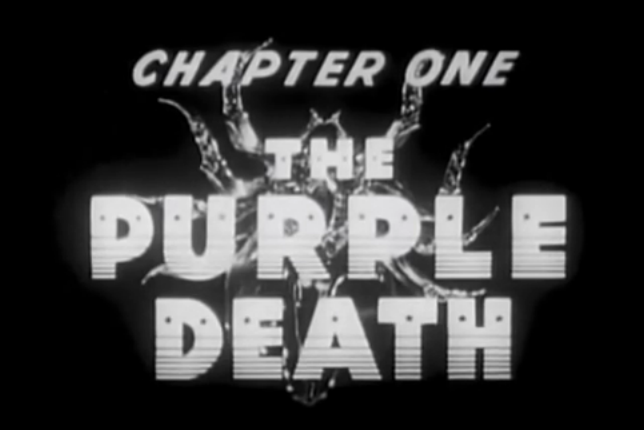
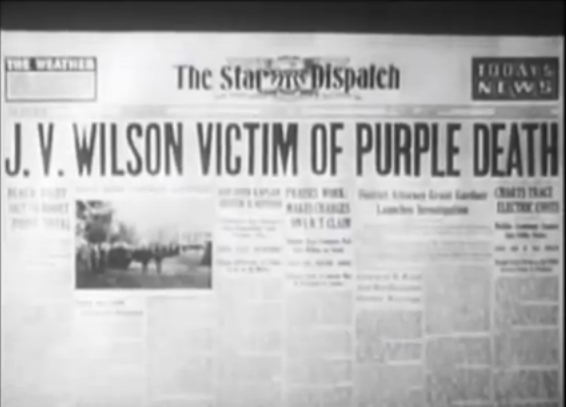
In watching the 1944 Captain America serial (for which I’ll have a full write-up next week), I was struck by the title of the first chapter, “The Purple Death,” a title shared by the first chapter of the 1940 serial Flash Gordon Conquers the Universe. In Captain America, the Purple Death refers to the extract of a rare orchid that makes its victims susceptible to hypnotic control (the “death” part comes when the victims are ordered to kill themselves, helpless to resist); in Flash Gordon, it’s a mysterious, fatal disease spread from Mongo to Earth that leaves its victims marked by a purple spot.

FG3.purpledeath

The pulps (as well as comic strips and serials) were known for lurid, vividly-drawn stories with larger-than-life heroes and impossibly wicked villains to match. Purple is an attention-getting color, to the point that we speak of “purple prose.” I was also reminded of the Purple Empire, one of the enemy nations that Operator #5 fought against in the 1930s. (I thought there might be some significance to that, but the Operator series included a rainbow of enemy nations, possibly influenced by the color-coded War Plans developed by the U. S. military during the 1920s and ’30s.)

Cap.headline

In reading and watching stories from the 1930s and ’40s, I’ve encountered the phrase “purple death,” or uses of purple as a dangerous and dramatic color, enough times that I wondered if there was an underlying connection. So, in the spirit of Philip J. Reed’s Pop Questions, I’m asking: what’s the significance of the color purple in the pulps, and why particularly is death purple? Does it refer to the livid color of a bruise or the marks left by strangulation? Is it the association with royalty, by extension gaudy and powerful? I have a few leads that seem likely, but if anyone reading this has a specific answer, I’d love to hear it.

Cap.headline2

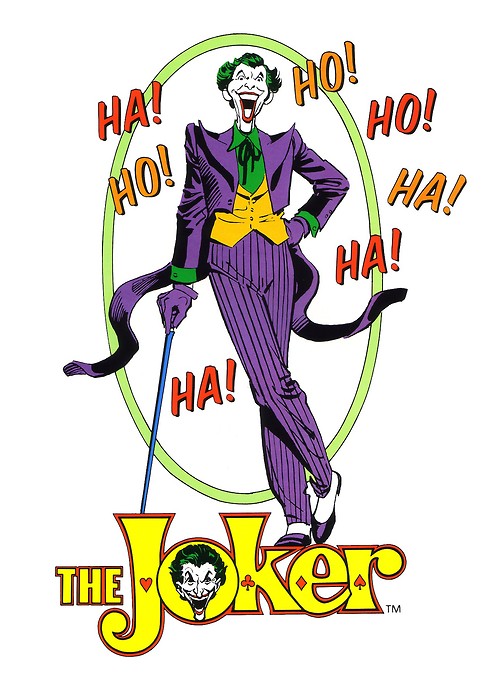
Purple is associated with death and mourning in many cultures, including the Victorians of the nineteenth century, for whom purple was the color of “demi-mourning,” to be worn after a period of wearing black. It was also the color of royalty, originally due to the rarity and high cost of purple dyes in the ancient world. It would certainly match both the dramatic style and frequent (if shallow) references to history and classic literature in the pulps if that were the reason. I don’t have statistics at hand, but my hunch is that as comic books became the dominant medium for pulp storytelling, more villains than heroes had purple uniforms or color schemes.

joker

However, the most likely answer goes back to the 1918 influenza epidemic: the disease killed quickly, and often left its victims purple in color as their lungs filled with blood and starved the body of oxygen. One book on the subject is even titled Purple Death. According to some estimates, as many as 50 million people worldwide died during from the disease. Just as pulp heroes were often veterans of the Great War, so the memory of the epidemic would have resonated with writers and readers in the decades that followed. In Flash Gordon, the Purple Death was also a disease, and the scenes of public panic and the scramble to find a cure hearken directly to the 1918 epidemic; by comparison, the use of the phrase in Captain America is almost poetic, but would likely have still induce a twinge of fear for those who remembered it. Even today, with no direct memory of the influenza epidemic, it sounds ominous.

iowa_flu2

So perhaps that’s the answer. If any readers have more details to offer, or facts to contradict my speculations, I’d love to hear them. Any other examples of purple as a color marking death or danger are, of course, welcome.

My 2015 in Books

20151206_144709.jpg

As the year draws to a close, it’s time for another post to summarize my activity in the past twelve months. As I did last year, I kept track of the books I read this year (I’ll look back on films I watched this year tomorrow). As before, I’ve only listed books I read from beginning to end (that’s why only one of the Robert E. Howard collections I wrote about in October is listed, the others having been read before). All were first-time reads (although I know I had read parts of American Humor before, but apparently not the whole thing), and I managed to keep my resolution to read more than I did last year, including some classics (hey, it turns out Moby Dick is a pretty good book!).

How does one summarize a year of reading activity? I don’t read by working through a list: I have books in mind that I want to get to, and I own a lot of books I haven’t read yet, but in general I let the last book I finished help me decide what to read next. Sometimes I continue along a certain track (several threads appeared in my reading this year, including books about the art and craft of writing; Wonder Woman and the fascinating behind-the-scenes story of her creator, psychologist and sex researcher William Moulton Marston; non-fiction on a variety of subjects; and several novels and collections of fiction).

After reading so much about Wonder Woman, the opportunity to pick up a set of reprints of her contemporary Phantom Lady made for a useful comparison. For one thing, it’s interesting to observe how much bondage and role-playing is in the wholesome Wonder Woman as opposed to the supposedly racier Phantom Lady; the difference is largely in that Moulton’s Wonder Woman presents its themes of domination and restraint from a playful perspective, and Harry G. Peter’s simple illustrations don’t draw quite as much as attention as Matt Baker’s famous “good girl” art (although in Classic Phantom Lady Volume Two, Jim Vadeboncoeur, Jr. makes a strong case that Baker drew much less Phantom Lady than he is usually credited with).

At other times, after spending time in a particular headspace, I’m ready for a change: I was eager to part company with “Walter,” the narrator of the Victorian sexual diary My Secret Life, after nearly 600 pages (and the original work was published in eleven volumes!). “Walter’s” escapades are by turns titillating, horrifying, and deeply sad, the book itself a mixture of Victorian letters to Penthouse, inadvertent social history, and pre-Freudian psychosexual analysis. Even abridged, it’s “everything you wanted to know about Victorian sex but were afraid to ask.”

That made Edmond Hamilton’s The Valley of Creation, a short and breezy pulp novel, a welcome palate-cleanser. I used to read such short novels frequently; although I enjoyed most of them, I also thought of them as research, fleshing out my picture of the pulp era and stocking up on plot and character formulas for future reference. I still have many on my shelves that I haven’t gotten to (many of them were boxed up until this year, when I got some new book shelves and was able to unpack them), so perhaps 2016 will be a year to renew my acquaintance with the diverse output of the pulps.

ValleyofCreation

January
Danse Macabre, Stephen King
Ghost Story, Peter Straub
On Writing, Stephen King
Don’t Fear the Reaper: Why Every Author Needs an Editor, Blake Atwood
The Juggler, Rachilde (trans. Melanie C. Hawthorne)
Wonder Woman: the Life and Times of the Amazon Princess, Les Daniels

February
American Humor: A Study of the National Character, Constance Rourke
The Secret History of Wonder Woman, Jill Lepore

March
Moby Dick, Herman Melville

April
The Wonder Woman Chronicles Volume One, William Moulton Marston and Harry G. Peter
A Year with a Whaler, Walter Noble Burns
Wonder Woman: Feminism and Bondage in the Marston/Peter Comics, 1941-1948, Noah Berlatsky
Revival, Stephen King
The Wonder Woman Chronicles Volume Two, Marston and Peter
Cities of Dreams, Stan Gooch

May
Guardian of the Gods, Mark Rodgers

June
The Mammoth Book of Steampunk, ed. Sean Wallace
Tarzan Forever: The Life of Edgar Rice Burroughs, Creator of Tarzan, John Taliaferro
The Wonder Woman Chronicles Volume Three, Marston and Peter

July
Classic Phantom Lady Volume One, various
Classic Phantom Lady Volume Two, various
Classic Phantom Lady Volume Three, various
Ladies in Distress, Kalton C. Lahue

August
The Pentagon: A History, Steve Vogel
The Interstellar Age: Inside the Forty-Year Voyager Mission, Jim Bell
Save the Cat!, Blake Snyder
Illegal Tender: Gold, Greed, and the Mystery of the Lost 1933 Double Eagle, David Tripp

September
The Orientalist, Tom Reiss
The Haunter of the Ring & Other Tales, Robert E. Howard

November
The Log of a Cowboy, Andy Adams
All the Wrong Questions: “Shouldn’t You Be in School?”, Lemony Snicket
The Disaster Artist: My Life Inside The Room, the Greatest Bad Movie Ever Made, Greg Sestero & Tom Bissell

December
My Secret Life, Anonymous, ed. James Kincaid
The Valley of Creation, Edmond Hamilton

So, readers, I ask you: what did you read this year? Did you meet any reading goals, and what do you look forward to reading in the new year?

The Short Horrors of Robert E. Howard

wpid-20151003_155910.jpg

Although in the popular imagination, Robert E. Howard (1906-1936) continues to be identified as the creator of Conan the Barbarian and a pillar of the sword and sorcery tradition, readers who have explored beyond Conan (or approached Howard from a different avenue, as I did) know that the prolific pulp writer also frequently indulged in horror in a variety of styles. Indeed, horror is a critical ingredient even of Howard’s heroic fantasy, and almost all of his work is streaked with terror.

Consider the foes, both monstrous and supernatural, that Conan and Howard’s other he-man heroes faced in their adventures (the gray ape that silently stalks Conan in a night-black dungeon in The Hour of the Dragon is typical, and it goes without saying that magic in Howard’s stories is rarely benevolent), and it becomes clear why it can be difficult to sort Howard’s “horror” tales from his other output, and why there is so little overlap between different collections.

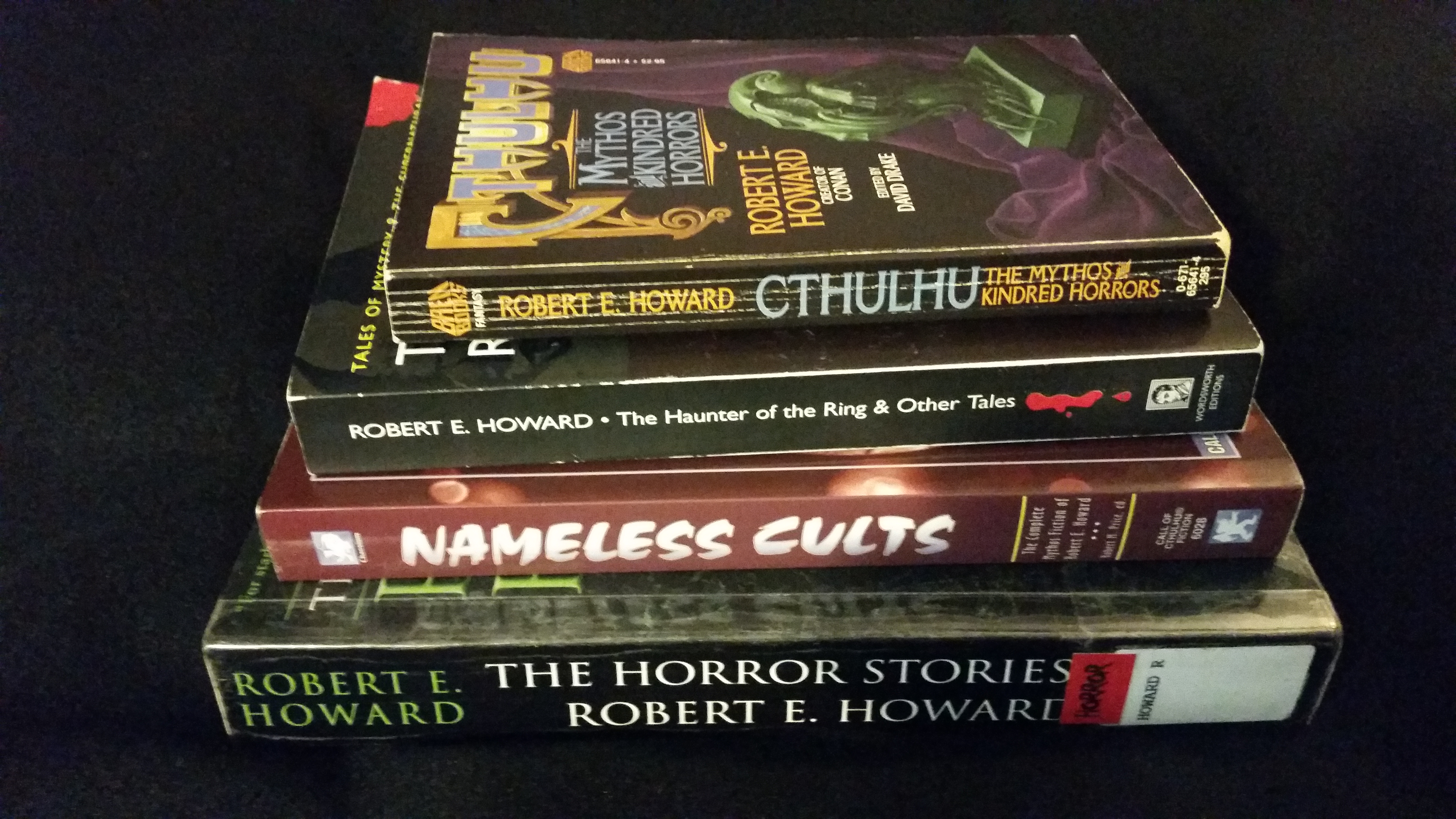
This article focuses on four different paperback collections of Howard’s horror stories, comparing their contents and taking note of different editorial priorities. They are far from the only collections of Howard’s work, and no slight is meant against (for example) the pioneering paperback collections edited by Glenn Lord. The editions under discussion are, however, either in my possession or readily available, and each is different enough to warrant investigation. (Complete contents of each book are listed at the end of the article.)

My first encounter with Howard’s fiction was through Baen Books’ Cthulhu: The Mythos and Kindred Horrors, edited by David Drake. As I have written elsewhere, I actually had a hard time tracking down H. P. Lovecraft’s fiction when I first heard about it as a budding middle school fantasy enthusiast. His “Cthulhu Mythos” had for me at the time the same enchanted, mysterious quality that the Necronomicon had for his characters: something about which obscure references were dropped but which remained tantalizingly out of reach. The Mythos and Kindred Horrors was thus a welcome discovery, and the short story “The Black Stone” which leads off the book was the first proper Mythos story I was able to get my hands on.

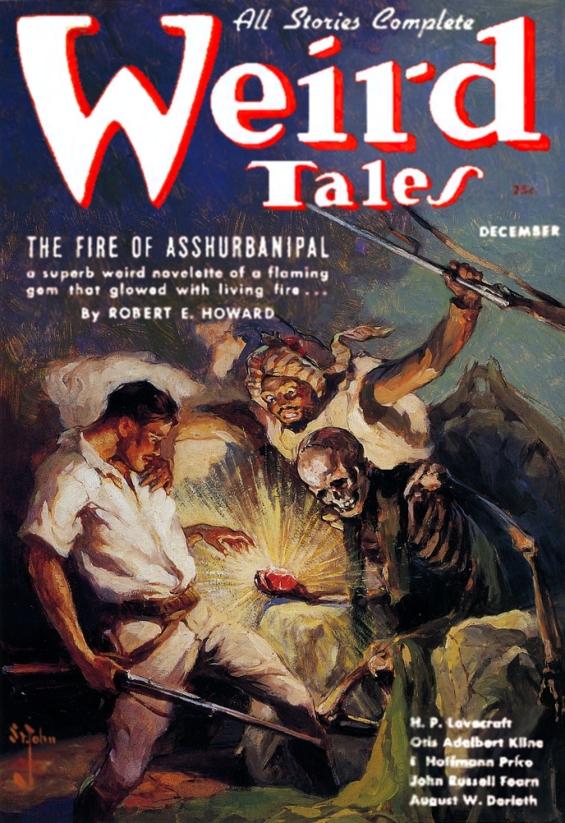
Although short, The Mythos and Kindred Horrors remains a fine introduction to Howard’s macabre imagination: as promised, it contains a number of significant Mythos stories, including “The Black Stone,” “The Fire of Asshurbanipal,” and “The Thing on the Roof,” but also examples of his dark, violent fantasy (“The Valley of the Worm,” “People of the Dark,” and “Worms of the Earth”) and even a weird Western (“Old Garfield’s Heart”).

The final story, “Pigeons From Hell,” is a truly terrifying slice of Southern gothic, and like the greatest horror stories earns its scares as much from the depths of moral depravity it displays as from atmosphere or shocks (Stephen King named it “one of the finest horror stories of our century” in Danse Macabre). “Pigeons From Hell” was adapted into a 1961 episode of the Boris Karloff-hosted anthology show Thriller, an adaptation that, while effective, shows a clear debt to Psycho, released the previous year. Resetting it in the modern South made the horror more immediate, as if the two guys from Route 66 had stumbled onto the Bates Motel, but the abbreviated runtime strips out the racial element that gives the original story so much of its charge, even removing the final twist.

Pigeons.title

Another volume, and one that specifically includes only Howard’s Cthulhoid fiction (so no “Pigeons From Hell”), is Nameless Cults, edited by Robert M. Price. Presented by Chaosium, publisher of the Call of Cthulhu role-playing game, Nameless Cults is part of the Call of Cthulhu Fiction series: Chaosium publishes numerous volumes of fiction to supplement its game and to present the works of Lovecraft, other members of his circle, and contemporary authors in accessible editions; some are organized around a single subject or a specific deity or aspect of the Cthulhu Mythos, others by author, as in the case of Nameless Cults.

The title refers to one of Howard’s own contributions to the Mythos, the “Black Book” Unaussprechlichen Kulten by Friedrich Von Junzt, the author’s answer to Lovecraft’s forbidden tome the Necronomicon. Embroidering on his friend’s growing set of references, Howard added Von Junzt and his book, along with such characters as the “mad poet” Justin Geoffrey and the Great Old One Gol-Goroth, to the Mythos. (Howard’s many pre-historic speculations on Atlantis, Valusia, and other aspects of Conan’s “Hyborian Age” would also be swept into the Mythos by Lovecraft and others in a pattern of mutual borrowing, so one could as easily refer to a “Weird Tales Mythos” as use the more familiar term “Cthulhu Mythos,” which of course was a label added only later by Lovecraft’s literary executor August Derleth.)

Price’s editorial remarks lend extra value to Nameless Cults; in addition to providing detailed information about the provenance of the stories included (some of which are fragments that have been finished by others), Price puts them into context as both a scholar of both Lovecraft and a theologian (Price has edited many of Chaosium’s books, as well as publishing books and articles on Christianity and editing Lovecraftian journals such as Crypt of Cthulhu). The most important insight Price brings is his consideration of the Mythos as a loose collection of themes and references rather than a continuity that must be reconciled and kept free of contradictions (as with fellow scholar S. T. Joshi, much of Price’s work has involved debunking Derleth’s spurious claims on behalf of Lovecraft and his creations, but in general Price’s perspective is more sympathetic to a multi-faceted rather than a purist approach). It’s this freedom that allows writers of different temperaments to make use of the Mythos and gives it the feeling of an actual mythology, scattered and secret but nonetheless organic.

It’s hard to think of a writer more different in temperament from H. P. Lovecraft than Robert E. Howard, at least as revealed in their stories. Lovecraft’s protagonists, to the extent that they are developed as characters at all, tend to be inward-looking scholars or antiquarians, drawn inexorably toward doom by curiosity or forces they do not understand. (An exception is Professor Henry Armitage, the hero of “The Dunwich Horror,” who is able to take charge and push back the demonic entities seeking entrance to our world.) Howard, however, puts the same kind of fearless, action-oriented warriors who populate his other stories into his horror tales (whether in a historical or fantasy setting or the contemporary world, the defining characteristics of Howard’s heroes are hyper-competence and a willingness to take action for what they believe is right, regardless of the cost–still the formula for an action hero today).

The contrast is amusingly illustrated in “The Challenge From Beyond,” a curious multi-author collaboration included in the Chaosium volume. At the end of Lovecraft’s chapter, the protagonist finds that he has been–horror of horrors!–transformed into “the loathsome, pale-grey bulk” of an alien centipede, and faints dead away: a typical Lovecraftian ending. As Howard picks up the thread in the next chapter, however, the hero’s perspective has changed and he begins to revel in the power of his new form, as “fear and revulsion were drowned in the excitement of titanic adventure”:

What was his former body but a cloak, eventually to be cast off at death anyway? He had no sentimental illusions about the life from which he had been exiled. What had it ever given him save toil, poverty, continual frustration and repression? If this life before him offered no more, at least it offered no less. Intuition told him it offered more–much more.

In Howardian fashion, “The Challenge From Beyond” changes from a story of horror to one of triumph, as the protagonist uses the strength of his new form to conquer the aliens and make himself their king, “a Conan among centipedes” in L. Sprague de Camp’s memorable phrase.

The physical bravery and strength that Howard considered so essential to being a hero (or a man, at that) actually tends to prop up the horror effects in his Cthulhu stories, however. The darkness is all the more terrifying when even such specimens cannot hope to defeat it; at best, victory means simply surviving. (It is unsurprising that Lovecraft’s “The Dunwich Horror” was a favorite of Howard’s, and its formula of investigation and action would prove a useful model for his occult detective fiction. It’s also, not coincidentally, the Lovecraft story that most resembles a Call of Cthulhu game scenario.)

WeirdTalesDecember1936

The Haunter of the Ring & Other Tales, edited by M. J. Elliott as part of Wordsworth Editions’ “Tales of Mystery & The Supernatural” series, includes the best-known of Howard’s Cthulhu Mythos stories but also casts a wide net, including other horror and dark fantasy stories that cover a variety of subject matters and styles. Several of these stories, such as “In the Forest of Villefore” and “Wolfshead” (part of a werewolf cycle), are among the author’s earliest published works and show a still-raw talent. The volume also shows the range of genres that Howard explored in search of outlets for publication and introduces some of the author’s recurring characters: occult investigator John Kirowan and detective Steve Harrison, for example.

It also provides examples of Howard borrowing from his literary forebears and contemporaries: one of my favorites, the short novel “Skull-Face” (included in both the Chaosium and Wordsworth editions), is an entertaining pastiche of Sax Rohmer’s Fu Manchu novels with the fantasy elements dialed up. Instead of the Chinese doctor, the titular villain is a survivor from the ancient past with scientific knowledge so advanced that it might as well be magic. (The hero of “Skull-Face,” Stephen Costigan, is not to be confused with another Howard series hero, Sailor Steve Costigan, but is an example of what Elliott describes as Howard’s “inexplicable fondness for certain character names.”)

If “Skull-Face” is Howard’s version of Rohmer, reading a number of Howard’s stories in close succession makes clearer the influence of other authors, even as in the best of his stories Howard’s own personality shines through. Even beyond its Mythos trappings, with its antiquarian protagonist and dreamy atmosphere “The Black Stone” is clearly modeled after Lovecraft, as Howard acknowledged in his own letters. Similarly, “The Dream Snake” and “The Fearsome Touch of Death” are indebted to Ambrose Bierce, with the implication that it is internal fears, not external threats, that are most destructive.

As Price points out in his introduction to Nameless Cults, the author who influenced Howard’s horror output most strongly besides Lovecraft was the Welsh Arthur Machen. In a number of Howard’s stories touching on reincarnation or racial memory and characterizing the “Little People” of myth as monstrous survivors of a pre-human race, “he has gone back to one of Lovecraft’s own sources, Arthur Machen, and remixed the Mythos, turning up the volume on the Machen track.”

Indeed, the recurring theme that unites both the stories of Conan, Pictish king Bran Mak Morn, and flashes of racial memory with his stories of the Cthulhu Mythos is the long shadow cast by the distant, prehistoric past, “Lurking memories of the ages when dawns were young and men struggled with forces which were not of men” (in the words of “The Little People”). Just as it was for Edgar Rice Burroughs, another important influence on Howard, that struggle against wild nature and subhuman savagery was a defining one for both character and narrative, and as with Burroughs it sometimes manifested in Howard’s work as a racial scheme in which tall, white-skinned, “clean-limbed” Aryans (a term borrowed from the anthropology of the time, but which is particularly regrettable with modern hindsight) swept Westward throughout Europe (and later America), routing the short, swarthy tribes that became the basis for legends of goblins and the hidden races of Machen, Lovecraft, and others. (But as Price points out, Howard was able to have it both ways by making the underdog Picts into heroes pitted against an even older, more secretive and less human race, as in “Worms of the Earth.”)

In these stories and others, the modern reader runs headlong into Howard’s sometimes objectionable racial characterizations: stories set in the deep South and Southwest include epithets for black and Mexican characters, sometimes in dialogue, but sometimes as part of the narration or from the viewpoints of characters who are supposed to be sympathetic. As in my discussion of representation in the serials from the same time period, it is pointless to pretend that such attitudes and words weren’t part of the world of at least some in Howard’s time, and pointing out parts of Howard’s work that haven’t aged well need not imply a disavowal of the strong parts of his fiction.

And perhaps it is simply my modern perspective, but I think it is telling that in general Howard’s strongest stories take a more nuanced point of view, with characters of all races showing both good and bad qualities. As Rusty Burke points out in his introduction to Del Rey’s The Horror Stories of Robert E. Howard, the interaction of common racial prejudices in Howard’s native Texas with the author’s natural sympathy for the underdog and belief that ultimately a man is what he makes of himself led to some complex characterizations. The flip side of his often-stated distrust of civilization and its stultifying effects, Howard showed great admiration for native peoples who (in his admittedly romanticized view) lived close to nature; one of his wisest characters was the African “medicine man” N’Longa, friend and advisor to Solomon Kane.

ChamberofChills2

The Horror Stories of Robert E. Howard is the longest (over 520 pages) and most comprehensive collection at my disposal, and yet even it omits stories that may be found in the others (“Skull-Face” is the most notable absence, possibly left out because of its length). It does, however, cover the broadest range of Howard’s output, including Cthulhoid horror, sword and sorcery, regional horror (Western and Southern, including “Pigeons From Hell”), and contemporary adventure stories, as well as samples of Howard’s seafaring, boxing, and detective fiction.

The Del Rey volume also includes four unfinished stories, grouped as “Miscellanea,” and there is more bibliographic detail than in either the Baen or Wordsworth volumes, listing first publication (or manuscript source in the case of posthumously discovered stories) and detailed notes on changes in spelling or punctuation made by the editor.

It is also the only volume to include more than a few of Howard’s numerous poems. Like his fellow Weird Tales contributors H. P. Lovecraft and Clark Ashton Smith, Howard was a prolific versifier, and like them he remained largely conservative in the face of modernism, sticking to rhyming, metric poems. Most of his poetry has a rough-hewn, deliberately “barbaric” quality, often cast in multi-stanza ballad forms with rhyming couplets: appropriate for his subjects, usually as dark and gruesome as those he favored in his stories. Although it is unlikely that Howard’s poems will ever be popular outside of weird fiction (and heavy metal) fandom, they contain some vivid and concise images, such as the following lines in “Dead Man’s Hate”:

There was no sound on Adam Brand but his brow was cold and damp,
For the fear of death had blown out his life as a witch blows out a lamp.

It is often treacherous to psychoanalyze a writer based on their fiction, but to an extent horror writers invite it: the best are not simply calculating what they think will scare their audience, but are delving into and externalizing their own fears. That’s not to say that horror writers necessarily believe in what they’re writing (crackpot theories that Lovecraft possessed secret knowledge of real-life Cthulhu cults notwithstanding), but their choices can be revealing.

Robert E. Howard’s own tragic story (he committed suicide at age 30 after his mother slipped into her final coma) is at odds with the implacable supermen he created, but even in his stories he often hinted that death was preferable to a life of pain or defeat. Elliott singles out a passage in “Skull-Face” in which recovering opium addict Stephen Costigan ponders drowning himself, “that I should soon attain that Ultimate Ocean which lies beyond all dreams.”

The stoicism with which Costigan considers ending his life is of a piece with the pragmatism and toughness of most of Howard’s characters, but there is another side to Howard that tends to be overlooked, the dreamy, “feminine” side that gave us the “mad poet” Justin Geoffrey. Geoffrey is often seen as a portrait of Howard’s friend and correspondent H. P. Lovecraft, and he does resemble Lovecraft’s typical protagonists, often so removed from this world that their weird art or poetry are perfect channels for the “outside” influences of the Cthulhu Mythos to find their way in. Nevertheless, if, as Lovecraft himself argued, “the real secret [of Howard’s characters] is that he himself is in every one of them,” then Geoffrey is certainly a facet of Howard’s personality. Robert M. Price goes further, saying of Geoffrey,

Here is Howard with a vengeance, the real Howard in a far deeper sense than either Balthus [“a realistic depiction of Howard compared with Conan, the idealized version”] or Steve Costigan. Justin Geoffrey is the archetypal Byronic artist too sensitive for this mortal coil, a frail human funnel for the whirlwinds sweeping down from between the stars.

Justin Geoffrey would die “screaming in a madhouse,” a fate that Howard possibly predicted for himself, and to which he found suicide preferable.

An even more revealing self-portrait can be found in the unfinished story “Spectres in the Dark,” included in The Horror Stories of Robert E. Howard. In this fragment, unseen forces hiding in the shadows drive otherwise normal individuals to commit murder. One such unwitting killer is Clement Van Dorn, an artist who finds himself accused of killing his mentor. Visiting him in jail, Van Dorn’s friends find him in a pathetic state:

Clement nodded but there was no spark of hope in his eyes, only a bleak and baffled despair. He was not suited to cope with the rough phases of life, which until now he had never encountered. A weakling, morally and physically, he was learning in a hard school that savage fact of biology–that only the strong survive.

Suddenly Joan held out her arms to him, her mothering instinct which all women have touched to the quick by his helplessness. Like a lost child he threw himself on his knees before her, laid his head in her lap, his frail body racked with great sobs as she stroked his hair, whispering gently to him–like a mother to her child. His hands sought hers and held them as if they were his hope of salvation. The poor devil; he had no place in this rough world; he was made to be mothered and cared for by women–like so many others of his kind.

That Robert E. Howard’s career was cut short by suicide, just as the author was developing his voice and was about to see his work published outside of the pulps, is a loss for readers. That he felt so compelled to end his own life was a tragedy for him. Perhaps the most fitting conclusion is in the words of David Drake, editor of The Mythos and Kindred Horrors, among the first words about Howard that I encountered:

Robert E. Howard had the personal misfortune to spend most of his life in a place where black hatreds ruled everyone; where currents of violence so closely underlay the surface of ordinary existence that a snub, a woman, or the ethnic background of a chance acquaintance was apt to bring a lethal outburst; where a man’s only path to respect was through strength and his willingness to use that strength.

Drake is referring, of course, not to West Texas, where Howard lived, nor even the fictional Hyboria that Howard set down on paper, but the interior of Howard’s mind, “a grim, dark place,” from which writing tales of adventure, fantasy, and even horror allowed Howard to escape . . . for a time.

Appendix: Contents of editions under discussion (titles in italic text indicate poems)

Cthulhu: The Mythos and Kindred Horrors
Edited and with an introduction by David Drake (Baen Books, 1987)

Arkham
The Black Stone
The Fire of Asshurbanipal
The Thing on the Roof
Dig Me No Grave
Silence Falls On Mecca’s Walls
The Valley of the Worm
The Shadow of the Beast
Old Garfield’s Heart
People of the Dark
Worms of the Earth
Pigeons From Hell
An Open Window

Nameless Cults: The Cthulhu Mythos Fiction of Robert E. Howard
Edited and Introduced by Robert M. Price (Chaosium Call of Cthulhu Fiction, 2001)

The Black Stone
Worms of the Earth
The Little People
People of the Dark
The Children of the Night
The Thing on the Roof
The Abbey (w/ C. J. Henderson)
The Fire of Asshurbanipal
The Door to the World (w/ Joseph S. Pulver)
The Hoofed Thing
Dig Me No Grave
The House in the Oaks (w/ August Derleth)
The Black Bear Bites
The Shadow Kingdom
The Gods of Bal-Sagoth
Skull-Face
Black Eons (w/ Robert M. Price)
The Challenge from Beyond (w/ C. L. Moore, A. Merritt, H. P. Lovecraft, and Frank Belknap Long)

The Haunter of the Ring & Other Tales
Compiled and Introduced by M. J. Elliott (Wordsworth Editions, Tales of Mystery & The Supernatural, 2008)

In the Forest of Villefore
Wolfshead
The Dream Snake
The Hyena
Sea Curse
Skull-Face
The Fearsome Touch of Death
The Children of the Night
The Black Stone
The Thing on the Roof
The Horror from the Mound
People of the Dark
The Cairn on the Headland
Black Talons
Fangs of Gold
Names in the Black Book
The Haunter of the Ring
Graveyard Rats
Black Wind Blowing
The Fire of Asshurbanipal
Pigeons from Hell

The Horror Stories of Robert E. Howard
Introduction by Rusty Burke; Illustrated by Greg Staples (Del Rey, 2008)

In the Forest of Villefère
A Song of the Werewolf Folk
Wolfshead
Up, John Kane!
Remembrance
The Dream Snake
Sea Curse
The Moor Ghost
Moon Mockery
The Little People
Dead Man’s Hate
The Tavern
Rattle of Bones
The Fear That Follows
The Spirit of Tom Molyneaux
Casonetto’s Last Song
The Touch of Death
Out of the Deep
A Legend of Faring Town
Restless Waters
The Shadow of the Beast
The Dead Slaver’s Tale
Dermod’s Bane
The Hills of the Dead
Dig Me No Grave
The Song of a Mad Minstrel
The Children of the Night
Musings
The Black Stone
The Thing on the Roof
The Dweller in Dark Valley
The Horror from the Mound
A Dull Sound as of Knocking
People of the Dark
Delenda Est
The Cairn on the Headland
Worms of the Earth
The Symbol
The Valley of the Lost
The Hoofed Thing
The Noseless Horror
The Dwellers Under the Tomb
An Open Window
The House of Arabu
The Man on the Ground
Old Garfield’s Heart
Kelly the Conjure-Man
Black Canaan
To a Woman
One Who Comes at Eventide
The Haunter of the Ring
Pigeons from Hell
The Dead Remember
The Fire of Asshurbanipal
Fragment
Which Will Scarcely Be Understood

Miscellanea:
Golnor the Ape
Spectres in the Dark
The House
Untitled Fragment

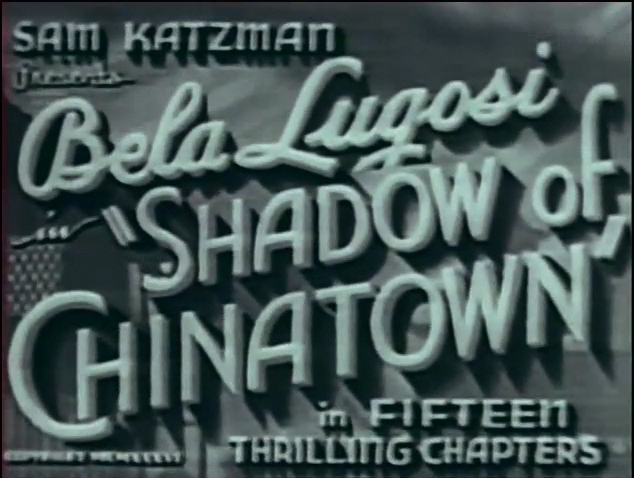
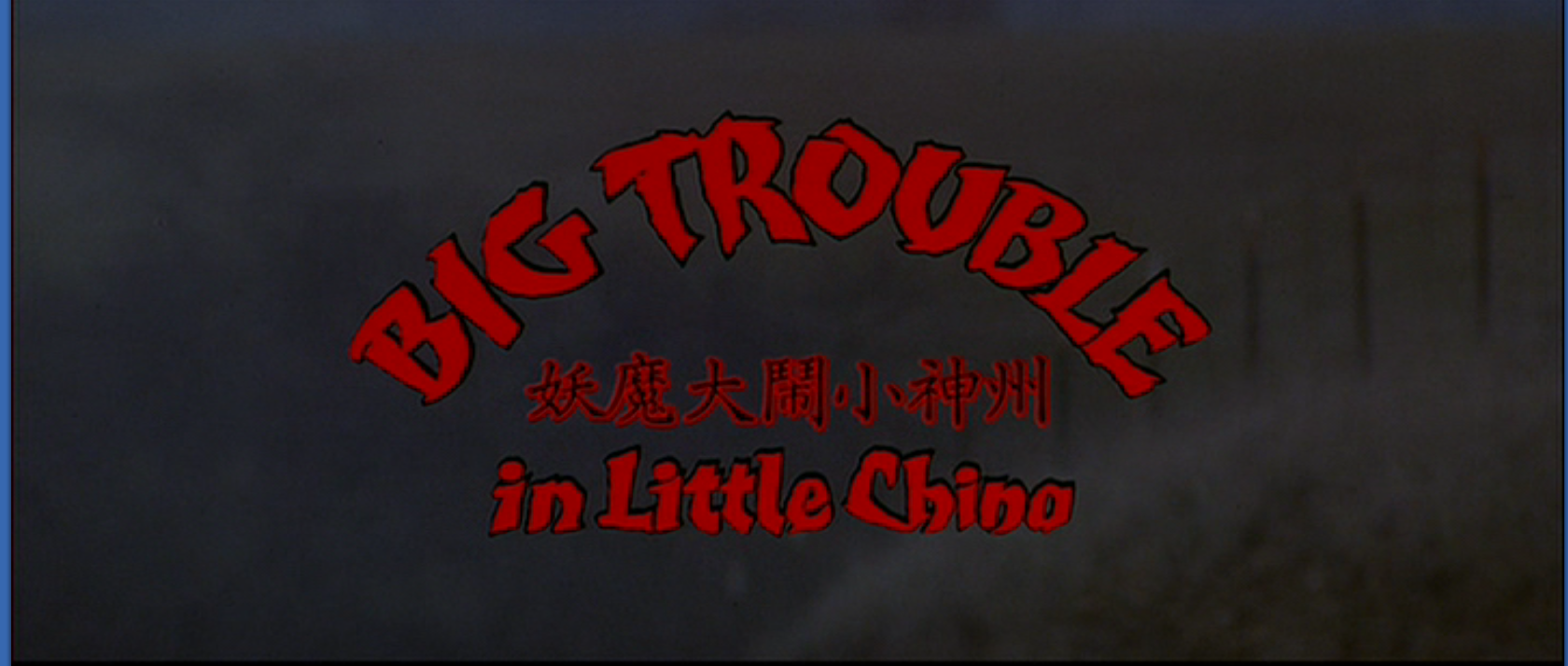
Fates Worse Than Death: Shadow of Chinatown and Big Trouble in Little China

SC.title

“China is here, Mister Burton.” –Uncle Chu (Chao Li Chi), Big Trouble in Little China

BT.title

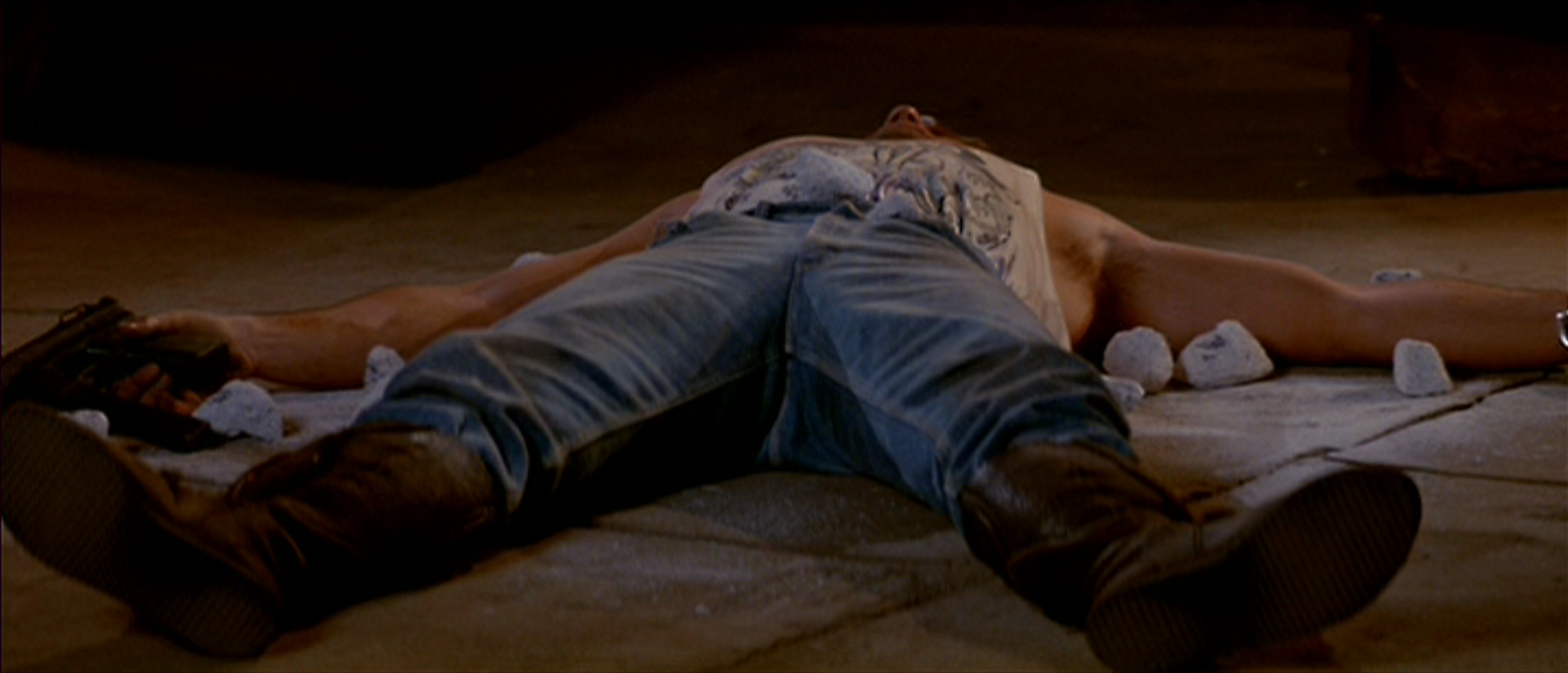
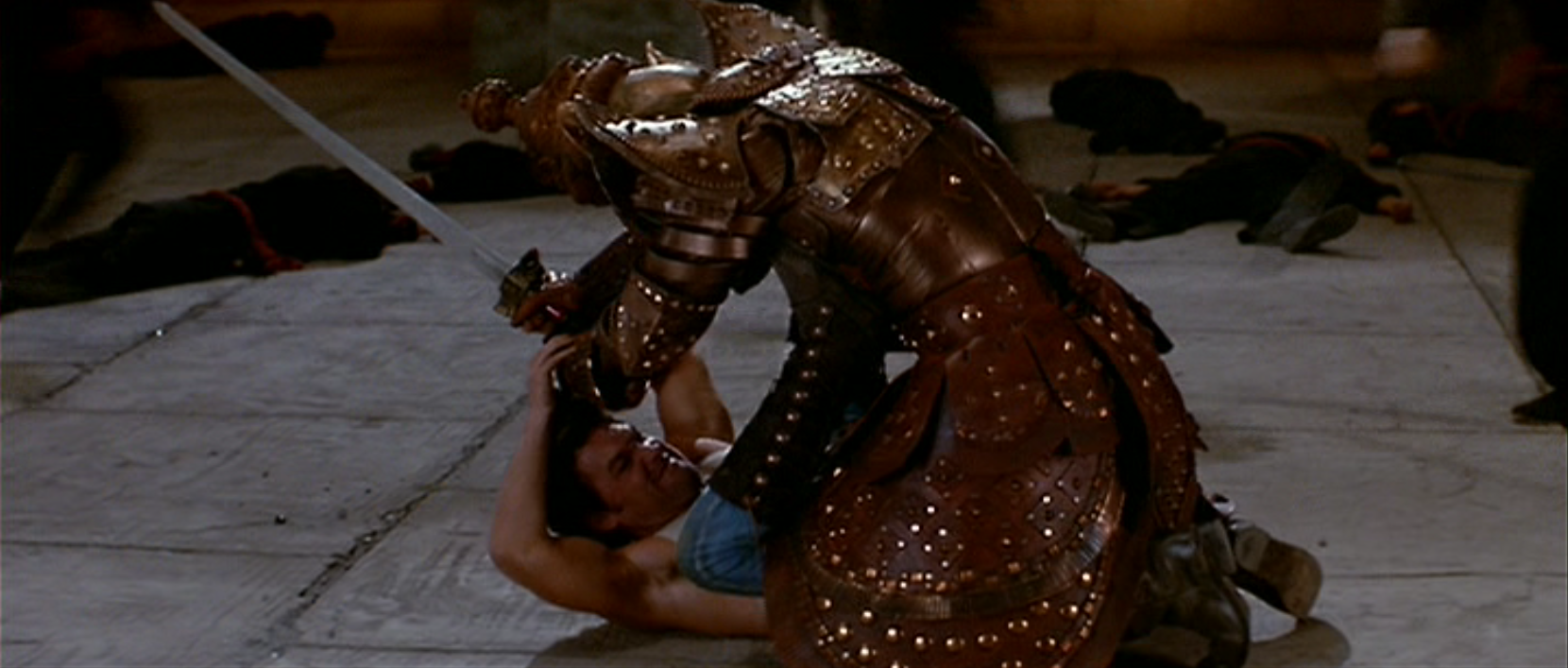
Like most fans of John Carpenter’s Big Trouble in Little China, I didn’t see it during its 1986 theatrical release, but came to love it through its repeated airings on cable and home video. Starring Kurt Russell as Jack Burton, a clueless trucker drawn into a supernatural battle in San Francisco’s Chinatown, and full of martial arts action, special effects, and comic banter, it was one of those movies that if I ran across it on TV, I had to watch to the end (so I’ve seen the middle and ending many more times than the beginning). It was probably the beginning of a fascination with Orientalism–both the legitimate history and art of the Far East, but also those hybrids of detective, occult, and political fantasy produced in the West and collectively referred to as “Yellow Peril.”

BT.LoPan2

Although always questionable from a perspective of accuracy and cultural sensitivity, stories set in Chinatown have proven irresistible to pulp and comic book writers and filmmakers alike (one collection of pulp stories bears the memorable title It’s Raining Corpses in Chinatown). The idea of an enclave of exotic, unknowable foreigners at one’s doorstep, perhaps possessed of uncanny abilities and ancient wisdom, was catnip for writers who needed simple, lurid story hooks and artists who were tired of drawing white guys in fedoras.

SC.Martin.Wong

And of course, a story set in an Asian enclave in the West has a very different dynamic from one set in a purely Asian culture: one gets the sense of a hidden world, the door to which just happens to be a cab ride or subway stop away. Such stories are inevitably told from the perspective of a white (or at least non-Asian) outsider drawn into the web, pulling back the curtain to discover whatever is really going on behind the curio shops and chop suey palaces, be it the opium trade, “white slavery” (i.e., human trafficking), or a brewing tong war. A 1909 article about New York’s Chinatown summed up this juxtaposition of the exotic and the familiar in language that could have been pulled from any number of pulp stories or movies of later decades:

There it lies, unfathomed and unknown, in the very ear of the city where all things come to be known–where a pin dropped on the other side of the world is heard an instant afterward–contemptuous, blandly mysterious, serene, foul-smelling, Oriental, and implacable behind that indefinable barrier which has kept the West and the East apart since the centuries began. Within the boundaries of the three acres which it occupies, five thousand slant-eyed children of Cathay and three or four hundred whites, who have cast their lot with them, order their existence like rabbits in a warren.

Chinatown

Really, it’s all there: physical stereotyping, the “inscrutability” of the Orient, even the “foul” smells of another culture. Hinted at in this excerpt, and persisting throughout the article (“Slumming in New York’s Chinatown,” reprinted in the book Tales of Gaslight New York), is the unshakable belief that the Chinese population is up to something, that they hide their real intentions and loyalty, and that their influence on whites can only be a corrupting one. Framed as an exposé, “Slumming in New York’s Chinatown” presents many of the same arguments that were used to justify the internment of Japanese-Americans during World War II, and which today target other immigrant populations. In this point of view, summed up nicely by the quotation with which this article began, Chinatowns and other ethnic enclaves are really extensions of the Old Country: step in, and you are effectively in foreign territory.

So how can I justify being a fan of a genre frequently steeped in ugly stereotypes and often pointedly racist in its political undertones? Were I of Chinese descent, I am sure I would not be so blasé about such issues, and I would surely take them more personally. Here, at last, I must address an issue that I have circled and sometimes approached in this series, but never taken head on.

The serials (and the other pulp fiction and comics that I write about) were made during a time in which racism was not only a tolerated but an actively endorsed part of life–not by everybody, of course, as even in the days of Jim Crow laws and the kind of housing discrimination that led to the formation of Chinatowns and other ghettos in the first place, there were brave voices willing to speak up for equal treatment of their fellows–and their content often reflects prevailing attitudes, some of which seem merely quaint today and some of which were downright ugly. I hope it is clear to my readers, however, that I don’t bring up these attitudes to burnish my own image or simply congratulate myself for living in a more enlightened time. I genuinely enjoy the entertainment of this period, and while I may take a good-natured poke at the sillier contrivances I encounter, I wouldn’t bother with it if I didn’t find that it rewarded the time I’ve invested in watching and researching these films. If the writing, production, and cultural context of serials are worth taking seriously, then so are the issues of representation they bring up.
To me, this is an appropriate place to deploy the word “problematic:” it may be overused, but I think it accurately describes art that provides substantial entertainment or edification but which has issues that can’t simply be dismissed. After all, if a work has no redeeming value at all, that’s not really a problem, is it? It can be safely dismissed as racist trash. Rather than perform mental gymnastics to prove to myself that a given representation isn’t really offensive, just because I happen to like the work it is a part of, it’s probably healthier to simply acknowledge that we can enjoy works without endorsing every part of them or the politics that underlie them. (And here I’m not so much referring to Big Trouble in Little China, which I consider a knowing riff on Chinese fantasy themes, as I am the pre-war serials and stuff like Sax Rohmer’s Fu Manchu novels; however, others may draw those lines in different places, and that also comes with the “problematic” territory.) For fans of the pulp era, that requires some self-examination to ensure that we’re not nostalgic for the wrong things (or for a world which was largely a simplified, fictional construct in the first place).

BT.Chinatown

Anyway, this is all preamble to this week’s serial: knowing that I would be attending a theatrical screening of Big Trouble in Little China (thanks to Big Screen Wichita’s Return of the Cults series) last week and that a remake of the film starring Dwayne Johnson is scheduled for 2016, it seemed like a perfect time to look back at a serial on a similar subject: Victory’s 1936 serial Shadow of Chinatown, starring Bela Lugosi. It turned out to be an even more illuminating comparison than I expected.

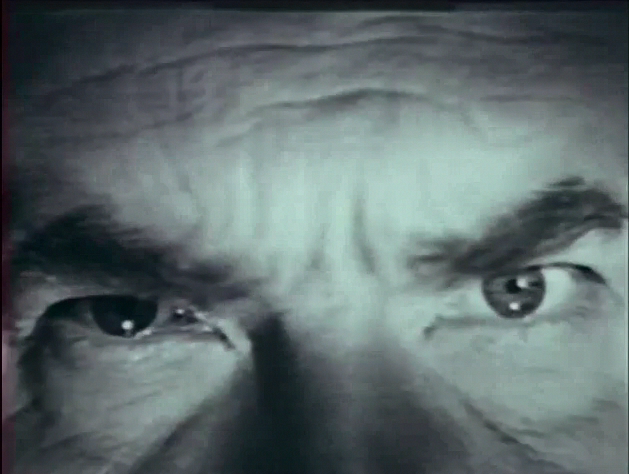
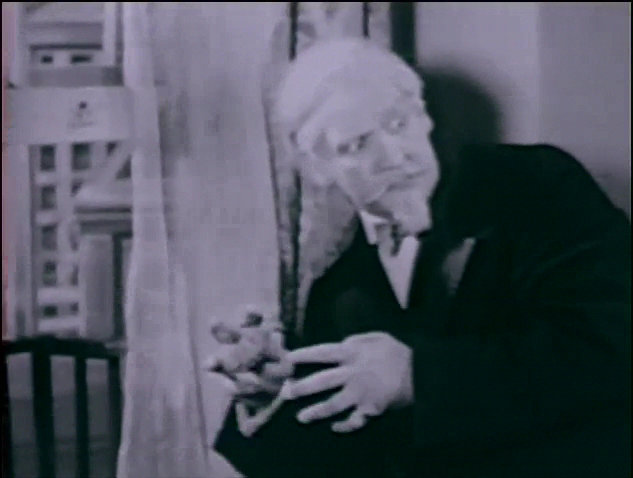
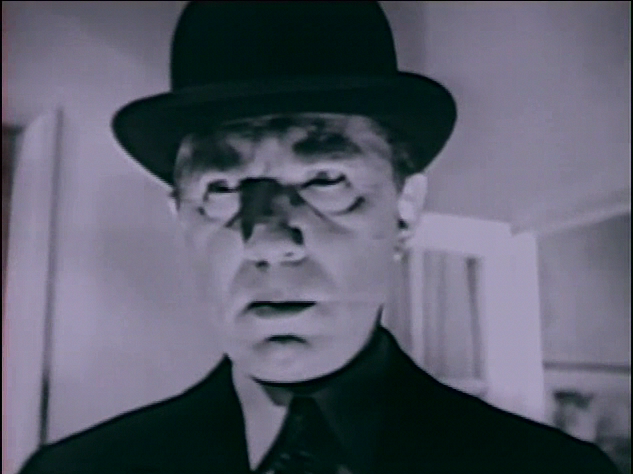
Lugosi, of course, needs no introduction: he’s an icon for his performance as the title character in Tod Browning’s Dracula, a role that fit him so perfectly he never really found another one to match it. The story of his decline is also well-known, as changing styles and his own drug addiction forced him into smaller, tackier films, including some truly awful garbage (and I’m not even referring to his final films with Edward D. Wood, Jr., which at least have their own kooky charm). Lugosi escapes Shadow of Chinatown with his dignity intact, however: while it’s not high art, the serial provides him with a role that allows him to purr seductively, rage and monologue, and employ the famously intense gaze (“more sinister than sinister” in the words of one character) that made him such a compelling vampire.

SC.Poten4

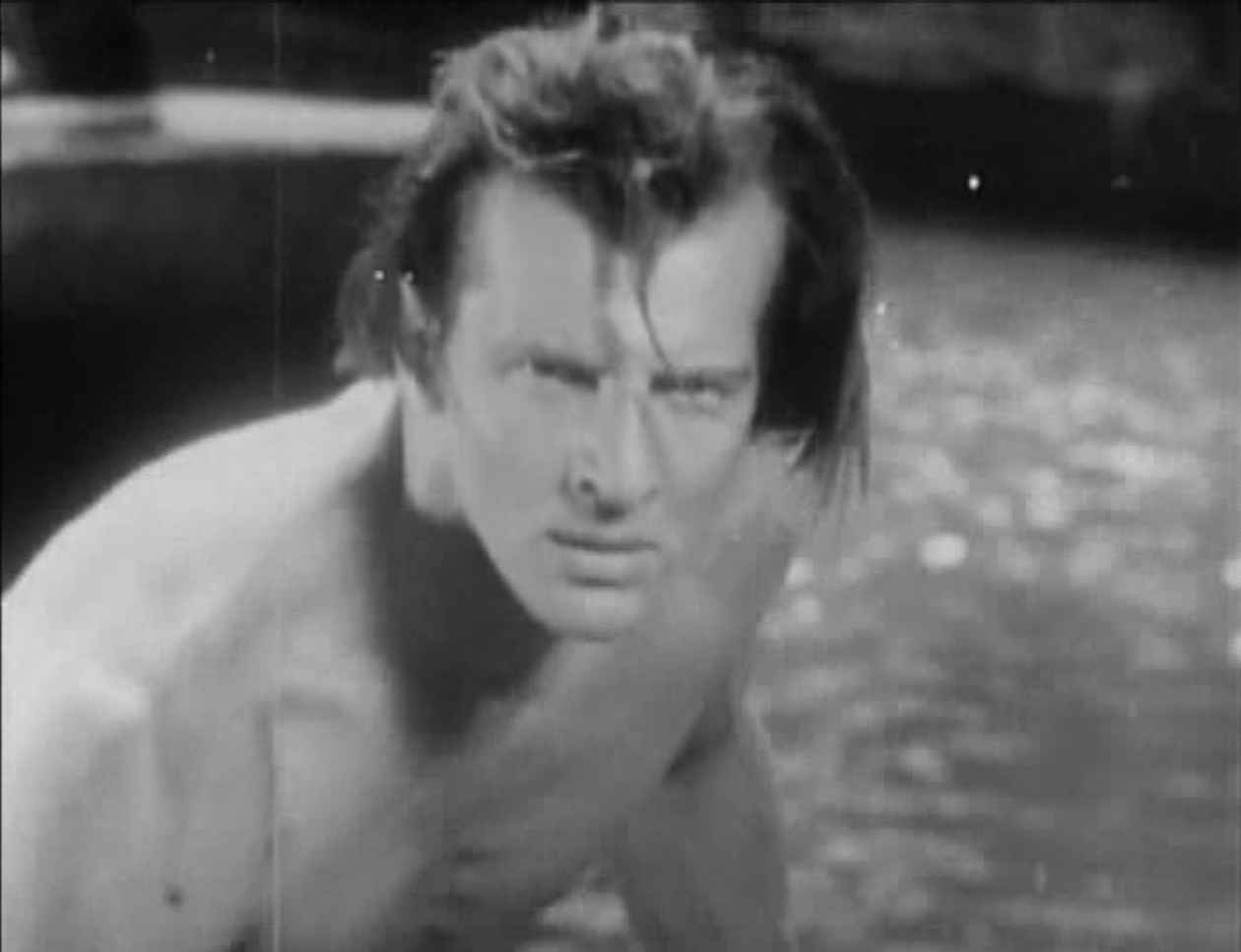
Lugosi is first billed, but as the villain of the piece; the hero is played by Herman Brix (who would later change his name to Bruce Bennett). This is the third serial with Brix that I have watched, and the first one in which I was acutely aware of his shortcomings as an actor. Although John Taliaferro characterized Brix’s performance as the title character in The New Adventures of Tarzan as “stiff,” I thought he was fine in what was primarily a physical role; in the same vein, Brix was part of a trio of leads in Daredevils of the Red Circle, and had more stunts and fight scenes than spoken lines. Shadow of Chinatown gives Brix much more dialogue than either of those films and asks us to believe that he is simply a writer, unwillingly dragged into the action; and, much worse, gives him the task of engaging in “playful” banter with his female co-star, Joan Barclay, that would sound mean-spirited even if delivered by Cary Grant. Needless to say, Brix is no Cary Grant.

SC.Martin2

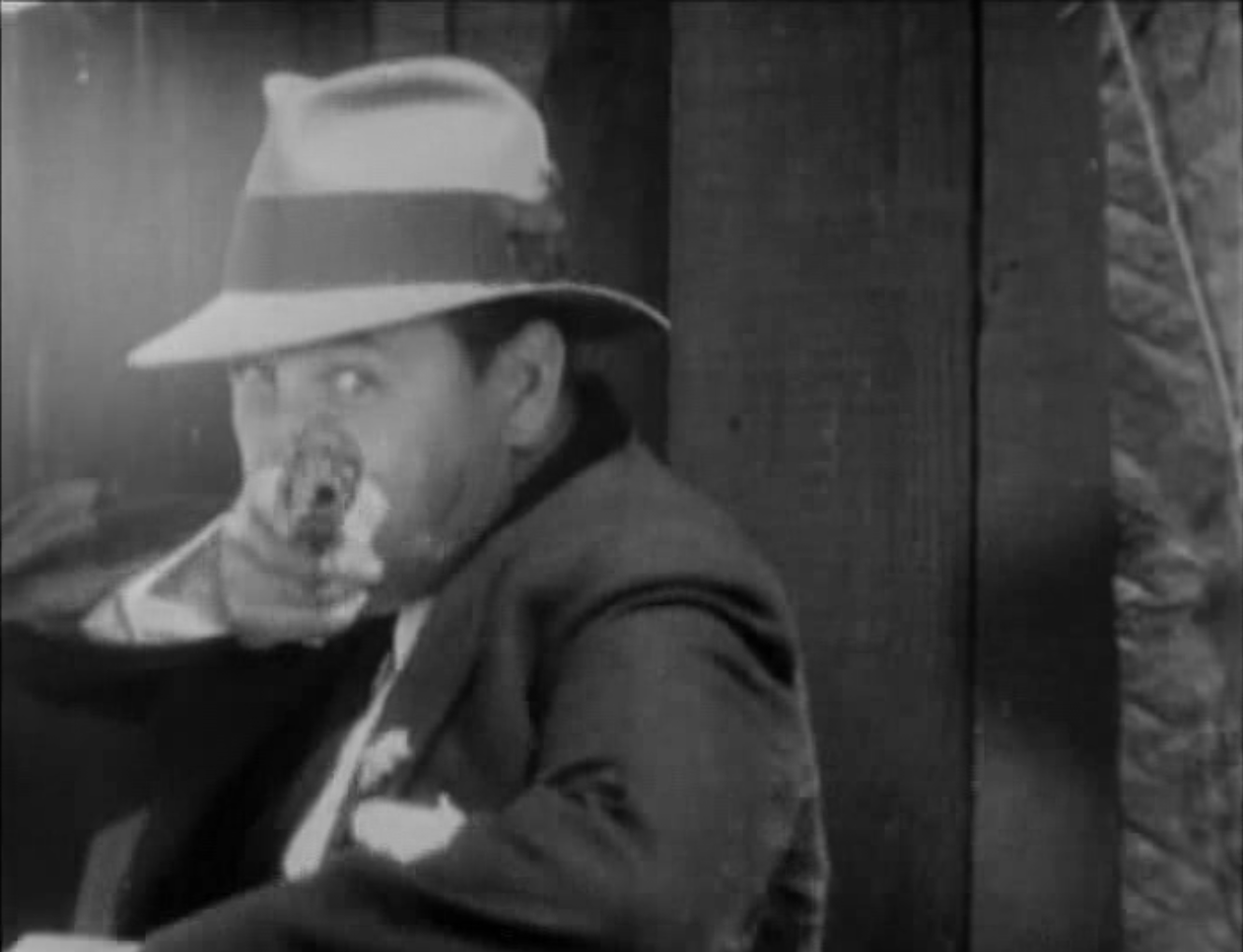
As Shadow of Chinatown begins, Sonya Rokoff (Luana Walters), the representative of a European department store syndicate, is scheming to eliminate competition from the merchants in San Francisco’s Chinatown. She hires Victor Poten (Lugosi), a “Eurasian” scientist in need of funds, to help her destroy the merchants (at first by hiring white gangsters to dress up as Chinese and riot in the streets of Chinatown, scaring tourists away; later, the plans get more elaborate). It isn’t long before Poten is running things, controlling Rokoff through intimidation and (later) hypnosis. Although her plan was to put the Chinese out of business for her employers, Poten is motivated by hatred of “both the Oriental and Occidental races;” his ultimate goal is to begin a race of his own.

SC.Sonya1

It’s an interesting transformation for Lugosi’s character: in the first chapter he is little more than a henchman, with Rokoff calling the shots, and he wears a telephone repairman’s coveralls as he sneaks from place to place executing Rokoff’s orders. As his power and confidence grows, so do the abilities he displays: his technology becomes more like magic; he’s a master of disguise; he controls people by hypnosis. By the last few chapters, he has miniature spy cameras planted in the homes and offices of every prominent person in Chinatown: nowhere is safe from his prying gaze. In effect, he grows into a particularly intense version of the all-powerful, all-seeing mastermind of paranoid fantasy, Fu Manchu in all but name.

SC.Poten2

The central joke of Big Trouble in Little China is that Jack Burton, for all his John Wayne swagger, is actually the comic relief sidekick: it’s his friend Wang Chi (Dennis Dun) who understands what is going on and has the connections and skills to rescue the damsels in distress and defeat the evil Lo Pan, while Burton loses his knife, forgets to take the safety off his gun, accidentally knocks himself out, and struggles to move after the one bad guy he kills falls on top of him. Burton has his moments, to be sure, but his role is summed up by an exchange in which he complains that he feels like an outsider and is told in no uncertain terms, “You are.”

BT.Burton1

Surprisingly, Shadow of Chinatown plays with that dynamic as well, although not to the same degree. When Rokoff’s and Poten’s schemes start causing trouble in Chinatown, the mayor of San Francisco invites author Martin Andrews (Brix) to consult with the merchants on the basis of a book Andrews has written that makes him an authority on Chinatown. In reality, everything Andrews knows has been gleaned from his Chinese man servant, Willy Fu (Maurice Liu), who has been feeding him gossip (and his own fabrications) for use as story ideas.

Willy is the most clichéd character in the serial: he speaks with a heavy accent, addresses Andrews as “honorable master,” and is given to pseudo-Confucian aphorisms (“Detective instinct bloom like beautiful chrysanthemum in your honorable head!”). Willy is capable (especially at pushing Andrews to doing the right thing when he rather sensibly balks at getting involved with things the police should handle), but he never meets a stereotype he doesn’t lean into with gusto. In a final irony, Rokoff and Poten draw the methods of their attacks on Chinatown’s merchants from Andrews’ book, causing a suspicious police captain (Forrest Taylor) to treat the reluctant author as his number one suspect.

SC.Willy1

The fact that most of the lurid preconceptions about Chinatown turn out to be false largely passes without comment, but it’s hard to miss. When eager reporter Joan Whiting (Barclay) tries to pump a police officer for information, she’s certain she’s on the trail of the kind of sensational story quoted above, rattling off the thrilling scenes she (and the audience) expect to see: “I want to know who started the trouble, which tongs are fighting, are there any hatchet men, how many people killed. . . .”

As the audience already knows, the “hatchet men” are impostors, and the troubles are completely the work of the Russian-sounding Sonya Rokoff (who may wear a “dragon lady” dress, but who doesn’t look Asian at all, and is described as being of “mixed blood”) and the “Eurasian” Victor Poten. In fact, the message (typical for the inter-war years) seems to be that the Chinese people want only to live in peace without trouble, but must remain vigilant against “foreign” agitators. Of course, this message of brotherhood with the Chinese comes at the expense of demonizing those of mixed heritage (and as I have argued, “Eurasians” and other unnamed foreigners were often code for powers with which America was not yet at war, left conveniently indeterminate), but baby steps, I guess.

In fact, the serial’s treatment of its female lead is more striking (and not always in a good way) than its Chinese window dressing (although again I don’t expect it to stand up to twenty-first century gender norms). Joan Whiting is a fantastic character, a gutsy woman who’s determined to get her story with a combination of chutzpah, gumption, and moxie. She pushes her way into rooms where she thinks she can get information, doesn’t take no for an answer, and, like Willy Fu, isn’t afraid to push other people into danger if it means getting to the bottom of the mystery. She and Martin Andrews have a combative relationship, with him continually insisting she should stay out of danger (even convincing the police and her editor to order her to stay away) and her finding ways to get back into the action, even as they secretly worry for each other’s safety.

SC.Martin.Joan

The banter between the pair (and this serial as a whole has a lot of memorable dialogue, including some absolutely cold put-downs) aspires to the irreverent and breezy, but too often it veers into mean-spirited: when Joan wonders if Poten is a mind reader, Martin says, “He’d draw a blank if he tackled you.” Boom, roasted! There’s a lot more where that comes from, and with Brix’s whitebread personality and rather flat delivery, it comes off like Bing Crosby at his most paternalistic, shutting down the little woman for her own good.

The His Girl Friday dynamic is much more successfully pulled off in Big Trouble in Little China, in the characters of Gracie Law (Kim Cattrall) and Margo Litzenberger (Kate Burton), a crusading lawyer and reporter (with the Berkeley People’s Herald) looking for her big break respectively. Rewatching the film again this week it was clear how much Cattrall’s Gracie is a direct descendant of the brassy, fast-talking reporters of which Joan Whiting is a prime example. John Carpenter in his director’s commentary mentions his desire for a Howard Hawks-like “pop” to scenes where Gracie and Jack spar verbally, and expresses admiration for the speed with which Cattrall could spit out rapid-fire exposition. (It’s Margo who gets the real mouthful, however: “You mean David Lo Pan that is chairman of the National Orient Bank and owns the Wing Kong Import/Export Trading Company, but who’s so reclusive that no one’s even laid eyes on this guy in years?”, one of many moments that call attention to the film’s B-movie heritage).

BT.Gracie

As an aside, one of the true pleasures of revisiting so many old favorites in the Return of the Cults series after having delved into serials and learning more about the history of film in general is in making these kinds of connections and adding new layers of enjoyment to movies I thought I knew well. Big Trouble in Little China is usually cited as Carpenter’s take on Wuxia (martial arts fantasy) movies; it is undoubtedly that, but realizing that it also falls firmly into the “Chinatown exposé” genre has allowed me to see it from a whole different angle, almost like a brand new film.

To return to Shadow of Chinatown, the most striking quality of this serial is its breadth of tone: although the ingredients are not always combined completely successfully, there are elements of action, suspense, horror, romance, comedy, and noir threaded through its fifteen episodes. That in itself is not so unusual for a serial, but the degree of change many of the characters undergo is striking. Often the formulas of pulp storytelling don’t allow for much character development (except in the sense that the villain might change from alive to dead by the end of the last chapter), but most of the characters are in very different places at the end of this serial and have revealed sometimes surprising truths about themselves through their actions. According to John Carpenter, one of the complaints leveled against Big Trouble in Little China was that audiences never felt the lead characters were really in any danger: there were no stakes. The same criticism could easily be leveled against most serials, including Shadow of Chinatown, but more than one character undergoes changes that couldn’t be predicted from the first chapter, and in all of this the original motivation–the European department store trying to eliminate Chinese competition–is little more than an afterthought. Towering above it all, Lugosi gives a performance that is bigger than a mere serial can contain.

BT.Burton2

What I Watched: Shadow of Chinatown (Victory, 1936)

Where I Watched It: This serial is on YouTube, but the audio was badly out of sync in some of the chapters, so I ended up watching it at the Internet Archive.

No. of Chapters: 15

Best Chapter Title: “Death on the Wire” (Chapter Four)

Best Cliffhanger: There are several good ones, including a few classics like the room with walls closing in (Chapter Two, “The Crushing Walls”) and a gruesome trap involving a poisoned needle embedded in a telephone receiver (the aforementioned “Death on the Wire”), but I think the cliffhanger most worthy of comment is at the end of Chapter Five (“The Sinister Ray”). Martin Andrews is knocked out in his home and Poten prepares a gruesome fate for him: he adjusts a suspended fishbowl so that the sun’s rays are focused on Andrews’ face, where it will burn him to death . . . eventually. Before moving the bowl, Potens orders his henchman, “Don’t hurt the fish!”

SC.Grogan2

Most Tragic Character: Special note must made of Poten’s henchman, Grogan (Charles King). Grogan starts out as a typical enforcer, doing Poten’s dirty work and taking his boss’s abuse when he fails to eliminate the meddling Martin and Joan. Sensing that he’s working for a madman, he appeals to Sonya, who is at first happy to have someone she might be able to keep on her side in the event of a split with Poten. When it’s clear that Grogan wants more than steady employment from her, she rebukes him and he threatens her. Then it starts getting weird: Grogan attempts to kill Poten on board a ship, but Poten manages to put Andrews in Grogan’s noose (at least temporarily). When Grogan is ready to talk to the police, Poten shoots him with a poison dart that makes him appear dead. Taking him from the ship’s sick bay, Poten revives Grogan and disguises him as an old man. From then on, he is a broken shell, susceptible to violent outbursts and nonsensical raving, but he is still in Poten’s thrall, taking orders to hurl a live grenade at our heroes or attacking Andrews on the roof of Sonya’s apartment building: a strange and gruesome fate for a character who at first seemed like just another disposable henchman.

SC.Grogan3

Sample dialogue: Grogan: “I’ll get him next time. He can’t make a sap out of me!”
Poten: “No, your parents already did an excellent job of that!”
–Chapter Three (“13 Ferguson Alley”)

What Others Have Said: “Yellow Peril . . . how can a phrase that reeks so of racism and paranoia yield a body of fiction so . . . cool?” –F. Paul Wilson, Sex Slaves of the Dragon Tong (Foreword)

What’s Next: I haven’t decided. Maybe I’ll let it be a surprise. If you have any suggestions or requests for future serials, feel free to list them in the comments, or hit me up on Twitter. (Edit: I ended up covering Panther Girl of the Kongo.)

Fates Worse Than Death: The Green Archer (1940)

GA.title

For generations, members of the Bellamy family have lived in Garr Castle, an actual European castle brought to America stone by stone and maintained as a tourist attraction. According to family lore, a mysterious archer has appeared in times of trouble to protect the Bellamys. Now that Abel Bellamy has managed to put his brother (and rightful heir) Michael out of the way (framing him and then arranging for the derailment of the train taking him to prison), he has closed Garr Castle to the public and is using it as a base of operations for his diverse criminal enterprises. His henchman Brad, dressed in the Green Archer’s costume and mask, serves to keep intruders off the property and keep alive the legend of the family’s protector. Abel even goes so far as to invite Michael’s wife Elaine to the castle and then hold her prisoner, guarded by the matronly Mrs. Poole in one of the secret chambers that honeycomb the castle.

GA.Bellamy.gang3

Despite his aloof posture, Abel doesn’t quite have everything under control: insurance investigator (and friend of Michael Bellamy) Spike Holland has been snooping around, suspicious of Abel’s version of events. He’s even arranged to move Elaine’s sister Valerie Howett and their father into the Lady’s Manor next door to the castle so they can keep an eye on Abel’s comings and goings. Worst of all, another Green Archer has inserted himself, sending warnings via arrow and protecting Spike and the Howetts from Abel’s deadly schemes, and this Green Archer seems to know the castle grounds and its secret passages as well as any of Abel’s henchmen. With the stranger’s help, Spike Holland hopes to bring Abel Bellamy to justice, clear Michael’s name, and rescue Elaine in the action-packed 1940 serial The Green Archer!

GA.Bellamy4

It’s fair to say that archery has experienced a tremendous vogue in the last decade and a half, probably beginning with Orlando Bloom’s portrayal of Legolas in Peter Jackson’s adaptation of The Lord of the Rings and getting major boosts from Jennifer Lawrence’s Katniss Everdeen in The Hunger Games, a renaissance in both comics and films for Marvel’s Hawkeye, and the popularity of DC’s Green Arrow on TV’s Arrow. But archers have always had at least some presence in popular culture, most descending from Robin Hood, to whom the Green Archer owes a debt in terms of costume, methods, and mission. Aside from the loose cloth that covers his face, the Green Archer looks very much like the stereotypical medieval woodsman, with a peaked cap, tights, and jerkin.

GA.Archer3

The Green Archer was based on a 1923 novel by Edgar Wallace (which I haven’t read); I assume there were quite a few changes in turning the book into a serial, but at least on film the title character has much in common with the Scarlet Pimpernel and Zorro: although superficially similar to the masked superheroes just coming into vogue, the Archer has a narrow mission of righting a wrong rather than a mandate to protect the public at large. During the course of the serial, several characters are teased as being the real Archer–Parker Howett (Forrest Taylor) always seems to come into the room just after the Archer has left; Howett is a crack shot with a bow and arrow, but so are Henderson the butler (Herbert Evans), and even Spike Holland (Victor Jory, sounding a lot like Burgess Meredith) himself–but his true identity isn’t revealed until the final chapter. (It isn’t hard to guess the solution, but I’ll leave it to viewers to figure out for themselves.)

GA.Elaine2

As in a lot of serials, there are several genres mixed together, but in The Green Archer the dominant idiom is gothic: although the compositions and staging rarely rise above competent, there are many scenes set at night or bathed in shadow, creating an oppressive gloom, and the fact that the heroes literally live next door to the villain (and the two parties are constantly crossing into each other’s territory through invasion or abduction) gives events an air of cat-and-mouse.

GA.Archer.portrait

More importantly, the castle is full of secret passages and listening devices, leading to overheard conversations and mysterious screams, and multiple tableaux of imprisonment and enclosure. All kinds of death traps await the foolhardy visitor to Garr Castle as well, including such classics as the spiked ceiling that slowly descends to crush its victims; the oubliette that fills with water; and even a false floor that gives way into a pit of flames. That’s not even mentioning the vicious guard dogs.

Such things are clichés, already familiar to me in childhood from the Indiana Jones movies, Goonies (itself a throwback to the adventures of Our Gang, the Bowery Boys, and the like), and countless other shows, but they are presented in The Green Archer in a high style that reminds me more of Richard Sala or Lemony Snicket, artists who take such stock elements to mannered extremes, refining the iconography and intrigues of the genre into a nearly injectable concentrated form.

Richard Sala's Mr. Murmur

Richard Sala’s Mr. Murmur

Also gothic is the theme of the double that runs through this serial. No serial is as consistent in exploring and developing thematic symbols as a feature might be, but there are several instances of lookalikes and mistaken identity. The most notable is the fact that there are two Green Archers, one good and one evil. Sometimes the duplication is played for laughs, as when comic-relief henchman Dinky (Kit Guard) frequently attacks Brad, the Archer in Abel Bellamy’s employ, or when Dinky trusts the unknown Archer, thinking that it’s Brad in costume. Other times, the question of which is which is a matter of life and death.

GA.Brad.Dinky

There’s also a two-chapter sequence in which Spike is impersonated by Madison, a master of disguise who makes himself up to look just like the investigator so he can steal a formula for synthetic radium (the only plot element that really dates the serial: as mentioned last week, secret formulas and inventions just waiting to be lifted by spies or criminals were all over the popular fiction of the 1930s and ’40s). Spike faces off against the impostor (who is of course played by Jory when “in disguise;” the inevitable fistfight gets around this by using wide shots and keeping hats firmly on both stunt performers’ heads), and for a while turns the tables by taking Madison’s place.

More traditionally gothic is the contrast made between Abel the usurper and his brother Michael. The burdens of lineage are a frequent theme of gothic novels, and although Garr Castle isn’t cursed as such, it’s telling that Abel claims he has always hated the place and is happy to close it down. The phantom archer that protects the family is a symbol that Abel tinkers with at his peril: by using it for his own evil ends, he invites destruction.

Abel Bellamy (James Craven) is a captivating villain, cool and arrogant, even amused that Spike Holland should be foolish enough to tangle with him, until things start to slip from his control and he starts to get rattled and increasingly unhinged. It’s the kind of role Vincent Price or Peter Cushing would get in a few decades, and Craven plays it to the hilt. Without him and Jory as Spike centering the action, the multiple subplots and large cast of characters would spiral into confusion; although the Green Archer is the title character and a vital piece of the story, the conflict is really a chess game (or a card game; see below) between two expert players.

GA.Spike.Bellamy

However, much of the serial is executed with tongue firmly in cheek; James Whale had tweaked gothic conventions in The Old Dark House, and even Universal’s monsters were starting to deviate from the pure horror that had made them famous, so perhaps the filmmakers simply assumed that no one would be able to take this material seriously. As Alan G. Barbour notes, Columbia descended into comic treatments in the early 1940s: “director James Horne took over and serials like The Iron Claw, Deadwood Dick, The Green Archer and The Spider Returns set serial fans’ funny bones in motion with their ludicrous sight gags and ridiculous situations (i.e., gangsters playing jacks, hanging out their laundry, wearing silly party hats, etc.).” (In The Green Archer, Bellamy’s gang is shown playing tiddly-winks during their down time, a scene apparently important enough to be included in the “coming next chapter” teaser.)

There are several characters who are primarily comic: bumbling police captain Thompson (Fred Kelsey) is easily turned against Spike and spends much of his time trying to apprehend the investigator. Bellamy’s henchman Dinky is apparently supposed to be English, calling his boss “Guv’nor” and intermittently saying his lines in a Cockney accent, and as mentioned he gets into lots of slapstick trouble when he can’t tell the two Archers apart. Dinky gets a few moments to shine at the end, however: of all Bellamy’s henchmen, he’s the only one who sticks with him and seems to care what happens to him. Still, for the most part I found this serial more over-the-top than deliberately ridiculous; a fine distinction, perhaps, but an important one. The Green Archer isn’t anywhere near as dark (or as well-executed) as the superior Gang Busters, but there’s a similar fascination with the underworld and the broad variety of types found among criminals.

GA.Bellamy.Dinky1

As for unintentional comedy, there are so many fistfights in this serial, and most of them begin so abruptly, that I came to expect one practically any time either the hero or the bad guys entered a room. The way the players charge at each other, you could add a ringside bell to the soundtrack to signal the beginning of the mayhem and it wouldn’t be too out of place. The fights don’t look quite as silly as those Columbia would stage for the Batman serials later in the decade, but that’s a low bar to hurdle. Compared to Columbia’s Batman, the Green Archer is seriousness incarnate: a creature of the night, able to strike terror into the hearts of criminals (a superstitious and cowardly lot), both a dark knight and a detective–hey, this is good stuff! Somebody should publish a graphic novel about this character.

What I watched: The Green Archer (Columbia, 1940)

Where I watched it: Pacific Entertainment’s DVD, a sloppy transfer from an obvious videotape source. I wouldn’t recommend it unless, like me, you found it at a bargain price.

No. of chapters: 15

Best chapter title: “The Devil’s Dictograph” (Chapter three). There are several good chapter titles, even if they are given to puffery: there is both a necklace and a mirror of treachery, not to mention a “deceiving microphone.”

Best cliffhanger: Abel Bellamy’s criminal syndicate grows larger and more elaborate as the serial progresses and he calls in more exotic accomplices to get rid of Spike Holland. By Chapter nine (“The Mirror of Treachery”) he has lured Spike and Valerie (Iris Meredith) out to a roadhouse in the country, and when they make a break for it, Abel summons a “crook aviator,” a pilot who drops actual bombs on the couple’s car from a plane. They hide in a small roadside shack, which is completely obliterated by one of the falling bombs.

GA.Valerie1

Annie Wilkes Award for Most Blatant Cheat: There aren’t any examples of the “rewritten history” cheat, but there are a few cliffhanger resolutions that test credulity. Several times the Green Archer shows up to pull Spike out of a deathtrap, and in a few cases he shakes off seemingly life-threatening injuries. The most suspicious is at the end of Chapter ten (“The Dagger That Failed”), in which Spike opens a safe in Abel’s office, setting off a booby trap that blasts him with a double-barreled shotgun at point blank. Spike certainly looks as if he’s been struck, but at the beginning of the next chapter he recovers and is completely fine, without so much as a mention of a “bullet-proof vest” or other narrative excuse. Pretty fishy if you ask me.

Sample dialogue: “We’re playing a game and you’re dealing from the bottom. But I’m holding a hand you’ll never beat: the law!” –Spike Holland to Abel Bellamy, Chapter Nine (“The Mirror of Treachery”)

GA.Spike1

What others have said: “Victor Jory had long since established himself as an excellent film and stage actor, appearing in many quality productions (including Gone With the Wind), so his tour of duty as a matinee star was strictly a lark. . . . James Craven was always good for a few laughs as he seemed always to play a hypertensive villain in vehicles like The Green Archer, White Eagle and Captain Midnight. His henchmen never could do anything right, and Craven’s ranting and raving grew progressively wilder with each chapter.” –Alan G. Barbour, Cliffhanger: A Pictorial History of the Motion Picture Serial

What’s next: Join me and help solve a mystery at the circus in Daredevils of the Red Circle!

Fates Worse Than Death: The New Adventures of Tarzan

Guatemala: jungle land of mystery! Homeland of the lost Maya! Cradle of secrets! It is to this land that Major Martling brings his expedition in search of the Green Goddess, a mysterious idol said to contain an unknown but highly potent explosive formula, as well as a fortune in jewels. Along with his daughter Alice and her fiancé Gordon, Martling is accompanied by his friend Lord Greystoke, who has some experience in the wilderness himself. Greystoke has come to Guatemala to find his old friend Lieutenant D’Arnot, a pilot who crash-landed in the Central American jungle.

NAT.title

Of course there are complications: in addition to the typical jungle perils of wild animals and hostile natives, Martling is hounded by Raglan, a rival explorer in the employ of a munitions company that hopes to recover the explosive formula for its own use. In addition, both parties are being shadowed by a mysterious woman, Ula, who claims to be the widow of D’Arnot’s co-pilot, and who seems to have unfinished business with Raglan. She tries to foil Raglan’s plans, but is she on Martling’s side? What is her real aim?

NAT.idol

Deep in the jungle lies the Dead City, home to a tribe and a cult that is very much alive, worshiping the Goddess under the leadership of a tiger-striped high priestess. They threaten Martling’s party with sacrifice, even as Raglan steals the idol while the cultists are distracted. Were Martling and his party alone, this might be their end, but Lord Greystoke is not just the worldly traveler he appears to be: he is also Tarzan, Lord of the Jungle! Through an action-packed twelve chapters that includes fights with jungle cats, explosions, gunfights, espionage, and more, Tarzan and Martling race to recover the idol before Raglan can get it onto a ship bound to Europe, all while fending off the vengeful natives and the hooded warriors who will likewise stop at nothing to recover their Goddess, in The New Adventures of Tarzan!

NAT.priestess2

I’ll admit I had a hard time getting into The New Adventures of Tarzan at first, for a couple of reasons. In the copy I was watching, the sound started out kind of fuzzy, making it hard to hear the dialogue, and there is a lot of exposition to get out of the way, with numerous characters and their histories and motivations being introduced. Because The New Adventures was based on storylines from Edgar Rice Burroughs’ Tarzan novels (although not directly on any one novel), it is less streamlined than many later serials, and the accumulation of multiple subplots and shifting settings feels surprisingly modern, like an overstuffed summer blockbuster.

NAT.Tarzan.Martling

The first chapter is also forty minutes long, and contains several set pieces that could easily have been cliffhangers between chapters (Tarzan wrestles with crocodiles in a river, and later saves Major Martling’s daughter from a snare that suspends her over a jaguar pit). I have grown so accustomed to the rhythms of the serial that when these crises were resolved without chapter breaks and the chapter crept toward twenty-five, thirty, and thirty-five minutes in length, I started to wonder if the DVD producers had edited out all the chapter breaks (a move that would compromise this project, to say the least). But no, the first chapter is just extra-long, and does eventually end on a cliffhanger, like the other, shorter chapters.

NAT.Nkima1

I’m glad I stuck it out, however, as once the slow engine of story got underway and the excess baggage of characters and subplots was shed, The New Adventures of Tarzan turned out to be an engaging serial with a variety of colorful settings and some exciting action sequences. The main conflict, in which a well-intentioned, patriotic explorer and an unscrupulous mercenary fight over an ancient, powerful artifact, recalls both the 1933 Perils of Pauline and, of course, the later Raiders of the Lost Ark. (There’s also Martling’s notebook which contains the code necessary to open the idol, and which changes hands several times.)

NAT.deadcity1

Much of the serial was filmed on location in Guatemala, including Chichicastenango and the ruins of Tikal, by producer Ashton Dearholt; the conditions turned out to be almost as difficult for the cast and crew as for the characters on screen, with illness and bad weather taking their toll. The role of Raglan, credited to Dan Castello, was actually played by Dearholt himself after Castello had to drop out early on. The expense and danger of the production mostly end up on the screen, however. The big cats Tarzan fights are real (at least up until the moment an obviously stuffed cat is thrown down; some of these fights are better edited than others); the giant waterfalls over which characters (or, again, their dummy stand-ins) plunge are suitably impressive, giving the film an epic scope.

NAT.Tarzan2

On the other hand, the film shows some of the limitations of independent production: other than the chapter titles, there is little to no background music; combined with the relatively meager dialogue during Tarzan’s many solo excursions and only ambient sound, long stretches of The New Adventures could pass for a silent movie. One strange touch occurs in the Dead City: a recurring gong, sometimes the only thing heard on the soundtrack, is distorted enough to sound like the disturbing, unexplained drones David Lynch frequently includes in his films, and is a surprisingly eerie match for the scenes of torture and imprisonment by hooded inquisitors. (No, I never expected to make a comparison between a serial and Lynch either, but here we are.)

NAT.torture2

Tarzan himself (Herman Brix, who would later change his name to Bruce Bennett) is not the monosyllabic wild man of popular culture; because this serial was produced by Tarzan’s creator Edgar Rice Burroughs, it reflects the character as he appears in the books, speaking perfect English and transitioning effortlessly between his identities as Lord Greystoke and Lord of the Jungle. This version of Tarzan never says anything like “Me Tarzan, you Jane,” not least because Jane isn’t in this story.

NAT.Greystoke2

Whereas other film representations of Tarzan emphasized the noble savage or fish-out-of-water elements in his story, The New Adventures treats him more like a superhero: as Greystoke he wears his wealth and title easily, an aristocratic Bruce Wayne, but when there’s trouble he strips down to a loincloth and takes to the jungle, swinging on vines and talking to animals. His identity is far from secret, however, and he’s treated like a celebrity: Martling’s valet George, in fact, is described as “the flunky who joined the expedition to be closer to his idol, Tarzan.” Burroughs’ Tarzan represents a colonialist ideal: the “best of both worlds,” with all the education and material advantages of Western civilization and all the vigor, toughness, and native wisdom of his adoptive culture.

NAT.Tarzan3

In addition to its ambitious location shooting, The New Adventures stands out from the serials I’ve watched in other ways. Burroughs’ stories could be quite bloody, emphasizing “nature red in tooth and claw” and featuring villains evil enough to justify just about anything the good guys might do to them. That’s often sanitized in film and TV retellings, which are more kid-oriented than the books they’re based on. Although not especially graphic, The New Adventures includes gunplay, stabbings, explosions, and more, with (mostly) realistic consequences. No bloodless fistfights here: Tarzan and co. don’t mess around. The most surprising sequence involves George (who is otherwise comic relief) spraying machine gun fire at attacking waves of tribesmen from the Dead City as if in flashback to the Great War. Even Indiana Jones would save that kind of move for Nazi soldiers.

NAT.machinegun1
NAT.machinegun2

As I mentioned, the rhythm of this serial is also somewhat odd, with a profusion of subplots (especially at the beginning) that gradually thin out as D’Arnot is recovered and leaves with Alice and Gordon, and Ula joins Martling’s party. Once the idol is stolen, the vengeful warriors from the Dead City don’t pick up Raglan’s and Martling’s trail until Chapter Seven, and the action is essentially resolved in Chapter Eleven. Many serials include an “economy chapter,” in which flashbacks to earlier events are included to catch up latecomers: The New Adventures treats the last chapter as a recap, an anticlimax that serves only to tie up a few loose ends and put a cap on the serial. Still, I’ve come to appreciate the looser, less formulaic serials of the early ’30s, if only because they have more capacity to surprise; however lumpy its storytelling, The New Adventures of Tarzan is full of invention. No one is phoning it in.

NAT.Ula3

What I watched: The New Adventures of Tarzan (1935, Burroughs-Tarzan Enterprises)

Where I watched it: Pop Flix’s 2-DVD Classic Tarzan Collection, which also includes three features: Tarzan the Fearless, Tarzan’s Revenge, and Tarzan and the Trappers.

No. of chapters: 12

Best chapter title: “Devil’s Noose” (Chapter 3)

Best cliffhanger: At the end of Chapter 10 (“Secret Signals”), Tarzan confronts Raglan on the dock in Mantique as Raglan prepares to load the Goddess idol onto Simon Blade’s ship. There’s a scuffle with Raglan and his crew, during which the idol drops over the side of the dock, where it hangs from a rope. Raglan pulls a gun and commands Tarzan to step away from the idol, promising this will be “the last time you meddle in my business!” In a sequence straight out of a gangster film, after a close-up of Tarzan, the shot reverses to Raglan, the camera pointing straight down the barrel of his gun. Bang!

NAT.Tarzan6
NAT.Raglan2

Annie Wilkes Award for Most Blatant Cheat: In Chapter Nine (“Doom’s Brink”), one of the most action-packed chapters, the members of Martling’s party have been captured separately and taken to the Dead City by the Goddess’ worshipers. Each faces a different peril: Martling and George are taken to a torture chamber (!), Ula is imprisoned in a cell with an old woman who attempts to stab her, and Tarzan is tied up in the cell next to Ula’s with a chained lion. After overcoming the old woman, Ula uses her knife to dig through the wall separating herself from Tarzan. As Tarzan hurries to untie himself, the lion’s chain gives way; the last shot of the chapter is of the lion’s slavering jaws as it lunges at the camera.

NAT.Tarzan5

It looks like the game is up for Tarzan, no? As the beginning of Chapter Ten resets this peril, however, not only does Ula make a hole big enough to pass Tarzan the knife, he has time to untie himself and maneuver to the hole before the lion attacks, so he’s not even in the same place when the lion lunges off of its chain. (This is at least more satisfying than the chapter where Tarzan is caught in a spiked tiger trap, only to be grazed by the spikes instead of impaled: such “oh, I guess he’s okay” resolutions are even more anticlimactic than straight-up cheats, in my opinion.)

Funniest moment: Martling’s valet George (Lewis Sargent) has a lot of similarities to Professor Hargrave’s secretary Dodge from The Perils of Pauline, but despite his silly attachment to his yo-yo, his always-growling stomach, and his panicky reactions to mundane jungle plants and animals, George has a few serious moments. His machine gunning of natives from the Dead City (see above) is later paid back when George is the first to be tortured in Chapter Nine. Still, most of George’s scenes involve clowning of one kind or another, and I’ll admit to laughing when, in Chapter Seven (“Flaming Waters”), George is bitten and chased by a bunch of water turtles, an ordeal to which Tarzan responds with an epic eye-roll.

NAT.George2

Sample dialogue: “He reminds me of some of the jungle cats I’ve known: they’re most dangerous when they purr.” –Tarzan, referring to Captain Blade, Chapter 11 (“Death’s Fireworks”)

What others have said: “At one point, Burroughs had worried that so much local scenery had been eliminated from the episodes that the whole thing might just as well have been shot in Hollywood. But in the final edit, enough Mayan ruins, colonial cities, and Guatemalan Indians survive to create a richly exotic and authentic backdrop. And for once, Tarzan is able to swing through trees other than the sycamore and eucalyptus so predominant in earlier films shot in or near Los Angeles.” –John Taliaferro, Tarzan Forever: The Life of Edgar Rice Burroughs, Creator of Tarzan

What’s Next: The Miracle Rider