Review: Disenchantment Season 1

disenchantment-netflix

In the new Netflix animated series Disenchantment, Princess Tiabini of Dreamland, nicknamed “Bean,” chafes at the royal responsibilities of making appearances, conducting diplomacy, and above all marrying strategically. She’d rather sneak out of her tower bedroom and spend her nights drinking and carousing than play the dutiful daughter at court, and as a woman in a pseudo-medieval kingdom she has no more control over her own destiny than the poorest serf. She is, in short, a mess. Her father, the blustering King Zøg, doesn’t have the time or inclination to understand her, and in any case he has a new family to worry about, Bean’s stepmother Queen Oona and half-brother Prince Derek. What’s a girl to do?

Bean isn’t the only one who’s misunderstood and doesn’t feel that they fit in: Elfo lives and works in a secret woodland enclave of candy-making elves (a sort of combination of the Smurfs and the Keebler Elves), but he’s the only one who isn’t happy with a life of singing, dancing, and cooking. When he makes his inevitable break and leaves Elfwood, he finds his way to Dreamland and interrupts Princess Bean’s wedding to the moronic Prince Guysbert. The resulting fracas brings the pair together–elf’s blood is supposed to be the key to immortality, leading to Elfo being made a permanent “guest” of King Zøg and his court wizard Sorcerio–and sets the stage for their friendship. Both are, of course, trapped in the castle one way or another.

The third main character is equally supernatural: among the wedding gifts, Bean finds a box that looks a lot like one of the puzzle boxes from the Hellraiser movies; opening it, a demon appears and proclaims that she is now cursed and will never be rid of him. Luci, the demon, was sent to turn Bean to the dark side by a mysterious couple who monitor his progress through a magical fire, but since Bean was already troubled (and gifted at making trouble) Luci’s influence doesn’t make that much difference, and the two quickly become drinking buddies. Once the introductions are dispensed with and the stage is set, it becomes clear that Elfo and Luci are the angel and devil sitting on Bean’s shoulder (sometimes literally to make it clear), with the naïve, kind Elfo encouraging her to stay on the straight and narrow and Luci enabling her worst impulses.

However, Elfo’s inoffensive nature is mostly just “nice,” and as Stephen Sondheim famously pointed out, “nice” isn’t the same thing as “good.” Being a Matt Groening creation (with Josh Weinstein), the world of Disenchantment isn’t any more fair or forgiving than our own, and as Bean finds her place in it, Elfo learns to cut loose a little bit and begins to understand that standing up for himself sometimes means challenging what others perceive as “good.” For his part, Luci never seems all that bad (he’s “TV bad,” like Bender), and comes to feel loyalty toward Bean and even that annoying elf. In a world of shades of gray, the all-black Luci doesn’t stand out that much. (The business of Luci turning Bean toward the dark side is left unresolved in favor of other mysteries during this season.)

At first, Disenchantment looks familiar: it has a family resemblance to Matt Groening’s previous work, from Princess Bean’s buck teeth, reminiscent of Bongo, one of the rabbit stars of Groening’s Life in Hell comic strip, to the gleeful genre parody, the science fiction of Futurama replaced in Disenchantment by fantasy tropes. The cynical (or perhaps just clear-eyed) attitude of The Simpsons is as much part of Disenchantment‘s DNA as the characters’ ping-pong ball eyes. Similarly, anyone who has enjoyed “fractured fairy tale” spoofs like Monty Python and the Holy Grail or Shrek will find themselves in familiar territory: much of the humor is driven by the incongruity of essentially modern people with modern attitudes living in a medieval world alternately full of magic and high fantasy wonders on the one hand and wretched squalor on the other, the emphasis in any given moment entirely dependent on what is funnier. Ultimately, the show Disenchantment most reminds me of is Galavant (R.I.P.): while Disenchantment is (mostly) not a musical, the sense of self-aware rule-breaking and lampshading of well-worn genre clichés (and tweaking the contrast between fantasy as fun escapism and the miserable reality of the middle ages’ actual history) is the same.

Thankfully, Disenchantment takes off on its own fairly quickly, and after a somewhat stiff first couple of episodes, I was fully on board. It helps that the ten episodes of the first season are tightly plotted: The Simpsons in its classic years famously avoided almost any serialization, resetting at the beginning of each episode, and Futurama, while more serialized, struggled with episodes aired out of order and the uncertainty of renewal and being brought back from cancellation (by my count there were at least four “final” episodes, maybe five?). Being a Netflix production with all ten episodes available at once (the series premiered August 17), Disenchantment can afford to carry multiple story threads forward without losing the audience, and its initial premise of “misfits hanging out in a fantasy realm” turns out to hide an intriguing set of mysteries.

But so what? Everybody is doing that with their programs today, especially on Netflix, right? More impressively, Disenchantment is able to do this without the cop-out of essentially cutting a three-hour movie into sections: each episode (or “chapter”) has a self-contained story and can be enjoyed on its own, just like a classic sitcom. It is only as the season comes to a head that we can look back and realize how subtly ideas and plot devices were introduced that turned out to be crucial, each episode contributing a piece of the mystery and its eventual solution one step at a time. Call it the J. K. Rowling method: like Harry Potter, Disenchantment takes place in a world made up of spare parts, but the plotting and characterization breathe new life into it, and what at first seems like a generic fantasy trope often turns out to have been introduced for a very specific reason important to the plot (the tone and general aim could not be more different, of course, but I stand by my comparison).

To examine one example (and a particularly complex one) more closely, consider Dankmire, Dreamland’s neighbor and the home of Queen Oona. Given the most attention in Chapter Six (“Swamp and Circumstance”), it is revealed that King Zøg waged war on Dankmire in order to force the Dankmirians to build a canal through their wetland kingdom for the Dreamlanders’ benefit. Zøg’s marriage to Queen Oona (his previous Queen Dagmar, Bean’s mother, being out of the picture) was the gesture that sealed the two kingdoms’ treaty afterwards. Dankmire and its people make for an odd hodgepodge of “foreign” clichés, fantasy and otherwise. The Dankmirians are amphibious, with light blue skin and forked tongues; Oona’s creepy behavior is a running gag in the series. All of the Dankmirians speak with an exaggerated Slavic accent, with Oona herself (voiced by Tress MacNeille) sounding much like Natasha Fatale. The Dankmirians are not vampiric, so far as we know, but making them sound like Bela Lugosi makes the comparison to the American-accented Dreamlanders clear: Dankmire is spooky.

But in other aspects, they embody “Oriental” stereotypes, particularly the Dankmirian respect for protocol: a scene in which Luci outsmarts some pursuing Dankmirians, repeatedly bowing to them and forcing them to bow in return, thus slowing them down so the Dreamlanders can escape, reminds me of the apocryphal story (relayed by Huston Smith, who described it as an attempt to discredit Confucianism’s reverence for rules) of a high-class Chinese lady who supposedly died because she refused to leave a burning house without a chaperone. In the case of the Chancellor of Dankmire, the resemblance to a Japanese head of state is clearer both in his visual appearance and his accent (I was reminded of the crypto-Japanese Trade Federation in The Phantom Menace), and a scene in which an inebriated Bean vomits on him recalls a similar incident between President George H. W. Bush and the Prime Minister of Japan in 1992.

(A truly bizarre twist occurs later in the episode when the Dreamlanders fall into the hands of a pair of Dankmirian hillbillies, locals displaced by the canal King Zøg forced Dankmire to build: they are stereotypes as broad as Cletus on The Simpsons, but they continue to pronounce their “w”s as “v”s, making them a bunch of blue-skinned white trash Draculas. Like I said, weird, even for a fantasy program.)

None of this is to suggest that “Swamp and Circumstance” was written with racist intent, or even that such references were inserted deliberately, but that notions of the “other” from human history inevitably inform our fantasy worlds, perhaps all the moreso when modern references are freely overlaid. In addition to its general lack of reverence for the institutions of royalty, Disenchantment is more progressive than many classic works of fantasy (a gay relationship among the King’s staff is treated as neither a joke nor a scandal, and is hardly a plot point at all: it just is), but still begins from the starting point of the European middle ages as the default for the genre. I suspect that, as with George Lucas in the previously mentioned Phantom Menace, ethnic caricatures recur as character types because of their roots in earlier film and television as literal “color,” keeping stereotypes alive for their entertainment value even if no malice is intended. Making them into aliens or supernatural creatures may lend plausible deniability, but the implications can be troubling nonetheless. (On the other hand, Groening is from a generation of humorists who don’t see anything as off-limits; considering his reaction to the criticisms of Apu on The Simpsons, he would probably just conclude that I lack a sense of humor.)

Having said all that, “Swamp and Circumstance” is one of the best episodes of Disenchantment, and Dankmire is a richly-realized setting that I wouldn’t mind revisiting in a future episode. While I love picking apart the diverse influences that may have gone into it, Dankmire’s synthesis of those elements succeeds in fleshing out what starts as a simple foil to Dreamland’s “normalcy.” Dankmire also gave us one of the series’ funniest incidental characters, Chazz, a send-up of aggressively chummy waitstaff everywhere, appearing first as a (possibly deranged) spa attendant in Chapter Four (“Castle Party Massacre”) and showing up in “Swamp and Circumstance” as a passive-aggressive waiter. “I vill bring you vat you deserve,” he tells a temporarily teetotaling Bean.

Another interesting twist on a common formula is the show’s treatment of Bean’s relationship with Elfo. Predictably, Elfo develops a crush on Bean (“I like big girls,” the diminutive elf tells her at one point), and the show even points out the cliché with the royal scribe narrating their developing relationship with the words “will they or won’t they?” This is easily the most tedious subplot in the season, but it does lead to some sublime payoffs. Even as flawed as she is, Bean is pretty clearly out of Elfo’s league: there is an echo of Futurama‘s Fry and Leela, but I was reminded even more of Dipper’s crush on the older, cooler Wendy in Gravity Falls. However, since the story is largely from Bean’s point of view a relationship never really seems that plausible, and it’s clear from early on that Elfo is just the worst: beyond being a wimp, he is self-pitying and manipulative.

In Chapter Seven,”Love’s Tender Rampage” (another high point), Elfo’s face-saving claim to already have a girlfriend results in Bean sending the kingdom’s knights on a quest to rescue her. When they bring back the seemingly monstrous Tess (presumably short for “giantess”), Elfo just digs himself deeper and deeper by piling on the lies, a recipe for farce that delivers some of the series’ biggest laughs. Still, the season ends uncertainly, with the feeling that maybe there is something to Elfo deserving of Bean’s loyalty, if not her love. Characters change throughout the course of the season, and Elfo is no different, finding resources within himself and learning that growth is possible.

On the production side, the animation finds its groove quickly; the use of 3-D computer modeling with a hand-drawn “skin,” which worked so effectively for the sleek buildings and machines of Futurama, is a little disorienting when applied to the analog lines and textures of a stone castle, but the approach allows for some exciting tracking shots through the busy walled city that surrounds King Zøg’s castle, and later in the series there are some dazzling shots of exotic locations such as a city half-buried in the desert. There are some compositions that will stick with me long after the memory of the plot has faded as well: a shot of the mysterious couple who unleashed Luci, alone in their oversized lair, reminds me of the early episodes of Adventure Time and the weirdly enticing atmosphere that show spun out of emptiness and slabs of raw color.

Many of the voices are familiar from Futurama, including regulars MacNeille, John DiMaggio, Maurice LaMarche, and Billy West. King Zøg, voiced by DiMaggio, sounds like a mixture of Bluto with a little of Burt Lahr’s Cowardly Lion, appropriate for a character who is basically a medieval Archie Bunker (it’s a credit to DiMaggio that for an actor with such a distinctive voice, I didn’t hear Zøg and immediately think, “Hey, that’s Bender!”). Abbi Jacobson plays Bean, and, appropriately enough for the show’s emotional center, she comes off as a normal person. Nat Faxon’s Elfo is appropriately a bit more “cartoony,” and Eric André’s Luci is chill to the point of being deadpan. Among numerous others, I should also single out Matt Berry, who is perfect as Guysbert’s younger brother Prince Merkimer, a swaggering, self-important dufus definitely in the Zapp Brannigan mold (he goes through some changes, too, but I won’t spoil that development–suffice it to say that his subplot is another example of the show’s serialization: no reset button between episodes!).

Finally, Mark Mothersbaugh provides a whirling brass band theme song that smartly captures the show’s irreverent approach to its predecessors. It’s true that many stories have deconstructed fantasy tropes before, to the point that it can be considered a genre unto itself, but the tight plotting and secret warmth that lies beneath Disenchantment’s crusty exterior prove that there are still new stories to be told within it.

Fates Worse Than Death: Fantômas (1913-14)

Fantomas.Sonia

Paris, 1913: The Princess Sonia Danidoff checks into the Royal Palace Hotel late at night. After she picks up an envelope containing 120,000 Francs in cash from the front desk, the elevator operator takes her to her room on the fourth floor (we see the elevator ascend all the way to make its importance clear). She puts the envelope and a string of pearls in a drawer and leaves the room to change into a nightgown.

Fantomas1

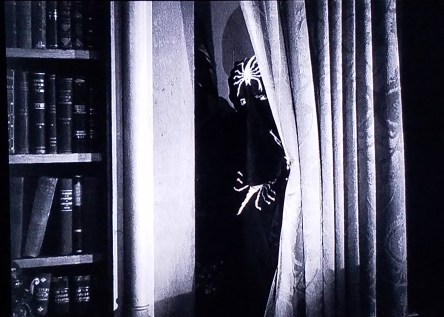
While she has stepped out, a mysterious bearded man appears from behind a curtain in the room and heads straight for the drawer. But he is interrupted by her return, and once the maid is gone he reveals himself to the Princess. Since this is a silent film, we don’t know his exact words, but when the Princess expresses her shock and demands to know his identity, he hands her a calling card: blank! He warns her not to make any noise as he takes the cash and jewelry, and then makes one last threat before gallantly kissing her hand and making his escape. The front desk is called, and the manager sends the elevator operator up to assist. The stranger lies in wait on the fourth floor, and when the operator opens the door, he pounces! The elevator begins its descent, showing each floor again on the way down. At the ground floor, the elevator operator emerges and says, “I’ll go for the police!” He leaves–but his face looks familiar. Alone, waiting for help, the Princess examines the blank card the stranger gave her, and to her astonishment, a name appears: FANTÔMAS!

Fantomas2

Of course, when the police arrive and the elevator is opened, the operator is discovered, unconscious, his uniform gone. A fake beard and mustache, worn by the thief, are discovered. This is a job for Inspector Juve of the Department of Security! Juve has his work cut out for him, as Fantômas always seems to be one step ahead: through his network of informants and contacts in all levels of society he always knows where the ripest pickings are to be had; he has no scruples against, murder, kidnapping, blackmail, or any other crime; and because of his penchant for disguises, no one even knows what he looks like! Why, anybody could be Fantômas–even you! Thus begins the first chapter of the 1913 film Fantômas in the Shadow of the Guillotine, the first of five Fantômas features directed by Louis Feuillade.

Fantomas.Juve.Fandor

Feuillade’s crime serials neither begin with Fantômas nor end with Judex (the first was preceded by a series of shorts in which Fantômas star René Navarre played a detective, and Judex was followed by a sequel, The New Mission of Judex), but the trilogy of Fantômas, Les Vampires, and Judex are widely available today in restored editions, and taken together they convey the sense of his influence (I had intended to cover Les Vampires in this entry, but instead I will get to it and Judex at a later time). Fantômas is not strictly a serial in the same format as the other “chapter plays” I have explored in Fates Worse Than Death (it is made up of five films, all but one around an hour in length and released in theaters at intervals of two or three months, although they are divided into chapters), but it is highly serialized nevertheless and is so influential in its imagery and plotting, particularly its characterization of the master criminal, that it feels like splitting hairs to exclude it from discussion.

Fantomas.hood2

The Fantômas series was based on a popular series of pulp novels by Pierre Souvestre and Marcel Allain, which followed the endless (almost literally) struggle between the villainous Fantômas and the team of Inspector Juve and his friend, journalist Jerôme Fandor. Earlier this summer I said that Fu Manchu was “perhaps the model of the criminal mastermind.” Well, I am willing to admit when I am wrong, and Fantômas has Sax Rohmer’s “devil doctor” beaten by at least a year, first appearing in print in 1911 and solidifying an archetype, the modern criminal genius, that had been coming together in a nebulous way in the previous century.

Fantomas.holdup

To digress: when I first read the Sherlock Holmes stories, I found it a little anticlimactic that Holmes’s archenemy, Professor Moriarty, appeared in only one story, introduced and eliminated as part of Arthur Conan Doyle’s attempt to rid himself of his most famous creation. Aside from later writers’ use of Moriarty as a recurring nemesis in their own Holmes pastiches, many of the long-running villains of the early twentieth century like Fantômas, Fu Manchu, and Fritz Lang’s Dr. Mabuse struck me as attempts to justify and expand upon Doyle’s description of Moriarty as “the Napoleon of Crime.” However, learning that there were in the nineteenth century several criminals who engineered clever international schemes, committed infamous crimes that captured the public imagination, and who inspired grudging admiration even among those professionals who failed to catch them, and one of whom was literally described as a “Napoleon of Crime,” did serve to put Moriarty in context. Doyle’s audience didn’t need a long history of enmity to be established in the pages of Holmes’ adventures, for they already knew the type of figure Holmes described when speaking of Moriarty, and the detective’s movement from solving smaller crimes to tackling the kind of worldbeater they read about in newspapers and magazines next to the Holmes stories probably seemed like a natural progression. As in Chester Gould’s creation of Dick Tracy to battle forces of criminality that the real police couldn’t get a handle on, Doyle directed his pen toward the real crime bosses of his day, at least within the pages of his fiction.

Fantomas.cover

Such was Fantômas, but in Souvestre’s and Allain’s books, and in Feuillade’s films, the crimes he committed became surreal and grotesque, and his powers seemingly unlimited. A dead man’s fingerprints are stolen to divert blame for Fantômas’ crimes; a “silent executioner,” sent to destroy Fantômas’ enemies, turns out to be a deadly snake. As his “ghostly” name implies, Fantômas can appear or disappear almost at will, and as a master of disguise he maintains multiple identities, both respectable and criminal: posing as a landlord, he hides a corpse in a freshly-plastered wall, only to take credit for “discovering” the body in one of his other roles, an American detective. Through such strategems he is even able to convince the public and the authorities that Juve, the man hunting him, is actually Fantômas!

Fantomas.snake

Fantômas and his pursuers are closer to archetypes than fully realized characters, at least in the films (I’ll admit I haven’t read the books): there’s not much evidence that Juve or Fandor have any existence aside from their jobs, and as for Fantômas, there’s even less to him, a hollow man of a thousand faces, an embodiment of pure sociopathy. While I’ve seen the Fantômas series classified as “espionage” (a label that makes sense for its embrace of secret, international conspiracies, multiple disguises, double-crosses, and singularly heroic agents acting alone), there is little to no reference to politics in the external sense–If there is a war being waged, it is between the secret underworld of crime and an orderly society that reacts to it: in short, a “return of the repressed.” The series’ sense of morbid fantasy puts it closer to The Man Who Was Thursday than The Secret Agent.

Fantomas.corpse

However, perhaps we should not be surprised that Fantômas, like Fu Manchu, or the icons of later horror films, gradually came to be treated as the hero of the series, with audiences rooting for him to get away so he can return some other time to continue entertaining us and titillating us with displays of power. As we have seen with Brazil’s Coffin Joe, conservative societies frequently find outlets for antisocial instincts in conscienceless, charismatic antiheroes. Fantômas is, as far as we know, purely in it for profit and personal power, and in a repressive society, such a figure is the ultimate individualist, and thus a potent symbol. The Surrealists who embraced Fantômas as an icon or mascot surely responded to his embrace of freedom at all costs (and generally at the expense of others) just as much as they loved the weird imagery and non sequitur plotting Souvestre and Allain cooked up in their rapid, free-associating writing partnership.

Fantomas.Navarre

In his commentary on the Kino Inernational DVD, film historian David Kalat comments on the series’ implicit belief in the possibility of “total disguise,” observing that when Fantômas impersonates a physician, he takes on a practice and even sees patients; when he poses as a real person, copying his appearance and mannerisms, he fools even close friends of the original. I am reminded of the later sound serials’ frequent habit of casting two different actors to play characters in disguise, so that their transformation appears to be truly complete, and their revelation is suitably surprising to the audience. Here, star René Navarre does it all himself with body language and various wigs and mustaches: in fact, most of Feuillade’s Fantômas films begin with close-ups of Navarre showing off the various disguises Fantômas will be wearing in the upcoming episode (in some, Edmund Bréon, who plays Juve, shows off his own disguises in a similar manner). Thus, even though a character is introduced as “Gurn” or “Nanteuil” or “Father Moche,” we the audience already know that it is Fantômas. Sometimes Juve or Fandor recognize their quarry right away, but other times the disguise is completely foolproof. In such cases, the suspense comes from the audience’s knowledge of what is going on, and wondering how long it will take the film’s heroes to catch on and unravel the scheme.

Fantomas.blackmail

In other cases, however, the audience is as mystified as Juve and Fandor, and what we get are only fragments of a plot seen from the outside, with the pleasure of seeing the pieces fall into place only at the climax, a conception of the suspense film that has come to be the norm: it feels more “traditional” to save revelations for the most dramatic moment, but it is actually the opposite, a modern approach that withholds information until the tension is at its breaking point.

Fantomas.caught

Aside from the fluidity of his identity, the other constant is Fantômas’ slipperiness: several times he is cornered, even taken into custody by the police, but each time he wriggles free by some last-minute escape hatch (one of the hallmarks of the mastermind type as seen in later serials and pulp fiction). When apprehended by Juve and Fandor outside a nightclub, Fantômas slips out of his coat, leaving the two men holding a pair of false arms; held at gunpoint in his office, he leaps backward through a false panel behind him and escapes yet again. In fact, one major difference between the Fantômas saga and most of the other serials I have covered is its open-endedness: at the end of each feature, including the last one, Fantômas manages to get away and “Once again, Fantômas, the uncanny, the master of crime, was free.” (The original novels by Souvestre and Allain ran to 32 installments, with 11 more by Allain alone; Feuillade had no more reason to close off his series permanently than the producers of the James Bond movies would.)

Fantomas.disarmed

While episodic, there are a few cliffhangers in the modern sense: at the end of the second feature, Juve vs. Fantômas, Fantômas blows up the house in which Juve, Fandor, and the police are searching for him, exulting at his victory. “Were Juve and Fandor killed by the explosion at Lady Beltham’s villa?” the title card asks. Answers would not be forthcoming until deep into the next feature, The Murderous Corpse, which begins with Jerôme Fandor (Georges Melchior), recovered from his injuries and investigating in the footsteps of his presumed-dead friend. (Again, the audience knows from the beginning that Juve, alive, has infiltrated the Fantômas gang in disguise, but it takes a while for Fandor to learn the truth.)Fantomas.triumphant

I would be remiss if I failed to mention one of Fantômas’ most iconic disguises: in a few episodes, when Fantômas himself deigns to get his hands dirty, he dons an all-black costume complete with a long hood like that of an inquisitor or executioner. I have frequently commented on the ubiquity of hooded villains in the later serials, and this seems to be one of the primal founts for that particular costume.

Fantomas.hood

Fantômas was an international hit: in addition to European success, the films were imported to the Americas and proved very popular (at the time, at least). William Fox handled the series in the United States and produced his own Americanized Fantomas serial (now lost) in 1920. Prior to the explosion of costumed superheroes in the 1940s, the serials and pulp magazines were full of villains (and sometimes heroes) who looked like they all shopped out of the same catalog for members of secret tribunals: it was a standard-issue costume.

SpicyMysteryMay1941

(Interestingly, Fantômas is seen only once in the film series in his other iconic costume, the eveningwear and domino mask seen on the cover of the first book and made famous as a popular poster, and that is as a daydream in which he appears to Inspector Juve, taunting him and daring him to arrest him.)

Fantomas.daydream

The worldview cultivated by the Fantômas features is ultimately a paranoid one: just as the queasy ethnic stereotyping of the Fu Manchu series means that any Asian character is a target of suspicion, for they could be one of Fu Manchu’s agents, so in these films anyone you meet could turn out to be Fantômas or someone in his pocket! Lady Beltham (Renée Carl), one of the few recurring characters aside from the trio of Fantômas, Juve, and Fandor, is compromised, having been the mistress of one of Fantômas’ alter egos and subject to blackmail ever after: even the convent is no escape for her.

Fantomas.LadyBeltham

The sense of persecution extends to the inexorable workings of justice, in case you were tempted to take comfort in Inspector Juve’s opposition to Fantômas. In Fantômas in the Shadow of the Guillotine, an actor who specializes in making himself up as the master criminal finds himself in prison and scheduled to be executed in Fantômas’ place! (In the film, Juve discovers the imposture just in time, but apparently in the book the miscarriage of justice is permanent; again, I haven’t read it.)

Fantomas.Juve1

As mentioned previously, in Fantômas vs. Fantômas (the fourth feature), the public turns against Juve, believing him to be the criminal himself (with more than a little help from Fantômas in his various identities), and he is arrested and imprisoned; incredibly, Fantômas goes so far as to bribe a guard to drug Juve and cut him so that he will have an injury matching one Fantômas had recently incurred in public, so that it will seem as if Juve had escaped to commit the crime. Yes, it is a little convoluted: no scheme is too baroque for Fantômas, and few ordinary people would have the resources and stamina of Juve and Fandor to stand up to them. In the fifth and final feature, The False Magistrate, Juve willingly takes Fantômas’ place in a Belgian prison in order to lure Fantômas back to France, where he can be subject to the death penalty, as clear an example of the policeman adopting the criminal’s way of thinking as you’ll find.

Fantomas.wound1

Fantomas.wound2

In the Fantômas series, the ubiquity of masks, assumed identities, and deadly secrets is thrilling to watch, but becomes oppressive after a while. The setting also contributes to this feeling: beneath the modern Paris of neat row houses and elegant society are the catacombs and secret passages through cellars and abandoned warehouses, and above are the moonlit rooftops over which black-clad cat burglars and assassins nimbly make their way. The secret world of cutpurses, fences, and killers is separated from ordinary life by only the thinnest of membranes, and the naïve forget it at their peril. Although largely filmed on location in and around the city, the persistence of shadows and crumbling, empty places anticipates the stark, agonistic productions of German expressionism that would arise in the next decade. Paris á la Fantômas is a place full of wonders, but dangerous in which to linger.

Fantomas1.title

What I Watched: The Fantômas series (Gaumont, 1913-14)
Where I Watched It: A 3-DVD set from Kino International (This is a restored version undertaken in 1998; it also includes the commentary by film historian David Kalat I have alluded to above.)
No. of Chapters: As mentioned, this isn’t quite in the format of a serial as it would be understood later, but the five features that make up the Fantômas saga are themselves divided into chapters, so taken altogether there are 22 including prologues.
Best Chapter Title: I like the title of the second chapter of Fantômas vs. Fantômas, “The Bleeding Wall,” which is not a metaphor.

Fantomas.bleedingwall
Best Peril: As noted, there are only a few genuine cliffhangers (I don’t really count Fantômas’ inevitable escapes, which are more like hooks for future adventures), but chapters within each feature are (unsurprisingly) more like chapters in a book than the sequence of perilous episodes found in a serial proper, each chapter developing one of several mysteries which, when taken all together, explain Fantômas’ overall scheme. Although not a peril faced by Juve or Fandor, it’s hard to top the sequence in The False Magistrate in which Fantômas sends one of his underlings to fetch some jewelry hidden inside a church bell and then leaves him stranded in the bell tower; the next time the bell is rung, a shower of hidden jewels and blood from his mutilated body falls on the funeralgoers below. No, it doesn’t make a lot of sense, but it demonstrates the degree to which the world of Fantômas is one of free-associating dreams and nightmares. In a series full of Grand Guignol horrors, this is one of the grandest.

Fantomas.belltower1

Sample Dialogue: “If you are Fantômas, we want our cut, tout de suite. If you are Juve, then it’s bad news for you.” –a member of Fantômas’ gang, still under the impression that Inspector Juve is secretly their leader, in Fantômas vs. Fantômas Chapter Four, “Settling Accounts”

Fantomas.Juve.caught
What’s Next: Next week, I’ll continue the Feuillade theme with his follow-up serial, Les Vampires (and this time I really mean it!).

Fates Worse Than Death: The Adventures of Rex and Rinty

ARR.title

On the small island of Sujan, whose people venerate the Horse “as sincerely as did the Assyrians the Bull; the Egyptians the Cat; or the Mayans the feathered Serpent,” a group of Americans haggle with the high priest Tanaga, wanting to buy one of the fine animals, but the horses are not for sale for any price. In order to prove his point, Tanaga shows the incredulous Americans the “god-horse,” a black Arabian who is the living incarnation of their god; the god-horse lives in a sort of preserve, protected by the mounted Royal Guards, except when he is paraded through the village to the temple for important ceremonies. Of course, this is the horse the Americans most want, and they hatch a scheme to steal him. They successfully kidnap the god-horse, leaving Wheeler, one of their own, behind to die. The horse is taken to America, where their buyer Crawford (Harry Woods), an “unscrupulous polo player,” is determined to break him to the saddle. When that inevitably fails and the horse escapes into the countryside, Crawford is determined to stop at nothing to get it back.

ARR.rex

Enter Rinty, a stray dog “with near human intelligence.” Rinty is first shown scrounging for scraps in alleys and outsmarting a jewel thief who pretends to be blind to escape a police manhunt. Meanwhile, at the Bruce Riding Academy, we meet our (human) heroes, star polo player Frank Bradley (Kane Richmond) and Dorothy Bruce (Norma Taylor), daughter of the Academy’s owner and a rider in her own right. Crawford makes an appearance, just long enough to establish that he’s a “bad feller” who threatens to shoot Rinty if he gets in his way again.

ARR.rinty

Out in the country, Rinty gets stuck in a hunter’s trap, and when the god-horse finds him and helps him free his leg, the two animals become fast friends and inseparable companions. When the god-horse takes refuge from the men hunting him in an abandoned mine and gets tangled up in rope, Rinty runs to the Academy and gets Dorothy’s attention: “What’s the matter, boy? He’s trying to tell us something!” Crawford’s men attempt to smoke out the horse, not knowing that he’s tied up; Rinty attacks them; and Dorothy rides to the rescue before falling off her horse for no apparent reason at all other than increasing the suspense. Then the mine caves in. Thus ends Chapter One (“The God Horse of Sujan”) of The Adventures of Rex and Rinty!

ARR.Frank.Dorothy

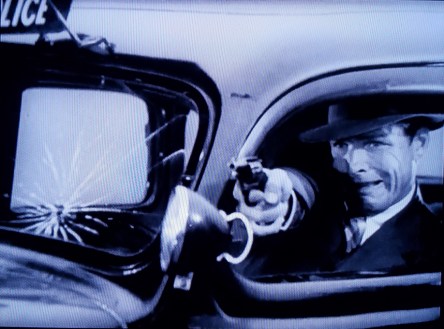
Once the god-horse is (of course) recovered safely, Dorothy and Frank take him to the Academy, where Frank recognizes his quality and promises to restore him to his rightful owner, should such appear–but not before (gently) breaking him to a saddle and maybe taking him out for a round or two in the next big polo match! Crawford recognizes the black Arabian when they play together, and begins scheming to get it back, legally or otherwise. The pattern is established: the horse is stolen, or escapes, and goes back and forth between Frank and Crawford, with a few episodes where the horse is out on his own with Rinty. Crawford, at first merely a bad sport, goes full gangster, bellowing threats and sending his underlings out to do his dirty work–and it does get dirty, up to and including murder. There are lots of guns drawn and shots fired along the way, but anytime things get too dangerous for our heroes, one of the bad guys says something like, “Put that thing away! You could hit the horse!” It’s no good to Crawford dead or injured.

ARR.rex2

And since Rex (“King of the Wild Horses”) and Rinty (Rin-Tin-Tin Jr.) are the title characters, they get lots of opportunities to show what they can do, and their characters at least do display more intelligence than the people around them most of the time. (It’s worth noting that at some point Frank and Dorothy start calling them “Rex” and “Rinty,” but there’s never a scene where they come up with names or say “I will now call you . . .” There’s some of the same fluidity of names I’ve noticed in other Mascot serials, such as the conflation of the “Thunder Riders” with Queen Tika’s royal guard in The Phantom Empire from around the same time.)

ARR.Mitchell

Mitchell (Al Bridge) writes a dying message on Frank’s bridle after being double-crossed by Crawford

There is also a subplot involving the Sujan islanders’ attempt to get their god back: Wheeler (Wheeler Oakman, a frequent presence in this series), left behind by his countrymen, is forced to bring Pasha (Pedro Regas), one of Tanaga’s men, with him to America to recover the horse. He reconnects with Crawford, only to double-cross him. Pasha uses his (non-lethal) blowgun to knock out Frank and others who stand in his way; he also psychically communicates with Tanaga (Mischa Auer) to update him and receive instructions, but only in the presence of the god-horse. Ultimately, Wheeler makes the mistake of putting his own life before the god-horse’s and Pasha realizes how untrustworthy he is. Recognizing that Frank Bradley sincerely wants to return Rex to his rightful owner, Pasha switches sides and communicates to Tanaga that Frank is an ally. This is crucially important once the action moves back to Sujan in the last couple of chapters.

ARR.pasha1

There is in general a certain malleable treatment of time and place which makes the Mascot serials feel particularly dreamlike: although the characters travel back and forth (mostly between the Riding Academy and Crawford’s ranch), the amount of time it takes depends entirely on the amount of business that needs to take place between arrivals. Jensen, the comic-relief stable hand played by Smiley Burnette, is especially apt to turn up wherever he is most convenient to the plot: in one scene he is present when Rex is stolen from the Riding Academy’s barn; then, in practically no time at all, he is found lounging on a riverbank with a fishing pole (and not, say, looking for that goddam stolen horse). Most films play this sleight-of-hand game for the sake of pacing or using interesting locations, of course, but it is particularly noticeable here. Being one of the last serials Mascot made before reorganizing and becoming Republic, there are many elements here that would become part of producer Nat Levine’s winning formula–near-continuous music; a mixture of action, characterization, and comic relief; and even such touches as the art-deco title cards used in the recaps at the beginning of each chapter–but that looseness is one quality that I miss in the more “professional” Republic serials.

ARR.rex.frank

The fistfights, gunplay, and chases typical of serials blend surprisingly well with the more sentimental tone struck by extended scenes of the two animal stars exploring or interacting. I have already alluded to the frequently-used device of Rinty getting help from one of the humans and taking them to the scene where they are needed, so similar to the scrapes Lassie or Benji would be getting into decades later. The bulk of Chapter Five, “Babes in the Woods,” is taken up by an episode in which a little boy, lost in the country, is imprisoned by a hermit (a prospector? a moonshiner? the Unabomber?) in his shack. The boy is freed by Rinty and then rides away on Rex before the hermit even realizes he’s losing his prize. The lad turns out to be wealthy heir Junior Hammond, and the publicity surrounding the boy’s rescue leads Frank and Dorothy to head straight for Hammond’s home to claim Rex before Crawford can do the same. (Amusingly, while Frank demands ironclad proof of ownership before relinquishing Rex, Hammond Sr. accepts Frank’s word without question before disappearing from the story.) This is the kind of plot that could either be expanded to fill an entire serial or could be one of many episodes as Rex and Rinty wander the countryside helping people, but here it’s sort of an undeveloped side quest.

ARR.rex.bridle

Several serials of the 1930s featured animal heroes. The original Rin-Tin-Tin, a German shepherd rescued from a World War I battlefield, was the star of numerous films until his death in 1932, including two earlier Mascot serials; Rex and Rinty was the third to star Rin-Tin-Tin, Jr. Rex had a career of a decade and a half, earning his nickname “King of the Wild Horses” by starring in a film by that name in 1924; Rex and Rinty was near the end of his career and his last serial appearance. (Although billed as Rex, the “King of the Wild Horses” who later appeared in Robinson Crusoe of Clipper Island, which I reviewed way back in the first “season” of Fates Worse Than Death, was apparently a different horse.)

ARR.polo

Finally, the other element that appears unusual to a modern viewer is the focus on polo. There is even a brief training montage, a device I haven’t seen used much in the serials, in which Frank trains Rex to wear a saddle and play the game. Now stereotyped as a pastime of wealthy elites, polo was evidently widespread enough in the 1930s to be part of popular culture without making a specific comment on class (recall that Flash Gordon was originally a polo player, not a football star). Surely the widespread use of horses in comparison to today was part of this, although even in the mid-’30s the writing was on the wall. In general I haven’t seen very many serials focused on sports of any kind (give or take an automobile or aeroplane race, which is cinematically close enough to a chase to satisfy the need for action), although I know some were made. In Rex and Rinty, scenes from polo matches are part of the action in a few chapters, and the atmosphere and variety of people–wealthy owners, competitive athletes, the unsavory hangers-on and spectators of all classes–are very similar to the way horse racing is portrayed on screen today (in fact, Chapter Two, which prominently features a match, is titled “Sport of Kings”). As a setting, the Bruce Riding Academy and its field are not as ritzy as a country club, and the atmosphere is similar to the small, private airfields that similarly populate the serials of the time period: a hub of activity where different kinds of people and their stories intersect.

ARR.Crawford

I haven’t seen any other serial that’s quite like this one. The combination of animal heroism, sport, horseback intrigue similar to the modern Western, and Eastern mysticism (however fanciful) more typical of the adventure-exploration genre, makes for an unusual blend of story elements.

 ARR.tanaga

What I Watched: The Adventures of Rex and Rinty (Mascot, 1935)

Where I Watched It: It’s on YouTube. I had to hunt around a bit to see all the chapters in order, but they’re all there.

ARR.pasha2

No. of Chapters: 12

Best Chapter Title: “New Gods for Old” (Chapter Eleven)

ARR.Jensen.Dorothy

Best Cliffhanger: Taking place largely on horseback, several cliffhangers involve people falling off their mounts, whether it be while chasing someone, playing polo, or simply crossing an open field. Being a Mascot serial, there are also a few examples of people appearing to be shot and dropping to the ground, only for the resolution to change the context so that they fell down for some other reason or were just faking it. There are a couple of car crashes, too, and I think my favorite is the end of Chapter Seven (“End of the Road”), in which Dorothy and Jensen drive through a road construction barrier to get away from Crawford’s men, only to abruptly drive over an unfinished bridge. This one isn’t technically a cheat, since it cuts off quickly once the precipice comes into view; at the beginning of the next chapter, their car is stuck hanging, the front wheels having gone over the edge before the car stopped.

ARR.car2

Sample Dialogue:

Wheeler, drawing his gun: Want me to take care of that dog?

Pasha: No! He is a friend of the god-horse.

–Chapter Four, “Homeward Bound”

What Others Have Said: “These horses are all furnished, like most movie horses, by a livestock supplier, to the order of the production people. . . . Most of these aren’t trick or fancy animals, just run-of-the-mill stock. But they are experienced actors. They can walk over snaky electric cables, have lights flashed in their eyes, walk right up to a whirring camera, or have a gun fired off in their ear, all without it bothering them. . . . Some animals possess special talents. How many times, in various movies, have you seen a big black stallion rear high on his hind legs and strike with his front feet? That was probably all the same horse, the star of the old ‘Fury’ series. He was so good at his job that he was used in dozens of pictures, where a rearing stallion was needed. In some cases, even the script was changed to make the black horse fit. Remember Will James’ book, Smoky? Smoky was a blue dun in the book, but a black on the screen!”

–Don Coldsmith, “Animal Actors” in Horsin’ Around (Note that Coldsmith’s examples are from a good deal later than Rex and Rinty–I don’t wish to imply that he’s writing specifically about Rex!)

What’s Next: I’m taking a detour to France with a look at Louis Feuillade’s silent serial, Les Vampires (actually, it ended up being Fantomas)!


Fates Worse Than Death: Adventures of Captain Africa

ACA.title

On the docks of a seaport close to a Near Eastern jungle, Ted Arnold watches animal trapper Nat Coleman loading crates of live leopards and other animals onto a ship. Suddenly, a cable snaps, and a heavy load crashes to the dock! Suspecting foul play, Ted spies an Arab workman panic and run away from the scene, and follows him into the city. Tracking the suspicious dockhand to a house and confronted by a beautiful woman, Ted is surprised when Nat Coleman himself, the man’s employer, catches up to them and vouches for his workman. The Arab’s name is Omar, and he has been an employee of Coleman’s since stumbling out of the jungle, haunted by a fear he refuses to name. In this instance, he ran because he thought the men who sought his life had intended for the sabotaged crate to fall on him. Trusting Coleman’s word but eager to discover Omar’s secret, Ted gladly accepts Coleman’s invitation to be a guest at his jungle compound. This is but his first step into a tangled web of international intrigue that involves a dethroned Caliph, a subversive foreign plot to enslave the jungle tribes, and even an alliance with the secretive guardian of the jungle himself, Captain Africa!

ACA.Cap1

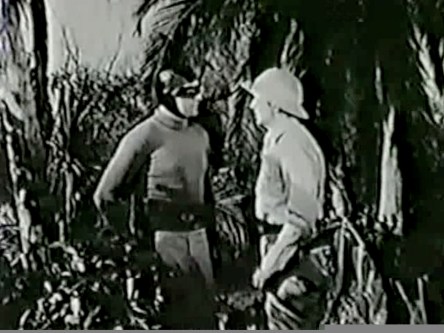
In the age of Black Panther (or really any time in the last fifty years or so), the idea of a white hero calling himself “Captain Africa” sounds comically tone-deaf, but we have already encountered African-set “white savior” heroes in the serials, and this one follows a long tradition. The heroism of Captain Africa, “a strange being whom the natives fear, yet worship” (Chapter One), is an example of the “white man’s burden,” living in the jungle, settling disputes, and (most importantly) protecting the innocent tribes of the area from outsiders who might exploit them, and nobly asking for nothing in return (except the tribes’ absolute deference, of course). As such he is instantly recognizable as a thinly-veiled gloss on the Phantom, the long-running comic strip hero created by Lee Falk, and who had starred in a Columbia serial twelve years earlier. Rather than pay to license the character from King Features again (as one of the very last theatrical serials ever produced, Captain Africa was made long after the era in which studios spent much money on them), Columbia instead created their own version of the jungle guardian, his gaudy honorific an alias for an alias. (Columbia wasn’t the only studio to play this game: Republic had “Don Daredevil” replace Zorro, for example.)

ACA.Ted1

It had been a while since I watched The Phantom, so I went back through my old notes to compare the two serials. Let’s see: the Phantom is attacked by a lion; Captain Africa is attacked by a lion. The Phantom is almost crushed by a portcullis, only to roll out of the way just in time; Captain Africa is almost crushed by a portcullis, only to roll out of the way just in time. The Phantom fights a gorilla; Captain Africa . . . hmm, I’m starting to see a pattern here. For the most part, Captain Africa’s costume is different enough from the Phantom’s to avoid confusion (or litigation) up close. It sort of looks like the Phantom costume you might throw together at the last minute for a Halloween party: instead of a skin-tight bodysuit, he wears a jersey and breeches. Captain Africa’s headgear resembles one of those old-time leather football helmets, and paired with goggles, well, the original Phantom could probably count on his lookalike to run errands in his place on dark nights. At the same time, when compared side by side, the shots from the two serials are clearly different: it is the plot points that are recycled, not the scenes of the Phantom in action. (See the comments below regarding the conflict over rights, which goes a long way toward explaining why whole scenes might have been filmed, only to be cut into the stingiest flashbacks.)

ACA.CapTed

The way the title characters are presented in their respective serials is also different: The Phantom is told from the hero’s point of view, beginning with the death of the old Phantom and covering his son’s assumption of the hero’s name and identity (one of the conceits of the Phantom being that it is a persona adopted by generations of fathers and sons, making it seem as if he were a single immortal being). The main protagonist of Captain Africa, however, is Ted Arnold (Rick Vallin), covert operative for a secret, unnamed organization; Captain Africa (John Hart) appears in every chapter, sometimes briefly and sometimes extensively, but he is at first an unknown quantity, a sort of guest star in his own movie, and once Ted wins the confidence of Omar and his displaced Caliph, he must convince Captain Africa to join in the project of restoring the Caliph to his throne. (We eventually learn Captain Africa’s backstory, and it is similar to Ted’s: after a heroic wartime career, under orders from his superiors he assumed the identity of Captain Africa and convinced the natives of his “magical” power in order to keep the peace in the region–there is no hint of a multi-generational tradition.)

ACA.CapOmar1

So, playing along, what does happen in Adventures of Captain Africa? Working with Nat Coleman (Bud Osborne), Ted follows Omar (Ben Welden) to a rendezvous with the exiled Caliph (Paul Marion), who relates the story of his overthrow by a usurper only referred to as “the tyrant.” The Caliph, Abdul al-Hamid, and his daughter, Princess Rhoda (June Howard)–exoticism only goes so far, I guess–escaped to live as nomads in the desert with a handful of loyal retainers, avoiding the bands of outlaws and slave traders that rule the desert, as well as patrols by the tyrant’s guards. There they await the opportunity to return to their homeland and return Hamid to his throne. (All of this is conveyed by voiceover accompanied by stock footage from desert swashbuckling epics.)

ACA.desert

Ted is convinced that Hamid, in addition to being the rightful Caliph, would be a force for peace in the region. With the help of Captain Africa (who, in a parallel story, works to prevent subversives from provoking a rebellion among the jungle tribes–the same subversives who are in league with the tyrant who dethroned Hamid), Ted convinces Omar to break his vow of silence since they already know all about Hamid’s position, and presents himself as an ally. From then on, Ted, Omar, and Captain Africa work together on the Caliph’s behalf (Nat Coleman retires from the action to continue running his business once the alliance is cemented), seeking loyalists in the tyrant’s capital city and fighting off the subversive elements who would seek to enslave both the jungle tribes and the Arabs of the desert.

ACA.Capdisguise

The resulting adventure is a mélange of Arabian Nights-style swashbuckling and jungle adventure: despite taking place in 1955, Adventures of Captain Africa feels much older. Of course the reliance on stock footage is a big part of that, but the typical avoidance of specific politics is another. My guess is that the unnamed political organization for which Ted Arnold works is meant to be the CIA, and the similarly unnamed subversives who promise freedom to the jungle natives but who, Ted warns, have enslaved every other population they have come in contact with, are meant to represent Soviet communism, and both the tribes and the Caliph’s people are a football tossed between them. But really, all you need to know is that there are good guys and bad guys. The various people of the desert wear traditional caftan and burnous, ride horses, and fight with wicked, curved scimitars; the jungle tribesmen are the kind of loincloth-clad, spear-throwing savages typically depicted in jungle movies. Only the white men use guns. In short, it takes place in serial never-neverland, and a more simplified version of it than most.

ACA.Rhoda

The reliance on stock footage and voiceover has a distancing effect, as well. In the best serials, editing and camera work give the action a thrilling immediacy, a feeling that you are there, watching or participating in the scene. From the first chapter, however, when Nat Coleman describes his first meeting with Omar and several mysterious incidents of sabotage to Ted, the tone is one of rambling digressions and things that happened in the past or to other people, with frequently thin narrative reasons for including one scene or another, except, of course, for the fact that the footage is on hand. (It doesn’t help that Coleman isn’t the most dynamic narrator, and it’s a relief when, after a few chapters, he disappears from the story.) The serial that I was most reminded of was not The Phantom, but The New Adventures of Tarzan, from twenty years before.

ACA.NatTed2

A few of these scenes are interesting from a technical perspective, including the use of rear projection to insert Coleman or other characters into the foreground of the old footage, as in Coleman’s flashback to a lion attack in his own bedroom. Even when the action shifts to the present, the early chapters are full of jungle business inserted so that Ted and Coleman have something to point out and talk about while they walk from one location to another: various animals, the daily routine of a rubber plantation, a police raid on a riverboat carrying contraband rubber. Coleman explains that there has been a campaign of rubber theft by well-organized gangs. “Do you suppose your unknown enemies are involved in it?” Ted asks, to which Coleman replies, “If they are, I wish they’d stay with it and leave me alone,” acknowledging that these scenes are nothing more than padding. As always, there is something magical in the way whole worlds can be stitched together out of unrelated footage, but Captain Africa shows that you can only stretch leftovers so far before they go stale.

What I Watched: Adventures of Captain Africa (Columbia, 1955)

Where I Watched It: Captain Africa was among the bootleg DVDs I bought and went through a few years ago, but for whatever reason I didn’t get around to watching this one until now. However, the transfer was quite poor indeed, full of missing frames and even whole scenes. Luckily for me, the whole serial was on YouTube in better (although still not pristine) quality.

ACA.Omar

No. of Chapters: 15

Best Chapter Title: What Captain Africa lacks in originality, it makes up in exclamation points: every chapter title ends with a bang (as does the serial’s subtitle, “Mighty Jungle Avenger!”)! So whether Ted and company face a “Midnight Attack!” (Chapter Three) or “Slave Traders!” (Chapter Six), writer George H. Plympton and director Spencer G. Bennet are sure to extract as much excitement out of the situation as possible. Several chapter titles refer to the “Mystery Man of the Jungle!” (Chapter One) himself, and of those my favorite is Chapter Nine’s, “Blasted by Captain Africa!” (emphasis in original).

ACA.gorilla1

Best Cliffhanger: Many of the cliffhangers are not set up especially well, so they end their chapters abruptly, and they frequently suffer from the same murkiness that makes much of the serial’s action sequences so hard to follow. In addition, the feeling of going through the motions–hitting familiar perils such as animal attacks, fire, falls, and cave-ins–is readily apparent. However, there are a few sharp, well-executed, and interesting cliffhangers in the last few chapters (they must have saved the best for last). At the end of Chapter Twelve (“Fangs of the Beast!”), Captain Africa, exploring the caverns underneath the Caliph’s city, is trapped in a cell with an angry gorilla–a gorilla who, we later find out, carries a key for safe passage through the city around his neck (the “key” is a narrative repurposing of the last piece of the map to the lost city of Zoloz in the original Phantom serial). The subsequent battle is more of a choreographed fight than we have seen so far, and the chapter ends with the gorilla on top of Captain Africa, strangling the life out of him. (After turning the tables on the gorilla and escaping in the next chapter, Captain Africa modestly explains to Ted and Omar that despite appearances, captivity had made the gorilla fat and lazy: “Otherwise, I never could have beaten him.”)

ACA.gorilla2

Sample Dialogue: In Chapter One, a fight has broken out in a dockside watering hole.
Ted Arnold: What’s it all about?
Nat Coleman: Who knows? Perhaps nothing. Then again, it might be over something that threatens the peace of the world.

ACA.NatTed

What Others Have Said: “It was over ten years before Columbia considered making a sequel to The Phantom. By this time, [producer] Sam Katzman was in charge of serials, and he was making them cheaper than anybody had ever produced union-made theatrical movies. One story has it that Katzman’s company had actually begun filming the serial before negotiations with King Features, owners of The Phantom comic strip, were completed. In any case, either before or during the production, the King Syndicate wanted too much money, and The Phantom could not be used again on the screen. At least, not exactly.” –Jim Harmon and Donald F. Glut, The Great Movie Serials

(Interestingly, while Harmon and Glut claim that Captain Africa included numerous reused shots of Tom Tyler’s Phantom, they also note that at the time of writing their book, 1972, the 1943 Phantom serial had not been available to view for many years. With the distance in time, it was surely easy to believe that the shots were identical.)

What’s Next: In two weeks I’ll return with a look at one of several serials with animal heroes: The Adventures of Rex and Rinty!

Fates Worse Than Death: Drums of Fu Manchu

DMF.title

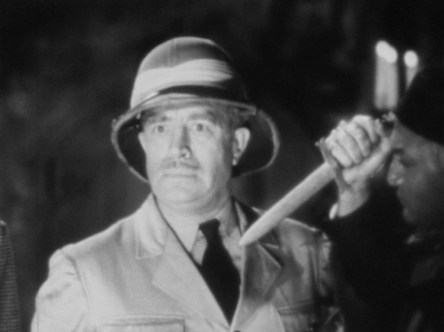
A man steps into a taxi; at every step of his journey, he is being followed as he makes his way to his destination. Just as the traveler reaches safety, one of the lurking pursuers attacks, throwing a knife that the would-be victim only barely dodges! The man? Sir Denis Nayland Smith of the British Foreign Office. His attacker? A Dacoit in the service of Smith’s deadly archenemy, Dr. Fu Manchu!

DMF.dacoit1

Just as the first of the popular series of novels by Sax Rohmer (real name: Arthur Henry Sarsfield Ward) begins, so begins Drums of Fu Manchu, the 1940 Republic serial loosely adapted from them. As in Rohmer’s books, the only thing standing between the fiendishly brilliant “devil doctor” and “nothing less than the conquest of Asia” is Smith (played by William Royle), a hero who stands midway between Sherlock Holmes and James Bond (temporally as well as in style); and his assistant, Dr. Petrie (it was Dr. Petrie’s doorstep on which Smith was attacked in the first scene). There is usually also a younger man of action who encounters the diabolical conspiracies surrounding Fu Manchu and his secret organization, the Si Fan, as a newcomer, drawn in by some personal connection and allying himself with Smith and Petrie once the stakes are clear to him. In Drums, that young man is Allan Parker (Robert Kellard), son of James Parker, an explorer in possession of knowledge desired by Fu Manchu.

DMF.SmithFuManchu

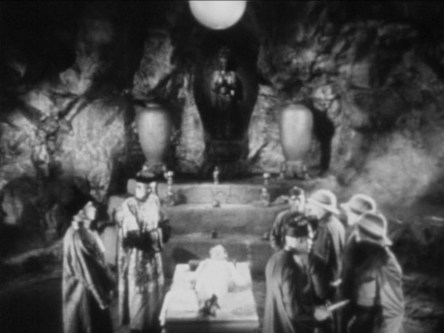
Fu Manchu’s goal is to recover the sacred scepter of Genghis Khan, an artifact which will allow him to unite all of the peoples of Asia in rebellion against the white occupiers. According to prophecy, a leader will arise to take up the scepter during the “Holy Year”–Sir Nayland has spent months undercover in Burma observing Fu Manchu’s surrogates riling up the local tribes “from the Nihali Mountains through Branapuhr,” in expectation of the leader’s–Fu Manchu’s–arrival. From the point of view of the British authorities, the High Lama is a much better candidate to receive the scepter, as he promises peace (and continuing cooperation with the British, naturally). Both Fu Manchu and Sir Nayland Smith must work through the various clues left behind–scrolls, a plaque, a stone from an altar, and so on–to locate the missing tomb of Genghis Khan, each trying to recover the scepter first. Even once the action moves back to Asia and the scepter is found, the serial isn’t over.

DMF.scepter

In order to accomplish his goals, Fu Manchu has (and will again) resorted to murder: the explorer Lionel Barton, whose transcriptions of certain scrolls revealed the existence of the scepter, is already out of the way. Dr. Parker will be next, and things aren’t looking too good for Professor Randolph, an expert on Mongolian languages who accompanied Barton on his expedition. Another victim is Wally Winchester, the radio columnist who is felled by a “gelatinous dart” hidden in his microphone, right before he attempts to reveal on-air the hideout in which Fu Manchu has Parker held captive! Elaborate murders, death-traps, and methods of torture are Fu Manchu’s stock in trade, and they complement the Republic serial style quite smoothly: many of the serial’s cliffhangers consist of traps or torture devices, the question of the hero’s survival left for the following week, and in other cases they are incidents along the way or the basis for action set pieces.

DMF.FuManchu1

Most of these killings are accompanied by the drums of the title: a sinister drumbeat that builds ominously, indicating the presence of the villain. It’s not always clear what or where the drums are: sometimes they are part of the diegetic sound of the film, and the characters call attention to them, knowing that they are threatened. At other times they are a spooky, atmospheric effect, ladled onto the soundtrack like gravy. In any case, they are never directly explained, but they are an effective dramatic device, and a symbol of the atmosphere of dread that hangs over the whole serial like opium smoke.

DMF.FuManchu3

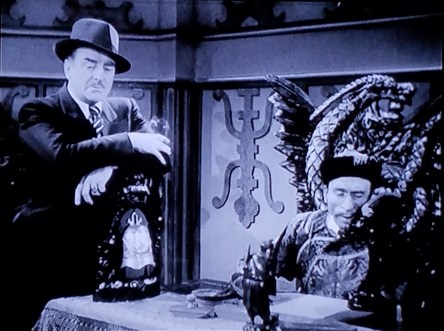
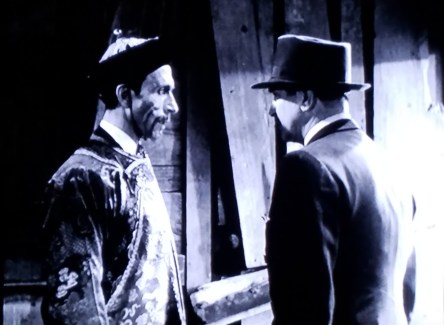
At the center of this malign web is Fu Manchu himself, played by Henry Brandon. Fu Manchu is one of the great pop culture villains, perhaps the model of the criminal mastermind, and has been portrayed on screen by Boris Karloff and Christopher Lee, among others (even Warner Oland, who would later give the best-known portrayal of Charlie Chan, took a turn as the devil doctor early in his career). Here’s what Sir Nayland has to say to Dr. Petrie in their first adventure together:

Imagine a person, tall, lean and feline, high-shouldered, with a brow like Shakespeare and a face like Satan, a close-shaven skull, and long, magnetic eyes of the true cat-green. Invest him with all the cruel cunning of an entire Eastern race, accumulated in one giant intellect, with all the resources, if you will, of a wealthy government–which, however, already has denied all knowledge of his existence. Imagine that awful being, and you have a mental picture of Dr. Fu-Manchu, the yellow peril incarnate in one man.

InsidiousFuManchu

The unironic use of the phrase “yellow peril” suggests, of course, that the character has little to do with the actual culture or politics of Asia and everything to do with the West’s anxieties and fears of same. (It should also be clear that, in addition to his vicious, criminal acts, Fu Manchu’s dream of throwing off British imperialism is enough by itself to make him villainous in Sir Nayland Smith’s eyes.) Fu Manchu embodies a host of troublesome, contradictory stereotypes: he is bound by a strong sense of honor, yet is underhanded, secretive, and treacherous; he is described in terms that seem physically inhuman and is completely exotic in his costume, yet his knowledge of white ways and mastery of disguise allow him to blend in undetected in Europe or America; he is coded as effete, even effeminate, but represents a sexual danger to white women (this doesn’t come through as strongly in the Hays Code-approved serial, but it often does in other representations of the character); in short, he can be anywhere and can be anything that inspires fear or disgust in his (presumably white) audience. (His command of all Asians also has the unpleasant side effect of making non-white characters appear suspicious, beyond even their usual portrayal as others: in this serial, just about anybody in a turban or robe could be a member of the Si Fan.)

DMF.MaryFuManchu2

This is, of course, why none of the actors famous for playing the character were themselves of Asian descent, and a big reason why the character has made few official appearances in recent decades, even as he remains recognizable as an icon. Fu Manchu is now more likely to be spoofed (his last official appearance was in 1980, played by Peter Sellers) or subverted (consider the twist in Iron Man 3) than taken seriously: even among those who still traffic in “yellow peril” anxiety, the Asian villains have been updated to take advantage of current political and economic tensions. (But who knows? Even as I write this a trade war with China is in the offing, and the white nationalism currently embroiling the country has much in common with the panic over immigration that made Fu Manchu and other yellow peril characters so popular a hundred years ago; as much as I would like to consider these stereotypes as a purely academic matter, they are still very much with us.)

DMF.FuManchu4

Brandon’s portrayal hits these notes often and hard: he speaks in a high, querulous voice, drawing out words with exacting precision, and delivers his lines with haughty condescension. He is a “villain you love to hate.” (Although Mike Myers’s Dr. Evil in the Austin Powers movies is largely a riff on James Bond’s nemesis Ernst Stavro Blofeld, there’s more than a little of Fu Manchu in him as well, particularly the scenes of gathering his varied henchmen around a conference table, so like the Si Fan council meetings.*) Unlike many other serials, Drums of Fu Manchu keeps its villain front and center, confronting the heroes face to face often rather than keeping distance between them. And why not? Fu Manchu is the star, not Sir Nayland Smith (a point made brilliantly in Gahan Wilson’s short story “The Power of the Mandarin,” which I recommend but won’t spoil).

*On the other hand, Dr. Evil is also said to be modeled on Saturday Night Live producer Lorne Michaels, and I’ve never seen Michaels and Fu Manchu in the same room together, have you?

DMF.dacoit2

In Fu Manchu’s service are his Dacoits, mostly interchangeable goons sent on missions of burglary, kidnapping, and assassination, sometimes under the direct leadership of Fu Manchu’s daughter, Fah Lo Suee (Gloria Franklin). The Dacoits’ primary weapon is the throwing knife, but strangling nooses and blowguns–both “exotic weapons”–come into play as well. The word dacoit refers to a Burmese bandit or robber, but in Sax Rohmer’s books they are one of several cult-like organizations, along with the Thuggee, who serve Fu Manchu with undying loyalty. In the serial, the Dacoits have had their brains operated on to make them loyal, and they are recognizable by the grotesque scars left by the surgery. Only a few have names (chief among them Loki, Fu Manchu’s muscle and leader of the other Dacoits), and they are narratively equivalent to the zombies of Haitian voodoo (in fact, in one chapter Nayland Smith is himself threatened with being turned into a Dacoit, a true fate worse than death!).

DMF.FahLoSuee2

It should be evident from this partial description that there are quite a few characters in Drums of Fu Manchu, and that’s not even getting into the one-chapter characters like Ezra Howard, the eccentric collector from whom one of the clues must be finessed. I also haven’t mentioned Mary Randolph (Luana Walters), Professor Randolph’s daughter, first seen bringing the “Dalai Plaque” by train and joining the heroes’ forces after an attempted theft and the sabotage of the train. Mary is naturally paired up with Allan Parker as a romantic lead, and she also counters Fah Lo Suee, the other important female character. Allan Parker and Sir Nayland Smith essentially take turns as leads, one frequently falling into peril (when it isn’t Mary in distress) and the other arriving to save the day. Interestingly, Dr. Petrie (Olaf Hytten), Smith’s nominal sidekick, frequently fades into the background in the serial while other characters take more active roles.

DMF.Mary2

Drums of Fu Manchu is ultimately more like the popular image of serials than many of the serials I’ve seen: because Fu Manchu makes a personal appearance in every chapter, we are treated to many scenes of him delivering deliciously arch monologues to his intended victims, bound and awaiting death by some slow, gruesome mechanism: “I have a number of Oriental devices for extracting information from stubborn witnesses, but I’m honoring you by the use of an arrangement invented by one of your own countrymen,” he tells Allan Parker in a typical example. “You’re undoubtedly familiar with the admirable writings of Edgar Allan Poe? So you will have no difficulty in recognizing this device, described in his short story, ‘The Pit and the Pendulum.'” The rest of the scene, as they say, writes itself.

DMF.pendulum

Furthermore, whereas even many serials based on series characters are self-contained, Drums of Fu Manchu never lets us forget that it is but one episode in a never-ending struggle. “From the pages of fiction steps the most sinister figure of all time–FU MANCHU!” reads the opening crawl. “Schooled in the ancient mysteries of the Orient he is as modern as Tomorrow!” Even though this is Republic’s only Fu Manchu serial (a sequel was proposed, but was dropped because of the wartime alliance with China), his familiarity to audiences (in addition to the novels, Fu Manchu was a multimedia sensation, with previous film appearances, radio programs, and comics) provided a sense of continuity. The introduction of the characters in the first chapter implies earlier adventures, and–very unusually–the serial ends with a single scene of Fu Manchu, alone, still alive, and vowing to continue his war upon the West: “But there will dawn another day, a day of reckoning, when the forces of Fu Manchu will sweep on to victory! This I pledge.” To the end, he is far too dignified to shake his fist and cry, “I’ll get you next time, Nayland Smith!”, but the meaning is the same.

DMF.FuManchu.end

What I Watched: Drums of Fu Manchu (Republic, 1940)

Where I Watched It: a 2-disc DVD set from VCI Entertainment

DMF.Smith1

No. of Chapters: 15

Best Chapter Title: “Death Dials a Number” (Chapter Six) In this chapter, Allan Parker is left tied up next to a telephone whose ringer has been attached to the fuse of an explosive; as soon as either Fu Manchu or Sir Nayland Smith attempt to call, it’s curtains for Allan!

DMF.fuse

Best Cliffhanger: As often happens, the title of Chapter Nine, “The Crystal of Death,” foreshadows the cliffhanging peril that will end the chapter. In this chapter, Fu Manchu, having abducted Mary, brings her to the temple of the sun goddess Kardac. Sir Nayland Smith is already there, trying to gain the information from the temple priest that both he and Fu Manchu are seeking (both are in possession of a fragment of the temple’s altar, one the original and the other a replica). Fu Manchu reminds the priest that prophecy says the goddess will speak when the true fragment of the altar is replaced, and speak she does, demanding a sacrifice to atone for the desecration of the temple by outsiders (strange, though, that the goddess’s voice sounds so much like Fah Lo Suee’s!). Mary, placed in a trance by the “incense of obedience,” is laid out on the altar, and sunlight from outside is projected (via a series of mirrors) through the temple’s sacred crystal, which focuses it into a powerfully destructive ray. As the ray moves slowly toward Mary, the small idols on the altar burst into flame, showing just how intensely hot it is. Somewhere, the drums of Fu Manchu begin their relentless tattoo, the pulsing drumbeat that spells doom. . . .

DMF.altar

Sample Dialogue: “May I remind you that among my people, honor is a sacred thing, and those who defile it can expect no mercy!” –Fu Manchu to Mary Randolph, Chapter Three (“Ransom in the Sky”)

DMF.MaryFuManchu

Bonus Sample Dialogue: “Illustrious father, the switch is open; both trains are on the same track; and when they meet, the Sunrise Limited will be but a thing of twisted metal.” –Fah Lo Suee to Fu Manchu on the telephone, Chapter One (“Fu Manchu Strikes”)

DMF.FahLoSuee1

Death by Octopus? Of course.

DMF.octopus

Death by Cave-In? You know it.

DMF.cavein

Villain Disguises Himself as Hero? Without a doubt.

DMF.double

Where in the World is Fu Manchu? Note the address on the packing crate: this must be on the same map as Gotham City and Yoknapatawpha County.

DMF.SanAngeles

What Others Have Said: “William Witney and John English, mentioned throughout this book as the most professional directors of movie serials, directed Drums of Fu Manchu. Working with photographer William Nobels, the directing team stressed the mystery elements inherent in the Fu Manchu novels, unlike most of their action-oriented photoplays. [There is still quite a bit of action, however. –GV] Most of their serial was photographed in shadows with the eeriest lighting possible falling upon Fu. Before he made his appearance the almost supernatural drums of Fu Manchu began to sound from nowhere. There was no denying the fact that the Witney-English Fu Manchu was more than human and possessed weird powers not even hinted at in the novels.” Jim Harmon and Donald F. Glut, The Great Movie Serials

DMF.FuManchu2

What’s Next: I’ll be back in two weeks with a look at Adventures of Captain Africa, the sequel/rehash of The Phantom. I hope you’ll join me.

Fates Worse Than Death: Adventures of Captain Marvel

20180625_100330.jpg

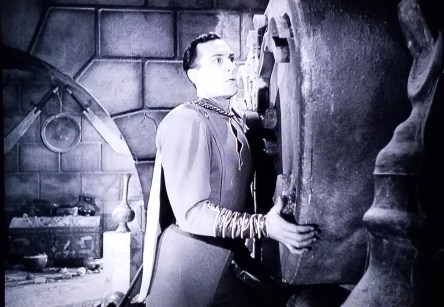
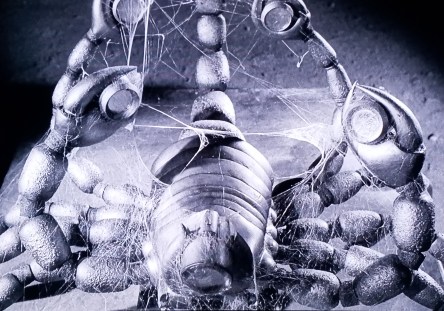
Deep in the rugged mountains between Siam and Burma, the Malcolm Archaeological Expedition has reached its destination, the Valley of the Tombs, in the shadow of Mount Scorpio. Despite warnings from local tribesmen that the Valley is taboo, John Malcolm is determined to open the sealed inner tomb, unlocking the “lost secret of the Scorpion Dynasty.” The expedition’s translator, native Tal Chotali, reads an inscription: “Let what reposes behind this stone remain hidden from the eyes of mankind for all time.” A terrible curse is about to be unleashed! The youngest member of the expedition, Billy Batson, wants no part of tomb raiding, so he leaves the room. The expedition members open the tomb without him, uncovering a fabulous scorpion-shaped idol holding a series of lenses in its claws. As soon as they move the lenses to line up with a beam of sunlight, it releases a burst of energy that shakes the earth and traps the men inside the chamber.

20180625_100052.jpg

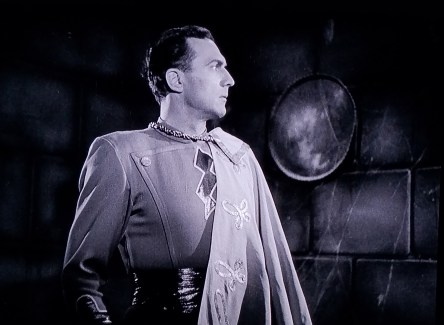
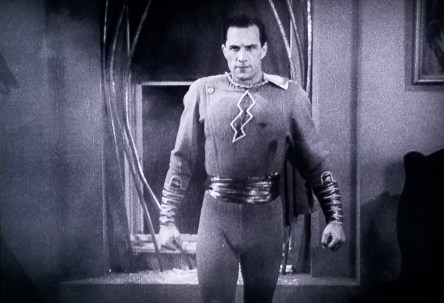
Meanwhile, Billy wanders into another chamber of the tomb; to his shock, a previously sealed tomb opens, and an impossibly old man steps out! Because he did not desecrate the tomb, Billy Batson is to be given the mantle of Captain Marvel to protect the innocent from the power the scorpion idol is about to unleash. Captain Marvel combines the virtues of six mythological figures: the wisdom of Solomon, the strength of Hercules, the stamina of Atlas, the power of Zeus, the courage of Achilles, and the speed of Mercury. The initials of these six names combine into the magic word “Shazam” (also the name of the wizard), with which Billy transforms into Captain Marvel and back again. He is put to the test immediately, becoming Captain Marvel to rescue the explorers who have been trapped in the cave-in.

20180625_095949.jpg

Once everyone is outside and reunited (and Billy is himself again), the members of the expedition learn just how powerful the scorpion idol is: sunlight focused through its lenses in the right order can turn ordinary rocks into gold, or generate an incredibly powerful ray (later it is referred to specifically as a “solar atom smasher”). Recognizing that the idol is too powerful for one man to control, and that it would be a target for theft, the members of the expedition divide the lenses between themselves, each man to guard and keep one safe; the power of the idol will never be used unless it is by the assent of the entire group.

20180625_095827.jpg

That night, the expedition’s stockade is attacked by native tribesmen on horseback, led by a hooded mastermind who calls himself “the Scorpion.” The Scorpion claims to speak for the tribe’s god, and his goal is to reunite the idol with its lenses and use its power for conquest. During the assault, one of the expedition members is killed and the idol stolen. Billy Batson goes into action as Captain Marvel once again, routing the attackers, but unbeknownst to him the tribesmen have also planted dynamite beneath the bridge leading from the encampment: will the expedition’s retreat be thwarted by the explosives, or will Captain Marvel save the day? All of this occurs in the first (double length) chapter of the classic 1941 Republic serial, Adventures of Captain Marvel!

20180625_095910.jpg

Captain Marvel, co-created by Fawcett writer Bill Parker and artist C. C. Beck, was one of many superheroes who appeared in the wake of Superman’s success, and among the most popular, even outselling Superman himself during his heyday. Much has been written elsewhere about the lawsuit National (later DC) filed against Fawcett alleging copyright infringement, and the long legal battle that followed (I have touched on it here). Ultimately, Fawcett ceased publishing Captain Marvel comics in 1953, exhausted by the legal battle and faced with declining sales, and the hero was licensed by DC in the 1970s as “Shazam” (the name “Captain Marvel” having been claimed by Marvel Comics in the interim) and bought outright in 1980; a live-action Shazam movie is scheduled to be released in 2019 as part of DC’s ongoing film universe.


As of 1941, however, Captain Marvel was riding high, and became the first comic book superhero to make the leap to the big screen (ironically enough, Republic tried to make a deal to adapt Superman first, but it ultimately fell through and Superman first appeared in theaters in a series of animated cartoons; the hero would be a latecomer to the film serials, not appearing in live action until 1948). In reading about Adventures of Captain Marvel (no “the”), I was struck by the way it follows typical serial procedure in adapting its source material, tying the hero’s origin to its villain and putting the scorpion idol and its lenses at the center of the story. I assumed that it was another case of Republic adapting the source material “in name only” as they would later do with Captain America, so it was a pleasant surprise to see how faithful to the comics the serial was in many other respects.

WhizComicsNumber22

The biggest difference is the serial’s connection of Shazam to the Scorpion tomb, but otherwise Captain Marvel’s origin in the comics was similar: in Whiz Comics no. 2, Billy Batson, an orphaned newsboy (an actual boy, unlike the boyish young adult Billy played by Frank Coghlan, Jr. in the serial) was led to the wizard Shazam in an abandoned subway tunnel, and he was given the assignment to protect humanity as an ongoing mission rather than a specific task. But the magic word, the mythological connections, and Captain Marvel’s powers are all there. What’s more, the serial Captain Marvel (Tom Tyler) looks a great deal more like his comic book counterpart than the serial versions of Batman or Captain America do, wearing a good-looking uniform and even appearing to fly through the air.

20180625_095803.jpg

All of the effects in this serial, by Republic’s stalwart team of Howard and Theodore Lydecker, are top-notch, including those convincing flight sequences and many of the miniatures (sorry, “scale models”) for which the Lydeckers are famous. The illusion of flight was achieved by a variety of techniques, including a papier-maché dummy strung on a wire for the long shots, cut together with shots of Tom Tyler (or his double, legendary stuntman Dave Sharpe) leaping into the air from a hidden trampoline or coming in for a landing in slow motion. (Sharpe was also responsible for Captain Marvel’s athletic moves during fight scenes, including an amazing, back-flipping kick in the first chapter.) The wires are visible in some of the shots of Tyler suspended in mid-air, clouds whizzing by, but they are easy to overlook if you are as fascinated by practical effects as I am, or if, like the young and young-at-heart audiences to which the serial is directed, you’re so swept up in the story that you don’t even notice them. The flight effects look good “for their time,” but even now one has to appreciate the ambition it took to attempt them in live action (recall that the same effects in the later Superman serials were achieved with animation). And like the best cinematic fantasy, the story, in its surging forward motion, demands belief as the price of admission where scenes viewed in isolation might provoke skepticism.

Another contrast with the comics is its tone. Captain Marvel’s adventures in the comics (mostly written by pulpsmith Otto Binder) were fantastic exercises in whimsy, often to the point of silliness, held together with fairy-tale logic or wordplay. Captain Marvel traveled to exotic foreign countries and even other planets; he fought mad scientists and magicians (his most famous recurring nemesis, Dr. Sivana, was the former); he added the growing “Marvel family” to his supporting cast, including Mary Marvel, Captain Marvel, Jr., and even “Hoppy, the Marvel Bunny”; he even made friends with a talking tiger who became his roommate! And all of this is balanced with the fantasy of being a boy but living independently (after being a newsboy, Billy Batson held down a job as an announcer for radio station WHIZ). Binder’s fanciful stories were a perfect match for Beck’s clean, simple drawing style, and the nuttiness of the plots is comparable to the mischief William Marston’s Wonder Woman would get up to over at National, but without the marked gender play (in fact, Captain Marvel is a notably prepubescent fantasy, as the hero would become nervous and shy around women, resisting the overtures of Dr. Sivana’s daughter Beautia). As Matt Singer notes (in his essay accompanying the Kino Lorber Blu-ray), the brilliance of the Billy/Captain Marvel divide was that it “fused hero and sidekick into a single figure.”

tawkytawny

By contrast, the serial’s tone is serious, if not downright grim. Gone are Dr. Sivana’s whimsical schemes (in fact, gone is Dr. Sivana), gone are the talking animals and such fanciful locations as the “Rock of Eternity” (the heaven in which the late wizard Shazam now dwells in spirit form). Instead of being matched against other superpowered beings, Captain Marvel wastes an army of generic fedora-wearing henchmen (and I do mean wastes: writer Tom Weaver points out that Captain Marvel kills more people than the villain in this serial, throwing them off buildings or turning their own guns against them). Animation historian Jerry Beck rightly compares Captain Marvel in his scenes to a Universal monster, breaking down doors and pressing forward in the face of gunfire that bounces off of him harmlessly (at least the thugs don’t try the last-ditch effort of throwing their empty guns at him, as seen so often in the Superman TV series), his smile “more like an animal bearing its teeth.” Once the Scorpion’s men know what they’re up against, their reaction is one of sheer terror.

20180625_095546.jpg

Other ingredients that contribute to the serious tone are standard serial fare: the archaeological expedition, as well as the curse that followed the opening of the tomb (inspired by the supposed curse of King Tut’s tomb), were common features of serials in the 1930s (and a prime inspiration for the Indiana Jones series, of course); the serial begins and ends in the Valley of the Tombs (propped up with footage from earlier movies), even though the rest of the action takes place in America. Of course the Scorpion himself, the hooded figure of evil derived from the Grand Guignol theater and the mystery novels of Edgar Wallace, is a key element of the serial vocabulary, as is the Scorpion’s methodical elimination of the expedition members, collecting their lenses one by one, even as he himself is secretly one of their number. Only in the last chapter is the Scorpion’s true identity revealed; in fact, his lines are spoken throughout by uncredited actor Gerald Mohr, just to make sure we don’t guess prematurely. (The need to avoid spoiling the surprise leads to some amusing decisions: in one chapter, the members of the expedition abandon a sinking ship and make their way to land by rope; Betty, the story’s lone female character, goes to her cabin to retrieve something, only to be knocked unconscious by the Scorpion–in costume–and left to sink with the ship. It should be obvious that the Scorpion has no reason to hide his identity from one he believes will soon be dead, and that sneaking around in costume increases the risk of being caught, but the costume is for the benefit of the audience, not the Scorpion’s victims.) Even at the end, when there are only two suspects left, and one shoots the other, revealing his true identity, the scene is filmed in shadow, the voices disguised, so as to preserve the delicious moment when Captain Marvel can pull off the captive Scorpion’s mask himself for all to see.

20180625_100305.jpg

Still, the mood is not too heavy, leavened by swiftly-moving action and dialogue and a rapid-fire change of scenes. Coghlan’s Billy, as well as his youthful friends Whitey (William Benedict) and Betty (Louise Currie), are a big part of that, striking a “gee whiz” attitude midway between the kid-oriented comics and the deadly serious business of the Scorpion. Adventures of Captain Marvel is frequently held up as one of the best serials of all time, and it is easy to see why: all of the technical resources of Republic are working at their peak, from the Lydecker brothers’ fantastic effects to the direction of serial superteam William Witney and John English and the stirring music by Cy Feuer. A solid script provides plenty of opportunities for the cast (including, in addition to the leads, such frequently-seen character actors as John Davidson, who plays the enigmatic Tal Chotali) to develop their characters (within a framework primarily defined by action and intrigue, of course).

20180625_100216.jpg

Furthermore, while I have sometimes expressed boredom at the formulaic nature of Republic’s later serials in comparison to the wild and weird serials of the 1930s, at the sense that they run too smoothly, Captain Marvel strikes a very satisfying balance between technical precision and characters who still act human, who are capable of surprising. (It probably helps that Republic was not yet at the point of recycling entire cliffhangers, so the situations flow organically from the story.) Betty is a good example of this: when taken captive by the Scorpion’s men, several times she sees opportunities to attempt escape and takes them rather than waiting around for Captain Marvel, even desperately grabbing the Scorpion’s own gun and attempting to shoot him. (This leads to a sequence in which Billy believes the Scorpion has an injured hand and tries to flush him out by gathering the expedition members together.) In addition to lending an unpredictable realism to the proceedings, Betty’s actions (and similar unexpected actions by other characters) drive the story forward: neither the Scorpion nor Captain Marvel have everything their way all the time.

Finally, I have occasionally noticed a generational divide in how the fanciful comic books of the Golden Age and its related media are received, and the commentary on the Blu-ray provides an illuminating example: Tom Weaver, a self-described Baby Boomer, mentions going back to read some of the original Captain Marvel comics (for the first time, as an adult) and his disgust at their silliness is palpable. “The comic book is so juvenile,” he reports, “that I can’t imagine who read it and thought ‘This might be good for a Republic serial.'” He complains that Otto Binder’s Captain cracks corny jokes while fighting, as if that weren’t something common to almost every superhero before the 1980s. For him, and for many viewers like him, the seriousness of the serial is a step up, a necessary refinement of material that is otherwise not worthy of consideration. By contrast, younger viewers and readers, especially those who may have already encountered Captain Marvel in reprints or through one of his post-1970s television iterations at a young age (and that may be the real key, the “Golden Age” being twelve years old and all that), readily accept the childlike fantasy inherent in the character. (On the Blu-ray it is the hosts of the podcast Comic Geek Speak, children of the 1970s and ’80s by the sound of it, who represent this point of view, but I have encountered it among comics fans younger than myself as well.)

Perhaps the balance of light and darkness is the reason Adventures of Captain Marvel continues to be held in such esteem: it convincingly brings to life the power fantasy of the comic book superhero, without treating it as a joke or cutting corners, and satisfies those who like their heroes “grim and gritty,” at least in contrast to the source material; at the same time the line between good and evil is boldly drawn, the characters larger than life, and it is still full of the wonder and excitement of the serial medium and marvelously entertaining in its own right.

20180625_100242.jpg

What I Watched: Adventures of Captain Marvel (Republic, 1941)

Where I Watched It: Kino Lorber’s Blu-ray release from 2017. As mentioned above, this edition has an informative commentary track including ten speakers (thankfully not all at once: each individual or group gets a chapter or two to themselves) and Matt Singer’s essay. It is, as I have mentioned in the past, exactly the kind of package the serials have long deserved and is highly recommended. However, as I don’t have a Blu-ray drive on my computer, I have once again taken pictures of the screen for screenshots (rest assured that the Blu-ray picture quality is much higher than these pictures show).

20180625_100137.jpg

No. of Chapters: 12

Best Chapter Title: “Death Takes the Wheel” (Chapter Four)

Best Cliffhanger: Several of the commentators on the Kino Lorber release take issue with the idea that anyone would be fooled by a cliffhanger that appears to put the invincible Captain Marvel in jeopardy: wouldn’t an audience of kids in 1941 know that something as trivial as gunfire, electric shock, or even molten lava wouldn’t hurt “the world’s mightiest mortal”? Well, yes, and like the later Superman serials, Adventures of Captain Marvel solves this problem by putting supporting cast members in peril instead for most of the cliffhangers. Still, almost any serial cliffhanger assumes that the audience will play along, even if experienced viewers are well aware that the hero is going to get out of whatever jam they’ve been put in: suspension of disbelief applies here just as it does elsewhere.

More importantly, from a narrative perspective, the limits of Captain Marvel’s powers and invulnerability aren’t entirely clear at first, and the serial’s early cliffhangers serve to demonstrate just how strong he is. My favorite cliffhanger is one of these: in Chapter Two (“The Guillotine”), the Scorpion has his henchmen abduct Dr. Carlyle, one of the expedition members, and threaten him with an automated guillotine in order to extract the location of Carlyle’s lens. Captain Marvel trails the thugs to their hideout and breaks up the interrogation. However, during the fight that follows, he trips into the electric eye that triggers a subduing electric charge and starts the conveyor belt that will carry him, unconscious, to the waiting guillotine, a high-tech variation of a classic peril. The resolution illustrates the difference between typical serial protagonists and this new kind of cinematic “super” hero: instead of having Captain Marvel wake up or the conveyor turned off just in time, the next chapter begins with the blade falling onto the hero’s neck, only to break harmlessly against Captain Marvel’s invulnerable skin. I’ve complained in the past about “walk it off” resolutions to cliffhangers in which the hero is simply unhurt, but here the shot of Captain Marvel waking up beneath the shattered blade speaks for itself. Like the scenes of henchmen futilely shooting at Captain Marvel, the bullets bouncing harmlessly off, it announces that this hero plays by an entirely different set of rules.

20180625_095058.jpg

Stanley Price Sighting: Stanley Price is included in the full cast billing that begins each chapter, but he really only has one standout scene, as one of the group of henchmen who abduct Betty after she trails them to one of their hideouts on the top floor of a parking garage. It is here that Captain Marvel engages them in the rooftop battle in which he throws an engine block at one thug and throws another off the roof. Knowing that he’s outgunned, Price flees in the elevator, only to have Captain Marvel pull the descending car back up by the cables, a feat borrowed from his comic book appearances. Price’s anxious expressions while standing alone in the elevator are, well . . . priceless (sorry, I couldn’t resist).

20180625_095733.jpg

Sample Dialogue: “The Scorpion has triumphed and all the white infidels will be sacrificed to celebrate the victory, even the mighty Captain Marvel. . . . We need fear him no longer, for he is only Billy Batson. . . . Perhaps it’s a powerful drug or some other device which Batson uses to transform himself into Captain Marvel. . . . I must learn the secret of his transformation.” –the Scorpion, Chapter Twelve (“Captain Marvel’s Secret”)

20180625_095620.jpg

What Others Have Said: “The saving grace is the near absence of what many serial devotees most like about Republic serials–the stuntwork fist fights. Captain Marvel was too superpowerful to take more than one punch to subdue an ordinary mortal. The screen time had to be filled with something other than punches. This serial had time for plot and characterization, as well as action. The result was what may be the world’s mightiest movie serial.” –Jim Harmon and Donald F. Glut, The Great Movie Serials

What’s Next: Join me in two weeks as I return to the subject of “Yellow Peril” with Drums of Fu Manchu!

Fates Worse Than Death: Red Barry

20180610_214643.jpg

China is at war! In the headquarters of General Fang, the elderly Wing Fu, known in the United States as a humble importer of Chinese goods, prepares to undertake a covert mission: he carries with him two million dollars in bonds, with which he is to secretly buy airplanes for the Chinese war effort (illegal under American neutrality laws). He takes with him the dedicated young Captain Moy, but it is clear that the mission will be dangerous: the Chinatown crimelord Quong Lee has already murdered three of Wing Fu’s associates, and all that stands between Quong Lee’s gang and the bonds is police detective Red Barry, “possibly the cleverest detective on the force,” already on the case of the Pell Street murders.

Meanwhile, Detective Barry has his own problems: although his immediate superior, Inspector Scott, considers Barry a great detective, the covert nature of many of his assignments make others suspicious: the police commissioner wants to take Barry off the Chinatown case and replace him with Valentine Vane, a foppish, glory-hungry “scientific detective” on loan from Scotland Yard. Barry tries to follow orders and stay away, but he keeps getting pulled back into the action, which first takes him to a theater in which a Chinese secret service man (disguised as an acrobat) is murdered, leading Barry to the ship on which Wing Fu and his bonds are to arrive in America. Also at the theater is someone else after the bonds: Natacha, a Russian dancer, swears that the bonds once belonged to her father and were stolen from him. She and her Russian cohort are determined to get back what is rightfully hers. Before the ship even pulls into port, the bonds are stolen from Wing Fu, leading to a fight on the docks with Quong Lee’s henchmen! That’s a lot of set-up, but it’s an indicator of just how much plot is stuffed into the thirteen chapters of Universal’s 1938 serial Red Barry!

 RedBarry4

I’ll confess I wasn’t familiar with Red Barry before I started watching and researching this serial: like many of the serials, it was first a comic strip, which were a frequent source of film adaptations, just as comic books have proven to be in the last few decades. The comic strip Red Barry first appeared in March 1934, the first of many imitators to follow the success of Dick Tracy. (The artist/writer Will Gould is no relation to Tracy‘s creator Chester Gould. He is also not William Gould, who plays the Commissioner in this serial. While we’re at it, Western actor Don “Red” Barry has nothing to do with the comic strip or serial: he took his nickname through association with popular character Red Ryder, whom he had played on screen.)

The comic strip was popular enough to receive the Big Little Book treatment in addition to a serial adaptation; had it not ended in 1939 after only five years, it is likely it would be better remembered. Apparently, it wasn’t a decline in popularity or the strip’s high level of violence that led to its end: disputes with the syndicate and the heavy workload caused Gould to leave cartooning and begin a new–and easier–career in Hollywood. For many years it was considered a difficult strip to collect (the aforementioned violence meant it didn’t run in some newspapers), but a recent edition from IDW has reproduced the complete run in two volumes, and it is that which I have consulted.

 RedBarry1

Like Dick Tracy, Red Barry was a gritty police procedural that didn’t shy away from the rougher aspects of law enforcement; Barry faces off against criminals with his fists and his gun, frequently outmaneuvering them through a combination of quick thinking and dumb luck. During the Depression, when lawlessness seemed to be everywhere, this new mode of “hard-boiled” crime fiction was very popular in both the comics and the pulps. The twist was that Barry was an “undercover man,” infiltrating criminal gangs and bringing them down from the inside, with only Inspector Scott knowing his real loyalty. Gould leavened the frequent fisticuffs and bloodshed with wry humor and colorful characters (as well as some unfortunate ethnic caricatures) drawn from his extensive experience as a newspaperman.

 RedBarry2

Modern viewers of the serial will instantly recognize the formula that has been used in so many police stories: Barry is hounded by a clueless Commissioner and defended by his boss (Wade Boteler) because “he gets results;” Barry maintains contacts in the underworld and throughout the city, including would-be Chinatown detective “Hong Kong Cholly” (Philip Ahn, brother of Buck Rogers‘s Philson Ahn, and who is the only major player of Asian descent in this serial).

 20180611_141255.jpg

His other source of support is Mississippi (Frances Robinson), the Southern-accented girl reporter for the Daily Press, who spends so much time in the offices of the police station (and even behind the wheel of a police car!) that she might as well be an honorary deputy. Although the serial doesn’t have Barry (played by serial icon Buster Crabbe, who had already played Tarzan and Flash Gordon, and would go on to play Buck Rogers) going undercover, it’s still reasonably faithful to the setup of the strip. Many of the supporting characters–Scott, Mississippi, Cholly, and Vane–are drawn from the comics.

20180611_141141.jpg

Mostly set in and around Chinatown, it would be easy for Red Barry to fall prey to the clichés of exoticism and Chinoiserie I discussed in the context of Shadow of Chinatown. Indeed, Asian actors and settings are used as a colorful backdrop for much of the story, but there is very little of the “Yellow Peril” in it. With its theme of Chinese self-defense opposed to official American neutrality, Red Barry is also more explicitly political than most serials (this has limits, however; presumably the war referred to is the struggle between Chinese Nationalists and Communists, but it is primarily a spark to get the story in America going). It is still a work of its time, however: Wing Fu and Quong Lee, the major Chinese characters, are played by white men, Syril Delevanti and Frank Lackteen respectively (see the Spoilers for more on this, however).

 20180611_155020.jpg

As Hong Kong Cholly, Ahn plays the most stereotyped role, thickly-accented and obsequious to Red Barry (this is true to the original comics). As soon as the white people are gone, however, it is revealed that “Cholly” speaks perfect English: he is, in fact, Wing Fu’s son! (The shift in his dialogue may represent that the two are speaking Chinese in private, but it’s not entirely clear: either way, the clownish simpleton he appears to be around Red Barry is revealed to be an act.) As such, like Wing Fu he plays a dangerous game, respecting and relying on Red Barry and even helping him when it is in his own interest, but knowing that the mission to buy airplanes breaks American law.

 20180611_141402.jpg

Natacha (Edna Sedgwick) is a similarly nuanced character, taking the initiative to correct the injustice done to her family. While she practically lives at the theater where she performs her act (a ballet number set to Tchaikovsky, of course), she maintains connections with some Russian toughs who hang out at Mama Sonia’s, a Russian restaurant. The lead Russian is Petrov, played by intense character actor Stanley Price, and he and the other Russians play the typical henchman roles, tailing people, breaking into their offices, and threatening them in their search for the missing bonds.

 20180611_154913.jpg

Quong Lee also has his headquarters, behind the “Eurasian Café” in Chinatown, and his own gang of thugs, headed up by serial stalwart Wheeler Oakman as Weaver. In typical serial fashion, all three of the people trying to get the bonds delegate to people working for them or helping them, partly to keep the mystery drawn out–we can’t have Red Barry copping to the truth too quickly–and to keep the danger at arm’s length until the last few chapters, when they all have to get their hands dirty.

20180610_214822.jpg

The Chinatown and theater settings provide colorful backdrops for action and intrigue; many of the locations are returned to again and again, and almost all are riddled with secret entrances and exits, allowing Barry’s quarry to stay one step ahead and leading to some surprise confrontations. The fights, traps, and cliffhangers are generally well-executed and the pacing keeps things exciting and varied.

 20180611_154727.jpg

The real strong point of this serial, however, is in the characterization: the antagonists have clear, contrasting motives that drive the plot forward and allow the characters to bounce off one another in various combinations. The mystery, while not deep, is tangled enough to justify the length it takes Barry to unravel it, and there are some twists (discussed below) that take the plot in new directions just when it seems that things may resolve according to formula. My one complaint is the sameness of the henchmen that I have in the past referred to as the “white guys in fedoras” problem: without context, it is not always clear whether the Russians or Quong Lee’s men are on screen, and when more than two sides of the conflict collide, the result is often as confusing for the audience as for the men involved. (At least Wing Fu’s men are Chinese, but even this is not always clear in wide shots.) This is not a huge problem, however, as dialogue usually clarifies the situation sooner or later, and when they get the spotlight it is always a pleasure to watch Stanley Price and Wheeler Oakman in action.

Finally, there is Red Barry himself. Once again, Buster Crabbe (here billed as “Larry,” as he often was in his earlier roles) proves why he was so effective anchoring the serials, whether fantastic or more down-to-earth. Crabbe’s Barry is not as rough-edged as the character in the comics, but he is cool-headed, competent, and diplomatic, even when assailed by doubts or in over his head. Putting him at the center makes it easy to see why his friends are so loyal to him. Red Barry is recommended viewing.

 20180611_154955.jpg

Spoilers: As mentioned, Wing Fu and Quong Lee are both played by white men; in the case of Quong Lee, however, it turns out that he isn’t really Chinese within the story either! In Chapter Eight (“The Devil’s Disguise”), the audience learns that the Chinatown crimelord “Quong Lee” and Mannix, the mild-mannered theater manager, are one in the same! His real identity is Frederick Lee, a renegade white man run out of China. He is a master of disguise, using his theatrical skills to lead a double life and occasionally slip under the police’s noses when things get too hot. It turns out Red Barry isn’t the only “undercover man!” (William Ruhl plays the undisguised Mannix; it wasn’t that unusual for two different actors to play the same character in disguise in serials, either to throw the audience off or to make the “disguise” conceit more convincing.)

20180611_141324.jpg

In fact, there is another character who isn’t what he seems: in the Red Barry strip, Valentine Vane was a self-taught amateur detective who attempted to upstage the professionals, spoofing popular series character Philo Vance. In the serial, Vane (played by Hugh Huntley) is an annoying but apparently legitimate source of competition, a Scotland Yard detective brought in by the Commissioner because he lacks faith in Red Barry. In addition to his “scientific” airs, Vane is wealthy, and his mansion, complete with butler, archery range, and collection of automobiles, is a scene to which we return several times. At one point, when Red Barry, in possession of the bonds, is knocked unconscious, Vane takes them, supposedly so he can take credit for their recovery. This makes him underhanded, but not criminal. However, in Chapter Twelve (“The Enemy Within”), Vane makes his move, knocking Natacha unconscious and pulling a gun on the seemingly triumphant Mannix, demanding to split the proceeds from the bonds. “Valentine Vane” has been playing a long con all along, and beneath his “jolly good” cover he is actually an American grifter named Harry Dicer. He’s strung the Commissioner along until he was in a position to make a big score, and now he has his opportunity! Mannix and Vane team up for a while, at least until they inevitably betray each other and receive the punishment that is the just reward for all serial villains.

20180611_141215.jpg

Finally, while Wing Fu’s covert mission to buy airplanes for China runs afoul of American laws, changing circumstances mean that the bonds will be directed towards food and medicine for refugees. This humanitarian purpose is not against American law, and so Wing Fu and Red Barry are able to work together from Chapter Ten on. Ultimately, Natacha relinquishes her claim to the bonds when she learns they will be used for refugee aid, as she had been a refugee herself. Thus is the conflict resolved. 

What I Watched: Red Barry (Universal, 1938)

Where I Watched It: TCM aired this serial, one chapter a week, on Saturday mornings for the last three months. I mostly watched it week to week but recorded the chapters to my DVR so I could review them. Unfortunately, I can’t take direct screenshots from my television like I can from my computer, hence the lower quality. Red Barry is also available on DVD.

No. of Chapters: 13

Best Chapter Title: “Between Two Fires” (Chapter Nine)

Best Cliffhanger: Chapter Ten (“The False Trail”) ends with a car chase, the villain having lain in wait in a taxi and taken Red prisoner, and Mississippi following in a police car. When the shooting starts, Red (in the back seat) takes the opportunity to fight against his captor: the two struggle until the door opens, spilling Red out onto the roadway, where he appears to be run over by Mississipi’s close-following car (the key word being “appears,” of course).

20180611_155111.jpg

Sample Dialogue: “You can always find people you’re not looking for.” –a policeman on the lookout for Quong Lee, watching Mannix go by (Chapter Eight, “The Devil’s Disguise)

What Others Have Said: “I have long admired and raved about Red Barry as the one successful detective comic strip and the only one worthy of consideration, from my scholarly viewpoint. Vigorously in the Hammett tradition, with first-rate characters and clean-cut plots.” –letter from author Anthony Boucher to Forrest J. Ackerman, quoted in Red Barry: Undercover Man, Volume 1, IDW Publishing

RedBarry3

What’s Next: In two weeks I’ll return with a look at Adventures of Captain Marvel!


Fates Worse Than Death: Mandrake, the Magician

MM.title

Aboard the S.S. Mohawk, Mandrake, the famous stage magician, is preparing to perform when he receives a telegram from his friend Betty, daughter of the accomplished scientist Professor Houston. Houston’s latest invention, a “radium energy machine” with which he hopes to benefit mankind (and the development of which Mandrake has also had a hand in), has attracted unwanted attention from criminals who hope to use its great power for destructive purposes. Even aboard the cruise ship, Mandrake is spied upon and an attempt is made on his life by henchmen of the mastermind who calls himself “the Wasp.” Upon returning to land and meeting with the Professor and his daughter, Mandrake offers to help protect Houston and his invention, but before the first chapter is over the Wasp manages to kidnap the Professor and steal the radium energy machine, turning it against Mandrake. To make matters worse, Mandrake begins to suspect that the Wasp is actually one of his close compatriots: could the Wasp actually be James Webster, an engineer; Dr. Andre Bennett, a physician; or Frank Raymond, booking agent and magic store proprietor? The truth is revealed by the end of the 1939 Columbia serial Mandrake, the Magician!

MM.stagemagic

After the Wasp succeeds in stealing Houston’s machine in the first chapter, he isn’t shy about using it (Houston eventually escapes the Wasp, but without recovering his invention): the power of the machine allows the Wasp to strike at buildings and people at a distance, so there are scenes of power lines, a radio tower, and even a dam being destroyed (in miniature, of course). However, the machine the Wasp stole wasn’t the final model, and Houston tells Mandrake that it will wear out through repeated use. A rare element, “platonite,” must be bonded with steel to fashion new, indestructible parts for an upgraded machine. This gives us several directions for the story to unfold: not only is Mandrake trying to track down the Wasp and the stolen machine, the Wasp is still trying to get his hands on the platonite and the formula for combining it with steel, and while he has Houston in his clutches he puts him to work improving the machine.

MM.WaspShadow

Much of the serial is given over to cat-and-mouse games: the Wasp has a listening device planted in the Houston home, so the bad guys can anticipate Mandrake’s moves until he figures it out and uses the bug to set a trap of his own, and there are various other deceptions and subterfuges. When the action briefly turns to Mandrake’s country estate and the Wasp’s men attempt to corner him there, they get more than they bargained for as the magician’s collection of trick items (a gun that shocks anyone who tries to pull its trigger, a vanishing cabinet through which Mandrake escapes, etc.) confound them at every turn. There are a few switcheroos that take advantage of Mandrake’s skills as an escape artist as well, in which the bound and hooded victim of a trap–supposedly Mandrake, caught at last!–turns out to be the hapless henchman who failed yet again to apprehend his man.

MM.trickgun

Although Mandrake still has fans today, it would surprise young readers to learn how big he once was: created and written by Lee Falk (who also created the Phantom), the comic strip hero first appeared in 1934 and ran in newspapers well into the current century. Mandrake is even considered one of the first costumed superheroes, although in many ways he is a transitional figure between pulp and literary heroes such as Zorro and the “long underwear” lineage that begins with Superman. Falk, who began the strip when he was only nineteen, single-handedly wrote all of Mandrake’s daily adventures until his death in 1999. Very few comics creators could match either the length of Falk’s active career or the creative control he wielded during that time! Not surprisingly, serial adaptations followed the success of both strips; bearing in mind that the Mandrake strip was only five years old rather than a character with a decades-long legacy when Hollywood knocked, Falk was still (understandably) unhappy with the changes made in the process of bringing the famous magician to the screen.

Mandrake.daily0

In the comic strip, Mandrake wields genuine magic: although partially based on Houdini, and wearing the classic stage magician’s costume of top hat and tails, Mandrake creates illusions by “gesturing hypnotically,” transforms people and things, and turns weapons against their owners, among other astounding feats. Like later imitators Zatara (father of the now better-known Zatanna) and Doctor Strange, the original Mandrake the Magician adapted the stuff of fantasy and fairy tales to the needs of serial adventure, using his amazing powers (and the muscle of his loyal manservant Lothar) to aid those who needed it, including his beloved Princess Narda. Naturally, such a larger-than-life hero had to face off against equally potent enemies, so Mandrake’s cases frequently involved battling evil wizards, mad scientists, and power-hungry dictators; visiting hidden kingdoms; and unriddling seemingly insoluble mysteries. (Although the daily strip ended in 2013 with the retirement of Falk’s successor Fred Fredericks, Mandrake has continued to appear alongside fellow King Features characters the Phantom and Flash Gordon in licensed cartoons and comic books; as always, a feature film is said to be in the works.)

DefendersoftheEarth

By now, of course, I am used to the serial versions of licensed characters being a bit . . . different from the originals. Changing the background, abilities, supporting cast, and even the name of the hero is the rule rather than the exception for serials, so it was no surprise that in the Mandrake, the Magician serial (the comma is part of the serial’s title if not the comic strip’s) the title character is a Houdini-like stage magician and escape artist rather than a wizard with the ability to reshape reality or even hypnotize people. One could imagine Mandrake lending itself to fantastic visual effects or mysterious atmosphere as a feature made by Universal or Val Lewton’s RKO production unit, but it was not to be. It was obviously truer to formula (not to mention more economical) for Columbia to have Mandrake demonstrate his bona fides by performing onstage in a few chapters and then throwing a smoke bomb to get out of a jam or two; the rest of the time he solves problems with his wits and his fists like any other serial protagonist.

MM.WarrenHull

Mandrake is played by Warren Hull, who would go on to play the title role in The Green Hornet Strikes Again, and while he makes for a capable serial lead, he doesn’t look much like the comic strip magician. It has been pointed out that Lee Falk could have been a matinee idol himself, and in fact the comic strip Mandrake looks quite a bit like Falk, lean and debonair and possessed of a sleek mustache. Hull, by contrast, is clean-shaven: in the serials facial hair is often code for villainy, or at least a suspicious character. (Consider Mandrake’s engineer friend Webster, played by Kenneth MacDonald, who has not only a pencil-thin mustache but a permanent wave that makes him look like Norman Osborn as drawn by Steve Ditko: Webster comes in for suspicion from his very first scene, and takes the unusual step of protesting his innocence whenever someone looks too closely at his alibis. But having such a prickly character be the Wasp would be too obvious . . . wouldn’t it?)

MM.Betty.Webster

In the early comic strips, Mandrake’s hulking manservant Lothar is depicted as a black African wearing animal skins and given to pidgin phrases like “Me coming, Master,” when he speaks at all. The exotic, uncivilized, and deathlessly loyal servant/bodyguard is a problematic character type (but one hardly limited to Falk’s creations) born of colonialism and racial hierarchies considered so obvious as to be unspoken. Yet Lothar is brave and true, especially compared to contemporaneous depictions of Africans and African-Americans (and was eventually revealed to be a king himself in his own native land); is Lothar, as Rick Norwood claims, “the first heroic black man in comics”? Possibly. As with Tonto and the Lone Ranger, one can argue that the important point is the friendship and mutual loyalty of two men across barriers of race and color, and some pulp and comics stories live up to that ideal, but it is hard to deny that in the stories of the ’30s Mandrake and Lothar are clearly master and servant, and Lothar was not given a more realistic (non-caricatured) appearance until the 1960s.

Mandrake.daily

Like the comic strips and any other popular entertainment of their day, the serials were not free of racial and ethnic stereotypes that now appear offensive, including depictions of “savage” black characters. (I have discussed this issue before, on one side trying to avoid the easy self-congratulation that comes from pointing out politically incorrect depictions from the past as a sign of how much more enlightened we are today–a self-satisfaction that is rarely justified, especially now– but at the same time making sure that as modern audience members we don’t fall into the seductive fantasy of believing that things were simpler then, or that race wasn’t an issue, or whatever illusion we care to project onto stories which themselves were far simpler than reality ever was: in short, let us engage in a little self-reflection to make sure that we aren’t enjoying these old films and comics for the wrong reasons.)

MM.Mandrake.Lothar

However, the Mandrake serial goes in a different direction, casting the Hawaiian-descended actor and stuntman Al Kikume as Lothar. The serials’ Lothar (pronounced lo-THAR most of the time) is likewise a man of few words and refers to Mandrake as “Master,” but he is neither primitive nor brutish. While Kikume is imposing enough to play the strongman character, his casting suggests the possibility that non-white ethnicities were considered interchangeable, or that a Pacific islander would be less threatening as Mandrake’s bodyguard–or perhaps Kikume was simply available. Is this a form of erasure? As we have seen, serial producers had no qualms about changing details to suit their budgets, shooting schedules, or simply their whims. Mandrake, the Magician isn’t as disgustingly racist as Batman–in fact, few of the serials I’ve watched are–but as a data point it is part of a larger pattern, and one that is still the norm, even if things have improved over the years.

MM.machine

Also essential to the plot are Professor Houston (Forbes Murray) and his daughter Betty (Doris Weston), who play the classic pulp roles of the scientist whose invention attracts dangerous attention and the dutiful daughter who enlists the hero’s aid. (There are suggestions that Mandrake and Betty are into each other throughout, but only at the very end is there confirmation of an actual romance—as frequently occurs, Betty is the only prominent female character in this serial.)

MM.juniormagicians

Professor Houston’s young son, Tommy (Rex Downing), is also along for the ride, but aside from a scene introducing the “Junior Magicians Club” (which adds exactly zero to the plot) and asking some questions that introduce helpful exposition, Tommy doesn’t have that much to do and could be edited out completely with little loss: his character is a serial standby, the youthful, enthusiastic kid hero or sidekick, but in almost vestigial form. Junior leads can be annoying when written or acted poorly, of course, but over the course of a 215-minute run time I would happily trade some of this serial’s repetitive fist fights for more scenes of Tommy or his friends helping out.

MM.Wasp3

Mandrake’s opponent, the Wasp, is also standard fare for serials: the Wasp is a ruthless criminal of unknown identity and above-average technical ability, and the narrative conceit by which he is secretly one of Mandrake’s confidants, to be unmasked only in the final chapter, is also something we’ve seen before. (The Wasp’s get-up, which includes a shiny half-mask, an embroidered cape, and a PUA-style fedora, is so gaudy even a professional wrestler might find himself asking “Is this too much?”) As in other serials, the Wasp is primarily shown in isolation at his headquarters, behind a control panel through which he operates the ray and communicates with his underlings, so as not to confront the hero directly until the end. At first the gang only hears from the Wasp through a two-way television screen while they hole up in a fake sanitarium, and later they report to him in his actual lair, hidden in an ordinary city block behind a maze of empty rooms.

MM.WaspTV

Dirk (John Tyrrell), the Wasp’s second-in-command, is less like the typical “spearhead villain” and acts almost like a dispatcher, relaying the Wasps’ orders and encouraging his guys to hustle because the boss is really breathing down his neck. (Unsurprisingly, Dirk doesn’t make it to the end of the serial.) Most of the Wasp’s other henchmen are interchangeable in role and personality, moreso than usual, although Columbia rounded up a colorful-looking range of mugs from their stable of regulars to fill out their ranks.

MM.Dirk

Quite a few serials don’t really start coming together until a few chapters in, after some scene-setting and moving the pieces into position. Mandrake takes longer than most to “get good,” and while the last few chapters feature some exciting set pieces and drama, far too many chapters are given over to the perfunctory story-telling and sloppy action (especially the fist fights, which are mostly artless brawls) that are all-too typical of Columbia’s serials. I’m thankful that at least Mandrake has only 12 chapters rather than (shudder) 16. Maybe I’m being too hard on Mandrake simply because I’ve seen enough serials by now that it’s harder to surprise me. But I also think Columbia’s house style just isn’t to my taste (although Mandrake precedes the descent into self-parody that marks the Columbia serials of the 1940s).

MM.fight

However, I’m willing to point out scenes and ideas that do work, most of which are in the last few chapters. A highlight is Chapter Ten, “The Unseen Monster.” Mandrake, rendered unconscious by a train wreck at the end of the previous chapter, is picked up by the Wasp’s henchmen, disguised as ambulance drivers. They take him to “Green Valley Rest Home,” a sanitarium that is actually a false front for the Wasp’s gang. It’s a great setting, and the ruse has great potential for drama. Once Mandrake is free and reunited with his friends (who have traced him to the Rest Home), there is a fantastic sequence in which the Wasp observes their progress through a “photo-electric table,” a sort of primitive view screen that resembles the top-down view of a video game (or the tracking device used to such suspenseful effect in Aliens), closing automatic doors and detonating explosives at key points to block routes of escape. This is the kind of thing one hopes for when watching serials, even if it takes ten chapters to build toward it.

MM.photoelectricboard

What I Watched: Mandrake, the Magician (Columbia, 1939)

Where I Watched It: A two-disc DVD set from VCI Entertainment (The first few scenes of Chapter One include some dialogue that is obviously dubbed by modern actors, apparently replacing damaged or missing sound; it’s a little distracting, but since I have complained in the past about garbled or muffled dialogue that is hard to follow, I guess I should at least be grateful for this attempt to enhance my viewing experience.)

MM.Wasp.machine

No. of Chapters: 12

Best Title Chapter: “Terror Rides the Rails” (Chapter Nine) All of the chapter titles are pretty good in Mandrake; as it suggests, this one involves an attack by the Wasp on the train in which Mandrake and Lothar are riding.

MM.attack1

Best Cliffhanger: At the end of Chapter Eleven (“At the Stroke of Eight”), Professor Houston has gathered Mandrake and his colleagues to see a demonstration of his latest invention, a “nullifier” that can counter the radium energy machine the Wasp stole. Mandrake suspects that one among the group is secretly the Wasp, and his suspicions are confirmed when one of the guests sabotages the nullifier at the last moment. Suddenly, Betty and Thomas run into the room: the lights have gone off upstairs! Mandrake confirms that the Wasp is (remotely) turning his ray on the very house in which they stand! Sparks begin flying out of every corner, and we are treated to several quick shots of the assembled guests panicking, surrounded by gouts of flame, and the whole thing culminates with the complete collapse of the house on top of our heroes.

MM.attack3

Cheats: The end of Chapter Six (“The Fatal Crash”) sees Mandrake in an airplane, shot down by an enemy pilot in the employ of the Wasp; the plane goes into a steep dive and crashes. At the beginning of Chapter Seven (“Gamble for Life”), Mandrake puts on a parachute and jumps out of the plummeting aircraft just in time.

MM.parachute

MM.cablecar1

The end of that same chapter finds Mandrake and one of the Wasp’s men struggling in a cable car suspended over a deep chasm; as they rock the car with their fighting, the hook suspending the car aloft weakens, until Mandrake succeeds in pushing his opponent overboard and the hook finally gives way, sending the car plummeting to the bottom. The next chapter repeats the action, but this time Mandrake leaps from the falling cable car and hangs onto the cable, pulling himself hand over hand back to safety. Look, I don’t even get upset about these things any more, but if you want further evidence of the way cliffhangers play fast and loose with consistency in order to gin up suspense, these are typical examples.

MM.cablecar2

MM.cablecar3

Sample Dialogue: “I guess that’s the last we’ll see of Mandrake. Let’s go.”

“Look! Mandrake!”

(exchange between two henchmen in Chapter Six, “The Fatal Crash”)

MM.henchmen

What Others Have Said: “I remember him [Falk] saying that as he was delighted with the [1996] production of The Phantom, he was a bit disappointed that Mandrake, the Magician (who could easily be viewed as a Lee Falk look-alike) had not made it to the screen first. He mentioned that Federico Fellini had shown interest in such a movie, but it never materialized. There had been a 1939 serial, Mandrake, the Magician, starring Warren Hull, but he discounted that version just as he did the 1943 Phantom serial starring Tom Tyler. He felt that neither portrayed his characters as he had conceived them.” –Bob Griffin, “From Fan to Friend: My Memories of Lee Falk,” included in Mandrake the Magician, The Dailies Volume 1: The Cobra

LeeFalk

What’s Next: Join me in two weeks for cops-and-robbers action in Chinatown as Buster Crabbe plays detective Red Barry!

Retro Review: The Context and Continuity of Steve Gerber’s Howard the Duck

Scan0007

Preface: In the Spring of 2002, I was completing doctoral studies in composition at Florida State University. I had finished my coursework and all I had left to do was compose my dissertation. Naturally, I did what anyone would do: I put it off in favor of researching and writing an in-depth article on the comic book character Howard the Duck. In retrospect this was a fairly obvious procrastination strategy, but it was also a natural outgrowth of reading and research on comics that I had been pursuing as a hobby when taking a break from my studies. FSU’s library was well-stocked with books and magazine collections covering the history of comics and related subjects, and as I became more serious I found additional resources online and used eBay to track down copies of hard-to-find comics and magazines, drawing on interviews and histories in my own work.

At the time, I thought I might eventually have enough material for a book, not only on Howard but on the full range of duck characters–from Donald and Daffy to Duckman and Mallard Fillmore–in comics and cartoons, and perhaps answer the question, “Why are ducks so over-represented among funny animal characters?” Was there something about ducks that made them funnier (the archetypal “duck character,” of which Howard is a prime example, is a sputtering, irascible hothead), or was it a matter of artists building on each others’ work, creating a self-perpetuating tradition? I had been a fan of Howard the Duck since much earlier, when I was collecting comics as a kid, but I now applied the rigor of my ongoing graduate studies in examining him.

The book never materialized, but I did complete an essay about Howard before my enthusiasm ran out and I turned to other responsibilities. After pitching the article in a few places without any luck, I put the essay and a big box of research materials away and got on with my dissertation (the composition that eventually became Carnival of Souls). I have alluded to this project occasionally before, but I recently found the disc (marked 5/13/02) on which I had saved the file and have decided to share it. Reading my work now, it is an obvious precursor to articles I have written for this blog (and its length seems now like only a medium-length blog post), and if I had maintained a website back then I probably would have just shared it that way. I seem to recall a more academic, and possibly longer, version of this article that included footnotes, but as yet it hasn’t turned up, and possibly never will.

Being now sixteen years old, there is much here that is either out of date or irrelevant: Howard’s creator, Steve Gerber, died in 2008, critical of the comics industry and American society to the last; and Disney bought Marvel in 2009, making the corporate dispute detailed herein moot. The 2002 Marvel MAX series that was the timeliest element in the article is now a blip in Howard’s history; Howard himself has continued to appear in Marvel comics written by other writers, most notably Chip Zdarsky. Time and distance have softened the blow of the 1986 film fiasco, and the movie has a small but devoted cult of fans; Howard has even made cameo appearances in the Guardians of the Galaxy films, something that seemed utterly unlikely back in the early 2000s.

In presenting this essay, however, I am making no effort to update it beyond some minor editing of spelling and punctuation. It is a time capsule of one aspect of culture from 2002 and my thoughts on it, and clearly at least some of these subjects have been on my mind for a long time: regular readers of Medleyana will find arguments here that I have made in other forms in articles on Kamandi and Captain Carrot. Please enjoy this “blast from the past.”

Scan0005

The Context and Continuity of Steve Gerber’s Howard the Duck

Creating a beloved fictional character is a double-edged sword: it is only a matter of time before readers and fellow writers want to get in on the act. “Genre” characters from mystery, fantasy and adventure stories are especially subject to embroidery: literary pastiches featuring such characters as Sherlock Holmes, Tarzan, and Zorro are common. Comic books and movies invite even more participation, in that both are collaborative arts with notoriously possessive fans. As a contemporary example, witness George Lucas’ love-hate relationship with Star Wars fans, alternately encouraging total identification with his created universe and legalistically quashing any unauthorized embroidering of it.

Until the last decade or so, mainstream comic book publishers (mainly Marvel and DC) kept sole ownership of their artists’ and writers’ creations as a matter of course. Since characters could stay around for (literally) decades and often “crossed over” between titles, company ownership was considered essential in maintaining continuity. A popular character was like a well-established brand, under the umbrella of the company itself, whose label also served as a brand. Even if a character were identified with a particular creator, there was an implicit understanding that heroes and villains lived or died at the company’s discretion, and artists and writers could be shuffled between titles by editorial fiat. The comic book artist or writer was an employee of the company. This has largely changed as big-name comic creators have gained enough clout to negotiate creative control, while others have developed publishing companies, such as Image, where characters automatically remain the property of the creators. An unlikely forerunner to this change in the industry was Steve Gerber, creator of Howard the Duck (HTD).

Howard the Duck is mainly remembered (outside of comic readers) as the disastrous 1986 Hollywood movie, a film that was at first eagerly anticipated but whose name became synonymous with “bomb” in the 1980s. With Marvel publishing a new trade paperback, The Essential Howard the Duck, and a new Howard series with Gerber back in charge, it is worth examining why a movie version seemed like a good idea in the first place, and why the new series has been selling out since its first appearance in comic shops.

is

As retold in the new collection, Howard came from a parallel universe, a world much like ours but inhabited by (depending on which version of the story you look at) either talking man-sized ducks or a mixture of different kinds of talking “funny” animals. Through a shift in the “Cosmic Axis” he was transported to the world of humans (“hairless apes”) and stuck there. As an unlikely visitor from another world, he played the classic “outsider” role, commenting on contemporary society’s flaws and absurdities from a perspective free of prejudices or preconceptions. During his run in the ‘70s, Howard crossed paths with cult leaders, sold-out politicians, pompous art critics, and similar pretenders, puncturing their pretensions with his common-sense observations and “don’t tread on me” attitude. In the post-Watergate, post-Woodstock years, when mistrust of the Establishment and doing your own thing weren’t just for hippies anymore, Howard captured a mood and spoke for it in a way that conventional superheroes just weren’t doing.

The “funny animal” tradition has deep roots in comics and animation. Talking animals that walk upright, wear clothes, and live in houses are so commonly linked to the stylized drawings of cartoons that they are hardly questioned as a narrative convention. The best known, of course, are the characters associated with Disney and Warner Bros., but in the early days of animation every studio featured some version of a funny animal character. For decades, animal characters were synonymous with children’s comics, even when executed with great artistry, as in the Donald Duck and Uncle Scrooge comics of Carl Barks.

During the “underground comix” boom of the late ‘60s and early ‘70s, however, a number of artists began to appropriate funny animal characters to tell very different, more adult and intense stories. Their “not-so-funny” animals (to use Richard Gehr’s phrase) had sexual relationships, used four-letter words, and sometimes took drugs or became violent. The most famous of these underground funny animals is probably Robert Crumb’s Fritz the Cat; an early, short version of Art Spiegelman’s cats vs. mice Holocaust comic Maus was also published during this boom.

The motivation for reinterpreting animal characters in this manner was probably as varied as the artists drawing them. Undoubtedly there was a great deal of snarky irony to be had in showing beloved icons brought low, illustrating that the squeaky-clean Mickey Mouse and his pals “really” had feet of clay. Maus similarly jolts us by presenting a horrifying historical narrative in a visual context usually far removed from the realities of war; the distancing device of presenting humans as animals actually brings the reader closer to the horror of the war by poetically linking the childhood associations of talking mice and cats with the lost innocence of the war generation (particularly in Spiegelman’s earlier story, which was drawn in a more “cartoony” style than the full-length version). On the other hand, many underground cartoonists appeared to have a deep knowledge of and love for the cartoons of their childhoods; notwithstanding their often charged subject matter, the comix of Crumb, Kim Deitch, and others helped introduce the classic cartoon style of the ’20s and ’30s to a younger generation, emphasizing the hallucinatory quality of the Fleischer (Ko-Ko the Clown, Betty Boop) and early Disney cartoons.

Given the resurgence of interest in classic funny animals and the popularity of their underground counterparts, it is not surprising that publishers in the 1970s would promote a mainstream funny animal aimed at an adult (or at least adolescent) audience. What is surprising is that Howard the Duck was created almost by accident and was nearly killed off after his first appearance; fan pressure encouraged his return and fueled his early success.

Howard_the_Duck_Vol_1_1

Relaxation of the Comics Code (a voluntary set of content restrictions that guaranteed mass distribution, originally adopted in the 1950s to placate parents and would-be censors) in the early 1970s allowed mainstream publishers to sell not-too graphic horror-themed comics. One of Marvel’s titles, Fear (a.k.a. Adventure into Fear), featured a swamp-dwelling misfit named Man-Thing, the lesser-known counterpart to DC’s competing Swamp Thing. Fear’s writer, Steve Gerber, produced thoughtful stories on such issues as environmental destruction and cruelty among teenagers, but also gave free reign to a strong sense of whimsy and the absurd. Searching for a surprising, ridiculous image for a sword-and-sorcery tale in 1973, Gerber instructed artist Val Mayerik to come up with a talking duck to include alongside the standard muscular barbarian and robed wizard. The then-unnamed duck, with his first lines “Aw, clam up, bud! You don’t even know the meaning of the word [absurdity]!” suggested to Mayerik a cigar-smoking crank in a rumpled jacket and tie. This early version of the duck affected an Edward G. Robinson sneer (“Okay, creeps–here’s where you get yours, see?”).

Gerber got the effect he was aiming for, but a talking duck didn’t set the right tone for a horror-fantasy comic, so Howard was removed. That was when the fans began demanding more of the Duck; one Canadian went so far as to mail a duck carcass to Marvel’s editorial office. “Murderers, how dare you kill off this duck?” the included note read. Responding to a grass-roots letter campaign, and following Gerber’s instinct that there was something to the character, Howard the Duck began appearing as a backup feature in Man-Thing’s title, and eventually assumed the leading role in his own book.

Howard found himself in Cleveland, a more mundane and down-to-earth setting than in Marvel’s usual stories, and quickly gathered a group of eccentric characters around him: primarily Beverly Switzler, the beautiful hairless ape who would become his companion and (later) lover; struggling artist Paul Same; and the gentle Winda Wester, whose distinguishing feature was her Elmer Fudd-like speech impediment. Together they encountered antagonists who were frequently odder than Howard himself, such as Dr. Bong, who parodied both Marvel’s own Dr. Doom and the rock critic Lester Bangs. Sometimes their adventures parodied conventional superheroics, or the tropes of gothic horror, space opera, or kung-fu movies; often the situations they found themselves in were just nutty, but the best stories were grounded in day-to-day reality. Unlike most mainstream comics, Howard and his friends were often unemployed, underemployed, or swept up in events beyond their control. One of Howard’s most memorable foes was the Kidney Lady, a deranged bus passenger who frequently accused Howard of being a member of the “international kidney-poisoning conspiracy.” Without super-powers, the Kidney Lady was as fearsome in her own way as any of the would-be world-conquerors populating other comics.

FOOM_Vol_1_15

Also unlike many comic books, the heroes of HTD were deeper and more interesting than villains they faced. Indeed, hero vs. villain fisticuffs were beside the point: Howard’s “real” opponent was the spreading corporate influence on American culture and consumer fetishism in its insidious forms. Villains were frequently consumer products or sales pitches brought to life: for example Sudd, “the scrubbing bubble that walks like a man.” There was also a “master of mundane magic” whose spells took the form of radial tires, tennis balls and other consumer items: at one point he trapped the heroes inside a giant cereal box, reversing the “prize inside” promise of marketers. In other stories the accusation is made directly against big-money interests, often as an aside in an ostensibly comic story. Howard even ran for president in 1976 on a platform of fighting corporate monopoly. Fitting with the skeptical tone of the times, HTD was suspicious of overt moralizing, but characters learn lessons nonetheless: you can’t fight city hall, no good deed goes unpunished, everybody has an angle. The three-issue story arc that closes The Essential HTD is particularly notable for its blunt lesson. An irresponsible heiress knowingly invites a “circus of crime” to one of her society gatherings so that she can play hero after they rob her guests. As the events spiral out of her control, one of Howard’s friends is struck by a car and another is shot. Howard’s usual reluctance to get involved makes his blunt delivery of the moral all the more striking: “Actions have consequences. You’ll get yours, Iris.”

Reading the entire Essential HTD in one sitting is an uneven experience (the volume collects the first twenty-seven issues of HTD, plus a handful of other “canonical” stories, including his first appearance). At its best HTD was a witty, refreshingly different commentary on popular and political culture and avoided easy answers to tough questions. The tone of the book varied widely, however, as it was influenced by the sudden notoriety of its creator and the pressure of deadlines. In one well-known story (reprinted in the Essential HTD), Gerber submitted a rambling self-analysis in text form, describing a cross-country move as a road trip with Howard. As life became harder for Gerber (and Howard), Howard’s character drifted from cynicism and disillusionment to depression and paranoia. He even spent some time in a mental institution. Some of these dark stories elaborated Howard’s character in interesting ways, but the low point of the volume is a trip to Canada featuring such cardboard clichés as a noble Mountie and a French-speaking villain called “Le Beaver.” What distresses about the story is not the stereotype, but the shallowness with which the setting is imagined; it is a far cry from the detailed and true-to-life storytelling that marks the Cleveland stories. If another exotic story, an Arabian Nights fantasy, is more successful it is thanks to a fast-moving plot and lighter tone throughout.

The tension in many of the stories is between character and plot: Howard is often passive-aggressive and thus reluctant to get involved in the kind of dramatic situations that make for active plots. The exciting stories subordinate Howard’s skeptical character, and the meditations on Howard’s alienation are quite static; the best stories are able to strike a balance. The troubled relationship between Howard and Beverly could make for a different kind of comic story, with the sort of novelistic depth that became more common in the 1980s, but the late HTD stories were too episodic and inconsistent to quite accomplish that. This tension between passive characters and active plots, along with the absurdity of the premise, is reminiscent of the Hitchhiker’s Guide to the Galaxy books.

Perhaps the increasing pessimism of HTD was a sign of things to come: in the late ‘70s, as Howard’s popularity continued to grow, he inevitably came to the attention of the Disney company, who felt that Howard was too reminiscent of Donald Duck and threatened suit. Rather than argue that Howard was a parody (protected by the First Amendment) or an independent creation who sprang from the same pre-Disney cartoon roots as Donald, Marvel capitulated and agreed to change Howard’s appearance. Incredibly, the new design was created by Disney, not Marvel, and the wording of the agreement locked in this awkward new look indefinitely: Marvel couldn’t even come up with another design that didn’t look like Donald. As part of this agreement, Howard had to wear pants in all his future appearances. (It is partly because of this agreement that Gerber had Howard temporarily transformed into a seedy-looking mouse in the new series.)
Faced with this level of editorial apathy and interference, Gerber broke with Marvel and filed suit to wrest ownership of his character from the company. He was one of the first comics creators to do so, and his case, following on the heels of Joe Shuster and Jerry Siegel’s campaign to receive credit from DC for their creation of Superman, split ranks within the comics community and brought renewed attention to the issue of ownership. Gerber eventually settled out of court and worked for Marvel again for brief spells in the 1980s, but he says he remains wary of Marvel’s corporate culture, even as he has relished the opportunity to write again for the character with which he is most closely identified.

Gerber was not the first to use funny animals as a vehicle for social commentary or put non-juvenile language in their mouths. Rather his contribution was to rationalize the funny animal in pseudoscientific terms: Howard wasn’t simply a cartoon, he was a visitor from a parallel universe where ducks, instead of apes, had evolved to become the dominant lifeform. It is clear from some of Gerber’s statements in the ‘70s that he had worked out his premise with a science-fictional rigor: for example, there must be lower animals on Howard’s world, since he isn’t a vegetarian (although a running gag in the series emphasized Howard’s disgusted reaction when confronted with a meal of poultry or eggs).

The parallel-world premise could have easily lent itself to Swiftian allegory or heavy-handed moralizing, and there is more than a whiff of Planet of the Apes to it: as the cover blurb had it, Howard was “trapped in a world he never made!” Wisely, Gerber and his collaborators (Mayerik, as well as artists Frank Brunner and Gene Colan) avoided easy comparisons and always implied that Howard’s home was no more perfect than ours. After Gerber’s break with Marvel in 1980 over issues of creative control, Marvel continued to publish HTD stories by other writers, most of whom showed less restraint.

Howard_the_Duck_Vol_2_6

As a rule, if a fictional setting becomes popular, anything that is referred to by the original creator, however obliquely, will eventually be fleshed out in sometimes overwhelming detail by those who follow. In Gerber’s original concept, Howard’s home was alluded to but never shown, presumably because readers would already be familiar with funny animal settings like the one in Carl Barks’ Donald Duck comics. It was writer Bill Mantlo who, after Gerber’s departure, filled stories with references to Flintstones-style parody-counterparts like “Truman Capoultry,” “Richard Millnest Duxon,” and even “Duckschwitz.” At least Mantlo attempted to keep Howard’s edge, although his stories frequently crossed the line from absurd to ridiculous. After the original comic book and Mantlo’s black-and-white magazine were canceled, other Marvel writers treated Howard as a walk-on character, trying to make him “funny” in a way that he rarely was in Gerber’s hands. Unfortunately, the later interpretation seems to have influenced the ill-fated film version.

In his Comics as History, Joseph Witek draws a useful distinction between “beast fables,” such as the tales of Aesop, and “funny animal” stories such as the ones described here. In the beast fable, animals speak, but their character is largely defined by the imagined qualities of their type: foxes are always sly, dogs are loyal, mules are stubborn. The funny animal, however, is an individual. The trappings of clothing, house, and social structures signal to the reader that the character is more man than animal. They may even keep non-speaking pets of their own: in Disney cartoons, Goofy is effectively a man, but Pluto is still a dog.

If in general the funny animal is not conscious of himself as an animal at all, then we may assume that this was how Howard felt about himself before being trapped in the world of “hairless apes.” It is only among humans, where he is the only one of his kind, that he can never escape being reminded that he is a duck. Of course being a duck is a literal marker of Howard’s “outsiderness,” but the Howard stories frequently play with its implications. One can identify “good people” in HTD because they either don’t recognize or don’t care that Howard is different. He and Beverly have a relationship like any other couple, even sleeping in the same bed (although again it was Mantlo in the non-Code-approved magazine who made their status as lovers explicit).

Scan0002

There was even a short-lived daily comic strip in 1977.

Beginning in HTD #3, the blurb on the first page tells the reader that Howard was always conscious of being different, an outsider, even in his early life. Intriguingly, before Howard’s character became completely settled, he made a few attempts to blend in and make a normal life for himself among the humans. This early version of Howard had a Walter Mitty-like quality as he attempted to imagine himself into the role of good citizen, helping the police rid Cleveland of such menaces as Garko the Man-Frog and a vampire cow. Of course, when Howard was unable to prove that he had saved the city and was further rebuffed by the police with the reminder that he is, after all, a duck, he naturally reacted with the disillusionment and cynicism that became the hallmark of his character.

In this sense Howard’s experience is the dark side of any immigrant’s journey to America. In his homeland he was an individual, and as one of many of his kind, he could take his personhood for granted: the group kinship to which everyone belonged was effectively invisible. In hairless ape America, however, it is his status as a representative of his type that singles him out, and his individuality is reduced to a single image: duck. In fact, although people regularly sputter, “Y–you’re a duck!” upon meeting him, no one in these stories mistakes Howard for a real duck: they assume he is a midget in a duck suit, marking him as either a madman or a publicity-seeker. Oddly, while the updated backstory makes Howard’s prospects grimmer–if he has always been an outsider wherever he lived, what kind of acceptance can there be to hope for?–it seems to offer hope for the immigrant or minority member: maybe the individual personality does make the difference, and Howard’s experience need not be a universal commentary on America.

If Howard fit perfectly the mood of the 1970s, can he still be relevant today? Steve Gerber thinks so. In a July 2001 interview, Gerber summarized the state of the nation: “The situation in the U. S. now–a dork in the White House, the country split down the middle politically, every form of popular culture from music to movies at a creative nadir, and so on–almost exactly parallels the state of things in 1975. In that sense, the time has never been more appropriate for Howard’s return.”

Howard_the_Duck_Vol_3_1

Of course, those words were spoken before September 11, and one may wonder whether post-attack readers would be in the mood for Howard’s pointed critiques of America’s political and cultural environment. Fortunately, Gerber’s up-to-the-last-minute scripting habits have prevented a jarring lead time between the new book’s writing and publication. So far (as of this writing, four issues of a planned six-issue series have been published), Gerber hasn’t softened Howard’s edge (indeed, the “mature readers” label allows him a far greater freedom of theme and content than he had in the ‘70s), but he lands his hardest punches on America’s self-absorbed, pop-therapeutic culture and religious zealotry rather than specific political viewpoints. In this sense, the new Howard isn’t too different from the old: Gerber (and by extension Howard) has always expressed skepticism for one-size-fits-all solutions, political or otherwise. Although at one time Howard was labeled “The Nemesis of Middle America” by Marvel editors, it was really conformity rather than conservatism that Howard attacked, and Gerber’s new series doesn’t play favorites.

References to September 11 have been kept in the background, but the events have hardly been ignored. In issue #2, a tip to the police reports that “Osama el-Braka” (“Braka” meaning “duck”) has been spotted in Howard’s locale, leading to a two-page splash of SWAT teams, National Guard, and even Girl Scouts bursting into Beverly’s apartment for the kill. In the fourth issue, a committee of heavenly beings called the “Religion as Replacement for Thought Coalition” conspire to live up to their title. One member announces, “we’ve rooted out the moderate Jewish, Christian, Islamic, and Hindu elements that have tried to infiltrate and corrupt this coalition.” Another, speaking of the Islamic Madrassas, states, “their success at purging their pupils of any faculty for critical thought borders on the miraculous. We now have a small army of morons willing to fly airplanes into tall buildings, on the promise of seventy-two virgins in the afterlife.”

Much of the satire, however, remains focused closer to home. The third issue was a rather puerile parody of the TV show and comic book Witchblade (“Doucheblade”), which, while admittedly tasteless, rightly pointed out the degree to which large-breasted women with weapons have come to dominate comic book covers since the lifting of the Code and the proliferation of independent comics-specialty shops have allowed publishers to drop the pretense that comics were wholesome reading for kids. On the other hand, the fourth issue takes aim at the self-help guru “Iprah,” who has “convinced half of America she’s the voice of God–when, in fact, she’s nothing more than a franchise.” In one priceless panel, Iprah is shown on the cover of her magazine (“I”), finger-wagging and lecturing God under the headline “Iprah explains it all.”

Howard the Duck’s character seems to have changed little in the nearly thirty years since his creation. Opinionated, vulgar, and refreshingly uncharismatic, his adventures remain a sometimes frustrating but always surprising trip. Although Gerber doesn’t always hit his targets dead on, he fires so many shots that many are bound to connect, and there is plenty in our contemporary culture to take aim at. Perhaps Howard isn’t really so different from the masked heroes with whom he shares shelf-space: he emerges from obscurity to provoke laughter, anger, and thought at the times when he is most needed.

Review: Ready Player One

loderunner

When I was a kid, back in the 1980s, one of my favorite computer games was Lode Runner, an action-puzzle game in which the player traversed a maze of brick platforms, ladders, and monkey bars rounding up gold bars while avoiding the evil minions of the “Bungeling Empire.” The best part of the game was that it included a level editor so the user could create their own mazes, save them, and play through them. I probably spent as much time creating new puzzles as I did playing the game. Games that include this feature can be a doorway into game design, but even as a kid it was enjoyable to create a setting from a godlike perspective and then play through it, seeing it in action from the player’s perspective. Although I would have killed for a Super Mario Bros. level editor back then, I actually haven’t gotten around to trying Nintendo’s Mario Maker, mostly because I’m afraid if I started using it I wouldn’t be able to stop.

As a child of the ’80s and longtime consumer of pop culture, I’m sure I was predisposed to like Ernest Cline’s 2011 novel Ready Player One. The futuristic setting is the best of times and the worst of times: post-Peak Oil, the world is a mess, with economically-depressed mobs placated by logging onto the OASIS, a comprehensive virtual-reality environment containing whole worlds to visit, socialize, and game in. And because the late designer of the OASIS, James Halliday, (like me, and like Cline) grew up himself in the ’80s, the entire online environment is saturated with references to Dungeons & Dragons, Back to the Future, MTV, Atari, and numerous other icons of 1980s nerd culture. Halliday’s posthumous announcement that he had hidden an “Easter egg” behind a series of puzzles in the OASIS, and that whoever solved them would get control of the entire thing, had set off a hunt for those clues and, by extension, a mania for all things ’80s, with “gunters” (egg hunters) devoting themselves to the lore of that magical decade in hopes of cracking Halliday’s code.

It is, in short, a nerd fantasy–now everyone will like the stuff I like–and it is clear that while the book’s protagonist is Wade Watts, a nobody living in the piled-up slums of Columbus, Ohio, Cline really identifies with Halliday, the gamemaker and magic man whose obsessions end up consuming everyone else. It’s Halliday’s world, and Wade Watts just lives in it, or rather gets to play through the maze that Halliday created. Cline’s book has received its share of criticism for various reasons (not least of all its choice of overwhelmingly white and male cultural touchstones), but the biggest tell that this is nerd escapism is that no one in the OASIS appears to resent having to learn about Atari’s unfinished Swordquest series or memorize the lyrics to songs that played on cable more than fifty years earlier. They love it as much as Halliday did, and never seem to view it as homework or history. Cline seems incapable of believing that anyone wouldn’t be jazzed by all this stuff. It’s either endearing or infuriating, depending on your point of view. If you already felt alienated from 1980s nostalgia or don’t fit Cline’s particular demographic, I can imagine it would be repellant indeed, and Cline isn’t the writer to get under the surface of the material and turn skeptics into believers.

RPOCover

When I read Ready Player One, I felt that it would either be made into a very good or very terrible film: it appears to be written with an eye on adaptation into a screenplay (Cline was previously best-known for his screenplay to Fanboys, a love letter to Star Wars and George Lucas), with minimal style and a straight-ahead plot, with few “literary” flourishes. The reams of description of mashed-up costumes, vehicles, and settings (Wade, as Parzival, his online avatar, drives a DeLorean with the Ghostbusters logo on the side and an onboard computer like KITT from Knight Rider, etc.), in particular, would go down much more smoothly in a visual medium like film or comics, where they could be taken in at a glance, or as background clues, rather than having to be spelled out.

And I will confess that as much as I feel criticism of the book is justified, it occupied a disproportionately large part of my imagination after I read it, just thinking about how its sample-driven, narrowly specific amalgamation of all things ’80s would look onscreen; how deep and multilayered its references could be; what songs would accompany scenes; how a filmmaker might play with the pixilated, airbrushed, and screen-printed visuals of the era and translate them into cinema; and so forth. When I learned that Steven Spielberg was set to direct the inevitable film adaptation, I was a little concerned: I was sure that Cline would be thrilled to have one of the giants of ’80s genre film adapt his work, but the strain of the story that caught my imagination was one of cultural inheritance and transformation, and to me it made more sense to have someone who grew up with Spielberg’s work and could filter it through their own sensibility make this film.

To give an idea of what I had in mind, imagine Ready Player One made by Edgar Wright (whose Scott Pilgrim vs. the World already does something like this, full of video-game and music video references) or Phil Lord and Chris Miller (who in The Lego Movie created a tapestry of references but were also able to call into question the premises of their own fantasy). As one of the fathers of modern blockbuster filmmaking and the creator of numerous iconic movies of the ’80s and beyond, Spielberg is an obvious choice; but it is notable that his style is to breathe a life of realism and naturalism into fantastical ideas. My imagined Ready Player One was one of screens and surfaces–this is how I remember the 1980s–in which the artifice was brought to the foreground.

When reviewing a film, it is of course unfair to criticize it for being what it is not, and in any case the existence of a realized film doesn’t prevent me from imagining my own version. But part of reviewing is being honest about one’s reaction, and it would only tell half of the story if I didn’t mention my reservations.

Obviously, Steven Spielberg’s Ready Player One, which opened this past weekend, is different from the movie I imagined, but I ended up enjoying it quite a bit. As expected, it makes many changes from the book’s plot, mostly for the better. With a screenplay by Cline with Zak Penn, much of the action is streamlined, some characters strengthened and given more to do, and the actual challenges Wade and his friends overcome are thoroughly revamped (I don’t think anyone actually wanted to see Wade reenact WarGames line-by-line, as happens in the book) and turned into satisfying cinematic set-pieces.

In fact, my favorite parts of the movie were those that were changed so much from the book that I couldn’t possibly have predicted them or had a preconception of what they should look like. There is still a sizeable infodump at the beginning, delivered by Wade (Tye Sheridan) through voice-over, but the viewer’s introduction to the OASIS at least shows why it would be popular. There’s a lot of emphasis on how you can be whatever you want to be online (a notion that becomes relevant later), but it also makes the games look like they might actually be fun to play (a hurdle not every filmmaker can overcome when it comes to creating fictional games onscreen). Spielberg is reportedly an avid gamer in real life, and his experience and affection for the medium shows in these sequences.

In its depiction of the real world outside the OASIS, Ready Player One could almost be a sequel to Spielberg’s Minority Report: its extremes of wealth and poverty, omnipresent advertising, and debt slavery form a similar background, and it is clear that the ultimate power in this near future is corporate. As in the book, the bad guys, IOI, are both a stand-in for whichever megacorporation–Microsoft, Google, Amazon, etc.–is most worrisome at the moment, as well as the “evil empire” of so many genre films. IOI’s CEO, Nolan Sorrento (Ben Mendelsohn), is a soulless money man (you can tell because he only pretends to like stuff from the ’80s when he’s trying to win over Parzival), in charge of an army of gamers trying to find the Easter egg first (and a department of genuinely enthusiastic pop culture nerds, the “mission control” types) so that IOI can monetize the OASIS, dividing users’ experiences by price tiers and filling their VR viewers with pop-up ads (Boo! Hiss!). (I got a good laugh at Sorrento’s gigantic overcompensating gamer chair, although I think I was the only one in the theater.)

It’s easy to accuse Spielberg of swimming in the shallow water with this material: it’s a break from his more serious recent films and a return to his youthful blockbuster roots, in more ways than one. A sequence recreating a classic horror movie, in particular, is the kind of fun-scary thrill ride we haven’t seen from Spielberg since maybe Jurassic Park and The Lost World (War of the Worlds and parts of A.I. were scary but not fun; Tintin was fun but not scary). Although he shies away from recreating his earlier triumphs, the Indiana Jones movies he made with his fellow “movie brat” George Lucas are just as much a mosaic of ideas from an earlier generation of pop culture as Ready Player One–if you thought I’d come all this way without at least mentioning serials, the joke’s on you–the crucial difference being that Indiana Jones and Star Wars rebranded those ideas, fusing them into new mythologies; Ready Player One is concerned with that process of repackaging in an environment in which nothing ever really goes away.

There’s also no question that Spielberg is calling into question the utility of all this spectacle: like Cline’s book, Ready Player One indulges the fetish for nostalgia and escapism while ultimately concluding that it’s important to go outside once in a while, too. There’s a similar contradiction in its celebration of fan culture and open borders between intellectual properties while mostly including characters owned by producing partner Warner Bros. and a few recognizable Japanese icons (so no Marvel, Star Wars, or anything else owned by Disney, as far as I can tell). For all its flaws, Cline’s book felt like a genuinely personal project, full of weird deep cuts (I for one had never heard of the Japanese Spider-Man TV show in which the web-slinger has a giant robot!) and a citizen of the internet’s embrace of Fair Use to justify borrowing just about anything at all, rolled together into one giant ball, Katamari Damacy-style (see, I can do it too!).

katamari

A battle between the Iron Giant and Mechagodzilla sums up the dumb appeal of this premise, and if you’re not on board for that there’s probably not much I can say to change your mind. On the other hand, in a world in which Facebook memes may have been used to turn the tide of our last election and nations and ideologies contend with one another in virtual spaces to win hearts and minds, the final battle for control of the OASIS, the ultimate mash-up that brings those metal titans together, doesn’t strike me as entirely frivolous. Ready Player One never uses the phrase “Net Neutrality,” but it’s at the heart of Cline’s belief that online connectivity can bring people together just as easily as it separates them, and that it is up to us to choose. (And if that sounds impossibly high-minded, a guy also gets killed by a Madball, and it’s hilarious.)

Mark Rylance as James Halliday (shown in retrospective video and as his online avatar, the wizard Anorak) is the film’s real emotional center, and Ready Player One also touches on the deep sadness at the root of Halliday’s creation, a world in which he could be in control as a substitute for the unpredictability, messiness, and possibility of being hurt in the real. As Wade and his online companions Art3mis (Olivia Cooke) and Aech (Lena Waithe) discover, Halliday’s own aborted attempts to connect with other people turn out to be the key to unlocking his puzzles, and Wade’s arc (drawn more clearly here than in the book) is one of getting his head out of the game and connecting to the world around him.

Screenshot_20180330-162010.jpg

In conclusion, Ready Player One is funny, exciting, sometimes scary, and mostly satisfying in the same way it’s satisfying to see those stuck-up kids from the ritzy camp on the other side of the lake get beaten by the rag-tag misfits in every slobs vs. snobs comedy that came out in the 1980s. If it’s ultimately a little shallow and we’re never in doubt that the good guys will win this one, well, that’s part of the package. Will today’s kids be as inspired by this film as Cline and I were by Star Wars and Raiders of the Lost Ark? Despite tips of the hat to post-’80s properties like Minecraft and HALO, if the audience I saw this with is any indication (mostly middle-aged white guys like me), I doubt it. It will likely be an amusing blip in Steven Spielberg’s late career. But for myself, I’ll continue to imagine what could have been, proving that books are the real portals to the imagination. (You might think that I am above deploying such a cliché, but seeing as I have just written over two thousand words about Ready Player One, clearly I am not.)