Hitch Your Wagon to a Star: The Elusive Hollywood Sci-Fi Western

Despite the title, not a space Western

Despite the title, not a space Western

It seems like it should be easy: “space cowboys” such as Han Solo and Mal Reynolds are essentially Old West gunslingers dropped into the cockpit of a spaceship, so why shouldn’t it work the other way around: a robot on horseback or a space alien on a stagecoach? Despite the longstanding popularity of both Westerns and science fiction, the number of films that successfully bring the two genres together in this way is surprisingly small. To be sure, ghost stories, tall tales, and bloody violence are all established parts of Western lore, and some great movies have been made exploring these themes, but the “weird Western” typically explores the boundaries of fantasy and horror, myth and history, rather than science fiction. It turns out that it’s easier to move the Old West into outer space than vice versa.

Undoubtedly, the cinematic grandfather of all such hybrids is the 1935 serial The Phantom Empire (of which I have written more extensively elsewhere), in which singing cowboy Gene Autry runs up against members of a super-advanced underground civilization. In their book The Great Movie Serials, Jim Harmon and Donald F. Glut characterize The Phantom Empire as the beginning of a cycle of “zap-gun Western” serials. However, the other examples they cite, such as Tom Mix’s final film The Miracle Rider, involve super-science of purely human invention, and lack the sense of weird mystery and contact with alien forces that makes The Phantom Empire so distinctive.

PErobot.disguise

Perhaps the reason there have been so few overt fusions of science fiction and the Western in film is that such a hybrid is redundant: once science fiction (especially in the pulpy, action-adventure mode that has dominated popular film-making) took over the Western’s role as the main arena for playing out America’s myths and fears, it borrowed wholesale many of the plots and character types associated with the older genre, effectively replacing it. Good guys (almost exclusively white in the early years of both genres) and bad guys (sometimes literally alien, sometimes white men whose greed had overcome them); a thirst for exploration and conquest, usually in the name of civilization but often identified with commercial interests; and a sense of isolation, of being separated from the routines and mores of the old world (including meditations on the softening, corrupting influences of civilized society), were all notable features of both the Western and early science fiction, to the point that “horse opera” could be updated to “space opera” without any misunderstanding on the part of audiences. The “edge of civilization” was constantly moving outward: Star Trek’s description of space as “the final frontier” is illustrative.
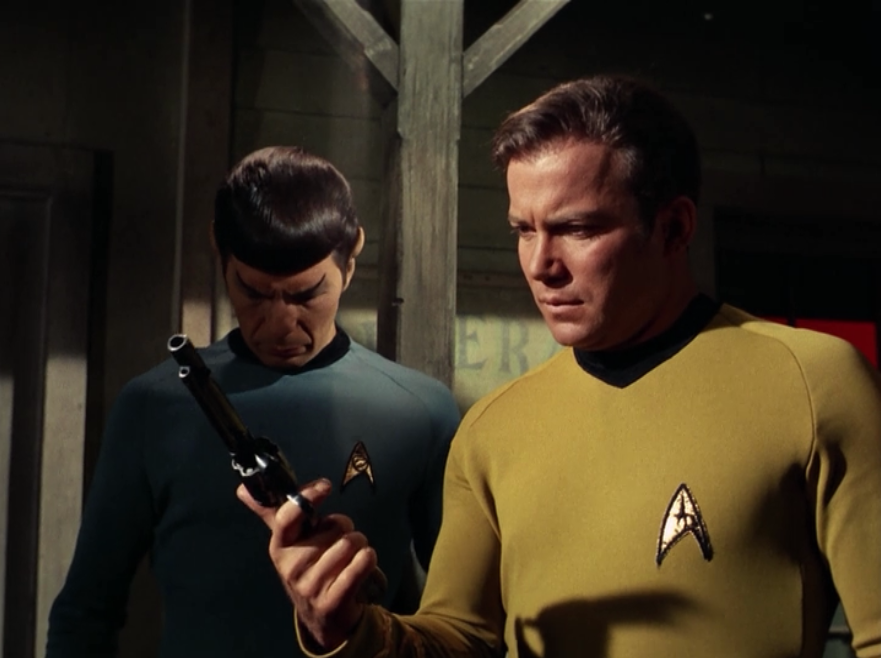
Show creator Gene Roddenberry pitched Star Trek as "Wagon Train to the stars." A few episodes, such as "Spectre of the Gun," made it literal.

Show creator Gene Roddenberry pitched Star Trek as “Wagon Train to the stars.” A few episodes, such as “Spectre of the Gun,” made it literal.

Besides the gunslinger, other characters, such as the alien other, the damsel in distress (or the hooker with a heart of gold in racier manifestations: neither genre had much use for well-developed female characters, as pioneering was considered man’s work), the white man “gone native,” the amoral company man, and the wise tribesman (often the last of his kind, given a tragic nobility once no longer a threat) were translated easily. Science fiction, arriving as it did in a period of both rapid dissemination of ideas and ready access to literature of the past, became a clearinghouse of genre storytelling, absorbing themes and tropes like a sponge. From this point of view, it’s only natural that Terry Gilliam could describe Darth Vader as “the cowboy with the black hat,” that Flash Gordon’s Princess Aura fits the mold of the femme fatale, and that Seven Samurai could be remade as both a Western and as a space adventure. Ultimately, callow, daydreaming farm boys are the same everywhere, whether from Texas or Tatooine.

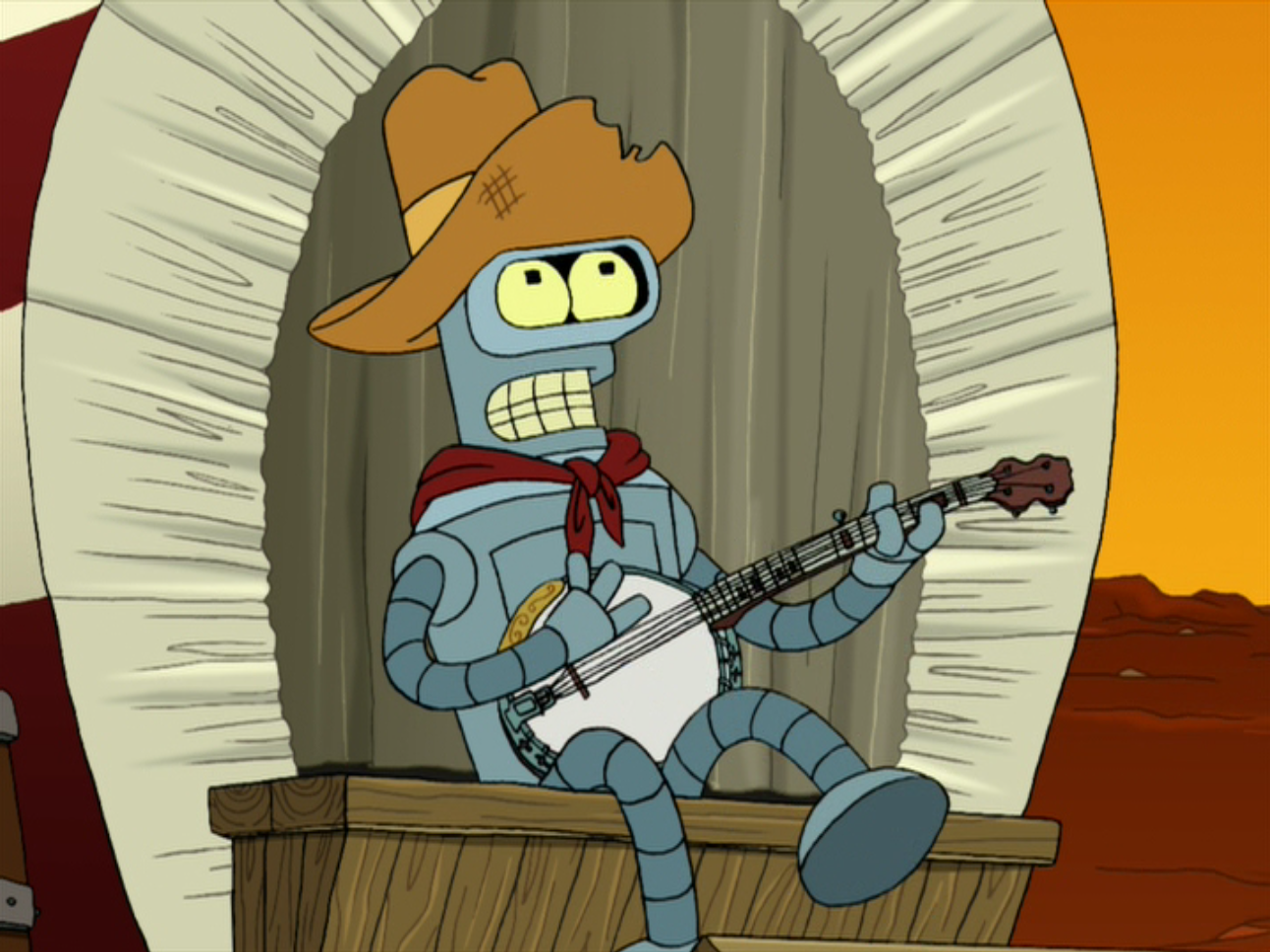
In that case, the distinction between the two genres is one of iconography, and iconography flourishes in visual media: comic books and cartoons have always been friendly to the robot in a cowboy hat, as have the pop surrealism movement and the artists who contribute to sites like DeviantArt. When it comes to mixing and matching, Western and sci-fi are primary colors that can be laid on in broad strokes.
Bender3

Both literary and cinematic science fiction have had to work to absorb Western motifs, however: all but the most fantastic stories attempt to rationalize the mixture of Old West and New Frontier, and here the difference between the two genres is a clear obstacle.* The Western is rooted in a specific time and place, and once that historical moment was over, the Western became a genre about the past (one reflecting contemporary attitudes, to be sure, but almost always focusing through the lens of history); science fiction, especially in the early Space Age, was about the future, and whether focused on the promise of exploration or the horror of nuclear war, it used speculation about the future to examine the current moment. In short, both forms stood in the present, but the Western looked into the past, either searching for some imperialistic original sin or retreating into comforting nostalgia, while science fiction looked into the future, projecting either our hopes or fears.
wild-wild-west-kenneth-branagh

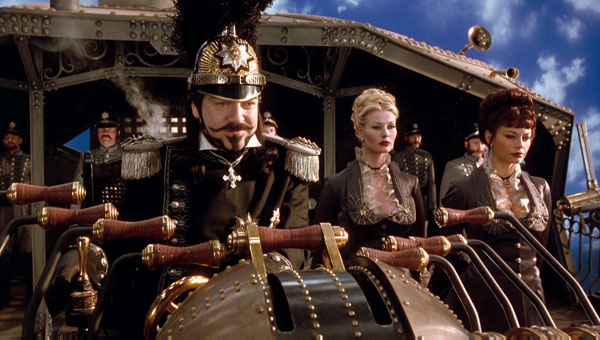
Given that difference in emphasis, science fiction has often chosen to visit the Old West by means of time travel or alternate history. The “steampunk” movement has produced a wide variety of literature, some of it great, but on film it has been too often a faddish visual template that can be applied to the same old pulp storytelling: the result has been ambitious failures like the film version of Wild Wild West or “high concept” dreck like Abraham Lincoln, Vampire Hunter. (Complaints about the perceived hackiness of combining the two genres aren’t new: Wikipedia’s “Space Western” entry notes pulp-era efforts to stamp out lazy updates of Western plots in sci-fi garb, including one magazine’s ad campaign claiming “You’ll never see it in Galaxy.”)

Westworld_ver2

Better are films that find ways to repurpose the trappings of the Western, like Westworld, in which the Western setting is a fiction within the fiction, or Serenity (the belated finale of television series Firefly), which makes explicit both the themes of colonization and post-civil war disillusionment that are a part of the Western. In both cases, the adoption of Western dress and lingo are made to seem not only organic to the setting but essential to the stories being told: both use science fiction to interrogate the Western, and by extension mythmaking in general.

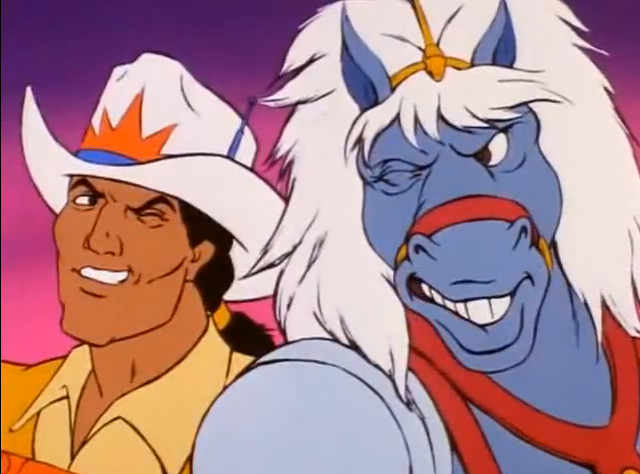
* Even excursions into outright fantasy don’t always pass the laugh test: I invite you to consider the short-lived 1987 cartoon series BraveStarr:

I’ve also just become aware of a 1999 film called Aliens in the Wild, Wild West that doesn’t look too promising; although I haven’t seen it, an imdb reviewer calls it “one of the top ten worst movies I have ever seen.” Tellingly, like The Phantom Empire and like BraveStarr and similar cartoons, Aliens in the Wild, Wild West appears to have been made primarily for children.
BraveStarr

BraveStarr

Next week, I’ll look at a recent example of the genre, 2011’s Cowboys & Aliens.

My 2014 in Film

matinee

Another year is coming to an end, and with it another slate of new film releases. As I did last year, I came up with my own (necessarily incomplete) list: not necessarily the “best” of the year, but my favorite movies and other pop culture among those I was able to catch in the last twelve months. And unlike last year, I’m including a list of some non-2014 movies I caught up with for the first time.

I didn’t keep a list of movies I watched (other than the list I kept during October), but perhaps I should have, as this was a big year for me to catch up on movies. Keeping a list is not a passive act, however: with list-making comes the desire to add to the list, to see it grow. For my rather meager reading this year, that’s a good thing, but if I had kept track of movies I watched I might have tried to watch even more than I did, and felt as drained as I did after my October marathon. Still, lists are great for looking back at what you did, watched, or read over the year: January seems awfully long ago when I look back at what I was doing then.

I saw sixteen 2014 releases, either in the theater or at home. There are several I still haven’t seen, such as Interstellar and The Babadook, that I expect to respond to when I catch up with them, but here are my top three favorites so far:

GRAND BUDAPEST HOTEL_c371.JPG

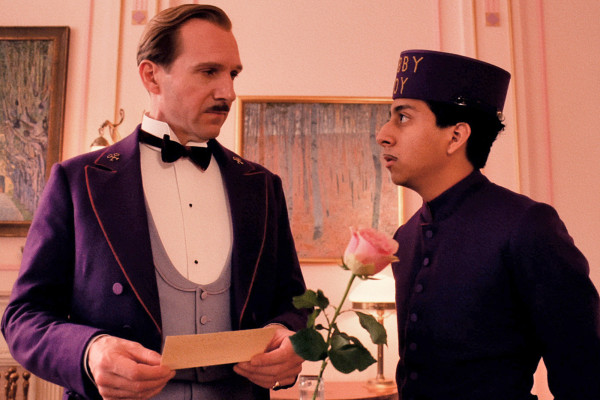
3. The Grand Budapest Hotel. I’m a sucker for writer/director Wes Anderson’s carefully-curated style, and I was particularly receptive to this multi-layered story, set in the fictional Alpine nation of Zubrowka. I had a Czech composition professor who always bristled at the term “Eastern Europe,” and liked to point out that Prague is actually to the West of Vienna; it was hard not to think of him, and of a summer trip to Prague, when watching this. Inspired by the writings of Stefan Zweig, Anderson gets the sense of being at the crossroads of East and West, of being somewhere off the map, and of “small” countries’ determination to hold onto their idiosyncrasies in the face of empire, be it political or cultural. In addition, the majority of the film is set in the early 1930s, the anxious period of fascist uprisings that would inevitably lead to war and sweep away the old world that the titular hotel and its dapper concierge (Ralph Fiennes) represent. The juxtaposition of a farcical caper with looming historical tragedy gives the standard Andersonian business a more directly political edge than usual, and is a good fit with the sadness that is often just under the surface of Anderson’s whimsy.

Whiplash-5547.cr2

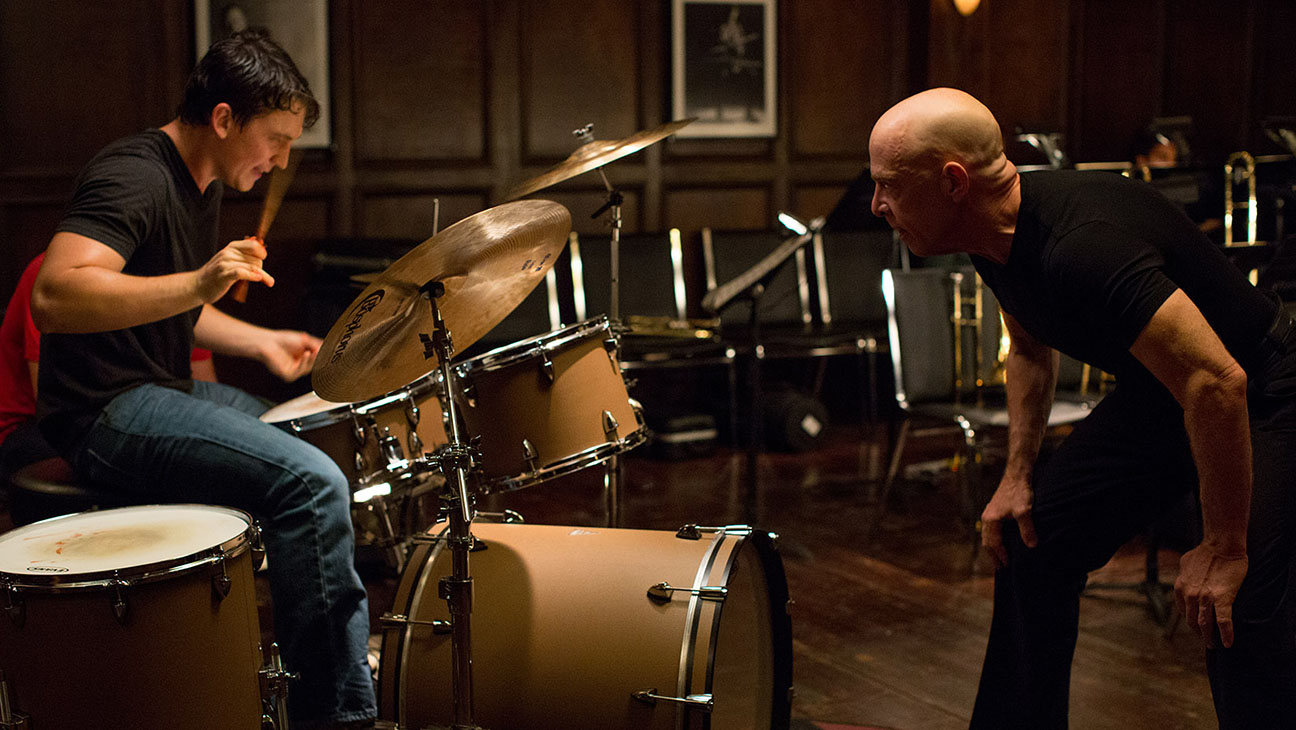
2. Whiplash. Between this film, written and directed by Damien Chazelle, and Grand Piano, which Chazelle wrote, I think I have a favorite new filmmaker. Whiplash’s story of an ambitious student drummer (Miles Teller) and the punishing, even sadistic treatment he receives at the hands of his jazz band director (J. K. Simmons) examines the personal price of artistic ambition in a way that is more brutally honest (emphasis on “brutally”) than most films about budding artists and their mentors usually are. In fact, while the plot has the twists and turns of a taut thriller, the tantrums, self-laceration, and even the explosions of violence in the film don’t seem that exaggerated, bringing to mind both certain high-strung individuals I’ve known as a musician, and the hazing scandals that have afflicted some high-profile college bands in recent years. It also manages to leave the ultimate question—is it all worth it?—up to the audience to decide. The film makes a fitting and devastating postscript to the series of films about bands and inspirational music teachers I wrote about this fall; Mister Holland’s Opus, it ain’t.

The_LEGO_Movie_10

1. The Lego Movie. Sure, it’s a film for kids—a feature-length toy commercial, even. But even after repeated viewing, it’s a stunning technical and aesthetic achievement that has something meaningful to say about the creative process and relationships. Honestly, I could just look at the billowing ocean of Lego bricks for hours; the fact that the characters are so vibrant is a bonus, and a testament to the writing and direction of Phil Lord and Chris Miller. The notion that each of the main Master Builder characters represent a creative type (or a single facet of a creative mind) is an easy leap to make (it could be a Buzzfeed quiz: “Which Lego Master Builder are you?”), but I’ll be darned if I don’t relate to Uni-Kitty’s desperate attempts to stay positive in the face of disaster, or Wyldstyle’s—that is, Lucy’s—repeated reinventions and desire to be “edgy.” The beautiful thing about the story is how it brings together and values the contributions of all kinds of personalities, even while recognizing that everyone has flaws. It’s a great example of something I’ve long felt: that broadly-drawn characters, even cartoons, can still have feelings, and it makes The Lego Movie one of the most humane films of the year.

Honorable Mention: I was charmed by the Swedish import We Are the Best!, as low-key in its depiction of three middle school girls who form a punk band as Whiplash was intense. Directed by Lukas Moodysson, We Are the Best! is mostly slice-of-life, drawing much of its comedy from the contrast between the girls’ bravado and their meager talent, but it never makes them the butt of the joke. Rather, it’s the clueless adults who don’t know what to make of the trio, whether it’s one girl’s dad trying to join their “jam session” on the clarinet, or the manager of the activity center where they rehearse underestimating the lead guitarist (the only one of the three who can actually play).

This was also a good year for blockbuster entertainments: although I chose not to rank more than four movies, I enjoyed Captain America: The Winter Soldier and Guardians of the Galaxy, as well as Gareth Edwards’ revival of Godzilla. I was late seeing Godzilla, so I had already heard that the big lizard doesn’t get a lot of screen time, but it was almost comical how Edwards contrived to keep him off screen, hidden behind smoke, buildings, or even closing doors. I can’t help but feel that some of the complaints were driven by viewers who hadn’t seen the original Toho films, which also often kept the monsters off screen for the majority of their running times. If anything, my biggest complaint was an over-reliance on coincidence to keep star Aaron Taylor-Johnson at the center of the action, but, you know, movies.

Other highlights

HauntedPalace

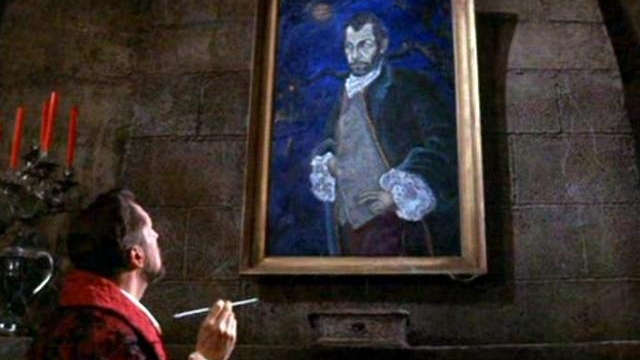
Some of the best movies I saw this year were older ones; first-time non-2014 movies that I loved include (in no particular order) Nothing Lasts Forever, TerrorVision, A Town Called Panic, The Whisperer in Darkness, The Haunted Palace, Matinee, Gang Busters, The Visitor, Eraserhead, Strike Up the Band, Drumline, Scott Pilgrim vs. the World, and Thoroughly Modern Millie.

I’m also glad I had the opportunity to see The Texas Chain Saw Massacre in a beautiful 4k restoration last October; as someone who didn’t enjoy horror films as a kid, I never thought I would go out of my way to see this film, but I knew I would regret it if I passed up the opportunity. I took the precaution of inviting a horror-savvy friend to go with me so I wouldn’t chicken out, but it turned out he hadn’t seen it either! As so often happens, it wasn’t nearly as scary as I had built up in my mind. Suspenseful? Yes. Graphic? Very. Horrifying? Sure. But after decades of imitators, I realized that in a way I had already seen it, by way of the influence that trickled down through the numerous slasher movies that followed. The next day, I heard chainsaws running all day, as my neighbors were cutting down a tree; it didn’t freak me out, but it tickled me to imagine that they were extending my TCSM experience beyond the theater, like Disney Imagineers.

Lowlights

MrPeabody

The worst 2014 release I saw this year was Mr. Peabody & Sherman, which was both mean-spirited and tried way too hard to be edgy; it felt very much like a throwback to Dreamworks’ snarky, post-Shrek output, and I am mystified by the middling-to-positive reviews it received. Even my kids didn’t seem to enjoy it that much, and quickly forgot about it.

First-time non-2014 films that didn’t do much for me included Radar Men From the Moon, the 1961 Babes in Toyland (which had Ray Bolger and not much else), the 1960 13 Ghosts (with Margaret Hamilton—maybe a retrospective of Wizard of Oz cast members’ careers is in order), and Demons, which started out really promising but lost me about halfway through. The most ridiculous movies I saw this year include the 1952 Bloodhounds of Broadway, Shanghai Surprise, and Elvira: Mistress of the Dark, although I’m probably forgetting some.

Thanks for reading and watching along with me this year. I hope you’ll return in 2015!

My 2014 in Television

LetsWatchTV

I didn’t watch a lot of television this year. Oh, I logged plenty of screen time, but I was mostly watching movies rather than TV series. Other than Community’s fifth season (which I wrote about last spring), most of what I did watch was animated, since I watch with my kids, and since I’m not exactly allergic to cartoons myself.

The new series I found most exhilarating this year was Adult Swim’s Rick and Morty, the animated brainchild of Justin Roiland and Community creator Dan Harmon. (It technically began in December of 2013, but the majority of it came out this year.) Rick and Morty starts with a hoary premise—mad scientist Rick Sanchez takes his fourteen-year-old grandson Morty (both voiced by Roiland) on a series of wild adventures, getting them both into and out of jams with his inventions—and then turns it inside out. Rick isn’t just eccentric, he’s seriously damaged, and the show, while comedic, doesn’t shy away from the dangers he exposes Morty and his family to, and doesn’t simply set the reset button at the end of each episode. In just its first short season (eleven episodes), one of Rick’s schemes permanently transforms the world into a monster-filled wasteland, and the only solution is for Rick and Morty to relocate to a parallel universe in which their counterparts have conveniently died, taking their places. (No, this isn’t one I watch with my kids.)

RickandMorty

That points to another of the show’s strengths: like Futurama before it, Rick and Morty assumes that viewers have seen Back to the Future, Doctor Who, Star Trek, The Twilight Zone, Zardoz, The Fly, and the many other shows that are winkingly alluded to, and there’s a minimum of hand-holding. It’s the twenty-first century, and the audience doesn’t need to have genetic modification, virtual reality, or (for that matter) the dangers of unintended consequences explained in long-winded detail. That leaves more time to develop characters (mainly the rest of Morty’s family: sad-sack dad Jerry and frustrated mom Beth, and overlooked big sister Summer) and fill the run-time with off-the-wall humor.

I can’t think of anything I laughed at harder this year than the episode “Rixty Minutes,” in which Rick’s modification of the TV cable box allows the family to view programming from infinite parallel universes (including glimpses of the lives Jerry and Beth could have had if they hadn’t stayed together). The combination of rapid-fire absurdity and referential gags most closely resembles Community’s Season Two episode “Paradigms of Human Memory,” and like that episode, “Rixty Minutes” puts the insanity of its plot in the service of its characters, up to a surprisingly poignant climax.

overthegardenwall

On the non-series front, 2014 was a year in which special events, already making a comeback in recent years, continued to gain ground as networks look for (non-sports-related) ways to keep viewers tuned in at the time of broadcast instead of time-shifting. Even the mini-series, that prestige format of the 1980s, is coming back into vogue (ABC’s upcoming Galavant is definitely on my radar for 2015). I’ve already written at length about Over the Garden Wall, Cartoon Network’s five-night mini-series that aired in November; suffice it to say that upon rewatching it, I still found it greatly enjoyable, and were I to rank it with my favorite films of the year, it would at least be in the top five.

SpecialSpecial

There were some other specials that grabbed my attention this year, as well: I’d like to highlight Lil Bub’s Special Special, which aired on Animal Planet way back in February. At a slight half hour, this celebration of the eponymous cat was as instantly disposable as the cute animal videos and memes of which the special is an extension, but the whole thing (held together by human costars Amy Sedaris and Andrew W. K.) had such a light touch (and just enough self-awareness) that I was charmed by it. It hasn’t been rerun to my knowledge, but it has a permanent home on my DVR (and you can watch it here).

drwhochristmas_bbc

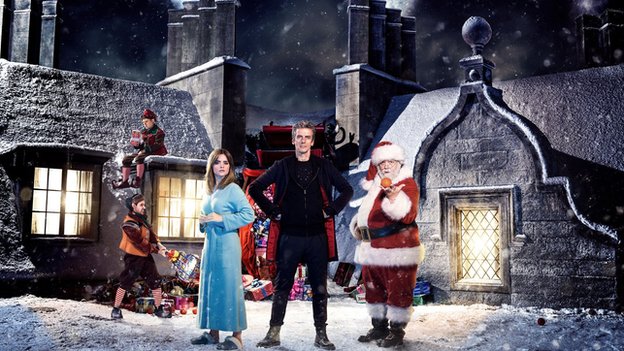
Finally, there were the usual crop of Christmas specials. I could quibble with Doctor Who’s “Last Christmas,” leaning as it does on the revived Who staple of monsters that you can’t look away from, or that you can’t remember, or that (in this case) you can’t even think about without them coming for you. And I’m not as taken by the chemistry of leads Peter Capaldi and Jenna Coleman as some are. However, my personal bar for the annual Doctor Who Christmas special is set pretty low, and as long as it doesn’t involve David Tennant being carried aloft by robotic angels, I’m willing to cut it some slack.

To be fair, “Last Christmas” was actually pretty good, in both spinning out an intriguing menace and lampshading its similarities to both Alien and The Thing, as well as casting Nick Frost as a snarky but ultimately benevolent Santa Claus and making it work. The special is part of a long tradition of Christmas films and stories examining the nature of faith and belief, with Santa as a safely secular football. If Santa Claus weren’t so widely regarded as a fiction for children, would Christmas stories still demand that we believe in him unconditionally? Entertainment that aspires to mainstream appeal can no longer preach with such certainty about Jesus or any other religious figure, but such arguments can be broached in the language of fantasy. Like most such stories, “Last Christmas” ends ambiguously (in more ways than one: a comment I read online accurately described it as “Doctor Who does Inception”), but it is clear on the power of faith, with Santa described as a “dream sent to save us,” a nice summary of the value of both fiction and religious parable.

ElfSpecial

2003’s Elf is similarly engaged with convincing the unbelieving, with Santa (Ed Asner) stating explicitly that belief, not confirmation, is the source of his power: “If I were seen, all would be lost!” As Jesus told his apostle “Doubting” Thomas, “Blessed are they who have not seen, and yet have believed.” This year’s Elf: Buddy’s Musical Christmas, based on the film and the Broadway musical that sprang from it, isn’t quite so explicit, but finds a middle ground between the movie and the Rankin/Bass productions that inspired its story of a human orphan raised by elves at the North Pole. I mentioned this special on Christmas Eve, pointing out that it wasn’t as good as the original movie, but I would be remiss if I didn’t at least mention the stylish, handmade production—the stop-motion figures resemble Rocky & Bullwinkle‘s characters brought to 3-D life—and charming score (by Matthew Sklar and Chad Beguelin). Mostly, I enjoyed it when it wasn’t directly imitating the movie, as the comparison is unflattering to the special; like many shows with familiar subject matter, it was more approachable when doing its own thing.

Tomorrow, look for my thoughts on the books I read in 2014.

A Merry Christmas to All

. . . or, A Visit From Saint Nicholas

AmbushBug.Santa

Well, I didn’t mean to take three weeks off from posting; I hope you’ve all been able to get along without me. In my absence from Medleyana, I’ve been writing and revising some fiction, as well as participating in the family and church activities that come with the season. As soon as anything comes of those projects, readers here will be the first to know it. I will also have a post on my favorite films and other pop culture of the year soon, but I’m still trying to squeeze a few things in before I make a definitive list. And to make up for my absence, I’ve arranged to have Santa Claus himself, Saint Nicholas, drop by to greet all my loyal readers!

In the mean time, I wish you all a happy, peaceful, and safe Christmas, and a prosperous New Year. And for my readers who don’t celebrate Christmas, I wish you a joyous holiday season! I hope you get what you’re wishing for, be it a set of chimes or a collection of holiday-themed novelty songs.

Atari.Xmas

When I was a kid, this was the time of year for television holiday specials: classics like A Charlie Brown Christmas and How the Grinch Stole Christmas!, of course, but also specials tied into newspaper comic strips like Garfield, Ziggy, For Better or for Worse, and . . . Doonesbury? Thanks to nostalgic Gen-Xers on the Internet and the magic of YouTube, those not-so-classic specials have gotten some renewed attention in recent years, but there are still gaps: for example, I’m still sure that I saw a Doonesbury Christmas special in the early 1980s that wasn’t the award-winning A Doonesbury Special from 1977, but I can find nothing about it. Can anyone help me out?

I like the fact that prime-time animated Christmas specials have made a comeback in recent years, even if I’m not always that excited about them (sorry, Prep & Landing: your shtick is just too similar to The Santa Clause). This year’s Elf: Buddy’s Musical Christmas, while cute, didn’t really hit the heights of the 2003 feature film on which it is based, and even the beloved Toy Story franchise only left me lukewarm with its latest installment, Toy Story That Time Forgot. Well, they can’t all be classics.

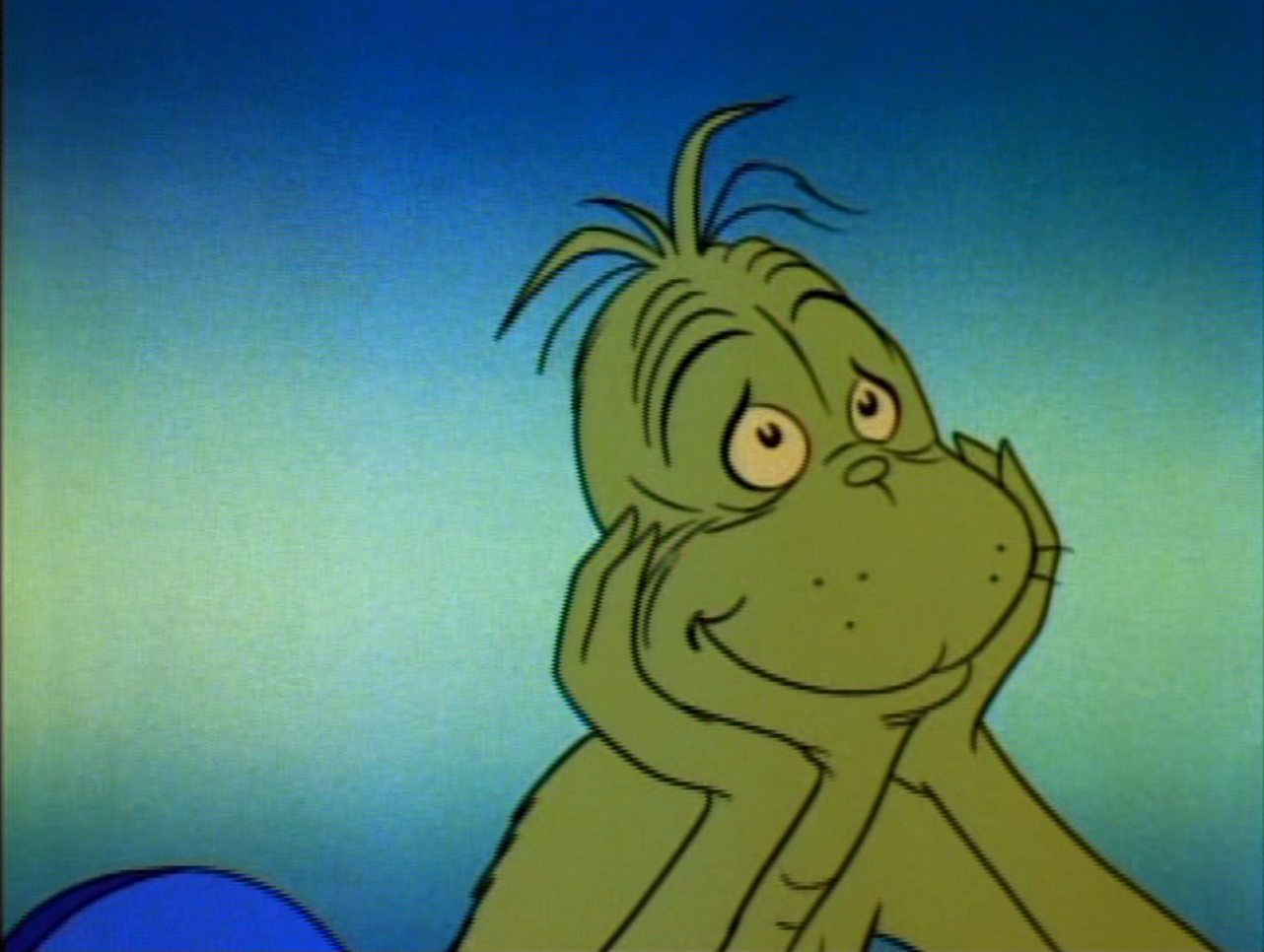
Speaking of a classic, let’s check in on the titular star of How the Grinch Stole Christmas! and see how he’s dealing with the pressures of fame:

Grinch3

Hmm. Oh. I see. It just goes to show: the holidays are rough on a lot of people. Let’s give the Grinch some space; we’ll check back on him later. But wait! Is that the merry sound of jingle bells I hear? Is Santa here?

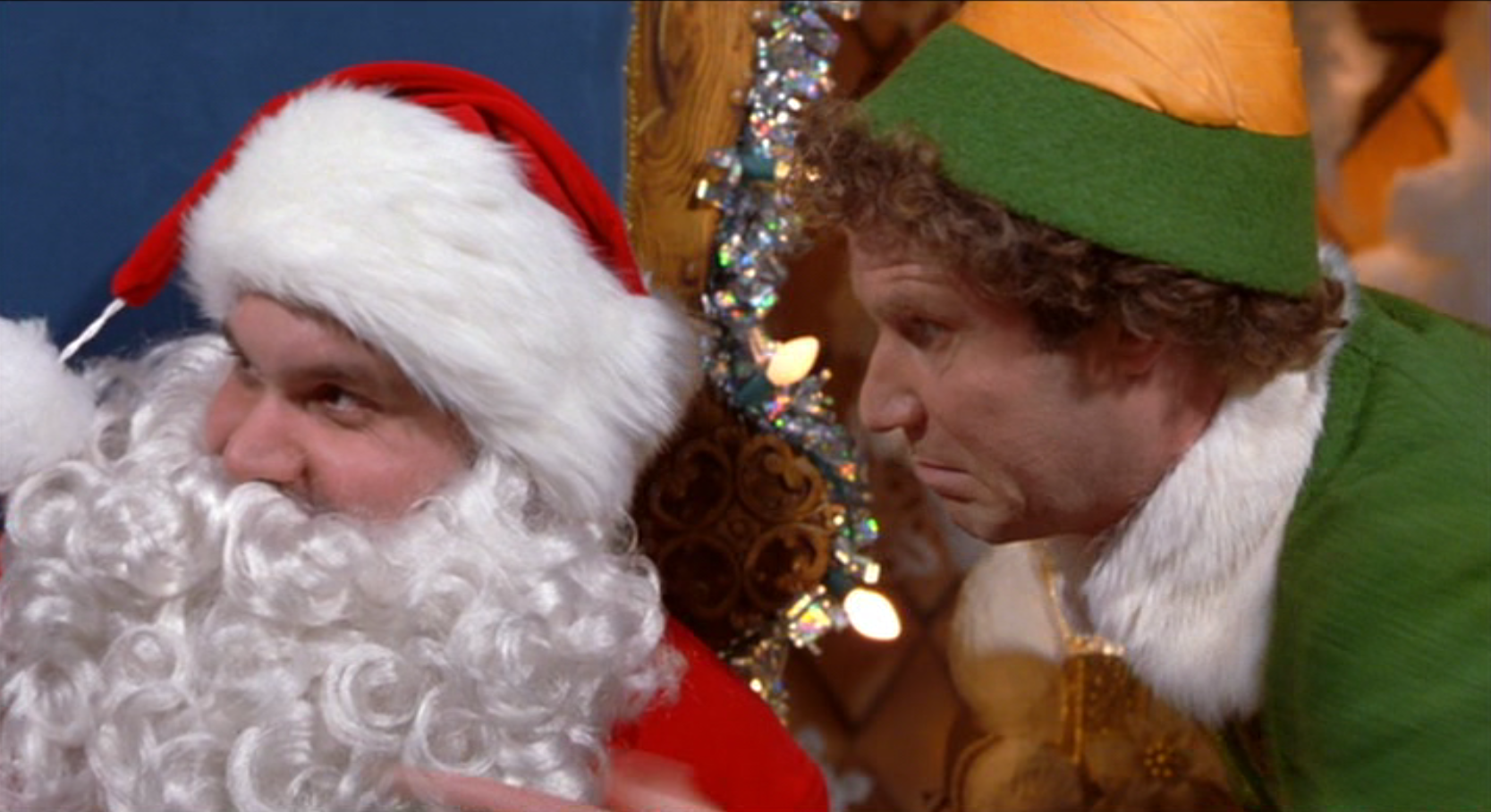
Elf.v.Santa1

Oh. . . . No, it’s just the False Santa from Elf, stirring up trouble. (NB: So there are two movies that combine Will Ferrell and Lego cities; I don’t know what that means, but I think Internet Law requires there to be a mash-up now, right?)

Elf.v.Santa2

While we wait, how about some visuals to get into the Christmas spirit? What could be more festive than the 1954 film White Christmas?

Choreography4

So, this is . . . a pageant? A Living Nativity? I don’t see any snow.

Moving on, maybe Santa is here?

JackSkellington

Oh, not quite. But what about those classic Rankin/Bass specials like Rudolph the Red-Nosed Reindeer? Surely, there must be plenty of iconic Christmas characters we can while away a cold Christmas Eve with? Like these guys:

NewYear1

And let’s not forget:

XmasinJuly2

And then there’s The Leprechaun’s Christmas Gold; nothing says “Christmas” like leprechauns:

Leprechauns

And what are the leprechauns staring at, Spielberg-style? Is it Santa?

Leprechauns.StPat

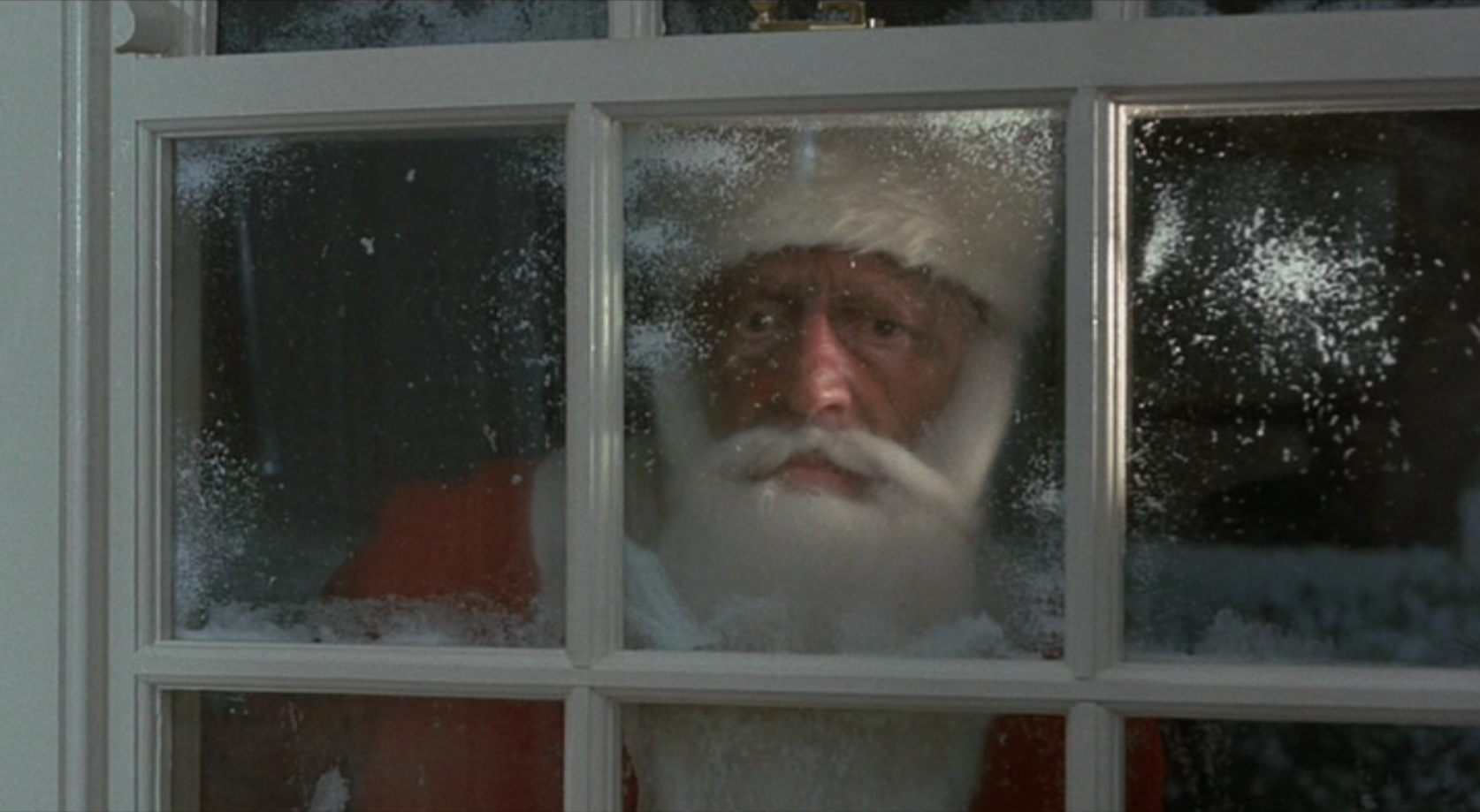
Nice try. But wait! I think I hear him: it’s Santa, tapping at our windowpane! How festive!

TalesSanta1

Let’s let him in! What’s that, Santa? Okay, we can hug. I mean, sure, why not?

TalesSanta2

Wait! Aagh! No! Is there no end to these False Santas?

TalesSanta3

Well, to be fair, the real Santa Claus is very busy this time of year; but I bet you’ll never complain about your office Secret Santa again! Anyway, it’s not too soon to start dreaming about next Christmas! Season’s Greetings!

Grinch2

More Lovecraft at The Solute

HauntedPalace

During last month’s horror movie marathon I caught up with several film adaptations of stories by H. P. Lovecraft. I first wrote about two fairly faithful twenty-first century adaptations by the H. P. Lovecraft Historical Society at The Solute, and after much delay I’ve put together my impressions of three films from American International Pictures: Roger Corman’s The Haunted Palace (1963), and Daniel Haller’s Die, Monster, Die! (1965) and The Dunwich Horror (1970). Although as a recovering Lovecraft purist I was skeptical of the AIP adaptations, I did find much to enjoy in them, and watching all three in a row provided an interesting overview of horror’s changing face in the 1960s. The article can be read at The Solute.

Over the Garden Wall at The Solute

overthegardenwall

Last week, Cartoon Network ran its first animated miniseries, Over the Garden Wall, described as a “five night mystery adventure.” Created by Patrick McHale, previously of CN series Flapjack and Adventure Time, Over the Garden Wall leans on the traditions of fairy tales, classic animated cartoons, and much more, and featured enough star power (including such names as Elijah Wood and Wichita’s own Samuel Ramey) that it fully lived up to its “event” status. Over the Garden Wall also draws on the archaic, mysterious body of song and folklore collected in the Anthology of American Folk Music, described by Greil Marcus as “The Old, Weird America.” I’ve written before about my love for the Anthology, so it will not surprise my regular readers to find that Over the Garden Wall‘s synthesis of influences was catnip to me.

I wrote more about it in my review at The Solute; although television rather than a film, I felt that under two hours total (leaving out commercials, of course), Over the Garden Wall could be considered a ten-part feature, and works well in that format.

October is the Coolest Month

wpid-20141031_163834.jpg

Or is it the cruelest? There’s always too much to do and too many events to take advantage of them all during October, between post-season baseball, family Halloween activities, school and work, rehearsals and performances. (I should also mention that The Lost Worlds of Power, which was supposed to be released on Halloween, has been delayed, for reasons best explained here. No worries; I’ll update as I get information.) This year my wife dressed as the Queen from Snow White, and we thought of a costume for me that (I think) came together really well:

"Mirror, Mirror, on the wall . . ."

“Mirror, Mirror, on the wall . . .”

Then there are the movies: a lot of people plan to watch 31 horror movies during October, a movie a day; I knew I would have a hard time reaching that number (and as the month went on I remembered why I had never done it before), but this year I made an effort to catch up on some I had never seen (while revisiting a few favorites). I made it to 21 and still felt like I was cramming them in; as enjoyable as it was, I doubt I’ll try to keep up this pace year-round.

I didn’t plan ahead, for the most part, and for those I saw on the big screen the programmers of the October at the Oldtown horror series made the decisions for me. For my own choices, I defined “horror” pretty broadly, and included some examples of fantasy and thriller, depending on my mood. (Pulp Fiction, which I rewatched in order to write an article on its twentieth anniversary, is the real outlier.)

Barbara Kellerman in The Monster Club

Barbara Kellerman in The Monster Club

The movies I covered are listed below with their year of release and director, as well as a key pointing out a few repeated elements. For example, five of the movies I watched in October were adaptations of stories by H. P. Lovecraft (I wrote about two of them at The Solute, and intend to write about the remaining three in the near future), and considering I didn’t watch any martial arts movies there were a surprising number of samurai sword attacks.

1. The Call of Cthulhu (2005, Andrew Leman)* a, g, hpl, w
2. ParaNorman (2012, Chris Butler and Sam Fell) b, c, v
3. Elvira: Mistress of the Dark (1988, James Signorelli) b, m
4. 7 Faces of Dr. Lao (1964, George Pal)
5. Tentacles (1977, Ovidio G. Assonitis as “Oliver Hellman”) v (diving masks–I guess that counts)
6. The Whisperer in Darkness (2011, Sean Branney) a, g, hpl, v
7. Pulp Fiction (1994, Quentin Tarantino)* ss, v
8. Basket Case (1982, Frank Henenlotter)** c, t
9. The Gate (1987, Tibor Takács)* g
10. The Hole (2009, Joe Dante) c, g
11. Grand Piano (2013, Eugenio Mira) m
12. The Monster Club (1981, Roy Ward Baker) c, m, v
13. The Gates of Hell aka City of the Living Dead (1980, Lucio Fulci)** d, g
14. Demons (1985, Lamberto Bava)** ss, v
15. The Haunted Palace (1963, Roger Corman) a, b, hpl, p
16. Die, Monster, Die! aka Monster of Terror (1965, Daniel Haller) a, hpl, w
17. The Visitor aka Stridulum (1979, Giulio Paradisi as “Michael J. Paradise”)* c, p, w
18. The Dunwich Horror (1970, Daniel Haller) d, g, hpl, t
19. The Texas Chain Saw Massacre (1974, Tobe Hooper)** v, w
20. Eraserhead (1977, David Lynch) c, g(?), m
21. Donovan’s Brain (1953, Felix Feist) p

* rewatch
** seen in theater

a: Arkham setting
b: character burned at the stake (or threatened with burning)
c: monstrous or supernatural child
d: Dunwich setting
g: gateway or portal to otherworldly realm opened
hpl: H. P. Lovecraft adaptation
m: musical number
p: possession or domination by a disembodied intelligence
ss: samurai sword attack
t: twins
v: masks
w: character in wheelchair

Did I miss anything? And did you watch anything in the last month that you would recommend or that made an impression on you?

Scarefest: The Visitor

“Maybe this just isn’t the right time to bring children into this bad, mixed-up world. Some of them are confused: they think that the forces of evil are stronger than the forces of good.” –Jane Phillips (Shelley Winters), in The Visitor

Vis_Katy1

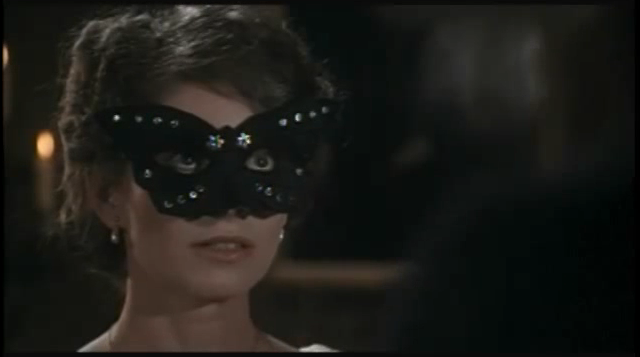
This article was written as a contribution to Scarefest, a series of pieces by commenters on film website The Dissolve, organized by commenter Miller. The week before it ran, I alerted Miller that I was changing my Scarefest entry to The Visitor, and another commenter asked, “Are you writing about how scary it is that it’s so bugnuts insane?” I assume he was kidding, but my short answer is yes. Yes, I am.

The 1979 film The Visitor, directed by Giulio Paradisi (as “Michael J. Paradise”), has long had a reputation as a hard-to-find cult oddity; after a restoration and rerelease by Drafthouse Films in 2013, it became more widely available on disc and VOD. TCM ran the restored version as part of its “TCM Underground” series last summer, and that’s where I saw it. I didn’t know a lot about it, other than having seen the bizarre trailer Drafthouse put together for it, and knowing that the film was considered extremely weird even among cult horror aficionados. I was prepared to have my mind blown, but I wasn’t prepared for The Visitor to actually be, you know, scary.

The plot isn’t easy to summarize except in broad outlines: businessman Raymond Armstead (Lance Henriksen) has made a deal with a shadowy organization dedicated to perpetuating the bloodline of an evil alien being referred to as Sateen. His girlfriend Barbara (Joanne Nail) has one child, Katy (Paige Conner), now eight, but Barbara is afraid of Katy and reluctant to have another child. Because of this, the organization pressures Raymond behind the scenes—their plans for world domination require that Katy have a brother—and Katy, in whom Sateen’s influence is already strong, alternately wheedles and punishes her mother for her obstinance. In the mean time, Jerzy (John Huston), the “visitor” of the English title, stalks Katy on behalf of Franco Nero’s character, a Christ-like figure who lives somewhere (in outer space? or is it Heaven?) with a congregation of bald children and who is opposed to Sateen. Is the visitor’s mission to kill Katy or save her? A lot of other stuff happens in the margins, but that’s basically it: a blend of New Age contactee mysticism and 1970s devil-child horror. So far, so good.

I: The Sleep of Reason

Vis_prologue2

So why did this movie, much of which is absurd on its surface, freak me out? For one thing, the film’s late-‘70s style took me back to my childhood, and not in a good way. I’m just over 40, so my memory of the 1970s is filtered through the subjective haze of being a young child then. The ‘70s were pretty strange to begin with, and even more so when you have no reference for much of the adult world. Much of what was considered “grown-up” moviemaking (and a lot that was aimed at kids) back then was characterized by, to use President Carter’s infamous term, the “malaise” of the time, and for me that resulted in a lot of free-floating unease, even when watching things that were ostensibly light. You just never knew when things were going to take a dark turn. The gauzy, soft-focus cinematography, cheesy cop show music, and swinging suburban styles of The Visitor were all intimately familiar to me, to the point that I couldn’t be sure I hadn’t seen this movie as a kid (I’m still not sure).

My reaction is a subjective one, but is there anything more subjective than fear? Like laughter or arousal, the fear reaction is fundamentally irrational; it can be controlled on the viewer’s part, and there are techniques filmmakers can use to evoke it, but at a base level it touches something that cannot be reasoned with. In my case, that reaction has always been close to the surface: I could hardly watch scary movies or TV shows as a kid, even tame fare like The Twilight Zone, because being afraid or tense wasn’t a pleasant sensation for me like it is for many kids. I was drawn to fantasy, but even something that wasn’t scary at first could come to haunt me, taking on a life of its own as I lay in bed, waiting for sleep, which in many phases of my childhood had its own terrors in the form of realistic nightmares. The Visitor falls flat as a vehicle for ideas or even as a story: too many things happen without explanation, there are abrupt tonal shifts and weird distortions of sound and image, and it just doesn’t make a lot of sense. But is that not an accurate description of a dream?

In dreams, anything can happen, and ordinary events and objects can be invested with emotional power greater than they have while awake. The very first scene, a (possibly allegorical) confrontation between Katy and Jerzy in a gold-lit field, is overtly surreal, and typical of the over-the-top visual flourishes in the movie’s more fantastic sections. As Katy approaches, thick snowflakes swirl around and stick to her face; eventually, only her eyes are visible. It’s spooky, like something from Altered States or Ridley Scott’s Legend (Scott also came to mind later in the film when the skyscrapers of downtown Atlanta are seen through a smoky haze, like the future Los Angeles of Blade Runner).
But the first scene that really threw me is relatively mundane: at her birthday party, Katy eagerly opens a box which was supposed to contain a mechanical bird purchased by her aunt in an earlier scene. Through Sateen’s power (or something), the box contains a gun, which Katy excitedly waves around and then tosses onto the couch, where it goes off and hits Barbara in the back. Katy shrugs, like, “oops?” Barbara spends the rest of the movie in a wheelchair, paralyzed by a bullet to the spine. It’s a crazy scene, but part of its nightmare power is how casually it occurs, and the mismatch of typical “suspense” build-up with gleefully committed violence that literally comes out of nowhere.

Vis_Katy2

Later, after Barbara has recovered and started getting back to a normal life, she is stranded with Katy while driving at night. A semi truck, of which we can only see the lights, pulls up on the side of the road in front of their car. Barbara is worried, and Katy openly mocks her fear. Barbara is right to be afraid: the truck is a mobile operating room, and after she is rendered unconscious agents of the conspiracy artificially inseminate her to speed up their plan. The imagery is straight out of an alien abduction report: stranded motorists, lost time, the dim memory of an operation (I suspect that it is this sequence, and a few scenes of glowing lights in the sky, that led to criticism of The Visitor as a knock-off of Close Encounters of the Third Kind), and a surprise pregnancy.

Upon discovering her condition, Barbara goes to her ex-husband (played by Sam Peckinpah!) and pleads with him to help her get an abortion. When she returns home from that operation (still in her wheelchair), Katy savagely attacks her. No pretenses now! And again, the sudden eruption of violence, while motivated by character and plot, is surprising in its intensity. Even Damien usually cloaked his actions in the plausible deniability of a “freak accident.”

II. The Sound of Nightmare

Vis_Katy3

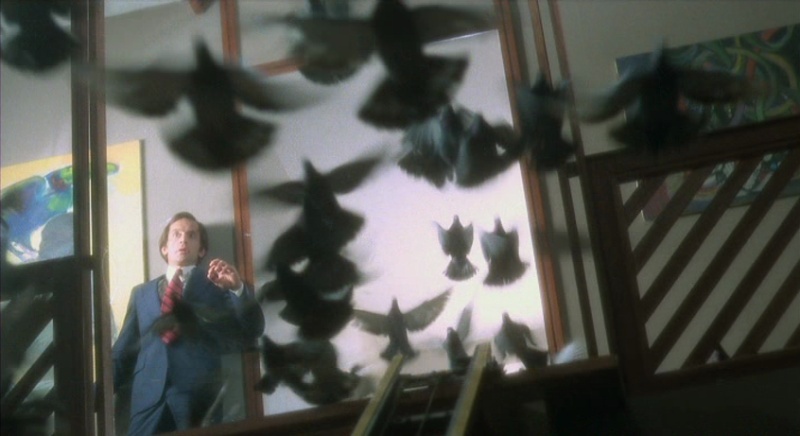
The Visitor’s Italian title, Stridulum, is appropriate: Latin for “whizzing or hissing,” and surviving in English in the word “stridulation,” for the buzzing sound insects make by scraping their legs together, it’s a clue to how important sound is in The Visitor. Both Sateen and his enemy (a spaceship-flying “Commander Yahweh”—shades of Chariots of the Gods!), have birds as an important part of their back story; Katy keeps a hawk called Squeaky who obviously represents her diabolical heritage and with whom she communicates, and the visitor summons a flock of birds during the climax of the film to scourge Katy of Sateen’s influence (I think). I suspect that birds are so important to The Visitor because they’re a convenient artsy symbol for the soul, and also because, post-Hitchcock, birds are creepy. Either way, the soundtrack is full of echoing, distorted screeches and bird calls (in addition to analog synthesizer sounds—another skin-crawling part of my childhood—and the aforementioned funky cop show music). Whenever Katy is about to use her psychic powers (as at the birthday party), we hear the eagle cry, or see a glimpse of Squeaky, or both.

Then there’s the mechanical bird that was supposed to be in the box: it’s a gold and blue knick-knack that says “I’m a pretty bird” in a synthesized drone, followed by a whine of feedback, on a constant loop. Even in the first scene, when Katy’s aunt buys it, I’m not sure how anyone could hear that and think of the bird as anything other than a prop in a horror movie. Later, when a detective (Glenn Ford!) is trying to figure out where the gun at the party came from, he finds the bird and takes it with him in his car. It’s still talking as he drives his car down the freeway with it on the passenger seat. “I’m a pretty bird * wee-ooo * I’m a pretty bird * wee-ooo * I’m a pretty bird * wee-ooo,” et cetera, until Squeaky attacks the detective and he drives the car off the road, where it bursts into flame before he can escape. Squeaky strikes again!

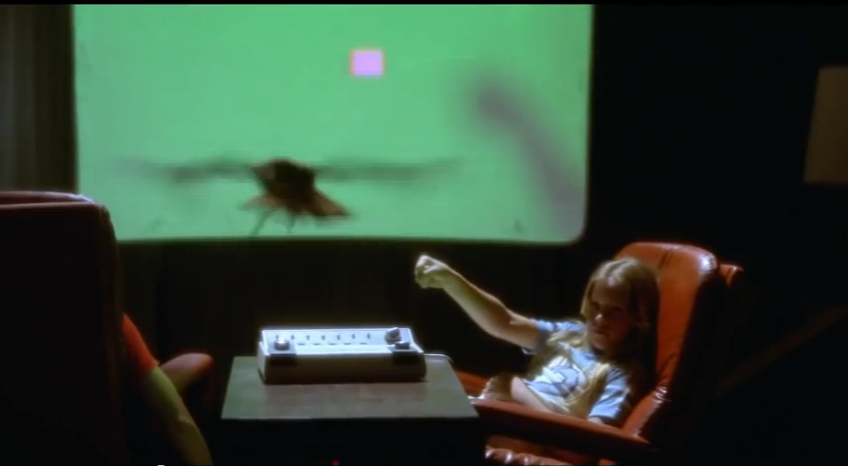
Sound also plays a role in the scariest scene in the film, the scene that I actually had to turn off for a few minutes to get myself together before I could finish watching it: early in the film, Katy is shown playing Pong on a big-screen TV, hidden by the chair in which she is sitting. The electronic blip of the game is the counterpoint to the conversation she has with her mother. Much later in the film, after Katy has been institutionalized for her violent behavior, Barbara returns home to her empty house and hears: blip . . . blip . . . blip. The game is turned on, Katy is in her chair. After Katy’s brutal attacks, just her presence in the house again is scary, but the whole sequence following is . . . well, it scared the hell out of me, but it is also much stranger than anything I’ve described yet, so I won’t spoil it.

III. All in the Family

visitor07__large

Paige Conner doesn’t look like she’s eight years old in this movie: maybe ten. It could be that she’s big for her age or I could just chalk it up to the precocity of child actors. In any case, her Katy Collins is a miniature tyrant, controlling and profane. Her poor mother is constantly put-upon, and her would-be stepfather mostly stays out of her way. Even when Katy’s words are pleading, her tone is commanding or threatening. Only Jerzy and a suspicious housekeeper (Shelley Winters) really see her for what she is, but take opposite approaches to dealing with her.

By coincidence, I had an older sister who would have been about Katy’s age in 1979, and while she wasn’t the holy terror that Katy is in the movie, I’m sure it affected my reception of this movie. The trappings of a late ‘70s girlhood cheek-by-jowl with the freaky events of the movie was unsettlingly close to my childhood nightmares and brought to the surface more anxiety than I realized I still carried with me.

Domestic abuse was an issue that got a lot of attention in the late ‘70s and early ‘80s, as if the lid had finally come off a closely-held secret and now everyone was free to sort it out in public. I’m fortunate that I didn’t grow up with firsthand experience of family violence, but it was something I became aware of thanks to the new openness about it. Nowadays, when I hear about Mommie Dearest at all, it’s as a camp classic: “No more wire hangers, ever!” et cetera. It wasn’t funny to me as a kid, however: Faye Dunaway as Joan Crawford terrified me. I might have chosen that movie for Scarefest, except I haven’t gone back to watch it since then.

The Visitor pushes some of the same buttons for me. I’m not kept up at night by its cosmic battle of good and evil, or the slow-motion mayhem, or even the bird attacks: those are par for the course with science fiction and horror movies. I enjoy that stuff. What really shocked and disturbed me was the sudden eruption of violence in otherwise very mundane settings, worst of all between family members. For such an unreal movie, it feels an awful lot like someone’s issues being laid bare.

Now that I’m an adult, I see my childhood anxieties from the other side: my daughter is eight years old. I love her. She’s a good kid. But even in the best of relationships there are moments: children can be shockingly amoral and single-minded about getting what they want. As a parent, it’s natural to wonder about and be frustrated by those moments, and fearful not of our children but for them. I’m also not proud to admit that there are moments I feel like Shelley Winters’ Jane, just wanting to slap some respect into the “bad” kids. Is that what this genre of horror boils down to? Is that the root of The Bad Seed and The Good Son and “It’s a Good Life” and The Omen and all the rest? Is it simply the recognition that children can be brats, taken to the nth degree?

Possibly. But I think it’s more general than that: even the people closest to us have sides to them that are unknown to us. They share our lives and homes, but their thoughts are no more visible to us than those of strangers halfway around the world. The Visitor taps into the fear that we don’t really know the people around us: the “Visitor” could be a stranger, or someone we’ve known our whole lives.

Two Lovecraft Film Adaptations at The Solute

CoCTitle

I recently posted a review of two films by the H. P. Lovecraft Historical Society over at The Solute: the 2005 silent adaptation of “The Call of Cthulhu” and the 2011 talkie “The Whisperer in Darkness.” Both are intriguing exercises in recreating the period of the stories rather than updating them as many adaptations have done in the past, making the most of limited budgets, and they show different approaches to adapting Lovecraft’s atmosphere-heavy stories. You can read about them at The Solute.

Marching Into the Movies at The Solute

boysband2

I’ve got another one at The Solute today, and this one’s a long one. I examine several movies about or featuring bands, marching and otherwise, and examine the different ways this unique form of social and educational music-making have been portrayed on film. You can read it here.

(And don’t worry, this isn’t the end of long-form content here at Medleyana: I will still be posting longer articles here as well!)