Space Western Comics: A Review

It’s tempting to look at pop culture trends in the 1950s and ‘60s in broad strokes, shaped by after-the-fact simplifications like Toy Story 2. In that film, classic cowboy Westerns were put out to pasture (heh) with the launch of Sputnik and the beginning of the Space Race, and almost overnight children’s imaginations turned to science fiction. In the long run, I suppose that did happen, but over decades rather than months or weeks. Throughout the 1950s and much of the ‘60s, Westerns (and related frontier and outdoorsman stories) remained popular with kids (and adults), and while sci-fi eventually overtook them in relevance, there were multiple attempts to combine the two popular flavors. Gene Roddenberry may have pitched Star Trek as “Wagon Train to the stars” and codified space as “the final frontier,” but he wasn’t the first to make the connection. Craig Yoe, prolific historian and anthologizer of comics, has produced a fun and informative volume in Space Western Comics, reprinting and contextualizing a run of adventure stories combining cowboys and aliens from the 1950s. It’s perfect reading for Vintage Science Fiction Month.

It’s worth noting that the term “space Western” was sometimes used (derogatorily) in sci-fi publishing and fan circles to describe stories that were just the same old formulaic good guys confronting bad guys dressed up in otherworldly verbiage, with rayguns replacing six-shooters and spaceships replacing horses. (Star Wars was attacked in the ‘70s by purists along exactly those lines, but at least Star Wars had considerable artistry on its side; in the ‘50s the white hats vs. black hats approach was strictly the domain of hacks.) But there were some literal space Westerns as well that combined the terminology and iconography of both genres into a single, (mostly) coherent story world. (I wrote about this weird subgenre several years ago and went into detail on the movie Cowboys & Aliens, at the time the most current example.)

Westerns in the first half of the twentieth century weren’t limited to the Old West. Real-life ranches and cowhands were enough of a reality that so-called “modern Westerns” could tell stories of pure-hearted (often singing) cowboys fighting cattle rustlers, land-grabbing oil or radium speculators, and other unscrupulous villains while using up-to-date technologies like automobiles, airplanes, and radio. While fanciful, these modern Westerns ostensibly took place in the “real world” of the 1930s, ‘40s, or ‘50s. Naturally, some of the same futuristic devices that were appearing in contemporary serials and comic books—miraculous rays, rockets, and the compelling but imperfectly-understood “television”—made appearances in the modern Western setting as MacGuffins or mysteries that needed to be unraveled. A cycle of “gadget Westerns” ran its course in the serials of the 1930s, but none of those involved actual space travel or alien visitors. The Phantom Empire, which famously sent Gene Autry underground to confront an ancient, advanced civilization miles beneath his ranch, stands out as an example of the Western exploring inner, not outer space.
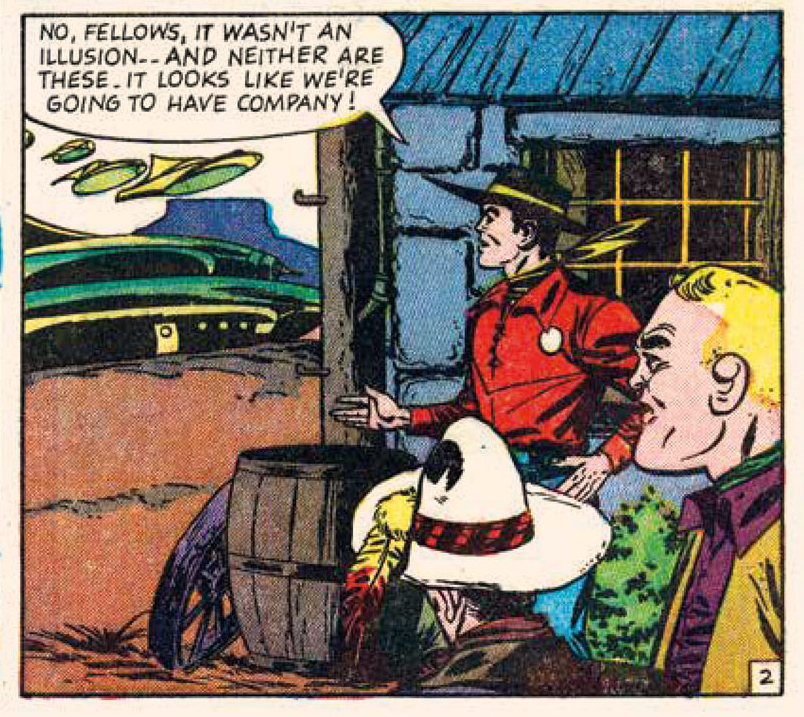
So it is perhaps not surprising that the still-popular Western genre, chasing after trends, would incorporate UFOs, space travel, and alien life in an attempt to hold fickle audiences’ attention. And it is even less surprising that comics—a business with low costs and quick turnaround compared to the movies—would be in a position to take advantage of the brief moment when cowboys and spacemen appeared to be on equal footing (at least with the allowance-spending children of America).

In 1952, based on a suggestion from Charlton co-publisher Ed Levy, the already-extant Cowboy Western Comics changed its title to Space Western Comics (a common practice: instead of starting a new series with issue number one, it was believed that high numbers were more attractive to newsstand buyers, as they suggested a successful track record). Walter P. Gibson, the prolific writer and magician who developed and ghost-wrote The Shadow for Street and Smith, among many other projects, wrote and edited the adventures of “Spurs” Jackson, a rancher and electrical engineer whose ranch becomes the center of zany outer space adventures. (Shades of Gene Autry!) Artists John Belfi and Stanley Glidden Campbell provided the illustrations. The book reverted to Cowboy Western after only six issues, but a couple of stories starring Jackson from later issues are included in Yoe’s volume for the sake of completeness, as are two space-themed stories from Buster Crabbe’s comic book. (Crabbe had, of course, played both Flash Gordon and Buck Rogers in addition to cowboy roles, so this made perfect sense.)
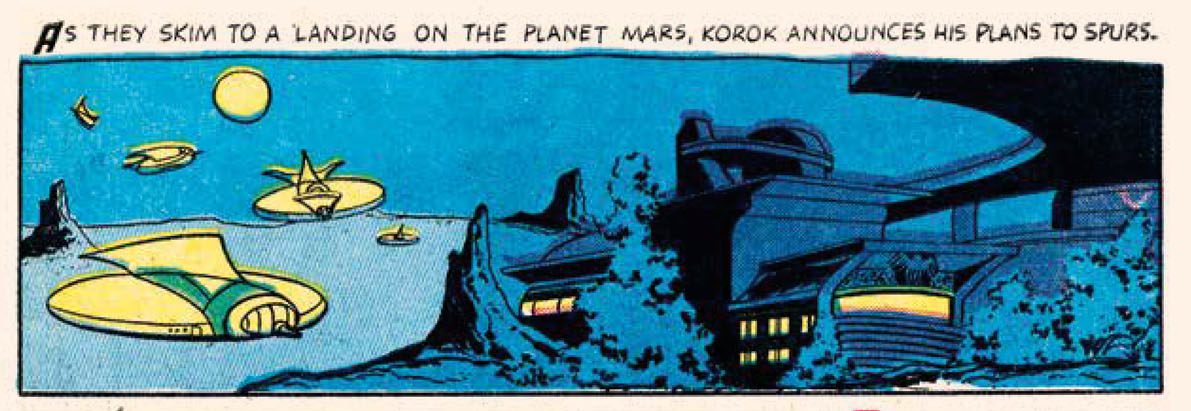
Space Western Comics begins with the Space Age already underway: flights to the moon have become routine, and a space station orbits the earth. “Spurs” Jackson is a character made to have adventures: unmarried and wealthy enough to occupy his free time inventing in his “secret lab,” the rancher-slash-engineer is charged with maintaining a 1000-foot-tall radar tower on his land (a government connection that serves to fuel several later stories), while leaving the day-to-day operations to his foreman, Hank Roper, and the Indian Strong Bow. The radar tower, which helps guide the lunar flights, attracts the attention of spaceships from Mars, who abduct the three men and take them to the red planet. There, they are presented as evidence that the Martians have conquered earth, a pretext that puts the scheming Korok on the throne of Mars instead of the rightful Queen Thula. This is classic space opera material straight out of Edgar Rice Burroughs, but the Western theme eventually pays off: Korok’s throne room is protected by a force field that prevents any metal from penetrating, so Martian weapons and the earthlings’ six-shooters are useless, but Jackson’s whip, Roper’s lariat, and Strong Bow’s bow and arrow, all non-metallic, win the day. For putting things right, Thula offers Jackson a position as her prime minister, but he can’t stay on Mars for long: ranching is an all-day job.

Some of the stories in this volume depend on the romance and exoticism of exploring other worlds, but in many of them the trouble is closer to home. Would-be alien invaders, Communist spies (sometimes disguised as aliens), criminal gangs, and even Nazis threaten the peace of the Bar-Z ranch. The desert makes for a compelling setting, full of isolated canyons and desolate flats, remote enough from civilization that no one in the cities would believe the stories but close to the Army’s testing ranges and bases so there are always plenty of troops and weapons ready to take charge of the surviving villains. As silly as the premises of these stories often are—rock men, plant men, and underground super-moles are among the aliens Jackson encounters—Gibson packs them with twists and clever problem-solving. Like a good engineer, “Spurs” Jackson out-thinks his opponents as much as he out-fights them (although he’s not above setting off an atomic bomb or two if that’s what it takes).

And frequently the twist is kept from the reader until the most dramatic moment, revealing that Jackson had his enemy’s number the whole time. In one of several text pieces, slavers from the planet Letos are foiled by a ship full of humanoid robots supplied by Jackson—“robots” who are actually humans in bullet-proof robot costumes. (Postal regulations required the text pages to secure favorable magazine rates; they were most often filled with editorials or letters columns, but short prose stories were not uncommon. The two-pagers Gibson provided for Space Western Comics are clever pulp miniatures, often written in the folksy voice of characters from around the Bar-Z. I think they would stand up well with the humorous sci-fi of Henry Kuttner and his contemporaries, should anyone think to mine comics’ text pages for anthologizing. Today, Alan Moore seems to be the only comics creator left with much affection for this archaic institution.)

Jackson isn’t the only savvy operator, either: Strong Bow is written as a more sophisticated and educated character than his Tonto-like dialogue might suggest. In more than one story, Indians appear to arrive from space, claiming to be heroes from the past or remnants of lost tribes, inviting the local Indians to overthrow the United States government. Of course, Strong Bow sees right through them, even if he might pretend to go along with the plan. (Although Space Western Comics predates the infamous Comics Code, it’s still as pro-government, pro-American, and pro-law and order as anything produced under the Code. The government and military in these stories are never less than righteous and upstanding, give or take a traitor or two in their midst, so nothing as subversive as suggesting Indian activists might have a point ever enters into the discussion.)

As I’ve alluded to in past articles, comics are a natural medium for the kind of mash-up represented by Space Western Comics: the visual shorthand that is a vital part of comics vocabulary lends itself to mixing and matching. Without attempting to catalog every example of the space Western from later comics, I’ll point to Terra-Man, a cowboy-themed villain from Superman comics. Abducted by space aliens as a child in the Old West, Terra-Man returned to earth with high-tech equivalents of the cowboy’s accessories and an alien winged horse. Current comics have embraced this kind of meta-referentiality with a vengeance, remixing popular iconographies of all kinds with kaleidoscopic variety. Sometimes it’s overwhelming, but I remind myself of being a comics reader in the 1980s, when the Big Two publishers seemed to be embarrassed by anything too “wacky,” and it was left to the independents to publish books like Marc Schultz’s Cadillacs and Dinosaurs (or for that matter, Teenage Mutant Ninja Turtles, as much a mash-up as a parody). I prefer the current acknowledgment of the medium’s silly roots, without the po-faced need to pretend that it’s all serious business.

By now, the proclamation that “comics are supposed to be FUN” is a tradition within comics that is up for grabs, just like every other past genre or practice that is ripe for revival, rehabilitation, or reinvention. Sometimes that means characters like Howard the Duck or Detective Chimp are given equal time with Iron Man or Wonder Woman; sometimes it means weaving disparate, contradictory threads into ambitious multi-layered story arcs that breathe new life into one-off concepts like the Green Team. Signifiers of “comics FUN” include (but are not limited to) ghosts, robots, dinosaurs, gorillas, and, of course, cowboys and rocket ships. Craig Yoe plays up how quaintly ridiculous the stories in Space Western Comics are, and is clear-eyed about the mercenary motives that led to its original creation. But he is equally up-front about how imaginative, breathlessly exciting, and yes, FUN, these stories are, and he has performed a valuable service by putting them together in a handsome and easily accessible package.

My 2023 in Books: Highlights

“If Blue were a scholar . . . she would catalogue, across all strands, a comprehensive study of the worlds in which Romeo and Juliet is a tragedy, and in which a comedy. It delights her, whenever visiting a new strand, to take in a performance not knowing how it will end.”

This Is How You Lose the Time War, Amal El-Mohtar and Max Gladstone

I don’t have a complete reading log to offer this year. I finally, after too long, upgraded to a new computer last summer, leaving behind the document I had started at the beginning of the year. That coincided with a severe reading drought over the summer and I didn’t keep up the log when I finally got back to reading in the fall. So it wasn’t the best year for reading books to begin with, but I do have some highlights worthy of mention.

Science Fiction

Two short science fiction novels made an impression on me. This Is How You Lose the Time War alternates chapters between the perspectives of its two leads, Red and Blue, champions of time- and space-spanning rival powers. The Agency, for whom Red works, represents a post-singularity technological future; the Garden, Blue’s home, is a biologically-engineered paradise. Neither force considers itself safe while the other exists, and the two empires battle across myriad parallel timelines, steering historical events toward their chosen future and cutting off the others’. In this context, Red and Blue are sworn enemies, but they respect each other at a distance like opponents across a chess board. Curious but unable to confront each other face to face, they leave cryptic messages for one another, and their similarities outnumber their differences. (It becomes clear that neither the Agency nor the Garden is the utopia it’s cracked up to be, and one of the prices of the war for Red and Blue is disillusionment.) This is an inventive and lyrical novel, full of poetic flights and extravagant with its language as the clandestine messages back and forth become overt love letters.

Landscape with Invisible Hand by M. T. Anderson is another short but evocative book. Each chapter illuminates a drawing or painting by the narrator, Adam, an aspiring teenage artist. But instead of the infinite worlds of Time War, Landscape focuses on characters with few choices and nowhere to go. In the years since an alien race called the vuvv arrived on Earth and offered membership in their “Interspecies Co-Prosperity Alliance” (red flag!), the gap between the haves and have-nots has grown even larger, and those left behind live in the shadows of the vuvv’s pollution-generating machinery, fighting over jobs in soup kitchens. Adam and his girlfriend Chloe livestream idyllic 1950s-style dates to an audience of fascinated vuvv subscribers, even after they begin to hate each other, an illustration of the way in which the vuvv presence distorts their human “partners,” turning them into caricatures of themselves to satisfy the economic demands of their colonizers. If many science fiction dystopias ask the question “What if white, middle-class people were treated the way minorities and the poor are routinely treated now?”, Landscape with Invisible Hand asks “What if modern, Western society went through the kind of economic and cultural colonization that indigenous people around the world have experienced?”

Another book on a similar theme is The True Meaning of Smekday by Adam Rex (the basis for the animated movie Home), which centers on an invading race called the Boov magnanimously herding all of America’s citizens into a single state reserved just for them (first Florida, but then, after the Boov decide they like Florida, Arizona). Rex is a versatile cartoonist and illustrator as well as a writer, so several sequences are rendered in comics format, purportedly drawn by the Boov main character to explain his world’s history and character. This one is written for a younger audience so it’s fairly whimsical and light, but it’s witty and entertaining and full of asides on human society as seen from an outsider’s perspective in the best science fiction tradition.

Axiom’s End by Lindsay Ellis is a much more grounded novel intended for adults, but it shares with The True Meaning of Smekday a focus on the difficulties of communication with different forms of intelligence and the impossibility of truly knowing another’s mind. Ellis has written that the idea for this novel (the first volume of a trilogy, still underway) sprang from her interest in the Transformers cartoon series, a kernel still present in the friendship between a human woman and an alien being who represents one side in a galactic war. Intriguingly, at least for me, the cohort of aliens who secretly made contact with the U.S. government in the 1970s are identified with Esperanto code names, a relic of the idealism and nerdiness of the group charged with handling them. Linguistic analysis and the ways in which language can channel thought are front and center, but within an action-packed thriller that doesn’t shy away from the gee-whiz tropes popularly associated with science fiction.

Romance

Romance as a genre is, in my opinion, at least partly a form of pulp. Now, before anyone gets defensive, and especially if this is your first time visiting Medleyana and you’re not familiar with my previous writings on pulp, that’s not meant as an insult or a comment on the genre’s readers. But the fact remains that, like the murder mystery, romance is one of the few genres that’s defined by its plot mechanics rather than theme or setting (do not bring a tragic love story without a “happily ever after” to a romance reader and call it a romance). There are established formulas and story beats (especially in the current obsession with tropes and hooks), and, however beautifully written, an emphasis on keeping the story rolling. Many of the romance novelists I explored in the last year were continuing in the tradition of Jane Austen (especially Georgette Heyer, the true parent of “Regency romance” as a publishing genre, and whose work I continued to explore), but there are as many subgenres of romance as there are genres outside it. Paranormal romance in particular overlaps with the fantasy, science fiction and horror that I was already reading.

I particularly enjoyed The Emperor’s New Clothes by Victoria Alexander, set in a small Wyoming town on the cusp of the twentieth century. An itinerant actress, gambler and con woman is mistaken for a visiting English Countess, and with the Countess’ trunks of clothing at her disposal, decides to make the best of it. The only thing confounding her plan to sell her bogus title for cash and move on is the Oxford-educated Mayor, the adopted son of the wealthy rancher who effectively runs things. Will the sparks of attraction between them convince her to go straight, and can he love her for who she is, not who she pretends to be? Well, see my comments on plotting in the paragraph above.

Comics

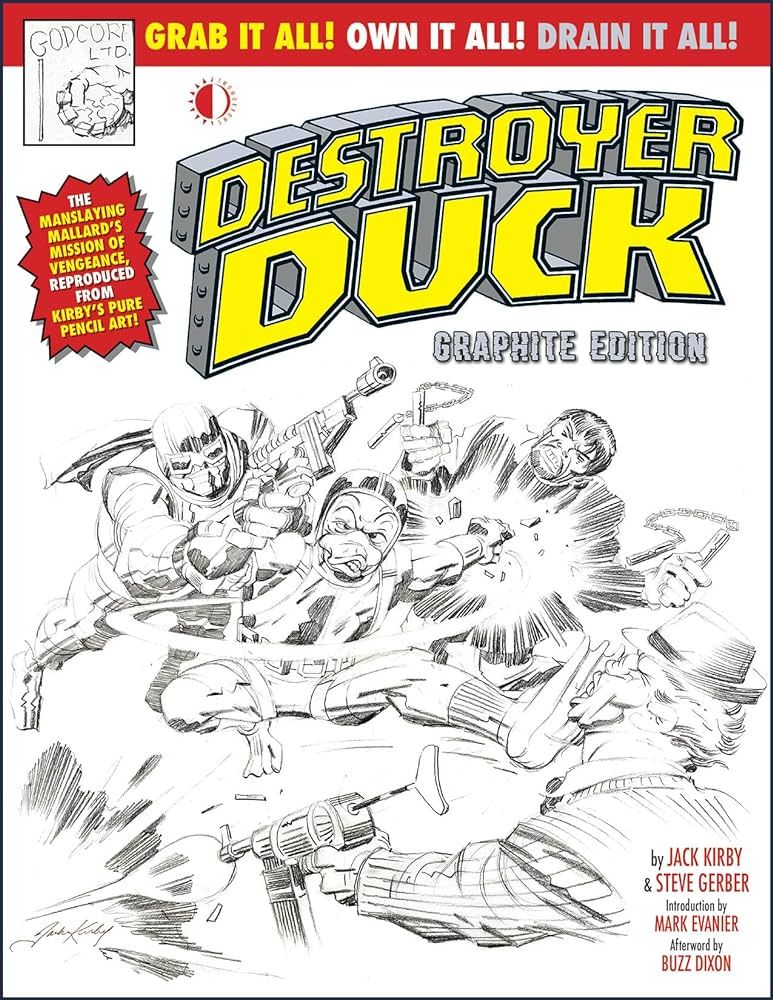
Although I continued to collect and read comics in the past year, I fell behind and didn’t match the amount I read in 2022. The most notable book I read in this format was Destroyer Duck: Graphite Edition, a trade collection of a series from the early 1980s. Destroyer Duck was an unusual collaboration between writer Steve Gerber, then fighting with Marvel over ownership of his creation Howard the Duck, and artist Jack Kirby, who had his own reasons to feel mistreated by Marvel. As such, the adventures of Duke “Destroyer” Duck, a macho, capable John Rambo among talking waterfowl, are marked by relentless action that would have been out of character for Howard’s acerbic social commentary and self-examination (read: navel-gazing). Of course, this is Gerber, so there are still plenty of axes to grind as Destroyer avenges his unnamed friend, “the little guy,” who was taken in, exploited, and abandoned by the sprawling Godcorp, an obvious stand-in for Marvel with characters based on editors or fellow artists whom Gerber felt mistreated him or picked the wrong side. (If that’s what Gerber thought of Marvel then, I can only imagine what he would make of its current Disney-owned incarnation and the dominance of the MCU.) The first issue of Destroyer Duck was published by independent Eclipse Comics as a fund-raiser for Gerber’s legal bills and continued as an ongoing series; the Graphite Edition collects the first five issues, the sum of Gerber’s and Kirby’s collaboration. (In the vein of currently popular “artist’s editions,” this book is a reproduction of Kirby’s original pencil art rather than a full reprint of the finished color comics, but knowing that readers like me might be encountering this material for the first time, they’ve kindly included word balloons with dialogue, which were usually added during the inking process.) A wealth of commentary and supplementary material rounds out the volume.

I read other stuff during the year as well, but I’ve run long enough and it’s already the second week of January. I have more year-end articles to get to, not to mention Ninjanuary and Vintage Science Fiction Month! Perhaps I’ll get to those before July. In the meantime, thanks for reading!

Ten Years of Medleyana

Yes, that’s right. Ten years ago this month, I launched Medleyana, and it’s still going—well, maybe not going strong, but it’s going. This year in particular has been pretty fallow, and I couldn’t blame anyone for thinking that I’d abandoned it for good. All I can say is that I’ve been occupied with work and other personal projects that have taken up my time, but now I’m back. The approach of the spooky season in October usually gives me something to write about, so at a minimum you can expect a Halloween wrap-up at the end of the month.

But for now, I feel justified in taking a small victory lap and indulging in something I don’t do very often: repackaging old articles in new lists. I’ve gone through my posts and chosen ten of my favorites, one from each year of Medleyana’s existence (counting a year as beginning in September—you can take the academic out of the academy, but . . . ). Some of these are articles I still post links to when I feel compelled to summarize my viewpoint on a particular subject, and others are deep dives into my own personal interests. If you’ve been following me since the beginning, thank you, and I hope these are pleasant reminders of where we came from. If you’re new to Medleyana, consider this a sampler, all of them examples of what I mean by the blog’s slogan, “In praise of the eclectic.”

Everybody’s Looking for Some Action (November 2013)

When I began Medleyana, I started out by writing connected series and multi-subject articles in which I tried to get out ideas that had long occupied me, but even in the first year I started to get the hang of writing focused essays on single subjects. Since this article on collecting comic books was posted, I’ve become more serious about building and organizing my collection, and I ended up writing about comics a fair amount. But I’m still not planning on funding my retirement with them.

In the Hall of Mirrors with Captain Carrot and His Amazing Zoo Crew (October 2014)

This one combines several themes that I returned to over the years: review, commentary, and a bit of history as I look at an idiosyncratic “funny animal” comic book series.

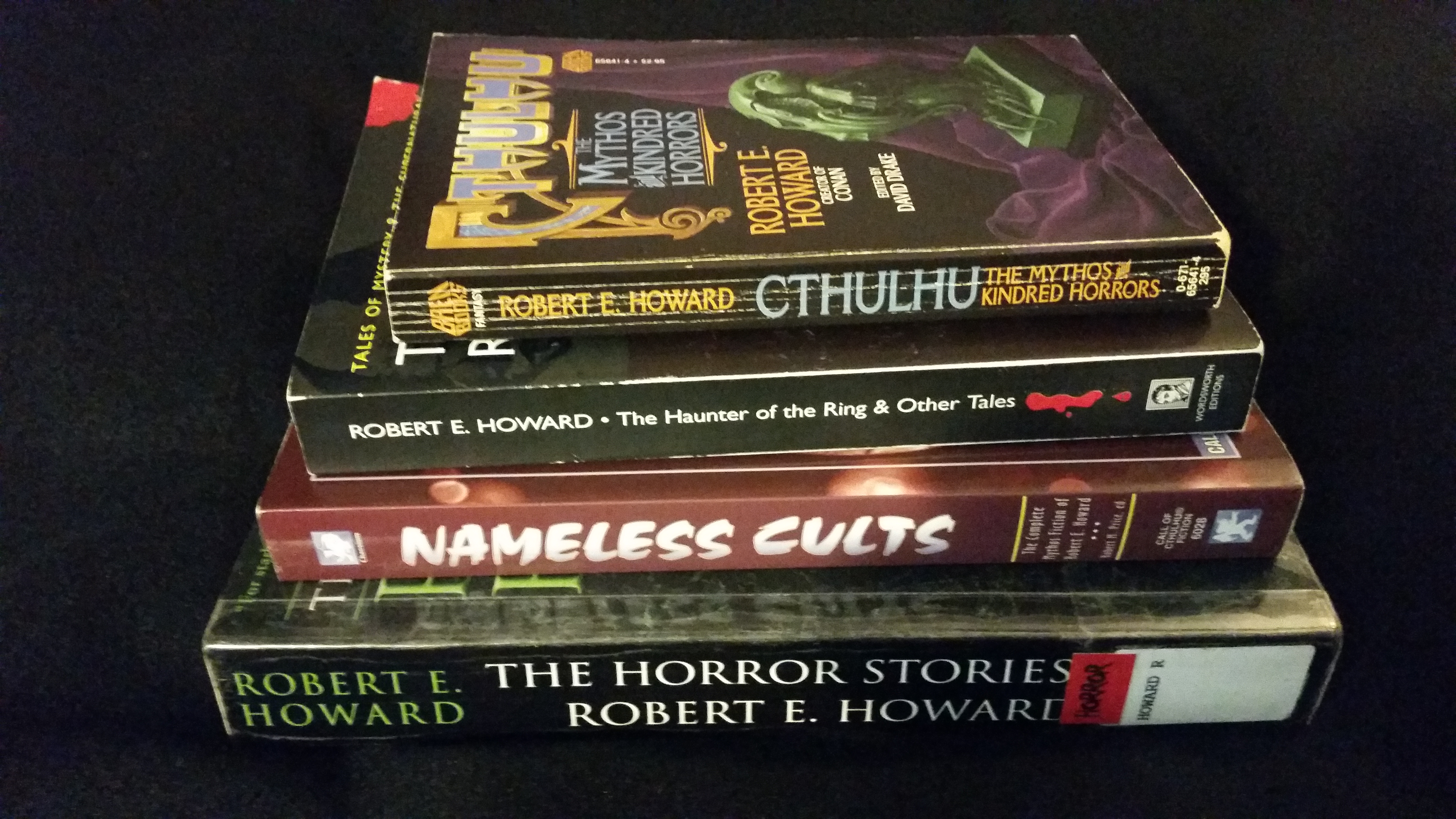
The Short Horrors of Robert E. Howard (October 2015)

The history of the pulps, both the magazines and the writers, is another subject I delved into quite a bit, and in this essay I investigated the contents of several horror-focused short story collections by the creator of Conan the Barbarian.

Remake, Revisited (January 2017)

I saw Indiana Jones and the Dial of Destiny earlier this summer, and I enjoyed it. The de-aging technology that made Harrison Ford look younger for a prologue set during World War II has continued to improve, but I couldn’t help wondering: if this technology had been available when they made Indiana Jones and the Last Crusade in 1989, would we have had the wonderful prologue with River Phoenix as young Indy?

Written in response to Rogue One, with its CGI-generated Peter Cushing and de-aged Carrie Fisher, this article has only become more relevant since. As of this writing, so-called “AI” threatens to upend every creative industry, and Hollywood writers and actors are striking, in part against the prospect of being replaced or devalued by chatbots and infinitely pliable computer simulations. The increased churn of low-quality streaming content and never-ending franchise service has reached a point of unsustainability, and audiences are already beginning to turn away. I stand by the assertion made in this article that CGI tools can be used responsibly, but they are just that, tools: algorithms don’t have original ideas, they don’t have desires or viewpoints to express, and they aren’t going to live up to producers’ fantasies of steady, guaranteed revenue forever.

Kamandi Challenge no. 9 (September 2017)

My interest in Jack Kirby’s science fiction comic Kamandi is another subject I’ve written about several times, and in 2017, Kirby’s centenary year, I posted issue-by-issue reviews of Kamandi Challenge, a tribute series in which rotating teams of artists and writers took on the character and his world, setting up a cliffhanger at the end of each issue for the next team to unravel. Issue no. 9 was a fascinating standalone story that explored some of Kamandi’s psychology and allowed me to express my thoughts on Jack Kirby’s qualities as a storyteller.

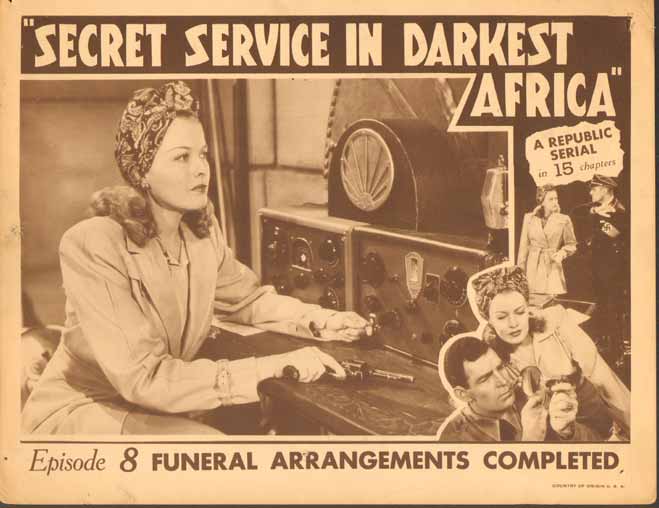
Fates Worse Than Death: Secret Service in Darkest Africa (September 2019)

A large number of my posts on Medleyana have been reviews of serials from the silent film era up to the 1950s, when the formula of narrative by weekly installment migrated to television. Although I was mostly interested in exploring the two-fisted adventure aesthetic (shared by the pulp magazines and Golden Age comics) at first, I learned a lot about plotting and setting up story conflicts with stakes, and going through each serial to take screenshots for illustrative purposes ended up being an education in composition and blocking. This review is typical, and if you enjoy it, there’s much more where it came from.

Color Out of Space: Horror Comes Home (January 2020)

Combining my interests in film, the pulps, and horror, this review gets at some of the challenges we face when we attempt to “separate the art from the artist.”

Thoughts on Electric Light Orchestra’s “Twilight” (March 2021)

When I began Medleyana, I thought I would primarily write about music. This article is a bit of a throwback in that it combines a couple of topics and bounces them off each other, but it’s also a good indicator of my increased interest in anime over the last decade as I examine the seminal fan film Daicon IV and its legacy.

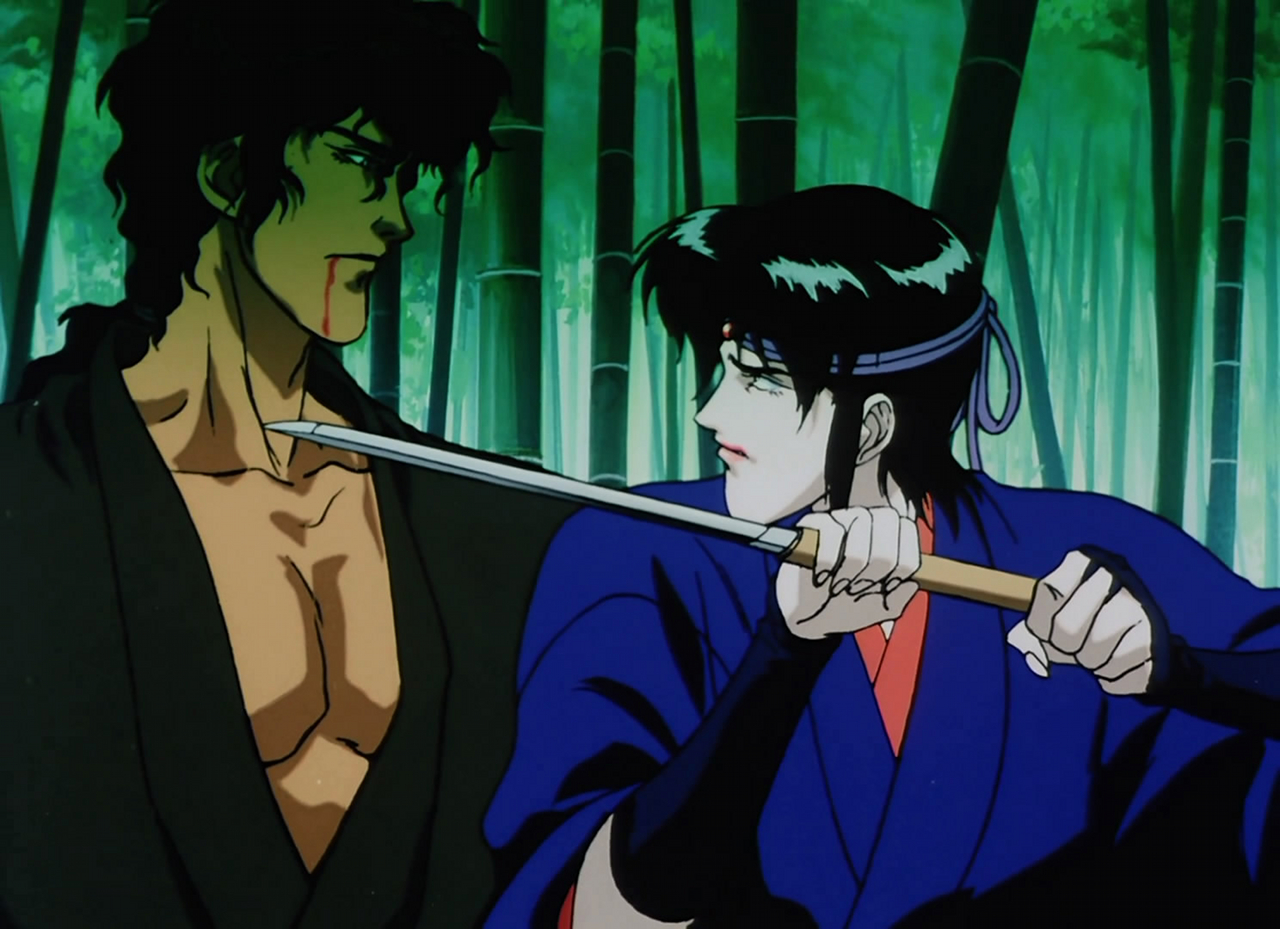
Revenge of the Ninjanuary: Ninja Scroll (January 2022)

Speaking of anime, this review is an example of that interest as well as representing my growing interest in martial arts and ninja media.

Halloween on a Monday: Spooktober 2022 (October 2022)

From the beginning, I’ve celebrated Halloween on the blog, culminating with a month’s-end list of spooky movies I watched and other activities I participated in. Last year’s wrap-up included meditations on the passage of time, mortality, and the reasons we like to scare ourselves, a theme that Medleyana ended up exploring much more than I expected when I began writing. I had just turned 40 when I started this blog, and now I’m 50. (It’s been a year since my wife was treated for the cancer I mention in this post, and she’s doing well, thanks for asking.) The last decade has been one of exploring interests that had been set aside because of school and work, including many new discoveries that hadn’t even been on my radar before I started writing. (It’s a good thing I had such an open-ended format from the beginning.) If I haven’t accomplished everything I set out to do, I’ve had other opportunities and made new friends that I didn’t expect. The very landscape of the internet has changed since I started—it’s mostly worse—but I’m proud of what I’ve created. It’s been a journey. Thank you for coming along with me.

My 2022 in Books

Earlier this year, my son was watching me put comic books in protective bags and file them in a long box and he said, “Do you actually read comics or do you just collect them?” First of all, how dare you. Second . . . I’m working on it. I did spend more time on comics this year than some past years: I finally got them all in one place (some had been at my parents’ house since I graduated from high school) and put them in bags and boxes instead of random piles. The next step is to organize them and get series together so I know what I have and what holes I have to fill, a process already partially started as I attended a few comics conventions this year and found some new comics shops in town whose dollar bins I had to check out. Eventually, I would like to cull duplicate copies and other unwanted books and get my collection down to a manageable size (I don’t have an exact count, but I filled up twelve long boxes).

That, and just being busier, undoubtedly skewed my reading this year: I don’t keep track of every single issue I read, but even the list below includes a greater number of graphic novels and comics collections than previous years (marked with an asterisk). I actually prefer bound books for their convenience of access and storage, so my single-issue collecting has shifted toward series that are unlikely to be reprinted due to licensing issues (a large number of movie and toy tie-ins are in that situation).

Beyond comics, the books I read this year were mostly fiction, and a good portion of that was genre reading, continuing the “pulp” theme from last year. However, in addition to the usual science fiction and horror, I read more crime/mystery and romance (including an unusual sci-fi romance); concentrating on those areas led to me reading more female authors than I have in the past as well. A few longer novels were in the mix as well, but without much theme or connection; there were few series guiding my reading this year, and I guess it shows in my list.

January

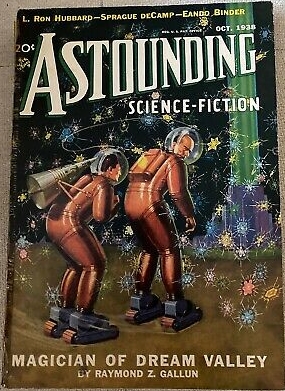
The Best of Raymond Z. Gallun (for Vintage Science Fiction Month)

*Batman: The Jiro Kuwata Batmanga Volume 3, Jiro Kuwata

Space, Time and Nathaniel, Brian Aldiss

The Girl with the Deep Blue Eyes, Lawrence Block

February

Get Shorty, Elmore Leonard

The Tetris Effect: The Game That Hypnotized the World, Dan Ackerman

The Starlight Barking, Dodie Smith (the bizarre sequel to Smith’s better-known The Hundred and One Dalmations)

*Howard the Duck Vol. 2: Good Night, and Good Duck, Chip Zdarsky, Joe Quinones, et al

I Know What I Saw: Modern-Day Encounters with Monsters of New Urban Legend and Ancient Lore, Linda S. Godfrey

*Harvey Kurtzman’s Jungle Book

Once Upon a Time in Hollywood, Quentin Tarantino

March

The Nice Guys, Charles Ardai, based on a screenplay by Shane Black and Anthony Bagarozzi

It’s in His Kiss, Julia Quinn

Ben-Hur: A Tale of the Christ, Lew Wallace

April

*Archie Volume One, Mark Waid, Fiona Staples, et al

Treasure Island, Robert Louis Stevenson

*Jughead Volume One, Chip Zdarsky, Erica Henderson, et al

Fear of Flying, Erica Jong

*Kaiju No. 8 Volume 1, Naoya Matsumoto

Sweet Starfire, Jayne Ann Krentz

This is the sci-fi romance mentioned above. It’s a credible example of both genres, with a real Han-and-Leia dynamic between its rough-edged space pilot and disciplined aristocrat.

May

The Surreal Life of Leonora Carrington, Joanna Moorhead

*Galaxy Angel Vol. 2, Kanan

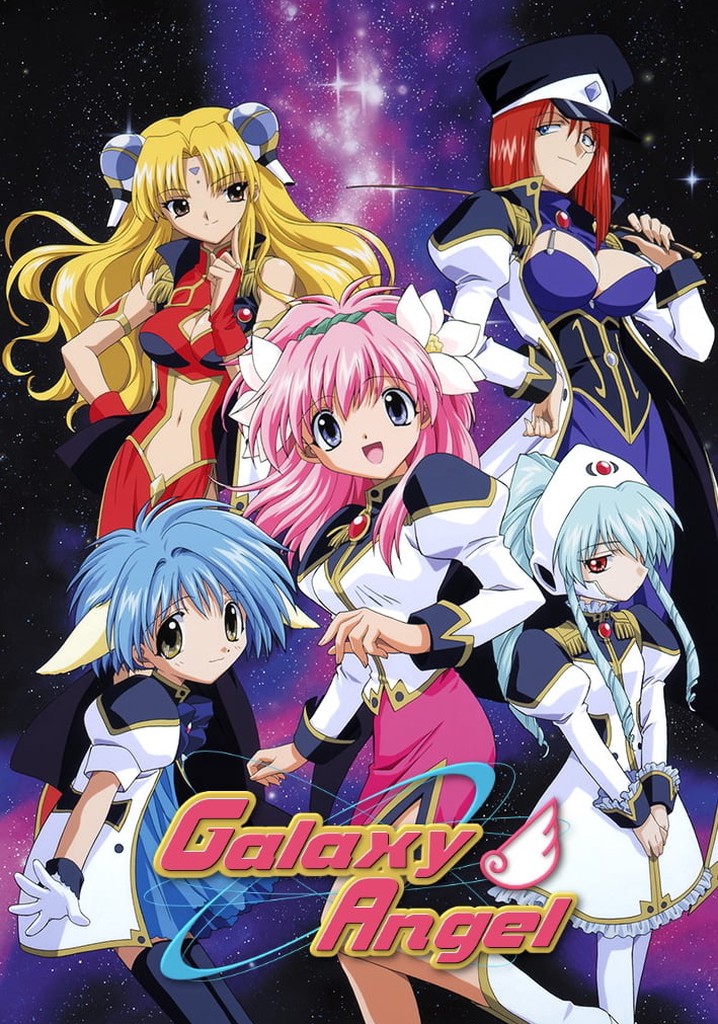
The Galaxy Angel TV series was a pleasant discovery for me this year, but the show exists in a separate, looser continuity from the video games or manga that launched the property. I can’t say the manga blew me away.

June

Your Body Is Not Your Body, ed. Alex Woodroe with Matt Blairstone

Subtitled “A New Weird Horror Anthology to Benefit Trans Youth in Texas,” this includes work by non-gender-conforming authors and features themes of transformation, identity, and body horror.

The Beguiled, Thomas Cullinan

*Super Mario Adventures, Kentaro Takekuma and Charlie Nozawa

*Mr. Boop, Alec Robbins et al (the hardback collection of the biographical webcomic, ripping the veil from Robbins’ controversial marriage in real life to cartoon icon Betty Boop)

Of course

July

Eavesdropping on Jane Austen’s England, Roy & Lesley Adkins

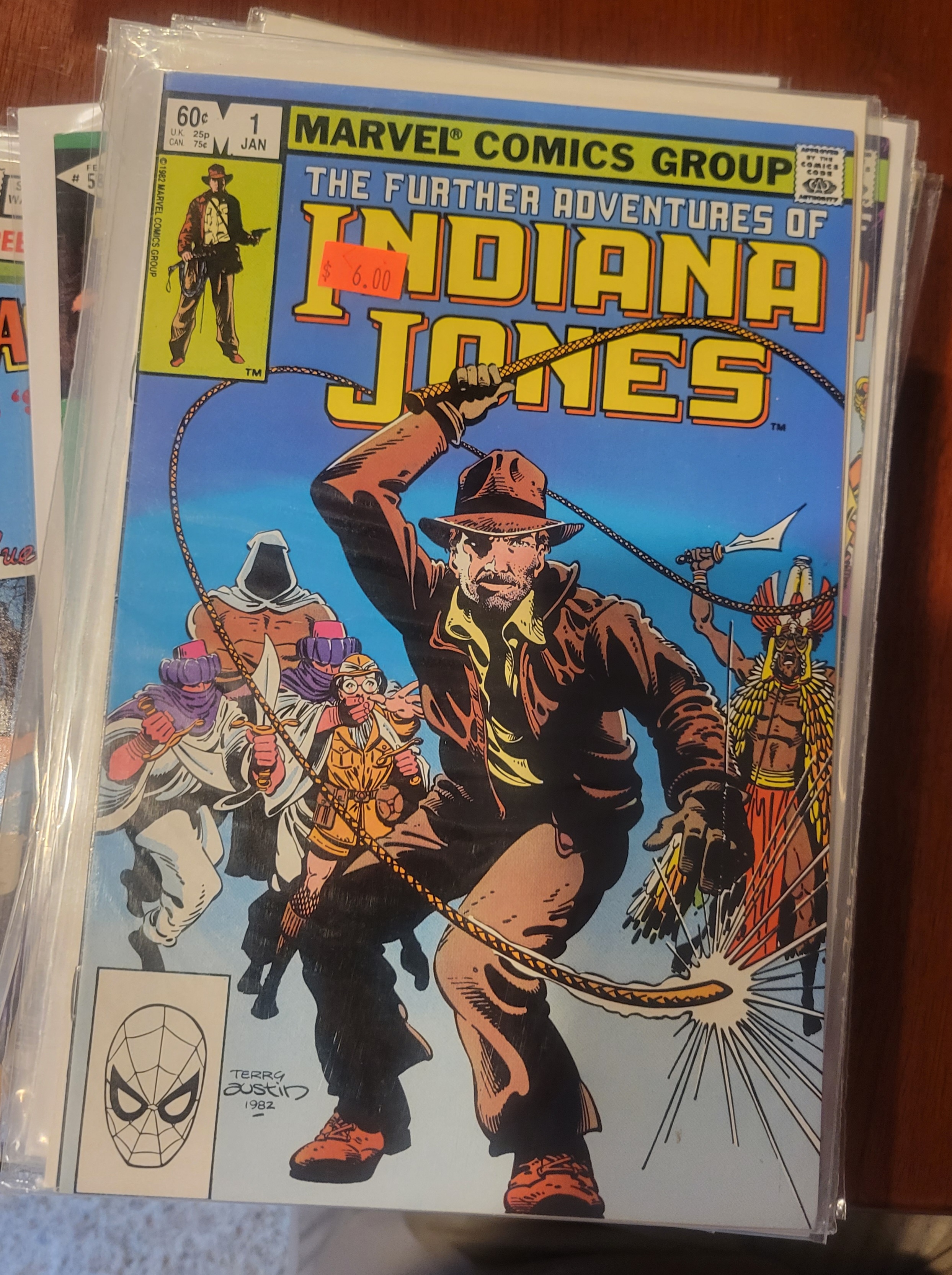
Raiders of the Lost Ark, Campbell Black, Adapted from the screenplay by Lawrence Kasdan, Based on a story by George Lucas and Philip Kaufman

*Star Wars: A Long Time Ago . . . Volume 1: Doomworld, Roy Thomas, Howard Chaykin, et al

*Star Wars: A Long Time Ago . . . Volume 2: Dark Encounters, Archie Goodwin, Carmine Infantino, et al

August

*Star Wars: A Long Time Ago . . . Volume 3: Resurrection of Evil, Archie Goodwin, Al Williamson, et al

I’ve written before about how formative Marvel’s Star Wars series was for my love of comics, so most of this was a reread. It still holds up.

The Gutter and the Grave, Ed McBain

Leave It to Cleavage, Wendy Wax

Cold Nose, Warm Heart, Mara Wells

September

The Dain Curse, Dashiell Hammett

Life and Death of the Wicked Lady Skelton, Magdalen King-Hall

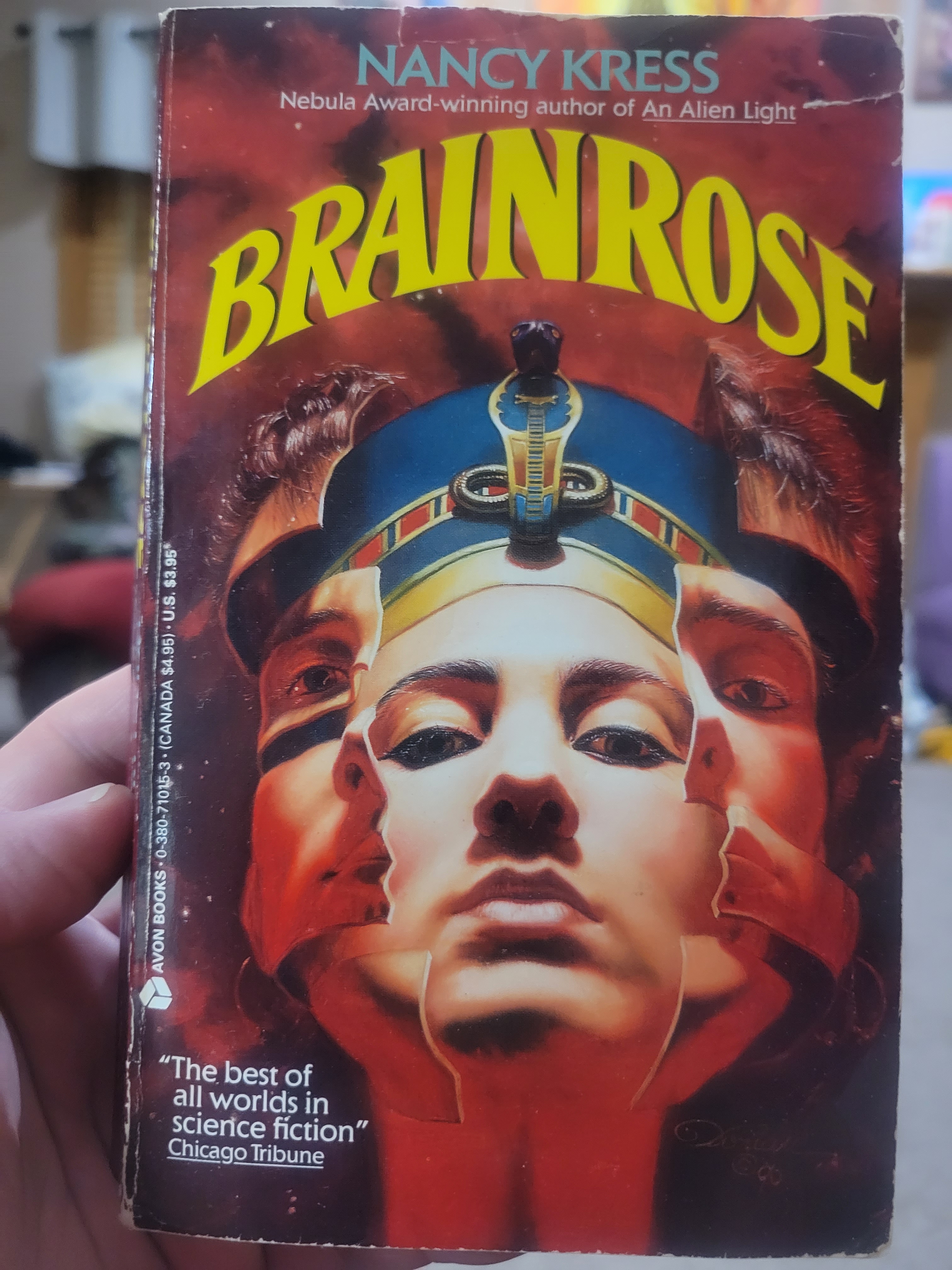
Brain Rose, Nancy Kress

A very interesting science fiction novel, published in 1990 but set in the far-off year 2022. The premise is a surgical procedure that unlocks memories of past lives in those who undergo it, and all the complications that arise from that, but there are a number of other predictions around the edges that make it interesting to look at from this vantage in time.

*Archie Volume Two, Mark Waid, Veronica Fish, et al

October

Han Solo at Stars’ End, Brian Daley

Han Solo’s Revenge, Brian Daley

Han Solo and the Lost Legacy, Brian Daley

*Under 17: 20 Cineful Comix, Gary Smith

I don’t know that Smith thinks of Under 17 as a webcomic, but I did read most of it on Facebook before ordering one of his occasional print editions. Under 17—as in “No one under 17 admitted without an adult”—focuses on Smith’s childhood and adolescent fascination with movies, and his attempts to see, by any means necessary, the forbidden films that fired his imagination. Through the hindsight of adulthood, these vignettes are by turns hilarious, wry, and poignant.

*In a Glass Grotesquely, Richard Sala

Sala passed away in 2020; this is a book from later in his career, ostensibly about the Fantomas-like master criminal Super-Enigmatix, but also something of a jeremiad, skewering the government, social media, modern superhero franchises, self-dramatizing narcissists, and (of course) phonies like you and me. It’s an unusually personal statement from the artist best known for his arch, artful remixes of pulp and noir imagery.

November

Bimbos of the Death Sun, Sharyn McCrumb

Zombies of the Gene Pool, Sharyn McCrumb

Both of these murder mysteries feature Jay Omega, engineering professor-turned science fiction author, and take place within the world of sci-fi fandom. They’re also both critical of the fan impulse and lives wasted in fantasy—apparently Bimbos caused a stir in the 1980s, but it’s even more jarring in the face of the current “poptimistic” celebration of fandom in popular culture—but Zombies was the stronger of the two, with characters who are at least deeper than cartoon “nerd” stereotypes.

Nightmare Alley, William Lindsay Gresham

I loved the 1947 movie version last year and caught up with Guillermo Del Toro’s adaptation at the beginning of this year—both versions have points to recommend—so it was inevitable that I would also read the original novel, and whadya know, it was great.

December

Bird Box, Josh Malerman

I haven’t seen the movie, but this was a pretty good read.

What We Talk About When We Talk About Love, Raymond Carver

*Jughead Volume Two, Chip Zdarsky, Ryan North, Derek Charm, et al

The Black Moth, Georgette Heyer

*graphic novel or comics collection

And that’s it! I’ve fallen behind on blogging, so my end-of-year movie wrap-up will arrive some time next week (I hope!). In the mean time, Happy New Year and have a great 2023! Thanks for reading!

New Fiction: “The Metal Menace” in Pulp Adventures

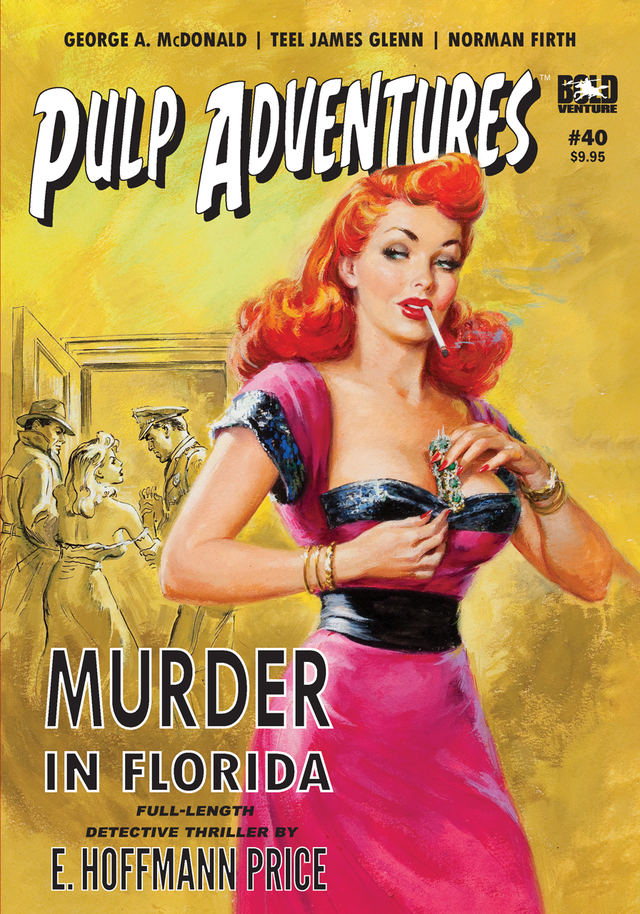
I’m very pleased to announce that my short story “The Metal Menace” is included in the latest issue of Pulp Adventures (#40), available now! This story is in a retro space opera style with a twist, told from the point of view of two guards, Vilu and Okmun, in the service of the interplanetary Emperor Ayazo: their latest conquest, Earth, has provided the technology for Ayazo to build a mechanical man, a development that has led the guards to question their ruler for the first time. In an unlikely alliance, the Emperor’s Earthling prisoners, Rex Hazard and scientist Doris Walden, may be the guards’ last hope to avoid obsolescence!

Like “Queen Aura’s Address to the People of Planet Mongo Upon Her Coronation,” “The Metal Menace” was inspired by my deep dive into classic science fiction serials a few years back. (Vilu and Okmun are named in honor of Wheeler Oakman, the serial-era character actor who specialized in playing henchmen and heavies.) As an affectionate pastiche, I couldn’t have found a better home for it than Pulp Adventures, which combines reprinted classic stories from the pulps and new stories in the same vein. I also love the interior illustration by Aleena Valentine-Lopez, seen below. The whole issue, edited by Audrey Parente, is beautifully put together, and I’m proud to be a part of it. I look forward to reading the other stories and articles.

Pulp Adventures #40 is available through your favorite bookseller, or you can order it directly from Bold Venture Press.

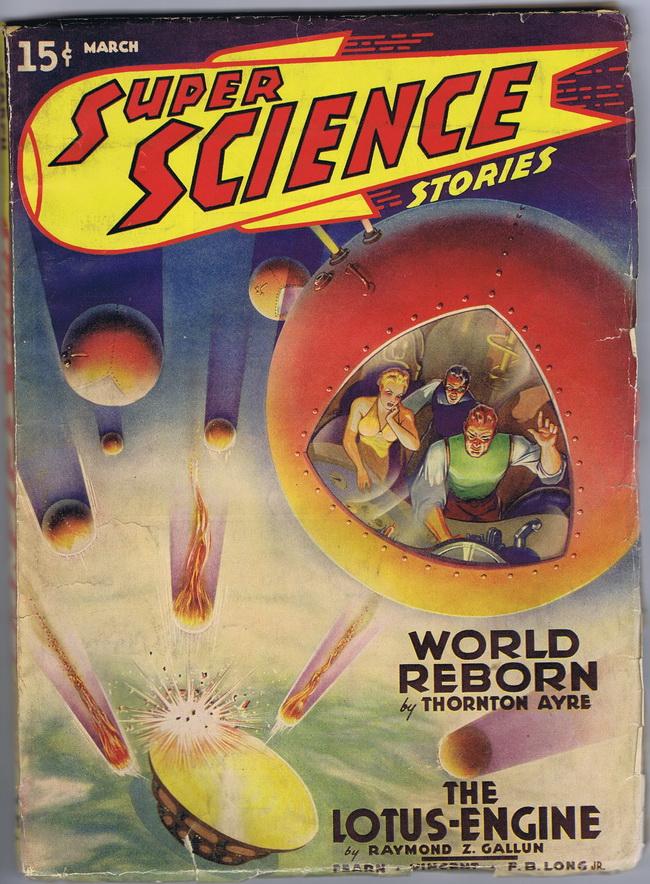
The Martian Chronic: The Best of Raymond Z. Gallun

January is Vintage Science Fiction Month, so join me for a look at a Golden-Age “quiet revolutionary.”

H. R. Van Dongen’s cover art illustrates “The Shadow of the Veil.”

Obscurity isn’t what it used to be: with the internet, there is rarely such thing as a completely new find, and it’s only a matter of a few keystrokes to connect with someone who already knows all about whatever it is that you’ve just discovered. Of course, it’s true that there’s always someone smarter or more informed out there, but it’s easier than ever for hidden gems to rise to the surface where everyone can see them. I’m not sure how hidden Raymond Z. Gallun (rhymes with “balloon”) really was, or is: all I know is that I had never heard of him, or at least didn’t remember reading anything by him before discovering the “Best of” volume edited by J. J. Pierce and published by Del Rey as part of their extensive series of science fiction reprints. But even in 1978, Pierce described Gallun as neglected and underrecognized, even as some of his stories continued to be anthologized, and as Gallun had published a novel, The Eden Cycle, only a few years before. He does not seem to have had a resurgence since his death in 1994.

Nevertheless, Gallun was part of the pioneering generation of science fiction writers in the 1930s and ‘40s who helped to elevate the genre from crude, cliché-ridden pulp to the thoughtful “literature of ideas” we celebrate when looking back, and if many of his stories still have elements of pulp, I’ll hardly complain. The later stories in this book, from the ‘40s and early ‘50s, lean more toward character study, but my favorites balance the demands of the characters’ inner lives with external circumstances that push them toward decisive action. (To be fair, I’m only getting a narrow view of the man’s work—thirteen stories out of more than eighty, and he also produced a few novels which I haven’t read—so I’ll resist the urge to make sweeping judgments, even if I take Pierce’s word that this book really represents Gallun’s best.)

Going by these selections, Gallun was fascinated by the processes of life and death on a long-term cosmic scale. His vision of a dying Mars, with only a thin, cold atmosphere and marked by the ruins of a long-extinct civilization, is one he shared with many other writers of his day, influenced by the ideas of Schiaparelli and Lowell. (Amusingly, Gallun suggests in his afterword that he may have been inspired by a youthful job stoking the furnace at a hemp mill, surrounded by clouds of smoke from burning, cast-off cannabis plants.) However, spread across many of Gallun’s stories is the thought that Mars is only the latest planet in the solar system to approach its appointed end and Earth, too, will one day share such a fate.

Where Gallun stands out is the rigor with which he works out the details of his alien ecologies, whether they be based on other planets or on Earth in some future time or inaccessible place. “Davy Jones’s Ambassador” takes seriously the question of a deep underwater civilization, with Gallun’s solution being the careful breeding of specialized animals to provide food, structures, artifacts, and even electrical currents in an environment without fire. Gallun’s Mars, with its ancient ruins of an extinct, semi-insectoid race, destroyed long ago by war and/or climate change, is superficially similar to other treatments of the planet, but Gallun has little interest in Burroughs-style derring-do or Bradbury’s sense of fable; his is an anthropologist’s and ecologist’s view (the immensely satisfying “The Shadow of the Veil” is almost a sword-and-sorcery tale, told from the perspective of an alien “barbarian,” but its references to magic and gods are those of a pre-scientific being with no concept of astronomy or space travel). “Seeds of the Dusk” describes semi-intelligent plants, evolved to store oxygen in capsules and directing their own evolution for adapting to different environments, including spreading to other worlds.

The notion of intelligent life spreading seeds throughout the universe appears in metaphorical ways as well: “Godson of Almarlu,” the longest story in the book, features a long-dead civilization that once thrived on the planet which became the asteroid belt upon its disintegration. Knowing that the heavy, neutronium-cored comet that destroyed their planet would one day return to the solar system, threatening the life that they had spread to Earth in the prehistoric past, these ancients created a computer-like device to implant in one human’s mind the information necessary to build a sort of astral bridge so a small part of the planet’s population could escape to the moon (again, thought to have a thin atmosphere in those days). But while this 1936 story brings out the biggest guns—planetary destruction, cosmic forces using humanity as pawns—it also shows how Gallun’s science fiction was relatively hard, at least for its time. This is world-wrecking closer to Fred Hoyle than Edmond Hamilton. Based on knowledge of other planets as they were understood at the time, “Godson” even predicted the existence of neutron stars, as Gallun speculated that the newly-discovered element neutronium would, if concentrated, be heavy enough to disrupt the gravitational fields of planets unfortunate enough to be nearby. The mind-altering forces of the ancients and the nature of the energy they use to transport humanity to the moon are, of course, not as easy to explain, but Gallun smartly leaves such issues as mysteries.

Finally, Gallun was an important example in creating alien intelligence that was truly alien, making its different point of view a critical part of the story. His early life as a wanderer, traveling and working all over the world, surely broadened his perspective beyond the typical pulp writer of the ‘30s. Many of his aliens are sympathetic, and even when opposed to humanity, the aliens aren’t all monstrous invaders: in fact, it is often humans, continuing their manifest destiny by spreading through the solar system, that take on the role of colonizers, with the “natives” simply fighting back. (Still, Gallun wasn’t above creating alien antagonists when the story called for it: 1938’s “Hotel Cosmos” includes a particularly nasty one.) Along with Stanley Weinbaum’s “A Martian Odyssey,” Gallun’s “Old Faithful” from 1934 is considered a landmark in logically developing a sympathetic alien. The title character is a Martian astronomer, living in solitude and at odds with his pragmatic, unimaginative people, who communicates with observers on Earth before deciding to take the ultimate risk to cement this long-distance friendship. The story feels like a rebuff to H. G. Wells’s The War of the Worlds: instead of the puffs of smoke on the surface of the red planet being ominous portents of invasion, they are the sign of a kindred intelligence, with which communication, while difficult, is possible.

Speaking of Wells, Gallun’s work can be seen as a continuation of that author’s ideas on the cycles of evolution and extinction. The idea that humans are subject to the same forces as the dinosaurs and must adapt or die is Wells’s great bequest to the authors who followed him, and may in fact be the single greatest insight science fiction has to offer. But as Gallun matured and turned away from simple end-of-the-world scenarios, he realized that individuals face the same choice in microcosm. His 1951 story “The Restless Tide” makes that case directly, with a long-married couple whose lives swing between the indolent comfort of post-scarcity life on earth and the hard rigors of space colonization; neither life is satisfying for long, and it is man’s fate to always alternate between extremes. The futuristic medical and technological advances that increase the characters’ lifespans and make going to space an option mark the story as science fiction, but the central couple could just as easily be a mid-twentieth-century family deciding to leave the cozy suburbs and go back into missionary work. The story’s point is that the motivations and conflicts present are timeless and will continue for as long as there are humans.

My 2021 in Books

The key word in my reading this year was “pulp”: not to say I didn’t read some “serious” literature, but for the most part I was looking for the quick hit, and that meant tearing through a lot of genre paperbacks—adventure, horror, and mystery—especially once summer started and I found myself doing a lot of waiting for kids at music lessons, doctors’ appointments, and the like. I guess you could say that this year I rediscovered the pleasure of skimming, of not having to read every word as closely as if I were writing a graduate thesis on it. Fiction often takes me longer to read than non-fiction because of the labor of imagining every detail as the author describes it, but, welp, not this year.

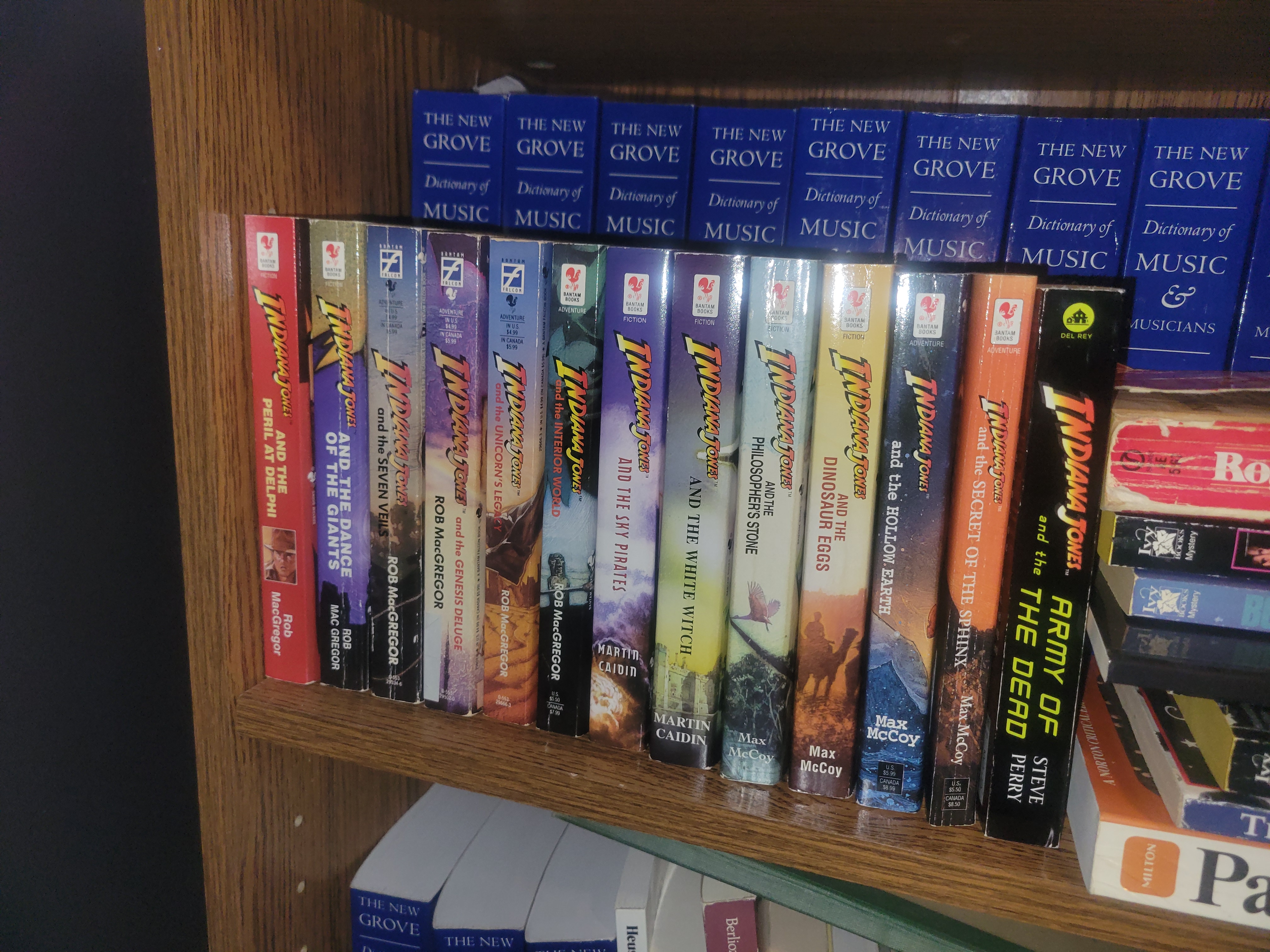
If I had a reading “project” this year, it was reading all of the (non-film) Indiana Jones tie-in novels; I had read a couple of them before and had a few more on the shelf, but making the decision to track down the rest (a manageable but not trivial task) was a plunge I hadn’t expected to take at the beginning of the year. Despite my affection for the Indiana Jones movies and pulp adventure in general, I grew up with the snob’s suspicion of such tie-ins, a resistance I’ve gradually broken down in recent years as I explored movie adaptations and mass market fiction in general.

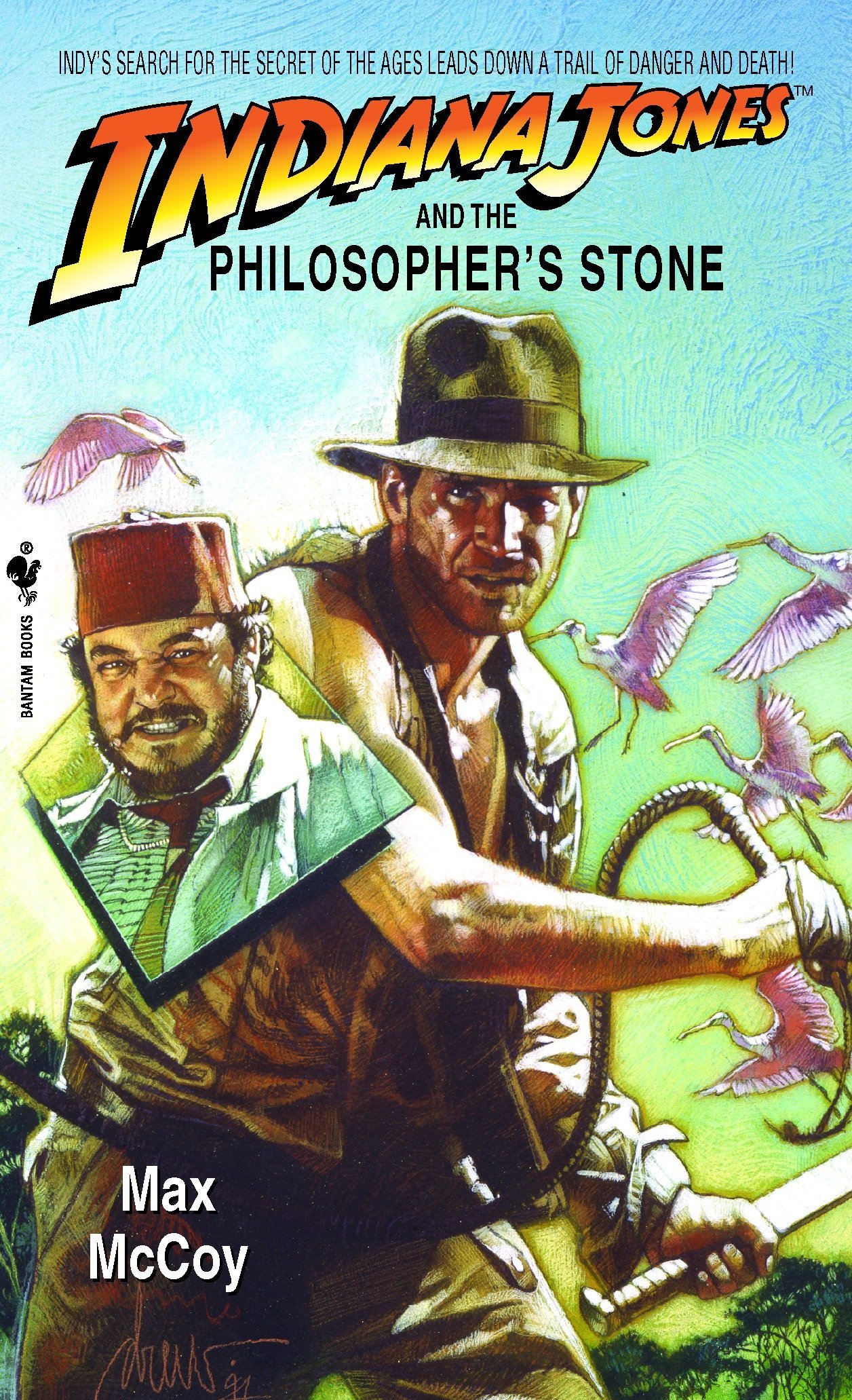
So, how were they? Most of them don’t rise to the heights of the best media tie-ins (Max Allan Collins’s Dick Tracy novelization and Matthew Stover’s adaptation of Revenge of the Sith are probably the best I’ve read), but they are diverting, and the best of them feel like authentic extensions of the character and his world that we know from Harrison Ford’s performance in the film series. They are also a neat-looking collection, with matching trade dress and original painted covers by poster maestro Drew Struzan, and most of them feature Indy confronting a legendary supernatural artifact or phenomenon, as you would expect.

Of the three authors who wrote the original twelve installments, Max McCoy’s were my favorite: they feel the most like they could have been movies in the original series, and strike the right balance of action, mystery, and characterization. The two by Martin Caidin (who, among other works, wrote the book upon which The Six Million Dollar Man was based) feel like they might have originally been written about Doc Savage or some other pulp superman and then rebranded as Indiana Jones novels; they’re entertaining enough, but the plots are bizarre and don’t feel much like the character as depicted anywhere else, like hearing a story about someone you know that makes you wonder if you’re thinking of the same person. Rob MacGregor not only wrote the most books (six), but they have the most complex internal continuity, not to mention a mystical bent that, considering these are prequels set in the early to mid-1930s, makes the character’s skepticism of the supernatural as depicted in Raiders of the Lost Ark a little jarring.

The original twelve books were published in the 1990s, following Indiana Jones and the Last Crusade, so there are frequent references to Indy’s strained relationship with his father, and side characters such as Marcus Brody and Sallah make appearances. The thirteenth book, Indiana Jones and the Army of the Dead by Steve Perry, was released in 2009 alongside Indiana Jones and the Kingdom of the Crystal Skull, and includes that film’s George “Mac” McHale as Indy’s partner in adventure. With another Indiana Jones movie scheduled for 2022, will there be any new tie-in prequels/sidequels? I don’t know, but while researching that question I found that Rob MacGregor wrote another novel, Indiana Jones and the Staff of Kings, that was never published, but which he began releasing as audio installments this fall, to be finished in January with a mystery announcement scheduled for February: a new book, or a print publication of this one? Either way, I feel obligated to check it out now.

Another theme emerged in my horror reading: the much-discussed motif of the “final girl,” the (usually virginal) would-be victim who is able to stand up to and escape or dispatch the killer in a slasher film. The concept was codified in Carol J. Clover’s Men, Women, and Chainsaws, but is now deployed self-consciously (witness The Final Girls, the 2015 movie I watched in October, not to be confused with Final Girl, from the same year, and a bunch of other movies and TV episodes with similar titles). The Final Girl Support Group was the first fiction by Grady Hendrix I’ve read, but the novel, which brings together a group of survivors of killing sprees clearly modeled on classic slasher franchises, is definitely the work of someone familiar with the tropes and clichés of the genre, as well as the commentary and criticism surrounding it. By chance I had read a less self-conscious “final girl” novel, Kimberly Rangel’s The Homecoming, earlier in the fall, with its heroine the only survivor of a Ouija board session gone wrong; when she returns home (and to the scene of the crime) years later, many still suspect her of the murders, but the reader knows that it’s actually the work of a serial killer who was executed at the very moment the Ouija board made contact with the spirit realm (did I mention I was looking for pulp?). Even Stephen Graham Jones’ recent The Only Good Indians riffs on the concept with a “Finals Girl,” so-called because she’s a basketball prodigy, but, well, don’t be surprised by where she ends up at the end of the book. (Jones’s latest novel, My Heart Is a Chainsaw, looks to be similarly self-referential, as it deals with a horror fan who ends up putting her knowledge to practical use, but I suppose it’s as much a matter of writers starting out as fans as it is the ubiquity of metanarrative concepts being popular; in any case, I look forward to reading it.)

January

The Boys of Sheriff Street, Jerome Charyn and Jacques de Loustal: French graphic novel, translated and published by Dover, of all companies

Samurai Executioner Vol. 4: Portrait of Death and Vol. 10: A Couple of Jitte, Kazuo Koike and Goseki Kojima: excellent manga from the creators of Lone Wolf and Cub, set in the same historical era

Winter’s Tale, Mark Helprin: a masterpiece

February

Reid Fleming, World’s Toughest Milkman in Rogue to Riches, David Boswell (reread)

The Living Talmud: The Wisdom of the Fathers and its classical commentaries, selected and translated with an essay by Judah Goldin

Medieval Ghost Stories, Andrew Joynes

March

The Night Ocean, Paul La Farge

Wonder Woman: The Complete Dailies 1944-1945, William Moulton Marston and H. G. Peter

The Which Way Tree, Elizabeth Crook

May

Kanako el Kananam: Aventuroj en la Ĝangalo de Novgvineo, Kenneth G. Linton: As I mentioned last year, I began studying Esperanto in 2020, and this memoir, by an Australian soldier stationed in New Guinea after World War II, is so far the only full-length book I’ve read in the language. It took me a while.

The Very Persistent Gappers of Frip, George Saunders, illustrated by Lane Smith: another one of those “postmodern author’s children’s books for adults,” fits on the shelf next to Donald Barthelme’s The Slightly Irregular Fire Engine, but not as good

The Phantom of the Opera, Gaston Leroux: the book that got me in the pulp mood for the summer

June

Indiana Jones and the Peril at Delphi, Rob MacGregor

Indiana Jones and the Dance of the Giants, Rob MacGregor

Cold Cash, Gaylord Dold

Indiana Jones and the Seven Veils, Rob MacGregor

Indiana Jones and the Genesis Deluge, Rob MacGregor

July

Indiana Jones and the Unicorn’s Legacy, Rob MacGregor

Indiana Jones and the Interior World, Rob MacGregor (reread)

The Homecoming, Kimberly Rangel

August

Avengers: The Complete Celestial Madonna Saga, Steve Englehart, John Buscema, Jorge Santamaría, et al

Faerie Tale, Raymond E. Feist

Indiana Jones and the Sky Pirates, Martin Caidin

Indiana Jones and the White Witch, Martin Caidin

King Kong, Edgar Wallace and Merian C. Cooper, novelization by Delos W. Lovelace

September

Indiana Jones and the Philosopher’s Stone, Max McCoy

Dangerous Girls, R. L. Stine

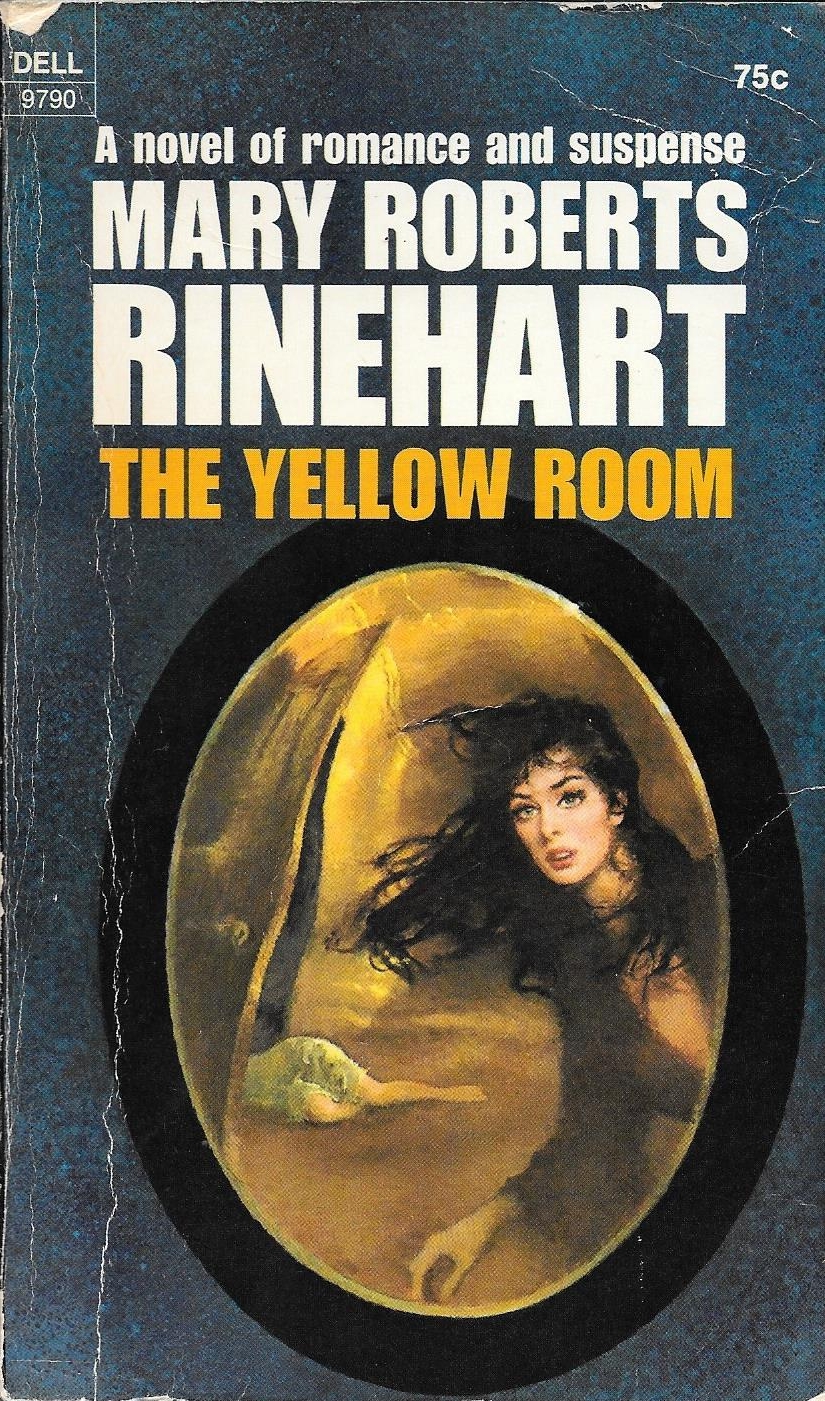
The Yellow Room, Mary Roberts Rinehart: I know, don’t judge by the cover, but I expected more of a Gothic romance than this turned out to be. Wouldn’t you?

Indiana Jones and the Dinosaur Eggs, Max McCoy

Indiana Jones and the Hollow Earth, Max McCoy (reread)

October

Indiana Jones and the Secret of the Sphinx, Max McCoy

The Final Girl Support Group, Grady Hendrix

The Death Freak, “John Luckless” who is also known as Clifford Irving and Herbert Burkholz: I found this at Goodwill and immediately had to read it, and I guess in this case the cover turned out to be pretty accurate: an only-in-the-’70s satirical spy thriller, sort of like a James Bond novel if Q were the hero.

Indiana Jones and the Army of the Dead, Steve Perry

November

The Name of the Rose, Umberto Eco (trans. William Weaver)

December

The Best American Noir of the Century, ed. James Ellroy and Otto Penzler: a 700+ page doorstop that I’ve had for a while, but once I started reading it I wished I’d started it sooner

Flying Too High (A Phryne Fisher Mystery), Kerry Greenwood

The Only Good Indians, Stephen Graham Jones

That’s it for 2021: I hope to post more consistently in 2022, but whatever happens, have a Happy New Year!

My 2020 in Books

Happy New Year! As usual, I kept a log of books I read this year; despite being home for much of the year and having more down time, I don’t think I read more books than in previous years, and I know I read less non-fiction. Finally finishing Stephen King’s Dark Tower series (the main seven volumes, excluding the connected works) was my major reading achievement. Other than those mostly long books, the other novels I read this year were fairly short, particularly in February, where I knocked out several short novels in rapid succession. I also read several graphic novels or comics collections, which also don’t take as much time to read. I finished the year still in the middle of Mark Helprin’s Winter’s Tale, another long novel. Considering its length and florid language, it reads quickly, but not quickly enough for me to finish it by the end of the year.

January

Wizard and Glass, Stephen King

The Best of Henry Kuttner, for Vintage Sci Fi Month

Interstellar Pig, William Sleator

I Need a New Butt!, Dawn McMillan and Ross Kinnaird

When I was in fifth grade, I was placed in an accelerated English class where we were expected to work at our own pace. One of the requirements was to complete a book report each week, choosing books from a cart in the classroom. Once we discovered that the cart held books of all grade levels, it didn’t take us long to game the system by writing reviews of picture books for kindergarten and preschool students. That worked for a lot longer than it should have, and when the teacher realized what we were doing she blew up and announced she was tightening the reins, an outburst that led to me skimming most of Little Women in about a week to make up for it. In retrospect, that’s not really ideal from a pedagogical perspective either, but I definitely learned a lesson about padding my reading lists. That being said, I Need a New Butt! is about a little boy who wants to replace his butt, because you see, his old one has a crack in it. (This was actually a gift for my pastor’s son, but obviously I had to read it first, to find out how it all came out in the end, geddit?)

Criswell Predicts From Now to the Year 2000!, Criswell

Hoping that this will finally explain where things got off-track.

February

The Physiognomy, Jeffrey Ford

Norstrilia, Cordwainer Smith

Modesty Blaise, Peter O’Donnell

Golgotha Falls, Frank De Felitta

True Grit, Charles Portis

Old Yeller, Fred Gipson

March

GYO: The Death-Stench Creeps, Junji Ito

The Complete Curvy, Sylvan Migdal

Northanger Abbey and Other Works, Jane Austen (includes Lady Susan and the unfinished The Watsons and Sanditon)

Ultra Kaiju Humanization Project Vols. 1 and 2, Shun Kazakami

April

Hungry for You: Endo Yasuko Stalks the Night Vols. 1 and 2, Flowerchild

Of the several manga volumes I read this year, this was the one I enjoyed the most, a teen supernatural soap that combines elements of the vampire classic Carmilla with Japanese high school tropes. Also amusing is the American vampire hunter Ashley, who arrives in an attack helicopter with a Texas-sized arsenal but ends up staying in Japan, enrolling in Yasuko’s school, and learning Japanese by watching TV.

Wolves of the Calla, Stephen King

May

Dial H: The Deluxe Edition, China Miéville, Mateus Santolouco, Alberto Ponticelli, et al

Megaton Man Vol. 1, Don Simpson et al

For a superhero spoof, there sure is a lot about Doonesbury in this.

Song of Susannah, Stephen King

June

The Case of the Missing Men: A Hobtown Mystery Story #1, Kris Bertin and Alexander Forbes

The Stench of Honolulu, Jack Handey

Bible Adventures, Gabe Durham

The History of Astronomy: A Very Short Introduction, Michael Hoskin

July

The Wind in My Hair: My Fight for Freedom in Modern Iran, Masih Alinejad (with Kambiz Foroohar)

I also read most of Leaving Islam: Apostates Speak Out, ed. Ibn Warraq; these were background research for a short story I was working on and which I’m now shopping around.

Chew Vol. 1: Taster’s Choice, John Layman and Rob Guillory

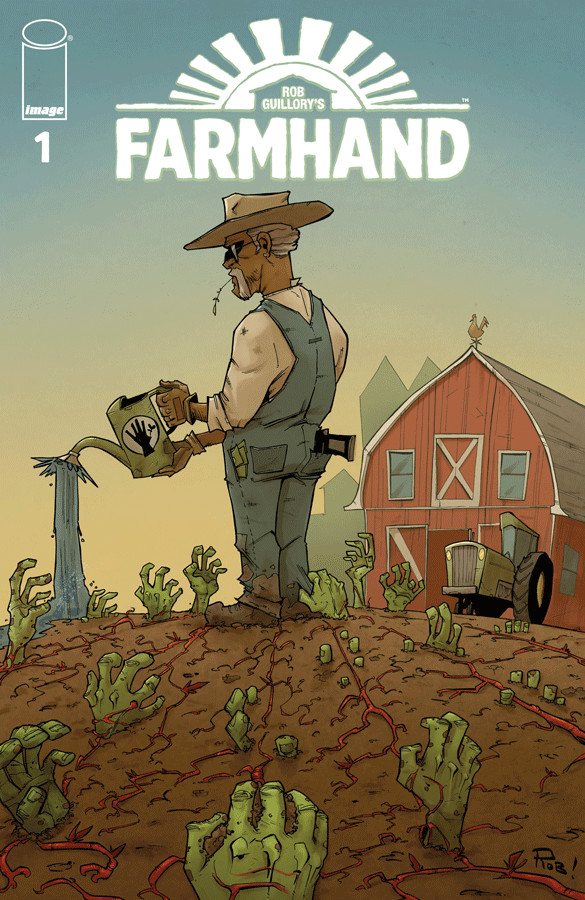
Rob Guillory is the writer and artist of Farmhand, an ongoing comic book series combining body horror, environmentalism, and reckoning with America’s deep-rooted (heh) racism in the vein (heh heh) of Jordan Peele’s work or Lovecraft Country. After reading Farmhand I decided to explore Chew, the earlier series for which Guillory provided the art; I enjoyed the first collected volume, and I can see the continuity (Chew also has its share of gut-churning imagery, executed with a sense of wry humor), but haven’t gotten around to following up with the rest of it. (Come to think of it, Hungry For You and Chew could switch titles with each other.)

August

Bring the Jubilee, Ward Moore (reread)

One of the original alternate history novels (what would have happened if the South had won the Civil War and reduced the North to an economically devastated backwater?), this is the only book on this year’s list that I had read before (about twenty years ago, I guess). I had hoped to write something about it, but this was one of those experiences where the book as I reread it was quite different than what I remembered, and even some of the specific details I thought I remembered weren’t the same. Is it the Mandela Effect? Nah, in all likelihood it’s just the faulty memories of middle age going on senility, combined with the stresses of pandemic isolation. My main takeaway this time was a vivid portrait of a nation in decline, defeated and backward. (I wonder what made me think of that?) It was depressing, and I didn’t end up writing about it.

September

Precarious Woman Executive Miss Black General Vols. 1 and 2, Jin

Okay, this manga was pretty fun too, in the vein of superhero parodies and reinventions like The Tick or My Hero Academia (but with fewer Doonesbury references than Megaton Man).

The Dark Tower, Stephen King

After concluding this epic series (minus the auxiliary works, as I mentioned) and looking back, overall I enjoyed it. It’s fascinating to see King’s plotting by the seat of his pants play out over a long narrative (although the last three volumes, written after a hiatus and following the incident in which King was struck and nearly killed by a van, show a much clearer planned endgame; Wolves of the Calla in particular feels the most like a standalone novel with a beginning, middle, and end). Years ago, when I read The Stand, I had the sense that it was King’s Great American Novel; I’m hardly the first to observe that The Dark Tower is his The Lord of the Rings.

October

Have Space Suit—Will Travel, Robert A. Heinlein

I always had a little trouble getting into Heinlein—aside from his ideas, his prose just didn’t grab me and didn’t make me want to keep reading—but I hadn’t read any of his juvenile adventures, of which this is one. I get the appeal now: the quasi-libertarian ideas are still there (and what is it with young-adult protagonists always having eccentric parents?), but the story zips along and the science is hard where it needs to ground the story and pliable when we need to zoom to the other side of the galaxy.

The House on the Borderland and Other Mysterious Places, William Hope Hodgson (Volume 2 of The Collected Fiction of W. H. H.)

The League of Extraordinary Gentlemen Volume IV: The Tempest, Alan Moore, Kevin O’Neill, et al

The end of another epic project (barring possible of one-off stories, but the ending indicates pretty clearly that Moore is closing the book on this).

November

The Turn of the Screw, Henry James

The Odds Against Me: An Autobiography, John Scarne

The Princess Bride, “S. Morgenstern’s Classic Tale of True Love and High Adventure, the ‘Good Parts’ Version Abridged by William Goldman” (wink, wink)

December

Wonder Woman Archives Volumes 4 and 5, William Moulton Marston, H. G. Peter, and Joye Murchison

Finally, although it doesn’t exactly count as a reading project, toward the end of the year I began learning Esperanto, the first serious study of a foreign language I’ve undertaken since high school. So who knows, perhaps next year this list will include one or more books in Esperanto. Feliĉan Novjaron!

Color Out of Space: Horror Comes Home

This essay contains spoilers for Color Out of Space.

It’s been hard to be an H. P. Lovecraft fan the last few years. I don’t mean because of his often-lugubrious prose style, his penchant for unpronounceable names, or his tendency to describe his horrors as “indescribable” (how convenient!): those traits tend to be the source of affectionate ribbing between fans rather than cause for cancellation, or at least come down to matters of taste. But Lovecraft has come under greater scrutiny in recent years for his racist views; whether you believe, as I do, that he underwent some revision of those views in the last years of his life, broadening his perspective, the fact remains that in his private letters and early writings he gave vent to opinions on race that put him in extreme company, even in the 1920s. Nor is this a case where one can easily separate the art and the artist, for his fiction, even some of the greatest of his stories, clearly come from a personal place in which Lovecraft’s xenophobia and fear of miscegenation form the basis of the fantastic horrors he describes (not to mention the more explicit references to the race and ethnicity of his human characters when they do appear).

These criticisms have been a long time coming, and they hardly blew up overnight: indeed, recognition that the “old man” wrote a few impolitic things has been present at least since his stories began to be collected and reprinted for an audience beyond the pulp magazines in which they first appeared. The world of fantasy and science fiction was, like many fandoms, an insular one, and the most influential voices within it tended to be white and, like me, insulated by privilege from feeling truly hurt by Lovecraft’s words. Robert Bloch, in his 1982 essay “Heritage of Horror” (the introduction to The Best of H. P. Lovecraft: Bloodcurdling Tales of Horror and the Macabre, the paperback collection that was an introduction to Lovecraft for many readers, including me), devotes two whole paragraphs to the charge of racism against Lovecraft, ultimately dismissing it as just one more spurious charge laid against the master by uncomprehending outsiders.

Both fiction and scholarship have, to their credit, attempted to grapple with this legacy rather than ignore it in recent years. On the new fiction front, the subversion or reimagining of Lovecraft’s themes, often written by people of color and tackling Lovecraft’s personal biases directly, has breathed life into a subgenre of horror that frequently consisted of stale imitations. Matt Ruff’s Lovecraft Country, for example, is set in the 1950s and centers on a black science fiction fan, captivated by the imagination in pulp stories but acutely aware of the subhuman depictions of black people in the works of Edgar Rice Burroughs and others. What, he asks, do you do when you love a genre that doesn’t love you back? The hero’s nephew, for one, creates a comic book space opera with a black heroine, based on his mother, and that’s one strategy (witness the success Jordan Peele has had creating horror centered on specifically black experiences: expanding representation means new and better stories for everyone).

There’s also the 2015 decision to change the World Fantasy Award trophy from a bust of Lovecraft to something more abstract. For the record, even as a fan I think that’s the right call: as much as it was meant as an affectionate tribute when it started in 1975, in this day and age it’s a little odd to have a trophy representing “World Fantasy” look like any single person, as if it were all their idea, and I can’t blame the minority and POC writers who felt that they were being asked to place their work under the symbolic authority of a man who when alive would likely not have recognized or welcomed them. Finally, it’s a decision that makes it easier to keep the man himself in perspective, as one of many authors and with human flaws, rather than an Easter Island totem, unanswerable and above criticism.

I can’t say that I was directly thinking about these issues while I watched Color Out of Space, Richard Stanley’s new adaptation of Lovecraft’s short story “The Colour Out of Space.” What most struck me was that the film, in which a strange meteorite contaminates and destroys a small New England farm and the family that lives there, feels up to the minute, urgent even, in ways that are present in the original story and feel completely true to it, even as Stanley prunes and updates the text. But as I let the film sink in over the next few days, it occurred to me that it is next to impossible to talk about Lovecraft now without being aware of the discussion around him, and that for many people Lovecraft’s racism has become the sum total of what they know and think about him, particularly if they haven’t encountered him firsthand (and how many will now avoid him, if they think that every story is but a thinly-veiled racist screed?).

Yet here we are with a largely faithful feature film, and one that not only feels relevant but which features a multiracial cast and does so without a major rearrangement of the text. Lovecraft may be a “problematic fave,” but he continues to hang on in public consciousness because of something at the core of his writing, some essential observation of modern life. “The oldest and strongest emotion of mankind is fear, and the oldest and strongest kind of fear is fear of the unknown.” “We live on a placid island of ignorance in the midst of black seas of infinity, and it was not meant that we should voyage far.” Yes, Lovecraft was a pessimist, but there are times when pessimism and realism are one and the same, and reading a bracingly dark vision can be strangely life-affirming. Lovecraft–pedantic, verbose, racist–hangs on because of the clarity of that vision.

In “The Colour Out of Space” (which appeared in Amazing Stories in 1927, one of only a handful of Lovecraft’s stories to appear in a science fiction magazine rather than his usual Weird Tales), an unnamed surveyor visits the ancient wooded valleys around Arkham, Massachusetts (one of Lovecraft’s fictional towns) in advance for a new reservoir that will flood the land. Finding a desolate area called the “blasted heath” by the country folk, the surveyor tracks down a local farmer named Ammi Pierce, who tells him about the “strange days” forty years prior, when the “blasted heath” was the farm of Nahum Gardner and his family. Pierce relates the story of the meteorite that landed on the farm and the glass-like globule or “bubble” at its center: “the colour . . . was almost impossible to describe; and it was only by analogy that they called it colour at all.” Over the course of the following year, in Pierce’s telling, the vegetation and animals around the farm go through strange metamorphoses, displaying a vague sense of “wrongness” familiar to readers of Lovecraft, but eventually turning the same unidentifiable “colour” and even visibly glowing at night. The people of the farm, Gardner’s family, become watchful and unhealthy, convinced that something is wrong but unable to leave. The farm’s well, in particular, seems to be at the center of their misgivings. Their transformations become more and more horrible, until the night Ammi Pierce and a delegation of lawmen from Arkham witness the transformation that leaves behind the “blasted heath.” The resolution is as uneasy as the ending of a 1950s monster movie: the danger is passed, but only for now, and it leaves behind the uncomfortable awareness of how dangerous the world really is.

“The Colour Out of Space” has been regarded as a cautionary tale about nuclear radiation and fallout: it was written well before the atomic bomb became a reality, but radiation was already a known phenomenon on a smaller scale, and world-destroying bombs and plagues were familiar in the pages of the pulp magazines long before they hit the front pages of newspapers. The intimations that the meteorite and the unearthly “colour” come from somewhere alien, where the forces of nature are different, place this story within the “cosmic horror” subgenre Lovecraft is known for, but it is essentially a story of contamination: the horror is one of environmental pollution, of body and mind being betrayed and corrupted by the elements around one.

In transferring this story to the screen (and for the record, this is not the first movie adaptation–I’ve even written about another loose adaptation, Die, Monster, Die!), Stanley (with co-writer Scarlett Amaris) wisely eliminates the frame story. The surveyor (now a hydrologist, played by Elliot Knight) is the protagonist, directly visiting the Gardner farm and getting involved in the action, and rather than being set years in the past everything has been updated to the present. Instead of being a yeoman farmer, Nathan Gardner (Nicolas Cage) is a businessman who’s made his pile in the city and moved his family back to his father’s farm, living off the land and living the dream. I recognized this person immediately, right down to the alpacas he has added to the farm (“the animal of the future,” a phrase that will come to seem downright ominous). Theresa Gardner (Joely Richardson), a breast cancer survivor, continues to work as a stockbroker, the laptop and headset mic she uses to connect with her clients incongruous with the tiny garret that serves as her office. The family, with its three children–Lavinia (Madeleine Arthur), Benny (Brendan Meyer), and the youngest, Jack (Julian Hilliard)–may have its issues, but it’s basically functional: they can work things out.

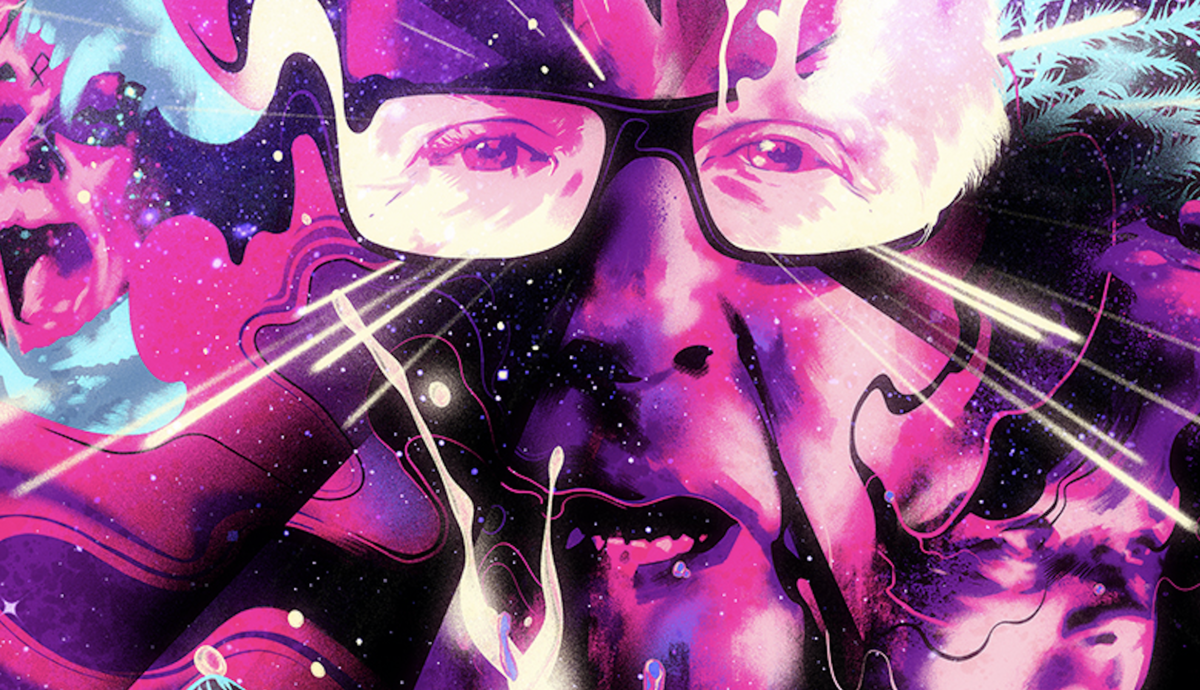
Until, that is, the night of the meteorite. It’s not really possible to depict a never-before-seen color, but Stanley does make it look spectacular, ladling on the neon pink and purple, lens flares and other prismatic effects, and accompanying the visual flashes with eerie sounds (comparisons to the palette of Panos Cosmatos’ Mandy are apt). Even the arrival of the meteorite is a big event, causing computers to glitch and affecting each member of the family differently; the staging implies that the stone’s arrival is as much a psychic event as a physical one, and did it really fall from space, or from an opening to another dimension? Once everyone comes outside to look at it, it looks like a pink, pulsating brain. Later on, as the alien color seeps into everything around it and pink-hued flowers sprout around the farm, it’s as if the landscape is being turned into the surface of another planet (and indeed there are suggestions that that’s exactly what is happening). As the meteorite begins to show its malign influence, the transformations the animal life and eventually the family experience recall John Carpenter’s The Thing, or the ooky body horror of Stuart Gordon and Brian Yuzna.

Unlike some adaptations, Color Out of Space is explicitly set in Lovecraft’s imaginary “witch-haunted” New England: in addition to nearby Arkham, there are references to Innsmouth and Kingsport; the hydrologist, Ward Phillips (one of Lovecraft’s pen names), wears a Miskatonic University tee shirt. Although Lovecraft’s original story predates Cthulhu and his other famous creations, the Necronomicon makes an appearance in the film, but it’s the “Simon” Necronomicon, a mass-produced paperback published in 1977, and it doesn’t provide any answers. The film begins and ends with some of Lovecraft’s own words as voice over delivered by the hydrologist.

By coincidence, less than a week before seeing Color Out of Space I had watched The Last Mimzy for my review of Henry Kuttner’s short fiction: in both films, Joely Richardson plays the mom of a family experiencing an incursion from otherworldly forces. The Last Mimzy is an optimistic film, injecting Kuttner’s story with about 1000% more woo in the form of Deepak Chopra-style speculation about connections between quantum mechanics and meditative states, Tibetan mandalas, and dream visions along with Kuttner’s fourth-dimensional speculations, and it grafts a “children are our future” sense of purpose onto the story. It’s a far cry from the nihilistic horror of Color, and I was tempted to say that the coincidence of Richardson’s casting says something about our national mood then and now. I couldn’t honestly make the comparison, though: The Last Mimzy was released in 2007, post-9/11, in the midst of the Iraq War, and with the culture wars already in full swing. Rainn Wilson’s character in Mimzy, a science teacher, makes the point early on that pollutants, including cultural pollutants (?), can actually change a population’s DNA, corrupting them from the inside. It has a hopeful point of view, to be sure, but the anxiety that the rot is already present is clear.

The same thing is going on in Color Out of Space; the rot is just further along. The color affects each member of the family differently, but the suggestion is that the color is bringing out and corrupting something already inherent in their character. As the mom, Richardson is alternately spacey and shrewish, finally undergoing a sort of inverted pregnancy, drawing her youngest son back into her body. Witchy eldest daughter Lavinia becomes a cosmic priestess of the color, cutting occult sigils into her own flesh. Ezra (Tommy Chong), the squatter who lives off the grid in a shack on the Gardners’ property, becomes a literal burnout; he comes to understand the color and even provides the hydrologist with a vision of the color’s alien home, but that knowledge doesn’t help him escape it.

Nathan Gardner becomes a parody of middle-aged dadhood, berating his family and making tough decisions one moment and settling into his easy chair in the next, watching the static on his TV and surrounding himself with the ghosts of his departed family. (Since this is a Nicolas Cage vehicle, he gets a few good freak-outs, but the build-up is more gradual than in some: unlike in Mom and Dad, he doesn’t seem unhinged from the beginning.) In one scene, Nathan rants about how he followed the rules but everything still went to shit: in context, he’s talking about his crop of tomatoes, tinged with the unpleasant taste of the color, but it’s not hard to hear in it the frustration we’ve all felt, that the game is rigged and that we’re at the mercy of a system we can’t control.

Ultimately, this is environmental horror: the cosmic stuff just gets us in the door, but at its core the fear is real enough. The fact that the mother is a cancer survivor is significant, I think, symbolic of the cancerous growth of the color throughout the Gardners’ farm, but also a reminder that the healthy exterior at the beginning of the film was only an illusion. News clips on television show dead fish and reports about climate change; the hydrologist’s presence on the farm is due to the planned reservoir, a source of manmade devastation. Whatever is in the well at the farm will soon be part of the municipal water supply for a much greater area. Color Out of Space is a vision of an ordinary family destroyed by forces that mankind as a whole has set in motion, and which are as unstoppable as storms, earthquakes, and meteors. “It’s in the water,” the characters tell each other, but there is nothing they can do but drink.

Rediscovering Henry Kuttner

January is Vintage Science Fiction Month, so I’m diving into the short stories of the prolific author Ray Bradbury dubbed “a neglected master.”

“Mimsy Were the Borogoves” was adapted into the 2007 film The Last Mimzy.

Henry Kuttner is, for me, one of those authors I saw frequently represented in anthologies of the golden age of science fiction, but whom I rarely had a strong picture of as an individual, someone with a singular set of preoccupations or stylistic tics. One story would be horror, the next social science fiction, and still another might be light fantasy. If Kuttner is today not a household name*, perhaps it is his ability to work in several different veins, and his ability to channel a variety of authorial voices, that keeps the man himself out of focus. (For this article, I read the 1975 collection The Best of Henry Kuttner, but several other stories I consulted were found in scattered multi-author anthologies.)

As an example, I first encountered Kuttner as a younger member of the Weird Tales circle embroidering on H. P. Lovecraft’s growing Cthulhu cycle. “The Salem Horror” (1937) was included in August Derleth’s seminal Tales of the Cthulhu Mythos, and Kuttner’s Weird Tales output also included pastiches of Robert E. Howard’s sword and sorcery stories.

As Kuttner discovered his own voice, a strain of light fantasy emerged, with concepts from folklore or mythology existing in the modern world, often using the incongruity as a source of gentle (or not-so gentle) comedy. In “Masquerade,” from 1942, a honeymooning couple stumbles on a family of degenerates (who may or may not be vampires) living in a former lunatic asylum, wryly commenting on how cliché it all is (“Look, if I started a story like this, any editor would shoot it back,” the narrating husband tells his wife.)

“Masquerade” was adapted in a 1961 episode of Thriller.

Some of these stories are reminiscent of his contemporaries Robert Bloch (with whom Kuttner sometimes collaborated) and L. Sprague de Camp, or even the earlier Thorne Smith (“The Misguided Halo” is one of these), and had a clear influence on the younger Ray Bradbury. Still other stories fit the description of science fiction as “the fiction of ideas,” with theories of social or technological development, and the question of man’s future, front and center, although the dialogue and characterization are often better than that description would suggest: if, like Isaac Asimov and Arthur C. Clarke, Kuttner sometimes wrote stories whose sole purpose seems to be making use of a social theory or scientific factoid, Kuttner’s strength was to humanize that impulse, showing the effects of progress and change from an individual’s perspective. In that sense, there is a continuity between Kuttner’s stories and the early fiction of Philip K. Dick. If Kuttner had lived longer (he died in 1958 at the age of 43), it’s possible that he would have made the leap to the more introspective, experimental science fiction of the 1960s. Instead, he foreshadowed it.

When discussing themes in Kuttner’s work, one must also acknowledge the author’s long collaboration with wife and writing partner C. L. (Catherine) Moore, whom he married in 1940. I’m a big fan of Moore’s writing, especially her “Northwest Smith” and “Jirel of Joiry” series, both of which appeared in Weird Tales. Untangling who contributed what to stories published under Kuttner’s and Moore’s individual names can be tricky, and many of the stories now attributed to one or the other of them originally appeared under the joint pseudonym “Lewis Padgett” or numerous other pen names. The couple shared a single typewriter and bragged that either of them could pick up the thread of a story where the other had left off without a break. The Encyclopedia of Science Fiction holds that all of the stories in The Best of Henry Kuttner were in fact collaborations, so perhaps it would be best to think of “Kuttner and Moore” as a team like “Lennon and McCartney,” with some projects being independent work but always in the context of the ongoing partnership.

Two themes emerge strongly in Kuttner’s mature stories: in one strand, the Lovecraftian concepts Kuttner cut his teeth on are adapted to notions of technological and social evolution. In stories like “Mimsy Were the Borogoves” and “The Twonky,” the intrusions from other worlds are not the work of sinister alien gods and their cults, but are carelessly scattered artifacts from civilizations at a different level of development, either a future state of evolution or from a parallel reality in which “normal” has a very different definition than ours. “Mimsy” centers on a box of unearthly educational toys that gradually condition their users to life in four or more dimensions; in “The Twonky,” a combination radio-phonograph turns out to be an artificial intelligence in disguise, an in-home butler, watchdog . . . and jailer.

In Arch Oboler’s 1953 adaptation of “The Twonky,” the story’s radio-phonograph was replaced by a television.

These unnerving (and prescient) stories broach the idea that futuristic technologies could rewire human brains, turning their users into geniuses, madmen, or passive slaves. As in “Call Him Demon” (one of Kuttner’s finest tales, a story of cosmic horror told through the lens of recollected childhood), it is only children, their minds not yet set into routine patterns, who can truly pick up on these messages from outside. To adults, the signs are either undetectable or incomprehensible. Ray Bradbury, noting the impact these stories had on himself and others, wrote “I very much doubt that ‘Zero Hour,’ or for that matter ‘The Veldt,’ would ever have leaped out of my typewriter if Kuttner’s imagination had not led the way.” (In retrospect, Madeleine L’Engle’s classic A Wrinkle in Time builds on the foundation “Mimsy” established; I would also include C. M. Kornbluth’s “The Little Black Bag” as another tale indebted to Kuttner’s concepts, with that author’s own bitterly ironic twist, of course.)

The other prominent thread relates to mankind’s future evolution and the possibility of beneficial mutation. In the humorous Hogben stories, a family of backwoods mutants with incredible mental powers do their best to live beneath the notice of snooping big-city scientists and other busybodies. These are tall tales for the nuclear age, providing fantastical solutions to common problems, as when Junior Hogben jury-rigs a time machine to make cream sour faster in “Cold War.”

In other stories, the implications of human evolution are much darker, and the prospect of a struggle between homo sapiens and homo superior looms. Some of the new breed wish only to live in peace like the Hogbens, but others seek to dominate their merely human inferiors or bide their time until there are enough others like them, realizing that unmutated humans would hate and fear them if they knew that supermen lived among them. Combining nuclear anxiety, metaphors of societal prejudice, and drawing clear comparisons with early humans’ elimination of Neanderthal competition, these stories are instantly recognizable as an inspiration for Marvel Comics’ X-Men.

In stories like “Absalom,” there is a specifically Oedipal dimension to this struggle, and we’re back around full circle to the notion that children are essentially psychopathic, their minds still malleable, buffeted between conflicting influences. Parenting is tough enough, but in a family of telepaths, where does one draw the line? “The Piper’s Son” (part of the “Baldy” series expanded into the novel Mutant) sensitively asks that question, comparing the balance of power within a family to the uneasy search for a growing Baldy minority’s place in a rebuilding postwar society.

Beyond these major themes, there are plenty of surprises. Judging science fiction by the accuracy of its predictions is a rookie mistake, but in addition to Kuttner’s farsighted critiques of technology as an agent of conditioning, one finds, for example, the suggestion of a viral meme (in the form of a catchy song) used to disrupt an enemy’s organization in the wartime tale “Nothing But Gingerbread Left.” In “The Proud Robot,” one sees subscription-based television services more like Netflix than the radio-license model Kuttner seems to have had in mind. Of course, the predictions that ring true are more likely to jump out at the reader–I’m still waiting for the robotic judge, jury, and executioner described in “Two-Handed Engine,” and I’ll probably continue to wait–and whether a prediction comes true doesn’t say anything about the quality of that story. It’s a truism that every story is really about the time it was written, no matter what year it’s supposed to be set in. Don’t we read old science fiction in part for those glimpses of a world that could have turned out differently? In the case of Henry Kuttner, there is still entertainment–and thoughtful observation of humanity–to be had, if we but look.

* Don’t take my word for it: Robert M. Price wrote in his 1995 introduction to The Book of Iod, a collection of Kuttner’s youthful Lovecraft pastiches, “Henry Kuttner’s star shines neither so brightly nor so high up in the firmament as it once did. . . . Today it is sad but safe to say that just about all of Kuttner’s exceedingly clever fiction is the property of literary nostalgia-lovers and antiquarians.”