Sinister Crawling Invisible Ghost Hands: Spooktober 2025

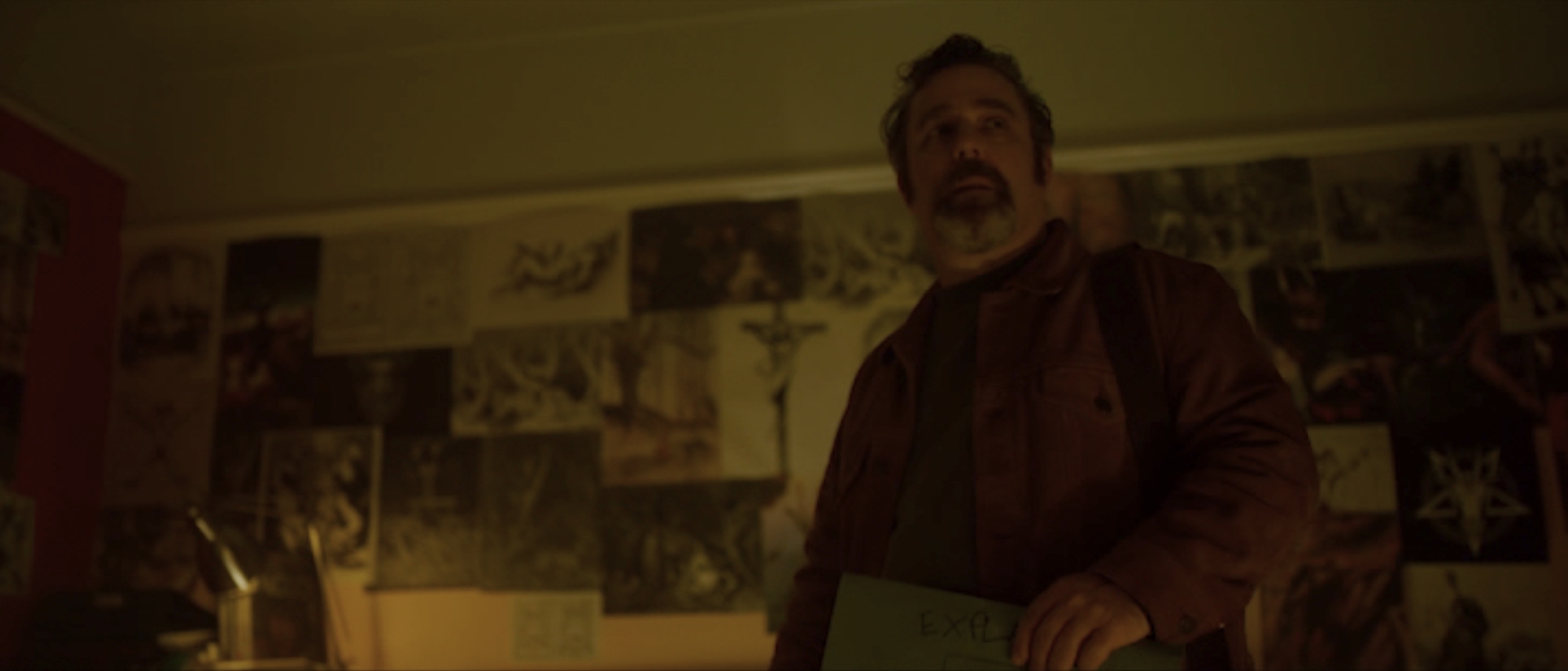
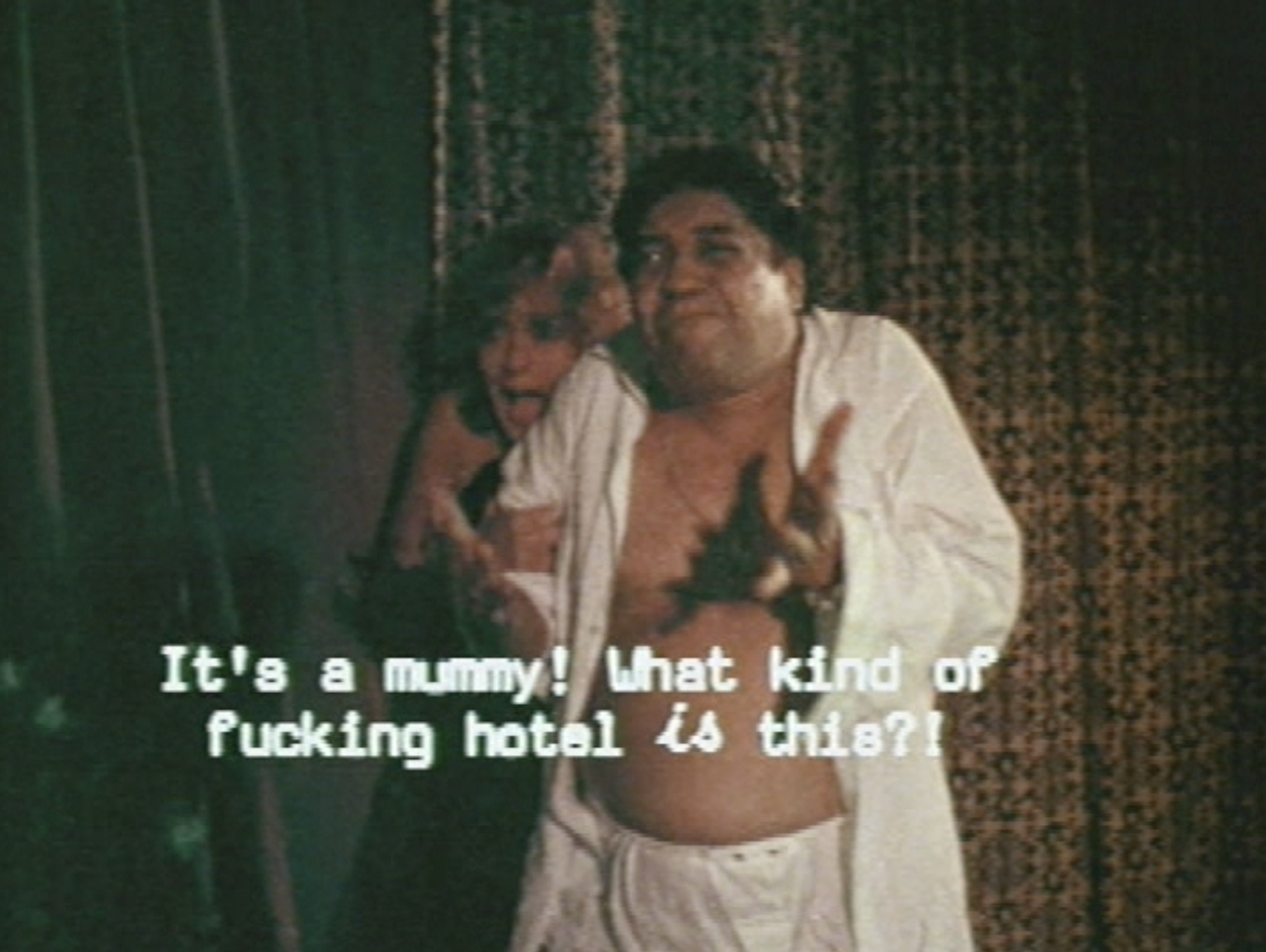
In a hidden catacomb deep within a Mexican silver mine, the mine owner discovers an old silver box containing a mummified hand. When it starts moving of its own volition and drives him to replace his own hand with it, leading him to behave erratically—even murderously—his wife must face the question: is this the hand of the Devil himself? Such is the premise of Demonoid, a fun, goofy horror movie I watched near the beginning of October. That led to Sinister Hands (the hands in question belong to a swami who becomes the obvious suspect when his wealthy patroness’ husband is murdered during a séance) and Invisible Hands (featuring another grisly trophy). If I’d wanted to make a whole theme month out of it, I could have kept going with The Beast with Five Fingers, And Now the Screaming Starts, and (of course) The Hand. But regular readers know that I don’t usually plan that far in advance.

In the end, October was quite busy for me this year, but I did watch some spooky and seasonal selections throughout the month. I actually got to 31 entries, with the caveat that some of those were very short (the quasi-serial Invisible Hands is barely over twelve minutes strung together). I only got out to the movie theater once, to see the 25th anniversary re-release of Battle Royale, which I hadn’t seen before (I enjoyed it). There were some retro screenings like I’ve seen in the past, but my schedule didn’t allow me to go, so that was a bummer.

Nevertheless, I have compiled a list of varied styles, subject matters, and quality:

1. Dead of Night (Dan Curtis, 1977)

2. Demonoid (Alfredo Zacarias, 1981)

3. The Laughing Target (Motosuke Takahashi, 1987)

4. Evil Laugh (Dominick Brascia, 1986)

5. Track of the Moon Beast (Richard Ashe, 1976)

6. The Old Dark House (James Whale, 1932, rewatch)

7. What Waits Below (Don Sharp, 1984)

8. The Willies (Brian Peck, 1990)

9. Equinox (Jack Woods and Dennis Muren, 1970)

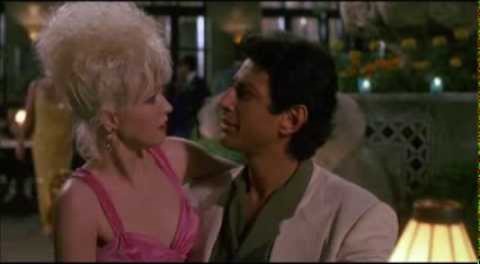
10. Death Becomes Her (Robert Zemeckis, 1992, rewatch)

11. Organ (Kei Fujiwara, 1996)

12. Battle Royale (Kinji Fukasaku, 2000) theatrical

13. Rubber (Quentin Dupieux, 2010)

14. Invisible Ghost (Joseph H. Lewis, 1941)

15. Young Hannah, Queen of the Vampires (Julio Salvador and Ray Danton, 1973)

16. The Deadly Spawn (Douglas McKeown, 1983)

17. Haunted House (Robert F. McGowan, 1940)

18. Sinister Hands (Armand Schaefer, 1932)

19. Invisible Hands (Denis Morella, 1991, rewatch) short

20. Scare Package (concept by Aaron B. Koontz and Cameron Burns, various directors, 2019)

21. Alligator (Lewis Teague, 1980)

22. Student Bodies (Mickey Rose, 1981)

23. The Bowery Boys Meet the Monsters (Edward Bernds, 1954)

24. TerrorVision (Ted Nicolaou, 1986, rewatch)

25. The Video Dead (Robert Scott, 1987)

26. Beetlejuice (Tim Burton, 1988, rewatch)

27. They Saved Hitler’s Brain (David Bradley, 1968)

28. The Violence Movie (Eric D. Wilkinson, 1988) short

29. Savage Vows (Bob Dennis, 1995)

30. The Mascot (Fétiche, aka The Devil’s Ball, Irene Starewicz and Wladyslaw Starewicz,1933) short

31. Something Wicked This Way Comes (Jack Clayton, 1983)
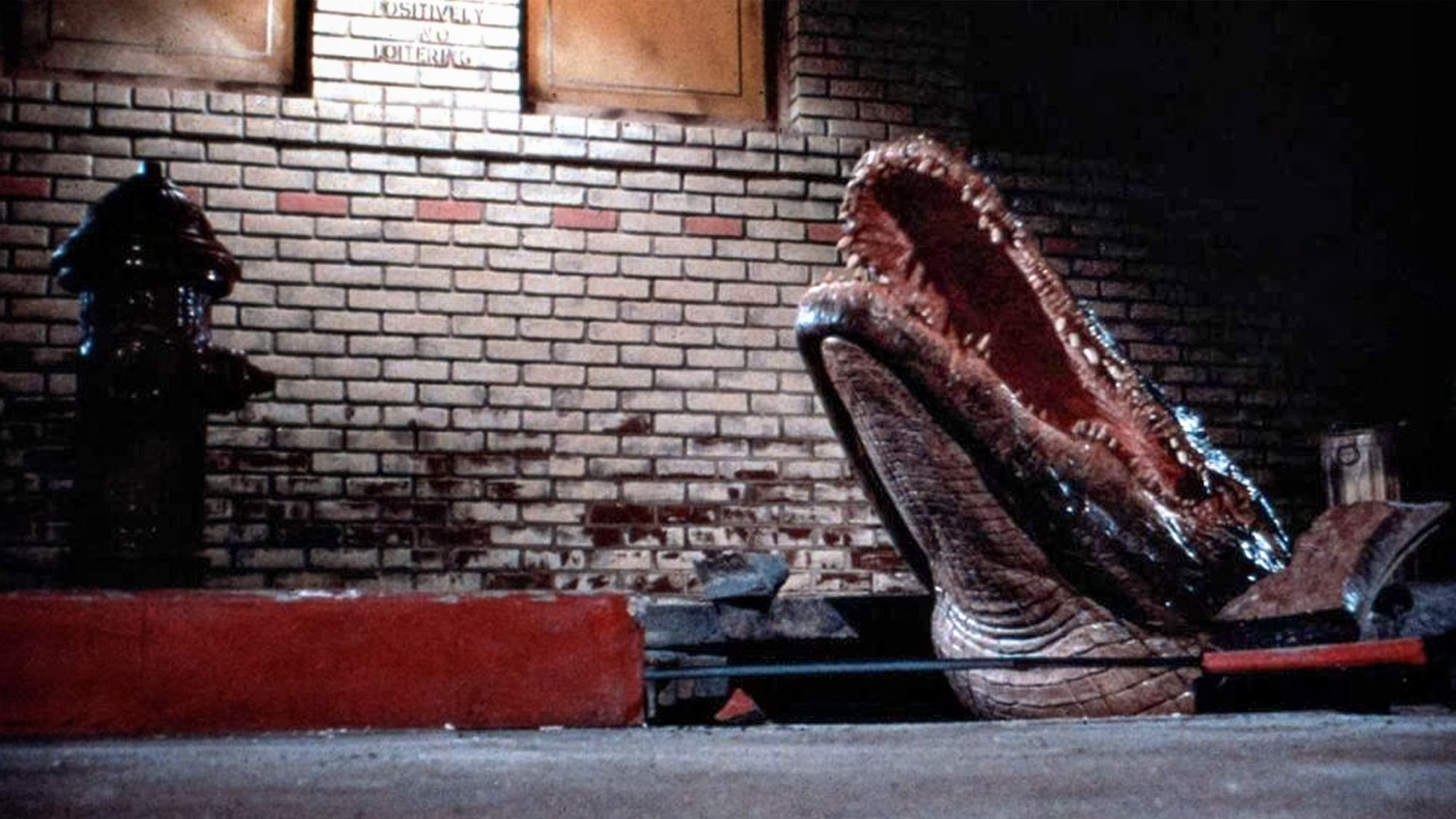
Best Movie: A fearsome, insatiable predator lurks around the margins of a community, at first picking off isolated victims, gradually becoming bolder. Eventually, a dedicated police officer and a scientific expert put the clues together and battle the monster, in the face of political opponents dedicated to business as usual. Yes, Alligator is basically another riff on Jaws, but it’s an accomplished imitator with enough going for it that it stands on its own. John Sayles’ screenplay is full of memorable turns of phrase and scene-stealing characters, and Lewis Teague brings the story vividly to life, with expressionistic lighting and claustrophobia-inducing camera angles in the sewers where the abandoned baby gator grew up, before bringing it out into the open for some very satisfying carnage.

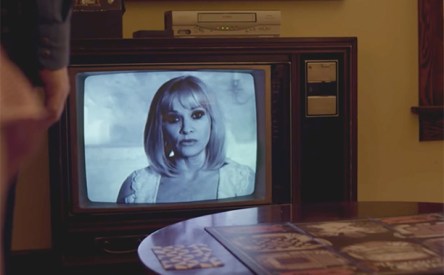
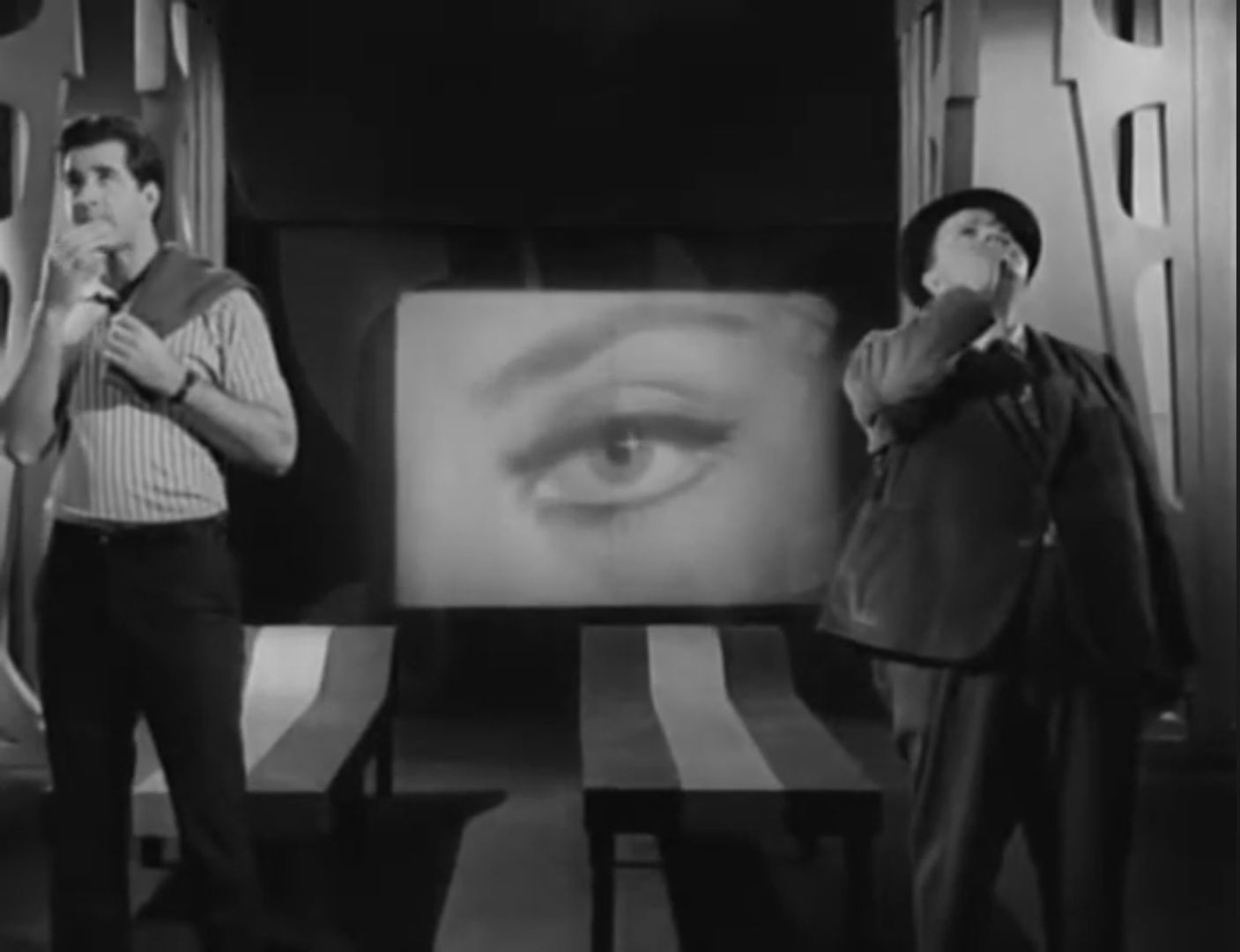
Worst Movie: It makes sense for The Video Dead to be paired with TerrorVision: both are mid-‘80s features about weird things emerging from TV screens, with some nods to MTV-era youth culture. But the pairing does The Video Dead no favors: where TerrorVision is acidly funny, satirizing Cold War paranoia, Me Generation self-indulgence, and dopey monster movies, with big performances and colorful production, The Video Dead is drab, slow-paced, and is just downright dour for a movie about zombies from a haunted TV set. I don’t know if it’s impossible for a film with such a silly premise to successfully explore themes of grief and trauma, but The Video Dead sure isn’t that movie.

Scariest Movie: I was terrified by spiders as a kid, so I didn’t go out of my way to watch Something Wicked This Way Comes when it was released. By the time I was more interested in it (I read the Ray Bradbury novel on which it’s based a few years ago), it had become somewhat difficult to find, and had a reputation as one of those 1980s kids’ movies that were too dark and scary for their target audience, like Return to Oz. I don’t want to claim it’s scarier than really brutal movies aimed at adults, but it is pretty intense, with Jonathan Pryce as the Satanic Mr. Dark and Jason Robards as a man confronting his mortality both selling the high stakes of their conflict. And the spider scene is still shocking, like a left turn into Lucio Fulci territory, its suddenness as horrifying as the arachnid invasion itself.

Least Scary Movie: I have a fondness for the hour-length B-movies of the 1930s and ‘40s, many of which were “old dark house” mysteries, featuring strangers gathering at inns or stranded at remote country houses. In the early 1940s, quite a few of these hinted at supernatural phenomena but almost always ended up with rational explanations. I watched a couple of these films this October, and I actually enjoyed Haunted House the most. It’s a charming comedy about a pair of over-eager teenage detectives trying to help a friend accused of murder, and they do eventually end up in the “haunted” house of the title. But this isn’t even a mystery in the Scooby-Doo sense, with real-life criminals trying to frighten people away, as in so many of these films; it’s just an empty house with something hidden in it. As I said, this movie was fun, but scary? It’s not even trying to be.

Goriest Movie: This year there is only one contender for this honor: Organ begins as an expose of a black market organ harvesting ring in Tokyo, and that was probably the real-life inspiration for the film. But it quickly goes in a different direction, exploring the parallel stories of a deranged amateur surgeon who chops up bodies to fulfill his own warped desires, and the disgraced cop who lost his partner to the same man. Organ’s director, Kei Fujiwara, starred in Tetsuo: The Iron Man, and brings some of that film’s avant-garde sensibilities to her project, examining without pity the many ways in which flesh and the human body can fail or be destroyed. Also like Tetsuo, Organ is a little hard to follow, jumping chronologically and between characters in an almost stream-of-consciousness manner. But the plot is less important than the imagery, the most striking of which comes from the memories and imagination of the killer.

Funniest Movie: I watched a few horror comedies this past month, but none of them really blew me away. Student Bodies specifically spoofs the wave of slasher movies that followed the success of Halloween and Friday the 13th, and it has some laughs, but it’s pretty dated and scattershot as well; Evil Laugh, while not quite a comedy, is another meta slasher that includes a horror-fan audience surrogate character a few years before Scream made everyone into genre experts. Scare Package is probably the most satisfying, intentionally funny movie of the month, although even there it’s a mixed bag. It’s an anthology film and a tribute to the video stores of yore, with the frame story taking place in “Rad Chad’s Horror Emporium” and the individual stories purported to be video tapes from Chad’s shelves. Some entries play it more straight than others, but the chapter that has stuck with me is also the most mystifying: in “So Much to Do,” by Baron Vaughn, a woman goes to incredible lengths to avoid spoilers for her favorite TV show. It’s the kind of thing that probably wouldn’t work as a feature on its own, but it’s just right as a weird, funny interlude.

Weirdest Movie: Speaking of weird and funny, Rubber is my first film by Quentin Dupieux, who has a reputation as a provocateur. I wasn’t sure how I would feel about this one: even though I enjoy genre-challenging, fourth wall-breaking metanarrative, I get annoyed when I feel like I’m being jerked around, and Dupieux pretty much begins the film by announcing that he’s going to be jerking us around, and to expect things to happen for “no reason.” But I had a good time with this; the story of an abandoned car tire that somehow becomes sentient and goes on a killing spree, rolling across the southwest and blowing things up with unexplained mental powers, is a parody of absurd monster movies, and by itself there’s not much to it. But everywhere the tire rolls it gathers new characters and perspectives, and every time things threaten to fall into a predictable rut, the ground shifts, putting events in a different light.

I hope you had a great Halloween this year. Thanks for reading!
Down the Witch’s Road: Spooktober 2024

Happy All Saint’s Day! October was a busy month for me, but I still managed to fit some Halloween-themed activities into it. Last night, I handed out candy to trick-or-treaters with my wife. We noticed, in contrast to previous years, that it was mostly older (middle or high school-aged) kids that came to our door. There was at least one church-sponsored “trunk or treat” going on at the same time, as well as some earlier in the week around town, so perhaps that’s where the littles were. I’d say the low turnout was because it was a school night, but that’s never stopped trick-or-treaters in the past, and most of the schools around here have the day off today anyway. But we had nice weather (in contrast to a heavy thunderstorm that roared through the area on Wednesday evening) and enough traffic to say it was worth it.

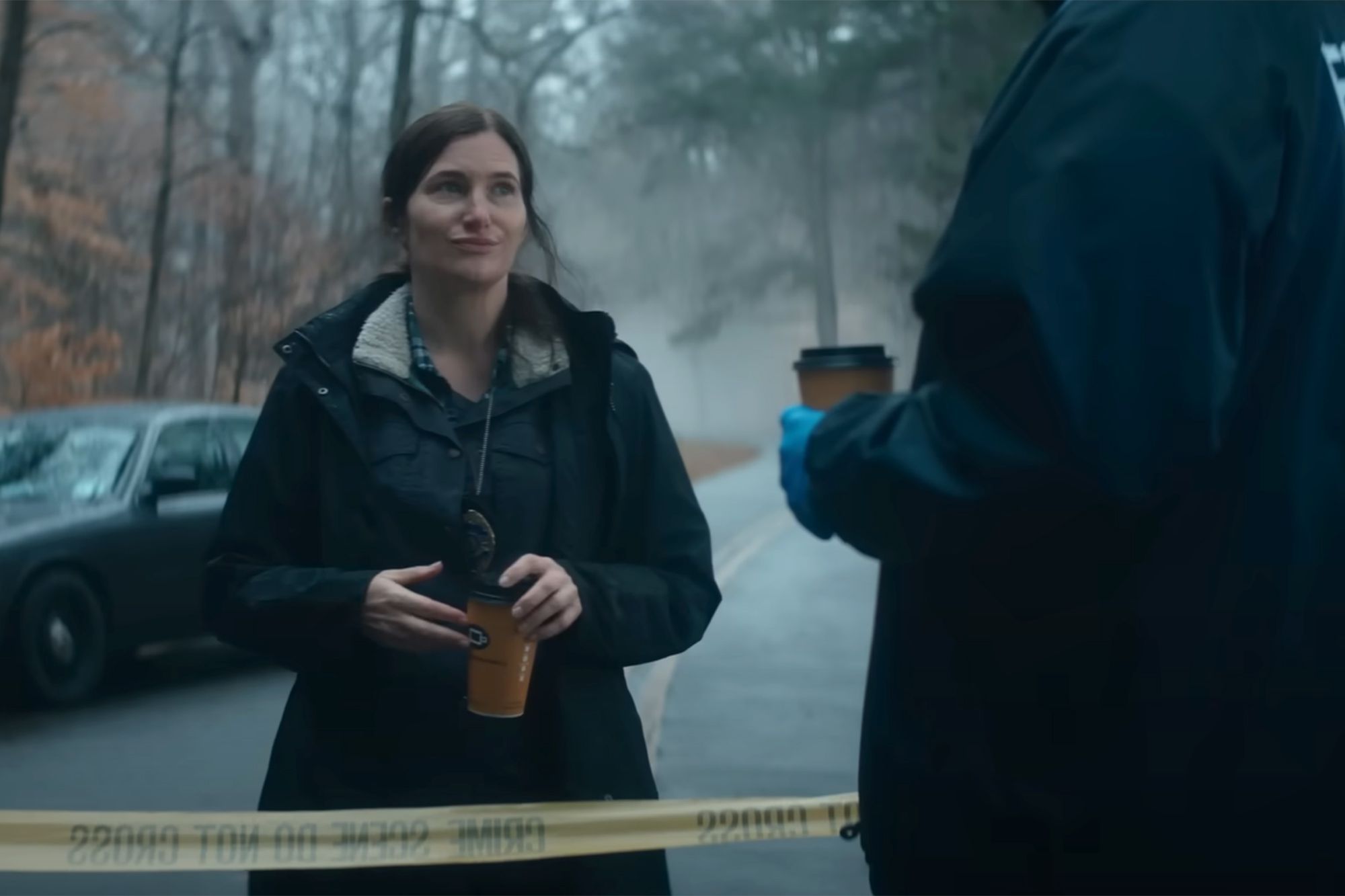
On the streaming/TV front, I watched the Disney/Marvel series Agatha All Along, the follow-up to WandaVision and a perfect choice for the spooky season. It follows the witch Agatha Harkness (Kathryn Hahn), who was left powerless and trapped in the suburbs at the end of WandaVision; freed from the spell by an aspiring teenage witch with a mysterious identity (Joe Locke), Agatha agrees to gather a coven and walk the “Witch’s Road” to recover her power. Like WandaVision, Agatha All Along is one of the few Marvel TV projects that takes advantage of the structure of episodic television: the first episode is a parody/homage of prestige detective shows in the same way WandaVision aped the sitcom format over the decades to further its themes. Once Agatha is released from the illusion of being a world-weary small-town detective, the stations and challenges of the Witch’s Road lend themselves to an episodic treatment. The use of Lost-like flashbacks and time jumps and the focus on individual characters (each member of the coven is broken in their own way, walking the Road to recover their power or their purpose), leaving something for the viewer to chew on each week, also recall the best of the format.

The “folk horror” boom of recent years, especially since the release of the documentary Woodlands Dark and Days Bewitched, has also clearly had an impact on Agatha All Along. Although the Witch’s Road and the ballad that features prominently in the series are original creations, the treatment of magic and witchcraft is more detailed and specific than has been the norm in the Marvel universe, keeping the fantasy grounded in something like history and tradition. But, appropriate for a character as ambiguous as Agatha, fakery and skepticism are also taken seriously, and the series doesn’t shy away from confronting the “fakelore” that has often been a part of modern witchcraft.

It’s an engaging journey with twists and turns (and, since this is still a Marvel production, the ending sets up future stories and characters, but at least there are resolutions to all the big questions, making this more satisfying than WandaVision’s ending), and fun, lively production design (the costumers in particular must have had a blast making this).

On the other hand, I didn’t watch as many movies as usual. Sadly, I didn’t even make it out to see a movie in a theater (or anywhere else) all month, possibly the first time since I started this blog that I didn’t include a theatrical experience at all. So this year’s viewing is divided between things I could stream and catching up on my pile of unwatched discs. Only two movies were rewatches (Mexican film The Bat Woman was sort of a rewatch, but this was the first time I had watched it in English!). Every year I say, “Maybe next year I’ll concentrate on rewatching some old favorites,” but there’s always so much I haven’t seen that I never do.

1. Milk & Serial (Curry Barker, 2024)

2. Elvira’s Haunted Hills (Sam Irvin, 2001)

3. Carry On Screaming! (Gerald Thomas, 1966)

4. Hundreds of Beavers (Mike Cheslik, 2022, U.S. national release 2024)

5. The Mummy and the Curse of the Jackals (Oliver Drake, 1969)

6. Prisoners of the Ghostland (Sion Sono, 2021)

7. Night of the Bloody Apes (René Cardona, 1969)

8. Doctor of Doom (René Cardona, 1963)

9. The Nightmare Before Christmas (Henry Selick, 1993) rewatch

10. The Bat Woman (René Cardona, 1968)

11. The Panther Women (René Cardona, 1967)

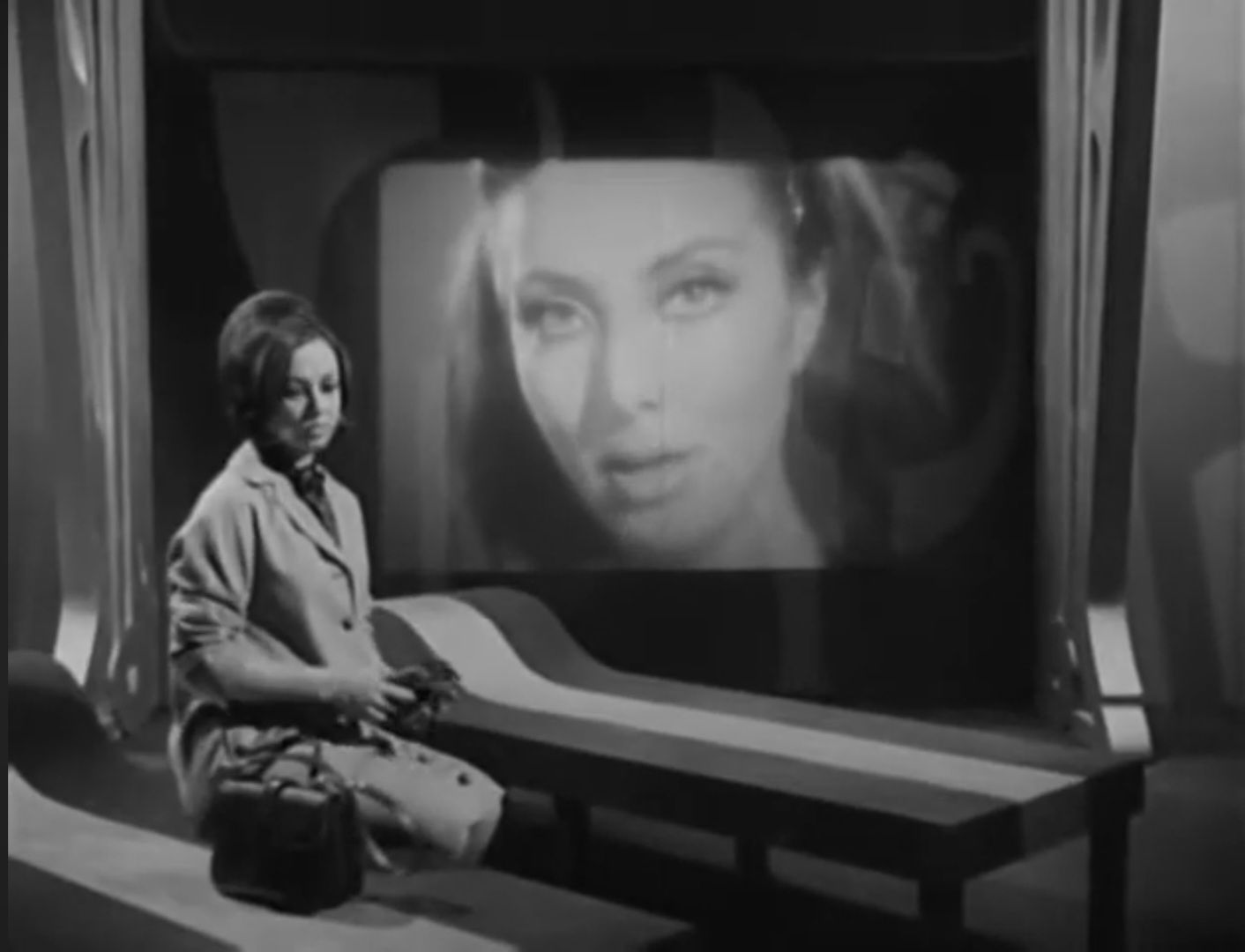
12. Planet of the Female Invaders (Alfredo B. Crevenna, 1966)

13. Curse of the Blue Lights (John Henry Johnson, 1988)

14. Santo in the Wax Museum (Alfonso Corona Blake and Manuel San Fernando, 1963)

15. Kekko Kamen 2: We’ll Be Back (Yutaka Akiyama, 1992)

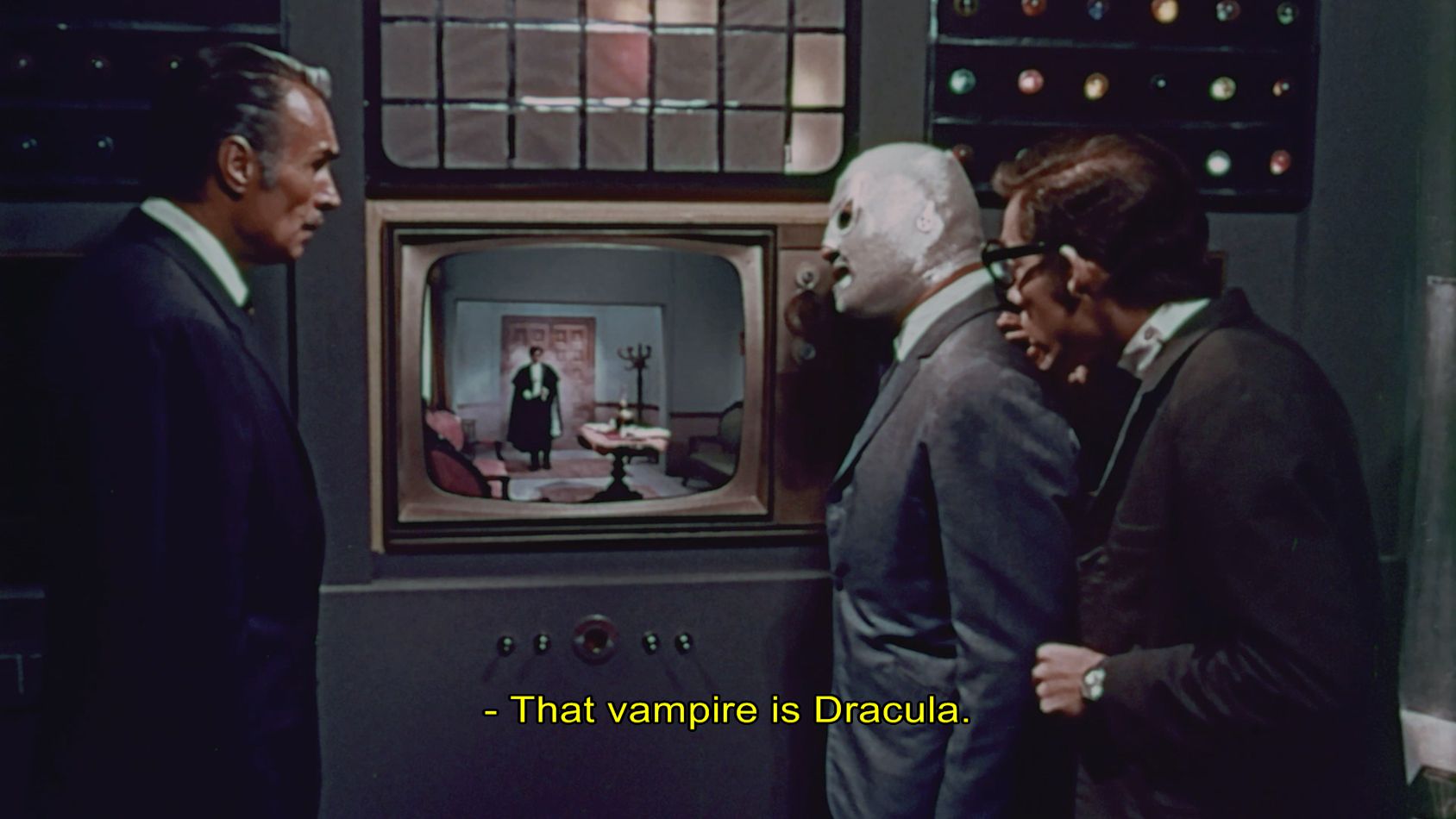
16. Santo in the Treasure of Dracula (René Cardona, 1969)

17. The Addams Family (Barry Sonnenfeld, 1991) rewatch

18. Slaughter Day (Brent Cousins, 1991)

19: We Kill for Love (Anthony Penta, 2023)

20. WAVE of Terror (Gary Whitson, 1988)

21. Santo vs. the Martian Invasion (Alredo B. Crevenna, 1967)

22. Robo Vampire (Godfrey Ho and Joe Livingstone, 1988)

23. The Wind (Emma Tammi, 2018)

Best Movie: There is a fine line between upending your audience’s expectations and jerking them around. The first time I tried to watch Lake Michigan Monster, I bounced off its arch tone: it struck me as being what Wes Anderson haters think Anderson’s movies are like. I did try again and ended up liking parts of it, but I also found myself irritated by its continual nudges to my ribs. Lake Michigan Monster’s follow-up, made by many of the same people, though not the same director, succeeds in part by keeping its comedic targets focused and letting the jokes land by themselves. It’s a Northwestern, a genre all but dead in recent decades; a silent-film pastiche with musical interludes; and, ultimately, a live-action cartoon. Ryland Brickson Cole Tews (who directed and starred in Lake Michigan Monster) plays Jean Kayak, an applejack salesman forced to fend for himself in the woods when his orchards go up in smoke after a too-lively night of carousing. He eventually comes under the wing of a Master Trapper who shows him the ropes. When Kayak falls in love with the daughter of the Fur Trader who keeps everyone supplied, the Trader sets him the impossible task of delivering the pelts of—you guessed it—Hundreds of Beavers.

The forest animals, played by people in mascot costumes, each have their idiosyncrasies and wiles, and a big part of the film consists of Kayak learning to play them off each other, getting traps to work and setting up Rube Goldberg-like chain reactions. (Hundreds of Beavers is quietly one of the best video game movies ever, even though it’s not specifically based on a game—through grinding, Kayak levels up from a noob who can’t even keep a fire lit through the night to an epic power player who can take out enemies in one blow, infiltrate the bad guys’ headquarters, and defeat the boss.) Meanwhile, the beavers are up to something bigger than an ordinary dam, and some surprisingly civilized beavers are following the trail of dead animals Kayak has left behind him. Hundreds of Beavers is primarily a comedy, and the few moments that could be described as horror are also played for laughs, but the film strays outside the bounds of realism, and the degree of stylization puts it in company with other past “weirdest” movies like Dave Made a Maze, so I have no trouble counting it as Spooktober viewing.

Runner-Up: I spent a good chunk of the month exploring Mexican genre movies, which I’ve dipped into in the past. This time, I ended up mostly watching movies about luchadors and luchadoras (wrestlers), including some starring Santo, the man in the silver mask, who in addition to being a champion wrestler is depicted as a detective and inventor. The majority of these films were made by the same group of personnel, so I saw several directed by René Cardona, Sr., and many of the same actors turn up in more than one of them. While looking up information about Maura Monti, the statuesque beauty who starred in The Bat Woman (not to be confused with the American Wild World of Batwoman, but just as much a cash-in on the Batman TV show craze), I found a reference to Planet of the Female Invaders, which was new to me. An example of the “Space Amazon” subgenre, it features Monti playing a dual role as the good and evil sisters who jointly lead a race of women on the dying planet Sibila. The evil queen’s plan to abduct earthlings in preparation for taking over Earth is typical of the genre, but unlike many such films, it plays it straight and does it with a lot of style.

Worst Movie: When it comes to the shot-on-video horror boom of the 1980s, fueled by cheap camera technology and a rental market hungry for product, I often like the idea of the made-on-a-shoestring, stream-of-consciousness, friends-goofing-around home movie more than I like the end result. But I keep watching, out of curiosity and hope, and out of appreciation for the amount of work that went into even the most primitive homebrew slasher. It’s inspiring, in a way—when I watch a Roger Corman film or something like The Blair Witch Project, I think, “I could do that,” and I’m impressed by friends and acquaintances who’ve actually done it. But watching these movies can also take a lot of patience, and unfortunately it’s hard for me to say that Slaughter Day is more than “interesting” to me. Shot in Hawaii, Slaughter Day depicts a disgruntled, gas mask-wearing day laborer who gains occult powers from the Necronomicon (specifically H. R. Giger’s Necronomicon, an art book by the Swiss Alien designer, the film’s funniest—unintentional?—joke). And then he kills a bunch of people until some of them fight back and—eventually—kill him. There are some cool moments in this, so I didn’t think it was completely terrible—I’d definitely rather watch this than Doll Face again—but it works better as a sizzle reel for fight choreography and special effects than as a story.

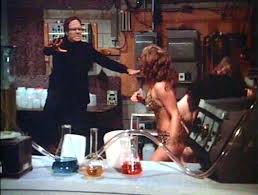
Funniest Movie: Part of a long-running series of British comedies, Carry On Screaming! is the one horror spoof in the series (I think), mostly riffing on the Edgar Wallace “stiff-upper-lip Scotland Yard detective in foggy Olde London” subgenre. A series of abductions of young women leads to a mad scientist who is turning them into dummies for department store windows. It’s all quite silly, but it works, much of it coming down to the chemistry of the regular Carry On players: knocking one or two of these out every year makes for disciplined filmmaking, at the very least.

Scariest Movie: Found footage can be tricky, although with ubiquitous cell phones and security cameras all over most urban areas, it doesn’t take as much justification for events to be caught on tape as it used to. I wasn’t familiar with Curry Barker, who has put a number of horror shorts on his YouTube channel, but Milk & Serial is right at home on the platform, purporting to be the raw footage from the members of a YouTube prank channel. They naturally film themselves and each other all the time, with other characters even pointing out the cameras when they don’t want to be filmed (the cameras surreptitiously stay on, which is one of the first clues that the pranks are a cover for more antisocial instincts). There aren’t a lot of jump scares in this, but it’s creepy in a believable way and the feeling of dread mounts as the masks come off.

Goriest Movie: Night of the Bloody Apes, in its English-language form, is one of the infamous “video nasties” banned in the 1980s in the UK. As I learned, it had a tangled history: a loose remake of the movie known as Doctor of Doom in English, it was filmed with an all-ages audience in mind for domestic release. Like many Mexican films of the time, it had alternate “sexy” takes filmed with added nudity for international markets (Santo in the Treasure of Dracula is one of the more notorious examples, but I watched the all-ages version of that this month). The American producer who bought the rights and gave it its English title added even more scenes of gore (and some brutal sexual violence), as well as (apparently real) heart surgery footage (the plot involves a surgeon transplanting a gorilla’s heart into his dying son’s body, which goes about as well as you’d expect). It’s a bloody movie, but overall not especially great. I enjoyed the far tamer Doctor of Doom much more.

On the more fun but still gory side, Curse of the Blue Lights was a low-budget production made in Colorado, and its tale of ghouls (in the classic sense of flesh-eating undead creatures) moving into an abandoned mansion in order to revive their ancient god has plenty of goopy, ooky practical effects depicting bloody violence, sucking pits of filth, and other horrifying sights. In several shots, corpses are reduced to slurry to feed the slumbering demon, a slurry that is clearly canned pork and beans. 

Weirdest Movie: Nicolas Cage plays a former bank robber, a prisoner pressed into “rescuing” a girl who has run away from her role as a glorified concubine in an oppressive, post-apocalyptic city-state. That’s just the logline of Prisoners of the Ghostland, which also includes some literal ghosts (it’s not just a metaphor), a cult dedicated to halting the forward movement of time, and a garden of people dressed as mannequins. While I enjoyed it, you could imagine it was built with a Cult Movie Construction Kit, considering all the eye-catching motifs involved: It’s got samurai! Cowboys! Custom cars! Nicolas Cage himself! A scene in which the corrupt mayor sends Cage out into the wilderness with a new car, only for Cage to get out and steal a child’s bicycle, pedal a few dozen yards, give up, and get back in the car, is typical. Cage might be messing with us, just having a little fun, but can we prove director Sion Sono isn’t?

At the opposite end of the budget spectrum, but with a surprisingly similar vibe, Robo Vampire is another mash-up of sci-fi and fantasy tropes, with a bootleg Robocop (a drug agent killed in the line of duty and brought back to cybernetic life by science) facing a drug lord and his squad of Chinese hopping vampires. The lead “vampire beast,” created(?) by the Taoist monk in charge of the vampires, has a face like a gorilla and is married to a ghost. The characters fight by shooting Roman candles and fireballs at each other. It’s all in fun, though, even when it doesn’t make a lot of sense: unlike some of Godfrey Ho’s films, at least Robo Vampire appears to be made up of scenes that were all shot for a single movie, although I could be wrong about that.

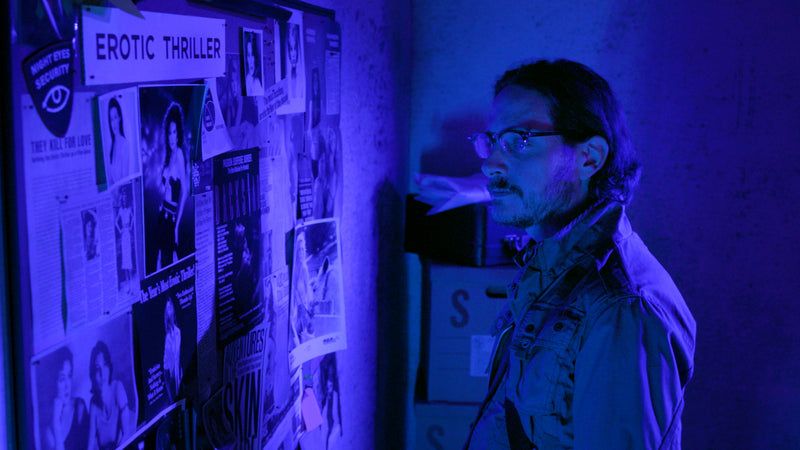
Most Informative: Speaking of Woodlands Dark and Days Bewitched, like that film, We Kill for Love is a deep dive into a specific subgenre, investigating literary and cinematic roots; looking at the sociological, technological, and commercial forces that came together to give birth to it; discussing recurring tropes; and interviewing theorists, historians, and people who worked on the movies under discussion. Subtitled “The Lost World of the Erotic Thriller,” We Kill for Love focuses on the direct-to-video and cable movies that braided together film noir, gothic romance, and softcore erotica in the 1980s and ‘90s, the kinds of movies that made Cinemax famous as “Skinemax” and put Showtime on the map as opposed to the classier, Hollywood-oriented HBO. (Mainstream hits like Fatal Attraction and Basic Instinct come in for discussion as well, as those movies sparked their own imitators, such as the DTV Fatal Instinct.) I actually think this is a better film—as a movie rather than an information-delivery vehicle—than Woodlands Dark, possibly because the tropes of the erotic thriller were more codified, so there’s less “feature creep” in exploring them, but also because the central question of We Kill for Love—why don’t they make ‘em like this anymore?—makes the documentary something of a mystery to unravel itself. The frame of an investigator digging through dossiers and video tapes, accompanied by a sultry voice-over, is a nice touch, like we’re watching an extra-long episode of The Red Shoe Diaries.

Thanks for reading, and have a great Fall!

Spooktober 2023: My Dinner with Lon

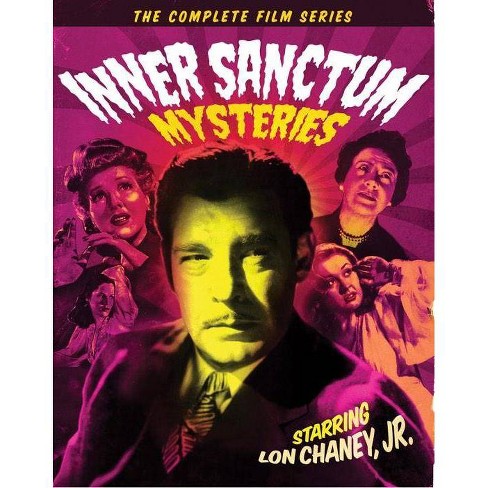
During the Golden Age of Hollywood, Lon Chaney, Jr. was one of our finest players of big galoots. His meaty, jowly features made him a natural for louts, pugnacious but loyal best friends, or the occasional tragic figure like the Wolf Man. Chaney was, by all accounts, not very pleasant to be around in real life, and he didn’t usually get to play the leading man, but his tormented qualities make him perfect for the six films of the Inner Sanctum Mysteries with which I began my October. Spun off from Simon & Schuster’s branded line of suspense novels and the more famous radio show, each film tells a self-contained story. In each one, Chaney plays a professional man—a doctor, lawyer, an artist—whose success (and alliance with a series of beautiful female leads) can’t protect him from the strange crisis that afflicts him. Most of these films are murder mysteries with a seemingly paranormal twist—someone close to the hero dies through mysterious means, and suspicion falls on him—but the real theme is the unknown dangers that lurk in the subconscious mind. “Yes, even you, without knowing, can commit murder,” intones the disembodied head that introduces each installment. Aping the format of the radio show, the first few films feature extensive scenes of Chaney whispering to himself in voice-over as he tries to understand the predicament he’s in and find a way out. The ultimate materialism of the resolution doesn’t feel like a cop-out, however, as there’s a good bit of spooky atmosphere accompanying the film noir hand-wringing, and even the weakest of them build to an exciting ending.

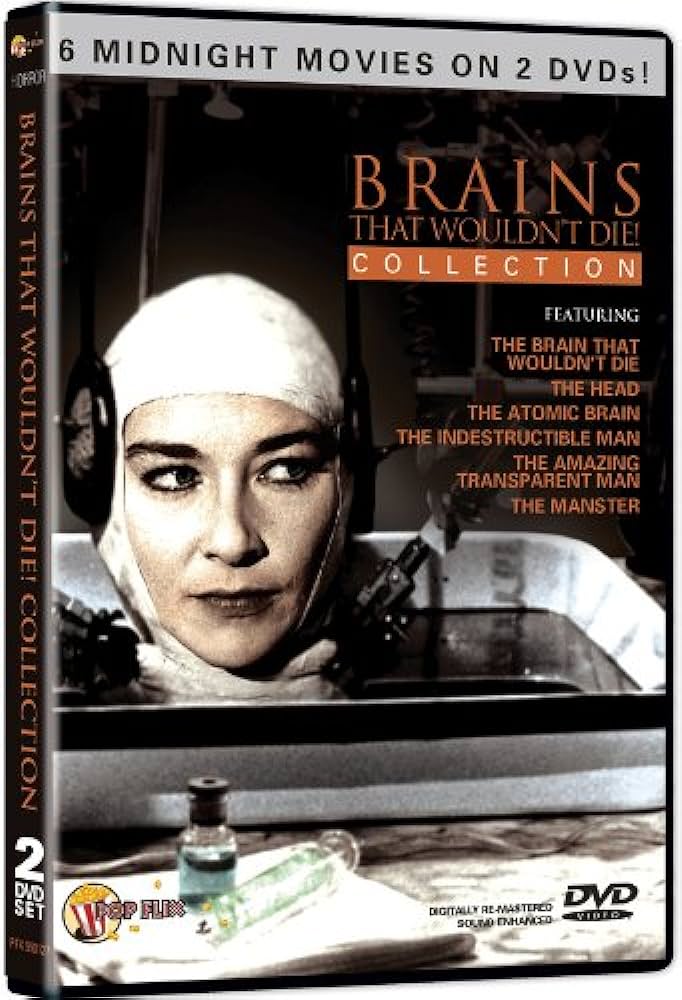
Having bought the Inner Sanctum Mysteries Blu-ray set just before the beginning of the month, for the first part of my marathon I continued watching older B movies. Another film collection, themed around severed heads and mad science, helped me continue the pattern. To avoid choice paralysis, it’s often easier to binge a series or work my way through a collection like that (it helped that most of those older movies are little more than an hour long). But I also caught up on some recent horror movies that I hadn’t seen yet. The unfortunate closure of the downtown Regal theater means that there wasn’t an October at the Oldtown retro horror series to guide my viewing choices, and with an overall busy month, I guess this is what my list looks like when I’m left to my own devices. As you can see, I didn’t even make it to thirty-one movies for the first time in several years.

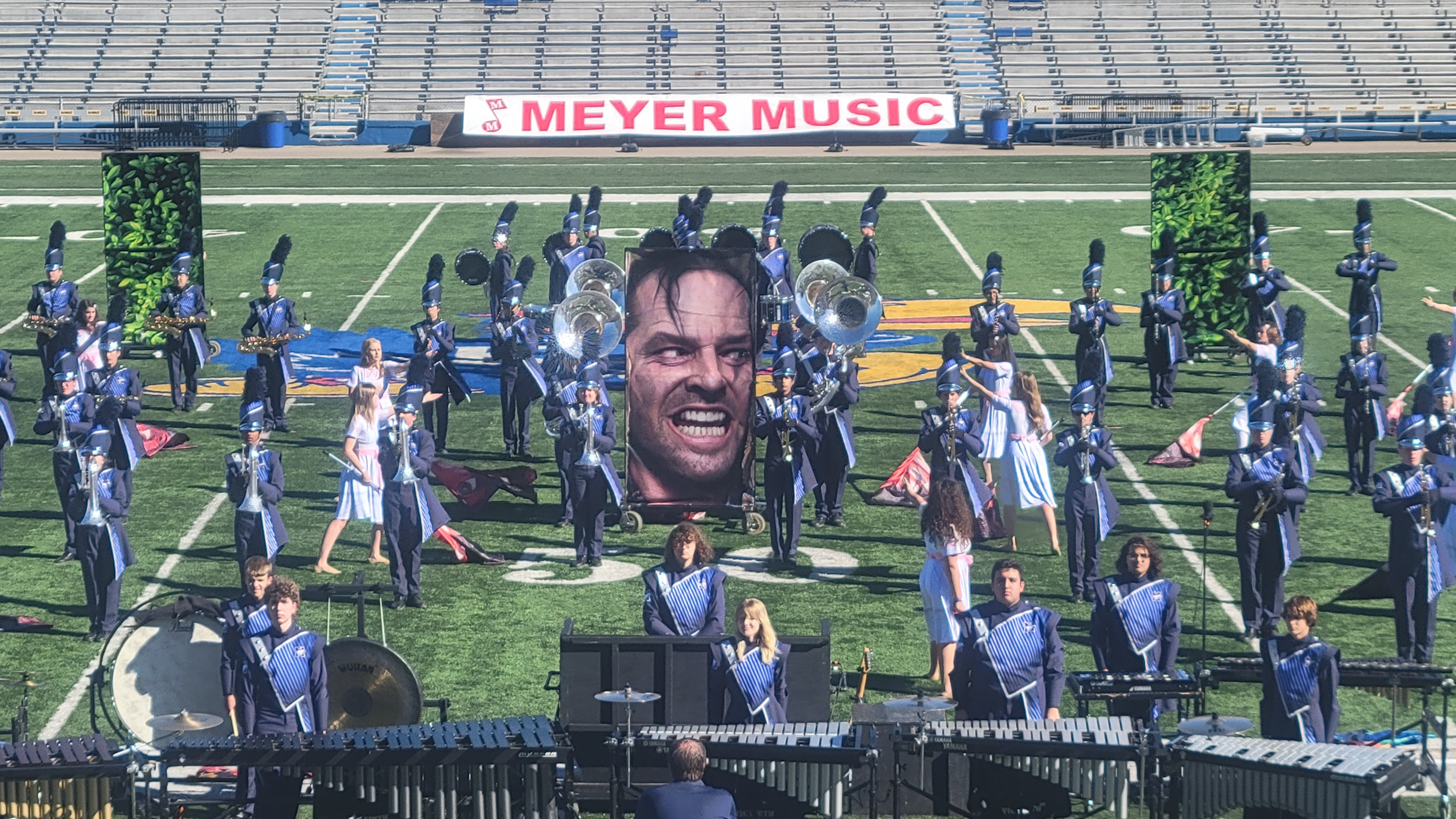
One finds spooky inspiration in unexpected places: I attended a marching band competition and saw Blue Valley North’s halftime show based on The Shining. Yes, the whole show.

1. Calling Dr. Death (Reginald Le Borg, 1943) is

2. Weird Woman (Reginald Le Borg, 1944) is (Based on Fritz Lieber’s novel Conjure Wife, this was my favorite of the Inner Sanctum Mysteries.)

3. Dead Man’s Eyes (Reginald Le Borg, 1944) is

4. The Frozen Ghost (Harold Young, 1945) is

5. Strange Confession (John Hoffman, 1945) is

6. Pillow of Death (Wallace Fox, 1945) is (This one is pretty bizarre, but its twists are perhaps best appreciated after seeing the previous films in the Inner Sanctum series.)

7. The Head aka Die Nackte und der Satan (Victor Trivas, 1959) btwd

8. Indestructible Man (Jack Pollexfen, 1956) btwd (another Lon sighting!)

9. A Haunting in Venice (Kenneth Branagh, 2023) *

10. The Amazing Transparent Man (Edgar G. Ulmer, 1960) btwd

11. The Phantom of the Opera (Rupert Julian, 1925) * (Lon, Sr.)

12. The Manster (George P. Breakston and Kenneth G. Crane, 1959) btwd (It’s always fun to discover another movie that was excerpted in It Came From Hollywood. Now I’m imagining an alternate 1980s in which David Cronenberg made a big-budget remake of this instead of The Fly.)

13. Renfield (Chris McKay, 2023)

14. Cocaine Bear (Elizabeth Banks, 2023)

15. Ruby (Curtis Harrington, 1977)

16. A*P*E (Paul Leder, 1976)

17. Phantom of the Paradise (Brian De Palma, 1974) *

18. Smile (Parker Finn, 2022)

19. Beast from Haunted Cave (Monte Hellman, 1959)

20. M3GAN (Gerard Johnstone, 2023)

21. Space Monster Wangmagwi (Kwon Hyeok-Jin, 1967 but feels ten years behind; a long-lost kaiju movie from South Korea)

22. Beetlejuice (Tim Burton, 1988) r

* theatrical/public viewing

r rewatch

is an Inner Sanctum Mystery

btwd from the Brains That Wouldn’t Die collection

With the exception of Beetlejuice, all of these films were first-time viewings.

Best movie: The shock of Lon Chaney, Sr.’s unmasking has been dulled by repeated exposure over the years, but being the most recognizable image from a film full of grandiose spectacle and a literal cast of thousands hasn’t hurt The Phantom of the Opera in the least. I had the opportunity to see this silent masterpiece with the live accompaniment of theater organist Clark Wilson on Wichita’s own Wurlitzer at Century II Exhibition Hall. I also enjoyed the rock-themed update Phantom of the Paradise (which combines the core idea of a disfigured musician hiding in a theater with elements of Faust), which had been on my list to see for a long time and lived up to my expectations for it.

Worst movie: The German-made mad science film The Head isn’t terrible—it gets a lot of mileage from expressionistic shadows and Horst Frank’s comically heavy eyebrows—but it doesn’t bring much new to the subgenre of Donovan’s Brain-inspired tales and is paced at a deadly crawl. After proving that his serum can keep a dog’s head alive after being severed from its body, Dr. Abel (Michel Simon) finds himself put in the same position by the unscrupulous Dr. Ood (Frank) after a bungled heart surgery. As a disembodied head, Abel can only sit in his tank, begging for death, while Ood takes over his lab and performs a body-switching operation on the beautiful but hunchbacked Irene (Karin Kernke). Since this is stylistically similar to the German krimi films of the period, it spends as much time at a nightclub as in the lab, but its leaden pace ultimately weighs it down.

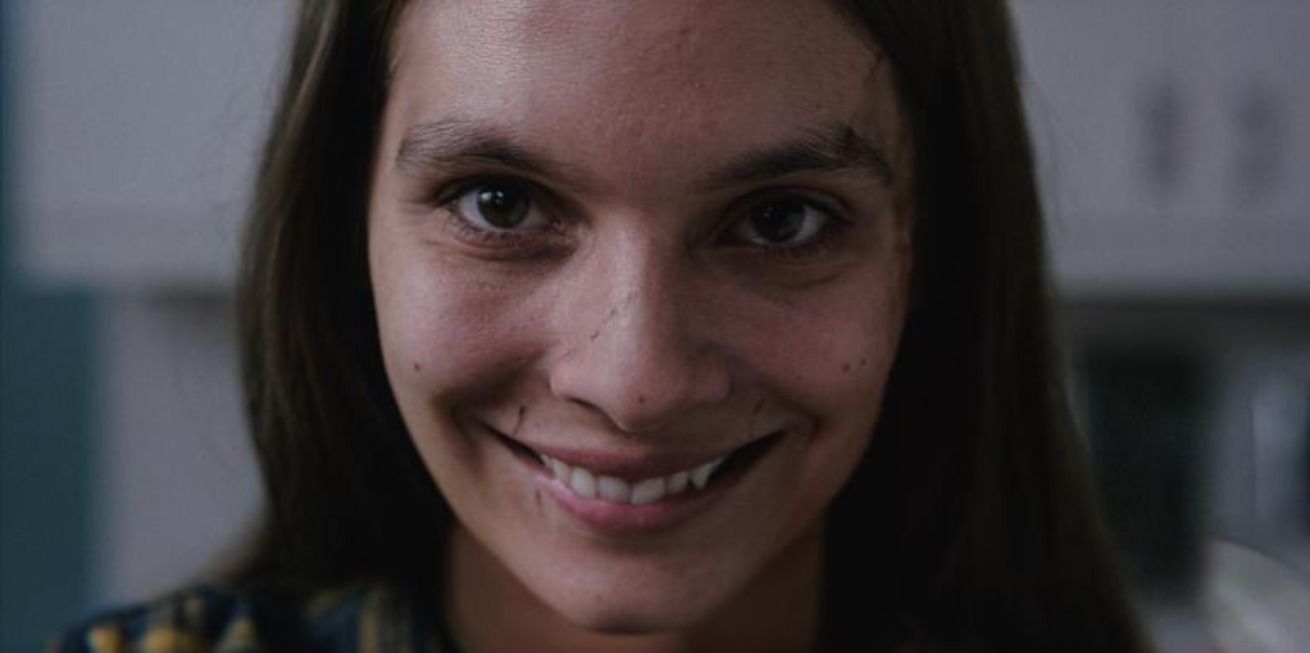
Scariest movie: I don’t think I watched anything that is going to keep me up at night, but of this year’s crop, Smile was the creepiest. Rose (Sosie Bacon), a doctor at an emergency psychiatric hospital, witnesses the violent suicide of a young woman who dies with a disturbing smile on her face. After that, Rose feels haunted by an evil presence, including visions of people she knows smiling in the same sinister way. (This is also the goriest movie I saw this month, so there is no separate write-up for that category.) As her life falls apart, and with her colleagues and loved ones convinced that she’s losing her mind, Rose discovers evidence that she’s been targeted by a body-hopping demon that drives its victims first to madness, then to suicide, fueled by memories of Rose’s mother taking her own life. Yes, like so many contemporary films exploring the trauma of modern living, this is a movie about grief. (Even the campy robot doll movie M3GAN begins with the abrupt death of a young girl’s parents, and much of that film’s drama hinges on the question of how she will move on and who—or what—she will become attached to in her parents’ absence.) Smile manages to balance its downer subject matter with some honest scares, and while some viewers were apparently disappointed by its resolution, I found it a good balance of therapeutic exploration and reminders that, hey, this is actually supposed to be a horror movie. There are no promises of a happy ending.

Funniest movie: Renfield, like the earlier vampire comedy What We Do in the Shadows, gets a lot of mileage out of the comparison between thralldom and codependent relationships. Robert Montague Renfield (Nicholas Hoult), the pathetic, bug-eating servant of Count Dracula (Nicolas Cage), knows that he has sold his soul to his demanding, (literally) monstrous boss, but his only consolation is visiting a self-help group for people in abusive relationships and tracking down the members’ abusers to feed Dracula’s appetite. A chance encounter with the Lobo crime family and the lone honest police officer (Awkwafina) trying to take them down shows him that he can be so much more, perhaps even a hero, and the self-help group gives him the vocabulary to stand up for himself and reclaim his power from Dracula. The combination of action and over-the-top violence (with cartoonish splashes of CGI blood that make Blade: Trinity look restrained) with a comedic tone and touches of fantasy reminded me most of last year’s Violent Night, in which David Harbour played a hard-boiled Santa Claus defending a family against a gang of criminals. I did get a lot of laughs out of this one, and since this was a Universal production it featured a number of shots establishing that it’s a direct sequel to Tod Browning’s 1931 classic. One doesn’t cast Nicolas Cage in a movie like this without expecting him to chew the scenery, but he shows restraint and establishes a continuity with Bela Lugosi’s performance. Oddly enough, this is a more direct continuation of Universal’s classic monster series than most of the attempts to reestablish a shared “Dark Universe” in recent years.

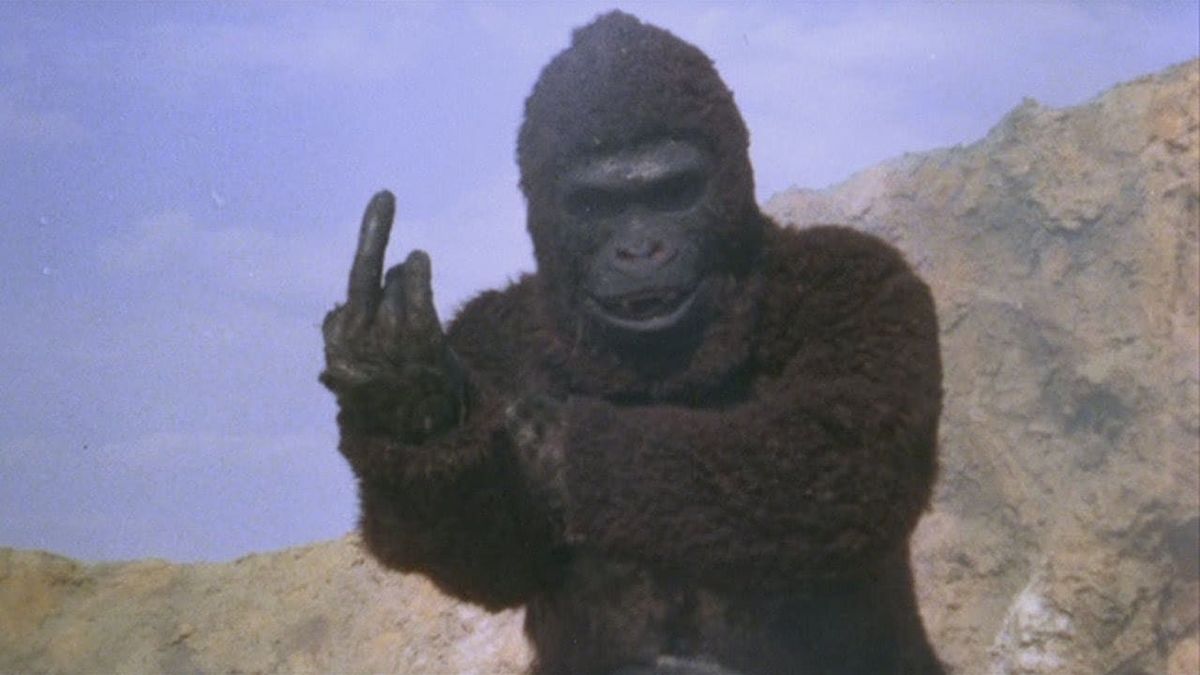
Dumbest movie I’ll probably watch again: I’ve seen a lot of spoofs of giant monster movies, and even put together a list of my favorites. The 1976 remake of King Kong inspired a rush of knock-offs, including Queen Kong, Yeti: Giant of the Twentieth Century, and Wichita, Kansas’ own King Kung Fu. But somehow I went this long without seeing one of the most infamous, A*P*E. It’s absolutely the most shameless in ripping off the original (as well as Jaws, and even the title suggests another big hit of the 1970s, M*A*S*H). It starts on a ship, the ape having already been captured on an island. Two crew members discuss the expedition backers’ plan to put the creature on display, starting at Disneyland. But “Oh shit,” the ape gets loose and, after destroying the ship and fighting a giant shark, lands in Korea. The setting is the only twist on the formula, however, as there is an American movie star (Joanna Kerns) filming on location to fill the Fay Wray part, and the US military is on hand for the big third-act showdown outside Seoul. (So, yes, somehow I ended up watching two films about giant monsters rampaging across Korea and picking up damsels in distress. Even with Space Monster Wangmagwi’s jarring bursts of scatological comedy, it at least tries to be serious.) A*P*E’s tone is wacky, frequently aspiring to a hip, irreverent college sensibility—the Hollywood actress is filming a rape scene when her screaming gets the ape’s attention, and the put-upon Army commander is a high-strung, ineffective striver—but a lot of it is downright silly, with the ape dancing to music and flipping the bird to the Army after destroying their helicopters. Those juvenile elements are more like the kid-oriented Godzilla films coming out at the same time. To bring things full circle, even Godzilla vs. Megalon cashed in on King Kong mania, recreating that film’s iconic use of the then-new World Trade Center towers on a poster, even though the big G doesn’t go anywhere near New York City in his film.

I hope you had a fun and safe Halloween. Thanks for reading!

Ten Years of Medleyana

Yes, that’s right. Ten years ago this month, I launched Medleyana, and it’s still going—well, maybe not going strong, but it’s going. This year in particular has been pretty fallow, and I couldn’t blame anyone for thinking that I’d abandoned it for good. All I can say is that I’ve been occupied with work and other personal projects that have taken up my time, but now I’m back. The approach of the spooky season in October usually gives me something to write about, so at a minimum you can expect a Halloween wrap-up at the end of the month.

But for now, I feel justified in taking a small victory lap and indulging in something I don’t do very often: repackaging old articles in new lists. I’ve gone through my posts and chosen ten of my favorites, one from each year of Medleyana’s existence (counting a year as beginning in September—you can take the academic out of the academy, but . . . ). Some of these are articles I still post links to when I feel compelled to summarize my viewpoint on a particular subject, and others are deep dives into my own personal interests. If you’ve been following me since the beginning, thank you, and I hope these are pleasant reminders of where we came from. If you’re new to Medleyana, consider this a sampler, all of them examples of what I mean by the blog’s slogan, “In praise of the eclectic.”

Everybody’s Looking for Some Action (November 2013)

When I began Medleyana, I started out by writing connected series and multi-subject articles in which I tried to get out ideas that had long occupied me, but even in the first year I started to get the hang of writing focused essays on single subjects. Since this article on collecting comic books was posted, I’ve become more serious about building and organizing my collection, and I ended up writing about comics a fair amount. But I’m still not planning on funding my retirement with them.

In the Hall of Mirrors with Captain Carrot and His Amazing Zoo Crew (October 2014)

This one combines several themes that I returned to over the years: review, commentary, and a bit of history as I look at an idiosyncratic “funny animal” comic book series.

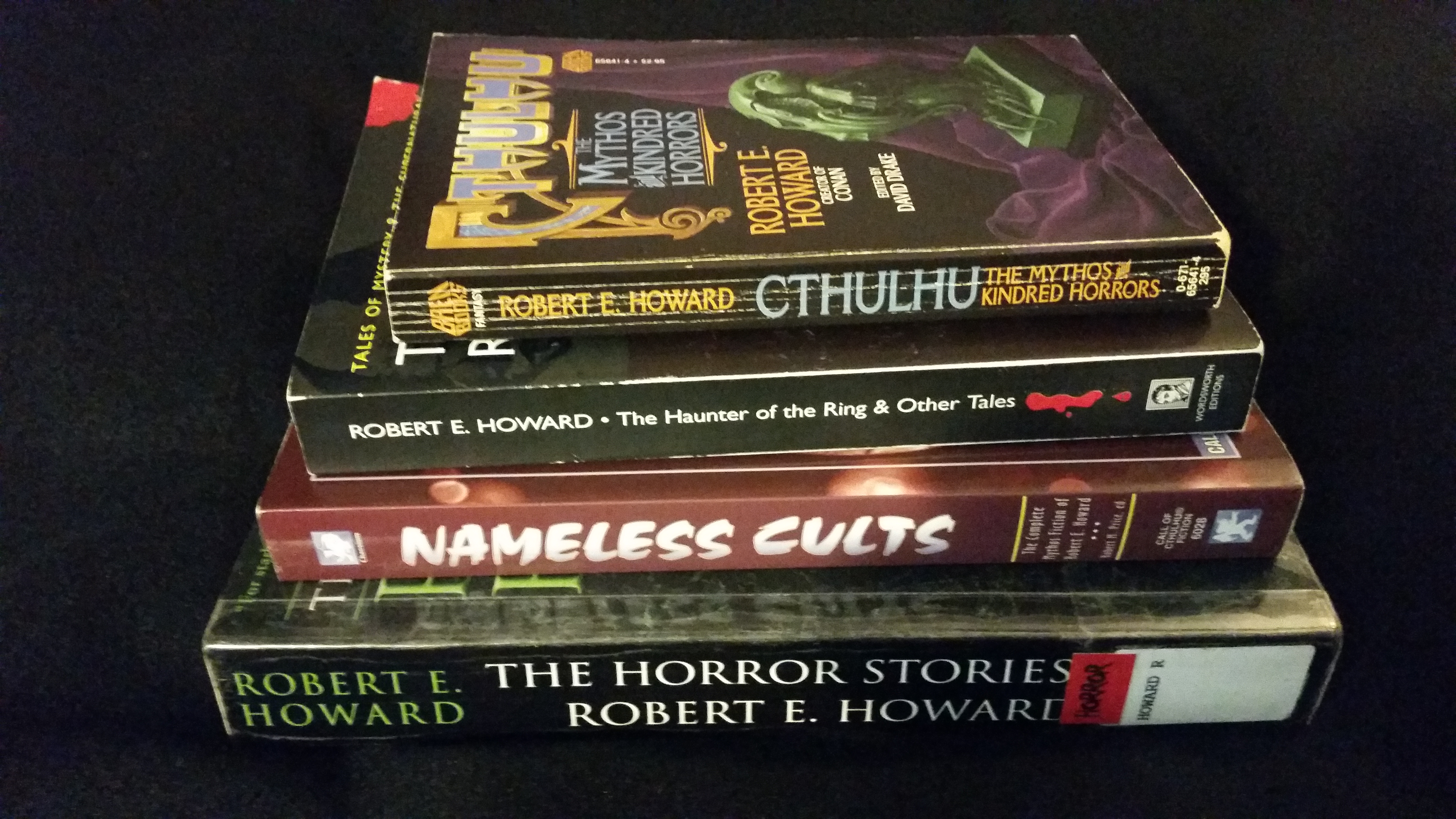
The Short Horrors of Robert E. Howard (October 2015)

The history of the pulps, both the magazines and the writers, is another subject I delved into quite a bit, and in this essay I investigated the contents of several horror-focused short story collections by the creator of Conan the Barbarian.

Remake, Revisited (January 2017)

I saw Indiana Jones and the Dial of Destiny earlier this summer, and I enjoyed it. The de-aging technology that made Harrison Ford look younger for a prologue set during World War II has continued to improve, but I couldn’t help wondering: if this technology had been available when they made Indiana Jones and the Last Crusade in 1989, would we have had the wonderful prologue with River Phoenix as young Indy?

Written in response to Rogue One, with its CGI-generated Peter Cushing and de-aged Carrie Fisher, this article has only become more relevant since. As of this writing, so-called “AI” threatens to upend every creative industry, and Hollywood writers and actors are striking, in part against the prospect of being replaced or devalued by chatbots and infinitely pliable computer simulations. The increased churn of low-quality streaming content and never-ending franchise service has reached a point of unsustainability, and audiences are already beginning to turn away. I stand by the assertion made in this article that CGI tools can be used responsibly, but they are just that, tools: algorithms don’t have original ideas, they don’t have desires or viewpoints to express, and they aren’t going to live up to producers’ fantasies of steady, guaranteed revenue forever.

Kamandi Challenge no. 9 (September 2017)

My interest in Jack Kirby’s science fiction comic Kamandi is another subject I’ve written about several times, and in 2017, Kirby’s centenary year, I posted issue-by-issue reviews of Kamandi Challenge, a tribute series in which rotating teams of artists and writers took on the character and his world, setting up a cliffhanger at the end of each issue for the next team to unravel. Issue no. 9 was a fascinating standalone story that explored some of Kamandi’s psychology and allowed me to express my thoughts on Jack Kirby’s qualities as a storyteller.

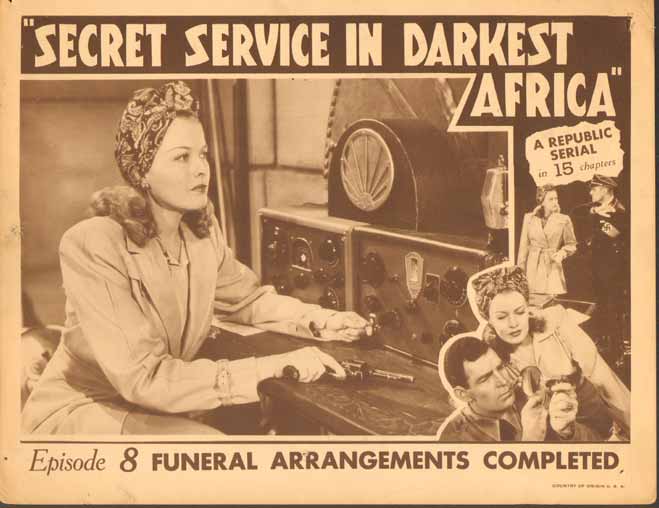
Fates Worse Than Death: Secret Service in Darkest Africa (September 2019)

A large number of my posts on Medleyana have been reviews of serials from the silent film era up to the 1950s, when the formula of narrative by weekly installment migrated to television. Although I was mostly interested in exploring the two-fisted adventure aesthetic (shared by the pulp magazines and Golden Age comics) at first, I learned a lot about plotting and setting up story conflicts with stakes, and going through each serial to take screenshots for illustrative purposes ended up being an education in composition and blocking. This review is typical, and if you enjoy it, there’s much more where it came from.

Color Out of Space: Horror Comes Home (January 2020)

Combining my interests in film, the pulps, and horror, this review gets at some of the challenges we face when we attempt to “separate the art from the artist.”

Thoughts on Electric Light Orchestra’s “Twilight” (March 2021)

When I began Medleyana, I thought I would primarily write about music. This article is a bit of a throwback in that it combines a couple of topics and bounces them off each other, but it’s also a good indicator of my increased interest in anime over the last decade as I examine the seminal fan film Daicon IV and its legacy.

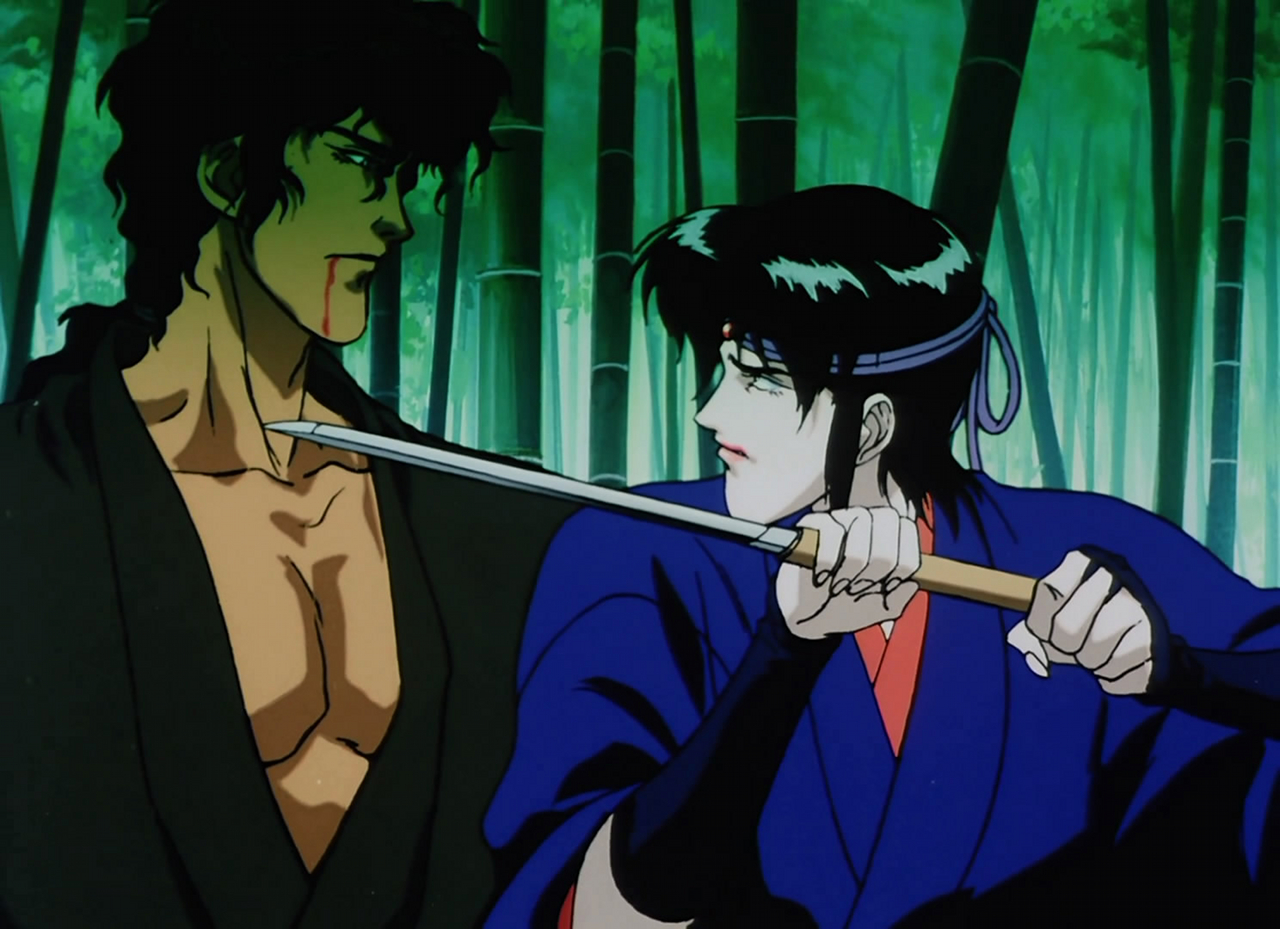
Revenge of the Ninjanuary: Ninja Scroll (January 2022)

Speaking of anime, this review is an example of that interest as well as representing my growing interest in martial arts and ninja media.

Halloween on a Monday: Spooktober 2022 (October 2022)

From the beginning, I’ve celebrated Halloween on the blog, culminating with a month’s-end list of spooky movies I watched and other activities I participated in. Last year’s wrap-up included meditations on the passage of time, mortality, and the reasons we like to scare ourselves, a theme that Medleyana ended up exploring much more than I expected when I began writing. I had just turned 40 when I started this blog, and now I’m 50. (It’s been a year since my wife was treated for the cancer I mention in this post, and she’s doing well, thanks for asking.) The last decade has been one of exploring interests that had been set aside because of school and work, including many new discoveries that hadn’t even been on my radar before I started writing. (It’s a good thing I had such an open-ended format from the beginning.) If I haven’t accomplished everything I set out to do, I’ve had other opportunities and made new friends that I didn’t expect. The very landscape of the internet has changed since I started—it’s mostly worse—but I’m proud of what I’ve created. It’s been a journey. Thank you for coming along with me.

Halloween on a Monday: Spooktober 2022

The other night, I was watching the thirty-first and final movie of my month-long Spooktober marathon; I was eating popcorn, as one does, when I felt a harder crunch than usual and realized that one of my teeth had cracked. It was the second time this had happened, so I recognized the sensation immediately. It was one of my back molars, one of the wisdom teeth I was so proud of having held on to; I’d even had a filling on this one just a couple of weeks ago (the other tooth that cracked, now gone, was another of these wisdom teeth). However, I wasn’t mad or distraught; it didn’t even hurt, at least not yet. I fished the wayward chip of tooth out of my mouth, sighed, and shrugged. I’m almost fifty, and after a certain point your body falling apart is just something you accept.

It’s also pretty minor in the scheme of things: most people don’t even have those back teeth, and aside from the inconvenience and expense of dealing with it, I’ll survive. Last month, my wife had surgery to remove her kidney along with a large tumor that had grown on it. Its presence was a shock, discovered at the end of summer, so we didn’t have a lot of time to process it before it was happening. She came out the other side okay, and has been recovering. Compared to what she went through, I’m getting off easy. Still, it was only about halfway through my October marathon, wading through Japanese body horror and American slasher gore, when I thought, “Hey, I wonder if there’s any connection between my current obsession with bloody abdominal wounds and the surgical ordeal I nursed my wife through last month?” Compartmentalization is a hell of a thing.

It is, I suppose, one of the reasons the made-up terrors of the movies don’t work on me like they once did. As I wrote last year, on the heels of broken bones and other mundane disasters, the world has a way of taking its toll even without black-gloved giallo killers or supernatural demons. There is a beach that makes us grow old, and its name is planet Earth; the shore we walk is the one between the unknowable prenatal past and the all-too-certain future: a fragile sandbar bounded on both sides by deep waters. When I was younger, I didn’t like looking too closely at suggestions of mortality. Now, it is simply a fact of life, and while individual films or books might thrill me with suspense or depress me with dark commentary on human nature, shock me with depictions of sudden violence or sicken me with visceral carnage, they are more likely to be momentary escapes from the worries of real life than the source of nightmares.

One theory I’ve encountered to explain the appeal of scary stories is that by experiencing frights vicariously, we gain a sense of control. There are, of course, different kinds of horror, which I’ll go into in more detail below as I expand on my list of movies I viewed this month, but it’s certainly true that the majority of movies and stories take for granted that you’ll exit the theater or close the book none the worse for wear, able to say that you made it through. Take that, Boogeyman! At the worst, maybe you’ll have a bad dream or you’ll jump the next time you hear a creaky door when you’re alone in the house at night, but perhaps you’ll be mentally fortified when something scary actually does happen in real life. I don’t entirely abide by this self-help view of art, but the theory that experiencing art allows us to mentally practice hypothetical situations ahead of time isn’t one I can completely deny, either.
But enough doom and gloom. For the first time in years, I am actually posting this on Halloween instead of the day after, so an evening of trick-or-treating (or, in my case, being on the other end of that transaction) is still ahead of us. The final weekend of October included a Halloween house party, the first we’ve held in ages, and yesterday we carved our Jack o’ lanterns. Even spending time on other seasonal activities, I was able to watch thirty-one horror and fantasy movies this month, and for the first time they were all first-time watches for me. (I saw a few films at the theater, but I skipped out on the retro screenings at the drive-in, cutting down on films I might have seen before.) I was also more consistent in watching only horror or Halloween-specific fare this month than most years, give or take a robotic geisha or children’s magic school. So, as always, here’s the complete list, with a few highlights singled out after:

1. My Best Friend’s Exorcism (Damon Thomas, 2022)

2. The Munsters (Rob Zombie, 2022)

3. DeadTectives (Tony West, 2018)

4. Sister Tempest (Joe Badon, 2020)

5. Attack of the Crab Monsters (Roger Corman, 1957)

6. Tokyo Gore Police (Yoshihiro Nishimura, 2008)

7. Hocus Pocus 2 (Anne Fletcher, 2022)

8. Meatball Machine (Yudai Yamaguchi and Jun’ichi Yamamoto, 2005)

9. Meatball Machine: Kodoku (Yoshihiro Nishimura, 2017)

10. The Fly (David Cronenberg, 1986)*

11. The Island (Michael Ritchie, 1980)*

12. Malatesta’s Carnival of Blood (Christopher Speeth, 1973)

13. RoboGeisha (Noboru Iguchi, 2009)

14. Suburban Gothic (Richard Bates Jr., 2014)

15. The Disembodied (Walter Grauman, 1957)

16. The Beyond (Lucio Fulci, 1981)

17. Atom Age Vampire (Anton Giulio Majano, 1960)

18. X (Ti West, 2022)

19. The Raven (Roger Corman, 1963)

20. Doll Face (Stuart Paul, 2021)

21. Halloween Kills (David Gordon Green, 2021)

22. Bloody Muscle Body Builder in Hell aka “the Japanese Evil Dead” (Shinichi Fukazawa, 1995)

23. Blood Tea and Red String (Christiane Cegavske, 2006)

24. Aabra Ka Daabra: The School of Magic aka “the Bollywood Harry Potter” (Dheeraj Kumar, 2004)

25. Tenebre (Dario Argento, 1982)*

26. Opera (Dario Argento, 1987)*

27. Pieces (Juan Piquer Simón, 1982)*

28. Halloween Ends (David Gordon Green, 2022)*

29. Motel Hell (Kevin Connor, 1980)

30. Werewolf by Night (Michael Giacchino, 2022)

31. Wendell & Wild (Henry Selick, 2022)

*seen in theater

Best movie: In the past I might not have sought out a movie with a title like Meatball Machine, promising over-the-top gore, but since I was exploring the genre, I gave it a chance. Yoji (Issey Takahashi), a put-upon factory worker, finally makes time with the shy, pretty coworker he’s been flirting with, at the same time that an invasion of strange alien parasites arrives at his doorstep. The parasites turn their human victims into horrifying cyborg gladiators, single-mindedly battling others of their kind while their human consciousness remains helplessly trapped inside their hijacked bodies. (It’s gradually revealed that the parasite pods house tiny aliens engaging in a cosmic game, controlling their human “mounts”—the “meatball machines” of the title—through bio-mechanical linkages.) It’s a relatively somber film for such an outrageous premise, and the key to its success is balancing the bleakness of its outlook—it’s strongly suggested that the main couple have too many personal issues to overcome for a successful relationship, even before the aliens get involved—with the inventive special effects, action sequences, and heady concepts. This has been an educational month for me, as I realized that Sheborg, an Australian film I talked up a few years ago, owes a great deal to this movie; I suspect that they all trace their lineage back to Tetsuo: The Iron Man, but I haven’t gotten to that one yet. (As far as Meatball Machine goes, I also liked the belated sequel, Kodoku, even as it relies more on the absurd humor and T&A that are an element in many of the Japanese shockers I’ve seen.)

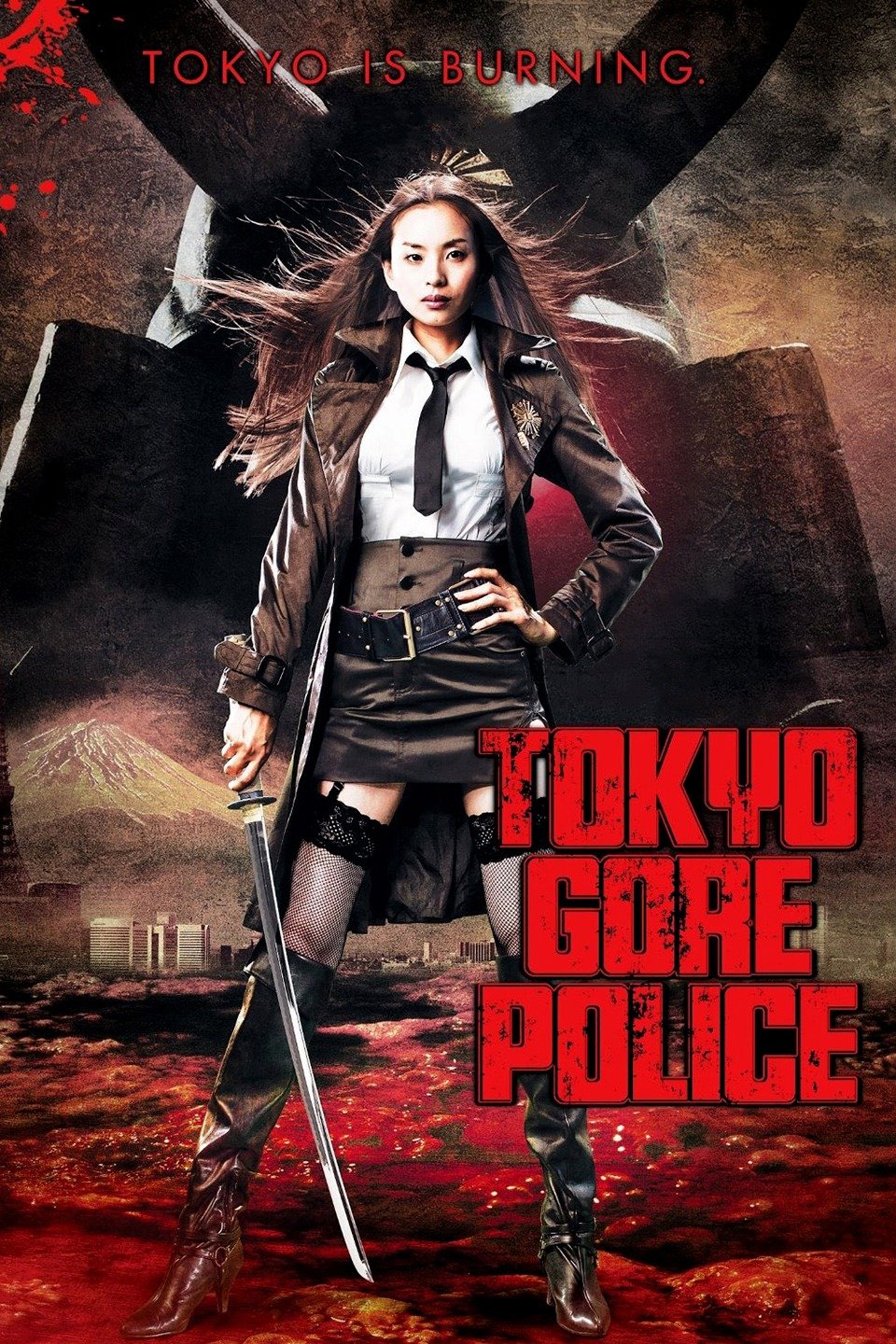
Goriest movie: Speaking of absurd humor, there’s a moment early in Tokyo Gore Police in which Ruka (Eihi Shiina), a leading member of the force, ascends to the top floor of a building by firing a rocket launcher into the ground and riding the recoil into the air. That’s as good an indicator as any that we’re not exactly in for realism (later, a character flies around a room, held aloft by geysers of his own blood, so ditto), but something like a live-action anime. Still, Tokyo Gore Police does what it says on the tin: it is super gory. In the near future, tumors turn criminal “engineers” into bizarre living weapons. The police force is dedicated to hunting down these vicious predators, but there is more to their story than simple mad science run amok. I was pleasantly surprised by the dystopian setting woven around the mayhem, with cutting and hara-kiri being so common that commercial products and PSAs acknowledge them, and of course the privatized, heavily propagandized police aren’t the force for good they claim to be. If this wasn’t influenced by Judge Dredd’s take on the police, it has a lot in common with it. Most of the Japanese “super-powered girl takes on monsters” films I‘ve seen don’t really try that hard to fit the pieces together and are just happy to be exploitation shockers, but on the other hand this still makes me suspect that it’s primarily made for export to the West with all the “Isn’t Japan wacky?” material pushed to the forefront. Tokyo Gore Police is just one of several blood-drenched movies I watched this month, so it was hard to pick just one winner in this category: in addition to the other Japanese splatterpunk I saw, there was The Beyond, X, Halloween Kills and Ends, Motel Hell, and Pieces. Really, they’re all winners.

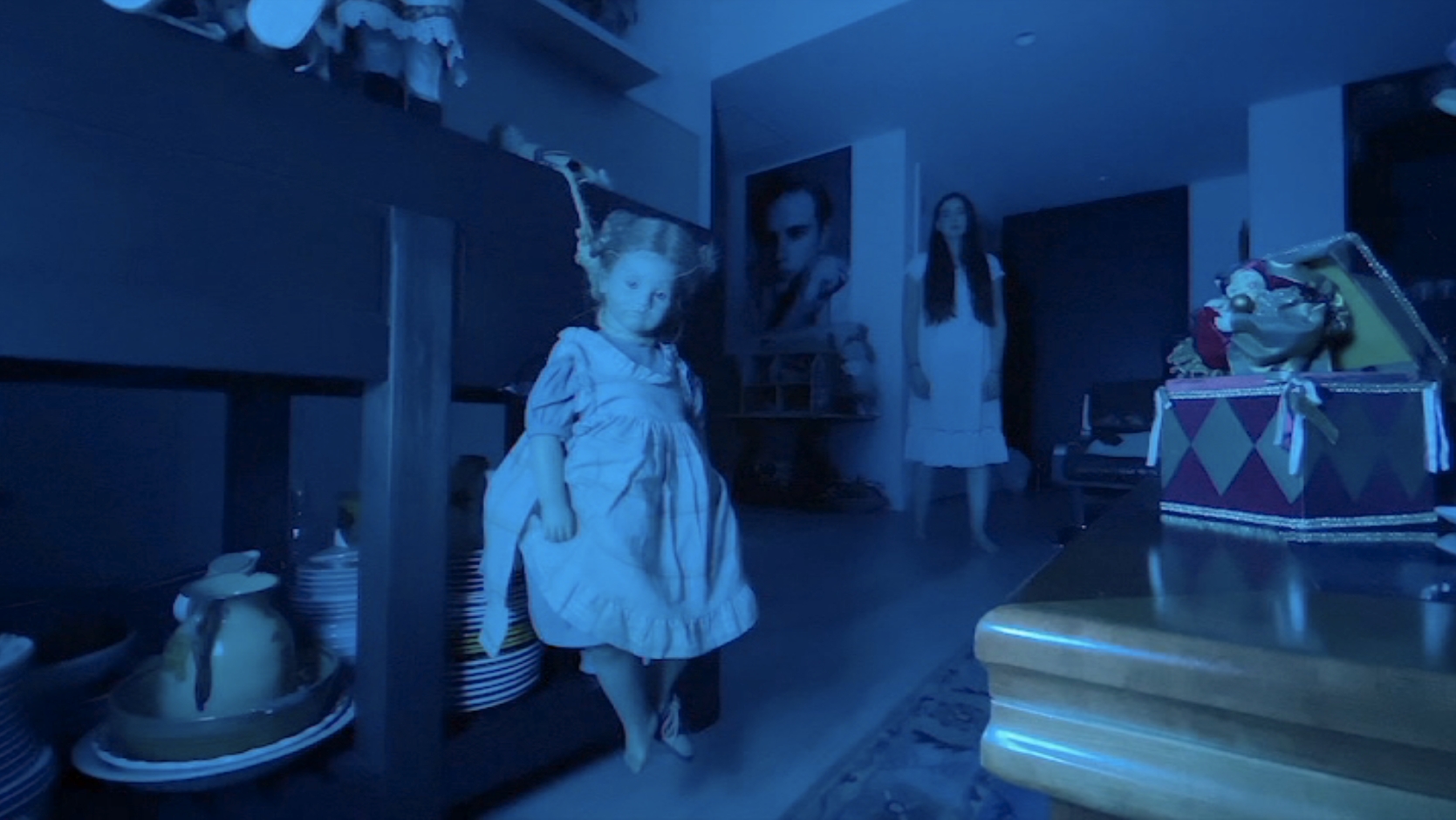
Worst movie: I dislike going after small projects with hammer and tongs; it feels churlish to single out a backyard production when there are more worthy high-profile targets out there. As far as professionally-made films starring people I’d heard of with actual commercial aspirations, the limp Suburban Gothic was my biggest disappointment this month. But beyond that, what can you really say? Sometimes the scrappy can-do passion project doesn’t turn out. Doll Face was, I believe, a web series or something that got compiled into a feature; it’s no-budget and amateurish and is 75 minutes but only has enough good material for a 20-minute short. A timid young woman, Marmalade (Alix Villaret), inherits her grandmother’s condo, with the catch that it comes with her extensive doll collection, whom she must love as if they were her own children. The dolls are, of course, alive in some fashion, and there’s some business with an evil doll maker cursing his creations and a homeless “master doll repairman,” and the girl also sees a terrible therapist. The dolls start committing suicide in ways that are more hilarious than scary, and the line between human and doll begins to collapse for her. The weirdest detail is that Marmalade’s dialogue (in a thick French accent) is all post-recorded, as she never moves her lips. I thought at first we were hearing her thoughts, like Garfield, but no, she holds conversations that way. Nevertheless, despite her limitations, Villaret is quite charming: a living doll, you might say.

The poster
The movie

Weirdest movie: In Sister Tempest, art teacher Anne (Kali Russell), estranged from her younger sister, takes a student, Ginger (Linnea Gregg), under her wing, perhaps to fill the void in her family life. Soon, Ginger becomes angrily possessive, destroying Anne’s remaining relationships and even holding her hostage in her own home. Through fractured chronological storytelling, Anne is also being held by an alien tribunal, presumably after death, who demand that she describe and explain her actions, and the collapse of real life and fantasy is explored from numerous angles. (The constant presence of “Xiolans,” an alien camera crew who document Anne’s life for dissection by the tribunal, is a highlight.) It doesn’t take long to realize that Anne is one of those “unreliable narrators” we’ve heard about. Writer-director Joe Badon is firmly in the DIY indy camp, combining elements of animation, music video, and homemade special effects with a deliberately confounding and contradictory tale. Dream and religious imagery is where it’s at. Sister Tempest has many of the same idiosyncrasies as Badon’s previous film, The God Inside My Ear, and could even be seen as a continuation of it; it’s much more assured, however, even as it takes bigger swings (for one thing, you’ll probably see the ending coming but I still found it effective, a hurdle TGIME didn’t quite overcome).

Most fun: I like all of Roger Corman’s Edgar Allan Poe films in varying degrees, but The Raven was just flat-out fun. Vincent Price plays Dr. Craven, a sorcerer who has chosen to avoid the internecine struggles of his fellow wizards, sitting at home, mooning over his deceased (or so he thinks!) wife Lenore (Hazel Court). When a raven appears at his window, revealing himself as a fellow wizard (Peter Lorre) and asking for help, claiming to have seen Lenore alive at the castle of Dr. Scarabus, the plot (which, you can tell, has only a nominal relation to Poe’s original poem) gets rolling. I had a big grin when Boris Karloff first appeared as Scarabus, graciously inviting his guests into his castle and shocked—shocked!—that they could believe him capable of any evil deeds. Of course, Karloff could do comedy very well, and it’s just a gas to see him, Price, and Lorre trying to out-ham each other. All that and young Jack Nicholson! (I must confess that I saw Karloff and Nicholson in The Terror when I was in high school and I thought it was the most boring “horror” movie I had ever seen, and since then I’ve kind of scoffed every time I see it in one of those public domain DVD collections, but I should probably check it out again now that I have more appreciation for atmosphere and the “slow burn.”) The final magical duel between Craven and Scarabus is also one for the ages. Finally, the one constant in every phase of Corman’s career is that he absolutely put the most beautiful women he could find in his pictures—did anyone tell Hazel Court this movie was for kids?

Legacies: Many of this year’s new films are parts of long-running franchises: sure, you’ve seen werewolves before, but what about a werewolf who could someday share the screen with Spider-Man? Rob Zombie’s goofy take on The Munsters is true to the TV show, silly sight gags and dad jokes included, and forms a prequel to the series. And I’ll admit to enjoying Hocus Pocus 2 more than I expected to, even acknowledging how unnecessary I thought it was. But the big one is the conclusion of David Gordon Green’s trilogy with Halloween Ends.

I don’t have a huge investment in the Halloween series—aside from the DGG trilogy I’ve only seen the 1978 original and the non-Michael Myers Halloween III. I’m aware of it, of course, and I appreciate the absurdity of needing a timeline map to keep track of how the sequels are (or aren’t) related to one another. Multiverses are all the rage now, though, so perhaps the series was simply ahead of its time. Green’s Halloween, which I saw in the theater in 2018, is a true legacy sequel, building on Halloween (1978) alone and jettisoning everything else (so no, Michael isn’t Laurie’s brother in this version). In Green’s vision, Laurie Strode (Jamie Lee Curtis) is an ultimate survivor, training herself for the inevitable moment when Michael returns to finish the job he started forty years earlier, but his real theme (repeatedly and explicitly stated) is how violence, and its attendant grief and anger, can warp a community. I liked the idea of a cohesive trilogy that takes place on one crazy Halloween forty years after the original attacks, so having Halloween Ends swerve into a very different story separated in time from Halloween (2018) and Halloween Kills, and with relatively little screen time for Michael, well, I can see why that left some fans disconcerted.

Having said that, I found the story of Corey Cunningham (Rohan Campbell), a young man marked by a terrible mistake that left a child dead, compelling. After years of being a pariah, Corey finds new power through a chance encounter with Michael Myers (James Jude Courtney), still alive and hiding out in the sewer like an evil spirit. It’s like Christine, but with a nearly-immortal mass murderer instead of a car. Also, the teenagers who push Corey to the edge are all in the marching band, showing that anyone can be a bully; it’s an empowering message, really. The final act and the over-the-top effort to prove that (spoiler!) Michael is really dead this time seem like the collision of real-world thinking with the mythic world of the movies, and I don’t know if it’s going to be as satisfying in the long run as it probably was in the moment. But even a casual fan like me isn’t immune to the weight of forty years of history/histories between Michael and Laurie. RIP, Michael Myers of Earth-G, at least until the next time someone wants to start printing Halloween money.

Well, that’s it for this year. Maybe next year I’ll concentrate on revisiting old favorites or reappraising stuff I need to give another chance. Happy Halloween!

Werewolf in a Buggy, Oh No: Spooktober 2021

The human body is so fragile: aside from the typical slashings and beheadings that befall horror movie victims, all it takes is an upsetting of our delicate chemical balance to send us spiraling. An overdose of alcohol injected by invading saucer-men or exposure to the radioactive body of an astounding she-monster, and it’s curtains. Even the beach that makes you grow old is but an acceleration of the natural process by which we eventually wither and die (alert readers will notice that I didn’t actually get around to seeing M. Night Shyamalan’s Old this month, but I assume it does what it says on the label—it’s not like Shyamalan is famous for big twists or anything).

Autumn is a natural time to contemplate the fragility of life, of course, surely part of the reason we have such spooky associations with the season to begin with. But this particular October has been a busy one, spent waiting for tow trucks and in doctors’ waiting rooms, so finishing the month with a movie like writer-director Michael Dougherty’s Trick ‘r Treat, so aware of the connections between people and events and the chain reactions that cascade into disaster, seems appropriate. (Everything’s under control here, so don’t be alarmed: I’m developing a theme. I was also at a bunch of high school football games, but that’s less dramatic.)

While I was busy, and for a time thought that this year’s Spooktober crop of films would be the most meager since I began keeping track of them for this blog, I was able to fit in a respectable number of horror and fantasy films representing every decade from the 1930s to the present, all but a few of them first-time viewings. Most of them were on the shorter side, some very short indeed. Did I count a repeat viewing of It’s the Great Pumpkin, Charlie Brown just so I could get to the magic number 31? Mmmaybe, but what’re you gonna do, call the Halloween Police?

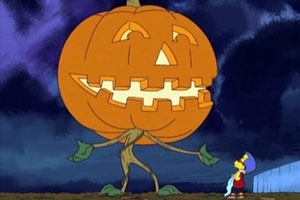
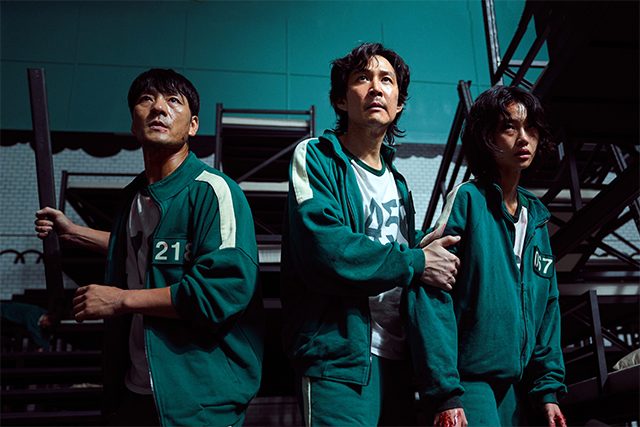
At least I resisted the urge to log the Korean Netflix hit Squid Game on my Letterboxd account, but watching that nine-hour series is probably the other reason my movie-watching got off to a slow start (for the record, it’s a horror-adjacent thriller, so if it had been a feature film I would have counted it). Squid Game was my son’s first “adult” media aside from Marvel movies or whatever, and we watched it together; it was fun to see him engage with the series’ twists and turns, so reminiscent (to me) of shows like Lost, as he encountered them for the first time (and to be fair, some of the big twists took me by surprise as well). Other uncounted TV watching included multiple episodes of Treehouse of Horror, the Halloween anthology episodes of The Simpsons that I can put on and rewatch with pleasure any time.

Speaking of television, a recent theme in my viewing has been exploring made-for-TV movies, particularly from the 1970s. I “pregamed” a bit in September with some of these movies, so in addition to the TV movies listed below, I enjoyed Are You in the House Alone? (Walter Grauman, 1978), a film about sexual assault with a more serious tone than its title would suggest; The Night They Took Miss Beautiful (Robert Michael Lewis, 1977), a hostage thriller with an all-star cast; and The Darker Side of Terror (Gus Trikonis, 1979), a thoroughly trashy look at the dangers of leaving your clone alone with your sexually unsatisfied wife. Killdozer (Jerry London, 1974), a famous example of the form based on a story by Theodore Sturgeon, turned out to be kind of dull.

Now for the main event! To curtail the risk of running any longer, here’s the complete list:

1. The Mummy (Karl Freund, 1932)

2. A Nightmare on Elm Street Part 2: Freddy’s Revenge (Jack Sholder, 1985)**

3. Alone in the Dark (Jack Sholder, 1982)**

4. Invasion of the Saucer-Men (Edward L. Cahn, 1957)

5. Candyman (Bernard Rose, 1992)

6. Dave Made a Maze (Bill “Not the Calvin and Hobbes guy” Watterson, 2017)

7. Muppets Haunted Mansion (Kirk R. Thatcher, 2021) t

8. Monster Brawl (Jesse Thomas Cook, 2011)

9. The Brain That Wouldn’t Die (Joseph Green, 1962)*

10. The Astounding She-Monster (Ronald V. Ashcroft, 1957)

11. Psycho Goreman (Steven Kostanski, 2020)

12. Incubus (Leslie Stevens, 1966)

13. Frankenstein Island (Jerry Warren, 1981)

14. The Wild World of Batwoman (Jerry Warren, 1966)*

15. Trilogy of Terror (Dan Curtis, 1975) t

16. Linnea Quigley’s Horror Workout (Kenneth J. Hall, 1990)

17. Jennifer’s Body (Karyn Kusama, 2009)

18. Shadow in the Cloud (Roseanne Liang, 2020)

19. The Werewolf of Woodstock (John Moffitt, 1975) t

20. Something Evil (Steven Spielberg, 1972) t

21. The Wicker Man (Robin Hardy, 1973)

22. Army of Darkness (Sam Raimi, 1992)*, **

23. The Funhouse (Tobe Hooper, 1981)**

24. The Horror at 37,000 Feet (David Lowell Rich, 1973) t

25. The Final Girls (Todd Strauss-Schulson, 2015)

26. The Black Cat (Luigi Cozzi, 1989)

27. Instruments of Evil (Huw Evans and Curtis Anderson, 2016)

28. Cat People (Jacques Tourneur, 1942)*

29. The Leopard Man (Jacques Tourneur, 1943)

30. It’s the Great Pumpkin, Charlie Brown (Bill Melendez, 1966)* t

31. Trick ‘r Treat (Michael Dougherty, 2007)

* rewatch

** seen at the drive-in

t made for television

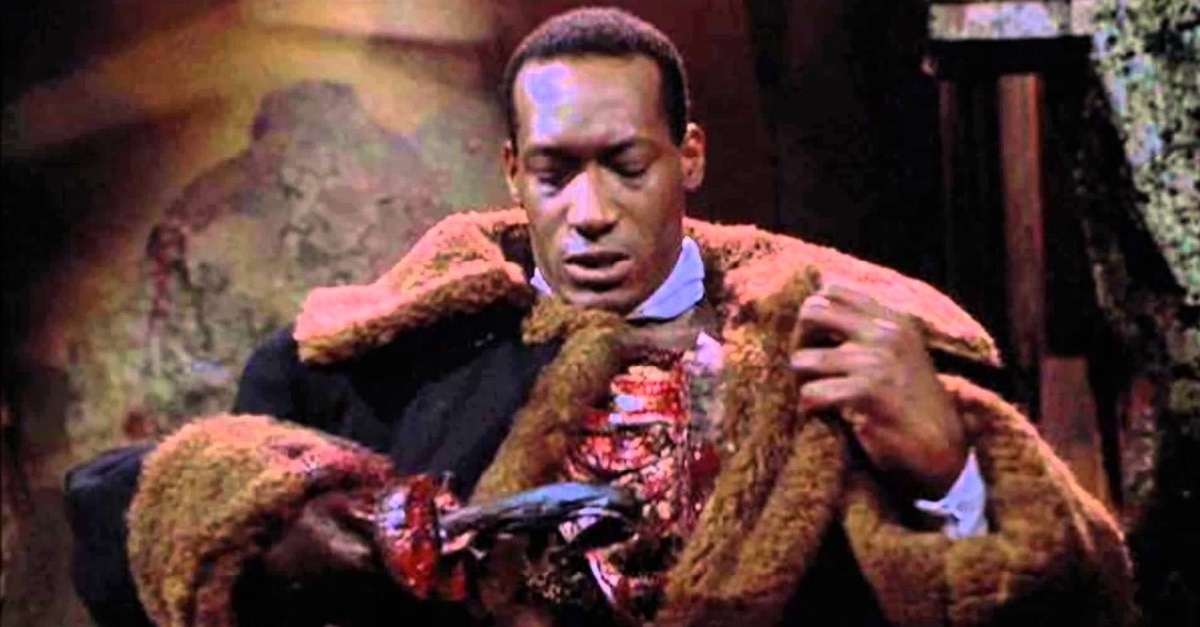
Best Movie: At the risk of being basic, the movie that impressed me the most this month is also one of the most revered, Bernard Rose’s Clive Barker adaptation Candyman (from 1992, not to be confused with this year’s reboot/sequel). Virginia Madsen plays an anthropology grad student determined to explain the persistent urban legend of a hook-handed killer haunting the Cabrini-Green housing projects; Tony Todd is the iconic title character. Barker in the early ‘90s was a sophisticated new voice in horror, and Candyman often feels like an arty prestige picture to match his reputation (with a score by Philip Glass that still feels novel, even after Glass has scored many more mainstream films), but the operatic tone just makes the blood and guts more shocking and the commentary on racial violence and gentrification is still relevant.

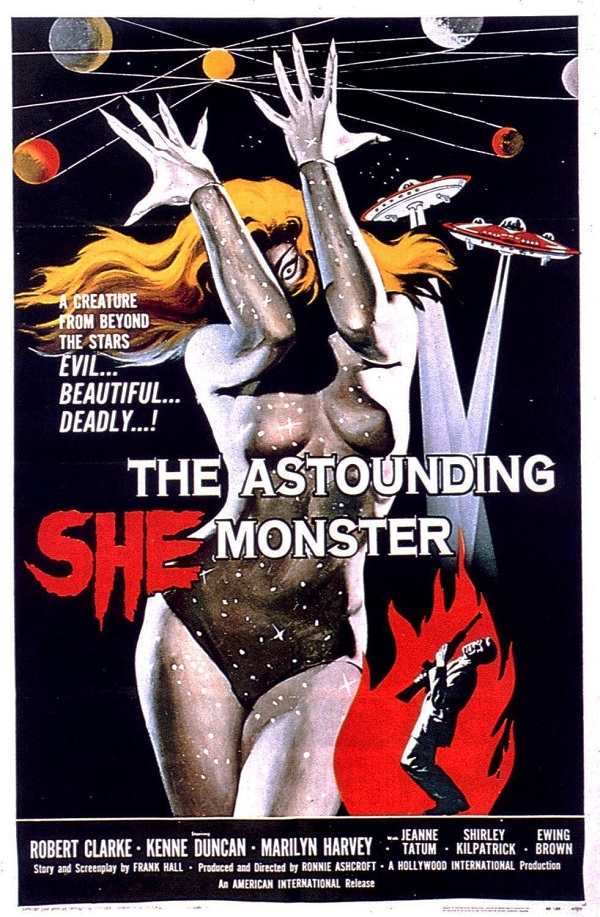
Worst Movie: I’ve seen enough B-movies from the 1950s to adjust my expectations, but at just over an hour, The Astounding She-Monster is especially flimsy. Gun-toting crooks and the debutante they’ve kidnapped crash the house of a geologist in a remote area; meanwhile, a glowing alien (curvy Shirley Kilpatrick in a skin-tight bodysuit), who is either the survivor of a long-vanished civilization or the emissary of an enlightened council of planets (maybe both—I was a little fuzzy on this point), wanders the woods, killing any human she comes into contact with. It’s not the worst thing ever, and I’m fortunate that I didn’t see anything truly terrible this month, but it’s pretty half-baked and it feels as if there’s a decent crime picture that doesn’t need the sci-fi gloss buried inside it. (It does have a hell of a poster, though.)

Scariest Movie: Now this is a horror movie! In The Funhouse, four teenagers spend the night inside the funhouse at a sleazy traveling carnival, running afoul of the sideshow freak who lives inside it, Phantom of the Opera-style. (That’s the kind of terrible decision you can count on old-school horror movie characters to make, and amusingly it’s just one kid who makes every dumb, short-sighted move in this film, ruining it for everyone. Dammit, Steve!) Tobe Hooper recaptures some of the grotty energy of The Texas Chain Saw Massacre with another grotesque family living on the edges of society and the sly suggestion that “normal” families can be pretty messed up, too.

Weirdest Movie: Dave Made a Maze combines two of my favorite themes: a hand-crafted aesthetic and a superficially silly premise played straight. Dave (Nick Thune), a struggling wannabe artist, has put together a cardboard labyrinth in his living room . . . and gotten lost in it. When his fiancée and friends enter the maze to find him, they discover a sprawling, ever-expanding nightmare factory made of old boxes and other refuse, bigger on the inside than it appears from the outside, and from which there is no apparent escape. The metaphor for feeling trapped by a creative project couldn’t be clearer, and Dave Made a Maze works as a clever exploration of Dave’s relationships and unfocused psyche as well as a continually surprising series of handmade action/horror setpieces. Cheer up: at least your unfinished novel didn’t kill anyone (I hope).

Goriest Movie: A runner-up for Weirdest Movie, The Black Cat (from 1989, one of several movies with this title) is nominally an adaptation of Edgar Allan Poe’s short story, but is actually a crypto-sequel to Dominic Argento’s classics Suspiria and Inferno, made at a time when it wasn’t clear if Argento would finish his trilogy about the “Three Mothers.” He eventually did with Mother of Tears, a film that is not well-regarded and which represents a very different era of horror filmmaking; I don’t hate Mother of Tears, but I’m also happy to have Cozzi’s take on the material, in which an actress (Florence Guérin) studying to play the witch Levana, the Mater Lachrymarum, loses her grip on reality and comes to believe that Levana is possessing her and driving her to kill. The witch has a face made of worms and drools green slime on her, Fulci-style, and some of the more outré supernatural kills include making an occult expert’s heart explode in her chest. In one scene, the film-within-a-film’s screenwriter, after being attacked, crashes his car through the front wall of the actress’s house; after crawling out of the car, he reveals the knife plunged into his back. Was that there the whole time he was driving? An utterly deranged movie in the best Italian style.

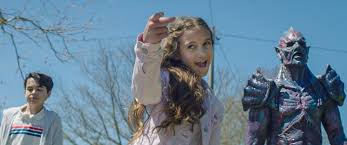
Funniest Movie: Many of the films I watched this month are at least a bit funny. Psycho Goreman features one of my favorite sources of comedy, characters who exist at the center of their own universe, with scant (if any) regard for the feelings or situations of people around them. One such character is Mimi (Nita-Josee Hanna), a domineering young girl who comes into possession of absolute power over the title character, an ancient world-destroying evil monster imprisoned by the victors in a galactic war (think Power Rangers or Masters of the Universe). Mimi immediately uses the power of Psycho Goreman (a name bestowed by her and her brother) to impress her friends, make boys like her, and get out of doing chores, but of course you can’t keep such a thing secret forever. Psycho Goreman doesn’t quite stick the landing, unable to decide if Mimi should learn a lesson or stay true to her own self-regard, but I found it very amusing overall, and the whole cast is committed to a premise that is part ‘80s throwback (I was reminded a lot of Turbo Kid) and ‘00s indie comedy.

Not That Bad: I’ve written before about director Jerry Warren and my bull-headed attempts to plow through his (mostly crappy) filmography, so I was prepared for the worst with Frankenstein Island. Four hot-air balloonists, attempting a record-breaking flight around the world, are forced down on a remote island inhabited by animal-skin-clad Amazons, shipwrecked sailors, and the widow (big question mark) of the original Dr. Frankenstein. While a genial hostess, Sheila (!) Frankenstein is continuing her late husband’s work, and in fact communicating with him through the magic of science (John Carradine appears as Dr. Frankenstein in these interludes, almost certainly repurposing footage in the vein of Bela Lugosi’s appearance in Plan 9 from Outer Space). The whole thing is ridiculous, but in contrast to most of Warren’s movies it is at least fun to watch and features mostly original footage. It impressed me enough to revisit the only other Warren film I’ve even half-liked, The Wild World of Batwoman, to see if I had imagined enjoying it. That’s two films to receive my highest rating for a Jerry Warren picture, “Not Completely Terrible.”

Dumbest Movie I Will Probably Watch Again: I don’t know if I’ll watch Frankenstein Island again, but other contenders for this honor include Monster Brawl (a face-off between classic monsters—or their non-union equivalents—in the form of a pro wrestling pay-per-view event), Linnea Quigley’s Horror Workout (a tribute to an iconic scream queen’s career in the form of a tacky artifact of the video store era), and The Werewolf of Woodstock (which looks cheap even for a TV production but has a surprisingly credible rock soundtrack). After the Woodstock festival is over, a hippie-hating townie gets electrocuted and turns into a werewolf (?!—perhaps his hatred of hippies kept him alive). Cue rampage against cops and hippies alike. Did I mention that the werewolf hates hippies? Plus he gets away in a dune buggy!

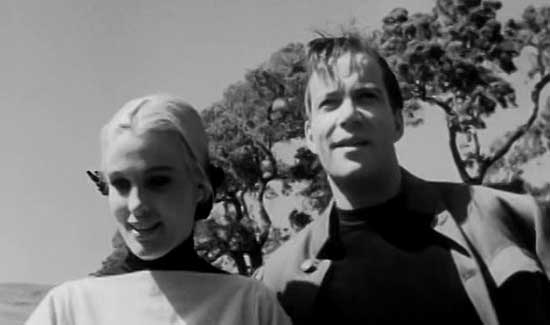
Kino en Esperanto: As mentioned at the end of last year, I started studying the constructed language Esperanto during the pandemic. While I have slowed down since earning my atesto (certificate), I knew I wanted to wait to watch Incubus, starring William Shatner and filmed entirely in Esperanto, until I could understand it without relying on subtitles. Ultimately, it probably didn’t matter because as far as I can tell none of the cast are Esperanto speakers: writer-director Leslie Stevens apparently made the decision to film in Esperanto to give it global appeal during an upswing in the language’s popularity, or perhaps as a novelty. Most of the pronunciation isn’t great, although Shatner (pre-Star Trek) comes off the best, actually acting and delivering the unfamiliar words with a cadence that sounds like speech instead of obviously reading syllables off cue cards. (Actually, the title annoys me more than the dialogue: to conform to Esperanto orthography it should be Inkubo.) Apart from the language issues, the film is interesting and atmospheric, however, a sort of allegorical fairy tale reminiscent of The Seventh Seal or Carnival of Souls and filmed in the natural beauty of Big Sur. Shatner plays a wounded soldier, the target of a beautiful succubus (Allyson Ames) who claims the souls of the men she seduces; has she met her match in Shatner?

That brings Spooktober 2021 to a close; thanks for reading and I hope you had a happy Halloween!

Quick Bites of Terror: Septober 2020

Once again, my Halloween-themed blog post is coming out on the day after the holiday, so I hope you have enough leftover candy to snack on while I lay out the State of the ‘Ween for you again. The pandemic didn’t stop trick-or-treaters in my neighborhood: in addition to being on a Saturday with a full moon, we in Kansas were blessed with a perfect not-too-cold evening, a nice change from having snow on the ground earlier in the week. Everyone was doing a good job with social distancing, and to help out I constructed a candy chute out of a ten-foot PVC pipe to deliver candy into trick-or-treaters’ hands. There weren’t as many people out as I would have expected under normal circumstances, but it was a respectable turnout, and combined with the glimpses of other friends’ in-person or online gatherings, I think most people who wanted to were able to find some kind of outlet for their spooky seasonal urges. I won’t pretend that COVID didn’t have an impact, but it was okay.

As far as media consumption this month goes, I decided to take it (relatively) easy. As much as I enjoy indulging in horror movies and ghost stories at this time of year, I don’t like it to feel like homework, and with everything going on in the world and the upcoming election I felt it was just as important to safeguard my mental health and not stress over missing some self-imposed deadline or goal. That gave me more freedom to rewatch familiar classics or follow up on things that might not fit neatly into the Spooktoberween category.

It also meant watching more short films. Before I get on to the main event, I want to highlight a few of the odds and ends I encountered this month. The 1910 Frankenstein produced by Thomas Edison was actually only a little over ten minutes in length, but given the wide variability of film lengths in the silent era, I’m counting it on my main list; I had thought I might revisit other versions of the classic story, but didn’t follow through with it (Frankenstein Meets the Space Monster doesn’t count, as the title creature is a robot only nicknamed “Frankenstein”). For the record, I liked it a lot, and found its suggestion that the monster was only a product of the doctor’s imagination way ahead of its time.

Other shorts included some of The Simpsons’ “Treehouse of Horror” episodes and classic TV specials starring Garfield and Charlie Brown. I also revisited the 1977 special Witch’s Night Out, which I had seen as a very young child but probably not since. Watching it now, I was struck very strongly with the idea that Witch’s Night Out is a good portrayal of what it was like to grow up in a college town during the ‘70s, particularly the notion that an obviously burned-out hippie would make a good babysitter. Other than that, it’s hard to explain. I don’t think my family was too impressed with this one, but it was a blast from the past for me to be sure.

Finally, I had the opportunity (through Gofobo) to view a couple of episodes of 50 States of Fright, a horror anthology program on the short-content (and short-lived) app Quibi. This was after Quibi’s owners had already put the company up for sale, so I’m not sure what the point of the screening was: to drum up interest and spread positive word-of-mouth, perhaps, or maybe to get viewer feedback? I’m not sure. Maybe they were hoping that I would buy Quibi? Anyway, I was thrilled to be able to watch “The Golden Arm,” the only Quibi project that seems to have gotten much attention, even if it’s for how ridiculous it looked. The attempt to make an overt fable into a serious ghost story about a woman (Rachel Brosnahan) so obsessed with gold that she has a prosthetic arm made from the precious metal, even if wearing it kills her, doesn’t quite land, but to be fair it’s not that much sillier than many episodes of Tales From the Crypt or other horror anthology shows. Here’s hoping 50 States of Fright finds a home elsewhere now that Quibi is apparently closing down for good.

This year was a little different, to say the least, so I am making my list a little differently as well. I usually just list every movie I watch during October, whether it’s a rewatch or a first-time viewing, and a good portion of the list is made up of selections from the October at the Oldtown horror series. This year, with indoor theaters mostly closed, the horror series moved to the drive-in, starting in September; I made it to a few, but not all of the shows, but I’m taking their inspiration to count my “Septober” watches from both months. This time I’m leaving out movies that don’t fit the seasonal horror or fantasy mood as well as rewatches of movies I’ve seen before (anyone who wants to see what I left out can consult my Letterboxd Diary). Here’s the official list, all first-time watches (or, in a couple of cases, it’s been so long that they might as well be):

1. The Shining (Stanley Kubrick, 1980)

2. Train to Busan (Yeon Sang-ho, 2016)

3. Creepshow (George A. Romero, 1982)

4. The People Under the Stairs (Wes Craven, 1991)

5. Pledges (DJ Red, 2018)

6. The Jurassic Dead aka Z-Rex (Milko Davis and Thomas Martwick, 2017)

7. Frankenstein (J. Searle Dawley, 1910)

8. Slither (James Gunn, 2006)

9. King Kong (John Guillermin, 1976)

10. They Came From Beyond Space (Freddie Francis, 1967)

11. Tokyo Living Dead Idol (Yuki Kumagai, 2018)

12. Horror Noire: A History of Black Horror (Xavier Burgin, 2019)

13. Ghost Stories (Andy Nyman and Jeremy Dyson, 2017)

14. The Awful Dr. Orlof (Jess Franco, 1962)

15. Nocturne (Zu Quirke, 2020)

16. Dr. Orloff’s Monster aka The Secret of Dr. Orloff aka The Mistresses of Dr. Jekyll (Jess Franco, 1964)

17. Orloff and the Invisible Man aka Dr. Orloff’s Invisible Monster aka The Amorous Life of the Invisible Man (Pierre Chevalier, 1970)

18. Revenge in the House of Usher aka Neurosis aka Zombie 5 (Jess Franco as “J. P. Johnson,” 1982)

19. Hubie Halloween (Steven Brill, 2020)

20. Vibes (Ken Kwapis, 1988)

21. Prom Night (Paul Lynch, 1980)

22. Hello Mary Lou: Prom Night II (Bruce Pittman, 1987)

23. Prom Night III: The Last Kiss (Peter R. Simpson and Ron Oliver, 1990)

24. Prom Night IV: Deliver Us From Evil (Clay Borris, 1992)

25. Invitation to Hell (Wes Craven, 1984)

26. Robot Monster (Phil Tucker, 1953)

27. Cat-Women of the Moon (Arthur Hilton, 1953)

28. Frankenstein Meets the Space Monster (Robert Gaffney, 1965)

29. Snatchers (Stephen Cedars and Benji Kleiman, 2019)

Best Movie: Director Wes Craven’s output is among the most variable of big-name horror directors (the same year he made the classic A Nightmare on Elm Street he directed the goofy TV movie Invitation to Hell, starring Susan Lucci as the head of a sinister country club). The People Under the Stairs successfully brings together a number of his pet themes, with a young black kid (Brandon Adams) facing off against a deranged couple whose rent-seeking predations have drained the ghetto of money and hope for years (and who bear a not-coincidental resemblance to Ronald and Nancy Reagan). If the porous membrane between dreams and reality doesn’t come in for examination here as it does in some of Craven’s other films, perhaps it’s because the reality of the film is already so bonkers: “Daddy” and “Mommy” live in a fortified house, imprisoning foster children and intruders alike in feral conditions in the basement, while covering their cruelty, criminality, and sexual deviancy with a Father Knows Best veneer. This is an angry film that manages to deliver its message while remaining both scary and fun, and the continuing relevance of its plot means that it’s not surprising Jordan Peele is reportedly producing a remake.

The poster
The reality

Worst Movie: Possibly the worst movie I’ve watched all year, not just this fall, The Jurassic Dead promises hordes of undead dinosaurs, or at least one ferocious zombie tyrannosaur, and gives us instead a nearly incomprehensible plot about a scientist who discovers the secret of re-animation, loses his positions with first the government and then a university, and decides to exact his revenge on the world by releasing a zombie virus at the same time the earth is struck by the asteroid that only he predicted. There’s also a dinosaur in it. The protagonists are a band of mercenaries sent to take out the baddie at his compound and a group of college kids who wind up in the same place after getting lost in the desert. Somehow they have to work together. It’s not boring, I’ll give it that, but other than that it’s awful.

Scariest Movie: “The brain sees what it wants to see” is the tagline (and a key piece of dialogue) in Ghost Stories, in which a professional skeptic and debunker (co-writer/director Andy Nyman) is challenged to examine three seemingly inexplicable cases of the supernatural. As he tracks down the original witnesses and hears their stories, it’s clear that he himself is haunted, but only at the end do the threads come together. Thus Ghost Stories has a favorite form of mine, the anthology of stories-within-a-story, and whether or not you find the ending satisfying, the film has a chilling atmosphere and some hair-raising incidents. Ending a film this bleak with “The Monster Mash” over the end credits feels like a final ironic joke at the audience’s expense.

Least Scary Movie: I didn’t watch a ton of really terrifying films this month, but I’ll highlight Nocturne, part of Amazon’s Welcome to the Blumhouse series, as one that I think was trying to be scary. Nocturne centers on a pair of twin sisters attending a prestigious music prep school: Vivian (Madison Iseman), the prodigy, has been accepted to Juilliard, while Juliet (Sydney Sweeney) remains an underachiever. Until, that is, Juliet recovers a notebook belonging to a former student who had committed suicide, and discovers what seems like a set of occult signs: things start to go well for her, but her successes are accompanied by disturbing visions and fear that she is being taken over by some outside force. The elevator pitch seems to be “Whiplash meets Hereditary,” and I want to be clear that I did enjoy it, but I found its depiction of the high-pressure music world much more compelling than the rote horror elements, which had an ominous, dread-inducing mood, but never really came together and, worse yet, played out almost exactly the way the audience was led to expect.

Funniest Movie: Romancing the Stone and Ghostbusters were two of the biggest hits of the early 1980s, so it’s not surprising that someone thought to combine elements of the two. Vibes isn’t a horror film at all, but rather a supernatural comedy in which Jeff Goldblum and Cyndi Lauper play psychics recruited by sketchy-but-lovable Peter Falk to track down a missing expedition to a lost city in the Andes. The lost city is supposedly full of gold, but it’s actually the home of a powerful artifact full of psychic energy, sought after by other, less scrupulous psychics who hope to use it to conquer the world. Vibes is a lot of fun, but it’s extremely lightweight: there’s never much suspense, even during the big finale, but it’s worth watching for Goldblum and Lauper’s sexy chemistry and for the rest of the cast having a ball. In particular, it makes me wish Lauper had found more vehicles to act in: she nails the kind of streetwise screwball throwback that Madonna was trying to portray in movies at around the same time.

Weirdest Movie: Pledges was a Dollar Tree find, and like many of the movies I find there it’s low-budget and not very high-profile. The premise is one of the oldest in horror: a group of fraternity and sorority pledges go into the woods overnight as part of their initiation, and something bad happens. I was expecting typical teens-in-the-woods slasher hijinks, either from hazing gone wrong or from learning They’re Not Alone, but after an unsurprising setup it goes in much stranger directions, more like The Blair Witch Project or even Annihilation. There’s a hint that the woods are part of an off-limits government site, but whether the occurrences, which include time dilation, weird tumors, and creepy doppelgangers, are part of a mad science experiment, an alien invasion, or something else, is never explained. It’s not a particularly great film, but in a season in which I mostly watched straight-ahead horror, it was one of the oddest.

Most Informative Movie: For the first time, a documentary appears on one of these Halloween lists. Horror Noire investigates cinematic horror by and starring African Americans from the early days (by chance, I had watched Son of Ingagi earlier this summer) up to the current success of Jordan Peele (I’m glad I had already seen Get Out, as Horror Noire’s coverage of it goes into detail explaining why it is so cathartic, including the ending). Black audiences have often been among the biggest fans of horror, even while the film industry was slow to cater to them or even recognize their humanity. On the other hand, the fact that horror is often a low-budget entry point into the film industry has made it more welcoming to minority filmmakers than more high-profile genres, and Horror Noire includes plenty of examples of great, ambitious films from black filmmakers, including some that I intend to add to my watchlist.

Biggest Surprise: A few years ago I read a book that rewired some of my thinking on genre film, Atomic Bomb Cinema by Jerome F. Shapiro. Looking at the range of cautionary films that came out after the detonations that ended World War II and ushered in the Atomic Age, Shapiro is uninterested in purely “political” or “sentimental” films like On the Beach or The Day After, and instead takes notions of the Apocalypse back to their roots in the visionary religious texts of the Torah and the Bible. He points out the way modern apocalyptic films use ancient tropes such as journeys to the heavens, visitation from prophets or historical figures, and communication through dreams; even Godzilla has roots in the fantastic monsters that appear in Japanese fables. I don’t recall if Shapiro discusses Robot Monster in his book, but I didn’t expect it to fit into that context as neatly as it does: I only remembered the easily-mocked Ro-Man costume, a gorilla suit with a space helmet, from It Came From Hollywood and similarly selective looks back at the good-old, bad-old days of cheap B-movies. Make no mistake, Robot Monster is cheap, but it’s much more ambitious than I expected. The heroes, a small family, are the last humans left on earth after Ro-Man, in advance of an invasion of his kind, has wiped out all of humanity with incredible space weapons. Space battles and communication with other planets are part of the story as well, but much of the bigger picture is only alluded to rather than shown, and the scale is very much down-to-earth as the family huddles in a bombed-out house, protected by an electric fence, and Ro-Man sits in a nearby cave, conflicted over whether to carry out his programming or spare Alice, the pretty young daughter of the family. What are these new feelings Ro-Man is experiencing? They are counter to the Program! He is becoming more like a Hu-Man than a Ro-Man! It would be a stretch to call Robot Monster completely successful—as storytelling it is garbled, it attempts a George Pal epic on a Roger Corman budget, and I haven’t even gotten to the bubble machine Ro-Man uses as a computer—but I have to agree with my friend Zack Clopton’s assessment that it has an enjoyable “dream logic,” and there is more in it to chew on than one might expect.

That wraps up Halloween and Septober 2020! How was your Halloween? Did you watch anything exciting or scary this month? Have a great fall, everyone!

In Praise of Maximum Overdrive (and 34½ other films): Spooktober 2019

Happy day after Halloween! October this year was another busy month, but between work, church, and family activities I explored a variety of Halloween-themed media. For the first time I experimented with a daily Twitter update, sharing “31 Days of #SpookyMusic” (see my Twitter feed for links). I’ve created Halloween playlists and mix CDs in the past, but this selection was more of a sampler from a variety of genres than a single playlist, as I didn’t choose songs based on their flow or stylistic affinity. The weather here in Kansas was variable enough this month that I could veer from the warm-weather spookiness of Lee Morse singing “‘Tain’t No Sin (To Dance Around in Your Bones)” to Yoko Ono’s eerie “Don’t Worry, Kyoko (Mummy’s Only Looking For Her Hand in the Snow)”; other songs and pieces of music were drawn from a variety of pop music, film and television, video game, and classical music sources.

And of course I watched as many movies as I could fit in. Once again the only unifying theme was “this pile of unwatched movies on my shelf.” In addition to going through the DVDs and Blu-rays I’d accumulated during the year, I streamed a few on Netflix, Prime, and Night Flight. I also saw several movies on the big screen, including several as part of the annual October at the Oldtown retro horror series, and a couple of new releases; In Fabric was shown as part of the Tallgrass Film Festival.

October has become the month in which I watch the most movies by far: it’s partly because the post-October wrap-up has become a reliable blog entry, something for me to post. It’s also fun being part of several horror-themed discussion groups on Facebook, seeing what everyone else is watching and being part of that conversation. I don’t approach the numbers of films that some fans watch, but it is satisfying to take some discs out of the “unwatched” pile and check off some previously unseen classics from my list. More than that, it’s the media equivalent of gorging on candy; the excess is part of the point of the season. So, without further preamble, here are the films I took in during the month of October, the sweet and the sour:

1. Poltergeist (Tobe Hooper, 1982) *

2. Diary of the Dead (George A. Romero, 2007)

3. Survival of the Dead (George A. Romero, 2009)

4. Dead & Buried (Gary Sherman, 1981)

5. The Wasp Woman (Roger Corman, 1959)

6. The Power (Stephen Carpenter and Jeffrey Obrow, 1984)

7. Blood Mania (Robert Vincent O’Neill, 1970)

8. Christine (John Carpenter, 1983)*

9. Maximum Overdrive (Stephen King, 1986)*, **

10. Point of Terror (Alex Nicol, 1971)

11. The God Inside My Ear (Joe Badon, 2019)

12. The Vampire Doll (Michio Yamamoto, 1970)

13. Lake of Dracula (Michio Yamamoto, 1971)

14. Evil of Dracula (Michio Yamamoto, 1974)

15. Berberian Sound Studio (Peter Strickland, 2012)

16. Beyond the Gates (Jackson Stewart, 2016)

17. Deep Red (Dario Argento, 1975)*

18. Ad Astra (James Gray, 2019)*

19. The Velvet Vampire (Stephanie Rothman, 1971)

20. In Fabric (Peter Strickland, 2018)*

21. Unfriended (Levan Gabriadze, 2014)

22. Beetlejuice (Tim Burton, 1988), **

23. Zombieland: Double Tap (Ruben Fleischer, 2019)*

24. Saint Bernard (Gabe Bartalos, 2013)

25. I Was a Zombie for the F.B.I. (Marius Penczner, 1982)

26. Prince of Darkness (John Carpenter, 1987)*

27. Fade to Black (Vernon Zimmerman, 1980)

28. Mayhem (Joe Lynch, 2017)

29. The War of the Gargantuas (Ishiro Honda, 1966)

30. Sleepaway Camp (Robert Hiltzik, 1983)

31. Velvet Buzzsaw (Dan Gilroy, 2019)

32. The Lighthouse (Robert Eggers, 2019)*

33. A Cure For Wellness (Gore Verbinski, 2016)

34. Ghostwatch (Lesley Manning, 1992)

35. The Pit (Lew Lehman, 1981)

35½. Monsters Crash the Pajama Party (David L. Hewitt, 1965)

(This one was only 30 minutes long, originally a “spook show” in which costumed actors would invade the theater and interact with the audience during the film, a William Castle-like gimmick that would have played alongside other features at the time; it made a fitting cap to the month’s viewing.)

* theatrical screening

** rewatch

Best Movie: There were several very good films I watched this year, including the original Poltergeist (a film I’d been too scared to finish as a kid, although now much of it seems downright playful). The most impressive overall was The Lighthouse, starring Willem Dafoe and Robert Pattinson as lighthouse keepers trapped together on a remote island. Like writer-director Robert Eggers’ previous film, The Witch, this is historically-informed, atmospheric horror, drawing on documents from the past to build up the dialogue. I enjoyed The Witch, but The Lighthouse is more assured in every way, and the creepiness of the premise (involving mermaids, bad omens, and the secret of the lighthouse’s lamp) is the stuff of classic weird tales.

Worst Movie: It’s often interesting when special effects artists make their own movies, because plot and logic can take a back seat to whatever crazy visuals the filmmakers feel like cooking up. Saint Bernard (by Gabe Bartalos, FX man for Frank Henenlotter and Matthew Barney, among others) shows the downside of that, however: in the film, an orchestra conductor (Jason Dugre) experiences an existential crisis and carries a severed dog’s head as he wanders from one elaborate set to another, mostly as an excuse for trite symbolism. (In an early scene, the protagonist raises his arm to conduct a piece and a bunch of drugs fall out of his jacket; later, a greedy preacher sees the hero as wearing a suit made of dollar bills and chases him from the church trying to grab them; the hero ends up on Wall Street where passersby strip him of his money suit.) Despite some interesting scenes and images, there is very little forward momentum, and it feels much longer than its 97 minutes. The inadvertent message of all this is that film, like music, is an art that unfolds in time: if you want to make installation art, you should really just do that.

Weirdest Movie: Peter Strickland has become a director whose films don’t always land 100% for me, but whose technique is so incredible and his fixations so resonant with me that they are must-see anyway. As Berberian Sound Studio (also watched this month) channels Italian giallo and The Duke of Burgundy borrows from European softcore of the late ’60s and ’70s, so In Fabric, about a cursed “arterial red” dress, suggests the horror anthologies of the early ’70s such as From Beyond the Grave, with their interlocking stories of terrors lurking beneath the mundane surfaces of modern Britain. The main part of the plot follows one of the dress’s unfortunate buyers, divorcée Sheila (Marianne Jean-Baptiste), who finds the price tag (and the incomprehensible jargon of the saleswoman, Fatma Mohamed) impossible to resist during a large department store’s seasonal sale. There is quite a bit of dry and absurd humor, much of it local in nature but still apparent. Large swathes of the film are deliberately abstract or cryptic and don’t make things easy for the audience, but there is no attempt to elide the B-movie premise. Strickland seems to understand how goofy scenes of the dress wriggling off of its hanger, crawling across the floor on its own, and floating in mid-air while its owner sleeps are, but having had nightmares of similar scenarios as a young child during the time period in which he has set his film, I think he’s on to something. A throwaway scene, late in the movie, proposes a childhood origin for one character’s erotic interest in tights; like much of the rest of In Fabric, it suggests that Strickland is either an unreconstructed Freudian, or at least he has found Freudianism a useful language for his art.

Scariest Movie: On Halloween night in 1992, the BBC broadcast a supposed live investigation of a poltergeist haunting in suburban London, casting real-life children’s presenter Sarah Greene as the on-site host while genial Michael Parkinson held down the studio, interviewing experts on the paranormal and fielding calls from the audience. As with Orson Welles’ War of the Worlds broadcast and The Blair Witch Project, the attempts at verisimilitude worked all too well, and many viewers took the proto-reality TV special for an actual report. Even at this distance and knowing that it’s fiction, Ghostwatch pulls its tricks incredibly smoothly, building from odd but explicable anomalies to all-out terror in the haunted house–and in the studio. I can only imagine what this must have been like when it was shown.

Least Scary Movie: Actually, only a few of the movies I watched this October were capital-S Scary. One might expect this year’s genre outlier, Ad Astra, a relatively hard science fiction movie, to be the least scary, but what could be scarier than the prospect of growing old and being alone in the universe (not to mention the risk of a crazed research primate chewing your face off)? Leaving aside kids’ movies like Beetlejuice and The War of the Gargantuas, I’d like to focus on a pair of movies starring Peter Carpenter, Blood Mania and Point of Terror. In both films, Carpenter (apparently the driver behind both projects) plays a charismatic, irresistible lover of women who gets in over his head, and like all film noir patsies, he pays for his previous transgressions; there’s a Joe Sarno-like disgust at the hedonism depicted, even as the film keeps it coming. Given their titles and posters, I fully expected these films to fit into the Spooktober spirit, but it would be more accurate to describe them as erotic thrillers. Blood Mania at least builds up to a climax that justifies its title, but Point of Terror just isn’t that kind of movie. A flashback to a giallo-style murder couldn’t be more than a minute or two, and the rest of the violence in the movie is purely emotional. Blood Mania and Point of Terror aren’t bad movies at all, but based on their misleading marketing I’m calling Point of Terror the Least Scary. If Point of Terror is a horror movie, Basic Instinct is a horror movie.

Goriest Movie(s): Late in his life, George Romero expressed frustration that he couldn’t get projects financed unless they involved zombies, and some of that boredom comes through in the last two entriees in his “living dead” series, Diary of the Dead and Survival of the Dead. In the first, a group of student filmmakers are making a monster movie that turns into a documentary as a mysterious zombie epidemic emerges (that distinguishes Diary from the first four Dead movies, which roughly trace the collapse of civilization). Romero was clearly interested in commenting on the new media landscape and “citizen journalism,” and he has a few things to say about filmmaking and the state of contemporary horror (“dead things move slowly”), but the zombie stuff revisits all the greatest hits: loved ones turning, good old boys and rogue authority figures who are the real monsters, disenfranchised minorities given a chance to be in a charge, and even a clown zombie. It’s uninspired, but serviceable.

By contrast, Survival seems like it would be better without any zombie business in it at all, giving Romero free reign to make the magic-realist Western he appears to have had in mind (but then of course it wouldn’t have been made at all). The film centers on two families feuding on an isolated island. One side sees the cold logic in putting down the zombies, even if they were once loved ones; the other holds on to them, corralling them into stables in the hopes of curing them one day, or at least training them to eat something other than human flesh. In the previous Dead films, a dividing line between the living heroes and villains is how they treat the dead, with the bad guys using them as sport or slave labor or scientific experiments, revealing their own inhumanity. Survival touches on that theme, and in fact makes it the central point of the conflict, but that thoughtfulness is at odds with with the inventive ways the protagonists dispatch the zombies, like in a slasher sequel trying to up the ante with more and more outlandish kills.

Funniest Movie: Speaking of sequels upping the ante and dispatching zombies in creative ways . . . well, I laughed a lot at Zombieland: Double Tap.

Most Fun at the Movies: I also laughed a lot at Maximum Overdrive, a rewatch that was part of a “Stephen King killer car double feature” with Christine. Readers of this blog have seen me gradually turn from a Stephen King skeptic to a fan over the years, and stuff like Maximum Overdrive is part of the reason why. King’s only directorial effort, the film is based on his short story “Trucks,” about a mysterious revolt by the machines of Earth against their human masters. King made a trailer in which he directly addresses the audience, infamously declaring “I’m gonna scare the hell out of you”; Maximum Overdrive doesn’t live up to that threat, at all: how could it? But it’s a hoot nonetheless. Sometimes when reading King’s books, you recall that he was an English teacher, that he has written intelligently about literature and the writing process, that he knows what he is talking about. Maximum Overdrive isn’t the work of Mr. King, man of letters. It’s the work of Uncle Steve the trash-hound, enthusiastic reader of EC horror comics and watcher of B-movies, the slightly disreputable older relative who shows you his scars and tattoos and has a story behind each of them, who will happily loan you the movies they won’t rent to you at the mom-and-pop video store, or failing that will lovingly describe the best parts to you. From the moment King appears in a cameo as a bank customer being called an asshole by the ATM (in the trademark “loudmouthed townie” persona he used whenever he showed up in his buddy Romero’s movies), to the shots of stuntmen ecstatically flying through windshields, to the generous use of blood squibs as people are riddled with bullets, it is clear: this is the work of a fan who is thrilled to finally have his hands on the controls. Looking back at his small role in the film, Giancarlo Esposito complimented King’s direction, saying, “He certainly directed me beautifully. I’ll never forget when I was shaken to death at the game machine, and he wanted me to shake harder and shake more.”

Shake harder. Shake more. I can’t think of any wiser words to leave you with as we say farewell to Halloween 2019.

Halloween 2018 Roundup

dawnbdcap14_original.jpg
It is once again the last day of October, and as always I am here to report on what I have been doing with my time in activities both spooky and spoopy. October was quite a busy month for me this year, and I consciously made an effort to keep some balance in my life (I even read some books, including such seasonal fare as Ray Bradbury’s Something Wicked This Way Comes and a reread of Roger Zelazny’s A Night in the Lonesome October). After last year’s high-water mark of watching thirty-nine films, I felt glutted with movies, as if I had gorged all month long. Sure, there are many fans who watch more movies than that in October, but for me that is a lot. So while I kept track of my viewing, and took advantage of screening opportunities when I could, I wanted to keep my goals reasonable, watching thirty-one films. Imagine my surprise when I reached the weekend before Halloween with only a couple left to go, necessitating some tough choices: what would be left out?

My screening of Dawn of the Dead in 3-D was scheduled for last night, so I decided to make that movie no. 31. I go back and forth on which of Romero’s Dead trilogy is my favorite, but seeing Dawn on the big screen, and with a beautiful (and until now rarely-seen) 3-D conversion, made it a fitting culmination to my Halloween pregaming.

FB_IMG_1540309115753.jpg

This year I didn’t approach my viewing with much of a plan, other than working my way through the pile of unwatched movies I already own and checking out the offerings at the Regal Horrorfest (formerly October at the Oldtown) organized by Leif Jonker and Big Screen Wichita. The resulting list is less diverse than in some years, with over a third from the 1980s and nothing from earlier than the 1960s. There was also very little foreign film on my list this year. On the other hand, it’s been a boom year for new horror, and I watched more films from the current year than in past Octobers, both in theaters and catching up with films released earlier in the year on home video.

MV5BNTMzYmU2NzYtY2I3OC00NTlkLWE1NzUtZDMxOTdkYTFmOTI3XkEyXkFqcGdeQXVyMTQxNzMzNDI@._V1_.jpg

1. The Evil Dead (Sam Raimi, 1981)
2. Evil Dead 2 (Sam Raimi, 1987)*, **
3. Army of Darkness (Sam Raimi, 1992)**
4. Happy Death Day (Christopher Landon, 2017)
5. Puppet Master II (David Allen, 1990)
6. Phantasm III: Lord of the Dead (Don Coscarelli, 1994)
7. Phantasm IV: Oblivion (Don Coscarelli, 1998)
8. Chopping Mall (Jim Wynorski, 1986)
9. Hell Fest (Gregory Plotkin, 2018)*
10. House of the Damned (Maury Dexter, 1963)
11. Halloween (John Carpenter, 1978)*
12. Venom (Ruben Fleischer, 2018)*
13. Horror Hotel aka The City of the Dead (John Llewellyn Moxey, 1960)
14. The Devil’s Bride aka The Devil Rides Out (Terence Fisher, 1968)
15. Evil Dead (Fede Alvarez, 2013)
16. A Quiet Place (John Krasinski, 2018)
17. Re-Animator (Stuart Gordon, 1985)*, **
18. Slaughterhouse Rock (Dimitri Logothetis, 1988)
19. Hellbent (Richard Casey, 1988)
20. Blood Diner (Jackie Kong, 1987)
21. Hereditary (Ari Aster, 2018)
22. The Changeling (Peter Medak, 1980)*
23. C.H.U.D. (Douglas Cheek, 1984)*
24. C.H.U.D. II: Bud the Chud (David Irving, 1989)
25. Waxwork (Anthony Hickox, 1988)
26. Winchester (Michael Spierig and Peter Spierig, 2018)
27. Paganini Horror (Luigi Cozzi, 1989)
28. The Midnight Hour (Jack Bender, 1985)
29. The Nightmare Before Christmas (Henry Selick, 1993)*, **
30. John Dies at the End (Don Coscarelli, 2013)
31. Dawn of the Dead 3-D (George A. Romero, 1978) *, **

* seen in the theater
** rewatch

happydeathday

Best movie: Groundhog Day as a slasher? Sure, why not? Happy Death Day delivers on that high-concept premise, as spoiled sorority girl Tree (Jessica Rothe) relives the same day over and over again, each time dying at the hands of a mysterious baby-masked stalker, only to wake up again on the morning of her birthday, the clock reset. Lots of fun is had as she comes to understand her situation and uses it to discover her killer; a montage in which she follows various suspects, crossing them off her list, is one of the most purely joyous sequences I’ve seen this year; she learns a few lessons and grows as a person, as you might expect. But the film isn’t content only to hit the beats of its model, and even when Tree thinks she’s got it all figured out, it doesn’t let her (or us) off the hook quite so easily. I loved this movie: it’s funny and scary and satisfying, a movie about death brimming with life, anchored by a fantastic lead performance from Rothe.

71u7Kd689cL._SY500_.jpg

Worst Movie: I didn’t see anything that struck me as truly terrible this month, but horror as a genre often means gambling on the unknown, and they can’t all be winners. The most disappointing film I saw this month was surely House of the Damned; at barely over an hour, it feels padded: it opens with an estate lawyer calling architect Scott Campbell (Ron Foster) to offer him a job surveying a long-empty mansion built by an eccentric heiress so it can be sold; then Scott repeats the same information to his wife in a second conversation. Once the pair move into the house and begin their work, strange things begin to happen: doors are locked, keys are missing or found moved, and they are watched by unseen eyes. Perhaps the last tenants never really left? The middle section features some eerie imagery reminiscent of the classic Freaks (and includes an early performance by Richard “Jaws” Kiel), but just as it’s getting good the whole thing winds up and all the tension and mystery dissolve in a puff of smoke with an explanation even tamer than I would have guessed. This was shown on FXM Retro, with movie channel FXM taking a page from Turner Classic Movies and showing old movies from the Fox vault, uncut and without commercials. Sometimes the movies are pleasantly surprising discoveries; other times they are justifiably forgotten programmers like House of the Damned. Oh, well, it least it had a cool poster.

MV5BYzg2MTNjOGUtZDk3OS00OGJkLWIyZWYtZGQxMmI5MTRkNzcxXkEyXkFqcGdeQXVyODAzODU1NDQ@._V1_UY1200_CR90,0,630,1200_AL_.jpg

Scariest Movie: Would I lose credibility if I named Hell Fest as the movie that most tightened the screws on me while I watched it? I’ve been in the position of heroine Natalie (Amy Forsyth), as the scaredy-cat dragged into things by friends with thicker skin, and the movie ramps up so subtly that I was convinced in the first forty-five minutes or so that it wasn’t scary at all. Only once I grew attached to the characters and invested in their story did things get intense, but it worked on me. I’ve previously expressed my relative lack of interest in slashers (although I did see several this year, including the classic original Halloween, finally), but Hell Fest‘s setting–a pop-up theme park devoted to horror, of the sort that have become popular in recent years–is colorful and intriguing, and the idea of a real killer being loose in such a place provides copious opportunities to explore one of my favorite horror tropes: the thin line between theater and reality. Some of the best moments in Hell Fest involve killings taking place in front of blasé parkgoers, convinced that they’re just seeing another performance; and who will believe someone is really stalking Natalie when the entire park is set up to instill and exploit that fear?

hereditary_poster-696x348

Also Scariest, In a Different Way, Movie: Another movie from this year, Hereditary, has gotten a lot of buzz, with comparisons to The Exorcist (although in my opinion Rosemary’s Baby might be the more apt comparison). Suffice it to say that this was one of the most intense, dread-inducing films I watched this month, but much of that came from the barrage of horrible events that befall the family at the center of the story (made all the worse because they are things that could plausibly happen, outside of the supernatural business) and Toni Collette’s volcanic performance as the mother of the family whiplashed by grief, guilt, and fear for her own sanity. One could imagine tackling this material as a psychological drama without the occult overlay, but the film telegraphs early on that witchcraft is brewing, so there’s not as much tension as there could be in the notion that Collette is losing her mind. This was still a disturbing film whose imagery will linger with me for a long time, though.

Goriest Movie: Only two films are really in the running this year: Blood Diner features a cannibal cult hiding behind the façade of a vegetarian eatery (O irony!); as such, it gleefully transgresses all notions of good taste, filling the screen with severed limbs and dismembered body parts, all washed down with gallons of stage blood. But since Blood Diner is a comedy (no, really!), it’s all phony and it’s hard to take too seriously. By contrast, the 2013 Evil Dead remake is in deadly earnest, and is one of the most violent movies I’ve seen recently. (Since I revisited Sam Raimi’s original trilogy this month, I figured I might as well check out this later installment. It earns points for remixing some of the original’s iconic moments in the context of a new story rather than remaking the original beat-for-beat: for one thing, there’s no replacing Bruce Campbell’s Ash.) The original Evil Dead was a grotty supernatural spin on The Texas Chain Saw Massacre, and it is quite intense (only in the later sequels did the comedy come to the fore), but realistic it is not. The 2013 Evil Dead is both more graphic (and plays nothing for laughs) and doesn’t flinch; there’s no cutting away from the self-mutilation of the demon-possessed victims or the extreme measures the heroes must take to save themselves; director Fede Alvarez dares you to watch.

51bvZDZeSHL.jpg

Weirdest Movie: After reading director Don Coscarelli’s memoir, True Indie: Life and Death in Film Making this month, I decided to fill in some of my blind spots in his filmography, including the Phantasm sequels I hadn’t seen and his most recent feature, John Dies at the End. I haven’t read the David Wong novel upon which John is based, but it’s easy to see the appeal the material would have for the director of Phantasm and Bubba Ho-Tep, including parallel dimensions, mysterious supernatural adversaries, and grotesque monsters (there’s even a cameo by Angus Scrimm, Phantasm‘s “Tall Man,” as a priest). Like the Raimi-influenced Phantasm sequels, John Dies at the End handles its ideas in a tongue-in-cheek manner, centering on a drug nicknamed “soy sauce”; the drug gives its users psychic abilities with the unfortunate side effect of opening rifts in time and space, placing (authorial self-insert) Wong in the middle of an interdimensional invasion. John riffs giddily on themes pioneered by H. P. Lovecraft, Philip K. Dick, and William Burroughs, and the snarky humor, frequently scrambled chronology, and unreliable narrator (as Wong, in fits and starts, tells his story to a skeptical reporter played by Paul Giamatti) bring to mind cult film forebears like Donnie Darko and Fight Club.

Funniest Movie: Every year, there is at least one film in my October viewing that stretches the category of horror movie: this year that film is Venom, the action-horror-comedy hybrid starring Tom Hardy as Eddie Brock, a loser who becomes entangled with a hungry alien symbiote. I was skeptical when I heard about this project: in the comics, Venom is inextricably linked with Spider-Man, but with Spider-Man busy in the Marvel Cinematic Universe, how would Sony credibly produce a spin-off without the main character? That turns out to be less of a hurdle than I expected, but the comic-book origins are still, in my opinion, the main challenge to categorizing Venom as a horror movie. Of course, I will be the first to admit that Venom isn’t scary, and while there’s quite a bit of violence there’s not a drop of blood; still, based on its premise and plot points, this is a movie about a shape-changing alien who takes possession of a human and bites off the heads of his enemies, leading to scenes of body horror and split personality. What really makes Venom take off is Hardy’s commitment to the bizarre premise (and his penchant for adopting funny voices, even before the symbiote takes over his body), throwing himself into contortions and chewing the scenery like Jim Carrey in The Mask. That’s not a comparison I would usually make as a compliment in a superhero movie, but the key to the movie is just how little actual heroism is involved: Eddie Brock is a loser, and he finds the friend and supporter he needs in his alien companion–who, it turns out, is also a bit of a loser. Forget the requisite CGI monster battle, which comes off blurry and incomprehensible anyway: it’s beside the point. The heart of Venom is an off-the-wall, sometimes kinky buddy comedy.

Most Inspired by Actual Events: We all know that when Sarah Winchester began, on the advice of a spiritualist, the decades-long expansion of her California mansion in order to evade the pursuing spirits of those killed by her late husband’s rifles, she couldn’t have been in her right mind. What this year’s Winchester supposes is, maybe she was? The words “inspired by” do a lot of heavy lifting in this tale of an alcoholic physician (Jason Clarke), himself marked by death, who arrives at the constantly under-construction mansion in order to evaluate Mrs. Winchester’s (Helen Mirren) state of mind. Will it surprise you to learn that the place really is haunted? The labyrinthine Winchester house is a fantastic setting, and the film is a well-constructed ghost story, but the elegant Western gothic that could have been is overpowered by a constant need to prod the audience. If jump scares produced actual fright instead of momentary surprise, this would be the scariest movie of the month by far, and I would now be under treatment for acute hypertension.

Hellbent

Musical Horror: Finally, longtime readers of Medleyana may be aware of my longstanding interest in musical horror, particularly fables in which musicians trade their souls to the devil in exchange for success (“Instruments of Death,” still my most-read entry, is a good introduction to this topic). Of the three music-related films I watched this month, two had exactly that premise (Slaughterhouse Rock, despite its title and the presence of Toni Basil as the ghost of a dead rock star, isn’t really about the rock scene at all): in Hellbent, punk Lemmy (Phil Ward) makes a deal with “Mr. Tanas” (David Marciano)–the film is not exactly subtle; it similarly makes much of the anagrammatic relation between Santa and Satan–and becomes a junky almost overnight, crossing paths with other desperate people caught in Tanas’ web. A quintessential indie film, Hellbent features plenty of grimy L.A. atmosphere and broadly-drawn characters, as well as some big laughs (whether they are intentional or not, I can’t say for sure, but I was never bored with it).

Screenshot_20181031-164209_YouTube.jpg

Paganini Horror came to my attention on Twitter as a movie that was hilariously inept but all the more entertaining because of it, a description that fits it exactly. Made by infamous Italian low-budget filmmaker Luigi Cozzi, this one filters themes of Dominic Argento through the context of MTV music videos and the legend of the violinist Niccolò Paganini selling his soul; Paganini himself turns up, wearing a gold Carnaval mask like the Commandatore in Don Giovanni, killing off the members of the all-girl rock band who hope to turn his lost composition into New Wave gold. Those who aren’t murdered directly fall victim to increasingly bizarre ends, such as the girl whose body is consumed by a mold only found in the wood of Cremona and Stradivarius violins. Also, Donald Pleasence was there for a day to film a couple of scenes and wrap things up with a suitably diabolical explanation. Ah, Italian genre film, never change.

That wraps up October until next year. Happy Halloween!

Spooktober: The Aftermath

It is November first, the day after Halloween. The candy has been handed out, and all that remains is to put away the costumes and take the decorations out of the yard. Elsewhere online, people are already gearing up for Noirvember or NaNoWriMo or “No-Shave November.” As I write this I am watching a compilation of horror movie trailers to keep the mood going, after having hit the Spirit Halloween Store to check out the after-holiday sales.

I usually like to post this October summary on the 31st, but the holiday itself turned out to be busy with work during the day and taking the kids trick-or-treating in the evening (this year I went as my namesake, celebrity chef Guy Fieri), not to mention cramming in a few last-minute horror movies. As always, I kept track of my viewing in the last month: the results are a little less varied than in some years, partly because I watched more series and sequels this time. I had a pile of movies set aside for this month, and watched quite a few of them, but since I bought more movies during the month, the pile I have left is almost as big.

Blade Runner 2049 was the only film I watched that isn’t horror, but in the past I’ve included movies that are better described as fantasy or science fiction or that belong to horror-adjacent genres such as thrillers or kaiju eiga; I’m not much for splitting hairs. (It was good, by the way.)

There were also theatrical screenings at the Warren Oldtown Horrorfest (formerly October at the Oldtown), organized by local filmmaker and presenter Leif Jonker (and shown nationwide by the Regal Cinemas chain, which purchased the Warren theaters earlier this year). The only Horrorfest film I skipped was Jaws, which is great but feels more like a summer movie to me. In addition to the Horrorfest screenings, my viewing included films on VHS, DVD, Blu-ray, YouTube, and cable television (thanks, TCM!). (I’m not really a VHS collector, but I appreciate a bargain, and when I found a copy of Saturday the 14th at a church flea market on Saturday the 14th, how could I not pick it up?)

1. The Awakening (Mike Newell, 1980)
2. Blood From the Mummy’s Tomb (Seth Holt, 1971)
3. Suspiria (Dario Argento, 1977)*
4. Fright Night (Tom Holland, 1985)*,**
5. Blade (Stephen Norrington, 1998)
6. Blade II (Guillermo del Toro, 2002)
7. Blade: Trinity (David S. Goyer, 2004)
8. Frankenweenie (Tim Burton, 2012)
9. The Dead Zone (David Cronenberg, 1983)*
10. Pet Sematary (Mary Lambert, 1989)*
11. The Monster Squad (Fred Dekker, 1987)*
12. Slave of the Cannibal God aka Mountain of the Cannibal God (Sergio Martino, 1978)
13. At Midnight I’ll Take Your Soul (José Mojica Marins, 1964)
14. This Night I’ll Possess Your Corpse (José Mojica Marins, 1967)
15. Embodiment of Evil (José Mojica Marins, 2008)
16. Saturday the 14th (Howard R. Cohen, 1981)
17. Saturday the 14th Strikes Back (Howard R. Cohen, 1988)
18. Blacula (William Crain, 1972)
19. King Kong (Merian C. Cooper and Ernest B. Schoedsack, 1933)*, **
20. Them! (Gordon Douglas, 1954)*, **
21. A Nightmare on Elm Street (Wes Craven, 1984)*
22. Scream, Blacula, Scream (Bob Kelljan, 1973)
23. Society (Brian Yuzna, 1989)
24. The Mad Executioners (Edwin Zbonek, 1963)
25. Blade Runner 2049 (Denis Villeneuve, 2017)*
26. Vampires (John Carpenter, 1998)
27. Cat People (Paul Schrader, 1982)*
28. Videodrome (David Cronenberg, 1983)*
29. Torture Dungeon (Andy Milligan, 1970)
30. The Phantom Carriage (Victor Sjöström, 1921)
31. Salem’s Lot (Tobe Hooper, 1979)
32. The Ghost of Frankenstein (Erle C. Kenton, 1942)
33. The Vault of Horror (Roy Ward Baker, 1973)
34. The Whip and the Body (Mario Bava, 1963)
35. The Crimson Cult (Vernon Sewell, 1968)
36. House of the Long Shadows (Pete Walker, 1983)
37. The Secret of the Mummy (Ivan Cardoso, 1982)
38. Night of the Living Dead (George Romero, 1968)*, **
39. Theater of Blood (Douglas Hickox, 1973)

* theatrical screening
** rewatch

Best movie: It’s hard to pick a clear-cut winner out of so many films. Aside from rewatches, Suspiria, Theater of Blood, Frankenweenie, and Blacula were all very solid films. I was also very taken by A Nightmare on Elm Street after years of thinking I wouldn’t like it. In fact, I enjoyed most of the movies I watched for the first time this month, with only a few duds.

Ultimately, I think David Cronenberg’s prescient media fantasia Videodrome (which, admittedly, I had seen bits and pieces of previously) is going to stay with me the longest. In addition to its Philip K. Dick-like meditations on perception vs. reality and weird body horror (an element Cronenberg is obviously known for), Videodrome captures and anticipates the reality of lives half lived through screens and the attendant social changes. I hadn’t realized just how much Max Headroom and The Matrix owed to Videodrome, from the analog futurism of hand-delivered videotape messages (maybe we could call it . . . “v-mail”?) to the overwhelming importance of television for people’s spiritual well-being (the “Cathode Ray Mission,” where the homeless could get a meal and some precious screen-time, being an obvious example, and one that Max Headroom borrowed almost verbatim). And, as in They Live (another film that could almost fit in the same universe), the question of who is ultimately behind the signals the TV stations broadcast, and what impact they have, has an answer that is anything but reassuring.

Scariest movie: I had waited to see Dario Argento’s giallo-inflected supernatural mystery Suspiria until I could see it on the big screen, and my patience wasn’t disappointed: the colors were vibrant and the story suitably suspenseful and frightening. And I’ve come to look forward to performances by lead Jessica Harper, who around this time seemed to specialize in movies that made use of her uneasy brittleness. However, the most surprising revelation of all was finding an Italian horror movie with a plot that makes sense!

Goriest movie(s): Two movies are tied for this category. The first, Slave of the Cannibal God, has many of the hallmarks of the Italian cannibal genre, including an emphasis on realism (although unlike many cannibal films, Slave does not pretend to be a documentary) that extends to filming the real deaths of animals in both native rituals and in (staged) fights that purport to show the cruelty of the jungle. No thanks. There is also a tremendous amount of (hopefully simulated!) human gore once the fearsome cannibal tribe is reached, and a third-act sequence of horrors that gets hard to take long before it is over. No wonder it was included on the infamous “video nasties” list by censors in the United Kingdom.

The other contender is Embodiment of Evil by Brazilian writer-director-star José Mojica Marins, who has made an industry of his character Zé do Caixão, better known in English as “Coffin Joe.” The evil undertaker, who began his career in the 1960s with At Midnight I’ll Take Your Soul, demonstrates a cruelty and indifference to conventional morality that makes him a unique antihero for a conservative society, with many similarities to the characters of the Marquis de Sade. Embodiment of Evil, Coffin Joe’s 2008 “comeback,” bears that comparison even more than his earlier films, since sophisticated special effects and more relaxed mores make it possible for Joe to terrorize his victims with much more graphic punishments (the cast also appears to include a number of body-modification practitioners, so it’s not even obvious to me that all of the piercings and other mortifications are strictly fake). I found the Coffin Joe movies interesting (and I liked the second one, This Night I’ll Possess Your Corpse, quite a bit), but ultimately Embodiment of Evil was as close to “torture porn” as I care to explore.

Dumbest movie I will probably watch again: Several of the movies I watched were either comedies or included frequent humor. Saturday the 14th was the most obviously jokey, a spoof of all kinds of horror movies thrown into a blender of a story about a book that will release all the evil in the world if read on the titular date. Jeffrey Tambor (in one of his first movie roles) appears as a vampire who appears to be going through a mid-life crisis, and the comedy really takes off when the monster hunter Van Helsing (Severn Darden) shows up as an “exterminator.” Silly stuff, but amusing for what it is and I could see it becoming an every few years tradition.

Worst movie: The first movie spawned a sequel, Saturday the 14th Strikes Back, a few years later, so of course I had to watch it. The good news is that there is no narrative connection or continuity to the first one beyond the simple idea that bad things are going to happen on the date in question. Also, while researching this, I discovered that none other than Gahan Wilson created the poster for the film, so there’s that. The bad news is that the movie is cheaply made and even dopier in its humor than the first one. It’s a candidate for weirdest movie, but the substitution of wackiness and off-the-wall behavior for actual jokes feels desperate. It also doesn’t make much sense: the premise of the film is that an ordinary family starts acting strangely when a crack in the basement begins releasing evil into the world, but they’re pretty nutty to begin with, eating candy for every meal and going through OCD-like precautions to protect themselves from germs. It feels like a movie straight from the imagination of the little boy in “It’s a Good Life.”

Actual Weirdest movie: In addition to the Saturday the 14th movies, there was quite a bit of weirdness in Videodrome and the similarly ooky Society; The Crimson Cult was frankly not weird enough for a film supposedly based on H. P. Lovecraft’s “Dreams in the Witch-House,” and its Scooby-Doo-like ending bummed me out. I have in the past made a distinction between movies that are weird in themselves and movies that appear to have been made by weirdoes: The Secret of the Mummy, by Brazilian provocateur Ivan Cardoso, qualifies as both. Jumping between black and white and color and incorporating stock travelogue and newsreel footage, as well as impressionistic montages and rapid cuts between isolated details, The Secret of the Mummy tells the story of an obsessed scientist who recovers an Egyptian mummy in order to test out his elixir of life and revive it. The fact that the young Pharaoh was a sex-crazed serial killer in life doesn’t faze the scientist, and once the mummy is up and about he resumes his favorite pastime. It feels like a collision of a Universal monster movie (as well as the sexed-up mummy, there are shades of Frankenstein, including a hunchbacked lab assistant) and a Carry On sex comedy. The Secret of the Mummy is unapologetically kinky, but extremely stylish, and Cardoso reminds me (based on this single film–I have three more to watch) of a straight, Brazilian John Waters.

Horror on a Budget: The crudeness of The Secret of the Mummy‘s production also reminds me of another outsider filmmaker I encountered this month, Andy Milligan, who in Torture Dungeon attempts to stage a medieval “epic” with a shoestring budget on Staten Island. One of Milligan’s techniques is to hide the paltriness of his sets by filming in tight close-up–so tight, in fact, that I didn’t realize until halfway through the movie that a main character only has one arm. Torture Dungeon is as raw as I was led to expect–the titular dungeon is onscreen for not more than three or four minutes, and the gore is of the Herschell Gordon Lewis papier-mâché variety–but was mostly enjoyable. It helps that I enjoy movies in which the seams show. By far the worst parts were the walk-on characters who do nothing to advance the story but deliver community theater-style stage business.

Finally, for the first time this year I took part in an October horror movie challenge, watching films to match specific categories. I generally just follow my whims when choosing what to watch, but it was fun expanding my horizons with some of the requirements. The Spooktober Challenge consisted of 31 categories, voted on from a list of nominees by members of The HORRORS . . . of THE DISSOLVE! Facebook group, with one movie counting for each category. Here are the categories and the movies that satisfied each one:

1. A horror movie by a female director: Pet Sematary (Mary Lambert)
2. A black and white horror movie: King Kong
3. A horror movie from a country other than your own: The Mad Executioners (Germany)
4. A horror anthology: The Vault of Horror
5. A horror movie marketed to kids: The Monster Squad
6. A horror-comedy: Saturday the 14th
7. A silent horror movie: The Phantom Carriage
8. An avant-garde or experimental horror movie: Videodrome
9. A horror movie featuring a non-white protagonist: Blade
10. A classic Universal monster movie: The Ghost of Frankenstein
11. A horror movie by an LGBTQ writer or director: Torture Dungeon (Andy Milligan)
12. A Hammer horror movie: Blood From the Mummy’s Tomb
13. A horror movie involving a non-Christian/Satanic religion: Scream, Blacula, Scream (Voodoo)
14. A horror movie from the year you were born: Theater of Blood (1973)
15. An “all-time great” horror movie that you’ve never seen: A Nightmare on Elm Street
16. A giallo: Suspiria
17. A horror movie starring Vincent Price: House of the Long Shadows
18. A horror movie from Latin America: The Secret of the Mummy (Brazil)
19. A Mario Bava movie: The Whip and the Body
20. A made-for-TV horror movie: Salem’s Lot
21. A horror movie that terrified you as a child: Them!
22. A John Carpenter movie: Vampires
23. A Lovecraftian horror movie: The Crimson Cult
24. A horror movie by a non-white director: Blacula (William Crain)
25. A slasher movie that is not part of a franchise: Corruption (Robert Hartford-Davis, 1968)
26. A video nasty: Slave of the Cannibal God
27. A body horror: Society
28. A horror movie featuring a witch or witchcraft: Embodiment of Evil
29. A horror movie where someone turns into an animal – but NOT a werewolf: Cat People
30. An animated horror movie or short: Frankenweenie
31. A horror movie by a typically non-horror director: The Awakening (Mike Newell)

The terms of the challenge allowed for movies viewed in September to count, but I only needed to count one: Corruption is something of a proto-slasher, with Peter Cushing as an increasingly-unhinged surgeon who kills women to supply his disfigured girlfriend with the pituitary gland extract that keeps her beautiful. I’m not a huge fan of slashers, anyway, so this was close enough for me.

In addition, there were three “bonus challenges” that I successfully completed: at least one movie from each decade, 1920s to 2010s; no more than five movies that you have already seen (King Kong and Them! were the only rewatches I counted toward the challenge); and only one movie per director (it was lucky for me that Blacula and its sequel Scream, Blacula, Scream didn’t have the same director!).

I hope you had a happy Halloween and saw something good or at least surprising in the past month. Let me know if you recommend anything else based on what I’ve listed here or if you just have a horror movie you’re enthusiastic about. I’ve already got my list for next year started: after all, it’s only twelve months until next Halloween!