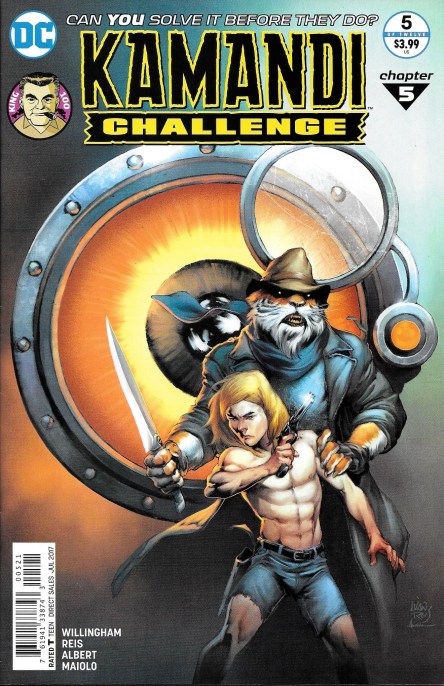
Kamandi Challenge no. 5

KC5.cover

Variant cover by Ivan Reis and Marcelo Maiolo

“Sub Tropical Thunder”
Writer: Bill Willingham
Penciller: Ivan Reis
Inker: Oclair Albert
Colorist: Marcelo Maiolo
Letterer: Clem Robins
Editors: Brittany Holzherr and Dan DiDio

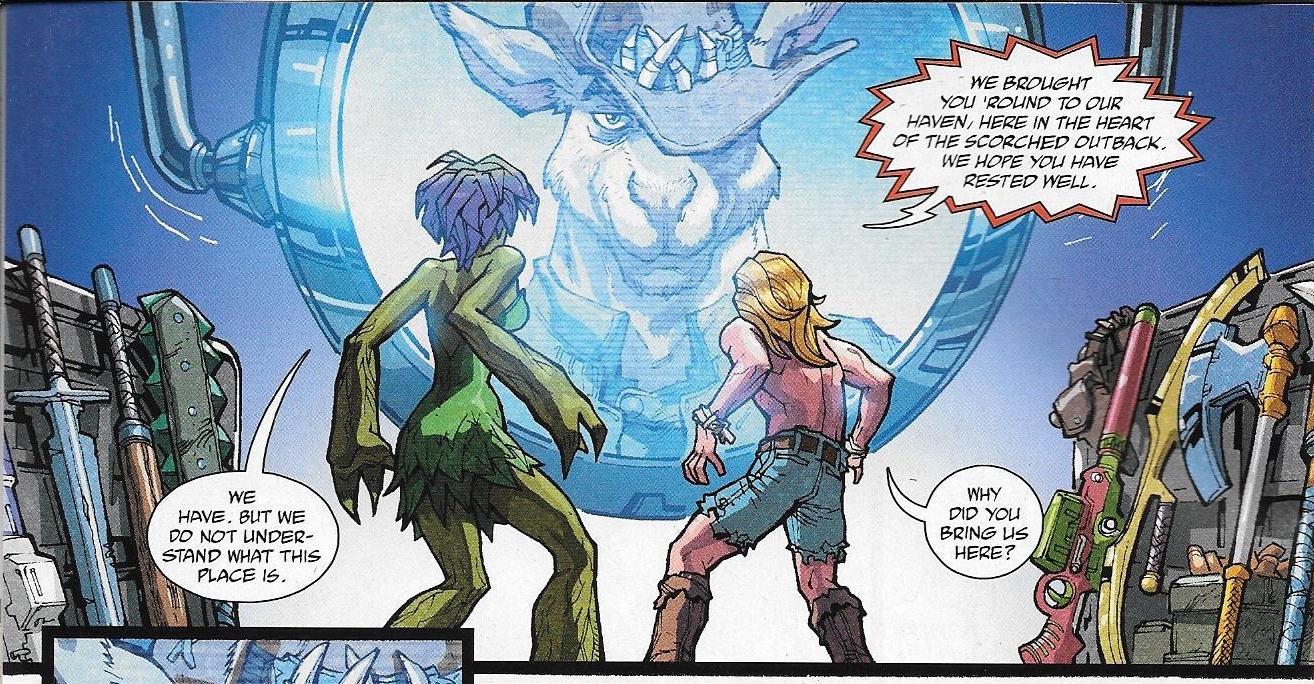
As Kamandi Challenge no. 5 begins, Kamandi and Vila are being chased by the Kanga Rat Murder Society, by whom they were captured at the end of the last issue. Self-proclaimed guardians of the “Wondrous Western Wall,” the Kanga Rats have given our heroes their choice of vehicle and weapons to defend themselves–they’re sportsmen, not monsters. Kamandi, in the driver’s seat, switches places with Vila so that he can shoot back at the hunters while she drives, and Vila makes the calculation that she can save them by driving off a convenient cliff and landing in open water (sure, last issue they were in “the heart of the scorched Outback,” and now they’re on the shore of the ocean, but whatever). Despite Kamandi’s protests, Vila does just that, growing and extending her plant body to create a protective shell around Kamandi, Groot-like, and then transforming herself into a raft (previous stories showed Vila regenerating herself, but this is the first indicator that she has this much control over her form; still, it’s inventive and exciting, so I’m willing to roll with it). After days adrift at sea, Vila enters a dormant state, assuring Kamandi that she will awaken and regenerate anew once she is in contact with soil and fresh water.

KC5.Vila

Alas, Kamandi is picked up by a passing boat while asleep, and his rescuers (a literal “sea dog” and his crew) leave Vila behind, taking her for a bundle of twigs. Perhaps Vila, Kamandi’s longest-lasting companion in this series (and an original character, at that), will turn up again, but for now the Last Boy on Earth has a new ally. After working aboard the ship in exchange for passage, Kamandi is introduced to the tiger man Raja Maccao, professional wrestler-turned-detective and fount of stories (mostly about himself and his many successful cases). Kamandi tags along (for weeks, elapsed in montage) in hopes of finding his own people and for lack of anywhere better to go.

Kamandi and Raja are taken by surprise by the airborne “Bintur horde,” a band of rodent people riding giant owls and hawks. After yet another running battle that ends with Kamandi leaping off a cliff into a river, the two are separated and Kamandi is captured by the horde. He blacks out and awakens a captive of a lemur scientist, who explains that his “3-D bio-printer,” which can fabricate replacement organs for 97 species, will soon be able to replicate human organs as well, at the small price of sacrificing Kamandi’s life, since the printer cannot create without first analyzing samples from living specimens. (While this mad doctor differs from the others encountered so far in that his intentions are noble, the end result is the same for Kamandi.)

KC5.doctor

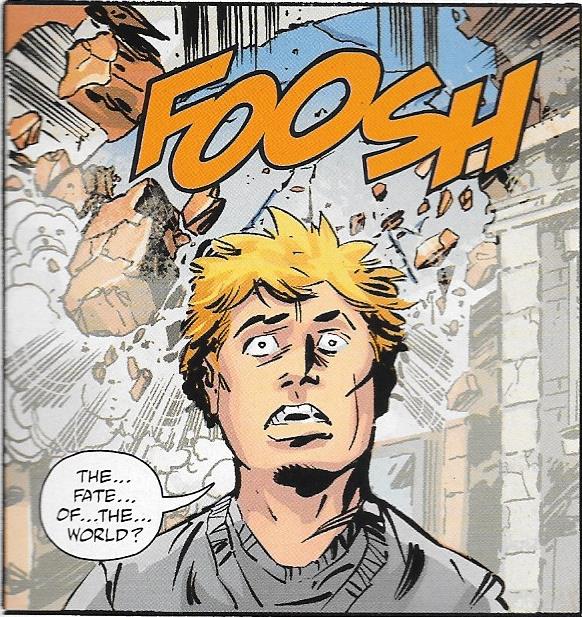
The doctor has begun prepping Kamandi for exploratory surgery (vivisection, really) by his automated operating table when Raja Maccao bursts in to the secluded laboratory (having tracked the aerial raiders by their mounts’ extensive droppings), but it appears that he is too late: the last page, with the doctor holding Kamandi’s heart in his hand and the boy’s chest cavity opened and empty, a look of terror frozen on Kamandi’s face, is the grisliest sight we’ve seen yet. In addition to being far more graphic than usual for this character or his world, it leaves a real challenge for Steve Orlando and Philip Tan when they pick up the story next month!

As the bare plot description suggests, five months into the Kamandi Challenge we’re seeing some recurring plot elements: sudden raids from above; Kamandi escaping by jumping off of or into something; Kamandi losing consciousness and waking up in a strange, new place; and captivity by scientists for whom a talking human is a challenge or opportunity that cannot be denied. But Kamandi can also count on making friends wherever he goes, and proving himself worthy of their faith in him. If I had to name a single quality that defines Kamandi, in his various incarnations, beyond his bravery, intelligence, or strength, I would say it is his resilience.

KC5.horde

Written by Fables‘ Bill Willingham, “Sub Tropical Thunder” provides a real sense of texture through its characters’ dialogue, from the rustic “sea dog” Babal Crow (“Plucked you out of the sea, we did, as you were good as dead. That’s all I ken.”) to the name-dropping, self-mythologizing Raja (“I was a frisky kitty, hungry for game and fame.”), who in a few pages mentors Kamandi in a way we haven’t really seen since Doctor Canus’ departure from the story. Even Vila’s dialogue gives a sense of her as slightly alien, with an unusual perspective. The attention to detail goes a long way toward making familiar character types and situation feel fresh.

I also enjoyed the illustrations by Reis, Albert, and Maiolo, which combine dynamic compositions and panel design with fine (but unfussy) detail. Each artist in this series has brought something of their own personality and style to the ongoing book, and like Dale Eaglesham’s work in issue no. 1, this month’s art resembles the classic comic strips of Hal Foster or Alex Raymond, including some great-looking full-page splashes. The various creatures, including a range of humanoid and giant animals, are nicely realized, with a sense of weight and movement matching their particular anatomies, and subtly-rendered textures like the woody grain of Vila’s skin or the fur on Raja’s muzzle look so real you can almost touch them. The art also emphasizes Kamandi’s boyishness as well, mostly by giving him more childish features (particularly a small nose and full lips), but also by placing him against larger figures or in the corners of panels, highlighting how small and vulnerable he is in this world.

KC5.raja

Finally, there aren’t too many clues dropped in this issue about either the source of the Great Disaster or Kamandi’s importance, but at the same time it’s mercifully free of psychedelic dream sequences, which I’ve mostly begun to think of as red herrings, since the round-robin nature of the series means we won’t really be able to assign meaning to anything until a later writer contributes something that either confirms or denies a particular clue’s significance. That’s okay with me: Jack Kirby was never too concerned himself with seeding mysteries to be resolved in grand arcs, instead concentrating on the pleasures of episodic storytelling, and Kamandi in particular has always been an especially pure example of that impulse: the rhythms of Kamandi are as old as serial narrative–captivity, escape, flight, and rescue–and are represented in spades by “Sub Tropical Thunder.”
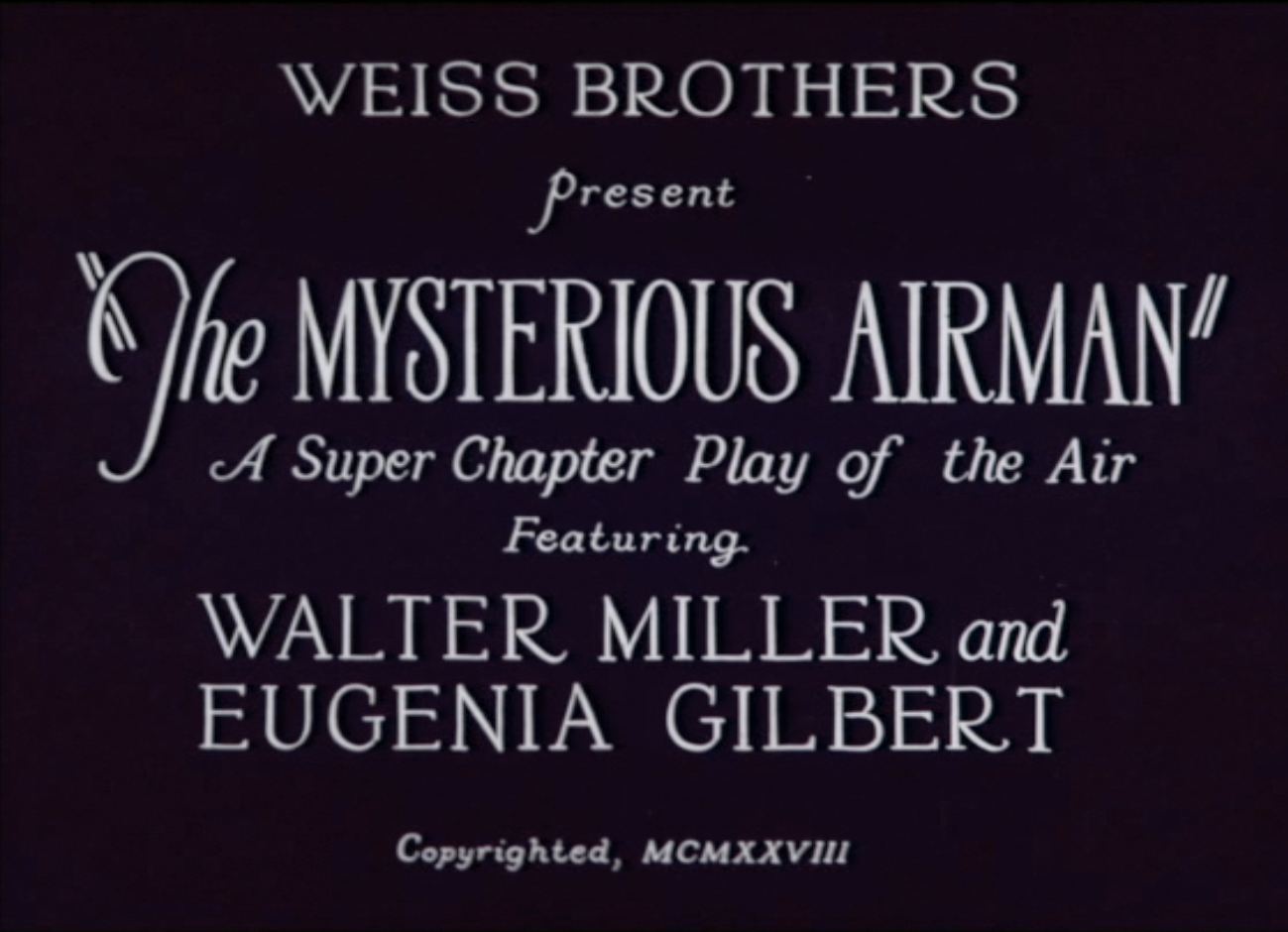
Fates Worse Than Death: The Mysterious Airman

Baker Aircraft, Inc. is thriving, thanks to Baker’s exclusive use of the Joyce Aerometer, a guidance mechanism invented and kept a close secret by James Joyce (no, not that James Joyce!). It’s a good thing company president Frank Baker is engaged to the inventor’s beautiful daughter Shirley (a fine flyer herself!).

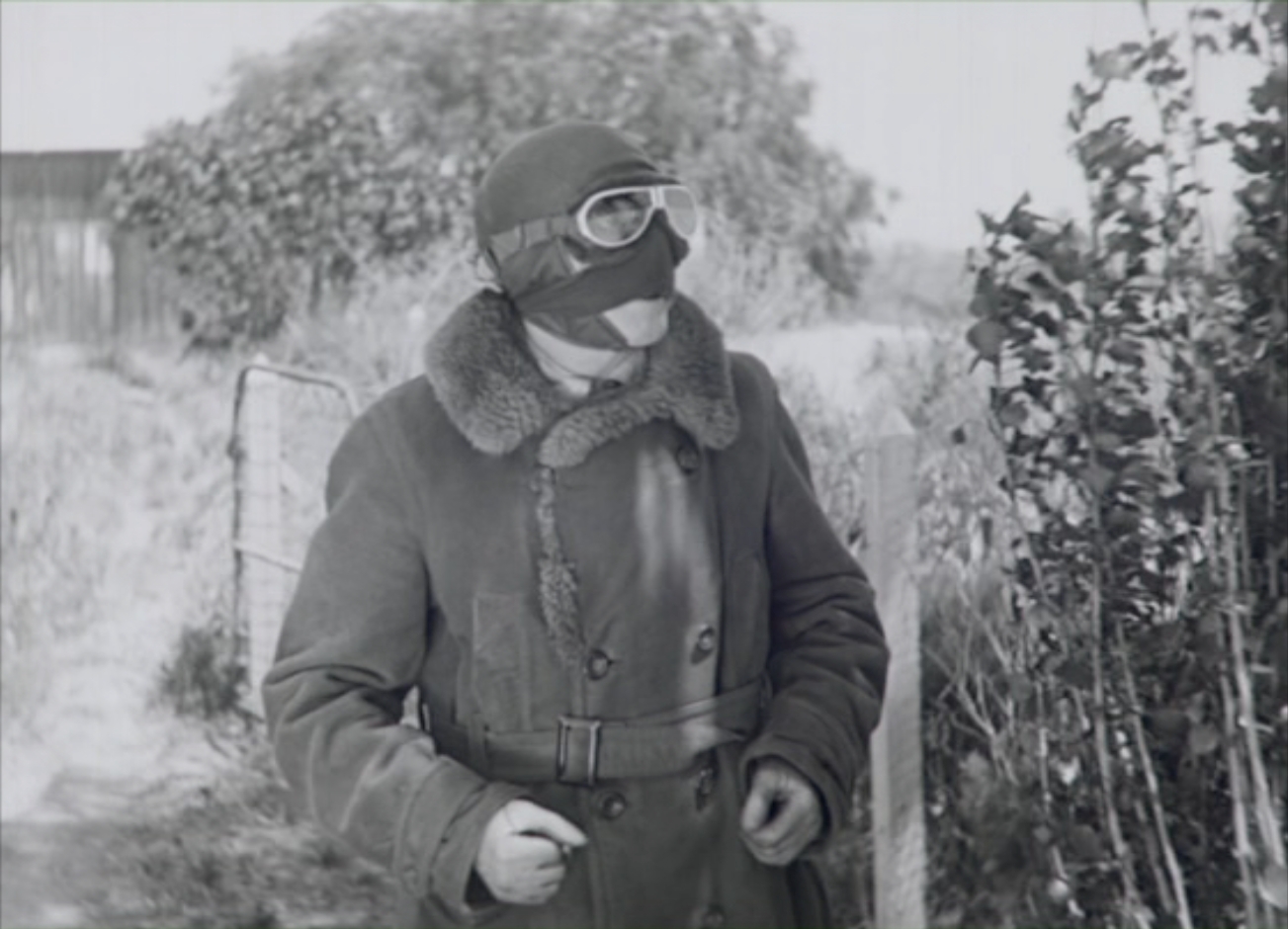
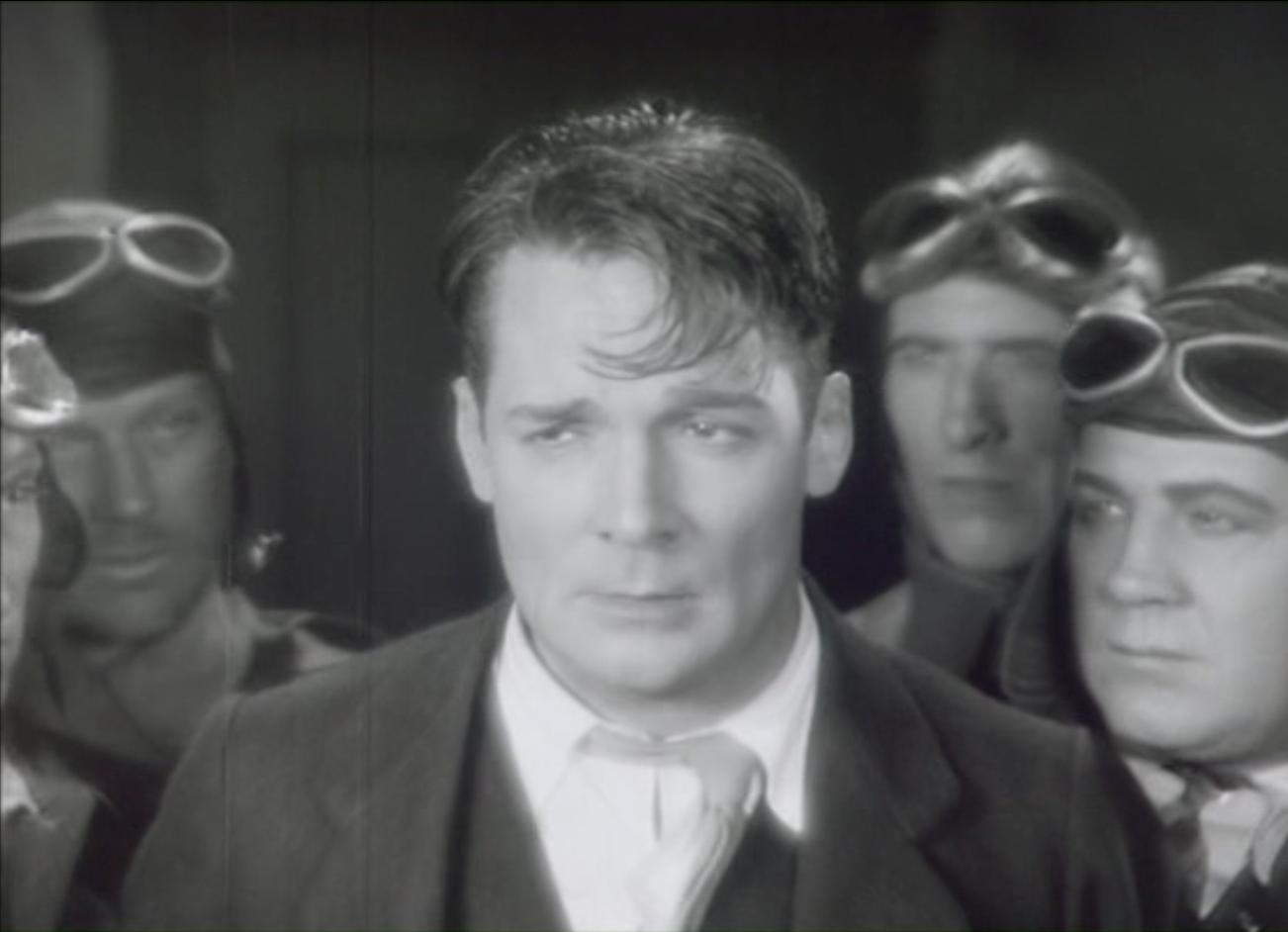
But all is not well: a band of renegade “air hawks,” led by the masked “Pilot X,” has been causing trouble, shooting down Baker’s planes and raiding the company’s shipments. Someone is out to get Baker! But who could it be? A likely possibility is William Craft, manager of the competing Globe Air Corporation, who is dying to get his hands on the Joyce Aerometer, so his sweetheart Fawn Nesbit, also a pilot, can make a record-setting flight around the world.

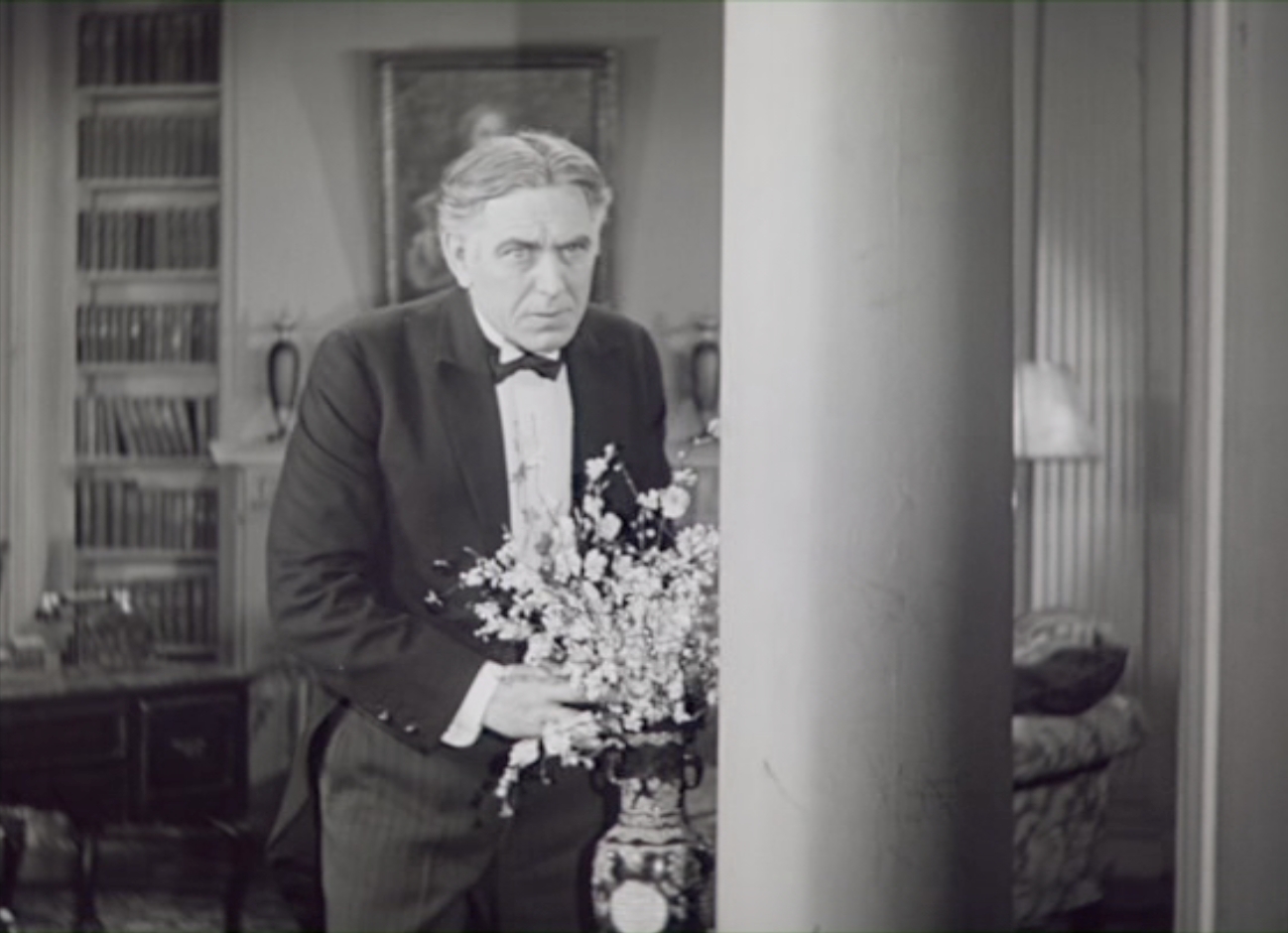
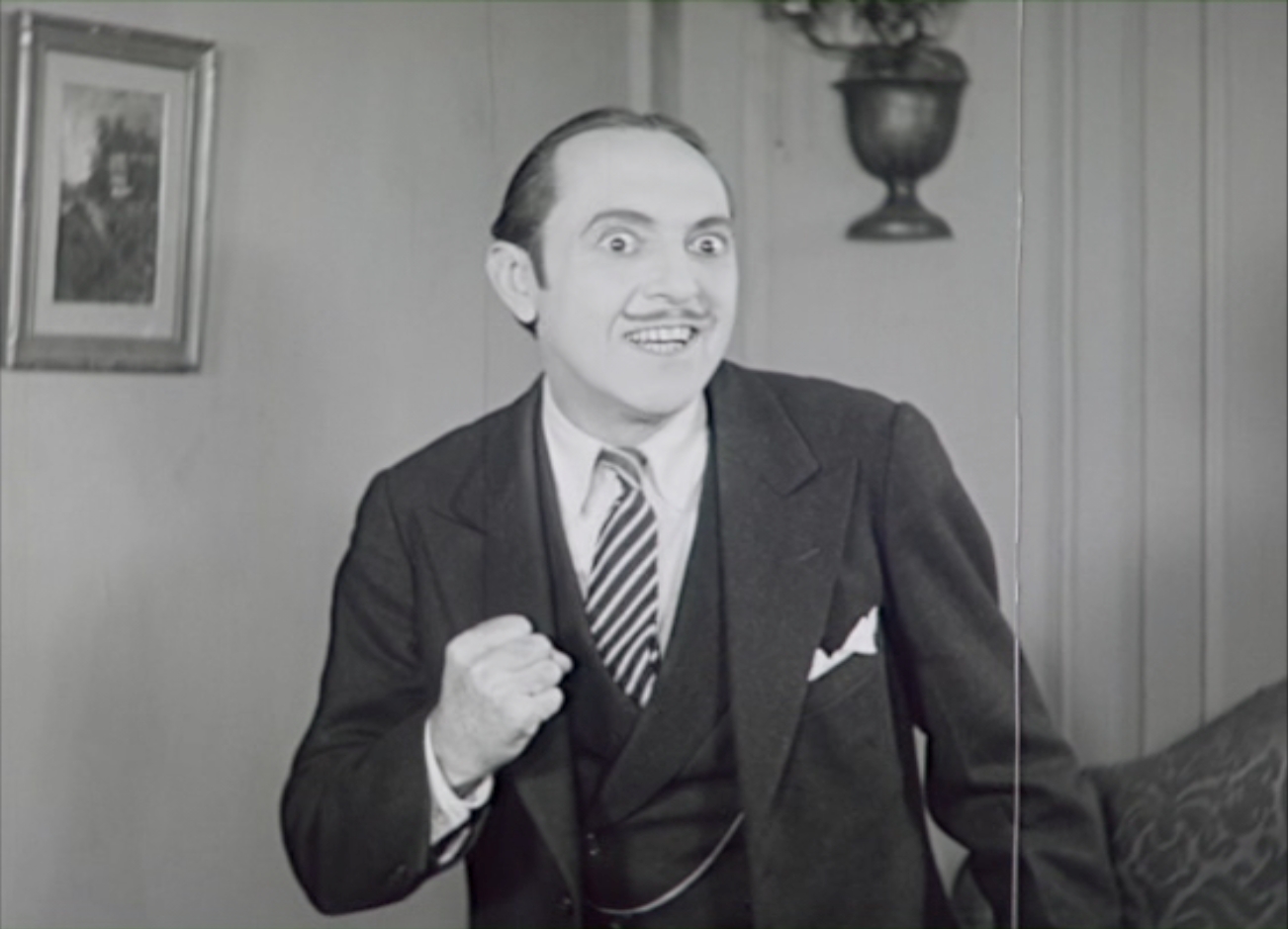
It could also be Perkins, Joyce’s butler, who always seems to be lurking in the background and listening in on conversations; he’s a suspicious one, all right. Or could it be Albert Orren, superintendent of Baker Aircraft; or Henry Knight, a Baker stockholder; or Barney Madden, the company’s seemingly loyal pilot? There are plenty of possibilities, and in reality Pilot X’s true identity isn’t hard to guess, but it still takes plenty of twists, turns, and hair-raising brushes with death before Frank and Shirley find out the truth in the 1928 silent serial The Mysterious Airman!

Made in the waning years of the silent film era, The Mysterious Airman, directed by Harry Revier and with a scenario by Arthur B. Reeve, falls squarely into the aviation craze that stretched from the 1920s into the next decade. Flyers in real life and in the movies were lionized as brave and resourceful men (and, increasingly, women) who took their lives into their own hands while taking to the air. Many of these stories were from the point of view of small-time pilots or airfield owners, giving modern viewers a look back at a less regulated, less consolidated time when learning to fly was as much an entrepreneurial enterprise as a death-defying adventure. While boring details are frequently skimmed over in favor of aerial chases and dogfights, one gets an idea of the day-to-day jobs and problems these small air companies faced.

Also familiar is the plot device of a masked villain bedeviling the heroes, working through agents, and getting away until the last chapter, when their true identity is finally revealed. The Fighting Marines and Ace Drummond, both from the 1930s, had similar plots, and that’s just listing aviation serials I’ve already covered in this column, barely scratching the surface. I gather that it wasn’t too original in 1928, either, but the difference between a good serial and a bad one generally isn’t the level of originality: it’s the skill with which the filmmakers breathe life into and work variations on well-worn formulas.

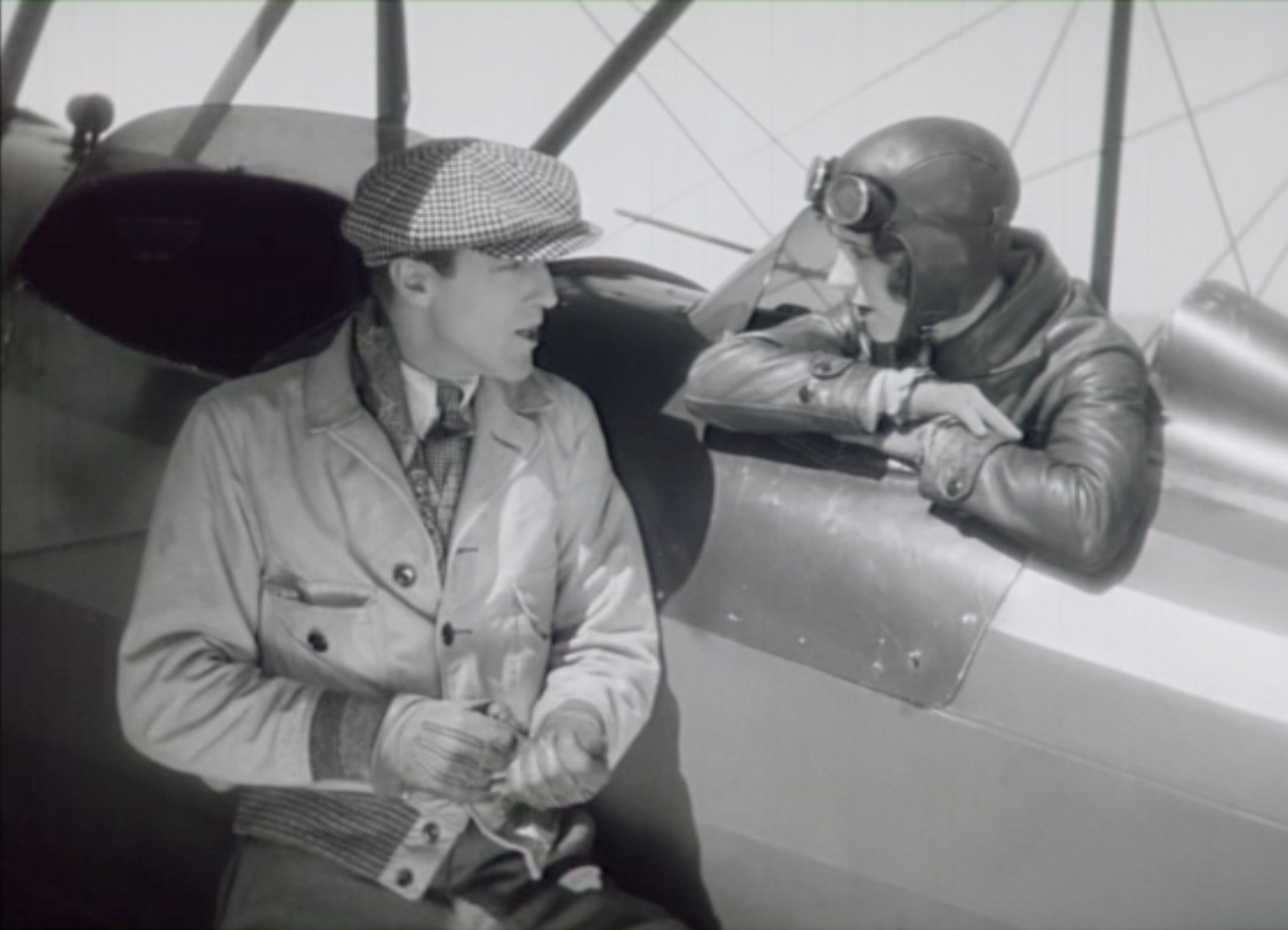
In that regard, The Mysterious Airman has some nice touches and many assets in the form of its photogenic and experienced cast. Walter Miller, as Frank Baker, is unquestionably the lead, but Eugenia Gilbert as Shirley Joyce gets nearly as much screen time and gets to participate in some of the cliffhangers without coming off as a token or damsel in distress, as so often occurred in later serials. Indeed, as an accomplished flyer and a character with her own motivations and initiative, Shirley is a worthy successor to Pearl White in The Perils of Pauline (1914) and the other serial heroines of the silent era.

She is joined by fellow aviatrix, slinky Fawn Nesbit (played by Dorothy Talcott); Nesbit and her beau William Craft (Robert Walker) form the second couple and make for an interesting counterpart to the wholesome Frank and Shirley. Craft is presented as the most obvious person to be Pilot X, with his rivalry with Baker and need for the Joyce Aerometer. His meetings with Fawn, in which they discuss their schemes to get Baker to sell them the rights to the aerometer, are frequently interrupted so that Craft can “take care of some business.” In addition to distracting Shirley, Fawn is assigned to work on Baker individually, a subplot we never actually see (although she later uses her wiles on one of Pilot X’s henchmen in an effort to turn him against his boss), but eventually she breaks with Craft and his underhanded plans and becomes a real friend to Shirley.

There are also some of the weird details that I live for when watching serials: in one chapter, Pilot X brings a trained chimp (or “henchmanzee,” as commentator Richard M. Roberts puts it) to the Joyce house to climb into a high window and steal a model of the “Joyce Flying Torpedo,” another invention that serves as a McGuffin. Later, the same chimp appears with an organ grinder and climbs into the window with a microphone to eavesdrop on Frank and Shirley. Then it disappears for the rest of the serial.

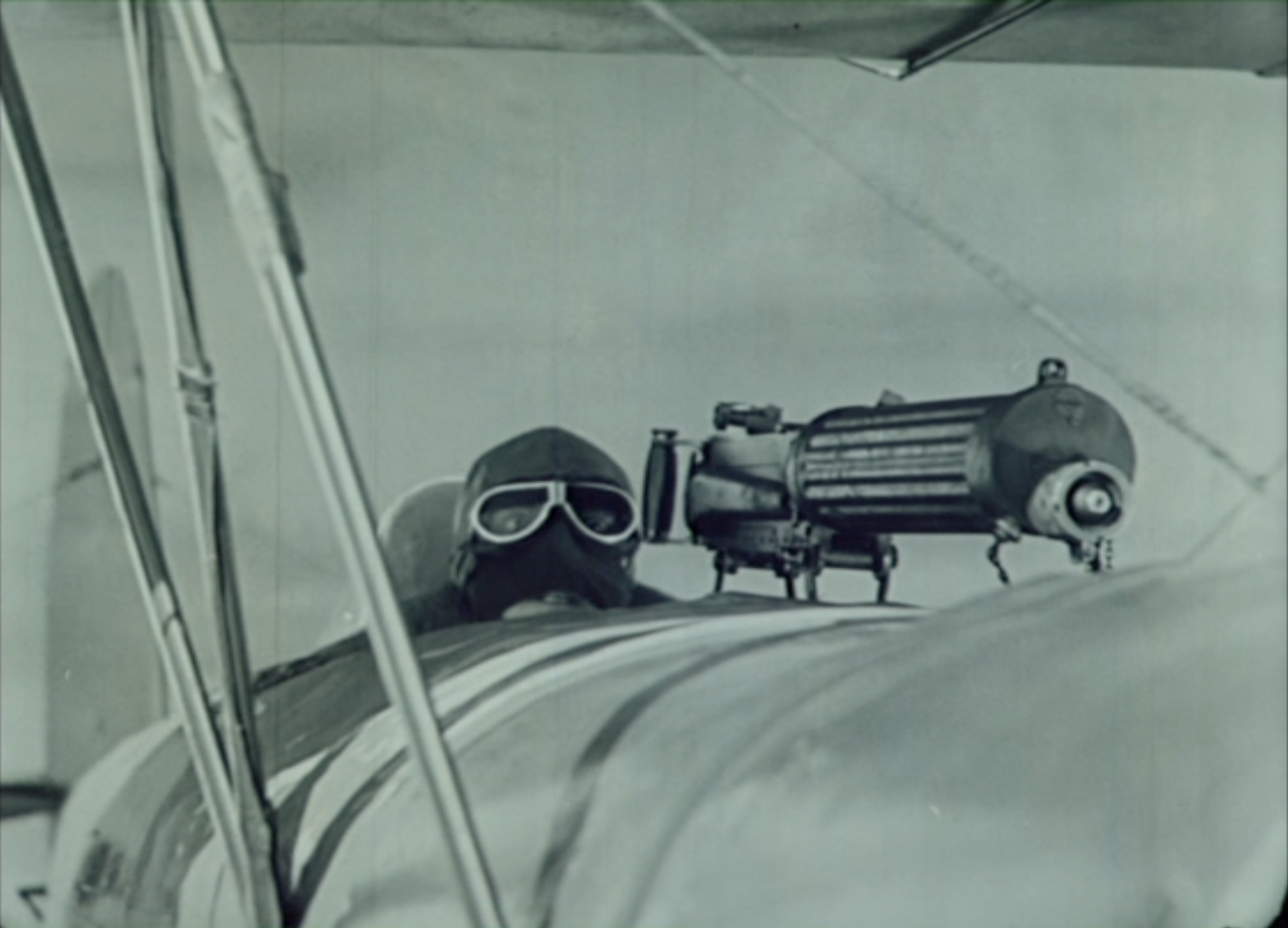
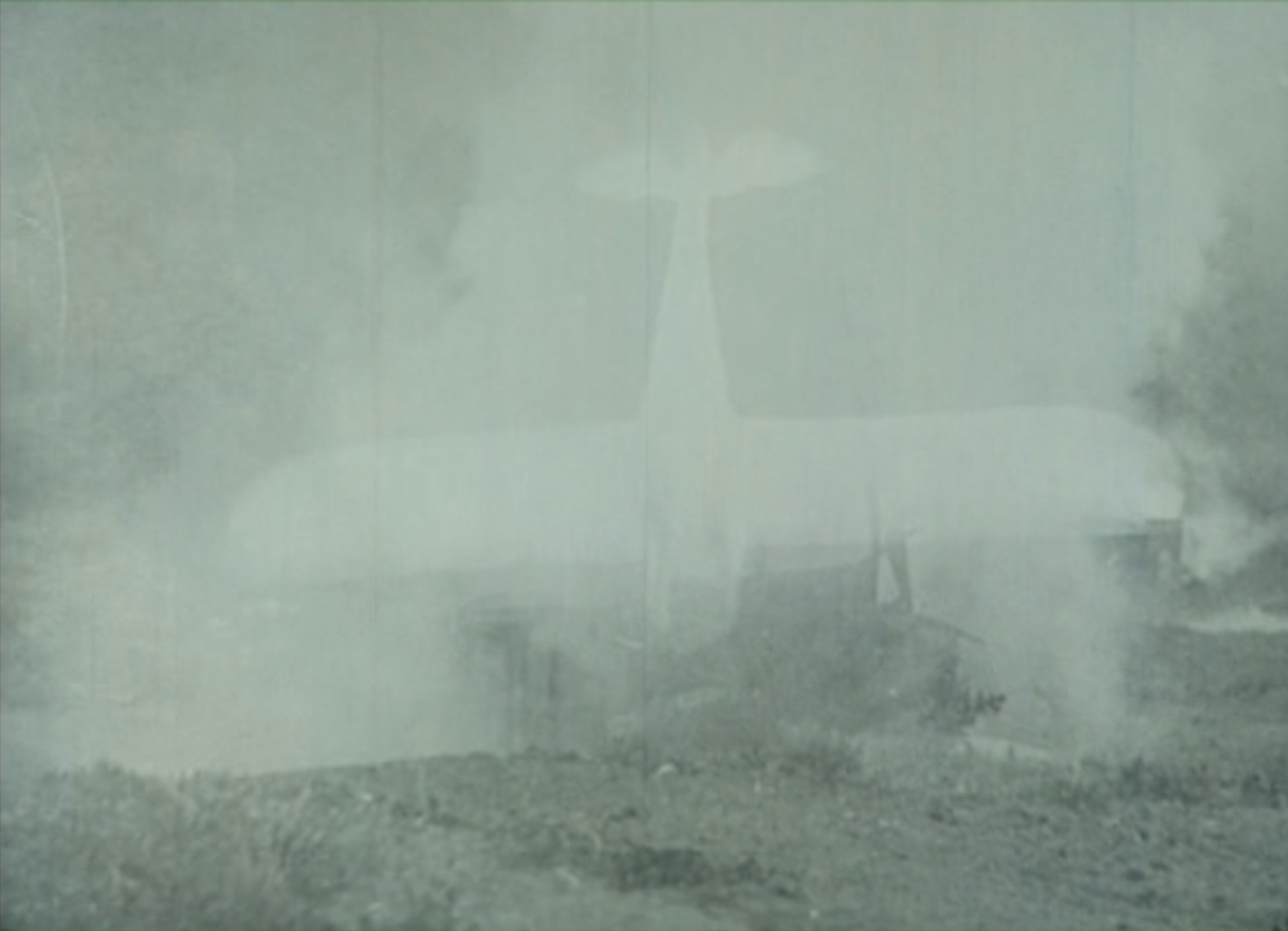
However, for a serial focused on the wonders of flight, the dogfight sequences are a mixed bag, at least to my modern eyes. Pilot’s-eye-views of the ground, taken in flight, lend a sense of realism, and the planes themselves are interesting, even if the aerial chases, filmed from a great distance, lack the immediacy of later films. There are some clever editing tricks, like the appearance of painted-on bullet holes to show the effects of machine gun fire, but the filmmakers, already working on a low budget, were understandably not going to crash any planes for real when the story called for it. So plane crashes are accomplished with cardboard cutouts, or with flames scratched directly onto the negative, or with quick cuts to a plane already on the ground. It’s interesting sleight-of-hand, but the “crash” itself usually feels a bit anticlimactic, even making allowances for the time this serial was made.

Another cliffhanger (Chapter Four, “The Flying Torpedo”) finds Frank Baker unconscious in an abandoned barn, which by incredible coincidence is the same barn Pilot X decides to blow up with the stolen Torpedo (to test it out, you see). At the last moment, unaware that he is even in danger, Baker climbs to the roof of the barn, where he is spotted by Shirley and Barney, who (again, by chance) just happen to be flying by. They drop a rope ladder down and pick him up, a split-second before an unconvincing double-exposure blast consumes the barn.

The cliffhangers are better when they stay closer to the ground. For example, at the end of Chapter Seven (“A Leap for Life”), Frank Baker, captured by Pilot X’s men, is tied up in the back seat of a car. He frees himself and fights the henchmen while the car is moving, struggling with the driver just as the speeding car is heading for a cliff! A real car is pushed over the cliff for this one, the vehicle being more expendable than the handful of planes seen throughout the serial. If anyone asks you why serials were known as cliffhangers, you can show them this scene as an example (or one of the many serials that used the exact same setup); tell ’em it’s not a cliché, it’s a classic.

What I Watched: The Mysterious Airman (Weiss Brothers-Artclass Pictures, 1928)

Where I Watched It: It isn’t often that I get to put the spotlight on a “new release” for this column: long thought lost, a nearly-intact tinted nitrate print of The Mysterious Airman was recently discovered, and Sprocket Vault has cleaned it up and made the film available on DVD. (Out of ten two-reel chapters, only one reel was too deteriorated to use: still pictures and captions make up for the missing scenes.) It’s a fine transfer: other than some scratches and signs of deterioration in a few places, the picture is surprisingly crisp, better than many second- (or third-) generation dupes I’ve seen of even newer and more widely-circulated films. What’s more, the DVD features an original piano soundtrack by composer/silent film accompanist Andrew Earle Simpson, a full-length (almost 190 minutes!) commentary track by historian Richard M. Roberts, and a bonus aviation-themed short film from the same year, “Flying Cadets.”

Roberts provides plenty of background detail on the Weiss Brothers, who produced the film (Artclass Pictures was one of the many organizations through which they channeled their business), and the members of the cast and crew. He also places the serials in context within the film business in the 1920s and beyond and relates a number of interesting anecdotes and opinions; he makes for an informative (if sometimes cranky) viewing companion. Ultimately, while I ended up being mostly lukewarm on this serial, I offer my highest praise to Sprocket Vault’s presentation; it’s a terrific package, and one hopes more serials will receive similar treatment. The DVD is currently available from Amazon.

No. of Chapters: 10

Best Chapter Title: “The Girl Who Flew Alone” (Chapter Two)

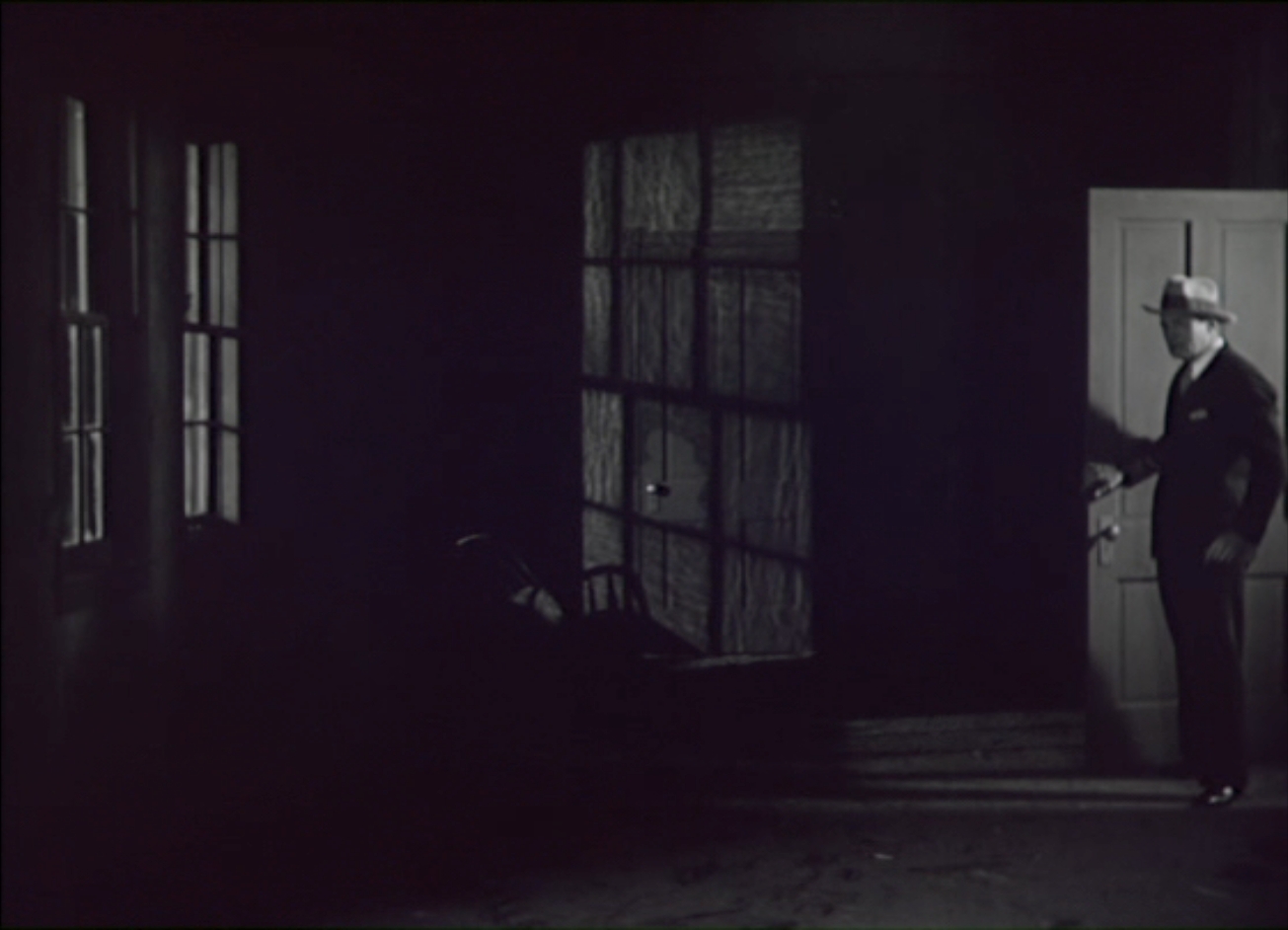
Best Cliffhanger: At the end of Chapter Six (“The Hawk’s Nest”), Frank Baker, following a clue in a coded telegram (intended for Pilot X but which Fawn Nesbit happened to intercept), travels to an abandoned house in hopes of surprising Pilot X and his gang while they meet. The setup is creepier than most of this serial’s other scenes, with atmospheric shadows and lighting suitable for a detective noir, and evocative use of tinting to darken the day-for-night exterior shots. (Plus, the hat Walter Miller is wearing makes him look like Dick Tracy.) Baker hears the renegades on the other side of a door and surprises them, when he himself is jumped from behind by one of Pilot X’s henchmen. The renegades swarm out of their meeting room and grab Baker. The chapter ends without a direct physical threat, but there’s no question that Baker is in a jam, and it’s more suspenseful and exciting than any of the flimsy plane-crash cliffhangers from other chapters.

Sample Dialogue: “We meet at last, Pilot X–and you seem well pleased–!” –Frank Baker, after being captured, Chapter Seven (“A Leap for Life”)

Sample Commentary: “No airplanes were harmed in the making of this picture.” –RMR

What’s Next: Check back at the beginning of summer for more serial reviews; in the mean time, please visit the Series page to catch up on previous installments of Fates Worse Than Death!

Kamandi Challenge no. 4

Main cover by Paul Pope and Lovern Kindzierski

“The Wild Wondrous West”
Writer: James Tynion IV
Artist: Carlos D’Anda
Colorist: Gabe Eltaeb
Letterer: Clem Robins
Editors: Brittany Holzherr and Dan DiDio

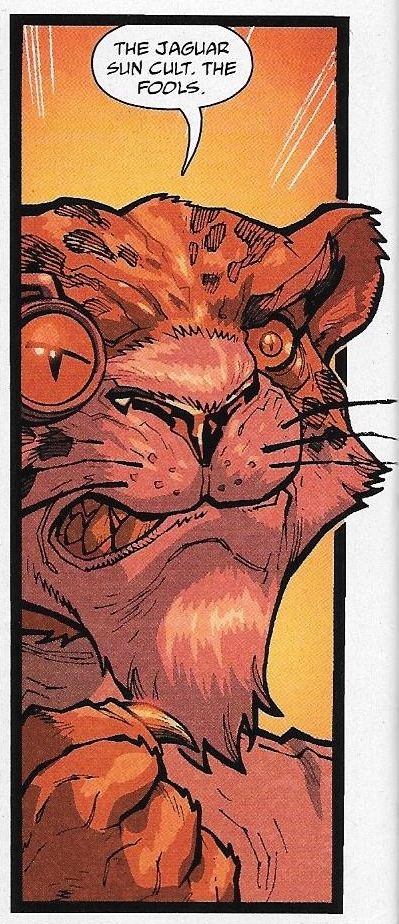
At the end of Kamandi Challenge no. 3, Kamandi and his plant-girl companion Vila were about to be sacrificed to the jaguars’ deity, a giant-sized jaguar so huge that it wears trucks and a jet on chains around its neck as jewelry. As issue 4 gets underway, the giant grabs Kamandi in its enormous paw; Kamandi struggles to escape, stabbing at the beast. He discovers that rather than blood, his knife draws oil from the wound, just before the creature shoves Kamandi in its mouth and swallows him. Abruptly, the scene changes, and Kamandi finds himself in a high-tech control room, the literal belly of the beast: the jaguar “god” is actually a giant mecha, a robot piloted by a pair of jaguar scientists, Cano and R’lash.

Kamandi’s captors explain that they were outcasts from the superstitious jaguar society, skeptical of the cults’ unscientific reliance on myth and ritual. Discovering a cache of ancient technology, the pair taught themselves to use it and built their robotic version of the sun cult’s god, exploiting the jaguars’ credulity and putting themselves at the head of their society. All of this they explain to Kamandi (and Vila, who is also “eaten”), leading up to their plan to dissect him for study (a talking human continues to be a rarity in this post-cataclysmic world).

Kamandi (who was swallowed unscathed because of a lucky malfunction of the machine’s chewing function) isn’t so easily killed however, and he uses a gun to destroy the machine’s control panel; he and Vila (injured but still alive) climb back out of the god’s mouth and into the cockpit of the ancient fighter jet that the machine wears around its neck. They are able to take off (breaking off the jaguar god’s robotic head and revealing Cano’s deception to the other jaguars), but as they climb in altitude they black out.

After regaining consciousness, Kamandi finds himself in a desert next to the crashed jet (and Vila, dehydrated) at the base of a mysterious wall. Kamandi hears voices calling his name from the other side of the wall; strange vehicles approach, driven by figures he can’t quite make out in the blazing sun, but when he attempts to communicate with them, he is struck down by a boomerang to the head. While unconscious, he seems to experience contact with an unknown entity, but that conversation too is cut short and Kamandi awakens alongside Vila, healed, in another unknown location.

Their reunion is brief, however, as a voice instructs them to choose weapons from an arsenal, and the platform on which they stand rises up and opens into a giant arena. Once more Kamandi must fight before a roaring crowd, this time in the Australian Outback, in the domain of the “Kanga Rat Murder Society,” guardians of the “Wondrous Western Wall.” The last page of this issue has Kamandi and Vila hop aboard a Kirby-esque Big Wheel, preparing to flee or fight for their lives.

It took me a couple of readings of this issue to put my finger on why it seemed a little thin. It’s not for lack of incident or characters, and there’s quite a bit I liked about “The Wild Wondrous West,” but it comes down, I think, to the fact that Kamandi gets knocked out and wakes up in a new location twice: it’s a dynamic that helps our heroes get from one place to another, but makes it a challenge to build up much momentum. (It’s probably a side effect of the tag-team storytelling approach, as well: each pair of writers and artists has only one issue to wrap up the previous issue’s cliffhanger and then make their own contribution.) The settings also feel a little familiar; true, gladiatorial arenas are a staple of post-apocalyptic fiction, but we’ve already seen something similar to this in the first issue.

At least this issue’s reveal makes the jaguar god into something different from the giant gorilla Tiny. A pattern is emerging in which the threats facing our heroes in the cliffhangers turn out to be not quite what they seem, and the Star Trek-like false god is a particularly clever solution to last issue’s trap. The jaguar inventors piloting their robotic creation are interesting and original characters in their own right: writer James Tynion IV gives them strong personalities through their dialogue, even as “Professor” Cano and his hunchbacked assistant R’lash inhabit well-worn “mad scientist” territory. I was sad to see them go.

Above all, this issue benefits from atmospheric art provided by Carlos D’Anda, and particularly Gabe Etlaeb’s moody colors (the ominous red lighting inside the jaguar mecha is going to stick with me long after this series has been put to bed, I think). The transitions between settings are made crystal clear by the use of fade-outs and contrasting palettes: there’s no need for an “Elsewhere . . .” caption when the dark tones of the jaguar island give way to the bright yellows and blues of the desert. You can practically feel Kamandi’s thirst, and the haze through which the Kanga Rats appear gives the scene a cinematic feel; past Kamandi books haven’t always captured the kinetic energy of the Mad Max movies when they turn to vehicular mayhem, but the last few pages promise a spectacle that actually moves. One hopes the next team to take over can meet the expectation this issue sets up.

Kamandi Challenge no. 2

Cover by Neal Adams and Tim Shinn

Cover by Neal Adams and Tim Shinn

“Nuclear Roar!”
Story and Words:
Peter J. Tomasi
Artist: Neal Adams
Colorist: Hi-Fi
Letterer: Clem Robbins
Editors: Brittany Holzherr and Dan DiDio

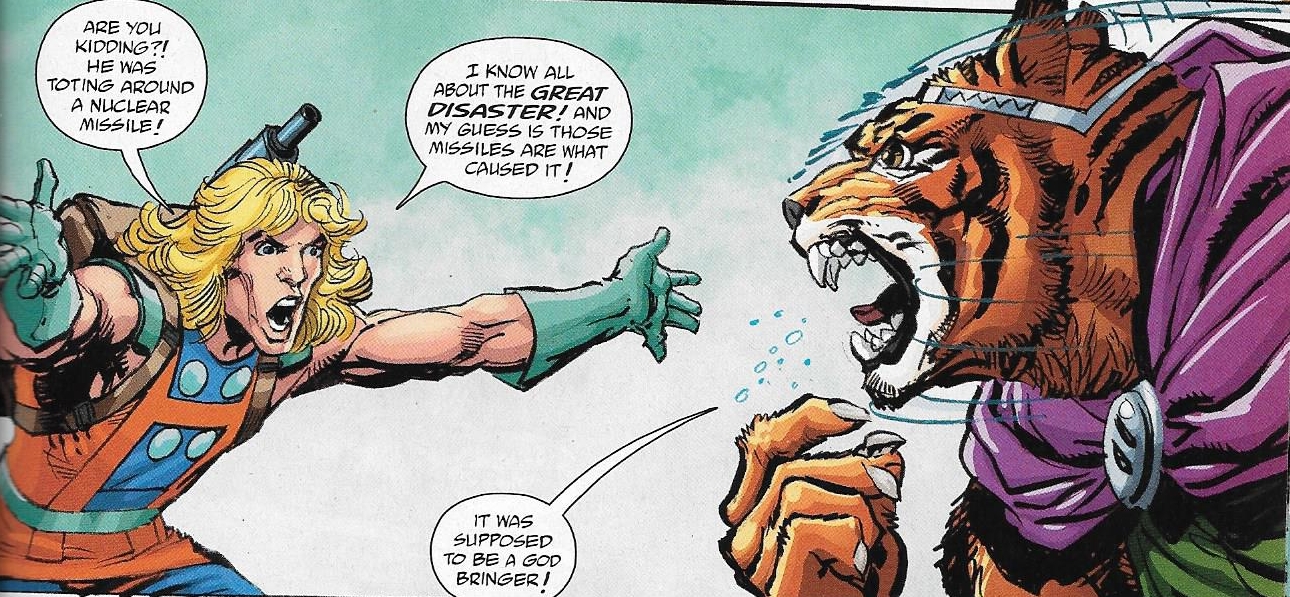
At the end of last month’s “K–is for ‘Kill’!”, King Caesar had triumphantly returned from battle with a “god” that he planned to awaken in order to add its power to that of the Tiger Empire. Only Kamandi, claimed as a “pet” by Prince Tuftan and guarded by Dr. Canus, recognized the “god” as a nuclear missile, left over from the times before the Great Disaster. As Caesar activated the missile’s computer system, it began a countdown, with Kamandi certain that the ancient device was going to blow up the entire city and everyone in it.

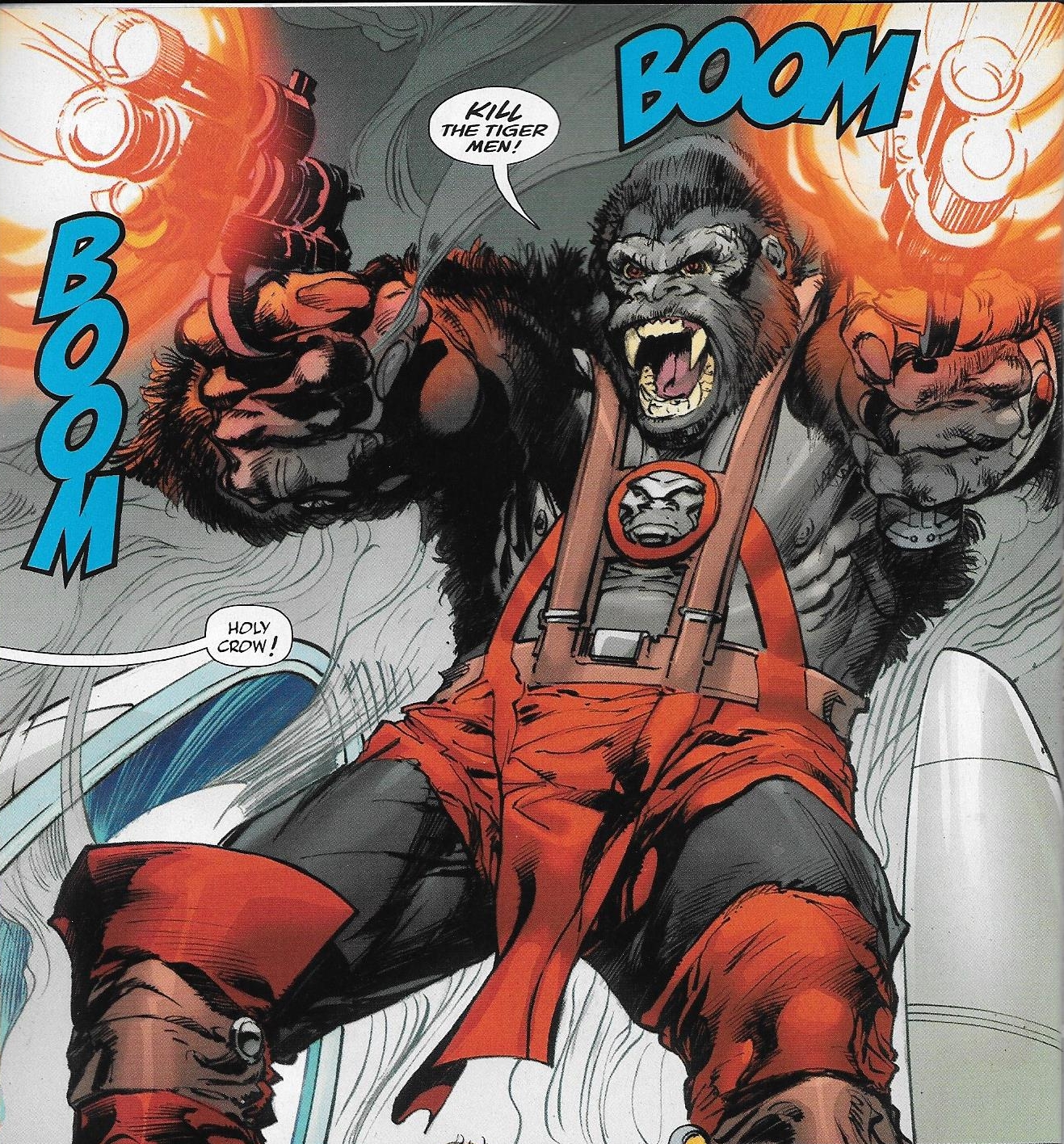
As this month’s continuation, “Nuclear Roar!”, begins, Kamandi struggles against his captor, attempting to reason with the tigers and halt the countdown, or escape, only to be put in his place. The last few seconds tick away, but instead of detonating, the missile opens a hatch, from which emerges a gorilla commando, guns blazing! “A giant ape hiding inside an old nuclear missile like it was a Trojan horse!” Kamandi exclaims, accurately summing up the situation. Indeed, the gorillas were able to track their inside man to the tigers’ hidden city, and a wave of gorilla soldiers begin invading.

kamandichallenge2-gorilla

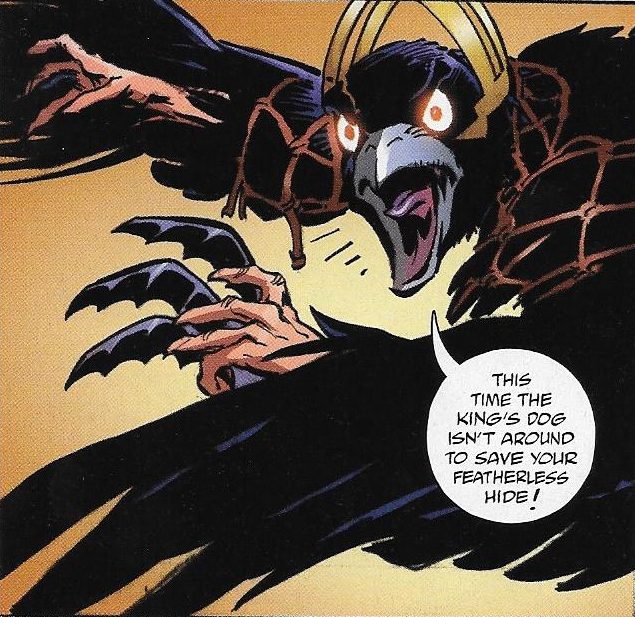
In the confusion, Kamandi escapes and heads back to the Museum of War seen last issue. There, the jackdaw guards that confronted him before are even more bloodthirsty, with one in particular sensing Kamandi’s presence and promising to shred him with his talons, among other graphic threats. After struggling against the jackdaw using the stockpiled weapons, Kamandi comes across a mysterious high-tech chair. Warned away from it, he naturally sits down in it out of spite, just in time for Prince Tuftan and Dr. Canus to arrive and try to pull him out of it (like many of the relics of the past, it is considered sacred, despite–or because of–the tigers’ inability to understand it).

Somehow Kamandi activates the chair, and he, Tuftan, and Canus are teleported a great distance: all the way to the ruins of San Diego, in fact, far outside the Tiger Empire. Canus, frightened, recognizes the place as the site of a “wild human reserve,” but before he can explain what that means to Kamandi, he and Tuftan are struck by robotic “Manhunters” who attempt to capture Kamandi. In a last-ditch effort to escape, even if it means death, Kamandi leaps from the ledge upon which he stands, into the unknown. To be continued . . .

I can’t say I was crazy about “Nuclear Roar!” After the fluid, expressive art of Dale Eaglesham last issue, Neal Adams’ treatment of the same characters looks stiff and, dare I say it, ugly. Adams is of course a giant in the comics world for his work on Batman, but in recent years his style has become stiff and over-rendered, with an emphasis on goggle-eyed, open-mouthed expressions of shock. It’s . . . distinctive, I’ll admit, but not something I care much for. Combined with Peter J. Tomasi’s dialogue (“Your new god’s a mushroom cloud, idiots!” is a typical bon mot), this chapter is functional but not very subtle as storytelling.

kamandichallenge2-kamandi

The biggest development in the ongoing serial is getting the threesome of Kamandi, Tuftan, and Canus out of Tiger City and into a dangerous, remote area that can jumpstart the quest/journey elements central to most of Kamandi’s previous adventures, and will presumably force the three main characters to work together. As yet, we haven’t seen anything to indicate that they will be uneasy allies, much less friends, but I appreciate that the friendship angle is being given time to develop organically: for all of Kamandi’s pugnacious bluntness in Kirby’s original saga, he typically made friends quickly. One of the opportunities of revisiting or retelling this story is in decompressing and smoothing out some of the original story beats, or at least exploring them from a different angle. Or, who knows? Maybe they’ll all kill each other in this version of the story. But somehow I doubt it.

There are some nice touches, however, as well as more clues about the world Kamandi has been dropped into. We don’t learn any more about his search for his parents, but it is mentioned again, just to make sure we (and the next team to take over the story) don’t forget about it. I also got a good laugh out of the reveal of the gorilla hiding inside the missile: if you’re not going for subtlety, then this kind of audacious broad stroke is a good alternative, and saving it for a three-quarter page splash after a page turn maximized the element of surprise.

kamandichallenge2-batarang

There’s also the jackdaw guard who uses what are unmistakably explosive Batarangs against Kamandi during their fight in the Museum: this is obviously a tip of the hat to the artist’s most famous work, but could it be more? In Jack Kirby’s original series, it was established that Superman was a real person in the past, connecting Earth A.D. to DC’s mainstream continuity as an “alternate future.” In Dan DiDio and Keith Giffen’s prologue “The Rules” from issue no. 1, we see a glimpse of Superman and Batman posters on the wall of Kamandi’s bedroom; by itself that doesn’t prove anything, but the connection to other heroes’ continuity remains a tantalizing possibility. Maybe the Batarangs in the Museum were actually the Batman’s, salvaged from one of King Caesar’s excursions into a future Gotham City?

What about the Manhunters who confront our heroes in San Diego? These appear identical to the Manhunters who preceded the Green Lantern Corps as an interplanetary police force in past DC comics, even referencing their catch phrase “No man escapes the Manhunters,” but what their role here is remains to be seen.

kamandichallenge2-teleport-detail

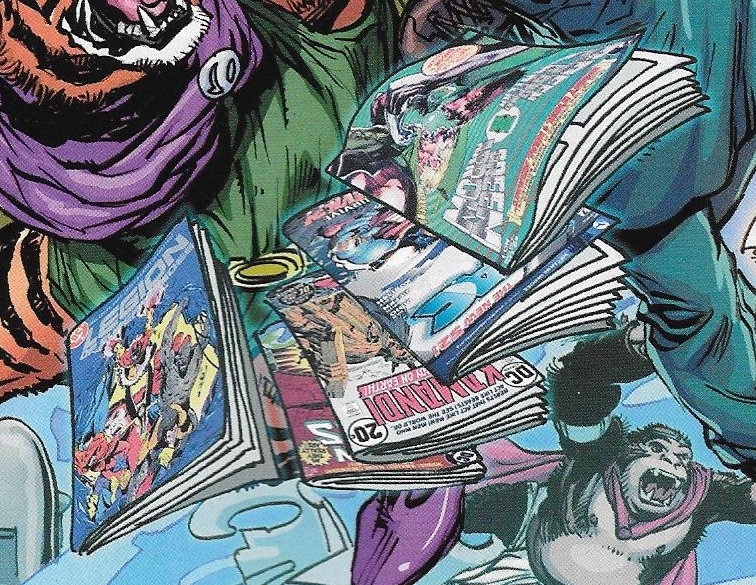
Finally, the most overtly meta moment in the chapter is the full-page illustration of the group in mid-teleportation. In addition to the dramatic image of Kamandi, seated in the chair and struggling to hold onto Tuftan and Canus, there are cameos of Superman, Batman, and Wonder Woman; Gorilla Grodd; the Sandman’s mask; a Mother Box; and most intriguingly, a stack of comic books. And they’re not just any comics: visible covers include Kamandi no. 1, an issue of Kirby’s New Gods, DiDio and Giffen’s New 52 OMAC, an issue of Green Lantern and Green Arrow (another landmark Neal Adams series), and Legion of Superheroes. Fragments of narration or speech dot the panel as well. In the spirit of an ongoing comics jam, these could be inside jokes, referring to some of the creators’ other work, or they could be clues to the mysteries of Kamandi’s parentage and destiny: depending on how future writers pick up on them, they could go either way.

Kamandi Challenge no. 1

Cover B by Keith Giffen and Scott Koblish

Cover B by Keith Giffen and Scott Koblish

“The Rules”
Story and Art: Dan DiDio, Keith Giffen, Scott Koblish
Colors: Hi-Fi
Lettering: Clem Robins
Editor: Brittany Holzherr

Kamandi Challenge no. 1 begins with a prologue: an ordinary teenage boy (as yet unnamed) is running late for school, gently encouraged by his grandmother. The set-up is classic, reminiscent of Peter Parker and his Aunt May, or any number of fairy tales. Threading his way through an idyllic small town after missing the bus, the boy encounters similarly benevolent townsfolk (including a couple named after Kamandi creator and “king of comics” Jack Kirby, and his longtime inker Mike Royer), all of whom know him and are watching out for him. Their solicitous treatment turns out to be more than mere small-town friendliness, however, when a piece of the sky cracks off and falls to the ground: the boy’s home is actually an enclosed dome, a Truman Show-style simulation of a normal life, and that shelter has finally been pierced by his (unknown, at least to him) enemies.

kc1-02

The friends and neighbors who so recently were encouraging him to get to school are suddenly armed and ready to fight off the threat; they are, in fact, robots, programmed solely to protect the boy! Attacked by one of the invaders, the boy is horrified to come face to face with a humanoid, talking rat. There is so much about the outside world that he did not suspect! At home, “grandmother” shoves him into a mysterious glowing chamber, a sort of stasis capsule, before fighting off the intruders with one final explosion. In his artificial sleep, the boy receives more instruction, including an order to “remember Command D”–not, apparently, the name of the bunker in which he was raised, as in the original Kamandi stories, but perhaps a code or protocol.

After an indeterminate time in suspended animation (but long enough for the boy’s hair to grow long), the chamber is opened and the boy is reawakened by manlike tigers, scouts for the Tiger Empire ruled by King Caesar. The tigers assume that the phrase the boy keeps muttering, “Command D,” is his name, and thus Kamandi is christened, a new name for a new world. Taken for a savage animal, Kamandi is thrown in a paddy wagon and driven to Tiger City where he will fight in Caesar’s gladiatorial arena. His protests are interpreted as the unintelligent parroting of a wild beast who has learned to imitate speech–everyone knows “animals” can’t talk. Thrust into the arena, Kamandi is pitted against “Tiny,” a giant, Kong-like gorilla.

kc1-03

On that cliffhanger the prologue ends, with Kamandi (and the reader) given a crash course in the premise of the series, both its story (Kamandi is referred to as “the last boy on earth” a couple of times, and one of the robot guardians insists that he is to be protected as if the fate of the world depends on it; and we get an introduction to the upside-down “animals ruling over humans” formula that was also essential to the series) and the test of the creators’ inventive powers: “What’s the matter, boy? Afraid of a little challenge?” one of the tigers jeers Kamandi as he throws him into the arena. Those might as well be Dan DiDio’s words to the next team to pick up the story: get him out of this, if you can, guys.

Dan DiDio is both the architect of this series and current Co-Publisher of DC Comics, so his influence is felt far beyond the stories on which he has writing credits, but I personally associate him with the New 52 version of OMAC that he and artist Keith Giffen collaborated on in 2011. OMAC, the “One-Man Army Corps,” was another creation of Jack Kirby’s, and the liberties “The Rules” takes with Kamandi’s origin story has some similarities to the way DiDio and Giffen expanded on OMAC, with an emphasis on mysterious conspiracies and secret identities, not to mention all those robots. Visually, Giffen and Koblish are in similar territory, with an updated Kirby-by-way-of-Kubert style that makes for a good introduction to this new version of the character.

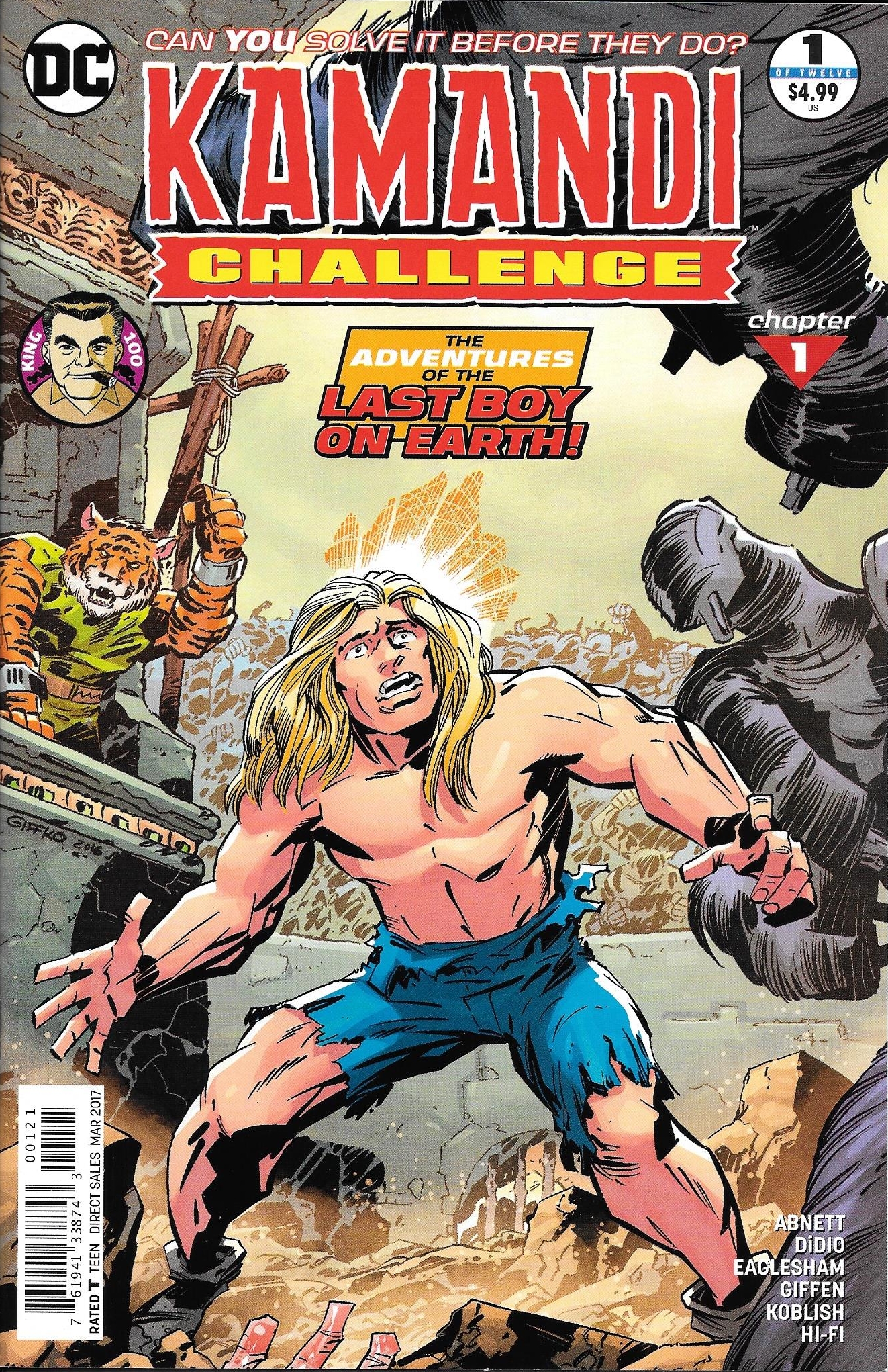
DiDio writes in an afterword to Kamandi Challenge no. 1 that one of the rules of the series is that not only is each writer-artist team to end their chapter on a cliffhanger, leaving it for the next team to resolve, but they must write a note indicating how they would have continued their story, to be included in the letters page. As an example, he states that he would have resolved the cliffhanger at the end of “The Rules” by having Kamandi trick Tiny into throwing him into the audience of the arena, where he would meet and befriend Prince Tuftan. In addition to the window this opens into the writers’ creative process, I imagine it also guarantees that the cliffhangers play fair: there has to be some way out for our heroes. (I also like the implicit invitation to play along: “Can you solve it before they do?” a blurb on the cover asks.)

“K–is for ‘Kill’!”
Writer: Dan Abnett
Artist: Dale Eaglesham
Colorist: Hi-Fi
Lettering: Clem Robbins
Editors: Brittany Holzherr and Dan DiDio

kc1-04

In the next chapter, Tiny attacks Kamandi; the tiger people in the stands cheer on the fighters and assume that the puny human will be no match for the champion ape. Instead of tricking Tiny into throwing him into the stands, as DiDio had suggested, Kamandi lures Tiny into an electrified wall surrounding the arena, knocking him out and proving himself more clever than the tigers had originally thought. Suddenly the “wild animal” has value, and Prince Tuftan turns Kamandi over to Dr. Canus, a humanoid dog, for training as a full-time gladiator.

Canus at first assumes that Kamandi’s speech is just parroting, as before, but he is soon shocked to realize that Kamandi is intelligent and can fully understand him. Kamandi tries to remember his home, but is only able to recall the dreams from his long sleep (a montage of images suggests that his “dream” consisted of events from the original Kamandi series), and the mission his “grandmother” gave him: “find your parents, save the world.”

To Canus, however, Kamandi is still an animal and the boy is kept on a leash as he is shown around the tigers’ city. Kamandi and Canus witness the return of King Caesar, back from a victorious campaign against the leopards, and bearing with him military weapons taken as the spoils of war, including a giant missile. Kamandi breaks away from Canus and investigates the forbidden Hall of War, an enormous stockpile of weapons from the old, human world. (Is the eye-shaped insignia seen above the Hall entrance and elsewhere a reference to OMAC’s Brother Eye, a seed for later writers to pick up on, or just coincidence?) Attacked by flying jackdaw guards, Kamandi almost escapes but is recaptured by Canus, who emphasizes that he’ll pay with his own life if Kamandi escapes on his watch.

They return to the main square to witness King Caesar attempting to “awaken” the recovered nuclear missile, taking it for a god of the ancients. Kamandi recognizes the missile for what it is and tries to warn the tigers about the danger it poses, but he is too late: King Caesar has armed the warhead and set it on a countdown for detonation! Unless Kamandi can halt the countdown, he–and everyone else–has only five minutes to live!

“K–is for ‘Kill’!” (gotta love comic book titles) continues the remix spirit of “The Rules,” hitting the beats of the original classic stories but combining elements in different ways in the interest of telling a new story: “Tiny,” introduced in “The Rules,” appeared in the original series (Kamandi no. 7, where the similarity to King Kong was both more explicit and more tragic); likewise, in the original series Kamandi’s first stop after escaping his bunker was the Tiger Empire, where he was forced to fight as a gladiator (the orange and blue tunic he wears in this chapter is a nod to his costume in that episode), and Dr. Canus was one of the first friends he made in the post-human world.

kamandi_07

In “K–is for ‘Kill’!,” Canus is more skeptical of Kamandi than in the original stories, and the political realities of the Tiger Empire are more explicitly drawn: not only does Canus’ life depend on serving Caesar, he openly admires Caesar’s strength and has wholeheartedly adopted the tigers’ martial ethos. “War is our way of life and our salvation,” he tells Kamandi. Elsewhere it is made clear that the arena serves to keep the people occupied and happy, and that Prince Tuftan, who runs the city in his father’s frequent absence, is eager to prove himself.

This chapter also highlights the series’ similarities (never far from the surface) to the Planet of the Apes movies: examining Kamandi’s backpack, Canus asks, “Why would an animal have books?”, echoing Charlton Heston’s famous question, “Doctor, would an ape make a human doll that talks?” King Caesar’s attempt to commune with the godlike nuclear missile (an element present in Kirby’s original) echoes the underground cult in Beneath the Planet of the Apes. Of course, the motifs of captivity, barbarism ascendant, and the worship of ancient weapons and relics are common in post-apocalyptic stories, so this observation is intended in the spirit of comparison rather than criticism: Prince Tuftan’s assumption that Kamandi simply stole his books illustrates just how far down the evolutionary ladder humanity has fallen, especially for a first-time reader who is exploring Kamandi’s world alongside him.

Finally, Dale Eaglesham’s art in this chapter is particularly appropriate, capturing the classic sense of adventure and exoticism like an old-school Sunday comic strip. Tiger City is a richly-realized environment, full of stone temples, statues, and walkways, thick with vines and palms. The characters, including the animals, are expressively rendered and fluid in a way that’s not very Kirby-like at all but is quite beautiful; it’s a great fit for the material.

Introducing the Kamandi Challenge!

kamandi-challenge-special

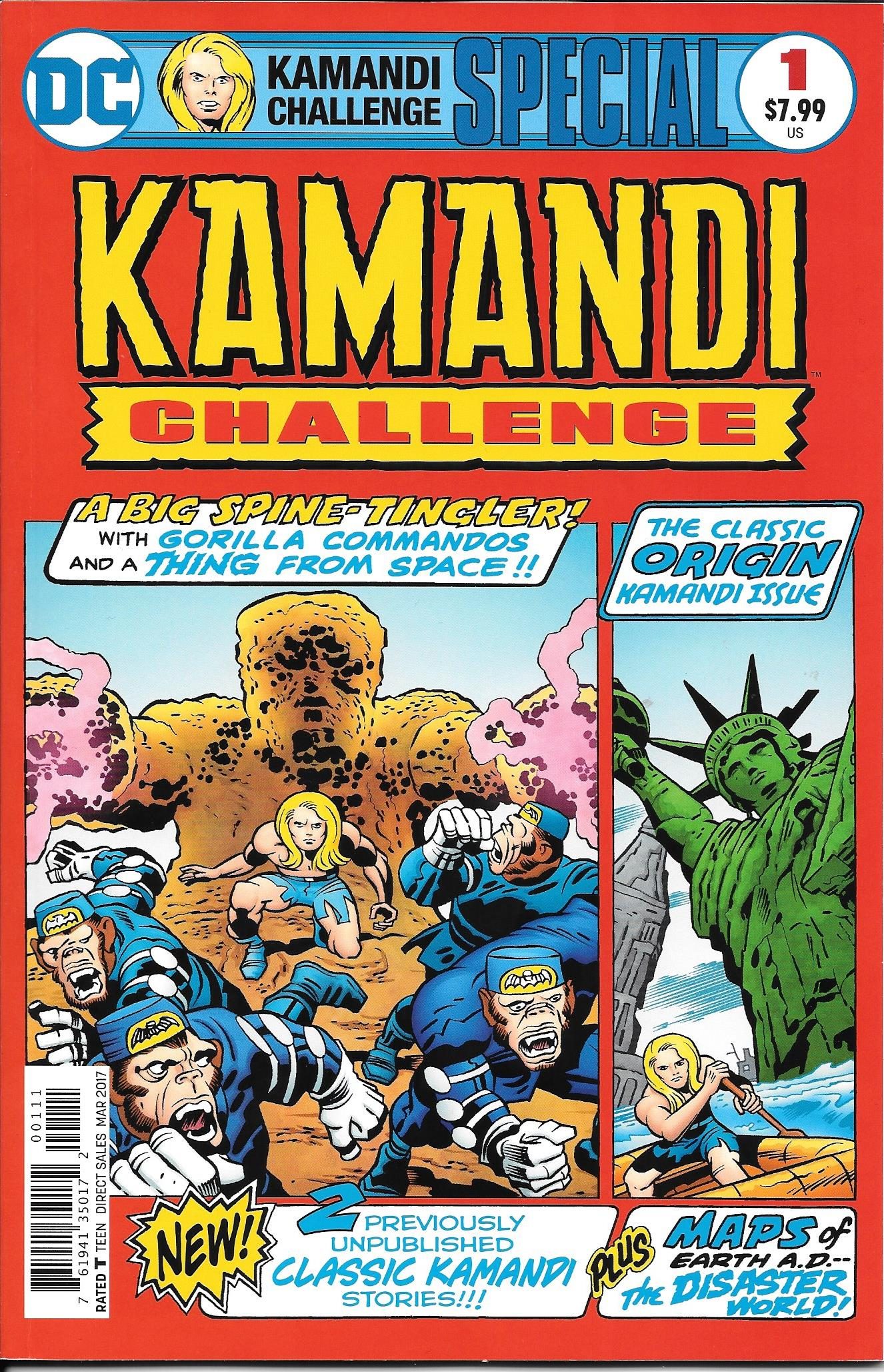
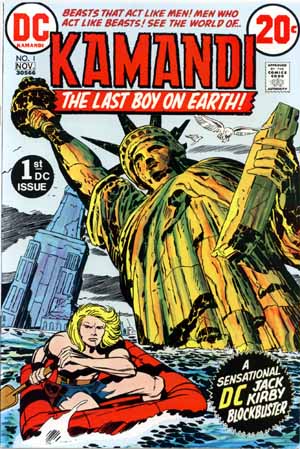
I’ve written before about my interest in Kamandi, “The Last Boy on Earth,” the futuristic adventure series Jack Kirby created for DC Comics in 1972. So when I learned about DC’s upcoming Kamandi Challenge, described as a “round-robin, no-holds-barred storytelling extravaganza told in 12 issues,” with a separate writer/artist team picking up the thread in each installment, I knew I would be adding it to my pull list at my local comics store (shout-out to Prairie Dog Comics in Wichita). The book will apparently be more than just a showcase for talent: running up to the 100th anniversary of Kirby’s birth (1917-1994), the teams are invited to make things tough for those who follow them: “Each issue will end with an unimaginable cliffhanger, and it’s up to the next creative team to resolve it before creating their own. It’s a challenge worthy of ‘The King’ himself!” They already had me at “Kamandi,” but when cliffhangers are involved, how could I resist?

kamandi

To recap, Kamandi (named for “Command D,” the military bunker in which he was raised by his grandfather) is the last ordinary human in a post-apocalyptic world that has been taken over by intelligent animals: not just apes, but tigers, dogs, reptiles, and more. Other humans have been reduced to nonverbal animalism or have developed mutant powers themselves. Monstrous creatures roam the earth, and new animal societies have developed in the ruins of the old world, patterned on the Romans, pirates, or Chicago gangsters. Kirby had been tinkering with Kamandi as a concept for several years (his original idea was to be a newspaper strip called “Kamandi of the Caves”), but the final version owes a clear debt to the popular Planet of the Apes movies while remaining pure Kirby. It’s a set-up ripe for adventure and wonder, and after Kirby’s run on the original series it continued to inspire comics creators (not to mention the influence it had on cartoons such as Thundarr the Barbarian, for which Kirby contributed concepts and designs, and more recently Adventure Time).

kamandi-canus

Perhaps to prime the pump for the upcoming series and get new readers caught up on the character and his setting, DC released the Kamandi Challenge Special this week, reprinting the double-sized Kamandi no. 32 (which included a reprint of the series’ first issue) from 1975 and including a pair of “lost” stories. Other than a full-page ad for the Kamandi Challenge, there’s no editorial hand-holding, and even the first issue, which introduces Kamandi and sets his feet on the path of adventure, is printed after the story from Kamandi no. 32, which begins in the middle of the action (just as it was in the original double issue–the reprint is always the backup in such cases). I guess they assume that fans can look up all the context on the internet, or perhaps the real audience is fans like me who’ve ready everything at least once already.

kamandi_32

Of most interest is a pair of stories that were intended for Kamandi nos. 60 and 61, but which were abandoned when Kamandi was a victim of the “DC Implosion,” when rising production costs and a slump in sales led to DC management cutting a third of the publisher’s titles without warning. Finished but unused stories from all the cancelled titles were printed in-house in ashcan editions (low-quality, low-circulation black and white copies); in addition to piecemeal reprints, scans of those stories have circulated online for years, but this is the first time the Kamandi stories have seen print in an official publication.

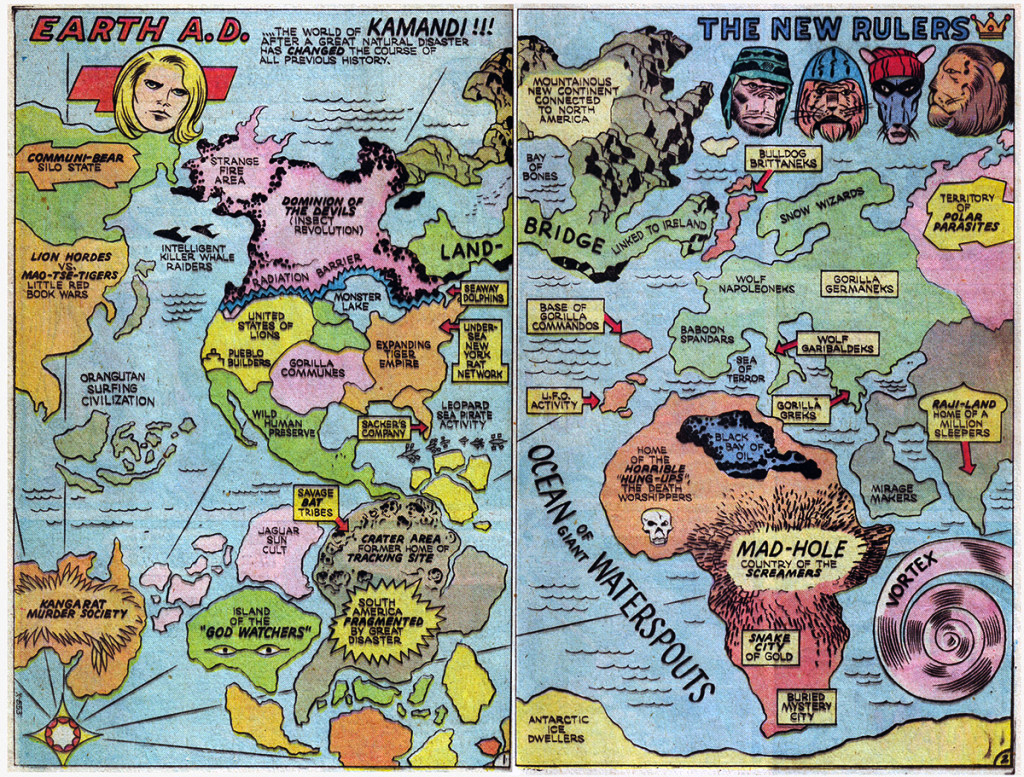
I’m not sure what a new reader will make of these “rediscovered” stories, to be honest: Kirby had left the book he created some time before its cancellation, leaving it in other writers’ and artists’ hands. In typical Kirby fashion, he had breathlessly filled his issues with ideas and characters, leaving many loose threads and never dwelling on any one idea for longer than a few issues. Writers who followed (including Gerry Conway, Dennis O’Neil, and Jack C. Harris) introduced some ideas of their own, but also revisited and fleshed out many of Kirby’s original concepts, using Kirby’s map of “Earth After Disaster” (also included in the Special) and tying the continuity together (for example identifying Kamandi’s grandfather as OMAC, the “One Man Army Corps,” another orphaned Kirby creation) while crafting some longer, less episodic arcs.

kamandimap

The “new” stories form the end of one of those arcs, the quest of Kamandi and his friends to help stranded space alien Pyra (the final form of the energy being encountered in the first story reprinted in the Special) power up her spaceship by opening a “vortex” in a mysterious giant energy field in Australia, guarded by the “Kangarat Murder Club.” Kamandi, sucked into the Vortex by a mysterious voice, witnesses the infinite possibilities of the multiverse, and comes to understand that there are many versions of himself living different lives, including some in worlds that did not suffer the “Great Disaster.”

kamandi-pyra

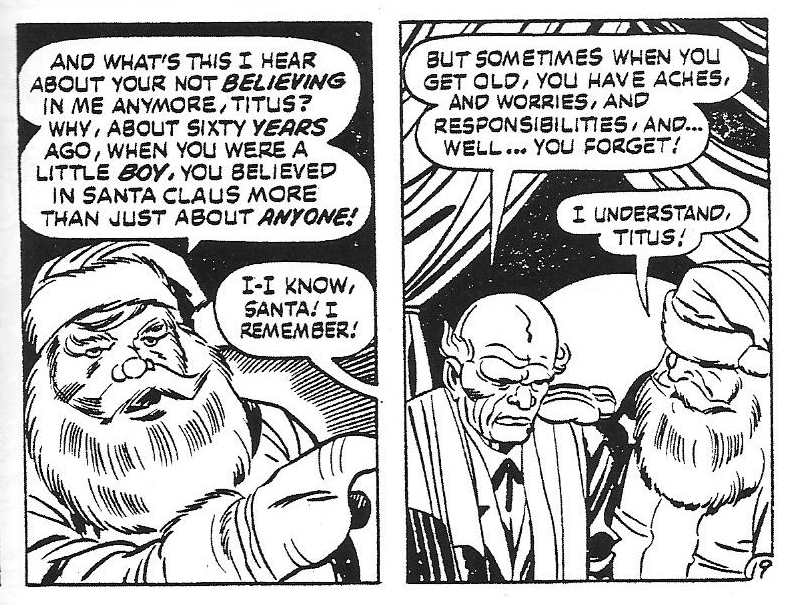
Given a choice, Kamandi ultimately decides that he owes a duty to his friends, still in danger; before coming back, however, he is picked up by servants of the Sandman, the master of dreams, who mistake him for the Sandman’s friend Jed. (You see, Jed is one of the many alternate lives that Kamandi could have lived, had circumstances been different.) Kamandi’s encounter with the Sandman mostly serves to tee up an unused Kirby Sandman story in which Jed enlists the Sandman’s aid in proving to a miser that Santa Claus is real (this involves a trip through dreamland to the North Pole and a battle with a band of “Seal Men” who are unhappy about the Christmas presents they’ve received in the past). No, it doesn’t fit very well in the (admittedly fantastical) world of Kamandi, but the reprint was mostly to buy time as Harris and company geared up to take the book in a new direction, with Kamandi traveling into space and having yet more bizarre encounters. It was never to be. Nevertheless, it isn’t every day that a story sees the light of day (officially) nearly forty years after it was first meant to run.

kamandi-santa

In any case, this is all preamble: the real action starts next week, with the release of Kamandi Challenge no. 1, written by Dan DiDio and Dan Abnett with art by Dale Eaglesham, Keith Giffen, and Scott Koblish. I’m so excited, I’ve decided to accept this challenge: I’m going to review and discuss each issue as it comes out. I’m looking forward to it, and I hope you’ll join me.

Fates Worse Than Death: Batman (1943)

BatmanTitle

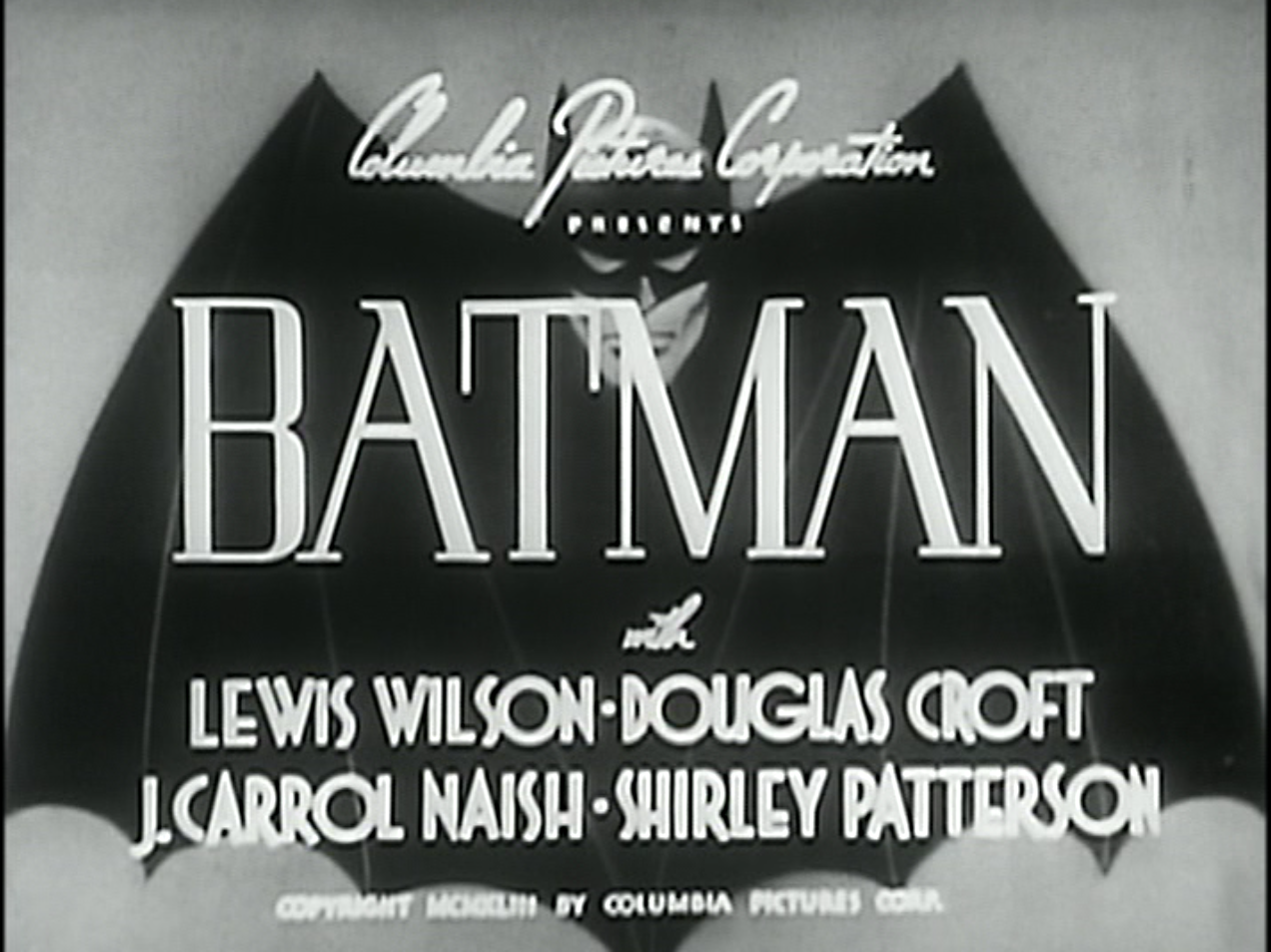
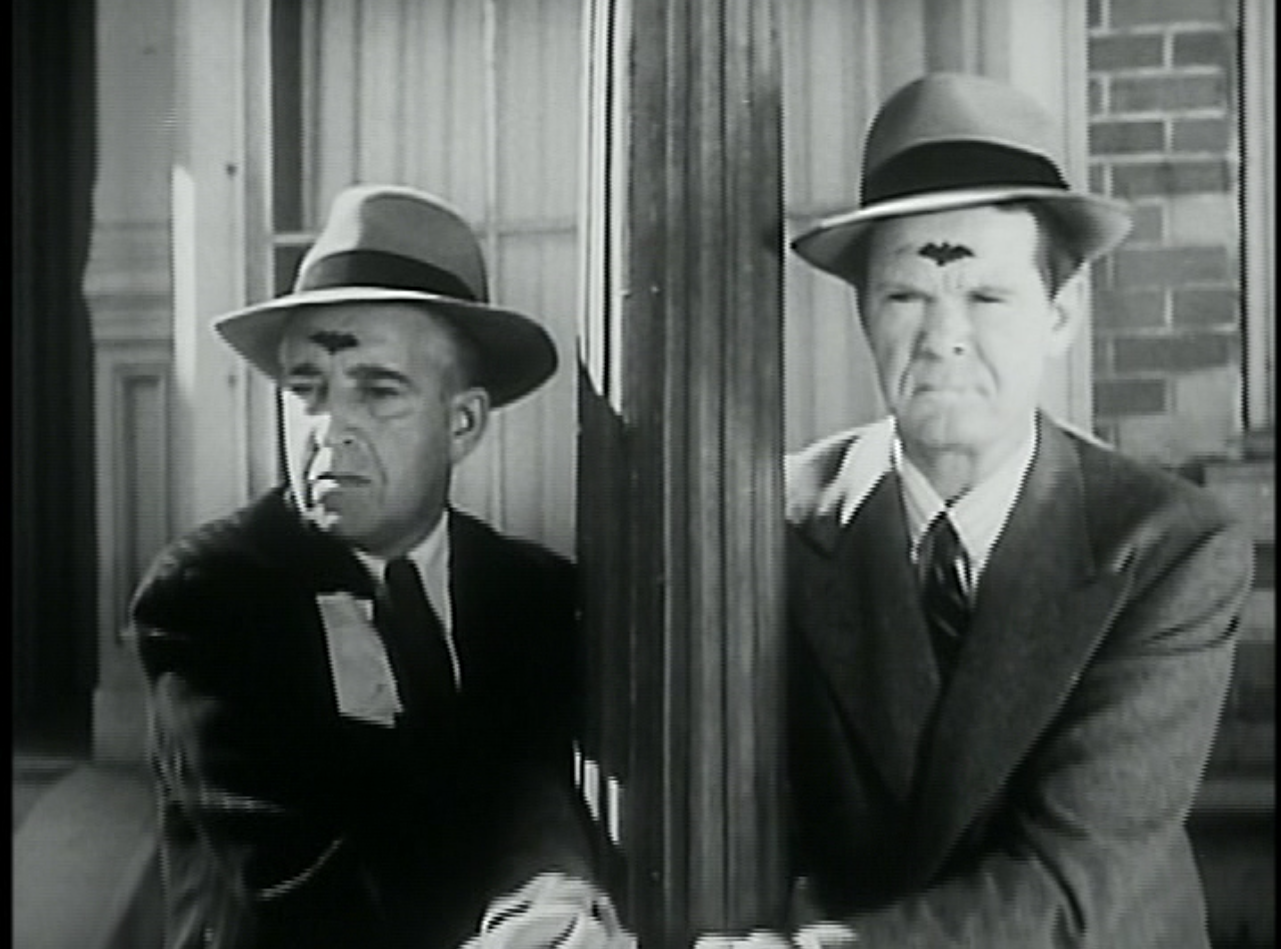
Industrialist Martin Warren, after serving his sentence for an unnamed crime, is about to be released from prison; his niece, Linda Page, asks (her boyfriend? fiancée?) playboy Bruce Wayne to accompany her to pick him up.  Although Wayne’s life of leisure doesn’t allow him to get out very early in the morning, he promises to accompany her.  But before they arrive, Warren is picked up by some other old acquaintances, who coerce him to meet their boss, Dr. Daka.  Daka is a Japanese spy striking at the United States from within, and if Warren doesn’t join Daka’s ring of “dishonored” engineers, bankers, and other professionals and agree to serve his “League of the New Order,” he’ll be turned into a mindless zombie by one of Daka’s inventions.  In the mean time, the costumed crimefighter known only as the Batman, with his sidekick Robin, leave a pair of crooks (complete with the “mark of the Bat” on their foreheads) for the police to pick up.  Who are Batman and Robin, and what do they have to do with Bruce Wayne and his young ward, Dick Grayson?

BatMark

There can be hardly anyone reading this who isn’t aware that Bruce Wayne and the Batman are one and the same, of course, and the 1943 Batman serial wastes no time in letting the audience in on that information.  In making the leap from the comics to the screen, only the core trio of Bruce/Batman, Dick/Robin, and Alfred the butler were retained (Batman’s police contact is Captain Arnold, not Commissioner Gordon), but their characters and identities are recognizable to readers of the comic book (for the most part: Alfred is relegated to comic relief, skittish and easily flustered, but he still comes through when his services are needed).  None of Batman’s usual enemies like the Joker or Penguin are present (many of the most familiar villains weren’t created until later anyway); Batman was made during wartime, and the enemy he faces in Dr. Daka is a nationalistic one.

Batman_Robin

Even allowing for its wartime origin, it saddens me to report that Batman is incredibly racist.  As a cringe-inducing caricature of the effete, treacherous Oriental, Daka is grossly offensive, but if the serial stopped there Daka would fit in with the pseudo-exotic threats I’ve mentioned before (and he is, after all, supposed to be a villain).  But that isn’t enough: Daka’s lair is located on a street in “Little Tokyo,” which according to the enthusiastic narrator has been nearly empty “since a wise government rounded up the shifty-eyed Japs.”  That’s in the first chapter and it doesn’t get any better: even Daka’s own henchmen despise him and throw around racial slurs behind his back.  “I’m not afraid of him or any other squint-eye,” says one named Forrester before rebelling.  Forcing Daka to surrender, Forrester tells him “That’s the kind of answer that fits the color of your skin,” when he (briefly) has the advantage over him.  Subtle it is not. (Unsurprisingly, Daka was played by a heavily made-up white actor, J. Carrol Naish, a common practice in 1940’s Hollywood.)
Daka2

The wartime angle is also apparent in constant references to America’s fighting spirit and the important work being done by the armed forces and munitions manufacturers.  In a twist from the comics, Batman and Robin undertake secret missions for the U. S. government, receiving coded messages from contacts about threats to America’s intelligence and infrastructure.  (According to Jim Harmon and Donald F. Glut in The Great Movie Serials: Their Sound and Fury, rigid censorship ensured that serial heroes were never shown taking the law into their own hands.  Since being a vigilante is central to Batman’s identity, in the serial he remains independent from the police, taunting an exasperated Captain Arnold who nonetheless depends on the cases his “best agent” wraps up for him, but ultimately Batman gets his orders from Uncle Sam.)

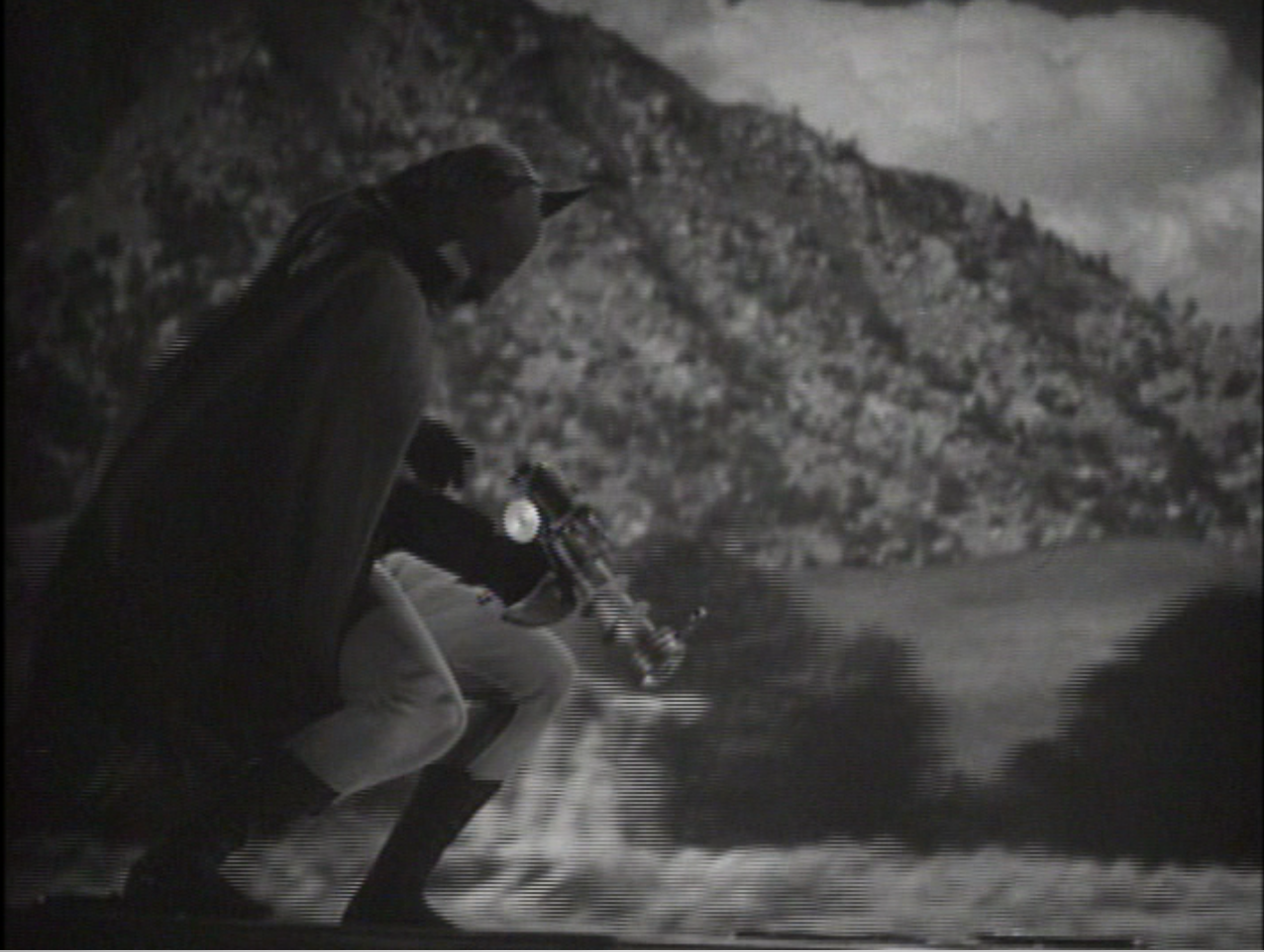
After the generic “spy ring” of Robinson Crusoe of Clipper Island, Batman has a refreshing specificity: Daka plots to steal radium (both to fuel a superpowered “radium gun” and to build an even larger one), blow up a supply train, steal an experimental plane, jump a claim on a radium mine (truly a magical element that allowed screen writers to add a contemporary touch to the hoariest plots), and more.  The political context may have brought out some ugly, jingoistic racism, but there is also never a question of the time and place and what the stakes of the conflict are.

Batman.radium

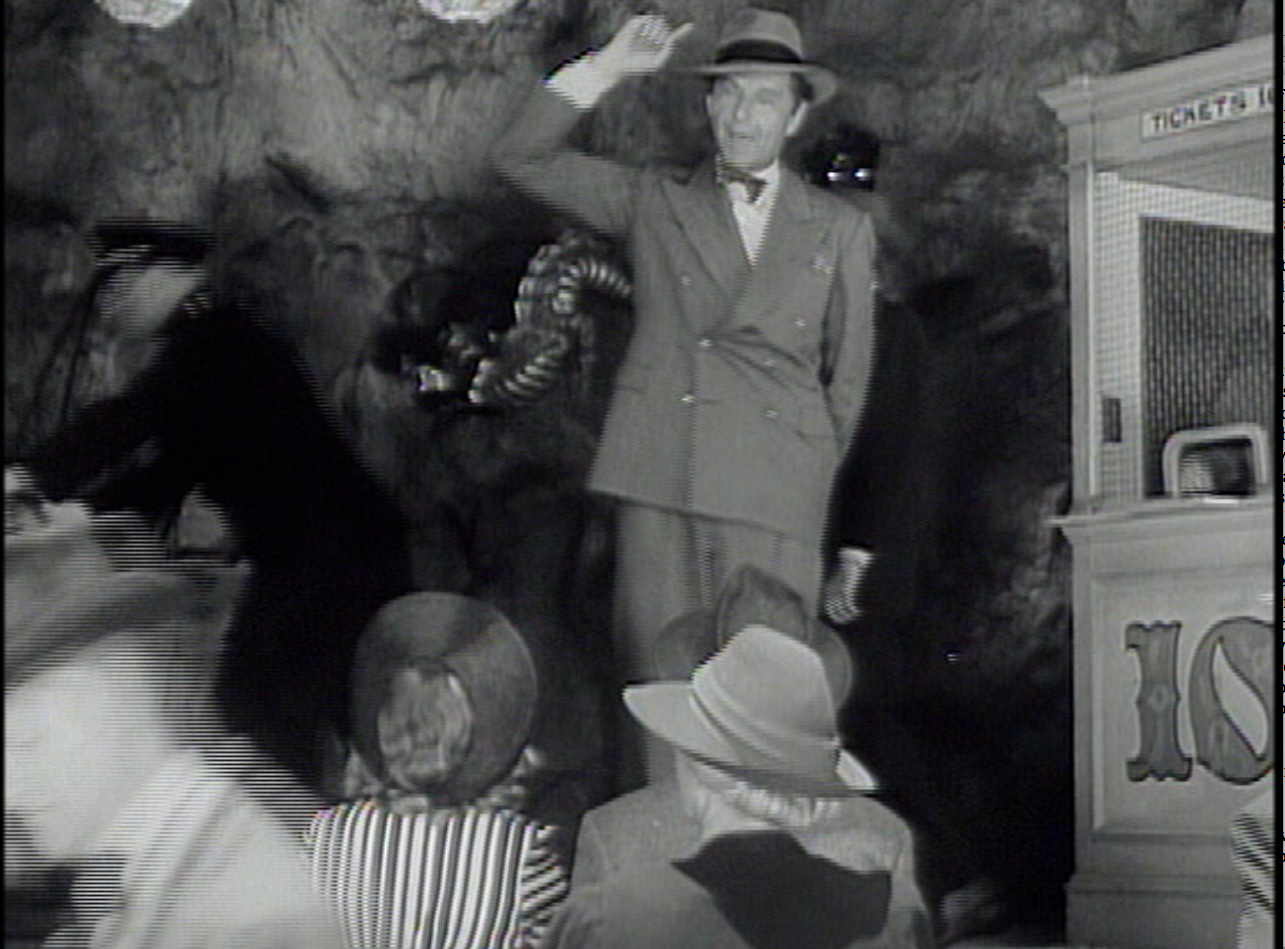
The oddest aspect of this propagandistic impulse is in the setup of Daka’s Little Tokyo hideout: the League of the New Order has its headquarters hidden in a “Japanese Cave of Horrors,” a wax museum primarily containing tableaux of Japanese war atrocities.  Every time the front of the business is shown, a carnival barker is pitching its importance to the war effort: “See the life-size models of the victims of our savage enemies! . . . See how they treat their prisoners. It’ll make your blood turn cold!”  It almost seems as if the filmmakers intend the barker’s words to represent the serial itself: “Come on in here and spend a dime, my friends, and wise yourself up. It’s not a circus, it’s not a carnival—this is a serious proposition!”  Yet the carnival barker is in league with Daka, sending his henchmen to the secret entrance and selecting victims to be brainwashed.  It’s either brilliantly self-referential, a commentary on the bottomless duplicity of the enemy, or just goofy.  Daka believes in hiding in plain sight, apparently.

barker

The seriousness of Japan’s Imperial ambition isn’t necessarily foreign to either the serial format or Batman as a character—both have featured their share of would-be world conquerors—but it is an odd fit with the tone of the 1943 production, which is frequently light, even whimsical.  Lewis Wilson as Batman and Douglas Croft as Robin appear to be having a ball whether in costume or out: this isn’t the grim, tortured Batman of Christian Bale, or even the reclusive weirdo Michael Keaton portrayed.  Even Naish as Daka gets to rub his hands gleefully and display a few moments of humor, like when he feeds raw meat to his pet alligators and briefly considers throwing a zombie to them as “something special.”  The actors and narrator embrace even the most absurd contrivances with gusto, and I’m not convinced this is entirely a case of straight-faced material only appearing funny in hindsight: comic relief was an essential component of the serial, and I daresay the funny parts are fresher and more entertaining than the repetitive fistfights and formulaic cliffhangers.  (It became very easy to predict what the cliffhanger would be in each episode, as the same beats were employed to set the stage each time. When, as in Chapter Six, a thug says, “Let’s get out of here before that chemical reaches those wires!” you know exactly what’s going to happen next.)

The 1943 Batman serial is likely to be of interest primarily to Batman completists, but I doubt it will satisfy any fan who would describe themselves as such.  It was rereleased to theaters in the 1960s as a camp film, where it influenced the next wave of Batman adaptations. Fans of the 1966 Adam West Batman TV show will recognize many elements: the deadpan acceptance of ridiculous situations, enthusiastic narrator, and even the two-part episodes with cliffhangers very much in the serial style.

Batman1

So what works?  For all the fistfights, Batman engages in quite a bit of detective work in this serial: not only does he find and analyze clues, he goes undercover (he disguises himself as a thug named “Chuck White,” and sends Alfred out in disguise a couple of times), gets information out of Daka’s henchmen through a variety of means, and even manages to turn their traps around on them, all while maintaining his secret identity.  Batman also delegates responsibility to Robin and Alfred, who several times come to the rescue.  The complexity of the puzzles is laughable and the level of thought isn’t that deep, but within the bounds established by the script, it’s easy to believe that Batman and Daka are waging a high-stakes chess game against each other, striking and counter-striking until the big confrontation.

I also liked Lewis Wilson as the title character more than I expected: to cover his real purposes, his Bruce Wayne is vapid and silly, and his excuses for not being around—he took Dick to a polo match or an amusement park; he doesn’t get moving until around noon—are amusingly flip.  He expects Linda to believe him, because what red-blooded man would use such indolence as an excuse unless it were the truth?  When one of Daka’s henchmen suggest that Wayne might be the costumed troublemaker, Daka sneers, “Don’t be absurd—that simpering idiot could never be the Batman!”

Bruce2

What I Watched: Batman (1943, Columbia)

Where I Saw It: I watched a Columbia Pictures DVD set, but it is on YouTube (in many parts) starting here.

No. of Chapters: 15

Best Chapter Title: Almost all the chapter titles are pretty great, with the kind of snappy immediacy and hint of exciting developments that all the best pulp titles have.  If forced to choose, I’ll go with Chapter Four, “Slaves of the Rising Sun” (balanced out by the fifteenth and final chapter, “The Doom of the Rising Sun”).

Best Cliffhanger: Chapter Thirteen, “Eight Steps Down,” ends with a double cliffhanger: Batman, trying to sneak into Daka’s lair, is threatened by the classic spiked-walls-closing-in trap, while at the same time, Linda Page is about to be turned into a zombie by Daka’s mind control device.  However will they escape?

Linda.zombie

Annie Wilkes Award for Most Blatant Cheat: Many of the escapes in Batman are of the kind that would infuriate Annie Wilkes: a train bears down on the hero, or an armored car plummets off a cliff and explodes, only to be revealed in the next chapter that Robin pushed Batman off the railroad trestle or Batman leapt from the armored car just in time, all shown from a different angle.  If any of those are cheats, then they all are.  However, I can’t say any of them explicitly undo the setup of the cliffhanger.

Actually, my favorite is the resolution to the cliffhanger of Chapter Fourteen (“The Executioner Strikes”), in which Batman, knocked out and placed in a coffin-sized wooden crate, is carried to Daka’s lair; the box, unopened, is dropped into Daka’s alligator pit.  At the beginning of Chapter Fifteen, it’s revealed that Batman had escaped before the crate was even brought to Daka’s lair, and it was Daka’s henchman Wallace in the box.  You can bet he didn’t get the benefit of a last-minute cheat.

Sample dialogue:

Bruce: “Well, we never got to the cave.  It was so hot out, we laid down by the side of the road and took a nap.”

Linda: “Asleep! Just when I needed you both so much.  If it hadn’t have been for the Batman I’d be dead in the cave!”

(Chapter Nine, “The Sign of the Sphinx”)

What Others Have Said: “Where could even a Japanese spy get enough ration stamps for all that meat?” Harmon and Glut, referring to the fodder for Daka’s pet alligators

What’s Next: Join me in two weeks as I vicariously travel the Western frontier through Fighting with Kit Carson.

Fates Worse Than Death: Robinson Crusoe of Clipper Island

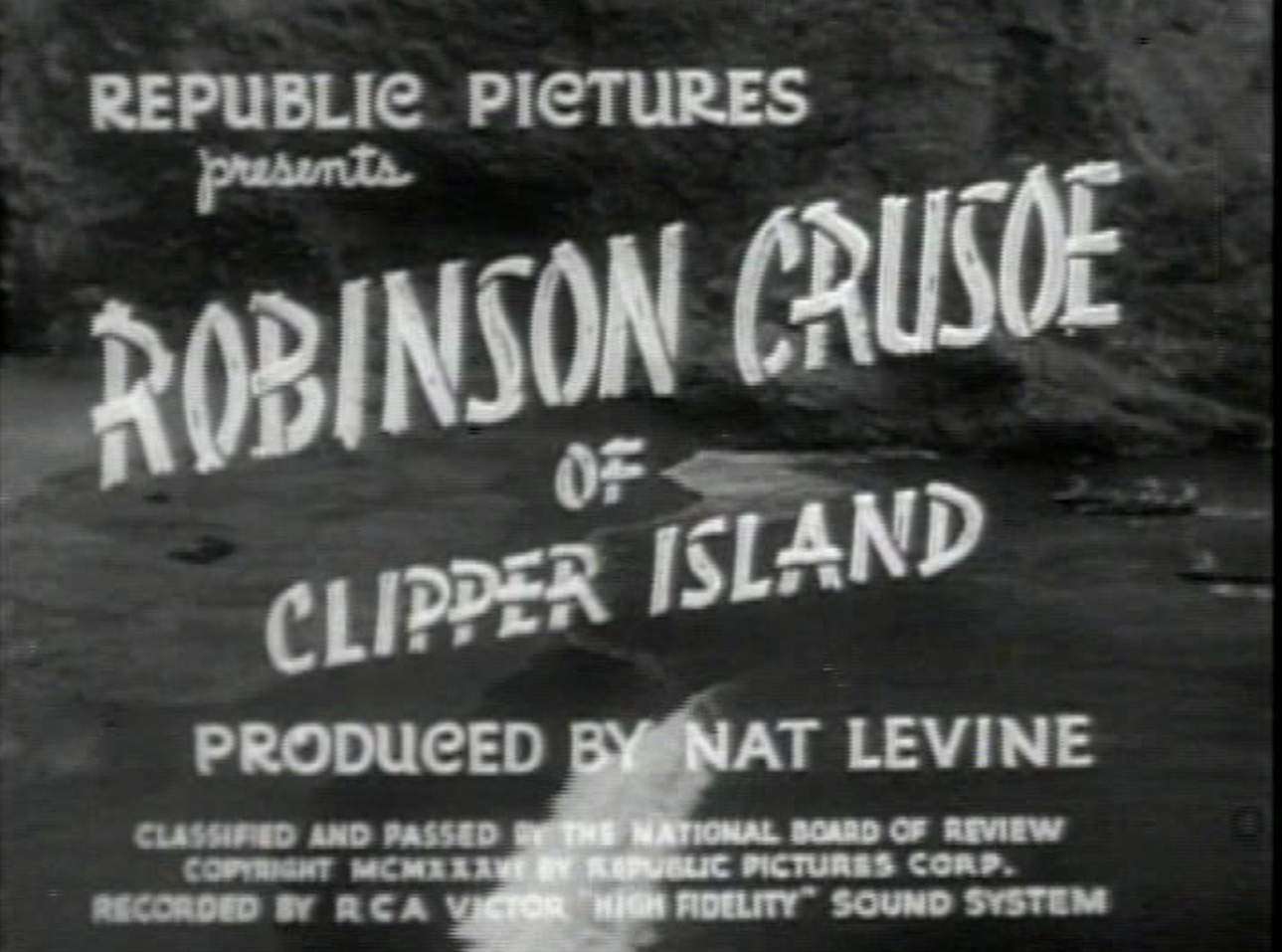
RCTitles

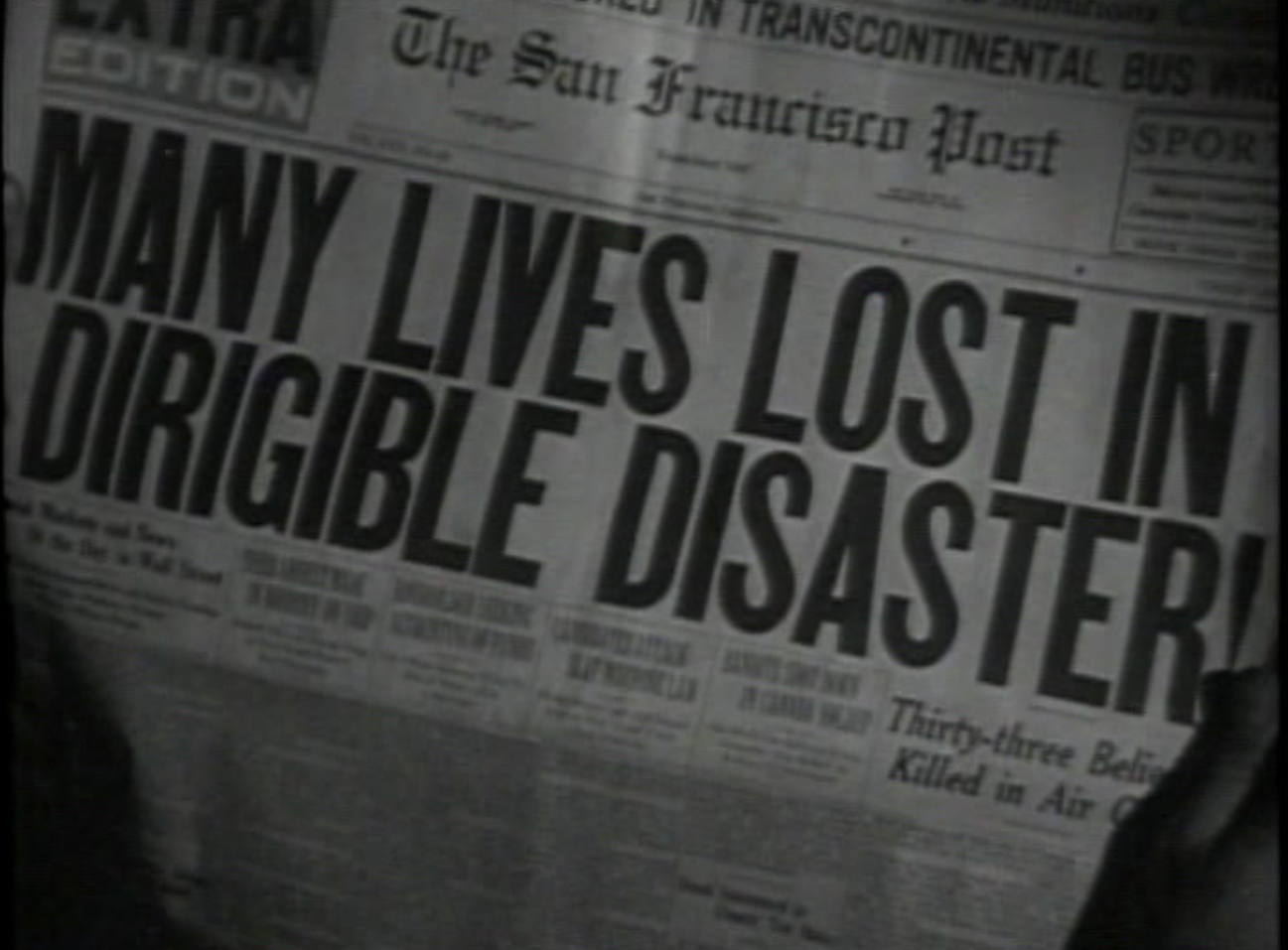
The year is 1936.  The leaders of Pacific Dirigible Airlines are monitoring the maiden voyage of the airship San Francisco between California and Australia.  Just before the dirigible reaches the mid-point refueling station at Clipper Island, disaster strikes!  The radio operator on Clipper Island, half dead, reports that something has destroyed the fuel tanks.  The island is taboo to the native Komatoans; have they risen in revolt, or was it the vengeance of their volcano god, Pele?  The three directors, Ellsworth, Canfield, and Jackson, don’t have time to worry about that: if the San Francisco is forced to turn back, the fledgling company will be ruined.  Suddenly, the airship itself is on fire and doomed to crash before it ever reaches the island.  Oh, the humanity!

Headlines

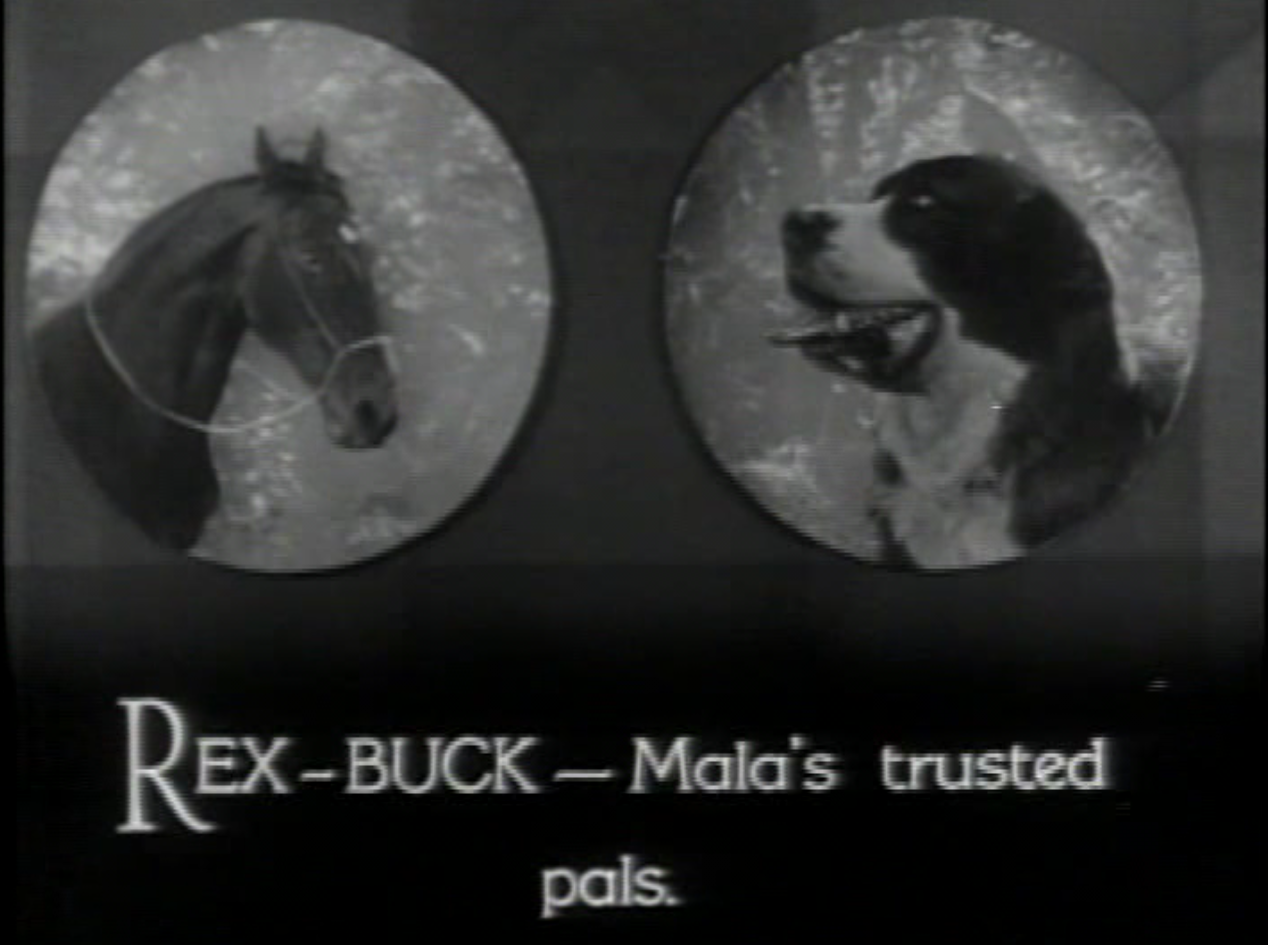
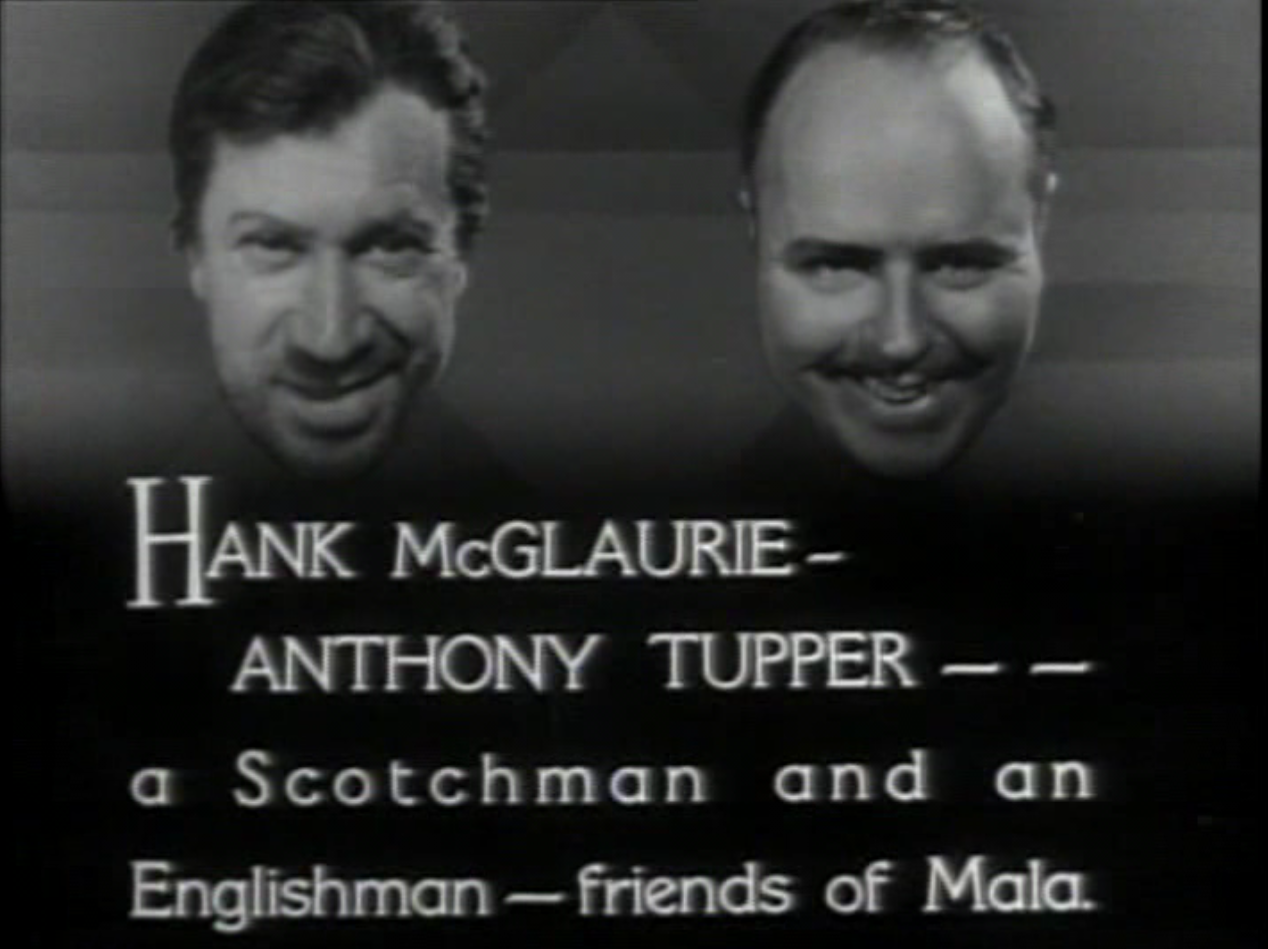
Ellsworth and his board suspect sabotage, and a government agent, Mala, is called in to investigate.  Posing as the new radio operator, Mala travels to Clipper Island, where he gets mixed up with Melani, the Komatoan princess, and the high priest Porotu, who schemes to take her throne.  Working with Mala are Scottish Hank McGlaurie and English novelist Anthony Tupper, as well as the second-billed stars Rex and Buck, a horse and a dog respectively. (Both Rex the “Wonder Horse,” aka “King of the Wild Horses,” and Buck were already animal stars, and they assist by attacking and harrying the bad guys, protecting the princess, and even going for help when Mala is in trouble, as in “I think he’s trying to tell us something!”)

Rex_Buck

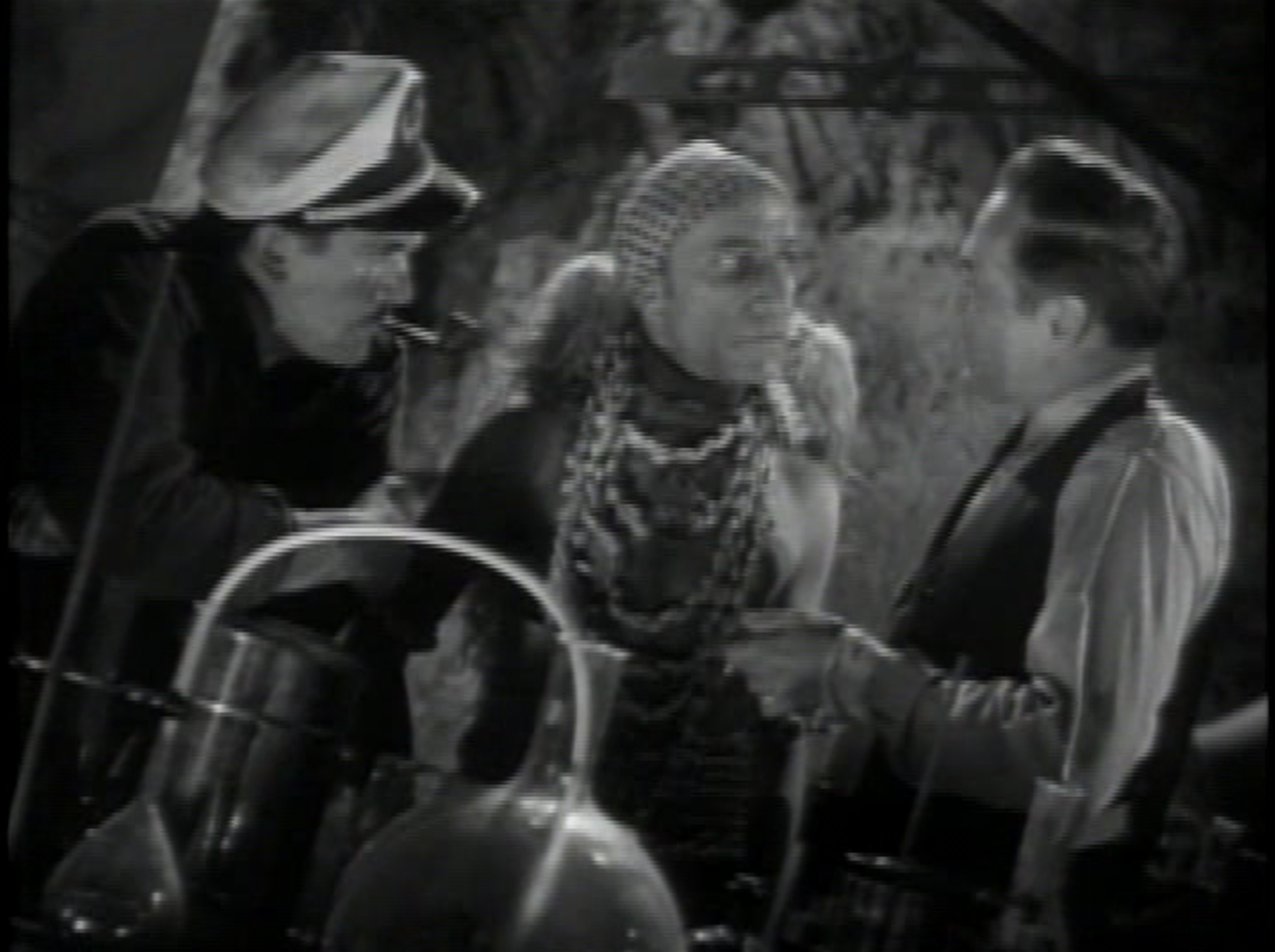
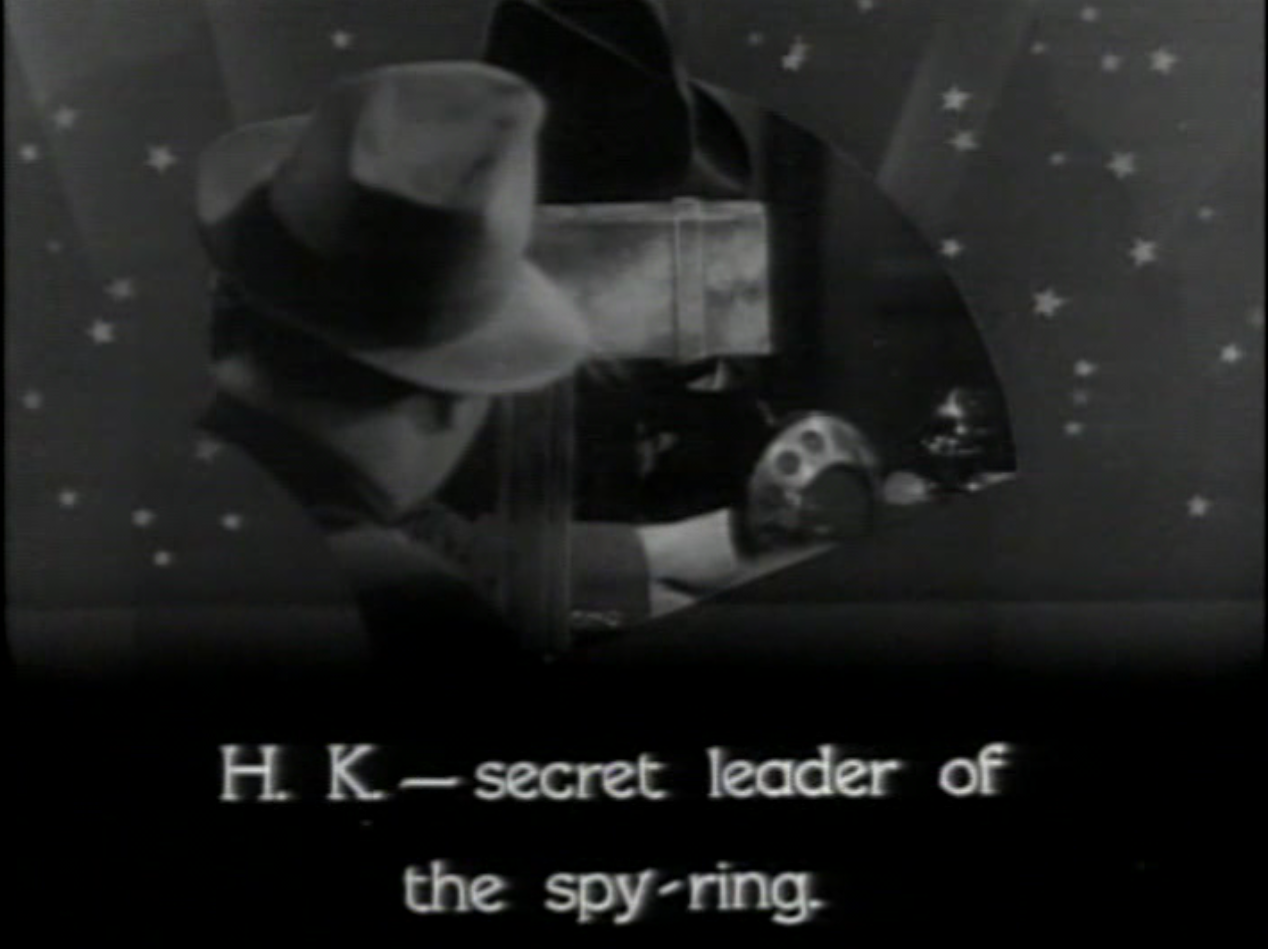
Unbeknownst to both Mala and Melani, Porotu is secretly in league with a spy ring called the “Black Chamber,” led by a mysterious person known only as “H. K.”  (Whenever H. K. is shown on screen, his face is blocked by a lamp, and his voice is dubbed.)  The spies have a base in an old stone fort atop the volcano on Clipper Island, a location convenient for them to tap into the Trans-Pacific Cable to intercept secret messages (the main part of the villains’ lair that we see is an elaborate code-breaking operation led by Draker, the head of the Clipper Island branch).  Porotu and the Black Chamber are working together to keep unwelcome guests off the island.

Porotu

Will Mala gain the trust of Princess Melani and her people?  Will he discover the true identity of “H. K.” and smash the spy ring?  Will the successful establishment of a dirigible route across the Pacific ensure that airship travel is the wave of the future?  These questions and more are posed over the fourteen episodes of Robinson Crusoe of Clipper Island.

Robinson Crusoe of Clipper Island was only the fourth serial produced by Republic Pictures, but it already included many elements of the Republic formula: a capable (if bland) hero backed up by comic relief sidekicks, lots of fistfights and daring stunts (including vehicular mayhem and the destruction of a mountainside fort, accomplished with miniatures), and a nefarious criminal organization led by a shadowy figure whose identity would only be revealed in the last chapter.  (Some of the fights feature noticeable “undercranking”: it was a common practice to roll the camera slightly more slowly than normal, so that when the film was projected at regular speed all the action would appear sped up, increasing the excitement.)

McGlaurie_Tupper

Despite its trailer’s claim to be “based on a novel all youth loves,” Robinson Crusoe of Clipper Island bears almost no resemblance to Defoe’s classic.  In fact, despite the island setting, at no time is the hero ever truly a castaway—he doesn’t have to forage for sustenance or improvise his own shelter—and he hardly ever lacks for company.  (The title comes from the nickname bestowed on Mala by Tupper, who notes the irony of a Native Crusoe assisted by a white Man Friday in the person of McGlaurie.)

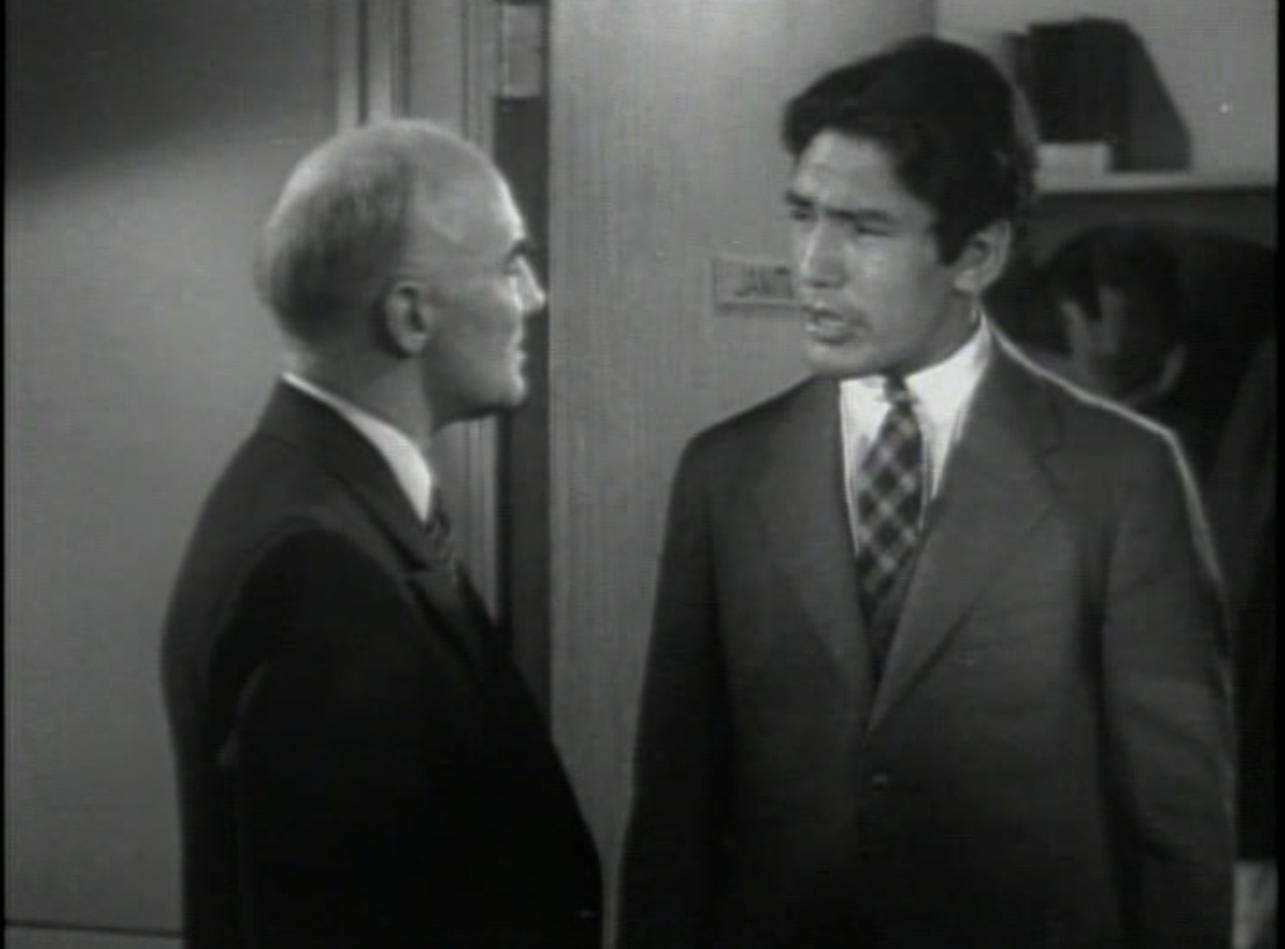
The hero is played by Mala (aka Ray Mala, née Ray Wise), a half-Native Alaskan who had already come to fame as the star of Eskimo (aka Mala the Magnificent) and the Tahiti-set Last of the Pagans, and who would lend his lean, athletic presence to several more features (and two more serials) as both an actor and as a cameraman and cinematographer.  Mala is celebrated as the first Native American movie star, and is a notable exception to the almost exclusively white serial heroes.  The character he portrays is also named Mala, but as an apparently Polynesian g-man, it would be a stretch to say he appears as “himself,” even by the loose standards of Hollywood.

AgentMala

I previously mentioned the deliberately apolitical invaders and menaces in the serials, pulps and comics of the 1930s.  Robinson Crusoe is more down to earth than Flash Gordon but no less circumspect: H. K. and the Black Chamber are not identified with any nation or cause.  The Pacific setting implies a Japanese connection, but the Black Chamber is shown to have branches all over the world.  Depending on one’s perspective, the spy ring could represent fascism, international communism, or even gangsters intercepting government secrets for their own financial gain.  The filmmakers may have had their own politics, but vagueness was undoubtedly better for business.

HK

Robinson Crusoe of Clipper Island transposes many conventions of jungle adventure—primitive tribes, wild animals, and exotic locales—to its island setting.  Like the “modern Western” and “Canadian mountie” genres that were also popular, it combines the picturesque setting and colorful native peoples of the frontier with such contemporary touches as automobiles, airplanes, and radio. Over the course of the serial, a fleet of vehicles are featured traveling by land, sea, and air: dirigibles, a submarine, seaplane and biplane, and more.

Also like some other serials, it features white evildoers manipulating presumably superstitious natives through modern technology: Robinson Crusoe of Clipper Island includes a volcano that can be made to erupt at will, allowing the spies to pose as the Komatoans’ god and strengthening Porotu’s position. The high priest claims that “Pele is quick to destroy those who arouse the wrath of the gods!”, even threatening to sacrifice first Mala and later Melani in a pit of molten lava, but the technology that stokes the volcano predictably gets out of control and destroys both the spies’ fort and Porotu by the end.

The Komatoans themselves are a Hollywood version of Pacific Islanders, living in thatched huts among a mélange of tiki idols and masks (not to mention an Easter Island head inside the sacred Cave of the Winds).  Both the Black Chamber and Pacific Dirigible Airlines require the cooperation of the Komatoans (to whom Clipper Island is taboo) to carry out their activities, so Mala’s interest in protecting and (later) restoring Melani spring from more than altruism.  The fact that Melani (Mutiny on the Bounty‘s Mamo Clark) is beautiful and smart surely doesn’t hurt, either.  (Robinson Crusoe doesn’t get bogged down in mushy stuff, however: even with a nudge from Rex, Mala only says “You have rewarded me with your friendship,” and the concluding chapter fades out before they can do so much as embrace.  The love triangle of Flash Gordon is positively steamy by comparison.)

Mala_Melani

What I Watched: Robinson Crusoe of Clipper Island (1936, Republic)

Where I Saw It: I watched a Hal Roach Studios DVD, but it is on YouTube starting here.

No. of Chapters: 14 (According to the DVD liner notes, this unusual number was a result of the production going over budget, requiring the addition of an inexpensive “economy chapter,” recapping earlier events and increasing the serial’s revenue by an additional week.)

Best Chapter Title: “Jaws of the Beast” (Chapter Eight)

Best Cliffhanger: “Trail’s End” (Chapter Seven): After rescuing Melani from Porotu’s attempt to sacrifice her to Pele, Mala tries to leap with her across a boulder-strewn gorge.  The boulder they land on isn’t steady enough, and the two fall helplessly into the abyss.  How are they going to get out of this?

Annie Wilkes Award for Most Blatant Cheat: Weeeell, as it happens “Trail’s End” doesn’t play quite fair.  At the beginning of Chapter Eight, Mala and Melani grab a vine and pull themselves to safety in noticeably different footage.  I wrote CHEAT!!! in my notes.  “Trail’s End” is only the runner-up for this award, however, as Chapter Ten (“Wings of Fury”) features an even more blatant cheat.  Mala, back in San Francisco, is chasing down a member of H. K.’s organization, a pilot.  The pilot jumps in a biplane and takes off, with Mala clinging to the side of the cockpit.  The pilot tries to shake him off, but when Mala gets him in a headlock the pilot loses control of the plane, and it crashes into the water of San Francisco Bay . . . until the beginning of Chapter Eleven, that is, when the biplane pulls up and avoids the water at the last minute.  The cockadoodie plane crashed, I tell you!  I saw it! CHEEEEEAAT!!!!!!

Sample dialogue: “As you leap into the fire pit, Princess Melani, remember the vengeance of the priest of Pele!” –Porotu, Chapter Six (“God of the Volcano”)

What Others Have Said: “While I have mentioned the better performances, there were a number of rather awful serial performances that do deserve some mention: the four leads [in The Masked Marvel] probably rate our booby prize for bad acting, while following close behind are Mala in Robinson Crusoe of Clipper Island and Bill Kennedy in The Royal Mounted Rides Again.” –Alan G. Barbour, Cliffhanger: A Pictorial History of the Motion Picture Serial

What’s Next: In 1943, a costumed crime-fighter made the leap from the comics to the big screen, not for the last time.  Join me in two weeks for a look at Batman.

Fates Worse Than Death: “What an Amazing Escape!”

Introducing the Annie Wilkes Award for Most Blatant Cheat

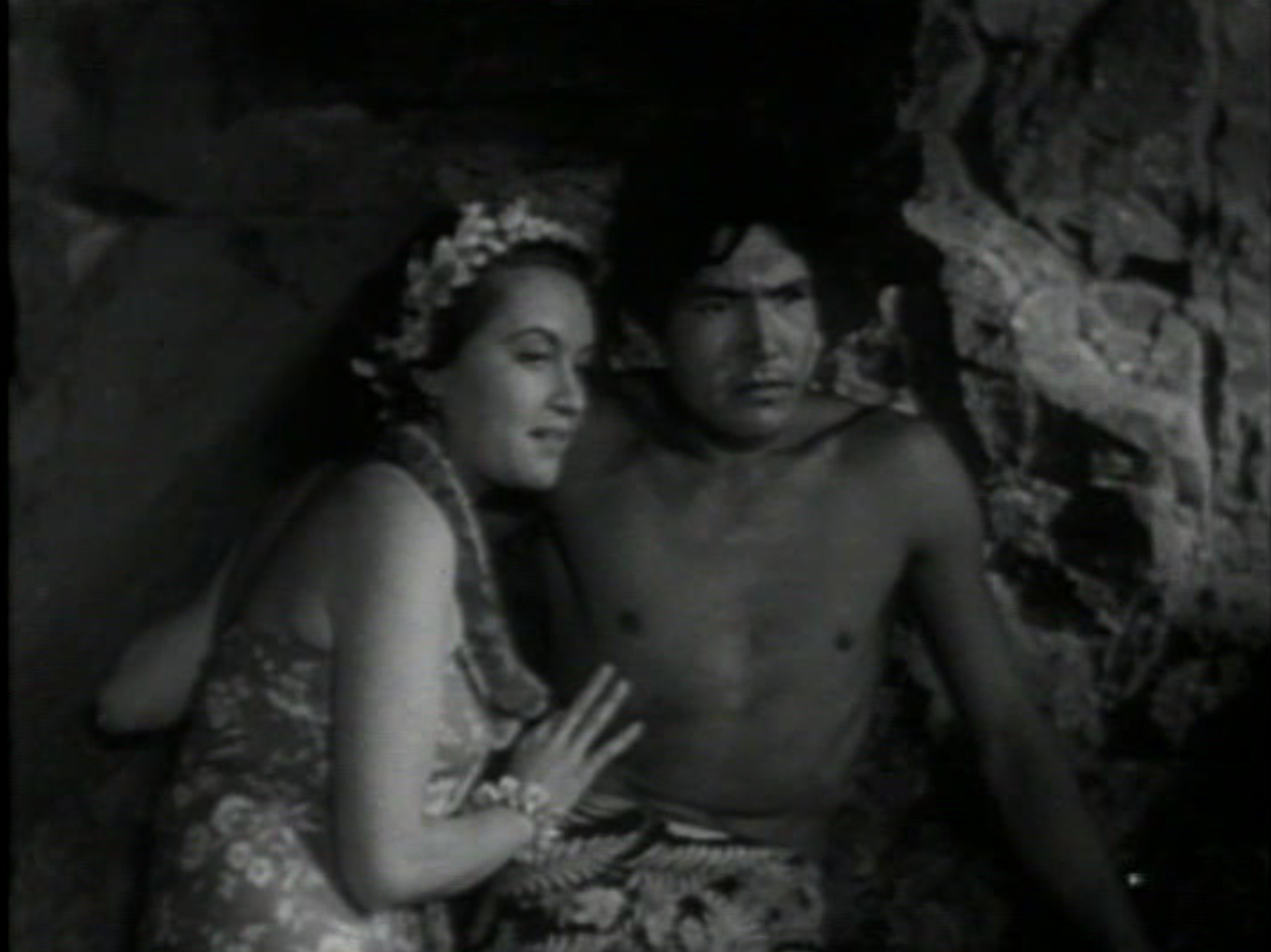
SceneMissing

Although the serials are nearly synonymous with cliffhangers—in which the tension builds to a high point before the episode ends, with a character in mortal danger or a major revelation left dangling—they didn’t invent them, and cliffhangers continue to be used on television, in comics, and even in film.  In the nineteenth-century, all kinds of writers serialized their work in popular magazines, from the authors of penny dreadfuls to Charles Dickens, and later pulp writers were similarly aware of the cliffhanger’s power to hold the reader’s interest.  Edgar Rice Burroughs not only used them between chapters, but also between books: he ended his second John Carter novel, The Gods of Mars, with Martian princess Dejah Thoris’ fate unknown, only to be revealed in the subsequent The Warlord of Mars.  (There is, of course, a similar narrative connection between The Empire Strikes Back and Return of the Jedi, and indeed it is now common practice for the second book or film of a trilogy to end on an uncertain note.)  Any serialized medium—in which chunks of story are doled out in installments—will sooner or later take advantage of cliffhangers to keep readers or viewers hooked.

As crude a narrative device as they are, however, cliffhangers are popular because they work: already in the short time since I began this project, I’ve sat down more than once with the intention of watching one or two chapters of a serial, only to be drawn forward by curiosity and suspense, and I’ve ended up watching several more than I planned.  I can only imagine what it was like to wait a whole week to find out whether the hero would live or die (and make no mistake, in a very few cases the hero actually did die, only to be resurrected later, or for it to be revealed that someone else had taken his place).  If you were the right age or particularly attached to the characters, it was probably as intense as the wait for a new Harry Potter novel or episode of Breaking Bad in recent years.  For casual viewers, I imagine it was more like my experience of reading daily comic strips or watching soap operas: easy to forget and not think about after the fact, but when reading or watching the next installment it all comes back to me.

Serial chapters always rewound the story to a point before the cliffhanger, both providing context (for anyone who might have missed the previous chapter) and renewing the tension (for new viewers and regulars alike).  Like reading daily comics collected in book form or watching an entire season of television in one sitting, binge-watching a serial makes for an experience with built-in redundancy.  Seeing the cliffhanger and its resolution back-to-back also makes it more obvious when the filmmakers cheat (more on this in a bit).

In Paul Malmont’s The Astounding, the Amazing, and the Unknown, a fictional mystery starring several real-life science fiction and pulp authors set in 1943, there’s an amusing scene in which L. Ron Hubbard is trapped in a forgotten, gaslit aqueduct beneath the Empire State Building with a group that also includes Isaac Asimov, Robert A. Heinlein, L. Sprague de Camp and Walter Gibson (author of the Shadow novels).  A self-styled man of action, Hubbard plans their escape:

Hubbard jerked a thumb back to the bigger hall.  “Why don’t we douse the flame, let the gas fill up, then ignite it with the lighter and blow the lid up there clean off?”

“Are you nuts?” the kid [Asimov] asked.  “Don’t you understand the formula for gas density? . . . It means we’d suffocate before we ever built up enough gas to do anything.”

“And even if we could survive that,” de Camp added, “a basic energy equation shows that the shock wave would kill us even before the roof collapsed on our heads.”

“Well, let’s dam up the stream and just float up and let the water pressure pop the top off!”

“Are you kidding? . . . The hypothermia would kill us.”

“Before we drowned under the ceiling.

The joke isn’t just that Hubbard (then a self-aggrandizing young writer, not yet the father of Scientology) is an ignoramus; rather, he is thinking like the kind of pulp hero he is accustomed to writing about.  Serial heroes, like their magazine counterparts, often relied on the same kind of likely-sounding but scientifically impossible solutions to get them out of jams.  In addition, well-aimed shots, conveniently dangling ropes or vines, and explosions from which the heroes were miraculously thrown clear tended to balance out the contrived death traps that threatened them.

That’s not the kind of cheat that infuriated serial audiences however; as long as the solution played fair and didn’t significantly change the cliffhanger’s setup, it didn’t matter whether it was likely or even possible.  After all, Flash Gordon, the Lone Ranger, and Gene Autry were heroes precisely because they could do things ordinary people couldn’t, and if their array of talents included one-in-a-million strokes of luck, well, that’s what audiences expected from them.

The difference between realistic and fair is explicated as clearly as possible by Annie Wilkes, author Paul Sheldon’s “number one fan” in Stephen King’s Misery. Wilkes (played by Kathy Bates in the 1990 film adaptation) demands that Sheldon, her captive patient, write a novel resurrecting his beloved character Misery Chastain after he had killed her off.  She won’t accept any rewriting cheats to do so, and she uses an example from the serials to explain:

This was a no-brakes chapter.  The bad guys put Rocket Man—only it was Rocket Man in his secret identity—into a car that didn’t have any brakes, and then they welded all the doors shut, and then they started the car rolling down this twisty-turny mountain road. . . .

“And here came the car, with Rocket Man still trying to put on the brakes or bash the door open, and then . . . over it went!  It flew out into space, and then it went down.  It hit the side of the cliff about halfway down and burst into flames, and then it went into the ocean, and then this ending message came up on the screen that said NEXT WEEK CHAPTER 11, THE DRAGON FLIES. . . .

“The new episode always started with the ending of the last one.  They showed him going down the hill, they showed the cliff, they showed him banging on the car door, trying to open it.  Then, just before the car got to the edge, the door banged open and out he flew onto the road!  The car went over the cliff, and all the kids in the theater were cheering because Rocket Man got out, but I wasn’t cheering, Paul. I was mad!  I started yelling, ‘That isn’t what happened last week! . . . Are you all too stupid to remember?  Did you all get amnesia?’ . . .

“He didn’t get out of the cockadoodie car!  It went over the edge and he was still inside!  Do you understand that?

Even allowing for the small number of serials I’ve watched so far, I’ve known that feeling: the hero didn’t get out of the cockadoodie car before it went over the cliff, or out of the building before the cockadoodie bomb went off, or didn’t switch the cockadoodie train to another set of rails before it crashed.  Some cheats were more obvious than others, and some studios were more prone to pull a fast one than others.  Cheats also became more common later in the serial era, when dumbed-down serials were aimed at supposedly gullible kids.  But there’s an Annie Wilkes in every audience, and they’re watching closely.  So I’m proposing the Annie Wilkes Award for Most Blatant Cheat, to be awarded (when deserved) to those moments where the film’s producers don’t quite play fair with the audience, rescuing the hero at the expense of the suspension of disbelief.  I believe I’ll have plenty of candidates.

Our Founder

Our Founder

Fates Worse Than Death: Flash Gordon (1936)

FGtitles

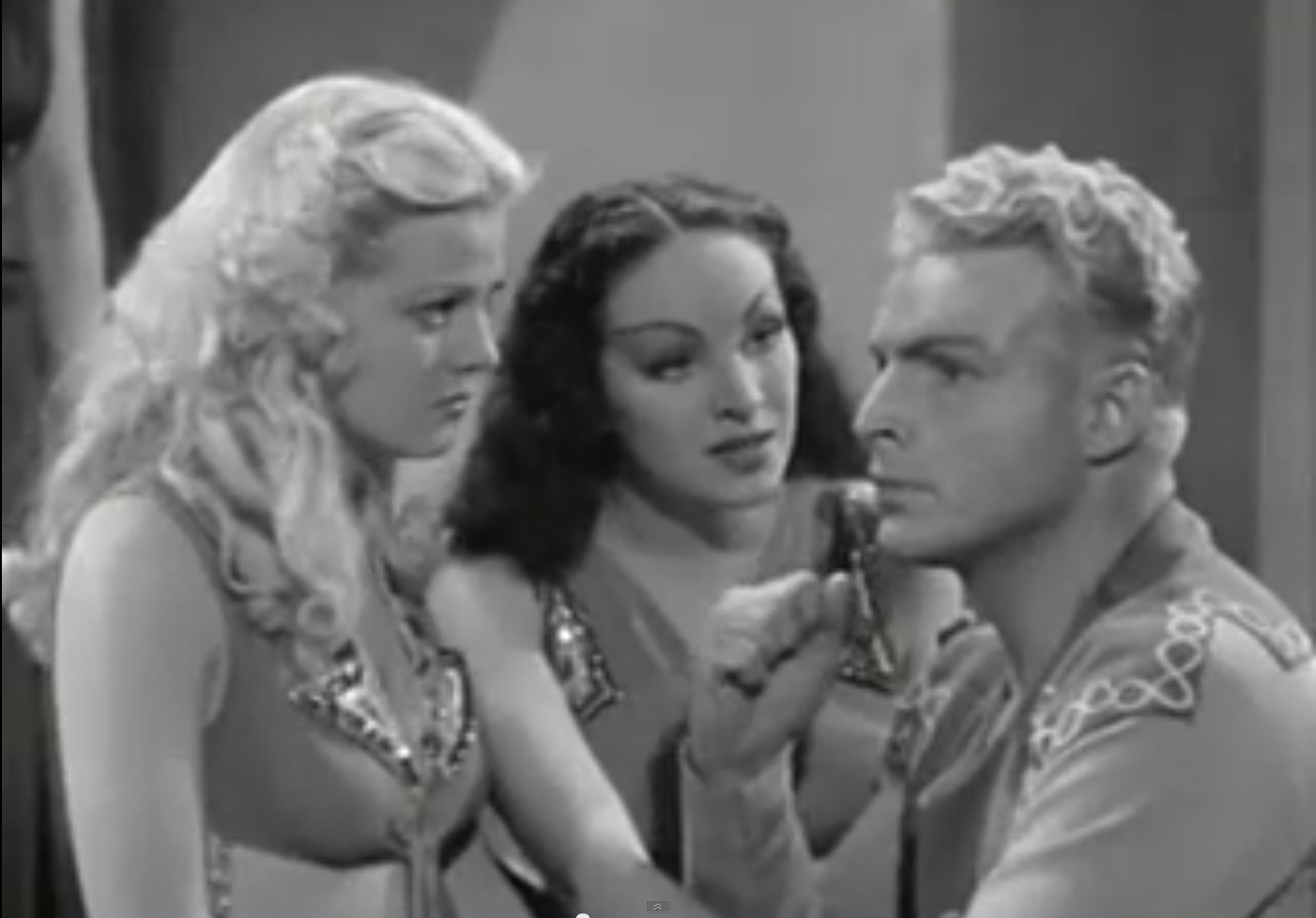
A strange planet is moving through the Solar system on a collision course with Earth, Velikovsky-style, bringing meteor showers and global panic with it.  Professor Gordon, stationed at an observatory, receives word that his son, Flash, has postponed his polo game so that he can take a transcontinental flight to return home before (presumably) the end of the world.  While on that flight, Flash (Buster Crabbe) and a female stranger (Jean Rogers) bail out at the same time, just before meteors cause the plane to crash.  They’ve landed near the rocket ship of Dr. Zarkov (Frank Shannon), a scientist (and former colleague of old Professor Gordon) whose plan is to fly to the invading planet and redirect it away from earth.  Needing an assistant, Zarkov coerces Gordon and the young woman, Dale Arden, into the ship.  The three blast off and soon arrive on the mysterious planet.

Zarkov

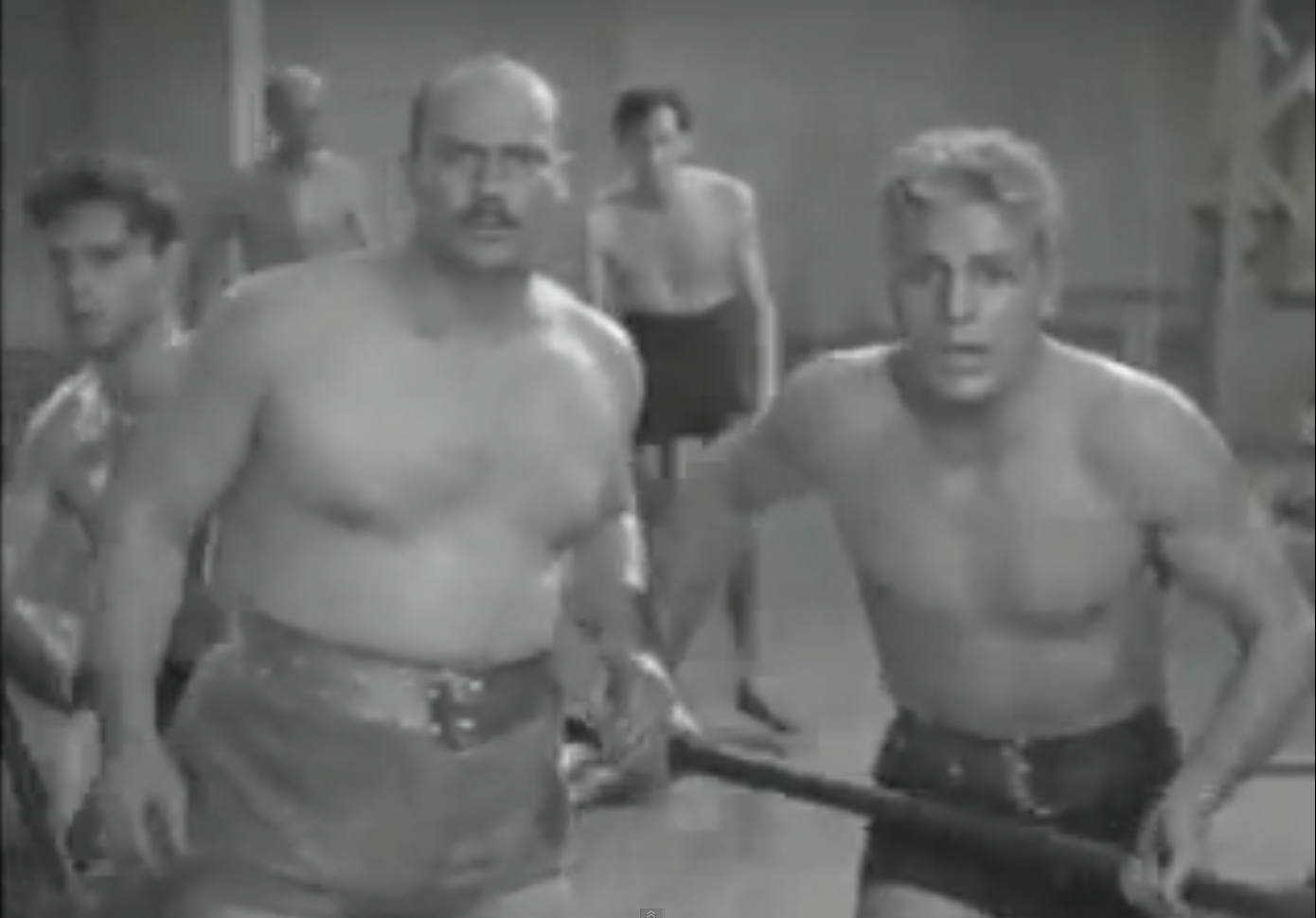
The planet Mongo, as it turns out to be, is ruled by Emperor Ming (Charles Middleton), to whom the three are taken as prisoners.  Upon seeing the beautiful Dale, Ming desires to take her for his bride; upon learning that Zarkov built the rocket ship that brought them there, Ming puts him to work in his own laboratory, in order to conquer the Earth instead of destroying it.  As for Flash, his attempts to free his friends awaken Ming’s ire; he has him thrown into the arena to battle three beast men.  Ming’s daughter, Princess Aura (Priscilla Lawson), however, has other ideas, and schemes to keep Flash alive for herself.

MongoLanding

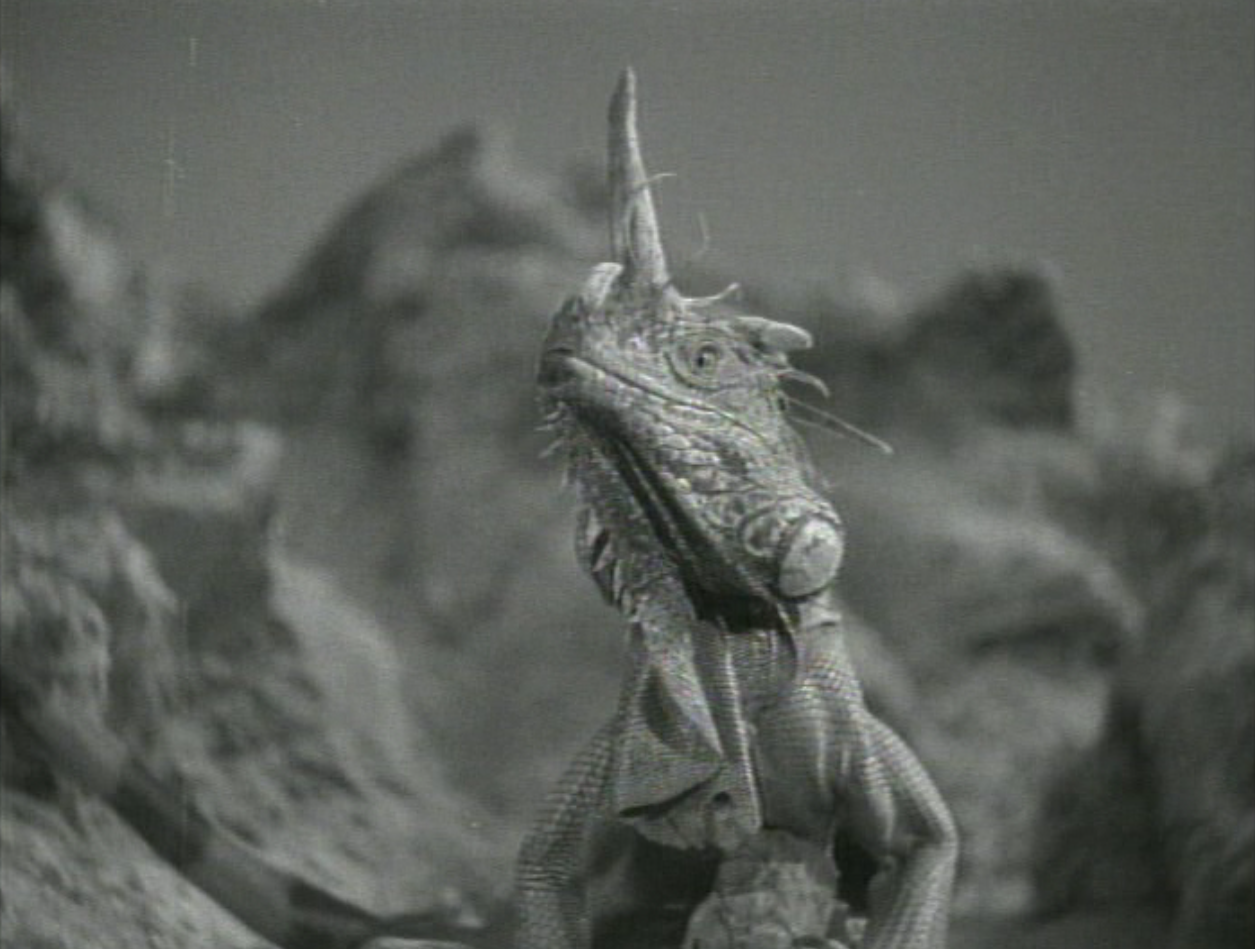
Thus begins the epic, thirteen-episode Flash Gordon, which puts Flash and company into cliffhanging perils that include a flooding underwater palace, fights with fearsome beasts, torture, and even a machine that makes Flash disappear completely.  And did I mention the rays?  In addition to ray guns, there are gravity rays, melting rays, rays that restore health, and an invisibility ray (the explanation for Flash’s previous disappearance, of course).  Throughout the serial, our heroes encounter Shark Men, Lion Men, and Hawk Men, all with their own leaders and complex political relationships with Ming.  (Whatever its crimes against realism may be, you can’t accuse Mongo of being a monocultural “Planet of Hats” in the Star Trek vein.)  Beyond the physical threats, there are shifting alliances and treachery, and all the while Princess Aura plays both sides, helping Flash escape but working to keep him separate from Dale.

Alex Raymond’s comic strip had only been running for two years when Universal Pictures released its serial adaptation in 1936, scripted by Frederick Stephani, George Plympton, Basil Dickey, and Ella O’Neill, and directed by Stephani.  The producer was Henry MacRae, who had been a director of serials since the silent era and knew how to get the most bang for the buck. Although serials were known for their low budgets, Flash Gordon was lavish by comparison (the claim that it cost a million dollars has been disputed, but it is still easy to believe that it was more expensive than the average chapter play); it was the first serial to play in a Broadway movie theater and set the tone for much of the cinematic science fiction that followed.

rocketship

It would be damning with faint praise to say Flash Gordon looks good “for its time;” many of the shortcuts taken in its production—the use of stock footage, recycled sets and costumes, and a score cobbled together from previous Universal horror and adventure films—would have been more obvious to viewers at the time than they are now.  Three years after Willis O’Brien wowed audiences with the stop-motion in King Kong, the many monsters that Flash battles are either familiar animals with some outer space bling attached, or small animals filmed against miniature sets to make them appear gigantic—or both, like the dragon-sized finned iguanas that prowl the valley where Flash and his compatriots first land.  The exception is the bipedal papier-mâché dragon with lobster claws that inhabits the “Tunnel of Terror” in Chapter Two; with the addition of horns and a wall of flame, it doubles as the “Sacred Fire Dragon” in Chapter Nine.

dragon

None of that matters, however, as the story unfolds with a swiftness that encourages suspension of disbelief, and a game cast that takes the material only as seriously as it needs to be, but no more.  First among them is Buster Crabbe as the title character, and I think it’s fair to say that Crabbe is ideal for the part.  Like Tarzan (whom Crabbe had also played), Flash Gordon isn’t a role to be acted: it’s a role to be embodied, and Crabbe has the physique (he had been a champion Olympic swimmer, winning a Gold Medal in 1932) and movie-star looks (with hair bleached to match Gordon’s comic-strip appearance) to pull it off.  That’s not to impugn Crabbe’s acting: while he isn’t called on to chew the scenery like Middleton as Ming or John Lipson as the Hawk Men’s King Vultan, he has a natural, unaffected screen presence, perfect for the kind of all-American hero who finds himself at the center of all this craziness.  Crabbe is engaged with the material and never sounds like he’s reciting lines from a cue card (more than can be said of James Pierce as Prince Thun of the Lion Men).

Torture

Flash’s adversary, Ming the Merciless, is played by Charles Middleton, who long specialized in “heavies,” and brings a prickly grandiloquence to the role.  He’s the kind of seasoned actor who can deliver lines like, “Why did not the sacred gong sound the final note which completes the marriage ceremony?” and make it sound perfectly natural.  Ming is one of the great pulp villains, of course, and with his arched eyebrows, pointed beard and mustache, bald head, and long fingernails, he shares a great deal of DNA with that poster child of Yellow Peril racism, Fu Manchu. Like Sax Rohmer’s criminal mastermind, Ming is an invasive force, the perfect stand-in for overseas threats from Europe or Asia (before Pearl Harbor, the pulps and comics often replaced Japan and Germany with their own invented enemies, such as the “Purple Empire” that Operator #5 battled; sometimes such threats were even described as “Eurasian,” covering all the bases).  Hailing from outer space instead of a foreign country, however, Ming has a veneer of plausible deniability that has made it easier to keep him around in later decades. Opposing him, Flash Gordon is the ideal American of the 1930s who doesn’t start fights but isn’t afraid to finish them.

Ming2

Beyond his name and visual appearance, Ming embodies the stereotype of the “Oriental potentate,” cruel, decadent, and treacherous.  In the Universal production, Ming entertains himself watching combat in the arena and gaudy choreographic displays (courtesy of Universal’s library of stock footage); the costume of his empire is a mix of spage-age tunics, medieval robes, and Roman centurion armor for the men, and harem outfits for the women. The costumes (and most of the set dressing) are straight from Universal’s warehouses, but the mixture of styles isn’t that far off from Raymond’s comic strip design, which also borrowed freely from distant times and places from Earth’s history.  The question of how people on other planets might dress hadn’t really been settled: when Edgar Rice Burroughs (creator of Tarzan) sent John Carter to the planet Mars, he described the inhabitants as nude, or nearly so.  Artists illustrating his books preserved Earth standards of modesty by draping Dejah Thoris in Roman togas and other stylized garb.  While the comic strip Buck Rogers, which premiered in 1929, gave a more fantastical, futuristic appearance to its space travelers, Flash Gordon was mostly content to be Prince Valiant in space; despite the rocket ships and ray guns, Gordon was often shown fighting with a sword like John Carter.  It’s not for nothing that this genre became known as “space opera.”

Flash_Gordon_Excerpt

No character in the 1936 production illustrates this better than King Vultan of the Hawk Men.  All the Hawk Men (there are no Hawk Women, near as I can tell) have enormous, feathery wings sprouting from their backs, and wear Viking horned helmets and armor.  With his boisterous laugh and enormous appetites, Vultan is clearly modeled after Henry VIII (he’s even shown feasting on the drumsticks of what I assume is some kind of space chicken, and mention is made of his numerous wives).  However, with his truly over-the-top headdress and the exaggerated pectorals of his breastplate, he looks like Luciano Pavarotti as Brünnhilde in a drag production of Die Walküre.

Vultan2

I like Vultan, though: unlike the humorless Ming and colorless Kala (King of the Shark Men, who can’t breathe water—I mean, where to even start?), Vultan is the only one who seems to really enjoy his villainy.  He is, however, a strong argument against those who feel that the 1980 feature version of Flash Gordon was too campy compared to the original.  Upon capturing Dale and (inevitably) deciding to wed her himself, he courts her by first terrifying her with his pet “Urso” (a bear painted with badger stripes) and then tries to entertain her by making shadow puppets on the wall.  This guy is all over the place; naturally, he becomes Flash’s ally by the end of the serial.

shadows

And who is Dale Arden but a classic “damsel in distress?”  She mostly screams and faints and exists to be rescued (interestingly, only one cliffhanger actually puts her in danger); she is subjected to mind games by Princess Aura, who convinces her that she must make Vultan believe she loves him, or else he will kill Flash.  The role isn’t the fault of Jean Rogers, who does as much as she can with it and looks great in the part.  In fact, between Rogers as Dale and Lawson as Aura fighting over Flash, it’s not hard to imagine a Depression-era boy at a Saturday matinee developing a sudden, unexpected interest in polo.

An amnesiac Flash Gordon tries to decide between Dale Arden and Princess Aura, the Betty and Veronica of outer space.

An amnesiac Flash Gordon tries to decide between Dale Arden and Princess Aura, the Betty and Veronica of outer space.

And it’s not only for the boys (and their dads): I mentioned Buster Crabbe’s physique, but I didn’t get to how often he appears without his shirt, slick with sweat or bound and tortured.  The sensuality and overt (but still PG) eroticism of the 1980 version weren’t invented from whole cloth.

FlashBarin

When the plot isn’t being moved forward by Ming or one of the other rulers of Mongo, it’s often one of Princess Aura’s schemes that does the trick.  To my mind, she’s the real hero of the story, resourceful, determined, and intense.  No wonder she ends up on the throne at the end, paired up not with Flash but the loyal Prince Barin, who is so exciting and interesting that I didn’t even think to bring him up until now.

What I Watched: Flash Gordon (1936, Universal)

Where I Saw It: It’s on YouTube.  The first chapter is here.

No. of Chapters: 13

Best Chapter Title: “The Unseen Peril” (Chapter Ten)

Best Cliffhanger: “Shattering Doom” (Chapter Seven): Flash, enslaved in King Vultan’s atomic furnace room, has an electric wire attached to his wrist, to kill him instantly if he rebels.  Doctor Zarkov surreptitiously attaches the wire to the handle of Flash’s shovel and instructs him to throw the shovel into the furnace when the time for escape is right.  Flash orders the other slaves to duck behind the safety wall and makes his move, triggering a massive explosion.  Will he get to safety in time?

Sample Dialogue: “Is there no way a man can conquer the sacred orangopoid?” –Princess Aura, Chapter Nine

With a Dry, Cool Wit Like That: “Scared, huh?” –Flash, as he grabs Dale and pushes her out of the airplane in Chapter One

Cheapest Special Effect: As much as I’d like to, I can’t count King Vultan’s shadow puppets, which are certainly odd but aren’t meant to be taken for anything else. Instead, I choose this fellow, the terrifying giant lizard of Mongo:

Lizard

Most Embarrassing Costume: I’ve already addressed the costumes in some detail, and while King Vultan’s appearance is certainly memorable, I think I’m going to award this honor to the Hawk Man servant who briefly makes an appearance in a full chef’s uniform in Chapter Six:

Chef

Biggest Cop-Out: Does anyone believe Ming is dead at the end of Flash Gordon?  Even without the knowledge that there would be two sequels, did anyone believe it in 1936?

What Others Have Said: “They were flying over and they were forced down where there was a rocket ready to take off—I mean, if you accept that, you have no problem with anything. If it bothers you that they happened to be flying over a rocket made by Dr. Zarkov, why then, this movie isn’t for you.” –Lorenzo Semple, Jr., screenwriter of the 1980 Flash Gordon feature film

What’s next: In two weeks, join me again for a look at Robinson Crusoe of Clipper Island.