Who Will Love Me As I Am? Chained for Life, Side Show, and the Cult Movie/Musical Overlap

I recently watched Chained for Life, the 1951 oddity/star vehicle featuring conjoined twins Daisy and Violet Hilton (1908-1969).  In the movie, the sisters star as thinly-disguised versions of themselves, Dorothy and Vivian Hamilton, on trial for the murder of Dorothy’s husband-of-convenience Andre Pariseau (the story unfolds in flashback as the pair tell their side of the affair). In the film, Pariseau (played by Mario Laval) is a marksman performing in the same Vaudeville revue as the Hamilton sisters; when their manager gets the idea of staging a love affair to boost publicity, Pariseau goes along with it for an increased share of the profits, even going so far as to propose marriage (even as he continues to carry on with his assistant).  But Dorothy’s feelings are all too real, leading to conflicts between the sisters who are literally inseparable.

Chained for Life has been called an exploitation film, and if any performers can be described as exploited, surely the Hilton sisters are at the top of the list: born to an unwed mother in Brighton, England, the twins were more or less bought by the delivering midwife, who put them on display from infancy and continued to “manage” them for decades, until the sisters won their independence after a contentious trial.  Even after that, they were unprepared for the difficulties of life on their own and continued to be ill-served by subsequent handlers.  The low point, and the end of their career, came when they were unceremoniously abandoned in Birmingham, Alabama, where they took a job at a grocery store and lived until succumbing to the Hong Kong flu years later.

The term “exploitation film” often brings to mind gratuitous sex or violence, but Chained for Life is quite tame on both fronts, and like many films of the era it at least purports to be instructional; it’s more thought-provoking than edgy.  In reality, it is the audience’s curiosity and desire for titillation that are exploited, and whether through posters that resemble tabloid front pages or trailers that teasingly edit together the most shocking parts of the movie, “exploitation” is often a byword for films that promise more than they deliver.  Although more polished and coherent, Chained for Life reminded me of an Edward D. Wood production, particularly Wood’s attempt at a “message movie,” Glen or Glenda?  Chained even opens with a portentous, Criswell-like monologue from the judge in the murder trial, who invites the audience to ask themselves how they would mete out justice in such a case.  We hear from doctors on the limits of surgery and we witness the legal difficulties in procuring a marriage license (both problems the real-life sisters had experience with).  A kindly reverend makes a case for the dignity of all lives created by God, whatever form they take; and in his closing remarks, the defense attorney alludes to the bigotry, cruelty, and, yes, exploitation that the sisters faced throughout their lives.  Although the central puzzle of the film (how can the court punish the guilty twin without wrongly imprisoning or executing the innocent one?) is left unresolved, there is no question that the audience is meant to conclude that Pariseau (a smooth Latin lover type who is only in it for the money) got what he deserved.

The marriage under false pretenses calls to mind Tod Browning’s 1932 film Freaks, which also turns on the callous exploitation of an outsider’s affection by a pair of “normals” (and in which, incidentally, the Hilton sisters had also appeared, albeit as secondary characters).  The difference between the two films is striking, however: Freaks is a one-of-a-kind blend of horror, pathos and melodrama, an expressionistic fable with long wordless stretches, compelling images, and a genuinely shocking ending.  Despite a few stylistic flourishes (such as a dream sequence in which Dorothy imagines herself separated from her twin, free to dance with her beloved), Chained is content to tell its story in businesslike fashion, consistent with its courtroom setting and air of social uplift (it does, however, include the newspaper headline SIAMESE TWIN TO WED VAUDEVILLIAN, which is in my opinion in the running for Best Headline Ever).  They are essentially films of different eras: the cruelties visited on the Hamilton sisters are less overt than those depicted in the side show world of Freaks, but are no less painful for being covered by a veneer of politeness.  The level of craftsmanship is quite different as well: while the Hilton sisters had a long-running musical act, singing duets in harmony, their acting is stiff and artificial, calling attention to the staginess of their banter (their scenes really do play like something by Ed Wood). In short, Freaks is a classic; Chained for Life is a curiosity.

Having said that, Chained for Life has its rewards.  I always enjoy films that feature genuine acts of performance, whether music, dance, martial arts, or the kind of talents usually filed under “variety,” and Chained for Life’s Vaudeville setting provides numerous opportunities.  In addition to the sisters’ musical act and Pariseau’s marksmanship (including playing a pipe organ activated by rifle shots, in one of the film’s most baroque sequences), we get an accordionist tearing through the William Tell Overture, a juggler, and a clown with a trick bicycle act.

One might accuse the filmmakers of trying to pad out an already brief running time, and it wouldn’t necessarily be wrong (the trick bicyclist is pretty dull, even if you’re into old stage acts), but the performances (and many like them in movies of the era) provide a glimpse of live entertainment as it was experienced in times gone by.  A great deal of surviving footage of entertainers of the past comes from film excerpts, either from features like this or from shorts meant to accompany the longer films.  (The contrivance by which the story halts and a famous artist is invited to perform their signature act is still with us, of course, whenever an appearance by a guest star needs to be justified; staging their performance as a show within the show is an obvious solution, but not the only one.)

Chained for Life is also a cult film, a label often applied to movies so singular that they fascinate a small number of viewers, even as they drive large audiences away.  There are so many types of cult film—from trashy exploitation and low-budget amateur productions to expensive, little-loved flops and insane, auteur-driven visions—that it would be impossible to cover them all, but one thing they all have in common is the perception on the part of the audience that this movie was made for them personally: for those of us on their wavelengths, cult films speak to the weirdness in our souls.

Mulling over the show-biz milieu of Chained for Life, I wondered: are there cult operas?  Cult stage musicals?  After a moment’s thought, the short answer was yes, of course there are, and for many of the same reasons that films develop cults.  There are musicals notorious for their epic failure (like Carrie, based on the Stephen King book, which closed after only a handful of performances) or for their troubled production history (Spider-Man: Turn Off the Dark will surely not soon be forgotten), and until recent years most flops would leave only a cast recording behind, if that.

Of course, many cult films are also musicals; in some cases they are adaptations of stage works, such as the ur-midnight movie The Rocky Horror Picture Show, which was already a phenomenon as The Rocky Horror Show in London before being turned into the long-running film.  Little Shop of Horrors exhibits a complete life cycle, originating as a quickly-filmed Roger Corman horror comedy, being turned into a stage musical, and finally returning to film in a big budget adaptation (which replaced the original film’s and stage musical’s bleak ending with a happy one; if you haven’t seen the original ending that was scrapped after poor audience testing, it’s really something).  But many original movie musicals have cult appeal for their singular vision and the heightened qualities inherent in musical theater.

Just as original cast albums can keep Broadway shows in circulation, motion picture soundtracks can serve as advertisements for the films they come from, or take on lives of their own: to name one example, I was intrigued by the soundtrack to Otto Preminger’s 1968 comedy Skidoo, in which stars from the golden age of Hollywood collided with a druggy flower power satire.  As great as that sounds, when I finally saw the movie, I found it mostly unfunny and, dare I say, square.  (Interestingly, while a straight play or movie can have the air sucked right out by the kind of “Hey, why don’t you sing us your hit song?” interruption I mentioned above, the songs are often the only places where musicals come alive.  I’m sure it’s at least partly a matter of context and expectation: if you’re watching a movie starring Elvis, you just know he’s going to pick up a guitar sooner or later.)

Musicals, like film, are a collaborative medium, and the expense involved in producing one often leads to the rough edges and idiosyncrasies being sanded down, but personal visions can still come through.  For example, the same year Chained for Life was made, E. Y. “Yip” Harburg, lyricist for such hits as The Wizard of Oz and Finian’s Rainbow, collaborated with composer Sammy Fain on Flahooley, a satire of consumerism and conformity inspired by Harburg’s blacklisting in Hollywood (Harburg was never a Communist party member, but for his refusal to name names he was blocked from working in Hollywood from 1950 until 1962, and also had his passport revoked during that time).  Despite numerous changes made to tone down the political references (originally, the talking doll of the title was supposed to say “Dirty Red!” instead of laughing), Flahooley is truly a strange mixture, combining boardroom satire of the kind Stan Freberg specialized in; an Oriental fantasy version of Arabia, including a genie in a lamp and exotica star Yma Sumac as an Arab princess; and marionettes devised by puppeteer Bil Baird (the puppets were the American people—get it?).  Flahooley closed after forty performances on Broadway, but after reading about it, how could I not track down the soundtrack?*

Of course, it wouldn’t be a stretch to call operas and musical theater cult interests to begin with: like cult films, musical stage works attract an intensely devoted fan base that is only a small part of the larger public.  Operagoers are apt to have strong opinions about what they like and what they don’t, taking seemingly small matters very personally.  Both art forms have much in common with the films that draw cult audiences: there are outré scenarios with lurid hooks, exotic locations, larger-than-life characters, and the often-campy artifice of the stage.  How many operas include deceptive lovers or mismatched marriages as plot devices?

Even going back to its origins, opera featured personalities that would be recognizable to modern cineastes.  The divas of seventeenth-century Venetian opera had adoring fans, carefully-managed public images, and behind-the-scenes clout, much like celebrity entertainers today.  (And much like today, opera stars would demand ego-flattering changes to productions: in addition to the common practice of aria substitution, which continued until the nineteenth century, there are examples like castrato Luigi Marchesi, who insisted on entering the stage on horseback, wearing a helmet festooned with multi-colored plumes, regardless of the role.)

In the nineteenth century, Richard Wagner’s operas took on a quasi-spiritual dimension, and the “cult” designation was almost literal: fans of his work were referred to as “Wagnerites,” and if they were at all able they would make the “pilgrimage” to Bayreuth, where Wagner’s work could be performed in a theater custom-built to his specifications.  Before the birth of motion pictures, it was the theatrical stage on which craftsmen perfected the arts of captivating, even manipulating, the moods and desires of audiences.

If there is a cult within the cult of musical fandom, it is probably to be found Off-Broadway, where productions can be a little more transgressive without scaring away the big crowds demanded on Broadway.  In fact there is a consistent pattern of Off-Broadway successes moving into the mainstream, beginning with The Fantasticks and including such shows as Little Shop of Horrors and Urinetown, and in many cases the smaller budgets and narrower appeal of such shows allow their creators the freedom to speak more frankly than was possible in traditional Broadway.  It is intriguing to note the absorption of Off-Broadway talent into both Broadway and Hollywood musicals.  Alan Menken and Howard Ashman moved from Little Shop of Horrors to Disney’s The Little Mermaid, and by all accounts were instrumental in raising the level of ambition for Disney’s animated feature films at the time, leading to the early ‘90s blossoming of Beauty and the Beast and Aladdin before Ashman’s untimely death.  More recently, Robert Lopez has gone from co-creating the musicals Avenue Q and The Book of Mormon to co-writing songs for Disney’s Frozen (another story of a pair of sisters who want very different things from life).

Given the intense identification with outsiders fostered by the last few decades of musical theater (and popular culture in general) and the continued fascination with both freaks and the machinery of the entertainment industry, it should not be surprising that Daisy and Violet Hilton have been the subject of a Broadway musical.  1997’s Side Show, by Bill Russell and Henry Krieger, makes a useful contrast to both Freaks and Chained for Life: moving from the carnival freak show to the Vaudeville circuit, it too includes a staged marriage, but unlike its predecessors there are no clear-cut good guys and bad guys.  Despite the twins’ stage appearances portraying angels, songbirds, and Egyptian princesses, they are simply human, making compromises to get through life as best they can.  There is still glamour and beauty in Side Show, but the tone is one of regret and world-weariness rather than the gothic excess of Freaks or the noir-tinged procedural of Chained for Life.  Naturally, the theme of duality is present, and some characters can be described as two-faced, but the conflict between the outgoing Daisy and retiring Violet is placed front and center.  Side Show also more closely examines the men in the twins’ lives and their difficulty in accepting what a commitment to one of them would really mean, without letting faithless or cowardly lovers off the hook.  In the show, the one man who truly loves Violet, Jake, is African-American, but he knows the world would never accept them together, dramatizing another barrier that could only be considered as subtext in the lily-white Chained for Life.

Other subtexts aren’t hard to find in either the musical or the cult film.  For the most vital, but not only, example, the identification of musical theater and being gay is so ingrained as to be a cliché, but there is truth to it.  A primary convention of the theater is its camaraderie and acceptance of everyone as they are—one of the standard tropes of show business, second only to “The show must go on,” is that the troupe is a family, no matter what—and the distancing, unreal effect of the theater has historically allowed its practitioners to express themselves in coded language, even when their love “dare not speak its name.”  This frequently came through in gay theatergoers’ identification with the divas and the idealized (heterosexual, until very recently) lovers onstage.  Outsiders frequently recognized themselves in cult films as well: whether gay or straight, it seems plausible that while the glamour of the theater may seem preferable to ordinary life for many audiences, there’s a similar identification with the monsters and misfits of the horror and science fiction films that also attract cult audiences.  Outwardly opposite, they appeal to the same impulse, intertwined in such figures as the Bride of Frankenstein and Vampira.

The goal for audiences, just as it was for the real-life Hilton sisters and their fictionalized counterparts, is acceptance: self-acceptance first, and then the acceptance of a partner, if one can be found.  Traditional happy endings often end on the latter, but sometimes the former is enough.  Consider Frozen, radical (at least for a Disney movie) for its embrace of sisterhood as the real true love, and ending without a romantic match for Elsa, the Snow Queen.  Some interpret her anthem “Let It Go” as a metaphorical coming out of the closet; it needn’t be, of course–taken at face value it’s a powerful statement of independence, comparable to singer Idina Menzel’s other big song, “Defying Gravity” from Wicked–but such an interpretation is more than tenable.  Musical theater and film continue to be powerful for the ways in which they give voice to yearnings that cannot (yet) be put into words: as Daisy and Violet sing in Side Show’s most intimate and powerful number, “Who will love me as I am?”


* Those soundtracks can keep the flame alive for underperforming shows: Stephen Sondheim’s Assassins baffled audiences in its initial Broadway run, but it has gone on to be a favorite of college and regional theaters.  Away from the financial pressures of Broadway, Carrie has been revised and revived a few times, and even Flahooley has had at least one revival.
Stop! In the Name of Motion

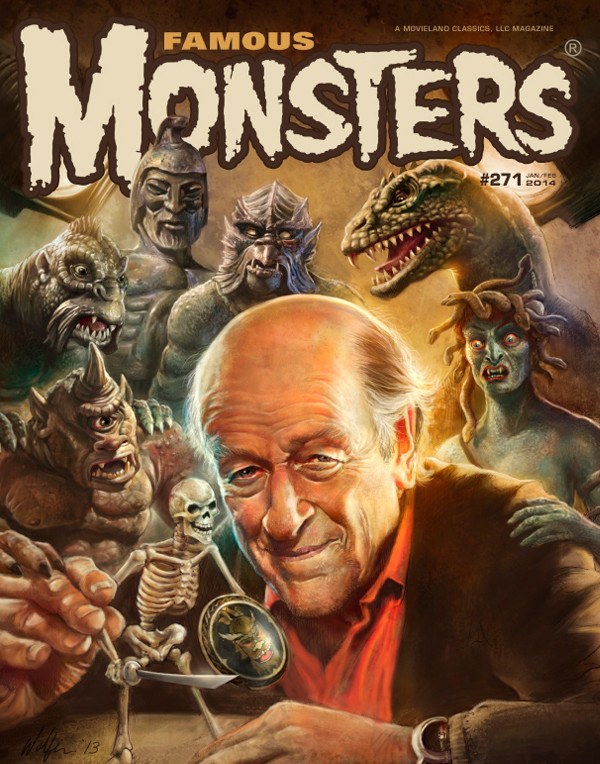
Speaking of stop motion animation, my son, who is three and a half years old, has recently discovered the stop motion masterpieces of the late Ray Harryhausen: Jason and the Argonauts, The Golden Voyage of Sinbad, Clash of the Titans. I had purchased a tribute issue of Famous Monsters with some of Harryhausen’s iconic creations on the cover, and my son started asking about them.  I explained the technique of stop motion animation—taking hundreds, sometimes thousands of successive pictures of slightly adjusted models, creating the illusion of motion when projected in sequence—always being clear that they were models, like toys, not real.  As fascinated as he is by monsters—he’s a boy, after all, and before Harryhausen he was curious about the Godzilla movies I had lying around, and of course we have lots of discussions about dinosaurs—I wanted to make sure he could draw a distinction between creatures of fantasy like the Kraken and real but extinct animals like Tyrannosaurus rex.  Overprotective?  Perhaps, but I remember being kept awake at night by fears of the giant ants from Them!, and at an older age than my son is now.  If I give him nightmares, I’ll hear about it from his mother.

Famous Monsters cover by Terry Wolfinger

Famous Monsters cover by Terry Wolfinger

From my explanation it was a short leap to hunting for clips on YouTube and the excellent documentary Ray Harryhausen: Special Effects Titan on Netflix, which explained Harryhausen’s methods better than I could and held my son’s attention for a good twenty to thirty minutes at a stretch (the documentary is feature-length: we watched it in installments).  For a few weeks after, my son would ask about the “model movies” and we would watch a scene or two from Clash of the Titans, the only Harryhausen movie I have on disc.

Harryhausen is nostalgic to me for a few reasons.  I remember seeing Clash of the Titans when it was new in 1981, at the downtown movie palace that would close a few years later, replaced by the four-screen “multiplex” at the mall.  The mythological references went over my head, but I’ll never forget the terrifying and fascinating Medusa and its gruesome death scene. Even more than that memory, I associate Harryhausen with holidays: most of his movies I saw on television during Thanksgiving or Christmas breaks, probably counterprogrammed against football games in those days when cable TV meant having a few dozen channels instead of hundreds.

Clash-of-the-Titans-Kraken

I’ve previously indicated my obsession with animation and effects as a kid.  Any time there was a behind-the-scenes show about movie special effects, I was there.  The best parts of these shows were often clips of other projects the filmmakers had a hand in, the kind of thing that was unlikely to show up on TV by itself.  For example, I knew who Phil Tippett was because of his involvement with Star Wars and the big special effects movies that followed in the 1980s, but I was never able to get more than a glimpse of personal projects like Prehistoric Beast, from 1984. Unless they were part of a film festival showing or I was lucky enough to catch them on Night Flight or MTV, there wasn’t much I could do to track them down in those days.

A number of speakers in the Special Effects Titan documentary comment on stop motion’s “dreamlike” quality.  That’s a polite way of saying it doesn’t look real, but realism wasn’t exactly the point.  To my knowledge, Harryhausen never proposed replacing human actors with stop motion likenesses in the same way computer graphics have been put forward as a “fix” for aging actors or a replacement for the long-dead.  There is something mysterious about the sometimes-jerky movements of stop motion; even when done by a master like Harryhausen, it has a certain distinctive “look.” Along with other film tricks like rear projection and altered film speed, the ratcheted movements of stop motion are burned into my mind as a filmic style that isn’t “real” but is aesthetically gripping.  As a less obvious example, Dragonslayer’s composite landscapes, with their fast-rushing clouds, heightened lighting, and blend of full-size and miniature models, are just as artificial as the computer-assembled Middle Earth of Peter Jackson’s Lord of the Rings adaptations, but I still cherish them.  Perhaps it’s simply the density of elements that are brought together that grabs me.

I don’t hold that traditional stop motion is superior to computer graphic animation because of its difficult and time-consuming nature: that line of thinking is to my mind a moral rather than an aesthetic argument.  The goal of either technique should be involvement in the story rather than calling attention to itself.   If we accept the premise that film—all film, from The Great Train Robbery forward—contains shifts of viewpoint that were once associated with either dreams or godlike omniscience—the ability to jump from one point in space to another, to cut between views—then CG’s ability to create images purely from light and numbers represents the culmination of cinema’s potential: it is of a piece with all effects work that has come before.  If cinema would continue to be vital, why cut off any avenue of development?

Of course CG is understandably used to save time and money, and sometimes by filmmakers who have more of both than they have imagination.  If anything it’s the low barrier to entry that has given CG such a bad rap; nevertheless, a bad film is a bad film.  I will say I prefer practical effects for their sense of heft and reality in space, and I appreciate the level of craftsmanship and dedication that handmade filmmaking shows off, but I wouldn’t deny that those can be qualities of CG. Perhaps the joy of practical effects work is in the ingenuity with which filmmakers solved problems; it could be the “personal touch,” sensing the involvement of an animator handling a model (like the marks left in King Kong’s fur by Willis O’Brien) or dragging a brush across a cel.

Ultimately the effectiveness of special effects lies not only in their execution but in how they are used—how effects shots are framed, how they are built up to and cut away from through editing, and their function within the story.  Jurassic Park, still a landmark of CG effects after more than twenty years, looks better than many CG films made last year simply because of the care with which Steven Spielberg and his crew combined CG with models and other practical effects, edited seamlessly together to create an illusion of reality.  Conversely, a carelessly executed effect will look crummy and take the viewer out of the film whether it’s CG or practical.

One reason traditional stop motion looks eerie compare to actual moving objects on film is the uncanny clarity of each frame: when live motion is filmed, there’s a slight blur as the actor or object is caught in motion while the shutter is open.  Animators have ways of getting around that (even in hand-drawn animation), introducing more naturalistic blur after the effect (or even in-camera, through a process dubbed “go motion”).  Nowadays, CG can be used to smooth out the inconsistencies and simulate the blur of motion even when models are still animated by hand (such films as Coraline and Paranorman are examples of this hybrid style).

As it happens, The Lego Movie, which I wrote about enthusiastically last time, is animated almost completely in CG rather than stop motion, but the constraints of animating a world made (almost) completely out of Lego bricks lead to some interesting results.  In an interview with fxguide, CG Supervisor Aidan Sarsfield of Animal Logic (the studio that animated The Lego Movie) spoke of the filmmakers’ desire to “stay true to the medium” of Lego, treating it very much as if it were a stop motion film on a real Lego set (albeit one of huge scale and complexity).  The CG bricks were treated as rigid: there was no stretching or distortion, and the only movement was at points of articulation.  Even effects that are generally ephemeral or subject to fading (such as flames, laser beams, smoke, explosions, and moving water) were virtually “built” out of bricks or other Lego pieces, which were “binary”—either there or not there.  Sarsfield describes the process by which colors or brick sizes could be cycled through to give the impression of fading clouds of smoke or moving waves; the effect is unlike anything I’ve seen, and more to the point most of it could by recreated in actual bricks and animated by hand (even though it would probably take forever).

Sarsfield also noted that very little motion blur was used, giving most of the action a staccato feel similar to old-school animation. For extreme fast motion, however, the animators devised a technique for what they called “brick blur:”

Brick blur was created by a little strip of bricks. The colors of the character matched the string of bricks but the silhouette was defined as if someone has structured the motion blur with bricks.

I previously mentioned how much I enjoy the abstraction of animation, especially stop motion.  In this case, the squared-off forms of Lego bricks and minifigures are matched perfectly by the jumpy, ratcheted motion of the animation style. (It’s worth noting that the Lego characters’ faces are smoothly animated—there are limits to abstraction, after all.) Subtleties like “brick blur” and the audacity of (for example) an entire surging sea made of constantly shifting Lego bricks are great examples of filmmakers exploiting the unique aspects of their medium to create something truly novel; and the end result shows how computers can be used without losing the handmade qualities that made the project appealing in the first place.  Aidan Sarsfield mentions that the animators knew they had been successful when the first trailers appeared and audiences couldn’t tell whether stop motion or CG had been used; I wouldn’t be surprised if The Lego Movie inspires another generation of animators and model makers.

GFan

Lego House on the Prairie

I saw The Lego Movie this weekend, and I loved it.  This isn’t a review, and I won’t spoil anything, although I will direct you to Charlie Jane Anders’ review at io9 and its (accurate, in my view) contention that a successful genre spoof must authentically partake of the genre it sends up (in this case, the summer blockbuster and the hackneyed “chosen one” motif).

The_LEGO_Movie_10

Like all the recent movies based on beloved toys, The Lego Movie is at least partly pitched toward the nostalgia center of viewers’ brains.  Sure, I played with Lego bricks as a child, and still enjoy them now that I have my own children to provide cover. If that were all there were to it, however, I doubt I would have reacted so strongly to the film; the other Lego spin-off video games and cartoons I’ve seen are entertaining, but not profound.  No, what I feel compelled to explore is how successful the film is at building an elaborate world out of familiar components, and its connection to the student films and music videos that did the same thing with toys when I was a kid.

The idea of toys (or other inanimate objects) coming to life is hardly new, of course: before the Toy Story movies there was Corduroy and The Velveteen Rabbit and Raggedy Ann, back to the fantasies of E. T. A. Hoffmann and beyond.  In all likelihood we could trace it all the way back to the idea of “household gods” and the pervasive spirits of pantheistic animism, or perhaps the unity of self and environment in earliest infancy.  In any case, that’s not really my point; what connects my memory of playing with Lego bricks to the new movie (and makes it successful at driving its themes home) is the constructive nature of Lego: all imaginative play gives back only what you put into it, but Lego is explicitly open-ended.  Since the first bricks were produced in 1949, every piece is part of a compatible system and can be connected together in some way.  That’s the first prong of the movie: the pleasure of digging up and recombining the different “worlds” Lego has produced over the years (including some “deep cuts” like Fabuland).

The second prong of the movie’s appeal is how this world is set in motion cinematically.  As a kid, I was obsessed with stop motion animation: my first exposure was probably on shows like Sesame Street, which, among its many other virtues, was often a showcase for inventive (and sometimes downright experimental) film.  The Carmen-singing orange was one I remember (although I had forgotten the rubbery ‘70s-era synth soundtrack, another element that connects it to many childhood memories):

Obviously, there’s a lot more where that came from.

What remains captivating about many of these little films is their handmade quality, and their use of everyday objects: toys, food, utensils.  As with furnishing dollhouses, creating dioramas, or assembling Rube Goldberg-like marble slides (think of the game Mousetrap!), there is an obvious pleasure in the handicraft involved in the creation of a tiny world, playing God on a child’s scale.  When given the illusion of movement, it made it easy to imagine the ordinary objects I saw all the time having a secret life when I wasn’t around, both tapping into and feeding that sense of domestic enchantment alluded to above.

It also made it look easy to get into the game: I recently discovered this short Super 8 film, made in 1980, and starring 12-year old Stefano Paganini’s Lego collection:

It’s rough—I know I wouldn’t have been able to do any better at that age—but it has the same sense of play that the makers of The Lego Movie explore on a grand scale.

It’s the limitations of Lego—where they can fit together, the articulation points of the minifigures—that give it character and provide something for the filmmakers—for whom there are practically no limits anymore with the use of computers—to bump against.  As Brian Eno wrote in 1995 (published in A Year with Swollen Appendices),

Whatever you find weird, ugly, uncomfortable and nasty about a new medium will surely become its signature.  CD distortion, the jitteriness of digital video, the crap sound of 8-bit—all these will be cherished and emulated as soon as they can be avoided.

Eno was mostly speaking of audio formats, but his prescient words have also proven true for visual styles.

The aesthetic qualities of Lego—abstracting familiar shapes into a grid, designed as “bricks” but able to approximate all kinds of shapes—are something that every child encounters one way or another.  Although Lego has introduced many angled and curved pieces to its arsenal, it’s the jagged sawtooth of the square pieces arranged in stair-step fashion that is still an essential part of Lego’s “look.”

Eno mentions 8-bit sound; I think the abstraction Lego encouraged was a reason I was similarly fascinated with the blocky graphics of the the video games that emerged in the late 1970s; just as with the stop motion videos that appeared to bring Lego bricks or candy to life, Space Invaders and Pong gave movement—controlled by the player!—to simple, even primal, geometric shapes.  I was so fascinated by this level of abstraction that I would practice breaking down pictures into their component pixels using graph paper.  I even briefly took up cross-stitching because it looked to me like video game graphics; the only tangible proof of that brief flirtation that I left behind was a sample sheet with a few segments of the Centipede from the game of the same name, rendered in cross-stitch.

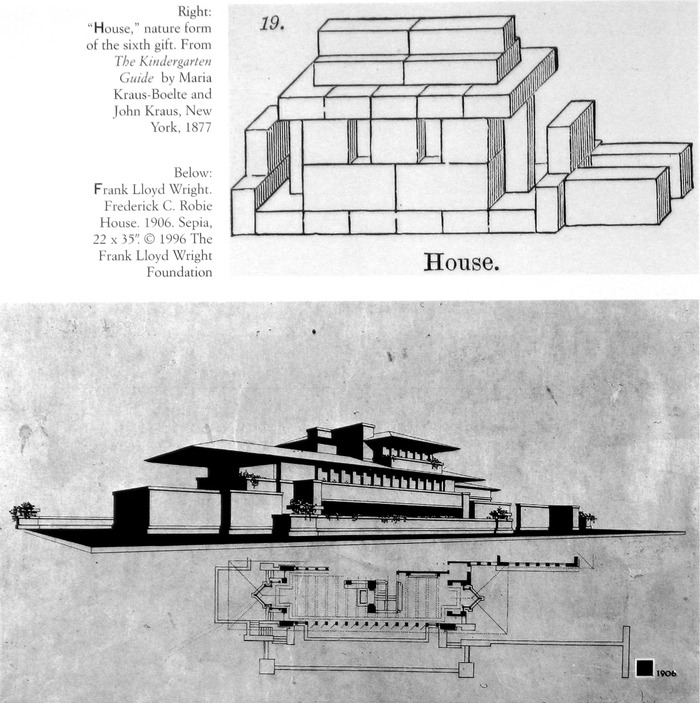
I’m reminded of Norman Brosterman’s book Inventing Kindergarten and its thesis that the first generation of twentieth-century modernists were shaped in early childhood by the highly abstracted geometric play that was a core component of nineteenth-century kindergarten. As developed by founder Friedrich Froebel in the 1830s and ‘40s, the geometric elements of kindergarten were centered around the series of about twenty “gifts,” playthings that were meant to introduce primary forms—the sphere, the cube, the cone, for example—and encourage young children to model aspects of the real world in a progression of graduated complexity.  Architect Frank Lloyd Wright would later credit Froebel’s system for developing his spatial faculties, but he was far from the only one.  According to Brosterman,

During the system’s heyday—roughly the half century before World War I—Frank Lloyd Wright was merely one of millions of people, including most of the so-called “form-givers” of the modern era who were indoctrinated, in effect, programmed, by the spiritual geometry of the early kindergarten.

Brosterman’s book is full of pictures juxtaposing nineteenth-century kindergarten projects made by small children with artwork made by adults of the same generation years later. The comparisons are suggestive, to say the very least.

From Norman Brosterman's Inventing Kindergarten

From Norman Brosterman’s Inventing Kindergarten

In addition to the Froebel gifts, there were also “occupations,” which consisted of paper, string, and clay, media that could be used to create finished projects.  Brosterman quotes American kindergarten leader W. N. Hailmann as describing the distinction between gifts and occupations:

The gift gives the child a new cosmos, the occupation fixes the impressions made by the gift.  The gift invites only arranging activities; the occupation invites also controlling, modifying, transforming, creating activities.  The gift leads to discovery; the occupation, to invention.  The gift gives insight; the occupation, power.

Without wishing to overstate the case, Lego bricks descend from the same progressive concept of early childhood development as a process of discovery and mastery, and lend themselves to a similar kind of abstraction of the real world.

Duplo.house

Interestingly, the debt Wright and other modernists owe to Froebel’s kindergarten, as described by Brosterman, has not been lost on modern educators and toy makers (in this context “toy” may sound dismissive, but it’s relevant: Milton Bradley, for example, was an important U. S. maker of Froebel gifts).  Froebel USA now makes a “Prairie House Block Set” of abstract building blocks, both a tribute to the credit Wright gave to the Froebel system and, in all likelihood, an appeal to parents who might hope for a similar start for their own children.

Wright.Froebel

And while Lego has expanded its original system of interlocking blocks to include very young children with its Duplo blocks, it’s also moved in the other direction with its “Architecture” line aimed at teenage and adult model-builders.  Detailed Lego versions of real-life architectural masterpieces, including some by Frank Lloyd Wright, are available as kits.  (Here’s a more detailed description of the Prairie-style Robie House model shown below.)  With the Architecture line, the emphasis is on faithful recreation, but the pieces are just as compatible with the Lego system as any other.  That’s the beauty of it: whether following the instructions or building freely, it’s all up to you.  That’s a core component of Lego that The Lego Movie gets.

LEGO-Architecture-21010-Robie-House

This is the Story: The Cyclical Nature of the Expository TV Theme Song

Grid

If it seems that the art of television theme music has made a comeback lately, it’s not just you.  As television has taken on more cinematic qualities and attracted viewers with higher production values and artier production (especially on premium cable and through such new outlets as Netflix’s original programming), the opening credits sequence and theme music have returned to prominence.  Just a few years ago, this wasn’t the case at all: networks tried to squeeze as much commercial time out of their programming as possible, as well as trying to avoid any lull—such as a lengthy opening—that might tempt viewers to click away.  Thus, we had a spate of super-brief openings like that of Lost or Better Off Ted, which were just a logo and a chord or two at most.  In 2010, the Emmy Awards nearly eliminated the award for Outstanding Main Title Theme, leading to a lot of hand-wringing about the end of an era.  However, as critic Robert Lloyd pointed out in the Los Angeles Times, memorable themes were continuing to be written, just not for prestigious prime-time genres: tween programming and cartoons carried the torch for the theme song even in those dark days.  Ultimately the award was kept, and there has been a bounce back to more lavish opening sequences since then.

However, one subgenre of television music has mostly remained dormant (with a few exceptions): the expository “story song” that describes the premise and characters of the show in detail in the manner of a Shakespearean prologue (even if the shows themselves were hardly highbrow).  Many of the most iconic TV themes from the 1960s, the “golden age” of the expository TV theme, fit this description: The Beverly Hillbillies (1962), Gilligan’s Island (1964), and The Brady Bunch (1969) all have memorable, catchy songs that bring viewers up to speed, whether watching for the first or the fiftieth time (dates given for these and all series mentioned are premiere dates only).  Admit it: you’re probably hearing one of these songs in your mind right now, aren’t you?

One might expect such elaborate theme songs to be a holdover from the days of radio programming, but that appears not to be the case. In fact, a cursory survey of radio show themes turns up far more introductions consisting of an instrumental theme with a voiceover by an announcer, a format mostly found on late-night talk shows today.  In fact, with a few exceptions, the songs repeated week-to-week on the radio usually sang the praises of the show’s sponsor, placing them squarely in the history of commercial jingles rather than theme songs.

The mania for story-telling TV themes appears to coincide with the popularity of ballads in general in popular music: Fess Parker’s “The Ballad of Davy Crockett,” used as the theme song for The Adventures of Davy Crockett in 1954, reached No. 1 on the U. S. pop chart the following year.  While ballads shared the pop charts with dance crazes, standards, and rock ‘n’ roll, there was no shortage of hit songs in the format: Johnny Horton’s “The Battle of New Orleans” in 1959 and, later, Staff Sergeant Barry Sadler’s “The Ballad of the Green Berets” (1966).  “The Beverly Hillbillies” fit firmly within this tradition.*  As late as 1981, the short-lived Open All Night featured what is probably the densest summary of a character’s life story to be found in a TV theme:

It’s no surprise that the expository format was most often used for comedies (although not only “situation” comedies, as we shall see) and adventure shows, two genres that lend themselves to “high concept” approaches.  While adventure shows continued to explain their premises into the 1970s and ‘80s (often through voiceover, as in the introductions to The Six Million Dollar Man (1973), Charlie’s Angels (1976), The Incredible Hulk (1978), and Quantum Leap (1989), to name just a few), comedies began to adapt an impressionistic, low-key approach, using songs that described a mood rather than a situation (a long-lasting trend that covered at least three decades’ worth of programs, including the themes to Taxi (1978), Cheers (1982), and Friends (1994)—maybe it has something to do with one-word titles?).  The theme to WKRP in Cincinnati (1978) is almost in this category, although it’s clear enough from its lyrics that it’s set at a radio station; compare it to the themes for later radio-bound sitcoms NewsRadio (a purely instrumental theme, 1995) and Frasier (a show about tossed salad and scrambled eggs, 1993).**

Interestingly, as storytelling songs declined in pop music, they continued to be prominent in rap and country, both genres that exploded in popularity in the 1990s.  The Fresh Prince of Bel Air, which began airing in 1990, was developed around the likable persona of Will “Fresh Prince” Smith, already known for a family-friendly rap style that spun shaggy-dog stories out of the foibles and ironies of everyday life.  The theme song he and producer Quincy Jones came up with is spun directly out of his act and sets up the fish-out-of-water comedy that was the show’s bread and butter in early seasons. (At almost three minutes, the song is fully as long as a typical pop song, and was edited to be much shorter after the first few episodes; effectively, the opening credits sequence was like an introductory music video.)

There are many, many theme songs for cartoon shows from the 1980s that have expository qualities; a large number of them appear to take Kenny Loggins’ “Danger Zone” as their model.  The theme for Teenage Mutant Ninja Turtles is among the most detailed, describing how the four title characters came to be, naming them individually and describing the qualities they bring to the team (not to mention their love of partying, dude). When the series was resurrected in 2012, the theme song was remade in a more current style, with the lyrics turned into a rap that fits in even more narrative detail.

Indeed, as Robert Lloyd alluded to, the expository theme song is common for children’s programming in general.  Whether this reflects the practical realities of syndication (which makes it even more likely that any episode could be a viewer’s first) or television executives’ dim view of a younger audience’s ability to follow in-context clues I couldn’t say, but anecdotal evidence suggests the latter.

In any case, it is striking to consider how many expository theme songs, both for children and adults, begin with the words “This is the story . . . “ or some variation thereof.  It invites the viewer to settle in and enter the world and mindset of the narrative, and in some cases it’s a literal invitation to “come inside” or “come along,” as if the show were a real place, just on the other side of the television screen.  The introduction to Pee-Wee’s Playhouse (1986) takes that premise about as far as it can go, not only with the opening invitation and the lyrical inclusion of the many, many characters on the show, but with a wordless, “Quiet Village”-style introductory section that further separates the ordinary world outside the Playhouse from the manic sugar-high to be found within.

The extent to which these songs have penetrated the collective memory is evident in the number of parodies and remakes that have been done, and secondary references in movies and other TV shows.  They have the quality of received folklore, which is perhaps part of their cyclical appeal: as kids for whom they are part of their childhood grow up and move into positions of influence in media, a new crop of explanatory story-songs are composed for television shows that reflect their experience.  In the late 1980s, comedy game show Remote Control (1987) and bad-movie powerhouse Mystery Science Theater 3000 (1988) both drew on this tradition (interestingly, both centered on the viewer’s relationship to the media, its influence, and the desire to reshape or talk back to it; the stock footage-driven Dream On (1990) fit a similar pattern, although it was introduced with a wordless opening-credits sequence rather than a song).  MST3K’s theme song is quite possibly the ultimate example of the genre, not just for its breakdown of the show’s premise and “robot roll call” but for its trope-defining final couplet: “If you’re wondering how he eats and breathes and other science facts, then repeat to yourself, ‘It’s just a show, I should really just relax.’”

Now, the generation that came of age with those programs is making its mark and bringing back the expository theme song, particularly in animation, with such programs as Phineas and Ferb (2007), Adventure Time (2010), and Sanjay and Craig (2013).  Outside of their theme songs, these shows make frequent use of songs in montage; the humor found in the “literal” narration, baldly describing events that can be seen occurring onscreen, hearkens back to the theme for It’s Garry Shandling’s Show (1986), another late ‘80s touchstone that challenged classic sitcom structure by calling attention to it at every possible turn.

Will the expository theme song return to prime time?  It doesn’t seem likely right now, but who knows?  Perhaps the kids watching Disney, Nick, and Cartoon Network today will become the creators and composers of tomorrow and continue the cycle.

* This leaves aside programs based on popular songs, of which there were several: Harper Valley PTA (1981) was a spinoff from a 1978 movie, based on a hit song from ten years before; a number of holiday specials have been based on narrative songs, most notably “Rudolph the Red-Nosed Reindeer” and “Frosty the Snowman,” but also including “Grandma Got Run Over by a Reindeer.”  Naturally, the songs that inspired these programs were used as themes.

** Not to dismiss those theme songs, of course, but they have a different function, exploring the theme or character of their show rather than the plot.

The Force in Four Colors: Revisiting Marvel’s Star Wars

Recent news that the license to publish Star Wars comics would shift from Dark Horse to Marvel in 2015 probably didn’t come as a surprise to anyone: now that both Lucasfilm and Marvel are under the umbrella of Disney, it was only a matter of time before corporate synergy asserted itself.  Already, Disney-owned properties such as the Muppets, Darkwing Duck, and the Pixar characters have been withdrawn from licensee Kaboom! (not all of them to reappear at Marvel, at least so far).  It’s too bad: Kaboom! publishes some of the best comics for children around, and their books were clearly being written and drawn by creators with knowledge of and affection for the characters.  Still, it makes business sense for Disney to consolidate its holdings, now that it has film, animation, and comic book outlets at its disposal.  I don’t blame them at all; I’m sure it was part of their plan in acquiring those companies in the first place.

jaxxon

The news has stirred up memories of the often-wacky Marvel Star Wars line that ran from 1977 to 1986, and there have been a lot of jokes at Marvel’s expense.  Heck, I’ve sprinkled Twitter and WordPress with my share of comments about the Zeltrons, a race of pink-skinned empaths whose sexual openness was often a source of comic relief (and pinup-worthy cheesecake) in the series.  No one would deny that Marvel’s version of George Lucas’ science fantasy epic is more remembered for six-foot tall green rabbits, horny pink-skinned aliens, and a seriously off-model Jabba the Hutt than for its merits, especially in comparison to the more straight-faced Dark Horse run.

DaniMain3

Although some of Marvel’s contributions to the Star Wars canon have been picked up and used by others (including the Zeltrons, actually), its run was compromised by its publication alongside and in between the release of the original trilogy’s films.  Before Star Wars (sorry, A New Hope) was released, Marvel was already publishing its six-issue adaptation, including scenes that were cut from the final film: most notably Luke’s conversation with Biggs on Tatooine and Han Solo’s confrontation with a very different-looking Jabba the Hutt in Mos Eisley.  The yellow-skinned, humanoid version of Jabba would appear a couple of times in the comics, until he officially disappeared from existence, replaced by the slug-like Jabba of Return of the Jedi.

jabba-from-star-wars-adaptation-marvel

To be fair, it can’t have been easy for the writers (including Roy Thomas, Archie Goodwin, and Mary Jo Duffy, among others) to spin stories out of a saga that wasn’t completed yet: the challenge was to give readers more of what they loved in the movies without deviating too far from formula or accidentally contradicting or giving away plot twists planned for the sequels (plot twists that were generally secret–Marvel’s editors wouldn’t always know they had crossed the line until it was too late).  Particularly between The Empire Strikes Back and Return of the Jedi, writers were tasked with providing the illusion of change so familiar to readers of superhero comics: Han Solo could not be freed from his carbonite imprisonment, although many issues were dedicated to attempts to rescue him; Darth Vader was off the table, so there could be no answer to the question: was he Luke’s father?

Some of the weirdness in Marvel’s version was also due to the relationship between licensor and licensee at the time.  In those days there was simply not the expectation that film and comics be a seamless continuity: comics were exercises in brand extension, ancillary revenue streams, not sacred texts.  To a large degree, the comics’ writers and artists treated the Star Wars universe as just another sci-fi/fantasy playground to be filled with weird landscapes and monsters (one story arc was repurposed from unused John Carter, Warlord of Mars artwork).  Remember, this was from the same decade as Jack Kirby’s adaptation of 2001: A Space Odyssey and Whitman’s adaptation and continuation of The Black Hole.  Making up and adding material was thought of as giving good value to the reader.  Star Wars and its Expanded Universe would be a major influence in shaping fans’ expectations of continuity across all media, but that tighter approach didn’t emerge overnight.

Still, before I was a Marvel kid I was a Star Wars kid, and the latter was a big reason for the former.  I remember vividly the discovery that piqued my interest: in the box of comics I shared with my sister (about which I’ve written previously), I discovered a copy of Star Wars number 18, missing its cover.  This was the first issue of a major story arc in the early days of the series, the “Wheel” saga, named after a huge space station-bound casino that is the setting of the action.  I didn’t know that at the time (1982 or ’83, I would guess), and it would be a few years before I was able to read the “Wheel” arc in its entirety.  What captivated me was the idea that the characters I knew from the movies were having entirely separate adventures in these comics.  I tended to accept anything official-looking as gospel, so I had no trouble accepting the legitimacy of Marvel’s version (although Carmine Infantino’s square-jawed rendition of Luke Skywalker looked more like He-Man than Mark Hamill).

Mswc19cover

For the first time, I became a regular comic buyer, actively looking for new issues on the stands and seeking out back issues to fill in my collection.  Jumping into the series, there were many unfamiliar characters and references to previous adventures from the comics.  I had a lot of catching up to do.  I didn’t live anywhere near a dedicated comic book store, so I relied on trading with friends and mail order: the biggest comic book purchase of my childhood, in fact, was an order for all the Star Wars issues that were available from one of Mile High Comics’ summer sales. Mile High’s yellow two-page ads were once a common sight, and the summer sales were the best, unloading comics for 25 or 50 cents apiece.  It helped that, aside from the first few issues, Star Wars had never been terribly sought-after or valuable, and at most they were only a few years old.  The day the box arrived in the mail with forty issues or so—far from a complete run, but more than I had ever read at once and including many gems—I holed up in my room and immersed myself in “a galaxy far, far away.”  It would be the first of many long afternoons delving into another world through comics.

One of the things I liked about the comics, and which still holds up today, was the focus they were able to bring to individual characters.  Many issues were solo adventures, or featured groups of only two or three characters working together in ways that the epic scope of the films didn’t always have time for.  In the comics you could observe Princess Leia as a diplomat waging high-stakes games of cat-and-mouse with Darth Vader and the Empire (in “The Third Law”); Luke Skywalker’s role in the Rebellion’s space fleet could receive more attention; Han Solo, and later Lando Calrissian, could be shown in their element as smugglers, gamblers, and “scoundrels” (in flashback, of course).  In essence, the Star Wars universe could support stories of action-adventure, espionage, horror, romance, and even comedy, much as the Expanded Universe still does today.  It made sense: the movies were themselves indebted to many different genres, including the science fiction serials of the 1930s and ’40s; Westerns; World War II aerial dogfights; and the samurai films of Kurosawa.  It was only natural for the comic book adaptations to continue in that spirit and flesh out elements that could only be implied on film.  Not all of the stories worked, and not all of the original characters fit into the Star Wars aesthetic, but I still remember them fondly, from the “Wheel” saga to the the twisty, long-running story of Shira Brie, to the many, many attempts to rescue Han Solo.

Mswc65cover

After Return of the Jedi, the Marvel series continued without much apparent purpose, introducing its own villains (the Nagai) and tying up threads from the comics.  The writing was on the wall.  I was a faithful reader until the end, but I couldn’t disagree with the decision to cancel the series after 107 issues: it had become a shadow of its former self, and by that time I had gotten hooked on Marvel’s superhero offerings.

I didn’t spend much time reading the Dark Horse series–I guess I was still a Marvel kid at heart–but from what I could see the quality was good, and they made a lot of smart decisions.  Unlike the Marvel series’ focus on the main characters of the film trilogy (understandable, but ultimately limiting), Dark Horse was able to flesh out the Old Republic and other settings within the Star Wars universe.  They even obtained the rights to the Marvel run and released it in a handsome series of trade paperbacks, a fitting tribute to an imperfect but often richly entertaining saga, and a challenge to the assumption that everyone involved would rather forget it existed.  With the distance of time, new and old readers alike can approach these adaptations, see that there was more to it than green rabbits, and make up their own minds.

(Images from Wookieepedia, the Star Wars Wiki)

My 2013 in Film

As I mentioned last time, the end of the year offers a time to look back at the offerings—be they movies, music, or books—of the last twelve months and evaluate them.  I’m always interested to see what critics hold up as the best of the year, although in most cases I’ll put titles on my mental “to see or read” list rather than compare my opinions directly to theirs.  When it comes to movies, I’ve fallen behind; my wife and I used to be frequent moviegoers, but the arrival of children has an impact in more ways than one.  (I see more animated films, for one thing, and fewer documentaries.)  Not only does a night out at the movies entail getting a sitter, it means giving up precious time (of which I’m now more conscious of the scarcity).  Movies as a whole aren’t trivial, but specific movies—G.I. Joe: The Rise of Cobra, I’m looking at you—are another story.  Perhaps that’s why I tend to be more forgiving of movies I watch at home.  Transformers exceeded my expectations as a cable TV offering, but I doubt I would have been as pleased if I’d trekked out to see it at the theater.  All of this is a roundabout way of saying that I probably won’t have a very complete picture of 2013 in film until 2016 or so, or possibly never.  The films I saw in the theater this year don’t even add up to ten, so my top ten list would of necessity include some movies I didn’t even like that much, and I had to search my memory to come up with some of them.

Pacific

A few years ago, I was discussing movies with a relative I didn’t see very often.  He revealed that he keeps an ongoing log of every movie he sees, with a numerical rating system of his own device.  Any movie that came up, he was able to tell me what he had rated it, and which movies were adjacent in rankings.  I doubt I could do that: I’m not that compulsive or organized, for one thing.  Asking around online, though, it seems that quite a few film buffs do track their reactions in that kind of detail.

I wonder how much their rankings change over time, though.  Some things I enjoyed the first time around wear thin after just one or two viewings (comedies are especially vulnerable to this).  Others stick with me, even as I’d rather they didn’t: I’ve only seen A.I. Artificial Intelligence once, and I hated it.  Really hated it; it was refreshing, in a way, because how often do we have such pure reactions to things?  Yet, large chunks of it stuck with me: that must be worth something, right?  And even the fact that I had such a strong reaction puts it on a somewhat higher level than the many movies that I’ve occasionally remembered and thought, “Oh yeah, I saw that, I think.”  I’ve read passionate and intelligent defenses of A.I. that have given me different perspectives on it; I don’t think I’d enjoy it any more if I saw it again, but I might appreciate it more.  How do I put a raw number on such an experience?

Professional critics, of course, do it all the time, and they, more than anyone, know the limitations of a star, number, or letter-grade system, boiling their nuanced and (hopefully) insightful consideration of a film down to “thumbs up” or “thumbs down.”  And critics’ opinions change, as well, so even a listing of their favorite movies of the year won’t necessarily line up with the ratings they originally gave those films.  That’s okay, and as long as we don’t pretend any given opinion is the final word, it’s part of the process of evaluation we all take part in.

In any case, it’s easier than ever for anyone to be a critic, or at least to publicize their opinions.  Amazon and iTunes have featured customer reviews for years, some of them lengthy essays by prolific writers; now services like Letterboxd (“Your life in film”) allow users to keep track of their viewing and ratings, just like my relative (I wouldn’t be surprised if he were a Letterboxd early adopter), with the added benefit of making their reviews public and allowing them to compare them with others’ and cross-reference their film choices with influential lists such as the AFI 100 or the various critics associations’ year-end lists.  Like many other elements of contemporary online life, Letterboxd takes activities that many people were already doing in isolation, and turns it into a social activity.

Another change in recent years is the increasingly narrow gap between the big and small screens.  Many of the films that came out earlier this year are already available on DVD or Blu-ray, and the lead time between theatrical release and home video gets shorter every year.  Streaming and video-on-demand services make it even easier to catch up on the year’s releases at home, something that is increasingly important for those smaller movies that don’t have wide theatrical distribution.  I watched Escape From Tomorrow on Vudu at home; it didn’t make it to a theater near me, as far as I am aware.  This year, Stephen Soderbergh’s Behind the Candelabra, starring Michael Douglas as Liberace, was released in theaters in Europe but made its American debut on HBO.  Although I would have liked to have seen both films on a bigger screen, TV time shifting made them much more accessible to me.

It goes the other way, too, although rarely: this year my wife traveled to Olathe to watch the Doctor Who fiftieth-anniversary special The Day of the Doctor in a movie theater, a rebroadcast of the international simulcast.  While undoubtedly an unusual move designed to mark a significant occasion, special engagements like this will probably become more common as theaters look for ways to create communal “events” and spectacles (like IMAX and 3D) that will bring people to the theater.  Simulcasting of live performances is even farther ahead: concerts and stage shows are available in local theaters.  I can even see performances of the Metropolitan Opera here in Wichita.

So what did I think of the movies I did see? I’m glad you asked me that, Senator:

The Lone Ranger: No, it wasn’t quite as bad as its toxic reception indicated, but it wasn’t very good, either.  I enjoy Westerns, I’m open to the reinterpretation of popular characters, especially of the pulp era, and I even liked Pirates of the Caribbean, at least the first one, so this should have been a slam dunk for me, but The Lone Ranger was mostly a giant mess.  This might be another one that I enjoy more at home, where I can skip or tune out the boring or silly parts (of which there are many) and just focus on the bigger-than-life action sequences.

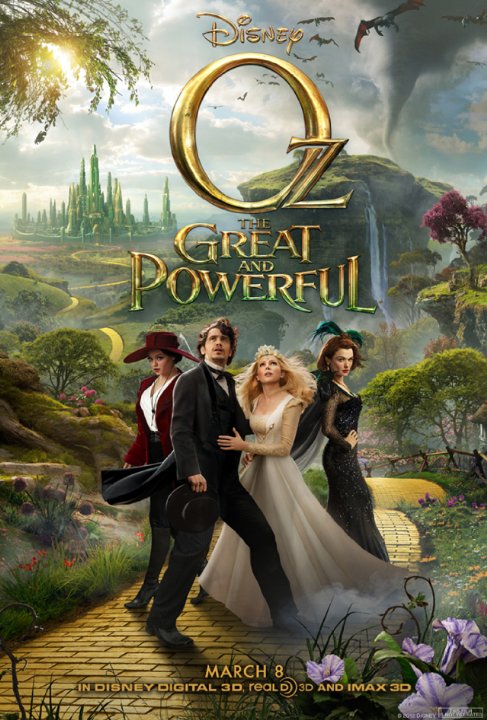
Oz the Great and Powerful: Another critical bomb that I thought was just okay, not flat-out terrible.  In crafting a prequel to The Wizard of Oz, director Sam Raimi’s appropriation of the 1939 classic film’s art deco and Technicolor visuals was both a strength—I thought it looked fantastic—and a drawback, as it couldn’t help remind viewers of the superior original. Films like this are stuck in a bind: the audiences who would in theory be most interested in it are also going to scrutinize it more than average and hold it to a higher standard before accepting it.  Properties with already-passionate fans are a double-edged sword, as NBC recently found out with The Sound of Music Live!

Oz

Escape From Tomorrow: I’ve already written about this one, so I’ll just add that this is one case where I’m glad I read some reviews before I saw it.  If Escape had been as incredible as its trailer promised, it would probably be my pick of the year, if not the decade.  Although I still enjoyed it and think it’s worth seeing, getting a sense of the buzz around it brought my expectations down to earth.

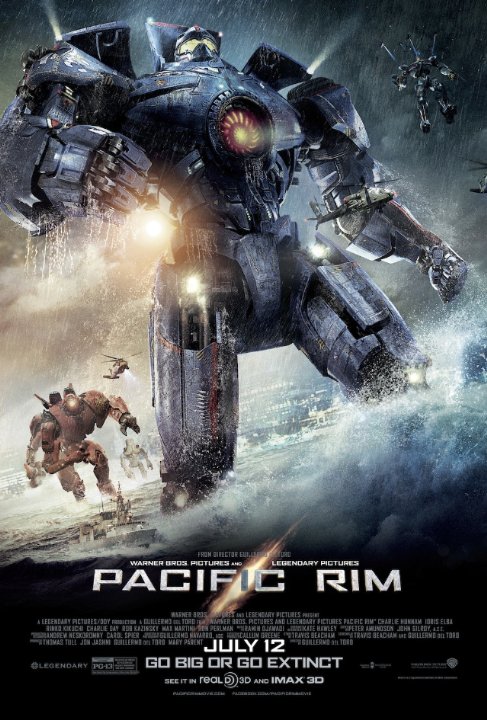
Speaking of trailers, another one that had me pumped this year was for Pacific Rim.  Personally, I loved it, but I can understand audiences being underwhelmed, as it’s kind of a “fans only” prospect—if you already love giant monsters and robots, the one-dimensional characters are genre conventions, not flaws.  I saw it twice, and took friends with me, both of whom are genre fans: one a fan of action and superheroes, the other a fan of Tolkien-style high fantasy.  They enjoyed it well enough, but weren’t as enthralled as I was.  Oh well, to each their own.  The only plot point that struck me as insultingly dumb was the “Gipsy Danger is somehow ‘analog’ while the other jaegers are ‘digital,’ and that somehow protects it from the electromagnetic pulse” thing. And while it’s kind of a nitpicky complaint, I was very excited to hear GLaDOS (the AI in the Portal video game series, voiced by Ellen McLain) prominently featured in the trailer.  McLain’s voice is heard in the finished film, but the resemblance to GLaDOS is toned down, as confirmed by director and Portal fan Guillermo del Toro for Ain’t It Cool News:

“I called Valve [the makers of Portal] and asked ‘Can you give us the filter?’ so we went full GLaDOS for the first commercial, but I thought it was too much. If you’re a gamer, it’s too distracting so we created our own GLaDOS 2.0 filter that’s a little less full on.”

I get his reasoning, and it’s probably the right call, but as someone who’s been interested in Portal almost completely because of GLaDOS’ lilting, half-mechanical voice, it was a letdown. Finally, although there’s been some criticism of the formulaic rivalry between hero Raleigh Brackett and cocky Chuck Hansen, after ten-plus years of Harry Potter and knock-offs thereof, it’s actually refreshing to have a story that knows the difference between a rival and a villain.  Hansen is abrasive to the end, but ultimately he and Brackett are on the same side, and the two characters are able to set aside their personal differences and work together.  It’s sad that something so simple has become novel.

The Return of/My Return to Community

Since my children were born, I’ve developed something of a tradition: at the beginning of each fall television season, I pick one new show that I make an effort to follow.  It wasn’t a conscious thing I started doing; apparently one new show is all I can handle adding to my schedule and giving my full attention.  I watch other shows, of course, but if I miss an episode or have other things to do I don’t sweat it.  Sometimes it works out: I love animation, so Adventure Time and Gravity Falls have been rewarding to follow, although my one-show-at-a-time habit meant I missed out on Bob’s Burgers and am only belatedly catching up.  Other shows have been disappointing: Studio 60 on the Sunset Strip looked like the opportunity to get in on the ground floor of the next big thing, but after a promising start it never felt remotely like anything real, and was often laughably pretentious and self-important. It was a relief when it was canceled, but so help me, I watched every episode.  Other programs, like the already-forgotten Nathan Fillion cross-country racing adventure Drive and the completely bonkers conspiracy thriller Zero Hour, didn’t even last more than a few episodes.

It is both harder and easier to be a fan of a TV show than when I was young.  On the one hand, it is easier than ever to time shift, recording and watching a program on my own terms with a DVR or finding it online.  I watched a lot of TV as a kid, and part of my thinking was that if I missed something, it might never be shown again.  I didn’t want to miss anything.  It’s easier to let go now in the knowledge that YouTube, Netflix, or a DVD set will allow me to catch up down the road.  I think The Simpsons is the first show that stopped being “appointment television” for me; the decline in quality around 2000 was part of it, but I also knew the episodes I missed wouldn’t disappear into the ether like so much of the stuff I watched as a kid.

But that same accessibility raises the bar.  When I was a kid, if you knew the names of background characters, or–God help you–the behind the scenes personnel, it made you a superfan; now there is so much information that there’s practically no end to how deep you can go.  My wife recently got into Doctor Who, and while that’s an extreme case—fifty years of history, and a show that is particularly beloved on the Internet—it’s incredible just how much material there is to master.  Mastery is still a key value of geekdom: how do you know you’re the biggest fan unless you can out-trivia anyone else in the room—or online, where it becomes a more daunting prospect?

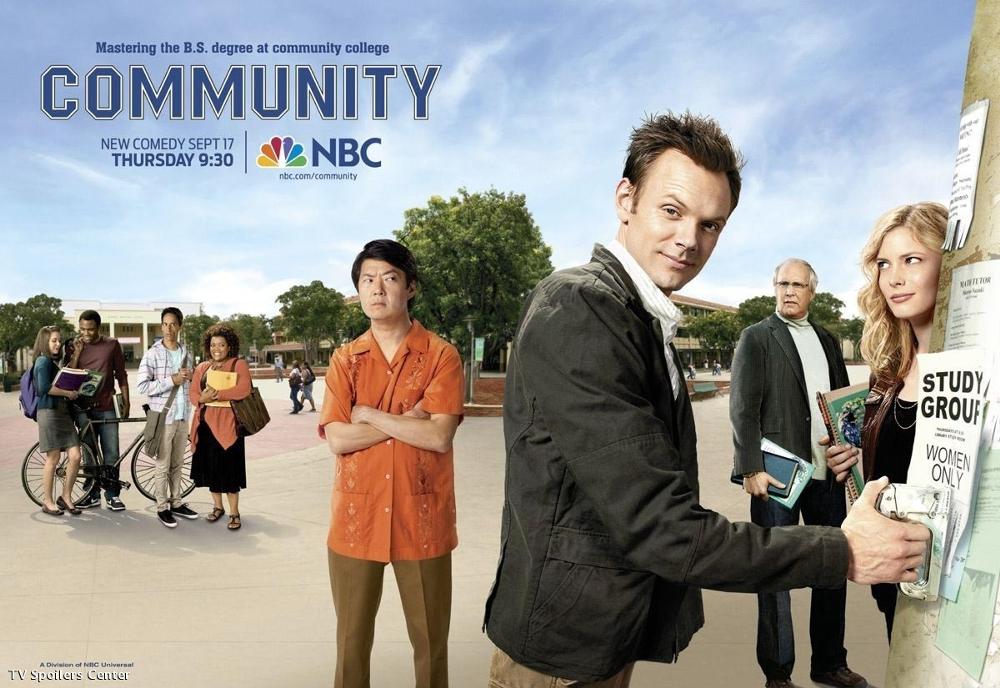
The most intense relationship I’ve had with a television show in recent years was with Community.  Beginning in 2009, Community was a classic “hang out show” stocked with colorful characters who were just fun to be around: Greendale has often been compared to The Simpsons’ Springfield, and its knowing embrace of TV and movie clichés (mostly expressed by TV-obsessed Abed) included many elements close to my heart: wordplay, slapstick, doppelgangers, pastiche, and metanarrative games.  One of the common criticisms of the show was that it flattered an audience that congratulated itself for getting references to other TV shows and movies, and I wouldn’t deny it, but what can I say?  Community rewarded an obsessive attention to detail: as closely as the audience was willing to look, creator Dan Harmon had anticipated it and put some callback or Easter egg there to reward them.  The show’s mixture of smart and dumb comedy grabbed me, and there was enough genuine feeling underlying the arch tone for some truly cathartic moments.  It didn’t just feel real: it was better than real.

Community-Season-1-Promo-Posters

It didn’t hurt that the show premiered during an uncertain time of my life, including the birth of my second child and a reevaluation of my career.  The fact that it was set on the campus of a community college also meant I could relate to it, or at least recognize the character types involved.  Community was funny from the beginning—the interaction of Jeff Winger (Joel McHale), forced to return to school after his fake law degree gets him disbarred, with Professor Ian Duncan (John Oliver) is a highlight of the pilot episode—and although the first half of season one is considered uneven, especially compared to what would follow, it steadily improved and kept my interest throughout.  However, “Debate 109” was the episode in which Community went from being a good show to being my favorite show: the episode’s multiple threads (Jeff assists go-getter Annie in the debate against rival/mirror-image City College; the study group discovers that Abed’s student film project has been eerily predicting their activities; “non-traditional” student Pierce tries to help Britta stop smoking through hypnosis) come together brilliantly after a comic crescendo without becoming frantic or madcap.  The final scene, set to Edward Sharpe and the Magnetic Zeros’ “Home,” captures the feeling of discovery—of self and of others—that is part of the college experience, and was central to the show at its best. The episode is quintessential Community as both psychological comedy and laid-back farce.

It was also fascinating and exciting to watch the fan community develop online: reading along with Todd VanDerWerff’s reviews at the AV Club, taking part in the discussion and speculation with other fans, watching the comment threads increase in size and fervor.  It was fun to get swept up in something big; by season one’s “Modern Warfare,” an epic paintball battle told through the rhythms and visuals of an action movie, Community was a cult phenomenon.  The fact that it continued to be low-rated and seemingly underappreciated by parent network NBC only added to the fans’ love: like Arrested Development, this would be the show all your friends would catch on to in four or five years, after it had been canceled due to low ratings.  Those of us in the know were ahead of our time.

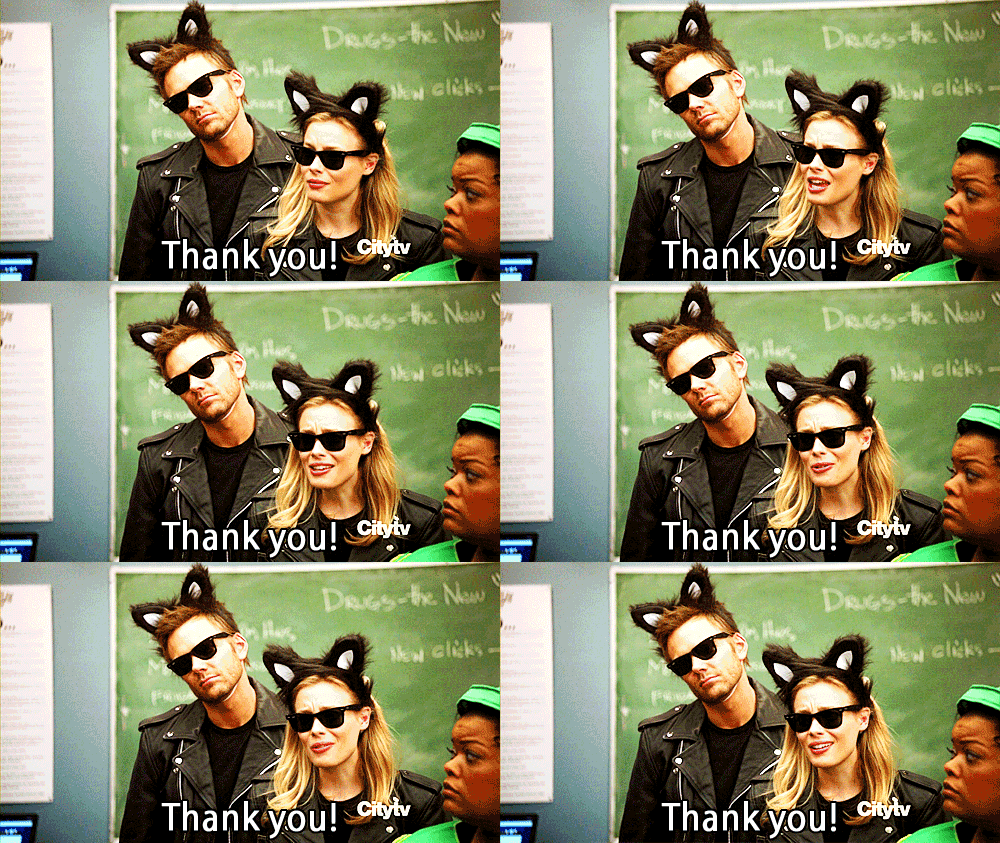
Community.thankyou

In retrospect, my infatuation with Community’s first season was like the bloom of first love: in subsequent seasons I either had to adjust to the reality that the show wouldn’t stay the same forever, or move on.  The second and third seasons were often great (the Christmas episodes “Abed’s Uncontrollable Christmas” and “Regional Holiday Music” have become required seasonal viewing for me), but it was inevitable that there would be missteps, and divisions within the fan community appeared as viewers reacted differently to the show’s plot developments.  (“Epidemiology,” the second season Halloween episode, was especially divisive, with its apparently real zombie plague.)

I began to sour on the show during its third season, as its increasingly outlandish plots and the emphasis on the dark undertones of the characters’ psychology became both off-putting and unreal.  The genre-hopping that seemed so brilliant in “Modern Warfare” came to seem like a crutch as they went to that well a few too many times, and instead of realistically flawed but likeable people the study group started to seem genuinely emotionally disturbed.

And this is where the realities of modern fandom started to wear on me.  Show creator Dan Harmon has a highly visible presence online: he’s active on Twitter, he regularly holds forth in his “Harmontown” podcasts, and he’s not shy about sharing his opinions on storytelling, dealing with actors and the studio, and anything else.  His troubles with the network and producer Sony, and his run-ins with cast member Chevy Chase, came to dominate news about Community; questions about its renewal were more dramatic than the show itself in its third season. Eventually, Harmon was leaking angry phone messages he had received from Chase, essentially airing dirty laundry in public.  As much as I enjoyed his work, I was starting to feel that I knew too much about the man behind the curtain.  I know, I know, “trust the art, not the artist.”  Easier said than done.  When the decision about Community’s fourth season finally dropped, it seemed to be the worst of both worlds: the show would continue, but Harmon was removed due to his inability to work with Sony.  As I said, I had already become dissatisfied during the third season, but I trusted Harmon to turn things around, and I stuck with it.  But the prospect of a “zombie Community” run by someone else, even someone sympathetic to Harmon’s aesthetic, didn’t appeal.

I watched a couple of episodes of the fourth season, but I wasn’t feeling it.  Barring a few moments here or there, it wasn’t very good, and felt like a parody confirming all the criticisms of Community as heartless and too clever for its own sake.  Combined with the sour feelings I now associated with it, tarnished by my knowledge of the behind-the-scenes rancor, I checked out and didn’t look back. I was busy anyway, and if Community was no longer the show I had loved so fervently, I no longer needed the escapism it had represented.

And yet. . . . In the wake of news that Dan Harmon would be returning to take the helm after the generally reviled fourth season, NBC is promoting the January 2 premiere of the fifth season as a rebirth and a return to form.  Seeing the teasers for the hour-long premiere event, with Jeff Winger returning to Greendale as a teacher (I guess he graduated at the end of last season, but from what I’ve heard no one was very satisfied with how it unfolded), I’m actually a little excited.  Clearly NBC is hoping to bring back fans like me, and maybe hook some new ones.  I’m going to give it a shot.  It will be hard to recapture the excitement I felt during the first season, but it will still be nice to check in with old friends.

Points of Connection, Part Five: Shadow Kingdoms

“If the Pirates of the Caribbean [ride] breaks down, the pirates don’t eat the tourists.” –Dr. Ian Malcolm (Jeff Goldblum), Jurassic Park

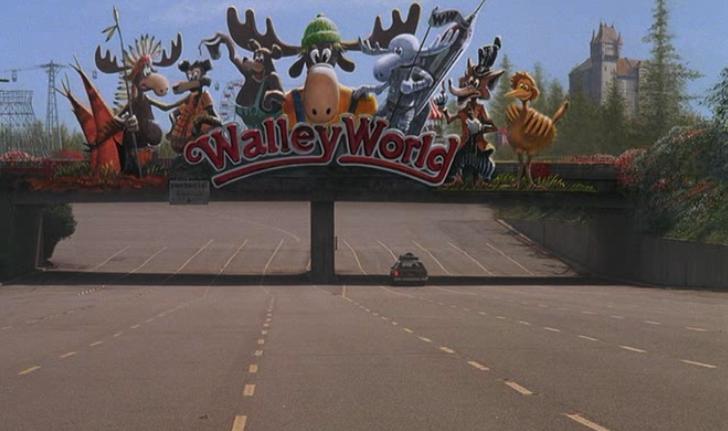
WallyWorld

Many of the narratives discussed so far serve as commentary on the relationship between appearance and actuality: the actors on Galaxy Quest learn to live up to the roles they portray; Squadron Supreme, Watchmen and The Venture Bros. contrast the glamorous and well-intentioned ideal of the superhero with its flawed, sometimes squalid reality; The Adventures of Baron Munchausen plays with the very notion of storytelling’s ability to shape events.  This is directly tied to the revisionary, “postmodern” stance, of which pastiche, parody, and intertextuality are such an important part, as well as making it easier to critique thinly-veiled properties that might otherwise be off-limits due to copyright or marketing needs.

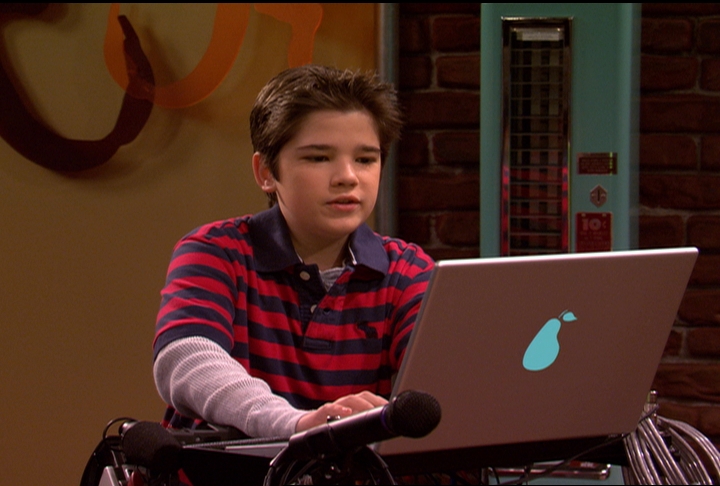
In film and television, the need for doppelganger brands and trademarks goes beyond storytelling requirements and is frequently undertaken as a matter of course: there is a cottage industry of production designers that supplies television and movie studios with fake products (like Heisler Beer) for set dressing.  Although they are sometimes the vehicle for critiques of branding or consumerism, they are usually just part of the background, used in order to avoid litigation or fees that might be demanded if a trademark holder were unhappy with either the portrayal or association of their product with a film or television show.  Similarly, filmmakers may wish to avoid the stigma of paid product placement.  Fictional branding is often just another aspect of crafting a believable setting or extending an aesthetic (such as Community‘s Greendale, where Let’s Potato Chips and Hot & Brown Coffee are popular brands), and some filmmakers have brands that permeate their creations, like J. J. Abrams’ Slusho!  No matter what the motivation, or whether real or fictional brands are used, the implication is clear that brands and logos are now so ubiquitous that realism demands their presence.*

"Pearbook" on iCarly

“Pearbook” on iCarly

"Heisler Gold Ale" produced by Independent Studio Services

“Heisler Gold Ale” prop packaging by Independent Studio Services

Leaving aside cases of paid product placement, critiques are more likely to be effective when brands are named directly instead of implied by doppelgangers (even with paid placement, filmmakers are sometimes able to get the last laugh: witness the future society of Demolition Man, in which “all restaurants are Taco Bell”).  Plenty of fictional products have skewered commercialism in films and television, but they are often deliberately unreal, placing the emphasis on the stupidity or crassness of marketing, making the satire clear but less believable in a fictional context (as an example, see “Mooby,” literally a golden calf, in Kevin Smith’s Dogma).  Films like Fight Club or Idiocracy have more bite in this regard for using real-life brands and making their target perfectly clear (although Idiocracy also included fictional brands: who could forget Brawndo?).  The use of brand names in such critical ways is generally protected by the First Amendment, but film producers aren’t always willing to invest in a court fight against big corporations and choose to play it safe; hence the common blurring of even innocuous background logos in documentaries and the proliferation of fake brands on television.  In general, the bigger the company brand, the bigger the target it makes for satirists and the more aggressive its lawyers are in policing its trademarks.

It doesn’t get much bigger than the Walt Disney Company, which is famously protective of its image and is known to be very litigious when it comes to unauthorized use of its intellectual property.  That made it all the more incredible when Escape from Tomorrow was released in 2013: Escape was largely filmed surreptitiously at Disneyland and Walt Disney World with handheld cameras, the cast and crew posing as tourists.  It caused a sensation at film festivals, not least from the audacity of its production, but whether it would ever be distributed was debatable, based on the presumption that Disney would never allow a film secretly made on their property (and in which EPCOT’s Spaceship Earth is shown blowing up and rolling off its foundation, among other dark images) to be widely seen if they had anything to say about it.  Ultimately, it was released with a prominent disclaimer disavowing any connection with Disney (or the Siemens Corporation, which also figures prominently in one of the film’s most bizarre scenes).

Walt Disney and his company, characters, and theme parks have been fictionalized, parodied, and referenced in ways too numerous to count, but a few examples will suffice.  Mooby, referenced above, is a clear Mickey Mouse analogue.  The Magic Kingdom is recognizable in Walley World, the frustratingly out-of-reach destination in National Lampoon’s Vacation, and in Brisbyland, the home of “Busy Bee” in “The Incredible Mr. Brisby,” an episode of The Venture Bros.  (In both cases, the park founder is still alive and present at his park, and has the first name “Roy,” surely a reference to Roy O. Disney, Walt’s brother and co-founder of the Walt Disney Company, or Roy E. Disney, Roy O.’s son and a longtime Disney executive.) Disney’s futuristic outlook, epitomized by EPCOT (originally intended to be a self-contained model community) but apparent through his entire career, has been a rich source of inspiration for both fiction and urban legend (for example, although Escape from Tomorrow doesn’t address Walt Disney’s supposed cryogenic preservation, it does include memory manipulation, robots, and other technologies behind the scenes—but how much of this is real is open to interpretation; more on this momentarily).  Finally, Disney is a natural focus for stories targeting whitewashing, controlled environments, prefab narratives, and illusory realities: whether one believes Walt Disney to have been a visionary artist, a commercial hack, something more sinister, or some combination of the three, the impact his company’s work has had on (for example) our understanding of familiar fairy tales, American history, and branding (not to mention our expectations for immersive entertainment: the “theme park” as we know it would be much different without Disney, if it existed at all) are incalculable.  If P. T. Barnum epitomizes nineteenth century show business in all its hucksterism and canny exploitation of the audience’s secret desires, Walt Disney is his technologically-empowered twentieth century heir.  Disney is thus a useful mirror for any artist interested in the contrast between calculated cover stories and messy realities.

Beyond association with Disney specifically, the haunted/abandoned/out-of-control amusement park has a long history, going back to the shady and dangerous “otherness” of the traveling circus (see the dark carnivals and mysterious midways of Ray Bradbury, who made extensive use of this setting)**, and kept alive in the malfunctioning high-tech entertainments of Westworld and Jurassic Park (both from the pen of Michael Crichton). The scary old carnival was something Disney actively tried to move away from: “carnies” with tattoos and facial hair would not be employed at his parks; every detail would be looked after to make sure guests felt safe, welcome, and at home; recreations of “old time” entertainments, such as Paradise Pier, the idealized Boardwalk at Disney California Adventures, are scrubbed clean of anything potentially offensive or threatening.  As for Crichton’s cybernetic system failures, those too drew inspiration from Disney, sensing a fatal hubris in the technophilia and micromanagement of Disney’s parks. The Simpsons knowingly brought things full circle, parodying Disneyland, Westworld, and Jurassic Park in “Itchy & Scratchy Land.”

Escape from Tomorrow thus makes a potent counterexample to the pastiches discussed in this series: it’s unlikely that the same film set in a fictionalized version of the park would make such a splash.  To point out that theme parks conceal things from their guests, or that “it’s all fake,” would be trite; everyone knows this, but like the audience for stage magic, we want to be seduced, to be tricked, at least for the duration of the show.  Escape’s trailer makes this case explicitly, and sells the film, with one line of dialogue: as Alison Lees-Taylor’s jaded ex-princess says, “People come here because they want to feel safe.  Bad things happen everywhere—especially here.”  The specificity of its references play with our familiarity with the urban legends and jokes about Disney—some are referenced directly, and others are left to our imagination.

(Spoilers follow.)  In the film, written and directed by Randy Moore, husband and father Jim White (Roy Abramsohn) is fired from his job (via phone call) on the last morning of his Disneyworld vacation; while attempting to put a good face on it, he is continually distracted in the park by a pair of beguiling French teenagers, whom he clumsily follows around.  Other subplots abound, and the story is largely episodic, broken up by periodic flights of fantasy (reference is made to Jim’s “blackouts”) which provide the more overt horror elements: the characters in the rides suddenly turn into demonic tormentors; Jim finds himself entangled in a high-tech conspiracy; other park visitors, such as a scooter-riding Southerner, take on sinister significance.  In other words, the “Happiest Place on Earth” has its mask ripped away.  As Lees-Taylor’s character says, “You can’t be happy all the time.”

Pastiche is still present in at least one element of Escape from Tomorrow: the music.  Licensing requirements would have made it prohibitive to use the actual songs from Disney’s catalog, so composer Abel Korzeniowski provides convincing and frequently gorgeous backgrounds in the lush, cinematic style associated with Disney’s “golden age,” and sound-alike ditties for the rides.  The film is better for it.  This is especially clear in an early scene set on the “It’s a Small World” ride, in which the song of the same name is suggested–and its cloying, repetitive qualities exaggerated–but not actually used.  The end title song (“Imaginate!”) similarly toys with the optimistic “marching into the future” genre, giving it a vaguely threatening edge: compare it to “Miracles from Molecules,” a song (by Robert and Richard Sherman) heard in Disney’s Tomorrowland, but note that the transformations in “Imaginate!” aren’t in the inanimate materials of chemistry, but in the listener: “Everyone is here, no time to fear / And we will never let you go. . . . Imaginate! What can we do / When tomorrow there’s another you?”

Ultimately, Escape from Tomorrow pulls a bait-and-switch on the audience not unlike Disney’s hard-to-keep promise of happiness: the most surreal and dramatic scenes (like the explosion of Spaceship Earth) are fantasies, whereas the real horrors are those of the mundane world, playing on fears anyone can relate to: unemployment, alcoholism, infidelity, being separated from a child in a crowd, getting sick far from home.***  Terry Gilliam’s The Adventures of Baron Munchausen was the third in a loose trilogy (with Time Bandits and Brazil) focused on the importance of escapist dreams.  While Randy Moore’s cinematic language is closer to David Lynch than Gilliam (one of the spookiest scenes involves a slightly out-of-focus balloon, hovering just inside the frame), Jim’s breaks from reality clearly serve the same purpose as Sam Lowry’s in Brazil.  Even the French teenagers, in whom Jim’s interest is primarily sexual, can be seen as emblematic of a tempting other life, the specifics not so important.  It’s surely a commentary on our times that even as frightening, disorienting, and paranoid as Jim’s fantasies are, they’re still preferable to his everyday life.  That’s not to say that “reality” isn’t still a malleable concept: as in Gilliam, the boundaries of dream and waking are permeable.  At Escape‘s denouement, a “fixer” implants a happy memory in Jim’s son’s mind: who’s to say that Moore’s film doesn’t perform a similar alchemy in reverse, supplanting the company’s narrative with its own?

* David Foster Wallace notes the change in attitude toward brand names and other mass media references in literary fiction, and the role television has played in shaping that transition, in “E. Unibus Pluram: Television and U. S. Fiction,” especially pp. 41-44, included in A Supposedly Fun Thing I’ll Never Do Again.

** “Something Wicked This Way Went: Whatever Happened to the Creepy Circus?” by EsoterX has a nice take on the subject.

*** A comparison can be made to Alfonso Cuarón’s Children of Men and Max Brooks’ World War Z: the political and social ills in both scenarios are plausible enough to be scary by themselves, but presumably wouldn’t draw as much of an audience without the sci-fi “hooks.”

Points of Connection, Part Four: Mirror Universes

One of my favorite scenes involving the Squadron Supreme is in Mark Gruenwald’s follow-up to the SS miniseries, the graphic novel Squadron Supreme: Death of a Universe.  In Death, a mysterious growing blot threatens to erase the entire universe, a danger that brings former enemies together for the sake of survival.  Dr. Emil Burbank, alias “Master Menace,” who has been established as the Lex Luthor to Hyperion’s Superman (although his armor makes him look more like Dr. Doom—this is still a Marvel book, after all) volunteers to travel forward in time in order to develop a solution using the future era’s advanced technology.  (It’s one of many possible futures; as one character points out, the universe they’re in may not have a future.)  Nearly an hour after his departure, his time machine returns.  Burbank steps out, an old man: he has spent fifteen years of intense labor in the future perfecting his device.  Hyperion is shocked at the sacrifice his old enemy has made.  “At last he treats me with the respect one of my stature is entitled to!” thinks Burbank.

From Squadron Supreme: Death of a Universe, art by Paul Ryan and Al Williamson.  Source: Comic Book Resources.  Brian Cronin was struck by the same scene as myself.

From Squadron Supreme: Death of a Universe, art by Paul Ryan and Al Williamson. Source: Comic Book Resources. Brian Cronin was obviously struck by the same scene as myself.

It’s a little too on-the-nose, but it’s of a piece with Gruenwald’s interest in illuminating the relationships between comic book archetypes.  It’s also, in a way, a rare moment of understanding between two antagonists; comic book narratives depend on direct conflict, and have historically placed emphasis on action, not détente.  It’s clear that Master Menace is acting from self-interest as usual, but he also seems intrigued by the possibility of playing hero, if just this once.  If we accept the notion that villains are most compelling when they reveal something about the hero*, it suggests that what Hyperion and Master Menace share is both a higher purpose and a natural superiority to others (why deny it?), but in Burbank’s eyes only Hyperion has received the acclaim he deserves.  Burbank has had to work for his success, and has seen his ambitious visions thwarted (usually by Hyperion, obviously), but all Hyperion has to do is flex his muscles and punch a few bad guys and he is universally beloved.  What Master Menace really wants is to be seen as a worthy opponent instead of just another criminal, to have his greatness recognized.  I’m probably reading some of the shared history of Lex Luthor and Clark Kent into this scene, but isn’t that the point? (For a similar take from the villain’s point of view, see Dr. Horrible’s Sing-Along Blog.)

Although they aren’t cast as hero/villain, Jason Nesmith (Tim Allen) and Alexander Dane (Alan Rickman) have a similar dynamic in the 1999 film Galaxy Quest.  Bound together by their roles on the long-cancelled television series of the same name, as “Commander Peter Quincy Taggart” and “Dr. Lazarus” respectively, Nesmith relishes the adulation of fans and the chance to relive his glory days as the boyish, heroic starship captain, while Dane mourns that a classically-trained Shakespearean such as himself has become trapped in a one-dimensional, prosthetic-forehead-wearing role defined by a single catchphrase: “By Grabthar’s Hammer. . . .”  To Dane, Nesmith is a hammy showboat; to Nesmith, Dane is a snob who needs to lighten up.

Galaxy-Quest-Lazarus

Of course, it’s immediately obvious that “Nesmith/Taggart” is William Shatner playing James T. Kirk, and “Dane/Lazarus” is Leonard Nimoy as Mr. Spock, and indeed the entire setup, from the canceled cult TV show to the easily mocked conventions, is a pastiche of Star Trek and its real-life fandom.  An early moment in the film, when Nesmith lashes out at his fans, snarling “It’s just a television show,” is undoubtedly inspired by the well-known Saturday Night Live sketch in which William Shatner tells his fans to “get a life;” Dane’s self-loathing is a comic exaggeration of Nimoy, who was so famously ambivalent about his best-known role that he published two autobiographies, one called I Am Not Spock and, twenty years later, I Am Spock. Galaxy Quest gets a lot of story across in a short amount of time because we already know its premise and characters in broad outline, and the casting adds more layers to the joke. Rickman surely knew a thing or two about lending his theatrical gravitas to B-movie genre roles; Gwen DeMarco (the eye-candy communications officer Tawny Madison, whose job is to repeat everything the computer says) is played by Sigourney Weaver, Ellen Ripley herself; Sam Rockwell plays Guy, the unnamed crew member terrified he’ll be as expendable as Star Trek’s “red shirts;” my favorite is Fred Kwan (Tech Sergeant Chen), who admits Kwan isn’t even his real name, played by the Lebanese-American Tony Shalhoub (himself frequently cast in Italian, Arab, or Russian “ethnic” roles).

It’s a testament to the strength of the performances and the attention to detail that the pastiche works as a commentary on Star Trek without descending into simple parody.  As the story unfolds, with the cast of the TV show mistaken for actual space explorers and drafted into an alien war**, there are stakes, and there is character growth; there are jabs at cheap sets, formulaic writing, and rubber masks, but they are, in a sense, coming from inside knowledge, an elbow nudge from one fan to another.  The writers and director clearly have an affection for the subject, and like fans everywhere have earned the right to point out the more risible aspects of the show without giving up the reasons they fell in love with it in the first place.

It’s also hilarious.  Based on the films that have already been made, it would seem to be difficult to make a humorous science fiction film, at least one in which the comedy and science fiction elements are given equal footing.  Sure, humorous elements have been present in written science fiction almost since the beginning, Fredric Brown being an early practitioner, but when it comes to putting fantastic visions on celluloid, there has historically been a divide between the self-seriousness of sci fi and the tendency of TV and movie comedians to deflate, to tear down artifice (or at least there was through much of the twentieth century; a balanced combination of comedy and genre elements isn’t quite the rarity it was in 1999).  Galaxy Quest finds a lot of its humor in the backstage bickering and self-delusion of actors, as well as lazy writing that amps up tension at the expense of believability (like the self-destruct timer that only stops at 0:01, or ridiculous obstacle courses that would be safety hazards in a supposedly utilitarian spaceship***).  The phoniness on display is that of show business in general, not science fiction specifically.  When the film finally turns its attention to cheesy special effects, usually the lowest hanging fruit for satire, it’s the deepest moment of pathos, a point of complete disillusionment.

One thing Galaxy Quest doesn’t do is so much as whisper the names Star Trek, Kirk, Spock, Enterprise, Klingons, or anything else that would tip us off; you either get it or you don’t.  Doing so wouldn’t just throw the pastiche into relief as a copycat (who would ask for Brand X when they could have the real thing?), it would rob it of the superlative element that, as I’ve said, is an important element of this kind of storytelling.  It’s one thing, for example, to create a fictional Senator, astronaut, car company, or NFL team, and have them mingle with real-life figures: in that case, they are part of a class, and adding one more doesn’t change things too much.  Cultural objects like television shows or books, however, are trickier: they generally occupy niches from which they must be displaced, not simply added to.  One would think this is obvious, but it happens all the time: Aaron Sorkin’s Studio 60 on the Sunset Strip, a behind-the-scenes look at a distinctly Saturday Night Live-like sketch comedy show, had a lot of problems, but an easily avoided one was constant mentions of Saturday Night Live. If, in the show, Studio 60 was such a groundbreaking program, what was SNL?  In Mike Carey’s ongoing comic book series The Unwritten, Tom Taylor is the unwitting star of a series of fantasy novels clearly based on the Harry Potter series, the success of which is an obvious point of inspiration.  The originality and influence attributed to the Tommy Taylor series is undercut, however, by references to Harry Potter and its author, J. K. Rowling.  It comes down to the old problem of a work-within-a-work having to live up to the claims characters in the story make for it: it’s easier to suspend disbelief if we can imagine the work standing in for something we already know to be successful, but if we’re confronted with both the original and the pastiche existing within the fiction, how can the pastiche not seem like a pale imitation?

Spock_(mirror)

Finally, Galaxy Quest connects to Star Trek through the moral division of its characters: Star Trek confronted this literally with the Mirror Universe (“Mirror, Mirror”), a parallel world full of evil versions of the Enterprise crew, very much in the spirit of the Crime Syndicate of America or Squadron Sinister.  In Galaxy Quest, the division is internal: the actors aren’t evil, but fallible, and the doubles they must face are the heroic characters they play and for whom they are mistaken.  Nesmith, who loves playing the hero, is forced to bear the burdens of leadership and consequences that real leaders face, and is forced by circumstance to admit that it’s all fake; Dane, who already feels like a fraud playing the one-dimensional Dr. Lazarus, comes to realize how much he has meant to his fans, and embraces his role.  Interestingly, it is the villain, General Sarris, who articulates the themes of theatricality most clearly: despite his reptilian appearance, he is more human in temperament than the literal-minded Thermians.  It is Sarris who immediately grasps that Nesmith and his crew are actors, and forces him to explain it to the Thermian leader “as you would a child.” The final role-reversal occurs when Sarris accuses the actors of “playing war,” and Nesmith, fully embracing the role of Commander, tells him “It doesn’t take a great actor to recognize a bad one.”  Ultimately, Galaxy Quest redeems its characters by showing that, as ridiculous as they may be, audiences believe in them, perhaps not literally like the naïve Thermians, but as ideals.  It’s that optimistic spirit that most closely unites Galaxy Quest to its model.

* Batman is generally thought to have the best rogue’s gallery because the villains mirror Bruce Wayne/Batman’s qualities in distorted ways: the Joker reflects Batman’s psychosis, and his reaction to tragedy is to use violence and pranks to unravel the social order Batman strives to uphold; the Riddler mocks Batman’s pretensions as the Great Detective; the Penguin is the plutocratic face of Bruce Wayne’s inherited wealth; Two-Face is as divided as Wayne/Batman, but in an unmistakably public and troubled way, and so forth. (These observations are indebted to Richard Reynolds’ Superheroes: A Modern Mythology and Geoff Klock’s How to Read Superhero Comics and Why.)

** The element of mistaken identity in Galaxy Quest is a standard comic trope, of course, and the specific element of actors mistaken for the roles they play is as old in film as To Be or Not to Be. Galaxy Quest’s basic plot had already been used in Three Amigos and A Bug’s Life, but recognizing the similarity doesn’t ruin the enjoyment.  As with all the pastiches I’ve discussed (or Campbell’s monomyth, or any analytic framework that reduces works to an underlying recurrent pattern), the pleasure is in how the story unfolds rather than recognition of the universal pattern: we first attend to the surface, the specificity of this story, and can then proceed to the middle ground, where comparisons can be made between competing realizations of the underlying myth.

*** A trope still in use, by the way: “chompers,” or some variation, show up in the Star Wars prequels and in the revived Doctor Who series, to cite examples off the top of my head.

Points of Connection, Part Three: Invasion of the TV Doppelgangers

Of course, sometimes less is more: a few carefully selected details can tell us everything we need to know about a character, especially in the visual media of comics or film.  At the very least, putting a familiar character in a new uniform with a new name can work wonders, creating a “reskinned” version of the known character, to borrow a metaphor from video games.  The Justice League are suggested visually in Planetary and The Authority; numerous pulp and comics figures are recognizable in Planetary, and entire worlds where costumed heroes are the norm are presented in works such as Astro City, Top 10, and The Venture Bros.: our escapist fantasy is their day-to-day, and naturally there are connections to familiar characters, sometimes played straight and sometimes distorted like the reflections in a funhouse mirror.

Unnamed Justice League doubles, from Planetary No. 1; art by John Cassaday

Unnamed Justice League doubles, from Planetary No. 1; art by John Cassaday

It can be most fascinating when only a hint is given: Berthold, Albrecht, Adolphus, and Gustavus, the companions of Baron Munchausen (themselves a sort of 18th century superhero team) have little backstory or individuality beyond their extraordinary abilities, but I was captivated by them after seeing Terry Gilliam’s 1988 film. Berthold is the fastest man alive (literally faster than a speeding bullet), to the point that he is shackled to a pair of iron balls to keep him in place; Albrecht is a gentle giant, possessed of great strength; Adolphus is the hawkeyed marksman; Gustavus has incredible hearing and can exhale gale-force winds (two abilities that don’t appear related on the surface, but there is a poetic rightness to their pairing). The simplicity of their characterization is tied into their superlative abilities: comic book and fairy tale narratives alike depend on simple, clearly defined characters, who are often boiled down to the pure essence of whatever they are.  Being well-rounded isn’t required, particularly for those in supporting roles.  Munchausen’s companions compare well to Doc Savage’s team of experts or any other team where diverse abilities and personalities are subordinated to a strong leader who can bind them together.

The best example of the power of suggestion is probably the bounty hunter Boba Fett, a “gadget antihero,” whose cool uniform and badass swagger (as has been pointed out many times before, his bona fides were instantly established with two words from Darth Vader: “No disintegrations”) sparked the imagination of Star Wars fans everywhere when he appeared in The Empire Strikes Back.  Even his ironic, thoroughly non-badass fall into the Sarlacc pit in Return of the Jedi took little shine off his reputation.  Sadly, his origin, as established in the prequel trilogy, has only served to deflate his mythic status (along with everything else in the Star Wars universe).  Sometimes it is really better not to reveal too much.

I mean, just look at him.

I mean, just look at him.

Television has developed its own conventions for doubles, for reasons unique to the medium.  It’s very common for procedurals like Law & Order and political dramas like The West Wing to fictionalize real-life individuals, with L & O especially prone to using cases that are “ripped from the headlines.”  In addition to the changes of names and inessential details involved, the casting of actors signals the added layer of unreality to the audience: like the use of superhero pastiches, it allows the writer the freedom to embroider or change facts (especially important considering the need to wrap up a criminal case every week, as opposed to the sometimes murky and prolonged real-life cases they’re based on).  Indeed, it’s only one step removed from casting a role in a biopic or docudrama, or impersonating a public figure on Saturday Night Live.  In an era where celebrities, politicians, and other public figures are familiar to audiences through their television appearances, the replacement of one heavily mediated figure with another can be accepted without batting an eye.

Animation is fertile ground for the kind of doubling seen in the comics: it is a visual medium limited only by the imagination of the artists, and most animated shows draw on genres and conventions related to the comics: superheroes, fantasy/science fiction, adventure, and humor, all of which benefit from bold designs and clear characterization based on stock types—in other words, the domain of the archetype and the doppelganger.  Animation does add a layer unavailable to the comic book, however: voice acting.  Just as in the thinly fictionalized cases of L & O, the presence of a familiar actor (even if in voice only) can cue the audience to similarities between characters.  For example, TV’s longtime Batman Adam West lent his voice to the Squadron Supreme’s Nighthawk on an episode of Super Hero Squad Show (“Whom Continuity Would Destroy!”), a not-so-subtle nod to Nighthawk’s model (and one in a long string of self-deprecating turns by West).  Likewise, Kevin Conroy (the voice of the title character on Batman: The Animated Series) appeared as  Captain Sunshine (a character superficially resembling Superman, but whose mansion and relationship with his “ward,” Wonder Boy, clearly parodies the homoerotic subtext often attributed to Batman’s relationship with Robin, the “Boy Wonder”) on The Venture Bros. (“Handsome Ransom”).

Shelbyvillelimit

Comedies, however, have really taken the doppelganger concept and run with it in the last decade: it fits perfectly with the self-referential, metatextual idiom that took hold in the 1990s with The Simpsons and Seinfeld, and came to fruition with programs such as Spaced, Arrested Development, and CommunityThe Simpsons had its Shelbyville, a mirror version of hometown Springfield, complete with doppelgangers of the main cast (in the episode “Lemon of Troy”).  On Seinfeld, when Elaine started hanging out with Kevin, referred to as “Bizarro Jerry” in the episode of the same name (a reference, of course, borrowed from Superman’s mythos), she found herself at a different coffee shop and with a group that resembled Jerry, George, and Kramer.  (The fact that Bizarro Jerry and his friends were generous and considerate, of course, ultimately excluded Elaine from their company: she didn’t fit in with them.)  Since then, there is hardly a single TV comedy from the last ten years that hasn’t played with the idea of a character or group that mirrors one or more of the main characters.

bizarro

A theme that runs through many of the examples I’ve cited is one of maturity, even senescence, looking back and reevaluating the follies of youth (the youth of a medium, its characters, or its audience, it makes no difference), what Geoff Klock calls the revisionary narrative. In Gilliam’s film, Baron Munchausen revisits the scenes of his youthful adventures, getting his servants together and confronting the results of his earlier decisions.  The screwed-up lives of professional adventurers and the way their dysfunction is passed from generation to generation is a primary theme of The Venture Bros. (In Gilliam’s film, Berthold was stranded in a cage on the Moon for twenty years after being abandoned by the Baron; Dr. Jonas Venture similarly left trusted companions, experimental subjects, and dangerous inventions behind in the Venture Compound, messes his son Rusty has had to deal with throughout the series.)  And of course, the characters in Watchmen are dominated by the past, ruminating on it, trying to get past it or relive it, digging up skeletons that are better left buried.  Nostalgia, regret, and loss of potency figure in all three narratives.  (Still, I don’t want to overlook the enormous pleasure I get from these stories: even Watchmen, which I wouldn’t exactly describe as “fun,” is exhilarating on account of its ambition and technical achievement.  It has the uplifting quality of a great tragedy instead of just being a giant bummer.)

Special thanks to Matthew Grenier and Adam Byers for helping me sharpen some of my arguments and pointing me toward some examples I hadn’t thought of.  Of course, my wrong-headed conclusions are all my own, and the only blame they deserve is for encouraging me.

Next, I’ll examine pastiche writ large, and a counterexample: Galaxy Quest and Escape From Tomorrow.