Fates Worse Than Death: Feature-Length Serials Revisited

SR.CommandoCody

This past summer when I wrote about the practice of cutting serials to feature length, I wrote, “Editing down a serial into a more modern feature length would undoubtedly be an interesting project for a film student or anyone who wants to learn more about the pacing and construction of these films.” A few weeks after that post, Wayne Keyser of goodmagic.com contacted me and offered to send me a DVD he had produced with his own cut-down version of two serials, Radar Men From the Moon and Undersea Kingdom. Of course I was interested, and after taking some time off from serials after my busy summer, I gave it a spin.

The disc, Serial Remix, promises “ALL the rayguns, spaceships, robots, action . . . LITTLE of the talk, ‘recaps,’ talk, car chases, and talk!” In his correspondence with me, Mr. Keyser elaborated, “I think it may be worthy of mention that every feature-length serial condensation I’ve ever seen is very short on what makes the serial interesting. When you’ve got rocket ships and robots, who needs bank robberies and car chases?” In that spirit, both films are cut to the bone, with a minimum of scene-setting and all the repetitive wandering around that pads out many serials eliminated. Readers of my reviews of these two serials will recall that they didn’t excite me that much, so I’m not offended by efforts to streamline them. (Unfortunately, Serial Remix is not commercially available, so my thoughts are offered in the spirit of a case study rather than a review.)

SR.rocket

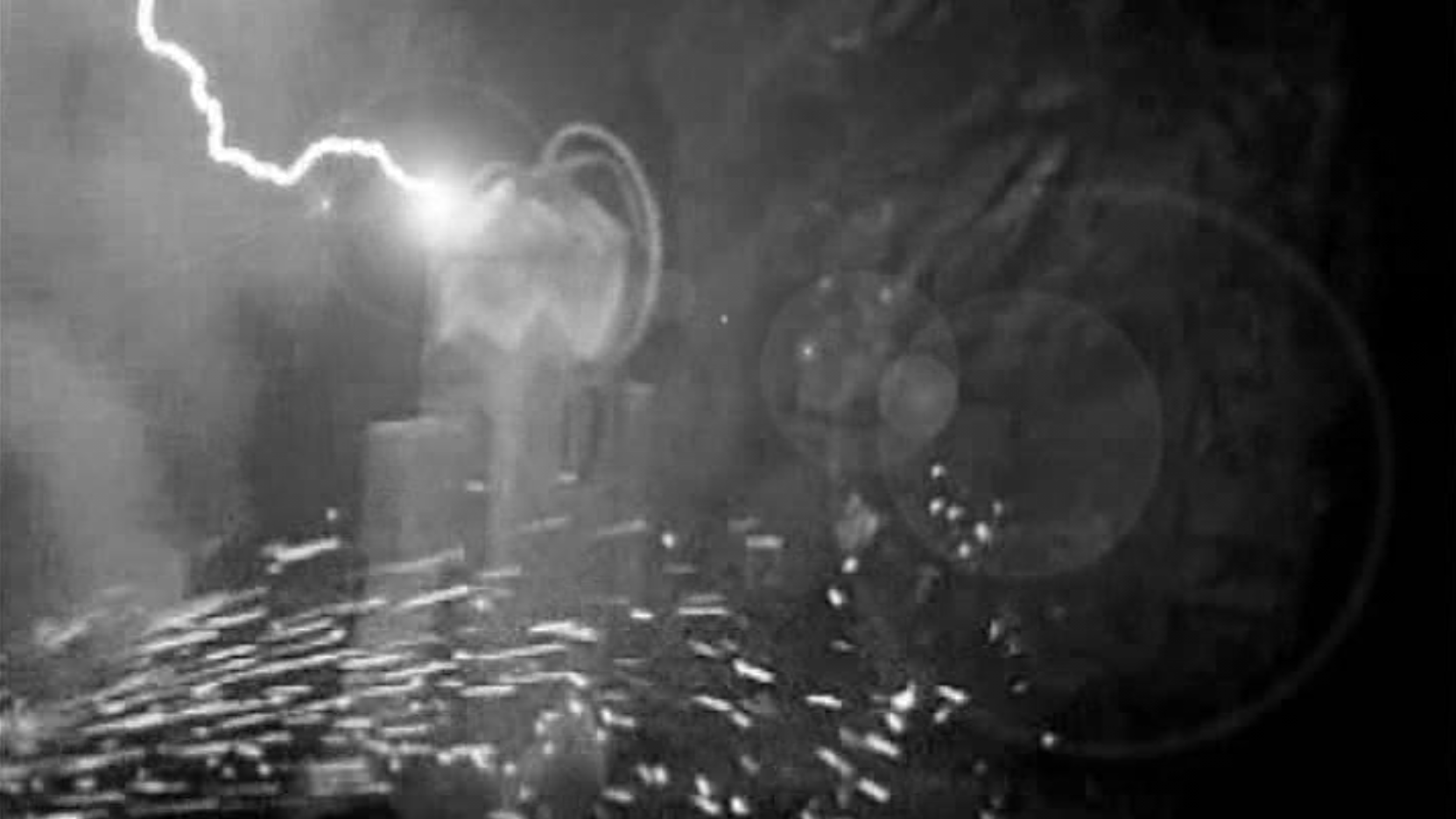
The versions presented are truly “remixed”: in addition to being edited for time, they have been reformatted for 16×9 widescreen instead of the original 4×3 fullscreen; some effects have been digitally sweetened (ray and lightning effects are added, sparks added to explosions, and so forth); and some shots have been moved around for pacing or to show off the models and other effects. One could easily refer to these as “Special Edition” serials, but few of Keyser’s adjustments are as obtrusive as George Lucas’s additions to the original Star Wars trilogy.

SR.lightning

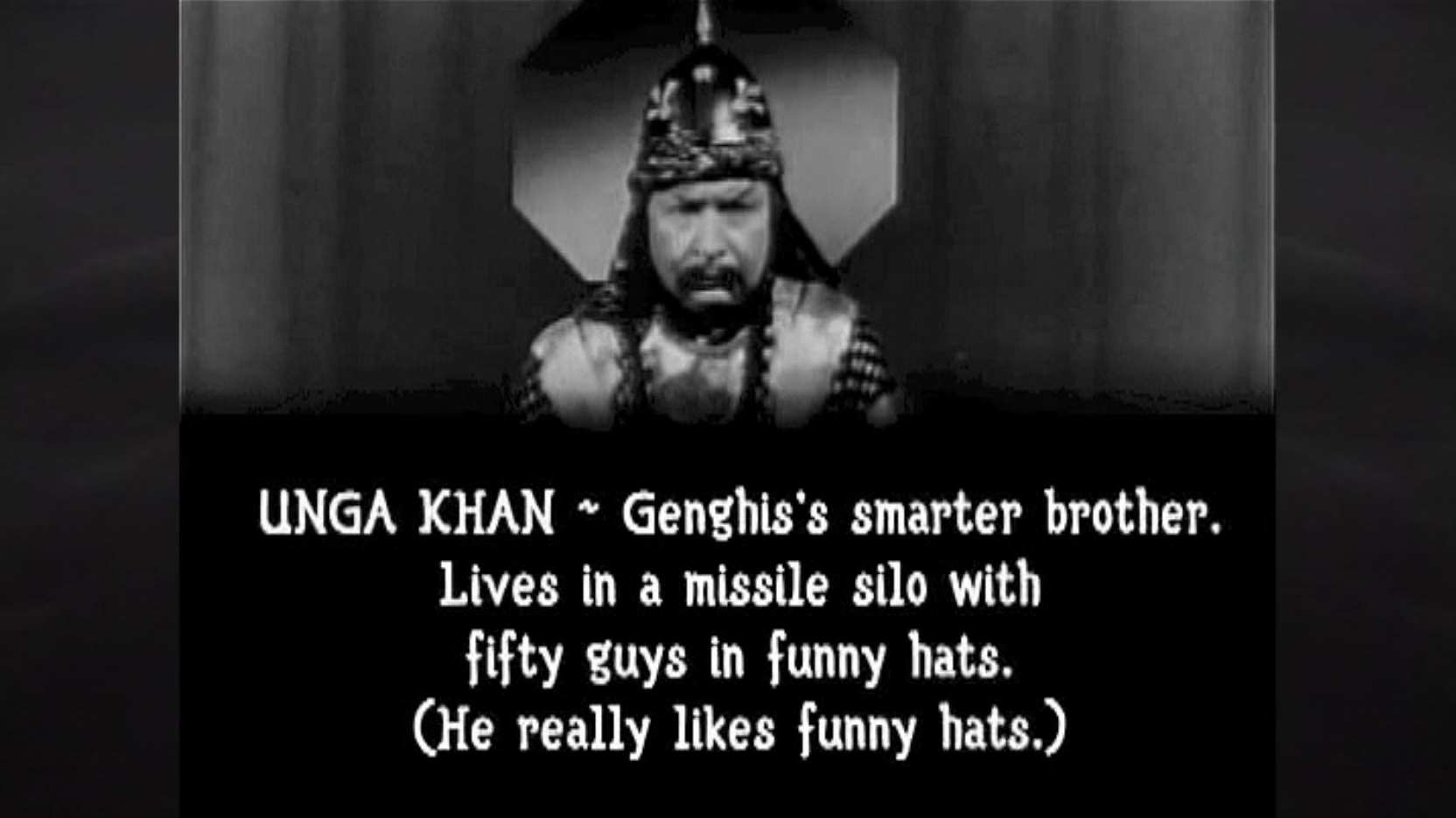
(It should also be noted that as ridiculous as both films are, the remixes are admirably straight-faced: there are no wacky sound effects or pop-ups added, and no Mystery Science Theater-styled riffs. The closest Keyser comes to making a joke of the material is a “Meet Our Characters” sequence preceding Undersea Kingdom that notes everyone’s propensity for funny hats. I can live with that.)

SR.character

For the most part, these changes don’t considerably alter the story, but they do move it along and gloss over some of the fine details (not unlike the feature-length cuts made by the studios). In fact, watching Keyser’s remixes made clear how much is left to the viewer’s imagination in modern editing: serials were frequently quite literal in explaining the plot and showing every step of an action, whether it be the villain setting a trap for the hero, the hero’s miraculous escape, or the villain getting in a car and driving away. To some extent that was a function of the serial’s need to fill time, and when poorly handled it would indeed smack of padding.

It was also, I think, natural to the procedural storytelling mode that serials often engaged in: whether obvious or subtle, the situation must be established if there is to be any suspense. We don’t realize that the hero is walking into a trap unless we see it set up, or at least have an establishing shot that clearly shows the threat. And while the audience might assume that a rickety bridge is going to pose a danger in an upcoming scene, serial writers were rarely above tipping off even the slowest viewers by having a character say something like, “Be careful on that bridge; it’s liable to collapse if there’s too much weight on it.”

I might go even further and speculate that it is the seeming solidity of cause and effect in classic serial editing that makes cliffhangers so susceptible to “cheats.” The danger to the hero is so firmly established in dialogue, in premonitory close-ups (on the lit fuse, on the stuck gas pedal, on the clock whose midnight stroke spells doom), and often in the scene as filmed, that his death seems inarguable. We saw him plunge from the cliffside or fall beneath a hail of bullets, and the only way he can be saved is to undo the peril, to rewind so that in the continuation fate takes a different path. The audience may cry “cheat!” if they are observant enough to notice the switch, but such reversals are, I’m starting to think, a necessary part of serial grammar and the ability to literally cheat death a superpower peculiar to the heroes of the form. (Or perhaps not so peculiar: when Superman reverses the Earth’s rotation in Richard Donner’s 1978 film, undoing the disaster that has killed Lois Lane, he is simply performing a large-scale version of what serial heroes had been doing on a small scale for decades.)

SR.juggernaut

Keyser (and other editors turning serials into features) swerves around that paradox by eliminating the cliffhangers, of course; each peril is now simply a beat in an action sequence. But the elimination of excess verbiage and travel is closer to the grammar of a modern action film, in which the audience is swept up in the heedless forward motion, and goes along with it because there is little time to take a breath and question it. I didn’t watch these films with a stopwatch, but my general impression is that the average shot length was shorter than in the original, again making the films feel more contemporary in their rhythm. (Consider how little down time there is in the Indiana Jones movies, particularly Temple of Doom, in comparison to the serials they draw from; at least Star Wars alternates its action sequences with moments of repose.)

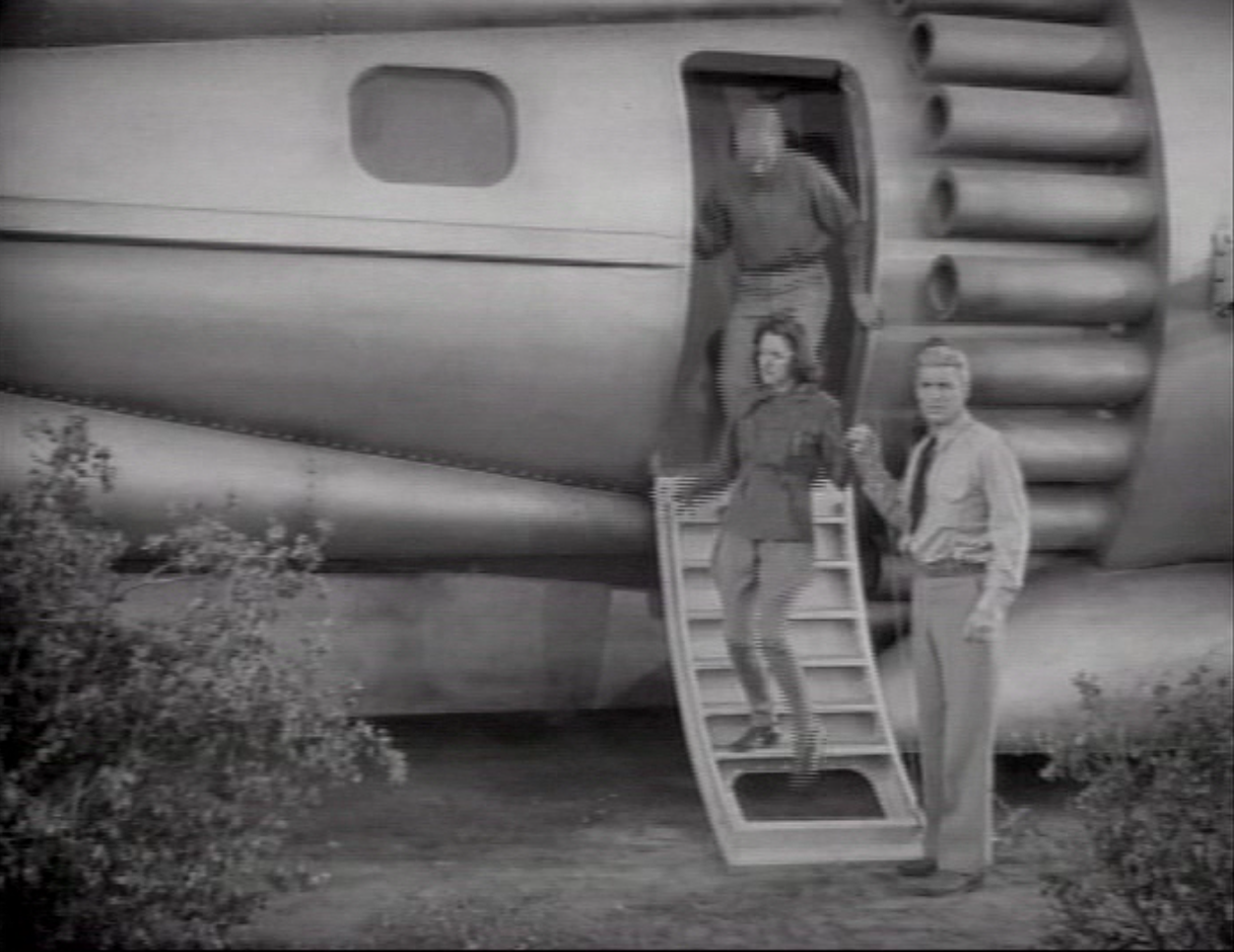
To get down to specifics, Radar Men From the Moon, as you may recall, features George Wallace as Commando Cody, whose signature costume is his rocket-powered flight suit. The same concept (and effects) had appeared in Republic’s earlier serial King of the Rocket Men, and would later inspire Dave Stevens’ character the Rocketeer. In Radar Men, Cody and his team are dispatched to the Moon (on a rocket ship also designed and built by Cody) by government agents who suspect that recent disasters on Earth are linked to atomic activity detected on the lunar surface. After a trip as comfortable and uneventful as a coast-to-coast passenger flight, they discover a dying lunar civilization that is indeed softening up Earth for invasion; the lunarians are already on Earth, advance scouts coordinating explosions and acts of sabotage with the assistance of Earth criminals!

SR.DalyGraber

In Serial Mix, Radar Men is cut to a brisk 64 minutes, with an emphasis on Cody’s flying suit and other gadgets and the adventure on the lunar surface. Excised almost entirely are several middle chapters focused on the lunarians’ Earth helpers, Daly and Graber, as they steal supplies or attack Cody’s laboratory. Those sequences are entirely mundane, and aren’t missed. Daly and Graber still appear, essential to the story as they are, but they get much less screen time.

Undersea Kingdom, at 77 minutes, is (to my mind) more successful in its adaptation. With a few exceptions, the story of Crash Corrigan’s journey to Atlantis is adapted closely but with transitions and redundant material elided (often with the use of wipes imitating those in the original). The scene in which Corrigan is forced to take part in gladiatorial combat and wins the loyalty of fellow prisoner Moloch is skipped, as is the scene in which Corrigan saves the life of Atlantean high priest Sharad, earning him an invitation to lead the Atlantean army. The comic relief subplot with Smiley Burnette is omitted entirely (and since his scenes were shot and included after the fact, and his character doesn’t interact with Corrigan or the others at all, it’s an easy decision to make and takes nothing away from the main story).

SR.chariot

As one of a few special features on the disc, Keyser narrates “Remixing the Classics,” in which he describes his love of the serials and their effects and describes the process of editing them to shorter length. He points out some of the enhancements he made to the special effects, with before and after shots, and discusses the challenge of finding appropriate places to cut while preserving necessary plot information. This feature was of great interest to me and further illuminated Keyser’s approach.

SR.viewer1

Before and after: Keyser replaced a view of the lunar surface with a shot of the lunar city

Before and after: Keyser replaced a view of the lunar surface with a shot of the lunar city

Keyser also proves to be an engaging and knowledgeable host and storyteller; it’s clear that Serial Remix is a labor of love, and in addition to looking at the choices involved in editing, he takes a broader look at the conditions under which serials were made. Often rushed (he points out that Undersea Kingdom was made in 25 days) and made for low budgets, the serials naturally fell back on recycling props (such as the electrical devices built by Kenneth Strickfaden and used for set dressing in hundreds of films), costumes, story lines, and locations (such as Bronson Canyon near Hollywood). Keyser has no illusions as to the great artistic merit of the serials (I’ll accept his judgment that The Phantom Empire is “goofy,” but “bad”? No way!) but his enthusiasm is nonetheless one I share. Seen as one fan’s tribute to the boy’s-adventure spirit of the serials, Serial Remix is a very enjoyable and polished package.

Kenneth Strickfaden shown adjusting one of his electrical props

Kenneth Strickfaden shown adjusting one of his electrical props

October 31: Spooky Movie Round-Up

BasketCase3

As I did last year, I kept track of all the movies I watched this October, with the goal of watching at least 31. Unlike last year, I managed to do it: yes, with a little planning and a lot of gumption I was able to sit and stare at various screens for a total of roughly forty-eight hours over the course of a month. No, hold your applause . . . sit down . . . it really makes me uncomfortable to have the word “hero” bandied about so lightly–but between you and me, no wonder I have such a feeling of accomplishment. I probably could have fit a few more in, actually, but after getting to 31 I still had a few days left until Halloween, and I decided to just enjoy the last couple of days with my family (and the World Series).

I’m pleased at the diversity of the films on my list, including several from other countries and examples from each decade since the 1950s, and a few classics I hadn’t gotten to until now. Most of them were first-time viewings for me (but how could I resist a double feature of Alien and Aliens on the big screen?).

So here’s the list in the order I watched, with director and year of release, as well as a helpful key to point out some recurring themes and motifs:

1. The Fog (John Carpenter, 1980)** ggg
2. Phantasm (Don Coscarelli, 1979)** g
3. The Hunger (Tony Scott, 1983) m, v
4. House aka Hausu (Nobuhiku Ôbayashi, 1977) m, wx
5. Baba Yaga aka Kiss Me, Kill Me aka The Devil Watch (Corrado Farina, 1973) cam, wx
6. WNUF Halloween Special (Chris LaMartina et al, 2013) cam
7. The Return of the Living Dead (Dan O’Bannon, 1985) z
8. What We Do in the Shadows (Jemaine Clement, Taika Waititi, 2014)** cam, v, ww, wx, z
9. Frankenhooker (Frank Henenlotter, 1990) md, z
10. Basket Case 2 (Frank Henenlotter, 1990) c, t
11. Alien (Ridley Scott, 1979)*, ** r
12. Aliens (James Cameron, 1986)*, ** pl, r
13. Peeping Tom (Michael Powell, 1960) cam
14. Goke, Body Snatcher From Hell (Hajime Sato, 1968) vs
15. The Living Skeleton (Hiroshi Matsuno, 1968) md
16. Ship of Monsters (Rogelio A. González, 1960) m, r, vsx
17. Planet of the Vampires (Mario Bava, 1965) vs
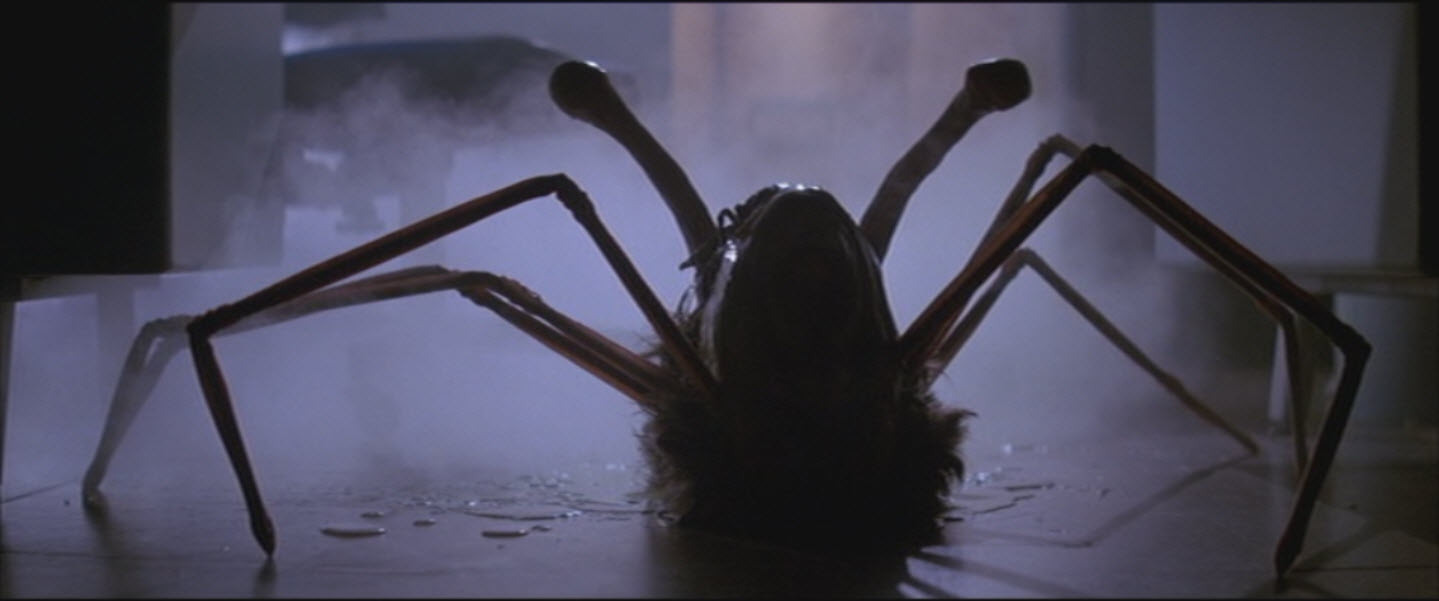
18. The Spider Labyrinth (Gianfranco Giagni, 1988) ww
19. The Horror of Party Beach (Del Tenney, 1964) m
20. Genocide (Kazui Nihonmatsu, 1968) md
21. Basket Case 3 (Frank Henenlotter, 1991) c, m, pl, t
22. The Howling (Joe Dante, 1981)** cam, ww
23. Attack of the Puppet People (Bert I. Gordon, 1958) m
24. Re-Animator (Stuart Gordon, 1985)* a, hpl, md, z
25. Bride of Re-Animator (Brian Yuzna, 1989) a, md, w, z
26. Crimson Peak (Guillermo del Toro, 2015)** ggg, w
27. Beyond Re-Animator (Brian Yuzna, 2003) a, md, z
28. Dawn of the Dead (George A. Romero, 1978) cam, z
29. Day of the Dead (George A. Romero, 1985)** md, z
30. Zombieland (Ruben Fleischer, 2009) z
31. The Thing (John Carpenter, 1982)** md

* rewatch
** seen in theater

a: Arkham setting
c: monstrous or supernatural child
cam: camera/photography
g: gateway or portal to otherworldly realm opened
ggg: g-g-g-ghosts!
hpl: H. P. Lovecraft adaptation
m: musical number
md: mad doctor/scientist
pl: power lifter
r: robot/android
t: twins
v: vampires
vs: space vampires
vsx: sexy space vampires
w: character in wheelchair
ww: werewolf/animal transformation
wx: witch
z: zombies/re-animated/walking dead

MKBC2family

So this list is perhaps more representative of my tastes than last year’s, reflecting my relatively larger interest in sci-fi, gothic, and erotic horror than, say, slashers. What can I say? I like the weird stuff. (On the other hand, I don’t consider myself a huge fan of zombies, but I sure spent a lot of time with them this month; gotta catch up with the classics sooner or later, I guess.)

Yesterday I posted an article over at The Solute on the brief wave of monster solidarity illustrated by Basket Case 2 and 3 and some other movies from the early ’90s, and tied it together with some of the other movies I watched this month. Check it out when you have time for ca. 3000 words about monsters.

In the mean time, here’s my rating of the movies on this list:

the-thing1

Best Movie: Well, Alien is pretty damn good, as is Re-Animator, but since those were rewatches I’m going to exclude them from consideration. Maybe it’s just fresh on my mind, but John Carpenter’s The Thing, based on the John W. Campbell story “Who Goes There?” (also the source material for 1951’s The Thing From Another World, which I haven’t seen) delivered almost everything you could want in a Halloween movie: suspense, scares, memorable characters, and crazy, inventive special effects in an eerie, claustrophobic setting. I say “almost” because, being about an all-male crew of researchers in an Antarctic base, it’s a complete sausage party (and it’s clear how much it owes to Alien after seeing both movies in close succession). Still, I have no excuse for not having seen this sooner, but it was worth waiting to experience it on the big screen.

HoPB

Worst Movie: I’d have to single out The Horror of Party Beach, which Stephen King memorably described as “a wet fart of a movie.” Cynically cashing in on the beach party and horror genres by combining them, it does at least have a good (if slightly silly) monster at its center, and the premise and characters suggest a better movie lurking within. The movie’s biggest problem is its indifference to tone: I don’t object to movies that combine comedy and horror, or switch gears midway through, but it takes some control on the part of the filmmakers, and Party Beach is surprisingly gruesome for a film that also includes one-line cutaway gags and a voodoo-obsessed black housekeeper as comic relief.

Scariest Movie: There have been a lot of discussions in The Dissolve’s Facebook group and elsewhere about how important scares are in horror movies: is a horror movie that doesn’t scare a failure? Is it even necessary to try to be scary if it otherwise falls within the genre? Is Crimson Peak underperforming at the box office because of a perception that it isn’t scary? (For the record, I found Crimson Peak intense enough for me and I enjoyed it very much, but it does build toward its scares gradually.) As I’ve written about before, I didn’t like scary movies as a kid, but now I watch and enjoy them, so if nothing else I’m very aware of how subjective scariness is and how much it depends on the viewer’s state of mind: is it fair to judge a movie that fails to scare a jaded horror movie veteran who sits, arms folded, and dares the movie to throw its worst at him? Or does a movie get credit for being randomly discovered on TV by an impressionable kid at the perfect age to have its images permanently branded on his psyche?

Personally, if a movie scares me now, I’m willing to give it credit, because it must be doing something right, even if all the evidence points to the opposite: if it’s scary, a story that doesn’t make sense follows “nightmare logic;” special effects that are obviously fake can still be creepily suggestive of “wrongness,” etc. If it’s not scary, all those things simply become laughable, and a movie that doesn’t scare had better have something else going in terms of plot, theme, or production.

Ultimately, I think horror movies are scarier when they reveal something dark about human nature (the ghosts in Crimson Peak are good for some tense moments, but the actual scary parts are the moments that focus on its heroine as she becomes aware of the net closing in around her, trapped in a house with murderers and conscious that they know she knows: that is a scary situation!); that may be why I’m less interested in films that are purely about human suffering, and why the films I gravitate to are more about fantastical concepts. Having said that, Day of the Dead is probably the best at combing tension, gore, and a bleak view of humanity that stuck with me, even with an ending that isn’t quite as dark as it could be.

Least Scary Movie: A 1958 film called Attack of the Puppet People from low-budget special-effects impresario Bert I. Gordon doesn’t sound like it would be scary, and it’s not. But it sounds like it would at least try to be scary, and it doesn’t even do that. There is very little “attacking” of any kind in this tale of a sad, lonely old doll-maker who uses a special device to shrink people to doll-size so that they can’t leave him. That said, it’s not a bad film, and there’s something of the Universal monsters’ pathos in the doll-maker’s self-justifying neediness. His wheedling insistence that if his victims would just accept their fate and let him take care of them, everything would be fine is reminiscent of a pedophile or an emotional abuser.

MKbride

Goriest Movie: Day of the Dead definitely doesn’t skimp on the blood and guts, something it has in common with all of the zombie/re-animation movies I saw this month. But I’m going to give Bride of Re-Animator the edge for its over-the-top climax.

Funniest Movie: I like my horror on the comic side, whether it’s the gonzo slapstick of Frank Henenlotter’s movies or the hangout vibe of Zombieland, but What We Do in the Shadows, a This is Spinal Tap-style mockumentary that follows a clan of vampires in New Zealand, was not only the funniest movie I saw this month but probably the funniest movie I’ve seen all year.

ShipofMonsters

Most Delightful Surprise: Ship of Monsters (La Nave de los Monstruos) was just a random YouTube recommendation, but it turned out to be a fun mash-up of sci-fi, monster movie, and musical comedy, just the kind of thing I like. It begins with two explorers, members of the all-female race that populates Venus, collecting male specimens from different planets to take back to their home in hopes of repopulating. Landing on Earth in Mexico, they encounter a singing vaquero who teaches them about love, something known only on Earth. Of course there are twists and turns, and the other specimens (a diverse crew of imaginative, if cheap-looking, space monsters) escape on Earth to wreak havoc. It sounds silly, and it is, very. This is the kind of movie where a robot falls in love with a jukebox: based on that, you should be able to tell whether you want to see it or not.

The One (Actually Two) That Got Away: I took advantage of several screenings that were part of the October at the Oldtown horror series this year, but I was spoiled for choice as the Palace Theatre was also offering special showings. By my count, there were at least twenty films offered at one- or two-day special screenings this month in my area, and I made it to about half of them. So while I didn’t see everything that was on offer, I attended as many shows as I could. The event I really regretted missing was a double feature starring the late Christopher Lee: Horror of Dracula (1958) and The Wicker Man (1973). Unfortunately, my schedule just didn’t allow it. Oh well, there’s always next year.

Until then, Happy Halloween, and DON’T TURN OUT THE LIGHTS!

The Short Horrors of Robert E. Howard

wpid-20151003_155910.jpg

Although in the popular imagination, Robert E. Howard (1906-1936) continues to be identified as the creator of Conan the Barbarian and a pillar of the sword and sorcery tradition, readers who have explored beyond Conan (or approached Howard from a different avenue, as I did) know that the prolific pulp writer also frequently indulged in horror in a variety of styles. Indeed, horror is a critical ingredient even of Howard’s heroic fantasy, and almost all of his work is streaked with terror.

Consider the foes, both monstrous and supernatural, that Conan and Howard’s other he-man heroes faced in their adventures (the gray ape that silently stalks Conan in a night-black dungeon in The Hour of the Dragon is typical, and it goes without saying that magic in Howard’s stories is rarely benevolent), and it becomes clear why it can be difficult to sort Howard’s “horror” tales from his other output, and why there is so little overlap between different collections.

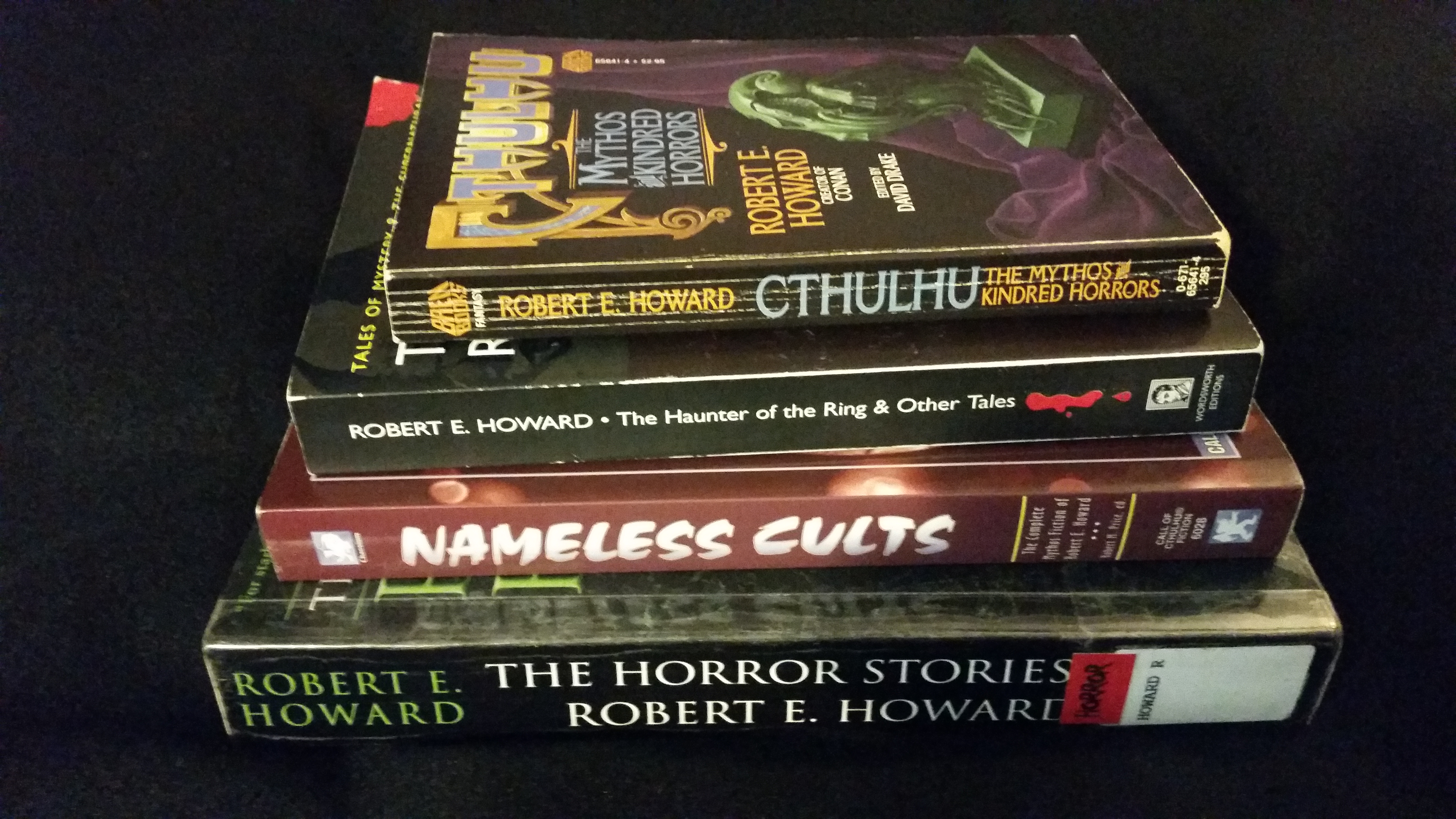
This article focuses on four different paperback collections of Howard’s horror stories, comparing their contents and taking note of different editorial priorities. They are far from the only collections of Howard’s work, and no slight is meant against (for example) the pioneering paperback collections edited by Glenn Lord. The editions under discussion are, however, either in my possession or readily available, and each is different enough to warrant investigation. (Complete contents of each book are listed at the end of the article.)

My first encounter with Howard’s fiction was through Baen Books’ Cthulhu: The Mythos and Kindred Horrors, edited by David Drake. As I have written elsewhere, I actually had a hard time tracking down H. P. Lovecraft’s fiction when I first heard about it as a budding middle school fantasy enthusiast. His “Cthulhu Mythos” had for me at the time the same enchanted, mysterious quality that the Necronomicon had for his characters: something about which obscure references were dropped but which remained tantalizingly out of reach. The Mythos and Kindred Horrors was thus a welcome discovery, and the short story “The Black Stone” which leads off the book was the first proper Mythos story I was able to get my hands on.

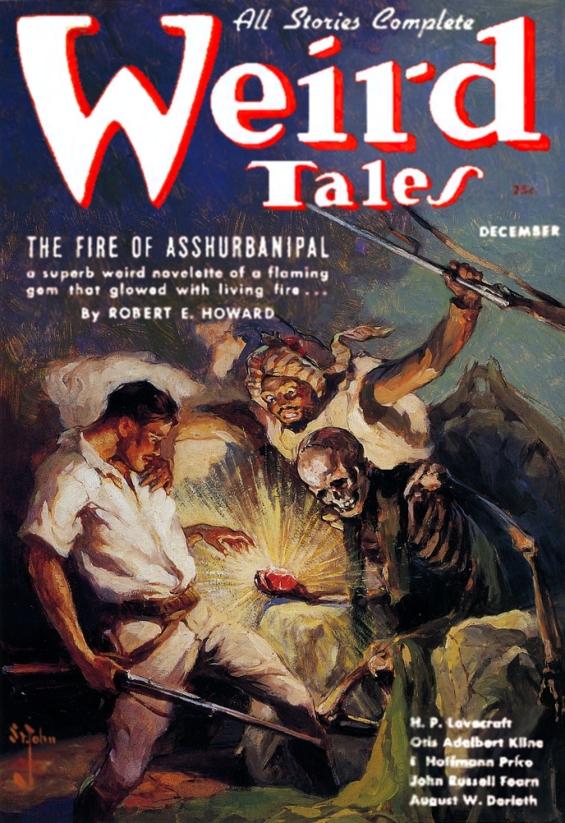
Although short, The Mythos and Kindred Horrors remains a fine introduction to Howard’s macabre imagination: as promised, it contains a number of significant Mythos stories, including “The Black Stone,” “The Fire of Asshurbanipal,” and “The Thing on the Roof,” but also examples of his dark, violent fantasy (“The Valley of the Worm,” “People of the Dark,” and “Worms of the Earth”) and even a weird Western (“Old Garfield’s Heart”).

The final story, “Pigeons From Hell,” is a truly terrifying slice of Southern gothic, and like the greatest horror stories earns its scares as much from the depths of moral depravity it displays as from atmosphere or shocks (Stephen King named it “one of the finest horror stories of our century” in Danse Macabre). “Pigeons From Hell” was adapted into a 1961 episode of the Boris Karloff-hosted anthology show Thriller, an adaptation that, while effective, shows a clear debt to Psycho, released the previous year. Resetting it in the modern South made the horror more immediate, as if the two guys from Route 66 had stumbled onto the Bates Motel, but the abbreviated runtime strips out the racial element that gives the original story so much of its charge, even removing the final twist.

Pigeons.title

Another volume, and one that specifically includes only Howard’s Cthulhoid fiction (so no “Pigeons From Hell”), is Nameless Cults, edited by Robert M. Price. Presented by Chaosium, publisher of the Call of Cthulhu role-playing game, Nameless Cults is part of the Call of Cthulhu Fiction series: Chaosium publishes numerous volumes of fiction to supplement its game and to present the works of Lovecraft, other members of his circle, and contemporary authors in accessible editions; some are organized around a single subject or a specific deity or aspect of the Cthulhu Mythos, others by author, as in the case of Nameless Cults.

The title refers to one of Howard’s own contributions to the Mythos, the “Black Book” Unaussprechlichen Kulten by Friedrich Von Junzt, the author’s answer to Lovecraft’s forbidden tome the Necronomicon. Embroidering on his friend’s growing set of references, Howard added Von Junzt and his book, along with such characters as the “mad poet” Justin Geoffrey and the Great Old One Gol-Goroth, to the Mythos. (Howard’s many pre-historic speculations on Atlantis, Valusia, and other aspects of Conan’s “Hyborian Age” would also be swept into the Mythos by Lovecraft and others in a pattern of mutual borrowing, so one could as easily refer to a “Weird Tales Mythos” as use the more familiar term “Cthulhu Mythos,” which of course was a label added only later by Lovecraft’s literary executor August Derleth.)

Price’s editorial remarks lend extra value to Nameless Cults; in addition to providing detailed information about the provenance of the stories included (some of which are fragments that have been finished by others), Price puts them into context as both a scholar of both Lovecraft and a theologian (Price has edited many of Chaosium’s books, as well as publishing books and articles on Christianity and editing Lovecraftian journals such as Crypt of Cthulhu). The most important insight Price brings is his consideration of the Mythos as a loose collection of themes and references rather than a continuity that must be reconciled and kept free of contradictions (as with fellow scholar S. T. Joshi, much of Price’s work has involved debunking Derleth’s spurious claims on behalf of Lovecraft and his creations, but in general Price’s perspective is more sympathetic to a multi-faceted rather than a purist approach). It’s this freedom that allows writers of different temperaments to make use of the Mythos and gives it the feeling of an actual mythology, scattered and secret but nonetheless organic.

It’s hard to think of a writer more different in temperament from H. P. Lovecraft than Robert E. Howard, at least as revealed in their stories. Lovecraft’s protagonists, to the extent that they are developed as characters at all, tend to be inward-looking scholars or antiquarians, drawn inexorably toward doom by curiosity or forces they do not understand. (An exception is Professor Henry Armitage, the hero of “The Dunwich Horror,” who is able to take charge and push back the demonic entities seeking entrance to our world.) Howard, however, puts the same kind of fearless, action-oriented warriors who populate his other stories into his horror tales (whether in a historical or fantasy setting or the contemporary world, the defining characteristics of Howard’s heroes are hyper-competence and a willingness to take action for what they believe is right, regardless of the cost–still the formula for an action hero today).

The contrast is amusingly illustrated in “The Challenge From Beyond,” a curious multi-author collaboration included in the Chaosium volume. At the end of Lovecraft’s chapter, the protagonist finds that he has been–horror of horrors!–transformed into “the loathsome, pale-grey bulk” of an alien centipede, and faints dead away: a typical Lovecraftian ending. As Howard picks up the thread in the next chapter, however, the hero’s perspective has changed and he begins to revel in the power of his new form, as “fear and revulsion were drowned in the excitement of titanic adventure”:

What was his former body but a cloak, eventually to be cast off at death anyway? He had no sentimental illusions about the life from which he had been exiled. What had it ever given him save toil, poverty, continual frustration and repression? If this life before him offered no more, at least it offered no less. Intuition told him it offered more–much more.

In Howardian fashion, “The Challenge From Beyond” changes from a story of horror to one of triumph, as the protagonist uses the strength of his new form to conquer the aliens and make himself their king, “a Conan among centipedes” in L. Sprague de Camp’s memorable phrase.

The physical bravery and strength that Howard considered so essential to being a hero (or a man, at that) actually tends to prop up the horror effects in his Cthulhu stories, however. The darkness is all the more terrifying when even such specimens cannot hope to defeat it; at best, victory means simply surviving. (It is unsurprising that Lovecraft’s “The Dunwich Horror” was a favorite of Howard’s, and its formula of investigation and action would prove a useful model for his occult detective fiction. It’s also, not coincidentally, the Lovecraft story that most resembles a Call of Cthulhu game scenario.)

WeirdTalesDecember1936

The Haunter of the Ring & Other Tales, edited by M. J. Elliott as part of Wordsworth Editions’ “Tales of Mystery & The Supernatural” series, includes the best-known of Howard’s Cthulhu Mythos stories but also casts a wide net, including other horror and dark fantasy stories that cover a variety of subject matters and styles. Several of these stories, such as “In the Forest of Villefore” and “Wolfshead” (part of a werewolf cycle), are among the author’s earliest published works and show a still-raw talent. The volume also shows the range of genres that Howard explored in search of outlets for publication and introduces some of the author’s recurring characters: occult investigator John Kirowan and detective Steve Harrison, for example.

It also provides examples of Howard borrowing from his literary forebears and contemporaries: one of my favorites, the short novel “Skull-Face” (included in both the Chaosium and Wordsworth editions), is an entertaining pastiche of Sax Rohmer’s Fu Manchu novels with the fantasy elements dialed up. Instead of the Chinese doctor, the titular villain is a survivor from the ancient past with scientific knowledge so advanced that it might as well be magic. (The hero of “Skull-Face,” Stephen Costigan, is not to be confused with another Howard series hero, Sailor Steve Costigan, but is an example of what Elliott describes as Howard’s “inexplicable fondness for certain character names.”)

If “Skull-Face” is Howard’s version of Rohmer, reading a number of Howard’s stories in close succession makes clearer the influence of other authors, even as in the best of his stories Howard’s own personality shines through. Even beyond its Mythos trappings, with its antiquarian protagonist and dreamy atmosphere “The Black Stone” is clearly modeled after Lovecraft, as Howard acknowledged in his own letters. Similarly, “The Dream Snake” and “The Fearsome Touch of Death” are indebted to Ambrose Bierce, with the implication that it is internal fears, not external threats, that are most destructive.

As Price points out in his introduction to Nameless Cults, the author who influenced Howard’s horror output most strongly besides Lovecraft was the Welsh Arthur Machen. In a number of Howard’s stories touching on reincarnation or racial memory and characterizing the “Little People” of myth as monstrous survivors of a pre-human race, “he has gone back to one of Lovecraft’s own sources, Arthur Machen, and remixed the Mythos, turning up the volume on the Machen track.”

Indeed, the recurring theme that unites both the stories of Conan, Pictish king Bran Mak Morn, and flashes of racial memory with his stories of the Cthulhu Mythos is the long shadow cast by the distant, prehistoric past, “Lurking memories of the ages when dawns were young and men struggled with forces which were not of men” (in the words of “The Little People”). Just as it was for Edgar Rice Burroughs, another important influence on Howard, that struggle against wild nature and subhuman savagery was a defining one for both character and narrative, and as with Burroughs it sometimes manifested in Howard’s work as a racial scheme in which tall, white-skinned, “clean-limbed” Aryans (a term borrowed from the anthropology of the time, but which is particularly regrettable with modern hindsight) swept Westward throughout Europe (and later America), routing the short, swarthy tribes that became the basis for legends of goblins and the hidden races of Machen, Lovecraft, and others. (But as Price points out, Howard was able to have it both ways by making the underdog Picts into heroes pitted against an even older, more secretive and less human race, as in “Worms of the Earth.”)

In these stories and others, the modern reader runs headlong into Howard’s sometimes objectionable racial characterizations: stories set in the deep South and Southwest include epithets for black and Mexican characters, sometimes in dialogue, but sometimes as part of the narration or from the viewpoints of characters who are supposed to be sympathetic. As in my discussion of representation in the serials from the same time period, it is pointless to pretend that such attitudes and words weren’t part of the world of at least some in Howard’s time, and pointing out parts of Howard’s work that haven’t aged well need not imply a disavowal of the strong parts of his fiction.

And perhaps it is simply my modern perspective, but I think it is telling that in general Howard’s strongest stories take a more nuanced point of view, with characters of all races showing both good and bad qualities. As Rusty Burke points out in his introduction to Del Rey’s The Horror Stories of Robert E. Howard, the interaction of common racial prejudices in Howard’s native Texas with the author’s natural sympathy for the underdog and belief that ultimately a man is what he makes of himself led to some complex characterizations. The flip side of his often-stated distrust of civilization and its stultifying effects, Howard showed great admiration for native peoples who (in his admittedly romanticized view) lived close to nature; one of his wisest characters was the African “medicine man” N’Longa, friend and advisor to Solomon Kane.

ChamberofChills2

The Horror Stories of Robert E. Howard is the longest (over 520 pages) and most comprehensive collection at my disposal, and yet even it omits stories that may be found in the others (“Skull-Face” is the most notable absence, possibly left out because of its length). It does, however, cover the broadest range of Howard’s output, including Cthulhoid horror, sword and sorcery, regional horror (Western and Southern, including “Pigeons From Hell”), and contemporary adventure stories, as well as samples of Howard’s seafaring, boxing, and detective fiction.

The Del Rey volume also includes four unfinished stories, grouped as “Miscellanea,” and there is more bibliographic detail than in either the Baen or Wordsworth volumes, listing first publication (or manuscript source in the case of posthumously discovered stories) and detailed notes on changes in spelling or punctuation made by the editor.

It is also the only volume to include more than a few of Howard’s numerous poems. Like his fellow Weird Tales contributors H. P. Lovecraft and Clark Ashton Smith, Howard was a prolific versifier, and like them he remained largely conservative in the face of modernism, sticking to rhyming, metric poems. Most of his poetry has a rough-hewn, deliberately “barbaric” quality, often cast in multi-stanza ballad forms with rhyming couplets: appropriate for his subjects, usually as dark and gruesome as those he favored in his stories. Although it is unlikely that Howard’s poems will ever be popular outside of weird fiction (and heavy metal) fandom, they contain some vivid and concise images, such as the following lines in “Dead Man’s Hate”:

There was no sound on Adam Brand but his brow was cold and damp,
For the fear of death had blown out his life as a witch blows out a lamp.

It is often treacherous to psychoanalyze a writer based on their fiction, but to an extent horror writers invite it: the best are not simply calculating what they think will scare their audience, but are delving into and externalizing their own fears. That’s not to say that horror writers necessarily believe in what they’re writing (crackpot theories that Lovecraft possessed secret knowledge of real-life Cthulhu cults notwithstanding), but their choices can be revealing.

Robert E. Howard’s own tragic story (he committed suicide at age 30 after his mother slipped into her final coma) is at odds with the implacable supermen he created, but even in his stories he often hinted that death was preferable to a life of pain or defeat. Elliott singles out a passage in “Skull-Face” in which recovering opium addict Stephen Costigan ponders drowning himself, “that I should soon attain that Ultimate Ocean which lies beyond all dreams.”

The stoicism with which Costigan considers ending his life is of a piece with the pragmatism and toughness of most of Howard’s characters, but there is another side to Howard that tends to be overlooked, the dreamy, “feminine” side that gave us the “mad poet” Justin Geoffrey. Geoffrey is often seen as a portrait of Howard’s friend and correspondent H. P. Lovecraft, and he does resemble Lovecraft’s typical protagonists, often so removed from this world that their weird art or poetry are perfect channels for the “outside” influences of the Cthulhu Mythos to find their way in. Nevertheless, if, as Lovecraft himself argued, “the real secret [of Howard’s characters] is that he himself is in every one of them,” then Geoffrey is certainly a facet of Howard’s personality. Robert M. Price goes further, saying of Geoffrey,

Here is Howard with a vengeance, the real Howard in a far deeper sense than either Balthus [“a realistic depiction of Howard compared with Conan, the idealized version”] or Steve Costigan. Justin Geoffrey is the archetypal Byronic artist too sensitive for this mortal coil, a frail human funnel for the whirlwinds sweeping down from between the stars.

Justin Geoffrey would die “screaming in a madhouse,” a fate that Howard possibly predicted for himself, and to which he found suicide preferable.

An even more revealing self-portrait can be found in the unfinished story “Spectres in the Dark,” included in The Horror Stories of Robert E. Howard. In this fragment, unseen forces hiding in the shadows drive otherwise normal individuals to commit murder. One such unwitting killer is Clement Van Dorn, an artist who finds himself accused of killing his mentor. Visiting him in jail, Van Dorn’s friends find him in a pathetic state:

Clement nodded but there was no spark of hope in his eyes, only a bleak and baffled despair. He was not suited to cope with the rough phases of life, which until now he had never encountered. A weakling, morally and physically, he was learning in a hard school that savage fact of biology–that only the strong survive.

Suddenly Joan held out her arms to him, her mothering instinct which all women have touched to the quick by his helplessness. Like a lost child he threw himself on his knees before her, laid his head in her lap, his frail body racked with great sobs as she stroked his hair, whispering gently to him–like a mother to her child. His hands sought hers and held them as if they were his hope of salvation. The poor devil; he had no place in this rough world; he was made to be mothered and cared for by women–like so many others of his kind.

That Robert E. Howard’s career was cut short by suicide, just as the author was developing his voice and was about to see his work published outside of the pulps, is a loss for readers. That he felt so compelled to end his own life was a tragedy for him. Perhaps the most fitting conclusion is in the words of David Drake, editor of The Mythos and Kindred Horrors, among the first words about Howard that I encountered:

Robert E. Howard had the personal misfortune to spend most of his life in a place where black hatreds ruled everyone; where currents of violence so closely underlay the surface of ordinary existence that a snub, a woman, or the ethnic background of a chance acquaintance was apt to bring a lethal outburst; where a man’s only path to respect was through strength and his willingness to use that strength.

Drake is referring, of course, not to West Texas, where Howard lived, nor even the fictional Hyboria that Howard set down on paper, but the interior of Howard’s mind, “a grim, dark place,” from which writing tales of adventure, fantasy, and even horror allowed Howard to escape . . . for a time.

Appendix: Contents of editions under discussion (titles in italic text indicate poems)

Cthulhu: The Mythos and Kindred Horrors
Edited and with an introduction by David Drake (Baen Books, 1987)

Arkham
The Black Stone
The Fire of Asshurbanipal
The Thing on the Roof
Dig Me No Grave
Silence Falls On Mecca’s Walls
The Valley of the Worm
The Shadow of the Beast
Old Garfield’s Heart
People of the Dark
Worms of the Earth
Pigeons From Hell
An Open Window

Nameless Cults: The Cthulhu Mythos Fiction of Robert E. Howard
Edited and Introduced by Robert M. Price (Chaosium Call of Cthulhu Fiction, 2001)

The Black Stone
Worms of the Earth
The Little People
People of the Dark
The Children of the Night
The Thing on the Roof
The Abbey (w/ C. J. Henderson)
The Fire of Asshurbanipal
The Door to the World (w/ Joseph S. Pulver)
The Hoofed Thing
Dig Me No Grave
The House in the Oaks (w/ August Derleth)
The Black Bear Bites
The Shadow Kingdom
The Gods of Bal-Sagoth
Skull-Face
Black Eons (w/ Robert M. Price)
The Challenge from Beyond (w/ C. L. Moore, A. Merritt, H. P. Lovecraft, and Frank Belknap Long)

The Haunter of the Ring & Other Tales
Compiled and Introduced by M. J. Elliott (Wordsworth Editions, Tales of Mystery & The Supernatural, 2008)

In the Forest of Villefore
Wolfshead
The Dream Snake
The Hyena
Sea Curse
Skull-Face
The Fearsome Touch of Death
The Children of the Night
The Black Stone
The Thing on the Roof
The Horror from the Mound
People of the Dark
The Cairn on the Headland
Black Talons
Fangs of Gold
Names in the Black Book
The Haunter of the Ring
Graveyard Rats
Black Wind Blowing
The Fire of Asshurbanipal
Pigeons from Hell

The Horror Stories of Robert E. Howard
Introduction by Rusty Burke; Illustrated by Greg Staples (Del Rey, 2008)

In the Forest of Villefère
A Song of the Werewolf Folk
Wolfshead
Up, John Kane!
Remembrance
The Dream Snake
Sea Curse
The Moor Ghost
Moon Mockery
The Little People
Dead Man’s Hate
The Tavern
Rattle of Bones
The Fear That Follows
The Spirit of Tom Molyneaux
Casonetto’s Last Song
The Touch of Death
Out of the Deep
A Legend of Faring Town
Restless Waters
The Shadow of the Beast
The Dead Slaver’s Tale
Dermod’s Bane
The Hills of the Dead
Dig Me No Grave
The Song of a Mad Minstrel
The Children of the Night
Musings
The Black Stone
The Thing on the Roof
The Dweller in Dark Valley
The Horror from the Mound
A Dull Sound as of Knocking
People of the Dark
Delenda Est
The Cairn on the Headland
Worms of the Earth
The Symbol
The Valley of the Lost
The Hoofed Thing
The Noseless Horror
The Dwellers Under the Tomb
An Open Window
The House of Arabu
The Man on the Ground
Old Garfield’s Heart
Kelly the Conjure-Man
Black Canaan
To a Woman
One Who Comes at Eventide
The Haunter of the Ring
Pigeons from Hell
The Dead Remember
The Fire of Asshurbanipal
Fragment
Which Will Scarcely Be Understood

Miscellanea:
Golnor the Ape
Spectres in the Dark
The House
Untitled Fragment

Short Fiction at Defenestration

FG.Aura

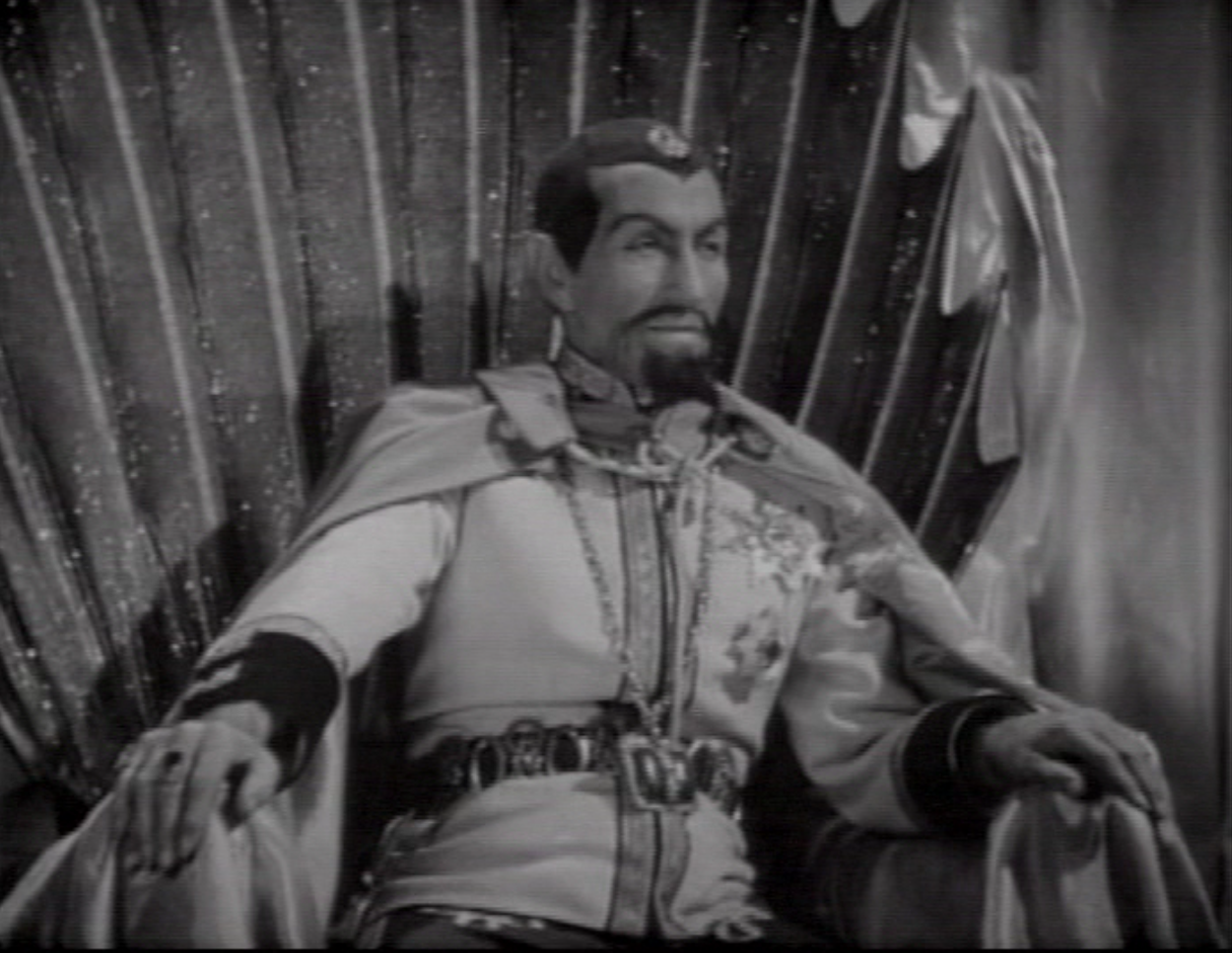
I’m pleased to announce that a short “fake nonfiction” piece of mine has been published at Defenestration, “A Literary Magazine Devoted to Humor.” “Queen Aura’s Address to the People of Planet Mongo Upon Her Coronation Day” is just what it sounds like, a speech by the erstwhile Princess of Mongo eulogizing her father, Ming the Merciless, and setting a course for her planet’s future destiny. Regular readers of Fates Worse Than Death will recognize this as an outgrowth of my interest in pulp characters and, from my review of the 1936 Flash Gordon serial, my conviction that Aura is “the real hero of the story, resourceful, determined, and intense.” I hope you enjoy it.

Wichita Symphony Orchestra with Sarah Chang, Violin

Wichita Symphony Orchestra
Daniel Hege, Music Director and Conductor
Sarah Chang, Violin

Till Eulenspiegel’s Merry Pranks, Richard Strauss
West Side Story Suite for Violin and Orchestra, Leonard Bernstein (arr. David Newman)
Tzigane, Maurice Ravel
La Valse, Maurice Ravel

I reviewed the opening concert of the Wichita Symphony Orchestra’s Classics Concerts series for The Wichita Eagle; the article can be read here.

Wichita Symphony Orchestra: Disney Magic

wpid-20150919_182726.jpg

Saturday’s Wichita Symphony Orchestra Pops Concert, “Disney in Concert,” was subtitled “Magical Music from the Movies.” As such, it was as much stage show and multimedia event as orchestral concert. Playing to an enthusiastic audience that included both costumed children and regular Symphony attendees, Guest Conductor Robert Bernhardt took the podium in Century II Concert Hall and shared the stage with four singers: Juliana Hansen, Stephanie Burkett Gerson, Kyle Eberlein, and Nathan Andrew Riley. All four are veterans of Disney stage productions, with experience putting their own spin on characters already familiar to the audience through the classic film versions. Throughout the performance, clips and still images from Disney movies accompanied the music on a large video screen; expressive stage lighting also contributed to the spectacle.

Unsurprisingly, the program leaned heavily on movies spanning the last twenty-five years, from the Menken-Ashman scores from The Little Mermaid, Aladdin, and Beauty and the Beast, to the ubiquitous hit “Let It Go” from 2013’s Frozen. There was time for history as well, however: the orchestra got things rolling with an instrumental medley (arranged by Bruce Healey) that combined favorites “Zip-a-dee-doo-dah” and several songs from Mary Poppins and Cinderella with non-film classics “Mickey Mouse March” and “It’s A Small World.” Later selections paid tribute to The Jungle Book and (again) Mary Poppins.

The four vocalists, at first introduced one by one, took turns playing emcee, soloist, and backup singer: Hansen lit up the stage as Ariel from The Little Mermaid, before turning the lead over to Gerson for a gorgeous rendition of “Colors of the Wind” from Pocahontas. A suite of songs from Beauty and the Beast was an opportunity to unleash some inventive staging, with the four soloists reenacting the opening ensemble “Bonjour!” with Hansen as Belle. Later in the same number, Eberlein showed off his comic chops as Lumiere for “Be Our Guest,” again joined by the other three for a rambunctious performance that climaxed with an energetic kick-line. (Eberlein in particular has a knack for bringing characters to life without simply imitating Louis Prima or Robin Williams: to say he stole the show would be unfair to the other singers, but he displayed the most individual personality.)

The orchestra played strongly under Bernhardt’s unfussy baton, especially in a few purely instrumental selections (fittingly, as Bernhardt pointed out, they performed a suite from Klaus Badelt’s score from Pirates of the Caribbean on “Talk Like A Pirate Day”): Alan Menken’s score for The Hunchback of Notre Dame had plenty of big moments that showed off the brass (always important in film scoring!) and percussion. (The arrangements often incorporated elements from the score in interesting ways: the Beauty and the Beast suite, for example, began with the celebratory music of the Beast’s final transformation, a good example of composer John Oswald’s adage that when repurposed, “endings make good beginnings.”) Principal oboist Andrea Banke’s fluent playing also provided the requisite Middle Eastern flavor between vocal selections from Aladdin.

A few numbers pushed at the limits of what could be recreated live, and two numbers suffered from the combination of a resonant hall and live mics: in Riley’s “Under the Sea” from The Little Mermaid and Eberlein’s “I Wanna Be Like You” from The Jungle Book, the sound was muddy and the drum-heavy rhythms didn’t show off the orchestra at its best. In both cases, however, the soloists poured on the energy, bringing the audience to its feet. The bottom line is that when the singers are so evidently having this much fun, it’s hard not to join in. (A few numbers were sing-alongs, with lyrics displayed on the screen; my five-year-old son, at his first orchestra concert, was having just as much fun mimicking the instrumentalists, enthusiastically beating on invisible drums or sawing away at a phantom double bass.)

Two highlights capped the evening: Gerson took the lead on Frozen‘s “Let It Go” in an arrangement that followed the film version closely, but with added harmonies from the other three singers. The effect was dazzling in its precision, and gave the audience a chance to hear a very familiar piece of music in a new setting. Finally, the orchestra and singers left it all on stage with selections from The Lion King (a collaboration of Elton John, Tim Rice, and Hans Zimmer), including “The Circle of Life,” “I Just Can’t Wait To Be King” (which had much cleaner sound than the other rhythmic numbers), and “Can You Feel the Love Tonight.” It was a strong note to end on; with the beginning of the Classics series next month, the Wichita Symphony has the makings of a strong season ahead of it.

Medleyana: Year Two

A year or two before I began Medleyana, I idly mentioned my interest in starting a blog to a friend. “No one reads blogs anymore,” he said. That gave me pause, but eventually, I went ahead and started anyway, and the result is this blog, now two years old, give or take a day.

Within the first six months of blogging, I realized that a lot of my articles started with a reminiscence such as the one above, with the rest of the article enumerating the reasons the other person was wrong. I quickly found that as tempting as that rhetorical device can be, I needed to use it sparingly, lest the entire blog become a giant exercise in “staircase wit,” a compendium of the things I should have said, if I’d only had the presence of mind. (Of course, if I argued as vociferously in person as most people do on the internet, I’d have no friends left, online or off-.)
So, as I celebrate Medleyana’s second birthday, I don’t bring up that friend’s offhand comment to prove that he was wrong. In fact, in many ways, he was right: the time in which a blog could amass a large readership just by being out there is long passed. This summer has proven to be something of a reckoning, not just for bloggers but for all kinds of “long form” writers on the internet.

In addition to the abrupt closure of The Dissolve, “free-form” radio station WFMU’s Beware of the Blog ceased posting; as of July, both exist online now only as archives of past content. I’ll admit I wasn’t a regular visitor to WFMU’s blog lately, so maybe I’m part of the problem, but when I first discovered it I spent quite a bit of time browsing its posts and downloading files from its collections.

Looking at it now, its mixture of original articles and reposts of unusual tapes and records, comics, and other found oddities are a good example of what the web used to be like as recently as ten years ago. Industrious writers with scanners and mp3-editing software could clean out their closets and share whatever weird stuff they found with the world instantly. It’s not just that the early internet was less commercial in nature (although that’s certainly part of it–Beware of the Blog was a volunteer-driven affair): it was countercultural, picking up the habits of reclamation and subversion that had driven the alternative press in the ’80s and ’90s. And it went both ways: like many of the blogs and websites that emerged around the turn of the century, it developed a culture of users (both writers and commenters) that gave it an identity. In the past, I’ve compared online forums to bars or coffee shops that are always open, and that was especially true of the websites that attracted regulars, “where everybody knows your name.”

The passing of this ethos is part of what Vox editor Todd VanDer Werff laments when he calls 2015 “the year the old internet finally died:” now there’s so much emphasis on social media and going viral, it’s harder to create a website with an identity that is a destination, rather than a source of memes and videos to share. The content is often no less quirky than before, but the context is quite different: instead of being part of an ongoing discussion with a community of writers and commenters (something The Dissolve excelled at), each picture or link is encountered as part of the reader’s Facebook or Twitter feed; to the extent that it has any attribution, it’s more like a brand than a source to return to (one reason a lot of these meme-mills are radio stations). According to VanDer Werff, writers of longer articles (what used to be the expectation for writers and journalists) are in trouble unless they can also provide the quick hits that generate clicks.

Of course, Medleyana isn’t really playing on the same turf as The Dissolve (or the A.V. Club, or Grantland): it’s just me, not a staff of writers, and it’s a labor of love, not a job. But the landscape has changed for bloggers, as well: the same month that The Dissolve and Beware of the Blog shuttered, Iranian-Canadian blogger Hossein Derakhshan wrote about the world he remembered before he was sentenced to six years in an Iranian prison for his writing:

Blogs were gold and bloggers were rock stars back in 2008 when I was arrested. At that point, and despite the fact the state was blocking access to my blog from inside Iran, I had an audience of around 20,000 people every day. Everybody I linked to would face a sudden and serious jump in traffic: I could empower or embarrass anyone I wanted. People used to carefully read my posts and leave lots of relevant comments, and even many of those who strongly disagreed with me still came to read. Other blogs linked to mine to discuss what I was saying. I felt like a king.

Again, I’m not sure I have much in common with Derakhshan; it’s hard to read his comments and not feel that he mourns the influence he once wielded as much as the changing structure of the internet. And while he isn’t wrong about the changes in the way we exchange ideas online, there are simply more people writing then there were before, making it harder for individual voices to stand out. The friend I mentioned at the beginning of this post didn’t say anything about people not writing blogs anymore, after all.

More seriously, Derakhshan goes on to point out how commercialized and homogenized the dialogue is when it’s in the hands of corporate social networks like Facebook: “The Stream now dominates the way people receive information on the web. Fewer users are directly checking dedicated webpages, instead getting fed by a never-ending flow of information that’s picked for them by complex–and secretive–algorithms.” Those algorithms tend to emphasize what users have already shown that they like with their clicks and upvotes, contributing to the echo-chamber quality of such networks. That’s a fair concern, and one shared by many observers: that the internet will become more like television, with a fragmented but largely passive audience, faced with an infinitude of choices, but less likely to be challenged by different perspectives.

Ultimately, while my readership is not large, at least not in comparison to the heyday of the form, it has been growing: this summer’s Fates Worse Than Death has been a success, at least measured in comments and discussion (some of which have taken place, yes, on Facebook and Twitter). This year I stretched myself more to post on a weekly basis, and I experienced and learned about some fascinating films that I might not have been motivated to explore otherwise. And just personally, I’m pleased that I was able to stay on my self-imposed schedule with some late nights (and a few very late nights!). I’d probably try to keep this series going all year round but for two factors: first, it’s too time-consuming, and I would burn out if I tried to keep it up for much longer; second, I have other things I’d like to pursue as well. To those of you who may have found your way here for coverage of serials, I hope you’ll check out some of the other topics. And rest assured that I’ll still be covering them in one way or the other.

Finally, thanks for visiting, and for reading. If you’ve taken the time to comment, or contacted me personally, or if you’ve shared one of my articles, know that I appreciate the feedback. If there’s anything I can to do to improve your experience in the coming year, or you have a suggestion for a topic you’d like to see covered, or you just want to say hi, please don’t hesitate to comment, send me an e-mail through the contact page, or find me on Twitter!

P. S. And keep writing!

Fates Worse Than Death: Flash Gordon Conquers the Universe

FG3.title

A mysterious plague is sweeping the Earth: known as the “Purple Death” because of the single purple spot it leaves on the skin of its victims, the disease is responsible for the deaths of thousands, and authorities are helpless to stop mounting panic. Professor Gordon is one of the scientists struggling to find a cure, and it is his son Flash (already a hero for saving the earth several times over) who, with Dr. Zarkov and Dale Arden, discovers the culprit. A ship from Mongo is spotted high in the atmosphere, dropping the malign dust that causes the Purple Death.

FG3.purpledeath

Starting for the planet Mongo at once in Zarkov’s rocket ship, the trio face aerial combat with the invading ship and, feigning a crash, descend to Arboria, the home of Flash’s ally Prince Barin. Barin confirms that Emperor Ming yet lives and is undoubtedly behind the attacks on Earth, and a council of leaders who are opposed to the merciless dictator soon convenes at Barin’s palace.

FG3.warcouncil

The only antidote for the Death Dust is the element “polarite,” which can be found in the far Northern reaches of Frigia, represented by Queen Fria. The expedition to the icy realm is bulked out with footage from an earlier polar exploration film, White Hell of Pitz Palu; footage of downhill skiers appears in the montage that opens each chapter, leading me to expect a snowbound assault on Ming à la The Spy Who Loved Me or Inception, but it never happens. (Also, it wasn’t until I was selecting screen caps that I noticed Flash and Dale in their cold-weather gear bear a strong resemblance to Santa and Mrs. Claus.)

FG3.coldgear1

Although the threat of the Purple Death doesn’t take twelve chapters to resolve, it’s the inciting incident that kicks off the latest round of strikes and counter-strikes in Flash Gordon Conquers the Universe, the third and final serial in Universal’s epic adaptation of Alex Raymond’s popular comic strip.

FG3.rocket4

Despite, or perhaps because of, its references to the events and characters of the 1936 and ’38 serials, Conquers the Universe shows just how much time has passed since the success of the first Flash Gordon. Many aspects of the production, impressive in ’36, would have seemed crude just four years later, especially with Republic’s slick, streamlined adventure serials entering the market in the mean time. The static recap cards from the earlier serials have been replaced by scrolling titles; this now-familiar format had been used in Buck Rogers (also starring Flash Gordon lead Buster Crabbe) and would appear in other serials of the 1940s (and of course was the inspiration for the similar opening crawl in the Star Wars films).

FG3.title.chapterhead

The pacing is rapid throughout, with clear but often functional dialogue that serves the plot; Flash Gordon was never about deep characterization or philosophy, but Conquers the Universe is especially plot-heavy. And while many effects look quaint to modern eyes (Mongo’s giant iguanas make an appearance, and electrical effects are frequently accomplished with zig-zag lightning bolts scratched directly onto the film), just as many impress with how effective simple devices can be, and there are enough new settings and perils that the serial doesn’t feel like a retread.

FG3.robots2

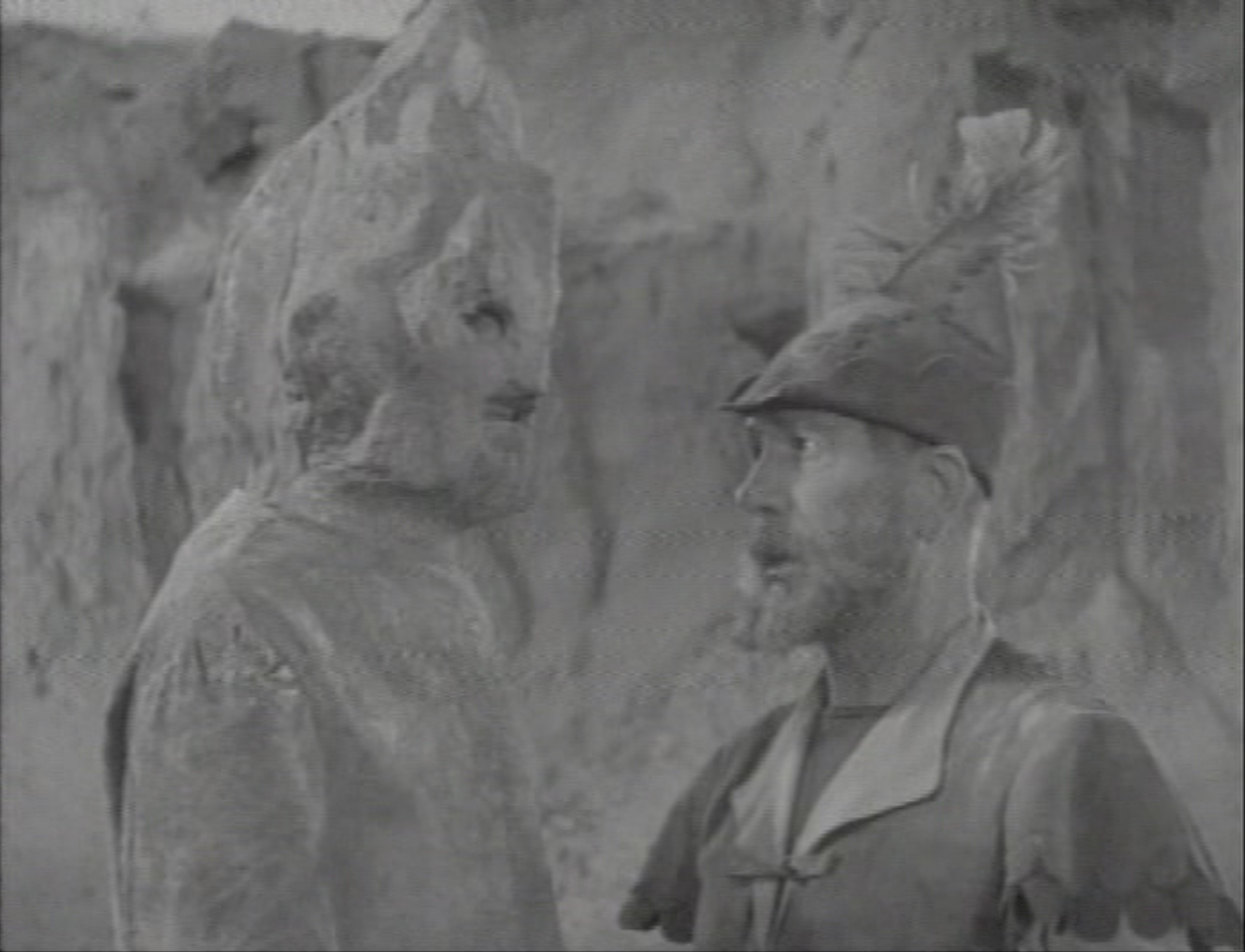
Of particular note are an assault by exploding robots (Chapter Three, “Walking Bombs”), given an uncanny mechanical gait through the magic of undercranking, and the tribe of “Rock Men” who dwell in Arboria’s “no man’s land.” (Unlike the Clay People of Flash Gordon’s Trip to Mars, the Rock Men only dress as rocks to camouflage themselves from the giant lizards.) The Rock Men speak backwards, and once Dr. Zarkov realizes that their language is the same as that of a “lost tribe” that once inhabited Earth’s Gobi Desert, he is able to communicate with them; after Flash saves the Rock King’s son from a disaster, they aid the Earthlings in their fight against Ming.

FG3.Rockman.Zarkov

Several plot elements that were missing from Flash Gordon’s Trip to Mars reappear in Conquers the Universe: Ming once again hopes to make Dale his bride, and Ming’s daughter Princess Aura reappears, still happily married to Prince Barin. The cast has been shuffled–Carol Hughes replaces Jean Rogers as Dale, and both Barin and Aura are recast (by Roland Drew and Shirley Deane, respectively)–but Buster Crabbe reprises the title role, Charles Middleton returns as Ming, and Frank Shannon again plays Dr. Zarkov.

FG3.Aura.Barin

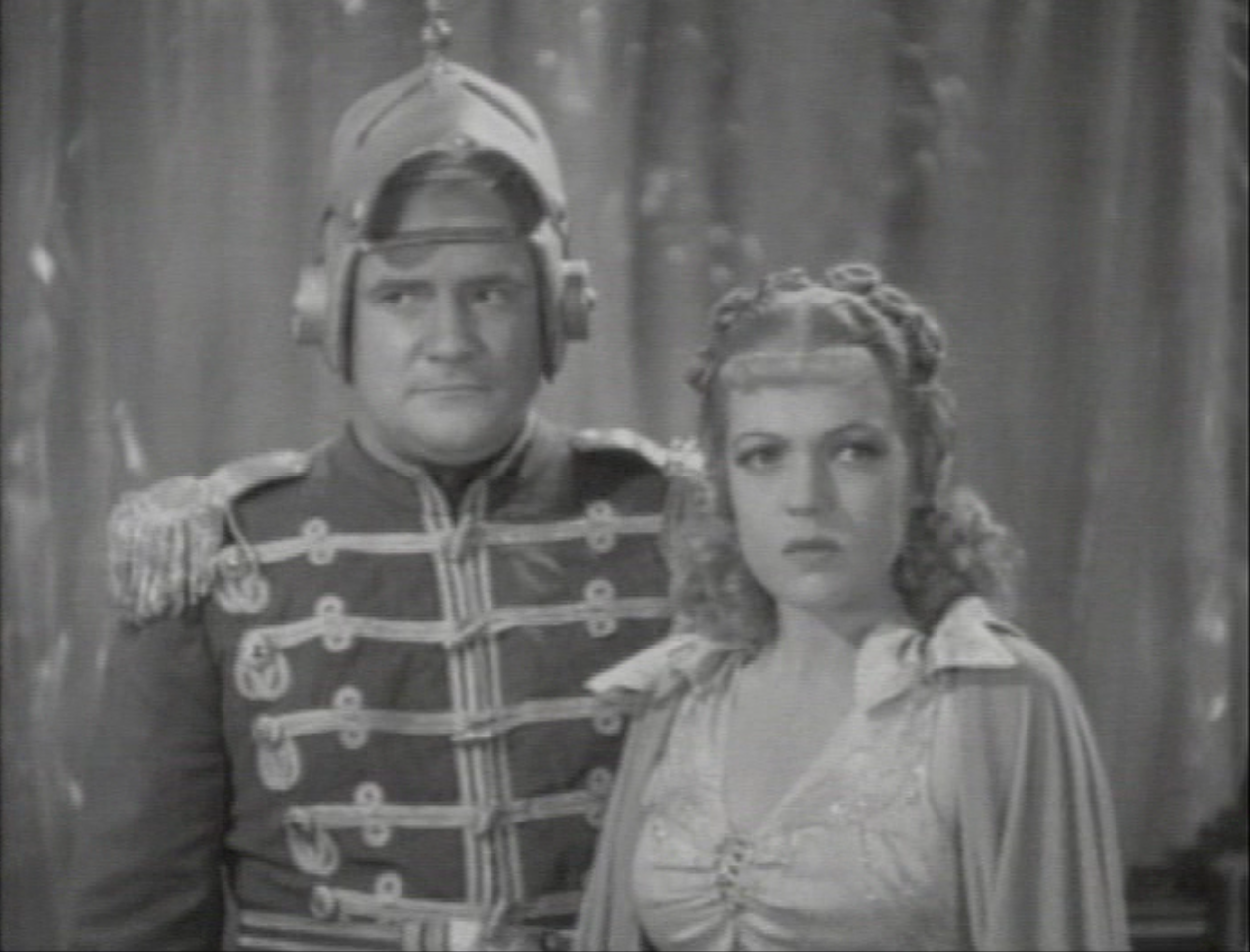
Speaking of Barin and Aura, the happy couple looks quite different from their earlier incarnations. As Barin, Drew cuts a more dashing figure than Richard Alexander: with his trim mustache and forest costume, he strongly resembles Errol Flynn as Robin Hood. As for Aura, the changes to her personality outweigh those to her appearance: instead of the scheming, morally flexible antiheroine of the 1936 serial, she is here entirely settled and content in her life in Arboria, and her reaction to being pulled back into her father’s evil machinations is passive terror and indignation. Marriage has domesticated her.

FG3.Aura.Sonja

Fortunately (or not, depending on your perspective), the lack of Aura’s feminine wiliness is made up for by the introduction of Lady Sonja (Anne Gwynne), an Arborian lady-in-waiting secretly loyal to Ming. Once Sonja lures Aura to Arboria’s Red Forest to be abducted by Ming’s forces (for even he would not bomb Arboria without first making sure his daughter was safe), the treacherous lady becomes half of a villainous double act with Captain Torch (Don Rowan). Together, Torch and Sonja, along with Lieutenant Thong (tee hee), shadow Flash Gordon & co. and bedevil them in a variety of ways, carrying out missions for Ming.

FG3.Torch.Sonja1

Sonja doesn’t have the depth of Aura–she’s purely spiteful and untrustworthy, without even the motivation of misplaced love–but it’s worth noting the number of female characters in the Flash Gordon serials and the range of their motivations. Aside from Dale, Aura, and Sonja, there’s Queen Fria of Frigia (an uncredited Luli Deste), who expresses a hope that Flash Gordon might be convinced to lead Frigia’s armed forces, teasing a source of tension with Dale (this comes to nothing, although it may be more fleshed out in the comic strips that are the basis of the story).

FG3.QueenFria1

In fact, Flash Gordon does a better job of female representation than the original Star Wars trilogy that it inspired: in Conquers the Universe, Dale is revealed to be an expert chemist and radio operator, a detail I don’t recall being mentioned before, but which gives her more to do than simply be kidnapped. It’s true that at least some of the women on-screen are purely eye candy, and there’s less of the emphasis on Buster Crabbe’s physique that made the 1936 serial an equal-opportunity source of titillation (like the Tarzan series, Flash Gordon in all its iterations has celebrated the body beautiful). Still, compared to the many serials I’ve watched that have only a single token woman, it’s refreshing that the population of the fantasy world of planet Mongo at least contains individuals of both sexes.

FG3.Dale2

Ultimately, Ming’s greatest weakness is the number of people in his service–guards, scientists, soldiers–who are willing to turn against him. The political subtext is no more complex or subtle than before–dictators are bad–but the story emphasizes that those who take power by force and cruelty will never have the loyalty of those they conquer. Rather, they will only breed a thirst for revenge in their underlings. As always, Flash Gordon inspires trust and confidence in those he meets simply by doing the right thing.

And what about that title, anyway? Conquering isn’t really Flash’s bag. As silly as it sounds, Ming in his arrogance declares at one point, “I am the universe!” So, by the transitive property, when Flash inevitably conquers Ming . . . well, you get the idea.

FG3.Ming1

But just in case you didn’t, Zarkov explains it.

What I Watched: Flash Gordon Conquers the Universe (Universal, 1940)

Where I Watched It: A two-disc DVD set from Timeless Media Group

No. of Chapters: 12

Best Chapter Title: “Doom of the Dictator” (Chapter Twelve). Alliteration!

FG3.faceoff

Best Cliffhanger: Another plot thread that continues from the earlier serials is Ming’s desire to have Zarkov’s scientific genius at his command. So, in Chapter Four (“The Destroyer Ray”), when Ming has Zarkov captive and the Earth scientist refuses to serve him, Ming orders his execution. A death ray slowly moves toward the chained scientist, and when Flash shows up to rescue him, he appears to be caught in it, too. What really elevates this is that Ming, surrounded by his retinue, has forced Dale (also captive) to watch the scene unfold. She begs Ming to spare them, beating on his chest with her fists, and then covers her face, unable to watch, while Ming cackles at his victims’ helplessness. “He has chosen his own death!” he sneers. This is what we watch serials for.

FG3.Dale.Ming1

A Note on Costumes: Although there’s still a great deal of space opera exoticism, including long looks at the harem-like entertainments Ming has at his disposal, the costumes and sets display fewer of the ancient or near-Eastern motifs that were prominent in the earlier serials. Barin’s palace resembles a traditional European castle, with parapets and everything, and most of the male characters dress in military uniforms with braids and epaulets; except for the ray guns and space ships, Arboria might as well be Ruritania, an imagined Mitteleuropa in outer space.

FG3.roka.flash

Even Ming gets in on the act, assuming a high-plumed dress uniform, “now more a wicked general than Satan” in the words of Jim Harmon and Donald F. Glut. One could assume that proximity to Earth has affected Ming’s tastes: although most of Ming’s pleasures are accompanied by stereotypical “Oriental” music, the soundtrack is a distinctly modern rhumba in Chapter Four, leading me to imagine Xavier Cugat and his orchestra chained to a bandstand and forced to play just off-camera. You’re a peacock, Ming. Strut, Ming, strut.

FG3.Ming6

Sample Dialogue: “Seems like old times, being at war again with Ming, Zarkov.” –Flash Gordon, Chapter Two (“Freezing Torture”)

FG3.television2

What Others Have Said: “Earth heroes have journeyed to other worlds by Crystal Door and spaceship. Our own planet has been invaded many times by alien menaces bent on dominating the Earthlings. In all these instances there have been mighty conflicts between good and evil. But after the holocaust of ray zapping and atomic blasting had settled, the audiences huddled in the safety of terran movie houses admitted one important fact: There was only one alien tyrant capable of conquering the universe, Ming the Merciless. And there was but a single hero able to defeat him–Flash Gordon.” –Jim Harmon and Donald F. Glut, The Great Movie Serials

That brings this summer’s serial coverage to an end. I’ll probably still have a few serial-related articles coming up, and Medleyana will continue to update on other topics, but that’s it for regular entries until next summer. Until then, thanks for reading along, and thanks for all the comments and support!

Fates Worse Than Death: The Fighting Marines

FM.title

On land or sea in polar night
Or sweltering tropic scenes
Where e’er there’s fighting
You will find U. S. Marines.

–introduction to The Fighting Marines

FM.Larry.Mack1

The action of The Fighting Marines begins in media res (unusual but not unheard of for serials): Corporal Larry Lawrence (Grant Withers) and Sergeant Mack McGowan (Adrian Morris) of the U. S. Marine Corps are battling a gang of bandits in a jungle, trying to rescue their friend and fellow Marine, Sergeant William Schiller (George J. Lewis). Schiller is the inventor of a new “gyro compass,” and the bandits hope to learn its secret from him. After Schiller’s rescue, the real story begins: Schiller’s gyro compass will make it possible for the Marines to build a base on remote Halfway Island in the Pacific Ocean. So far, the island has been inaccessible because of a “magnetic dead spot” that causes ships and planes to crash short of the island. A businessman named Douglas (Robert Frazer) hopes to build a floating airstrip outside of the dead spot, and he stands to lose a fortune if the Marines succeed in building on the island.

FM.Bennett.Douglas

At the same time, unbeknownst to the Marines, Halfway Island is being used as a base by a notorious pirate known only as the Tiger Shark. As in Batman and Robin and Government Agents vs. Phantom Legion, even the Tiger Shark’s own men don’t know their boss’s identity, but they refer often to those poor suckers in the organization who had tried to find out, or who had tried to claim their shares of the loot before the Tiger Shark was ready to dispense them.

FM.TigerShark1

It is the Tiger Shark, who always appears in a fashion-forward leather flying suit and goggles, who is responsible for the dead spot, employing a “magnetic ray gun” to scramble approaching planes’ instruments. In addition, the Tiger Shark seems to know too much about the Marines and their operations, even before Larry and Mack are able to land on the island and discover the pirate’s base. It’s strongly implied that Douglas is the Tiger Shark, but could it be Buchanan (Frank Glendon), the head of the Oriental Navigation Company, who also has an interest in the region? Or could it be someone even closer to the Marines? Needless to say, the mystery is teased out until the very last chapter, when the villain’s identity is revealed.

FM.magneticraygun

I have to admit that I probably wouldn’t have gone out of my way to watch The Fighting Marines if I weren’t writing this series. Aside from its lack of recognizable characters, I wasn’t really sure what to expect from the title sequence, which combines Sousa’s “Semper Fidelis” march with stock footage of Marines in dress uniforms marching in parade formation. The premise seemed to suggest either a war movie (a genre I don’t usually go out of my way for) or, worse, high jinks on a military base. I needn’t have worried: with a few exceptions, The Fighting Marines is pure serial formula, from its mysterious costumed villain to his army of interchangeable henchmen and the gauntlet of fist- and gunfights, car chases, and other perils that the heroes face.

FM.crushing

There is also a distinctly pulpy, futuristic edge to the Tiger Shark’s equipment, although it is mostly limited to his base on Halfway Island. In addition to the magnetic ray gun, the Tiger Shark’s forces use television to communicate. However, unlike characters in other serials, the Tiger Shark’s henchmen must wear an elaborate headgear to use the television, whether necessary to make the technology work, like a radio headset, or simply to disguise their identities, I don’t know. Television is so often treated like a kind of magic in films of the 1930s that it shouldn’t be surprising that it requires a special costume to use it, like the ephod worn by the priest who handled the Ark of the Covenant. In some ways the ray gun and other high-tech gadgets make The Fighting Marines an early example of “spy-fi” à la James Bond or The Man From UNCLE rather than a purely military escapade.

FM.television

Other elements beside the costumed villain and his high-tech toys suggest similarities with other serials: although the two heroes are Marines under the authority of their Colonel (Robert Warwick), and wear uniforms and report to the Marine base, and even in a few chapters take part in military operations with larger squads, they mostly work on their own, with a free hand to track down clues and take on the bad guys by themselves. The format of their adventures isn’t that different from those of the independent agents in Robinson Crusoe of Clipper Island or The Miracle Rider, or the team of unofficial deputies in Daredevils of the Red Circle (or an episode of JAG, for that matter).

FM.Kota

The Fighting Marines was the last serial made by Mascot before the mergers that would lead to the birth of Republic, the studio that would be synonymous with serials for the next two decades. Producer Nat Levine had grown dissatisfied with the Mascot formula, and while I love some of Mascot’s serials, it’s not hard to see the growing pains that the format was suffering. The Fighting Marines is uneven, with choppy, often redundant storytelling (seriously, was it necessary to have flashbacks to previous scenes in three different chapters?). Characters come and go haphazardly: Douglas, after being established as a likely suspect for the Tiger Shark’s secret identity, disappears, replaced by Buchanan in Chapter Five; they don’t appear together until Chapter Eight, leading me to wonder if I had somehow confusedly given the same character two names. Larry and Mack are established as rivals for the affections of Schiller’s sister, Frances (Ann Rutherford), and she plays an important part in the first half of the serial; however, once the action moves to Halfway Island, not only is the love triangle forgotten, so is Frances. Finally, the many cheats used to resolve cliffhangers (see below) insult not only the intelligence of the viewer, but the idea of continuity itself.

FM.Larry.Mack.Frances

Having said all that, however, I really enjoyed most of The Fighting Marines, and I’m glad I checked it out. Despite its rough edges, it’s imaginative and full of retro cool: I’ve alluded to the Tiger Shark’s sense of style, but did I mention he flies an auto gyro?

FM.autogyro

Or how his victims are left with the “Mark of the Tiger Shark” imprinted on their necks?

FM.mark

And I live for scenes like the one where the Tiger Shark strafes a Marine encampment from a biplane with a Tommy gun, an image worthy of Dr. Strangelove:

FM.TigerShark2

I also haven’t mentioned the Tiger Shark’s Halfway Island henchmen, a crew of roughneck sailors straight out of a Popeye cartoon:

FM.Henchmen1

Or the tribe of natives who also call Halfway Island home, and their Hollywood Central Casting penchant for human sacrifice:

FM.natives

And a few things that should be considered SPOILERS: First, one that I’m not sure is really a spoiler because it doesn’t seem to have anything to do with the plot: it’s just a surprise. In the last chapter, when the Tiger Shark’s empire is collapsing around him, he consults with the chief of the Island natives. Like all of the natives, the chief wears a sarong and has a terrible afro; the chief pulls his afro wig off and it’s revealed that he’s not a native at all, just one of the Tiger Shark’s henchmen. So, does that mean all the natives are white men in disguise? That would explain why they all look so fake–they all have the same ridiculous-looking afros, for one thing–but apparently not. It’s just him. So how did he become chief?

FM.TigerShark.Chief2

There’s no time for that, because we finally learn the real identity of the Tiger Shark (DOUBLE SPOILERS): It’s neither Douglas nor Buchanan, but Kota, Colonel Bennett’s Japanese valet. This actually explains a lot, not least the casting of a relatively high-profile actor (Jason Robards, Sr.) in a role that hadn’t had more than five minutes of screen time until the big reveal. Note that it wasn’t unusual for a white to play an Asian character at the time: Keye Luke was more the exception than the rule. At least Kota isn’t a grotesque caricature like Batman’s foe Dr. Daka, but he isn’t very convincing, either. I didn’t even realize he was supposed to be Japanese until the second scene he showed up in.

FM.TigerShark.Chief3

The reveal also brings the conflict into focus in a way that is still subtextual but is obvious in hindsight: I’ve often harped on the way shadowy villains in the narratives of the 1930s could stand in for real-world political anxieties, and while no mention is made of why the Marines wish to build their base on “Halfway” (a clear stand-in for Midway) Island, it probably didn’t need to be explained to audiences in 1935 who were increasingly wary of Japanese aggression across the ocean. The narrative demand for a “the butler did it” twist is satisfied, with the real Tiger Shark hiding in plain sight, and while he is only a pirate, not an overtly political villain, one can hardly believe that his real identity or the location of his hideout are accidental. At the very least, it’s comparable to the decision to give villains Russian or German accents in films of subsequent decades: just as that choice gives modern film villains a threatening edge, so was the obsequious but treacherous character of Kota’s race taken for granted and was thus a socially acceptable storytelling device. But like I said, that seems more obvious from a contemporary vantage point: the main message The Fighting Marines sends is that nothing–not profiteers like Douglas, nor lawless pirates like the Tiger Shark–will stand in the way of the Marines when they set their minds to something. As Colonel Bennett says, “Remember what I said about the Marines always finishing what they start!”

What I Watched: The Fighting Marines (Mascot, 1935)

Where I Watched It: The whole thing is on YouTube.

No. of Chapters: 12

Best Chapter Title: “Two Against the Horde” (Chapter Twelve)

Best Cliffhanger: In one of many chase scenes, at the end of Chapter Ten (“Wheels of Destruction”), Larry and Mack are following two of the Tiger Shark’s henchmen, who have abducted Buchanan in the belief that he is the mysterious crimelord. The henchmen’s tricked-out car is equipped with a smokescreen that pumps thick, opaque clouds from the car’s exhaust pipe. Unable to see through the smoke, Larry and Mack drive their car right through the guardrail on a curve and plunge over the hillside, rolling repeatedly before landing at the bottom of the hill.

FM.smokescreen

Annie Wilkes Award for Most Blatant Cheat: Man, does The Fighting Marines ever cheat! In this case, it’s hard to narrow it down to just one (in fact, the cliffhanger in the aforementioned “Wheels of Destruction” is notable for not cheating: unbelievably, the two Marines are stunned but otherwise completely uninjured after rolling their roofless car multiple times, without even seat belts to keep them from being thrown out). Whether it’s a plane crash, a gunshot, or a fall from a high window, several cliffhangers are restaged to change or undo the surely-fatal peril our heroes were left in at the end of the previous chapter. Probably the most shameless is at the end of Chapter Six (“Robbers’ Roost”), in which Larry and Mack have cornered the Tiger Shark’s henchmen in a warehouse just as the Tiger Shark himself has landed his auto gyro on the roof. Coming down the stairs, the Tiger Shark opens fire on an unsuspecting Larry, who clutches his chest and slumps over. At the beginning of Chapter Seven (“Jungle Terrors”), however, Larry dodges the bullet and returns fire, as hale and hearty as ever. CHEAT!!!

Sample Dialogue: Mac: “Hey, if ya ask me, I think that fella Douglas is the Tiger Shark!”
Larry: “Sure took you a long time to figure that out!”
–Chapter Two (“Isle of Missing Men”)

What Others Have Said: “Levine decided that his new Republic serials would be vast improvements upon those turned out under the Mascot trademark. Analyzing his past products, he realized that perhaps the old Mascot plots were at times too involved. . . . The absence of music, such a hazard for the Mascot chapterplays especially in the action scenes, would be corrected with powerful scores to accompany all moods and situations. Furthermore, comic relief characters would be played down in future scripts.” –Jim Harmon and Donald F. Glut, The Great Movie Serials

(If it were really Levine’s intention to downplay comic relief characters in the Republic serials, I’m not sure what happened, as they seem even more formulaic in the ones I’ve watched. Harmon and Glut are correct about the lack of music, however: The Fighting Marines has only “Semper Fidelis” to serve as a theme song and no other background music.)

What’s Next: In one week, I’ll bring this summer’s serial coverage to an end with the third and final Flash Gordon serial, Flash Gordon Conquers the Universe.

Fates Worse Than Death: The Green Hornet Strikes Again

GH2.title

Sentinel publisher Britt Reid, taking a much-needed vacation in Hawaii, has left his newspaper in the hands of an editor named Harper. While Reid is gone, his secretary Leonore Case and reporters Axford and Lowery begin to suspect that Harper is connected with the criminal Syndicate running rampant in the city: Harper has killed stories about big crimes and even refuses to expose the racketeers when given information straight from the District Attorney. Harper is a member of the Syndicate, secretly run by a man named Crogan, and while Axford and Case send telegrams urging Reid to return from Hawaii, the Syndicate’s men on the island try to prevent him from doing so. First they try to discourage him indirectly, and when it’s clear that he’s heading back to the mainland they kidnap him and his valet Kato, tying them up in a fishing shack with the intention of feeding them to the sharks in the morning.

GH2.Reid.Kato1

The Syndicate’s island force is headed by a man named Bordine, who already has a grudge against Reid for uncovering the truth about a past crime Bordine had pinned on an innocent man. When Reid and Kato escape the fishing shack (with a little help from Reid’s alter ego the Green Hornet) and make it to the departing ship, Bordine follows them in hopes of finishing them off. An unrelated fire that begins in the boiler room derails his scheme, however, and endangers everyone on board. And this is just in the first chapter of The Green Hornet Strikes Again!

GH2.Hornet1

As should be clear from the summary of Chapter One, The Green Hornet Strikes Again has no shortage of twists and turns. In fact, it has one of the most convoluted plots of any serial I’ve watched yet: while in broad outline it follows a similar plot to The Green Hornet (from earlier in the same year), with its overarching Syndicate being broken apart by the Hornet one racket at a time until he can finally confront the big boss, it has more chapters, more characters, more settings, and, like most sequels, is generally overstuffed. (Of course, it was meant to be watched on a weekly basis rather than all at once, but I’m not sure how it would have been any easier to keep track of with a week elapsing between each chapter.) Having said that, there are many enjoyable scenes and chapters in this, and plenty of action in the serial tradition.

GH2.Reid1

The Green Hornet Strikes Again features a different actor in the title role (Warren Hull, who unlike his predecessor Gordon Jones also provides the Hornet’s voice while in costume), but otherwise brings back the main cast of the earlier serial. Keye Luke plays Kato, Anne Nagel plays Leonore Case, and Wade Boteler plays Irish policeman-turned-reporter Michael Axford. Instead of Jenks, the ambitious young reporter is Lowery (Eddie Acuff), whose antagonistic partnership with Axford is the main source of comic relief. A few references are made to events from The Green Hornet, but the Syndicate in Strikes Again isn’t the same one that was defeated in the first serial.

GH2.office

The Syndicate’s plots are also more ambitious than those of its predecessor: in addition to the attempt to take over the Sentinel, there’s a plot to replace the heiress to an aluminum fortune with an actress, allowing the Syndicate to control the aluminum company’s board of directors; an attempt to sabotage the source of the aluminum plant’s electricity when that scheme fails; a plot to develop a “magnetic bomb” in a secret laboratory in a steel plant; and even some that don’t involve metal or factories. This provides ample room for stock footage, often integrated smoothly through the use of rear projection: it really looks like Reid and Lowery are on the floor of the steel plant, and through quick editing they appear to be in real danger of having molten metal “accidentally” spilled on them. In other scenes, the Green Hornet is called on to commandeer speeding cars, trucks, or airplanes, and survives all kinds of crashes, explosions, and building collapses (including one caused by a bolt of lightning!). In almost all the crimes perpetrated by the Syndicate, there’s a theme of urgently-needed wartime materiel being diverted to foreign buyers, and again there’s no need to specify who they are, or why they are bad news.

GH2.Crogan

Kato, who is both Reid’s manservant and the Green Hornet’s faithful ally, doesn’t have as much to do in this serial, unfortunately: in The Green Hornet he got to karate chop a few bad guys, but in Strikes Again he mostly drives the car and pulls the Green Hornet out of the rubble after the aforementioned disasters. I wanted to mention him, however, because there’s a good case to be made for Kato as the most interesting character in the Green Hornet saga. According to the exposition at the beginning of The Green Hornet, Kato is loyal to Britt Reid for saving his life in his native Shanghai; although Kato’s subservience fits the “Oriental houseboy” trope, he has always been portrayed as intelligent and capable. In addition to his martial arts skill, he designed and built the Green Hornet’s gas gun and equipped their customized automobile, the Black Beauty.

GH2.Hornet.Kato1

Kato has been well-represented in the movies as well: Keye Luke, who originated the role on film, first became prominent playing Charlie Chan’s “Number One Son,” Lee, and had a distinguished career as a character and voice actor in film and television, including a recurring role on Kung Fu. In the 1966 television series, Kato was played by up-and-coming martial arts icon Bruce Lee, who was so popular in his native Hong Kong that the series aired as The Kato Show there. In 1974, three episodes of the program were edited together into a theatrical Green Hornet film to take advantage of Lee’s growing fame.

BruceLee

Finally, the comedic, Seth Rogen-starring 2011 Green Hornet feature leans heavily into the realization that Kato (played by Jay Chou) is the skilled one while Rogen’s Britt Reid is a clueless party animal who at first gets into the hero business for kicks and only gradually realizes his responsibility. Like Big Trouble in Little China and the 2013 Lone Ranger film, the 2011 Hornet delights in reversing the expected relationship between hero and sidekick, and the pair can only work together effectively when Reid is able to see Kato for what he has always been: a partner.

GH2011.Kato.Hornet

What I Watched: The Green Hornet Strikes Again (Universal, 1940)

Where I Watched It: A Pacific Entertainment DVD, which, since it was sourced from videotape, manages to look worse than The Green Hornet did when I watched it on YouTube.

No. of Chapters: 15

Best Chapter Title: “Racketeering Vultures” (Chapter Fourteen)

Best Cliffhanger: In Chapter Twelve (“Crashing Barriers”), Michael Axford and Leonore Case have been taken hostage by the Syndicate and taken to a warehouse to be disposed of. Following in another car, the Green Hornet drives straight through the warehouse’s freight door–and right into a huge pile of explosives stacked inside, which detonate immediately!

GH2.explosives

Annie Wilkes Award for Most Blatant Cheat: All but one of the cliffhangers in this serial feature Britt Reid in his role as the Green Hornet, but the end of Chapter One (“Flaming Havoc”) allows him to take heroic action as himself. When a fire breaks out on the ship heading back to the mainland, Reid rescues Gloria (a character whom I thought would continue to be important, but who turned out to be another member of the rotating cast, never to be seen again), carrying her through a blazing hallway to the open deck. The serial appears to be over before it’s even begun when a flaming rafter falls directly on top of them and the screen fills with the ever-growing fire. In my notes for the beginning of Chapter Two (“The Plunge of Peril”), I have simply jotted, “they make it,” indicative of how little danger these mishaps actually pose for our heroes. The boat still sinks, however.

GH2.Reid.Gloria

Favorite Character (Aside from Kato): Every once in a while a secondary character shows up and steals the movie for a chapter or two. Frenchy Ludoc in Gang Busters was one such character; Vultan in Flash Gordon was another. In Chapter Fourteen of The Green Hornet Strikes Again, it’s Foranti (Jay Michael), a racketeer illicitly placed in charge of the Builders’ Association by the Syndicate. While skimming off Association funds for his own use, Foranti is funneling money toward the construction of an expensive house, ultimately to belong to Crogan. When the Sentinel prints the truth about him, he shows up to intimidate Britt Reid in person.

GH2.Foranti1

Although soft-spoken, every line he speaks sounds like it was written for Edward G. Robinson, see? He just figures Reid needs to be leaned on a little, see? And the squealer who fed the Sentinel the information about Foranti is dead now, see? You get the picture. Foranti isn’t exactly comic relief (that’s what we have Axford and Lowery for), but as a parody of the popular gangster, he veers farther into camp than the rest of the film; he’d be more at home in Columbia’s Batman serials. This chapter also makes good use of the conceit that the Green Hornet poses as a criminal to get information, and here he gets Foranti to turn on his associate Breedon by playing to his paranoid fear that Breedon is betraying him. On top of all that, Foranti has the distinction of being gassed twice in the same chapter by the Hornet, the only villain so treated.

Sample Dialogue: Crogan (Pierre Watkins), to his men (sarcastically): “Yes, that’s right, the Green Hornet: a lone wolf who plays your own game and makes monkeys out of all of you!” (Chapter Twelve, “Crashing Barriers”)

What’s Next: Join me next week for The Fighting Marines!