The Graveyard of Unfinished Articles

Picture 2

The truth is that while I will go to just about any lengths to stay on a schedule, even a self-imposed one, when I allow myself the freedom to only post when I feel like it, it becomes easy to put it off or just not bother, and that’s how I’ve ended up with such a paltry output on Medleyana this spring. This week, after finishing up my Tune in Next Week series covering the Buck Rogers serial over at The Solute, and feeling self-conscious about how long it had been since I posted here, I wrote up a thousand words or so about a topic that had been rattling around my brain for a while.

The article, once I finally got rolling on it, was a speculative endorsement of a live action feature film based on a popular children’s property. (No, I won’t say what it was; I may yet find something to do with what I wrote.) I thought I made a good case for a live action version of a property that has, as yet, only been seen in a direct-to-video animated format. However, the more I wrote, the more I felt that I couldn’t be the only one with that idea. Sure enough, upon searching for information online, I found that a live action film is already in development, although a release date isn’t set.

My feelings upon learning this are mixed. On the one hand, I feel vindicated: I’m clearly not the only person who sees the potential in the property, or at least my ability to recognize patterns in the media strategies of large brands is intact. On the other hand, there goes a morning’s work that I can’t use without serious reframing. (Note to self: do research before writing.)

While the amount of labor involved wasn’t huge, the incomplete article joins others stored in my hard drive or notebooks that will likely never see the light of day, made obsolescent for one reason or another. A partial review of Galavant‘s first season, begun under the assumption that it would be a self-contained story, seemed pointless to complete when it turned out that the story ended on a cliffhanger; the many loose threads would be tied up only in the second (and now final) season. Another article about the wave of detached, ironic “appreciation” of bad pop culture prominent in the 1990s (think Mystery Science Theater 3000) petered out after two paragraphs (its premises overlapped too much with a similar article I had written about listening to “bad” music). Another article on shape-changing “versatile” animals in fantasy fiction remains just a series of notes and references (I suppose that one may still get written some day). All of these drafts fell victim to a fatal lack of accessible information or the realization that I didn’t have that much to say about the subject, or simply fell out of date, overtaken by events before I could complete them.

The record for my fiction output is even worse, since I’ve tried to find outlets elsewhere for it rather than self-publish. I’m not talking about finished but rejected stories–those are annoying enough, but I can show them to anyone that wants to see them–but those “stubs” that started off strong but petered out or were interrupted and never returned to. (I’m hardly alone with the latter problem, exemplified by the “man from Porlock” who interrupted the composition of Coleridge’s Kubla Khan.)

George Bernard Shaw famously said, “When I was young, I observed that nine out of ten things I did were failures. So I did ten times more work.” This blog, as well as my work at The Solute and other venues, has been part of an ongoing effort in the last several years to finish more projects, even small ones. Certainly there is satisfaction in having a steady stream of small articles instead of being invisible for a year at a time between unveiling larger projects, but there is something to be said for single-minded application as well. Currently, I’m scattered between several projects, and while the time to work is more abundant than it has been for some time, it still takes discipline to manage so many competing interests. That’s a matter for discussion at another time, however.

In any case, whether I recast the article I wrote or simply leave it in the drawer, it surely won’t be the last thing I write that fizzles out or is allowed to die quietly; sometimes those premature deaths are mercy killings. At least a few of them have the potential to be repurposed, perhaps into an article about leaving projects unfin

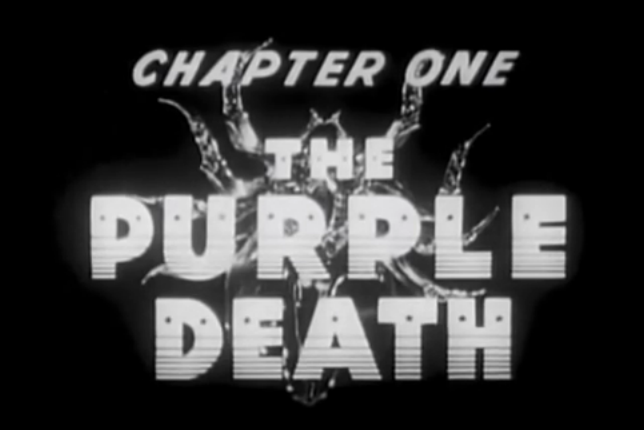
Hi there! Wow, a month and a half sure flies by, doesn’t it? But I think I’ve given Pee-Wee Herman the top spot for long enough. More long-form content will appear on Medleyana soon, but in the mean time I haven’t been idle. If you missed it, you can catch up on Tune in Next Week, my ongoing series at The Solute in which I’ve been writing about the 1939 Buck Rogers serial one chapter at a time (and the most recent installment of which was just published yesterday). With only two chapters left to go, I’ll soon have a little more time to write over here.

Another project that has occupied me this spring is putting some more of my compositions on my long-neglected YouTube channel. I haven’t posted everything, but the pieces that are up represent a good cross-section of my output, including some of my ragtime piano, wind band, and electronic compositions. The big one is my symphony Carnival of Souls, recorded by the Wichita Wind Ensembles Professional Band in 2012.

If you haven’t already done so, I invite you to subscribe to Medleyana and/or follow me on Twitter to get instant notifications of updates and announcements. Thanks!

Review: Pee-wee’s Big Holiday

pee-wee-holiday

Years ago, I mentioned to a new acquaintance that Pee-wee’s Big Adventure was a favorite film of mine, and after I convinced him that I didn’t just think of it as a kid’s movie (it’s an all ages movie–there’s a difference), he asked me just what was Pee-Wee Herman’s deal. Like, what is he supposed to be? I suspect it’s a question that anyone who doesn’t see the appeal of Herman (the alter ego of actor/writer Paul Reubens) might ask. Pee-wee dresses like a stereotypical 1950s kid with a buzz cut and bow tie, delivers corny jokes and catch phrases in a swallowed voice, and appears to live in a candy-colored funhouse. The best answer I could come up with then, and still, is that Pee-wee is a “man child.”

There are plenty of television shows, movies, and comic strips featuring children who act like adults: hearing seemingly innocent children crack wise like Borscht Belt comedians or swear like sailors may produce cheap laughs, but they’re laughs nonetheless. On the more sophisticated end of the spectrum, Charles Schulz’s classic Peanuts and Berkeley Breathed’s Bloom County, among others, featured children who made sage observations about the existential dilemmas of life or filtered the political concerns of the day through their own experiences. And of course The Simpsons has been making a case for more than twenty-five years that Lisa is more intelligent, sensitive, and mature than her father. Heck, in many episodes Bart clears that hurdle.

The comedy of adults acting like children is trickier, however (witness “jerk-ass Homer” in some of The Simpsons’ weaker episodes), easily veering into the cringe-inducingly maudlin or obnoxious. This is where Pee-wee Herman, as a character, walks a fine line, and his role has changed in the various films and television programs he’s appeared in. In his earliest incarnation as a character Reubens performed on stage, Herman was a child, albeit one with a naughty streak; much of the comedy (as I recall it; it’s been years since I saw the stage show that was broadcast on HBO) emphasized the contrast between his innocent appearance and the mildly risqué situations he found himself in. Being taken for a goody two-shoes just made it easier for him to look up girls’ skirts or deliver double entendres.

Obviously Herman became more family-friendly after the success of Pee-wee’s Big Adventure and especially the Saturday morning TV program Pee-wee’s Playhouse, but there was still a sense that Pee-wee was a naif surrounded by more worldly characters. His distrust of feminine entanglement has been a common thread through many of his vehicles. I remember one sketch from his 1985 Saturday Night Live appearance in which a friend confesses his marital problems to Pee-wee, trying to explain in a roundabout way that he might need to find someone to help relieve his “needs.” After Pee-wee offers a series of increasingly ridiculous guesses as to what kind of person his friend is talking about (“an evil mailman”), he finally gives up and says, “Gee, why don’t you just get yourself a hooker?”

As the new film Pee-wee’s Big Holiday opens, Pee-wee is a more familiar kind of man child, an adult (he has a job and a car, for example) who likes his life just the way it is and resists anything that threatens to change it. His structured existence in the idyllic community of Fairville resembles both that of Jim Carrey’s character in The Truman Show and Steve Carrell’s in The 40-Year-Old Virgin (fitting, since Virgin director Judd Apatow produced Big Holiday). The cracks begin to show, however, when he puts off a pushy travel agent (Pee-wee hasn’t left Fairville since he had a bad experience) and a flirtatious librarian (see above re: feminine entanglement). The real crisis occurs when his band, the humorously clean-cut Renegades, break the bad news that they’re splitting up because the other members’ lives are taking them in separate directions. Pee-wee is so distraught that he burns their picture and breaks his flutophone in half.

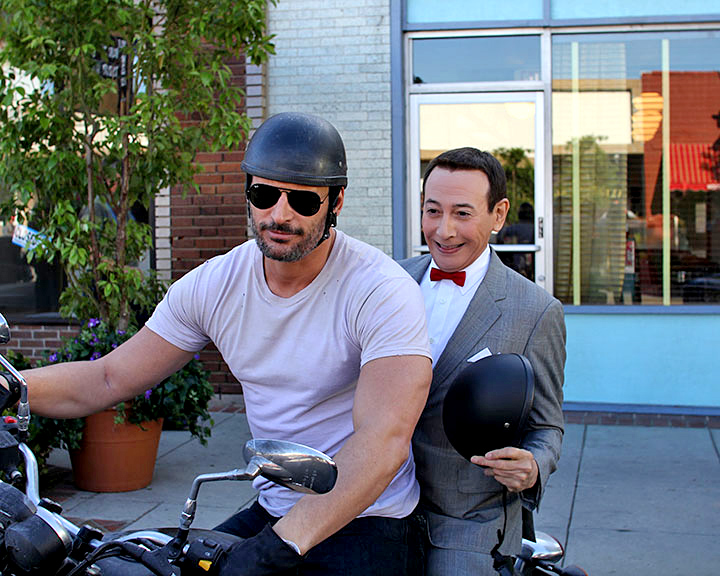
Enter a cool, mysterious stranger (Joe Manganiello) who, despite his bad boy attitude and good looks (he pulls up on a motorcycle and wears a tight tee-shirt like Marlon Brando in The Wild One) has a lot in common with Pee-wee. They both agree on the superiority of root-beer barrels as the best candy in the world, and they hit it off over Pee-wee’s milkshake, which Manganiello declares “top five, all-time.” Pee-wee gives Manganiello a tour of Fairville, including the miniature model of the town Pee-wee has built in his backyard, but Manganiello is shocked when he realizes how sheltered Pee-wee is. He encourages him to hit the open road, “break some rules and break some hearts,” and as an incentive invites Pee-wee to his upcoming birthday party in New York City.

pee-wee

Manganiello is playing himself, sort of; I wasn’t familiar with him, so I was in the same boat as Pee-wee (although he played Flash Thompson way back in the 2002 Spider-Man movie, so I guess I did see him in that). Manganiello is a winning and hilarious foil to Pee-wee, “cool” in a more traditional way than Pee-wee but eccentric enough to fit into Pee-wee’s world. The best part about his character is that his friendship with Pee-wee is genuine: he really likes Pee-wee and recognizes in him a different kind of cool. Later, Manganiello’s anticipation for his birthday party and his deep disappointment when he thinks Pee-wee isn’t coming are fertile sources of comedy. Like Pee-wee Herman, “Joe Manganiello” is a childlike character, a child’s idea of a rich and famous star who rides a motorcycle around the country and throws lavish (but PG-rated) parties for himself when not acting.

With a motive to leave town, Pee-wee embarks on his journey, and from here the film is completely episodic, and like Big Adventure it consists of encounters with funny characters in a slightly off-kilter version of roadside America. Pee-wee is first carjacked by a trio of buxom bank robbers straight out of a Russ Meyer film, and after he escapes he hitches a ride with a traveling novelties salesman. Later, Diane Salinger (Simone in Big Adventure) turns up as a Katharine Hepburn-like heiress piloting a flying car. One of the running jokes and a constant for Pee-wee’s character is that while he’s good-natured, he isn’t a Pollyana, and while we trust that the world won’t be unnecessarily cruel to Pee-wee, he faces enough zany setbacks to make him (and the audience) wonder whether he’ll make it to Manganiello’s party in time.

While this version of Pee-wee is a little less trusting of the outside world, he still makes friends wherever he goes, and many of the episodes show him being encouraged by his new friends or learning to his surprise that he can handle the rough world outside Fairville. Whether he’s caught in an extended “farmer’s daughter” joke, hitching a ride with a group of sassy hairdressers, or adjusting to life in an Amish hamlet, Pee-wee sees the best in people, even when it would make sense for him not to.

Like many modern reboots and revivals of old properties, this “comeback” is packed with nostalgic callbacks and Easter eggs, remixing an older story by sprinkling in familiar themes, character types, and imagery to summon up the old magic. Instead of the dinosaur-themed truck stop in Big Adventure, there’s a touristy snake farm; the criminal supervixens recall both the movie archetypes that director Tim Burton incorporated into Big Adventure‘s world and more specifically the ex-con Mickey whom Pee-wee befriended in that film; and the famous “Breakfast Machine” from Big Adventure is homaged in an extended Rube Goldberg sequence that stretches all the way down the street from Pee-wee’s house and encompasses every aspect of his morning commute (I was waiting for a joke to reveal that Pee-wee can’t leave town because he spends so much time setting up this contraption).

I’m a big enough fan that I enjoyed those references, but I’m glad to say that the film has plenty of original gags, and that most of the material works well enough on its own, even if you’ve never seen a Pee-wee Herman movie before. And the film is fast-paced enough that jokes that don’t work are quickly left behind for something new. In addition, Pee-wee’s desperate desire to please his new friend and make it to his party is a slightly different dynamic than the search for his stolen bicycle in Big Adventure; after all, there was no risk that his bicycle might not be happy to be found. Unlike Paul Reubens, Pee-wee himself hasn’t aged a day: his voice is a little deeper in a few scenes, and there’s one scene toward the end where he looks a little like John Waters without the mustache, but in general he’s as timeless as the mash-up of time periods in which he lives.

Director John Lee (Wonder Showzen; The Heart, She Holler) captures the sincere but heightened tone of Pee-wee’s world quite well, proving his own surreal brand of humor more than compatible with Reubens’. The many comic performers in the cast are game and then some, and Dan Butts’ production design captures both the Norman Rockwell world of Fairville and the many different locations Pee-wee travels to. Musically, it’s hard to compete with Danny Elfman’s contributions to Pee-wee’s Big Adventure and the circus-themed Big Top Pee-wee, but former DEVO frontman Mark Mothersbaugh (whose film credits have included scores for Rushmore and The Lego Movie) provides an enjoyably quirky score; the highlight is a slightly cracked Leonard Bernstein-style salute to New York.

To sum up, I’m probably too close to tell you whether this is a fans-only proposition, but as a fan, I liked it. It’s not quite on the level of Pee-wee’s Big Adventure, but since I’ve already revealed that’s one of my favorite movies of all time, that’s no great criticism. It’s streaming on Netflix Instant now, so I invite you to give it a try. What have you got to lose?

Introducing a New Series at The Solute

Buckrogersserial

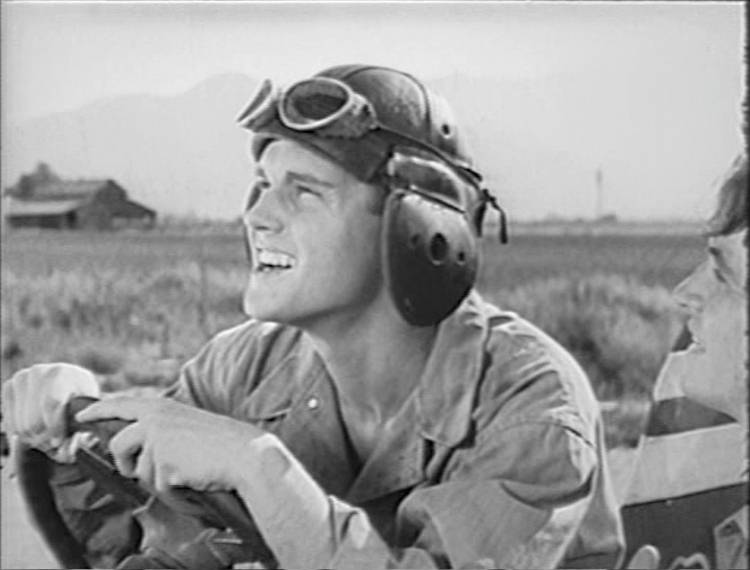
If you’ve enjoyed my summer coverage of movie serials in Fates Worse Than Death, I invite you to check out a new serial-related feature at The Solute: in Tune In Next Week, I’ll be watching and reviewing the same kinds of serials one episode at a time rather than over the course of a week. I explain more about this approach in this introductory article, as well as setting up the first serial I’ll be covering: 1939’s Buck Rogers, starring Flash Gordon star Buster Crabbe. The weekly approach will probably be a little different from what I did in Fates Worse Than Death, but I plan to continue that series here in the summer, and I expect the two formats to complement one another. (I also don’t plan on repeating coverage of serials I’ve already written about here.) New installments of Tune In Next Week will appear on The Solute on Saturday mornings. Come on over!

Wichita Symphony Orchestra: “The Gershwin Experience”

Wichita Symphony Orchestra
Daniel Hege, Music Director and Conductor
Lisa Vroman, soprano
Rick Faugno, dancer/vocalist
Jeffrey Biegel, piano

I reviewed “The Gershwin Experience,” a concert with multimedia elements (including still photos and archival footage projected onto a screen) celebrating the music of George Gershwin, presented by the Wichita Symphony Orchestra with the guest artists listed above. Many of Gershwin’s classic songs were performed, as well as the complete Rhapsody in Blue and excerpts from some of Gershwin’s other instrumental works. You can read my review for the Eagle here.

St. Olaf Choir in Wichita: An Interview with Conductor Anton Armstrong

StOlaf.Armstrong

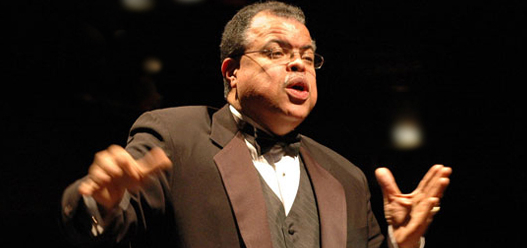
The internationally-renowned St. Olaf Choir arrives in Wichita next week as part of its 2016 National Tour. In advance of the concert, I had the opportunity to speak with conductor Dr. Anton Armstrong. He looked back at his longtime affiliation with the St. Olaf Choir (over a quarter of a century), provided details on some of the compositions the Choir will be performing, and spoke about his inclusive philosophy of programming and the challenges of balancing tradition and innovation in a church school.

Guy Vollen: Would you like to speak about the section of the program paying tribute to Kenneth L. Jennings (Armstrong’s predecessor as conductor, who passed away in 2015)?

Anton Armstrong:
Dr. Jennings served on the St. Olaf faculty for 37 years, and the last 22 he served as conductor of the St. Olaf Choir. He was my mentor; I actually sang under his direction my last two years at St. Olaf, and Kenneth Jennings was really almost without peer among choral conductors. He followed 65 years of the founder of this choir, F. Melius Christiansen, and his son Olaf, who in many ways, while he added his own distinctive mark, perpetuated the ideals set forth by his father. And when Dr. Jennings took the helm of the choir in 1968, he respected that legacy, and he built upon its best traits, but he also understood that it needed to grow in new directions. So first of all it was creating a natural and more healthy sound for the choir, which to use his own words “had gotten a bit stiff”; a wider repertoire, especially looking at music that was now being published and available to singers from a more modern period, but especially went back and started looking for earlier music with greater historical performance accuracy; and he introduced the use of instruments, because up until that point the St. Olaf Choir had been known primarily as an a cappella choir that sang without any accompaniment. He introduced the use of instruments, and also he began the use of secular music, and even some wider global music.

Kenneth Jennings was also a wonderful composer. Certainly, during his teaching career he didn’t have a lot of time for that. He did some: actually, the last work of that set, “All You Works of the Lord,” was written in 1981, while he was still on the faculty. The other two pieces come from the 1990s: he wrote the “Spiritual Songs” and “The Lord is the Everlasting God” in the first decade after his retirement. They show I think, though, the consummate craftsmanship that he brought to choral composition. Always text was paramount with him, and the beautiful setting, how that was handled as a composer, and you saw that revealed with how he interpreted text with a choral ensemble.

GV: I see you’re working with Andre Thomas.

AA: Andre Thomas and I have been friends for 38 years; we were in graduate school together, and our friendship has been both professional and he’s one of my closest friends, so it’s nice when you have talented people like that you can go to. And certainly, Dr. Thomas is a native of your city. He still loves Wichita, and he is a graduate of Friends University, he began his teaching career there some years ago, and he still considers that home, he still has family there, so it’s also neat to be bringing that piece on this tour to his hometown. This “Credo,” actually, I did not put “premiere performance,” because I cannot actually state that for a fact, but I know we’re doing some of the earliest performances. He and I will debut “Credo” at Carnegie Hall in March. The music was available now, and I don’t want to go to Carnegie Hall in March not knowing the piece. This was a great piece to take out. The New York people were a little bit miffed.

GV: So is that something I can say is a “preview”?

AA: It’s a preview, yeah, so he and I are doing what we’re now saying is the New York Carnegie Hall debut of this piece, with a choir of about 800 singers. I will be conducting, and he will be at the piano.

GV: That is exciting. And I notice you’re programming a piece by a student composer. Would you like to say anything about “And You Will Sleep” and the context of the composition?

AA: Yes. Philip [Biedenbender] is a senior in the choir, and you’ll also see him featured on this concert if you’re able to attend; he’s one of our two student pianists. He’s a very gifted young man. He actually approached me last spring and said, “I want to write a piece for the Christmas festival,” and to his credit he worked and had a piece ready for me when we resumed school in the fall. We went through a couple of periods of revision. First of all, I’m not a composer, but I will take the piece, I will sing through part of it, I will play it at the piano, and I thought, it feels good under my fingers. Vocally, there were some points where I asked him to do some rewriting where it was too complicated, and I think he was trying to do text painting, but I said it’s maybe too complicated. Less is more sometimes. Well, he found that balance, and there was a portion in the first version: most of the text is by his mother, and then they had inserted text from Scripture. Well, the first text that they used, the music changed, and it just didn’t work. I said, this sounds like two different pieces right here, and he said, “I know. I’m not happy with it.” He said, “We have another possibility,” and this was the verse from Philippians that we later used. And all of a sudden it became a cohesive entity.

What I appreciate is, his mom came in and shared: the text of this piece speaks of “The walls of a stable are not worthy of the King. You come, little one, born of the songs of angels, echoes of prophets, and the life of a strange star. Do not cry, though you must lie on this rough, unforgiving wood, wrapped in lengths of linen, and you will sleep.” And she goes into this text from Philippians from that. But she came to talk to the choir, and it’s a paradox: the “unforgiving wood” is not just the imagery of a manger, it also refers to the imagery of the cross, which Christ was killed on, and the linen is not just the swaddling cloth but also the linens that wrap the body of Jesus afterward. So this image of this paradox–he’s young, twenty-one, twenty-two years old–he really captured this.

This is an emerging talent and he is a very humble young man. Very gifted but very humble and very thoughtful. I am not one, especially on a tour program, to put a student composition out simply because I think it’s neat to feature. But we’ve had, especially in the last ten to fifteen years, wonderful growth in those coming to St. Olaf who want to study composition, and a fine faculty of mentor-composers on the St. Olaf faculty, so a number of our students are hitting things out of the park even before they leave college. We’ve had several students who have been award-winners, both state and nationally, for their compositional skills, and so I’m delighted to have found a piece that not only is very fine, but we’re able to say, “this is something that can stand on the same program with music of J. S. Bach, the music of Kurt Weill.” It’s a lovely piece, and I think one that is going to be very emotionally compelling and musically compelling to those who hear it.

GV: That’s great. I look forward to hearing it. So I can see from your program that, like you said, you’ve really broken it wide open in terms of repertoire. What else would you like to highlight about the pieces the Choir will be singing?

AA: The music of Bach has always been part of the staple repertoire, even back to the founding days of F. Melius Christiansen. “Ich Lasse Dich Nicht” is a motet that is not one of what I call the “Big Six,” things like “Singet dem Herrn,” and “Der Geist” and “Jesu, meine Freude,” but it is lovely. It comes from an earlier period of Bach before he was in Leipzig, and then the piece was added onto during his Leipzig years. It’s a delightful piece. For seventeen summers I’ve been on the conducting faculty of the Oregon Bach Festival, in Eugene, Oregon, so this is a piece I got to explore last summer, and wanted to bring it here. I found out later that this piece was done one time by the St. Olaf Choir back in the 1950s when Olaf Christiansen had the choir, but I think he did it in English. I didn’t recognize it at first until I was doing some reading.

The “Magnificat” by David Childs was commissioned by me for the Oregon Bach Festival. I direct a high school program there of extremely talented high school students. I founded that organization–the Stangeland Family Youth Choral Academy is what it’s called–in 1998 and two summers ago we were celebrating the 15th anniversary of the SFYCA, and so the “Magnificat” was a commission by the Bach Festival for that occasion, and so this will only be the second set of performances that it has. David Childs is a composer and a conductor in Dallas. I often try to find music at least that represent composers who are either in or have a connection with a region, so Andre’s piece for one, and this piece by David Childs. It’s a beautiful piece for organ and choir. David is a New Zealander by birth and upbringing, and moved to the United States as an adult, married an American, and lives and conducts in Dallas. But for many years David’s father was the organist and choir director at Christchurch Cathedral in Christchurch, New Zealand, and you feel this very strong Anglican tradition coming out in this piece.

I think one of the unique pieces on this program, not only for the St. Olaf Choir, but I don’t think it’s a well-known piece at all, is this “Kiddush” by Kurt Weill. Weill you know as writing for the theater and other things. Last summer at a conference of Chorus America, the Zamir Chorale of Boston, which is maybe the preeminent choral organization in this country dealing with music of the Jewish tradition, had this as part of a workshop, and I was just captivated. It’s written for chorus and soloists, and it was written for Shabbat service for Weill’s father’s synagogue. You get the harmonic flavor of Kurt Weill, you get the influence of blues notes, but for choir and soloists and organ: it’s like a breath of fresh air. And the kids have enjoyed it and we’ve found soloists who can sing it in the choir, so it’s really turning into a neat piece.

And the last section, I was simply going to say was a collection of hymns and spiritual songs, so you know “Come, Ye Disconsolate” is actually a setting for men’s voices. Part of, for me in a college of the church, is to still keep a younger generation–it’s why the St. Olaf Choir actually was founded. F. Melius Christiansen started this choir because he felt the young people of these new immigrants–these Canadian immigrants, these Norwegian immigrant children–were forgetting the great hymns of their forebears. Well, the same thing could be said a hundred-some-odd years later, with the current generation. And you know for a lot of students, they did not know this hymn. When you hear the guys sing it it’s very moving. Terre Johnson’s setting is beautiful.

And “Nobody Knows the Trouble I’ve Seen” is not the typical tune that most people know about. This is actually an older version that is known mostly in the black community: [sings] “Nobody knows the trouble I’ve seen, Lord.” It has stayed in the black community. But I love that “Nobody Knows” because I think everybody’s going to be expecting us to sing something, and a lot of them won’t know this tune, and as an African-American I see a lot of people arranging spirituals, and even African-Americans, the younger ones. The slave song is basically a simple song that had a natural improvisation with layered melodies that came together to make harmony. So the essence of the true slave song is melody and rhythm.

I think of programming is a smorgasbord type of thing, that there needs to be something on the program for everyone. There are going to be those there because they will love some of the new pieces, those who just want to hear Bach and Mendelssohn (“Lift Thine Eyes”) and they could go to heaven with that. Ginastera (“O Vos Omnes”), you know, for some people that will be out of the box, not quite like Penderecki and Ligeti, but it certainly is pushing things for a lot of people. But I’m also cognizant that we’re going through areas in this tour that are still strongly faith-based communities on this tour. I call this the “I-35 tour,” driving around I-35 to get all the way down to San Antonio and back. There’s a reason we’re in many more churches on this tour than maybe a tour to the East coast. If you look at the tour book, we were in many of their major concert halls, college concert halls; that’s not so much the case with this one. There are strong communities of faith that have thriving music programs, and so the music reflects that, the tour program reflects that, but with a wide variety.

I always think, “If my mother was in the audience, what would she want to hear?” I mean, she would love Bach, she would love Mendelssohn. She might put up with some of the other stuff, but if I gave her those hymns and those spirituals, she’d be a happy camper. So there’s something I think on the table for everyone: for the choral aficionado, those people who want to come and maybe have no faith connection but they appreciate the artistry of the choir, maybe they’ve seen it on television or heard the recordings; and then for that person of faith who just needs to come and fill their soul in a certain way, and maybe some of the other music will be high-falutin and off-putting, but when you sing “It is Well with My Soul” it just goes right to the core of who they are. It transcends age and race, and all the other things that can be barriers. I hope that this concert can bring people together: we live in a country right now that is living in fear, that is living in division, and I hope that even for the ninety minutes people experience it they can find comfort, they can find hope, they can find unity.

GV: You mentioned the school’s foundation in the faith tradition and Norwegian immigrants, and obviously there’s this very concentrated Lutheran tradition in your part of the country, but with St. Olaf’s reputation I’m sure you attract students from all over now.

AA: We certainly do.

GV: So would you like to say anything about that diversity, and how far some of your students have come to be part of the choir?

AA: This is where we maybe are a little bit different from some of our wonderful sister schools in this region: if you were to look at the personnel pages for instance of, maybe, Concordia or Luther, you’d find excellent singers. Their choirs are excellent. But you’d find very regional schools. You’d find a lot of people from Minnesota, and Iowa, maybe South Dakota, Wisconsin. You’ll find certainly a fair amount of those populated in this choir; you’re going to find people from literally throughout the nation. I think this year I don’t have any international students; last year I did have three. But it’s a wide view.

And when we talk about diversity: now you’re talking to the African-American conductor, but I want to go beyond. You’ll see racial diversity: I have African-American students in there, I have Asian students in that choir, I have Latino students, I have biracial people in that choir that some of you wouldn’t ever recognize, depending upon how you’re looking at them. But for me diversity is also–and it’s not a cop-out–I have a variety of socio-economic [backgrounds]; I have young people in that choir who, yes, would say they are people of faith, they come heavily from a Christian tradition. But you see Kurt Weill’s in there because I also have students in that choir who do come from a Judaic [background], they come from mixed–I have a student in there who one parent’s Jewish, one parent’s Christian. Whether it’s Muslim, whether it’s Buddhist, or as they would say today, none (they have no faith affiliation, whether they call themselves atheist or agnostic), the only thing I ask–and there are a couple of students, I very well know, they’ve been very pronounced without being offensive about it–that they’re in this choir because they can appreciate, respect the high artistry and the music-making in the choir. They can understand and appreciate the wonderful texts that are experienced, whether or not they can formally say that this is their journey. But they are welcome, and I will say to the student, “You are free. What I won’t tolerate is somebody who will be dismissive of that, if you’re going to be part of that, but I’m not asking you to swallow something that you can’t personally believe.” But there is a mutual respect amongst that.

And I think that’s true Lutheranism in the broadest sense: it’s a very ecumenical movement. And I’m saying this to you because I’m on a committee that’s dealing with this, because as we’re diversifying our community at St. Olaf, there are a lot of people–some staff, some students–who feel that if you’re not Lutheran, you’re being excluded, and we’re trying to figure out, how do you explain that Lutheranism is about a global awareness, you know? And I think at least Lutheranism as it’s practiced in the twenty-first century, and not a parochial viewpoint but if you actually go back, it has always been, especially in Lutheran education, one that seeks excellence, so academic excellence is not to be compromised. It’s a very interesting paradox, an interesting tension, for the search for excellence and truth, and also that we believe that we’re rooted in a sphere of a creator God, but a creator God who doesn’t ask you to be myopic, and to be narrow about how you view things. So I think that over the years this choir has been kind of a microcosm of the college in saying yes, we are still faith-based, but we look beyond that. There is almost no secular music on the program this year: that was intentional. Last year you would have seen almost a third of the program was secular. And part of that was where we were going. We were out on the East coast, a very different thing, and an audience that is seeking different things. This is my twenty-sixth year as conductor, and I understand that much, and I travel the country as a guest conductor a great deal, and you get a feel for what people want. I’m not in any way trying to type-cast a region I think, but you understand what people seek. If I took this sort of program to the Pacific Northwest, it would not be met in the same way. They would enjoy part of it, but they would want something else, and I know they’d want something else.

The great work of F. Melius Christiansen, and John Finley Williamson with the Westminster Choir, and the heavy hitters like Robert Shaw, they did their work well enough that they planted seeds, and they’re no longer the only thing on the block, but I still think the St. Olaf Choir is a pace-setting choir, a choir that not only brings artistic excellence, but what we try to do through our concerts is a transformational experience. It goes beyond entertainment; it wants to touch the entirety of the listener, in body, mind, spirit, and voice.

Dr. Armstrong will lead the St. Olaf Choir in concert in Wichita at East Heights United Methodist Church (4407 East Douglas Avenue) 7 pm, Tuesday, February 2, 2016.

Interview conducted by phone Thursday, January 21, 2016. Edited for clarity and length.
David Bowie, Immortal

bowie.manwhofell

Observing (and sharing in) the outpouring of grief following David Bowie’s untimely death at age 69, it’s striking just how diverse Bowie’s 40-plus-year career was, and how many avenues existed by which young fans might discover him: his appearances as an actor or the use of his songs in movies; as a continually reinventing man-of-a-thousand-faces fashion icon; as recording artist and producer, or as the writer of songs covered by the many artists whom he influenced. There are probably young people who first heard his name through the many references to Bowie on The Venture Bros., whose creators are obviously big fans. A Picasso or Stravinsky of rock music, Bowie was continually taking on new looks, sounds, and personae, always exploring.

bowie.lets.dance

As a kid in the 1980s, I think my first awareness of David Bowie was his “pop” album Let’s Dance, followed within the next couple of years by his duet cover of “Dancing in the Streets” with Mick Jagger and his lead role in Labyrinth. It would be some years later before I was really conscious that Bowie had been a huge star before his dalliances with MTV and Jim Henson, and that Labyrinth wasn’t even his first starring film role. The Man Who Fell to Earth had previously been the perfect vehicle for Bowie, the story of an alien visitor who succumbs to the temptations of life on Earth.
bowie.labyrinth

Bowie’s characters, musical and otherwise, were almost always otherworldly, even when playing down-to-earth self-caricatures like his cameo in Zoolander. What unified his most far-flung performances was his magnetism: he couldn’t help but be the center of whatever scene he was in. This is what I wrote on Facebook just last October, after watching The Hunger:

David Bowie is the man: you can slather him in old man makeup, and cast Catherine Deneuve and Susan Sarandon as vampire lovers, and Bowie’s STILL the most interesting part of the movie!? That is star power.

bowie.hunger

Reading A Year With Swollen Appendices, the 1995 diary by Bowie’s friend and collaborator Brian Eno, I was struck by the many appearances Bowie makes in its pages, just exchanging emails or meeting socially, or appearing at art openings, charity events, et cetera. By the mid-’90s, Bowie had amassed a body of work anyone could be proud of, and it would have been perfectly understandable for him to settle into famous rock star retirement. Yet he continued to produce music and videos up until his last days, releasing his final album, Blackstar, just last week. It’s obvious in retrospect that it was a farewell gesture from a man who knew he was ill, but nonetheless an act of courage and incredible will.

Bowie.Blackstar

It’s been heartening to see how much Bowie and his work meant to people, not to mention a reminder that seemingly unstoppable artists, even the otherworldly Bowie–chameleon, alien, vampire, Goblin King, magician–won’t be with us forever. He leaves behind an enormous body of work, much of which I still have yet to discover for myself.

My 2015 in Film

This year I saw 17 new releases (US release in 2015), mostly action blockbusters and animated family films, with a few outliers. As always, I didn’t see nearly enough to offer a comprehensive ranking (as subjective as those things are to begin with), but I can at least point to some of my favorites. (Also, I’m terrible at ranking things, so this could easily change tomorrow, and in fact has already undergone changes since I started drafting this.)

Duke_of_Burgundy

5. The Duke of Burgundy
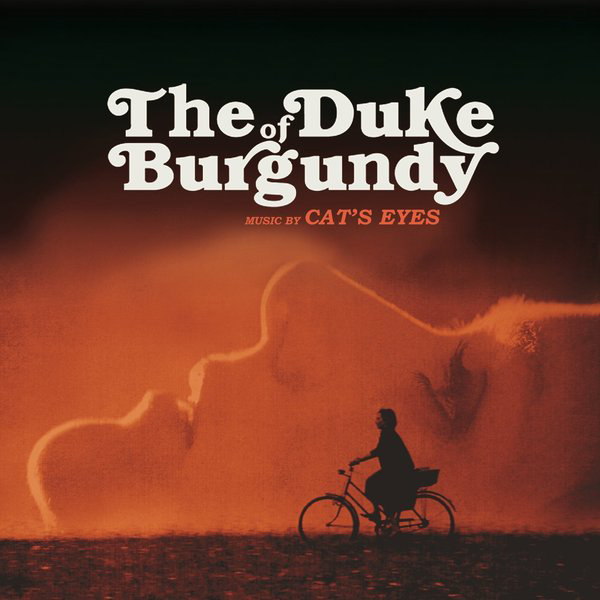
I loved a lot about this movie, the story of a troubled dominant-submissive lesbian relationship. Director Peter Strickland’s appropriation of a 1970s European soft porn aesthetic, all soft focus and chanteuse-style pop music, is right in my postmodern wheelhouse (one of the opening credits, after “Dress and Lingerie” is for “Perfume by Je suis Gizella“). And there is a surprising streak of dry humor amidst the angst-filled meditations on control and the rigid boundaries we set for ourselves and each other. However, too many of the visual and auditory flourishes were straight out of David Lynch, particularly a sequence that felt uncomfortably indebted to Mulholland Drive, crossing the line beyond “homage.” I still liked the movie, but it may have been a victim of my high expectations.

Crimson-Peak

4. Crimson Peak
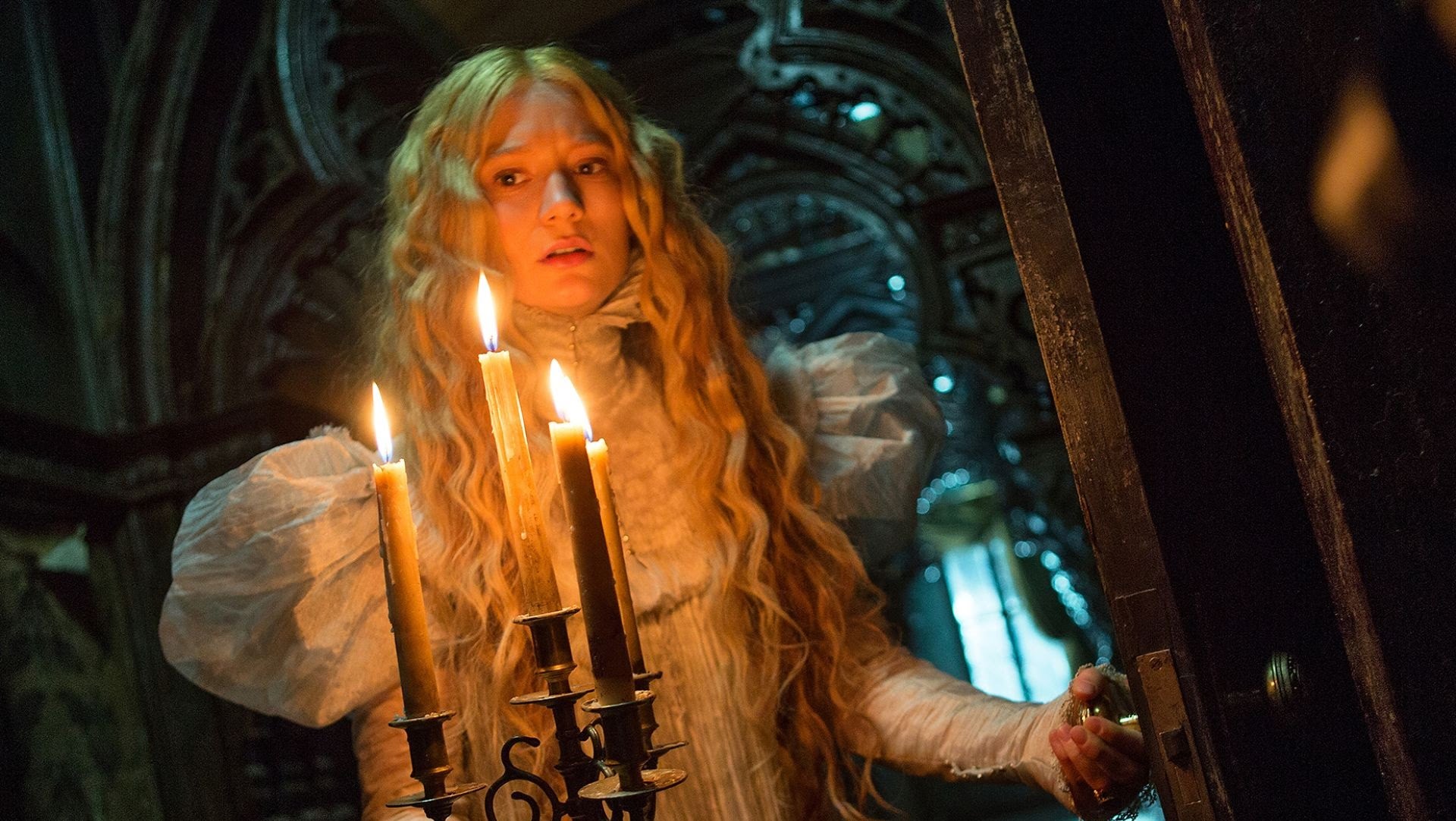
After Guillermo Del Toro’s previous film, Pacific Rim, Crimson Peak was a welcome return to focus on human characters and their problems, while still featuring the director’s trademark grotesque monsters (this time the bloody ghosts that haunt the titular mansion). A gloriously gloomy gothic romance, it starred a perfectly cast Tom Hiddleston and Jessica Chastain as siblings with a dark secret, and Mia Wasikowska as the innocent caught in their web.

she-devils

3. Mad Max: Fury Road
I was as surprised as anyone to see the post-apocalyptic Mad Max series come roaring back after a thirty year absence from the screen, but director George Miller had clearly spent the time away thinking about the logistics and meaning of his future-primitive setting. Tom Hardy is fine as the title character, but it’s really Charlize Theron’s show as the bad-ass Furiosa. In addition to updating the setting in light of concerns about environmental collapse and climate change, Fury Road gives a fiercely feminist reading of the traditionally testosterone-filled “road warrior” genre (here’s what I thought immediately after seeing it).

Inside_Out_(2015_film)_poster

2. Inside Out
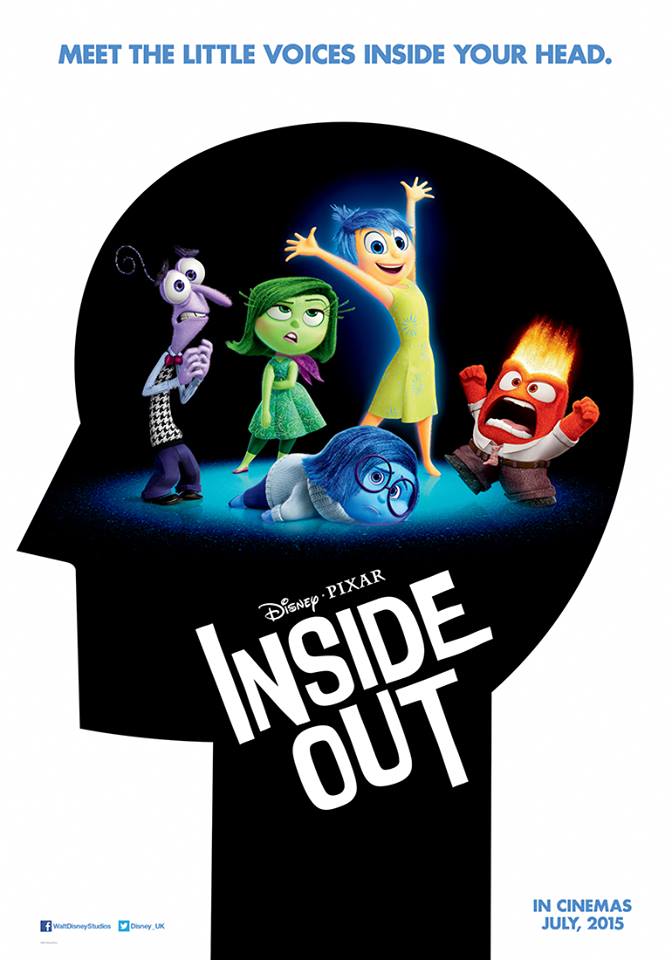
A return to the daring conceptual heights of Ratatouille and Wall-E, Inside Out is simply the best Pixar film in years. Unsurprisingly, Inside Out was written and directed by Pete Docter, who also created Monsters, Inc.: there’s a similar fascination with factory-like spaces and a unique “backstage” interpretation of Pixar’s usual “secret life of ______” formula. Although the focus is on Joy, Sadness, and the other personified emotions inside eleven-year-old Riley’s head, the film benefits from the animation studio’s increasing confidence in creating expressive human characters that don’t resemble creepy dolls. I doubt it would work as well as it does if Riley and her parents didn’t hold up their end of the story in their scenes.

what_we_do_in_the_shadows

1. What We Do in the Shadows
I already talked up this one as the funniest movie I had seen all year when I saw it in October, and in the two months since I haven’t seen anything to topple it from my top spot. In addition to its humor, however, What We Do in the Shadows is as tightly-plotted as an Edgar Wright film while appearing as off-the-cuff as a Christopher Guest mockumentary or The Office. It also turns out to have some clever (and often poignant) observations about family, friendship, romance, and ambition (the last represented by Jackie van Beek, a “thrall” who hopes to ascend to vampirehood, a process that resembles an unpaid internship and virtual slavery to her vampire “master”).

AntMan

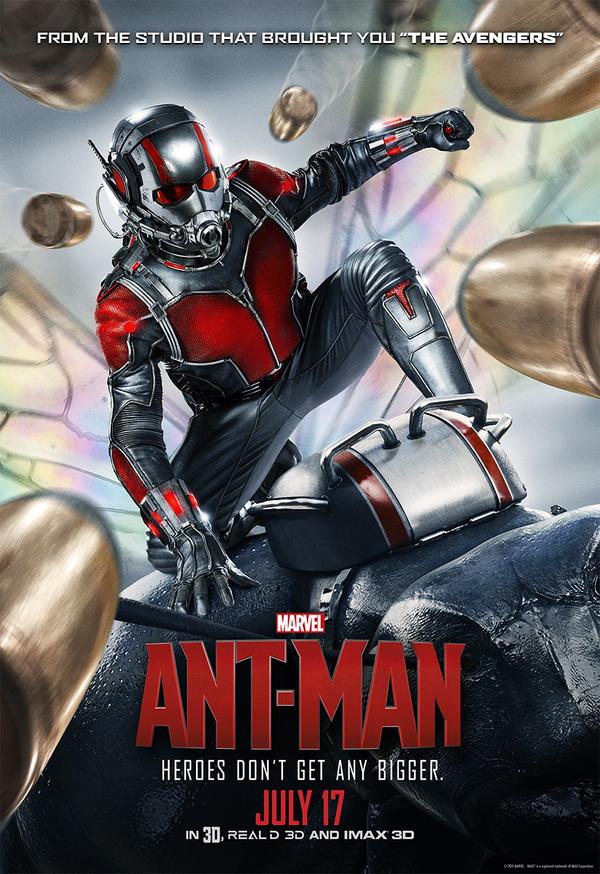
Honorable Mention: Speaking of Edgar Wright, like many I was disappointed when Wright left Marvel’s Ant-Man, citing creative differences. But the movie we got, directed by Peyton Reed, still has Wright’s fingerprints all over it, from the fast cutting and clever narrative tricks to the visuals, which play with scale in a number of humorous and dramatic ways. In general I’ve enjoyed the free-standing Marvel movies more than the big team-ups: as exhilarating as it is as a comic book fan to see stories overlap and interact on screen just as they do in the comics, there’s a limit to how many characters and plot lines can comfortably fit in a feature film before I stop caring about any of them.

Surprisingly Good: Home did very well for itself at the box office and mostly got decent reviews. But unless you saw it you wouldn’t know how visually inventive it is and how its sense of humor is frequently a lot weirder than the clips of Jim Parsons as an overly-literal alien shown in the trailers suggested. (I’m willing to believe that the film’s stranger touches are drawn from the book it was based on, The True Meaning of Smekday by Adam Rex, but I haven’t read it.) I also appreciated the film’s emotional stakes and the revelation that Inside Out wasn’t the only family movie this year to stress the importance of empathy and accepting that sadness and grief have their place as healthy emotions. Finally, props for the good use it made of Steve Martin, who should really be considered more often as a voice actor.

star_wars_buddies4LIFE

Best Reboot (non-Mad Max category): I was pretty high on Star Wars: The Force Awakens after I saw it, and even after cooling off there’s still a lot I like about it. Under the new management of corporate owner Disney and director J. J. Abrams, The Force Awakens feels like a Star Wars film, visually and aurally. The return to largely practical effects is appreciated, and the new characters and their stories have some compelling hooks. As a passing of the torch to the new generation, it’s much more successful than, say, Indiana Jones and the Kingdom of the Crystal Skull, which did little to make me care about Jones’ son Mutt. In fact, I liked just about everything about The Force Awakens except the plot, which is just too much of a rehash of the original 1977 film (especially considering the Death Star had already been redone in 1983’s Return of the Jedi). Considering that The Force Awakens‘ planet-sized Starkiller follows Star Trek Into Darkness, which used the same ploy of “like the Enterprise, but bigger” for its bad guy’s ship, I’m glad Abrams will be stepping aside for the next installment of the Star Wars saga. After the much-maligned prequel trilogy, however, this was probably just what was needed to right the ship and get audiences excited again.

Most Forgettable: Fortunately, this year I haven’t seen any new releases that I really hated, so I don’t have a pick for “the worst.” However, at the bottom of my list is Jurassic World, which delivered the big dinosaur action it promised but was lackluster in all other respects, both derivative and lazy. I also didn’t get much out of Avengers: Age of Ultron (see my above comments about team-ups), but unlike Jurassic World it at least had compelling characters and the advancement of the ongoing Marvel plot going for it.

2015 was also another big year for catching up on movies from the past. In addition to the second summer of exploring serials in my Fates Worse Than Death series and my successful attempt to take in 31 horror films in October, I took advantage of repertory screenings, DVDs, TCM, Netflix, and YouTube to watch a variety of older films throughout the year.

wickedlady

First-time non-2015 movies that I liked were (in no particular order) El Hombre y el Monstruo (a Mexican riff on Jekyll and Hyde featuring a classical pianist who has sold his soul to the devil: whenever he plays a particular piece he transforms into a murderous wolfman), Polyester, The Man Who Laughed, The Thing, Repo Man, The Wicked Lady (1945), and the double feature Grindhouse (particularly Planet Terror, Robert Rodriguez’s half, but I appreciated the spirit of the whole project). I also caught up with a few movies from 2014 that I had missed the first time around, among them The Babadook, Under the Skin (a film I respected more than loved, but which isn’t looking for my approval anyway), and Edge of Tomorrow (aka Live/Die/Repeat), which did something I wouldn’t have thought possible: delivered a military sci-fi movie that both held my interest and made me care about its characters.

conquest

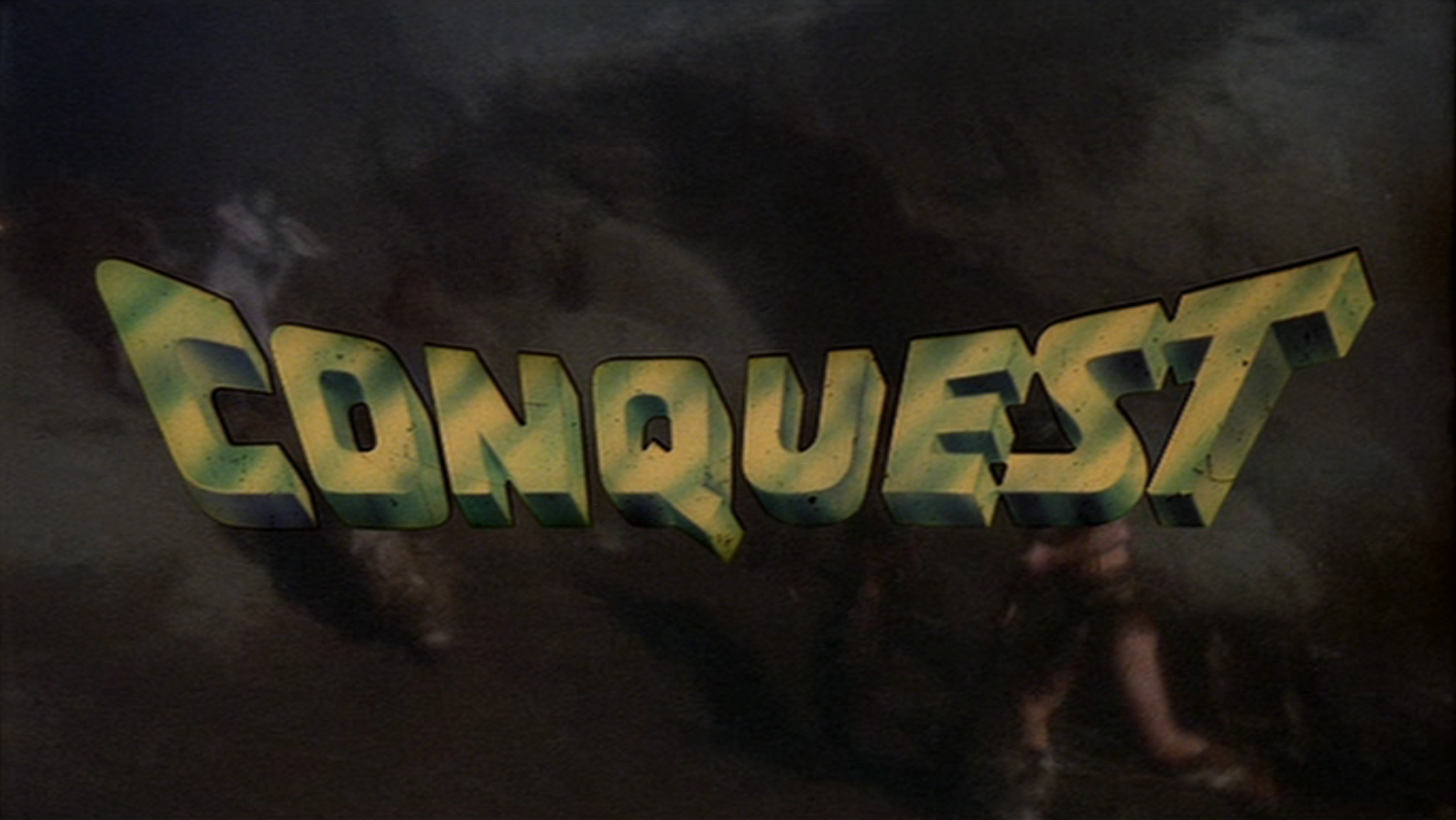
Worst non-2015 movie: This is easy. After seeing Lucio Fulci’s City of the Living Dead last year, I wasn’t exactly a fan: the movie was pretty hard for me to take, both extremely gory and nerve-wracking in its disregard for conventional plotting. Still, that’s one way to make a memorable horror movie, and although I didn’t love it I was willing to explore Fulci’s filmography further. Unfortunately, the next Fulci movie I watched was 1981’s Conquest, a dismal sword-and-sorcery picture that was clearly made in work-for-hire mode. It has some stylish character designs and graphic fight scenes, and the trailer puts enough cool moments together that I expected a passable Conan the Barbarian rip-off. Alas, those moments are doled out in an extremely stingy manner and the rest is filled with walking and talking scenes that have almost no energy, resulting in a dull, lifeless slog. (As far as Fulci goes, I also ended up seeing The House by the Cemetery recently, and while I didn’t care for it much, it was a lot better than Conquest.)

That’s about it for my look back at 2015. Happy New Year, and see you in 2016!

My 2015 in Books

20151206_144709.jpg

As the year draws to a close, it’s time for another post to summarize my activity in the past twelve months. As I did last year, I kept track of the books I read this year (I’ll look back on films I watched this year tomorrow). As before, I’ve only listed books I read from beginning to end (that’s why only one of the Robert E. Howard collections I wrote about in October is listed, the others having been read before). All were first-time reads (although I know I had read parts of American Humor before, but apparently not the whole thing), and I managed to keep my resolution to read more than I did last year, including some classics (hey, it turns out Moby Dick is a pretty good book!).

How does one summarize a year of reading activity? I don’t read by working through a list: I have books in mind that I want to get to, and I own a lot of books I haven’t read yet, but in general I let the last book I finished help me decide what to read next. Sometimes I continue along a certain track (several threads appeared in my reading this year, including books about the art and craft of writing; Wonder Woman and the fascinating behind-the-scenes story of her creator, psychologist and sex researcher William Moulton Marston; non-fiction on a variety of subjects; and several novels and collections of fiction).

After reading so much about Wonder Woman, the opportunity to pick up a set of reprints of her contemporary Phantom Lady made for a useful comparison. For one thing, it’s interesting to observe how much bondage and role-playing is in the wholesome Wonder Woman as opposed to the supposedly racier Phantom Lady; the difference is largely in that Moulton’s Wonder Woman presents its themes of domination and restraint from a playful perspective, and Harry G. Peter’s simple illustrations don’t draw quite as much as attention as Matt Baker’s famous “good girl” art (although in Classic Phantom Lady Volume Two, Jim Vadeboncoeur, Jr. makes a strong case that Baker drew much less Phantom Lady than he is usually credited with).

At other times, after spending time in a particular headspace, I’m ready for a change: I was eager to part company with “Walter,” the narrator of the Victorian sexual diary My Secret Life, after nearly 600 pages (and the original work was published in eleven volumes!). “Walter’s” escapades are by turns titillating, horrifying, and deeply sad, the book itself a mixture of Victorian letters to Penthouse, inadvertent social history, and pre-Freudian psychosexual analysis. Even abridged, it’s “everything you wanted to know about Victorian sex but were afraid to ask.”

That made Edmond Hamilton’s The Valley of Creation, a short and breezy pulp novel, a welcome palate-cleanser. I used to read such short novels frequently; although I enjoyed most of them, I also thought of them as research, fleshing out my picture of the pulp era and stocking up on plot and character formulas for future reference. I still have many on my shelves that I haven’t gotten to (many of them were boxed up until this year, when I got some new book shelves and was able to unpack them), so perhaps 2016 will be a year to renew my acquaintance with the diverse output of the pulps.

ValleyofCreation

January
Danse Macabre, Stephen King
Ghost Story, Peter Straub
On Writing, Stephen King
Don’t Fear the Reaper: Why Every Author Needs an Editor, Blake Atwood
The Juggler, Rachilde (trans. Melanie C. Hawthorne)
Wonder Woman: the Life and Times of the Amazon Princess, Les Daniels

February
American Humor: A Study of the National Character, Constance Rourke
The Secret History of Wonder Woman, Jill Lepore

March
Moby Dick, Herman Melville

April
The Wonder Woman Chronicles Volume One, William Moulton Marston and Harry G. Peter
A Year with a Whaler, Walter Noble Burns
Wonder Woman: Feminism and Bondage in the Marston/Peter Comics, 1941-1948, Noah Berlatsky
Revival, Stephen King
The Wonder Woman Chronicles Volume Two, Marston and Peter
Cities of Dreams, Stan Gooch

May
Guardian of the Gods, Mark Rodgers

June
The Mammoth Book of Steampunk, ed. Sean Wallace
Tarzan Forever: The Life of Edgar Rice Burroughs, Creator of Tarzan, John Taliaferro
The Wonder Woman Chronicles Volume Three, Marston and Peter

July
Classic Phantom Lady Volume One, various
Classic Phantom Lady Volume Two, various
Classic Phantom Lady Volume Three, various
Ladies in Distress, Kalton C. Lahue

August
The Pentagon: A History, Steve Vogel
The Interstellar Age: Inside the Forty-Year Voyager Mission, Jim Bell
Save the Cat!, Blake Snyder
Illegal Tender: Gold, Greed, and the Mystery of the Lost 1933 Double Eagle, David Tripp

September
The Orientalist, Tom Reiss
The Haunter of the Ring & Other Tales, Robert E. Howard

November
The Log of a Cowboy, Andy Adams
All the Wrong Questions: “Shouldn’t You Be in School?”, Lemony Snicket
The Disaster Artist: My Life Inside The Room, the Greatest Bad Movie Ever Made, Greg Sestero & Tom Bissell

December
My Secret Life, Anonymous, ed. James Kincaid
The Valley of Creation, Edmond Hamilton

So, readers, I ask you: what did you read this year? Did you meet any reading goals, and what do you look forward to reading in the new year?

Wichita Symphony Orchestra: Handel/Mozart, Messiah

I had the opportunity to review the recent performance of Messiah by the Wichita Symphony Orchestra and Chorus this weekend. The version they performed was the 1789 revision of George Frideric Handel’s work by Wolfgang Amadeus Mozart. My review for The Wichita Eagle can be found here.

Messiah
George Frideric Handel, orchestrated by Wolfgang Amadeus Mozart

Wichita Symphony Orchestra
Daniel Hege, Music Director and Conductor

Janet E. Brown, Soprano
Barbara Rearick, Mezzo-soprano
Dinyar Vania, Tenor
Timothy LeFebvre, Baritone

Wichita Symphony Orchestra Chorus
Michael Hanawalt, Chorus Director