Fates Worse Than Death: Adventures of Captain Marvel

20180625_100330.jpg

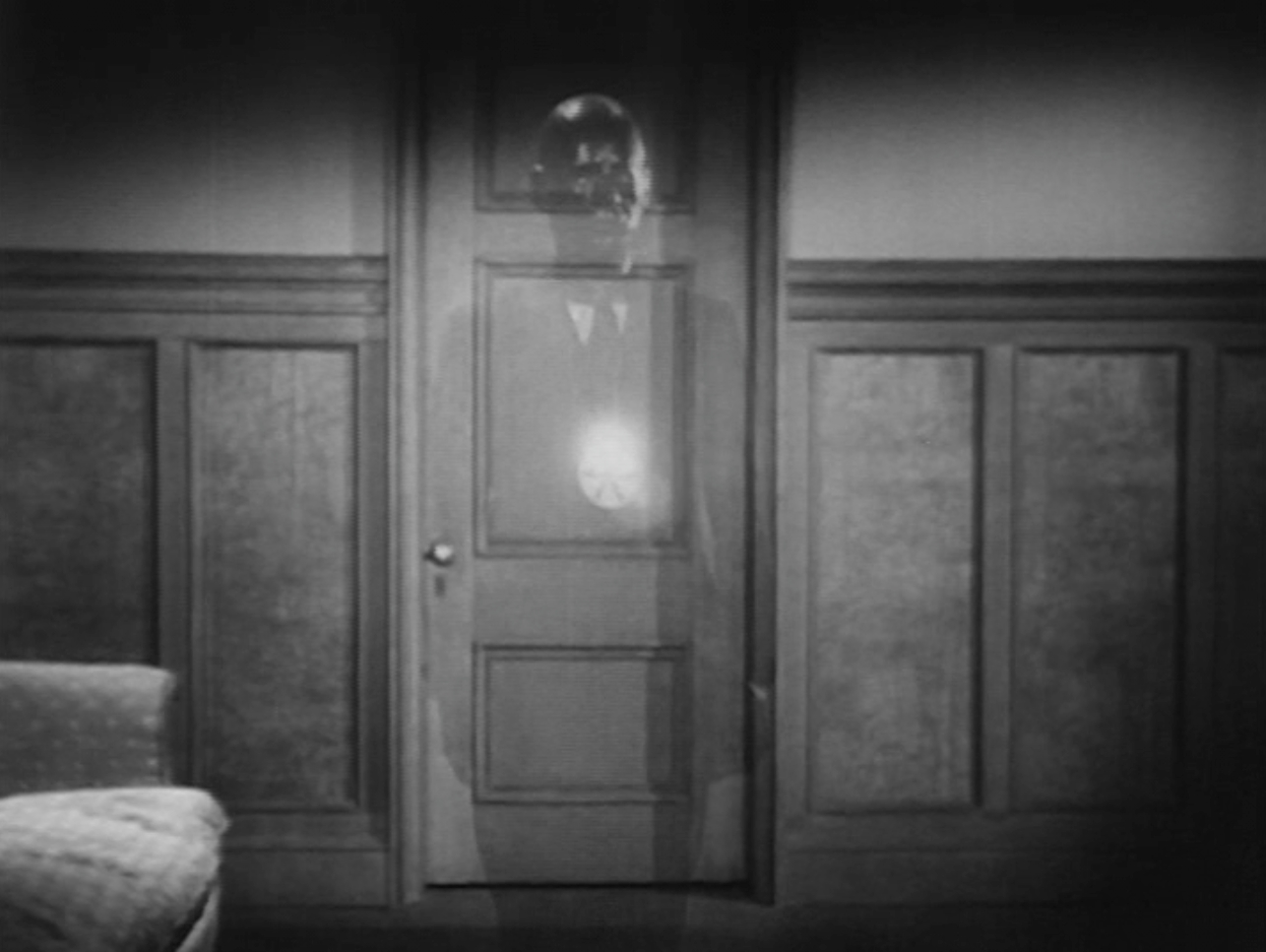
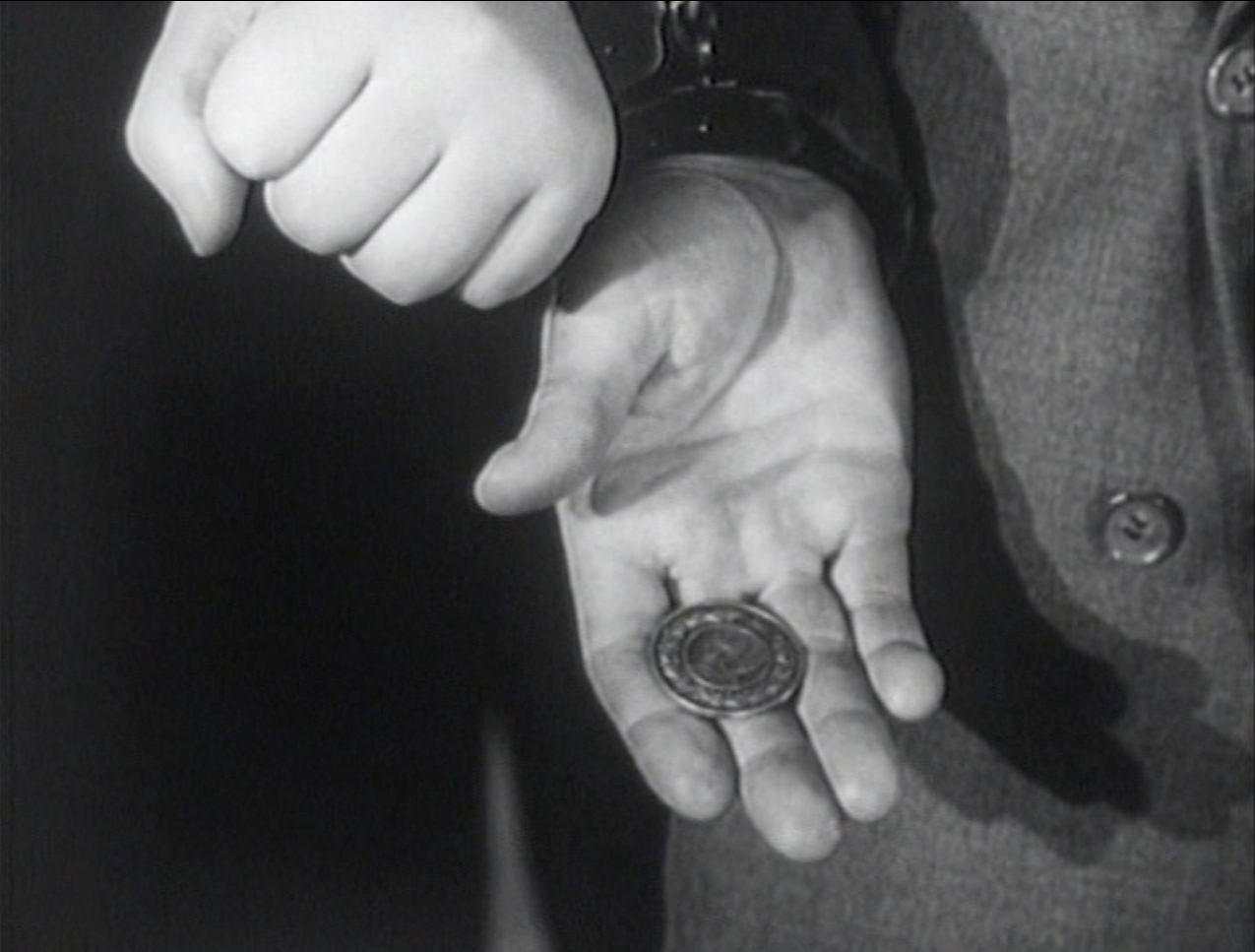
Deep in the rugged mountains between Siam and Burma, the Malcolm Archaeological Expedition has reached its destination, the Valley of the Tombs, in the shadow of Mount Scorpio. Despite warnings from local tribesmen that the Valley is taboo, John Malcolm is determined to open the sealed inner tomb, unlocking the “lost secret of the Scorpion Dynasty.” The expedition’s translator, native Tal Chotali, reads an inscription: “Let what reposes behind this stone remain hidden from the eyes of mankind for all time.” A terrible curse is about to be unleashed! The youngest member of the expedition, Billy Batson, wants no part of tomb raiding, so he leaves the room. The expedition members open the tomb without him, uncovering a fabulous scorpion-shaped idol holding a series of lenses in its claws. As soon as they move the lenses to line up with a beam of sunlight, it releases a burst of energy that shakes the earth and traps the men inside the chamber.

20180625_100052.jpg

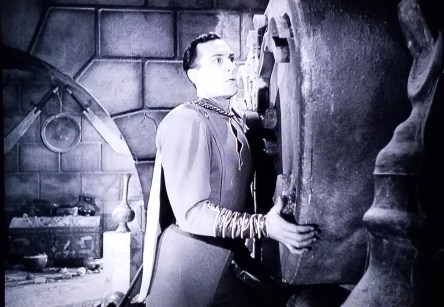
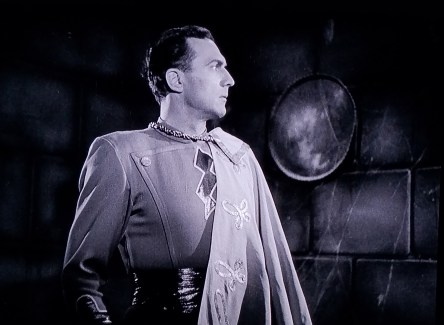
Meanwhile, Billy wanders into another chamber of the tomb; to his shock, a previously sealed tomb opens, and an impossibly old man steps out! Because he did not desecrate the tomb, Billy Batson is to be given the mantle of Captain Marvel to protect the innocent from the power the scorpion idol is about to unleash. Captain Marvel combines the virtues of six mythological figures: the wisdom of Solomon, the strength of Hercules, the stamina of Atlas, the power of Zeus, the courage of Achilles, and the speed of Mercury. The initials of these six names combine into the magic word “Shazam” (also the name of the wizard), with which Billy transforms into Captain Marvel and back again. He is put to the test immediately, becoming Captain Marvel to rescue the explorers who have been trapped in the cave-in.

20180625_095949.jpg

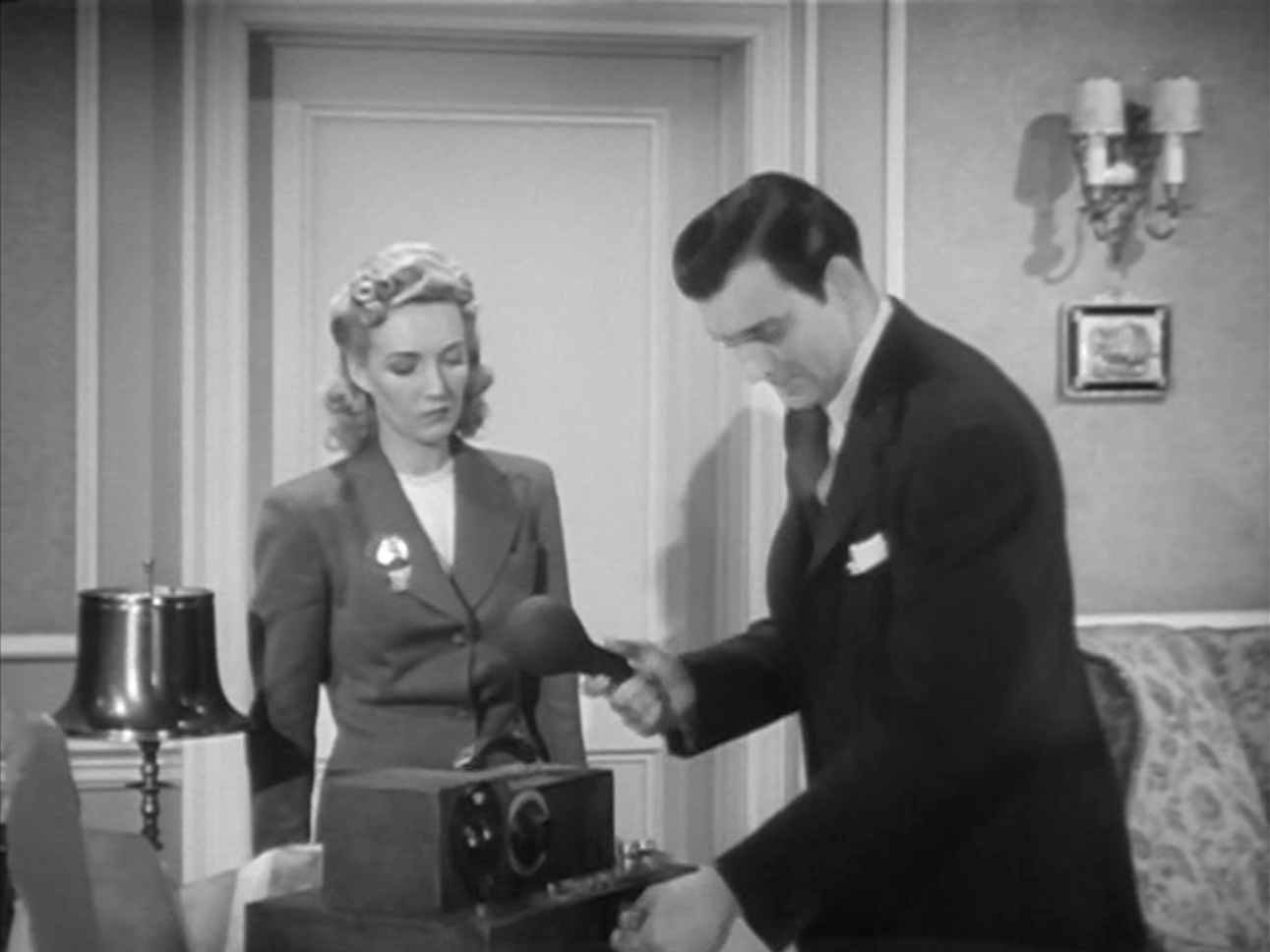
Once everyone is outside and reunited (and Billy is himself again), the members of the expedition learn just how powerful the scorpion idol is: sunlight focused through its lenses in the right order can turn ordinary rocks into gold, or generate an incredibly powerful ray (later it is referred to specifically as a “solar atom smasher”). Recognizing that the idol is too powerful for one man to control, and that it would be a target for theft, the members of the expedition divide the lenses between themselves, each man to guard and keep one safe; the power of the idol will never be used unless it is by the assent of the entire group.
20180625_095827.jpg

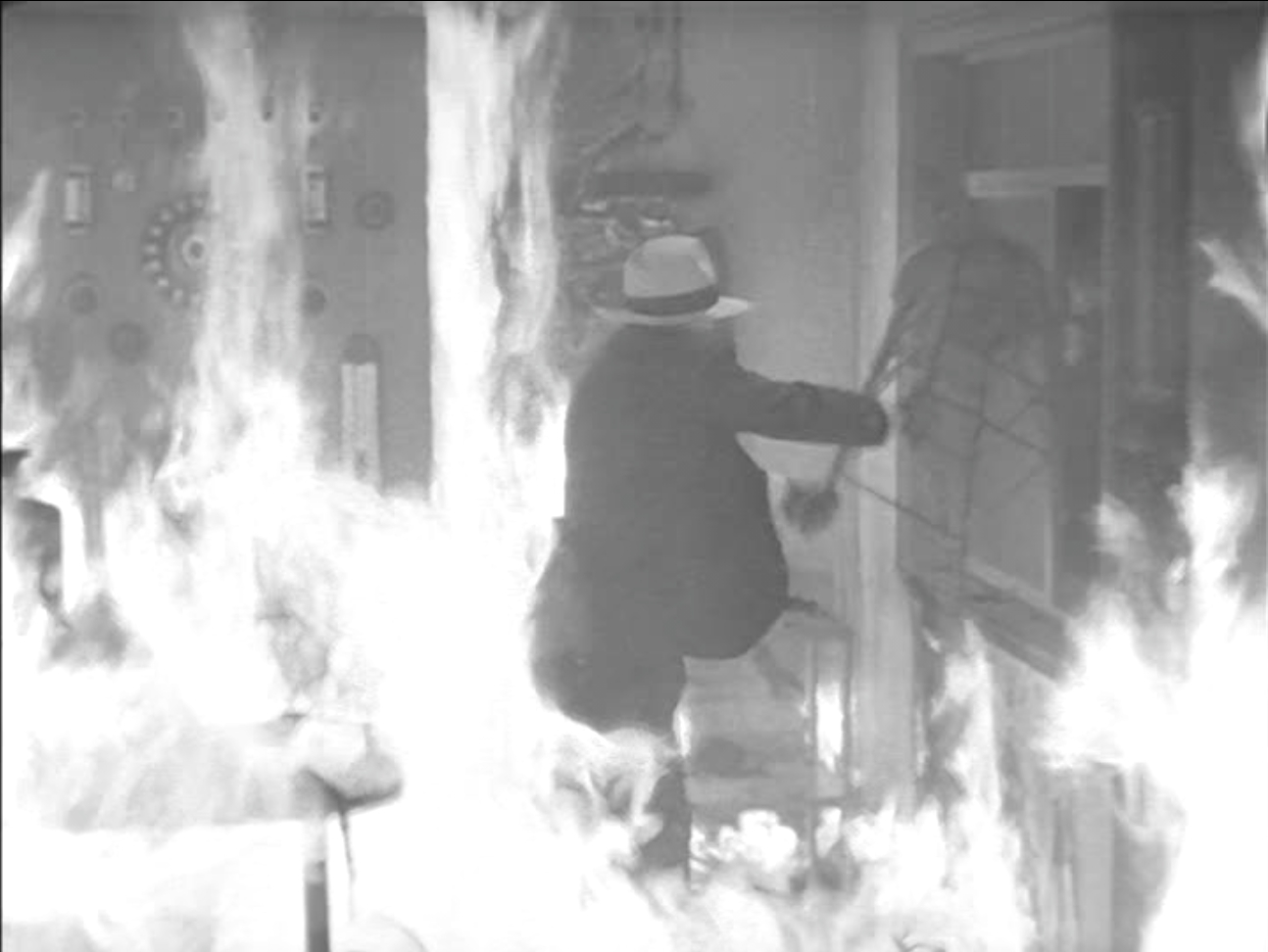
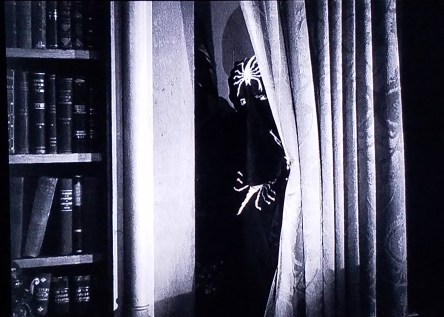
That night, the expedition’s stockade is attacked by native tribesmen on horseback, led by a hooded mastermind who calls himself “the Scorpion.” The Scorpion claims to speak for the tribe’s god, and his goal is to reunite the idol with its lenses and use its power for conquest. During the assault, one of the expedition members is killed and the idol stolen. Billy Batson goes into action as Captain Marvel once again, routing the attackers, but unbeknownst to him the tribesmen have also planted dynamite beneath the bridge leading from the encampment: will the expedition’s retreat be thwarted by the explosives, or will Captain Marvel save the day? All of this occurs in the first (double length) chapter of the classic 1941 Republic serial, Adventures of Captain Marvel!
20180625_095910.jpg

Captain Marvel, co-created by Fawcett writer Bill Parker and artist C. C. Beck, was one of many superheroes who appeared in the wake of Superman’s success, and among the most popular, even outselling Superman himself during his heyday. Much has been written elsewhere about the lawsuit National (later DC) filed against Fawcett alleging copyright infringement, and the long legal battle that followed (I have touched on it here). Ultimately, Fawcett ceased publishing Captain Marvel comics in 1953, exhausted by the legal battle and faced with declining sales, and the hero was licensed by DC in the 1970s as “Shazam” (the name “Captain Marvel” having been claimed by Marvel Comics in the interim) and bought outright in 1980; a live-action Shazam movie is scheduled to be released in 2019 as part of DC’s ongoing film universe.


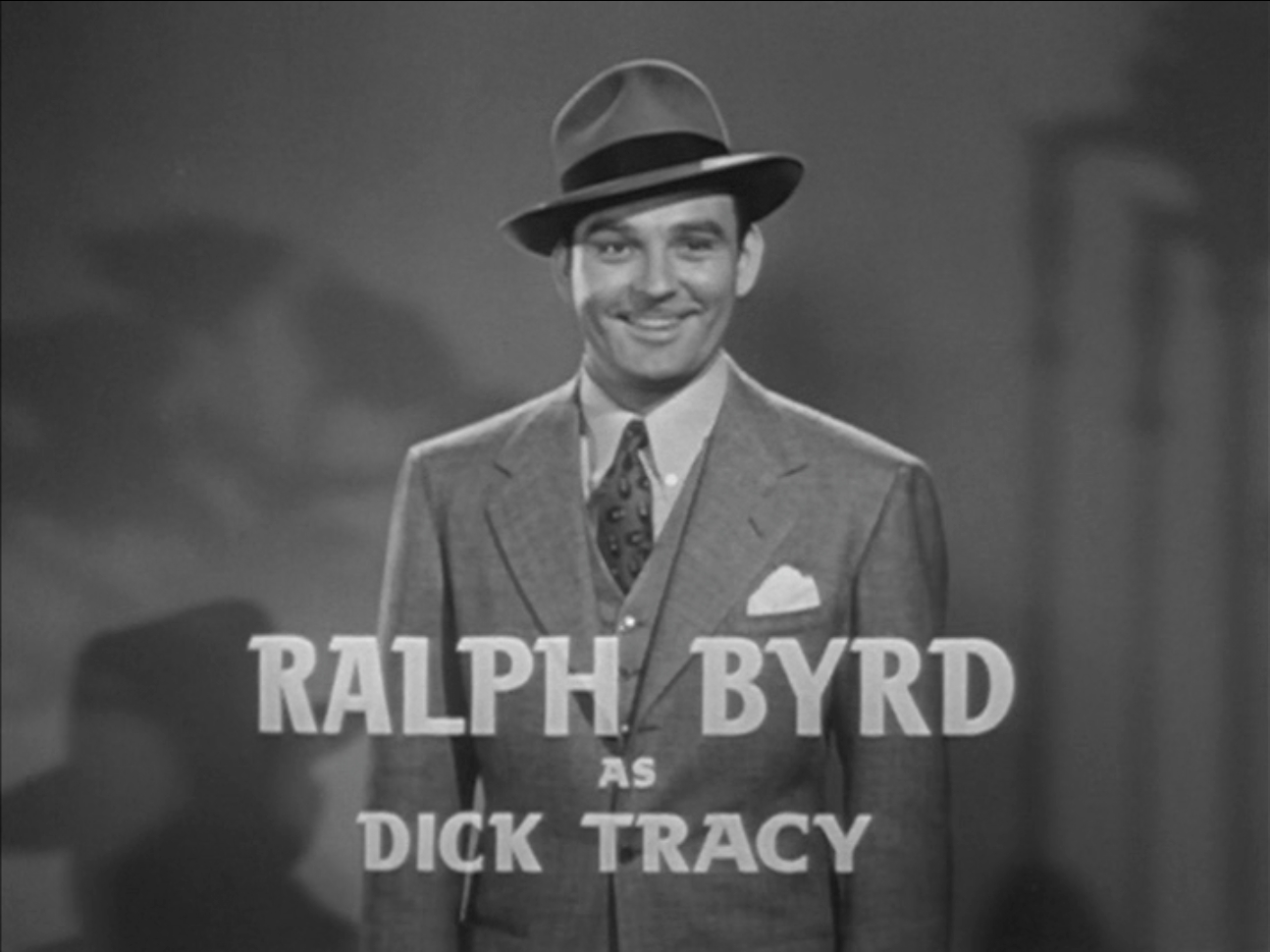
As of 1941, however, Captain Marvel was riding high, and became the first comic book superhero to make the leap to the big screen (ironically enough, Republic tried to make a deal to adapt Superman first, but it ultimately fell through and Superman first appeared in theaters in a series of animated cartoons; the hero would be a latecomer to the film serials, not appearing in live action until 1948). In reading about Adventures of Captain Marvel (no “the”), I was struck by the way it follows typical serial procedure in adapting its source material, tying the hero’s origin to its villain and putting the scorpion idol and its lenses at the center of the story. I assumed that it was another case of Republic adapting the source material “in name only” as they would later do with Captain America, so it was a pleasant surprise to see how faithful to the comics the serial was in many other respects.

WhizComicsNumber22

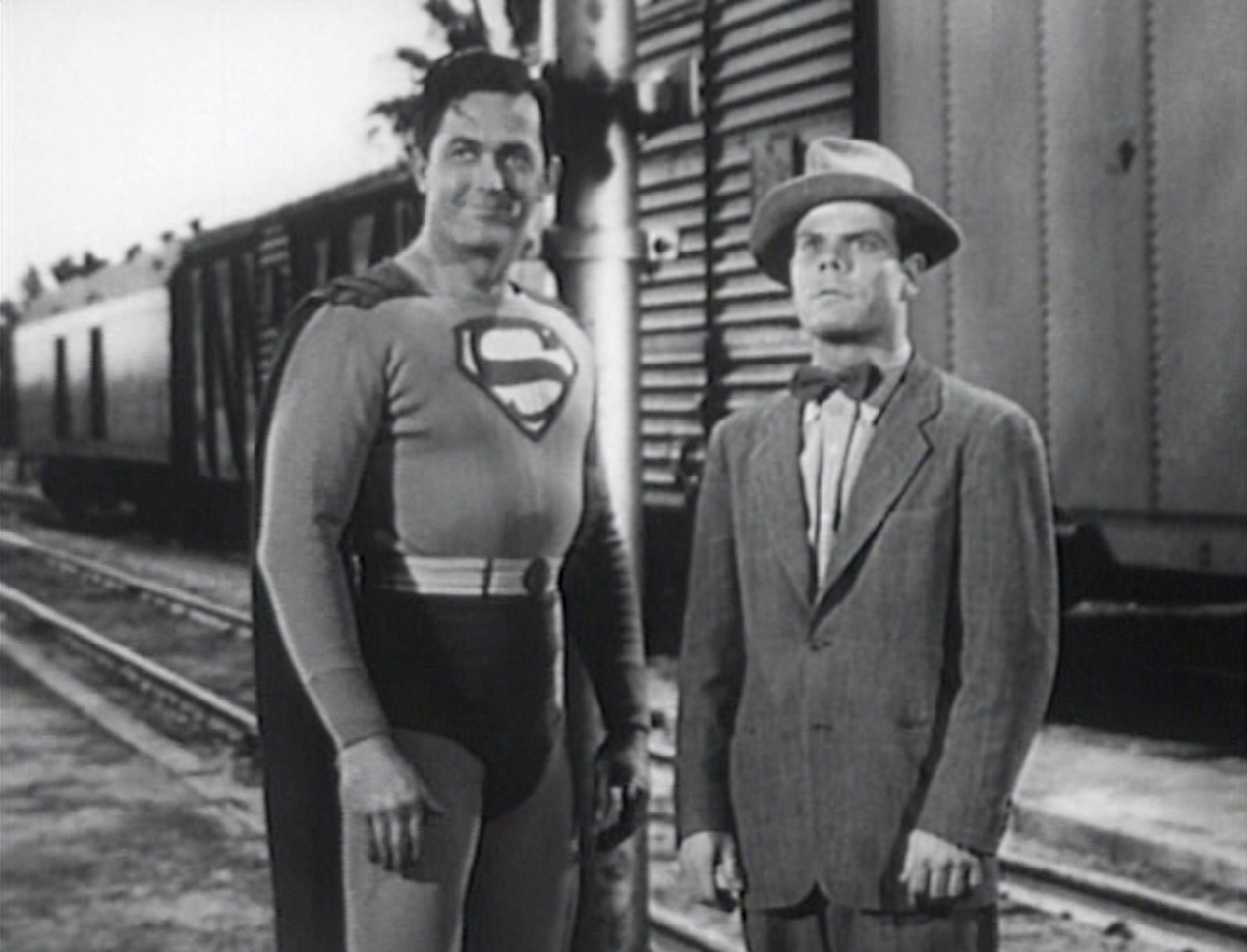
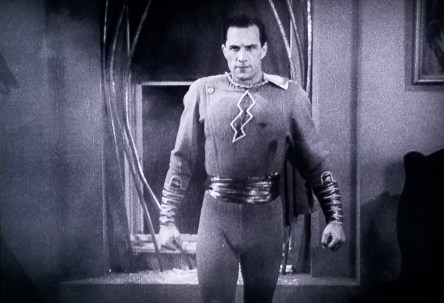
The biggest difference is the serial’s connection of Shazam to the Scorpion tomb, but otherwise Captain Marvel’s origin in the comics was similar: in Whiz Comics no. 2, Billy Batson, an orphaned newsboy (an actual boy, unlike the boyish young adult Billy played by Frank Coghlan, Jr. in the serial) was led to the wizard Shazam in an abandoned subway tunnel, and he was given the assignment to protect humanity as an ongoing mission rather than a specific task. But the magic word, the mythological connections, and Captain Marvel’s powers are all there. What’s more, the serial Captain Marvel (Tom Tyler) looks a great deal more like his comic book counterpart than the serial versions of Batman or Captain America do, wearing a good-looking uniform and even appearing to fly through the air.

20180625_095803.jpg

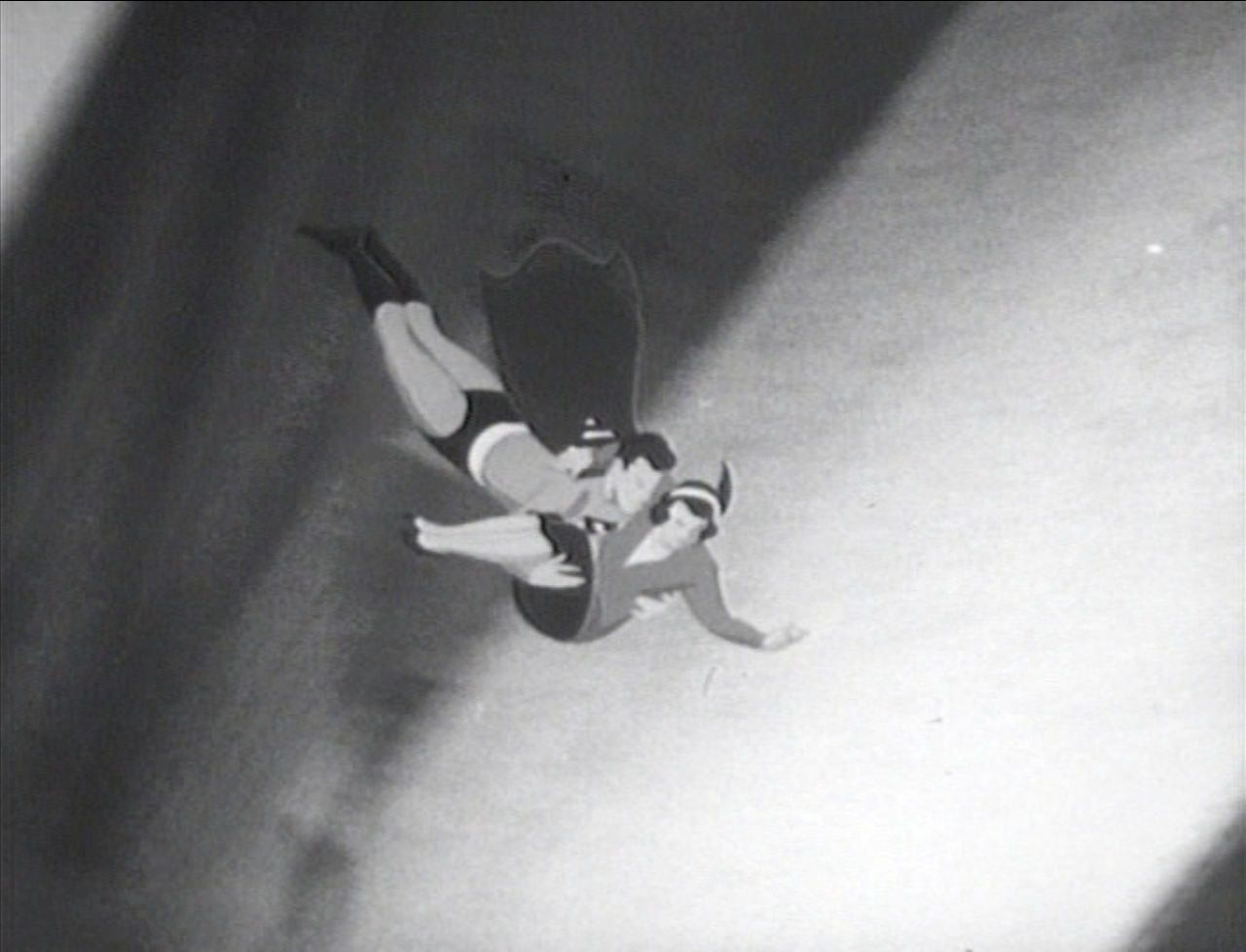
All of the effects in this serial, by Republic’s stalwart team of Howard and Theodore Lydecker, are top-notch, including those convincing flight sequences and many of the miniatures (sorry, “scale models”) for which the Lydeckers are famous. The illusion of flight was achieved by a variety of techniques, including a papier-maché dummy strung on a wire for the long shots, cut together with shots of Tom Tyler (or his double, legendary stuntman Dave Sharpe) leaping into the air from a hidden trampoline or coming in for a landing in slow motion. (Sharpe was also responsible for Captain Marvel’s athletic moves during fight scenes, including an amazing, back-flipping kick in the first chapter.) The wires are visible in some of the shots of Tyler suspended in mid-air, clouds whizzing by, but they are easy to overlook if you are as fascinated by practical effects as I am, or if, like the young and young-at-heart audiences to which the serial is directed, you’re so swept up in the story that you don’t even notice them. The flight effects look good “for their time,” but even now one has to appreciate the ambition it took to attempt them in live action (recall that the same effects in the later Superman serials were achieved with animation). And like the best cinematic fantasy, the story, in its surging forward motion, demands belief as the price of admission where scenes viewed in isolation might provoke skepticism.

Another contrast with the comics is its tone. Captain Marvel’s adventures in the comics (mostly written by pulpsmith Otto Binder) were fantastic exercises in whimsy, often to the point of silliness, held together with fairy-tale logic or wordplay. Captain Marvel traveled to exotic foreign countries and even other planets; he fought mad scientists and magicians (his most famous recurring nemesis, Dr. Sivana, was the former); he added the growing “Marvel family” to his supporting cast, including Mary Marvel, Captain Marvel, Jr., and even “Hoppy, the Marvel Bunny”; he even made friends with a talking tiger who became his roommate! And all of this is balanced with the fantasy of being a boy but living independently (after being a newsboy, Billy Batson held down a job as an announcer for radio station WHIZ). Binder’s fanciful stories were a perfect match for Beck’s clean, simple drawing style, and the nuttiness of the plots is comparable to the mischief William Marston’s Wonder Woman would get up to over at National, but without the marked gender play (in fact, Captain Marvel is a notably prepubescent fantasy, as the hero would become nervous and shy around women, resisting the overtures of Dr. Sivana’s daughter Beautia). As Matt Singer notes (in his essay accompanying the Kino Lorber Blu-ray), the brilliance of the Billy/Captain Marvel divide was that it “fused hero and sidekick into a single figure.”

tawkytawny

By contrast, the serial’s tone is serious, if not downright grim. Gone are Dr. Sivana’s whimsical schemes (in fact, gone is Dr. Sivana), gone are the talking animals and such fanciful locations as the “Rock of Eternity” (the heaven in which the late wizard Shazam now dwells in spirit form). Instead of being matched against other superpowered beings, Captain Marvel wastes an army of generic fedora-wearing henchmen (and I do mean wastes: writer Tom Weaver points out that Captain Marvel kills more people than the villain in this serial, throwing them off buildings or turning their own guns against them). Animation historian Jerry Beck rightly compares Captain Marvel in his scenes to a Universal monster, breaking down doors and pressing forward in the face of gunfire that bounces off of him harmlessly (at least the thugs don’t try the last-ditch effort of throwing their empty guns at him, as seen so often in the Superman TV series), his smile “more like an animal bearing its teeth.” Once the Scorpion’s men know what they’re up against, their reaction is one of sheer terror.
20180625_095546.jpg

Other ingredients that contribute to the serious tone are standard serial fare: the archaeological expedition, as well as the curse that followed the opening of the tomb (inspired by the supposed curse of King Tut’s tomb), were common features of serials in the 1930s (and a prime inspiration for the Indiana Jones series, of course); the serial begins and ends in the Valley of the Tombs (propped up with footage from earlier movies), even though the rest of the action takes place in America. Of course the Scorpion himself, the hooded figure of evil derived from the Grand Guignol theater and the mystery novels of Edgar Wallace, is a key element of the serial vocabulary, as is the Scorpion’s methodical elimination of the expedition members, collecting their lenses one by one, even as he himself is secretly one of their number. Only in the last chapter is the Scorpion’s true identity revealed; in fact, his lines are spoken throughout by uncredited actor Gerald Mohr, just to make sure we don’t guess prematurely. (The need to avoid spoiling the surprise leads to some amusing decisions: in one chapter, the members of the expedition abandon a sinking ship and make their way to land by rope; Betty, the story’s lone female character, goes to her cabin to retrieve something, only to be knocked unconscious by the Scorpion–in costume–and left to sink with the ship. It should be obvious that the Scorpion has no reason to hide his identity from one he believes will soon be dead, and that sneaking around in costume increases the risk of being caught, but the costume is for the benefit of the audience, not the Scorpion’s victims.) Even at the end, when there are only two suspects left, and one shoots the other, revealing his true identity, the scene is filmed in shadow, the voices disguised, so as to preserve the delicious moment when Captain Marvel can pull off the captive Scorpion’s mask himself for all to see.

20180625_100305.jpg

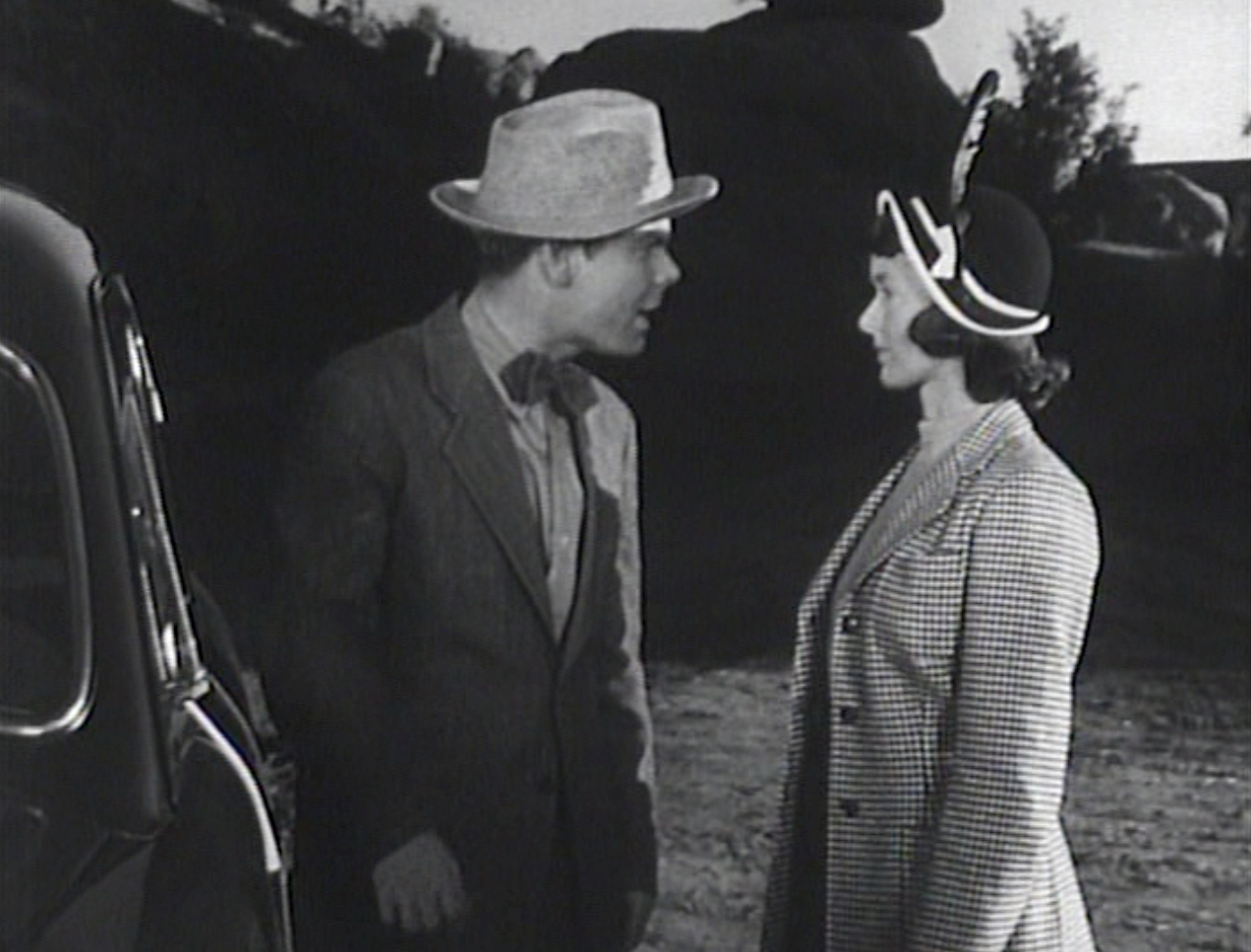
Still, the mood is not too heavy, leavened by swiftly-moving action and dialogue and a rapid-fire change of scenes. Coghlan’s Billy, as well as his youthful friends Whitey (William Benedict) and Betty (Louise Currie), are a big part of that, striking a “gee whiz” attitude midway between the kid-oriented comics and the deadly serious business of the Scorpion. Adventures of Captain Marvel is frequently held up as one of the best serials of all time, and it is easy to see why: all of the technical resources of Republic are working at their peak, from the Lydecker brothers’ fantastic effects to the direction of serial superteam William Witney and John English and the stirring music by Cy Feuer. A solid script provides plenty of opportunities for the cast (including, in addition to the leads, such frequently-seen character actors as John Davidson, who plays the enigmatic Tal Chotali) to develop their characters (within a framework primarily defined by action and intrigue, of course).

20180625_100216.jpg

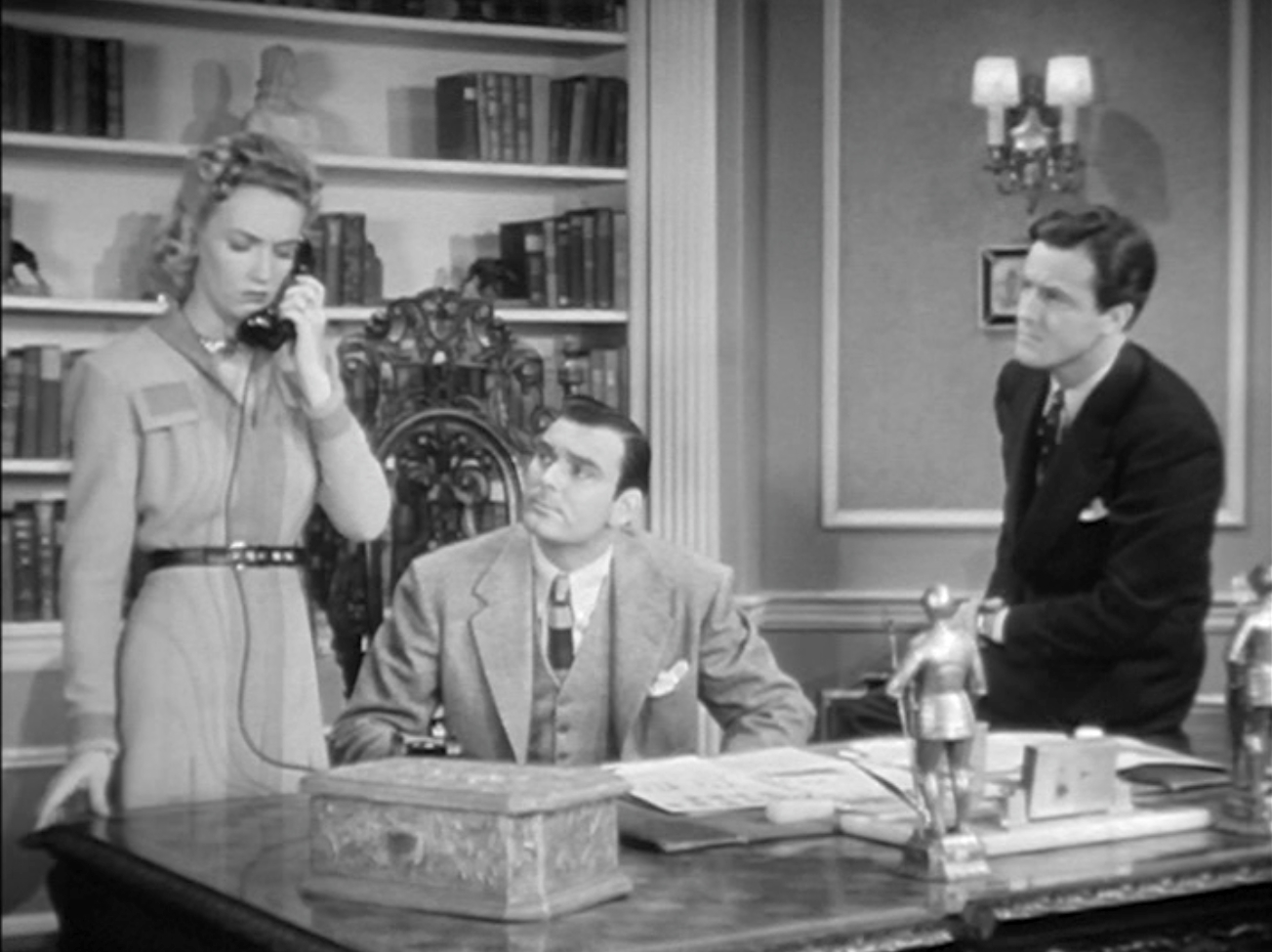
Furthermore, while I have sometimes expressed boredom at the formulaic nature of Republic’s later serials in comparison to the wild and weird serials of the 1930s, at the sense that they run too smoothly, Captain Marvel strikes a very satisfying balance between technical precision and characters who still act human, who are capable of surprising. (It probably helps that Republic was not yet at the point of recycling entire cliffhangers, so the situations flow organically from the story.) Betty is a good example of this: when taken captive by the Scorpion’s men, several times she sees opportunities to attempt escape and takes them rather than waiting around for Captain Marvel, even desperately grabbing the Scorpion’s own gun and attempting to shoot him. (This leads to a sequence in which Billy believes the Scorpion has an injured hand and tries to flush him out by gathering the expedition members together.) In addition to lending an unpredictable realism to the proceedings, Betty’s actions (and similar unexpected actions by other characters) drive the story forward: neither the Scorpion nor Captain Marvel have everything their way all the time.

Finally, I have occasionally noticed a generational divide in how the fanciful comic books of the Golden Age and its related media are received, and the commentary on the Blu-ray provides an illuminating example: Tom Weaver, a self-described Baby Boomer, mentions going back to read some of the original Captain Marvel comics (for the first time, as an adult) and his disgust at their silliness is palpable. “The comic book is so juvenile,” he reports, “that I can’t imagine who read it and thought ‘This might be good for a Republic serial.'” He complains that Otto Binder’s Captain cracks corny jokes while fighting, as if that weren’t something common to almost every superhero before the 1980s. For him, and for many viewers like him, the seriousness of the serial is a step up, a necessary refinement of material that is otherwise not worthy of consideration. By contrast, younger viewers and readers, especially those who may have already encountered Captain Marvel in reprints or through one of his post-1970s television iterations at a young age (and that may be the real key, the “Golden Age” being twelve years old and all that), readily accept the childlike fantasy inherent in the character. (On the Blu-ray it is the hosts of the podcast Comic Geek Speak, children of the 1970s and ’80s by the sound of it, who represent this point of view, but I have encountered it among comics fans younger than myself as well.)

Perhaps the balance of light and darkness is the reason Adventures of Captain Marvel continues to be held in such esteem: it convincingly brings to life the power fantasy of the comic book superhero, without treating it as a joke or cutting corners, and satisfies those who like their heroes “grim and gritty,” at least in contrast to the source material; at the same time the line between good and evil is boldly drawn, the characters larger than life, and it is still full of the wonder and excitement of the serial medium and marvelously entertaining in its own right.

20180625_100242.jpg

What I Watched: Adventures of Captain Marvel (Republic, 1941)

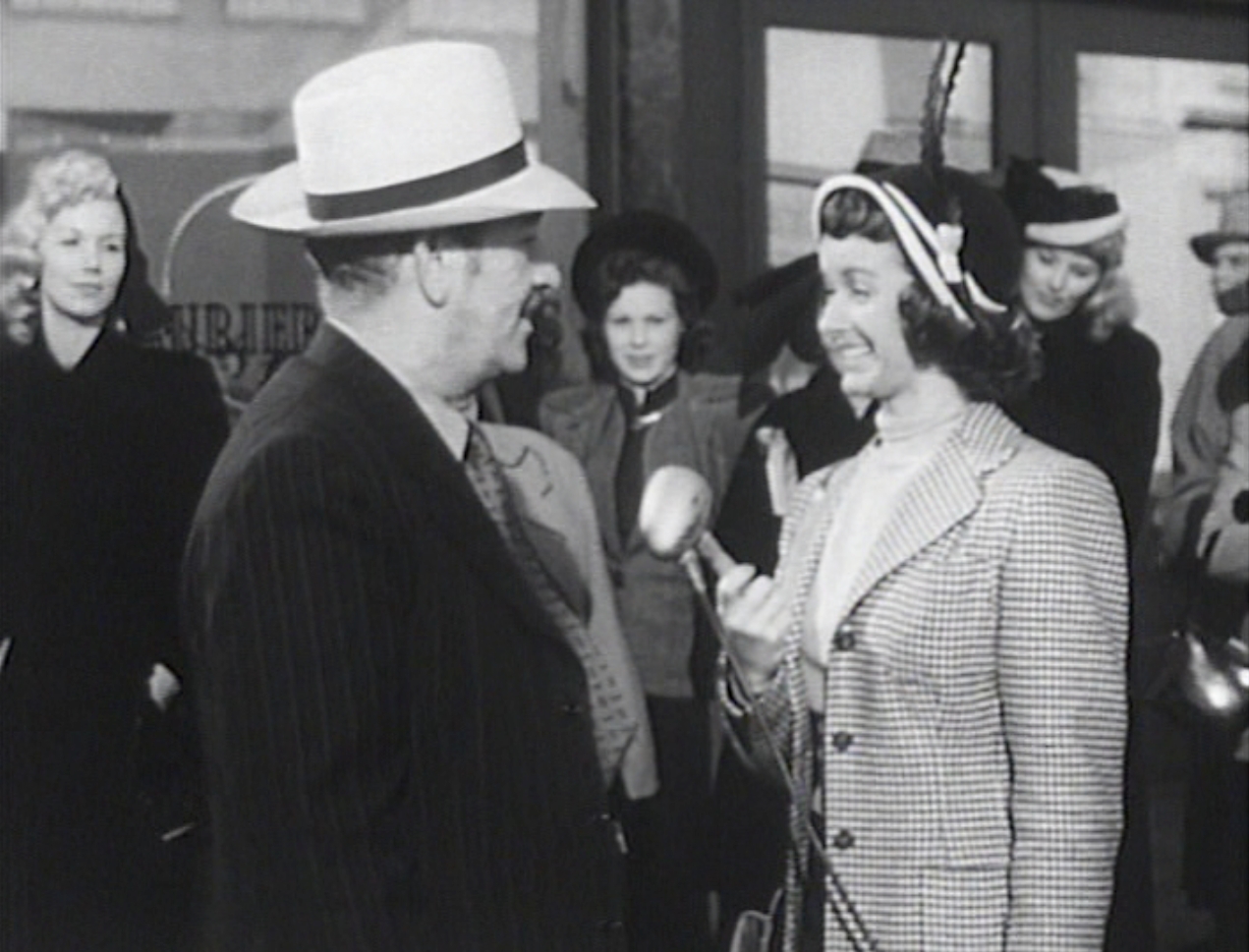
Where I Watched It: Kino Lorber’s Blu-ray release from 2017. As mentioned above, this edition has an informative commentary track including ten speakers (thankfully not all at once: each individual or group gets a chapter or two to themselves) and Matt Singer’s essay. It is, as I have mentioned in the past, exactly the kind of package the serials have long deserved and is highly recommended. However, as I don’t have a Blu-ray drive on my computer, I have once again taken pictures of the screen for screenshots (rest assured that the Blu-ray picture quality is much higher than these pictures show).

20180625_100137.jpg

No. of Chapters: 12

Best Chapter Title: “Death Takes the Wheel” (Chapter Four)

Best Cliffhanger: Several of the commentators on the Kino Lorber release take issue with the idea that anyone would be fooled by a cliffhanger that appears to put the invincible Captain Marvel in jeopardy: wouldn’t an audience of kids in 1941 know that something as trivial as gunfire, electric shock, or even molten lava wouldn’t hurt “the world’s mightiest mortal”? Well, yes, and like the later Superman serials, Adventures of Captain Marvel solves this problem by putting supporting cast members in peril instead for most of the cliffhangers. Still, almost any serial cliffhanger assumes that the audience will play along, even if experienced viewers are well aware that the hero is going to get out of whatever jam they’ve been put in: suspension of disbelief applies here just as it does elsewhere.

More importantly, from a narrative perspective, the limits of Captain Marvel’s powers and invulnerability aren’t entirely clear at first, and the serial’s early cliffhangers serve to demonstrate just how strong he is. My favorite cliffhanger is one of these: in Chapter Two (“The Guillotine”), the Scorpion has his henchmen abduct Dr. Carlyle, one of the expedition members, and threaten him with an automated guillotine in order to extract the location of Carlyle’s lens. Captain Marvel trails the thugs to their hideout and breaks up the interrogation. However, during the fight that follows, he trips into the electric eye that triggers a subduing electric charge and starts the conveyor belt that will carry him, unconscious, to the waiting guillotine, a high-tech variation of a classic peril. The resolution illustrates the difference between typical serial protagonists and this new kind of cinematic “super” hero: instead of having Captain Marvel wake up or the conveyor turned off just in time, the next chapter begins with the blade falling onto the hero’s neck, only to break harmlessly against Captain Marvel’s invulnerable skin. I’ve complained in the past about “walk it off” resolutions to cliffhangers in which the hero is simply unhurt, but here the shot of Captain Marvel waking up beneath the shattered blade speaks for itself. Like the scenes of henchmen futilely shooting at Captain Marvel, the bullets bouncing harmlessly off, it announces that this hero plays by an entirely different set of rules.

20180625_095058.jpg

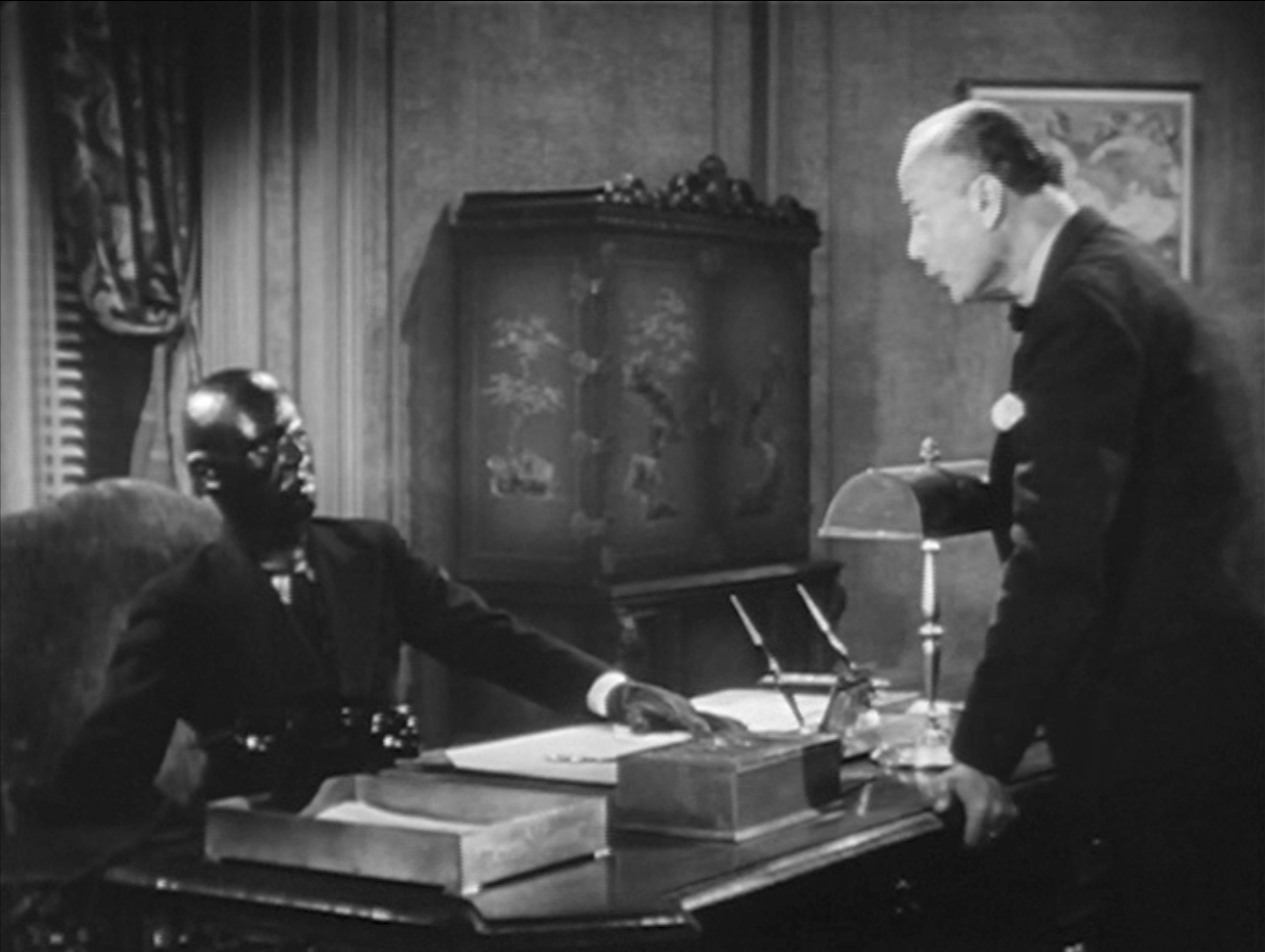
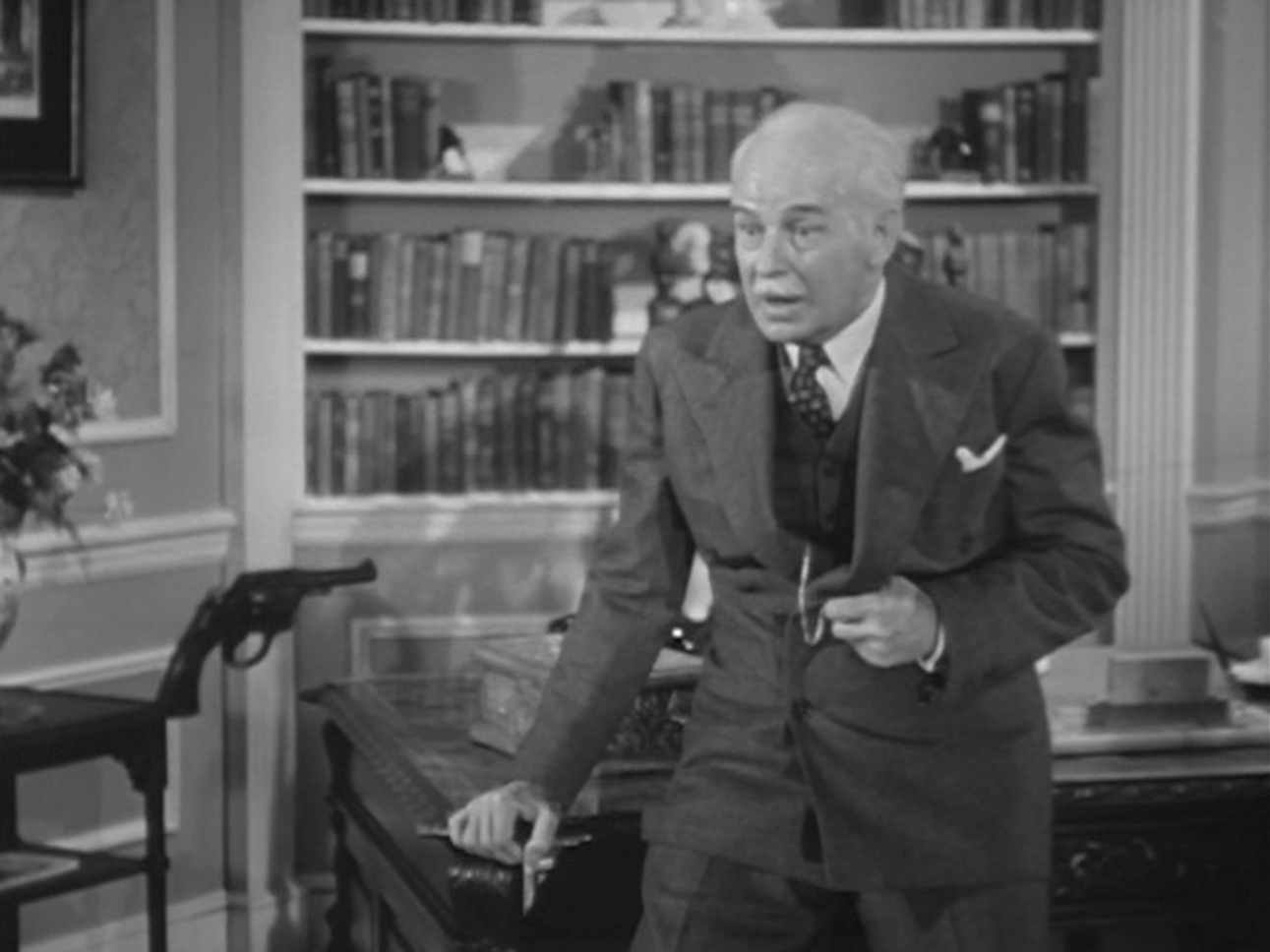
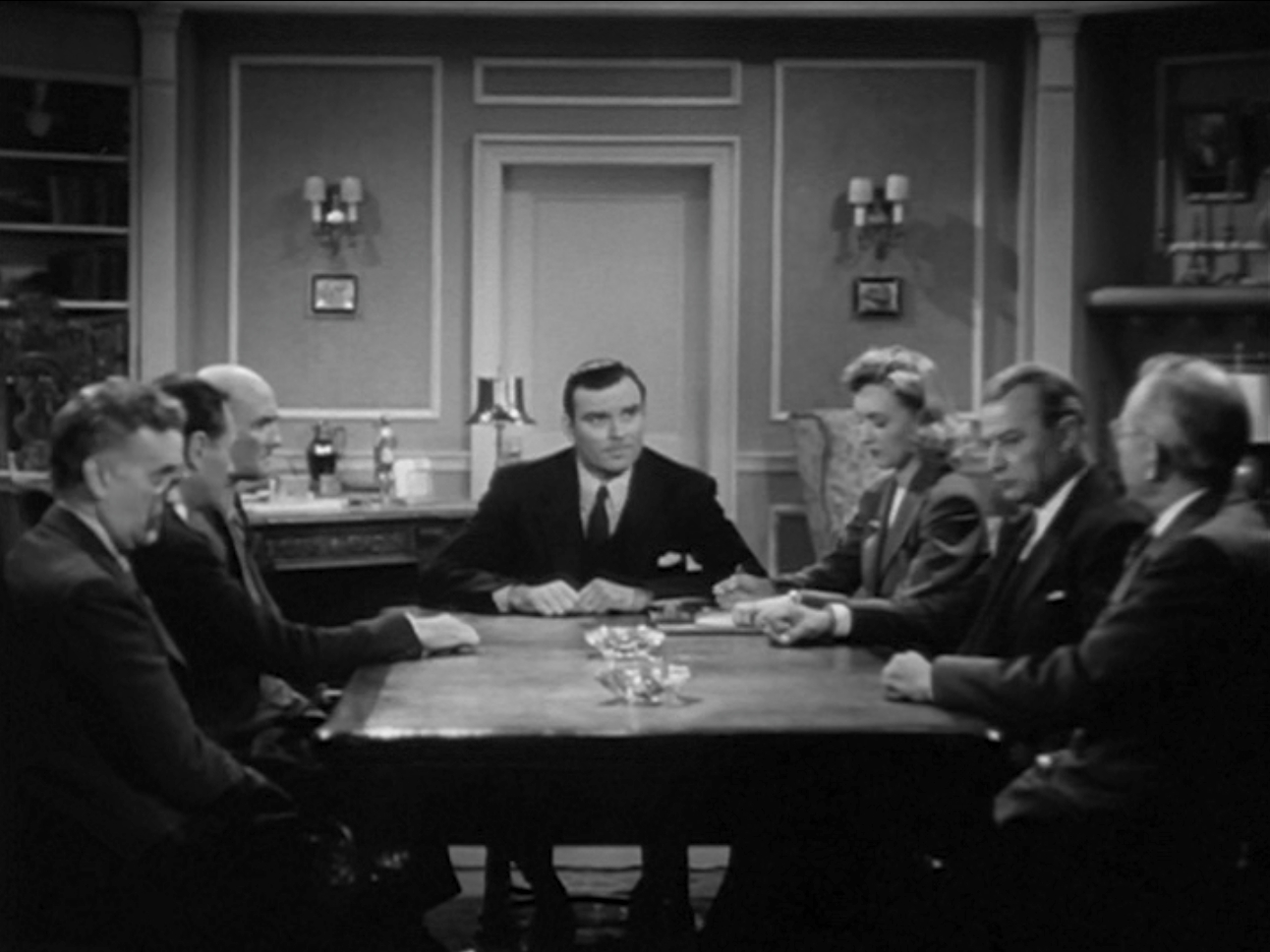
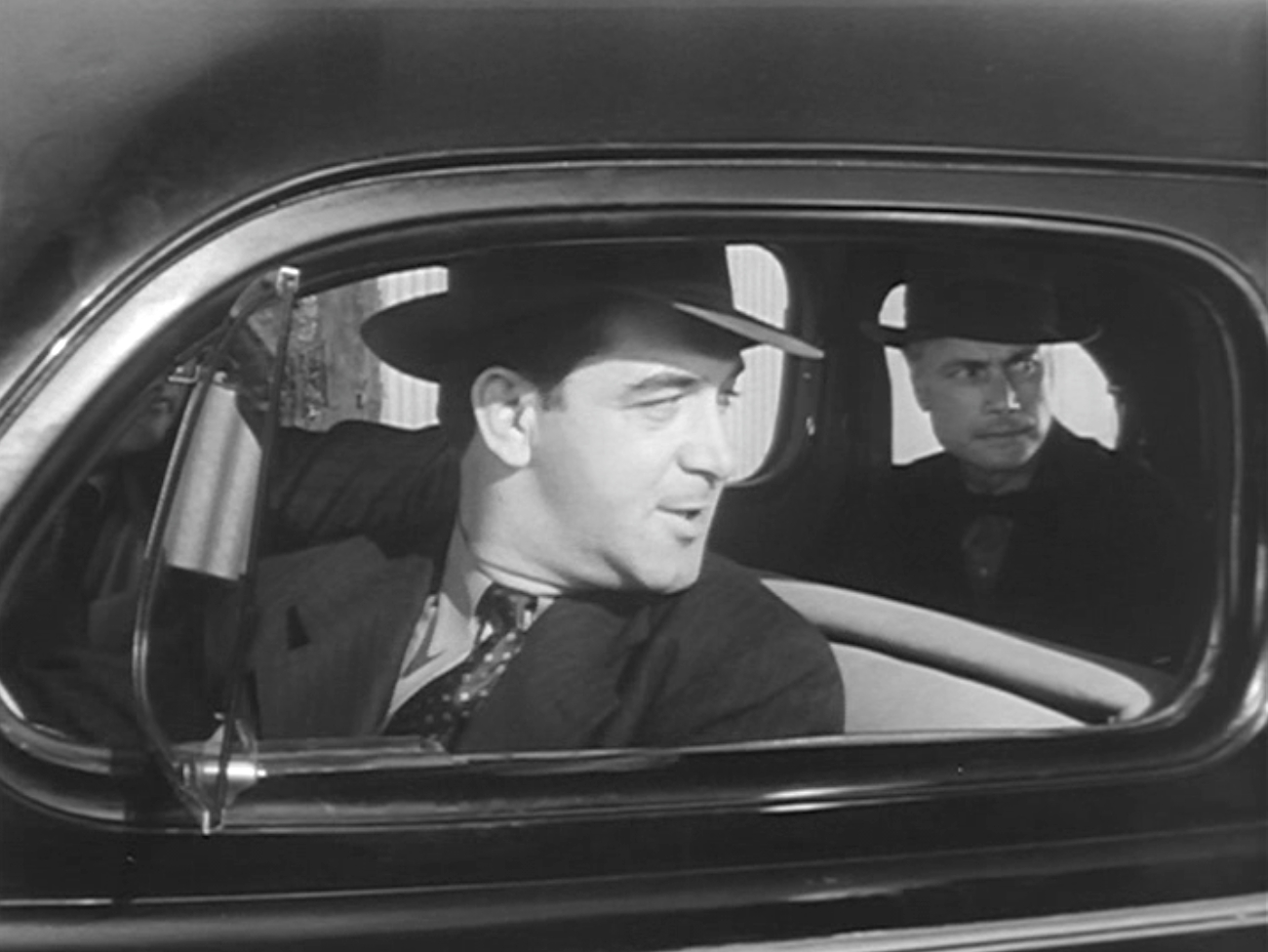
Stanley Price Sighting: Stanley Price is included in the full cast billing that begins each chapter, but he really only has one standout scene, as one of the group of henchmen who abduct Betty after she trails them to one of their hideouts on the top floor of a parking garage. It is here that Captain Marvel engages them in the rooftop battle in which he throws an engine block at one thug and throws another off the roof. Knowing that he’s outgunned, Price flees in the elevator, only to have Captain Marvel pull the descending car back up by the cables, a feat borrowed from his comic book appearances. Price’s anxious expressions while standing alone in the elevator are, well . . . priceless (sorry, I couldn’t resist).

20180625_095733.jpg

Sample Dialogue: “The Scorpion has triumphed and all the white infidels will be sacrificed to celebrate the victory, even the mighty Captain Marvel. . . . We need fear him no longer, for he is only Billy Batson. . . . Perhaps it’s a powerful drug or some other device which Batson uses to transform himself into Captain Marvel. . . . I must learn the secret of his transformation.” –the Scorpion, Chapter Twelve (“Captain Marvel’s Secret”)
20180625_095620.jpg

What Others Have Said: “The saving grace is the near absence of what many serial devotees most like about Republic serials–the stuntwork fist fights. Captain Marvel was too superpowerful to take more than one punch to subdue an ordinary mortal. The screen time had to be filled with something other than punches. This serial had time for plot and characterization, as well as action. The result was what may be the world’s mightiest movie serial.” –Jim Harmon and Donald F. Glut, The Great Movie Serials

What’s Next: Join me in two weeks as I return to the subject of “Yellow Peril” with Drums of Fu Manchu!

Fates Worse Than Death: Red Barry

20180610_214643.jpg

China is at war! In the headquarters of General Fang, the elderly Wing Fu, known in the United States as a humble importer of Chinese goods, prepares to undertake a covert mission: he carries with him two million dollars in bonds, with which he is to secretly buy airplanes for the Chinese war effort (illegal under American neutrality laws). He takes with him the dedicated young Captain Moy, but it is clear that the mission will be dangerous: the Chinatown crimelord Quong Lee has already murdered three of Wing Fu’s associates, and all that stands between Quong Lee’s gang and the bonds is police detective Red Barry, “possibly the cleverest detective on the force,” already on the case of the Pell Street murders.

Meanwhile, Detective Barry has his own problems: although his immediate superior, Inspector Scott, considers Barry a great detective, the covert nature of many of his assignments make others suspicious: the police commissioner wants to take Barry off the Chinatown case and replace him with Valentine Vane, a foppish, glory-hungry “scientific detective” on loan from Scotland Yard. Barry tries to follow orders and stay away, but he keeps getting pulled back into the action, which first takes him to a theater in which a Chinese secret service man (disguised as an acrobat) is murdered, leading Barry to the ship on which Wing Fu and his bonds are to arrive in America. Also at the theater is someone else after the bonds: Natacha, a Russian dancer, swears that the bonds once belonged to her father and were stolen from him. She and her Russian cohort are determined to get back what is rightfully hers. Before the ship even pulls into port, the bonds are stolen from Wing Fu, leading to a fight on the docks with Quong Lee’s henchmen! That’s a lot of set-up, but it’s an indicator of just how much plot is stuffed into the thirteen chapters of Universal’s 1938 serial Red Barry!
 RedBarry4

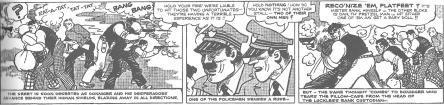
I’ll confess I wasn’t familiar with Red Barry before I started watching and researching this serial: like many of the serials, it was first a comic strip, which were a frequent source of film adaptations, just as comic books have proven to be in the last few decades. The comic strip Red Barry first appeared in March 1934, the first of many imitators to follow the success of Dick Tracy. (The artist/writer Will Gould is no relation to Tracy‘s creator Chester Gould. He is also not William Gould, who plays the Commissioner in this serial. While we’re at it, Western actor Don “Red” Barry has nothing to do with the comic strip or serial: he took his nickname through association with popular character Red Ryder, whom he had played on screen.)

The comic strip was popular enough to receive the Big Little Book treatment in addition to a serial adaptation; had it not ended in 1939 after only five years, it is likely it would be better remembered. Apparently, it wasn’t a decline in popularity or the strip’s high level of violence that led to its end: disputes with the syndicate and the heavy workload caused Gould to leave cartooning and begin a new–and easier–career in Hollywood. For many years it was considered a difficult strip to collect (the aforementioned violence meant it didn’t run in some newspapers), but a recent edition from IDW has reproduced the complete run in two volumes, and it is that which I have consulted.

 RedBarry1

Like Dick Tracy, Red Barry was a gritty police procedural that didn’t shy away from the rougher aspects of law enforcement; Barry faces off against criminals with his fists and his gun, frequently outmaneuvering them through a combination of quick thinking and dumb luck. During the Depression, when lawlessness seemed to be everywhere, this new mode of “hard-boiled” crime fiction was very popular in both the comics and the pulps. The twist was that Barry was an “undercover man,” infiltrating criminal gangs and bringing them down from the inside, with only Inspector Scott knowing his real loyalty. Gould leavened the frequent fisticuffs and bloodshed with wry humor and colorful characters (as well as some unfortunate ethnic caricatures) drawn from his extensive experience as a newspaperman.

 RedBarry2

Modern viewers of the serial will instantly recognize the formula that has been used in so many police stories: Barry is hounded by a clueless Commissioner and defended by his boss (Wade Boteler) because “he gets results;” Barry maintains contacts in the underworld and throughout the city, including would-be Chinatown detective “Hong Kong Cholly” (Philip Ahn, brother of Buck Rogers‘s Philson Ahn, and who is the only major player of Asian descent in this serial).

 20180611_141255.jpg

His other source of support is Mississippi (Frances Robinson), the Southern-accented girl reporter for the Daily Press, who spends so much time in the offices of the police station (and even behind the wheel of a police car!) that she might as well be an honorary deputy. Although the serial doesn’t have Barry (played by serial icon Buster Crabbe, who had already played Tarzan and Flash Gordon, and would go on to play Buck Rogers) going undercover, it’s still reasonably faithful to the setup of the strip. Many of the supporting characters–Scott, Mississippi, Cholly, and Vane–are drawn from the comics.

20180611_141141.jpg

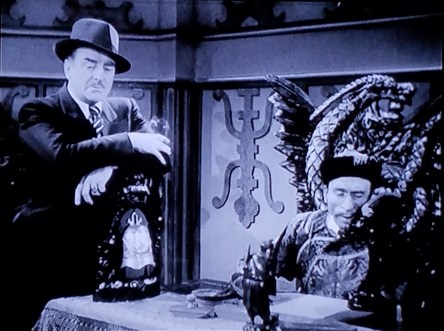
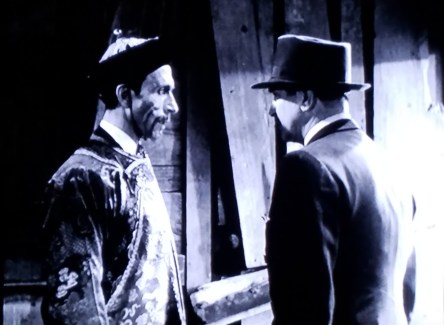
Mostly set in and around Chinatown, it would be easy for Red Barry to fall prey to the clichés of exoticism and Chinoiserie I discussed in the context of Shadow of Chinatown. Indeed, Asian actors and settings are used as a colorful backdrop for much of the story, but there is very little of the “Yellow Peril” in it. With its theme of Chinese self-defense opposed to official American neutrality, Red Barry is also more explicitly political than most serials (this has limits, however; presumably the war referred to is the struggle between Chinese Nationalists and Communists, but it is primarily a spark to get the story in America going). It is still a work of its time, however: Wing Fu and Quong Lee, the major Chinese characters, are played by white men, Syril Delevanti and Frank Lackteen respectively (see the Spoilers for more on this, however).

 20180611_155020.jpg

As Hong Kong Cholly, Ahn plays the most stereotyped role, thickly-accented and obsequious to Red Barry (this is true to the original comics). As soon as the white people are gone, however, it is revealed that “Cholly” speaks perfect English: he is, in fact, Wing Fu’s son! (The shift in his dialogue may represent that the two are speaking Chinese in private, but it’s not entirely clear: either way, the clownish simpleton he appears to be around Red Barry is revealed to be an act.) As such, like Wing Fu he plays a dangerous game, respecting and relying on Red Barry and even helping him when it is in his own interest, but knowing that the mission to buy airplanes breaks American law.

 20180611_141402.jpg

Natacha (Edna Sedgwick) is a similarly nuanced character, taking the initiative to correct the injustice done to her family. While she practically lives at the theater where she performs her act (a ballet number set to Tchaikovsky, of course), she maintains connections with some Russian toughs who hang out at Mama Sonia’s, a Russian restaurant. The lead Russian is Petrov, played by intense character actor Stanley Price, and he and the other Russians play the typical henchman roles, tailing people, breaking into their offices, and threatening them in their search for the missing bonds.

 20180611_154913.jpg

Quong Lee also has his headquarters, behind the “Eurasian Café” in Chinatown, and his own gang of thugs, headed up by serial stalwart Wheeler Oakman as Weaver. In typical serial fashion, all three of the people trying to get the bonds delegate to people working for them or helping them, partly to keep the mystery drawn out–we can’t have Red Barry copping to the truth too quickly–and to keep the danger at arm’s length until the last few chapters, when they all have to get their hands dirty.

20180610_214822.jpg

The Chinatown and theater settings provide colorful backdrops for action and intrigue; many of the locations are returned to again and again, and almost all are riddled with secret entrances and exits, allowing Barry’s quarry to stay one step ahead and leading to some surprise confrontations. The fights, traps, and cliffhangers are generally well-executed and the pacing keeps things exciting and varied.

 20180611_154727.jpg

The real strong point of this serial, however, is in the characterization: the antagonists have clear, contrasting motives that drive the plot forward and allow the characters to bounce off one another in various combinations. The mystery, while not deep, is tangled enough to justify the length it takes Barry to unravel it, and there are some twists (discussed below) that take the plot in new directions just when it seems that things may resolve according to formula. My one complaint is the sameness of the henchmen that I have in the past referred to as the “white guys in fedoras” problem: without context, it is not always clear whether the Russians or Quong Lee’s men are on screen, and when more than two sides of the conflict collide, the result is often as confusing for the audience as for the men involved. (At least Wing Fu’s men are Chinese, but even this is not always clear in wide shots.) This is not a huge problem, however, as dialogue usually clarifies the situation sooner or later, and when they get the spotlight it is always a pleasure to watch Stanley Price and Wheeler Oakman in action.

Finally, there is Red Barry himself. Once again, Buster Crabbe (here billed as “Larry,” as he often was in his earlier roles) proves why he was so effective anchoring the serials, whether fantastic or more down-to-earth. Crabbe’s Barry is not as rough-edged as the character in the comics, but he is cool-headed, competent, and diplomatic, even when assailed by doubts or in over his head. Putting him at the center makes it easy to see why his friends are so loyal to him. Red Barry is recommended viewing.

 20180611_154955.jpg

Spoilers: As mentioned, Wing Fu and Quong Lee are both played by white men; in the case of Quong Lee, however, it turns out that he isn’t really Chinese within the story either! In Chapter Eight (“The Devil’s Disguise”), the audience learns that the Chinatown crimelord “Quong Lee” and Mannix, the mild-mannered theater manager, are one in the same! His real identity is Frederick Lee, a renegade white man run out of China. He is a master of disguise, using his theatrical skills to lead a double life and occasionally slip under the police’s noses when things get too hot. It turns out Red Barry isn’t the only “undercover man!” (William Ruhl plays the undisguised Mannix; it wasn’t that unusual for two different actors to play the same character in disguise in serials, either to throw the audience off or to make the “disguise” conceit more convincing.)

20180611_141324.jpg

In fact, there is another character who isn’t what he seems: in the Red Barry strip, Valentine Vane was a self-taught amateur detective who attempted to upstage the professionals, spoofing popular series character Philo Vance. In the serial, Vane (played by Hugh Huntley) is an annoying but apparently legitimate source of competition, a Scotland Yard detective brought in by the Commissioner because he lacks faith in Red Barry. In addition to his “scientific” airs, Vane is wealthy, and his mansion, complete with butler, archery range, and collection of automobiles, is a scene to which we return several times. At one point, when Red Barry, in possession of the bonds, is knocked unconscious, Vane takes them, supposedly so he can take credit for their recovery. This makes him underhanded, but not criminal. However, in Chapter Twelve (“The Enemy Within”), Vane makes his move, knocking Natacha unconscious and pulling a gun on the seemingly triumphant Mannix, demanding to split the proceeds from the bonds. “Valentine Vane” has been playing a long con all along, and beneath his “jolly good” cover he is actually an American grifter named Harry Dicer. He’s strung the Commissioner along until he was in a position to make a big score, and now he has his opportunity! Mannix and Vane team up for a while, at least until they inevitably betray each other and receive the punishment that is the just reward for all serial villains.

20180611_141215.jpg

Finally, while Wing Fu’s covert mission to buy airplanes for China runs afoul of American laws, changing circumstances mean that the bonds will be directed towards food and medicine for refugees. This humanitarian purpose is not against American law, and so Wing Fu and Red Barry are able to work together from Chapter Ten on. Ultimately, Natacha relinquishes her claim to the bonds when she learns they will be used for refugee aid, as she had been a refugee herself. Thus is the conflict resolved. 

What I Watched: Red Barry (Universal, 1938)

Where I Watched It: TCM aired this serial, one chapter a week, on Saturday mornings for the last three months. I mostly watched it week to week but recorded the chapters to my DVR so I could review them. Unfortunately, I can’t take direct screenshots from my television like I can from my computer, hence the lower quality. Red Barry is also available on DVD.

No. of Chapters: 13

Best Chapter Title: “Between Two Fires” (Chapter Nine)

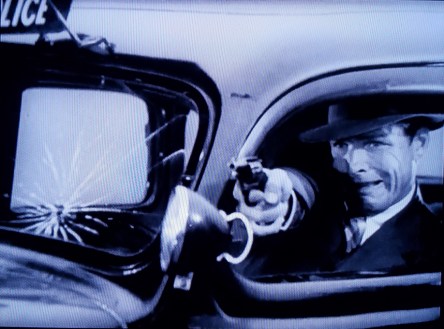
Best Cliffhanger: Chapter Ten (“The False Trail”) ends with a car chase, the villain having lain in wait in a taxi and taken Red prisoner, and Mississippi following in a police car. When the shooting starts, Red (in the back seat) takes the opportunity to fight against his captor: the two struggle until the door opens, spilling Red out onto the roadway, where he appears to be run over by Mississipi’s close-following car (the key word being “appears,” of course).

20180611_155111.jpg

Sample Dialogue: “You can always find people you’re not looking for.” –a policeman on the lookout for Quong Lee, watching Mannix go by (Chapter Eight, “The Devil’s Disguise)

What Others Have Said: “I have long admired and raved about Red Barry as the one successful detective comic strip and the only one worthy of consideration, from my scholarly viewpoint. Vigorously in the Hammett tradition, with first-rate characters and clean-cut plots.” –letter from author Anthony Boucher to Forrest J. Ackerman, quoted in Red Barry: Undercover Man, Volume 1, IDW Publishing

RedBarry3

What’s Next: In two weeks I’ll return with a look at Adventures of Captain Marvel!


Fates Worse Than Death: Mandrake, the Magician

MM.title

Aboard the S.S. Mohawk, Mandrake, the famous stage magician, is preparing to perform when he receives a telegram from his friend Betty, daughter of the accomplished scientist Professor Houston. Houston’s latest invention, a “radium energy machine” with which he hopes to benefit mankind (and the development of which Mandrake has also had a hand in), has attracted unwanted attention from criminals who hope to use its great power for destructive purposes. Even aboard the cruise ship, Mandrake is spied upon and an attempt is made on his life by henchmen of the mastermind who calls himself “the Wasp.” Upon returning to land and meeting with the Professor and his daughter, Mandrake offers to help protect Houston and his invention, but before the first chapter is over the Wasp manages to kidnap the Professor and steal the radium energy machine, turning it against Mandrake. To make matters worse, Mandrake begins to suspect that the Wasp is actually one of his close compatriots: could the Wasp actually be James Webster, an engineer; Dr. Andre Bennett, a physician; or Frank Raymond, booking agent and magic store proprietor? The truth is revealed by the end of the 1939 Columbia serial Mandrake, the Magician!

MM.stagemagic

After the Wasp succeeds in stealing Houston’s machine in the first chapter, he isn’t shy about using it (Houston eventually escapes the Wasp, but without recovering his invention): the power of the machine allows the Wasp to strike at buildings and people at a distance, so there are scenes of power lines, a radio tower, and even a dam being destroyed (in miniature, of course). However, the machine the Wasp stole wasn’t the final model, and Houston tells Mandrake that it will wear out through repeated use. A rare element, “platonite,” must be bonded with steel to fashion new, indestructible parts for an upgraded machine. This gives us several directions for the story to unfold: not only is Mandrake trying to track down the Wasp and the stolen machine, the Wasp is still trying to get his hands on the platonite and the formula for combining it with steel, and while he has Houston in his clutches he puts him to work improving the machine.

MM.WaspShadow

Much of the serial is given over to cat-and-mouse games: the Wasp has a listening device planted in the Houston home, so the bad guys can anticipate Mandrake’s moves until he figures it out and uses the bug to set a trap of his own, and there are various other deceptions and subterfuges. When the action briefly turns to Mandrake’s country estate and the Wasp’s men attempt to corner him there, they get more than they bargained for as the magician’s collection of trick items (a gun that shocks anyone who tries to pull its trigger, a vanishing cabinet through which Mandrake escapes, etc.) confound them at every turn. There are a few switcheroos that take advantage of Mandrake’s skills as an escape artist as well, in which the bound and hooded victim of a trap–supposedly Mandrake, caught at last!–turns out to be the hapless henchman who failed yet again to apprehend his man.

MM.trickgun

Although Mandrake still has fans today, it would surprise young readers to learn how big he once was: created and written by Lee Falk (who also created the Phantom), the comic strip hero first appeared in 1934 and ran in newspapers well into the current century. Mandrake is even considered one of the first costumed superheroes, although in many ways he is a transitional figure between pulp and literary heroes such as Zorro and the “long underwear” lineage that begins with Superman. Falk, who began the strip when he was only nineteen, single-handedly wrote all of Mandrake’s daily adventures until his death in 1999. Very few comics creators could match either the length of Falk’s active career or the creative control he wielded during that time! Not surprisingly, serial adaptations followed the success of both strips; bearing in mind that the Mandrake strip was only five years old rather than a character with a decades-long legacy when Hollywood knocked, Falk was still (understandably) unhappy with the changes made in the process of bringing the famous magician to the screen.

Mandrake.daily0

In the comic strip, Mandrake wields genuine magic: although partially based on Houdini, and wearing the classic stage magician’s costume of top hat and tails, Mandrake creates illusions by “gesturing hypnotically,” transforms people and things, and turns weapons against their owners, among other astounding feats. Like later imitators Zatara (father of the now better-known Zatanna) and Doctor Strange, the original Mandrake the Magician adapted the stuff of fantasy and fairy tales to the needs of serial adventure, using his amazing powers (and the muscle of his loyal manservant Lothar) to aid those who needed it, including his beloved Princess Narda. Naturally, such a larger-than-life hero had to face off against equally potent enemies, so Mandrake’s cases frequently involved battling evil wizards, mad scientists, and power-hungry dictators; visiting hidden kingdoms; and unriddling seemingly insoluble mysteries. (Although the daily strip ended in 2013 with the retirement of Falk’s successor Fred Fredericks, Mandrake has continued to appear alongside fellow King Features characters the Phantom and Flash Gordon in licensed cartoons and comic books; as always, a feature film is said to be in the works.)

DefendersoftheEarth

By now, of course, I am used to the serial versions of licensed characters being a bit . . . different from the originals. Changing the background, abilities, supporting cast, and even the name of the hero is the rule rather than the exception for serials, so it was no surprise that in the Mandrake, the Magician serial (the comma is part of the serial’s title if not the comic strip’s) the title character is a Houdini-like stage magician and escape artist rather than a wizard with the ability to reshape reality or even hypnotize people. One could imagine Mandrake lending itself to fantastic visual effects or mysterious atmosphere as a feature made by Universal or Val Lewton’s RKO production unit, but it was not to be. It was obviously truer to formula (not to mention more economical) for Columbia to have Mandrake demonstrate his bona fides by performing onstage in a few chapters and then throwing a smoke bomb to get out of a jam or two; the rest of the time he solves problems with his wits and his fists like any other serial protagonist.

MM.WarrenHull

Mandrake is played by Warren Hull, who would go on to play the title role in The Green Hornet Strikes Again, and while he makes for a capable serial lead, he doesn’t look much like the comic strip magician. It has been pointed out that Lee Falk could have been a matinee idol himself, and in fact the comic strip Mandrake looks quite a bit like Falk, lean and debonair and possessed of a sleek mustache. Hull, by contrast, is clean-shaven: in the serials facial hair is often code for villainy, or at least a suspicious character. (Consider Mandrake’s engineer friend Webster, played by Kenneth MacDonald, who has not only a pencil-thin mustache but a permanent wave that makes him look like Norman Osborn as drawn by Steve Ditko: Webster comes in for suspicion from his very first scene, and takes the unusual step of protesting his innocence whenever someone looks too closely at his alibis. But having such a prickly character be the Wasp would be too obvious . . . wouldn’t it?)

MM.Betty.Webster

In the early comic strips, Mandrake’s hulking manservant Lothar is depicted as a black African wearing animal skins and given to pidgin phrases like “Me coming, Master,” when he speaks at all. The exotic, uncivilized, and deathlessly loyal servant/bodyguard is a problematic character type (but one hardly limited to Falk’s creations) born of colonialism and racial hierarchies considered so obvious as to be unspoken. Yet Lothar is brave and true, especially compared to contemporaneous depictions of Africans and African-Americans (and was eventually revealed to be a king himself in his own native land); is Lothar, as Rick Norwood claims, “the first heroic black man in comics”? Possibly. As with Tonto and the Lone Ranger, one can argue that the important point is the friendship and mutual loyalty of two men across barriers of race and color, and some pulp and comics stories live up to that ideal, but it is hard to deny that in the stories of the ’30s Mandrake and Lothar are clearly master and servant, and Lothar was not given a more realistic (non-caricatured) appearance until the 1960s.

Mandrake.daily

Like the comic strips and any other popular entertainment of their day, the serials were not free of racial and ethnic stereotypes that now appear offensive, including depictions of “savage” black characters. (I have discussed this issue before, on one side trying to avoid the easy self-congratulation that comes from pointing out politically incorrect depictions from the past as a sign of how much more enlightened we are today–a self-satisfaction that is rarely justified, especially now– but at the same time making sure that as modern audience members we don’t fall into the seductive fantasy of believing that things were simpler then, or that race wasn’t an issue, or whatever illusion we care to project onto stories which themselves were far simpler than reality ever was: in short, let us engage in a little self-reflection to make sure that we aren’t enjoying these old films and comics for the wrong reasons.)

MM.Mandrake.Lothar

However, the Mandrake serial goes in a different direction, casting the Hawaiian-descended actor and stuntman Al Kikume as Lothar. The serials’ Lothar (pronounced lo-THAR most of the time) is likewise a man of few words and refers to Mandrake as “Master,” but he is neither primitive nor brutish. While Kikume is imposing enough to play the strongman character, his casting suggests the possibility that non-white ethnicities were considered interchangeable, or that a Pacific islander would be less threatening as Mandrake’s bodyguard–or perhaps Kikume was simply available. Is this a form of erasure? As we have seen, serial producers had no qualms about changing details to suit their budgets, shooting schedules, or simply their whims. Mandrake, the Magician isn’t as disgustingly racist as Batman–in fact, few of the serials I’ve watched are–but as a data point it is part of a larger pattern, and one that is still the norm, even if things have improved over the years.

MM.machine

Also essential to the plot are Professor Houston (Forbes Murray) and his daughter Betty (Doris Weston), who play the classic pulp roles of the scientist whose invention attracts dangerous attention and the dutiful daughter who enlists the hero’s aid. (There are suggestions that Mandrake and Betty are into each other throughout, but only at the very end is there confirmation of an actual romance—as frequently occurs, Betty is the only prominent female character in this serial.)

MM.juniormagicians

Professor Houston’s young son, Tommy (Rex Downing), is also along for the ride, but aside from a scene introducing the “Junior Magicians Club” (which adds exactly zero to the plot) and asking some questions that introduce helpful exposition, Tommy doesn’t have that much to do and could be edited out completely with little loss: his character is a serial standby, the youthful, enthusiastic kid hero or sidekick, but in almost vestigial form. Junior leads can be annoying when written or acted poorly, of course, but over the course of a 215-minute run time I would happily trade some of this serial’s repetitive fist fights for more scenes of Tommy or his friends helping out.

MM.Wasp3

Mandrake’s opponent, the Wasp, is also standard fare for serials: the Wasp is a ruthless criminal of unknown identity and above-average technical ability, and the narrative conceit by which he is secretly one of Mandrake’s confidants, to be unmasked only in the final chapter, is also something we’ve seen before. (The Wasp’s get-up, which includes a shiny half-mask, an embroidered cape, and a PUA-style fedora, is so gaudy even a professional wrestler might find himself asking “Is this too much?”) As in other serials, the Wasp is primarily shown in isolation at his headquarters, behind a control panel through which he operates the ray and communicates with his underlings, so as not to confront the hero directly until the end. At first the gang only hears from the Wasp through a two-way television screen while they hole up in a fake sanitarium, and later they report to him in his actual lair, hidden in an ordinary city block behind a maze of empty rooms.

MM.WaspTV

Dirk (John Tyrrell), the Wasp’s second-in-command, is less like the typical “spearhead villain” and acts almost like a dispatcher, relaying the Wasps’ orders and encouraging his guys to hustle because the boss is really breathing down his neck. (Unsurprisingly, Dirk doesn’t make it to the end of the serial.) Most of the Wasp’s other henchmen are interchangeable in role and personality, moreso than usual, although Columbia rounded up a colorful-looking range of mugs from their stable of regulars to fill out their ranks.

MM.Dirk

Quite a few serials don’t really start coming together until a few chapters in, after some scene-setting and moving the pieces into position. Mandrake takes longer than most to “get good,” and while the last few chapters feature some exciting set pieces and drama, far too many chapters are given over to the perfunctory story-telling and sloppy action (especially the fist fights, which are mostly artless brawls) that are all-too typical of Columbia’s serials. I’m thankful that at least Mandrake has only 12 chapters rather than (shudder) 16. Maybe I’m being too hard on Mandrake simply because I’ve seen enough serials by now that it’s harder to surprise me. But I also think Columbia’s house style just isn’t to my taste (although Mandrake precedes the descent into self-parody that marks the Columbia serials of the 1940s).

MM.fight

However, I’m willing to point out scenes and ideas that do work, most of which are in the last few chapters. A highlight is Chapter Ten, “The Unseen Monster.” Mandrake, rendered unconscious by a train wreck at the end of the previous chapter, is picked up by the Wasp’s henchmen, disguised as ambulance drivers. They take him to “Green Valley Rest Home,” a sanitarium that is actually a false front for the Wasp’s gang. It’s a great setting, and the ruse has great potential for drama. Once Mandrake is free and reunited with his friends (who have traced him to the Rest Home), there is a fantastic sequence in which the Wasp observes their progress through a “photo-electric table,” a sort of primitive view screen that resembles the top-down view of a video game (or the tracking device used to such suspenseful effect in Aliens), closing automatic doors and detonating explosives at key points to block routes of escape. This is the kind of thing one hopes for when watching serials, even if it takes ten chapters to build toward it.

MM.photoelectricboard

What I Watched: Mandrake, the Magician (Columbia, 1939)

Where I Watched It: A two-disc DVD set from VCI Entertainment (The first few scenes of Chapter One include some dialogue that is obviously dubbed by modern actors, apparently replacing damaged or missing sound; it’s a little distracting, but since I have complained in the past about garbled or muffled dialogue that is hard to follow, I guess I should at least be grateful for this attempt to enhance my viewing experience.)

MM.Wasp.machine

No. of Chapters: 12

Best Title Chapter: “Terror Rides the Rails” (Chapter Nine) All of the chapter titles are pretty good in Mandrake; as it suggests, this one involves an attack by the Wasp on the train in which Mandrake and Lothar are riding.

MM.attack1

Best Cliffhanger: At the end of Chapter Eleven (“At the Stroke of Eight”), Professor Houston has gathered Mandrake and his colleagues to see a demonstration of his latest invention, a “nullifier” that can counter the radium energy machine the Wasp stole. Mandrake suspects that one among the group is secretly the Wasp, and his suspicions are confirmed when one of the guests sabotages the nullifier at the last moment. Suddenly, Betty and Thomas run into the room: the lights have gone off upstairs! Mandrake confirms that the Wasp is (remotely) turning his ray on the very house in which they stand! Sparks begin flying out of every corner, and we are treated to several quick shots of the assembled guests panicking, surrounded by gouts of flame, and the whole thing culminates with the complete collapse of the house on top of our heroes.

MM.attack3

Cheats: The end of Chapter Six (“The Fatal Crash”) sees Mandrake in an airplane, shot down by an enemy pilot in the employ of the Wasp; the plane goes into a steep dive and crashes. At the beginning of Chapter Seven (“Gamble for Life”), Mandrake puts on a parachute and jumps out of the plummeting aircraft just in time.

MM.parachute

MM.cablecar1

The end of that same chapter finds Mandrake and one of the Wasp’s men struggling in a cable car suspended over a deep chasm; as they rock the car with their fighting, the hook suspending the car aloft weakens, until Mandrake succeeds in pushing his opponent overboard and the hook finally gives way, sending the car plummeting to the bottom. The next chapter repeats the action, but this time Mandrake leaps from the falling cable car and hangs onto the cable, pulling himself hand over hand back to safety. Look, I don’t even get upset about these things any more, but if you want further evidence of the way cliffhangers play fast and loose with consistency in order to gin up suspense, these are typical examples.

MM.cablecar2

MM.cablecar3

Sample Dialogue: “I guess that’s the last we’ll see of Mandrake. Let’s go.”

“Look! Mandrake!”

(exchange between two henchmen in Chapter Six, “The Fatal Crash”)

MM.henchmen

What Others Have Said: “I remember him [Falk] saying that as he was delighted with the [1996] production of The Phantom, he was a bit disappointed that Mandrake, the Magician (who could easily be viewed as a Lee Falk look-alike) had not made it to the screen first. He mentioned that Federico Fellini had shown interest in such a movie, but it never materialized. There had been a 1939 serial, Mandrake, the Magician, starring Warren Hull, but he discounted that version just as he did the 1943 Phantom serial starring Tom Tyler. He felt that neither portrayed his characters as he had conceived them.” –Bob Griffin, “From Fan to Friend: My Memories of Lee Falk,” included in Mandrake the Magician, The Dailies Volume 1: The Cobra

LeeFalk

What’s Next: Join me in two weeks for cops-and-robbers action in Chinatown as Buster Crabbe plays detective Red Barry!

Review: Ready Player One

loderunner

When I was a kid, back in the 1980s, one of my favorite computer games was Lode Runner, an action-puzzle game in which the player traversed a maze of brick platforms, ladders, and monkey bars rounding up gold bars while avoiding the evil minions of the “Bungeling Empire.” The best part of the game was that it included a level editor so the user could create their own mazes, save them, and play through them. I probably spent as much time creating new puzzles as I did playing the game. Games that include this feature can be a doorway into game design, but even as a kid it was enjoyable to create a setting from a godlike perspective and then play through it, seeing it in action from the player’s perspective. Although I would have killed for a Super Mario Bros. level editor back then, I actually haven’t gotten around to trying Nintendo’s Mario Maker, mostly because I’m afraid if I started using it I wouldn’t be able to stop.

As a child of the ’80s and longtime consumer of pop culture, I’m sure I was predisposed to like Ernest Cline’s 2011 novel Ready Player One. The futuristic setting is the best of times and the worst of times: post-Peak Oil, the world is a mess, with economically-depressed mobs placated by logging onto the OASIS, a comprehensive virtual-reality environment containing whole worlds to visit, socialize, and game in. And because the late designer of the OASIS, James Halliday, (like me, and like Cline) grew up himself in the ’80s, the entire online environment is saturated with references to Dungeons & Dragons, Back to the Future, MTV, Atari, and numerous other icons of 1980s nerd culture. Halliday’s posthumous announcement that he had hidden an “Easter egg” behind a series of puzzles in the OASIS, and that whoever solved them would get control of the entire thing, had set off a hunt for those clues and, by extension, a mania for all things ’80s, with “gunters” (egg hunters) devoting themselves to the lore of that magical decade in hopes of cracking Halliday’s code.

It is, in short, a nerd fantasy–now everyone will like the stuff I like–and it is clear that while the book’s protagonist is Wade Watts, a nobody living in the piled-up slums of Columbus, Ohio, Cline really identifies with Halliday, the gamemaker and magic man whose obsessions end up consuming everyone else. It’s Halliday’s world, and Wade Watts just lives in it, or rather gets to play through the maze that Halliday created. Cline’s book has received its share of criticism for various reasons (not least of all its choice of overwhelmingly white and male cultural touchstones), but the biggest tell that this is nerd escapism is that no one in the OASIS appears to resent having to learn about Atari’s unfinished Swordquest series or memorize the lyrics to songs that played on cable more than fifty years earlier. They love it as much as Halliday did, and never seem to view it as homework or history. Cline seems incapable of believing that anyone wouldn’t be jazzed by all this stuff. It’s either endearing or infuriating, depending on your point of view. If you already felt alienated from 1980s nostalgia or don’t fit Cline’s particular demographic, I can imagine it would be repellant indeed, and Cline isn’t the writer to get under the surface of the material and turn skeptics into believers.

RPOCover

When I read Ready Player One, I felt that it would either be made into a very good or very terrible film: it appears to be written with an eye on adaptation into a screenplay (Cline was previously best-known for his screenplay to Fanboys, a love letter to Star Wars and George Lucas), with minimal style and a straight-ahead plot, with few “literary” flourishes. The reams of description of mashed-up costumes, vehicles, and settings (Wade, as Parzival, his online avatar, drives a DeLorean with the Ghostbusters logo on the side and an onboard computer like KITT from Knight Rider, etc.), in particular, would go down much more smoothly in a visual medium like film or comics, where they could be taken in at a glance, or as background clues, rather than having to be spelled out.

And I will confess that as much as I feel criticism of the book is justified, it occupied a disproportionately large part of my imagination after I read it, just thinking about how its sample-driven, narrowly specific amalgamation of all things ’80s would look onscreen; how deep and multilayered its references could be; what songs would accompany scenes; how a filmmaker might play with the pixilated, airbrushed, and screen-printed visuals of the era and translate them into cinema; and so forth. When I learned that Steven Spielberg was set to direct the inevitable film adaptation, I was a little concerned: I was sure that Cline would be thrilled to have one of the giants of ’80s genre film adapt his work, but the strain of the story that caught my imagination was one of cultural inheritance and transformation, and to me it made more sense to have someone who grew up with Spielberg’s work and could filter it through their own sensibility make this film.

To give an idea of what I had in mind, imagine Ready Player One made by Edgar Wright (whose Scott Pilgrim vs. the World already does something like this, full of video-game and music video references) or Phil Lord and Chris Miller (who in The Lego Movie created a tapestry of references but were also able to call into question the premises of their own fantasy). As one of the fathers of modern blockbuster filmmaking and the creator of numerous iconic movies of the ’80s and beyond, Spielberg is an obvious choice; but it is notable that his style is to breathe a life of realism and naturalism into fantastical ideas. My imagined Ready Player One was one of screens and surfaces–this is how I remember the 1980s–in which the artifice was brought to the foreground.

When reviewing a film, it is of course unfair to criticize it for being what it is not, and in any case the existence of a realized film doesn’t prevent me from imagining my own version. But part of reviewing is being honest about one’s reaction, and it would only tell half of the story if I didn’t mention my reservations.

Obviously, Steven Spielberg’s Ready Player One, which opened this past weekend, is different from the movie I imagined, but I ended up enjoying it quite a bit. As expected, it makes many changes from the book’s plot, mostly for the better. With a screenplay by Cline with Zak Penn, much of the action is streamlined, some characters strengthened and given more to do, and the actual challenges Wade and his friends overcome are thoroughly revamped (I don’t think anyone actually wanted to see Wade reenact WarGames line-by-line, as happens in the book) and turned into satisfying cinematic set-pieces.

In fact, my favorite parts of the movie were those that were changed so much from the book that I couldn’t possibly have predicted them or had a preconception of what they should look like. There is still a sizeable infodump at the beginning, delivered by Wade (Tye Sheridan) through voice-over, but the viewer’s introduction to the OASIS at least shows why it would be popular. There’s a lot of emphasis on how you can be whatever you want to be online (a notion that becomes relevant later), but it also makes the games look like they might actually be fun to play (a hurdle not every filmmaker can overcome when it comes to creating fictional games onscreen). Spielberg is reportedly an avid gamer in real life, and his experience and affection for the medium shows in these sequences.

In its depiction of the real world outside the OASIS, Ready Player One could almost be a sequel to Spielberg’s Minority Report: its extremes of wealth and poverty, omnipresent advertising, and debt slavery form a similar background, and it is clear that the ultimate power in this near future is corporate. As in the book, the bad guys, IOI, are both a stand-in for whichever megacorporation–Microsoft, Google, Amazon, etc.–is most worrisome at the moment, as well as the “evil empire” of so many genre films. IOI’s CEO, Nolan Sorrento (Ben Mendelsohn), is a soulless money man (you can tell because he only pretends to like stuff from the ’80s when he’s trying to win over Parzival), in charge of an army of gamers trying to find the Easter egg first (and a department of genuinely enthusiastic pop culture nerds, the “mission control” types) so that IOI can monetize the OASIS, dividing users’ experiences by price tiers and filling their VR viewers with pop-up ads (Boo! Hiss!). (I got a good laugh at Sorrento’s gigantic overcompensating gamer chair, although I think I was the only one in the theater.)

It’s easy to accuse Spielberg of swimming in the shallow water with this material: it’s a break from his more serious recent films and a return to his youthful blockbuster roots, in more ways than one. A sequence recreating a classic horror movie, in particular, is the kind of fun-scary thrill ride we haven’t seen from Spielberg since maybe Jurassic Park and The Lost World (War of the Worlds and parts of A.I. were scary but not fun; Tintin was fun but not scary). Although he shies away from recreating his earlier triumphs, the Indiana Jones movies he made with his fellow “movie brat” George Lucas are just as much a mosaic of ideas from an earlier generation of pop culture as Ready Player One–if you thought I’d come all this way without at least mentioning serials, the joke’s on you–the crucial difference being that Indiana Jones and Star Wars rebranded those ideas, fusing them into new mythologies; Ready Player One is concerned with that process of repackaging in an environment in which nothing ever really goes away.

There’s also no question that Spielberg is calling into question the utility of all this spectacle: like Cline’s book, Ready Player One indulges the fetish for nostalgia and escapism while ultimately concluding that it’s important to go outside once in a while, too. There’s a similar contradiction in its celebration of fan culture and open borders between intellectual properties while mostly including characters owned by producing partner Warner Bros. and a few recognizable Japanese icons (so no Marvel, Star Wars, or anything else owned by Disney, as far as I can tell). For all its flaws, Cline’s book felt like a genuinely personal project, full of weird deep cuts (I for one had never heard of the Japanese Spider-Man TV show in which the web-slinger has a giant robot!) and a citizen of the internet’s embrace of Fair Use to justify borrowing just about anything at all, rolled together into one giant ball, Katamari Damacy-style (see, I can do it too!).

katamari

A battle between the Iron Giant and Mechagodzilla sums up the dumb appeal of this premise, and if you’re not on board for that there’s probably not much I can say to change your mind. On the other hand, in a world in which Facebook memes may have been used to turn the tide of our last election and nations and ideologies contend with one another in virtual spaces to win hearts and minds, the final battle for control of the OASIS, the ultimate mash-up that brings those metal titans together, doesn’t strike me as entirely frivolous. Ready Player One never uses the phrase “Net Neutrality,” but it’s at the heart of Cline’s belief that online connectivity can bring people together just as easily as it separates them, and that it is up to us to choose. (And if that sounds impossibly high-minded, a guy also gets killed by a Madball, and it’s hilarious.)

Mark Rylance as James Halliday (shown in retrospective video and as his online avatar, the wizard Anorak) is the film’s real emotional center, and Ready Player One also touches on the deep sadness at the root of Halliday’s creation, a world in which he could be in control as a substitute for the unpredictability, messiness, and possibility of being hurt in the real. As Wade and his online companions Art3mis (Olivia Cooke) and Aech (Lena Waithe) discover, Halliday’s own aborted attempts to connect with other people turn out to be the key to unlocking his puzzles, and Wade’s arc (drawn more clearly here than in the book) is one of getting his head out of the game and connecting to the world around him.

Screenshot_20180330-162010.jpg

In conclusion, Ready Player One is funny, exciting, sometimes scary, and mostly satisfying in the same way it’s satisfying to see those stuck-up kids from the ritzy camp on the other side of the lake get beaten by the rag-tag misfits in every slobs vs. snobs comedy that came out in the 1980s. If it’s ultimately a little shallow and we’re never in doubt that the good guys will win this one, well, that’s part of the package. Will today’s kids be as inspired by this film as Cline and I were by Star Wars and Raiders of the Lost Ark? Despite tips of the hat to post-’80s properties like Minecraft and HALO, if the audience I saw this with is any indication (mostly middle-aged white guys like me), I doubt it. It will likely be an amusing blip in Steven Spielberg’s late career. But for myself, I’ll continue to imagine what could have been, proving that books are the real portals to the imagination. (You might think that I am above deploying such a cliché, but seeing as I have just written over two thousand words about Ready Player One, clearly I am not.)

My 2017 in Film

Macario

2017 was a strange, rough year for everybody. Like a lot of people, I’m looking back at my output in the last twelve months and finding that the impulse to blog was either weak or nonexistent. I was, at the very least, distracted by a heavier workload and by events in the world at large (I managed to put in some writing on some larger projects as well, but those remain unpublished). If it weren’t for serials and the Kamandi Challenge I wouldn’t have posted very much at all. The same lack of motivation also hit my movie-watching: I don’t think I watched any less than last year, but the quality of what I watched was much lower, with a lot of cheap thrills and junk food in the mix. I just wasn’t in the mood for movies that promised to be too heavy or challenging–I was getting enough of that from real life.

JusticeLeagueCanada

So while last year I watched enough new releases to compile a respectable Top 10 list, I don’t think I’m going to take that approach this year. (I won’t be writing a year in television column at all, but for the record I watched and recommend GLOW and American Vandal on Netflix.) Instead of highlighting and ranking individual films, I’m going to examine some common themes that emerged in my viewing. This includes both 2017 releases (of which I watched 21) and older films that I caught up with for the first time this year.

Friendly monsters
latest.png
My love of monster movies has been no secret in this blog, so you might consider this an extension of my heavy kaiju viewing from 2016: I continued to watch entries in the Godzilla series, and of course I went through the (much shorter) Gamera series for my discussion with Zack Clopton. But filmmakers were, for once, on the same wavelength as me this year, and it was possible to draw out this theme even from new releases. Okay, King Kong is not exactly “friendly” in Kong: Skull Island (dir. Jordan Vogt-Roberts), but as in most classic kaiju movies he does eventually get the audience’s sympathies on his side in this interesting mash-up of monster and Vietnam War movies. I happened to watch this a second time at home (whenever my wife and sister get together, Tom Hiddleston is sure to be on the viewing schedule) and I felt that it was even tighter on a repeat viewing; it left me eagerly awaiting a continuation of the “Monsterverse” that began with Gareth Edward’s Godzilla in 2014.

Colossal

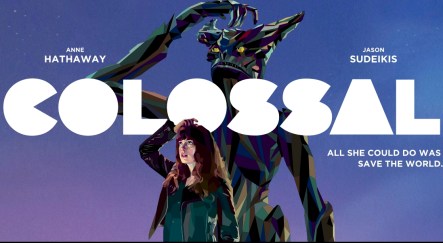
In another shake-up of the typical formula, Colossal (dir. Nacho Vigalando) put a magical-realist spin on the kaiju genre, with Anne Hathaway as a woman with a mysterious psychic connection to a giant monster appearing in South Korea. Again, it might be a stretch to call the Colossal beast a “friendly” monster, but as in the best fairy tales, what starts out as a source of fear helps lead the heroine to understand her own strength. To reveal any more about this one would be unfair–it works better unspooling at its own pace–but suffice it to say that there are worse monsters in this film than the big critter on the poster.

The really cuddly monsters could be found in releases like Monster Trucks and Okja, and even (thematically) in the otherwise imperfect Ferdinand: kids are the true fans and friends of monsters, and as with Gamera they sometimes end up protecting these fantastic companions just as much as the monsters protect them. With Okja, Bong Joon Ho continues his genre-bending critique of capitalism and imperialism, introducing a genetically-engineered “superpig” designed as an ideal, environmentally-friendly source of meat, if it weren’t for the creature’s friendship with the little girl (Seo-hyun Ahn) who raised him on her isolated family farm. Tilda Swinton is also memorable in a dual role, and I don’t care what anyone says: Jake Gyllenhaal is good in this.

MonsterTrucks

In 2016, when I saw Kubo and the Two Strings, the preview for Monster Trucks (dir. Chris Wedge) preceded it, and the little boy sitting behind me said after every other preview, “I want to see Monster Trucks!” This led me to overestimate its box office potential by a wide margin, but I still found it a charming (if familiar) movie. Reportedly inspired by a Paramount executive’s three-year-old son (it shows), Monster Trucks asks the question, “what if monster trucks were literally trucks powered by monsters?” The adorable “Creech” (an oil-eating, amphibious blob halfway between a manatee and a squid) has become something of a mascot for the Dissolve Facebook group, but I’m equally charmed by the chemistry between leads Lucas Till and Jane Levy as the human teenagers who first befriend Creech and then help him return to his home deep underground. With its nefarious oil company baddies and truck-themed shenanigans, Monster Trucks could be described as “Splash + Pete’s Dragon + License to Drive.” Worth noting is its troubled production history: initial designs for Creech and his relatives were much too scary, leading to disastrous test screenings that sent terrified children running for the exits; if it weren’t for the expense of redesigning them, Monster Trucks might have had a shot at turning a profit.

The Day of the Dead
coco
Somehow I ended up seeing three films centered on the Mexican Day of the Dead celebration this year: Pixar’s latest, Coco (dir. Lee Unkrich and Adrian Molina), of course, was one of them, and one of my favorites of the year. (It was refreshing to see Pixar’s world-building applied to themes and characters that weren’t white office park dwellers, although plot-wise I might have liked it even better if I hadn’t seen any previous Pixar films: one might say this perfects the formula they’ve been working on for some time.) I also happened to see the other animated Day of the Dead feature, The Book of Life from 2014, which I enjoyed for its flights of fantasy: instead of the supernatural bureaucracy depicted in Coco, which (like all Pixar settings) is set up with rules to make the action that follows clear, The Book of Life has the logic of a dream or a fairy tale (although there are still rules, they are on the scale of balancing universal principles of light and darkness rather than the regulations of a post-mortem customs agency). This makes it sound like I’m putting down Coco in favor of The Book of Life, but I liked both: they just take different approaches (however, The Book of Life has banditos whose sombreros are spinning saw-blades: advantage Book). At the beginning of the year, following my interest in Mexican horror, I watched the 1960 classic Macario. Macario turned out to be less of a horror story than I expected, and more of a supernatural fable in the vein of Ingmar Bergman, but I enjoyed it nonetheless.

Troubled visionaries
brigsbybear
Brigsby Bear (dir. Dave McCary) was a film I almost didn’t get to see this year: I don’t believe it screened in Wichita, but I heard so many raves about it I felt compelled to pick it up when a used Blu-ray turned up at my local CD Tradepost. I was fortunate to go into it without much foreknowledge of its plot, so I won’t say more than what I knew: in the words of the Blu-ray package copy, “James has grown up with the goofy kids’ show Brigsby Bear and the program has grown with him as well. One dramatic night, James’ insular world is upended. Upon learning the series has been cancelled, he adopts the old adage that the show must go on. By becoming Brigsby Bear‘s new creator, James finally builds meaningful connections his life has lacked.” The theme of an amateur filmmaker using his movie to work out his issues is similar to The Disaster Artist (a movie I enjoyed but didn’t love quite as much as some did), but it most reminded me of a movie I watched for the first time at the beginning of the year, Gentleman Broncos, and the two might make an interesting double feature. Like Brigsby Bear, Gentleman Broncos includes an amateur production of a science fiction epic, but in Broncos the film is a travesty that humiliates its creator, and in addition the quirkiness of the film feels contrived; Brigsby Bear‘s oddity flows directly out of the circumstances of its central character, James (Kyle Mooney, who came up with the story), and achieves a striking level of empathy. In it, creation becomes cathartic in itself, regardless of how others perceive the final product. Also, both films take place in Utah, so make of that what you will.

Space opera
thelastjedi
2017 was a great year for space adventures. Sequels to the Guardians of the Galaxy (dir. James Gunn) and Thor (dir. Taika Waititi) series felt more like science fiction adventures than superhero slugfests. (Guardians of the Galaxy 2, for its part, actually increased my appreciation for the first GotG, as it completes several arcs set up in the first movie; it’s the rare sequel that really feels like a resolution of unfinished business from the first film.) Valerian and the City of a Thousand Planets (dir. Luc Besson) had some fantastic visuals and wild ideas (and an optimistic prelude set to David Bowie’s “Space Oddity” that justified the price of admission, even if the rest of the film couldn’t live up to it). More pessimistic and existential, Blade Runner 2049 (dir. Denis Villeneuve) takes place in a space opera universe, but on ground level, among the detritus left behind after humanity makes its push into the stars. From that angle, it makes sense that the most cosmic-minded character, the replicant-production mogul Wallace (Jared Leto), is presented as a terrifying monster with delusions of godhood (and while the Blade Runner universe has become quite distant from its roots in Philip K. Dick’s Do Androids Dream of Electric Sheep?, the author’s skepticism of typical heroic narratives still comes through). Speaking of subverted expectations, the lastest Star Wars installment, The Last Jedi (dir. Rian Johnson), capped off the year with a visually striking and heartfelt journey that managed to call into question many long-held assumptions about the Jedi, the Force, and the narrative rhythms of the series. I loved the twists and turns the story in The Last Jedi took and found the moral complexity exhilarating; the sequence in a high-class casino, among the arms dealers and black marketeers who profit from the conflict no matter who wins, was a highlight. Writer-director Rian Johnson took risks and created something challenging and affecting, especially surprising for a franchise that has mostly played it safe since Disney’s purchase of Lucasfilm.

Musical fantasy
Musicals continued to be a source of escapism as well, although some ended up being better than others. As I mentioned in my round-up of this year’s reading, Star! turned out to be a dud, although the musical numbers are the only parts that redeem it. At the beginning of the year, last year’s La La Land made it to Wichita. I’ve been a fan of director Damien Chazelle’s earlier work, and I liked La La Land, but it would have benefited from a little more of the perfectionism Chazelle explored in Whiplash. As far as older musicals, I revisited The Rocky Horror Picture Show (which I ended up liking much more than the first time I saw it, years ago) and explored its 1981 sequel, Shock Treatment (maligned and misunderstood at the time, but increasingly the object of its own cult; it’s the product of a different, more anxious moment in time, and its obsessions with celebrity and television were ahead of its time).

madame-satan.jpg

I ended up enjoying Madam Satan, the bizarre musical comedy from director Cecil B. DeMille (not noted for his intimate chamber pieces, although he handles the slamming-door farce very well); the musical elements are pretty dated and bound to the conventions of Broadway circa 1930, but the dazzling art deco visuals of its third act, a masquerade ball aboard a zeppelin (!), are still striking, and Kay Johnson is wonderful in the film as a jilted wife who adopts a femme fatale persona to win back her husband (no, it isn’t exactly woke).

Boyfriend

Best of all was The Boy Friend, Ken Russell’s 1971 adapation of Sandy Wilson’s hit stage musical, a spoof of 1920s Noël Coward and Cole Porter shows. True to form, Russell adapts his sources by first turning them inside-out, with the film a stylized backstage musical that amplifies the cheapness of a threadbare production and contrasting it with the outsized dreams of the cast and crew. Among my favorite sequences of any film I’ve seen this year is an extended dream of a Greek pastoral filtered through a Jazz Age bacchanale, a frenzy of jitterbugging nymphs and satyrs poised halfway between Jean Cocteau and Max Fleischer. Every once in a while you encounter a film that feels like it was made just for you: for me, this is one of them.

Pure crap
StoneHand
As I indicated above, I watched a lot of stuff this year that’s hard to justify as anything more than comfort food, and some of it failed to even live up to that low ambition. In some cases, I found myself disappointed by choices I hoped would be more rewarding: this is the state almost all fans of genre fiction or films end up in at some point, the “victory of hope over experience” in the pursuit of thrills. Such was the case with A Werewolf in the Amazon, the fourth film in the collection of movies by Ivan Cardoso that I began in October; the first three films were varying levels of engaging, but Werewolf was just bad. Seeing something you don’t like is sometimes the price of expanding your horizons: they can’t all be winners.

Batwoman

I have a harder time explaining how I spent so much time delving into the filmography of Jerry Warren, the 1960s shlock auteur whose motto was “Never, ever try in any way to make anything worthwhile.” I’m not a big believer in “hate-watching” or even the concept of “so bad it’s good”–if something entertains or interests me, I’ll say so, whatever its flaws. The film that sent me down the Warren rabbit hole was 1966’s Wild World of Batwoman, a spoof on the TV superhero craze that attracted the unwelcome attention of DC Comics itself: beyond that loopy film (the only Warren joint I’ve seen that comes close to justifying comparisons to Edward D. Wood, Jr.), only one or two even rise to the level of being almost good. So why did I subject myself to them? Ironically, it’s Warren’s antagonistic attitude (according to those who worked with him, Warren claimed that audiences couldn’t recognize anything good anyway, so there was no point in trying, although that sounds at best like a preemptive excuse) that attracted my interest. Sitting down with a Jerry Warren film felt like pitting myself against an opponent, with extracting the entertainment value that Warren was determined to withhold from me as my goal; or like a wrestling heel, whose whole performance depended on my negative reaction, I suspected that Warren’s negativity was an act that I was determined to see through. Well, folks, it wasn’t an act, and for the most part he succeeded in creating products that had me scratching my head afterwards: the worst of them weren’t merely boring or incompetent–they weren’t anything, just footage edited together (in many cases “patch-ups” from Mexican or South American films to which he added his own connecting scenes) until it hit feature length. No point other than sucking dollars out of the pockets of teenagers at the drive-in who weren’t going to pay attention to the screen anyway.

The best of the year
getout
It wasn’t all bad, however: one side effect of only seeing a few new releases this year is that I didn’t see very many that I really disliked. Most of the new films I saw this year were at least passable, and a few were downright great. Aside from films already mentioned, Get Out (dir. Jordan Peele) deserves every bit of acclaim that has come its way. Get Out has already inspired thousands of words as a sharply-observed horror-satire, a “socially conscious thriller” that takes its charge from the real-life horrors daily visited upon Black America in ways large and small, from overt racism to the insidious microaggressions that add up over time. I have little to add other than to say it is one of the most vital films of the year (as well as another one that benefits from knowing little about the plot going in), but also one of the most entertaining.

Guy Guests, Gabs Gamera

goodjobgamera

A while back I sat down (virtually, that is) with Zack Clopton of the Bangers n’ Mash podcast to talk about everyone’s second-favorite giant Japanese movie monster and friend to all children, Gamera. That discussion is now posted, so please give it a listen. Zack and I share our opinions and trivia about the twelve entries of the series, from the goofy installments of the 1960s to the very serious trilogy of the 1990s (and beyond). Zack has also edited in some cool audio interstitials from trailers, soundtracks, and Mystery Science Theater 3000 (I swear those weren’t there when we were talking!) Even more amazingly, Zack has made it sound as if I know what I am talking about! (Sort of–even digital wizardry has its limits!) Enjoy!

Spooktober: The Aftermath

It is November first, the day after Halloween. The candy has been handed out, and all that remains is to put away the costumes and take the decorations out of the yard. Elsewhere online, people are already gearing up for Noirvember or NaNoWriMo or “No-Shave November.” As I write this I am watching a compilation of horror movie trailers to keep the mood going, after having hit the Spirit Halloween Store to check out the after-holiday sales.

I usually like to post this October summary on the 31st, but the holiday itself turned out to be busy with work during the day and taking the kids trick-or-treating in the evening (this year I went as my namesake, celebrity chef Guy Fieri), not to mention cramming in a few last-minute horror movies. As always, I kept track of my viewing in the last month: the results are a little less varied than in some years, partly because I watched more series and sequels this time. I had a pile of movies set aside for this month, and watched quite a few of them, but since I bought more movies during the month, the pile I have left is almost as big.

Blade Runner 2049 was the only film I watched that isn’t horror, but in the past I’ve included movies that are better described as fantasy or science fiction or that belong to horror-adjacent genres such as thrillers or kaiju eiga; I’m not much for splitting hairs. (It was good, by the way.)

There were also theatrical screenings at the Warren Oldtown Horrorfest (formerly October at the Oldtown), organized by local filmmaker and presenter Leif Jonker (and shown nationwide by the Regal Cinemas chain, which purchased the Warren theaters earlier this year). The only Horrorfest film I skipped was Jaws, which is great but feels more like a summer movie to me. In addition to the Horrorfest screenings, my viewing included films on VHS, DVD, Blu-ray, YouTube, and cable television (thanks, TCM!). (I’m not really a VHS collector, but I appreciate a bargain, and when I found a copy of Saturday the 14th at a church flea market on Saturday the 14th, how could I not pick it up?)

1. The Awakening (Mike Newell, 1980)
2. Blood From the Mummy’s Tomb (Seth Holt, 1971)
3. Suspiria (Dario Argento, 1977)*
4. Fright Night (Tom Holland, 1985)*,**
5. Blade (Stephen Norrington, 1998)
6. Blade II (Guillermo del Toro, 2002)
7. Blade: Trinity (David S. Goyer, 2004)
8. Frankenweenie (Tim Burton, 2012)
9. The Dead Zone (David Cronenberg, 1983)*
10. Pet Sematary (Mary Lambert, 1989)*
11. The Monster Squad (Fred Dekker, 1987)*
12. Slave of the Cannibal God aka Mountain of the Cannibal God (Sergio Martino, 1978)
13. At Midnight I’ll Take Your Soul (José Mojica Marins, 1964)
14. This Night I’ll Possess Your Corpse (José Mojica Marins, 1967)
15. Embodiment of Evil (José Mojica Marins, 2008)
16. Saturday the 14th (Howard R. Cohen, 1981)
17. Saturday the 14th Strikes Back (Howard R. Cohen, 1988)
18. Blacula (William Crain, 1972)
19. King Kong (Merian C. Cooper and Ernest B. Schoedsack, 1933)*, **
20. Them! (Gordon Douglas, 1954)*, **
21. A Nightmare on Elm Street (Wes Craven, 1984)*
22. Scream, Blacula, Scream (Bob Kelljan, 1973)
23. Society (Brian Yuzna, 1989)
24. The Mad Executioners (Edwin Zbonek, 1963)
25. Blade Runner 2049 (Denis Villeneuve, 2017)*
26. Vampires (John Carpenter, 1998)
27. Cat People (Paul Schrader, 1982)*
28. Videodrome (David Cronenberg, 1983)*
29. Torture Dungeon (Andy Milligan, 1970)
30. The Phantom Carriage (Victor Sjöström, 1921)
31. Salem’s Lot (Tobe Hooper, 1979)
32. The Ghost of Frankenstein (Erle C. Kenton, 1942)
33. The Vault of Horror (Roy Ward Baker, 1973)
34. The Whip and the Body (Mario Bava, 1963)
35. The Crimson Cult (Vernon Sewell, 1968)
36. House of the Long Shadows (Pete Walker, 1983)
37. The Secret of the Mummy (Ivan Cardoso, 1982)
38. Night of the Living Dead (George Romero, 1968)*, **
39. Theater of Blood (Douglas Hickox, 1973)

* theatrical screening
** rewatch

Best movie: It’s hard to pick a clear-cut winner out of so many films. Aside from rewatches, Suspiria, Theater of Blood, Frankenweenie, and Blacula were all very solid films. I was also very taken by A Nightmare on Elm Street after years of thinking I wouldn’t like it. In fact, I enjoyed most of the movies I watched for the first time this month, with only a few duds.

Ultimately, I think David Cronenberg’s prescient media fantasia Videodrome (which, admittedly, I had seen bits and pieces of previously) is going to stay with me the longest. In addition to its Philip K. Dick-like meditations on perception vs. reality and weird body horror (an element Cronenberg is obviously known for), Videodrome captures and anticipates the reality of lives half lived through screens and the attendant social changes. I hadn’t realized just how much Max Headroom and The Matrix owed to Videodrome, from the analog futurism of hand-delivered videotape messages (maybe we could call it . . . “v-mail”?) to the overwhelming importance of television for people’s spiritual well-being (the “Cathode Ray Mission,” where the homeless could get a meal and some precious screen-time, being an obvious example, and one that Max Headroom borrowed almost verbatim). And, as in They Live (another film that could almost fit in the same universe), the question of who is ultimately behind the signals the TV stations broadcast, and what impact they have, has an answer that is anything but reassuring.

Scariest movie: I had waited to see Dario Argento’s giallo-inflected supernatural mystery Suspiria until I could see it on the big screen, and my patience wasn’t disappointed: the colors were vibrant and the story suitably suspenseful and frightening. And I’ve come to look forward to performances by lead Jessica Harper, who around this time seemed to specialize in movies that made use of her uneasy brittleness. However, the most surprising revelation of all was finding an Italian horror movie with a plot that makes sense!

Goriest movie(s): Two movies are tied for this category. The first, Slave of the Cannibal God, has many of the hallmarks of the Italian cannibal genre, including an emphasis on realism (although unlike many cannibal films, Slave does not pretend to be a documentary) that extends to filming the real deaths of animals in both native rituals and in (staged) fights that purport to show the cruelty of the jungle. No thanks. There is also a tremendous amount of (hopefully simulated!) human gore once the fearsome cannibal tribe is reached, and a third-act sequence of horrors that gets hard to take long before it is over. No wonder it was included on the infamous “video nasties” list by censors in the United Kingdom.

The other contender is Embodiment of Evil by Brazilian writer-director-star José Mojica Marins, who has made an industry of his character Zé do Caixão, better known in English as “Coffin Joe.” The evil undertaker, who began his career in the 1960s with At Midnight I’ll Take Your Soul, demonstrates a cruelty and indifference to conventional morality that makes him a unique antihero for a conservative society, with many similarities to the characters of the Marquis de Sade. Embodiment of Evil, Coffin Joe’s 2008 “comeback,” bears that comparison even more than his earlier films, since sophisticated special effects and more relaxed mores make it possible for Joe to terrorize his victims with much more graphic punishments (the cast also appears to include a number of body-modification practitioners, so it’s not even obvious to me that all of the piercings and other mortifications are strictly fake). I found the Coffin Joe movies interesting (and I liked the second one, This Night I’ll Possess Your Corpse, quite a bit), but ultimately Embodiment of Evil was as close to “torture porn” as I care to explore.

Dumbest movie I will probably watch again: Several of the movies I watched were either comedies or included frequent humor. Saturday the 14th was the most obviously jokey, a spoof of all kinds of horror movies thrown into a blender of a story about a book that will release all the evil in the world if read on the titular date. Jeffrey Tambor (in one of his first movie roles) appears as a vampire who appears to be going through a mid-life crisis, and the comedy really takes off when the monster hunter Van Helsing (Severn Darden) shows up as an “exterminator.” Silly stuff, but amusing for what it is and I could see it becoming an every few years tradition.

Worst movie: The first movie spawned a sequel, Saturday the 14th Strikes Back, a few years later, so of course I had to watch it. The good news is that there is no narrative connection or continuity to the first one beyond the simple idea that bad things are going to happen on the date in question. Also, while researching this, I discovered that none other than Gahan Wilson created the poster for the film, so there’s that. The bad news is that the movie is cheaply made and even dopier in its humor than the first one. It’s a candidate for weirdest movie, but the substitution of wackiness and off-the-wall behavior for actual jokes feels desperate. It also doesn’t make much sense: the premise of the film is that an ordinary family starts acting strangely when a crack in the basement begins releasing evil into the world, but they’re pretty nutty to begin with, eating candy for every meal and going through OCD-like precautions to protect themselves from germs. It feels like a movie straight from the imagination of the little boy in “It’s a Good Life.”

Actual Weirdest movie: In addition to the Saturday the 14th movies, there was quite a bit of weirdness in Videodrome and the similarly ooky Society; The Crimson Cult was frankly not weird enough for a film supposedly based on H. P. Lovecraft’s “Dreams in the Witch-House,” and its Scooby-Doo-like ending bummed me out. I have in the past made a distinction between movies that are weird in themselves and movies that appear to have been made by weirdoes: The Secret of the Mummy, by Brazilian provocateur Ivan Cardoso, qualifies as both. Jumping between black and white and color and incorporating stock travelogue and newsreel footage, as well as impressionistic montages and rapid cuts between isolated details, The Secret of the Mummy tells the story of an obsessed scientist who recovers an Egyptian mummy in order to test out his elixir of life and revive it. The fact that the young Pharaoh was a sex-crazed serial killer in life doesn’t faze the scientist, and once the mummy is up and about he resumes his favorite pastime. It feels like a collision of a Universal monster movie (as well as the sexed-up mummy, there are shades of Frankenstein, including a hunchbacked lab assistant) and a Carry On sex comedy. The Secret of the Mummy is unapologetically kinky, but extremely stylish, and Cardoso reminds me (based on this single film–I have three more to watch) of a straight, Brazilian John Waters.

Horror on a Budget: The crudeness of The Secret of the Mummy‘s production also reminds me of another outsider filmmaker I encountered this month, Andy Milligan, who in Torture Dungeon attempts to stage a medieval “epic” with a shoestring budget on Staten Island. One of Milligan’s techniques is to hide the paltriness of his sets by filming in tight close-up–so tight, in fact, that I didn’t realize until halfway through the movie that a main character only has one arm. Torture Dungeon is as raw as I was led to expect–the titular dungeon is onscreen for not more than three or four minutes, and the gore is of the Herschell Gordon Lewis papier-mâché variety–but was mostly enjoyable. It helps that I enjoy movies in which the seams show. By far the worst parts were the walk-on characters who do nothing to advance the story but deliver community theater-style stage business.

Finally, for the first time this year I took part in an October horror movie challenge, watching films to match specific categories. I generally just follow my whims when choosing what to watch, but it was fun expanding my horizons with some of the requirements. The Spooktober Challenge consisted of 31 categories, voted on from a list of nominees by members of The HORRORS . . . of THE DISSOLVE! Facebook group, with one movie counting for each category. Here are the categories and the movies that satisfied each one:

1. A horror movie by a female director: Pet Sematary (Mary Lambert)
2. A black and white horror movie: King Kong
3. A horror movie from a country other than your own: The Mad Executioners (Germany)
4. A horror anthology: The Vault of Horror
5. A horror movie marketed to kids: The Monster Squad
6. A horror-comedy: Saturday the 14th
7. A silent horror movie: The Phantom Carriage
8. An avant-garde or experimental horror movie: Videodrome
9. A horror movie featuring a non-white protagonist: Blade
10. A classic Universal monster movie: The Ghost of Frankenstein
11. A horror movie by an LGBTQ writer or director: Torture Dungeon (Andy Milligan)
12. A Hammer horror movie: Blood From the Mummy’s Tomb
13. A horror movie involving a non-Christian/Satanic religion: Scream, Blacula, Scream (Voodoo)
14. A horror movie from the year you were born: Theater of Blood (1973)
15. An “all-time great” horror movie that you’ve never seen: A Nightmare on Elm Street
16. A giallo: Suspiria
17. A horror movie starring Vincent Price: House of the Long Shadows
18. A horror movie from Latin America: The Secret of the Mummy (Brazil)
19. A Mario Bava movie: The Whip and the Body
20. A made-for-TV horror movie: Salem’s Lot
21. A horror movie that terrified you as a child: Them!
22. A John Carpenter movie: Vampires
23. A Lovecraftian horror movie: The Crimson Cult
24. A horror movie by a non-white director: Blacula (William Crain)
25. A slasher movie that is not part of a franchise: Corruption (Robert Hartford-Davis, 1968)
26. A video nasty: Slave of the Cannibal God
27. A body horror: Society
28. A horror movie featuring a witch or witchcraft: Embodiment of Evil
29. A horror movie where someone turns into an animal – but NOT a werewolf: Cat People
30. An animated horror movie or short: Frankenweenie
31. A horror movie by a typically non-horror director: The Awakening (Mike Newell)

The terms of the challenge allowed for movies viewed in September to count, but I only needed to count one: Corruption is something of a proto-slasher, with Peter Cushing as an increasingly-unhinged surgeon who kills women to supply his disfigured girlfriend with the pituitary gland extract that keeps her beautiful. I’m not a huge fan of slashers, anyway, so this was close enough for me.

In addition, there were three “bonus challenges” that I successfully completed: at least one movie from each decade, 1920s to 2010s; no more than five movies that you have already seen (King Kong and Them! were the only rewatches I counted toward the challenge); and only one movie per director (it was lucky for me that Blacula and its sequel Scream, Blacula, Scream didn’t have the same director!).

I hope you had a happy Halloween and saw something good or at least surprising in the past month. Let me know if you recommend anything else based on what I’ve listed here or if you just have a horror movie you’re enthusiastic about. I’ve already got my list for next year started: after all, it’s only twelve months until next Halloween!

Fates Worse Than Death: Dick Tracy vs. Crime, Inc.

Criminologist Stephen Chandler is a haunted man: after the deaths of his colleagues Allison and Thornton, he is now in the sights of the mysterious killer known only as “the Ghost.” Even the nearness of his adult daughter, June, and the watchful police officers that surround his estate cannot reassure him. Even Dick Tracy himself, on his way from his headquarters in Washington, D.C., cannot guarantee Chandler’s safety, for who could possibly be on guard against an invisible man?

Yes, at his secret headquarters, with the assistance of mad inventor Lucifer, the Ghost plots to strike. The mask the Ghost wears hides his identity should he be spotted, but it is with the “contact disc” he wears around his neck that he truly lives up to his namesake. With the twist of a few dials on Lucifer’s console, the Ghost fades from view, with only an eerie whistling sound to indicate his presence. And it is in this form that the Ghost sneaks past Chandler’s guard and into his study, shooting him dead. By the time Tracy arrives, it’s too late.

It should be clear from this opening chapter (a chapter that also includes a plot to destroy New York City by dropping depth charges on a hidden faultline) that Dick Tracy vs. Crime, Inc., the fourth and final Republic Dick Tracy serial, has left Chester Gould’s comic strip behind and is content to dwell full-time in serial land. It is most similar to the first Tracy serial from 1937, but even that serial, with its flying wing and personality-altering surgery, didn’t commit to anything as fantastic as invisibility, and it occasionally slowed down for mundane police work, which Crime, Inc. has little time for.

It is the humble finger print, however, that provides a hint to the nature of the Ghost and his vendetta: the only prints left behind after Chandler’s murder belong to “Rackets” Regan, a criminal executed at Sing Sing a few years before. Chandler and the first two victims had been a member of the secret Council of Eight, a group of influential citizens united to stop the scourge of organized crime. It was the Council of Eight who, along with Tracy, brought down Regan, and since the Ghost is Regan’s surviving brother (as he reveals to Lucifer in one of those “as you know” monologues that once lubricated all kinds of genre narratives), the motive for his killing spree is clear: revenge first, and resuming Regan’s criminal regime, nicknamed “Crime, Inc.”, later.

Of course, Tracy and his colleagues don’t know all that at first. In fact, they don’t even realize they’re dealing with an invisible man until nearly the last chapter (for a while, everyone who realizes the Ghost’s secret winds up dead before they can tell anyone else). But the seeming return of “Rackets” Regan leads to a reconvening of the surviving members of the Council; Tracy’s regular meetings with the group and the Ghost’s gradual reduction of their numbers, And Then There Were None-style, forms the spine of the plot. And not surprisingly (if you’ve seen more than a few of these serials), it is soon apparent that the Ghost is secretly a member of the Council himself! Once Tracy realizes that, he goes on the offensive, feeding the Council information with which he hopes to trap the Ghost and discover his identity.

Since Tracy, having been promoted at the end of Dick Tracy’s G-Men, is now based in Washington, he has an all-new supporting cast. Billy Carr (Michael Owen) fills the role of Tracy’s partner/sidekick, replacing Steve Lockwood. June Chandler (Jan Wiley), daughter of the man murdered in Chapter One, sticks around to assist Tracy, help run Council meetings, and later turns out to have her own scientific skills as a “sound expert,” helping Tracy analyze the whistling sound that accompanies the Ghost’s crimes (before they understand that he is invisible). June is more involved and gets more screen time than Gwen Andrews did in the earlier serials, but it would still be a stretch to refer to her as a “love interest” as Max Allan Collins does in his commentary. In my opinion she fits the category of “strictly Platonic, but the only major female character in the film,” but without his comic strip paramour Tess Trueheart around, Tracy is married to the law alone. (Of course Ralph Byrd is still in the title role, making him the only cast member to appear in all four serials.)

On the villains’ side, the Ghost gets his own credit, keeping his identity secret from the audience until the end. His main associate Lucifer is played by John Davidson, the cadaverous character actor with the sepulchral voice, whom we have encountered several times before in this series, and who almost always appears as a heavy. Other henchmen include Anthony Warde (who played the main bad guy in Buck Rogers) and Stanley Price, who makes an uncredited appearance in only one chapter, but whose intensity (imagine a teleporter accident fusing Peter Lorre and James Cagney) is always welcome.

Dick Tracy vs. Crime, Inc. is a mixed bag: the emphasis on unrelenting action makes for some ambitious and boisterous fight scenes, with actors and stuntmen really throwing themselves into it. A knockdown-drag-out between Tracy and a henchman impersonating a butler in Chapter Two is typical, and one gets the sense that each chapter’s fight is meant to top the last, with more men fighting and each location more dangerous. On the other hand, there are quite a few shoot-outs with men blasting at each other from behind walls, and lots of car chases, which I just don’t find that exciting, no matter how much the black sedans squeal their tires or fishtail around tight corners. Several perils are lifted from previous Tracy serials; in some chapters that means there are actually two big action set pieces, which would have been more impressive if I hadn’t seen them before.

However, the Ghost’s invisibility is a gimmick that lends itself to atmospheric effects, bringing back elements of suspense and horror not seen since the 1937 serial. Simple devices like doors and windows that open by themselves, characters disturbed by a bump or stray gust of wind from an unknown source, or the disembodied voice of the Ghost himself (“I’m in the room even though you can’t see me. . . . Now you know why I’m called the Ghost. . . .”) are quite creepy, and (lest we forget) are always accompanied by the spooky electronic whistling of the invisibility mechanism. When the Ghost strikes, his weapon, be it a gun or knife, floats in mid-air; the Ghost’s clothes or other accessories aren’t visible, but the terrifying sight of a gun, seemingly pointing by itself, is enough of a spectacle that the filmmakers weren’t going to let logic stop them from using it.

Finally, the Ghost’s invisibility inspires an equally audacious countermeasure, matching pseudoscience for pseudoscience. In the final trap Tracy lays for the Ghost, he uses a special “infra-red X-ray” light that not only renders invisible things visible, but inverts the spectrum, making everything look like a photo negative. It’s a satisfying and memorably strange ending to one of the G-man’s weirdest adventures.

What I Watched: Dick Tracy vs. Crime, Inc. (Republic, 1941)

Where I Watched It: Dick Tracy Complete Serial Collection, VCI Entertainment

No. of Chapters: 15

Best Chapter Title: “Doom Patrol” (Chapter Three). Nothing to do with the wild DC comic of the same name, of course, but an exciting, evocative title for a chapter that ends up recycling footage from earlier Dick Tracy serials. (At least there is no economy chapter, so nothing is repeated from earlier chapters.)

Best Cliffhanger: At the end of Chapter Thirteen (“The Challenge”), Dick Tracy has spotted the Ghost, momentarily visible but still masked, in the halls of the Ambassador Hotel. After a chase, both end up on the roof, where a fight ensues. While grappling, the Ghost pushes Tracy out over the ledge; Tracy grabs at the Ambassador’s sign, pulling the A off accidentally so we get a good sense of how far down it is to the sidewalk below. Eventually, Tracy is clinging to the sign, which pulls away from the wall under his weight. The sign plummets to the ground, surely taking Tracy with it. . . .

Sample Dialogue: “That explains a lot of things.” –Dick Tracy, after discovering that the Ghost can make himself invisible in Chapter Fourteen (“Invisible Terror”)

The Dick Tracy serials ranked, best to worst:
1. Dick Tracy Returns (1938)
2. Dick Tracy’s G-Men (1939)
3. Dick Tracy (1937)
4. Dick Tracy vs. Crime, Inc. (1941)

Points of connection: Crime, Inc. was the last Dick Tracy serial and the last Tracy outing from Republic. Between 1945 and 1947, RKO would produce four Dick Tracy feature films, leaning into the darker elements of the character’s setting and spotlighting grotesque villains like Splitface and Gruesome. Morgan Conway played the title role in the first two films, but then Ralph Byrd came back to portray the character with which he was most identified. After several live-action and animated television series, the next big screen outing was the 1990 feature film starring and directed by Warren Beatty, who realized a long-held dream by putting his stamp on the character. As of this writing, Beatty still holds the movie rights to the comic strip and insists he will one day make another Tracy film.

What Others Have Said: “The times are changing–note the swing music coming out of jukeboxes–and the next time Byrd plays Tracy, the innocent serial world of Republic will be traded in for the film noir universe of RKO, but in 1941, Dick Tracy vs. Crime, Inc. is sheer, serialized fun.” –Max Allan Collins, in his introduction to the VCI DVD

What’s Next: That wraps up “Fates Worse Than Death” for the summer, but I have a few serials on DVD I didn’t get to this year, so I may or may not wait until next summer to cover them. Keep watching this space, and thanks for reading!

Fates Worse Than Death: Dick Tracy’s G-Men

Dick Tracy’s G-Men begins where most serials end: with the capture and execution of a supervillain. A newsreel begins the first chapter by introducing Nicolas Zarnoff (Irving Pichel), a “master spy” with a hand in disrupting and overthrowing governments all over the world. The newsreel shows footage of Dick Tracy and the men of the FBI’s Western Division capturing Zarnoff in a daring raid, and concludes with Zarnoff’s sentence of death in the gas chamber. After viewing the newsreel and approving it, Tracy is summoned to Zarnoff’s cell for a few last words, and we learn through dialogue just how wily and dangerous he is: he attempts to direct Tracy to a previously undisclosed hideout, but Tracy cuts him off. The G-men have already been there and defused the bomb Zarnoff had hidden in a safe to finish them off. This sets the tone for the serial: trap and counter-trap.

Tracy departs after Zarnoff vows his revenge. Then Zarnoff receives his last request: copies of all the major daily newspapers. Finding a hidden message from his associates in one of them, he tears up strips of the paper and moistens it in a cup. Drinking the water, he goes quietly to the gas chamber, only for his body to be stolen by his underlings and revived later. After investigating, Tracy learns that a drug known only to the Kali* priests of India was mixed into the ink at the newspaper printing press; by ingesting it, Zarnoff was able to stop his heart and breathing and insulate himself from the lethal gas for a time until he could be revived. Once free, he takes up his criminal enterprises where he left off, with an extra dose of vengeance for the only man to ever capture him: Dick Tracy!

* Pronounced “Kay-lie.” Pronunciation in these films is something I haven’t mentioned before, but there are a few that sound eccentric to modern ears, and not only foreign terms that are now more familiar. Columbia’s announcer habitually pronounces “ally” with the emphasis on the second syllable, as “al-LIE,” and in this serial a henchmen speaks of “DEE-tonating” a bomb. Whether these are relics of older accents or pronunciations from a time when such things were less standardized in broadcasting than they are now, or simply slips of the tongue that were left in due to the hurried “one take” method of filming serials, I’m not sure.

Where 1937’s Dick Tracy has much in common with other serials in its masked mastermind and brainwashed brother, and Dick Tracy Returns is tonally similar to Chester Gould’s comic strip, Dick Tracy’s G-Men seems to draw a great deal of inspiration from the pulp magazines that were contemporary to it. For one thing, there is a great deal of well-executed action, including excellent fight choreography and stuntwork. More importantly, the exoticism of a secret drug mixed into newsprint is just one of many examples of bizarre gimmicks that could be torn from a Ripley’s Believe it or Not! strip, or from the adventures of the Shadow or one of the many knock-offs of Sax Rohmer’s Fu Manchu (or, looking ahead a few decades, the kind of thing Ian Fleming’s James Bond might run into). In another chapter, Zarnoff traps Tracy and his partner Steve Lockwood in a barred room, electrified by a sparking dynamo, and the settings in this serial are even more wide-ranging and colorful than usual, from a lighthouse to a deserted Old West ghost town. Like many serial villains, Zarnoff has hideouts and connections in all manner of places: an abandoned cannery, a fur store, a diving bell hidden beneath a dam, and several houses, cabins, and hotel rooms. Even the conclusion, with Tracy and Zarnoff stranded alone together in the desert, is different in character from the typical serial confrontation, like something out of a men’s adventure magazine and featuring a moralistic O. Henry twist (although it is similar to the ending of Dick Tracy Returns in that it gets the hero and villain alone together by means of an attempted airplane escape).

Allowing for the generally vague politics of serials, Dick Tracy’s G-Men is also more political than its predecessors: as mentioned, Zarnoff is a “master spy” credited with destabilizing democratic governments. A few years earlier, such a villain would have probably been described as a “revolutionary” (code for an anarchist or communist, matching Zarnoff’s beard and Russian name), but Zarnoff is more of a mercenary terrorist, selling his services to the “Three Powers,” a consortium of foreign governments (unnamed, but guess which “three powers” were causing anxiety in the U.S. in 1939?). Zarnoff’s plots include trying to kill the visiting President of a Latin American country, the sabotage of major installations like dams and canals, and the theft of secret plans for weapons and military operations. Whatever his motives, the fact that he is haughty, cynical and almost unnaturally cool-headed (one might say cold-blooded) makes it easy to root against him.

Ralph Byrd returns in the lead role, even more jolly than usual, but the supporting cast has once again been shuffled: Junior and Mike McGurk are nowhere to be found in this serial. Steve Lockwood (Ted Pearson) and Gwen Andrews (Phyllis Isely, who would soon change her stage name to Jennifer Jones) remain in Tracy’s office, played by different actors, and additional support comes from interchangeable agents Scott (Robert Carson) and Foster (Julian Madison).

Zarnoff’s main henchman, Robal, is played by Walter Miller, and to me he looks an awful lot like Ralph Byrd. The fact that he generally wears dark suits and Dick Tracy wears light ones makes it easier to tell them apart, so I guess the cliché about white hats and black hats holds true. It’s a pity that nothing is ever made of their resemblance, like Robal trying to infiltrate the FBI or something like that; maybe Miller should have played Gordon Tracy in the 1937 serial. (And as for that name: “Robal” sounds like something from a Steve Ditko comic, but Chester Gould did have a penchant for using backwards spellings for character names–Professor Emirc, anyone? So was Robal a hidden commentary connecting Labor and un-American activity, or is it simply that Robal is Zarnoff’s “workhorse”? Who knows?)

An uncredited appearance is made by Sammy McKim, who played young Kit Carson in The Painted Stallion, as a boy who helps Tracy get out of an explosive-filled mineshaft in the ghost town chapter. As a child actor, McKim specialized in Western types, so it’s fitting that he makes an appearance for the Old West themed episode.

Interestingly, Harrison Greene, this time credited, returns for one scene as “the Baron,” a representative of the Three Powers interested in obtaining military secrets. Whether he is the same Baron seen in the previous two serials is anyone’s guess, but Greene is apparently the only actor besides Ralph Byrd to appear consistently in the Dick Tracy serials.

What I Watched: Dick Tracy’s G-Men (Republic, 1939)

Where I Watched It: Dick Tracy Complete Serial Collection, VCI Entertainment

No. of Chapters: 15

Best Chapter Title: Chapter titles include both “Sunken Peril” (Chapter Six) and “Caverns of Peril” (Chapter Eleven), but my favorite is Chapter Ten, “Crackling Fury” (an apt description of the sparking dynamo that Tracy and Steve are locked in with).

Best Cliffhanger: One thing that can be said of Republic’s cliffhangers is that they are almost always well-integrated into the plot. The chapter title frequently gives a hint as to the peril that the hero will face at the end, and enough foreshadowing is given–a bit of dialogue or a close-up on some innocuous prop that will become the instrument of doom–that the danger can be seen coming–or could have been seen if only the hero had been more careful. In Dick Tracy’s G-Men, the typical car, airplane, autogyro (!), and dirigible (!!) mishaps are alternated with some truly fiendish and inventive death traps. This is the real stuff, serial fans.

Yes, Dick Tracy’s G-Men uses stock footage of the 1937 Hindenburg disaster as part of a cliffhanger.

In Chapter Two (“Captured”), Dick Tracy is bound and gagged and placed behind a locked door with a pistol rigged to shoot at whomever tries to open it; Zarnoff figures that the stray shot will force the trigger-happy G-men to spray the door with machine gun fire, executing their helpless boss. (And it almost works, too!) In Chapter Eight (“Chamber of Doom”), Tracy is nearly asphyxiated in a furrier’s fumigation room (surely a source of ironic satisfaction for Zarnoff, who faced his own gas chamber in Chapter One!); in Chapter Thirteen (“The Fatal Ride”), Tracy, Lockwood, and FBI Director Anderson are nearly gassed again in the sealed back seat of a taxi cab driven by one of Zarnoff’s men. Only a convenient air tube gets them through that one.

Upon reflection, however, my favorite cliffhanger is the one closing Chapter Four (“The Enemy Strikes”). This chapter takes place in and around a barge filled with explosives. Zarnoff knows that Tracy has tracked him to a dockside salvage outfitter, so he lays a trap, putting a time bomb in the hold of the barge. While Tracy and the G-men shoot it out with the bad guys on the multi-level barge, the timer ticks away; the cliffhanger, however, is not the explosion of the bomb. Dick Tracy discovers the time bomb and throws it overboard, where it explodes harmlessly. Rather, it is set in motion when Robal throws a barrel at Tracy. Tracy dodges the barrel, but instead of continuing to focus on their fight, the camera follows the barrel as it rolls from one ledge to another, Donkey Kong-style, until it lands in the water. There it bobs between the barge and another barge next to it, until the current brings them together: at first, the barrel bulges as it is squeezed, but it eventually splinters beneath the pressure. The danger is clear. Sure enough, Tracy is knocked out and falls into the water, between the two barges, where it is only a matter of time before he suffers the same fate as the poor barrel. Here comes the tugboat to push the barges together. . . .

Sample Dialogue: “I have cheated the law, outwitted the deadly science of the lethal chamber, but at a price no mortal man was ever expected to pay. That ancient drug was brewed by the alchemists of Satan. Tracy forced me to it. Tracy must die.” –Zarnoff in Chapter One, “The Master Spy” (Zarnoff was supposedly modeled after Boris Karloff, but only Chapter One, with its echoes of Frankenstein, really leans into the horror elements; at first after his resurrection, Zarnoff is shaken, and his appearance frightens his henchmen, but in later chapters he appears to have recovered his equilibrium.)

What Others Have Said: “These serials were a definite departure from the comic strip, omitting key characters such as Tess, Pat Patton and Chief Brandon, and emphasized Tracy as the ultimate dedicated lawman, asking no quarter and giving none in his battle against crime. Even as kids we knew that liberties had been taken in transferring Dick Tracy to the screen, but as action fans we didn’t care.” –William C. Cline, “Remakes and Side Effects” in Serials-ly Speaking: Essays on Cliffhangers

What’s Next: My schedule permitting, I should have just enough time to watch and write up the fourth and final Dick Tracy serial, Dick Tracy vs. Crime, Inc. before the end of summer!

Fates Worse Than Death: Atom Man vs. Superman

As Atom Man vs. Superman begins, a crime wave has overtaken Metropolis, the kind of multi-pronged gang assault on property and lives that frequently opens the first chapter of serials, even though the Depression-era violence that inspired it was long-gone by 1950. Daily Planet reporter Clark Kent* suspects that a single criminal mastermind is behind it, secretly organizing and coordinating the atrocities. But who? A bulbous, oversized helmet is superimposed over the montage of stock footage and spinning newspaper headlines, the “Atom Man” of the title, but Clark believes that to be merely a cover for Superman’s arch-enemy, Lex Luthor. In this very first chapter (“Superman Flies Again”), Superman uses his X-ray vision to locate Luthor’s hideout and capture him. Yet over the next year, the crimes continue! Was Clark Kent wrong about Luthor (who claims to have gone straight and is applying for parole)? Is the Atom Man an entirely different villain?

What’s notable here is the degree to which the characters and their relationship are already established at the outset: not only is it taken for granted that audiences will know Lex Luthor, but he is caught and imprisoned within the first episode in the manner of a modern action film’s “cold open.” (Of course, Luthor is up to something, but that’s beside the point.) The assumption that audiences wouldn’t need to have things explained to them was a safe one for the filmmakers, of course: Superman was widely read in comic book form and heard on his own radio show (from which the plot of this serial was adapted); as I mentioned in my review of the previous Superman serial, that familiarity kept the producers from making too many changes to the source material in adapting it, and the faithfulness to the original says as much about the popularity of Superman as it does about the fickleness of filmmakers. It’s worth noting, in fact, that serial adaptations from comic strips were generally more faithful than those from comic books, a reflection of the newspaper strips’ higher status in those days. (It’s possible that the subtle touches in Atom Man vs. Superman also reflect an awareness of the audience’s greater sophistication by 1950, as well.)

In any case, Atom Man vs. Superman is one of the few serials I’ve seen that takes its audience’s awareness of the characters and setup for granted, going so far as to subvert their expectations for suspense or comic relief. For example, more than once when Clark Kent ducks into a doorway to transform into his alter ego, fellow reporter Lois Lane follows him under the impression that Clark is trying to scoop her or keep himself out of danger. If he can’t turn into Superman, how will he save the day? Or will Lois learn his secret identity? Something always comes along to protect Clark’s secret and allow him to make the switch, but Lois’s growing suspicions are a major subplot: not only does she ask out loud, “Is Clark Superman?”, she has Daily Planet editor Perry White so convinced that he almost publishes a front page story saying so. Ultimately, the status quo is preserved, but rarely short of Superman II have I seen a Superman film in which the truth floats so close to the surface.

It makes a difference, as well, that Atom Man vs. Superman is the sequel to an earlier serial that does begin with the hero’s origin, and this particular story was adapted from a storyline from the radio show The Adventures of Superman. (And how odd is it that the title follows the familiar “______ vs. ______” format, but unusually puts the antagonist’s name first?) All of the major players from the first serial return (including leading man Kirk Alyn, credited as only “Superman,” maintaining the fiction that the man himself showed up to film his own adventures), with the addition of Lyle Talbot as Lex Luthor. Talbot’s Luthor is just like we remember him: brilliant, egotistical, and bald; he is both the “mad scientist” of his earliest comic book incarnations and the smooth-talking public figure of later stories. Luthor has always been a complex and captivating foil for Superman, but his human strengths and failings are especially clear in comparison to the masked villains typical of the serials. (The serial hardly makes a secret of the fact that Atom Man is a convenient front for Luthor: while he “goes straight,” he receives threats from the Atom Man on behalf of the criminal underworld Luthor has supposedly turned his back on. But everyone knows that Atom Man’s plans and Luthor’s are one and the same.)

The main plot involves criminals, including one already in custody of the police, who mysteriously disappear whenever they flash a particular silver coin, making for some miraculous escapes and frustrating Superman’s attempts to connect their crimes to the Atom Man. As it turns out, these “activated coins” are signal beacons for a “space transporter,” a teleportation beam developed by Lex Luthor (and the solution to his continued leadership even while in solitary confinement: he just uses his own coin and has his henchmen beam him to his hideout for an hour or two, and then he goes back before the prison guards are any wiser). The coins and the transporter are significant devices throughout the serial, with Luthor using them to slip from one hiding place to another; help his underlings stay out of the grasp of Superman or the police; bait traps for Superman and the Daily Planet reporters; and even kidnap Lois Lane (Noel Neill) by sending her one of these medallions. The coins also further the plot when one of the coins is recovered and Luthor schemes to get it back before it can be analyzed.

But the technology underlying the space transporter is also capable of sending its target’s atoms into space, “where they will circle endlessly” without solidity, a fate Luthor refers to as “the Empty Doom.” At one point he uses it briefly on one of his underlings as punishment for failure, demonstrating its effectiveness but also revealing that the effects can be undone. Luthor’s ultimate plan is to consign Superman to the Empty Doom, ridding himself of his archenemy forever; he succeeds, but only for a chapter. While in this state, Superman is insubstantial and invisible (except to the audience, through the miracle of double exposure), as if on the astral plane, or like George Bailey in It’s a Wonderful Life. The scenes in which Superman, in double exposure against a background of planets and stars, struggles with a henchman sent to check on him (and here the Empty Doom functions more like the comics’ Phantom Zone), are great fun, and in some ways closer to the loopier sci-fi elements of the comics than we usually get when the character is adapted to film. Through great effort, he is able to communicate with Lois through her electric typewriter, and eventually his instructions to her help him break free.

The space transporter isn’t the only high-tech invention Luthor brings to bear in his war against Superman, but it does get the most screen time. Luthor also has an “atomic projectile” (a high-powered mortar shell that Superman simply catches and returns against its operator, exactly the same as when the Spider Lady tried the same thing in the last Superman serial); a remote control flying saucer; a robot (spoiler!); an earthquake machine; an atom bomb (there’s a lot of nuclear anxiety in this serial, from the title on down); and even a spaceship! At one point, Luthor synthesizes his own Kryptonite, a step up from the “synthetic radium” that so many serials feature; however, to make it work correctly, Luthor’s Kryptonite requires just one ingredient he must steal: radium! Oh, well. There is a clever sequence in which Luthor manipulates Superman into using his X-ray vision on a box of nails: Luthor has prepared an alloy that turns into plutonium when bombarded with X-rays, tricking Superman into generating the fuel that will be used against him.

And of course there’s television; at first, Luthor earns his parole by offering a new invention to the government, a “combination of radar and television.” Regular readers of this series will be aware of my interest in how television was presented in the serials, as an almost-magical scrying device that allowed remote viewing even of places inaccessible to cameras. By 1950, television was less a futuristic pipe-dream than a definite reality with a growing audience, and viewers and filmmakers alike were now aware of the medium’s limitations, so super-science was invoked to make it exciting (and useful to the plot) again. The only difference between the fantastical view of television common in the 1930s and its use in Atom Man is the gloss that presents Luthor’s device as a new spin on the now-familiar medium. At the same time, television is an everyday occurrence, with Luthor setting up a mundane television studio as a cover for his more esoteric spying. (Hilariously, the cover blurb on the DVD claims that Luthor “says he’s just a simple repairman for those new devices called televisions!”, a synopsis that is garbled at best.) At one point, Lois Lane goes to work for Luthor as an on-camera personality, mostly for tepid “man-on-the-street” interviews. Although regular broadcast television is shown in a decidedly unthrilling light, it wouldn’t be long before the new medium killed theatrical serials for good, or rather absorbed them, as low-budget storytelling-by-installment became the default mode of TV entertainment, even including the Man of Steel himself.

What I Watched: Atom Man vs. Superman (Columbia, 1950)

Where I Watched It: Superman: The Theatrical Serials Collection DVD set

No. of Chapters: 15

Best Chapter Title: “Superman Saves the Universe” (Chapter Fifteen) Well, what else would we expect Superman to do?

Best Cliffhanger: Although there are more than a few classic perils here, Atom Man vs. Superman finds the filmmakers chafing at the formal restriction of the end-of-chapter cliffhanger. Some of the chapters end with one or more characters in a state of uncertainty rather than immediate peril: at the end of Chapter Seven (“At the Mercy of Atom Man!”), Superman, weakened by Luthor’s synthetic Kryptonite, is loaded unconscious onto an ambulance which the audience knows is being driven by Luthor’s henchmen. Not only does Superman not get out of trouble immediately in the next chapter by escaping or undoing the peril as in so many serials, he is forced to step into Luthor’s matter transporter and face the “empty doom,” from which he doesn’t escape until the next chapter after that!

In other cases, the cliffhangers are perfunctory: rather than being set up with the heavy-handed foreshadowing so common to the Republic formula, dangers are thrown up at the last minute, as when Jimmy Olsen (Tommy Bond), chasing an escaping henchman, gets his foot stuck in a railroad bed and can’t escape an oncoming train. The train has nothing to do with the events that have come before, but it’s the end of the chapter, so something has to happen. Both examples are probably extensions of the playful formula-tweaking mentioned above: by 1950, even kid audiences were ready for twists on familiar material. Fortunately, the awareness that cliffhangers alone weren’t enough to satisfy audiences pushed the filmmakers to create interest in other ways, through character and novel special effects. (As in the previous serial, animation is used to depict Superman’s flight as well as other effects too expensive to create otherwise.)

Having said that, there is at least one truly great cliffhanger in this serial: in Chapter Fourteen, “Rocket of Vengeance,” Lex Luthor sends a missile loaded with an atomic bomb to destroy Metropolis, his final act of defiance before taking off into space, leaving the Earth behind forever. Superman intercepts the missile, climbing on top and riding it, Dr. Strangelove-style, as it heads straight for the Daily Planet building and the office of Perry White (Pierre Watkin). The sequence, which cuts between close-ups of Superman riding the missile, shots of the city from the missile’s point of view, and White, Lois, and Jimmy watching its approach, is among the most exciting in this serial.

Sample Dialogue:

Lois: Let’s head back to the office.
Jimmy: What for, to be hit by that rocket?
Lois: We’ll write the story, even if it’s our last one.
Jimmy: I’d rather read about it.
–Chapter Fourteen, “Rocket of Vengeance”

What Others Have Said:Atom Man vs. Superman was far more gimmicky and gadget-prone than the first serial, Superman, but was flawed by the same [producer Sam] Katzman cheapness in production values, despite the cast and crew.” –Jim Harmon and Donald F. Glut, The Great Movie Serials

Well, I liked it.

What’s Next: Summer isn’t over yet! Join me next time as I explore Dick Tracy’s G-Men!

* (who is secretly Superman)