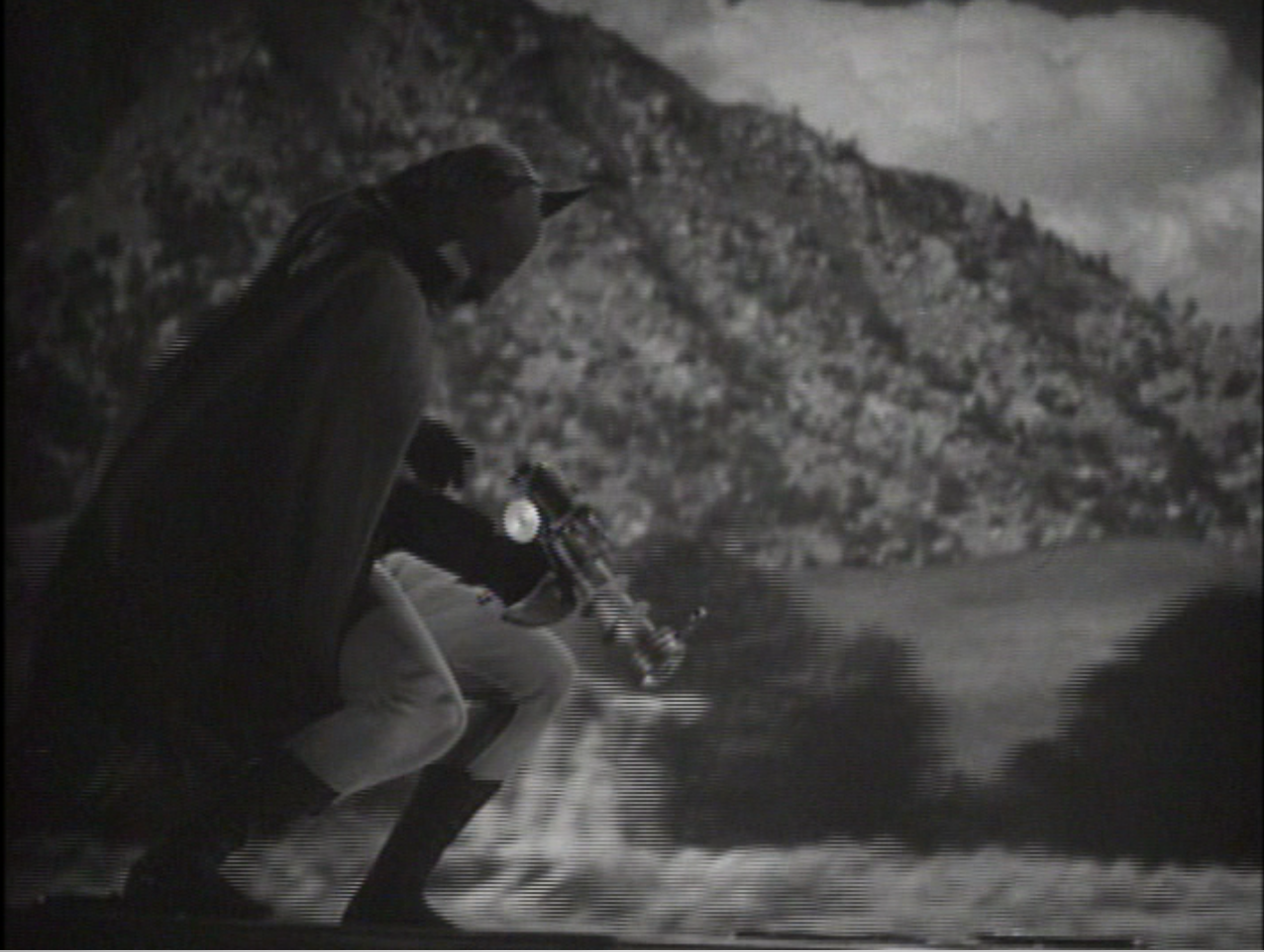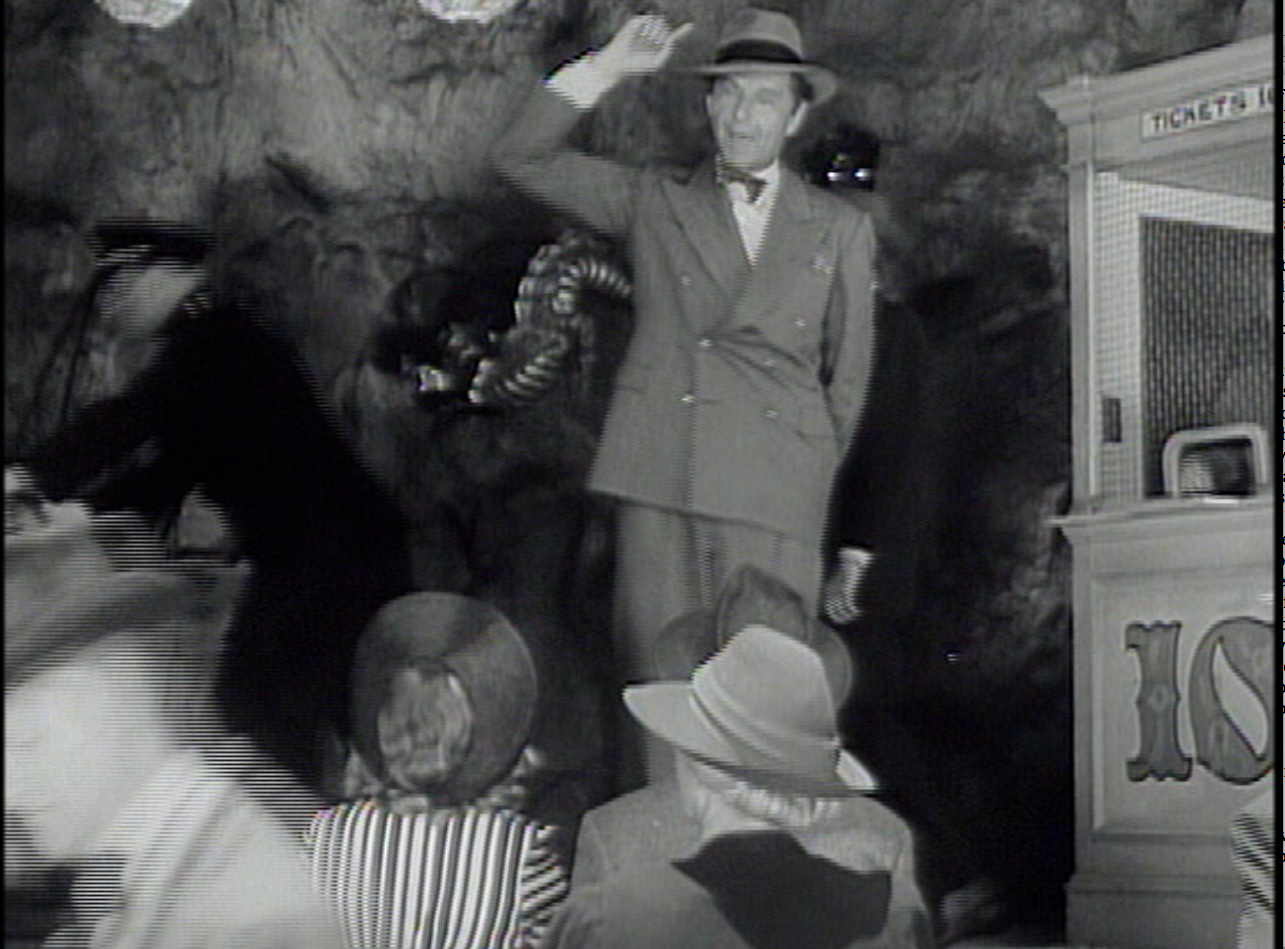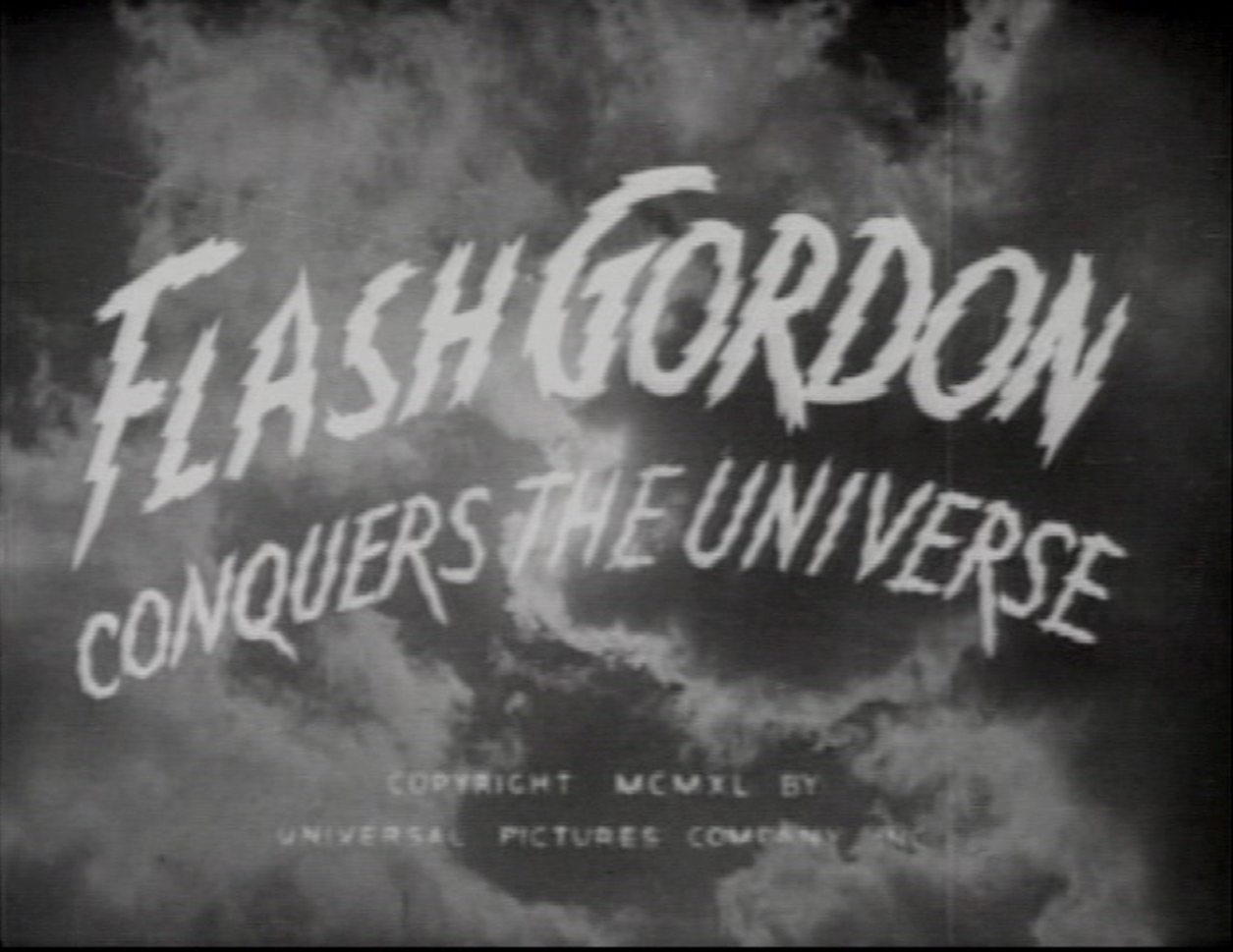
Fates Worse Than Death: Flash Gordon Conquers the Universe

FG3.title

A mysterious plague is sweeping the Earth: known as the “Purple Death” because of the single purple spot it leaves on the skin of its victims, the disease is responsible for the deaths of thousands, and authorities are helpless to stop mounting panic. Professor Gordon is one of the scientists struggling to find a cure, and it is his son Flash (already a hero for saving the earth several times over) who, with Dr. Zarkov and Dale Arden, discovers the culprit. A ship from Mongo is spotted high in the atmosphere, dropping the malign dust that causes the Purple Death.

FG3.purpledeath

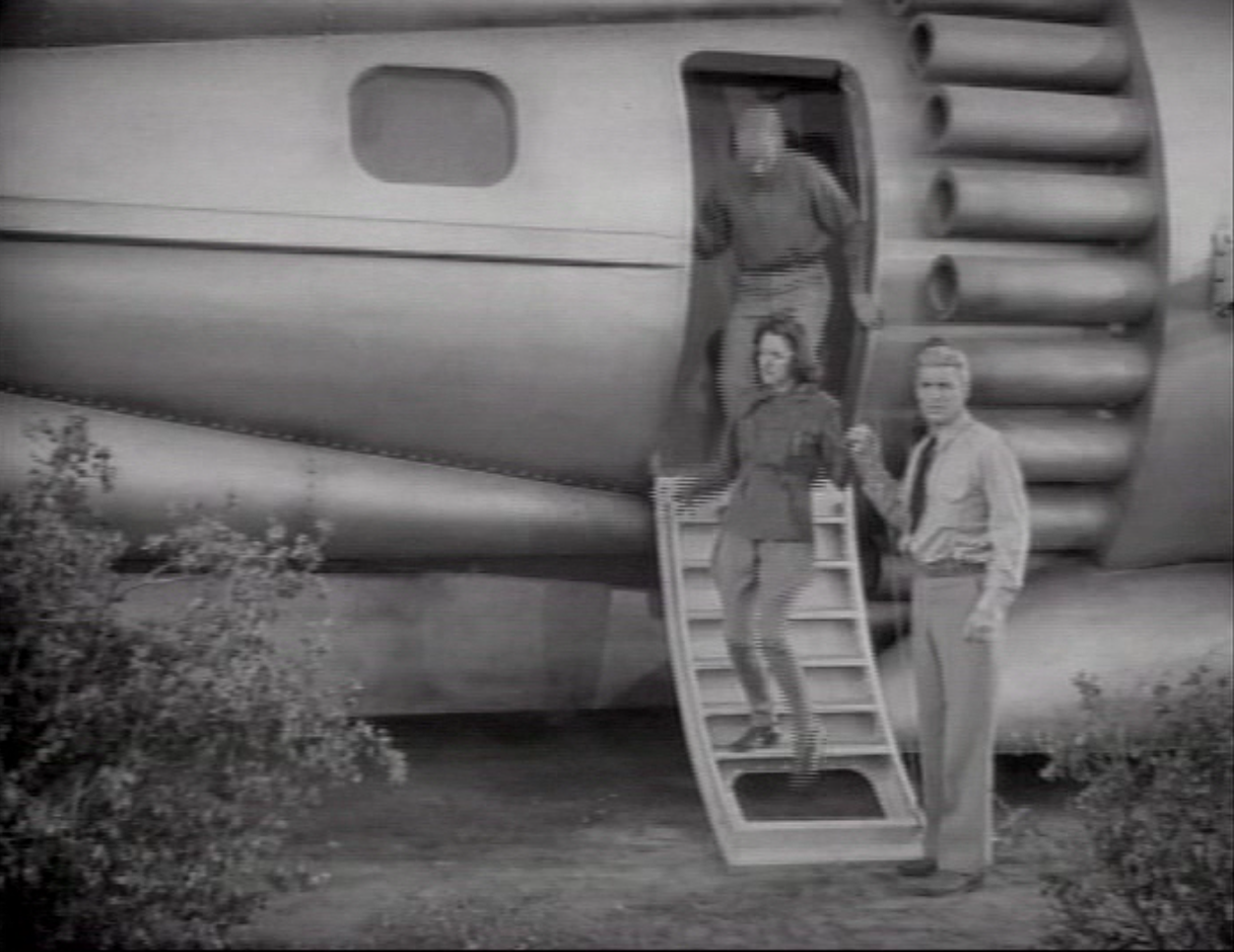
Starting for the planet Mongo at once in Zarkov’s rocket ship, the trio face aerial combat with the invading ship and, feigning a crash, descend to Arboria, the home of Flash’s ally Prince Barin. Barin confirms that Emperor Ming yet lives and is undoubtedly behind the attacks on Earth, and a council of leaders who are opposed to the merciless dictator soon convenes at Barin’s palace.

FG3.warcouncil

The only antidote for the Death Dust is the element “polarite,” which can be found in the far Northern reaches of Frigia, represented by Queen Fria. The expedition to the icy realm is bulked out with footage from an earlier polar exploration film, White Hell of Pitz Palu; footage of downhill skiers appears in the montage that opens each chapter, leading me to expect a snowbound assault on Ming à la The Spy Who Loved Me or Inception, but it never happens. (Also, it wasn’t until I was selecting screen caps that I noticed Flash and Dale in their cold-weather gear bear a strong resemblance to Santa and Mrs. Claus.)

FG3.coldgear1

Although the threat of the Purple Death doesn’t take twelve chapters to resolve, it’s the inciting incident that kicks off the latest round of strikes and counter-strikes in Flash Gordon Conquers the Universe, the third and final serial in Universal’s epic adaptation of Alex Raymond’s popular comic strip.
FG3.rocket4

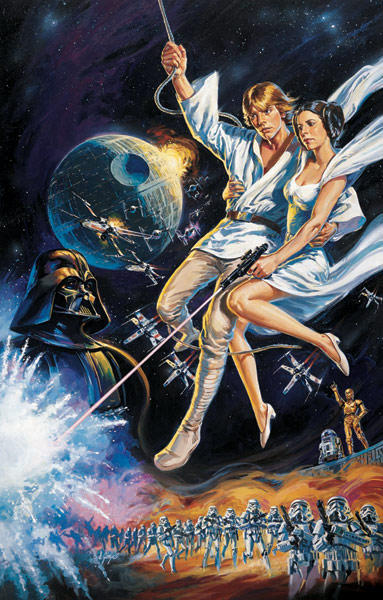
Despite, or perhaps because of, its references to the events and characters of the 1936 and ’38 serials, Conquers the Universe shows just how much time has passed since the success of the first Flash Gordon. Many aspects of the production, impressive in ’36, would have seemed crude just four years later, especially with Republic’s slick, streamlined adventure serials entering the market in the mean time. The static recap cards from the earlier serials have been replaced by scrolling titles; this now-familiar format had been used in Buck Rogers (also starring Flash Gordon lead Buster Crabbe) and would appear in other serials of the 1940s (and of course was the inspiration for the similar opening crawl in the Star Wars films).

FG3.title.chapterhead

The pacing is rapid throughout, with clear but often functional dialogue that serves the plot; Flash Gordon was never about deep characterization or philosophy, but Conquers the Universe is especially plot-heavy. And while many effects look quaint to modern eyes (Mongo’s giant iguanas make an appearance, and electrical effects are frequently accomplished with zig-zag lightning bolts scratched directly onto the film), just as many impress with how effective simple devices can be, and there are enough new settings and perils that the serial doesn’t feel like a retread.

FG3.robots2

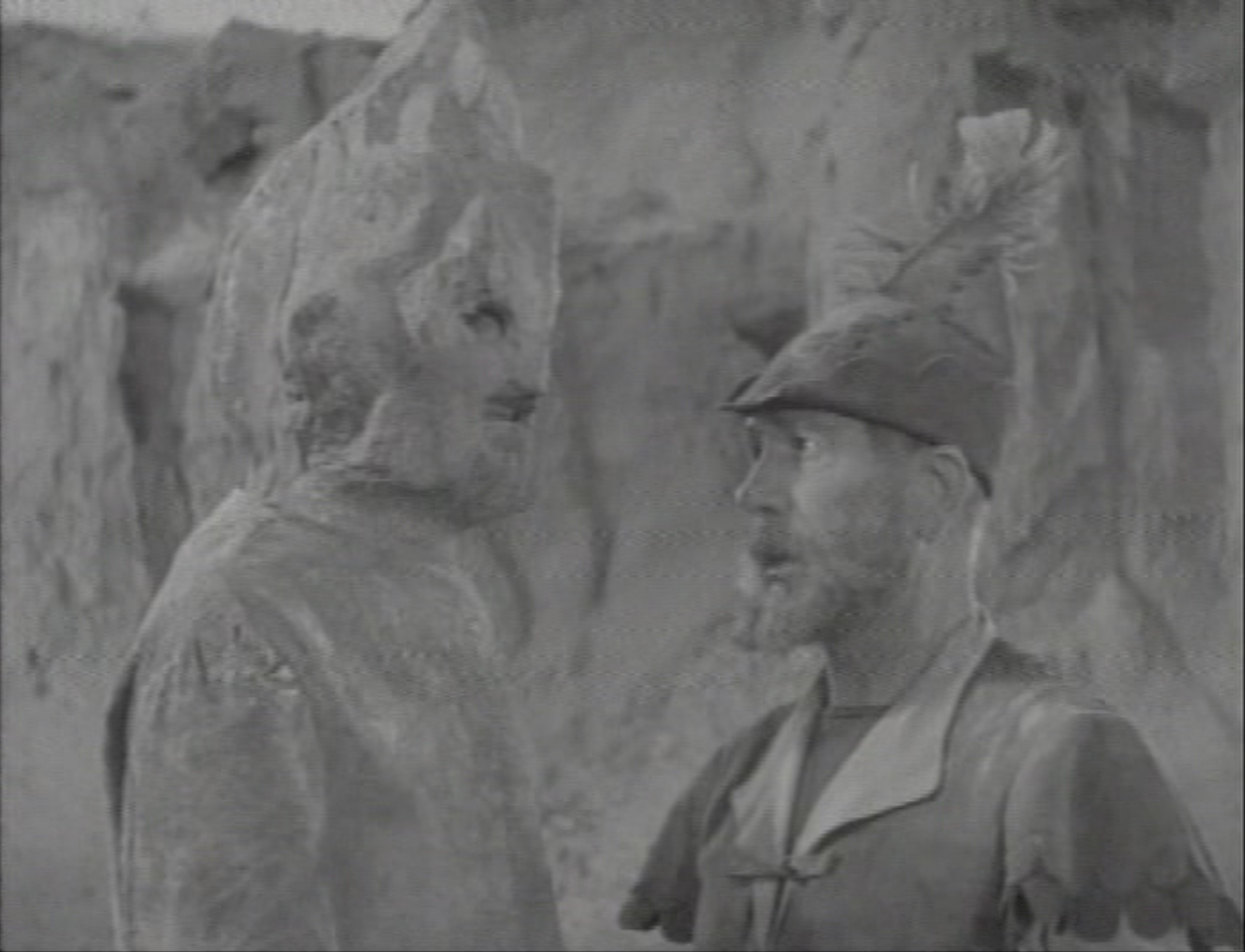
Of particular note are an assault by exploding robots (Chapter Three, “Walking Bombs”), given an uncanny mechanical gait through the magic of undercranking, and the tribe of “Rock Men” who dwell in Arboria’s “no man’s land.” (Unlike the Clay People of Flash Gordon’s Trip to Mars, the Rock Men only dress as rocks to camouflage themselves from the giant lizards.) The Rock Men speak backwards, and once Dr. Zarkov realizes that their language is the same as that of a “lost tribe” that once inhabited Earth’s Gobi Desert, he is able to communicate with them; after Flash saves the Rock King’s son from a disaster, they aid the Earthlings in their fight against Ming.
FG3.Rockman.Zarkov

Several plot elements that were missing from Flash Gordon’s Trip to Mars reappear in Conquers the Universe: Ming once again hopes to make Dale his bride, and Ming’s daughter Princess Aura reappears, still happily married to Prince Barin. The cast has been shuffled–Carol Hughes replaces Jean Rogers as Dale, and both Barin and Aura are recast (by Roland Drew and Shirley Deane, respectively)–but Buster Crabbe reprises the title role, Charles Middleton returns as Ming, and Frank Shannon again plays Dr. Zarkov.

FG3.Aura.Barin

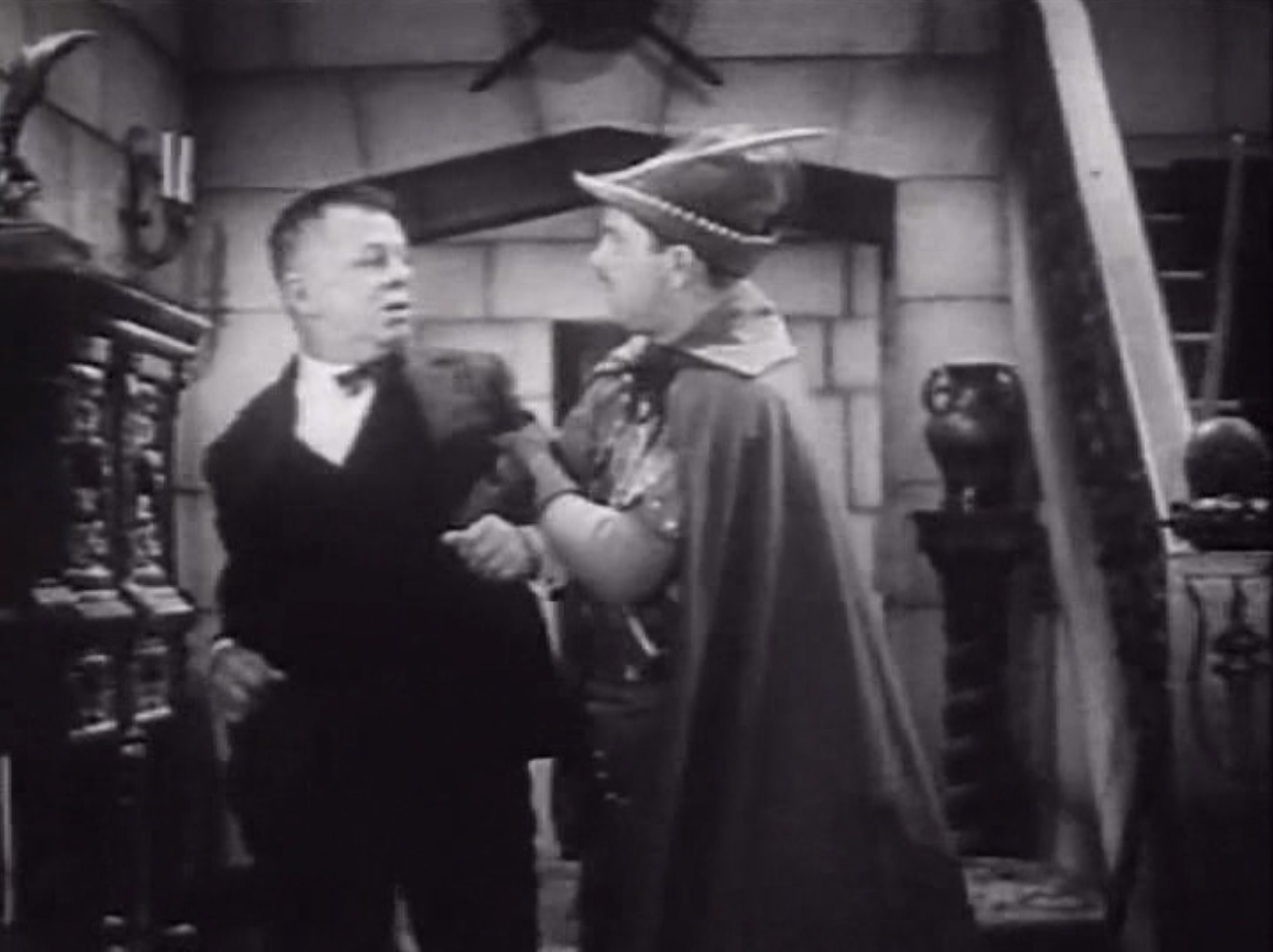
Speaking of Barin and Aura, the happy couple looks quite different from their earlier incarnations. As Barin, Drew cuts a more dashing figure than Richard Alexander: with his trim mustache and forest costume, he strongly resembles Errol Flynn as Robin Hood. As for Aura, the changes to her personality outweigh those to her appearance: instead of the scheming, morally flexible antiheroine of the 1936 serial, she is here entirely settled and content in her life in Arboria, and her reaction to being pulled back into her father’s evil machinations is passive terror and indignation. Marriage has domesticated her.

FG3.Aura.Sonja

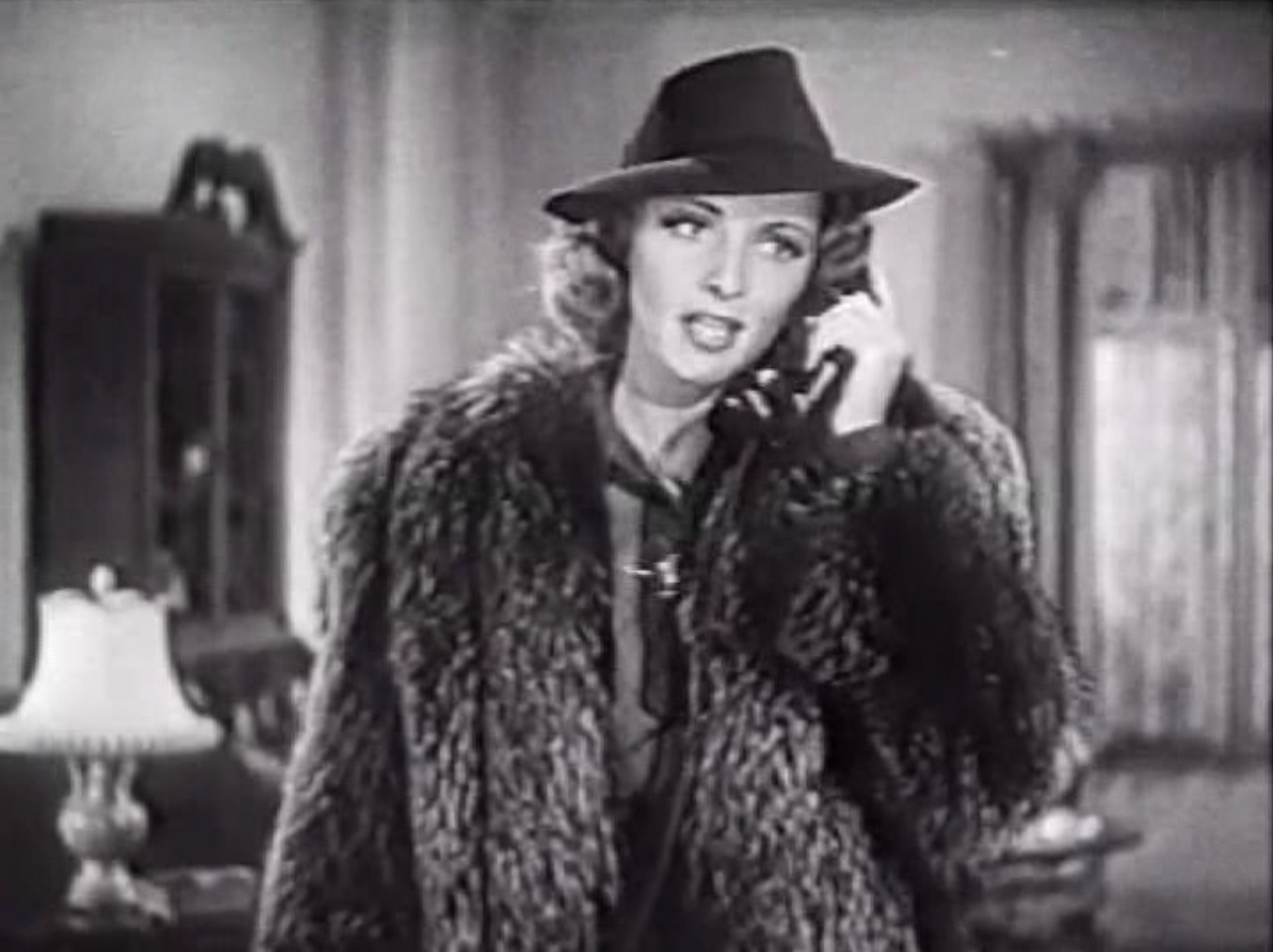
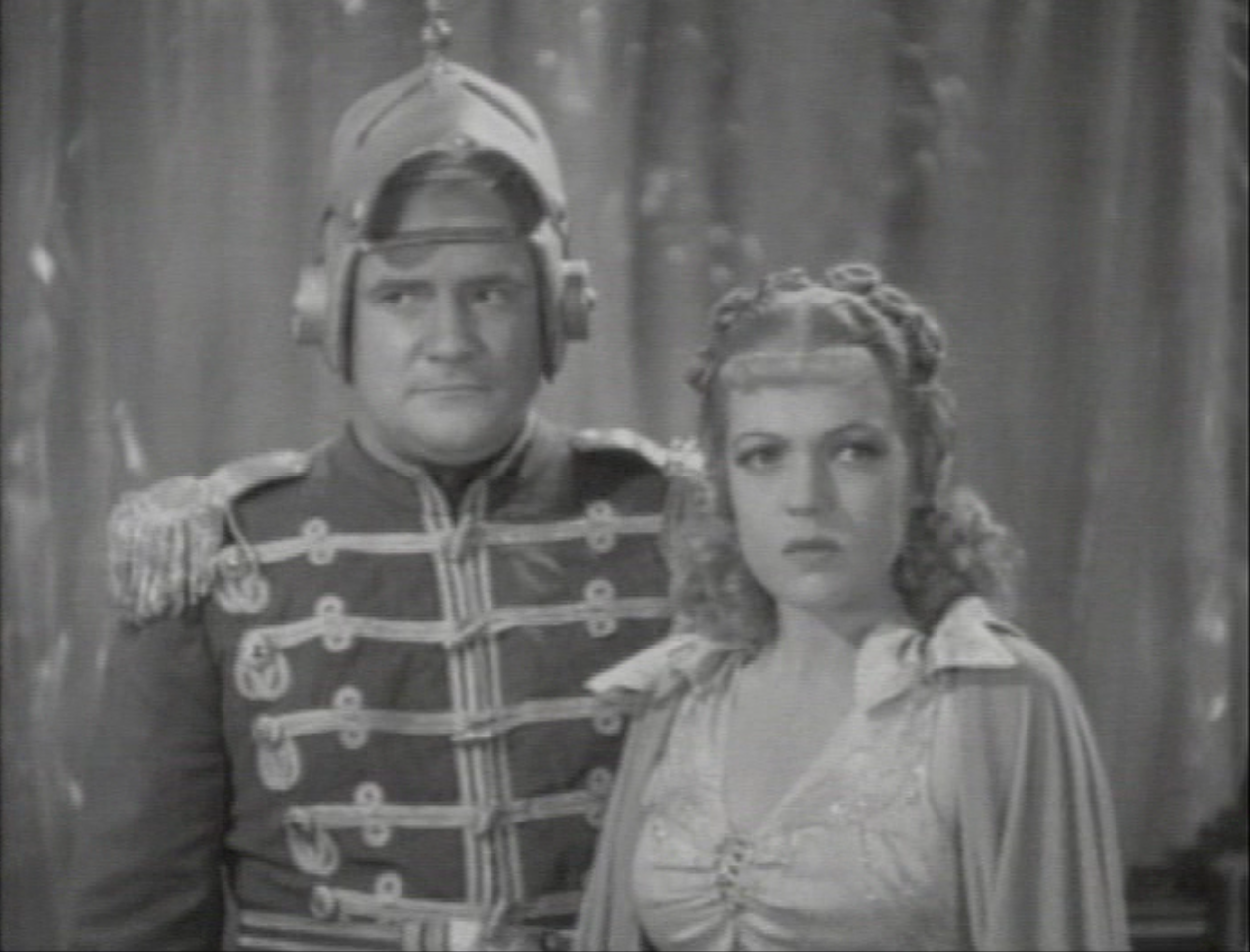
Fortunately (or not, depending on your perspective), the lack of Aura’s feminine wiliness is made up for by the introduction of Lady Sonja (Anne Gwynne), an Arborian lady-in-waiting secretly loyal to Ming. Once Sonja lures Aura to Arboria’s Red Forest to be abducted by Ming’s forces (for even he would not bomb Arboria without first making sure his daughter was safe), the treacherous lady becomes half of a villainous double act with Captain Torch (Don Rowan). Together, Torch and Sonja, along with Lieutenant Thong (tee hee), shadow Flash Gordon & co. and bedevil them in a variety of ways, carrying out missions for Ming.
FG3.Torch.Sonja1

Sonja doesn’t have the depth of Aura–she’s purely spiteful and untrustworthy, without even the motivation of misplaced love–but it’s worth noting the number of female characters in the Flash Gordon serials and the range of their motivations. Aside from Dale, Aura, and Sonja, there’s Queen Fria of Frigia (an uncredited Luli Deste), who expresses a hope that Flash Gordon might be convinced to lead Frigia’s armed forces, teasing a source of tension with Dale (this comes to nothing, although it may be more fleshed out in the comic strips that are the basis of the story).

FG3.QueenFria1

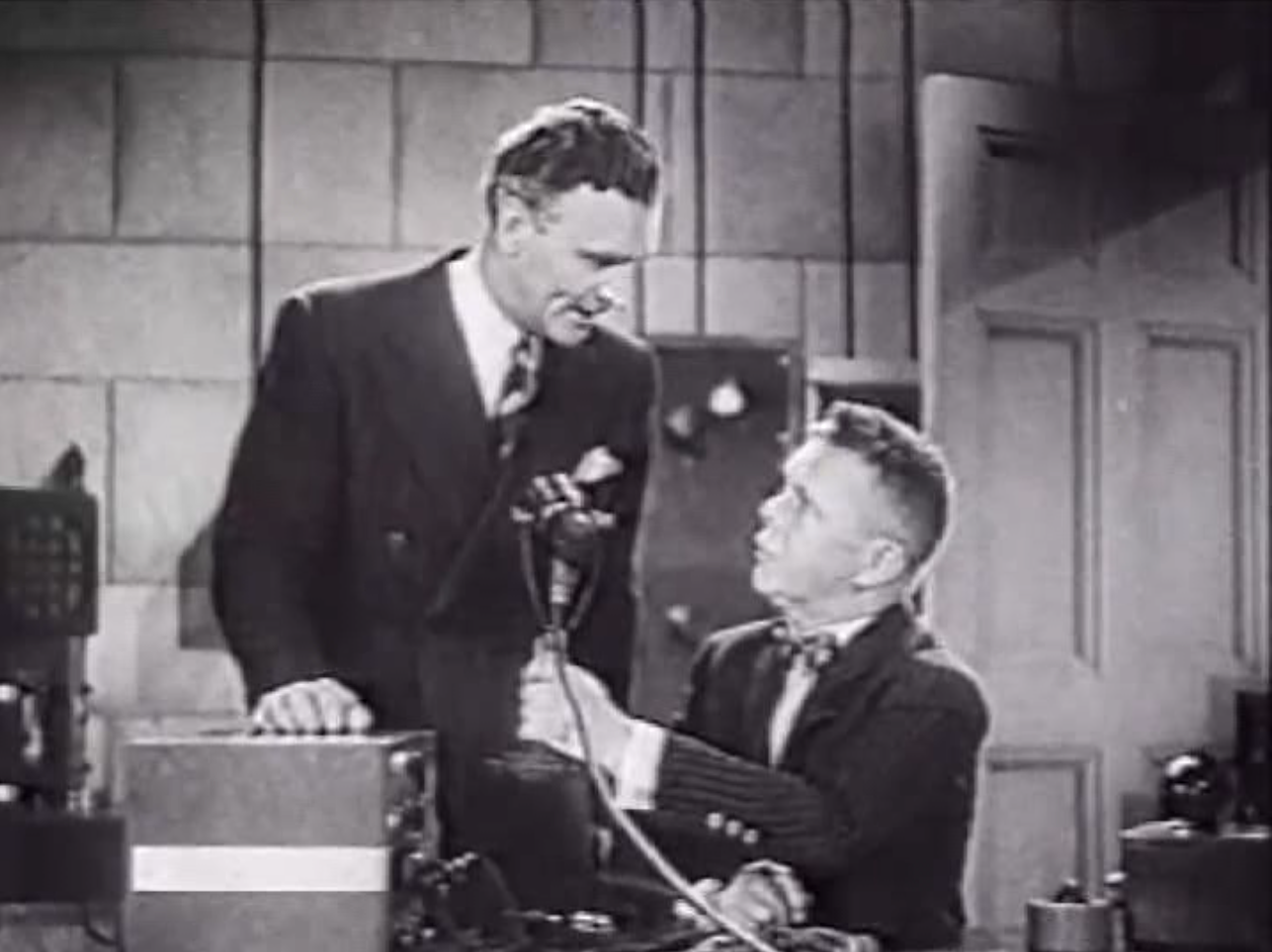
In fact, Flash Gordon does a better job of female representation than the original Star Wars trilogy that it inspired: in Conquers the Universe, Dale is revealed to be an expert chemist and radio operator, a detail I don’t recall being mentioned before, but which gives her more to do than simply be kidnapped. It’s true that at least some of the women on-screen are purely eye candy, and there’s less of the emphasis on Buster Crabbe’s physique that made the 1936 serial an equal-opportunity source of titillation (like the Tarzan series, Flash Gordon in all its iterations has celebrated the body beautiful). Still, compared to the many serials I’ve watched that have only a single token woman, it’s refreshing that the population of the fantasy world of planet Mongo at least contains individuals of both sexes.

FG3.Dale2

Ultimately, Ming’s greatest weakness is the number of people in his service–guards, scientists, soldiers–who are willing to turn against him. The political subtext is no more complex or subtle than before–dictators are bad–but the story emphasizes that those who take power by force and cruelty will never have the loyalty of those they conquer. Rather, they will only breed a thirst for revenge in their underlings. As always, Flash Gordon inspires trust and confidence in those he meets simply by doing the right thing.

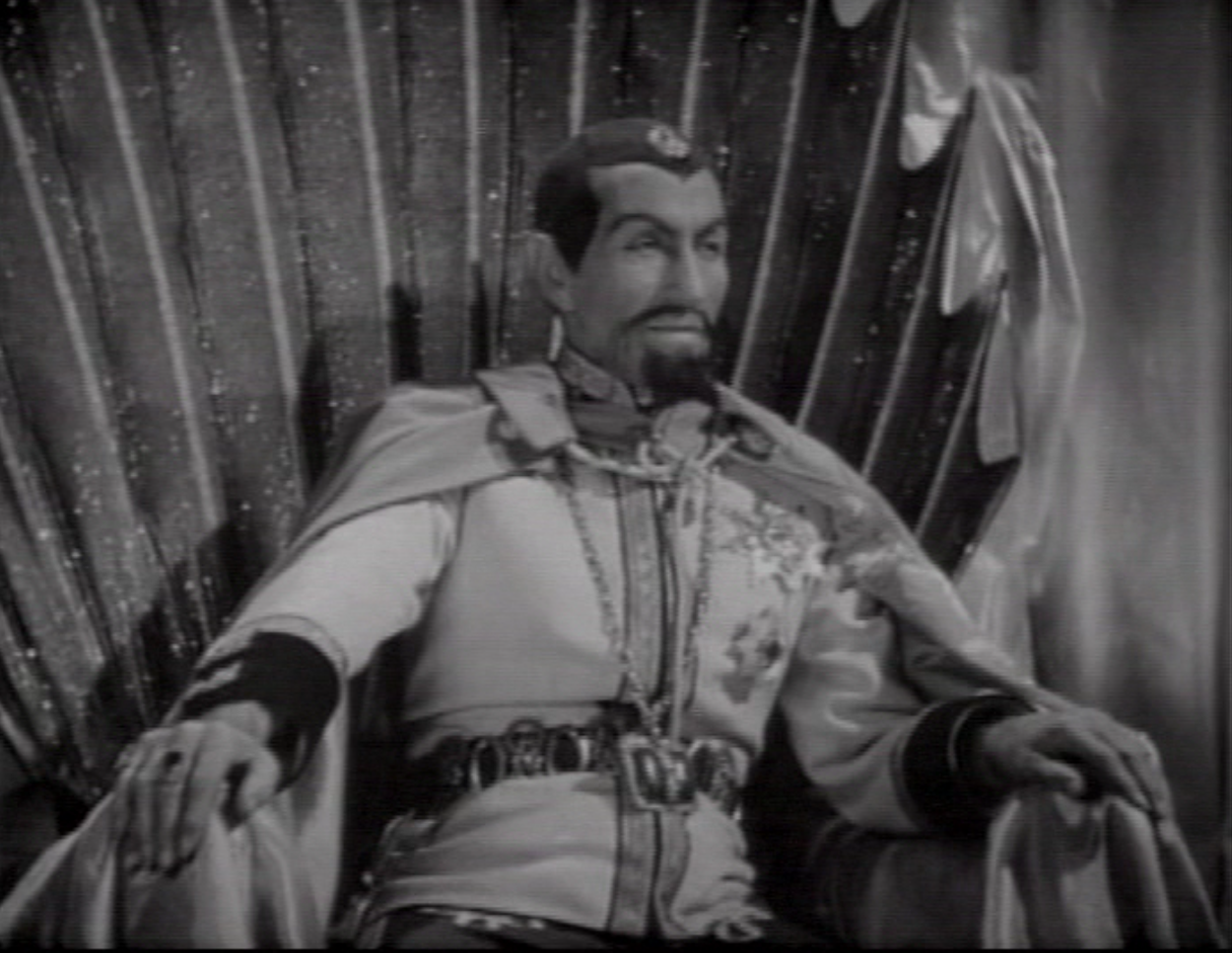
And what about that title, anyway? Conquering isn’t really Flash’s bag. As silly as it sounds, Ming in his arrogance declares at one point, “I am the universe!” So, by the transitive property, when Flash inevitably conquers Ming . . . well, you get the idea.
FG3.Ming1

But just in case you didn’t, Zarkov explains it.

What I Watched: Flash Gordon Conquers the Universe (Universal, 1940)

Where I Watched It: A two-disc DVD set from Timeless Media Group

No. of Chapters: 12

Best Chapter Title: “Doom of the Dictator” (Chapter Twelve). Alliteration!

FG3.faceoff

Best Cliffhanger: Another plot thread that continues from the earlier serials is Ming’s desire to have Zarkov’s scientific genius at his command. So, in Chapter Four (“The Destroyer Ray”), when Ming has Zarkov captive and the Earth scientist refuses to serve him, Ming orders his execution. A death ray slowly moves toward the chained scientist, and when Flash shows up to rescue him, he appears to be caught in it, too. What really elevates this is that Ming, surrounded by his retinue, has forced Dale (also captive) to watch the scene unfold. She begs Ming to spare them, beating on his chest with her fists, and then covers her face, unable to watch, while Ming cackles at his victims’ helplessness. “He has chosen his own death!” he sneers. This is what we watch serials for.

FG3.Dale.Ming1

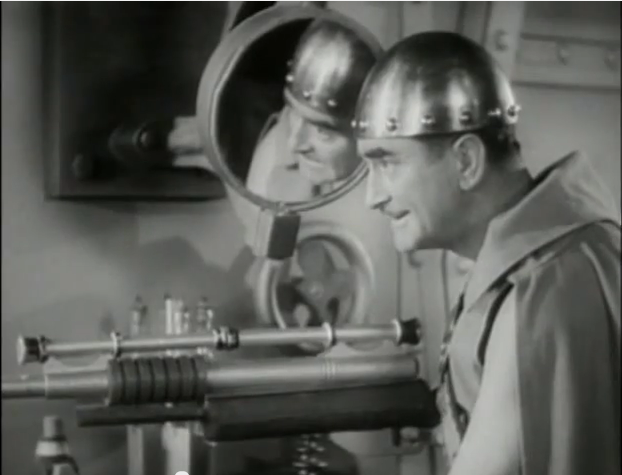
A Note on Costumes: Although there’s still a great deal of space opera exoticism, including long looks at the harem-like entertainments Ming has at his disposal, the costumes and sets display fewer of the ancient or near-Eastern motifs that were prominent in the earlier serials. Barin’s palace resembles a traditional European castle, with parapets and everything, and most of the male characters dress in military uniforms with braids and epaulets; except for the ray guns and space ships, Arboria might as well be Ruritania, an imagined Mitteleuropa in outer space.

FG3.roka.flash

Even Ming gets in on the act, assuming a high-plumed dress uniform, “now more a wicked general than Satan” in the words of Jim Harmon and Donald F. Glut. One could assume that proximity to Earth has affected Ming’s tastes: although most of Ming’s pleasures are accompanied by stereotypical “Oriental” music, the soundtrack is a distinctly modern rhumba in Chapter Four, leading me to imagine Xavier Cugat and his orchestra chained to a bandstand and forced to play just off-camera. You’re a peacock, Ming. Strut, Ming, strut.

FG3.Ming6

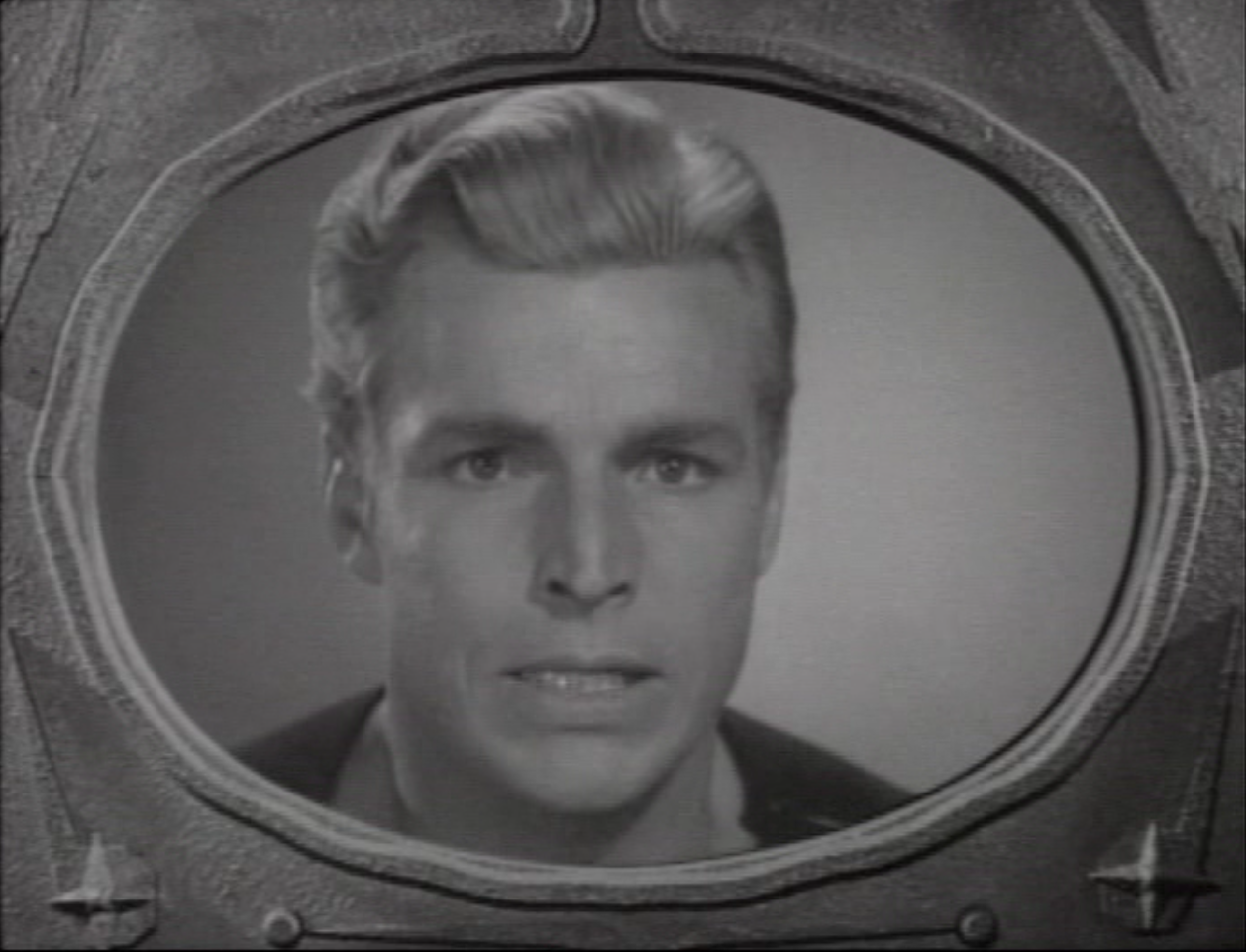
Sample Dialogue: “Seems like old times, being at war again with Ming, Zarkov.” –Flash Gordon, Chapter Two (“Freezing Torture”)
FG3.television2

What Others Have Said: “Earth heroes have journeyed to other worlds by Crystal Door and spaceship. Our own planet has been invaded many times by alien menaces bent on dominating the Earthlings. In all these instances there have been mighty conflicts between good and evil. But after the holocaust of ray zapping and atomic blasting had settled, the audiences huddled in the safety of terran movie houses admitted one important fact: There was only one alien tyrant capable of conquering the universe, Ming the Merciless. And there was but a single hero able to defeat him–Flash Gordon.” –Jim Harmon and Donald F. Glut, The Great Movie Serials

That brings this summer’s serial coverage to an end. I’ll probably still have a few serial-related articles coming up, and Medleyana will continue to update on other topics, but that’s it for regular entries until next summer. Until then, thanks for reading along, and thanks for all the comments and support!

Fates Worse Than Death: Flash Gordon’s Trip to Mars

FG2.title

At the end of Universal’s 1936 serial Flash Gordon, Flash, Dale Arden, and Dr. Zarkov are bound for Earth by rocket ship after saving the planet from destruction by the invading planet Mongo and its ruthless Emperor, Ming (who was, to all appearances, burned to death in the “Tunnel of Terror,” leaving his daughter Aura and Prince Barin to rule over Mongo with a presumably gentler hand). As the 1938 sequel Flash Gordon’s Trip to Mars begins, the people of Earth are still awaiting that rocket ship, which successfully lands in the first chapter. That makes Trip to Mars a direct continuation of the original serial, and in many ways it’s a sequel in all the modern senses of the word: it has most of the same cast as the first (although as Dale Arden, Jean Rogers has inexplicably let her hair return to its natural brunette during the trip from Mongo to Earth), and is in all ways bigger, with more ambitious effects, more locations, and greater length (fifteen chapters instead of thirteen). There are even some flashbacks to the 1936 serial spliced in to explain plot developments.

FG2.Dale1

It’s worth noting that the practice of making sequels and series, what we now call film “franchises,” is nothing new, and wasn’t even new in 1938. Some of the long-running episodic serials like Hazards of Helen were closer to ongoing series than the closed narratives of the serials I’ve been examining here. Beginning in the silent era, popular characters such as Boston Blackie, Charlie Chan, and Tarzan had proven that cinema audiences liked to catch up on the adventures of familiar characters just as much as book and magazine readers did. By the time Flash Gordon was taking his trip to Mars, the Andy Hardy series was already on its fifth installment, and it had only started the year before! Similarly, the Dead End Kids made six films for Warner Brothers between 1937 and ’39. The Blondie series, which would eventually run to twenty-eight films, also began in ’38.

FG2.cockpit

No sooner have Flash (Larry “Buster” Crabbe) and company returned to heroes’ welcomes (SUPER-MEN OF CENTURY WIN WORLD ACCLAIM! reads my new favorite newspaper headline) when Earth suffers an attack similar to that which opened the ’36 serial. Disasters and weather events threaten the planet, this time tied to mysterious beams of light emanating from the planet Mars. Suspecting the hand of their erstwhile foe Ming, Flash and his allies (joined by a reporter who stows away on the rocket ship) take off for Mongo. However, unlike Abbott and Costello, Flash does actually end up on Mars, as the deadly beam interferes with their ship and causes them to crash on the red planet.

FG2.Azura.Ming1

In a twist that will surprise no one, Ming (Charles Middleton, in fine scenery-chewing form) is on Mars, having survived the flames of the Tunnel of Terror (it’s eventually explained that he can walk through flames without injury), and he is cooperating with the Martian Queen Azura, using the beam to draw “nitron” from Earth’s atmosphere, which Azura can use as an explosive in her war against the Clay Kingdom (and without which the Earth will die, suiting Ming’s purposes nicely). Ming’s goals are conquest and revenge upon the Earthlings who thwarted him before; his previous goal of marrying Dale Arden is never mentioned.

FG2.forest

As the events of the serial take place on Mars, there are several new settings and exotic races for Flash and company to encounter and either overcome or win to his side. The Fire People live in a gnarled forest, dressed in caveman furs and worshipping idols; loyal to Ming, they imprison Flash the first chance they get, leading him to a reunion with his old ally Prince Barin (Richard Alexander), also a captive of the Fire People. The Martians themselves, Azura, and her palace are pure art deco space opera, equal parts Galactic Empire and Emerald City of Oz. In fact, the embrace of fantasy is even more committed here than in the first Flash Gordon serial: although there’s still a great deal of pseudoscientific rationalization with rays and “nitron” and “televisors” and so on, at some point the writers threw their hands in the air and said, “Fuck it, it’s magic.” The Glenda-like Azura is described as a “Queen of Magic,” with a white sapphire that allows her to teleport in a puff of smoke and lay curses on her enemies.

FG2.Azura

The victims of one of those curses, the Clay People, were once normal Martian men until they rebelled against Azura, and she transformed them into mud monsters, exiled to a remote cave. As the Clay King, British actor Montague Shaw delivers his lines through an immobile rubber mask, the equivalent of casting Alec Guinness and Peter Cushing in Star Wars and having them play Jawas. The Clay People occupy the moral middle ground that Vultan and his Hawk Men occupied in the first serial: waging war against Azura and suspicious of spies, they at first capture Flash and his friends, holding Dale hostage until Flash can bring the Queen to them and force her to undo their curse. After winning their trust, however, Flash and company find the Clay People capable allies, and they’re eventually able to help them regain their human forms.

FG2.Clayking

As far as the new additions to the cast go, reporter “Happy” Hapgood (Donald Kerr) is a typical sequel misstep: the “cool” character who comes along for the ride (in this case literally) to provide comic relief and deflate the stuffiness of the proceedings, but who doesn’t add as much as he detracts. Such characters are sometimes meant to be audience surrogates, seeing with fresh eyes the wonders that the heroes take for granted. In the case of Flash Gordon, however, that isn’t really necessary, as his essentially open nature is part of the character’s appeal; he may not be impressed by the likes of Ming, but he doesn’t really do “jaded,” either. Also, Hapgood’s one-liners, delivered with “make ’em laugh” intensity and frequency, just aren’t that funny. Fortunately, after the first couple of chapters he isn’t that prominent in the serial, providing Dale some company while she’s held hostage and providing the fight scenes an extra body when rough stuff is necessary, limiting his jokes to only one or two per chapter.

FG2.Azura.Ming2

On the plus side, I’ve made no secret of my appreciation for the haughty, imperious women who often turn up in the serials: think of Princess Aura, or Queen Tika from The Phantom Empire. So it will be no surprise that I enjoyed Beatrice Roberts’ performance as Azura, her eyes flashing and lip curling with amusement at the primitive Earthmen opposing her, and delivering lines like “Thus do I banish all traitors!” Of course, Azura learns what stern stuff Flash is made of, although it’s noteworthy that she doesn’t fall in love with him. Like Tika, she’s ultimately a tragic figure who realizes too late that she’s cast her lot with the wrong side. (Another connection to Tika is the presence of mustache-twirling character actor Wheeler Oakman, who played the treacherous Lord Argo in Phantom Empire. Here Oakman plays Azura’s captain of the guard Tarnak, who willingly serves Ming until he realizes that the Emperor intends to follow up destroying Earth by doing the same to Mars after it has served his purposes.)

FG2.Tarnak

If anything, Flash Gordon’s Trip to Mars sets the template for Star Wars even more clearly than the 1936 serial: there are broad similarities, shared by many serials, such as the blend of exotic locations, flashy visuals (including cutting-edge effects and immersive production design), and fast-paced action, combined with the fairy-tale clash of good and evil. The stirring music (including a version of the love theme from Tchaikovsky’s Romeo and Juliet) and remixing of ancient and medieval motifs with futuristic elements is also something that George Lucas would update for his space fantasy. But there are little moments, too, that stick out: the quirky music that accompanies the Clay People, for example, is echoed in the Jawas’ theme; the repeated back-and-forth as Flash and his allies return to Azura’s high-tech city for one reason or another–to destroy the “nitron lamp” that is slowly draining the Earth; to find an antidote for the “Incense of Forgetfulness”; to confront first Azura and then Ming–is one source for Luke Skywalker and the Rebels’ infiltration of the Death Star and their later raids on it (and its successor in Return of the Jedi). Flash even rescues Queen Azura from falling off a “light bridge” by swinging on a cable, a move borrowed from Douglas Fairbanks and Errol Flynn and recreated by Mark Hammill with Carrie Fisher.

StarWars_Gouzee

It all comes down to a final confrontation, and although Crabbe would return as Flash one more time in Flash Gordon Conquers the Universe, it appears that Ming is defeated, and Mars, like Mongo, is left in better hands. The four heroes return to Earth, and to my amusement the newspaper headline again reads SUPER-MEN OF CENTURY WIN WORLD ACCLAIM! (I like to imagine an editor, knowing that he already struck gold once with that headline, saying to himself, “Why mess with perfection?”)

FG2.Flash.Ming1

What I Watched: Flash Gordon’s Trip to Mars (Universal, 1938)

Where I Watched It: It’s on YouTube in its entirety.

No. of Chapters: 15

Best Chapter Title: “The Black Sapphire of Kalu” (Chapter Eight). I usually define “good” chapter titles as having a certain punch or flair, or capturing the tone of the serial especially well, and there are several chapter titles in Trip to Mars that meet that standard. I chose this one, however, because of its specificity, a somewhat rare quality in chapter titles.

Best Cliffhanger: Just as Flash Gordon found its titular hero robbed of his memory thanks to one of Princess Aura’s schemes, so here does Flash’s paramour Dale Arden experience the “Incense of Forgetfulness” in the Temple of Kalu at the end of Chapter Ten. Convinced that she is a servant of the forest people’s god, she stabs Flash in the back when he shows up to rescue her. (Flash recovers from his wound, but only by returning to Azura’s city are Flash and Zarkov able to find an antidote so Dale can recover her memory.)

FG2.Dale2

Another Note About Costumes: In my review of Undersea Kingdom, I noted the prominence of Roman-style helmet crests and other kinds of cranial plumage in the costume design. Mars appears to have a similar taste for adornment based on the uniforms of Queen Azura’s soldiers (here, Flash, disguised as a member of Azura’s Death Squadron, pretends to hold Dr. Zarkov prisoner):

FG2.Flash.Zarkov

And just look at this fellow on the left:

FG2.plumes

Sample Dialogue: “I’d feel a lot better if I had a parachute instead of these Martian wings!” Dr. Zarkov (Frank Shannon), just before bailing out of a “stratosled” (Chapter Four, “Ancient Enemies”)

FG2.Zarkov

Bonus Sample Dialogue: “I wonder what the wife’s going to say when I get home!” –“Happy” Hapgood (Chapter Fifteen, “An Eye For an Eye”)

What Others Have Said: “We tried to buy the rights to Flash Gordon from King Features but the deal would have been prohibitive. They wanted too much money, too much control, so starting over and creating from scratch was the answer.” —Star Wars producer Gary Kurtz in a 2010 interview with the Los Angeles Times

What’s Next: After the epic length (about five hours) of Flash Gordon’s Trip to Mars, I’m going to take next week to focus on a special topic: serials cut down to feature length.

Fates Worse Than Death: The Green Archer (1940)

GA.title

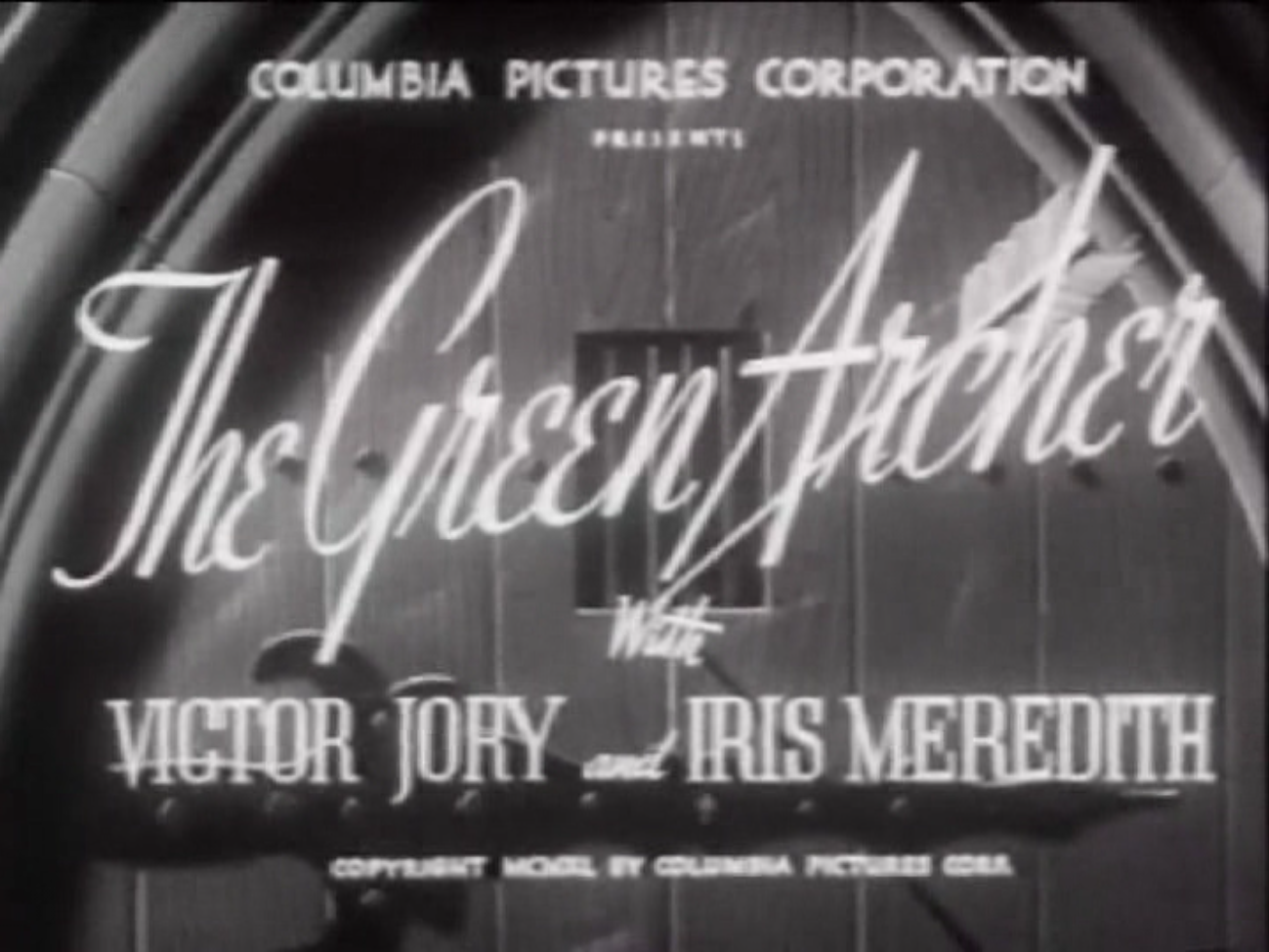
For generations, members of the Bellamy family have lived in Garr Castle, an actual European castle brought to America stone by stone and maintained as a tourist attraction. According to family lore, a mysterious archer has appeared in times of trouble to protect the Bellamys. Now that Abel Bellamy has managed to put his brother (and rightful heir) Michael out of the way (framing him and then arranging for the derailment of the train taking him to prison), he has closed Garr Castle to the public and is using it as a base of operations for his diverse criminal enterprises. His henchman Brad, dressed in the Green Archer’s costume and mask, serves to keep intruders off the property and keep alive the legend of the family’s protector. Abel even goes so far as to invite Michael’s wife Elaine to the castle and then hold her prisoner, guarded by the matronly Mrs. Poole in one of the secret chambers that honeycomb the castle.

GA.Bellamy.gang3

Despite his aloof posture, Abel doesn’t quite have everything under control: insurance investigator (and friend of Michael Bellamy) Spike Holland has been snooping around, suspicious of Abel’s version of events. He’s even arranged to move Elaine’s sister Valerie Howett and their father into the Lady’s Manor next door to the castle so they can keep an eye on Abel’s comings and goings. Worst of all, another Green Archer has inserted himself, sending warnings via arrow and protecting Spike and the Howetts from Abel’s deadly schemes, and this Green Archer seems to know the castle grounds and its secret passages as well as any of Abel’s henchmen. With the stranger’s help, Spike Holland hopes to bring Abel Bellamy to justice, clear Michael’s name, and rescue Elaine in the action-packed 1940 serial The Green Archer!

GA.Bellamy4

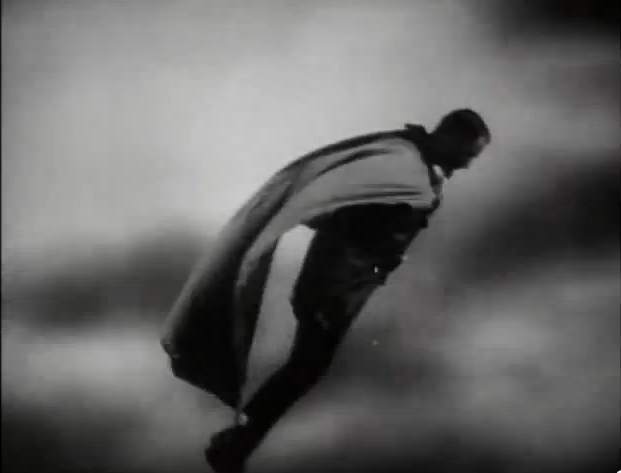
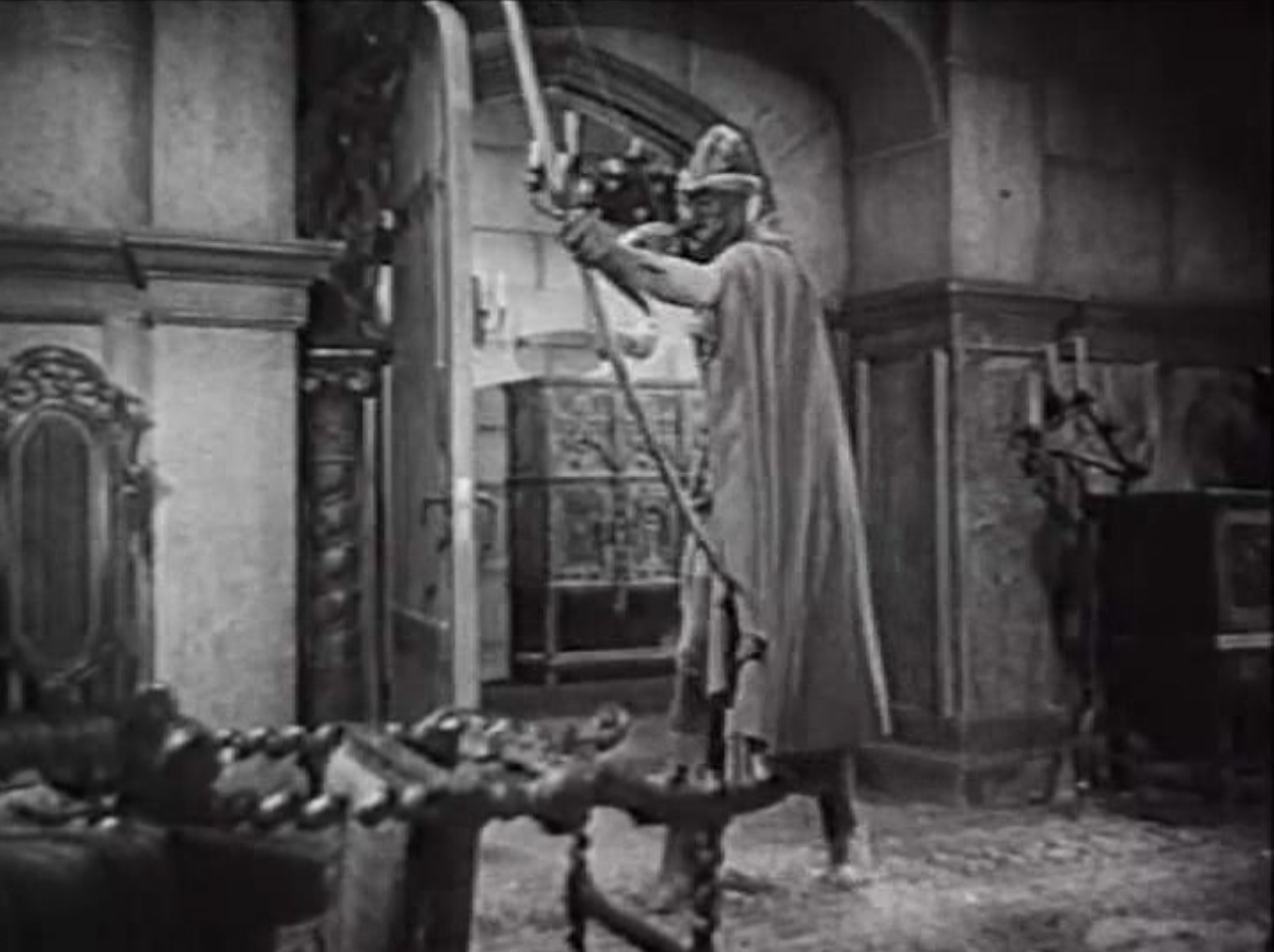
It’s fair to say that archery has experienced a tremendous vogue in the last decade and a half, probably beginning with Orlando Bloom’s portrayal of Legolas in Peter Jackson’s adaptation of The Lord of the Rings and getting major boosts from Jennifer Lawrence’s Katniss Everdeen in The Hunger Games, a renaissance in both comics and films for Marvel’s Hawkeye, and the popularity of DC’s Green Arrow on TV’s Arrow. But archers have always had at least some presence in popular culture, most descending from Robin Hood, to whom the Green Archer owes a debt in terms of costume, methods, and mission. Aside from the loose cloth that covers his face, the Green Archer looks very much like the stereotypical medieval woodsman, with a peaked cap, tights, and jerkin.

GA.Archer3

The Green Archer was based on a 1923 novel by Edgar Wallace (which I haven’t read); I assume there were quite a few changes in turning the book into a serial, but at least on film the title character has much in common with the Scarlet Pimpernel and Zorro: although superficially similar to the masked superheroes just coming into vogue, the Archer has a narrow mission of righting a wrong rather than a mandate to protect the public at large. During the course of the serial, several characters are teased as being the real Archer–Parker Howett (Forrest Taylor) always seems to come into the room just after the Archer has left; Howett is a crack shot with a bow and arrow, but so are Henderson the butler (Herbert Evans), and even Spike Holland (Victor Jory, sounding a lot like Burgess Meredith) himself–but his true identity isn’t revealed until the final chapter. (It isn’t hard to guess the solution, but I’ll leave it to viewers to figure out for themselves.)

GA.Elaine2

As in a lot of serials, there are several genres mixed together, but in The Green Archer the dominant idiom is gothic: although the compositions and staging rarely rise above competent, there are many scenes set at night or bathed in shadow, creating an oppressive gloom, and the fact that the heroes literally live next door to the villain (and the two parties are constantly crossing into each other’s territory through invasion or abduction) gives events an air of cat-and-mouse.

GA.Archer.portrait

More importantly, the castle is full of secret passages and listening devices, leading to overheard conversations and mysterious screams, and multiple tableaux of imprisonment and enclosure. All kinds of death traps await the foolhardy visitor to Garr Castle as well, including such classics as the spiked ceiling that slowly descends to crush its victims; the oubliette that fills with water; and even a false floor that gives way into a pit of flames. That’s not even mentioning the vicious guard dogs.

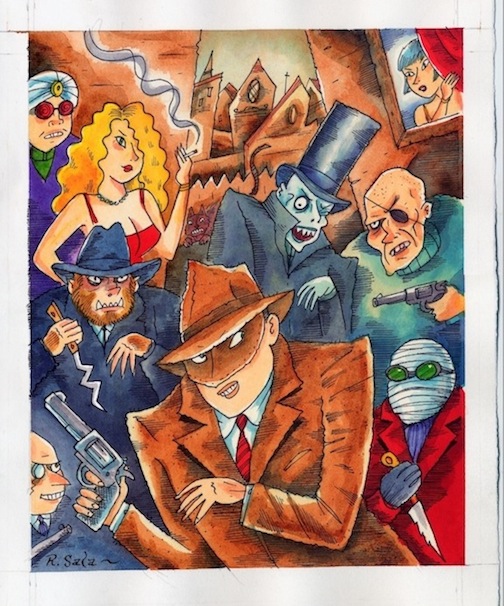
Such things are clichés, already familiar to me in childhood from the Indiana Jones movies, Goonies (itself a throwback to the adventures of Our Gang, the Bowery Boys, and the like), and countless other shows, but they are presented in The Green Archer in a high style that reminds me more of Richard Sala or Lemony Snicket, artists who take such stock elements to mannered extremes, refining the iconography and intrigues of the genre into a nearly injectable concentrated form.

Richard Sala's Mr. Murmur

Richard Sala’s Mr. Murmur

Also gothic is the theme of the double that runs through this serial. No serial is as consistent in exploring and developing thematic symbols as a feature might be, but there are several instances of lookalikes and mistaken identity. The most notable is the fact that there are two Green Archers, one good and one evil. Sometimes the duplication is played for laughs, as when comic-relief henchman Dinky (Kit Guard) frequently attacks Brad, the Archer in Abel Bellamy’s employ, or when Dinky trusts the unknown Archer, thinking that it’s Brad in costume. Other times, the question of which is which is a matter of life and death.

GA.Brad.Dinky

There’s also a two-chapter sequence in which Spike is impersonated by Madison, a master of disguise who makes himself up to look just like the investigator so he can steal a formula for synthetic radium (the only plot element that really dates the serial: as mentioned last week, secret formulas and inventions just waiting to be lifted by spies or criminals were all over the popular fiction of the 1930s and ’40s). Spike faces off against the impostor (who is of course played by Jory when “in disguise;” the inevitable fistfight gets around this by using wide shots and keeping hats firmly on both stunt performers’ heads), and for a while turns the tables by taking Madison’s place.

More traditionally gothic is the contrast made between Abel the usurper and his brother Michael. The burdens of lineage are a frequent theme of gothic novels, and although Garr Castle isn’t cursed as such, it’s telling that Abel claims he has always hated the place and is happy to close it down. The phantom archer that protects the family is a symbol that Abel tinkers with at his peril: by using it for his own evil ends, he invites destruction.

Abel Bellamy (James Craven) is a captivating villain, cool and arrogant, even amused that Spike Holland should be foolish enough to tangle with him, until things start to slip from his control and he starts to get rattled and increasingly unhinged. It’s the kind of role Vincent Price or Peter Cushing would get in a few decades, and Craven plays it to the hilt. Without him and Jory as Spike centering the action, the multiple subplots and large cast of characters would spiral into confusion; although the Green Archer is the title character and a vital piece of the story, the conflict is really a chess game (or a card game; see below) between two expert players.

GA.Spike.Bellamy

However, much of the serial is executed with tongue firmly in cheek; James Whale had tweaked gothic conventions in The Old Dark House, and even Universal’s monsters were starting to deviate from the pure horror that had made them famous, so perhaps the filmmakers simply assumed that no one would be able to take this material seriously. As Alan G. Barbour notes, Columbia descended into comic treatments in the early 1940s: “director James Horne took over and serials like The Iron Claw, Deadwood Dick, The Green Archer and The Spider Returns set serial fans’ funny bones in motion with their ludicrous sight gags and ridiculous situations (i.e., gangsters playing jacks, hanging out their laundry, wearing silly party hats, etc.).” (In The Green Archer, Bellamy’s gang is shown playing tiddly-winks during their down time, a scene apparently important enough to be included in the “coming next chapter” teaser.)

There are several characters who are primarily comic: bumbling police captain Thompson (Fred Kelsey) is easily turned against Spike and spends much of his time trying to apprehend the investigator. Bellamy’s henchman Dinky is apparently supposed to be English, calling his boss “Guv’nor” and intermittently saying his lines in a Cockney accent, and as mentioned he gets into lots of slapstick trouble when he can’t tell the two Archers apart. Dinky gets a few moments to shine at the end, however: of all Bellamy’s henchmen, he’s the only one who sticks with him and seems to care what happens to him. Still, for the most part I found this serial more over-the-top than deliberately ridiculous; a fine distinction, perhaps, but an important one. The Green Archer isn’t anywhere near as dark (or as well-executed) as the superior Gang Busters, but there’s a similar fascination with the underworld and the broad variety of types found among criminals.

GA.Bellamy.Dinky1

As for unintentional comedy, there are so many fistfights in this serial, and most of them begin so abruptly, that I came to expect one practically any time either the hero or the bad guys entered a room. The way the players charge at each other, you could add a ringside bell to the soundtrack to signal the beginning of the mayhem and it wouldn’t be too out of place. The fights don’t look quite as silly as those Columbia would stage for the Batman serials later in the decade, but that’s a low bar to hurdle. Compared to Columbia’s Batman, the Green Archer is seriousness incarnate: a creature of the night, able to strike terror into the hearts of criminals (a superstitious and cowardly lot), both a dark knight and a detective–hey, this is good stuff! Somebody should publish a graphic novel about this character.

What I watched: The Green Archer (Columbia, 1940)

Where I watched it: Pacific Entertainment’s DVD, a sloppy transfer from an obvious videotape source. I wouldn’t recommend it unless, like me, you found it at a bargain price.

No. of chapters: 15

Best chapter title: “The Devil’s Dictograph” (Chapter three). There are several good chapter titles, even if they are given to puffery: there is both a necklace and a mirror of treachery, not to mention a “deceiving microphone.”

Best cliffhanger: Abel Bellamy’s criminal syndicate grows larger and more elaborate as the serial progresses and he calls in more exotic accomplices to get rid of Spike Holland. By Chapter nine (“The Mirror of Treachery”) he has lured Spike and Valerie (Iris Meredith) out to a roadhouse in the country, and when they make a break for it, Abel summons a “crook aviator,” a pilot who drops actual bombs on the couple’s car from a plane. They hide in a small roadside shack, which is completely obliterated by one of the falling bombs.

GA.Valerie1

Annie Wilkes Award for Most Blatant Cheat: There aren’t any examples of the “rewritten history” cheat, but there are a few cliffhanger resolutions that test credulity. Several times the Green Archer shows up to pull Spike out of a deathtrap, and in a few cases he shakes off seemingly life-threatening injuries. The most suspicious is at the end of Chapter ten (“The Dagger That Failed”), in which Spike opens a safe in Abel’s office, setting off a booby trap that blasts him with a double-barreled shotgun at point blank. Spike certainly looks as if he’s been struck, but at the beginning of the next chapter he recovers and is completely fine, without so much as a mention of a “bullet-proof vest” or other narrative excuse. Pretty fishy if you ask me.

Sample dialogue: “We’re playing a game and you’re dealing from the bottom. But I’m holding a hand you’ll never beat: the law!” –Spike Holland to Abel Bellamy, Chapter Nine (“The Mirror of Treachery”)

GA.Spike1

What others have said: “Victor Jory had long since established himself as an excellent film and stage actor, appearing in many quality productions (including Gone With the Wind), so his tour of duty as a matinee star was strictly a lark. . . . James Craven was always good for a few laughs as he seemed always to play a hypertensive villain in vehicles like The Green Archer, White Eagle and Captain Midnight. His henchmen never could do anything right, and Craven’s ranting and raving grew progressively wilder with each chapter.” –Alan G. Barbour, Cliffhanger: A Pictorial History of the Motion Picture Serial

What’s next: Join me and help solve a mystery at the circus in Daredevils of the Red Circle!

Fates Worse Than Death: Batman and Robin (1949)

Welcome back to Fates Worse Than Death (#summerserials on Twitter). I’ll be exploring the legacy of the motion picture serial every week this summer between Memorial Day and Labor Day (which, yes, is more ambitious than last year’s biweekly schedule, so wish me luck). You can read the introduction to last year’s series here to see what this is all about, and you can access the complete list of last year’s entries by visiting the Series page.

BatmanRobin.title

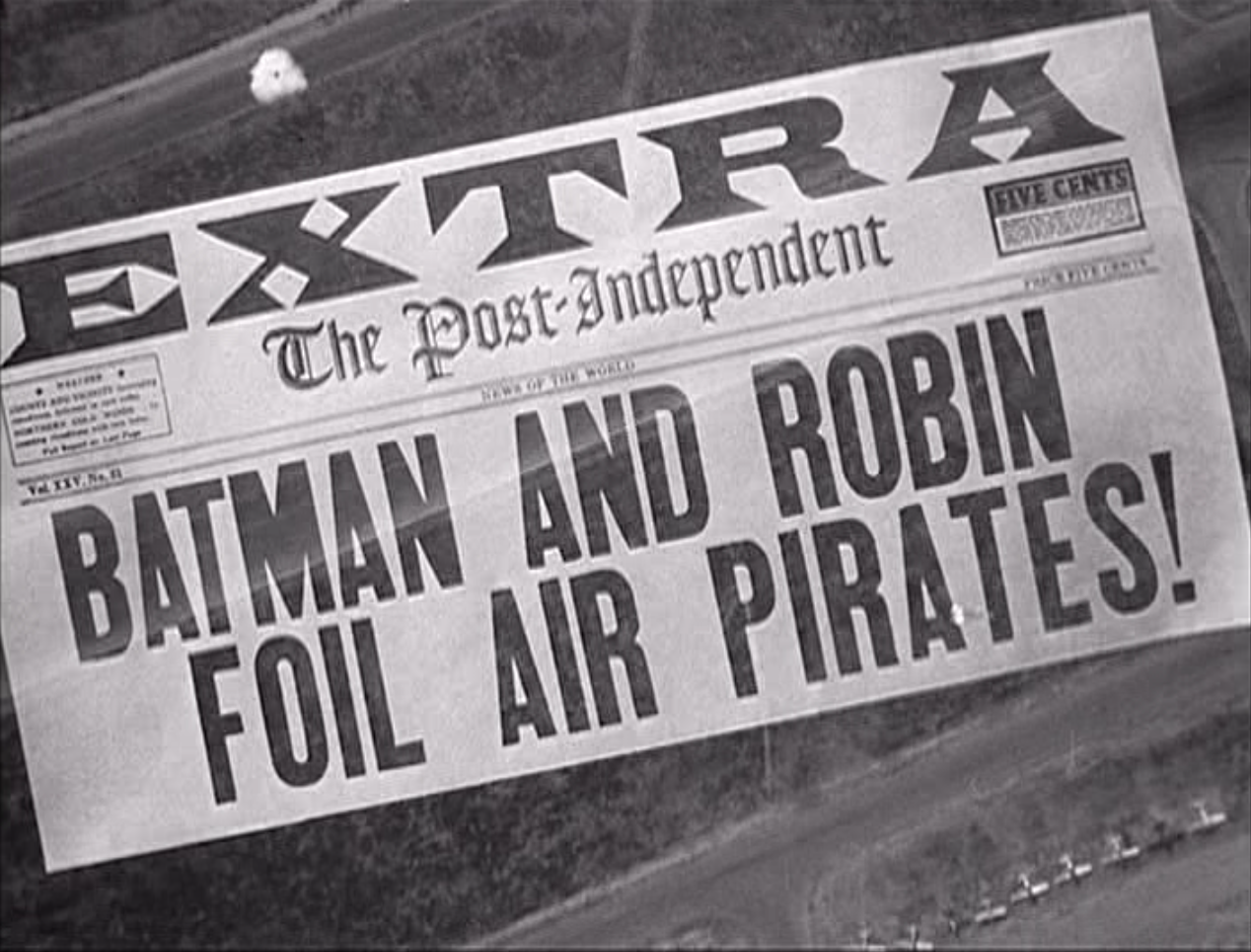
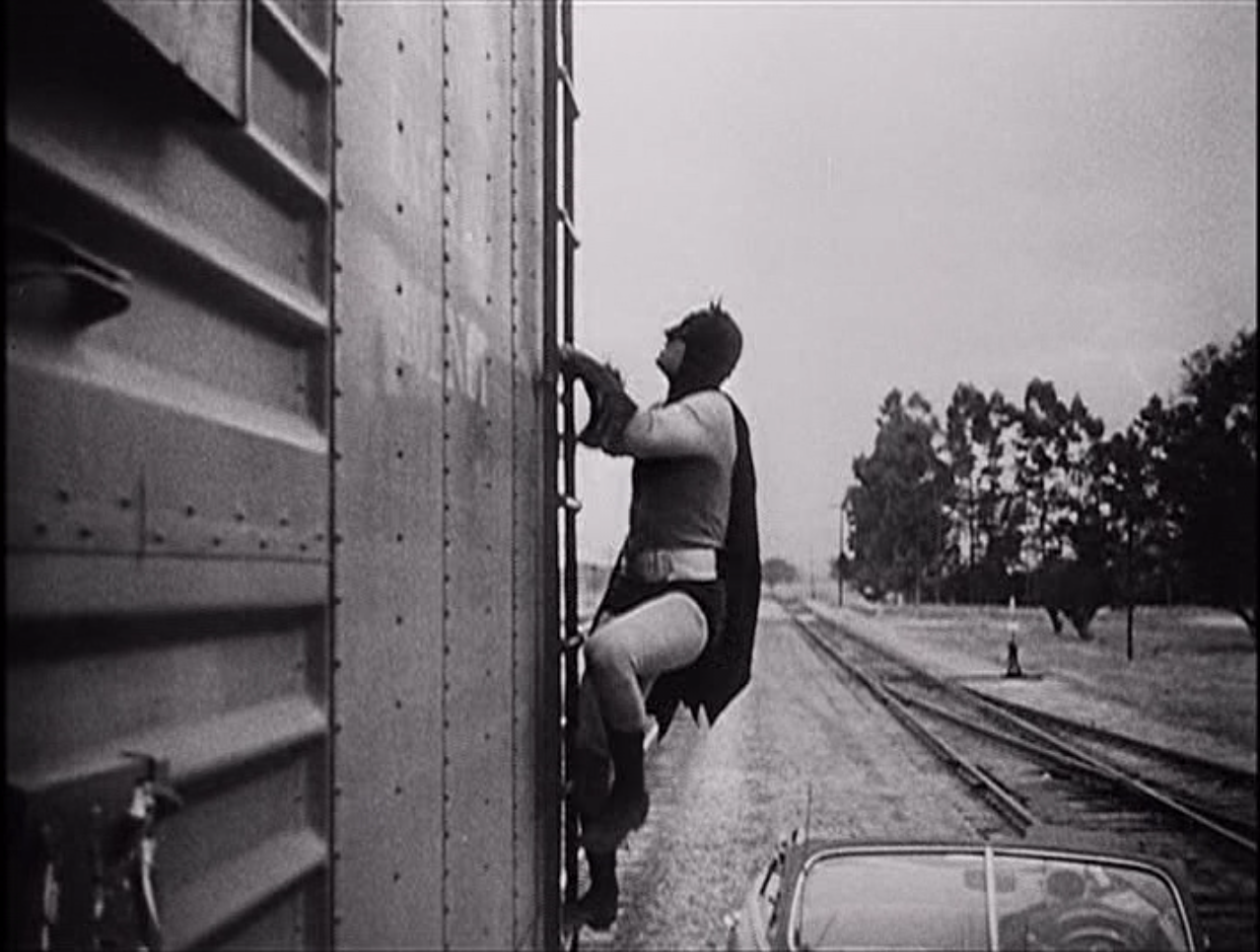
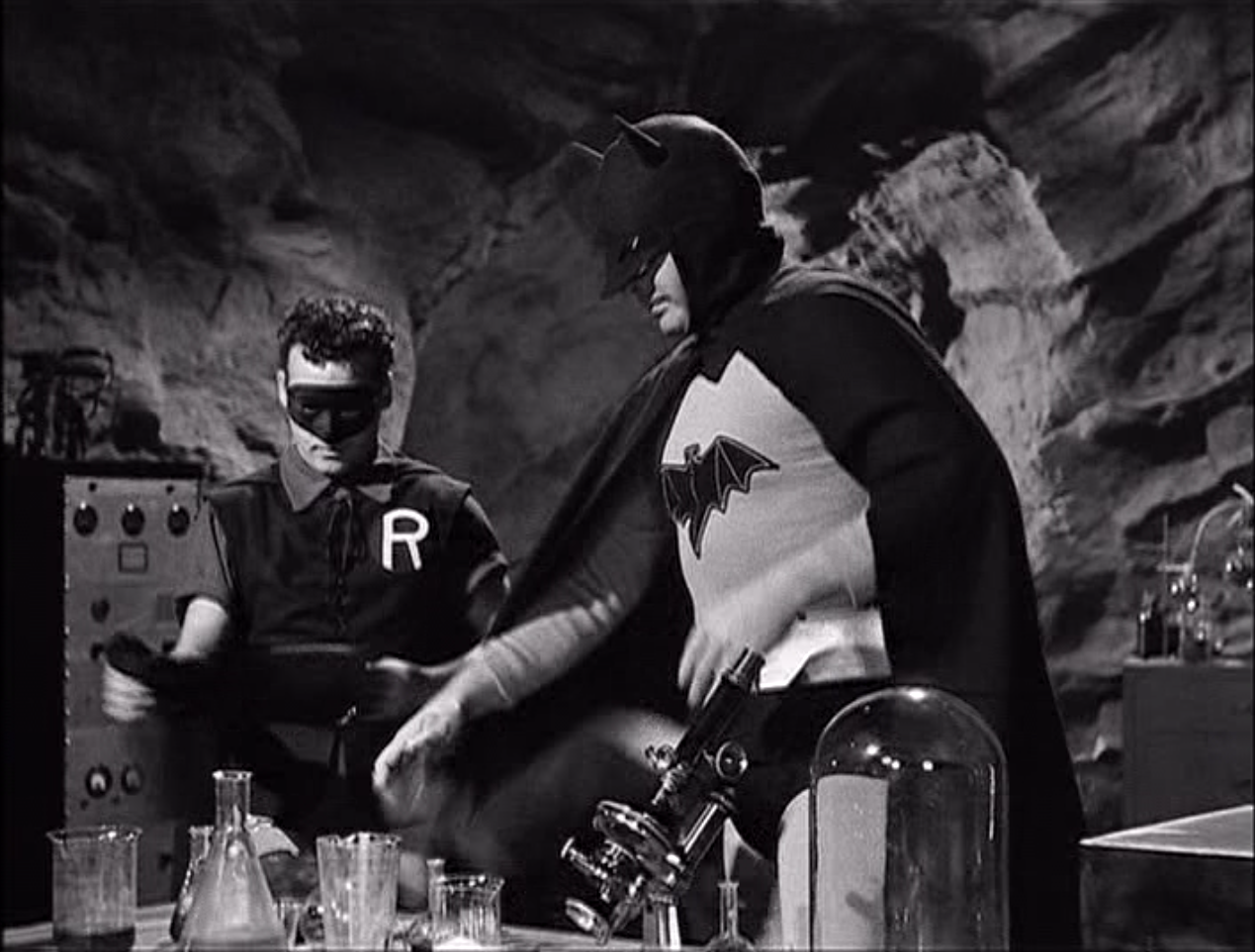
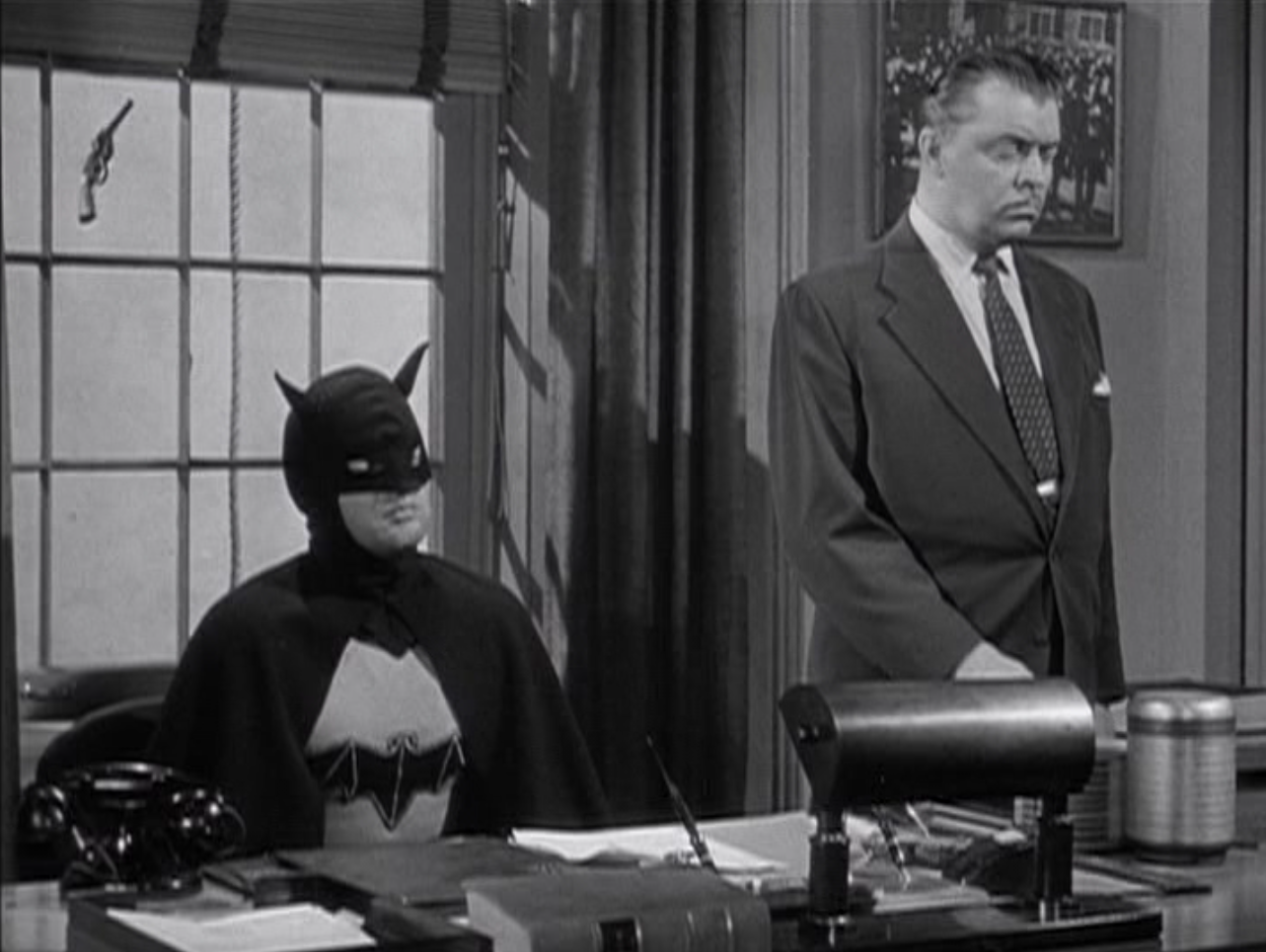
“Crime, stalking our city by night and day, is on the increase! Our undermanned police force is helpless to cope with the situation. But they have an ally: Batman, who, with the faithful Robin, wages unending war against all criminals!” The stentorian voice-over is accompanied by a montage of the Dynamic Duo fighting it out with a variety of gangsters and henchmen interspersed with spinning headlines describing their victories. Batman and Robin are already established crimefighters with a reputation for cleaning up the streets. However, their greatest threat looms before them: will they have what it takes to wrest Gotham City from the remote-control terror of the masked villain known only as the Wizard?

BR.headline2

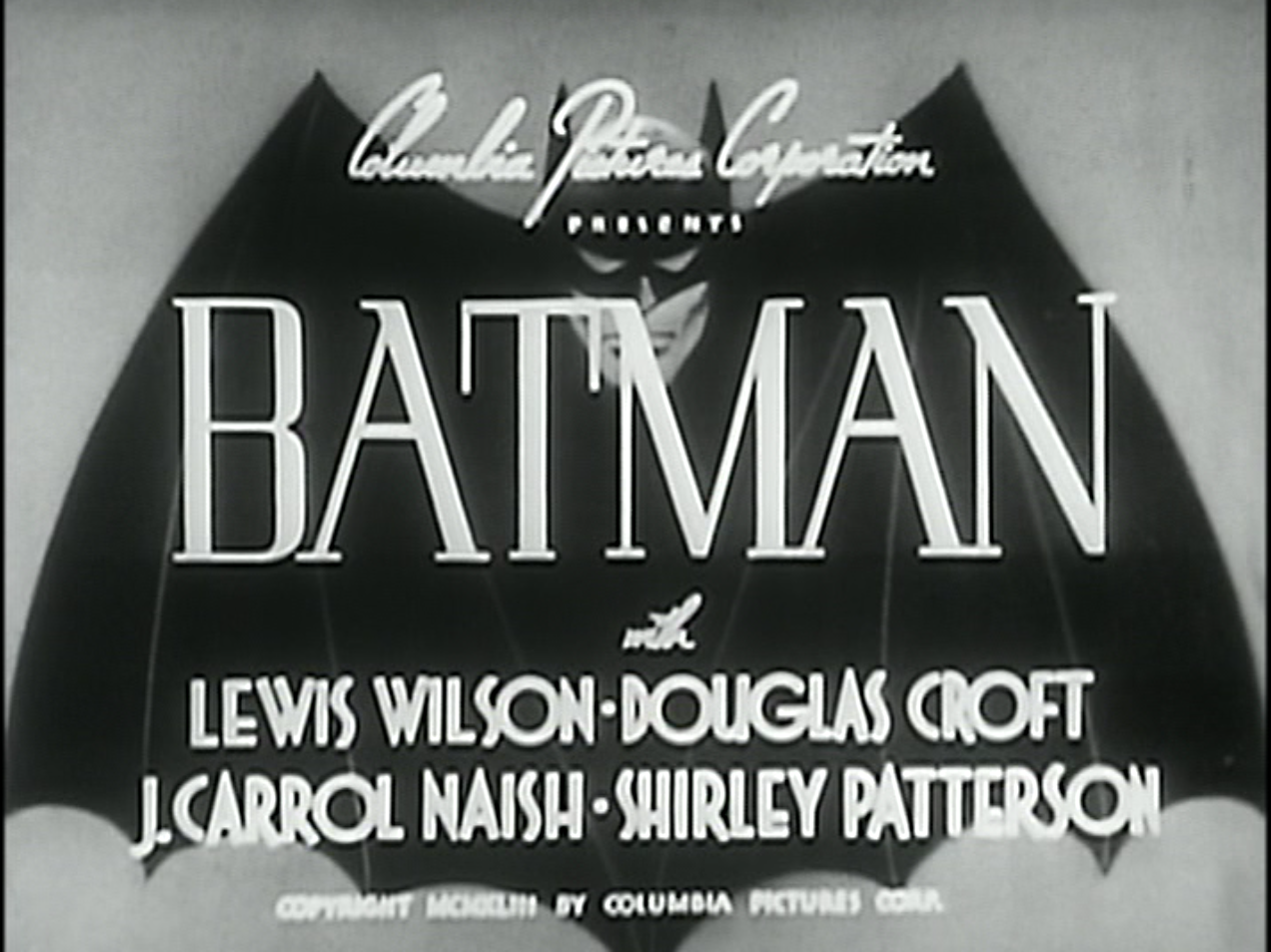
After I reviewed 1943’s Batman serial last summer, a friend warned me that the 1949 follow-up Batman and Robin was “less racist but somehow more terrible.” Batman and Robin is much less offensive: unlike the wartime Batman, Batman and Robin has no need to demonize the Japanese or anyone else, and is purely cops-and-robbers. It’s unfortunately deficient in energy and suspense, however, so my friend’s warning proved sadly apt.

BatmanRobin

The problems start with leads Robert Lowery as Bruce Wayne/Batman and John Duncan as Dick Grayson/Robin, who are not very convincing as either superheroes or their civilian alter egos. (Duncan in particular is cursed with marble-mouthed line delivery and is just plain too old to be the “Boy” Wonder.) They continue with a plot that, in true serial fashion, is at once baldly simple—a criminal mastermind who calls himself the Wizard has stolen a high-tech gizmo that allows him to take control of any vehicle at a distance, bringing Gotham City to its knees—and at the same time confusingly roundabout, with a boatload of characters and each chapter featuring its own distinctive crisis or mission.

BR.Dick.Bruce

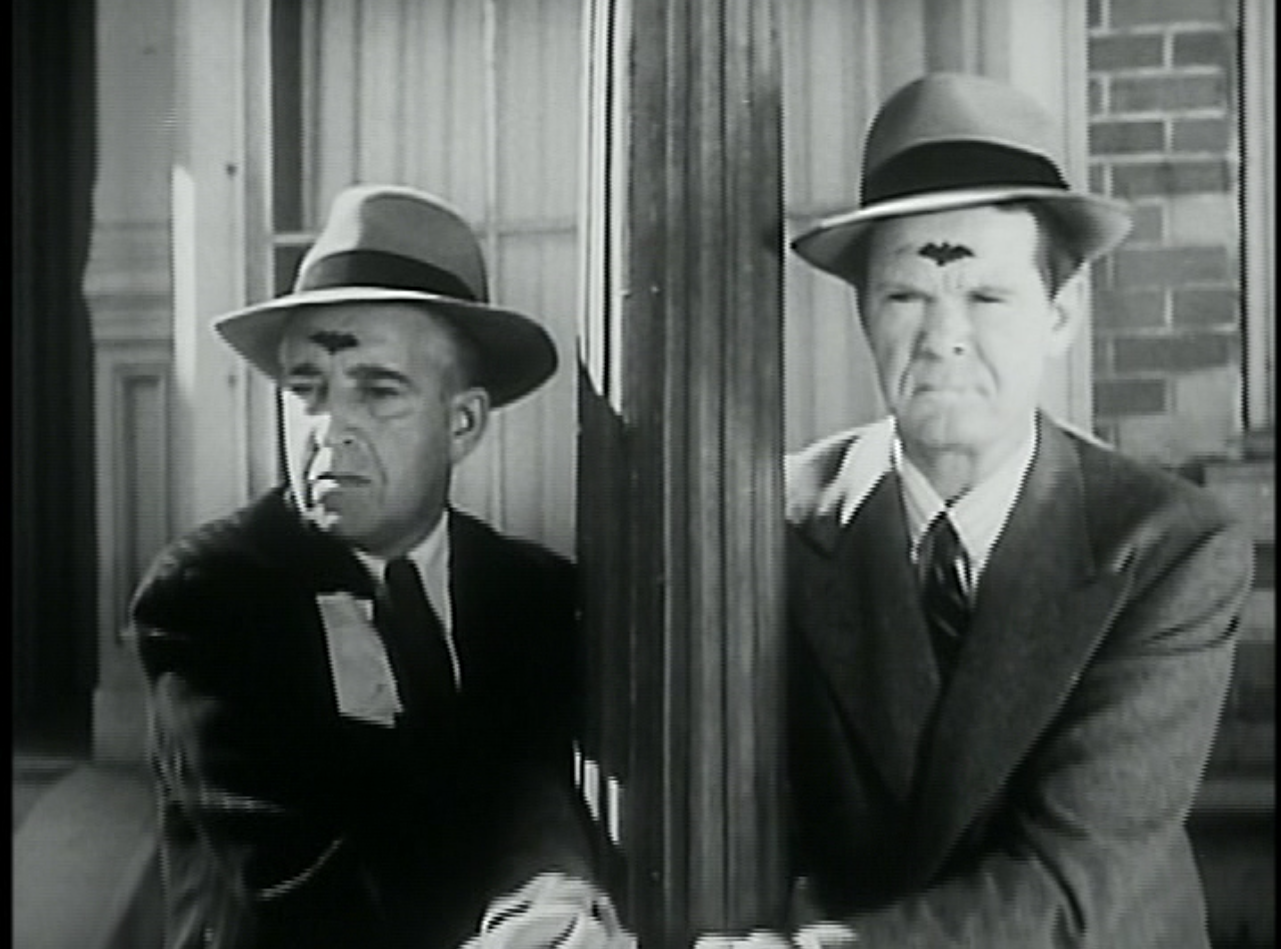
It’s not all bad, however (and Batman and Robin is far from the worst serial I’ve seen). For fans of the comics, Batman and Robin gets closer to the character’s essence than Batman, and includes such familiar characters as faithful butler Alfred (who has much more presence here, and participates by wearing some disguises and driving the car) and Commissioner Gordon, and such essential props as the Bat Signal (there’s still no Batmobile as such, however: at least once the villains wonder why Batman showed up driving Bruce Wayne’s car). There are no criminals left for the police with the “sign of the bat” stamped on their foreheads, nor is Batman presented as a government agent secretly working with Uncle Sam. One new character, photographer Vicki Vale, would prove popular enough to appear in Batman’s comic book adventures, where she is now an established part of his mythos (just as the Bat Cave was introduced in the ’43 serial and has become a constant fixture of Batman’s adventures).

BR.Batsignal

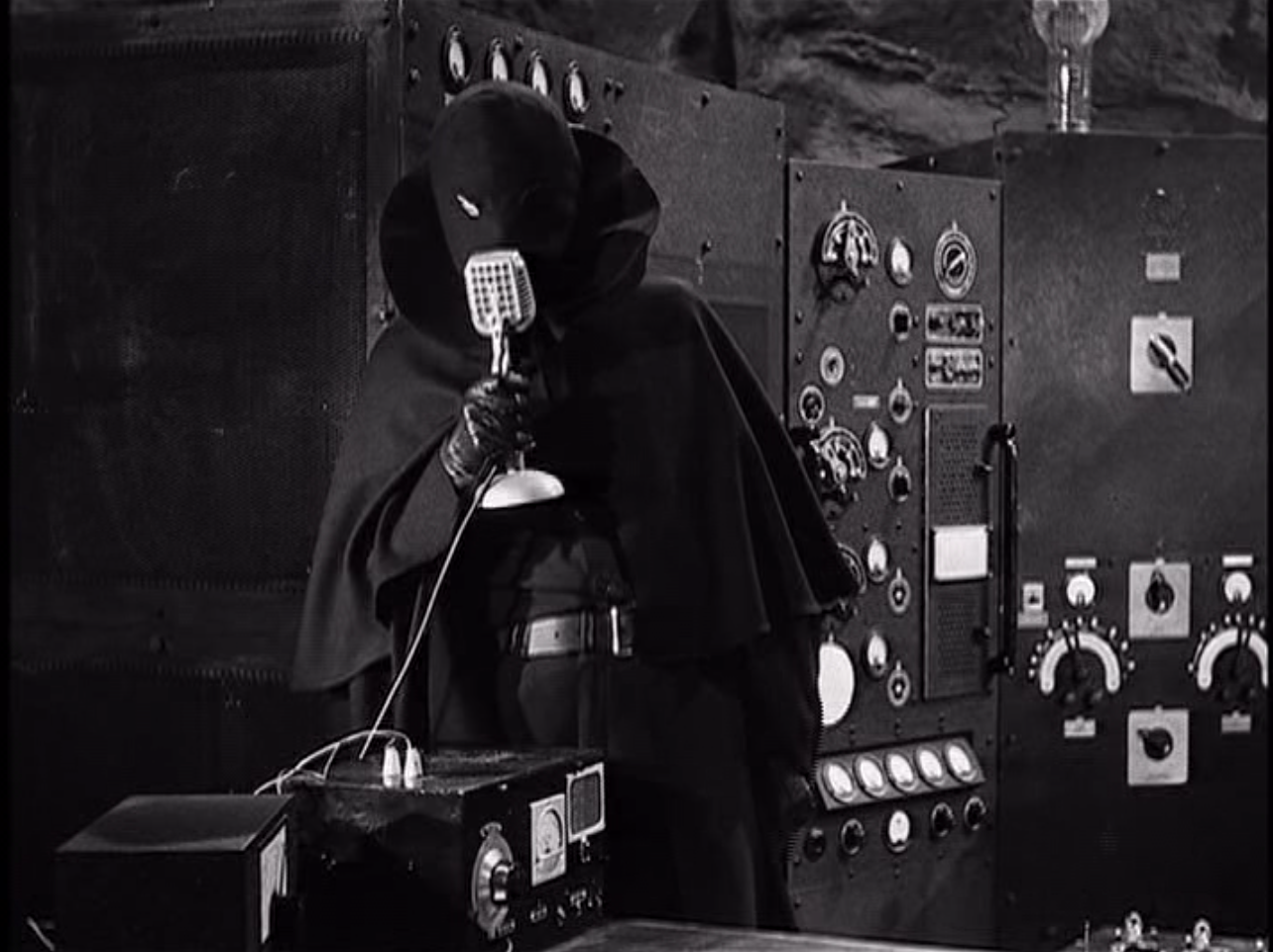
The biggest change for comics readers is the villain: the Wizard himself, a hooded, cloaked figure of scientific genius and unshakeable confidence (“I always have a plan!” he states more than once), is a type frequently found in contemporary pulp magazines and in other serials. Unlike the themed villains that were already facing off against Batman in the comics, the Wizard is fairly generic, using superscience to project his image at great distances, extract secrets by hypnotic suggestion, controlling his henchmen from a secret lair accessible only by submarine, and even making himself invisible for brief stretches.

BR.Vicki1

As is often the case, his identity is unknown until the final chapter, but several candidates are presented to the audience: is the Wizard actually radio newsman Barry Brown, whose broadcasts always seem to include information that the Wizard’s gang needs to commit their crimes? Or is it wheelchair-bound Professor Hammil, the inventor of the remote control device, who regularly visits a secret laboratory and rejuvenates himself so that he can stand and walk for periods of time? Or perhaps it is the private detective Dunne, who always seems to turn up after the Wizard’s crimes have been committed, and claims to be on the trail of the stolen device?

BR.Wizard4

From one perspective, the problems with Batman and Robin are problems with serialized stories in general, and they are the same problems that comic books, serialized TV shows, and the interconnected feature films of the Marvel Cinematic Universe have all had to deal with. To wit, it’s necessary that each installment tell a complete (or nearly complete) story while contributing to the larger arc and teasing a cliffhanger or loose thread that will intrigue audiences enough to return for the next episode. Furthermore, while self-contained stories generally feature change, the classic superheroes are largely static: if one villain is defeated, another will simply arise to take their place.

BR.Wizard3

Superheroes are often described as “timeless,” and even compared to the gods and heroes of mythology; surely their simple, stylized appearance and highly formulaic (ritualized, one might say) storylines contribute to this feeling, but could their “timelessness” not also be a side effect of the sliding timeline that has made these characters contemporary–and roughly the same age–for over three quarters of a century? A few literary characters have been reinvented in contemporary fashion, their adventures updated so that Sherlock Holmes, for example, has exercised his powers of deduction during both World War II and the War on Terror, and Dracula has awoken to terrorize horror audiences in the 1930s, 1960s, and 1990s (he’s already immortal, though, so perhaps he doesn’t count). That’s different from, say, Indiana Jones, who is inseparable from both a milieu and a definite timeline.

BR.Batman2

Timeless, iconic characters, while attractive from the perspective of intellectual property and merchandising, however, must still be able to take part in actual stories–stories where the setting and action are sharpened from the vague dreamtime of the iconic to the specific here and now of this time, this place–if they are to remain current and alive, lest they become only a brand.

BR.Batcave

Batman, in particular, is a character that has been interpreted in many different ways, from the kid-friendly “happy warrior” of the Adam West-starring TV show and the Super Friends cartoons to the wounded child of Tim Burton’s films and the Arthurian scion of Gotham City in Christopher Nolan’s trilogy, and that’s only looking at film and television portrayals. Of those, only Burton and Nolan are interested in exploring Batman’s origins and asking (as comics did, post-Watchmen and post-The Dark Knight Returns) why an orphaned millionaire might choose this particular form of costumed vigilantism instead of, say, investing in social programs; and only Nolan chose to bring the Batman myth-cycle to its conclusion, asking what specific act of justice would heal Bruce Wayne sufficiently that he could hang up the cape and cowl for good.

BR.Hammil2

Although neither serial addresses Batman’s origins, it’s likely that viewers familiar with the comics would at least be aware of his adventures in the comics, and possibly the earlier serial as well, so it doesn’t seem unfair to compare the 1949 serial to other portrayals of the character. All adaptations carry the baggage of already-familiar characters, even if fans in the 1940s wouldn’t have expected their voices to carry like they do now. It’s useful to ask, at least rhetorically, what does this specific version bring to the table, and why was this interpretation resonant at the time it was made? (It’s not necessary for the filmmakers to be conscious of such questions, of course: it wasn’t a given that costumed heroes had anything to say about their cultures in those days, and writers weren’t churning out “thinkpieces” about either the comics or the movies.)

BR.Gordon1

In this context, the 1943 Batman serial is the wartime Batman: its excesses are those of a nation throwing all of its resources into existential war, and while that doesn’t excuse the racist caricature of Dr. Daka it gives the serial a definite identity, a context in which Batman, like all other costumed heroes of the time, were on the side of good, which meant fighting America’s foes. The 1949 serial has no such purpose, and has no dramatic vision to replace it; like many of the later serials, it is primarily aimed at children, and even within that context it’s mostly going through the motions.

What I watched: Batman and Robin (Columbia, 1949)

Where I watched it: Mill Creek Entertainment’s 2-disc Gotham City Serials, which also includes 1943’s Batman

No. of chapters: 15

Best chapter title: “The Wizard’s Challenge” (chapter 13)

Best cliffhanger: At the end of chapter 14 (“Batman vs. Wizard”), the Wizard, turned invisible by the combination of the remote control device and a “neutralizing ray” designed to counter it (just go with it), attempts to kill Commissioner Gordon (as he has previously threatened to do) by hanging from a rope and shooting Gordon through his office window while Batman and Vicki Vale stand by. The Wizard is invisible, but the rope and gun aren’t, so Gordon appears to be shot by a gun floating in mid-air. (Fortunately, Vicki is able to take a picture of the unmasked Wizard using a special infra-red flash bulb devised by Batman. Whew!)

BR.invisible2

Best character: The only person who looks like he’s having any fun in Batman and Robin is William Fawcett, who plays the wheelchair-bound Professor Hammil. An actual Ph.D. and professor of theater with hundreds of credits to his name (mostly in Westerns and television programs), Fawcett would have been an obvious choice to play Captain Marvel’s nemesis Dr. Sivana if he had ever been portrayed onscreen. (There was a Captain Marvel serial, but it had a tenuous connection to the comic book, and Sivana is nowhere to be found in it).

BR.Hammil1
BR.sivana

The wiry and cantankerous Professor Hammil steals just about every scene he’s in. Right off the bat, as the inventor of the remote control device everyone is searching for, Hammil demands to be driven to the research plant just to insult everyone when the device is stolen. (“You’re a pack of careless idiots! Whoever stole it probably has more brains than all of you!”) For another thing, Hammil’s house is nicer than Bruce Wayne’s (the Bruce Wayne I know wouldn’t live in the suburbs!), and even includes a secret laboratory like the Bat Cave (see Matt Singer’s comments below). Hammil actually is known to the public as an inventor, of course, so security is presumably a bigger concern than secrecy, but still: both Hammil and Wayne know that no mansion is complete without a secret passageway to a hidden lair. I’m not going to say whether Hammil is the Wizard or not, but he is nonetheless not a person to be tangled with.

Sample dialogue: “Batman gets entirely too much credit as it is, Vicki. . . . I get tired just hearing about it.” –Bruce Wayne in Chapter 1 (“Batman Takes Over”)

What Others Have Said: “The notion of an evil version of Batman is an intriguing one. . . . Hammil is a near-perfect doppelganger for Bruce Wayne: He lives in an enormous estate on a hill with his own butler to attend to all his needs (along with that hidden, high-tech cave beneath his house). He’s an ideal antagonist and dark mirror image for our hero.” —Matt Singer, whose “Complete History of Comic-Book Movies” at Screencrush is well worth checking out. Singer is, if anything, harder on Batman and Robin than I am.

What’s Next: Join me next week as I explore Atlantis in Undersea Kingdom, starring Ray “Crash” Corrigan.

It’s been a while since I’ve been able to offer an update on The Lost Worlds of Power, the fan-written collection of Nintendo game novelizations of which I’m honored to be a part. However, I’m told that the October 31 release date is still firm! The book will be available as a free download that day, so be on the lookout for that!

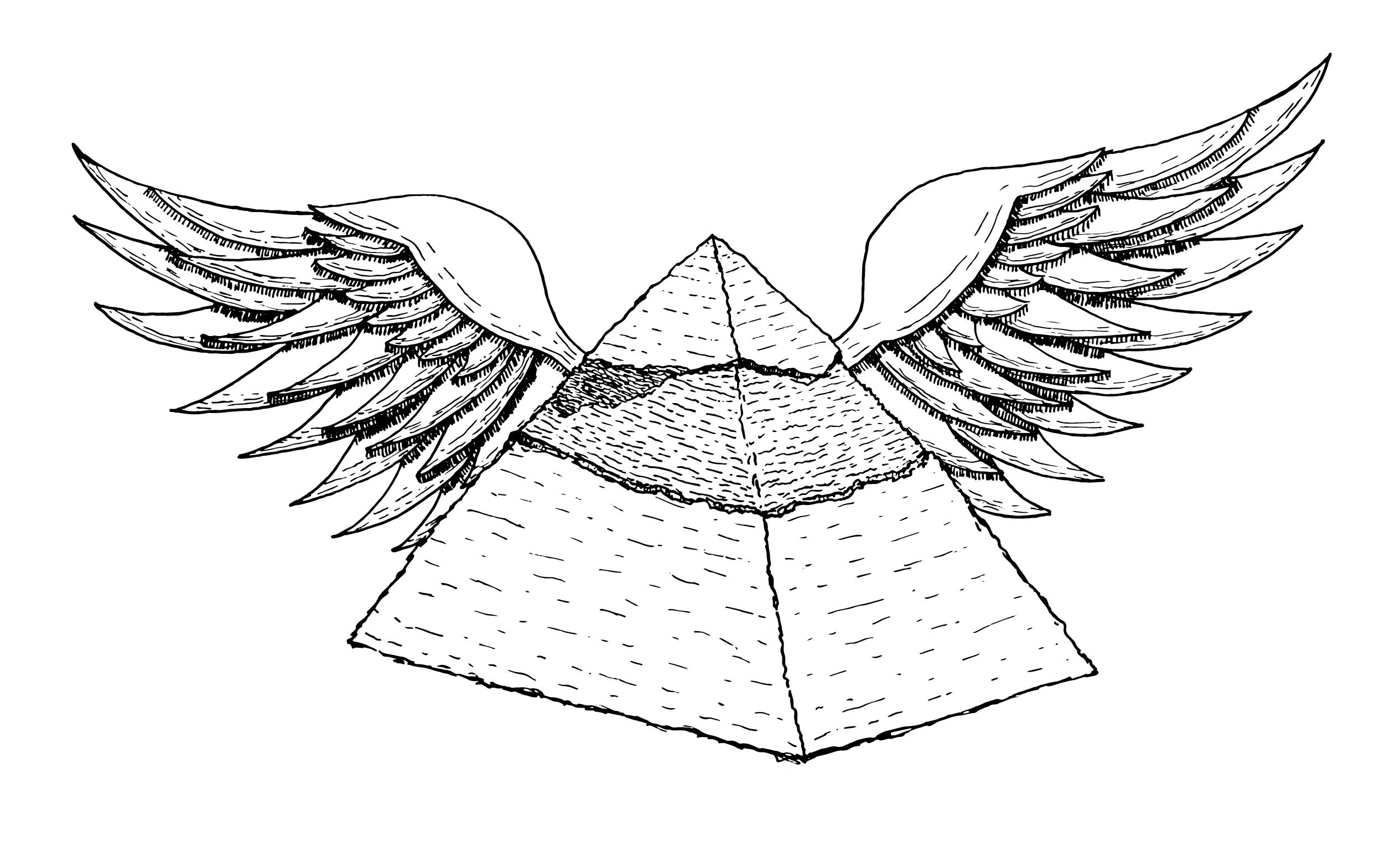
In the mean time, I am pleased to offer the illustration for my selection, “Legendary Wings,” by cartoonist Ron DelVillano:

Legendary Wings

When editor Philip J. Reed sent it to me as part of a bundle with the other illustrations, he noted:

Just so you know, I didn’t give Ron any guidance on what your stories were actually about…true to the Worlds of Power spirit! I only told him the games. In some cases, he actually ended up with some coincidentally appropriate details, which I love, and in other cases
the illustration is totally irrelevent, which I love even more.

How accurately does Ron’s illustration reflect the contents of my story? I’ll leave that for you to judge, but for the record, I think it’s awesome! More information will be forthcoming as I have it!

. . . And as a bonus, here’s another of Ron’s illustrations that is perfect for getting into the Halloween spirit:

Monster Party-01

The title? “Monster Party,” of course.

In the Hall of Mirrors with Captain Carrot and His Amazing Zoo Crew

Somewhere between “funny-animal” comics and cartoons for children and the evolved animals of Planet of the Apes and other adult science fiction lies the semi-serious talking animal trend in comic books of the 1970s and ‘80s. Howard the Duck is a familiar example of a walking, talking humanoid animal interacting with mainstream costumed superheroes, but he was neither the first nor the last character of his type. I’ve always been intrigued by anthropomorphic animal characters: years ago I wrote a lengthy analysis of Howard and his creator, Steve Gerber, and if I can find it I might post it here.

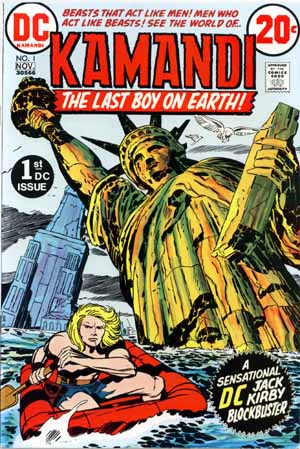
I was similarly drawn to Jack Kirby’s post-apocalyptic series Kamandi for its mixture of science fiction and talking animals. Last summer I wrote about DC’s Showcase Presents the Great Disaster, a “phone book” collection of material peripherally related to Kamandi and including a healthy selection of not-so-funny-animal stories; now DC has released another Showcase collecting the core run of another hybrid series, the superhero/funny-animal adventures of Captain Carrot and His Amazing Zoo Crew. Like Great Disaster, this volume was announced several years ago but was held up (reportedly by disputes over royalties) until now. In any case, it comes out at an opportune moment, as Captain Carrot has returned to comics as a main character in Grant Morrison’s The Multiversity, and the renewed popularity of the Teenage Mutant Ninja Turtles shows that there is still an audience for wise-cracking, butt-kicking humanoid animals.

CaptainCarrot

Most of the Captain Carrot stories were new to me, although the character has made brief appearances in DC books since his introduction in New Teen Titans no. 16 (included in this volume) in 1982. Created by prolific writer Roy Thomas and cartoonist/animator Scott Shaw! (yes, the exclamation point is part of his professional name), Captain Carrot and His Amazing Zoo Crew was tagged from the beginning as “Not just another funny-animal comic!” The tone is light and full of verbal humor and animal puns (Roger starts out in “Gnu York” and the team later moves to “Follywood, Califurnia”), but the adventures and conflicts between characters are firmly within the tradition of superhero comics.

Captain Carrot is the leader of the group: super-strong, tough, and blessed with super-hearing, as well as the ability to leap great distances (as with Superman, who could similarly “leap tall buildings in a single bound” in his early appearances, Captain Carrot would later be depicted as flying outright). Unlike his team, whose powers are constant, Captain Carrot gains his power from eating “cosmic carrots,” irradiated by the meteor that accompanied Superman when he visited from his own dimension. When the carrots’ effect has worn off, he reverts to his scrawny alter ego, cartoonist Roger (later Rodney) Rabbit, a secret identity with some resemblance to Clark Kent and Golden Age hero Hourman.

Rounding out the Zoo Crew are Rubberduck, who can stretch his form like Plastic Man; Yankee Poodle, a patriotic-themed heroine who can repel and attract matter via the stars and stripes she projects from her hands; Fastback, a turtle with super-speed; Pig-Iron, the tough guy; and Alley-Kat-Abra, a martial artist with mastery of magic, focused through her “Magic Wanda.” Each of these characters is an established type, and Thomas and Shaw! have made clear in commentary that they were conscious of the balance of personalities and powers that made up a good super-team, but none are outright copies of extant characters.*

Zoo_Crew

Most critically, Captain Carrot and his cohort are clearly established as living in one of the DC multiverse’s many parallel earths, a planet much like ours but inhabited by Saturday-morning-cartoon-style talking animals. The team’s origin is explicitly tied to Superman, who crosses from his own dimension to the funny-animal world, where he is viewed as a terrifying pink monster (with five fingers!): in Captain Carrot’s world, “men” are creatures of myth and legend. Changeling (aka Beast Boy) of the Titans and animal-themed villains Starro the Conqueror and Gorilla Grodd would also make appearances in the book, and many of the team’s subsequent appearances have been crossovers of one kind or another. Despite its obvious kid appeal, this isn’t segregated from DC continuity, as one might expect for a children’s title.

As noted, Captain Carrot and the other members of the Zoo Crew aren’t direct parodies of established superheroes. Although there are many winking references to human history and pop culture (particularly celebrities: Rubberduck’s civilian identity is movie star “Byrd Rentals,” and Yankee Poodle is gossip columnist “Rova Barkitt”—will readers younger than 40 even recognize the reference to Rona Barrett?), the Zoo Crew are unique individuals rather than being modeled after any specific character. This distinguishes Captain Carrot from Peter Porker, the Spectacular Spider-Ham, a similar parody of Marvel’s characters introduced in 1983 (a year after Captain Carrot’s first appearance).

In addition, master of minutia Roy Thomas built in many links to DC’s own funny-animal past: Pig-Iron was a transformed Peter Porkchops, a character who had appeared in DC’s Funny Stuff in the 1940s; Fastback was the nephew of another Golden Age funny-animal, McSnurtle the Turtle (who also moonlighted as a superhero, the “Terrific Whatzit”). Other characters from Funny Stuff were introduced as side characters, and in one story arc the team was split up and sent back in time to different eras, encountering characters such as Nero Fox (a jive-talking, jazz saxophone-playing funny-animal Roman emperor—in other words, a character who could only have been created during comics’ unselfconscious Golden Age) and the Three Mousketeers.

captain_carrot_009_full

Thomas’ obvious delight in making such connections and in capturing the essence of superheroic types brought to mind another creation of his: the Squadron Supreme, the analogue of DC’s Justice League of America that Thomas introduced in the pages of Avengers, and which has become a JLA stand-in in the Marvel multiverse. Intriguingly, while the Squadron very directly represents the JLA in the pages of Marvel Comics, the Zoo Crew actually strike me as a subtle reworking of Marvel’s character dynamic smuggled into a DC book. (Such are the differences between the two publishers that even parodying them requires a different approach: the Squadron Supreme is the JLA with a coat of paint, while the Zoo Crew mimics the contemporary soap opera feel of a Marvel book rather than specific characters.)

From the team’s first appearance, their stories are marked by squabbling and infighting, with the kind of character-based conflict that was a central ingredient in Fantastic Four, Avengers, and Uncanny X-Men. Captain Carrot is continually struggling to keep his allies focused on the mission, and nearly every issue includes one or more characters challenging his authority or the entire purpose of the group. Pig-Iron (most clearly modeled on FF’s Thing, pugnacious and blue-collar) wants to be left alone; Rubberduck and Yankee Poodle are accustomed to star treatment; Alley-Kat-Abra fights with Yankee Poodle over leadership roles and pines for the Captain’s affections. A great deal of the time, it’s not clear that the members of the team even like each other that much.

Consider another hero who is added later, the only member of the Zoo Crew to gain his powers through a source other than the meteor that entered their universe with Superman. Chester Cheese, a mouse, was a star basketball player whose father was a scientist working on the space program. Chester was approached by two goons working for a crime boss named Fatkat, who wanted him to throw a big game on which Fatkat had a lot of money riding. When Chester refused, his father was killed and Chester was locked in his laboratory. After eating a sample of lunar green cheese, he gained the power to shrink to small sizes, retaining his strength; calling himself “Little Cheese,” he enlists the Zoo Crew in an attempt to bring Fatkat to justice.

LittleCheese

On the surface, Little Cheese resembles other shrinking heroes like the Atom or Ant-Man, but his origin is a remix of Spider-Man’s, combining the drama of teenage life, super-science, and a parental figure whose tragic death leads him to use his powers for a higher purpose. (Not to mention that his nemesis, Fatkat, strongly resembles Marvel villain the Kingpin.) In short, Little Cheese’s story illustrates the Marvel habit of building stories around “little tragedies,” to borrow Chris Sims’ phrase. Tragic origins aren’t foreign to the DC universe, of course, but in combination with the personality conflicts and limitations placed on the Zoo Crew’s powers, it’s very much in line with Marvel’s modus operandi. In that light, Captain Carrot’s adventures are an overlooked example of what Sims calls “The Problem,” a decades-long desire on DC’s part to make itself more like Marvel.

It gets even more complicated when another funny-animal super-team is introduced, and this one is a direct parody: the Justa’ Lotta Animals, which starts out as the comic book that R. Rabbit illustrates as his day job, but which (naturally) turns out to be a real group from yet another parallel earth. The two-part crossover, “Crisis on Earth-C!” and “Crisis on Earth-C-Minus!”, parodies the annual Justice League/Justice Society crossovers in bringing the champions of two worlds together. This JLA consists of Super-Squirrel, Bat-Mouse, Wonder Wabbit, Green Lambkin, the Crash (a super-speedy turtle, showing there are only so many spins one can put on this kind of character, I guess), and Aquaduck (whom I almost forgot); when first encountered, only Captain Carrot is familiar with them, since he draws them for a living.

CptCt_14_GS

It’s a time-honored convention of comic books that when two or more superheroes meet for the first time, they fight each other (through confusion or a villain’s manipulation). The JLA/Zoo Crew match-up is no different, but even after getting the facts straight, inter-group rivalries persist. Captain Carrot has trouble adjusting to the idea that the fictional characters he draws are not only real, but have personalities and motives of their own, and both the Zoo Crew and JLA exhibit a territorial streak when it comes to another super-team in “their” world. A love triangle forms, as Super-Squirrel is immediately jealous and resentful of Wonder Wabbit’s interest in a fellow bunny (it’s really a love quadrangle, as Alley-Kat-Abra is also possessive of her Captain).

The “real” Superman and Wonder Woman weren’t romantically linked until recently, but this storyline uncovers subtext that was always present, if only in the minds of fans: just as Mark Gruenwald could have Hyperion and Power Princess consummate their love in the pages of Squadron Supreme, Super-Squirrel could give voice to feelings of jealousy and inadequacy that Superman would leave unspoken, if he felt them at all. (The Captain Carrot/Wonder Wabbit pairing can be read as a parody of all such “doomed romance” storylines, as they belong in two different worlds, but it isn’t treated as a joke: the story ends with Rodney drawing Wonder Wabbit for his comic book, ruefully acknowledging that he can’t even escape into his work to forget his loss.) As a fan of both funny-animals and pastiche characters, the whole thing is a fascinating chance to observe a diverse group of characters—some of whom stand in for entire mythologies**—bounce off each other. Captain Carrot isn’t just parody: it’s meta.

Jlanimals

* Behind-the-scenes commentary and information about the Zoo Crew’s creation is drawn from Alter Ego no. 72 (September 2007).

** Speaking of mythologies, I haven’t even gotten to the six-chapter Oz-Wonderland War, published as a three-issue miniseries in 1986, and a fitting culmination to the contents of the book, with more character development than most of the previous issues. The storyline draws the Zoo Crew into an interdimensional conflict based on the characters and settings of L. Frank Baum and Lewis Carroll (and includes a brief reunion with Wonder Wabbit), and includes some great artwork by Carol Lay, balancing the cartoon style of Shaw! with the illustrative styles of Denslow and Tenniel. It deserves a longer write-up, but as a blend of humor and reference (scripted by longtime DC writer and editor E. Nelson Bridwell, who had a reputation as a “continuity cop” himself) it’s a very pleasurable (if frequently downright weird) read.

Fates Worse Than Death: The Could-Have-Beens

In watching and researching motion picture serials over the past few months, I’ve run across many based on characters from other media: comics, radio, and literature. Allowing for the vagaries of art and commerce, I’ve been struck by the absence of several characters who one might expect to be adapted as source material. What follows is necessarily speculative, but I’ve compiled a list of characters, popular at the time, who could have appeared in a serial but didn’t, for whatever reason.

Perhaps arbitrarily, I’ve excluded characters who appeared in feature films or cartoons during the “Golden Age” of the serials: Sherlock Holmes and Dracula may not have appeared in serials, but they are well-represented on film. I’m more interested in characters whose film appearances are either limited to the modern era or who haven’t appeared on film at all (yet).

John Carter of Mars

From one perspective, it isn’t surprising that Edgar Rice Burroughs’ interplanetary hero didn’t make the leap to the big screen until 2012’s poorly-received adaptation. Although John Carter set the pattern for the early space heroes, appearing in print in 1912, both Flash Gordon and Buck Rogers were featured in serial adaptations during the Golden Age of science fiction (in 1936 and 1939 respectively). It was Gordon and Rogers who cemented the conventions and story beats of space opera for film audiences and became household names in the process. Later, Star Wars and other science fantasy epics would borrow elements of Carter’s adventures (what is Tatooine but Burroughs’ dying Mars?), further stealing the series’ thunder.

john-carter-poster

On the other hand, clearly there was a market for science fiction adventure, and Burroughs was aware of the power of licensing his creations: his other famous character, Tarzan, was featured in numerous film adaptations in the 1930s and ‘40s (continuing to this day), including one produced by Burroughs himself.

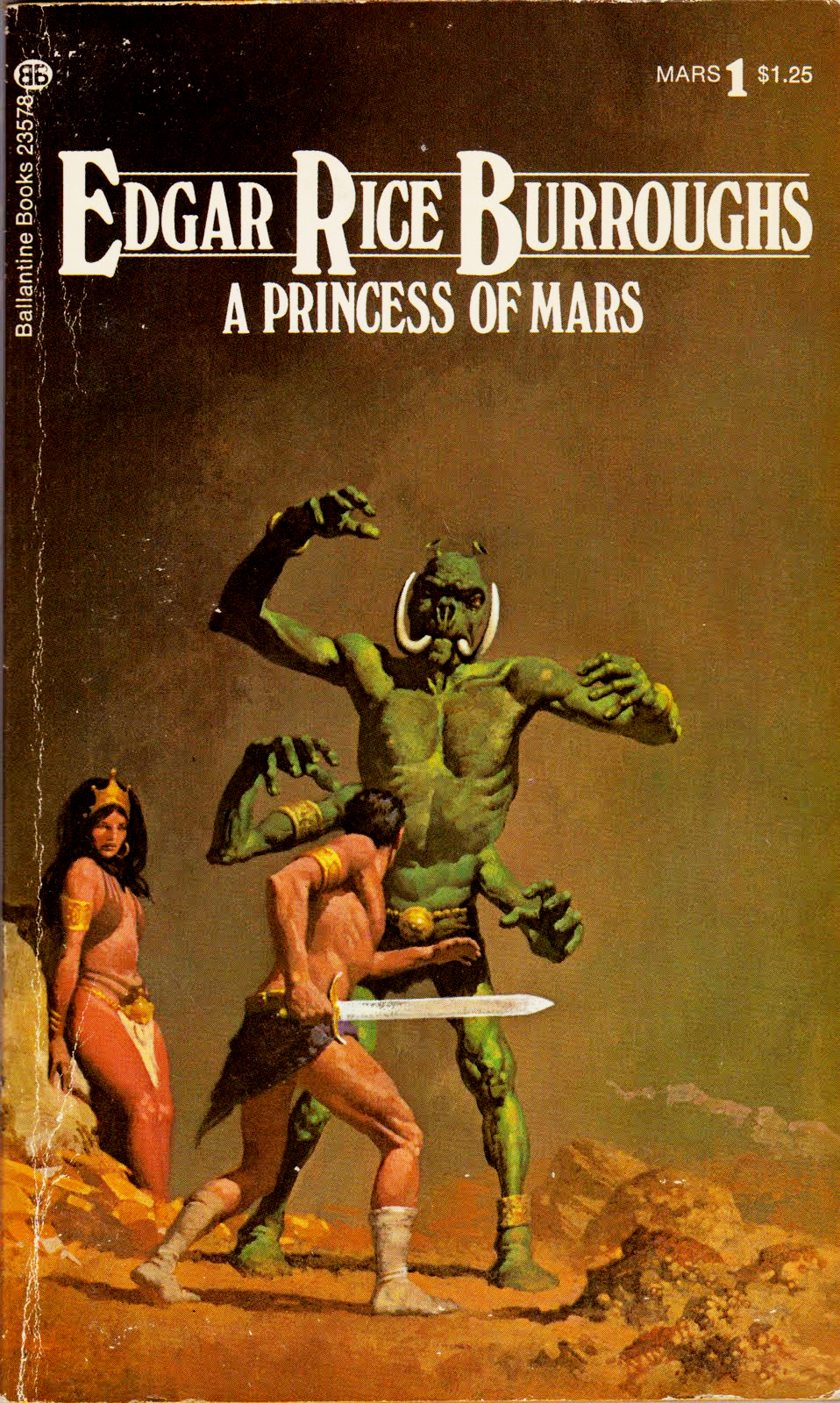
Perhaps it was the extravagant native fauna of Barsoom (the locals’ name for Mars) that made it prohibitive to film: in his adventures, Carter faces the four-armed giant Tharks (Green Martians), rides eight-legged thoats, and encounters other multi-limbed creatures that would have been compromised by the special effects of the 1930s, to say the least. (Flash Gordon tries manfully to create convincing space monsters, and is only intermittently successful.) In a similar vein, the fliers and radium guns of Burroughs’ novels might have seemed like a daunting proposition to film, but other science fiction serials and features found ways to create such effects or work around them.

Book-1-A-Princess-Of-Mars-1

Intriguingly, there was at least one attempt to produce a John Carter film during the Golden Age: in 1935, Warner Brothers animator Bob Clampett approached Burroughs with a proposal to put together an animated John Carter series that, had it been made, would have beaten both Snow White (the first animated feature) and the Flash Gordon serial to theaters. Clampett and Burroughs put together a deal with MGM, but ultimately the project was deemed too weird for audiences. Only a few minutes of test footage remain to show what might have been.


(Thanks to fellow fan Bruce Ross for alerting me to this aborted project, and check out Bruce’s blog to see his impressive custom action figures, including a certain Warlord of Mars.)

Jules de Grandin

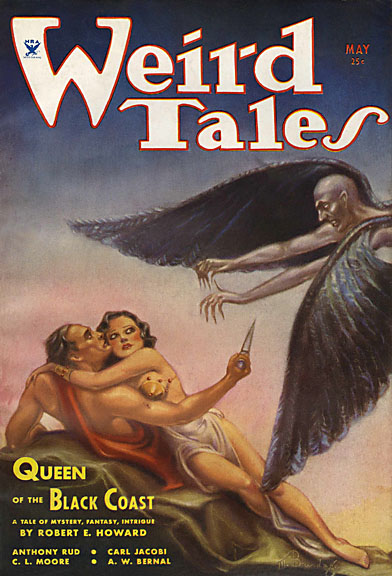
The most popular author to appear in Weird Tales magazine wasn’t Robert E. Howard or H. P. Lovecraft: it was Seabury Quinn, a lawyer with a specialty in mortuary law and the funeral business. Quinn’s most popular creation was the feisty French physician Jules de Grandin, a prime example of the “occult detective” character type. With his sidekick/narrator Dr. Trowbridge (clearly modeled after the sturdy Holmes/Watson dynamic), de Grandin defended Harrisonville, New Jersey against supernatural, scientific, and just plain criminal threats in nearly a hundred stories.

DeGrandin

Although less well-remembered now, the de Grandin stories contain plenty of ideas that could have made for excellent serials—killer animals, vampires, cults, mad scientists, and more—and were formulaic and action-packed enough to provide what audiences of the time expected.  De Grandin, with his cod-French exclamations (not only the time-honored “Sacre bleu!”—de Grandin would frequently vary his patter with insertions of “Parbleu!”, “Mordieu!”, “Zut!”, and odd turns of phrase like “Horns of a little blue devil!”, “Name of a gun,” etc.), was likewise a character whose exaggerated national character would be right at home at Republic or Columbia. (His catch-phrases are no sillier than the “inscrutable” Orientalisms of Charlie Chan or the “By Jove!” English of Anthony Tupper in Robinson Crusoe of Clipper Island.) More importantly, like all serial heroes, de Grandin favored the direct approach, and was as likely to defeat the forces of evil with a sword or automatic as with an incantation or clever trap.

WeirdTalesdeGrandin

Conan the Cimmerian, et al

Speaking of Robert E. Howard, it’s unlikely that a serial based on his famous creation Conan would have been anything like the 1982 feature Conan the Barbarian, influenced as it was by the success of special effects blockbusters like Star Wars and Raiders of the Lost Ark and the contributions of later authors (not to mention the Frazetta-esque physique of star Arnold Schwarzenegger). However, the ancient past had been represented in epics like Ben-Hur, and fantastical “lost worlds” were featured in serials such as The Undersea Kingdom and The Phantom Empire, so it wouldn’t have been out of the question. A Conan serial would have probably resembled those starring Tarzan or “jungle girl” Nyoka, with an emphasis on action and the lead’s physicality, toning down Howard’s often pessimistic philosophical digressions.

WeirdTalesConan

It’s worth noting, however, that Howard created several series characters, in a variety of genres, that could have headlined serials (and to this day, not all of them have been adapted for film). “Last king of the Picts” Bran Mak Morn and medieval Irishman Turlogh Dubh O’Brien represent Howard’s interest in the history and people of the British Isles; King Kull of Atlantis and swordswoman Red Sonja represent a strain of sword-and-sorcery similar to the Conan stories. Of all of Howard’s series characters, probably the closest in spirit to the serials is Steve Costigan, a modern-day merchant sailor and boxer whose stories combined action and wry humor. Although Conan remains Howard’s best-known creation, the author left behind a wealth of material yet to be mined for adaptation.

fightstoriesCostigan

The Spirit

thespirit

Cartoonist Will Eisner created the Spirit (the supposedly dead criminologist Denny Colt, going forth from his cemetery hideout to fight crime) in 1940 as the lead character in a series of comic books he produced for inclusion in newspapers owned by the Register and Tribune Syndicate. Ownership of his own character, with little editorial interference, gave Eisner the freedom to explore a variety of story-telling techniques, and due to his innovative approach to composition he is often compared to cinematic masters such as Hitchcock and Welles. (In Michael Chabon’s novel The Amazing Adventures of Kavalier and Clay, the title characters are inspired by Citizen Kane to invigorate their own comic book stories with devices such as achronological narratives, alternating points of view, and dynamic, cinematic compositions applied not just to the panel but to the entire page. Although fictional, this is likely a reference to the leaps forward that Eisner made with The Spirit.)

Sometimes the title character was barely featured in stories, making cameo appearances in the stories of a range of urban characters both poignant and humorous; this approach would have fit perfectly with the serials, which often introduced audiences to original characters who had equal screen time with the licensed characters in the title (such as Linda Page and her uncle in the 1943 Batman serial). Quoted in A Smithsonian Book of Comic-Book Comics, Eisner explained,

I began to realize who I was writing for”—that is, an audience dominated by adults, rather than children—and “I suddenly found an opportunity to do what I had really always wanted to do, which was to write ‘seriously’ or write good material, and at the same time stay within the medium I knew and had developed skills for.

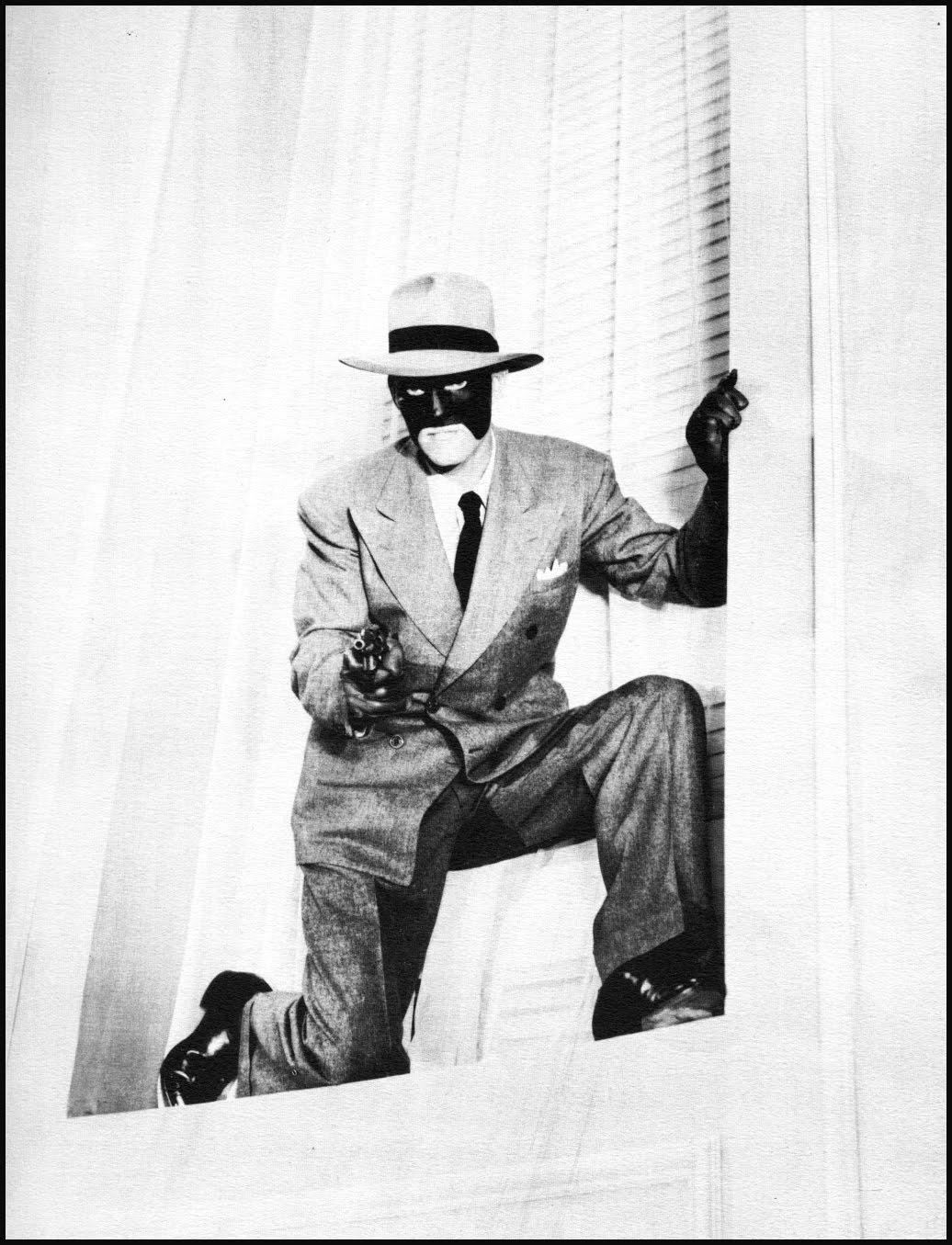
Ironically, as Eisner drew from film to develop his sophisticated visual language, the serials were increasingly geared toward children, dropping the nuances of the 1930s serials in favor of formula and non-stop action. Without Eisner’s ambitious style, the Spirit wasn’t superficially different from other masked pulp heroes like the Spider or the Green Hornet, and it is unlikely a Spirit serial would have been very distinguished. (However, many commentators have pointed out that the title character of the 1943 serial The Masked Marvel bears a strong resemblance to the Spirit; in that serial the central mystery of the story was the true identity of the hero, with four possible candidates.)

Tom Steele as the Masked Marvel

Tom Steele as the Masked Marvel

Wonder Woman

Seriously, what gives? Despite the news that DC’s premier superheroine—the female superhero in the mind of the public—will appear in Batman v Superman: Dawn of Justice, Wonder Woman is severely underrepresented on film. She has yet to headline her own theatrical feature film, and has only a single direct-to-video animated feature to her name. Considering that Wonder Woman spent World War II fighting Nazis alongside Captain Steve Trevor, a serial would seem to be a no-brainer. But it was not to be.

sensation-comics-13

Created in 1941 by psychologist William Moulton Marston, Wonder Woman reflected his desire to create a strong but loving role model for girls, an Amazon princess fighting for equality in “Man’s World;” in his words, she would be “a feminine character with all the strength of Superman plus all the allure of a good and beautiful woman.” Marston modeled his creation on both his wife Elizabeth and a woman named Olive Byrne who lived with the couple in a polyamorous relationship. Although Marston’s unconventional views on the sexes and Wonder Woman’s fetishistic overtones (including the “lasso of truth” and the notion of loving domination) raised eyebrows in later years, they don’t seem to have been considered problematic during the 1940s. (Certainly the serials had their share of questionable material, and anything objectionable would likely have been removed or changed anyway: some of the changes studios made to comic book characters could be quite drastic.)

Consider the screen presence of Wonder Woman’s fellow heroes: Columbia produced serials starring Batman (in 1943 and 1949) and Superman (1948); Republic brought Captain Marvel (1941) and Captain America (1944) to the screen, and there were numerous less-remembered costumed heroes in serials as well. (That’s not even mentioning the animated Superman shorts from Fleischer or the later Superman and Batman TV programs; as of this writing, Lynda Carter’s portrayal of Wonder Woman is still the only prominent, long-running live-action version of the character.)

Female-led serials weren’t unheard of: I’ve reviewed two this summer, The Perils of Pauline and Zorro’s Black Whip. The star of the latter, Linda Stirling, was actively groomed to be the next Pearl White, appearing in several jungle, Western, thriller, and science fiction serials for Republic. (In fact, it was reading about Stirling’s career that brought Wonder Woman to mind and inspired this article.)

Realworlds_Wonder_Woman

(Interestingly, an issue of DC: Realworlds, an out-of-continuity series in which DC’s heroes are expressly fictional but inspire ordinary people to take heroic action, features a hypothetical Wonder Woman serial. The story centers on an actress who finds the courage to stand up to a Red-baiting politician who combines features of Joseph McCarthy and Ronald Reagan. Perhaps in an alternate universe, audiences are thrilling to Wonder Woman vs. the Nazi Baroness or Wonder Woman vs. the Red Menace.)

What’s Next: In one week, I’ll conclude Fates Worse Than Death (for this summer, at least) with a look at Gang Busters. See you then!

Fates Worse Than Death: Radar Men from the Moon

RMTitle1
RMTitle2
RMTitle3

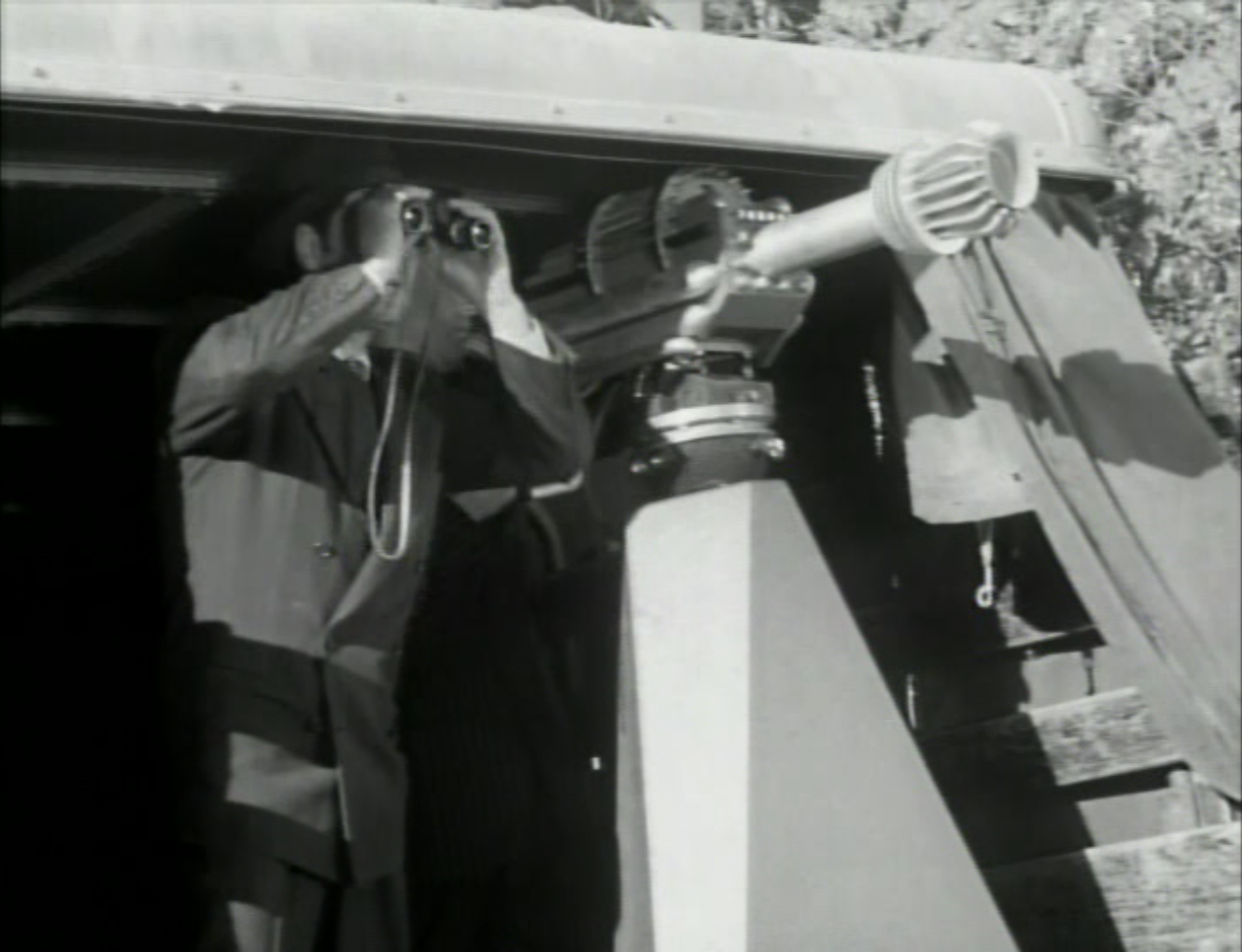
A string of mysterious explosions and attacks is crippling America’s defense network. Scientific analysis indicates that atomic weapons caused the destruction, but what power on earth could focus atomic energy into the kind of ray being used? Only one man is equipped to investigate: Commando Cody, inventor and explorer, whose jetpack allows him to soar through the air (and who is also a crack shot with a pistol).

RMCody3

Liberating the atomic ray from the two gangsters wielding it, Cody takes the futuristic weapon back to his lab to analyze it. The two gangsters, Daly and Graber, report to their superior, Krog, who (as Cody will discover) is the leader of an invading force from the moon! Krog orders them to recover the ray and sends his human minions on several criminal assignments to raise funds for his terroristic activities.

RMAtomicRay

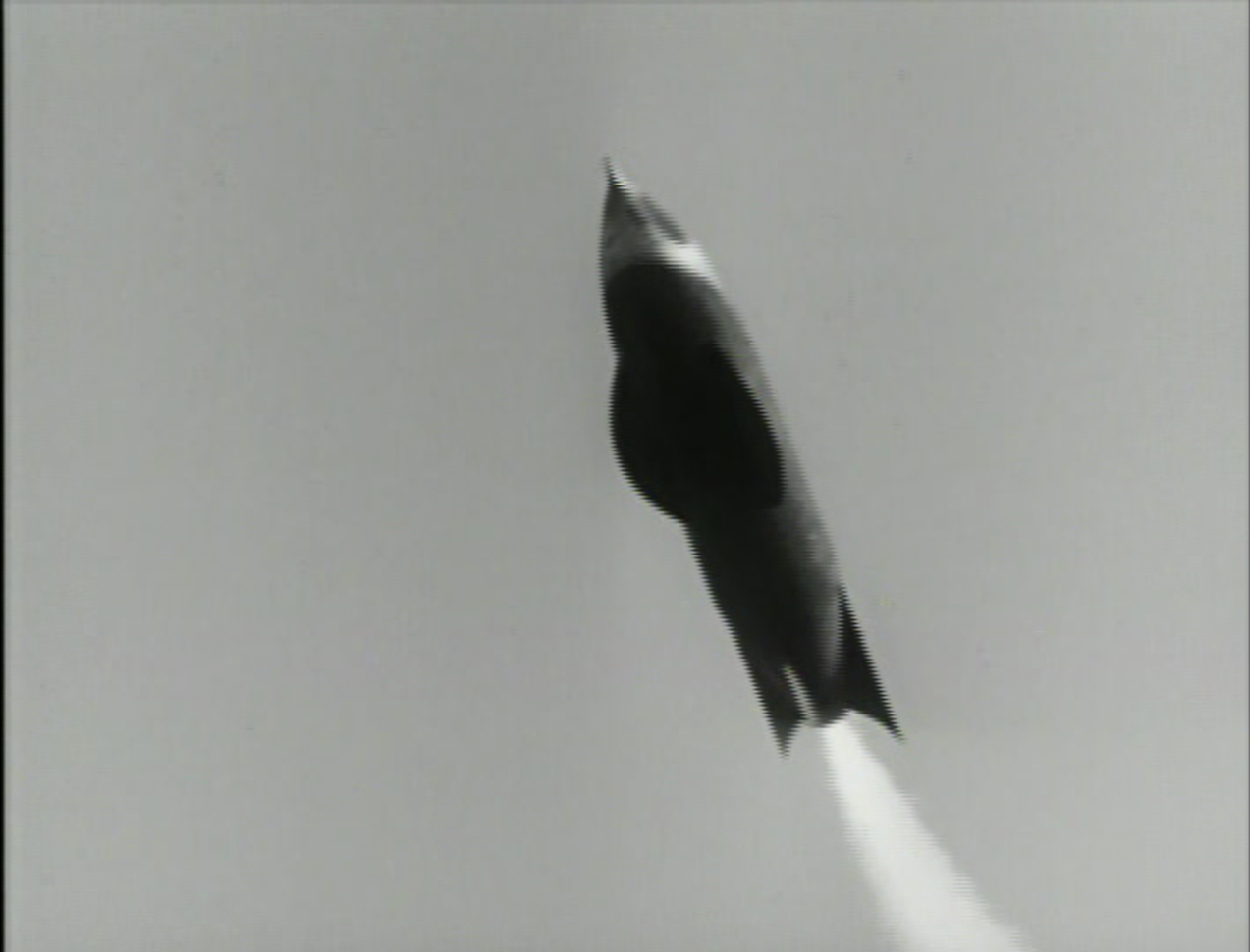
Eventually, Cody and his team determine the source of the trouble and launch Cody’s latest invention, an interplanetary rocket ship, to the moon itself. The lunar civilization is dying, as its leader Retik explains, the air too thin and dry to grow food; already the lunarians must wear helmets outside of their pressurized cities in order to breathe. (Needless to say, no more attention is paid to real scientific knowledge of the moon than in the space fantasies of Edgar Rice Burroughs from decades before.) After softening up earth’s defenses, the lunarians plan to invade earth in Radar Men from the Moon.

RMrocket4

In 1949, Republic Pictures, weary of licensing superheroes from the comics and radio, introduced an original character, Rocket Man, in King of the Rocket Men. Three years later, Radar Men from the Moon featured Commando Cody, a repackaging of the Rocket Man concept (essentially a superhero with a jetpack). By all accounts, Radar Men relies heavily on footage of Rocket Man from the earlier serial, as well as reusing props, costumes, and special effects from Republic’s extensive library. (Two sequels followed: Zombies of the Stratosphere and a television series, Sky Marshall of the Universe; Rocket Man/Commando Cody’s influence is also readily seen in Dave Stevens’ comic book hero the Rocketeer, adapted into a 1991 film directed by Joe Johnston.)

RMtank1

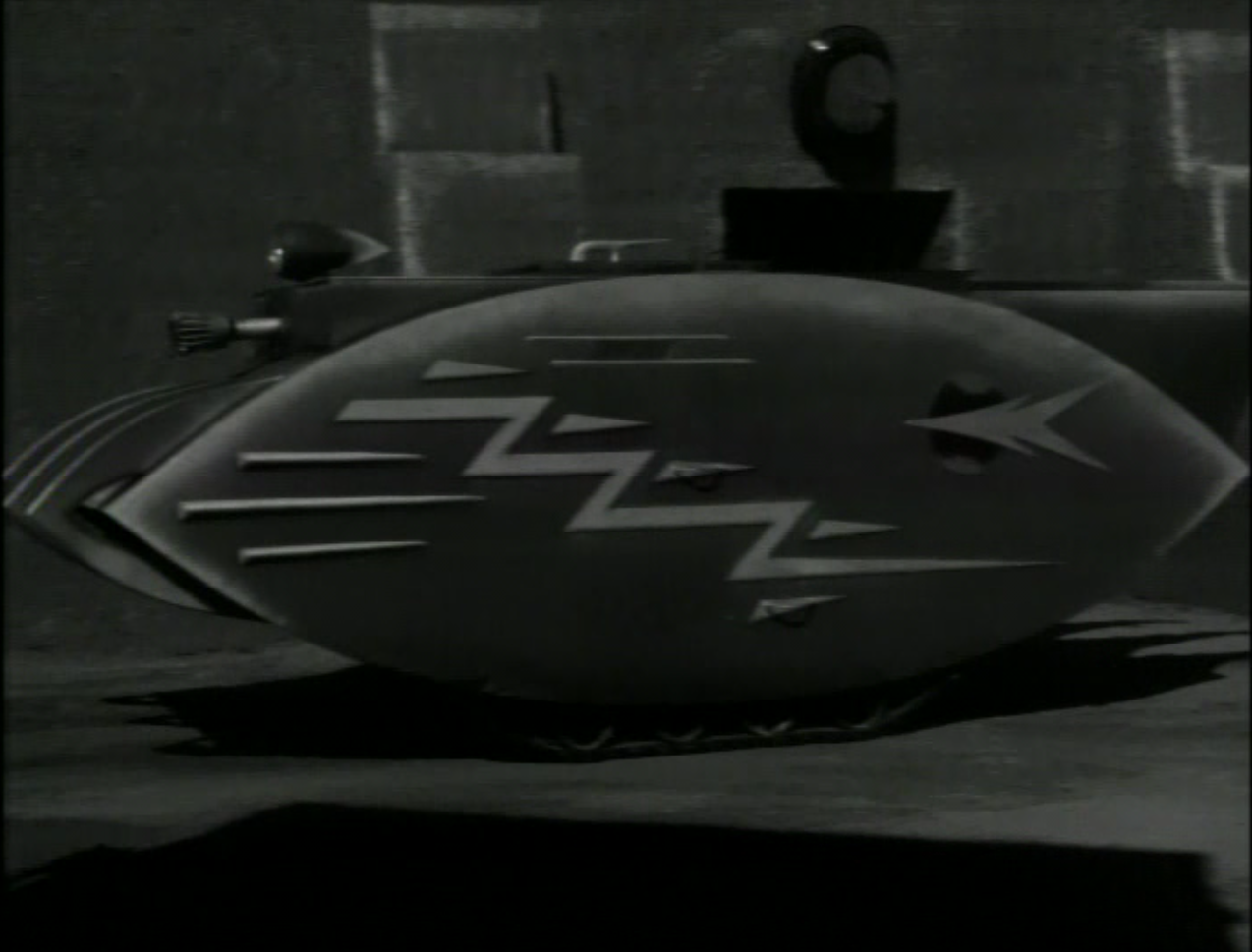
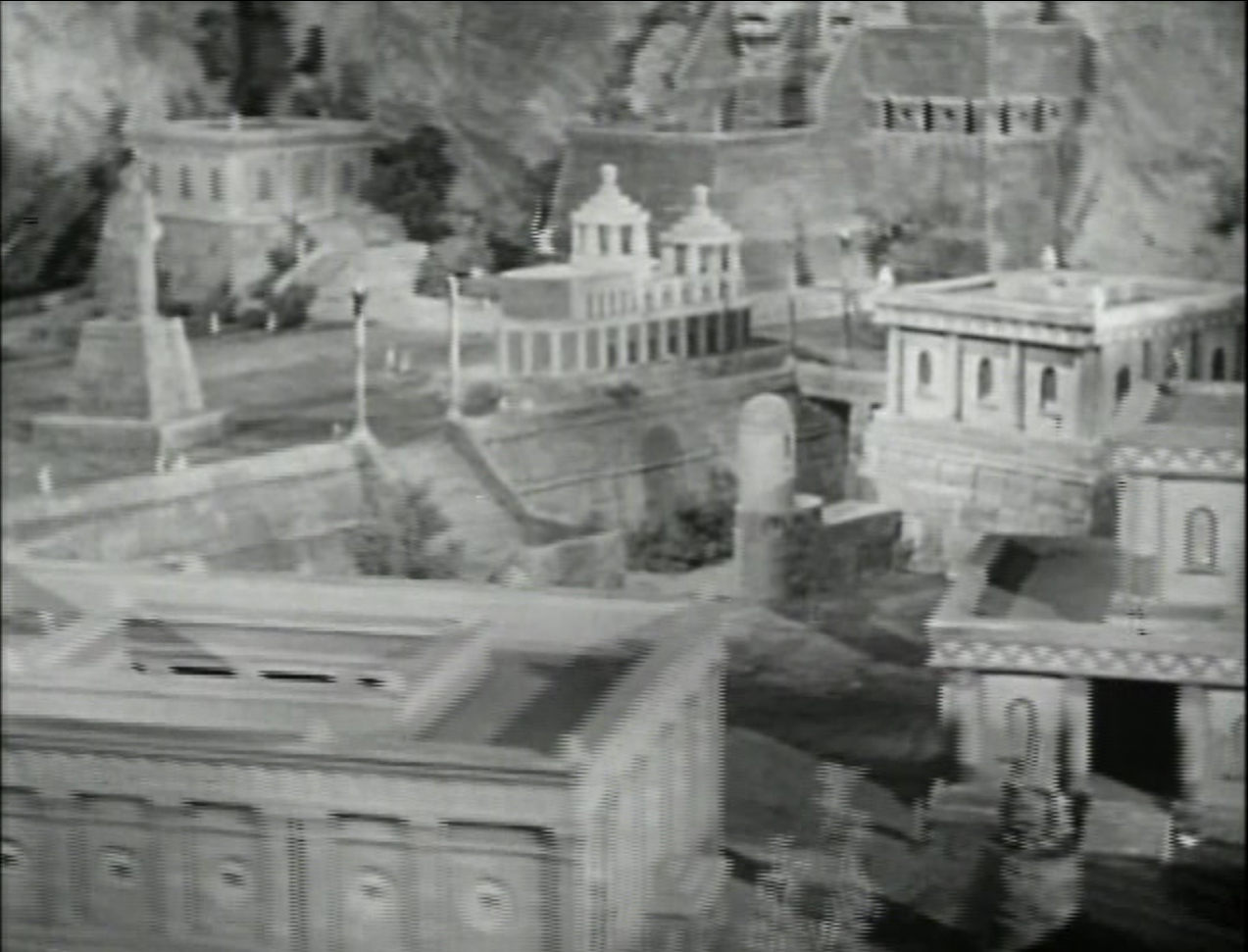
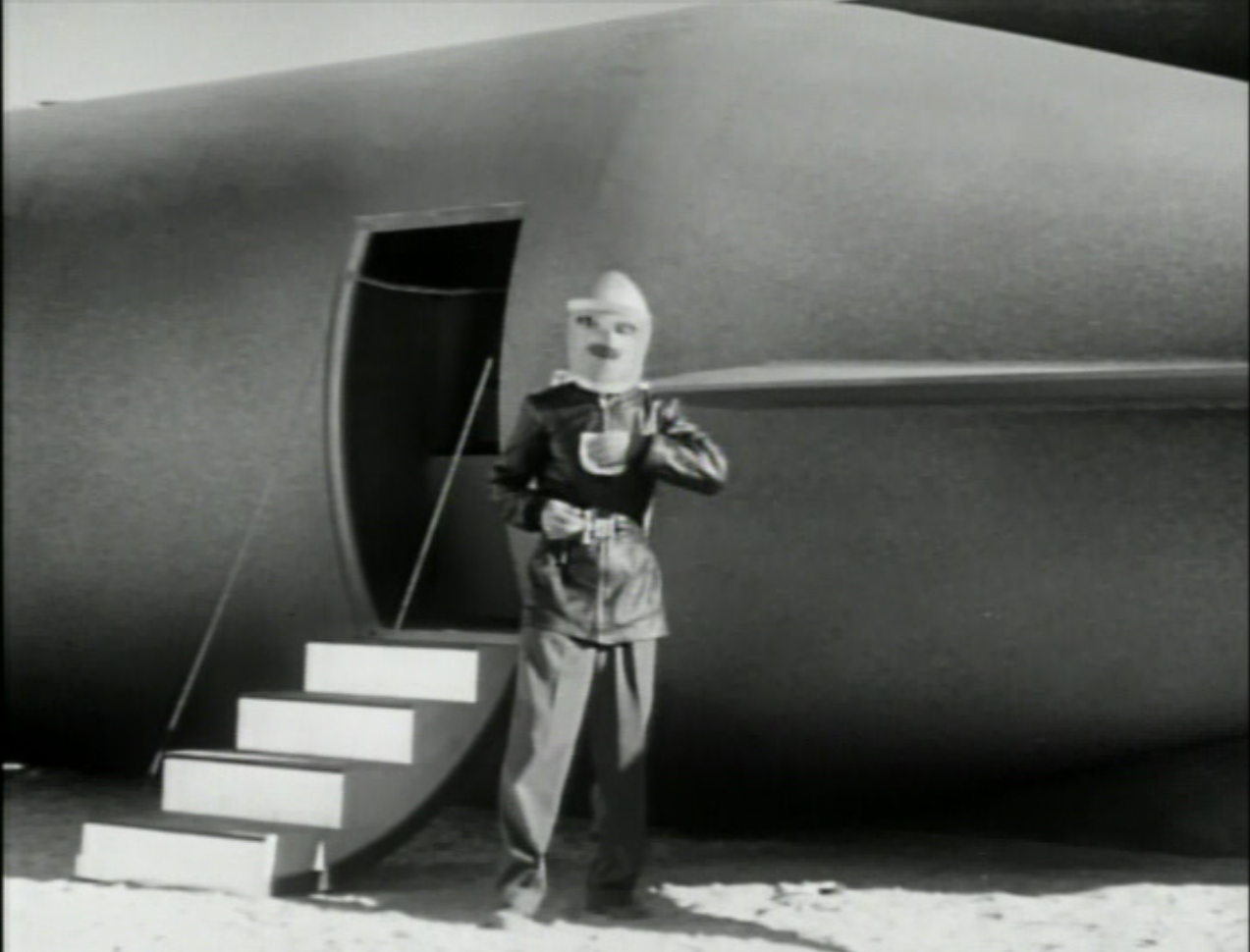
Radar Men from the Moon is very much what you would expect from a science fiction adventure from the early 1950s, as much Captain Video as Flash Gordon. With the fishbowl-style space helmets, finned rocket ships, and sweet moon tanks (not to mention Cody’s bullet-headed flying costume), it is, to use a modern term, “toyetic” (although the kind of mass merchandising we’ve come to expect since Star Wars wasn’t in place then, so there don’t seem to be a large number of actual toys based on these designs). On the other hand, the Greco-Roman architecture of the lunar city and the futuristic laboratory of Retik show that styles hadn’t changed that much since the space operas of the ‘30s (and a lot of the running time is spent on earth with perfectly mundane cops-and-robbers business).

RMmooncity2

Normally, I’ve tried to look at examples of a given concept or character in chronological order (covering Flash Gordon instead of one of its sequels, for example), but I had a copy of Radar Men on hand, and since Commando Cody is technically a new character, free of any earlier continuity, I don’t feel too much conflict about covering it before getting to the original Rocket Men. Besides, reused footage and props were a cost-saving feature of the serials almost since the beginning, so Radar Men is exceptional only for its late position in the format’s history and the slickness of its incorporation of previous material.

RMRetik1

For what it’s worth, it wasn’t obvious to this viewer when it cut to older footage, and establishing shots weren’t drawn out as excessively as I’ve observed in the Universal serials I’ve watched. From a technical standpoint, the production of serials was clearly at a high point, and everything moves quickly and looks sharp. However, the same professional application of an established formula that makes everything look polished also drains any spontaneity out of this production: the characters are thinly drawn and their dialogue functions almost exclusively to move the plot forward. There is little room for the weird digressions or surprises that mark the serials of the 1930s.

Star George Wallace leads a cast that includes “heavy” Roy Barcroft as Retik and future Lone Ranger Clayton Moore as the gangster Graber; the performances are fine, but the real stars are special effects wizards Howard “Babe” Lydecker and Theodore Lydecker, brothers whose detailed miniatures of earthly and lunar structures and vehicles are extensively featured. There are also plenty of well-executed fight scenes, courtesy of Tom Steele and Dale Van Sickel, longtime stuntmen and fight coordinators.

RMCody4

So why isn’t Radar Men from the Moon more exciting? There’s a business-as-usual quality to the proceedings: no one seems that surprised that America is under attack by atomic weapons, or that the culprits might be from the moon. What’s that, we need to take our rocket ship to the moon? Sure thing. Oh, we need to go back? No problem. I’ll remember to take my jetpack in case I need to hijack a space tank. The material calls for hyperbole à la Stan Lee, but the execution is more like Dragnet.

That’s not to say that I’d be happier if Radar Men from the Moon stopped in its tracks to marvel at the insanity of its own plot: in general, pulp narratives don’t spend a lot of time questioning their believability. The characters accept that what is happening is real—they don’t have a choice—and the audience follows suit. There is usually, however, a moment or two that acknowledges the overturning of established science (I think of this as the “more in heaven and earth” speech, often delivered by a scientist who admits that there are still mysteries in the universe) or asks the audience to consider what it would really mean for humanity to encounter, say, an invading army of moon men. (Robert E. Howard, to cite one example, often salted his tales of brawny barbarian warriors with thematically-appropriate musings on destiny and masculinity.)

No such philosophical problems trouble Commando Cody or his team. If I had seen Radar Men from the Moon when I was twelve, I expect I would have loved it, but as an adult the prospect of an adventure that is all plot and very little character is less appealing. Rather than revisit it, I’ll probably just rewatch The Rocketeer.

What I Watched: Radar Men from the Moon (Republic, 1952)
Where I Watched It: A Hal Roach Studios DVD; it’s also available to watch on YouTube.
No. of Chapters: 12
Best Chapter Title: “Molten Terror” (Chapter Two)
Best Cliffhanger: At the end of “Molten Terror,” Cody and Ted are trapped in a mountainside cave on the moon. Lunar soldiers aim the atomic ray at the mountain, softening the rock (using the same melting effect seen at the end of The Phantom Empire) and filling the cave with molten lava.
RMmoltenterror
Annie Wilkes Award for Most Blatant Cheat: Several times Cody is in a vehicle that crashes: planes at the end of Chapter Four (“Flight to Destruction”) and Chapter Seven (“Camouflaged Destruction”), a car in Chapter Five (“Murder Car”). In the next week’s episode, intercut footage reveals Cody and his passenger bailing out at the last minute, exactly the kind of cheat Annie Wilkes was complaining about.
Sample Dialogue: “For some time our astronomers have noticed an unusual amount of atomic activity on the moon. Atomic activity on the moon, atomic blasts on the earth: the two known facts fit together.” –Henderson (Don Walters), Cody’s government contact
RMHenderson2
What Others Have Said: “It was my own personal homage to Commando Cody and all the other serial heroes of that era. I’d always been a huge fan of the serials. I loved all those edge-of-your-seat, cliff-hanging chapter plays. . . . I’d always loved the idea of a guy flying like a bird, with just a combustible contraption strapped to his back. The image really appealed to me. But I didn’t want to be stuck doing an exact replication of the serials, with Martians, death-rays, etc. That wasn’t quite the approach I wanted to take. I wanted to do a real period aviation strip, but with one small element of science-fiction added: The rocket-pack!” –Dave Stevens, creator of the Rocketeer, interview with Jon B. Cooke in The Comic Book Artist
What’s Next: I’ll take a look at Zorro’s Black Whip, starring Linda Stirling. Join me in two weeks!

Strange Games: Comic Books Confront the Apocalypse

Recently, DC Comics published a trade paperback collection under the unwieldy title Showcase Presents: The Great Disaster Featuring the Atomic Knights. I don’t intend this essay to be a review, but I will say up front that if mid-century visions of nuclear war are your bag, there’s no reason not to pick this up.  If you’ve read any volumes of Showcase (or Marvel’s similar Essential series) before, you know what to expect: more than 500 pages of black-and-white reprints (of stories from the 1960s through the 1980s in this case) on cheap paper at a low price.  They don’t call ‘em “phone books” for nothing.

GreatDisaster.cover

I was eager to get this volume (it had been previously announced several years ago and then delayed) for a few reasons.  First, I was a big fan of post-apocalyptic fiction when I was younger, and comic books were no different from other media in exploring that theme.  Second, although I had read some of the stories included, many were unfamiliar to me, and this would be a good way to fill in some gaps.  Finally, the focus on a central event (and one which had been interpreted many different ways by writers over the course of decades) makes this volume a little different from the typical Showcase that either follows a single character or collects completely unconnected stories (like the anthology title House of Mystery).  Some effort was made to arrange contradictory material into a single chronology, and that kind of editorial undertaking is always of interest to me.

Does it succeed?  Eh, sort of.  On one hand, the title tells you a lot about what’s in the volume: several cycles of stories centered on the destruction of civilization as we know it.  The Atomic Knights, in a series of stories by writer John Broome and artist Murphy Anderson that began in 1960, travel the wastes of post-World War III America, surviving with the help of their suits of medieval armor (discovered in a museum and possessed of miraculous radiation-shielding properties).  The only other continuous series represented in this volume is Hercules Unbound, but there are a number of stand-alone stories (many under the umbrella title “The Day After Doomsday”) as well.

On the other hand, the Great Disaster doesn’t have the instant name recognition of a superhero, nor was it the title of an ongoing book (the Atomic Knights, for example, were found in the pages of Strange Adventures; I wouldn’t be surprised if they were added to the title of this book so that at least some character would be named on the front cover).  In fact, the Great Disaster isn’t even synonymous with World War III in DC continuity, but you have to dig pretty deeply into the book to figure that out.  The Great Disaster is (or was, pre-Crisis) a conveniently vague apocalypse in the background of Jack Kirby’s Kamandi, involving weapons of mass destruction as well as natural disasters, taking place at some point after WWIII.

(Not included in this volume)

(Not included in this volume)

The most distinctive legacy of the Great Disaster in the world “A.D.: After Disaster” was the release of a mind-altering chemical (“cortexin”) that caused ordinary animals to become intelligent, as well as gaining upright posture and opposable thumbs.  In the wake of the Great Disaster, most humans had become mute and animalistic.  Essentially, Kamandi’s world is one of reversed roles like Planet of the Apes, but with anthropomorphic dogs, tigers, and rats in addition to gorillas and other species (not to mention numerous mutant monsters and space aliens that defy categorization), all mixed up together in the ruins of a futuristic civilization.  The last point varied pretty widely: sometimes it seemed like the Great Disaster hit America in the 1970s, but it never stopped Kirby and his successors from throwing in robots, spaceships, and other high-tech devices left behind by the “ancients” if a story called for it.  (Eventually, Kamandi’s world was linked to “The World That’s Coming,” the setting of OMAC, a short-lived—and even weirder, but definitely futuristic—science fiction series Kirby had also created.)

Aside from Planet of the Apes, the world of Kamandi bears a close resemblance to the campaign setting of Gamma World, a role-playing game from TSR, the makers of Dungeons & Dragons.  In transposing the adventuring-party model to a post-apocalyptic science fantasy setting, the game designers gave players the option of playing as a “pure strain” human, (humanoid) mutant, or mutated animal.  From one angle, the title character of Kamandi (“the last boy on Earth”) and his companions, the superhuman Ben Boxer and dog-man Dr. Canus, could be player characters in a Gamma World game, and their travels from one wonder to another, piecing together the fragmented history of their world and facing down monsters and villains, are not unlike an ongoing RPG campaign.

GammaWorld

Alas, Kamandi does not appear in Showcase Presents: The Great Disaster. The material reprinted from Kamandi #43-46 is a backup story focused on Urgall, a gorilla whose liberal ideas (extending respect not only to non-gorillas but to humans, and even female gorillas!) put him at odds with his tribe. (Another “tale of the Great Disaster” that appeared in Weird War Tales #51-52, featuring warring English and Scottish dog-men, is not included, which is too bad, as it is superior to the story of Urgall.)  I’ve gone into detail about Kamandi because I’m a fan, and having collected (I believe) all the pre-Crisis appearances of Kamandi and OMAC, it’s hard for me to not bring that context to the present book.  As of this writing, the only collected reprints of Kamandi are more lavish and expensive than the Showcase series, but the title is worth seeking out and is really more essential than anything in this book (but if you’re reading this, you already knew that, right?).

When I first read the Atomic Knights stories (about fifteen years ago), they struck me as more than a little silly: in addition to the conceit of medieval armor protecting against radiation, the stories were burdened with outdated gender roles (the “littlest knight,” Marene Herald, mostly stays out of the way, awaiting the day that team leader Gardner Grayle will propose to her) and too many convenient “scientific” solutions to problems.  Although the war is said to have occurred in October, 1986, the Atomic Knights’ roots in the early 1960s remain obvious.

Reading them again, however, I’m more sympathetic to the earnest tone: the Knights are at the vanguard of rebuilding democracy, and the stories often end on a didactic note, preaching the need for cooperation, compassion, and emphasizing reason and the rule of law.  Many of the menaces they face will be familiar to readers of post-apocalyptic fiction: problems of supplying food and energy when nothing will grow; human populations regressed to caveman-like savagery; would-be dictators such as the fascist “organizer” Kadey and the self-proclaimed King of New Orleans; and non-human threats either produced by radiation (a Triffid-like strain of mobile, intelligent plants) or opportunistically filling the void left by the collapse of humanity (a race of underground mole people who plan to permanently darken the sky so that they can take over the surface world; scavenging space aliens searching for precious metals).  That the Atomic Knights continue striving and are able to keep their humanity as they do so is, in its own way, optimistic.

strange_adventures#144

In fact, the suits of armor the Atomic Knights wear aren’t an anomalous detail: sometimes the comparison to knights of old is made explicit.  In the first story in Showcase Presents: The Great Disaster, “The Year 700 After the Bomb,” the post-war society resembles feudal Europe, right down to the Robin Hood-style costumes, royal titles, and pseudo-Old English dialect.  One could attribute these details to lazy writing, but it also reflects a view of history with definite evolutionary stages: just as civilization climbs upward over generations, it can also slide downward, and in such stories the image of a new “Dark Ages” is made literal.  (This can probably be laid at the doorstep of H. G. Wells, whose view was long enough to envision a day when humanity, too, is extinct, and whose film Things to Come, directed by William Cameron Menzies, portrayed a post-war English village ruled by a petty medieval warlord.)

It was when the Atomic Knights encountered warriors from the legendary island of Atlantis, time-warped into the future by their own scientific catastrophe, that I was able to put my finger on the story-telling mode. Replace “radiation” with “magic,” and a story in which armored knights battle Romanesque soldiers from an ancient island could be part of any fantasy novel from the last hundred years.  Specifically, the discovery of “Atlantides” (as the islanders are called in this story) fits neatly into the “lost world” genre: as practiced by H. Rider Haggard, A. Merritt, and Edgar Rice Burroughs, among others, there was always the possibility of a remote valley, cave, or island that history and evolution had passed by, leaving a population of dinosaurs, ancient Romans, or other living relics to be discovered.  The lost world genre was mostly finished off by World War II, as the empty, unknown spaces on the map were filled in; wiping the slate clean with a global catastrophe allowed writers to open those spaces up again, and fill them with mystery and adventure.  In these stories, the lost world was our own.

Perhaps that is one reason they continue to be popular: although seemingly pessimistic, this strain of post-apocalyptic fantasy, showing places and objects of the present through the eyes of later generations, provides for a kind of reenchantment of the everyday.  We gain perspective when we imagine a bustling city full of skyscrapers as empty and crumbling; more importantly, we can appreciate how marvelous our technology is when we picture later generations trying to make sense of it.  In the Gamma World game, there was a mechanism for player characters to puzzle out the use and meaning of “artifacts,” meant to prevent players from using out-of-game knowledge to identify, say, a rifle as a weapon rather than an emblem of office.  Similar misinterpretations are a staple of the genre: picture the subterranean mutants of Beneath the Planet of the Apes worshipping a nuclear missile as a god, or a young shaman trying to divine omens with a vinyl record in Mad Max Beyond Thunderdome. Likely inspired by real-life cargo cults, the projection of superstitious beliefs onto modern goods allows writers to remix old and new cultural symbols, comment on our relationship to technology, and—that standby of science fiction—map contemporary political concerns onto fantastical stories.

AtomicKnights

It should go without saying that the stories of Kamandi and the Atomic Knights don’t have anything to do with the likely horrors of a real nuclear war (or whatever the Great Disaster was supposed to be), and the longer their stories continued, the more fantastical and obviously escapist they became.  In the final story included in Showcase Presents: The Great Disaster, no less a DC eminence than Superman himself encounters the Atomic Knights, only to discover that their entire history is the dream of Gardner Grayle, placed in a sensory deprivation tank as part of a military experiment.  Grayle’s unconscious mind has taken over the computers running the simulation and threatens to launch an actual nuclear strike in order to make real the fantasies in which Grayle has played the hero for years.

The premise, and the lesson that Grayle imparts after awakening at the last minute (“The task before mankind isn’t to survive an atomic war! It’s to work in this world we’re living in to make certain such a war can never begin!”), owe much to WarGames and the similar lesson the supercomputer WOPR (“Joshua”) learns in that film (“A strange game: the only winning move is not to play”). “It was all a dream!” is obviously the king of lame cop-outs and, in cases like this, the last refuge of a writer whose story has gotten away from him.  I think it actually works, though: in 1983 the “survivable” nuclear war was an increasingly untenable premise, and the quaint early stories of the Atomic Knights had become hopelessly snarled with the continuity of Hercules and the world of the Great Disaster in the pages of Hercules Unbound.  (I haven’t commented on that series, but suffice to say that even the titular demigod couldn’t bear the burden of reconciling the combined histories of the Atomic Knights, Kamandi, and OMAC and telling his own story in an intelligible manner.)

I think it’s a little much to criticize escapism, however, when the target audience has so little power to change the situation from which they are escaping.  It’s one thing to indict military planners running simulations with potential real world consequences, another to criticize something as obviously fanciful as the Atomic Knights or Gamma World.  Speaking as a cold war baby who was ten years old in 1983 and absolutely terrified of nuclear war, the only other alternative was denial: I could hardly watch the news without having a panic attack, and I had no desire to subject myself to The Day After when it aired (I’m glad I didn’t know anything about the even grimmer Testament and Threads at the time).

Nuclear war was also frequently on Superman’s mind in the 1980s: most fans today remember Superman IV and the Man of Steel’s quest to rid Earth of nuclear weapons, but in the comics Superman often stood aside as an observer, willing to admonish mankind but not make the hard decisions for us.  Visions of humanity’s capacity for self-destruction haunt him: a Superman who does nothing to prevent a holocaust is not super in any way, but were he to take the choice out of our hands he would become a god rather than a man.  This version of Superman as advocate and guardian challenges the view of comic book readers as naïve simpletons waiting to be rescued.

(Also not included in this book)

(Also not included in this volume)

As I said initially, I eventually became an avid consumer of comics, games, books and movies that explored life after the bomb.  If you can’t beat ‘em, join ‘em, right? I don’t recall thinking it was realistic to expect survival in the event of a war, much less high adventure, but it was a comforting daydream. Certainly there was plenty to choose from, and I know there were a lot of guys in my generation who shared the same fantasy.  (One of the most believable details of last year’s The World’s End was that arrested adolescent Gary King would end up as a wandering gunslinger in the wasteland, loving every minute of it: for me it was a striking moment of recognition.)  Just about everything you need to know about this phase of 1980s masculinity can be found in the video for Tom Petty’s song “You Got Lucky.” It’s all there: guns, guitars, cowboy-chic dusters, and a sweet arcade in the middle of the desert.  (Petty obviously liked the milieu enough to make an appearance as himself in the 1997 film adaptation of David Brin’s post-apocalyptic novel The Postman.)

TomPetty

The focus in popular culture changed after the passing of the Cold War; although the apocalypse has never been far from our entertainment, the end of the world can come from almost any direction nowadays: terrorism, climate change, pandemic, just to name the more realistic possibilities.  Free-floating dread has replaced the pointed terror of “Mutually Assured Destruction;” chaos is more feared than ideology, and it’s reflected in the zombie hordes and rampaging kaiju of current film.  Still, the stories I grew up with haven’t been forgotten: perhaps it’s driven by ‘80s nostalgia, but remakes or reboots of Planet of the Apes, Mad Max, and even WarGames have either been made or are in production.  Gamma World has been through seven editions, the last in 2010, although I haven’t played in years.  The intoxicating cocktail of sword-and-sorcery among the ruins of modern civilization is still with us in such programs as Adventure Time.  Earth A. D. is still a place that many of us like to visit, even if we wouldn’t want to live there.

AdventureTime

Fates Worse Than Death: Batman (1943)

BatmanTitle

Industrialist Martin Warren, after serving his sentence for an unnamed crime, is about to be released from prison; his niece, Linda Page, asks (her boyfriend? fiancée?) playboy Bruce Wayne to accompany her to pick him up.  Although Wayne’s life of leisure doesn’t allow him to get out very early in the morning, he promises to accompany her.  But before they arrive, Warren is picked up by some other old acquaintances, who coerce him to meet their boss, Dr. Daka.  Daka is a Japanese spy striking at the United States from within, and if Warren doesn’t join Daka’s ring of “dishonored” engineers, bankers, and other professionals and agree to serve his “League of the New Order,” he’ll be turned into a mindless zombie by one of Daka’s inventions.  In the mean time, the costumed crimefighter known only as the Batman, with his sidekick Robin, leave a pair of crooks (complete with the “mark of the Bat” on their foreheads) for the police to pick up.  Who are Batman and Robin, and what do they have to do with Bruce Wayne and his young ward, Dick Grayson?

BatMark

There can be hardly anyone reading this who isn’t aware that Bruce Wayne and the Batman are one and the same, of course, and the 1943 Batman serial wastes no time in letting the audience in on that information.  In making the leap from the comics to the screen, only the core trio of Bruce/Batman, Dick/Robin, and Alfred the butler were retained (Batman’s police contact is Captain Arnold, not Commissioner Gordon), but their characters and identities are recognizable to readers of the comic book (for the most part: Alfred is relegated to comic relief, skittish and easily flustered, but he still comes through when his services are needed).  None of Batman’s usual enemies like the Joker or Penguin are present (many of the most familiar villains weren’t created until later anyway); Batman was made during wartime, and the enemy he faces in Dr. Daka is a nationalistic one.

Batman_Robin

Even allowing for its wartime origin, it saddens me to report that Batman is incredibly racist.  As a cringe-inducing caricature of the effete, treacherous Oriental, Daka is grossly offensive, but if the serial stopped there Daka would fit in with the pseudo-exotic threats I’ve mentioned before (and he is, after all, supposed to be a villain).  But that isn’t enough: Daka’s lair is located on a street in “Little Tokyo,” which according to the enthusiastic narrator has been nearly empty “since a wise government rounded up the shifty-eyed Japs.”  That’s in the first chapter and it doesn’t get any better: even Daka’s own henchmen despise him and throw around racial slurs behind his back.  “I’m not afraid of him or any other squint-eye,” says one named Forrester before rebelling.  Forcing Daka to surrender, Forrester tells him “That’s the kind of answer that fits the color of your skin,” when he (briefly) has the advantage over him.  Subtle it is not. (Unsurprisingly, Daka was played by a heavily made-up white actor, J. Carrol Naish, a common practice in 1940’s Hollywood.)

Daka2

The wartime angle is also apparent in constant references to America’s fighting spirit and the important work being done by the armed forces and munitions manufacturers.  In a twist from the comics, Batman and Robin undertake secret missions for the U. S. government, receiving coded messages from contacts about threats to America’s intelligence and infrastructure.  (According to Jim Harmon and Donald F. Glut in The Great Movie Serials: Their Sound and Fury, rigid censorship ensured that serial heroes were never shown taking the law into their own hands.  Since being a vigilante is central to Batman’s identity, in the serial he remains independent from the police, taunting an exasperated Captain Arnold who nonetheless depends on the cases his “best agent” wraps up for him, but ultimately Batman gets his orders from Uncle Sam.)

After the generic “spy ring” of Robinson Crusoe of Clipper Island, Batman has a refreshing specificity: Daka plots to steal radium (both to fuel a superpowered “radium gun” and to build an even larger one), blow up a supply train, steal an experimental plane, jump a claim on a radium mine (truly a magical element that allowed screen writers to add a contemporary touch to the hoariest plots), and more.  The political context may have brought out some ugly, jingoistic racism, but there is also never a question of the time and place and what the stakes of the conflict are.

Batman.radium

The oddest aspect of this propagandistic impulse is in the setup of Daka’s Little Tokyo hideout: the League of the New Order has its headquarters hidden in a “Japanese Cave of Horrors,” a wax museum primarily containing tableaux of Japanese war atrocities.  Every time the front of the business is shown, a carnival barker is pitching its importance to the war effort: “See the life-size models of the victims of our savage enemies! . . . See how they treat their prisoners. It’ll make your blood turn cold!”  It almost seems as if the filmmakers intend the barker’s words to represent the serial itself: “Come on in here and spend a dime, my friends, and wise yourself up. It’s not a circus, it’s not a carnival—this is a serious proposition!”  Yet the carnival barker is in league with Daka, sending his henchmen to the secret entrance and selecting victims to be brainwashed.  It’s either brilliantly self-referential, a commentary on the bottomless duplicity of the enemy, or just goofy.  Daka believes in hiding in plain sight, apparently.

barker

The seriousness of Japan’s Imperial ambition isn’t necessarily foreign to either the serial format or Batman as a character—both have featured their share of would-be world conquerors—but it is an odd fit with the tone of the 1943 production, which is frequently light, even whimsical.  Lewis Wilson as Batman and Douglas Croft as Robin appear to be having a ball whether in costume or out: this isn’t the grim, tortured Batman of Christian Bale, or even the reclusive weirdo Michael Keaton portrayed.  Even Naish as Daka gets to rub his hands gleefully and display a few moments of humor, like when he feeds raw meat to his pet alligators and briefly considers throwing a zombie to them as “something special.”  The actors and narrator embrace even the most absurd contrivances with gusto, and I’m not convinced this is entirely a case of straight-faced material only appearing funny in hindsight: comic relief was an essential component of the serial, and I daresay the funny parts are fresher and more entertaining than the repetitive fistfights and formulaic cliffhangers.  (It became very easy to predict what the cliffhanger would be in each episode, as the same beats were employed to set the stage each time. When, as in Chapter Six, a thug says, “Let’s get out of here before that chemical reaches those wires!” you know exactly what’s going to happen next.)

The 1943 Batman serial is likely to be of interest primarily to Batman completists, but I doubt it will satisfy any fan who would describe themselves as such.  It was rereleased to theaters in the 1960s as a camp film, where it influenced the next wave of Batman adaptations. Fans of the 1966 Adam West Batman TV show will recognize many elements: the deadpan acceptance of ridiculous situations, enthusiastic narrator, and even the two-part episodes with cliffhangers very much in the serial style.

Batman1

So what works?  For all the fistfights, Batman engages in quite a bit of detective work in this serial: not only does he find and analyze clues, he goes undercover (he disguises himself as a thug named “Chuck White,” and sends Alfred out in disguise a couple of times), gets information out of Daka’s henchmen through a variety of means, and even manages to turn their traps around on them, all while maintaining his secret identity.  Batman also delegates responsibility to Robin and Alfred, who several times come to the rescue.  The complexity of the puzzles is laughable and the level of thought isn’t that deep, but within the bounds established by the script, it’s easy to believe that Batman and Daka are waging a high-stakes chess game against each other, striking and counter-striking until the big confrontation.

I also liked Lewis Wilson as the title character more than I expected: to cover his real purposes, his Bruce Wayne is vapid and silly, and his excuses for not being around—he took Dick to a polo match or an amusement park; he doesn’t get moving until around noon—are amusingly flip.  He expects Linda to believe him, because what red-blooded man would use such indolence as an excuse unless it were the truth?  When one of Daka’s henchmen suggest that Wayne might be the costumed troublemaker, Daka sneers, “Don’t be absurd—that simpering idiot could never be the Batman!”

Bruce2

What I Watched: Batman (1943, Columbia)

Where I Saw It: I watched a Columbia Pictures DVD set, but it is on YouTube (in many parts) starting here.

No. of Chapters: 15

Best Chapter Title: Almost all the chapter titles are pretty great, with the kind of snappy immediacy and hint of exciting developments that all the best pulp titles have.  If forced to choose, I’ll go with Chapter Four, “Slaves of the Rising Sun” (balanced out by the fifteenth and final chapter, “The Doom of the Rising Sun”).

Best Cliffhanger: Chapter Thirteen, “Eight Steps Down,” ends with a double cliffhanger: Batman, trying to sneak into Daka’s lair, is threatened by the classic spiked-walls-closing-in trap, while at the same time, Linda Page is about to be turned into a zombie by Daka’s mind control device.  However will they escape?

Linda.zombie

Annie Wilkes Award for Most Blatant Cheat: Many of the escapes in Batman are of the kind that would infuriate Annie Wilkes: a train bears down on the hero, or an armored car plummets off a cliff and explodes, only to be revealed in the next chapter that Robin pushed Batman off the railroad trestle or Batman leapt from the armored car just in time, all shown from a different angle.  If any of those are cheats, then they all are.  However, I can’t say any of them explicitly undo the setup of the cliffhanger.

Actually, my favorite is the resolution to the cliffhanger of Chapter Fourteen (“The Executioner Strikes”), in which Batman, knocked out and placed in a coffin-sized wooden crate, is carried to Daka’s lair; the box, unopened, is dropped into Daka’s alligator pit.  At the beginning of Chapter Fifteen, it’s revealed that Batman had escaped before the crate was even brought to Daka’s lair, and it was Daka’s henchman Wallace in the box.  You can bet he didn’t get the benefit of a last-minute cheat.

Sample dialogue:

Bruce: “Well, we never got to the cave.  It was so hot out, we laid down by the side of the road and took a nap.”

Linda: “Asleep! Just when I needed you both so much.  If it hadn’t have been for the Batman I’d be dead in the cave!”

(Chapter Nine, “The Sign of the Sphinx”)

What Others Have Said: “Where could even a Japanese spy get enough ration stamps for all that meat?” Harmon and Glut, referring to the fodder for Daka’s pet alligators

What’s Next: Join me in two weeks as I vicariously travel the Western frontier through Fighting with Kit Carson.