Fates Worse Than Death: Pirate Treasure

PT.title

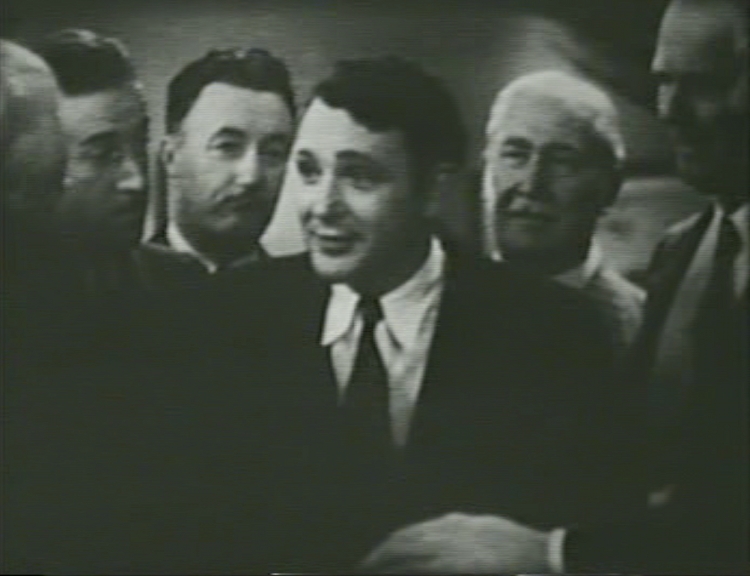
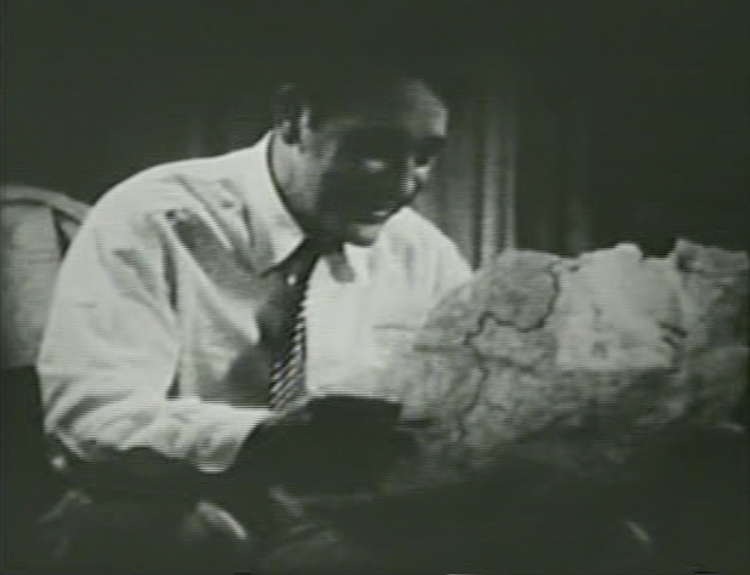
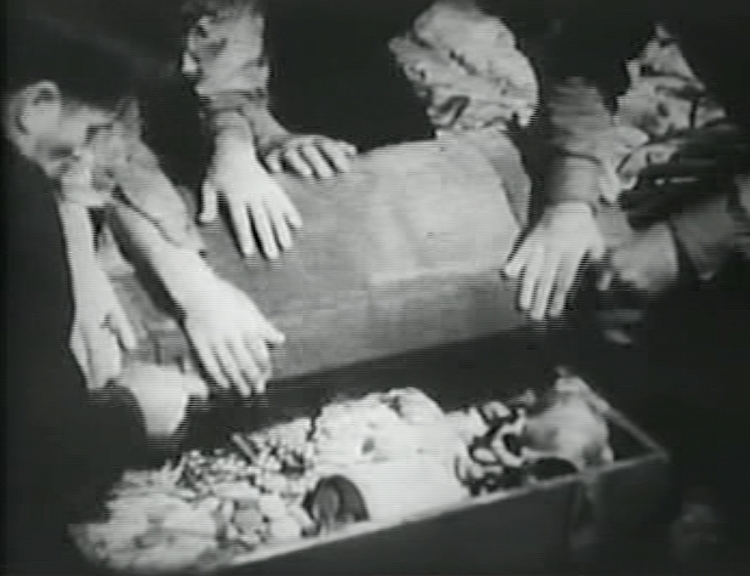
Dick Moreland, after returning from a triumphant flight around the world, announces to his comrades at the Aero Club that his next feat will involve digging up a treasure his pirate ancestor, Sir John Moreland, buried centuries ago. The chart describing its island hiding place has been in Moreland’s family for generations, but he is the first member of the family to take it seriously and attempt to recover the treasure. Unfortunately for Dick, a new member of the club, Staley [sic] Brassett, isn’t the honest friend he appears to be: he’s been searching for Sir John’s treasure himself, and he immediately dispatches his henchmen to break into Dick’s house and steal the chart.
PT.moreland1

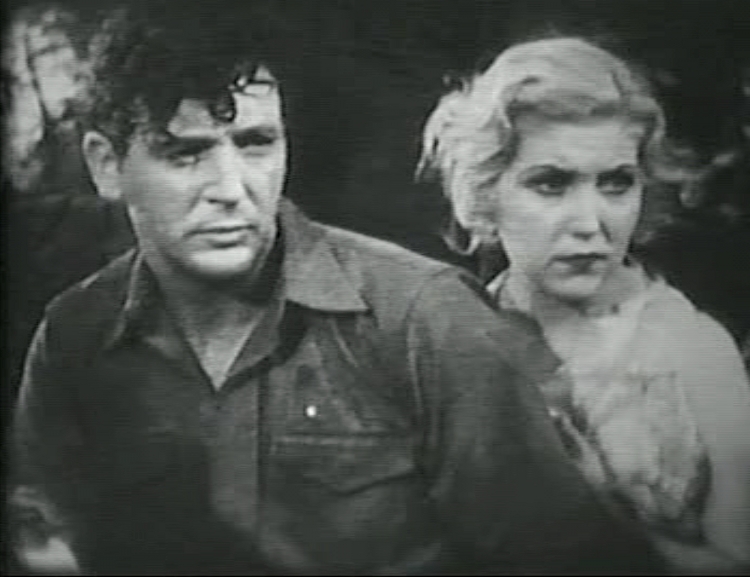
Chasing the henchmen, Dick enlists the aid of a young woman, Dorothy Craig, by falling into the street in front of her car. Dorothy turns out to be the daughter of an airline owner who becomes involved in the expedition and supplies a ship; and since she’s on the lookout for some excitement herself, she comes along as well. Brassett, still pretending to be a good guy while guiding the henchmen from behind the scenes, allows himself to be persuaded to join the search, too. For the majority of Pirate Treasure‘s running time, even as they travel to the island, Dick and co. assume that the lead henchman, Curt, is the head of the gang that has been hounding their steps, with Brassett taking increasingly convoluted steps to preserve his plausible deniability.

PT.Dick.Dorothy1

Pirate Treasure is neither the best nor the worst serial I’ve watched since beginning this series, but it may be the most elementary in its appeal. Serials were no strangers to formula, but Pirate Treasure goes beyond cliché to an almost Platonic ideal of wish-fulfillment with almost every element stripped down to its essentials. The secret map to buried treasure in the Spanish Main (a map which is also an ancestral inheritance); the brave and capable girl who nonetheless needs to be rescued and protected; the sneering villain who pretends to be the hero’s friend; the trusty sea captain who can palaver with the natives (who are themselves a composite of every “jungle savage” you’ve ever seen on screen); and of course the hero is not only strong and clever enough to come out on top, but the kind of mensch who will even rescue his enemies rather than let the natives burn them at the stake (and probably eat them). This is a serial that begins with the hero making a record-breaking solo flight around the world, just so that he can finance the adventure he really wants to go on.
PT.chart

It was, of course, made early enough that many of these plot devices were still fresh and didn’t require much in the way of “twists” for sophisticated audiences; the clichés were in the process of being born. Likewise, unlike many later serials, there is no reliance on a library of stock footage, and the stunts have more in common with the death-defying realism of the silent serials than with the careful montages of disguised stunt performers of later years. Pirate Treasure was Universal’s follow-up to The Perils of Pauline, but it feels like a product of an earlier era.

PT.car.plunge

Leading man Richard Talmadge brings his acrobatic experience to his action scenes: in some scenes he leaps from one rooftop to another like a 1930s parkour star, and many of his fight scenes take advantage of his tumbling skills. (I was strongly reminded of Charles Quigley in Daredevils of the Red Circle, who combined tumbling and judo in a similar way.) Talmadge also makes a specialty of leaping from great heights: into a moving car, into the water from the rigging of a ship, or on to his enemies in the many brawling fist fights that occur. All of this is filmed as it occurs (sometimes with a little undercranking to juice it up), giving the action an immediacy and a sense of realism that counteracts and grounds the unreality of the plot.
PT.Dick.Dorothy2

Talmadge is less assured when it comes to dialogue, however: his voice is light and almost childish, and occasionally halting in ways that give away the scripted nature of his lines. (I will say, however, that unlike many films from the early 1930s, the dialogue is crystal clear and easy to understand; between the clarity of the sound and the largely functional dialogue, Pirate Treasure was one of the easier to follow serials I’ve watched.)

PT.Dorothy.bound

Lucille Lund, who plays Dorothy Craig, also does her share of stuntwork: she’s something of a Pearl White type, doing double duty as both action heroine and damsel in distress. The one thing she doesn’t do is get involved in fights: even the most thuggish henchman won’t hit a woman in this kind of film, so unless she’s being grabbed and tied up, she is ignored when fights break out, leading to several amusing scenes of men grappling in the foreground while Dorothy stands aside screaming or looking worried. Lund is also a better actor than Talmadge, subtly supporting her costars by reacting to them as a thrill-seeking heiress who gradually finds herself out of her depth, terrorized by henchmen and natives, and whose growing affection for Dick Moreland grows naturally and believably. (The integration of action and romance also seems like a throwback to the silents, or at least the more mature storytelling found in features.)
PT.Curt.Brassett

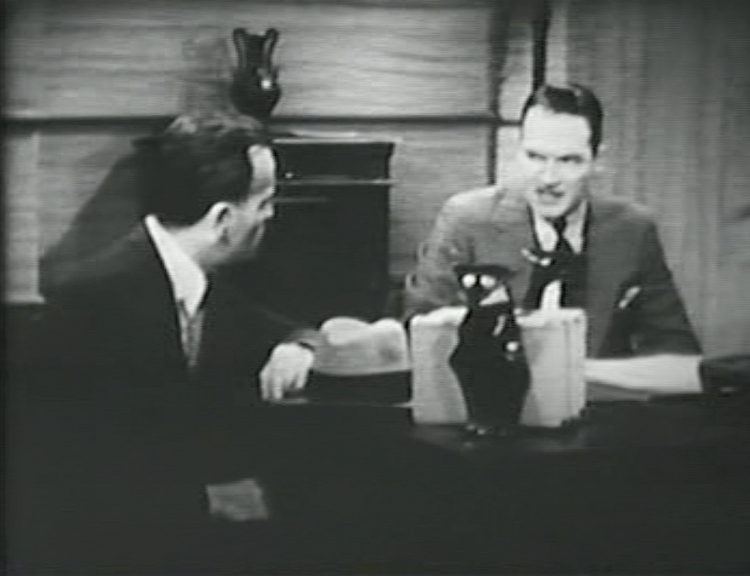
Beyond the leads, Pirate Treasure has a strong supporting cast including frequent heavy Walter Miller as Brassett, who is suitably oily as a villain hiding his true colors (I think my favorite moment is when he recommends one of his own men as First Mate on the sea voyage, assuring Moreland that his pick is “one hundred percent loyal” and “you’ll be surprised at the thoroughness with which he does things”). As “spearhead” henchman Curt, Ethan Laidlaw gets to play a more traditionally villainous role, and makes the most of the active part (he also has a fine mustache so you can tell him apart from the other henchmen). Pat O’Malley plays John Craig, Dorothy’s father, without much color but with a stoic reserve that gives way in affectionate scenes with his daughter.

PT.Dorothy.Dad

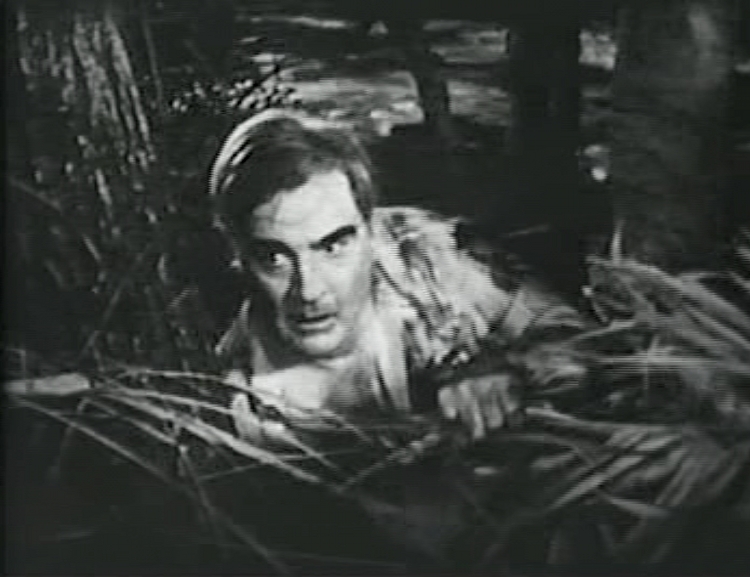
Finally, William Desmond is Captain Carson, a convincingly salty sea-dog whose friendship with the natives and knowledge of their “lingo” (which mostly sounds like Spanish) saves the day. Incidentally, the Captain’s ship is the Lottie Carson: named for a lost love, or perhaps the Captain’s mother? If Captain Carson were one of those sailors with MOM tattooed over his heart, it wouldn’t surprise me at all. He and the rest of these characters would be right at home in something like Captain Easy or Tintin, series with which Pirate Treasure shares a milieu and a considerable family resemblance.
PT.Carson1

What I Watched: Pirate Treasure (Universal, 1934)

Where I Watched It: This was another of the DVD transfers I bought in a lot from eBay. The picture quality isn’t great, so please forgive the blurry screen shots. This serial doesn’t appear to be available to view online, but “pirate treasure” is a phrase that brings up thousands of hits when you search for it, so I could be wrong.

No. of Chapters: 12

Best Chapter Title: In keeping with the streamlined approach, many of the chapter titles are very literal (“Stolen Treasure,” Chapter One; “Mutiny!”, Chapter Eight). There is “The Death Plunge” (Chapter Two) as well as “The Fatal Plunge” (Chapter Eleven), “The Death Crash” (Chapter Six) and “Crashing Doom!” (Chapter Seven). My favorite, however, is “The Wheels of Fate” (Chapter Three), which is at least mildly poetic and (in true serial fashion, the chapter title often foreshadowing the cliffhanger at its end) sets up an exciting highway chase and a stunt of Talmadge jumping off a motorcycle speeding across a bridge onto a moving train below.

PT.motorcycle

Best Cliffhanger: The chapter endings in Pirate Treasure run the gamut from genuinely suspenseful “how are they going to get out of that one?” cliffhangers to rather abrupt cuts to black following a fall. Some of the best involve vehicle crashes (a speedboat crashing into a buoy at the end of Chapter Four, “The Sea Chase”; a car plunging down a hillside and rolling over at the end of Chapter Six, “The Death Crash”). I’ve complained about cliffhanger resolutions that neither get the heroes out of the jam before the crash nor come up with a plausible excuse for their survival, and both of these are prime examples: after the dramatic crash–the boat splintered to pieces in one case, and the open-top car rolling down the hillside in the other–Dick and Dorothy brush themselves off and are okay.

PT.car.wreck

The best cliffhanger in Pirate Treasure is also the worst offender in its resolution: at the end of Chapter Nine (“Hidden Gold”), Dick and Curt are fighting at the top of a tall, rocky cliff, when Dick loses his footing and falls down, down, down to the jungle floor below, the camera lovingly tracking his body as it bounces off rocks before hitting bottom. Falling bodies are, for some reason, one of the hardest effects to get right, even today with modern CGI and its vaunted “ragdoll physics”; just throwing a dummy down the cliff, as they did in the serial days, usually doesn’t look very convincing. This one, however, is pretty good, while still clearly a dummy. There’s no way Dick could have survived, at least without serious injury (or a massive cheat). However, at the beginning of the next chapter, he gets up after being momentarily stunned; he briefly holds his arm, as if it might be broken; but no, wait, it’s all right; and he’s off to meet the next challenge. From now on, I’ll just refer to this kind of save as a “walk it off” resolution.

PT.cliffs

Sample Dialogue:
Captain Carson: I’ve seen lots of treasure hunts. Most of them end in disaster.
Dick Moreland: Ha ha! But not this one.
–Chapter Five, “Into the Depths”

PT.Carson2

What Others Have Said:Pirate Treasure featured Richard Talmadge, who followed the tradition of Helen Holmes, Pearl White, Helen Gibson, and Joe Bonomo as an action stunt pioneer and innovator, doing things ‘the way you do it–making movies.'” –William C. Cline, Serials-ly Speaking
PT.treasure

What’s Next: Join me next time as I take my first dip into the “Canadian mountie” subgenre with Republic’s King of the Royal Mounted!

Fates Worse Than Death: The Adventures of Sir Galahad

AG.title

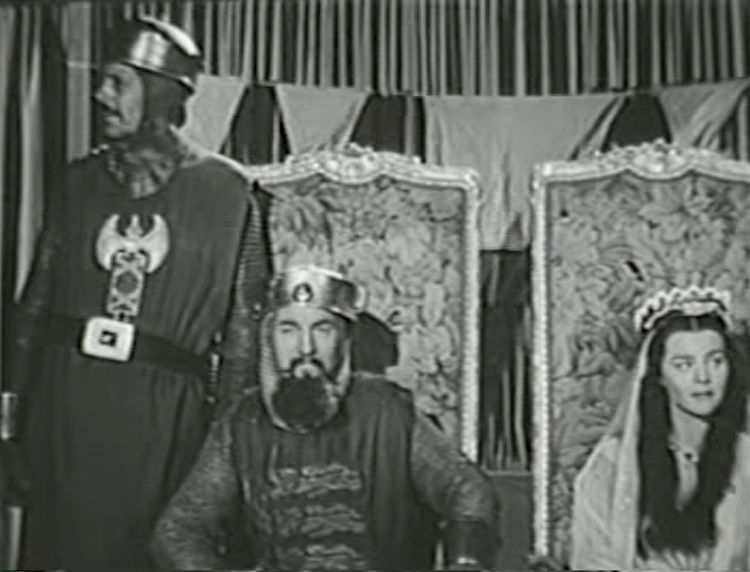
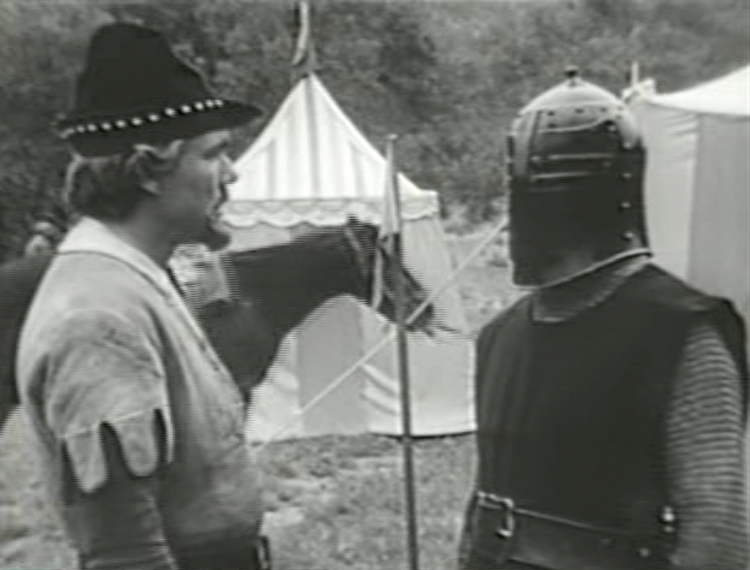
After a friendly joust between Camelot and Cornwall, an unknown knight rides forward and challenges the victors, Sir Bors and Sir Modred of Camelot. After defeating them, the stranger requests to be made one of King Arthur’s knights, and reveals that his name is Galahad. Impressed by the young knight’s skills and candor, Arthur agrees to put Galahad to the traditional test: he must stand guard over the sword Excalibur through the night. Through treachery and drugged wine, however, Galahad passes out, but not before seeing a suit of armor move! The mysterious armored knight takes the sword and escapes the castle through a secret passage. The next morning, Galahad is discovered asleep. No one believes his wild story, and Merlin himself accuses Galahad of perpetrating the theft. Even worse, the invading Saxons, led by King Ulric, are attacking! While Arthur defers punishment and Galahad is allowed to ride with the knights, he vows to find the sword and return it to Arthur to clear his name and earn his place at the Round Table.

AG.watch

Thus begins the twisting plot of The Adventures of Sir Galahad, the 1949 serial from veteran director Spencer Bennet. Along with Sir Bors (also under suspicion because it was he who served the wine that incapacitated Galahad), Galahad infiltrates the Saxon camp, fights against outlaws, and must even overcome Merlin’s magic, all while trying to win over the suspicious knights of Camelot. Ultimately, the villain is the “Black Knight,” the traitor within Camelot who seeks to manipulate the Saxons and outlaws into defeating Arthur in order to claim the throne for himself. He who wields the invincible Excalibur can stand against any foe, so of course the Black Knight keeps it for himself, even while pretending to aid Ulric.

AG.treachery

The legends and romances that make up the Arthurian cycle are so rich and varied that film adaptations inevitably borrow what can be used and discard the rest. Often the forbidden romance between Sir Lancelot and Queen Guinevere is featured, and the quest for the Holy Grail is another popular subject for film, tackled by both Monty Python and John Boorman. In some versions of the story, Galahad is Lancelot’s son, determined to prove himself before he reveals his identity to his father. The Adventures of Sir Galahad doesn’t deal with any of those plots, but it does an impressive job of creating an original story, combining the source material with the formal demands of a serial.

AG.Arthur1

In fact, The Adventures of Sir Galahad is unusual in its choice of setting: there are very few serials that deal with medieval or mythological settings (but see Jerry Blake’s comments below). Film studios were regularly releasing features about Arthur, Robin Hood, and other legendary figures, so sets and costumes would have been available for serials (Columbia’s The Green Archer features a castle and a Robin Hood-like character, but is set in modern times), but Galahad remained an outlier. It’s largely a successful hybrid, however: the struggle of the knight and his partner to solve the mystery and prove his innocence lends itself to the episodic rhythm of a serial; there are plenty of opportunities for fight scenes, both skirmishes and full-on battles, and the abundant swordplay makes a nice change from fistfights and shoot-outs; the disguised villain is very typical, comparable to such bad guys as the Scorpion or the Dragon (it ends up being exactly who you think it is, but still); and the frequent magical interference of Merlin (as well as Morgan le Fay, who has a few spells of her own) provide opportunities for unusual and inventive special effects and camera tricks.

AG.BlackKnight1

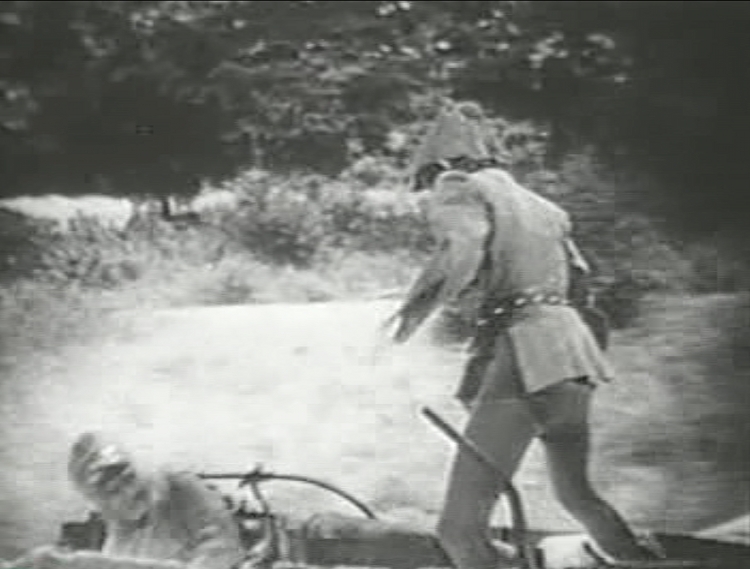
To cite just one example of the serial and fantasy worlds colliding, the cliffhanger of Chapter Eight (“Perilous Adventure”) features Galahad and an outlaw fighting in a wagon pulled by a runaway horse. The scene is identical in blocking and editing to similar fights atop trains or trucks in other serials, down to the use of rear projection, but the medieval setting puts it into a novel context.

AG.wagon

From a story perspective, writers George Plympton, Lewis Clay, and David Mathews also make some smart decisions: by setting Galahad against Merlin and the knights of Camelot at the beginning, the story upends expectations about good guys and bad guys: like Galahad, the audience is unsure who to trust. Merlin appears to be the villain at first; Morgan le Fay offers her own magical help, but what’s her agenda? Arthur (Nelson Leigh, seventh billed) is a distant figure, far from the center of the story. Galahad is left to his own resources, with only the dogged Sir Bors (Charles King) to provide both comic relief and the occasional voice of reason. If these versions of the characters ultimately conform to our expectations of them, it’s not without enough twists and turns to make them feel lived-in, the resolution to the story earned.

AG.Merlin.Morgan

The Adventures of Sir Galahad boasts a large cast for a serial, but the difference between serial and feature shows in the battle scenes, where one might expect hordes of extras: a dozen men on horseback is large enough to make a convincing posse or Indian war party in a Western, but when such a group is meant to represent the entire Saxon army, it’s a little puny. Galahad‘s fight scenes are more impressive when staged in close quarters (such as several fights that take place in an inn, or in mountainous terrain), hiding the small number of men involved and making the fight look more crowded. In many ways, The Adventures of Sir Galahad bears a close resemblance to the low-budget fantasy features that would become popular in the 1950s, such as Bert I. Gordon’s The Magic Sword or the many films about Hercules or Sinbad.

AG.battle

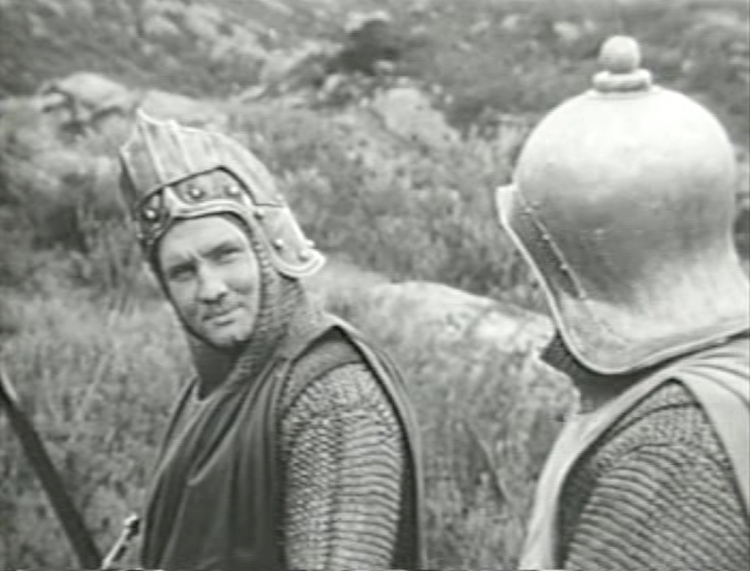
As Galahad, George Reeves (who would go on to play Superman on TV) makes a convincing hero, eager and brave, but at 35 he is more boyish (at one point a discouraged Bors calls him a puppy, “barking at nothing and chasing his own tail”) than boy (apparently a common pitfall in serial casting). Charles King plays Bors as an over-the-hill Falstaff, accustomed to big meals and the wenches who serve them, but he also becomes Galahad’s most loyal companion and, like all the knights of Camelot, will do what must be done to combat evil.

AG.Galahad.Bors1

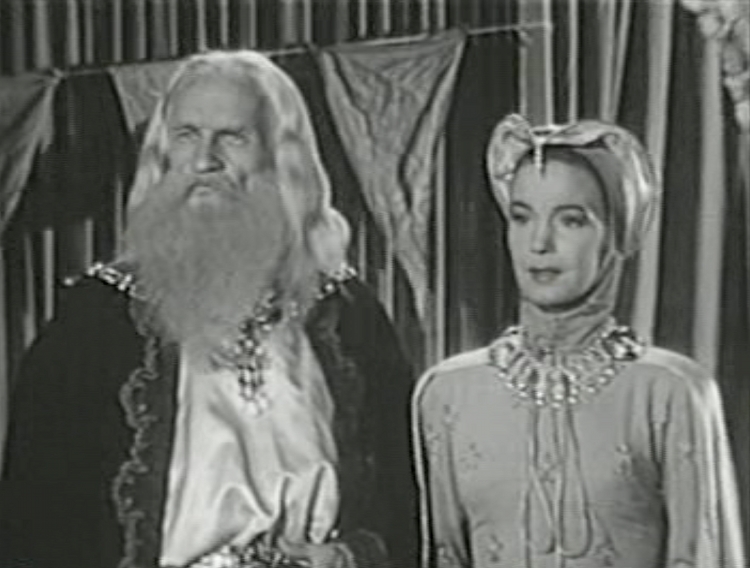
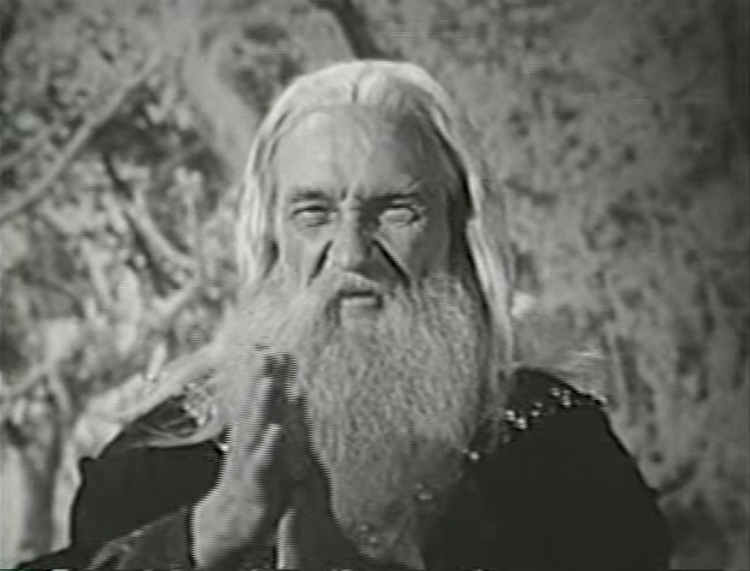
The MVP of the cast is William Fawcett, who plays Merlin. Fawcett was the crotchety scientist Professor Hamill in Batman and Robin; he’s just as crotchety here, but with the robes and long white beard of a wizard. He’s clearly having a ball chewing the scenery, throwing flash grenades to mask his magical comings and goings, and waving his hands to cast spells. It’s no wonder Fawcett had such a long career: he’s the quintessential character actor, breathing life into a stock character and stealing every scene he’s in.

AG.Merlin

If I could add one thing to this serial, it would be to have Galahad fight a dragon; the only monsters the knight faces are ultimately human ones. Other than that omission, there’s as much Dark Ages atmosphere as you could hope for in The Adventures of Sir Galahad, with secret passages and dungeons, sword fights, magic spells, and mighty feasts. There is even a giant crossbow! The Adventures of Sir Galahad is highly recommended to both serial and fantasy fans.

AG.crossbow

What I Watched: The Adventures of Sir Galahad (Columbia, 1949)

Where I Watched It: I bought a batch of privately-burned DVDs of serials from a dealer on eBay, along with several others I’ll be writing about this summer. The transfer is pretty raw, but the price was right. The Adventures of Sir Galahad doesn’t appear to be available to view online.

No. of Chapters: 15

Best Chapter Title: Not since The Perils of Pauline has a serial emphasized the perils of its cliffhangers this much: in addition to “Passage of Peril” (Chapter Six) and “Perilous Adventure” (Chapter Eight), there’s my favorite, “Castle Perilous” (Chapter Twelve).

AG.passage

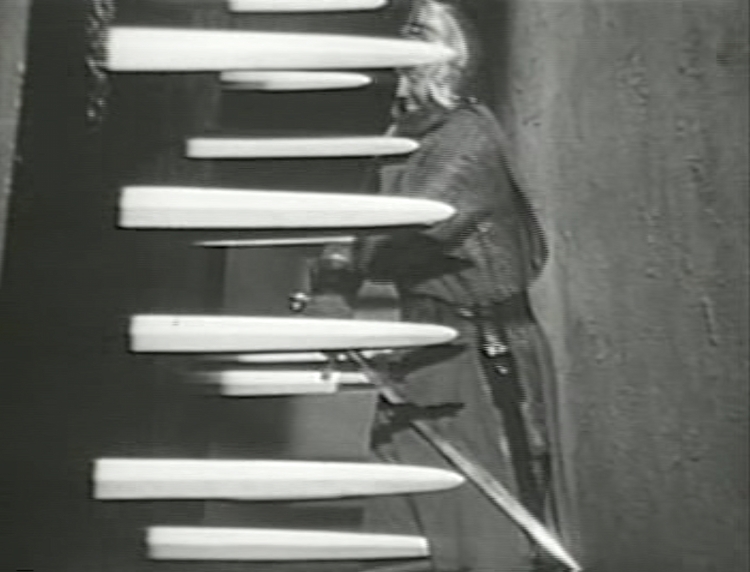
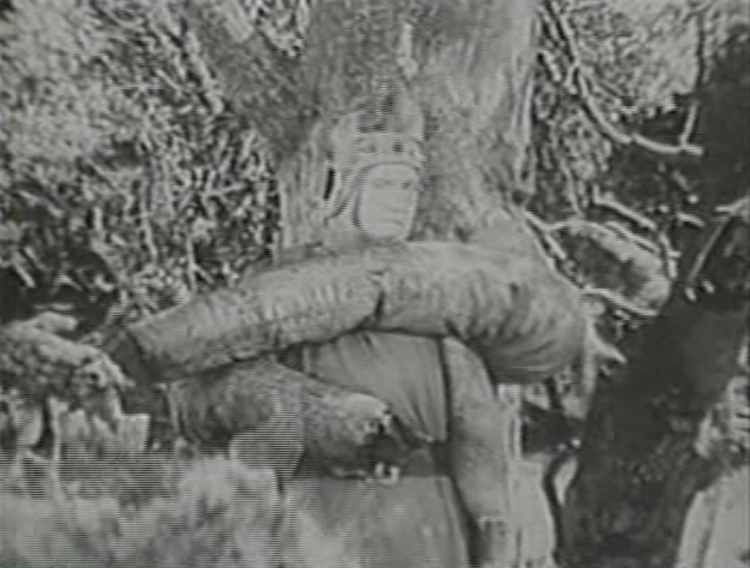
Best Cliffhanger: At the end of Chapter One (“The Stolen Sword”), Morgan le Fay has directed Galahad to find answers in the Enchanted Forest; this is Merlin’s domain, from which no man has returned. As Galahad and Bors enter, they are accosted by strange voices and sounds. Merlin appears and bewitches Galahad so that he can’t move; then Galahad is grabbed by a suddenly mobile tree, while flames dance around him. It’s a pretty intense and strange cliffhanger that lets us know we’re going into the deep end of fantasy here. Alas, my hope that all of the cliffhangers would be magical or fantastic wasn’t lived up to. Some are, and there are a few medieval-specific cliffhangers, like one in which Galahad is strapped down beneath a swinging spiked ball, à la The Pit and the Pendulum; but most are the typical falls or brushes with death common to all serials. But man, that first chapter: it’s a doozy.

AG.enchantment

Sample Dialogue:
Bors: Have you never heard it said that rashness is the father of disaster?
Galahad: True, but too much caution is the blood-brother of cowardice.
–Chapter Five, “Galahad to the Recue”

AG.Galahad.Bors2

What Others Have Said:Adventures of Sir Galahad represents its producer Sam Katzman’s second and last attempt to combine the serial and medieval-swashbuckler genres; it’s a huge improvement over Katzman’s previous effort in the same line, the shoddy and tedious Son of the Guardsman–even though Galahad and Guardsman have many sets, costumes, and actors in common.” —The Files of Jerry Blake
(I haven’t seen Son of the Guardsman yet, so I can’t make a comparison.)

What’s Next: X marks the spot! Join me next time for the generically-titled Pirate Treasure.

Fates Worse Than Death: Captain America (1944)

CA44.title

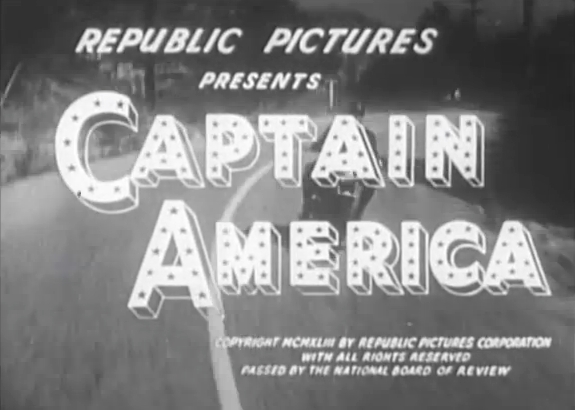
A bizarre series of deaths, some accidental and some obvious suicides, strikes at wealthy and influential men. The only connection between them is their involvement in an expedition to Central America in search of Mayan ruins, and the jeweled scarabs found in the victims’ possession. The mastermind behind the deaths, revealed to the audience in the first chapter, is Dr. Maldor, a member of the expedition who feels cheated of the glory and wealth that others have claimed. As the Scarab, Maldor is determined to take down his rivals, one by one, all the while posing as the friendly and helpful director of the Drummond Museum of Arts and Sciences.

CA44.scarab

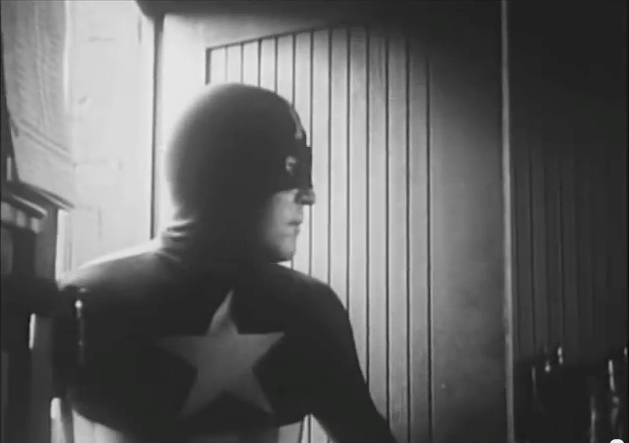
Maldor’s plan might very well succeed, but for the industrious District Attorney, Grant Gardner, and his assistant Gail Richards, who stand in Maldor’s way and get far too close to the truth in their investigations. Even worse, Maldor’s henchmen keep running afoul of the costumed crime fighter known only as Captain America. Could Gardner and Captain America be one and the same? The audience knows, but will the Scarab learn the truth, and what will he do with it?

CA44.Cap2

These days, when one reads about the 1944 Captain America serial, the focus is on its lack of fidelity to the comic books created by Joe Simon and Jack Kirby in 1941 and published by Timely (now Marvel) Comics. Instead of being Steve Rogers, a runty Army volunteer turned into a titan by the Super Soldier serum, the serial Captain America is Grant Gardner (played by Dick Purcell), a crusading district attorney who dons the costume to bring criminals to justice; no reference is made to his origin. Instead of wielding the iconic shield, Grant Gardner carries a gun, and he gets a lot of use out of it (in fact, considering how many bad guys Gardner kills in his civilian identity without anyone batting an eye, it’s not exactly clear why he needs to step outside of the law and put on a costume at all).

captainamerica1

This Captain America doesn’t even fight Nazis, all the more surprising considering the character’s explicitly patriotic concept and the serial’s wartime production. As in the 1949 Batman and Robin serial, Captain America’s foe follows the serial formula of a far-reaching (but apolitical) criminal mastermind: no Red Skull here, folks. Timely publisher Martin Goodman gave Republic the right to use the character for free (according to Marvel executive Tom Brevoort, speaking in the promotional documentary Captain America: 75 Heroic Years), likely expecting the film to boost sales of his comic books. Whether it had the desired effect, I don’t know, but one wonders what Simon and Kirby, not to mention their loyal readers, thought when they saw “Grant Gardner” going through the paces of a typical Republic adventure.

CA44.Gardner1

I was aware of all that before I watched the serial, but I tried to keep an open mind: although this is an extreme example, it wasn’t unusual for serial producers to change details of their source material to fit into their standard formula, and perhaps the serial would be a success on its own terms, even as it missed the mark as an adaptation. Unfortunately, I ultimately found it tedious and repetitive, even though it had some good performances and some individual chapters that worked well. Like many fifteen-chapter serials, Captain America can’t quite sustain its length, and might have been more effective cut down.

CA44.fight1

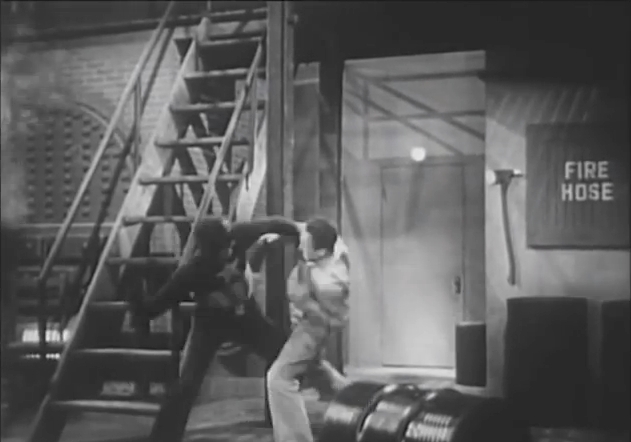
As both Gardner and Captain America, Dick Purcell has some personality and makes for an engaging central character, and there’s quite a bit of action (much of it supplied by longtime stunt man Dale van Sickel, who actually wore the costume for many of these sequences). He’s not really anything like what I think of as Captain America, being closer to a “cop who bends the rules” type rather than a boy scout, but free of other associations he held my attention. The sheer number of the Scarab’s henchmen that he blows away or throws out high windows, in either identity, would satisfy Charles Bronson.

CA44.Cap1

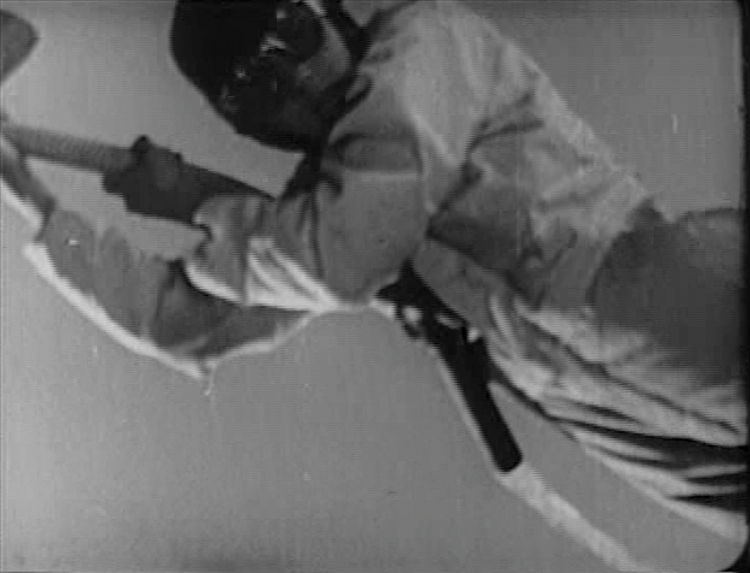
Even better is the supporting cast: played by Lorna Gray, Gail Richards is Grant Gardner’s capable assistant, and the only person who knows he’s Captain America. Although she sometimes ends up as the damsel in distress (the memorable cliffhanger in Chapter Five, “Blade of Wrath,” has her tied up and threatened with beheading by the guillotine-like blade of a paper-cutting machine), she also takes the initiative, and clearly takes after her boss. In one chapter, she catches someone tampering with Gardner’s car; when the man pulls a gun in an attempt to abduct her, she whips out her own heater and shoots him dead!
CA44.Gail1

As Dr. Maldor/The Scarab, Lionel Atwill is the very model of a plummy, cultured villain, complete with monocle. Using the “Purple Death,” he can make men do his bidding or drive them to suicide. Like most serial masterminds, he works through his disposable henchmen, keeping himself at a distance from the violence until the very end. His right-hand man (and also the most active in the field) is Matson (George Lewis), but John Davidson (whom we just saw in Tailspin Tommy) also lends his deep voice to the cause of evil as the henchman Gruber.

CA44.Maldor1

Maldor possesses a cutting wit, often directed at his bungling helpers. In one scene he sarcastically congratulates his henchmen: “You should be proud of yourself. Captain America has made a fool of you in every job you’ve attempted.” In a late chapter, when Maldor starts getting his hands dirty himself, he honest-to-God says “There are ways of making you talk” to the only man who knows how to decipher a Mayan treasure map, before flogging him with a cat-o-nine-tails.

CA44.Maldor2

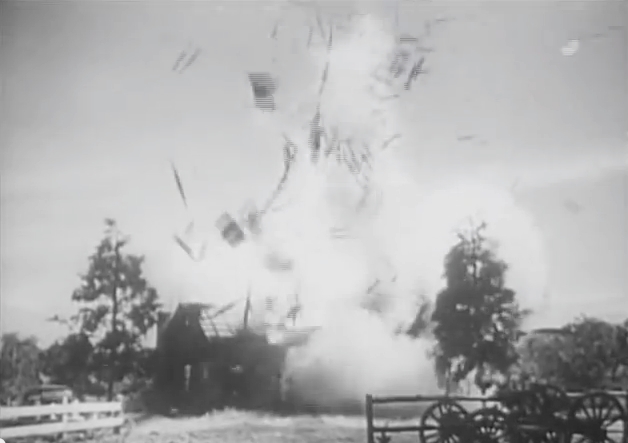
Later in the same episode, when Maldor learns that Gardner is on his way to the Scarab’s farmhouse hideout, he uses an airplane to personally drop bombs on the house in the hopes of destroying evidence of his presence and (even better) killing his nemesis at the same time (it is in fact the fifth building destroyed directly or indirectly by the Scarab in this serial, a showcase of special effects masters Theodore and Howard Lydecker’s genius). It would be nit-picky to question the efficiency or timeliness of this method. Rather, it points to the ways in which Maldor exemplifies the criminal mastermind: the true master criminal works through others, keeping the dirty work at a distance, as long as necessary; he always has multiple escape routes and alibis; and most importantly, he has the resources and the will to do whatever it takes to remove any obstacle that keeps him from his goal. If that means getting in a plane and blowing up his own hideout, so be it.

CA44.explosion

The thread of Maldor’s vengeance against the members of the Mayan expedition is really the only thing that ties together the various episodes, giving the serial a somewhat choppy rhythm: in several chapters, Gardner/Captain America is charged with protecting or rescuing a scientist or executive whom the Scarab threatens. In some cases, that involves recovering or destroying a new invention that the Scarab wants for himself (a “vibrating engine” shakes apart a building in the first chapter; an “electronic fire bolt” allows the Scarab’s gang to cut open bank vaults to finance his operations in the next, and so on). Unfortunately, too much time is spent explaining and talking, or with anonymous henchmen setting up traps without much happening. When Purcell, Atwill, or Gray aren’t on screen, the film lags.

CA44.Firebolt

What I Watched: Captain America (Republic, 1944)

Where I Watched It: The serial is on YouTube in its entirety.

No. of Chapters: 15

Best Chapter Title: All the bases are covered by Captain America‘s chapter titles: from the poetic (“Blade of Wrath”; “The Toll of Doom”) to the bluntly literal (“Skyscraper Plunge”), the alliterative (“Triple Tragedy”; “Horror on the Highway”) and the lurid (“The Dead Man Returns”). But before Captain America was “The First Avenger,” there was “The Avenging Corpse” (Chapter Ten), my pick for Best Chapter Title.

Best Cliffhanger: Sometimes simple misdirection makes for the most effective cliffhanger. At the end of Chapter Eleven (“The Dead Man Returns”), Captain America has tracked the Scarab to an electrical laboratory, where Dr. Lyman’s Life Restoring Machine is to be used to revive Matson. As he fights with one of the Scarab’s henchmen, the two of them end up inside of the generator room, which generates the million volts necessary to charge up the machine. Another of the Scarab’s men, Dirk, throws the switch to turn it on: we see a shower of sparks and then the camera cuts to Dirk’s horrified face and we hear a chilling scream. (Of course at the beginning of the next chapter we see our hero leap out of the generator room just in time: the scream belongs to the other guy.)

CA44.generator

Sample Dialogue: “Mister Gardner is a brave man; I’d feel much happier if Captain America were with him.” –Professor Dodge, Chapter Three, “Scarlet Shroud”

What Others Have Said: “Sadly, Purcell died of a heart attack shortly after completing this serial at the age of 35. It was a tragic end for the man who originated the role of a nearly immortal hero (in the comics, Captain America’s died and come back to life at least three different times). Purcell’s Cap isn’t the strongest or most physically fit, but there’s something to be said for the human dimension he brought to the role.” –Matt Singer, The Complete History of Comic-Book Movies

What’s Next: Join me in two weeks as we get medieval with The Adventures of Sir Galahad!
Fates Worse Than Death: Tailspin Tommy

TT.title

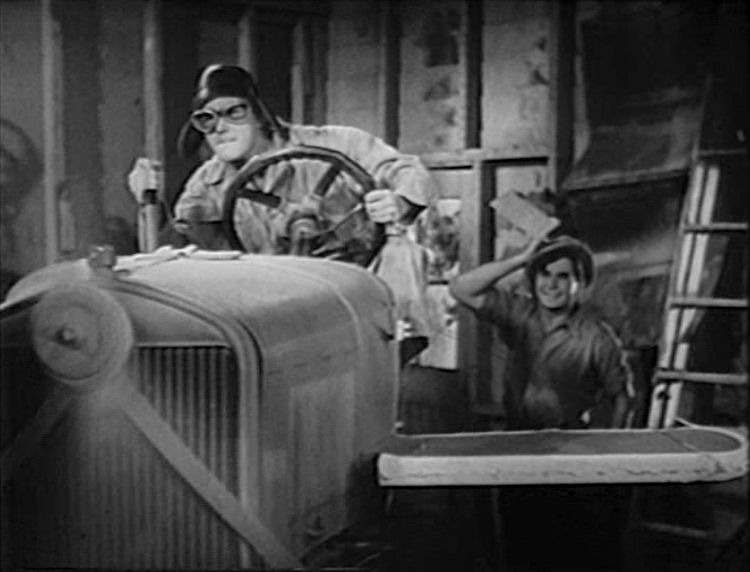
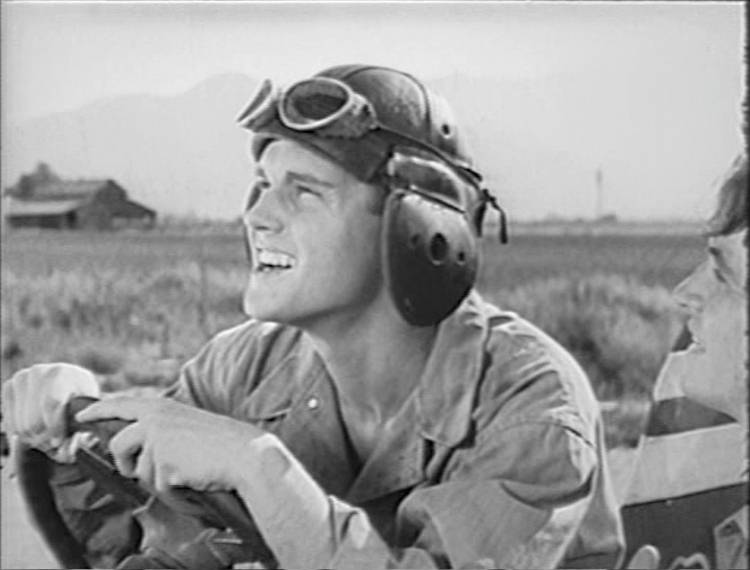
Stuck in rural Littleville, young mechanic Tommy Tompkins dreams of nothing more than becoming a flyer: he’s even rigged up an old jalopy with a throttle and flaps so he can practice the controls until he gets a chance at a real plane! Tommy’s opportunity arrives when Milt Howe, a pilot for the Three Points Air Line, makes an emergency stop in Littleville. As a reward for repairing his plane, Howe offers to take Tommy back with him to Three Points. When the injured Howe passes out before they can land, Tommy takes the controls and brings the plane in safely himself. Three Points owner Paul Smith is so impressed with the young man that he offers him a job with the ground crew and the chance to earn his pilot’s license.

TT.jalopy

Little do either of them know, however, that a rival air line, owned by Wade “Tiger” Taggart, is trying to muscle Three Points out of the way so that a lucrative gold shipment will be theirs. Worse yet, one of Three Points’ best pilots, Bruce Hoyt, is secretly in league with Taggart! Sabotage, misinformation, financial fraud, and even outright banditry are the weapons that Taggart will use to destroy Three Points and their bright young pilot, “Tailspin” Tommy. Will Tommy catch on to the plot against his employer? Will the traitorous Bruce Hoyt be found out? Will the suddenly successful Tommy remember his roots in Littleville? These and other questions are answered in the twelve-part 1934 serial, Tailspin Tommy!

TT.bandits2

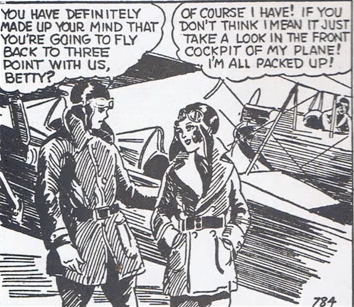
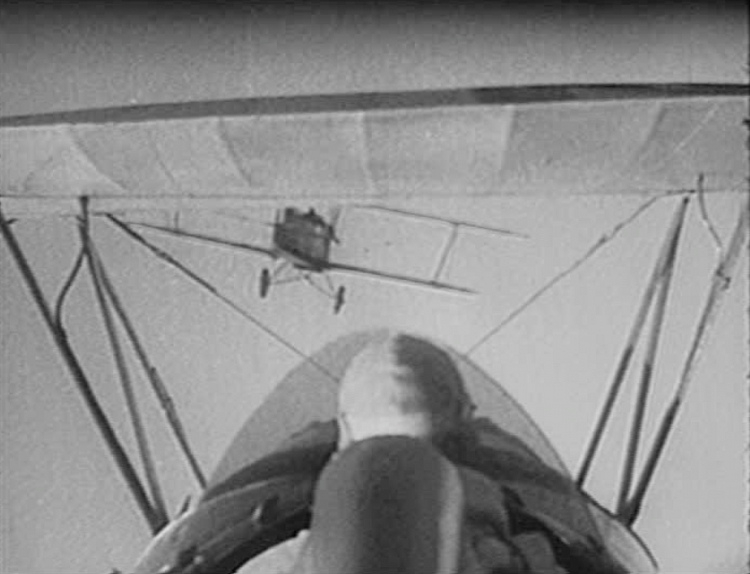
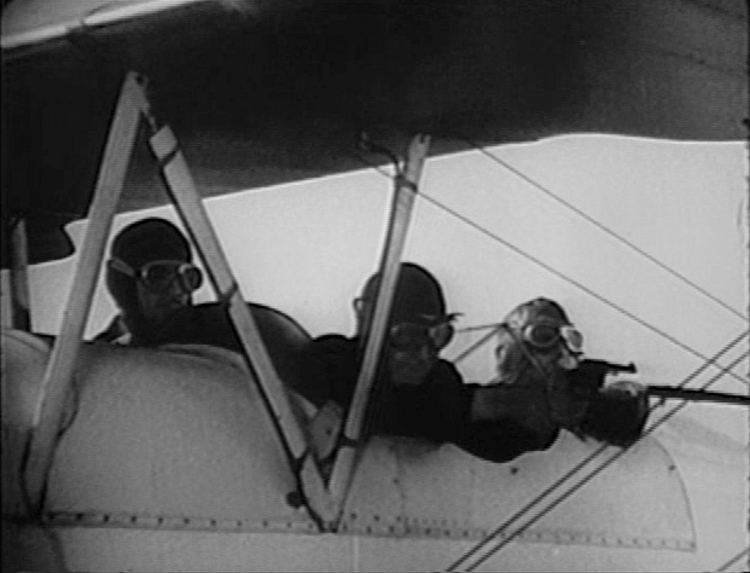
Hal Forrest’s Tailspin Tommy was a very popular comic strip (the first to be adapted into a serial in fact), with spin-offs that included a radio show, books, and toys. The serial’s plot covers a diverse range of settings and episodes, I suspect reflecting the variety of adventures that comic strip heroes undertook regardless of their ostensible genre (according to Jim Harmon and Donald F. Glut, the serial follows episodes from the radio show closely). Obviously, Tailspin Tommy explores the rich, then-contemporary setting of small regional airports and the short-hop pilots who flew by the seat of their pants, romanticized as daring aerial warriors in World War I and now connecting the scattered communities of the United States through faster travel and mail delivery. As the film makes clear, even civilian flying took nerve in the open-cockpit biplanes of the time, and mechanical failure, bad weather, or just plain bad luck could prove as dangerous as enemy fighters. Tailspin Tommy captured the spirit of a young nation enamored of hero-aviators like Howard Hughes and Charles Lindbergh. The character was popular enough to be the subject of a second serial (with an almost entirely different cast) in 1935, Tailspin Tommy in the Great Air Mystery, and two features in 1939, Mystery Plane and Sky Patrol.

TT.panel

Although Tailspin Tommy isn’t as well remembered today as many of its comic strip contemporaries, the youthful equation of flight with freedom has continued to inspire creators. One of Dave Stevens’ brilliant strokes in conceiving The Rocketeer was that, while borrowing liberally from such 1950s serials as King of the Rocket Men and Radar Men From the Moon, he transposed the action to this 1930s milieu, a setting in which pulp conventions, references to Hollywood’s Golden Age, and the prewar intrigues of Nazi spies and saboteurs could mingle freely. Flight-obsessed George Lucas is another heir in spirit: the portrait of young Anakin Skywalker as an eager, inventive wanna-be pilot in The Phantom Menace could have been drawn directly from Tailspin Tommy‘s first chapter.

TT.cockpit

However, in addition to scenes of flight and its attendant perils, the episodic story includes car chases, gunfights, and fist fights–the usual sources of generic serial “action”–as well as more exotic elements like a mad scientist’s lab (in Chapter Four, “The Copper Room”), an earthquake (Chapter Nine, “The Earth Gods Roar”), and the production of a Hollywood movie (in the last three chapters) that gives the filmmakers the chance to indulge in some war movie action even in peacetime. (The mad scientist has a scheme for turning copper into gold, a subplot that is dropped once Tommy and Betty Lou escape from the scientist’s house; at least it isn’t that old standby of the serials, radium.)

TT.bandits

There is a connecting thread in all this: Taggart (John Davidson of The Perils of Pauline) and his attempts to undermine his competition. Most, but not all of the dangers Tommy (Maurice Murphy) and his allies face are set up by Taggart directly or by his mole, Bruce Hoyt (Walter Miller). As good as Davidson is–he’s got a great sinister deep voice–Taggart is a one-note villain. It’s one of the strengths of the film that, in contrast with many serials, Taggart isn’t as interesting or compelling as the conflicted Hoyt or the good guy Tommy and his friends.

TT.Taggart

Those friends include “Skeeter” Milligan (Noah Beery, Jr.), Tommy’s partner in Littleville who stows away in Milt Howe’s plane to follow his friend and also ends up working for Three Points. Skeeter, given to pratfalls and one-liners, including a running gag about “unwritten law,” provides most of the comic relief, although he also backs up Tommy when things get rough and in one sequence he’s the object of rescue: after being blinded by a blast of hot oil while working on an engine, Skeeter must be flown to a hospital in Denver to be operated on or else lose his sight permanently; it wouldn’t be a serial if that emergency flight over the Rockies didn’t coincide with the biggest storm of the year, but Tommy makes it.

TT.plane

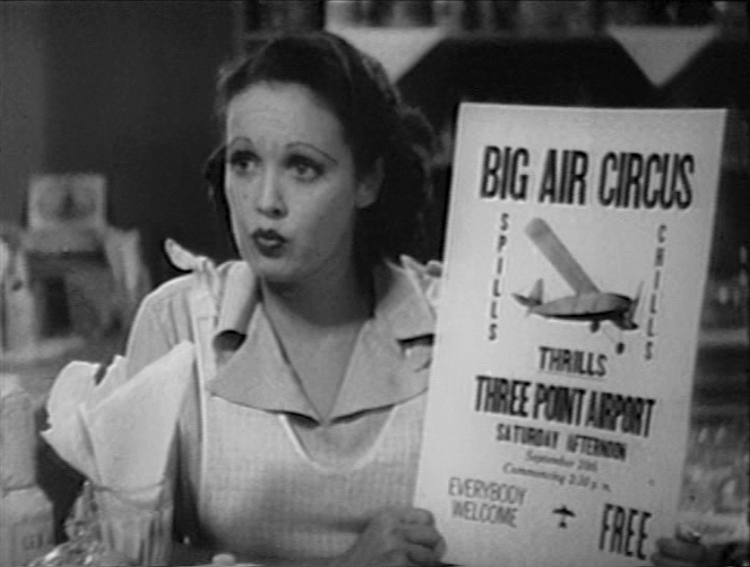
Then there’s Tommy’s love interest, Betty Lou Barnes (Patricia Farr), who is a well-rounded and active character in her own right: when Tommy first meets Betty Lou, she’s suffered a flat tire in Littleville, and tells him about Three Points, where she is learning to fly. She works behind the counter at the airfield’s Aileron Café (the kind of diner in which a grease monkey can order coffee and donuts by saying, “Gimme a sleep killer and a coupla spare wheels”). Betty Lou is gutsy, whether literally walking out of a flying lesson with Bruce Hoyt by jumping out of the plane with a parachute, or pulling a gun on some of Taggart’s men when they try to kidnap her and Tommy. In other sequences, she does her own detective work: she is the first to have any concrete proof of Hoyt’s treachery, and she gets lured into a trap herself as a result.

TT.BettyLou

Betty Lou’s relationship with Tommy highlights another unusual quality of this serial: the amount of time it covers. Unlike the breakneck pace of many serials, Tailspin Tommy takes for granted the passage of time between exciting events (although not between chapters, as cliffhangers are still the rule), as well as giving a sense of Tommy’s development as both a flyer and a hero. At one point, six weeks are mentioned to have passed before Tommy has his pilot’s license; at another, the time it takes for Skeeter to recover from his surgery is similarly glossed over. Reference is made to the awards and publicity that Tommy has received for his achievements. The twelve chapters allow for the natural transformation of Tommy from an unknown who had never even been in a plane in Chapter One to a nationally-recognized hero whose involvement in a movie is assumed to be a draw in the last few chapters.

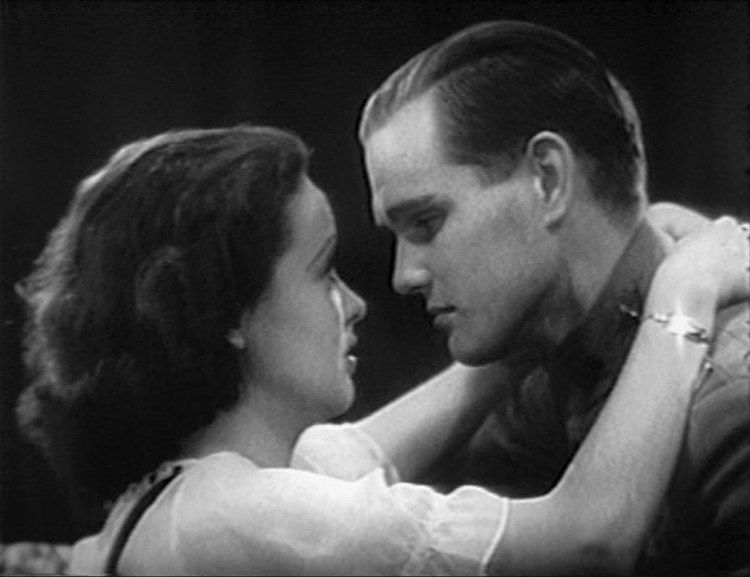
That sense of growth over time is unusual for a serial, and Tommy’s relationship with Betty Lou undergoes similar development. Unlike many serials, in which the pairing of the male and female leads is held off until the very last minute (or left to the audience’s imagination), Tailspin Tommy has Tommy and Betty Lou as an item midway through its run time, and far from threatening their relationship with complications or misunderstandings, the plot even reinforces it: in Chapter Ten, Tommy has begun filming the war movie Midnight Patrol, but he has no chemistry with the actress who plays his lover and can’t even remember his lines. Seeing how much of a connection he has with Betty Lou when she visits the set, however, the director fires the actress and replaces her with Betty Lou! Their performance of the same scene is like night and day, reminiscent of Naomi Watts’ intense reading of the corny soap opera dialogue in Mulholland Drive.

TT.Tommy.BettyLou

Interestingly, while Taggart’s villainy is the connecting thread through much of this serial, he gets his comeuppance early in the last chapter, so that the big question at the end is whether Tommy will appear at the Hollywood premiere of his new film or return to Littleville for a homecoming celebration among the people who love him. Considering we see Tommy make his travel plans and carry them out, it’s a little anticlimactic (the chapter is called “Littleville’s Big Day,” for crying out loud!). I’ve watched enough serials by now to observe that filmmakers of the time didn’t always put a lot of emphasis on suspense or use narrative twists as much as we might assume in retrospect. The template was often that of old-style mysteries in which the audience knows whodunit from the beginning and the real question was when and how the hero would find out. In the serials, sometimes that applied to little mysteries, too.

What I Watched: Tailspin Tommy (Universal, 1934)

Where I Watched It: A DVD from VCI Entertainment. This serial doesn’t seem to be online, although the follow-up is on YouTube.

No. of Chapters: 12

Best Chapter Title: “The Earth Gods Roar” (Chapter Nine)

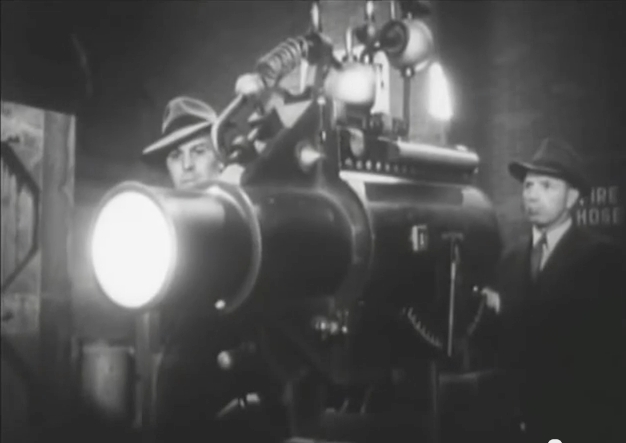
Best Cliffhanger: In Chapter Eight (“The Thrill of Death”), Tommy is leading Three Point Air Line’s team in the Los Angeles Air Meet, an air show in which crews compete in airplane races and timed contests. For the refueling contest, Tommy rides with Bruce Hoyt and climbs out of the ship to attach a mid-air refueling hose from another airplane. Hoyt, sensing an opportunity to serve Taggart and rid himself of a rival, suddenly dives (blaming a snapped rudder cable which he has himself cut), leaving Tommy hanging onto the dangling hose without a parachute.

TT.refueling1

Sample Dialogue: “Someday, I’m gonna be a real flyer–a great flyer, too.”

TT.someday

What Others Have Said: “If you find such a conclusion corny and anti-climactic, you should steer clear of Tailspin Tommy; the ending is of a piece with the rest of the serial, which is chiefly about a small-town boy making good in the adventurous new world of aviation, and only incidentally about his battles with villains. However, those who are interested in old-time aerial excitement, genuine 1930s period flavor, and interesting and well-acted characters, are strongly advised to take a spin with Tailspin Tommy.” —The Files of Jerry Blake

What’s Next: Last summer’s weekly schedule was a bit too much for me to attempt again, so I’ll plan on making biweekly updates to Fates Worse Than Death this year; any extra material I get posted will be a bonus. Join me in two weeks as I examine 1944’s Captain America!