Revisiting Sky Captain at The Solute

SkyCaptain2

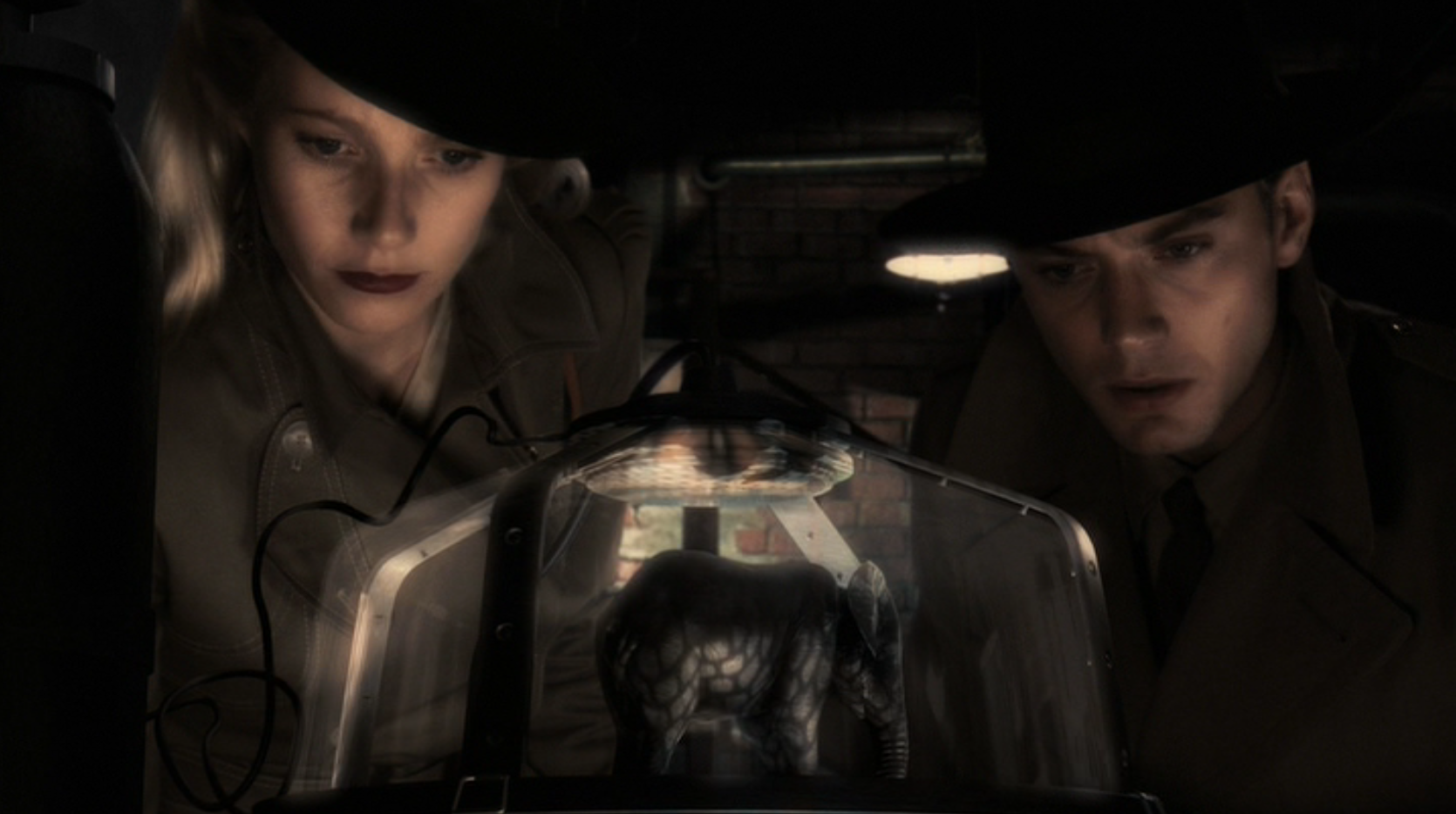
It’s always nice when circumstances converge to provide an opportunity for me to write about things I wanted to write about anyway. Sky Captain and the World of Tomorrow opened ten years ago today, so I wrote a remembrance of it for The Solute. As with Shanghai Surprise, I was interested in revisiting it in light of my recent exploration of serials from the 1930s and ’40s, one of the major sources of Sky Captain‘s plot and visual style. My article for The Solute focuses on the film’s then-groundbreaking combination of live action and CGI backgrounds, but regular readers will recognize many of my usual preoccupations with pastiche and stock character types.

Read it here.

Shanghai Surprise at The Solute

SScouple1

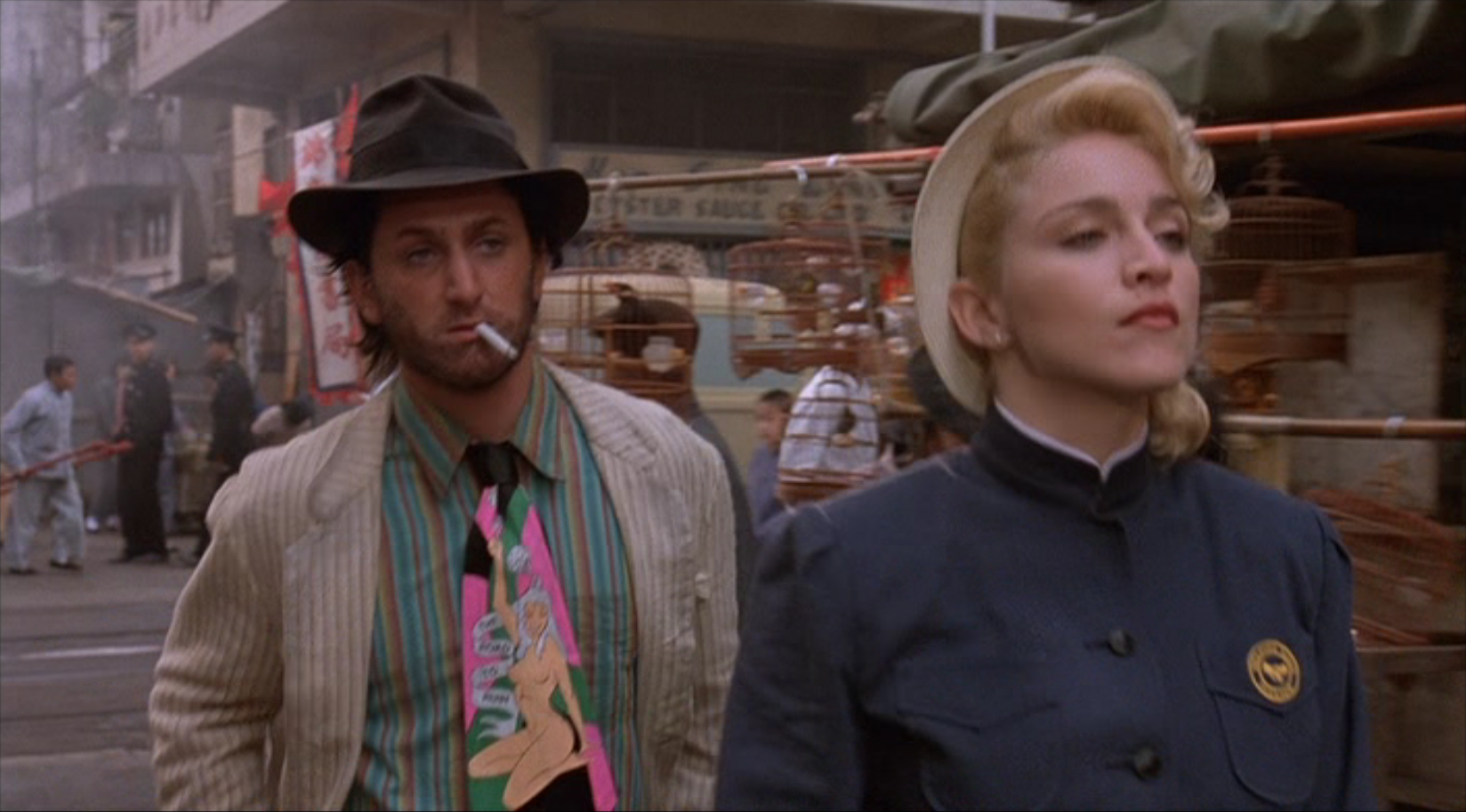
Today I took a look at the 1986 Madonna/Sean Penn vehicle Shanghai Surprise over at The Solute. It’s an auxiliary to Julius Kassendorf’s series examining all of Madonna’s film roles, but readers of my recent Fates Worse Than Death series will find many connections made with both the serials of the 1930s and the post-Raiders of the Lost Ark imitators that flooded theaters in the 1980s. Upon its release, Shanghai Surprise was an enormous flop and the passage of time has done little to rehabilitate it; however, I found some things to enjoy in it, which you can read about right here.

I’m excited to announce that I am contributing to a brand-new website for discussion of film and related topics, The Solute. The Solute is, in the words of founder Julius Kassendorf, “a brainchild collective emerging from the commentariat of The Dissolve,” the same website on which I posted my reassessment of Addicted to Love last spring. Right now, I’m only represented on the site as part of a roundtable discussion on the state of theatergoing in 2014, but I’ll be posting reviews and longer articles as it moves forward. I’ll have a longer post soon that addresses how that will affect Medleyana, and I’ll post links here whenever I publish an article at The Solute. In the mean time, I invite you to check it out and explore the diverse range of writers who will be sharing their thoughts; if it’s anything like the conversations at The Dissolve, I expect it to be fresh, varied, and entertaining.

Last week, Philip J. Reed of Noiseless Chatter invited me to write a little about my contribution to The Lost Worlds of Power during the lead-up to publication, and it’s available to read now. While avoiding spoilers for the story itself, I zeroed in on the relation of fan fiction to the descriptive manuals that often accompanied video games in the early days, and the ways in which the illustrations could suggest a more detailed setting than the graphics of the time allowed.  (That wasn’t as much of a problem by the time my selection, Legendary Wings, was released–it’s graphically quite impressive–but I guess it was on my mind, and I can never resist the opportunity to travel down memory lane.)

Those hi-def screens reveal a lot of detail, don't they?

Those hi-def screens reveal a lot of detail, don’t they?

Check it out, and consider following Noiseless Chatter while you’re there, won’t you? Updates on The Lost Worlds of Power appear there regularly, although the release date hasn’t been finalized as of this writing.


Wichita Symphony Orchestra: Music of Vaughan Williams and Beethoven

Ralph Vaughan Williams, Serenade to Music

Ludwig van Beethoven, Symphony No. 9 in D Minor, Op. 125

It’s fitting that during the first Wichita Symphony concert I reviewed for the Eagle last fall, a piece was delayed by a ringing cell phone, and at the last Classics concert of the season, the ending of another piece was interrupted by the same intrusion.  This time I felt the need to mention it in the published article; it’s not usually my practice to review the audience, unless their reaction provides insight into the performance.  In this case, however, it was too obvious to ignore, and a spoiled moment remains spoiled whether it’s the fault of the performers or something external.

I’m also not much interested in the ritual of public shaming that inevitably accompanies this sort of transgression: it could happen to anyone through a moment of forgetfulness, and the individual was (I hope) mortified enough by the experience to avoid it in the future.  I report it as a reminder for future concerts: come on, people.

I should add that I wouldn’t demand total silence during a performance, even if it were within my power.  The occasional burst of applause, the movement of bodies, even the coughing that sometimes comes unbidden during the softest passage: these are human sounds, and they have been with us since the first public concerts.  They are reminders that concertgoing is a communal experience.

Critic Alex Ross has written about the rule of silence, and the transformation of the rowdy public concerts of the eighteenth century into the solemn “Temple of Music” we have now. Of particular interest is his research into the “no applause” rule, under which the audience is expected to remain silent between movements and only show their appreciation at the end (a practice that has taken root only since the early twentieth century; many first-hand reports indicate that composers such as Mozart experienced, and even counted on, applause between–or within!–movements that could be truly described as “crowd-pleasing”). Ross writes:

As a listener, I don’t need total silence to help me to understand the music, even less to register its emotional impact. To the contrary, I find this ponderous silence forced, unsettling, and in places absolutely anti-musical, as after the big movements of concertos. It’s crazy for three thousand people to sit in Carnegie Hall contemplating Tchaikovsky’s First Piano Concerto as if it were some Buddhist monument, rather than a rousing, passionate entertainment.

As it happens, the enthusiasm of Saturday’s audience was such that there was vigorous applause after not only the first, but also the second movement of Beethoven’s Ninth Symphony.  That is a sound that no musician would mind hearing during a performance.

Wichita Symphony Orchestra with William Wolfram, Piano: Music of Wagner, Liszt, and Bruckner

Wichita Symphony Orchestra

Daniel Hege, Music Director and Conductor

William Wolfram, Piano

“Hail Wichita” (Wichita State University fight song)

Richard Wagner: “Ride of the Valkyries” from Die Walküre

Franz Liszt: Concerto No. 1 in E-flat Major for Piano, S. 124

Anton Bruckner: Symphony No. 4 in E-flat Major, “Romantic”

Here’s what I wrote in my review for The Wichita Eagle.

Wichita Symphony Orchestra with American Brass Quintet

Wichita Symphony Orchestra with Maestro Daniel Hege:

Thunderhead Singers (Drum circle)

John Barry: Concert Suite from Dances With Wolves

Eric Ewazen: Shadowcatcher (concerto featuring American Brass Quintet; accompanied by projected images of Edward Curtis’ photographs of Native Americans)

Antonín Dvořák: Symphony No. 9 in E Minor, “From the New World”

Here’s what I wrote for The Wichita Eagle.

Wichita Symphony Orchestra with Cirque de la Symphonie: Blue Jeans Concert

Friday was the Wichita Symphony’s annual Blue Jeans Concert, an event at which the orchestra dresses down and the atmosphere is less formal than the typical Classics Concert.  This year, the guest artists were members of Cirque de la Symphonie; my review of the concert for The Wichita Eagle can be found here.
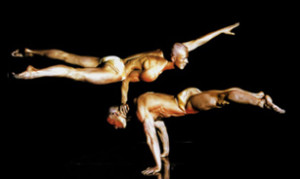
Strongmen Jarek and Darek of Cirque de la Symphonie

Strongmen Jarek and Darek of Cirque de la Symphonie

The complete program, directed by conductor Daniel Hege:

“Hail Wichita” (Wichita State University fight song)

Shostakovich: Festive Overture, Op. 96 (Orchestra)

Saint-Saëns: Danse macabre, Op. 40 (Christine Van Loo, aerial rope)

Bizet: Danse bohème from Carmen: Suite No. 2 (Vladimir Tsarkov, ring juggling)

Tchaikovsky: Valse from Sleeping Beauty: Suite, Op. 66a (Elena Tsarkov, contortion and dance)

Bizet: Les toréadors from Carmen: Suite No. 1 (Vova Tsarkov, spinning cube)

Badelt: Medley from Pirates of the Caribbean (Orchestra)

Rimsky-Korsakov: Scena e canto Gitano and Fandango asturiano from Cappricio espagnol, Op. 34 (Aloysia Gavre, aerial hoop)

Intermission

Tchaikovsky: Dance of the Swans from Swan Lake: Suite, Op. 20a (Vladimir Tsarkov and Elena Tsarkova, magic act)

Glinka: Overture to Ruslan and Lyudmila, Op. 5 (Orchestra)

Kabalevsky: Galop from The Comedians, Op. 26 (Vladimir Tsarkov and Vova Tsarkov, juggling glowing pins on a semi-darkened stage)

Offenbach: Galop (Can-Can) from Orpheus in the Underworld (Elena Tsarkova, ribbon dance)

Rimsky-Korsakov: Dance of the Buffoons from The Snow Maiden: Suite (Alina Sergeeva, hula hoops)

Strauss II: Thunder and Lightning (Polka), Op. 324 (Orchestra)

Tchaikovsky: Valse from Swan Lake: Suite, Op. 20a (Alexander Streltsov and Christine Van Loo, aerial duo on silks)

Sibelius: Finlandia, Op. 26 (Jarek and Darek, strongmen)
Wichita Symphony Orchestra: Ginastera, Saint-Saëns, and Franck; conductor Maximiano Valdés, cellist Julian Schwarz

Alberto Ginastera, Pampaneas No. 3, Op. 24

Camille Saint-Saëns, Cello Concerto No. 1 in A Minor, Op. 33

Julian Schwarz, cello

César Franck, Symphony in D Minor

Guest conductor Maximiano Valdés

My review of January 18’s performance of the Wichita Symphony Orchestra, as it ran in The Wichita Eagle.