
According to Letterboxd’s year-end summary, my most-viewed actor in 2025 was Sidney Toler, who played Charlie Chan in a series of B-movie mysteries in the 1940s; my most-watched director was René Cardona, Jr., the subject of a pair of box sets from Vinegar Syndrome that I watched last spring. (Cardona was the son of René Cardona, Sr., who directed some of the installments of the Santo series, which I wrote about in 2024. The films in the Cardona, Jr. sets were primarily adventure and crime pictures.) I suppose those are typical examples of my viewing through much of the year (and, as always, you can look at my complete diary if you like), but neither body of work is particularly noteworthy beyond numerical superiority. I almost decided not to post an end-of-year list: I didn’t see very many new films in 2025, and there are obviously still a lot of movies I haven’t caught up with yet. However, I saw enough that I liked that I thought it would be worth writing at least a Top Five 2025 New Releases.

5. It would be difficult for the Marvel Cinematic Universe to pull off the conceit of the original Thunderbolts, a series by Kurt Busiek and Mark Bagley in which a new team of heroes shows up, only to be revealed that they are actually old villains operating in disguise under new names. However, in adopting the same name (with a cheeky in-universe explanation) for an ad hoc team of antiheroes, screw-ups, and antagonists from past MCU films, Thunderbolts* (dir. Jake Schreier) gives us an idea of what to expect, at least tonally. When a group of mercenary superhuman operatives is summoned to a remote lab, each with orders to kill each other and destroy the lab, it doesn’t take them long to figure out that someone in the government is trying to clean up after themselves, and they are determined to save their skins and bring the truth to light. Since this is part of the ongoing soap opera of the MCU, it helps to understand the history between White Widow (Florence Pugh) and her father Red Guardian (David Harbour, consistently a delight), and between disgraced former Captain America John Walker (Wyatt Russell) and James “Bucky” Barnes (Sebastian Stan), now a U.S. Senator. But it’s the appearance of the Sentry (Lewis Pullman), a previously unknown character, that really throws a wrench in to the plans of mastermind Valentina (Julia Louis-Dreyfus). In the comics, the Sentry was a character who had supposedly been created alongside the Fantastic Four and other Silver Age Marvel stars, but “erased” himself, forcing everyone to forget him, to protect the world from a danger he himself represented, and only reemerging in the 21st century. I liked the idea of the Sentry more than the execution, most of the time, but the film version (here depicted as a test subject given great power, but whose unresolved personal demons are a literal “dark side”) works very well and complements the theme of confronting and overcoming failure. And, as the asterisk at the end of the film’s title might hint, there is still a Thunderbolts-worthy twist.
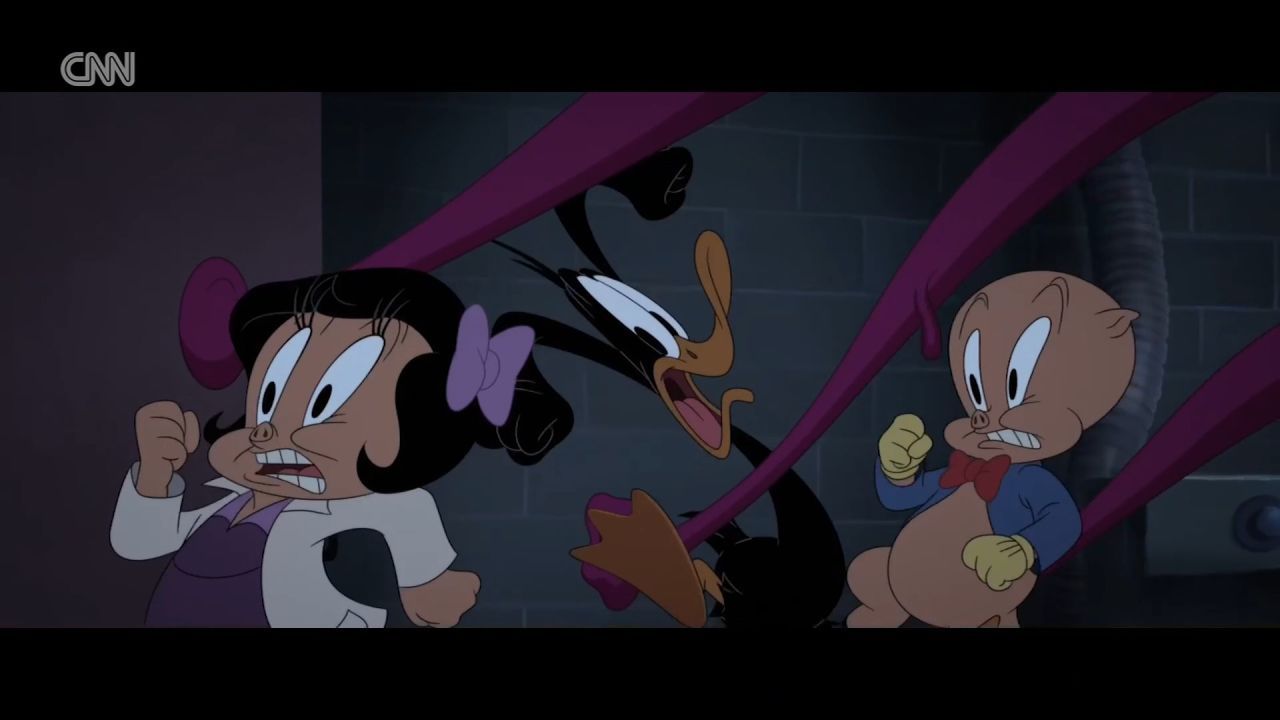
4. I was surprised to learn that The Day the Earth Blew Up: A Looney Tunes Movie (dir. Peter Browngardt) was the first original feature film starring the famous cartoon characters (previous theatrical features were either compilations of existing shorts or live-action/animated hybrids like Space Jam), but if this was a trial balloon, it paid off. (Aside from it being good, it’s worth celebrating The Day the Earth Blew Up’s success for convincing Warner Bros. to release the previously shelved Coyote vs. Acme.) Rather than stuff the screen with characters, this one focuses on Porky Pig and Daffy Duck as adopted brothers struggling to pay off their inherited farmhouse while aliens secretly take over the local chewing gum factory for mysterious (but presumably sinister) reasons. It’s a fun balance of new and old, with plenty of references for the old-school animation heads to catch (there’s a great workplace montage set to Raymond Scott’s “Powerhouse,” the “factory” music incorporated into many classic Looney Tunes scores by Carl Stalling), but without feeling hidebound. It gets a lot of mileage from characterizations of Porky as the hard-working rule-follower, teamed up with Petunia Pig as a sweet-but-tough scientist, and Daffy as the well-meaning but easily distracted screwup. (This is original-flavor “agent of chaos” Daffy, not so much the egotistical foil to Bugs Bunny from later iterations.) The resolution to the alien plot (a spoof on 1950s alien invasion and body-snatcher movies, with nods to modern takes like The Thing and The X-Files) is suitably loony, and explains why an original alien character (voiced by Peter MacNicol) appears instead of Marvin the Martian.

3. Like a lot of people, I caught the fever for KPop Demon Hunters (dir. Maggie Kang and Chris Appelhans), first watching it on Netflix and later accompanying my wife to a sing-along screening. The film, in which the members of Korean pop trio Huntrix are secretly the heirs to a tradition of musical demon slayers, fighting off incursions from the underworld and keeping the world safe with their voices, wouldn’t work at all if the songs fell flat. But in addition to its memorable musical numbers, it’s often very funny, drawing humor and pathos alike from the characters of the three young women at its center.
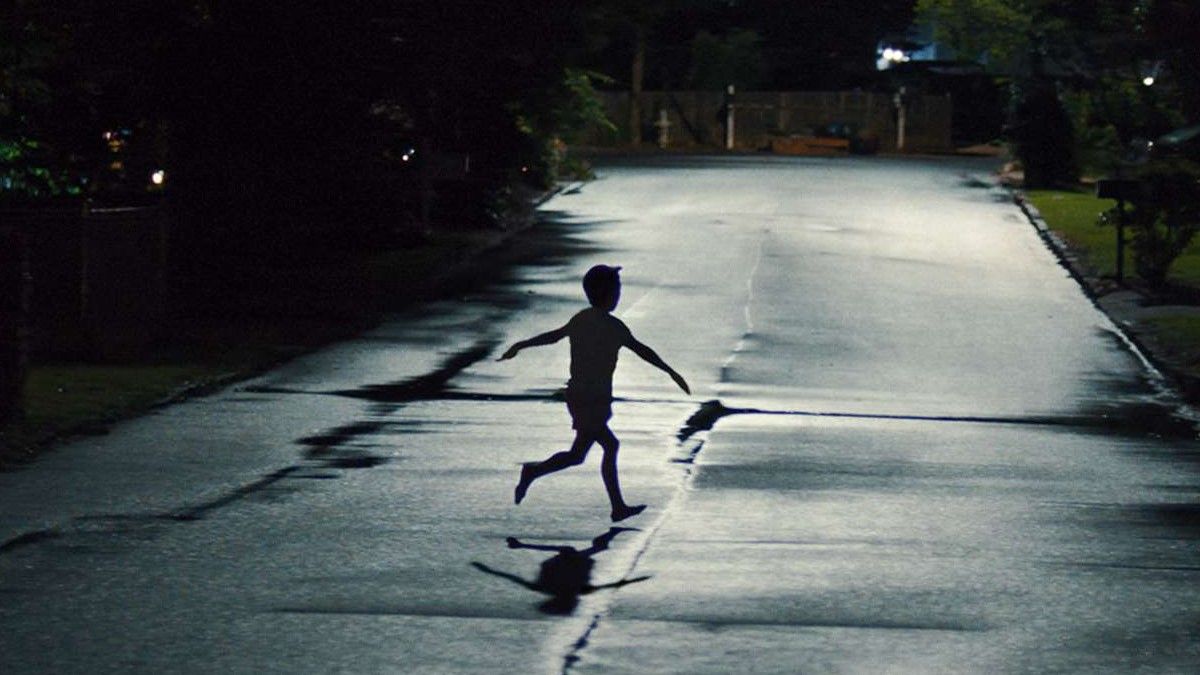
2. Weapons (dir. Zach Cregger) begins with a voiceover, a child describing the night that the kids from an entire third-grade class walked out of their houses and disappeared, setting the tone for an enigmatic urban legend or dark fairy tale. It’s an approach that works surprisingly well for a story set in contemporary suburbia, and like a fairy tale, Weapons can be enjoyed as a story for its surface elements (told in fragments, from the perspectives of alternating characters, each expanding the audience’s view a little more, until finally revealing what’s really going on) or as a symbolic examination of current anxieties. In this case, the title and the specter of an enormous assault rifle that appears in a dream sequence suggest a meaning that is never stated explicitly, but in modern America, what’s the most common explanation for an entire classroom of children vanishing at once?

1. Sinners (dir. Ryan Coogler) contains multitudes: a period piece, a supernatural horror movie, a meditation on community and identity. Michael B. Jordan plays a dual role as twin brothers Smoke and Stack, who return to their small hometown in the Mississippi Delta with the idea of opening a roadhouse after bootlegging in Chicago. Their younger cousin Sammie (Miles Caton), torn between his father’s church and his worldly love of the Blues, begs for an opportunity to play guitar at the roadhouse’s opening. It’s not until Sammie’s playing literally lifts the veils between different times and places (in an audacious scene that demonstrates the “power of music”) that the genre switcheroo takes place, as the music attracts the attention of a band of Irish vampires who want Sammie’s power to revisit their own long-lost home. It’s a movie I will revisit.
Thanks for reading and have a great 2026!
 Medleyana