
It is almost a week into November, and here I am finally writing up my summary of October and Halloween activities. I knew I would be busy during October this year, and that included the weekend of October 31 and November 1, so I tried not to be too ambitious about setting goals and didn’t sweat it too much if I couldn’t log a movie every day. I still managed to fit in twenty-five (mostly) scary movies and even got out to the movie theater a couple of times. This year, my report also follows on the heels of Election Day; usually, every two years Halloween is shadowed by the approaching election, like a dark presence lurking on the threshold (to coin a phrase). One of the most unpleasant experiences of the month was trying to get across town to see The Devils on the same day a visit by President Trump to my area led to road closures and traffic snarls throughout the city. Considering how it turned out this year, I am allowing myself to be cautiously optimistic.

- National Treasure (Jon Turteltaub, 2004) rewatch No, this isn’t really a “Halloween” movie; it’s more appropriate for the 4th of July, or possibly Thanksgiving at the outside. A great way to start off the month.
- Transylvania Twist (Jim Wynorski, 1989) Wynorski’s most family-friendly picture (at least that I’ve seen).
- Dr. Jekyll & Sister Hyde (Roy Ward Baker, 1971)
- Resident Evil (Zach Cregger, 2026) theatrical viewing
- Tales from the Hood (Rusty Cundieff, 1995) theatrical viewing
- Ice Cream Man (Norman Apstein, 1995)
- I Bury the Living (Albert Band, 1958)
- Digger (Alejandro G. Iñárritu, 2026) theatrical viewing Again, not very “Halloweeny,” although with the film’s meta twist (kept out of the trailers), it was more speculative (and thus more appropriate) than I expected.
- Mr. Vampire (Ricky Lau, 1985)
- Mr. Vampire II (Ricky Lau, 1986)
- Mr. Vampire III (Ricky Lau, 1987)
- Mr. Vampire Saga 4 (Ricky Lau, 1988)
- Mr. Vampire 1992 (Ricky Lau, 1992)
- The Devils (Ken Russell, 1971) rewatch, theatrical viewing
- Frenzy (Alfred Hitchcock, 1972)
- One Week (Buster Keaton and Edward F. Cline, 1920) theatrical viewing Not scary, but it was screened as part of the 100th birthday celebration of the Wichita Wurlitzer theater organ with a live accompaniment by organist Brett Valliant—what am I gonna do, not log it!?
- Call Me Tonight (Tatsuya Okamoto, 1986)
- Ghostbusters (Ivan Reitman, 1984) rewatch
- The Curse of Kazuo Umezu (Naoko Omi, 1990)
- Tales from the Darkside: The Movie (John Harrison, 1990)
- Violence Voyager (Ujicha, 2018)
- Scared Stiff aka Treasure of Fear (Frank McDonald, 1945)
- Spooktacular!: Behind the Scenes of America’s Original Horror Theme Park (Quinn Monahan, 2023)
- Clown Panic (Ed Perkins, 2026)
- The Incredibly Strange Creatures Who Stopped Living and Became Mixed-Up Zombies!!? (Ray Dennis Steckler, 1964)
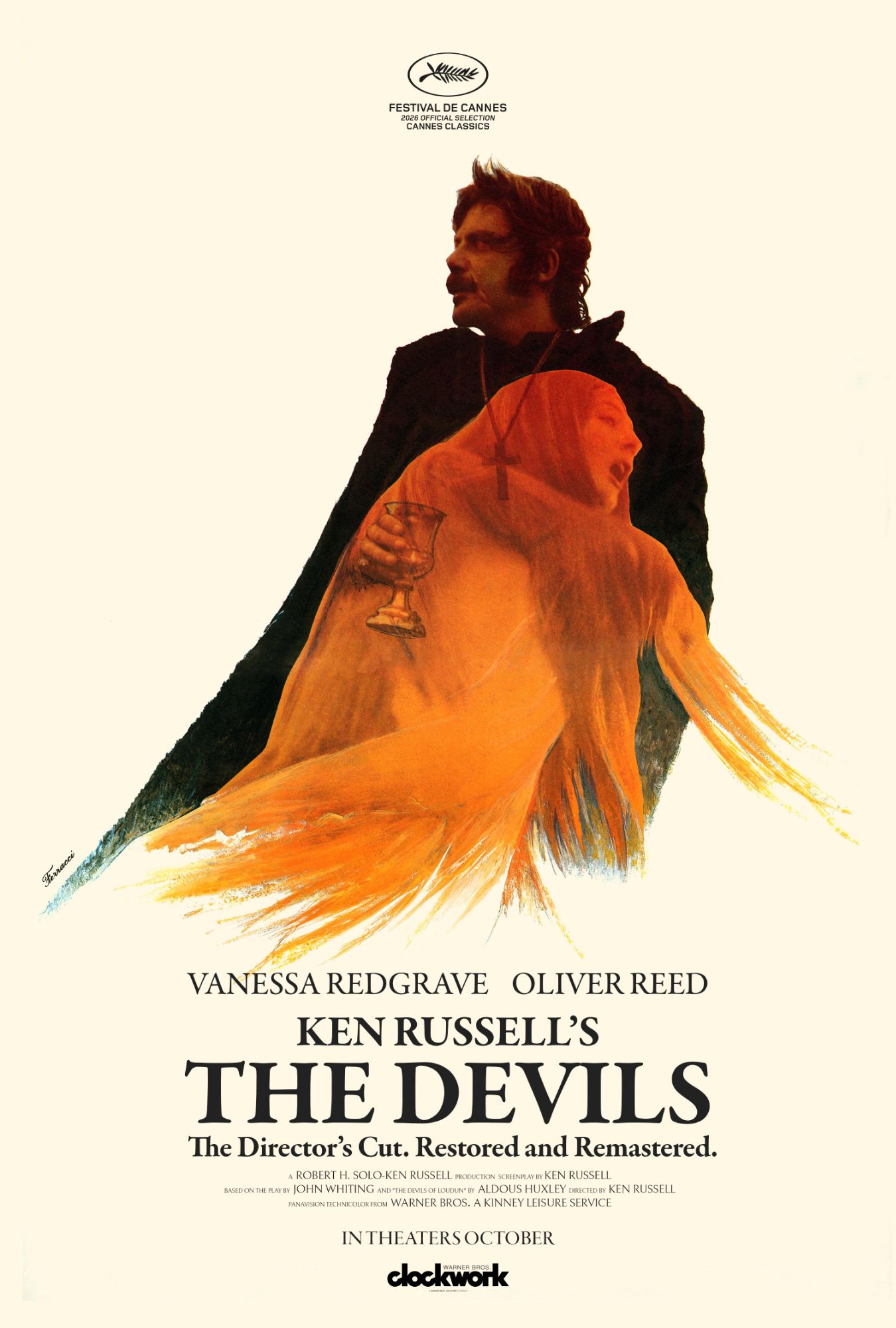
Best Movie: One could quibble with the much-fanfared rerelease of Ken Russell’s masterpiece The Devils in October, emphasizing its transgressive content (censored upon its original release and not treated much better in the home video era) and placing its “possessed” nuns front and center as if it were just another bit of diablerie, The Exorcist with historical set-dressing. The whole point of the story (textually, in the film) is that the accusations of witchcraft leveled against Fr. Urban Grandier (Oliver Reed) were false, and that while Grandier was undoubtedly flawed, committing sins of lust and pride and breaking his vows by marrying in secret, his persecution was ultimately political. On the other hand, plenty of movies considered “horror” are about serial killers, cult leaders, and other human monsters, and are entirely materialist in their outlook without giving up their genre bona fides, so on that basis The Devils counts. Power-hungry men who believe they are doing God’s will are capable of any atrocity, a sadly timeless theme.
(As an aside, it struck me that the black humor Russell derives from seventeenth-century medical “science” and his focus on the grotesques and gadgets of the time must have had a profound impact on Terry Gilliam. More about him in a bit.)
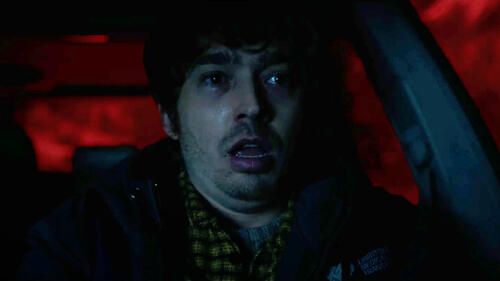
Having said all that, I had already seen The Devils (having downloaded a rip of one of those home video releases, probably the laserdisc, several years ago), and I usually only count first-time viewings for these categories. For the other best movie I saw last month, I should acknowledge that I’ve never played any of the Resident Evil games or even watched the previous film adaptations. However, I was a fan of Zach Cregger’s previous two films, Barbarian and Weapons, so I felt confident that I would be in good hands with his take on the material, and unsurprisingly I had a blast with it. Austin Abrams (a standout in Weapons last year) is great as a put-upon medical courier trying to get into the snowbound mountain community of Raccoon City at the same time some seriously bad (and ooky) shit is going down. In the RE series, viruses cause people to mutate and become dangerous zombies, among other things, and Cregger gets creative with some extreme body horror: John Carpenter’s The Thing is an obvious touchstone, and a lab-set finale brought Re-Animator to mind. Reading some reviews from people who have played the games clued me in to the Easter eggs and ways the narrative is shaped around the experience of playing a “survival horror” game, but you don’t have to know any of that to enjoy it.
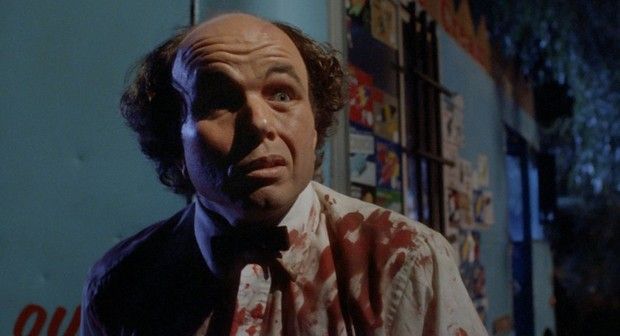
Worst movie: The Ice Cream Man I watched is the horror comedy starring Clint Howard from the 1990s, not the recent Eli Roth movie of the same name (which I haven’t seen, and probably won’t bother with). Howard plays Gregory Tudor, who witnessed the murder of the local ice cream truck driver as a boy, and grew up to hold the same job (after a stay in a mental institution). He kills people and serves up their corpses mixed into the ice cream he sells, among other horrors of unsanitary food handling. Some neighborhood kids start to suspect something is up (Greg is such an obvious nut, only the adults’ self-absorption could keep them from reaching the same conclusion) and so he goes after them while they try to collect evidence of their suspicions. This movie does have its moments, and I can see how it would make an impression if you saw it at the right age (there is one very funny scene involving a camera the kids borrow from an older brother); and, heck, I like Clint Howard, who seems like a cool guy and who has made a career out of oddball characters like Greg. But Ice Cream Man never quite comes into focus: there are some amusing ice cream-themed kills, but not enough to carry the movie, and worse yet, the movie can never quite decide if Greg is a villain or a sympathetic anti-hero (when the cops trash his ice cream factory looking for evidence, or when he kills some yuppie asshole, it’s easy to be on his side, but there’s not a consistent throughline in his—or anyone else’s—characterization). I’m probably expecting too much. This is a movie for kids that’s kind of edgy in a ‘90s “eat my shorts” way, and I should just accept that and move on.
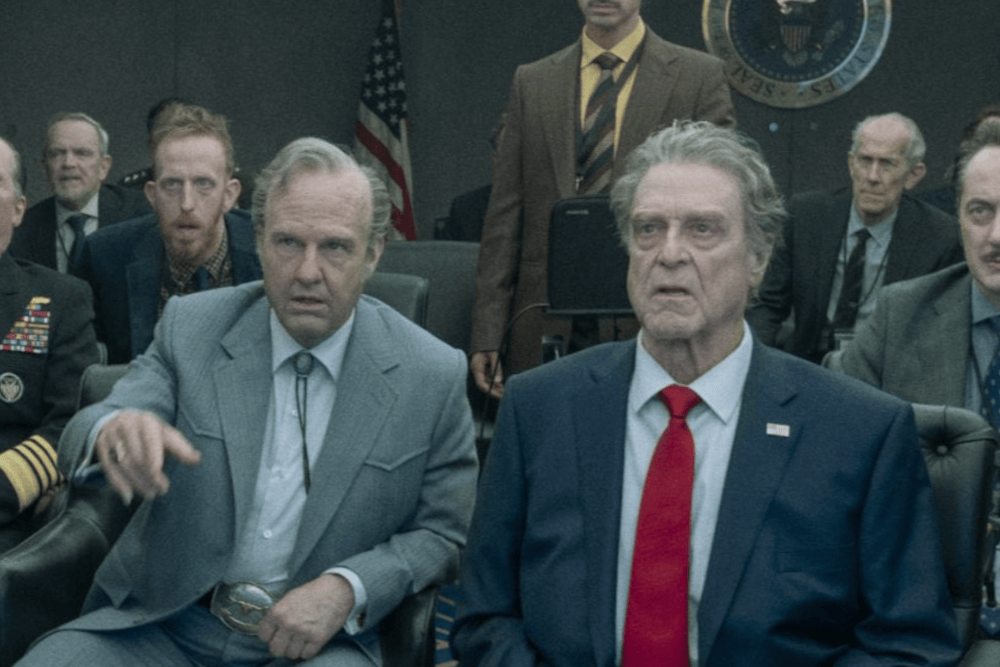
Neither the Best Nor the Worst Movie: When I first saw the trailer for Digger before The Odyssey, I was almost viscerally turned off. I went straight past the obvious Dr. Strangelove homage (Tom Cruise plays a cantankerous oil executive faced with an apocalyptic climate disaster) and zeroed in on the deliberately uglied-up mugs of character actors like John Goodman, concluding that Iñárritu was doing his own riff on the Coen brothers. “No thanks,” I thought. At first, negative reviews only reinforced my first impression, but when people I trusted started pushing back, my resolve softened. One friend’s praise evoked Terry Gilliam, drawing comparisons with The Adventures of Baron Munchausen and Brazil. Even after I decided to give it a chance, I firmly expected to either love or hate Digger; it seemed like the kind of film to garner such reactions.
To my surprise, I ended up in the middle, more positive than negative to be sure, but not quite ready to call Digger an unqualified masterpiece. There is more going on than could be shown in the trailer (however disastrous that ended up being for Digger’s box office), and the ugliness of the characters has an in-story justification. I won’t spoil it, but my friend’s comparisons to Gilliam are justified, at least conceptually.
But perhaps that’s where I’m getting hung up: writing about the Munchausen films of Gilliam and the earlier Karel Zeman, I wrote “Zeman uses a feather duster where Gilliam uses a sledge hammer.” Compared to Iñárritu, Gilliam is a master of subtlety; worse, Iñárritu gives us material that we are told, in-story, is meant to be funny, but there is very little that actually works as comedy, black or otherwise. The premise, once sprung, is audacious, but it just doesn’t pass the smell test. I had the same sense of skepticism I felt watching the “brilliant” comedy of Aaron Sorkin’s Studio 60. Some have claimed that is the point of the film. I’m not convinced, but it’s a movie worth seeing and wrestling with.
Scariest movie: Did I watch anything actually scary? Resident Evil is intense, and puts the protagonist in situations where both he and the viewer knows there might be something behind the door or in the dark corridor, but he must press forward anyway. But it’s also clearly in the realm of “sci-fi monster movie,” which puts some distance between it and the audience. Other movies I watched grounded suspense in real-world terrors: Frenzy is one of Alfred Hitchcock’s later films, the only one with an R rating, and one I hadn’t seen before. Its villain, a serial sex murderer who hides his grisly habits behind a cheery, wouldn’t-hurt-a-fly face, is human enough to be believable, and Hitch took advantage of the loosened restrictions of ‘70s cinema to show clearly what his earlier films like Psycho could only imply. But to tell the truth, I think the scariest film I saw (several times) last month was the trailer for Other Mommy, a freaky-looking movie I didn’t even go see. Call me a wuss if you must.

Weirdest movie: Violence Voyager, in which a group of children explore a theme park that turns out to be a front for murder and mad science on a horrific scale, would be a contender for weirdest (and goriest!) movie even if it were live-action. The story is the stuff of nightmares, and the few victories the main character ekes out come at the cost of a total transformation of his mind and body. But the visual style of Violence Voyager is unlike anything I’ve seen in a feature film: painted paper cut-outs, like illustrations from a story book, are given the “limited animation” treatment, with no attempt at conveying a full range of motion. It’s more like puppet theater than conventional animation. The contrast between simple illustrations and extreme body horror is reminiscent of Henry Darger’s collages, which placed innocent children in the context of a war of fantastical destruction, and which could have been an influence on the film.
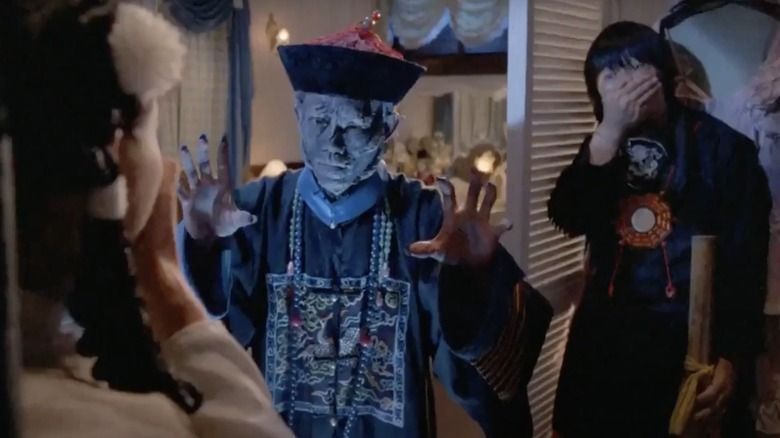
Funniest movie: A few years ago, I explored the body of mostly Hong Kong-made films featuring the jiangshi, or “hopping vampire,” but one of the most popular entries in that genre, the Ricky Lau-directed Mr. Vampire series, eluded me. This year, I found a way to watch them. All of the films in the series share cast members, but with the exception of the final entry, Mr. Vampire 1992, which features the same characters as the original, none are connected by shared continuity or characters. Only the vampires and the general character types (such as the Taoist priest inevitably played by Lam Ching-ying) remain the same. From the beginning, these were horror comedies, with clever bits playing off of already-established vampire lore and poking fun at the conventions of horror movies, but as the series continued the comedy took over, with the movies being broad and silly by the end. I enjoyed all of them more or less, but the first one is the best.
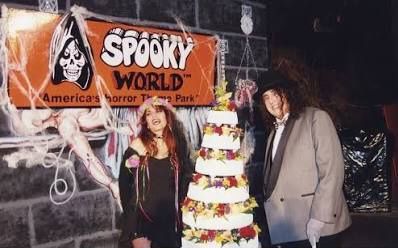
Most Informative: In recent years, I’ve tried to include a thematically appropriate documentary in my Spooktober viewing when I can, and this year I watched two. Spooktacular! Tells the rapid rise-and-fall story of Spooky World, a horror-themed amusement park that grew from a haunted hayride attraction in small-town Massachusetts to a fan mecca and folded when it got too big (and too edgy) for the infrastructure and political climate of said small town. (Considering the number of clips included from national programs like The Tonight Show and Today, you’d think I’d have been aware of this in the 1990s, but I don’t remember it at all. I guess I was busy doing other things.)
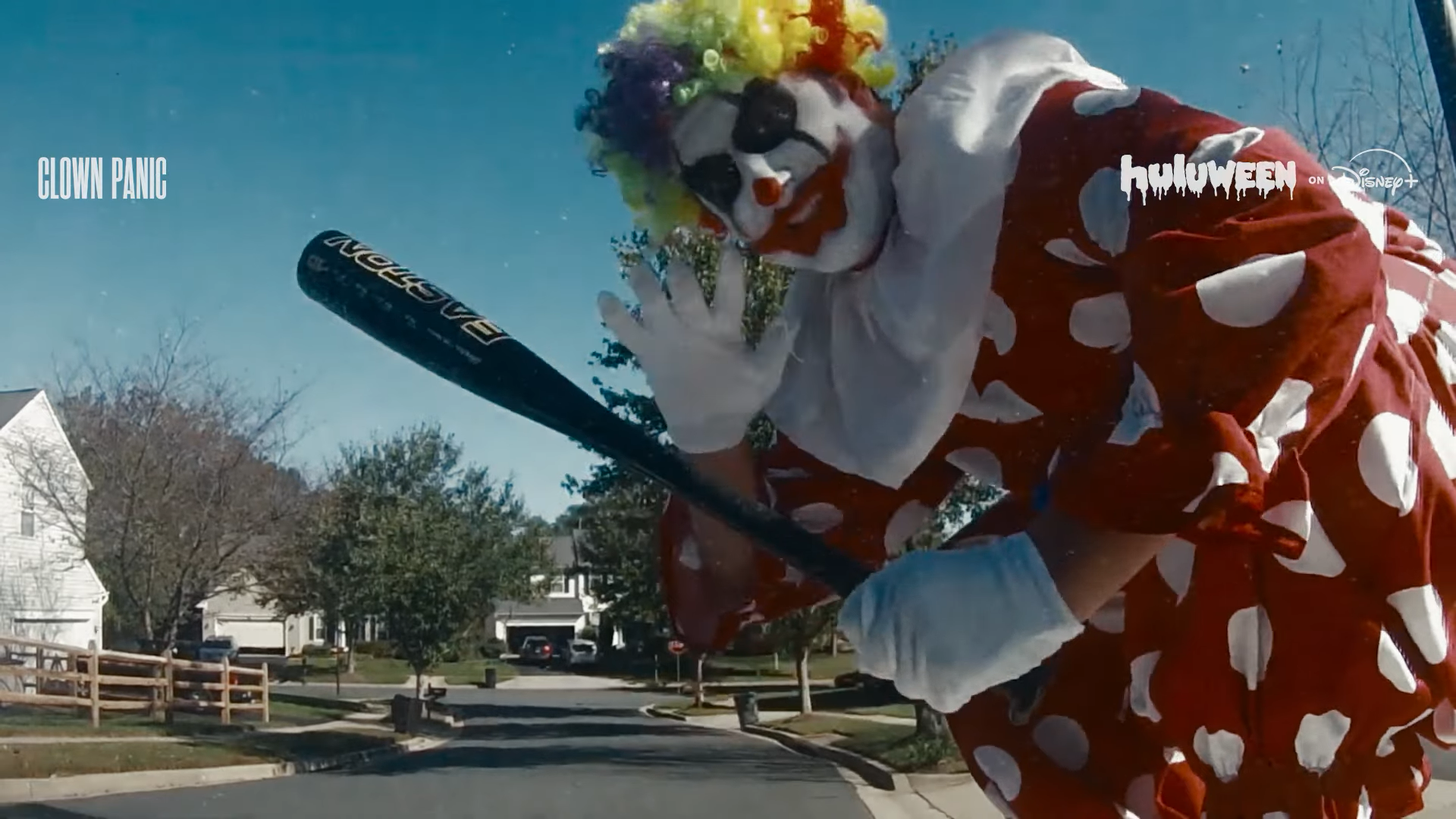
Even better was Clown Panic, a recent Hulu documentary that looks back ten years ago, to the fall of 2016 when a lot of people were concerned about clowns lurking in the woods, clowns driving around in white vans abducting people, clowns threatening to come to your kids’ schools and kill them, etc. Clown Panic is a little bit true crime and a little bit sociological study. The film looks at the phenomenon from several angles, noting the fraught political atmosphere leading up to the 2016 election, the role of masked figures in oppressing communities of color, and the way news amplified the original sightings and social media supercharged the mania. It’s all fun and games until people go to jail, have their livelihoods threatened, or even end up dead.
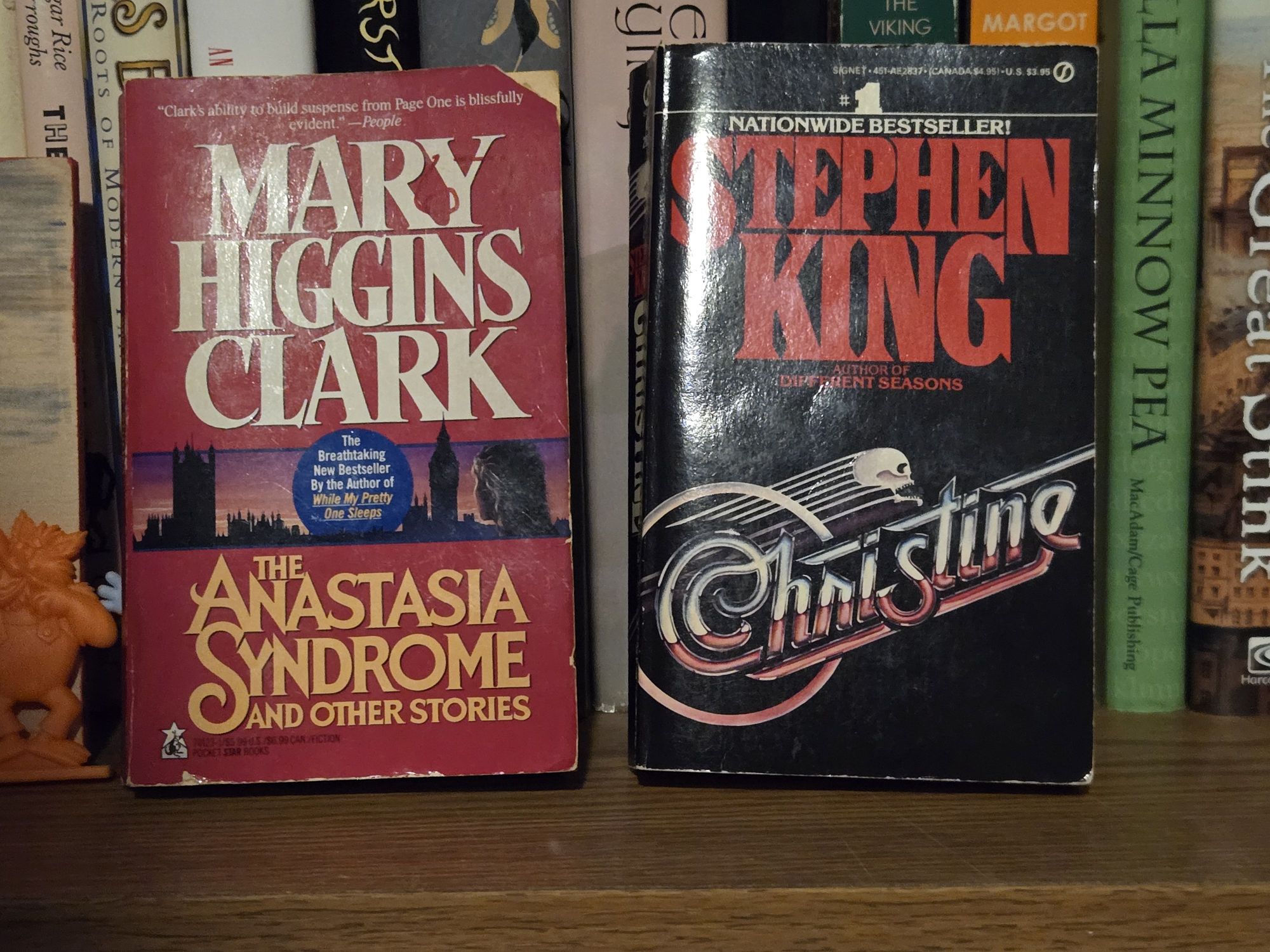
Hey, books can be scary, too: Since I wasn’t single-mindedly logging movies all month, I had time to do some reading as well. Two whole books! The first, The Anastasia Syndrome and Other Stories, was my first Mary Higgins Clark, and I was impressed. Clark is known as a suspense writer, but since I haven’t read a lot in that specific genre—edgier than the typical mystery, but less graphic than horror—I wasn’t sure what to expect. The title story begins as a romance, but when the heroine undergoes hypnosis to recover memories of her early childhood, it turns into a ghost story. Other stories, like “Lucky Day,” feature ironic twists in the vein of O. Henry or Roald Dahl. All of the stories are remarkable for how quickly they establish characters and get the reader on their side, giving them problems and pressures to deal with right from the start.
Finally, I also read Stephen King’s Christine; I’ve seen the movie before, but (as is typical) the book spends more time on backstory and (also typical for King book vs. movie discussions) is more literal and flamboyant in its depiction of supernatural evil. Like many of King’s best books, the spooky thrills and chills are balanced with a keen eye for character and bittersweet observations about growing up. I think this might just have moved into my top five ranking of King’s novels.
Thanks for reading!

