My 2023 in Books: Highlights

“If Blue were a scholar . . . she would catalogue, across all strands, a comprehensive study of the worlds in which Romeo and Juliet is a tragedy, and in which a comedy. It delights her, whenever visiting a new strand, to take in a performance not knowing how it will end.”

This Is How You Lose the Time War, Amal El-Mohtar and Max Gladstone

I don’t have a complete reading log to offer this year. I finally, after too long, upgraded to a new computer last summer, leaving behind the document I had started at the beginning of the year. That coincided with a severe reading drought over the summer and I didn’t keep up the log when I finally got back to reading in the fall. So it wasn’t the best year for reading books to begin with, but I do have some highlights worthy of mention.

Science Fiction

Two short science fiction novels made an impression on me. This Is How You Lose the Time War alternates chapters between the perspectives of its two leads, Red and Blue, champions of time- and space-spanning rival powers. The Agency, for whom Red works, represents a post-singularity technological future; the Garden, Blue’s home, is a biologically-engineered paradise. Neither force considers itself safe while the other exists, and the two empires battle across myriad parallel timelines, steering historical events toward their chosen future and cutting off the others’. In this context, Red and Blue are sworn enemies, but they respect each other at a distance like opponents across a chess board. Curious but unable to confront each other face to face, they leave cryptic messages for one another, and their similarities outnumber their differences. (It becomes clear that neither the Agency nor the Garden is the utopia it’s cracked up to be, and one of the prices of the war for Red and Blue is disillusionment.) This is an inventive and lyrical novel, full of poetic flights and extravagant with its language as the clandestine messages back and forth become overt love letters.

Landscape with Invisible Hand by M. T. Anderson is another short but evocative book. Each chapter illuminates a drawing or painting by the narrator, Adam, an aspiring teenage artist. But instead of the infinite worlds of Time War, Landscape focuses on characters with few choices and nowhere to go. In the years since an alien race called the vuvv arrived on Earth and offered membership in their “Interspecies Co-Prosperity Alliance” (red flag!), the gap between the haves and have-nots has grown even larger, and those left behind live in the shadows of the vuvv’s pollution-generating machinery, fighting over jobs in soup kitchens. Adam and his girlfriend Chloe livestream idyllic 1950s-style dates to an audience of fascinated vuvv subscribers, even after they begin to hate each other, an illustration of the way in which the vuvv presence distorts their human “partners,” turning them into caricatures of themselves to satisfy the economic demands of their colonizers. If many science fiction dystopias ask the question “What if white, middle-class people were treated the way minorities and the poor are routinely treated now?”, Landscape with Invisible Hand asks “What if modern, Western society went through the kind of economic and cultural colonization that indigenous people around the world have experienced?”

Another book on a similar theme is The True Meaning of Smekday by Adam Rex (the basis for the animated movie Home), which centers on an invading race called the Boov magnanimously herding all of America’s citizens into a single state reserved just for them (first Florida, but then, after the Boov decide they like Florida, Arizona). Rex is a versatile cartoonist and illustrator as well as a writer, so several sequences are rendered in comics format, purportedly drawn by the Boov main character to explain his world’s history and character. This one is written for a younger audience so it’s fairly whimsical and light, but it’s witty and entertaining and full of asides on human society as seen from an outsider’s perspective in the best science fiction tradition.

Axiom’s End by Lindsay Ellis is a much more grounded novel intended for adults, but it shares with The True Meaning of Smekday a focus on the difficulties of communication with different forms of intelligence and the impossibility of truly knowing another’s mind. Ellis has written that the idea for this novel (the first volume of a trilogy, still underway) sprang from her interest in the Transformers cartoon series, a kernel still present in the friendship between a human woman and an alien being who represents one side in a galactic war. Intriguingly, at least for me, the cohort of aliens who secretly made contact with the U.S. government in the 1970s are identified with Esperanto code names, a relic of the idealism and nerdiness of the group charged with handling them. Linguistic analysis and the ways in which language can channel thought are front and center, but within an action-packed thriller that doesn’t shy away from the gee-whiz tropes popularly associated with science fiction.

Romance

Romance as a genre is, in my opinion, at least partly a form of pulp. Now, before anyone gets defensive, and especially if this is your first time visiting Medleyana and you’re not familiar with my previous writings on pulp, that’s not meant as an insult or a comment on the genre’s readers. But the fact remains that, like the murder mystery, romance is one of the few genres that’s defined by its plot mechanics rather than theme or setting (do not bring a tragic love story without a “happily ever after” to a romance reader and call it a romance). There are established formulas and story beats (especially in the current obsession with tropes and hooks), and, however beautifully written, an emphasis on keeping the story rolling. Many of the romance novelists I explored in the last year were continuing in the tradition of Jane Austen (especially Georgette Heyer, the true parent of “Regency romance” as a publishing genre, and whose work I continued to explore), but there are as many subgenres of romance as there are genres outside it. Paranormal romance in particular overlaps with the fantasy, science fiction and horror that I was already reading.

I particularly enjoyed The Emperor’s New Clothes by Victoria Alexander, set in a small Wyoming town on the cusp of the twentieth century. An itinerant actress, gambler and con woman is mistaken for a visiting English Countess, and with the Countess’ trunks of clothing at her disposal, decides to make the best of it. The only thing confounding her plan to sell her bogus title for cash and move on is the Oxford-educated Mayor, the adopted son of the wealthy rancher who effectively runs things. Will the sparks of attraction between them convince her to go straight, and can he love her for who she is, not who she pretends to be? Well, see my comments on plotting in the paragraph above.

Comics
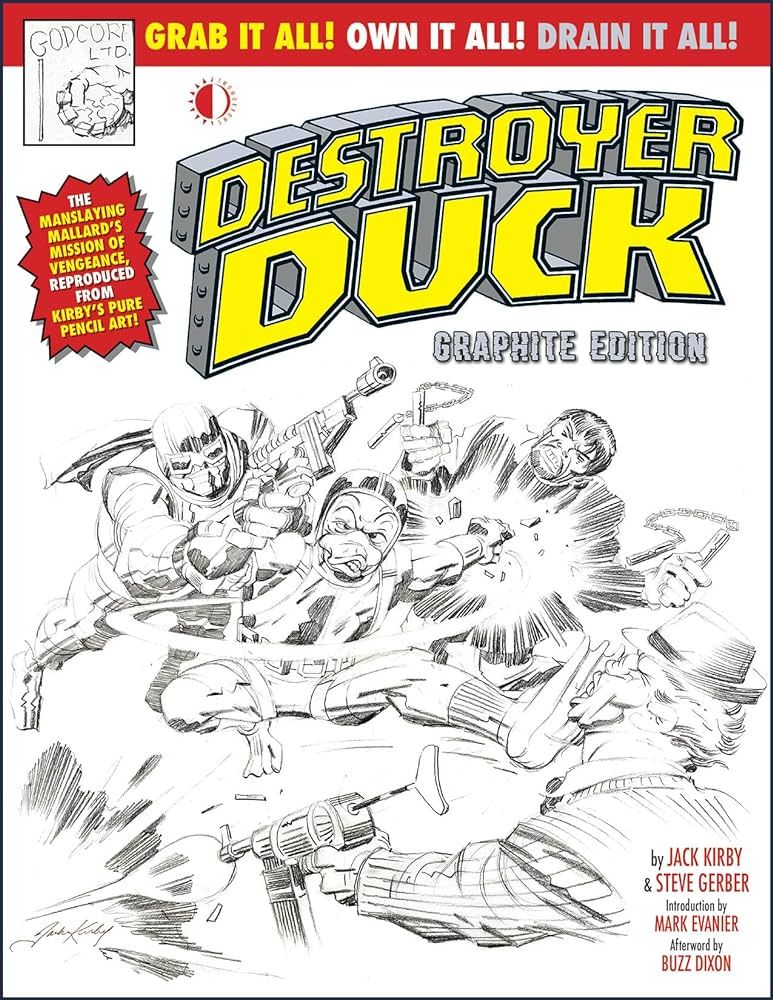
Although I continued to collect and read comics in the past year, I fell behind and didn’t match the amount I read in 2022. The most notable book I read in this format was Destroyer Duck: Graphite Edition, a trade collection of a series from the early 1980s. Destroyer Duck was an unusual collaboration between writer Steve Gerber, then fighting with Marvel over ownership of his creation Howard the Duck, and artist Jack Kirby, who had his own reasons to feel mistreated by Marvel. As such, the adventures of Duke “Destroyer” Duck, a macho, capable John Rambo among talking waterfowl, are marked by relentless action that would have been out of character for Howard’s acerbic social commentary and self-examination (read: navel-gazing). Of course, this is Gerber, so there are still plenty of axes to grind as Destroyer avenges his unnamed friend, “the little guy,” who was taken in, exploited, and abandoned by the sprawling Godcorp, an obvious stand-in for Marvel with characters based on editors or fellow artists whom Gerber felt mistreated him or picked the wrong side. (If that’s what Gerber thought of Marvel then, I can only imagine what he would make of its current Disney-owned incarnation and the dominance of the MCU.) The first issue of Destroyer Duck was published by independent Eclipse Comics as a fund-raiser for Gerber’s legal bills and continued as an ongoing series; the Graphite Edition collects the first five issues, the sum of Gerber’s and Kirby’s collaboration. (In the vein of currently popular “artist’s editions,” this book is a reproduction of Kirby’s original pencil art rather than a full reprint of the finished color comics, but knowing that readers like me might be encountering this material for the first time, they’ve kindly included word balloons with dialogue, which were usually added during the inking process.) A wealth of commentary and supplementary material rounds out the volume.

I read other stuff during the year as well, but I’ve run long enough and it’s already the second week of January. I have more year-end articles to get to, not to mention Ninjanuary and Vintage Science Fiction Month! Perhaps I’ll get to those before July. In the meantime, thanks for reading!

My 2022 in Books

Earlier this year, my son was watching me put comic books in protective bags and file them in a long box and he said, “Do you actually read comics or do you just collect them?” First of all, how dare you. Second . . . I’m working on it. I did spend more time on comics this year than some past years: I finally got them all in one place (some had been at my parents’ house since I graduated from high school) and put them in bags and boxes instead of random piles. The next step is to organize them and get series together so I know what I have and what holes I have to fill, a process already partially started as I attended a few comics conventions this year and found some new comics shops in town whose dollar bins I had to check out. Eventually, I would like to cull duplicate copies and other unwanted books and get my collection down to a manageable size (I don’t have an exact count, but I filled up twelve long boxes).

That, and just being busier, undoubtedly skewed my reading this year: I don’t keep track of every single issue I read, but even the list below includes a greater number of graphic novels and comics collections than previous years (marked with an asterisk). I actually prefer bound books for their convenience of access and storage, so my single-issue collecting has shifted toward series that are unlikely to be reprinted due to licensing issues (a large number of movie and toy tie-ins are in that situation).

Beyond comics, the books I read this year were mostly fiction, and a good portion of that was genre reading, continuing the “pulp” theme from last year. However, in addition to the usual science fiction and horror, I read more crime/mystery and romance (including an unusual sci-fi romance); concentrating on those areas led to me reading more female authors than I have in the past as well. A few longer novels were in the mix as well, but without much theme or connection; there were few series guiding my reading this year, and I guess it shows in my list.

January

The Best of Raymond Z. Gallun (for Vintage Science Fiction Month)

*Batman: The Jiro Kuwata Batmanga Volume 3, Jiro Kuwata

Space, Time and Nathaniel, Brian Aldiss

The Girl with the Deep Blue Eyes, Lawrence Block

February

Get Shorty, Elmore Leonard

The Tetris Effect: The Game That Hypnotized the World, Dan Ackerman

The Starlight Barking, Dodie Smith (the bizarre sequel to Smith’s better-known The Hundred and One Dalmations)

*Howard the Duck Vol. 2: Good Night, and Good Duck, Chip Zdarsky, Joe Quinones, et al

I Know What I Saw: Modern-Day Encounters with Monsters of New Urban Legend and Ancient Lore, Linda S. Godfrey

*Harvey Kurtzman’s Jungle Book

Once Upon a Time in Hollywood, Quentin Tarantino

March

The Nice Guys, Charles Ardai, based on a screenplay by Shane Black and Anthony Bagarozzi

It’s in His Kiss, Julia Quinn

Ben-Hur: A Tale of the Christ, Lew Wallace

April

*Archie Volume One, Mark Waid, Fiona Staples, et al

Treasure Island, Robert Louis Stevenson

*Jughead Volume One, Chip Zdarsky, Erica Henderson, et al

Fear of Flying, Erica Jong

*Kaiju No. 8 Volume 1, Naoya Matsumoto

Sweet Starfire, Jayne Ann Krentz

This is the sci-fi romance mentioned above. It’s a credible example of both genres, with a real Han-and-Leia dynamic between its rough-edged space pilot and disciplined aristocrat.

May

The Surreal Life of Leonora Carrington, Joanna Moorhead

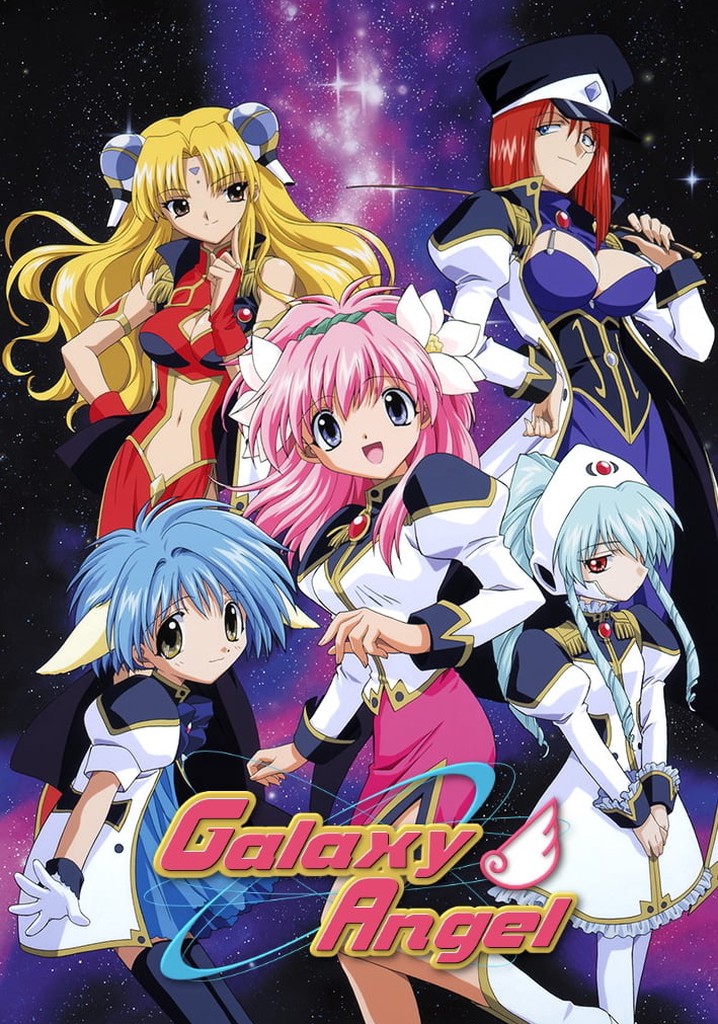
*Galaxy Angel Vol. 2, Kanan

The Galaxy Angel TV series was a pleasant discovery for me this year, but the show exists in a separate, looser continuity from the video games or manga that launched the property. I can’t say the manga blew me away.

June

Your Body Is Not Your Body, ed. Alex Woodroe with Matt Blairstone

Subtitled “A New Weird Horror Anthology to Benefit Trans Youth in Texas,” this includes work by non-gender-conforming authors and features themes of transformation, identity, and body horror.

The Beguiled, Thomas Cullinan

*Super Mario Adventures, Kentaro Takekuma and Charlie Nozawa

*Mr. Boop, Alec Robbins et al (the hardback collection of the biographical webcomic, ripping the veil from Robbins’ controversial marriage in real life to cartoon icon Betty Boop)

Of course

July

Eavesdropping on Jane Austen’s England, Roy & Lesley Adkins

Raiders of the Lost Ark, Campbell Black, Adapted from the screenplay by Lawrence Kasdan, Based on a story by George Lucas and Philip Kaufman

*Star Wars: A Long Time Ago . . . Volume 1: Doomworld, Roy Thomas, Howard Chaykin, et al

*Star Wars: A Long Time Ago . . . Volume 2: Dark Encounters, Archie Goodwin, Carmine Infantino, et al

August

*Star Wars: A Long Time Ago . . . Volume 3: Resurrection of Evil, Archie Goodwin, Al Williamson, et al

I’ve written before about how formative Marvel’s Star Wars series was for my love of comics, so most of this was a reread. It still holds up.

The Gutter and the Grave, Ed McBain

Leave It to Cleavage, Wendy Wax

Cold Nose, Warm Heart, Mara Wells

September

The Dain Curse, Dashiell Hammett

Life and Death of the Wicked Lady Skelton, Magdalen King-Hall

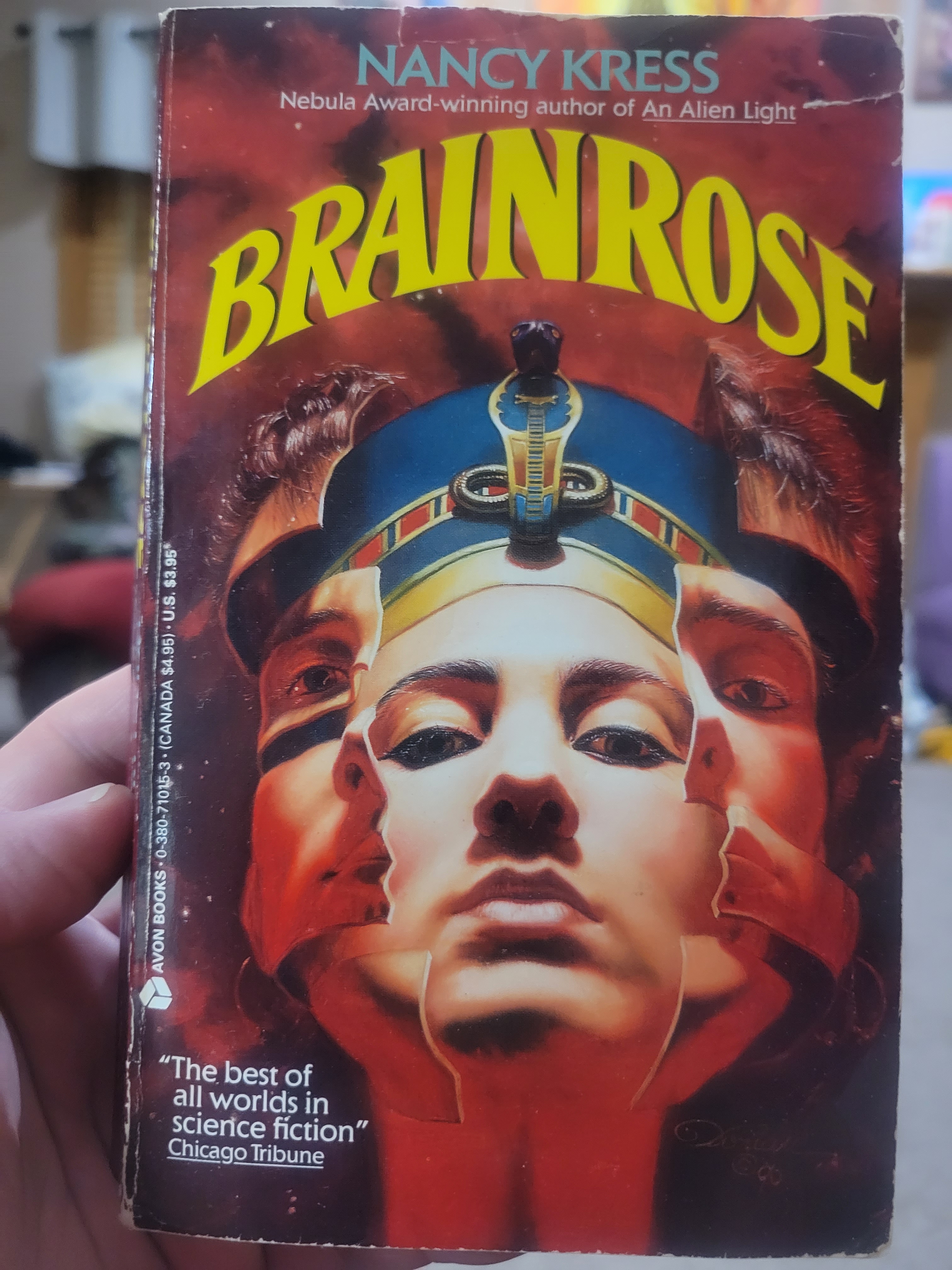
Brain Rose, Nancy Kress

A very interesting science fiction novel, published in 1990 but set in the far-off year 2022. The premise is a surgical procedure that unlocks memories of past lives in those who undergo it, and all the complications that arise from that, but there are a number of other predictions around the edges that make it interesting to look at from this vantage in time.

*Archie Volume Two, Mark Waid, Veronica Fish, et al

October

Han Solo at Stars’ End, Brian Daley

Han Solo’s Revenge, Brian Daley

Han Solo and the Lost Legacy, Brian Daley

*Under 17: 20 Cineful Comix, Gary Smith

I don’t know that Smith thinks of Under 17 as a webcomic, but I did read most of it on Facebook before ordering one of his occasional print editions. Under 17—as in “No one under 17 admitted without an adult”—focuses on Smith’s childhood and adolescent fascination with movies, and his attempts to see, by any means necessary, the forbidden films that fired his imagination. Through the hindsight of adulthood, these vignettes are by turns hilarious, wry, and poignant.

*In a Glass Grotesquely, Richard Sala

Sala passed away in 2020; this is a book from later in his career, ostensibly about the Fantomas-like master criminal Super-Enigmatix, but also something of a jeremiad, skewering the government, social media, modern superhero franchises, self-dramatizing narcissists, and (of course) phonies like you and me. It’s an unusually personal statement from the artist best known for his arch, artful remixes of pulp and noir imagery.

November

Bimbos of the Death Sun, Sharyn McCrumb

Zombies of the Gene Pool, Sharyn McCrumb

Both of these murder mysteries feature Jay Omega, engineering professor-turned science fiction author, and take place within the world of sci-fi fandom. They’re also both critical of the fan impulse and lives wasted in fantasy—apparently Bimbos caused a stir in the 1980s, but it’s even more jarring in the face of the current “poptimistic” celebration of fandom in popular culture—but Zombies was the stronger of the two, with characters who are at least deeper than cartoon “nerd” stereotypes.

Nightmare Alley, William Lindsay Gresham

I loved the 1947 movie version last year and caught up with Guillermo Del Toro’s adaptation at the beginning of this year—both versions have points to recommend—so it was inevitable that I would also read the original novel, and whadya know, it was great.

December

Bird Box, Josh Malerman

I haven’t seen the movie, but this was a pretty good read.

What We Talk About When We Talk About Love, Raymond Carver

*Jughead Volume Two, Chip Zdarsky, Ryan North, Derek Charm, et al

The Black Moth, Georgette Heyer

*graphic novel or comics collection

And that’s it! I’ve fallen behind on blogging, so my end-of-year movie wrap-up will arrive some time next week (I hope!). In the mean time, Happy New Year and have a great 2023! Thanks for reading!

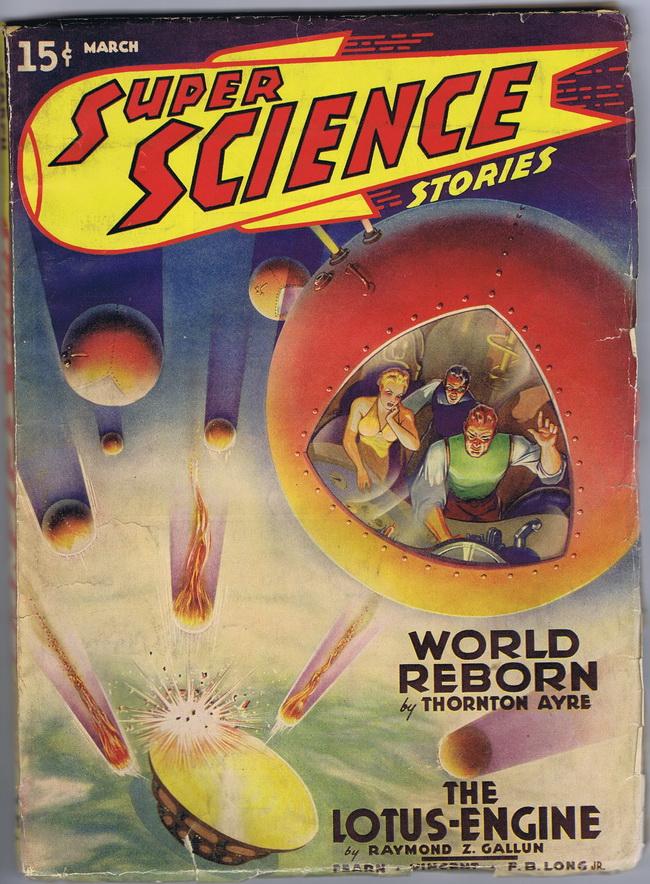
The Martian Chronic: The Best of Raymond Z. Gallun

January is Vintage Science Fiction Month, so join me for a look at a Golden-Age “quiet revolutionary.”

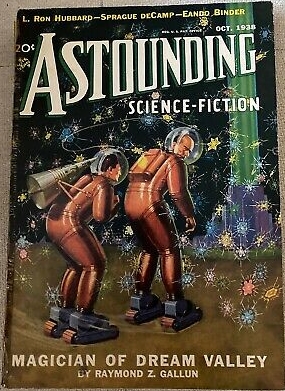
H. R. Van Dongen’s cover art illustrates “The Shadow of the Veil.”

Obscurity isn’t what it used to be: with the internet, there is rarely such thing as a completely new find, and it’s only a matter of a few keystrokes to connect with someone who already knows all about whatever it is that you’ve just discovered. Of course, it’s true that there’s always someone smarter or more informed out there, but it’s easier than ever for hidden gems to rise to the surface where everyone can see them. I’m not sure how hidden Raymond Z. Gallun (rhymes with “balloon”) really was, or is: all I know is that I had never heard of him, or at least didn’t remember reading anything by him before discovering the “Best of” volume edited by J. J. Pierce and published by Del Rey as part of their extensive series of science fiction reprints. But even in 1978, Pierce described Gallun as neglected and underrecognized, even as some of his stories continued to be anthologized, and as Gallun had published a novel, The Eden Cycle, only a few years before. He does not seem to have had a resurgence since his death in 1994.

Nevertheless, Gallun was part of the pioneering generation of science fiction writers in the 1930s and ‘40s who helped to elevate the genre from crude, cliché-ridden pulp to the thoughtful “literature of ideas” we celebrate when looking back, and if many of his stories still have elements of pulp, I’ll hardly complain. The later stories in this book, from the ‘40s and early ‘50s, lean more toward character study, but my favorites balance the demands of the characters’ inner lives with external circumstances that push them toward decisive action. (To be fair, I’m only getting a narrow view of the man’s work—thirteen stories out of more than eighty, and he also produced a few novels which I haven’t read—so I’ll resist the urge to make sweeping judgments, even if I take Pierce’s word that this book really represents Gallun’s best.)

Going by these selections, Gallun was fascinated by the processes of life and death on a long-term cosmic scale. His vision of a dying Mars, with only a thin, cold atmosphere and marked by the ruins of a long-extinct civilization, is one he shared with many other writers of his day, influenced by the ideas of Schiaparelli and Lowell. (Amusingly, Gallun suggests in his afterword that he may have been inspired by a youthful job stoking the furnace at a hemp mill, surrounded by clouds of smoke from burning, cast-off cannabis plants.) However, spread across many of Gallun’s stories is the thought that Mars is only the latest planet in the solar system to approach its appointed end and Earth, too, will one day share such a fate.

Where Gallun stands out is the rigor with which he works out the details of his alien ecologies, whether they be based on other planets or on Earth in some future time or inaccessible place. “Davy Jones’s Ambassador” takes seriously the question of a deep underwater civilization, with Gallun’s solution being the careful breeding of specialized animals to provide food, structures, artifacts, and even electrical currents in an environment without fire. Gallun’s Mars, with its ancient ruins of an extinct, semi-insectoid race, destroyed long ago by war and/or climate change, is superficially similar to other treatments of the planet, but Gallun has little interest in Burroughs-style derring-do or Bradbury’s sense of fable; his is an anthropologist’s and ecologist’s view (the immensely satisfying “The Shadow of the Veil” is almost a sword-and-sorcery tale, told from the perspective of an alien “barbarian,” but its references to magic and gods are those of a pre-scientific being with no concept of astronomy or space travel). “Seeds of the Dusk” describes semi-intelligent plants, evolved to store oxygen in capsules and directing their own evolution for adapting to different environments, including spreading to other worlds.

The notion of intelligent life spreading seeds throughout the universe appears in metaphorical ways as well: “Godson of Almarlu,” the longest story in the book, features a long-dead civilization that once thrived on the planet which became the asteroid belt upon its disintegration. Knowing that the heavy, neutronium-cored comet that destroyed their planet would one day return to the solar system, threatening the life that they had spread to Earth in the prehistoric past, these ancients created a computer-like device to implant in one human’s mind the information necessary to build a sort of astral bridge so a small part of the planet’s population could escape to the moon (again, thought to have a thin atmosphere in those days). But while this 1936 story brings out the biggest guns—planetary destruction, cosmic forces using humanity as pawns—it also shows how Gallun’s science fiction was relatively hard, at least for its time. This is world-wrecking closer to Fred Hoyle than Edmond Hamilton. Based on knowledge of other planets as they were understood at the time, “Godson” even predicted the existence of neutron stars, as Gallun speculated that the newly-discovered element neutronium would, if concentrated, be heavy enough to disrupt the gravitational fields of planets unfortunate enough to be nearby. The mind-altering forces of the ancients and the nature of the energy they use to transport humanity to the moon are, of course, not as easy to explain, but Gallun smartly leaves such issues as mysteries.

Finally, Gallun was an important example in creating alien intelligence that was truly alien, making its different point of view a critical part of the story. His early life as a wanderer, traveling and working all over the world, surely broadened his perspective beyond the typical pulp writer of the ‘30s. Many of his aliens are sympathetic, and even when opposed to humanity, the aliens aren’t all monstrous invaders: in fact, it is often humans, continuing their manifest destiny by spreading through the solar system, that take on the role of colonizers, with the “natives” simply fighting back. (Still, Gallun wasn’t above creating alien antagonists when the story called for it: 1938’s “Hotel Cosmos” includes a particularly nasty one.) Along with Stanley Weinbaum’s “A Martian Odyssey,” Gallun’s “Old Faithful” from 1934 is considered a landmark in logically developing a sympathetic alien. The title character is a Martian astronomer, living in solitude and at odds with his pragmatic, unimaginative people, who communicates with observers on Earth before deciding to take the ultimate risk to cement this long-distance friendship. The story feels like a rebuff to H. G. Wells’s The War of the Worlds: instead of the puffs of smoke on the surface of the red planet being ominous portents of invasion, they are the sign of a kindred intelligence, with which communication, while difficult, is possible.

Speaking of Wells, Gallun’s work can be seen as a continuation of that author’s ideas on the cycles of evolution and extinction. The idea that humans are subject to the same forces as the dinosaurs and must adapt or die is Wells’s great bequest to the authors who followed him, and may in fact be the single greatest insight science fiction has to offer. But as Gallun matured and turned away from simple end-of-the-world scenarios, he realized that individuals face the same choice in microcosm. His 1951 story “The Restless Tide” makes that case directly, with a long-married couple whose lives swing between the indolent comfort of post-scarcity life on earth and the hard rigors of space colonization; neither life is satisfying for long, and it is man’s fate to always alternate between extremes. The futuristic medical and technological advances that increase the characters’ lifespans and make going to space an option mark the story as science fiction, but the central couple could just as easily be a mid-twentieth-century family deciding to leave the cozy suburbs and go back into missionary work. The story’s point is that the motivations and conflicts present are timeless and will continue for as long as there are humans.

My 2021 in Books

The key word in my reading this year was “pulp”: not to say I didn’t read some “serious” literature, but for the most part I was looking for the quick hit, and that meant tearing through a lot of genre paperbacks—adventure, horror, and mystery—especially once summer started and I found myself doing a lot of waiting for kids at music lessons, doctors’ appointments, and the like. I guess you could say that this year I rediscovered the pleasure of skimming, of not having to read every word as closely as if I were writing a graduate thesis on it. Fiction often takes me longer to read than non-fiction because of the labor of imagining every detail as the author describes it, but, welp, not this year.

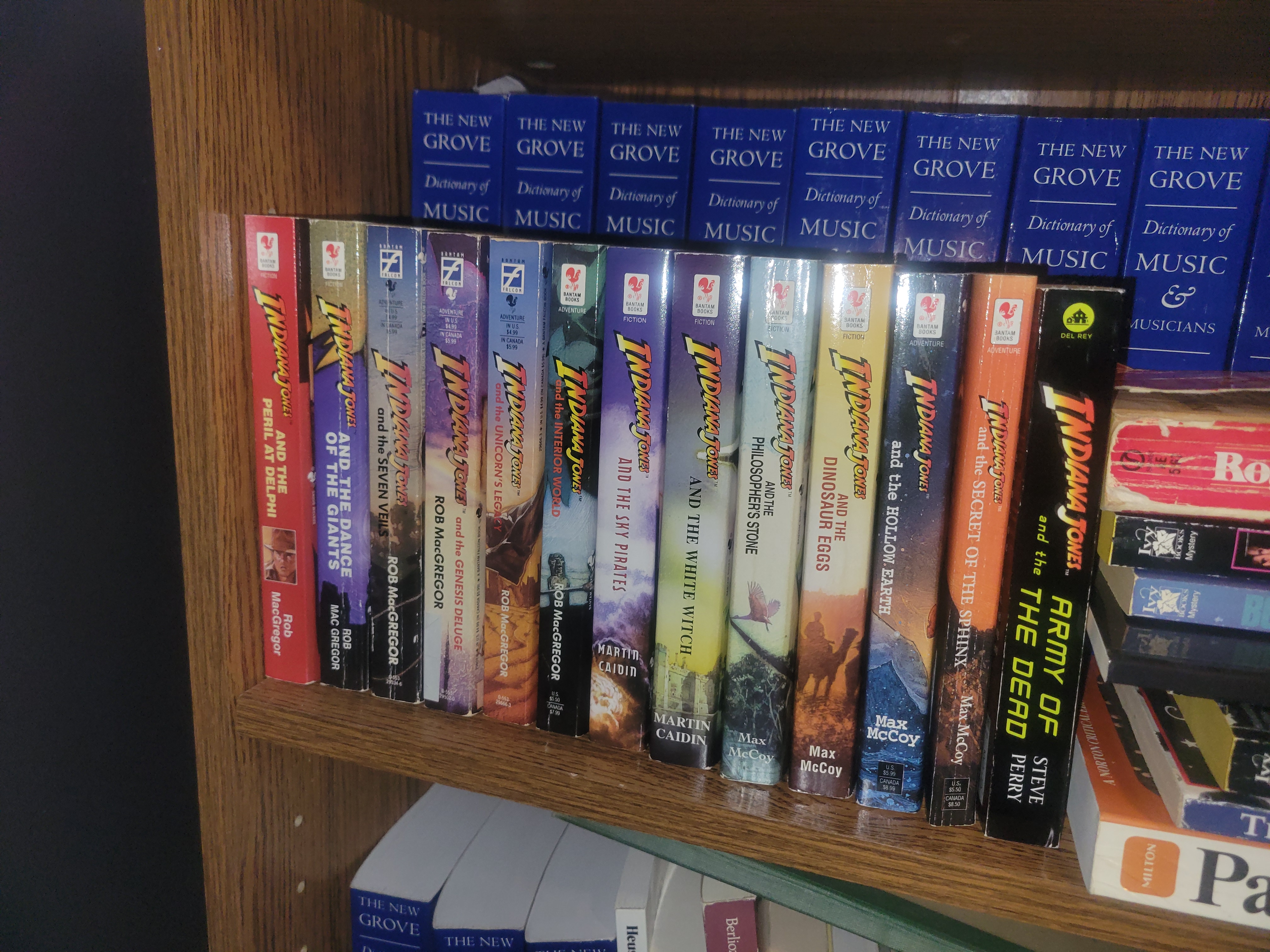
If I had a reading “project” this year, it was reading all of the (non-film) Indiana Jones tie-in novels; I had read a couple of them before and had a few more on the shelf, but making the decision to track down the rest (a manageable but not trivial task) was a plunge I hadn’t expected to take at the beginning of the year. Despite my affection for the Indiana Jones movies and pulp adventure in general, I grew up with the snob’s suspicion of such tie-ins, a resistance I’ve gradually broken down in recent years as I explored movie adaptations and mass market fiction in general.

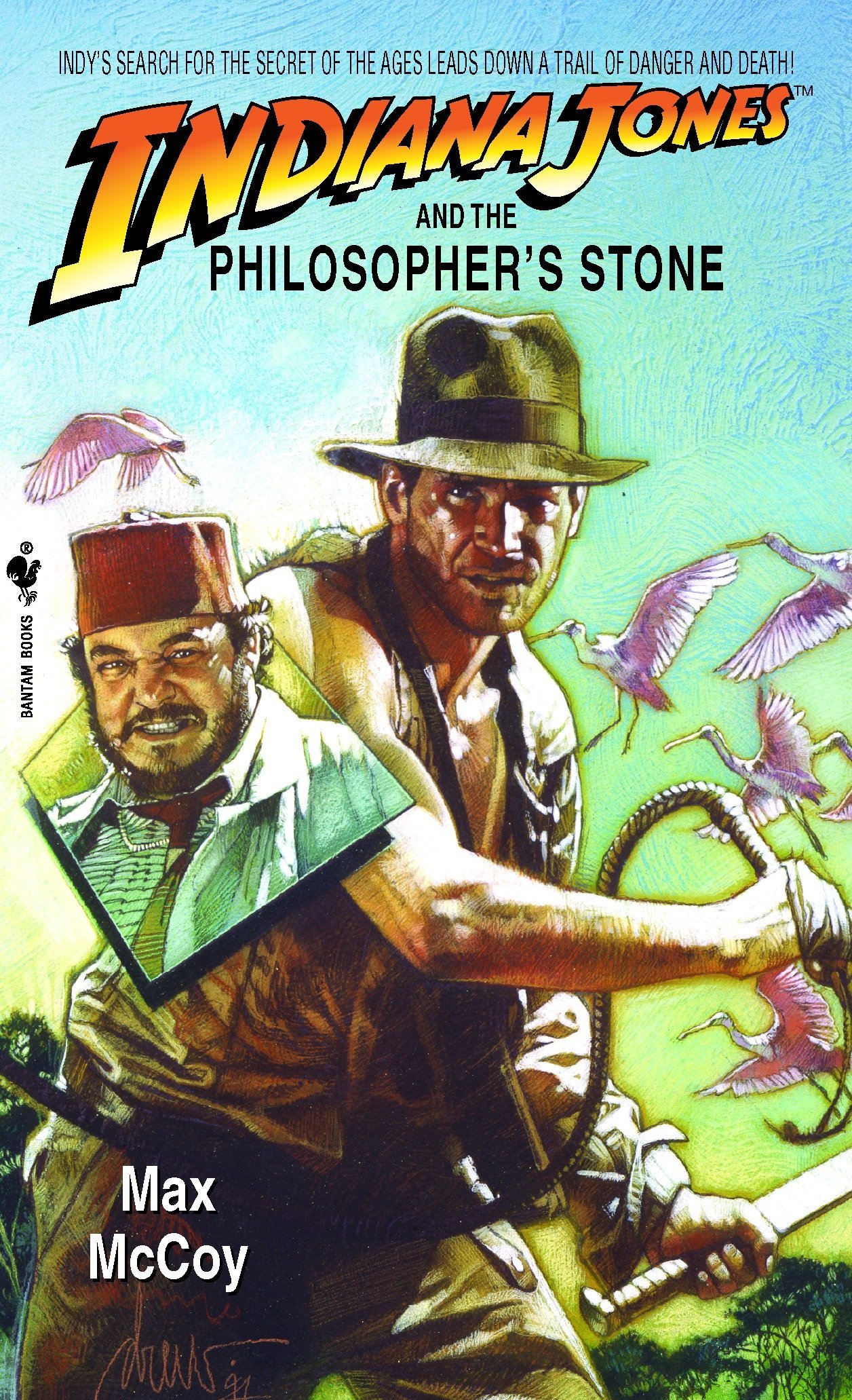
So, how were they? Most of them don’t rise to the heights of the best media tie-ins (Max Allan Collins’s Dick Tracy novelization and Matthew Stover’s adaptation of Revenge of the Sith are probably the best I’ve read), but they are diverting, and the best of them feel like authentic extensions of the character and his world that we know from Harrison Ford’s performance in the film series. They are also a neat-looking collection, with matching trade dress and original painted covers by poster maestro Drew Struzan, and most of them feature Indy confronting a legendary supernatural artifact or phenomenon, as you would expect.

Of the three authors who wrote the original twelve installments, Max McCoy’s were my favorite: they feel the most like they could have been movies in the original series, and strike the right balance of action, mystery, and characterization. The two by Martin Caidin (who, among other works, wrote the book upon which The Six Million Dollar Man was based) feel like they might have originally been written about Doc Savage or some other pulp superman and then rebranded as Indiana Jones novels; they’re entertaining enough, but the plots are bizarre and don’t feel much like the character as depicted anywhere else, like hearing a story about someone you know that makes you wonder if you’re thinking of the same person. Rob MacGregor not only wrote the most books (six), but they have the most complex internal continuity, not to mention a mystical bent that, considering these are prequels set in the early to mid-1930s, makes the character’s skepticism of the supernatural as depicted in Raiders of the Lost Ark a little jarring.

The original twelve books were published in the 1990s, following Indiana Jones and the Last Crusade, so there are frequent references to Indy’s strained relationship with his father, and side characters such as Marcus Brody and Sallah make appearances. The thirteenth book, Indiana Jones and the Army of the Dead by Steve Perry, was released in 2009 alongside Indiana Jones and the Kingdom of the Crystal Skull, and includes that film’s George “Mac” McHale as Indy’s partner in adventure. With another Indiana Jones movie scheduled for 2022, will there be any new tie-in prequels/sidequels? I don’t know, but while researching that question I found that Rob MacGregor wrote another novel, Indiana Jones and the Staff of Kings, that was never published, but which he began releasing as audio installments this fall, to be finished in January with a mystery announcement scheduled for February: a new book, or a print publication of this one? Either way, I feel obligated to check it out now.

Another theme emerged in my horror reading: the much-discussed motif of the “final girl,” the (usually virginal) would-be victim who is able to stand up to and escape or dispatch the killer in a slasher film. The concept was codified in Carol J. Clover’s Men, Women, and Chainsaws, but is now deployed self-consciously (witness The Final Girls, the 2015 movie I watched in October, not to be confused with Final Girl, from the same year, and a bunch of other movies and TV episodes with similar titles). The Final Girl Support Group was the first fiction by Grady Hendrix I’ve read, but the novel, which brings together a group of survivors of killing sprees clearly modeled on classic slasher franchises, is definitely the work of someone familiar with the tropes and clichés of the genre, as well as the commentary and criticism surrounding it. By chance I had read a less self-conscious “final girl” novel, Kimberly Rangel’s The Homecoming, earlier in the fall, with its heroine the only survivor of a Ouija board session gone wrong; when she returns home (and to the scene of the crime) years later, many still suspect her of the murders, but the reader knows that it’s actually the work of a serial killer who was executed at the very moment the Ouija board made contact with the spirit realm (did I mention I was looking for pulp?). Even Stephen Graham Jones’ recent The Only Good Indians riffs on the concept with a “Finals Girl,” so-called because she’s a basketball prodigy, but, well, don’t be surprised by where she ends up at the end of the book. (Jones’s latest novel, My Heart Is a Chainsaw, looks to be similarly self-referential, as it deals with a horror fan who ends up putting her knowledge to practical use, but I suppose it’s as much a matter of writers starting out as fans as it is the ubiquity of metanarrative concepts being popular; in any case, I look forward to reading it.)

January

The Boys of Sheriff Street, Jerome Charyn and Jacques de Loustal: French graphic novel, translated and published by Dover, of all companies

Samurai Executioner Vol. 4: Portrait of Death and Vol. 10: A Couple of Jitte, Kazuo Koike and Goseki Kojima: excellent manga from the creators of Lone Wolf and Cub, set in the same historical era

Winter’s Tale, Mark Helprin: a masterpiece

February

Reid Fleming, World’s Toughest Milkman in Rogue to Riches, David Boswell (reread)

The Living Talmud: The Wisdom of the Fathers and its classical commentaries, selected and translated with an essay by Judah Goldin

Medieval Ghost Stories, Andrew Joynes

March

The Night Ocean, Paul La Farge

Wonder Woman: The Complete Dailies 1944-1945, William Moulton Marston and H. G. Peter

The Which Way Tree, Elizabeth Crook

May

Kanako el Kananam: Aventuroj en la Ĝangalo de Novgvineo, Kenneth G. Linton: As I mentioned last year, I began studying Esperanto in 2020, and this memoir, by an Australian soldier stationed in New Guinea after World War II, is so far the only full-length book I’ve read in the language. It took me a while.

The Very Persistent Gappers of Frip, George Saunders, illustrated by Lane Smith: another one of those “postmodern author’s children’s books for adults,” fits on the shelf next to Donald Barthelme’s The Slightly Irregular Fire Engine, but not as good

The Phantom of the Opera, Gaston Leroux: the book that got me in the pulp mood for the summer

June

Indiana Jones and the Peril at Delphi, Rob MacGregor

Indiana Jones and the Dance of the Giants, Rob MacGregor

Cold Cash, Gaylord Dold

Indiana Jones and the Seven Veils, Rob MacGregor

Indiana Jones and the Genesis Deluge, Rob MacGregor

July

Indiana Jones and the Unicorn’s Legacy, Rob MacGregor

Indiana Jones and the Interior World, Rob MacGregor (reread)

The Homecoming, Kimberly Rangel

August

Avengers: The Complete Celestial Madonna Saga, Steve Englehart, John Buscema, Jorge Santamaría, et al

Faerie Tale, Raymond E. Feist

Indiana Jones and the Sky Pirates, Martin Caidin

Indiana Jones and the White Witch, Martin Caidin

King Kong, Edgar Wallace and Merian C. Cooper, novelization by Delos W. Lovelace

September

Indiana Jones and the Philosopher’s Stone, Max McCoy

Dangerous Girls, R. L. Stine

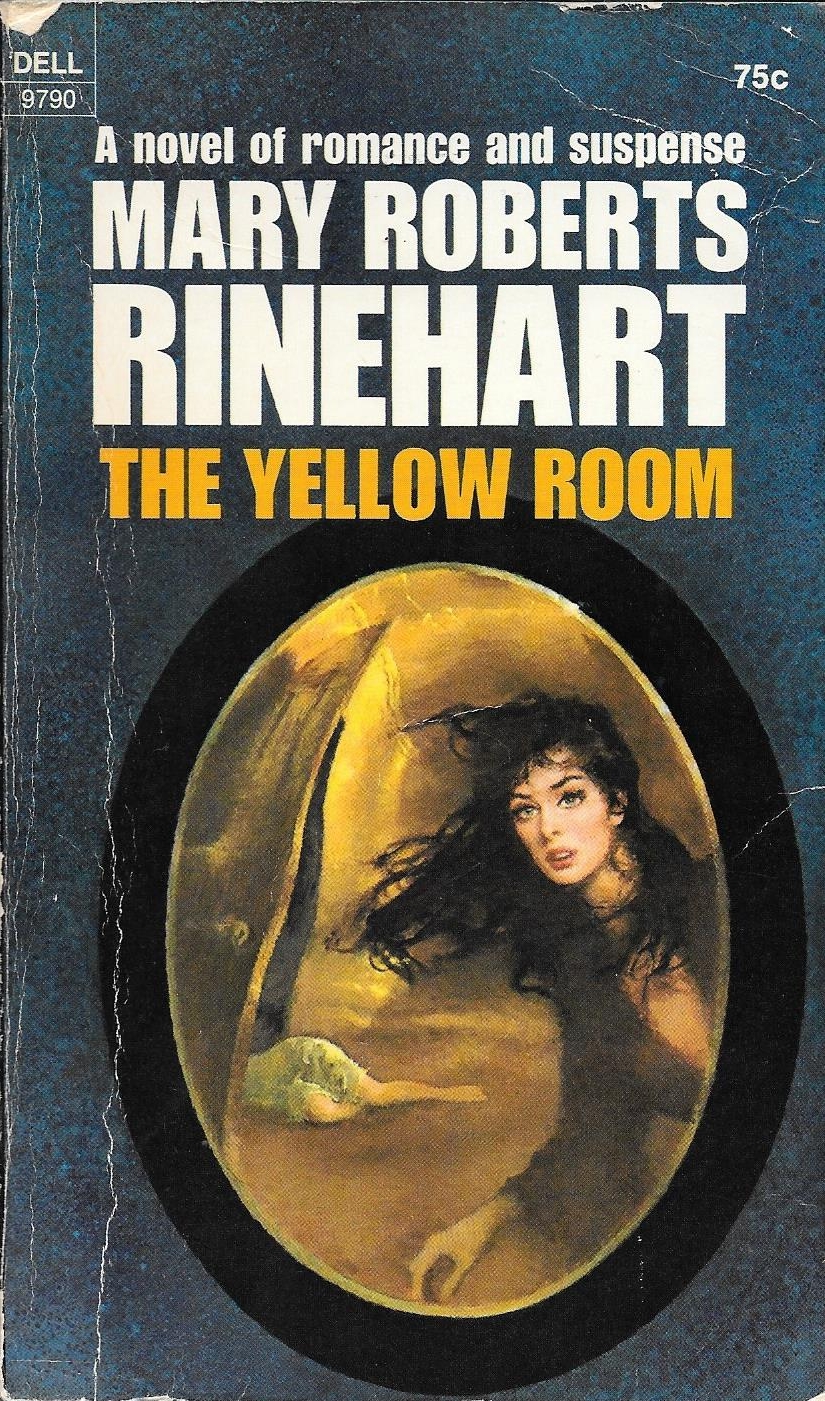
The Yellow Room, Mary Roberts Rinehart: I know, don’t judge by the cover, but I expected more of a Gothic romance than this turned out to be. Wouldn’t you?

Indiana Jones and the Dinosaur Eggs, Max McCoy

Indiana Jones and the Hollow Earth, Max McCoy (reread)

October

Indiana Jones and the Secret of the Sphinx, Max McCoy

The Final Girl Support Group, Grady Hendrix

The Death Freak, “John Luckless” who is also known as Clifford Irving and Herbert Burkholz: I found this at Goodwill and immediately had to read it, and I guess in this case the cover turned out to be pretty accurate: an only-in-the-’70s satirical spy thriller, sort of like a James Bond novel if Q were the hero.

Indiana Jones and the Army of the Dead, Steve Perry

November

The Name of the Rose, Umberto Eco (trans. William Weaver)

December

The Best American Noir of the Century, ed. James Ellroy and Otto Penzler: a 700+ page doorstop that I’ve had for a while, but once I started reading it I wished I’d started it sooner

Flying Too High (A Phryne Fisher Mystery), Kerry Greenwood

The Only Good Indians, Stephen Graham Jones

That’s it for 2021: I hope to post more consistently in 2022, but whatever happens, have a Happy New Year!