
In a hidden catacomb deep within a Mexican silver mine, the mine owner discovers an old silver box containing a mummified hand. When it starts moving of its own volition and drives him to replace his own hand with it, leading him to behave erratically—even murderously—his wife must face the question: is this the hand of the Devil himself? Such is the premise of Demonoid, a fun, goofy horror movie I watched near the beginning of October. That led to Sinister Hands (the hands in question belong to a swami who becomes the obvious suspect when his wealthy patroness’ husband is murdered during a séance) and Invisible Hands (featuring another grisly trophy). If I’d wanted to make a whole theme month out of it, I could have kept going with The Beast with Five Fingers, And Now the Screaming Starts, and (of course) The Hand. But regular readers know that I don’t usually plan that far in advance.

In the end, October was quite busy for me this year, but I did watch some spooky and seasonal selections throughout the month. I actually got to 31 entries, with the caveat that some of those were very short (the quasi-serial Invisible Hands is barely over twelve minutes strung together). I only got out to the movie theater once, to see the 25th anniversary re-release of Battle Royale, which I hadn’t seen before (I enjoyed it). There were some retro screenings like I’ve seen in the past, but my schedule didn’t allow me to go, so that was a bummer.
Nevertheless, I have compiled a list of varied styles, subject matters, and quality:
1. Dead of Night (Dan Curtis, 1977)
2. Demonoid (Alfredo Zacarias, 1981)
3. The Laughing Target (Motosuke Takahashi, 1987)
4. Evil Laugh (Dominick Brascia, 1986)
5. Track of the Moon Beast (Richard Ashe, 1976)
6. The Old Dark House (James Whale, 1932, rewatch)
7. What Waits Below (Don Sharp, 1984)
8. The Willies (Brian Peck, 1990)
9. Equinox (Jack Woods and Dennis Muren, 1970)
10. Death Becomes Her (Robert Zemeckis, 1992, rewatch)
11. Organ (Kei Fujiwara, 1996)
12. Battle Royale (Kinji Fukasaku, 2000) theatrical
13. Rubber (Quentin Dupieux, 2010)
14. Invisible Ghost (Joseph H. Lewis, 1941)
15. Young Hannah, Queen of the Vampires (Julio Salvador and Ray Danton, 1973)
16. The Deadly Spawn (Douglas McKeown, 1983)
17. Haunted House (Robert F. McGowan, 1940)
18. Sinister Hands (Armand Schaefer, 1932)
19. Invisible Hands (Denis Morella, 1991, rewatch) short
20. Scare Package (concept by Aaron B. Koontz and Cameron Burns, various directors, 2019)
21. Alligator (Lewis Teague, 1980)
22. Student Bodies (Mickey Rose, 1981)
23. The Bowery Boys Meet the Monsters (Edward Bernds, 1954)
24. TerrorVision (Ted Nicolaou, 1986, rewatch)
25. The Video Dead (Robert Scott, 1987)
26. Beetlejuice (Tim Burton, 1988, rewatch)
27. They Saved Hitler’s Brain (David Bradley, 1968)
28. The Violence Movie (Eric D. Wilkinson, 1988) short
29. Savage Vows (Bob Dennis, 1995)
30. The Mascot (Fétiche, aka The Devil’s Ball, Irene Starewicz and Wladyslaw Starewicz,1933) short
31. Something Wicked This Way Comes (Jack Clayton, 1983)
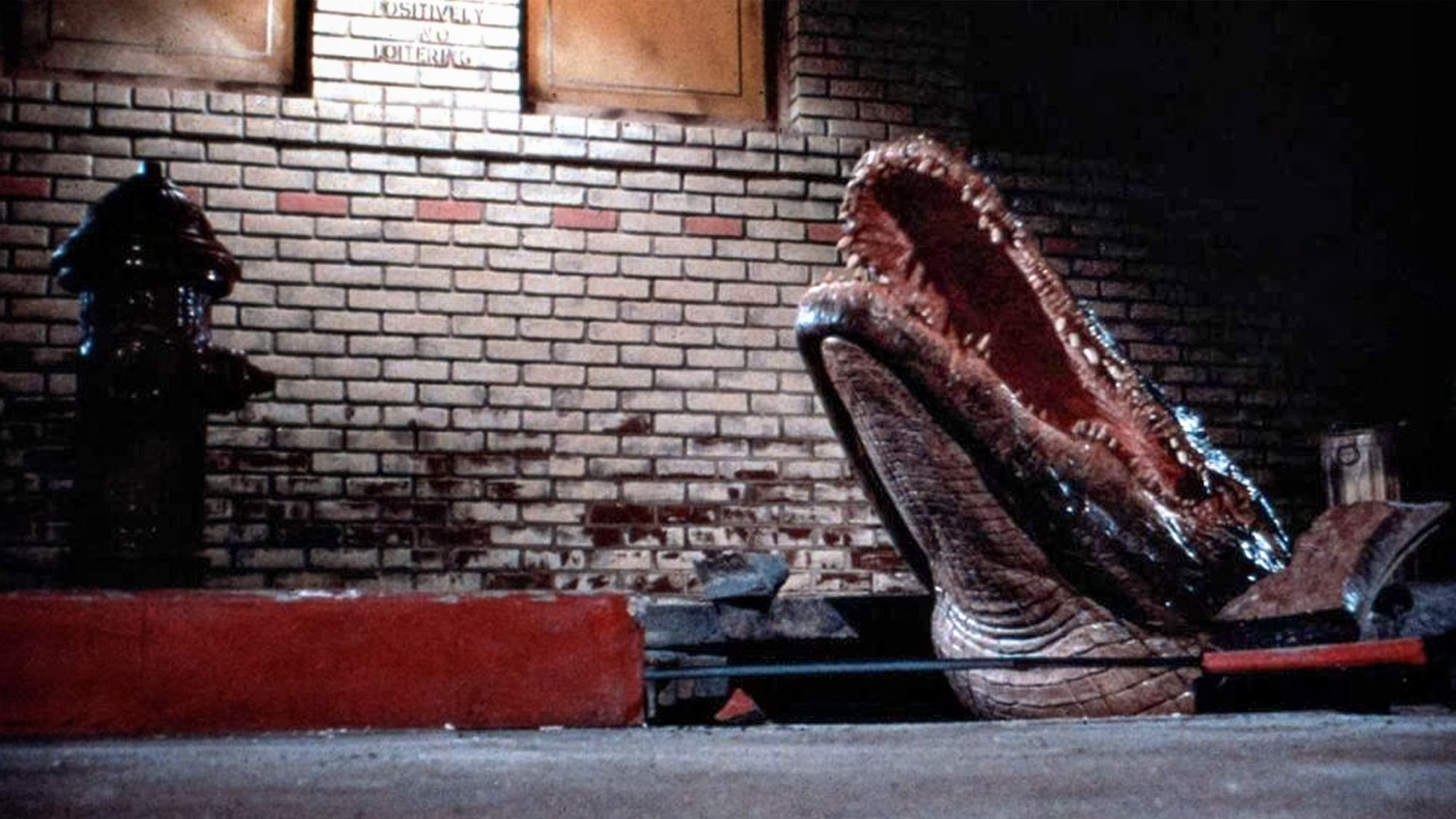
Best Movie: A fearsome, insatiable predator lurks around the margins of a community, at first picking off isolated victims, gradually becoming bolder. Eventually, a dedicated police officer and a scientific expert put the clues together and battle the monster, in the face of political opponents dedicated to business as usual. Yes, Alligator is basically another riff on Jaws, but it’s an accomplished imitator with enough going for it that it stands on its own. John Sayles’ screenplay is full of memorable turns of phrase and scene-stealing characters, and Lewis Teague brings the story vividly to life, with expressionistic lighting and claustrophobia-inducing camera angles in the sewers where the abandoned baby gator grew up, before bringing it out into the open for some very satisfying carnage.

Worst Movie: It makes sense for The Video Dead to be paired with TerrorVision: both are mid-‘80s features about weird things emerging from TV screens, with some nods to MTV-era youth culture. But the pairing does The Video Dead no favors: where TerrorVision is acidly funny, satirizing Cold War paranoia, Me Generation self-indulgence, and dopey monster movies, with big performances and colorful production, The Video Dead is drab, slow-paced, and is just downright dour for a movie about zombies from a haunted TV set. I don’t know if it’s impossible for a film with such a silly premise to successfully explore themes of grief and trauma, but The Video Dead sure isn’t that movie.

Scariest Movie: I was terrified by spiders as a kid, so I didn’t go out of my way to watch Something Wicked This Way Comes when it was released. By the time I was more interested in it (I read the Ray Bradbury novel on which it’s based a few years ago), it had become somewhat difficult to find, and had a reputation as one of those 1980s kids’ movies that were too dark and scary for their target audience, like Return to Oz. I don’t want to claim it’s scarier than really brutal movies aimed at adults, but it is pretty intense, with Jonathan Pryce as the Satanic Mr. Dark and Jason Robards as a man confronting his mortality both selling the high stakes of their conflict. And the spider scene is still shocking, like a left turn into Lucio Fulci territory, its suddenness as horrifying as the arachnid invasion itself.

Least Scary Movie: I have a fondness for the hour-length B-movies of the 1930s and ‘40s, many of which were “old dark house” mysteries, featuring strangers gathering at inns or stranded at remote country houses. In the early 1940s, quite a few of these hinted at supernatural phenomena but almost always ended up with rational explanations. I watched a couple of these films this October, and I actually enjoyed Haunted House the most. It’s a charming comedy about a pair of over-eager teenage detectives trying to help a friend accused of murder, and they do eventually end up in the “haunted” house of the title. But this isn’t even a mystery in the Scooby-Doo sense, with real-life criminals trying to frighten people away, as in so many of these films; it’s just an empty house with something hidden in it. As I said, this movie was fun, but scary? It’s not even trying to be.

Goriest Movie: This year there is only one contender for this honor: Organ begins as an expose of a black market organ harvesting ring in Tokyo, and that was probably the real-life inspiration for the film. But it quickly goes in a different direction, exploring the parallel stories of a deranged amateur surgeon who chops up bodies to fulfill his own warped desires, and the disgraced cop who lost his partner to the same man. Organ’s director, Kei Fujiwara, starred in Tetsuo: The Iron Man, and brings some of that film’s avant-garde sensibilities to her project, examining without pity the many ways in which flesh and the human body can fail or be destroyed. Also like Tetsuo, Organ is a little hard to follow, jumping chronologically and between characters in an almost stream-of-consciousness manner. But the plot is less important than the imagery, the most striking of which comes from the memories and imagination of the killer.

Funniest Movie: I watched a few horror comedies this past month, but none of them really blew me away. Student Bodies specifically spoofs the wave of slasher movies that followed the success of Halloween and Friday the 13th, and it has some laughs, but it’s pretty dated and scattershot as well; Evil Laugh, while not quite a comedy, is another meta slasher that includes a horror-fan audience surrogate character a few years before Scream made everyone into genre experts. Scare Package is probably the most satisfying, intentionally funny movie of the month, although even there it’s a mixed bag. It’s an anthology film and a tribute to the video stores of yore, with the frame story taking place in “Rad Chad’s Horror Emporium” and the individual stories purported to be video tapes from Chad’s shelves. Some entries play it more straight than others, but the chapter that has stuck with me is also the most mystifying: in “So Much to Do,” by Baron Vaughn, a woman goes to incredible lengths to avoid spoilers for her favorite TV show. It’s the kind of thing that probably wouldn’t work as a feature on its own, but it’s just right as a weird, funny interlude.

Weirdest Movie: Speaking of weird and funny, Rubber is my first film by Quentin Dupieux, who has a reputation as a provocateur. I wasn’t sure how I would feel about this one: even though I enjoy genre-challenging, fourth wall-breaking metanarrative, I get annoyed when I feel like I’m being jerked around, and Dupieux pretty much begins the film by announcing that he’s going to be jerking us around, and to expect things to happen for “no reason.” But I had a good time with this; the story of an abandoned car tire that somehow becomes sentient and goes on a killing spree, rolling across the southwest and blowing things up with unexplained mental powers, is a parody of absurd monster movies, and by itself there’s not much to it. But everywhere the tire rolls it gathers new characters and perspectives, and every time things threaten to fall into a predictable rut, the ground shifts, putting events in a different light.
I hope you had a great Halloween this year. Thanks for reading!


 Medleyana