In 2019 I celebrated “Ninjanuary” with several posts about the ninja in popular culture, particularly in films and books from the 1980s, and I occasionally return to that theme. Past entries can be found by clicking on the Ninjanuary tag.
When I was in eighth grade, my best friend and I came up with an idea for a movie, influenced by the ninja craze of the time. We proposed a convention of the world’s ninjas, meeting in one place and forced by circumstance to come together against some powerful threat (if we got as far as specifying what the threat was, I don’t remember it). Part of the appeal was that every ninja had a gimmick reflecting their occupation or country of origin, so in addition to the obvious black-clad ninjas with the usual weapons, we imagined a ninja yo-yo expert, a Scottish ninja who wore a kilt and fought with ninja bagpipes, and a ninja trombonist whose slide doubled as a deadly weapon (and we hadn’t even seen The Town that Dreaded Sundown!). I don’t remember everything we came up with, but we obviously stole a lot of ideas from superhero comics and professional wrestling in addition to martial arts movies.
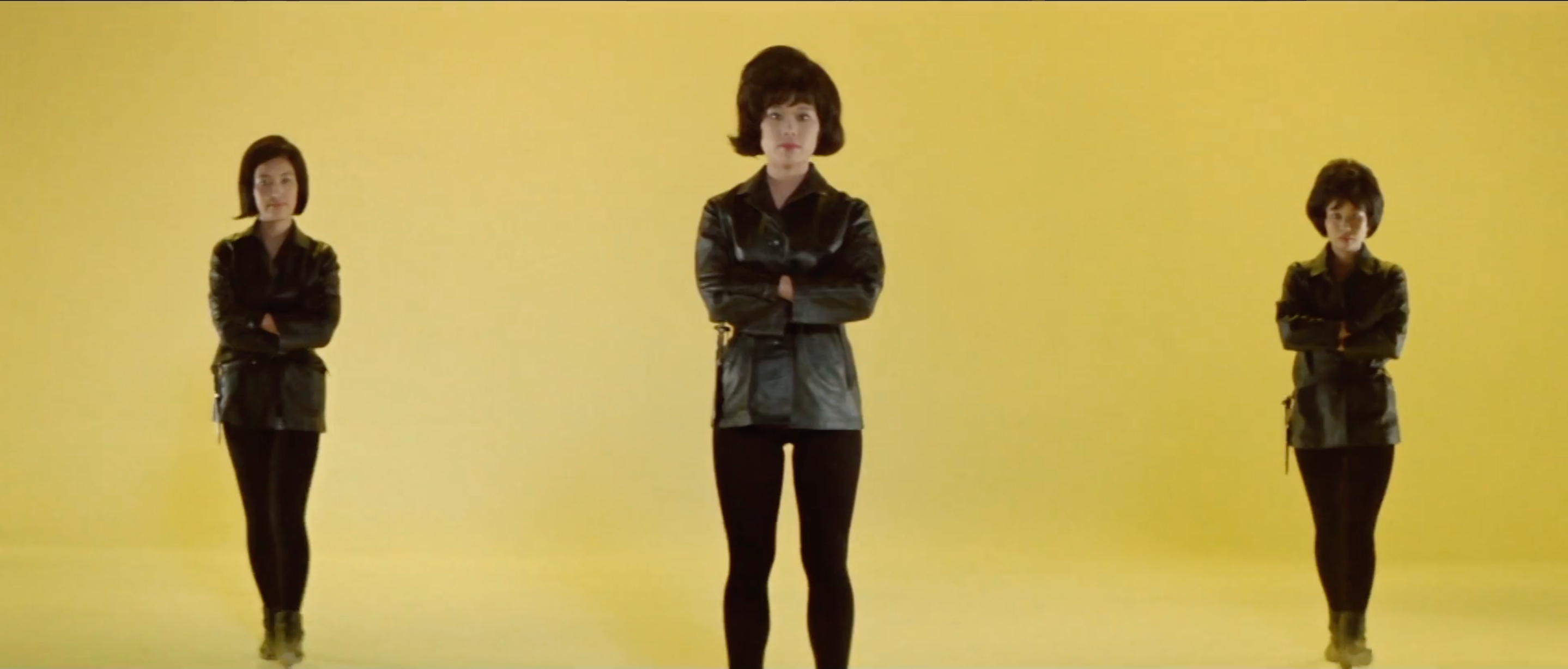
I was reminded of this aborted project when I watched Black Tight Killers, a 1966 Japanese film (dir. Yasuharu Hasebe) that does not (at first) advertise its ninja themes; on the surface, it appears to be more of a crime film with a stylish, swinging approach common to the James Bond series and its many “spy-fi” contemporaries. Whereas in the 1980s and later, most attempts to modernize the ninja involved putting him in bulletproof body armor or turning him into a computer hacker, or maybe something with lasers, Black Tight Killers features a go-go-dancing girl gang using vinyl records, golf clubs, and chewing gum, among other mundane objects, as parts of their arsenal of (named) ninja moves, all becoming deadly weapons or means of escape in the right hands. Even though our movie about the ninja convention never made it past the daydreaming stage, it was validating to see that a similar idea had been part of the original cycle of Japanese ninja films (I haven’t dug into these movies very much, but this modern approach was novel compared to the usual historical and mythological treatments of the subject at the time).
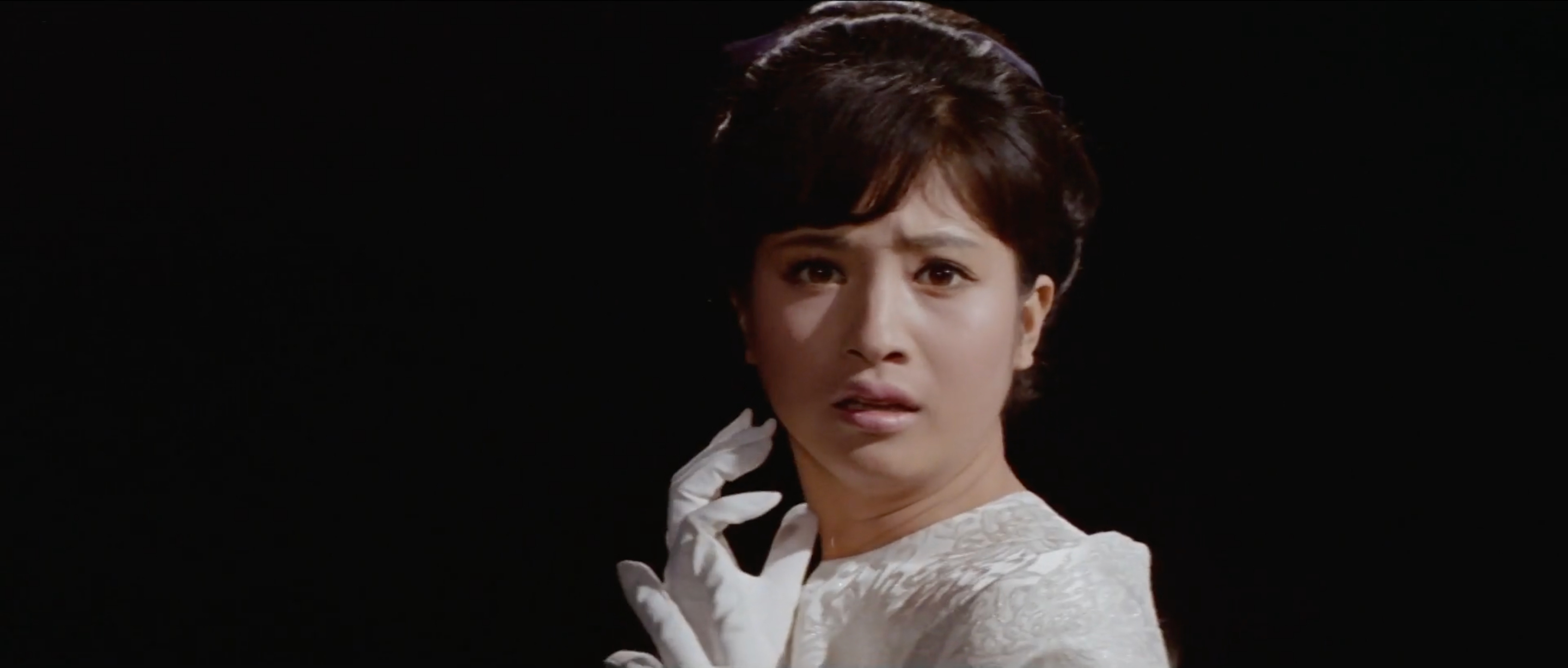
The film begins with Hondo (Akira Kobayashi), a war photographer, flirting with flight attendant Yoriko (Chieko Matsubara) on his return flight to Japan. When they go on a date together, Yoriko is spooked by a strange man who has been watching her; when Hondo looks for the stranger to confront him, he finds the man stabbed to death and is accused of the crime by a pair of onlookers. Then Yoriko is abducted by three women in black tights and leather jackets. Before he can chase after them, he is arrested for murder. The victim, Lopez, was illegally trading U.S. dollars, and everyone who appears ready to help Hondo has their own angle. Thus begins a twisty caper with multiple interested parties and shifting loyalties, all looking for a shipment of Okinawan gold hidden by Yoriko’s late father after the war.
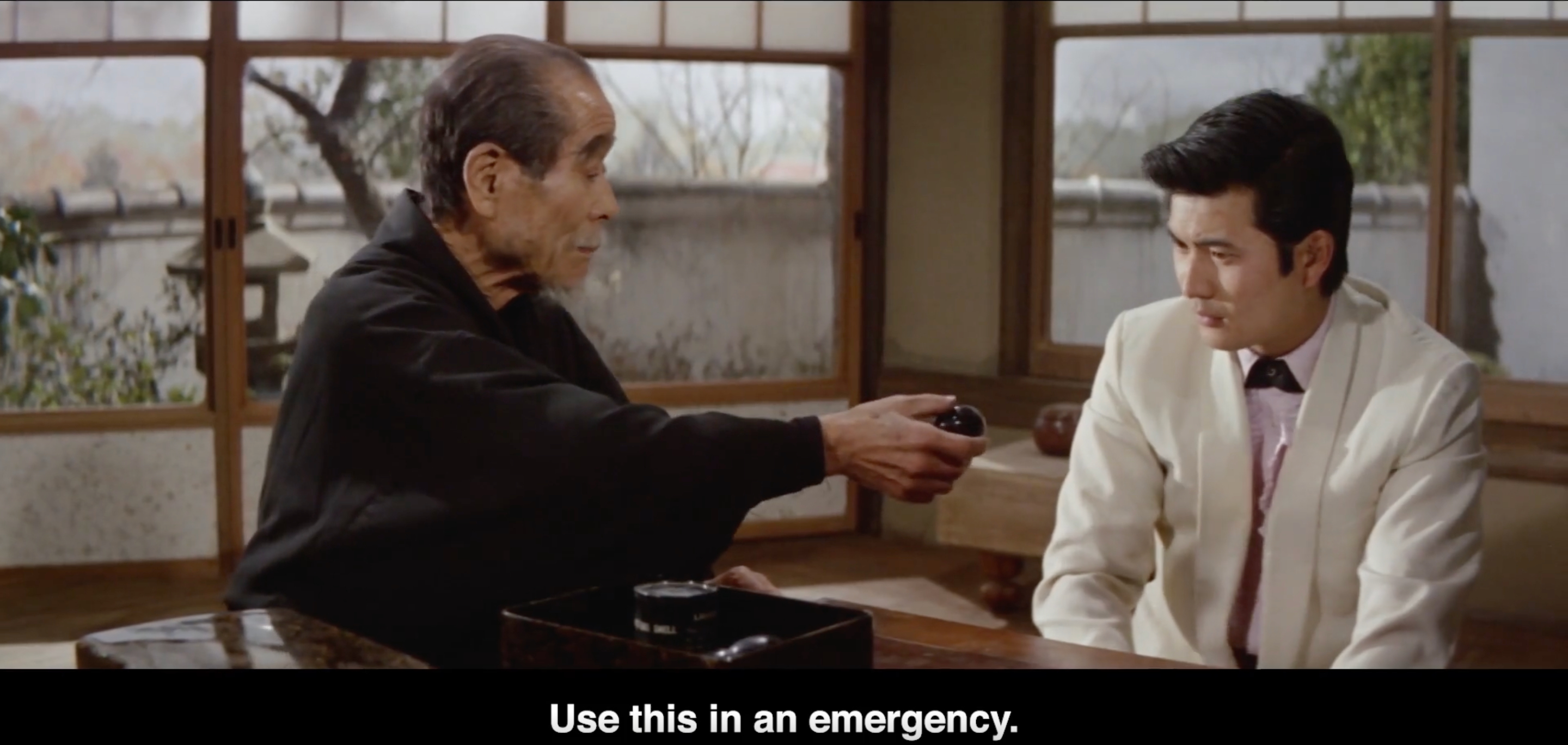
The only allies Hondo has are his friend Bill, an American newspaperman, and Momochi, an elderly “ninja researcher” with whom Hondo lives and trains. I was never quite clear if Momochi is Hondo’s father or sensei, or just a knowledgeable acquaintance, but I don’t think they come right out and say; in any case, Momochi helps Hondo puzzle out some of his problems and plays the same role as 007’s “Q,” giving him gadgets that turn out to be just what Hondo needs in a few sticky situations.
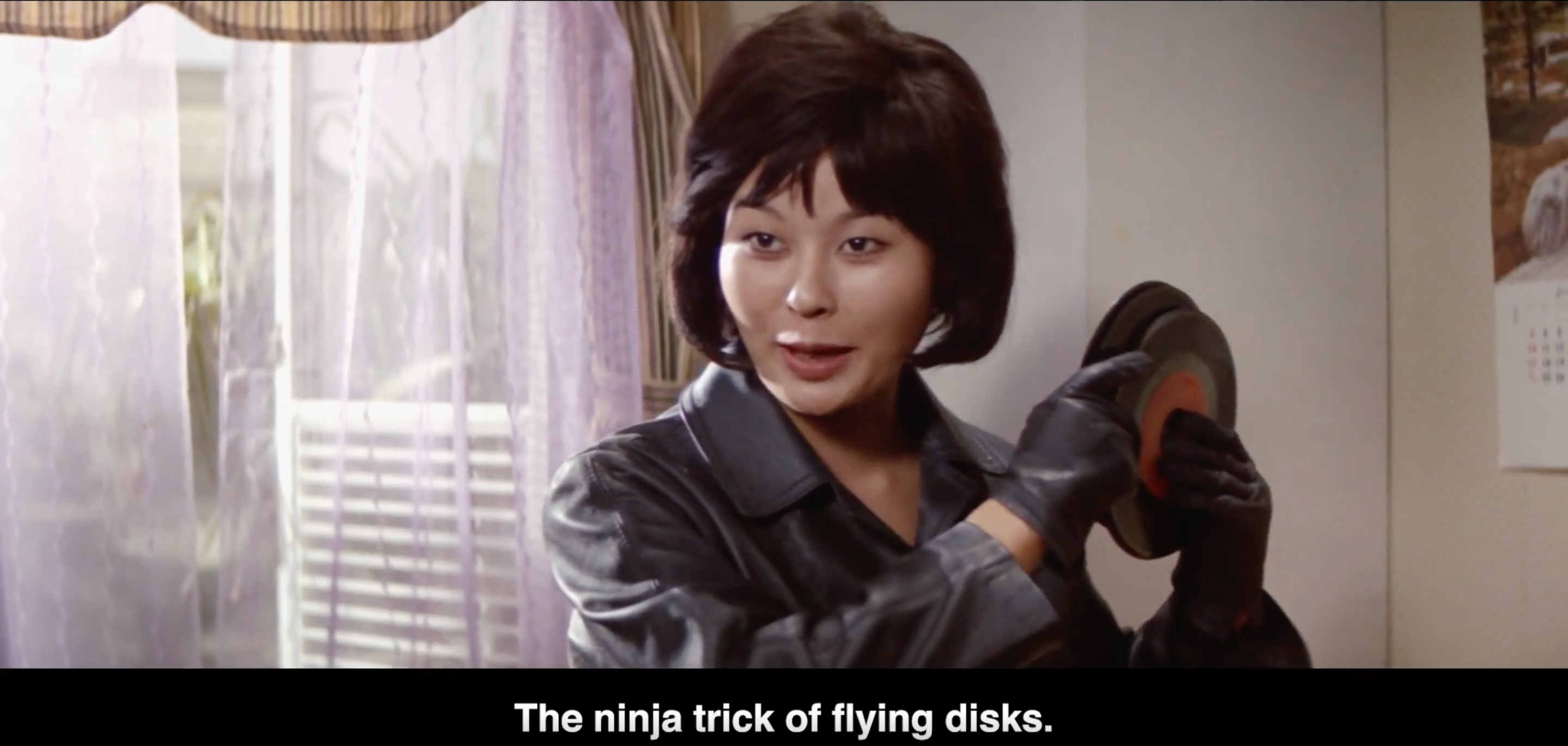
In one interesting bit of dialogue, Momochi shows Hondo a gas cannister used by America’s “ninja soldiers,” referring to the Army Rangers. Already we are expanding the definition of “ninja” beyond notions of clan or pedigree. The girl gang, the “Black Tights” of the title, pose as a traveling dance troupe calling themselves the “Ninjas” (hiding in plain sight, perhaps), but while we learn their background and motivations, we don’t actually find out if they’ve inherited their ninja techniques or learned them out of necessity. In this film, ninja isn’t something you are, it’s something you do.
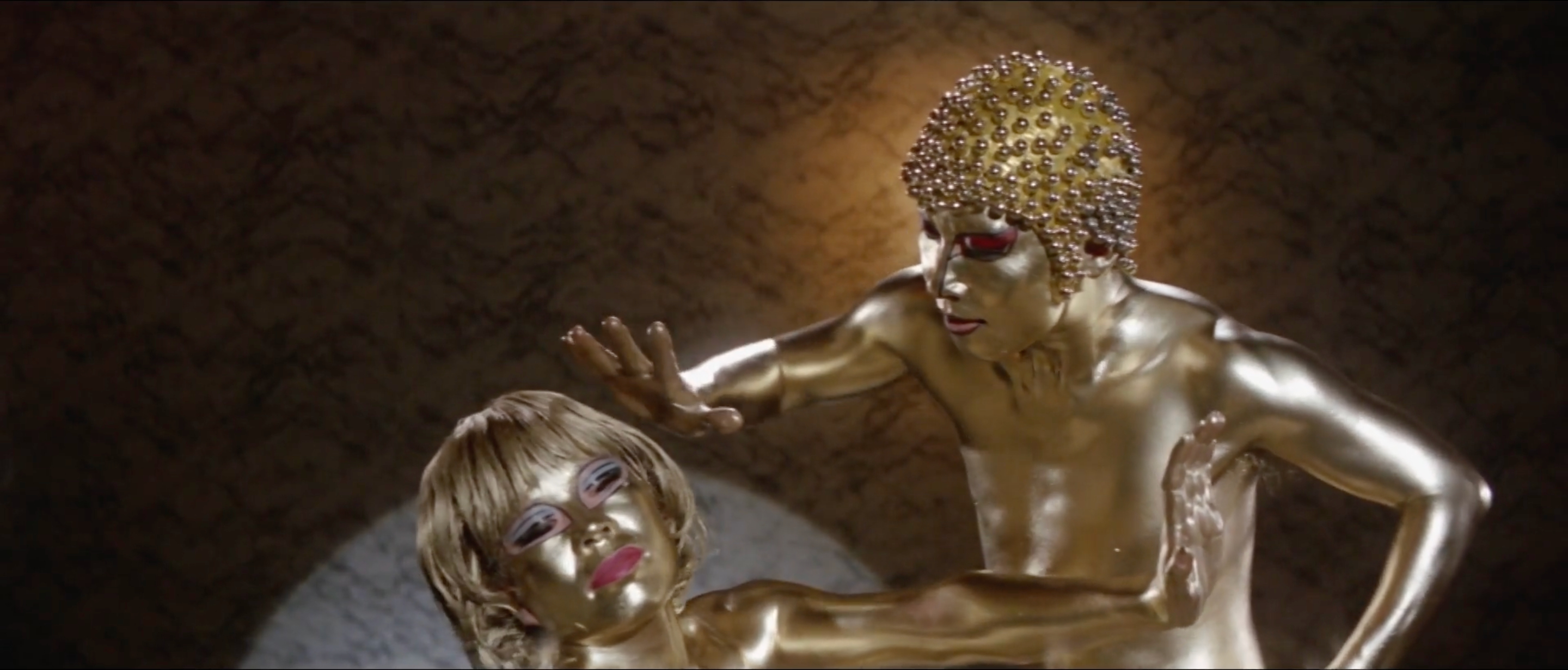
The blurb on Night Flight Plus, where I watched this, describes Black Tight Killers as a “spy spoof.” The influence of 1964’s Goldfinger is especially obvious, not just in the cache of gold that serves as a MacGuffin but in the mileage the story gets from that film’s famous death by body painting. Still, it’s reductive to see it only as parody. The wave of heightened, Pop-Art-inspired camp that made its way into every corner of the media in the late ‘60s often had it both ways, offering real, visceral death and danger while laughing it off with a quip and a smirk.
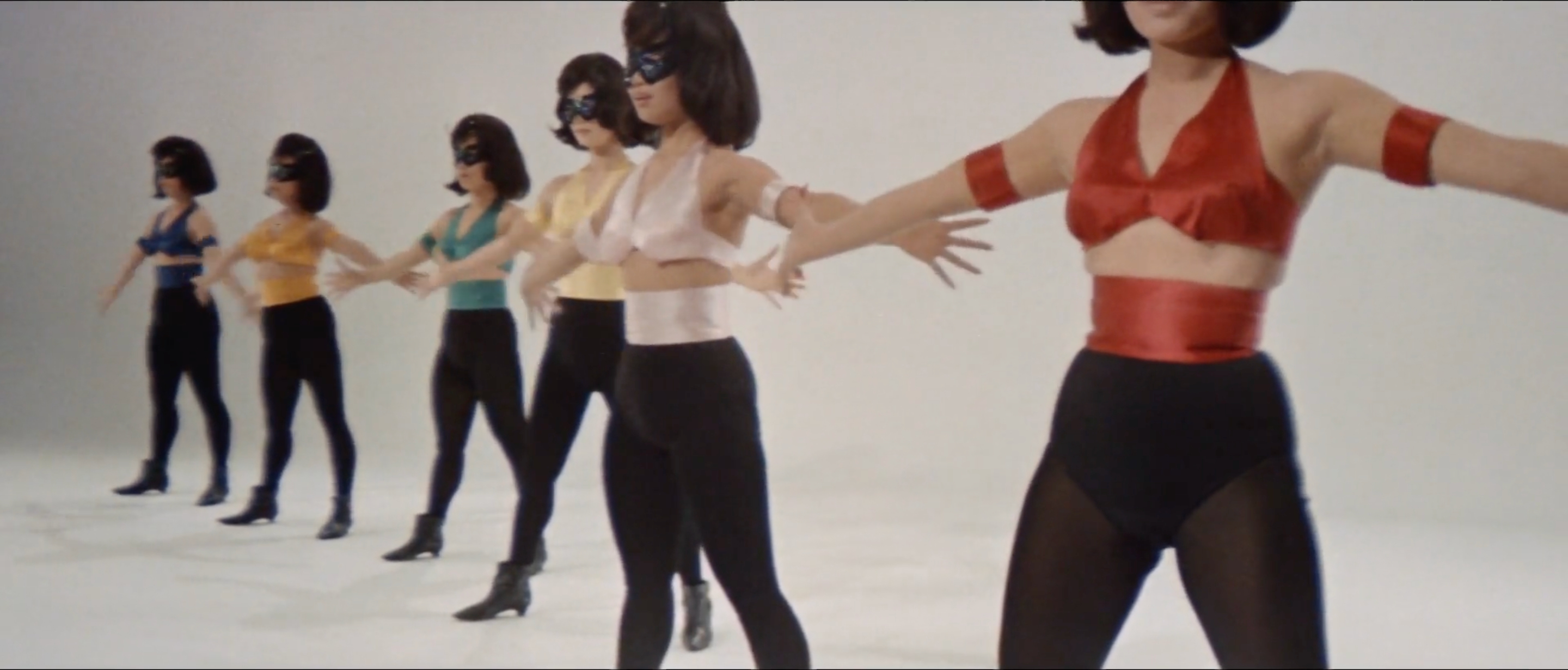
The mixture of high and low style is another source of excitement and tension. Scenes are bathed in solid primary colors, like panels of a comic book, matching the simple, iconic profiles of the characters: detectives in trench coats, gangsters in zoot suits, good girl Yoriko always in white and the Black Tights always in, well, you know. But the film is frequently arty and baroque as well; there’s even a “dream ballet” in which Hondo reimagines Yoriko’s kidnapping by the Black Tights. The red flower of Okinawa, worn as a corsage by all the Black Tights, takes on heavy symbolic freight by the end of the film, even as the continual ironies and reversals of the plot lead to a literal punchline.
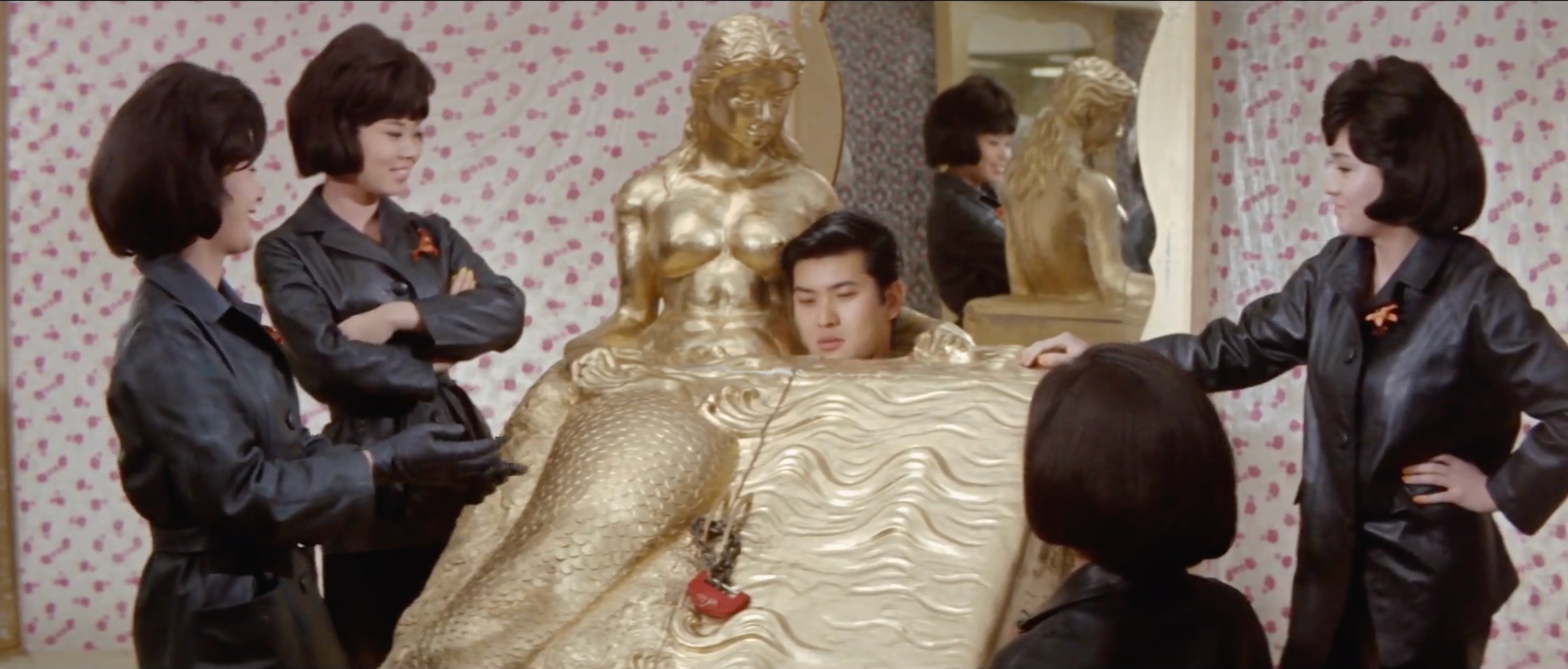
Finally, this is above all an action movie, with characters continually on the move. Other than an island-set climax, the production is relentlessly urban: Hondo’s quest to rescue Yoriko takes him from glamorous clubs to seedy photography studios and bathhouses. There are car chases, shootouts, and explosions, and there is a body count. The hand-to-hand action is about what you’d expect from a hard-boiled noir, with few of the martial arts flourishes you might expect when you hear the word “ninja”—there’s a knock-down-drag-out fight through multiple rooms of an abandoned house near the end of the film that would make Republic’s fight coordinators proud, with plenty of breakaway furniture and collapsing bannisters, all while Yoriko is caught in a literal deathtrap. “Dance! Dance all you want! It’s your last one!” taunts the villain. Yes, that’s the stuff.
 Medleyana